Proctors Passport Season Opens, Milonovich Headlines, Joy in Troy

Previews this Week and Early Next

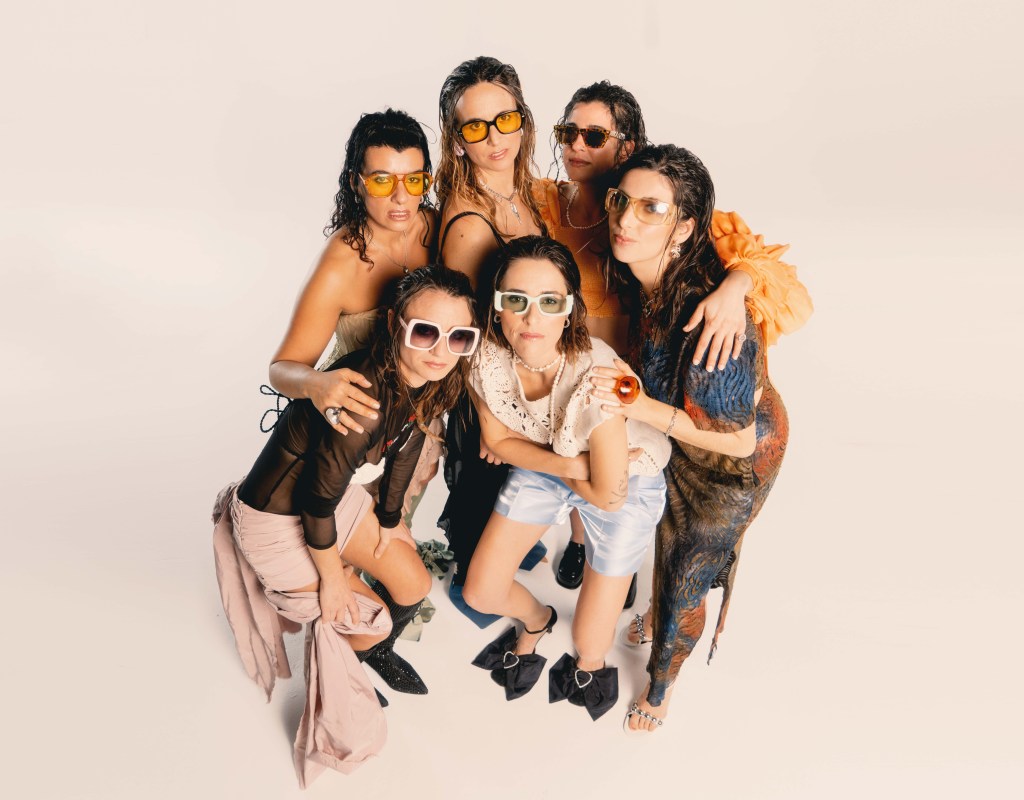
Maruja Limon, six women from Barcelona who look enough alike to be sisters – several actually are – kick off the six-show Music Haven Passport series Thursday at Proctors GE Theatre.

The series alternates between the GE Theatre in Schenectady and Universal Preservation Hall in Saratoga Springs; both are Proctors venues. Like Music Haven’s summer shows in Schenectady’s Central Park, this series showcases international acts, usually in their area debuts and sometimes in their first-ever US shows. 

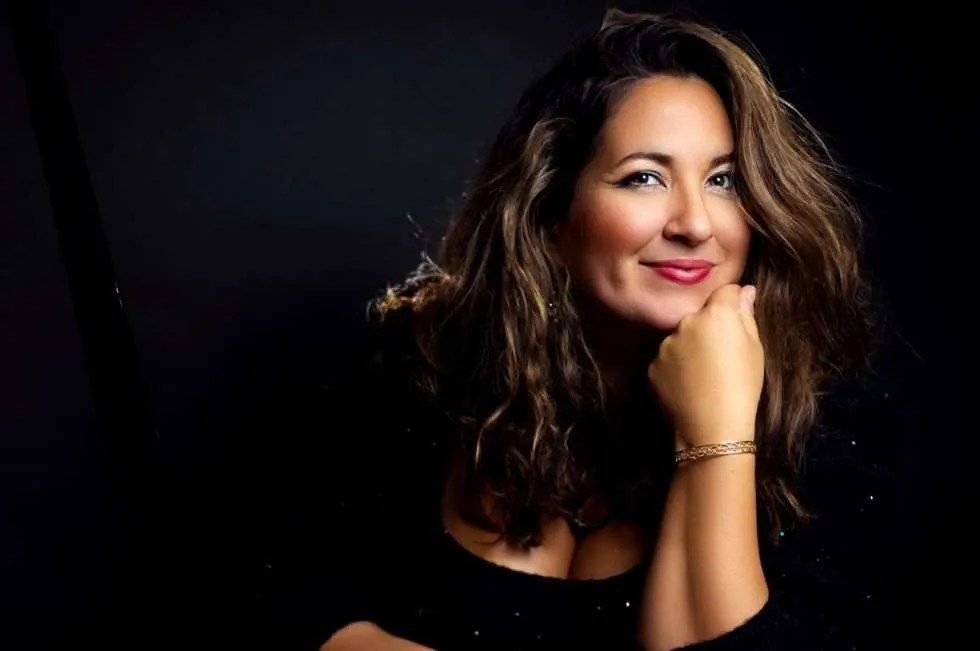
Maruja Limon. Photo provided

Formed in 2014, Maruja Limon is Sheila Quero and Esther Gonzalez, vocals; Mila González, trumpet; Vicky Blum, guitar; Eli Fabregas, drums and percussion, and Carla Gonzalez, bass.

They first made their mark in their homeland and across Europe and North Africa, starring in Festival Cruïlla, Festival Actual, Festival de los Sentidos, MMVV, Guitar BCN, Festival Bioritme and Pirineos Sur (Spain); Trans Musicales (France), Eurosonic (Holland), Sziget Festival (Hungary), Sudwave Arezzo (Italy), and Maré de Agosto (Portugal).

Like many acts Music Haven has brought here from around the world, Maruja Limon assembles sometimes unexpected ingredients into new recipes. Catalan and flamenco elements from home blend with modern electronics, jazz freedom and dance and pop fun. 

Their international renown earned Billboard’s On the Radar Latin recognition after Maruja Limon played their U.S. debut in the Latin Alternative Music Conference in New York. Their first U.S. tour hit Lincoln Center, the Kennedy Center and other major music centers.

Their latest album “Vidas” (2022) follows “Ante Mí” (Kasba Music, 2019) and “Más de ti” (2018); their debut that won the “Best Emerging Artist” at the ARC Awards. Their  album was nominated for “Best World Music and Fusion Album” at the 2020 MIN Awards.

Their songs build from often quiet introductions to stirring exuberance without losing intimacy. Or they charm in more quiet ways – but always sound entirely themselves, even when their vocals erupt in hip-hop cadences and the trumpet goes all jazzy.

For both venues, Passport Series shows begin at 7:30 p.m. Tickets are $34.50 individually, or three shows for $100. 518-346-6204 http://www.proctors.org.

After Maruja Limon’s Thursday show at Proctor’s GE Theatre, the Passport Series continues into spring.

Nov. 5: The Naghash Ensemble from Armenia at Universal Preservation Hall. This ensemble accompanies lyrics from ancient poetry on equally venerable instruments: duduk, oud, and dhol.

Feb. 4: Gili Yalo from Ethiopia and Israel at Proctors GE Theatre. A trans-Africa/Middle Eastern fusion spiced with contemporary soul and jazz under lyrics of resilience, identity, and hope.

March 6: La Banda Morisca from Andalucia, Spain at Universal Preservation Hall. Sounds from a busy international, inter-musical crossroads, including both indigenous traditions and modern flamenco zip.

April 16: Yacouba Sissoko from West Africa at Proctors GE Theatre. Master of the 21-stringed kora, ancient cross between a harp and a lute, he tells tales of community while incorporating contemporary elements.

May 14: Kiran Ahluwalia from India via Canada at Universal Preservation Hall. Maybe this season’s single most international artist, she makes songs that hybridize Indian melodies with North African desert blues and American styles.

Opener to Headliner

Only an extra-strong headline set by the Gibson Brothers kept opener Sara Milonovich from stealing their Music Haven show this summer. She returns as headliner – a role she’s long earned as both band-member and leader of her own Daisycutter crew – at Caffe Lena on Friday.

As reported here, their Music Haven show felt like this:

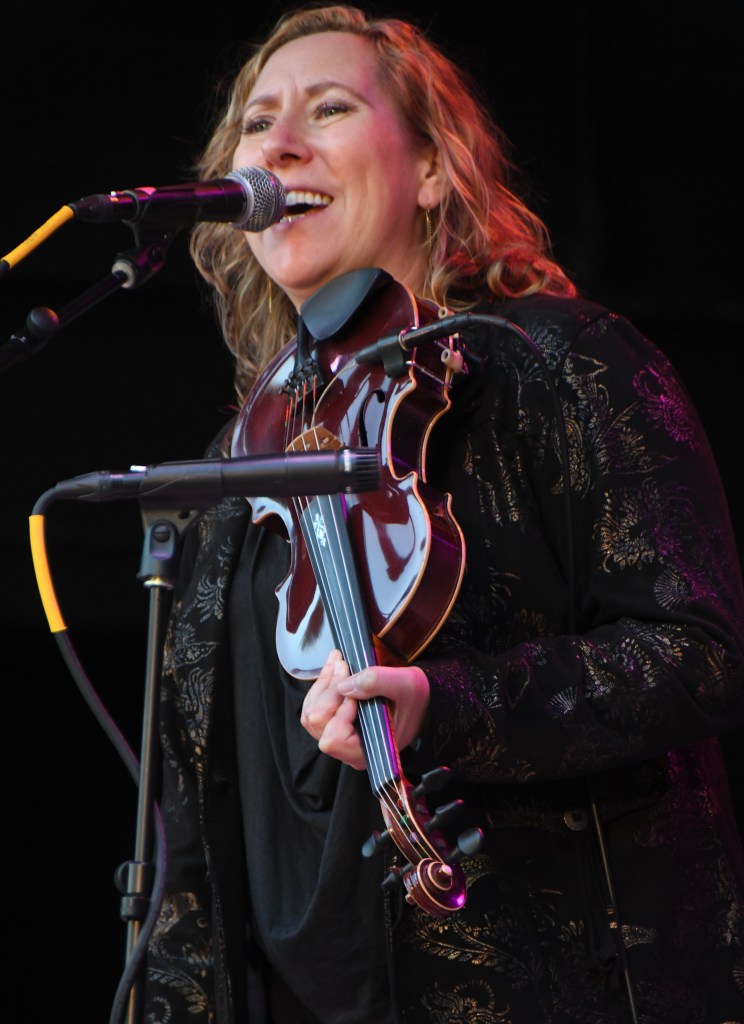
Sara Milonovich, above; with her band, below

Review excerpt:

Both North Country creatives the Gibson Brothers and Sara Milonovich built from the particular to the universal with music that often described a snowy homeland but whose emotional truth and sonic power reached out to everywhere.

Milonovich opened; 45 minutes of well-received originals old and new and some covers. Her Daisycutter crew played and sang like the seasoned pros they are: Boo Reiners, banjo and electric guitar; Greg Anderson, guitar; and Bob Buckley, bass. Milonovich grabbed and held the spotlight, a star with voice and fiddle. 

Some originals told local tales. “87 North,” for example, is their “Route 66” or “Highway 61,” minus the romance but with icy spots and hot fiddle and banjo. “What We Did with the Place” decries Adirondacks gentrification by come-here folks, like Michael Jerling’s “How Can People Live Like That.” Others spun out wider; any touring musician could relate to “Last Resort Motor Inn,” Sara M’s high strong voice recounting the sleaze of the place, washed away in a serene fiddle break. Maybe the only bluegrass crew on the road that covers Led Zeppelin, their late-set highlight of Zep’s “Friends” hit hard, but lyrical. (They’d opened with Josh Ritter’s [geo-specific/universal] folkie “Lawrence, KS.”) An album in the making sourced the devotional “Planting and Harvest,” a strong live number that helped earn a standing ovation for a compressed but strong showcase.

Now that album – “Last Resort Motor Inn” –  is complete, available and provides an expanded repertoire for the Amsterdam born, farm-raised Milonovich who’s carried the sounds of home to Europe and Asia in a State Department tour and to Broadway in the Tony Award-winning “Come From Away.” 

Closer to home, she’s co-starred in the McKrells and leads her own crew, Daisycutter. She won as “Americana Artist of the Year” at the Capital District Thomas Edison Music Awards (the “Eddies”); she also won the national-scale Bluebird Golden Pick songwriting contest at Nashville’s legendary Bluebird Cafe.

The Gibson Brothers played Caffe Lena September 4; and this Friday is Sara Milonovich’s turn. 8 p.m. General admission $27.11, members $23.86, children and students $13.56. 518-583-0022 www.caffelena.org

Joy, in Troy

Samara Joy has also moved up since her area debut. She headlines Tuesday, Sept. 29 at Troy Savings Bank Music Hall after early-in-the-day sets at Albany’s Riverfront Jazz Festival (2023) and the Saratoga Jazz Festival and Jazz at the Lake (2024).

Samara Joy at Saratoga Jazz Festival

Since winning the 2019 Sarah Vaughan International Vocal Competition after studying at SUNY Purchase, the Bronx-born Joy released her self-named debut album in 2021. When her second, “Linger Awhile” won two Grammys, she was on her way to everywhere. Her EP “A Joyful Holiday” won the Best Vocal Jazz Album Grammy and Best Jazz Performance in 2025 while her latest, “Portrait,” won an NAACP Image Award in 2025 for Outstanding Jazz Album and the Grammy for Best Vocal Jazz Album in 2026.

Joy’s performing warmth makes even large outdoor venues feel intimate. The Hall’s celebrated acoustics seem ideal for her easy-flowing voice; for her well-honed touring band, too. 7:30 p.m. $87.50 and $67.50 518-273-0038 www.troymusichall.org
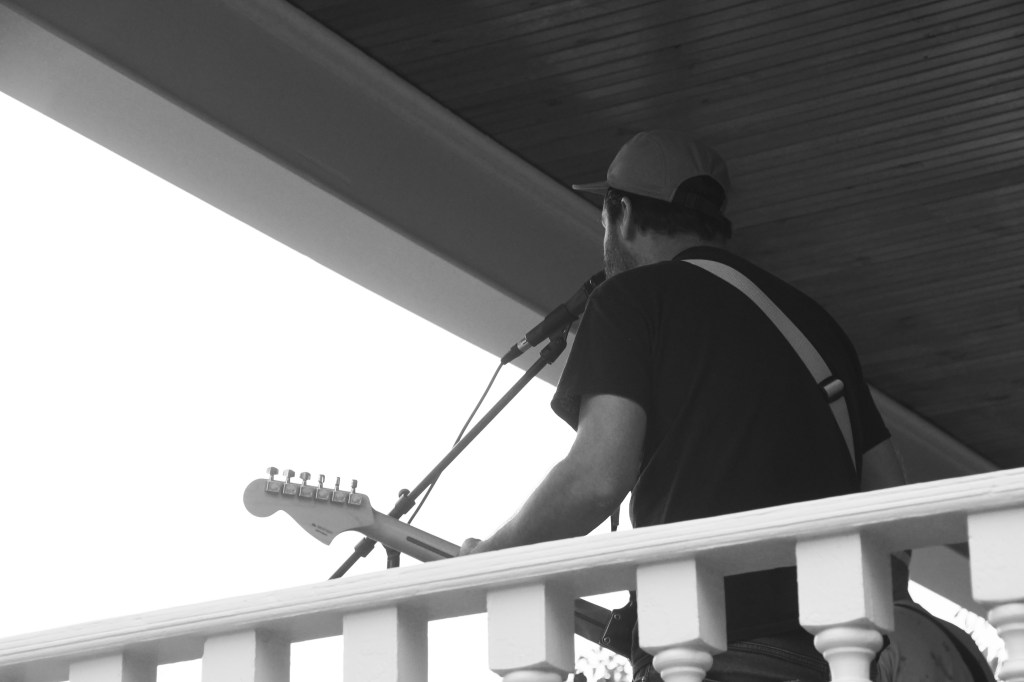
More PORCHFEST Pix

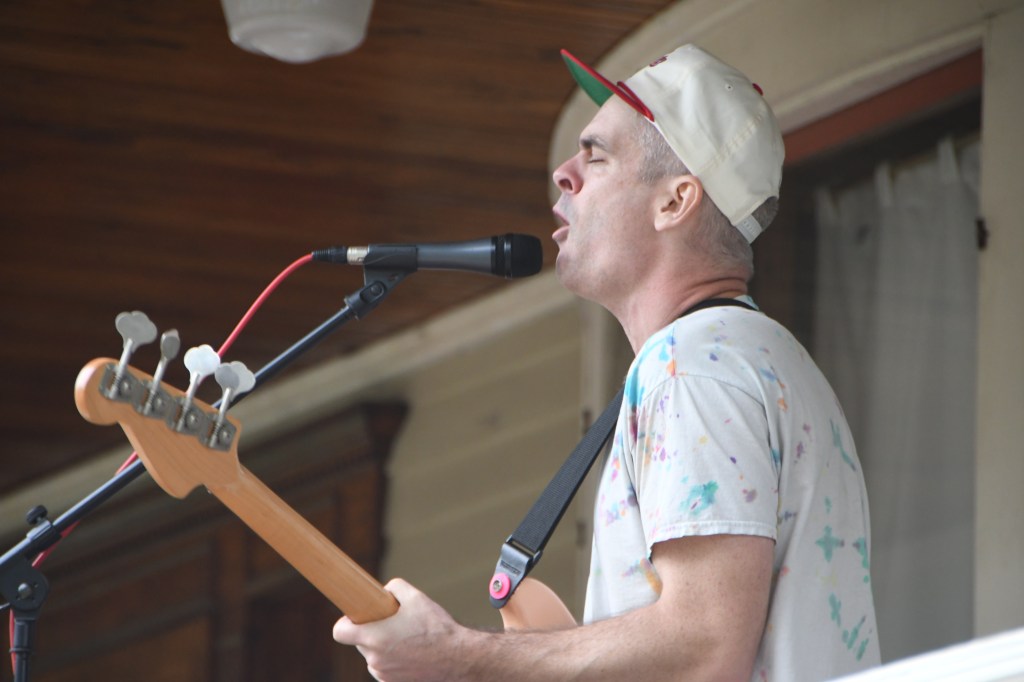
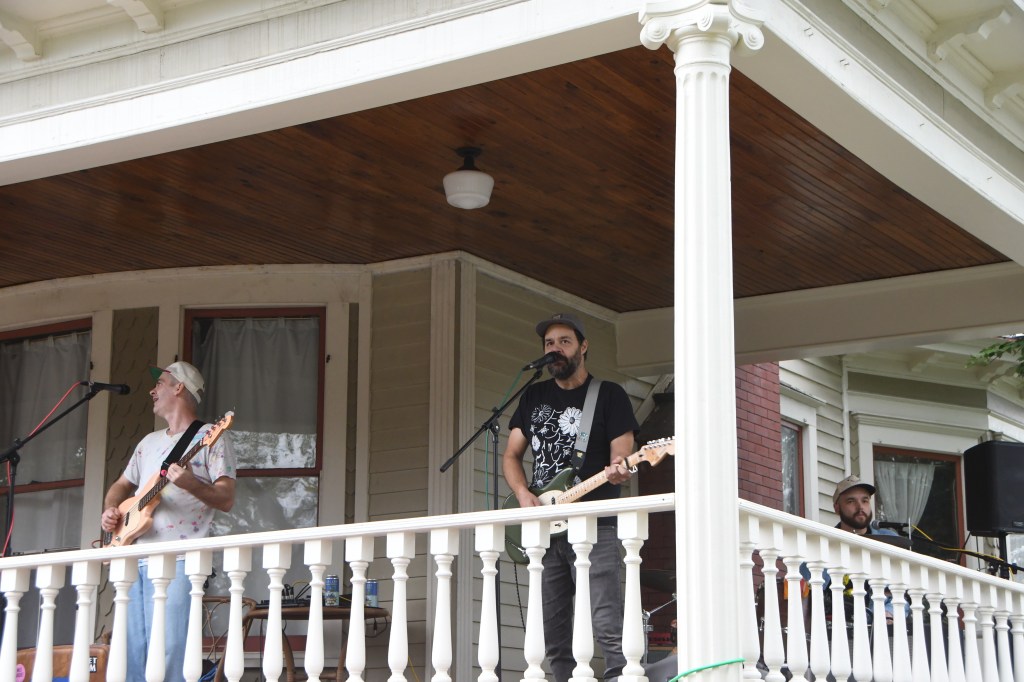
Above: Eric Ayotte of Nice Hockey on Ardsley

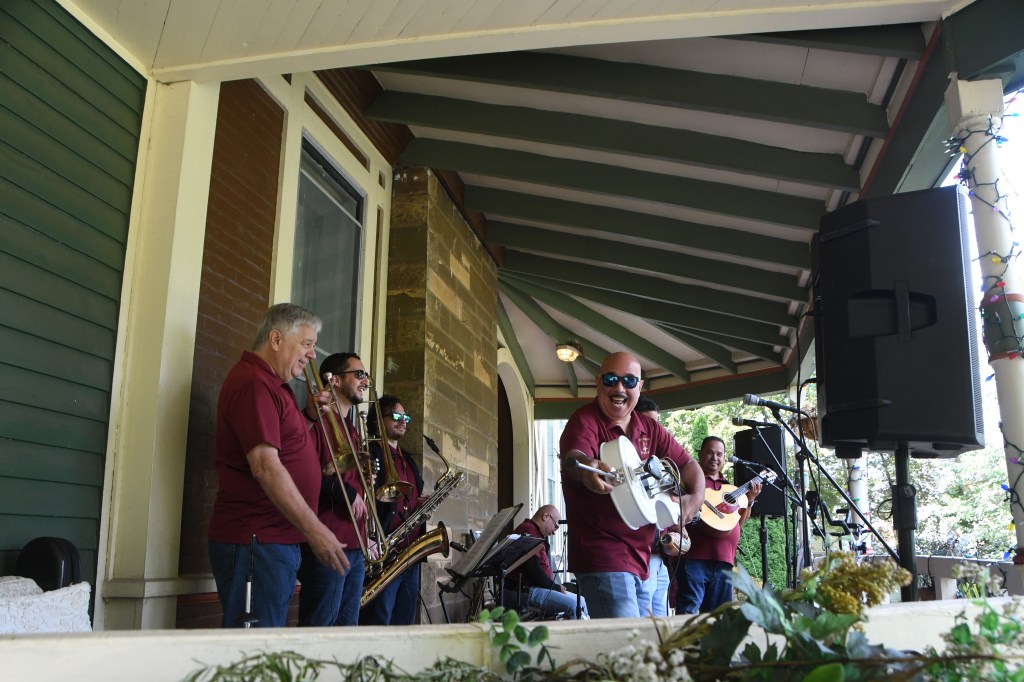
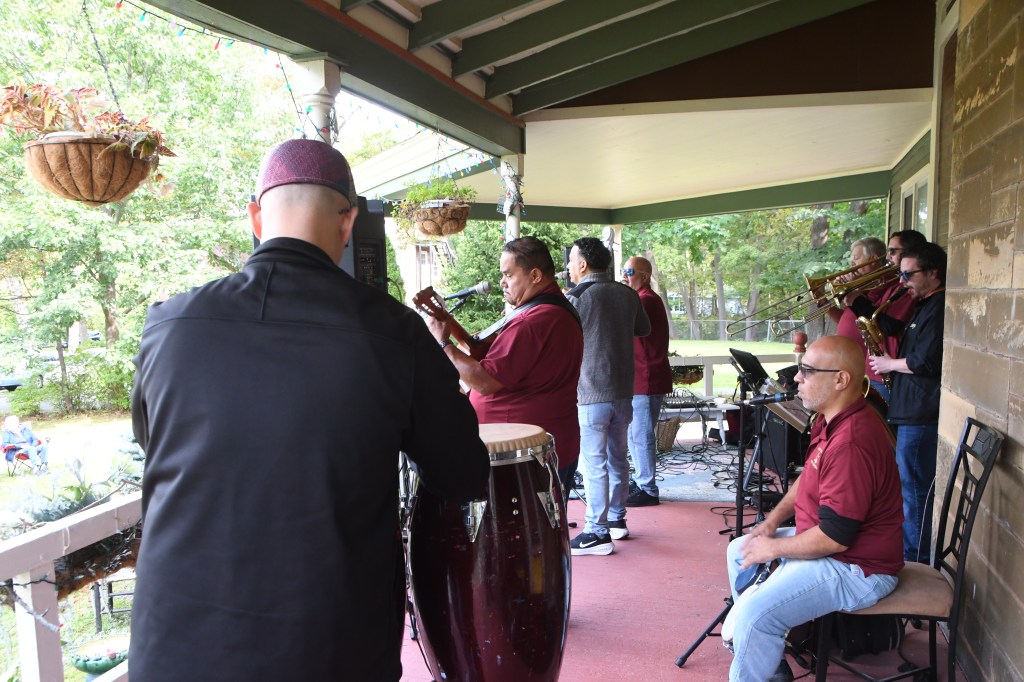
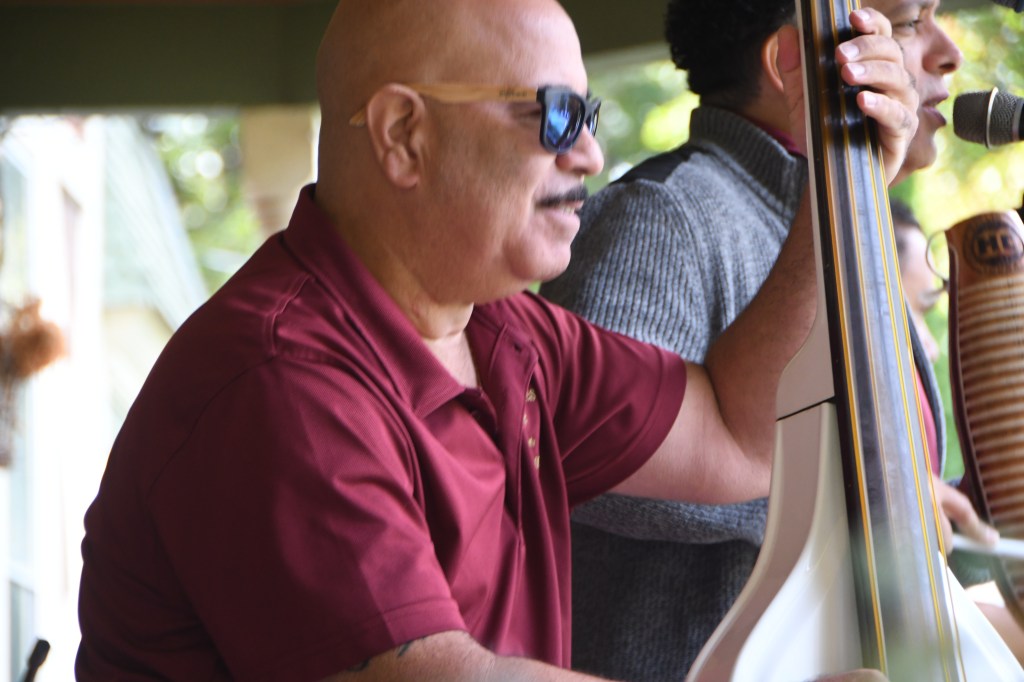
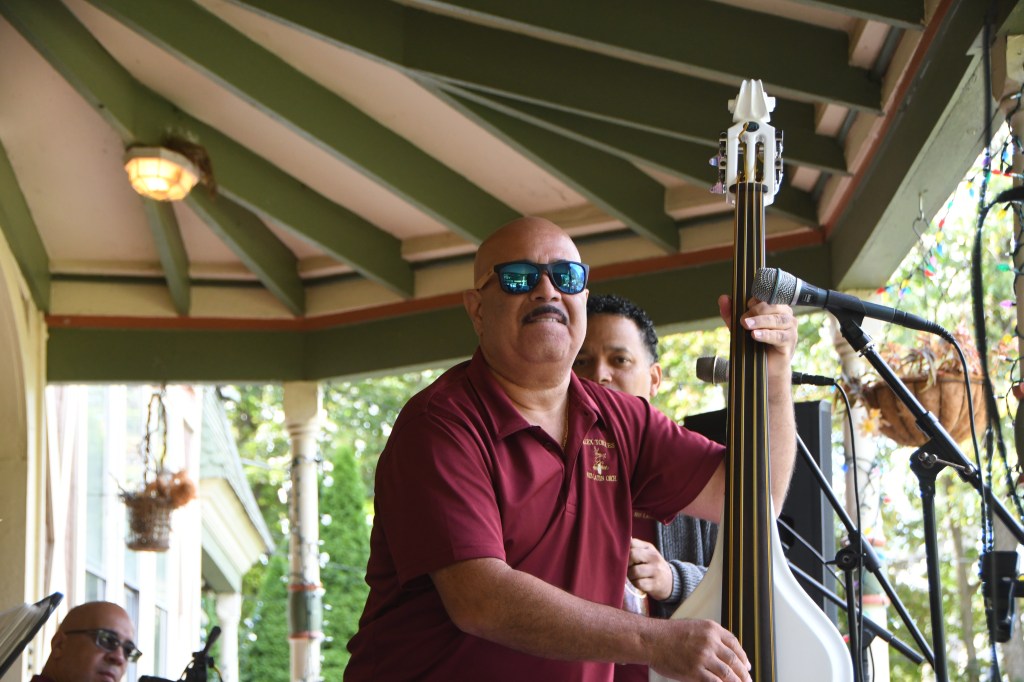
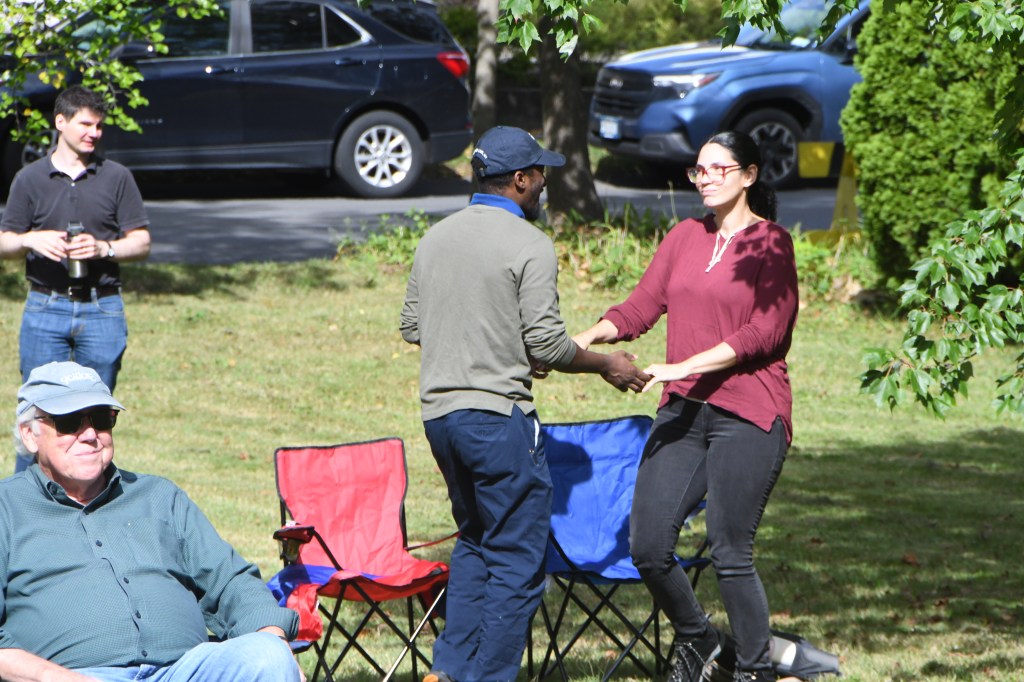
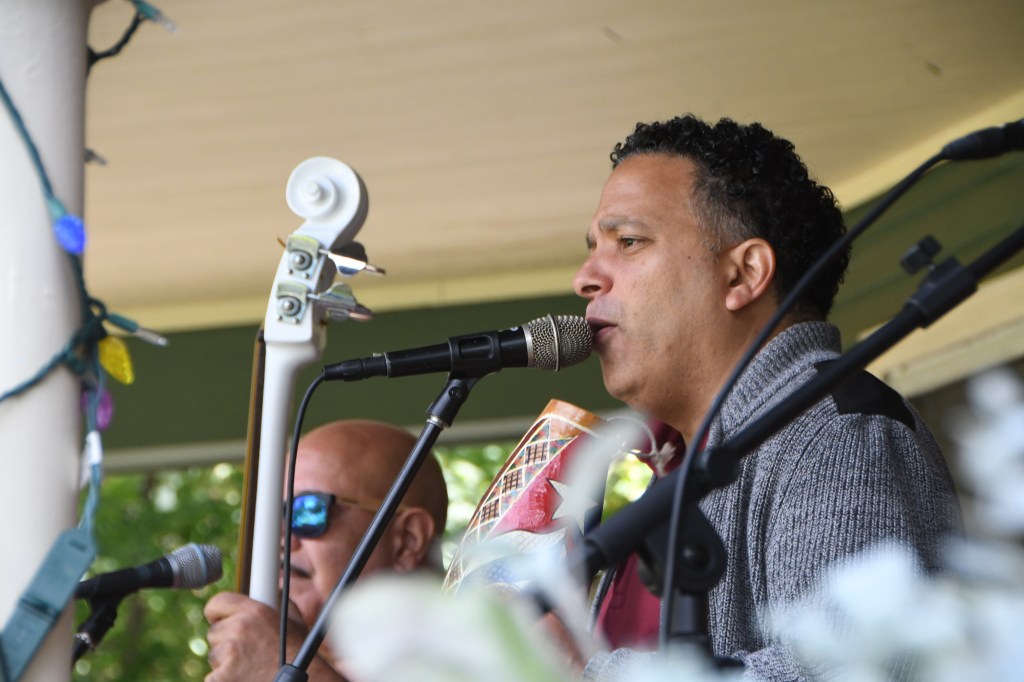
Below: Alex Torres Orquestra and fans on Wendell

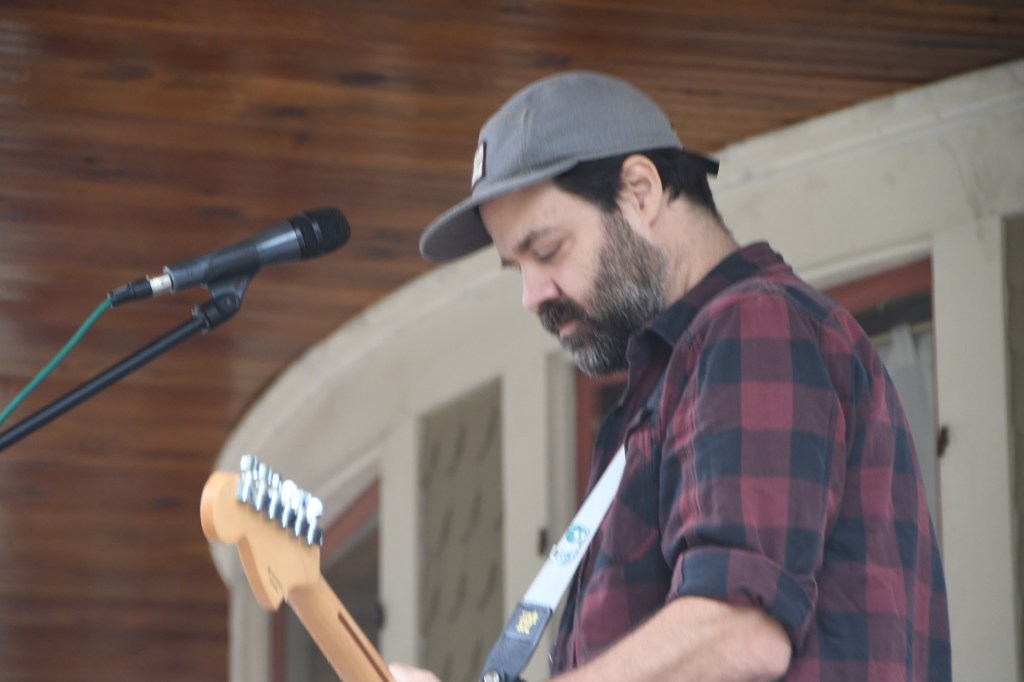
Below: Hansbrough-Quigley on Ardsley

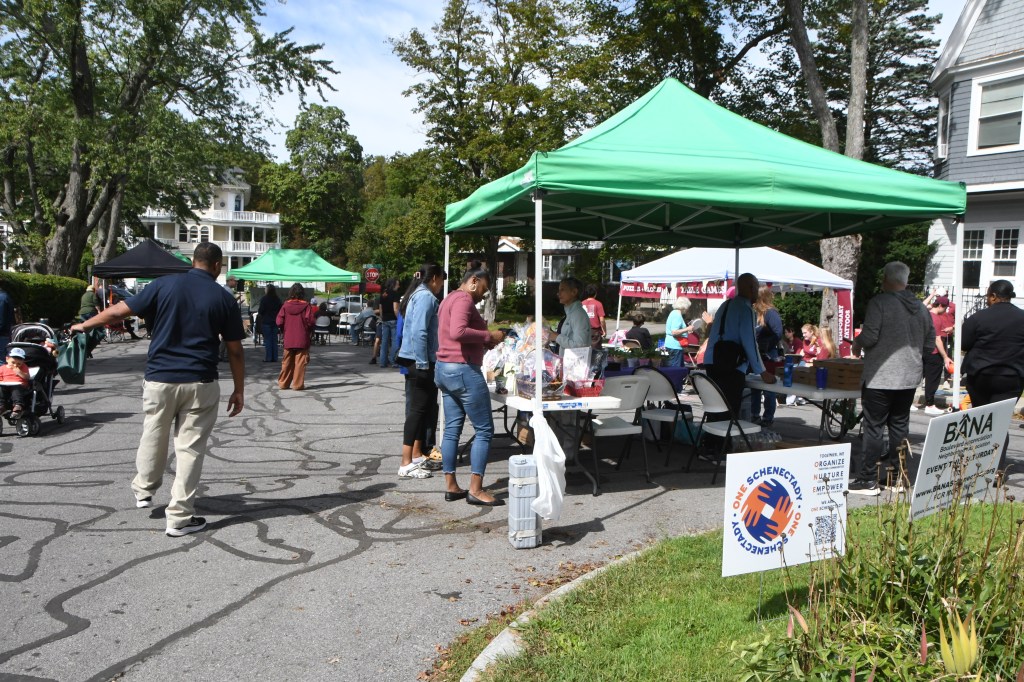
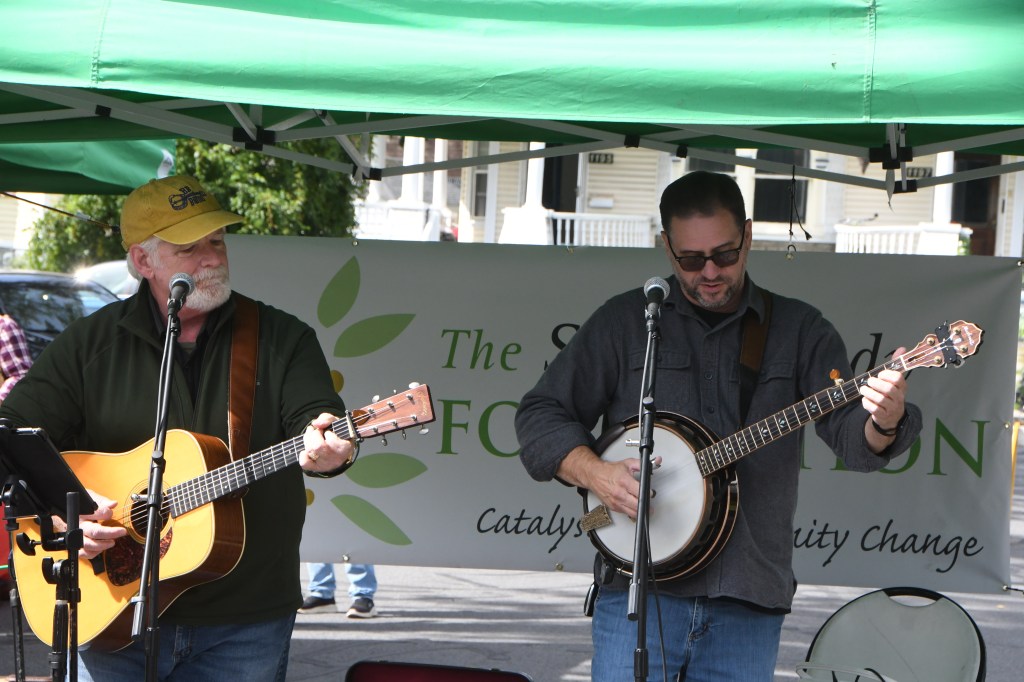
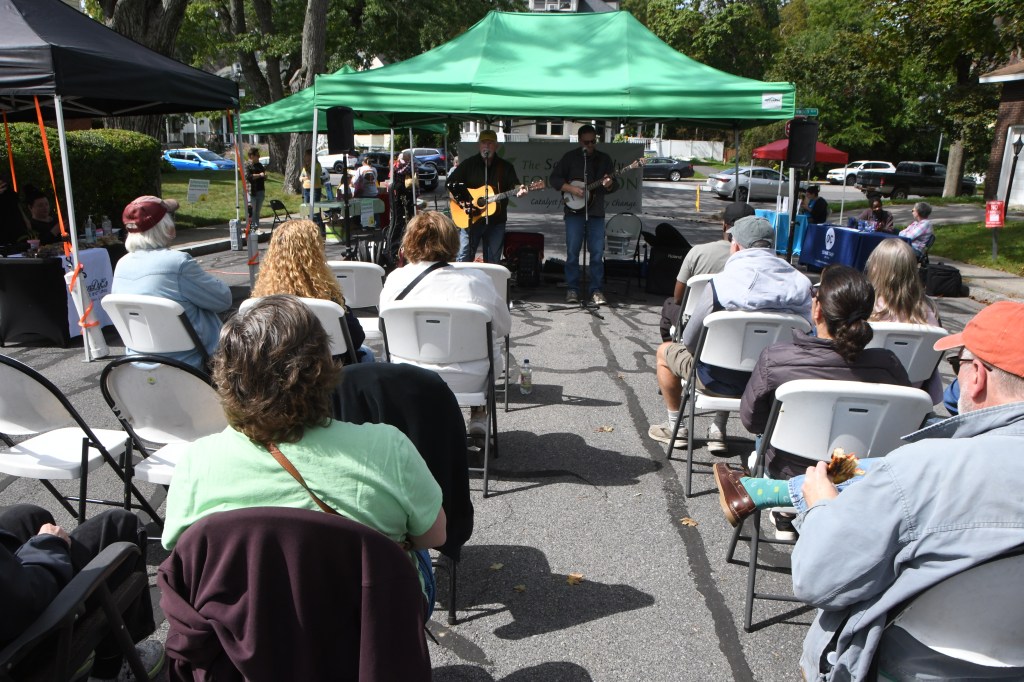
Below: Boulevard Area Neighborhood Association festival on the Plaza, with Scott Hopkins Duo Porchfest show

Below: Dylan Canterbury Quintet on Douglas

Below: Keith Pray’s Ortet on Wendell

Below: Matty Stecks (Matt Steckler) and the 518 on Douglas

Below: Tim Olsen Quartet on Wendell

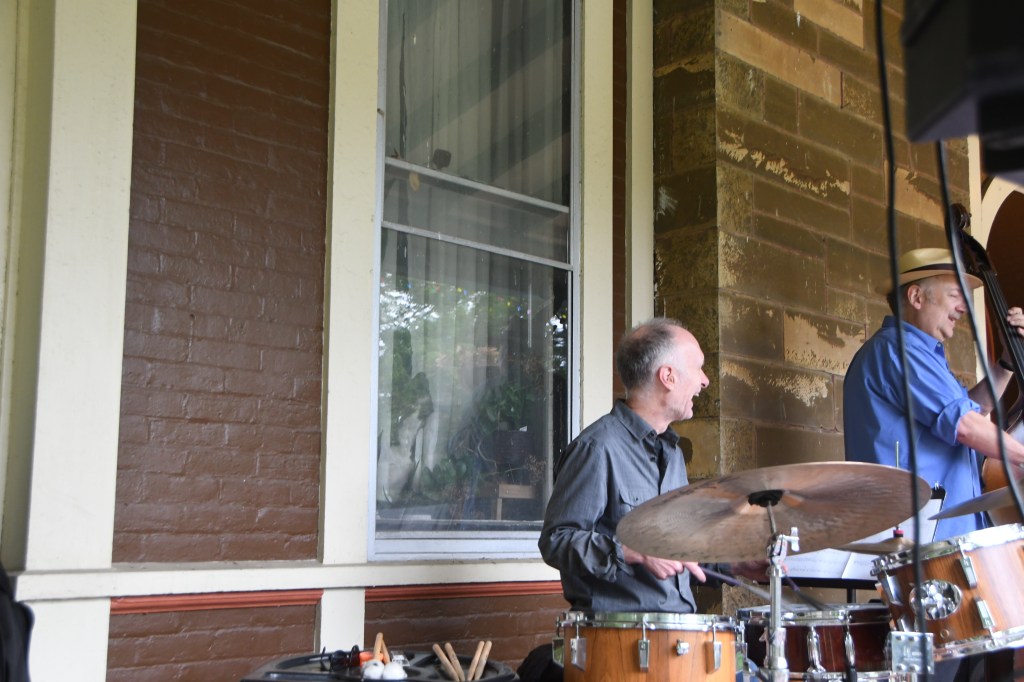
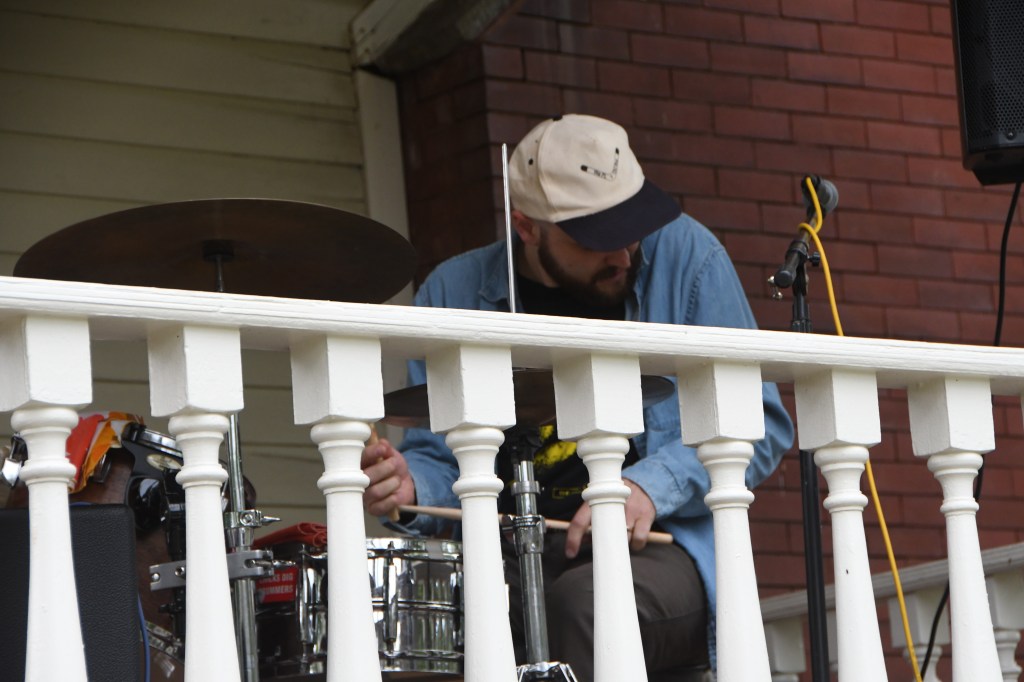
Here’s where the dog barked in the window behind drummer Pete Sweeney.

Below: Nice Hockey on Ardsley

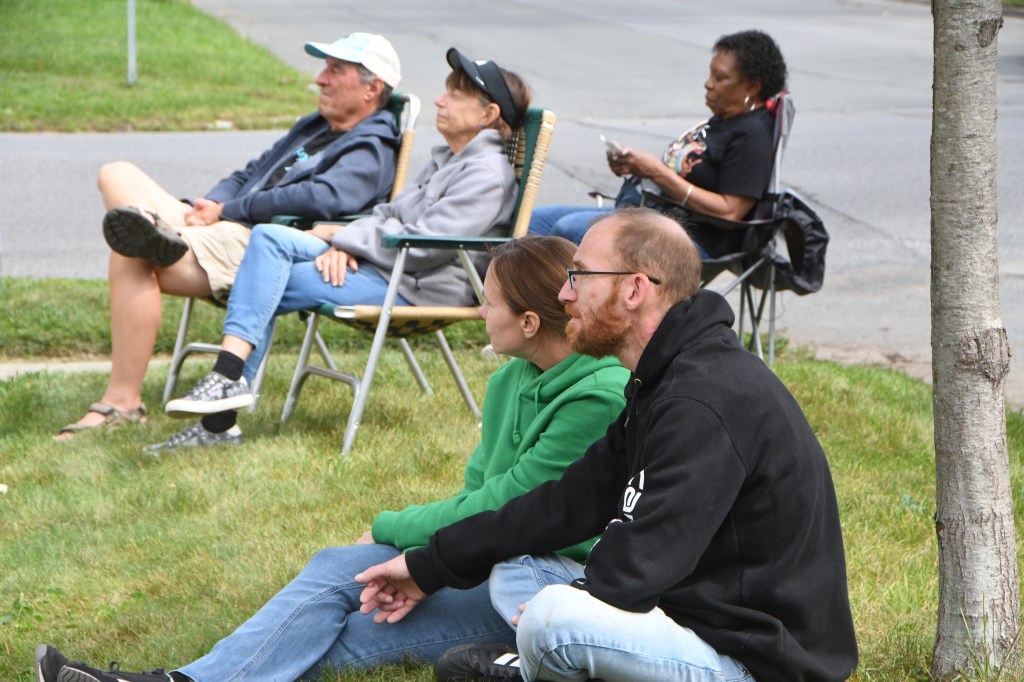
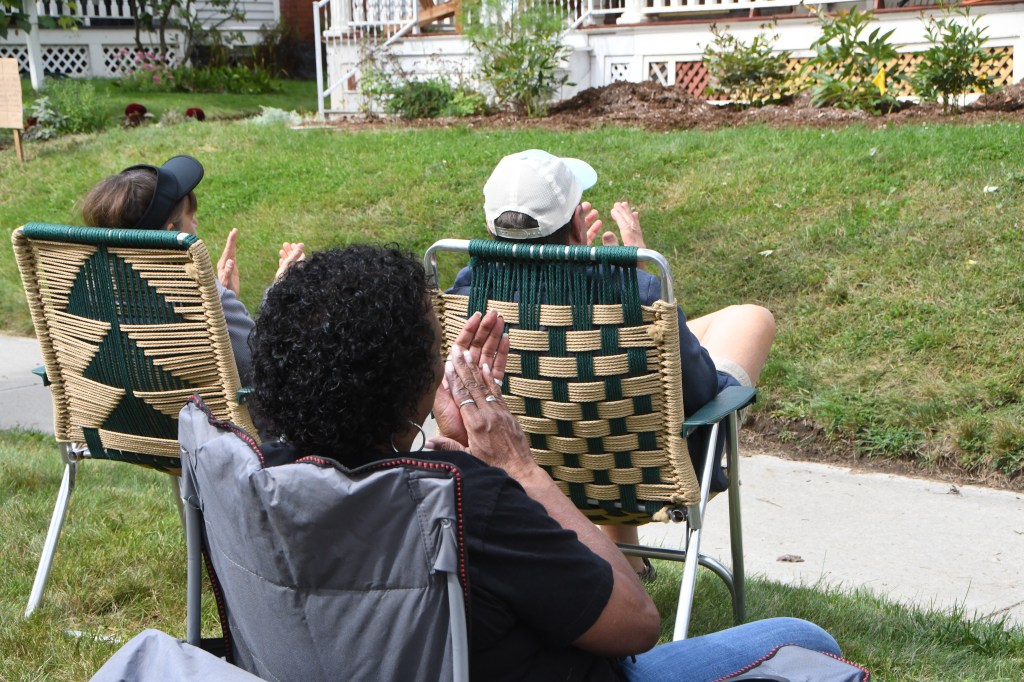
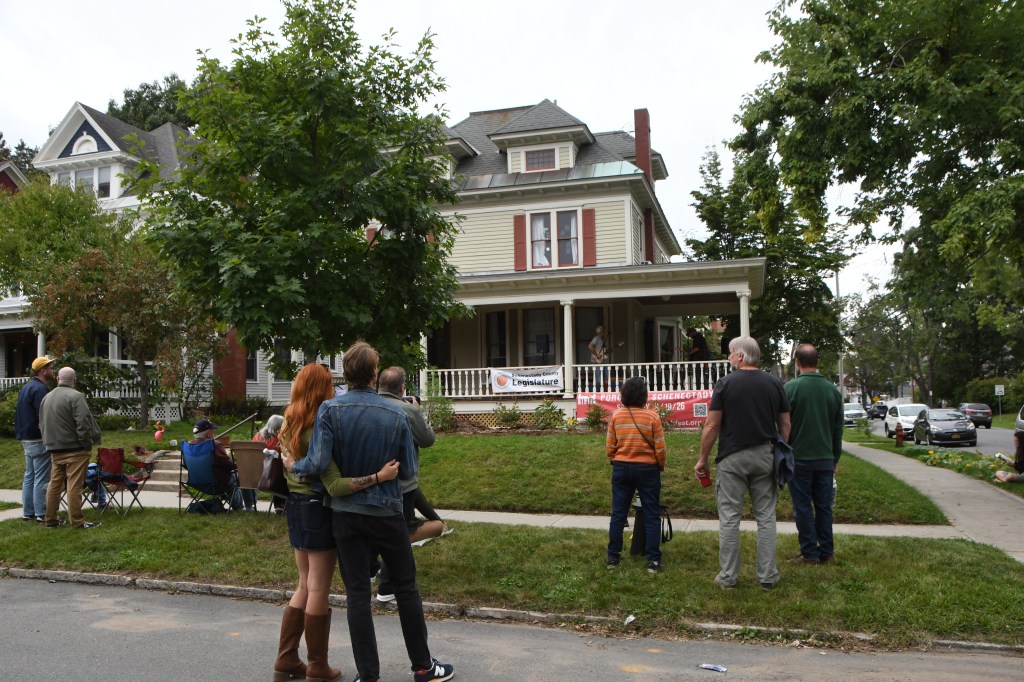
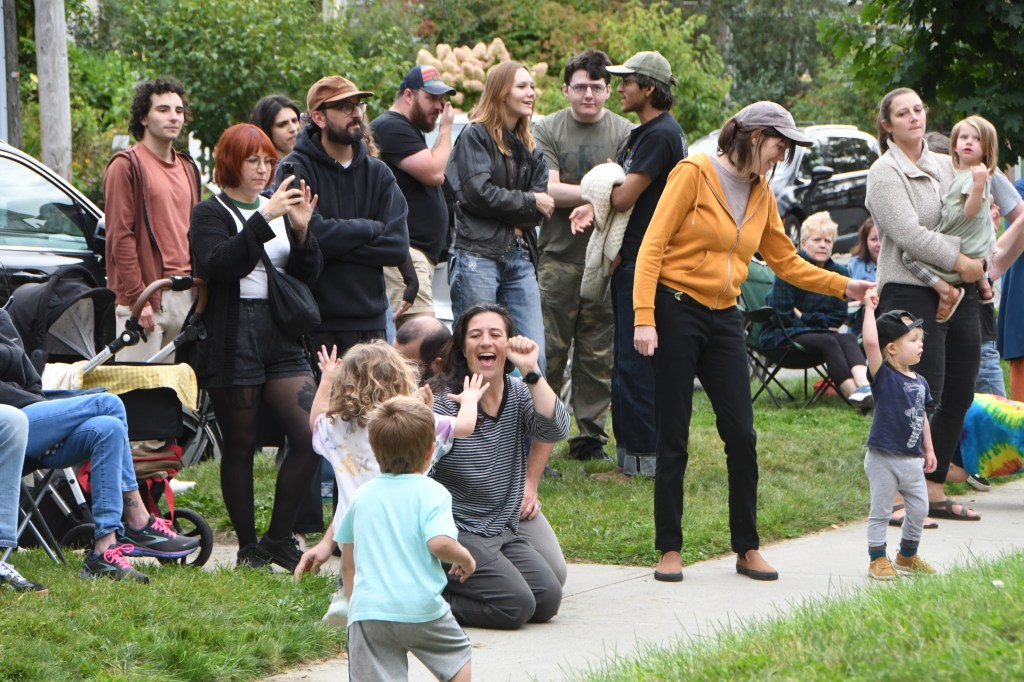
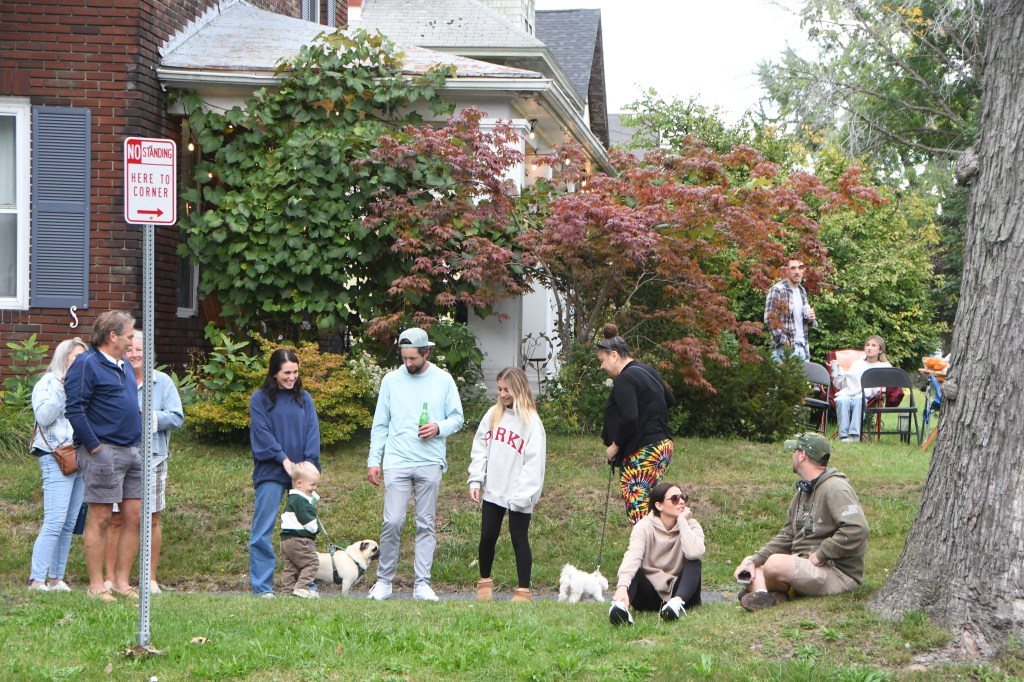
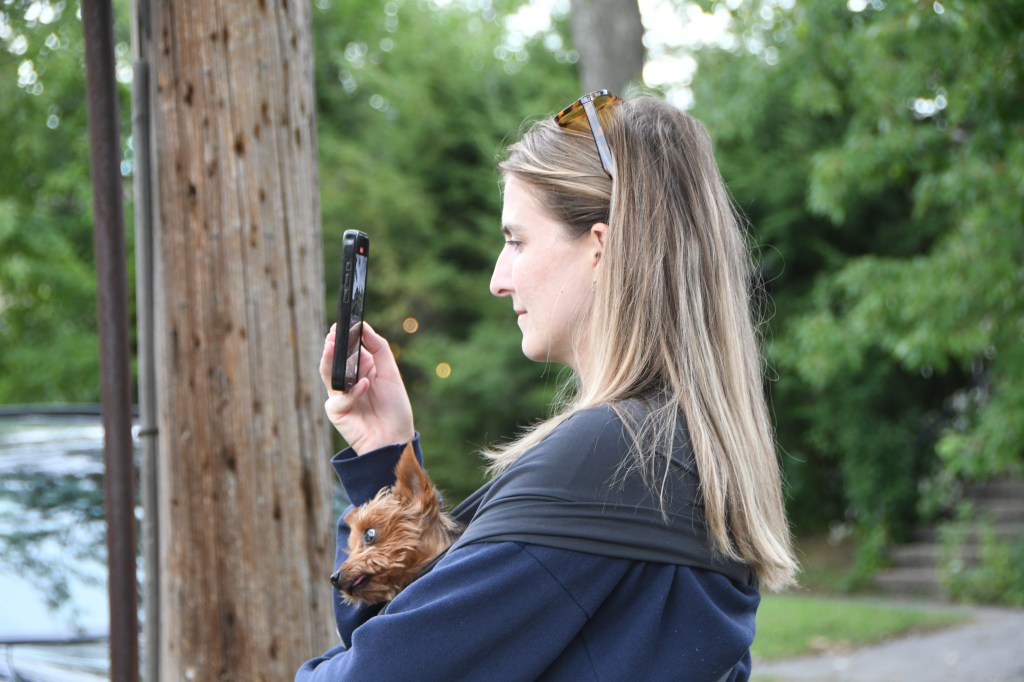
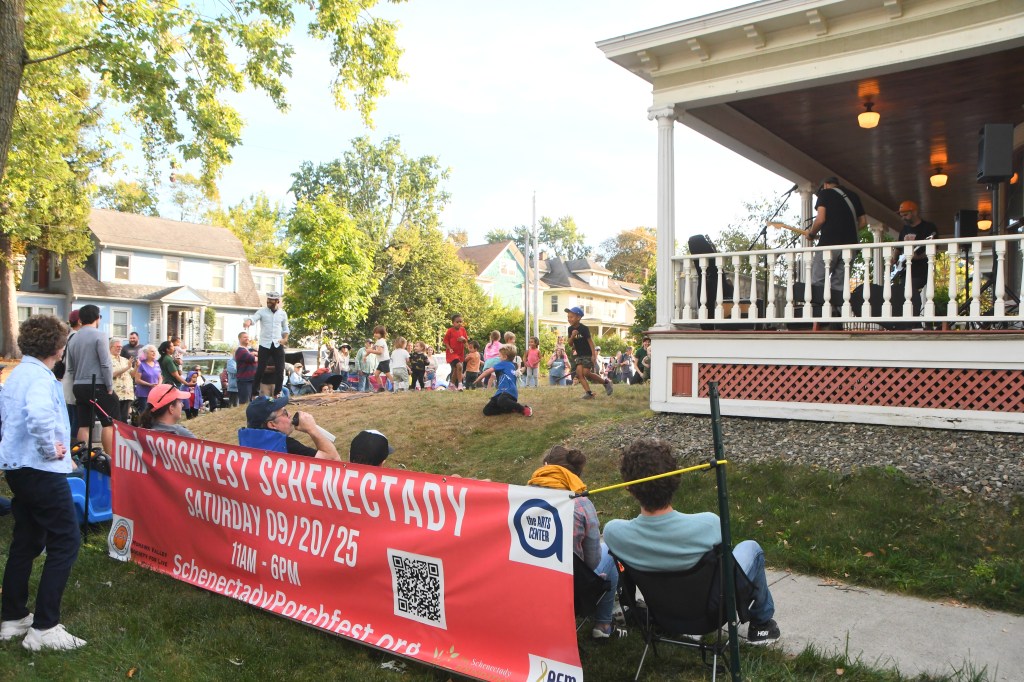
Above: Fans across Rugby Road joined the party. Below, this woman sang along with every song.

Sunny Sounds Saturday

Review: Area Acts Star and Stir in Porchfest 26

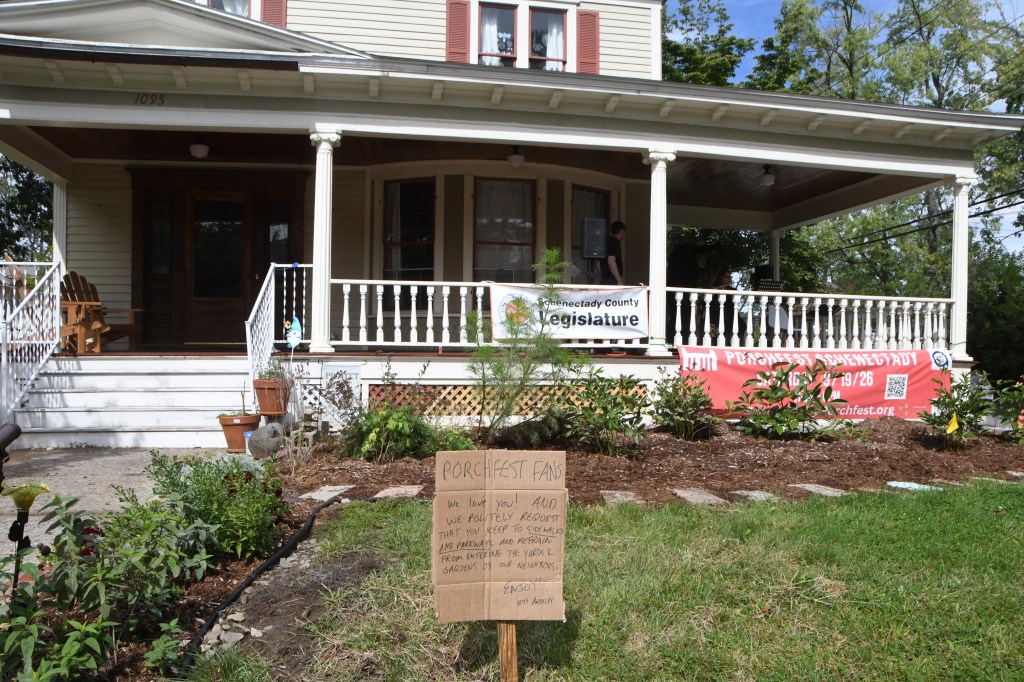
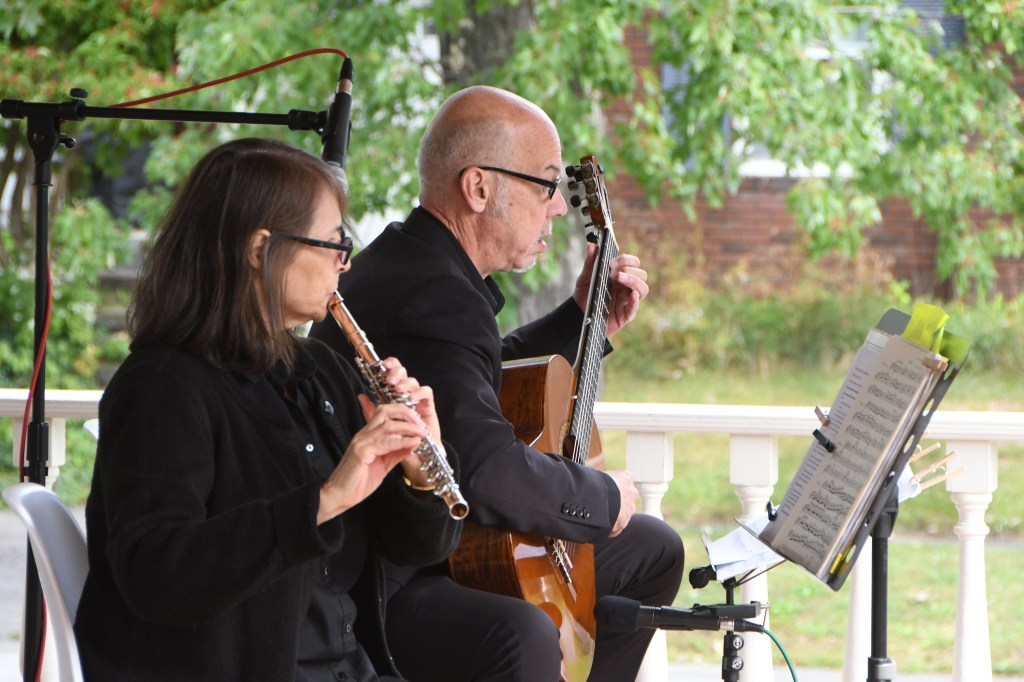
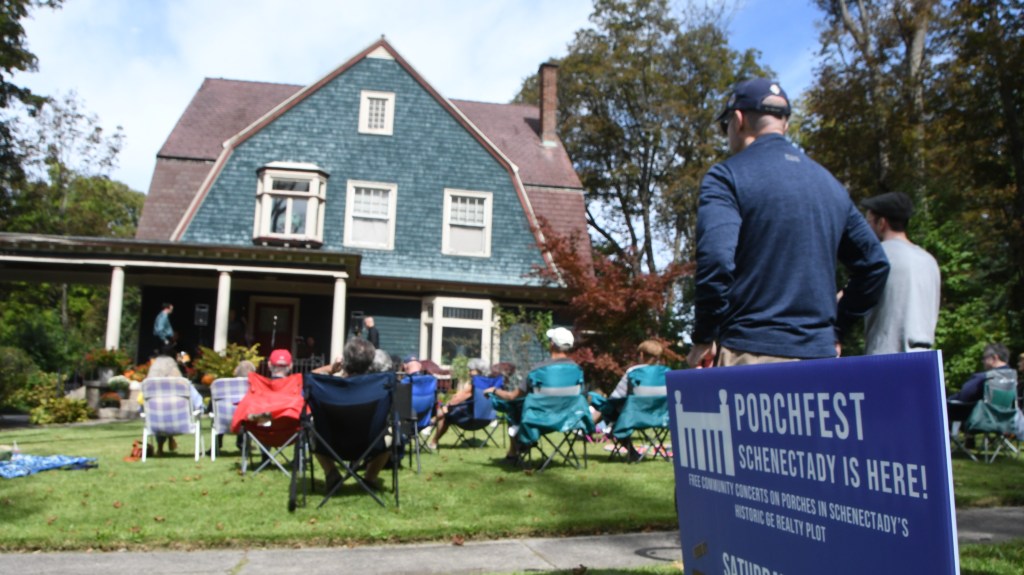
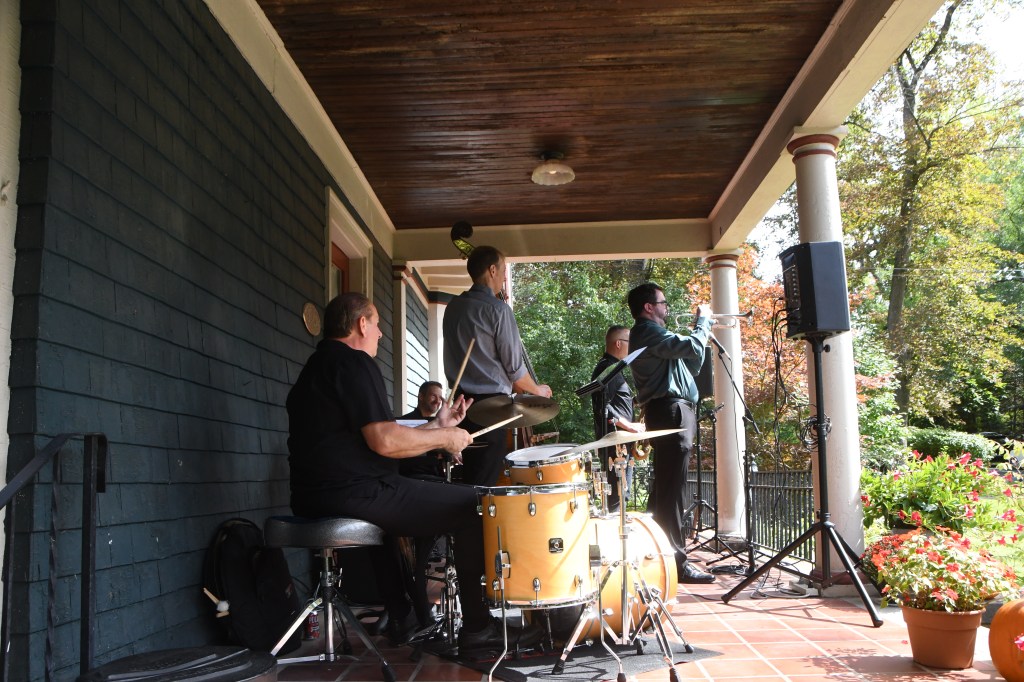
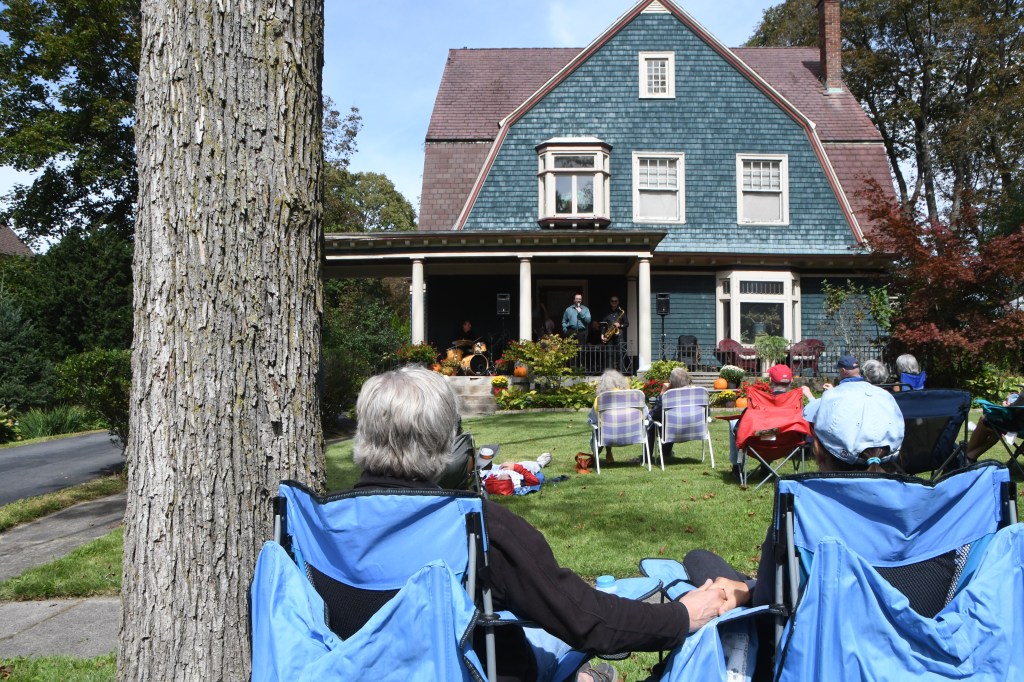
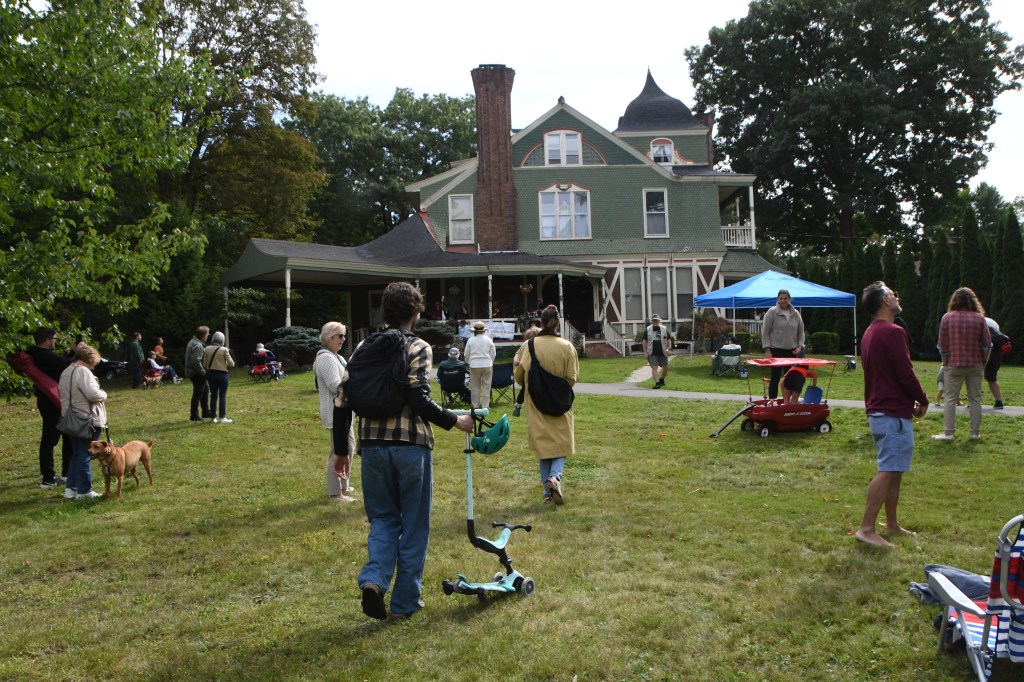
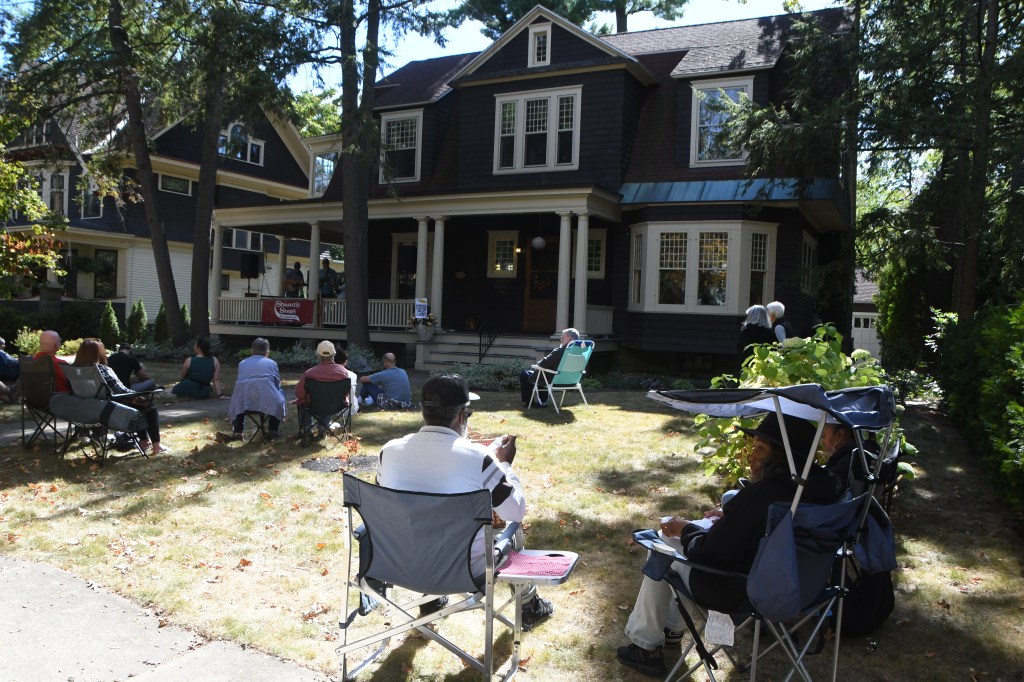
Schenectady’s fourth Porchfest Saturday presented fifteen artists – from bluegrass to classical to jazz on six porches and inside a church. Among this year’s “bests” – nicer weather than forecast.

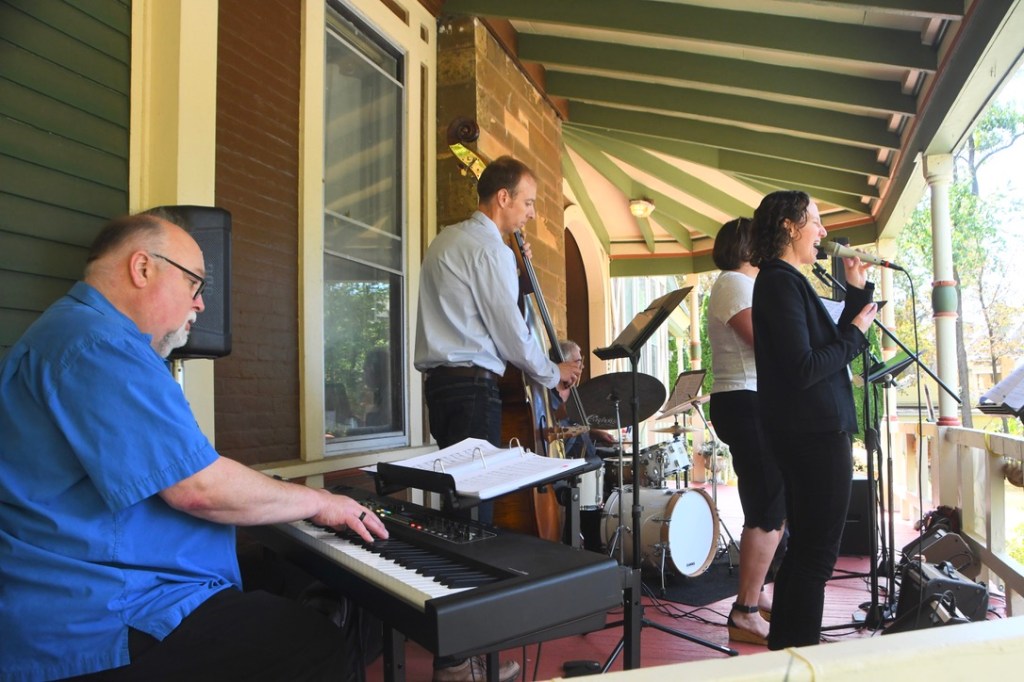
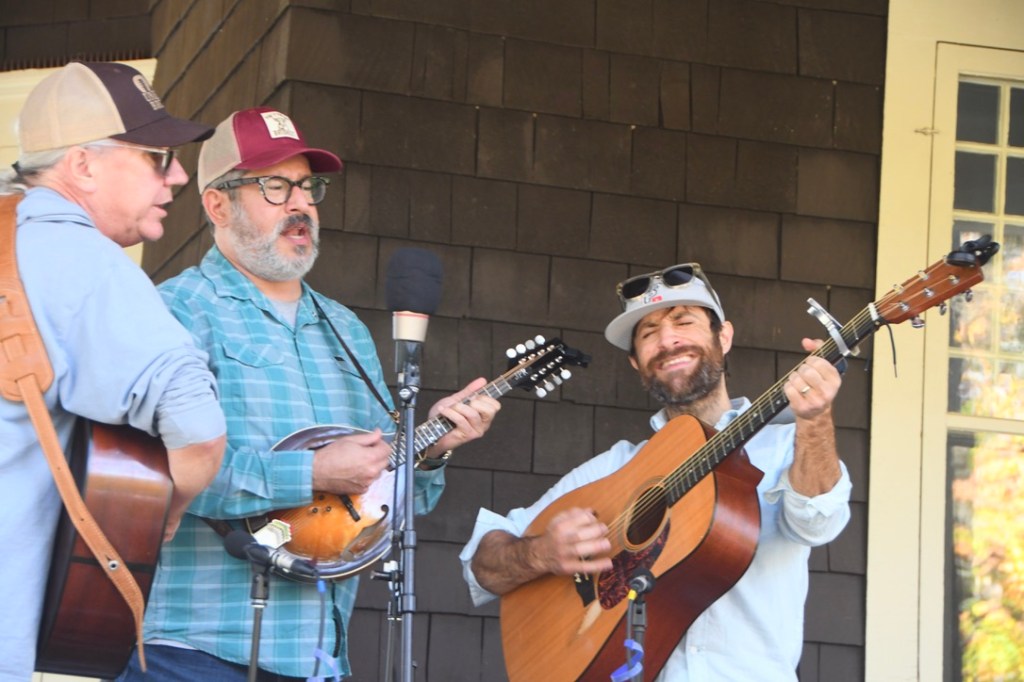
Jazz dominated with seven acts; plus two bluegrass-y bands, two classical ensembles, a Latin dance band, an Indian sitar and tabla duo and a church choir.

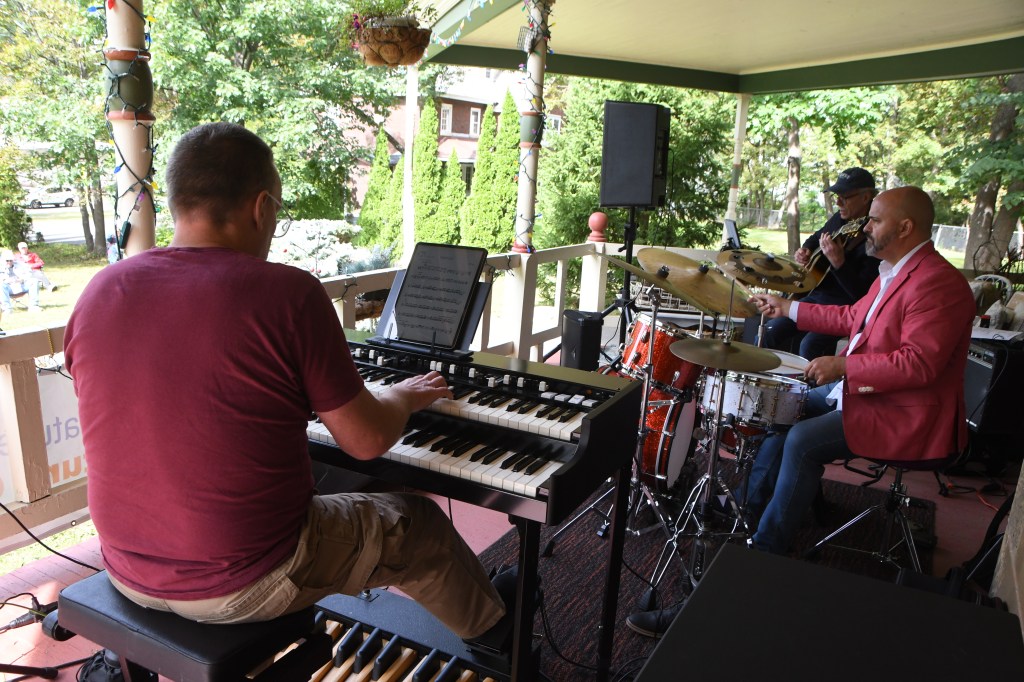
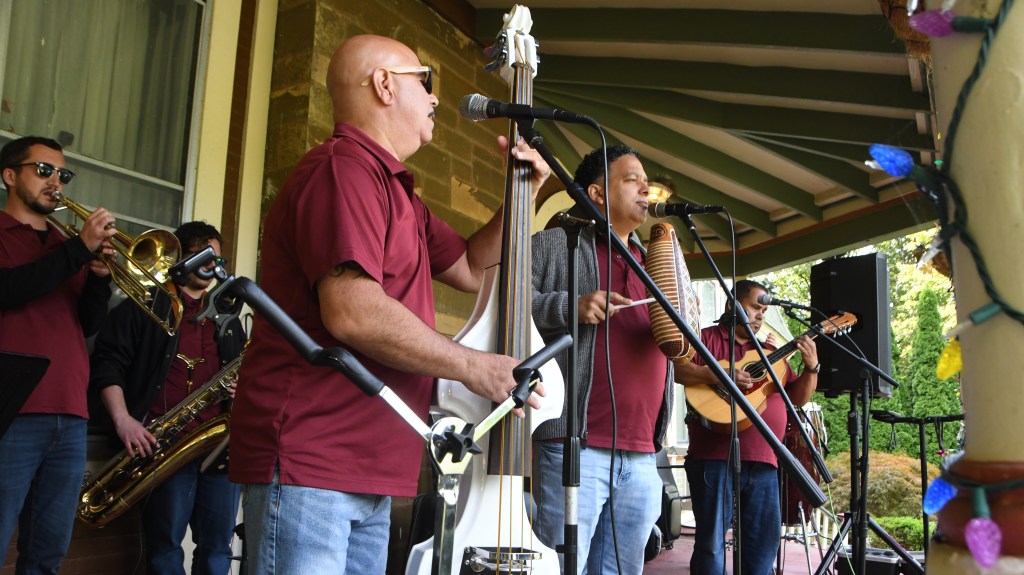
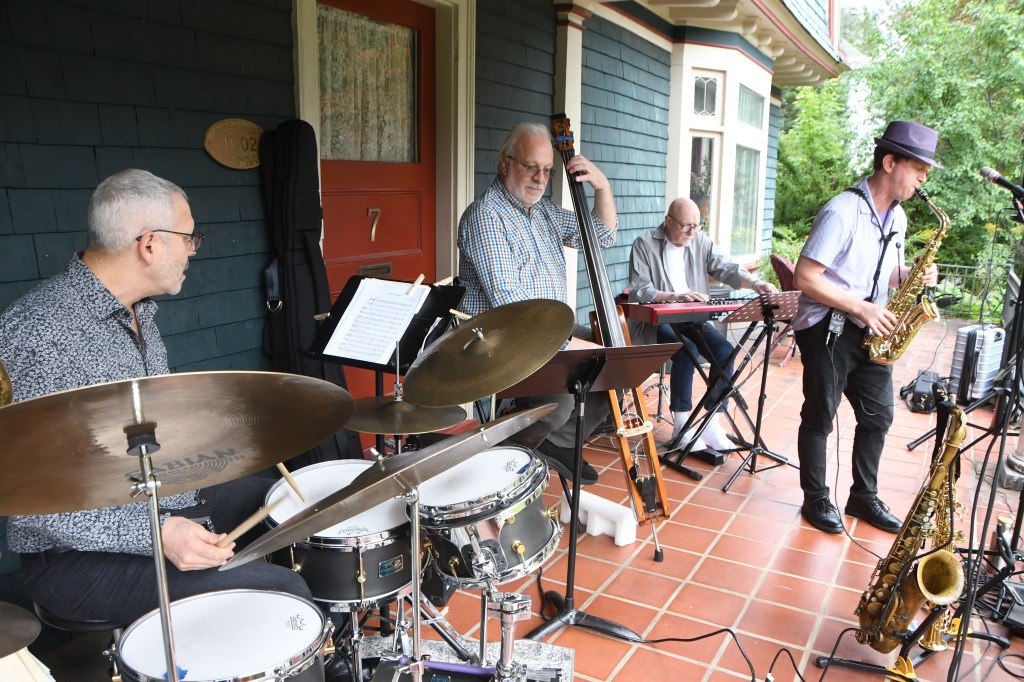
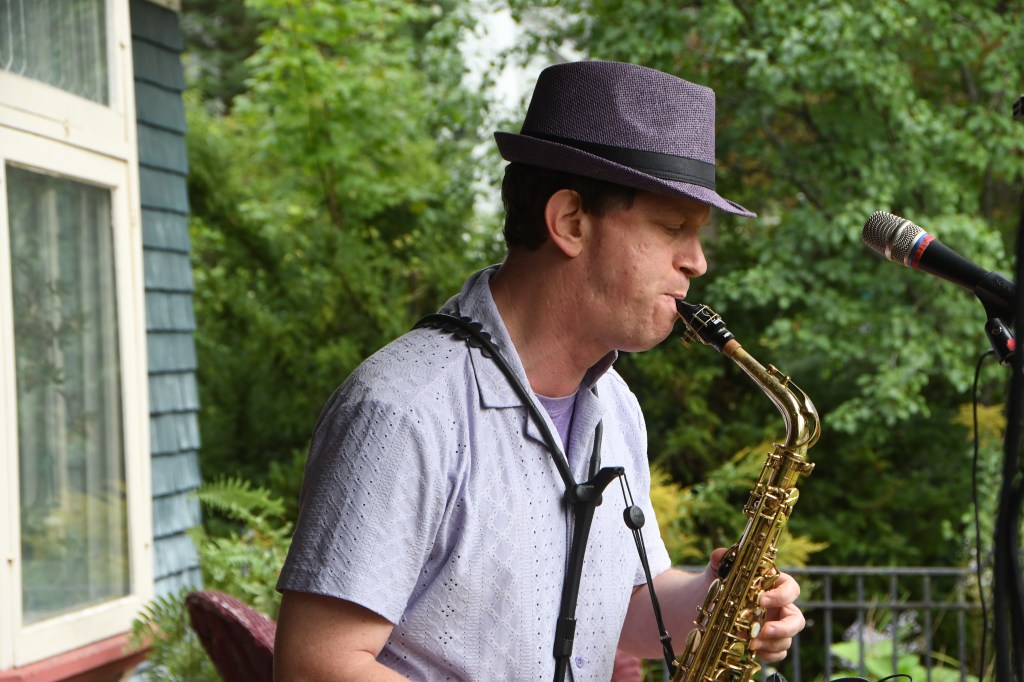
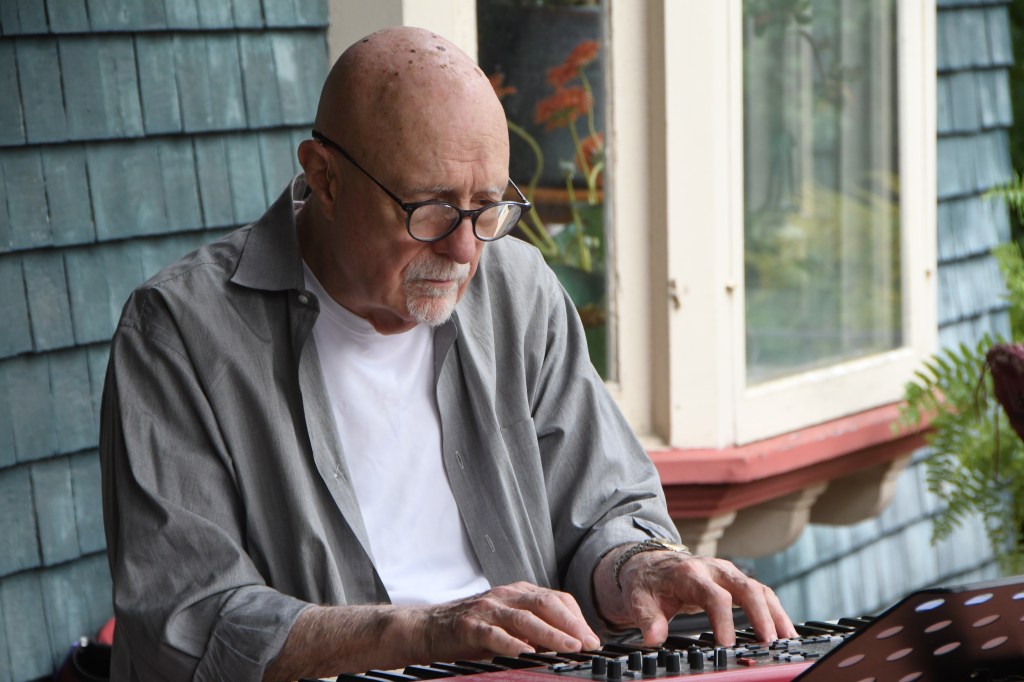
Top: Alex Torres Orquestra on Wendell; Torres playing bass. Middle: Matt Steckler and the 518 on Douglas, from left: Jeff Siegel, drums; Rich Syracuse, bass; Pete Levin, keyboards, and Steckler, alto saxophone.

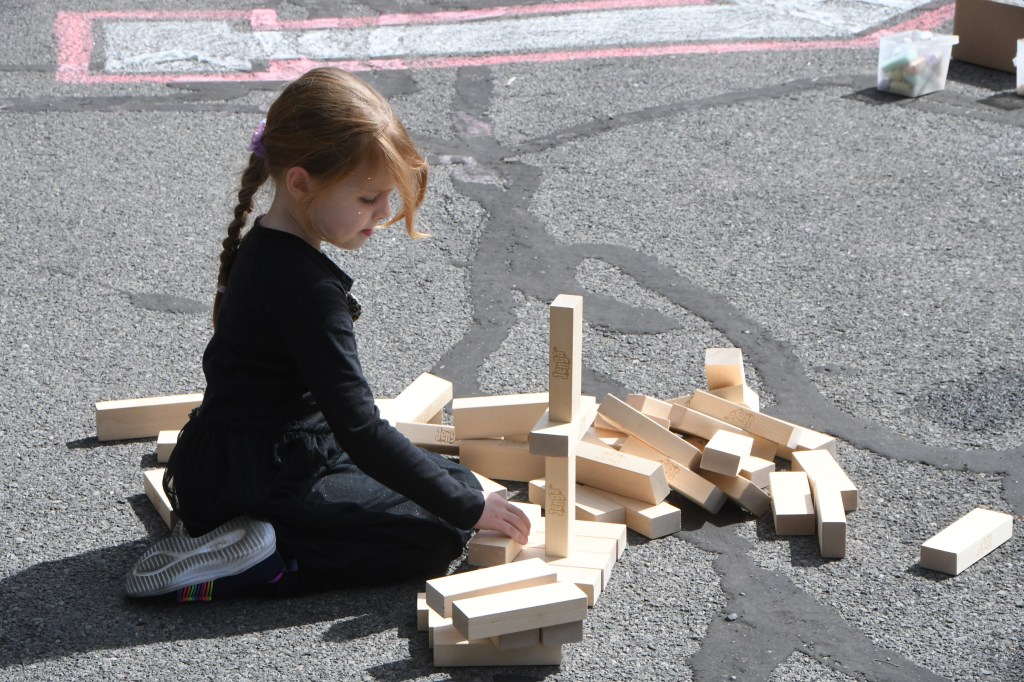
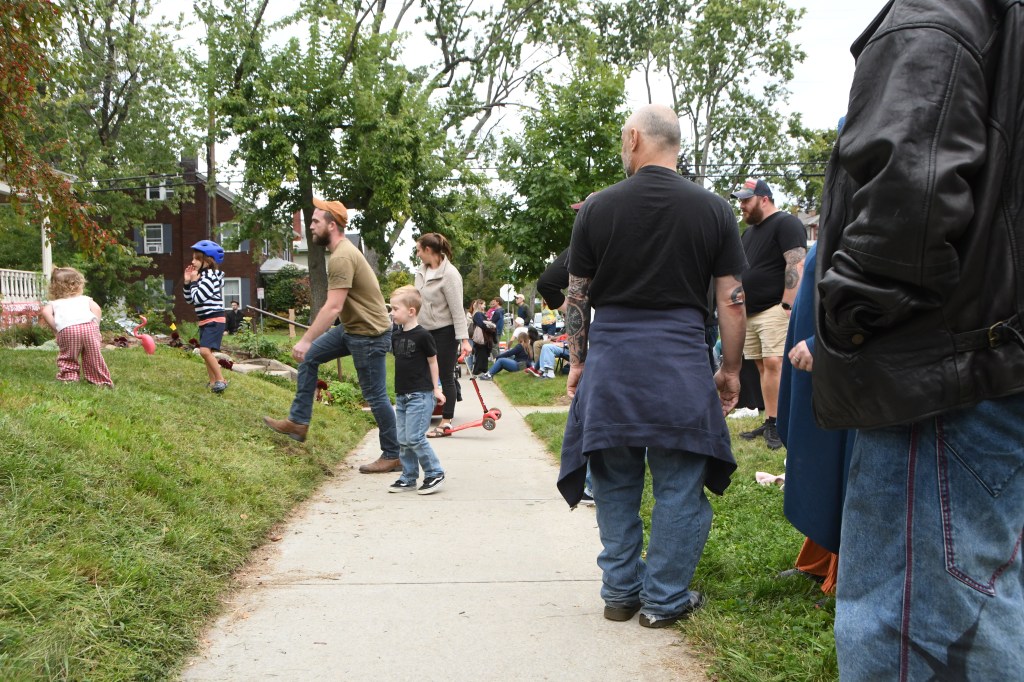
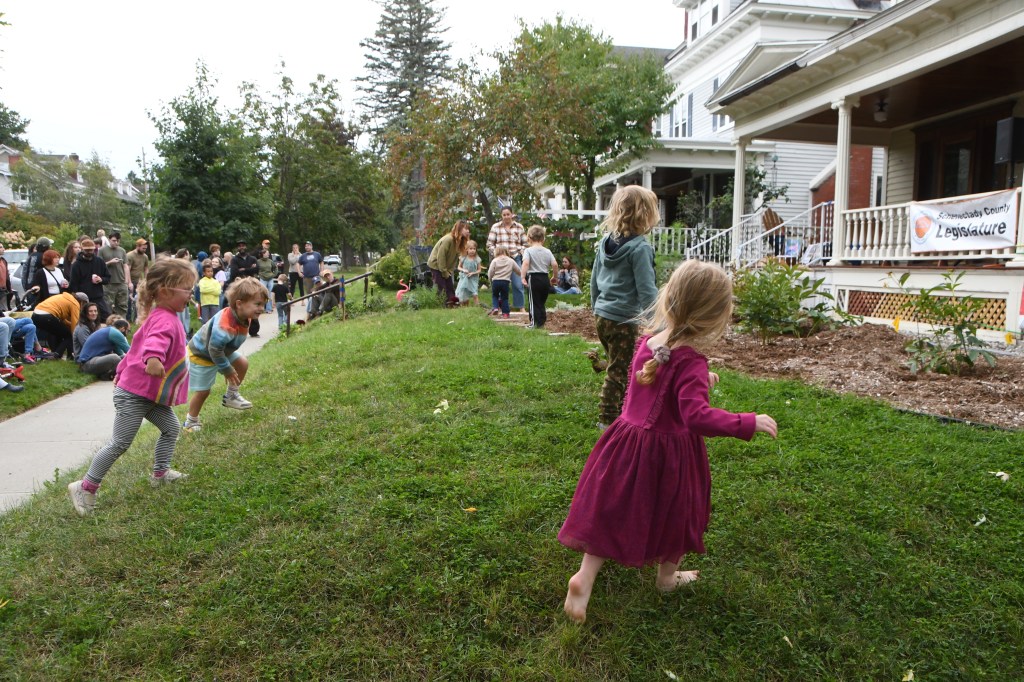
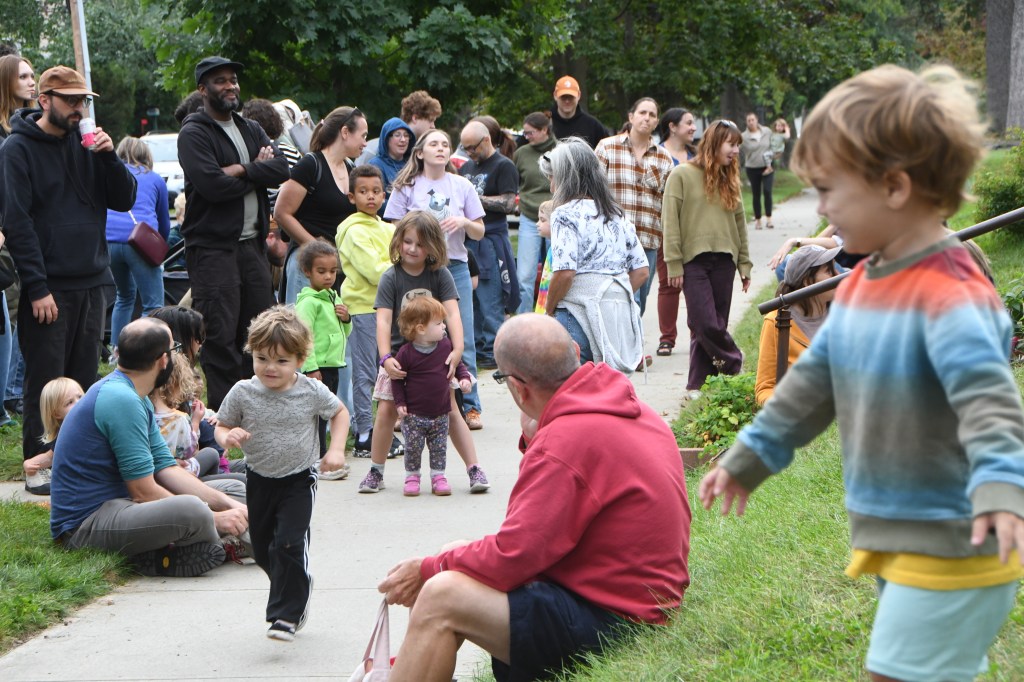
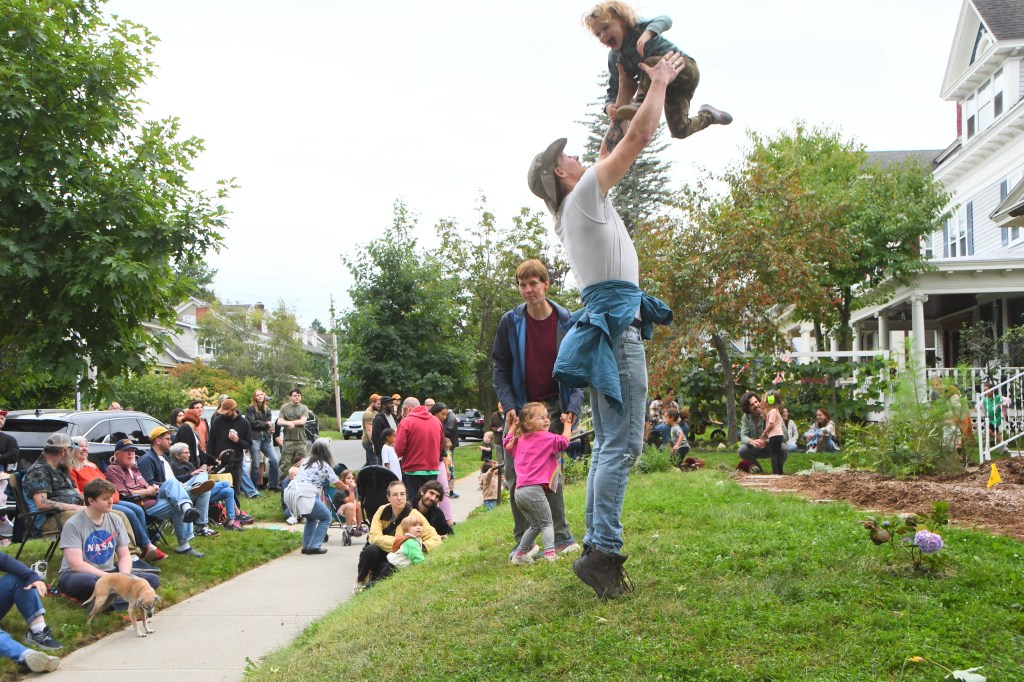
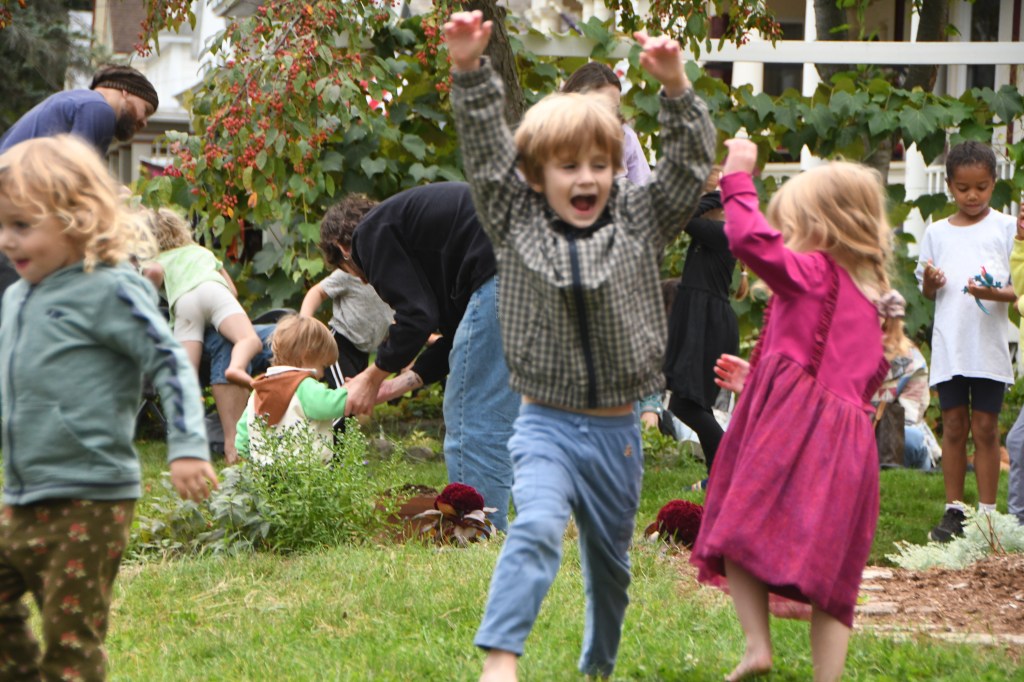
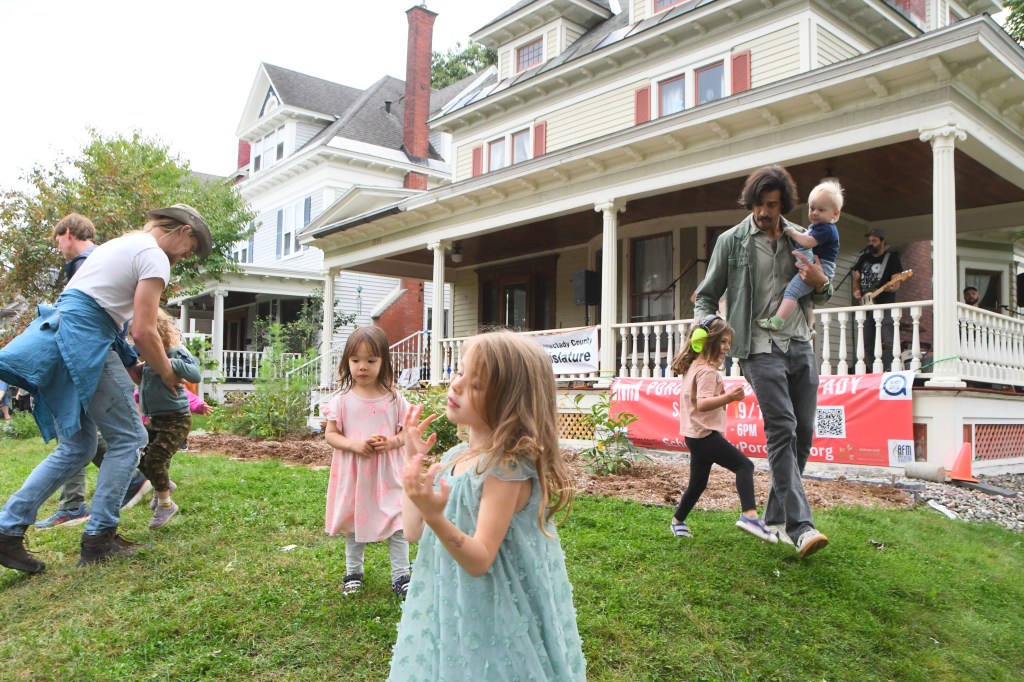
Above, kids and parents – and Nice Hockey’s punk rock at Ardsley and Rugby

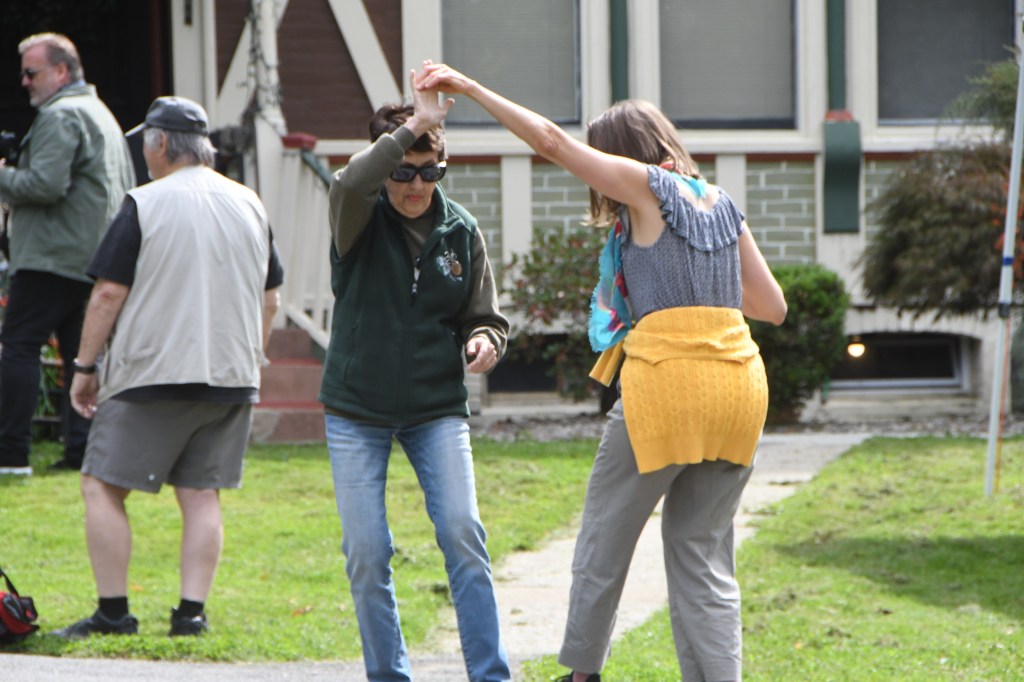
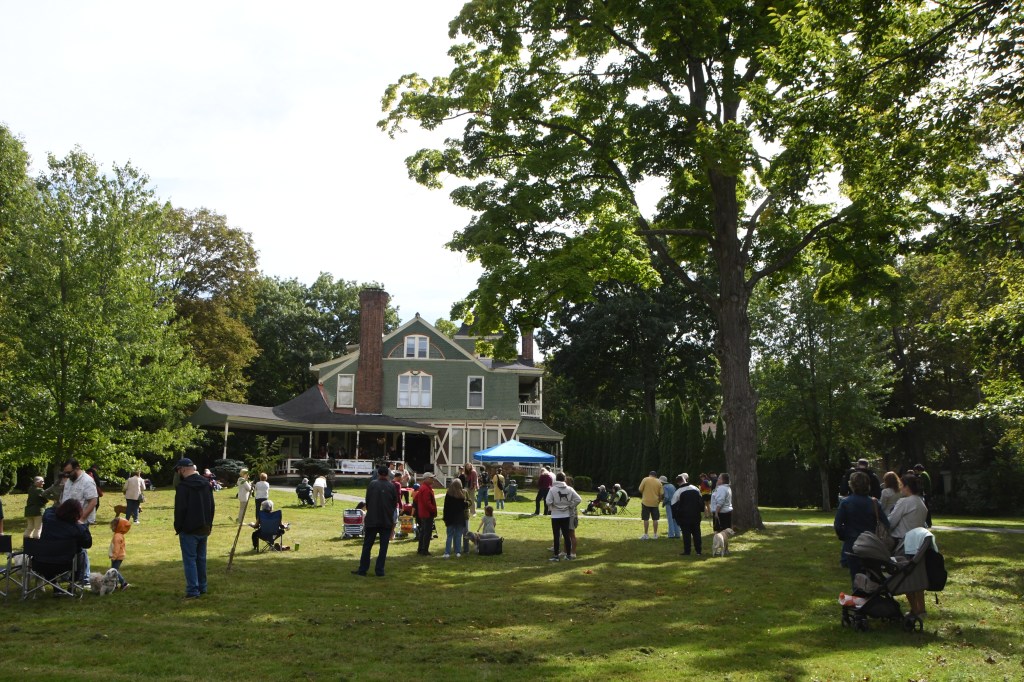
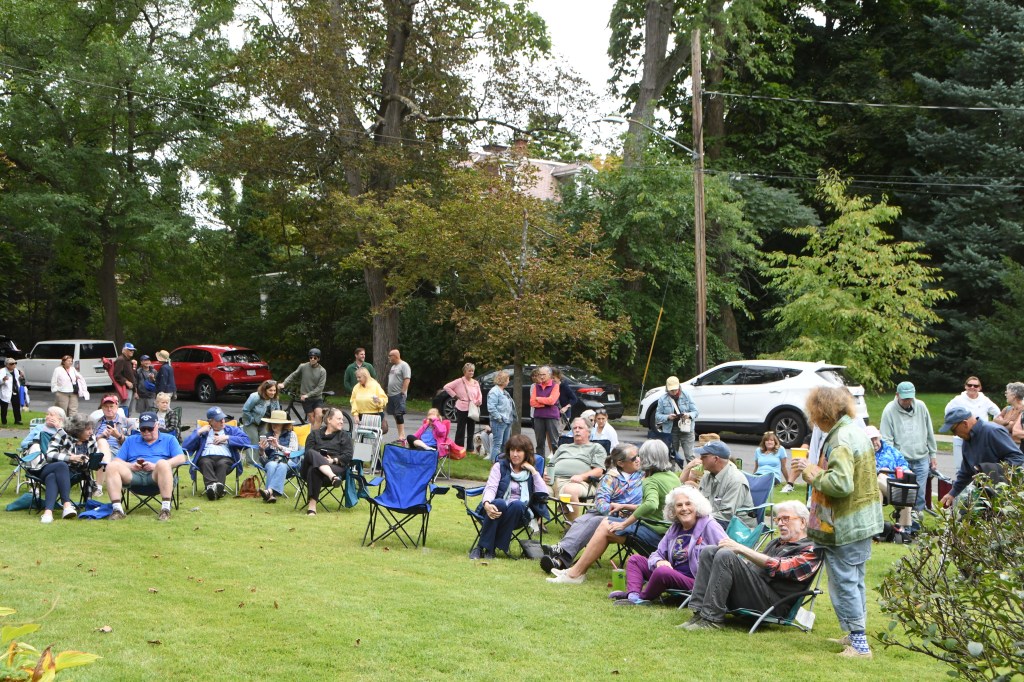
I caught eight, but only a song or two of some sets, starting with the Alex Torres Orquestra, a Latin rhythm section and brash jazzy horns in Caribbean dance tunes on Wendell, Porchfest’s biggest lawn. They likely chose the 11 a.m. slot to hit other gigs later Saturday. Playing a lot tightens them into an irresistibly inviting reason to dance; and people did. No reason to yell “More COWBELL!” – plenty of that in salsa, merengue, cha cha and (especially) rumbas. Even in Spanish, their meanings were clear to fans’ feet. Cool solos by Tyler Giroux’s trombone and Roberto Lopez’s tres (double-strung guitar); but their groove was the thing.

Next, on the most distant porch from Wendell’s wide slope of green, on Ardsley and Rugby, Hansbrough and Quigley fought a sometimes losing battle against road noise to play

baroque and Celtic pieces. What we could hear of Mauro Giuliani, Erik Satie and Carolan duets charmed the early, still-small crowd.

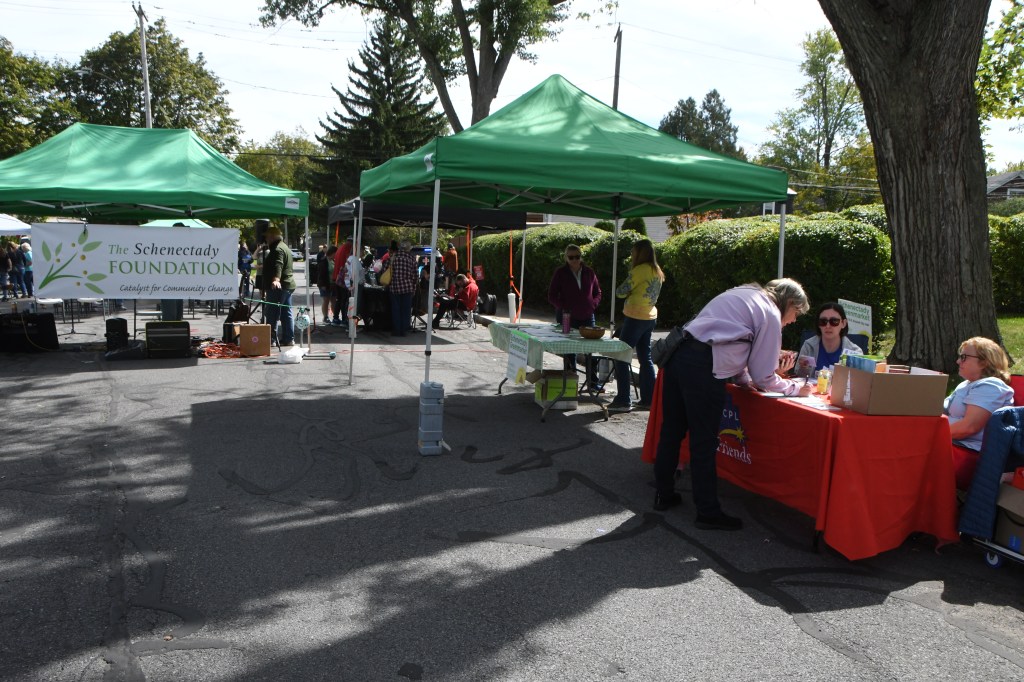
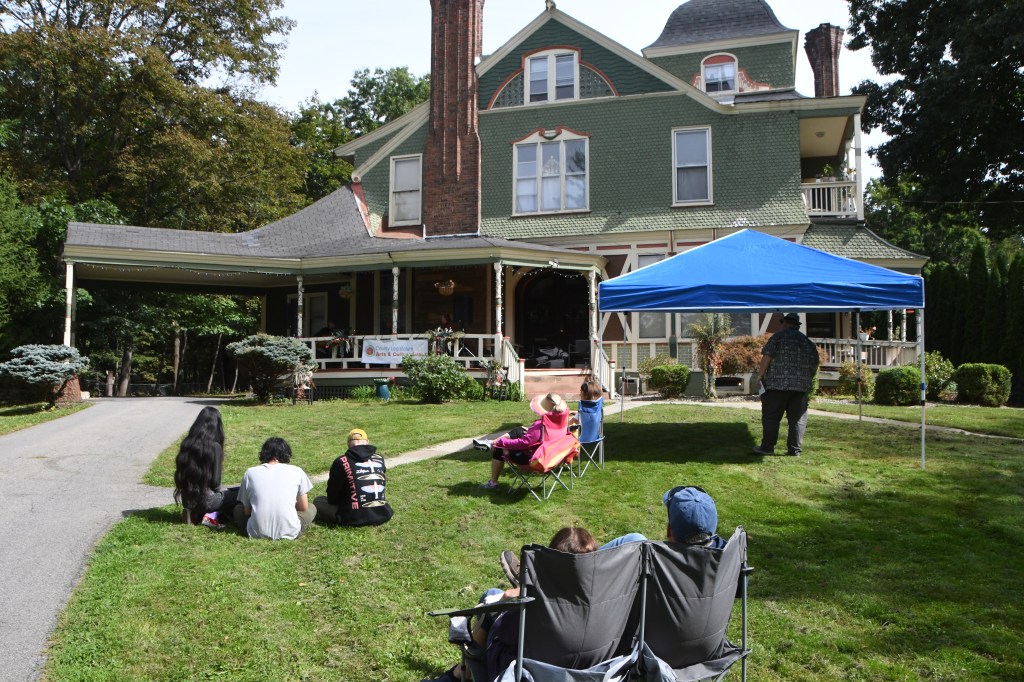
After those intimate antiques came the family-friendly clamor of the Boulevard Area Neighborhood Association’s street fair. Jamming the short west-most block of The Plaza with non-profit groups, vendors, Stewarts’ free pizza and drinks, it offered a tented stage, seating provided, for Scott Hopkins’s bluegrass duo. Kids’ crafts and toys, free books from Friends of the Library and other give-aways warmed a community feel. Hopkins’s engaging music was antique, too; finger-picked guitar and banjo gems from Flatt & Scruggs and more.

Buzzing back westward to Douglas Road, I was happy to catch the end of Dylan Canterbury Quintet’s set. This virtuoso crew started at 1, like Hopkins, and featured area jazz giants. Tenor saxophonist Brian Patneaude shared solo time with Canterbury’s trumpet and Rob Lindquist’s piano on grooves by Dave Shoudy’s bass and Bob Halek’s drums. They closed strong with Canterbury’s wistful “Another Place, Another Time” and the playful “Monsters Lead Such Interesting Lives” – sourced from a Daffy Duck cartoon.

Back on Wendell, Keith Pray’s Ortet trio of Pray at the organ with Mike Novakowski’s guitar and Joe Barna’s drums similarly mixed originals and borrowed/mutated materials. It was all in service of the groove, from Pray’s spry “Circular” and “Jimmy’s Blues” (tribute to organist Jimmy Smith), to the 70s pop hit “Sunny,” Sade’s ballad “I Couldn’t Love You More” and deliciously twisted James Brown and Beatles classics. Solos worked well, including splashy Barna blasts, but the trio line-up required everybody to fit perfectly in the beat; and they did. Novakowski grinned his happiest, not while soloing but when chopping rhythm chords, Barna was at once all over the place and right in the pocket while the always workmanlike Pray held it all together.

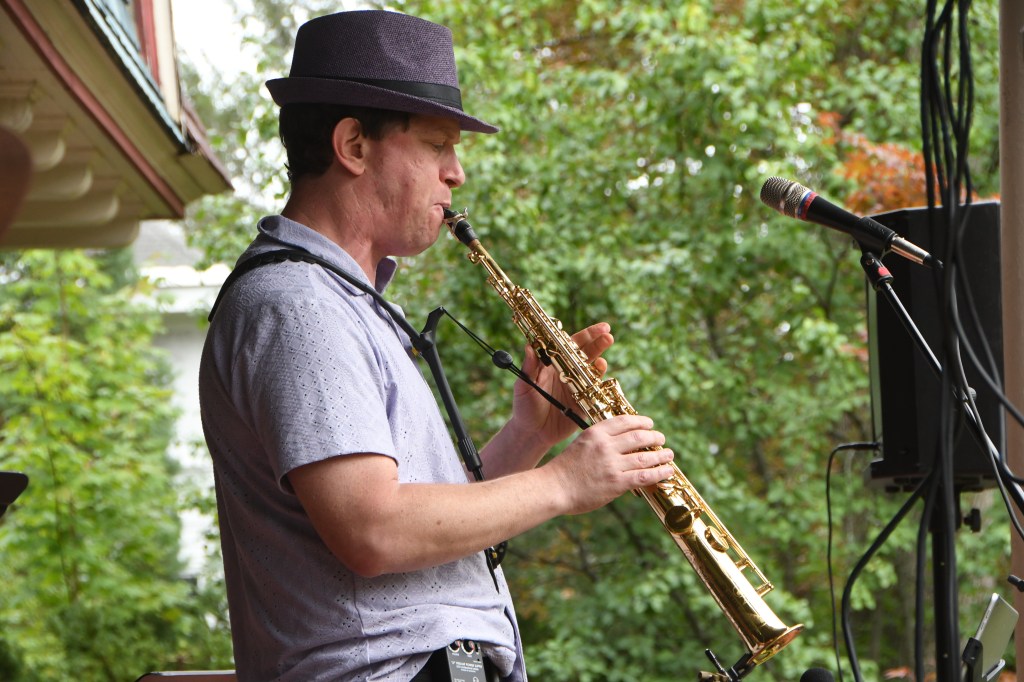
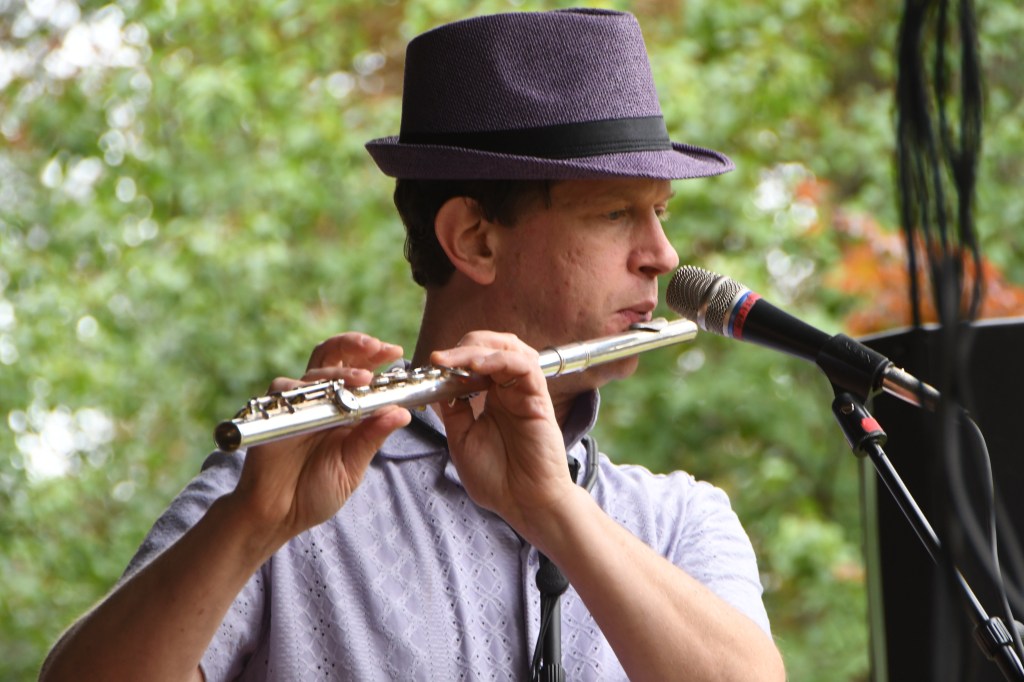
Around the corner on Douglas, Matt Steckler added keyboardist Pete Levin to his usual crew of Rich Syracuse, bass; and Jeff Siegel, drums. This took some adjusting, Levin tentative at first, before tackling reedman/composer Steckler’s more complex compositions. But once in motion, they sailed through his originals with happy swagger in the up-tricky-beat “Prince Eleventy,” the cheerful “Labor Day” and “I’d Know It If I Heard It” while “Privilege” balanced melancholy with serenity. Always fluent, Steckler played alto, tenor and soprano saxes and flute beautifully.

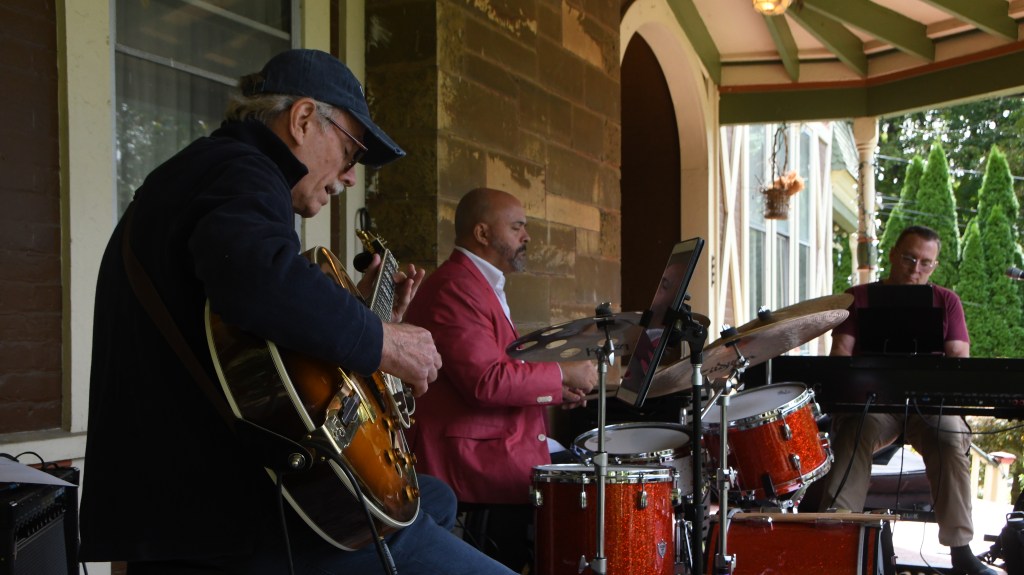
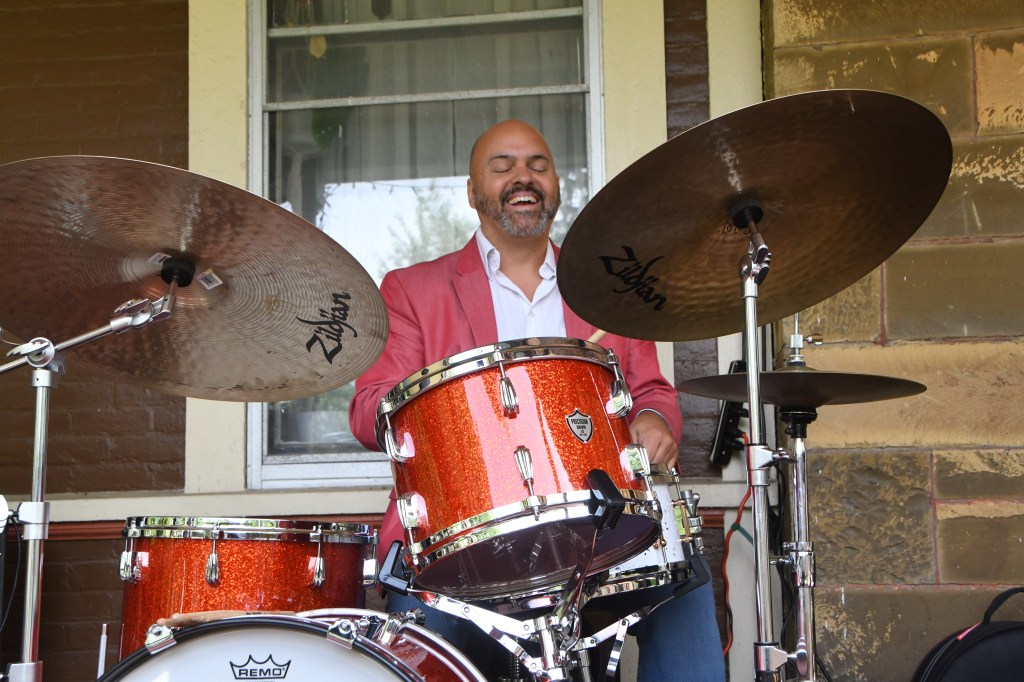
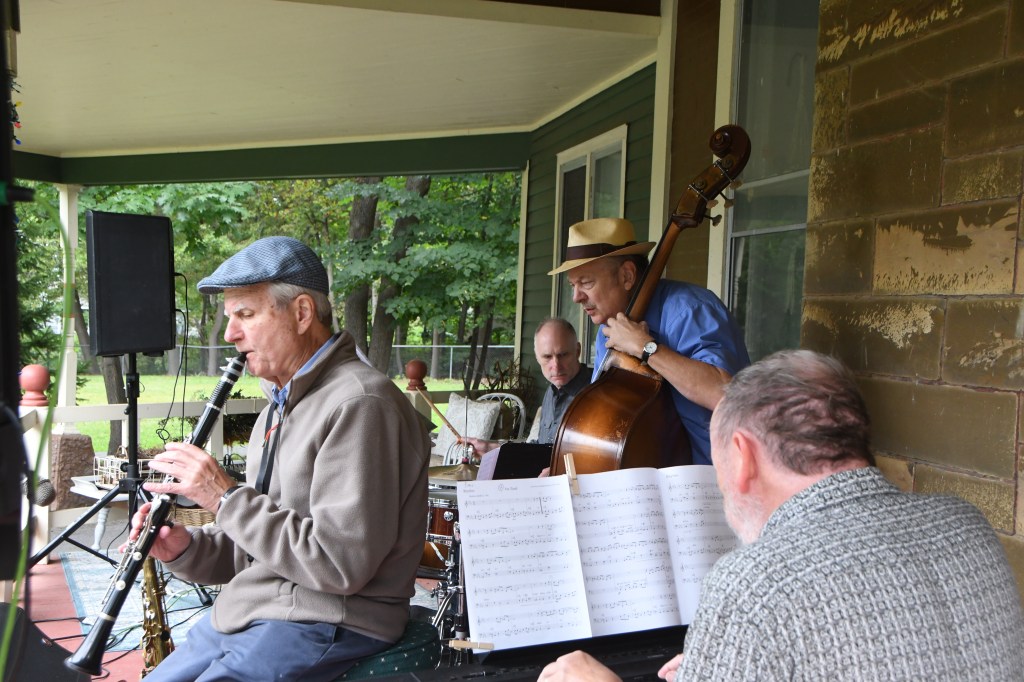
Tim Olsen’s Quartet followed, on Wendell. Using similar instrumentation to Steckler’s, they had plenty of skill: Olsen at the piano; Pete Toigo, bass; Pete Sweeney, drums; and Dave Lambert, tenor sax and clarinet. Yet early on, they seemed lower energy in their traditional approach than Steckler’s modernist style. Or maybe I’m taking Olsen’s title “I’m Tired” too literally; but the Latin “Noche Azul” felt languid. They saved their best for last; tributes to Louis Armstrong with Lambert’s best clarinet solo, and the exquisite yearning of a Sinatra tribute, again with fine Lambert riffing. A wonderful/distracting comic interlude spread laughter across the bandstand as a dog appeared at the window behind Sweeney and barked and barked. If it had been on the beat or in the right key, this would have felt even funnier.

Nice Hockey’s raucous punk rock drew a peppy, non-stop crowd of kids and parents to bassist Chad’s home on Ardsley and Rugby. “Lively” doesn’t come close to the energy there. The band’s two- or three-minute song/blasts levitated that whole corner, packed with people and fed by the Broken Inn mobile kitchen. 

Their opener “Swell Siren” lamented how sirens keep the residents awake. Road noise had sometimes drowned out the quiet Hansbrough-Quigley classical duo in the first set on that porch. Nice Hockey cranked up nice and loud, and that worked better.

Nice Hockey’s lyrics let you know they’re professors: Who else would sing of “Chameleonic Vibes” or introduce a tune as a soupcon? But their Ramones-y gleeful sonic force, jump-up muscle and principled uplifting messaging all hit with simple joyous energy.

They turned serious, even blunt, in three mid-set tunes branded as “Not-Nice Hockey,” accusatory doomsday dirges about contemporary environmental and social ills – but rocking. And they closed with the triumphant “We Did It!”

Meanwhile, happy chaos in the audience, especially in the revved grade-school age kids who flew around the place or flew in the air, thrown high by grinning parents. Way worse ways to raise kids than with principle-guided punk rock from a porch.

This – in fact, the whole day – raised my hopes for Schenectady: If these people are here, having this much fun together, than the future looks just fine. 

Musically, as usual, I often wished I could be in two or three places at once in order not to miss acts I admire and enjoy: the always solid jazz crews Art D’Echo Trio, Michael Benedict Jazz Vibes and Cliff Brucker Trio, also the earthy acoustics of Unken Brew and classic/soulful Epilogue Trio. And organizer Steve Weisse – still in lederhosen after an Octoberfest oompah gig elsewhere – spoke with warm awe in hearing sitar music sail over the streets. He also wanted credit for the fine weather he’d arranged for Saturday.

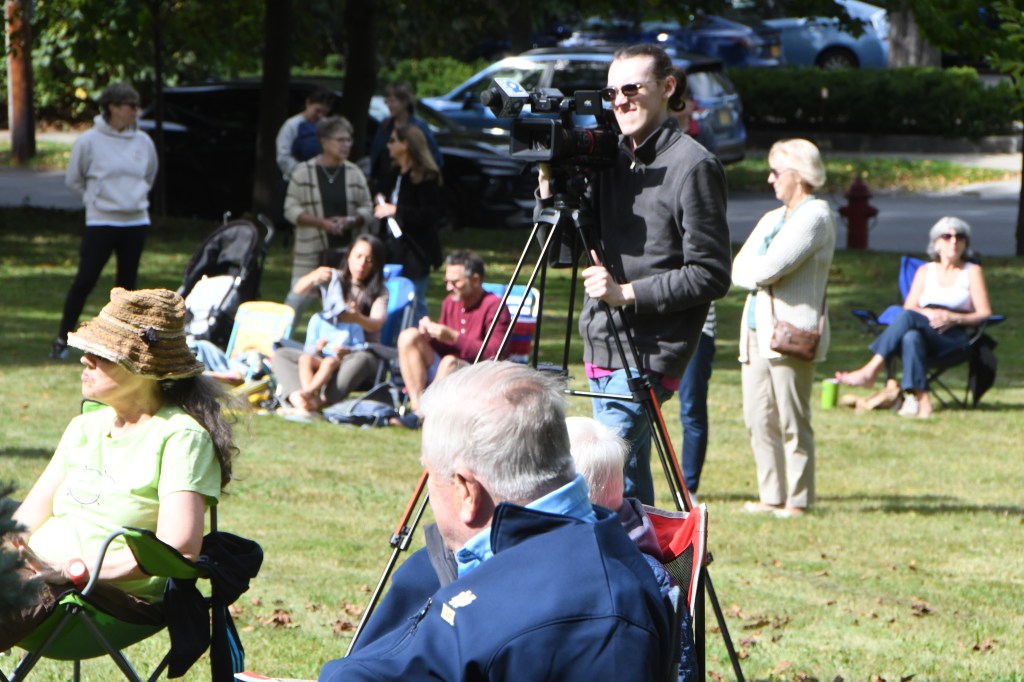
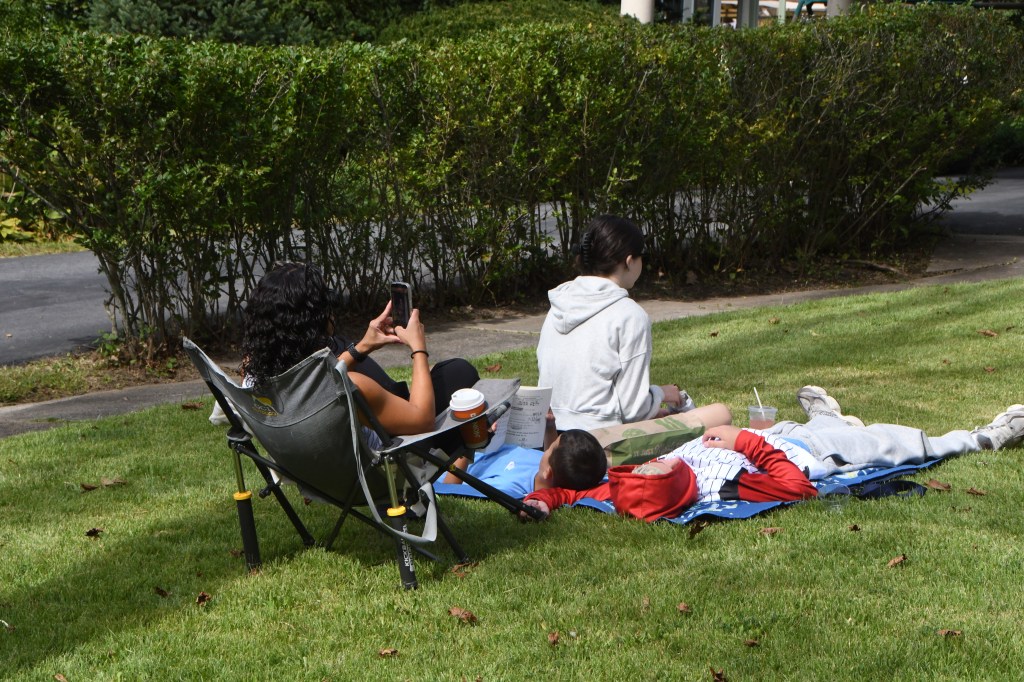
Folks wore hats and sunblock, carried chairs from lawn to lawn, toted kids in wagons and strollers, rode bicycles or scooters, and one Harley.

Some porches have changed over the four Porchfests, but the vibe and the sound of it seemed happily the same.

Sponsors supported the Porchfest multi-stage, dozen-plus bands free event (alphabetically): the American Federation of Musicians, Dance and Music School of India, Mona Golub, Harbrook, Mohawk Valley Society for Live Music, the Recording Industry’s Music Performance Trust Fund, Schenectady County Arts & Culture Grant, The Schenectady Foundation, and Stewart’s Shops.

The Broken Inn and Greek on the Run Food Truck brought food and drinks.

The lawn on Wendell

MORE PHOTOS GOING UP LATER TODAY

“To Tell Another Story…”

Review: Pilc Moutin Hoenig at A Place for Jazz; Friday, Sept. 18, 2026

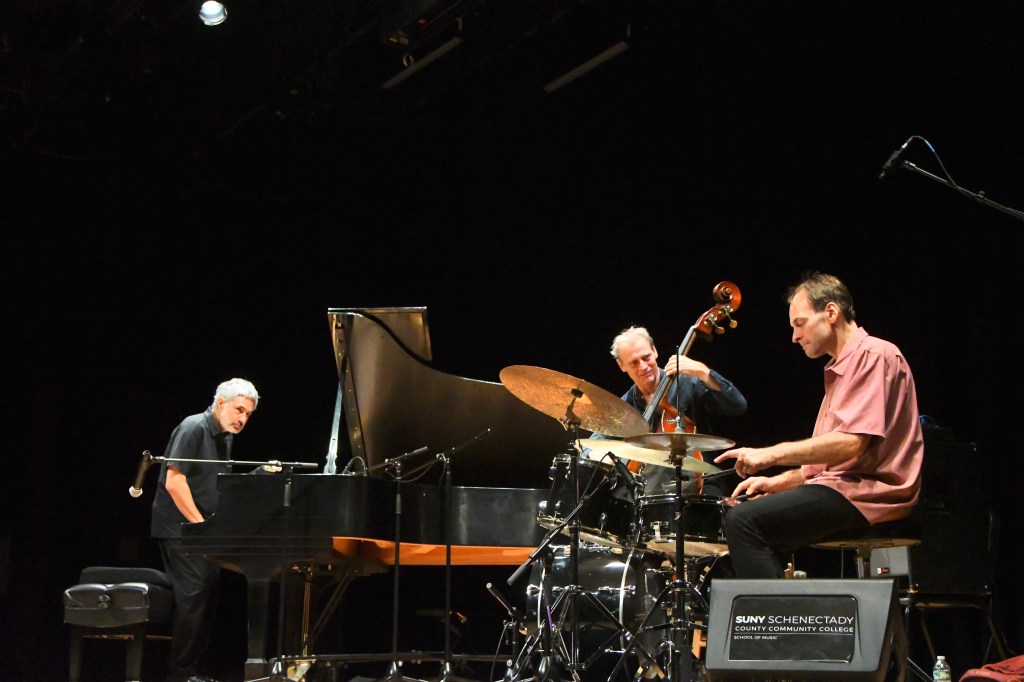
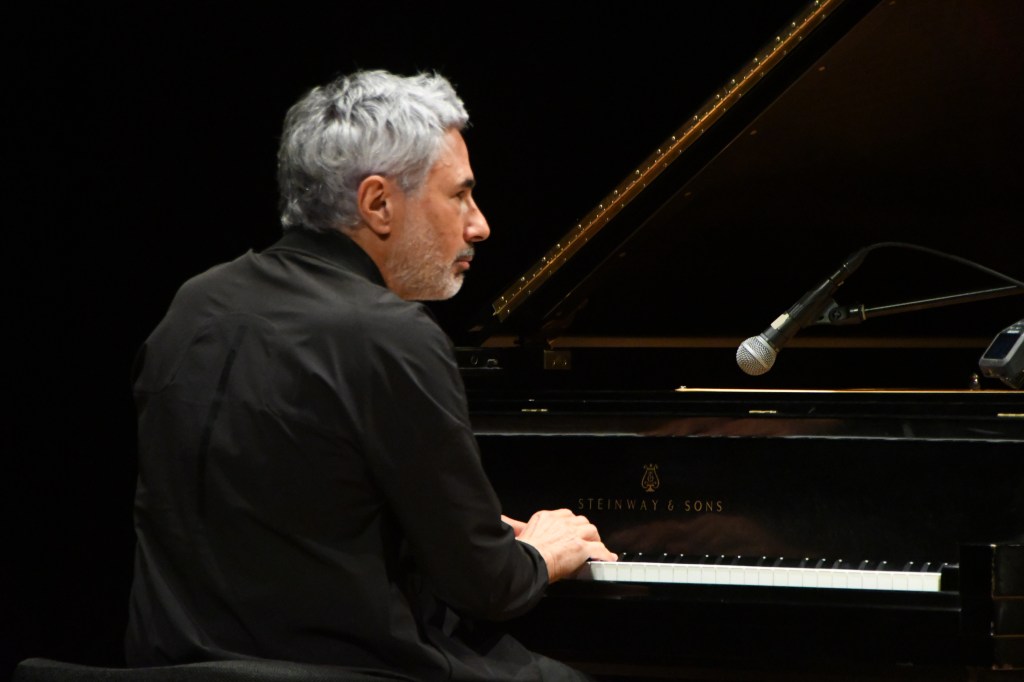
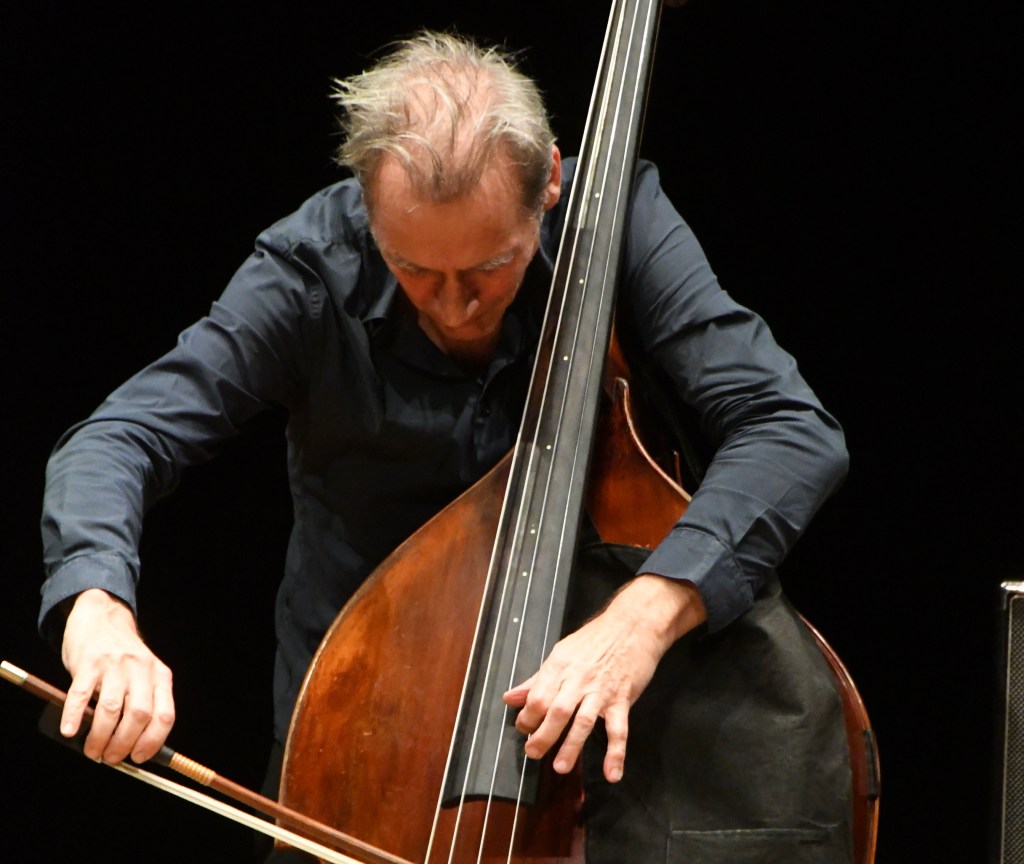
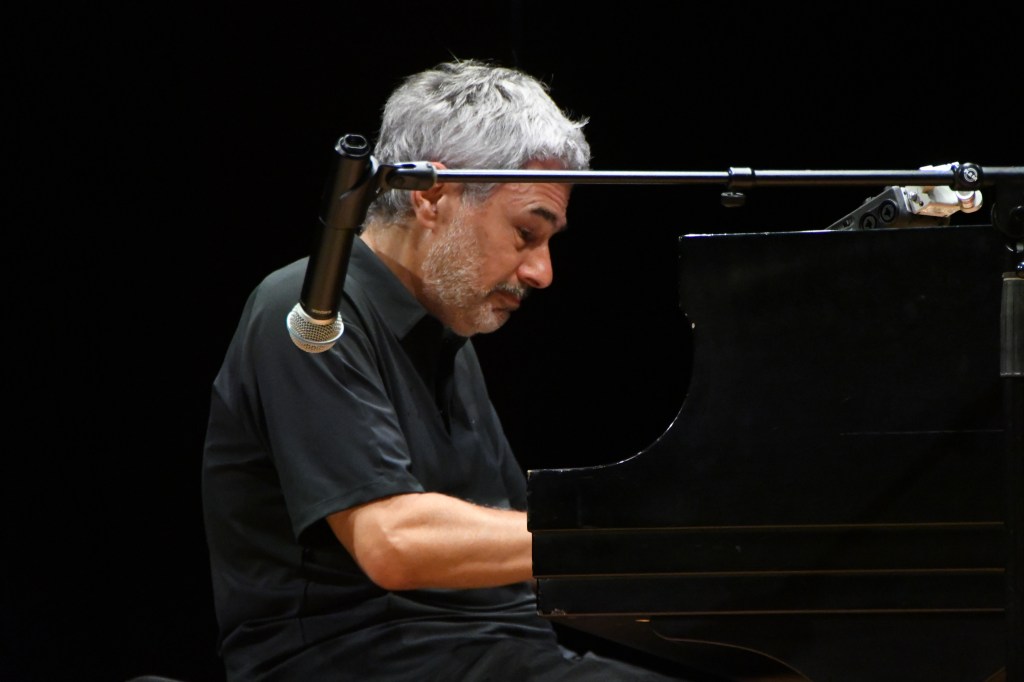
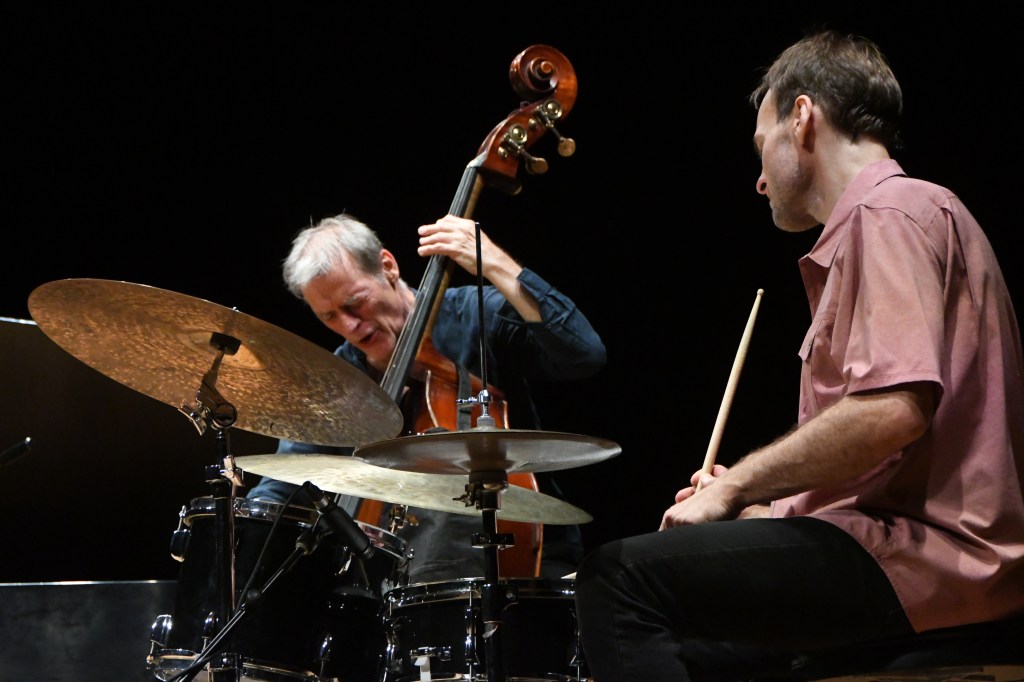
Pianist Jean-Michel Pilc, bassist François Moutin and drummer Ari Hoenig blazed through jazz history Friday in a dizzy blur. 

Opening the 39th season of A Place for Jazz in the Carl B. Taylor Auditorium of SUNY Schenectady County Community College music school, the ferociously intuitive trio led a kinetic game of “Name That Tune.” From Monk to Miles to somewhere over the rainbow – well, no, they didn’t actually play that. But they roamed so freely that afterward they claimed they couldn’t remember what they did play.

Then Moutin helpfully told Ricardo and me that the tune titles didn’t matter. 

“We just use them to tell another story.”

The first set unfurled like a saga in sonic chapters. Tunes started up, sometimes in eerie silence or echoes from space; sometimes like a riot goin’ on. They went somewhere else, hijacked other tunes along the way, left them smoldering by the side of the road and raced on. In the second set, shorter stories hit in a more episodic flow. Both generated amazing energy, de-constructing one composition after another, then Krazy-Gluing them together.

Monk’s “Bemsha Swing” formed in delicate string-plucked slow piano to open. Jagged bass tugged at the tune, then rollicking drums exploded it before the piano, now played with keys, rebuilt it. Arco bass slowly etched the next number, until delicate piano phrases announced a detour with an insistent repeating motif the drums appropriated as bass and piano faded into the woodwork until he shared it around.

A jagged, muscular thing barged onto the stage: Was it “Softly As In a Morning Sunrise”? Maybe? – though that came around in the second set, I think. 

It flew fast and dense, with quotes and counter-melodies fighting it out for our attention, or awe. Intent at first, Pilc loosened up, springing off the piano bench to wander around, watching to see what Moutin and Hoenig would do with it; whistling – yes, whistling – the melody.

Sometimes the quotes – plentiful as in a library – felt playful, fading fast like fog in a breeze. Others felt conversational: Any of the three would offer a counter-melody and look around to see if it landed. The others might pick it up and run with it. If they didn’t follow the suggested new path, the sender would repeat; then repeat some more until everybody was on board. Or not. Even if the others didn’t buy the new idea right away, when they did, things usually got unanimous fast.

That was the story of this thrilling, explosively organic show/exploration, not the song titles. Chats in the audience at intermission noted “Nardis” and “Solar” as consensus titles; also maybe “The Song Is You,” “Twinkle, Twinkle”  or “After You’ve Gone.” 

The first set closed in a peppy romp of repeating piano figures that bass and drums helped evolve into Miles’s “All Blues” in an oblique way even Miles would have enjoyed for how it tested fans’ patience. Pilc echoed McCoy Tyler, Bill Evans, Oscar Peterson and Jerry Lee Lewis; Moutin dropped a pulse like that of an excited cheetah into the gaps between Hoenig’s fast, fiery cymbal splashes. 

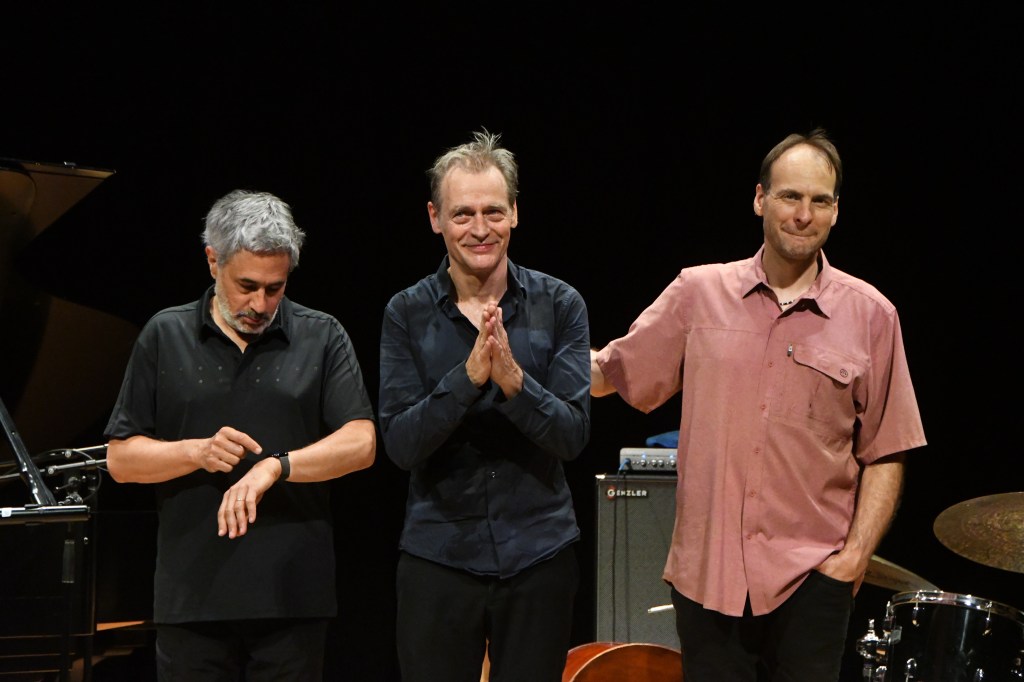
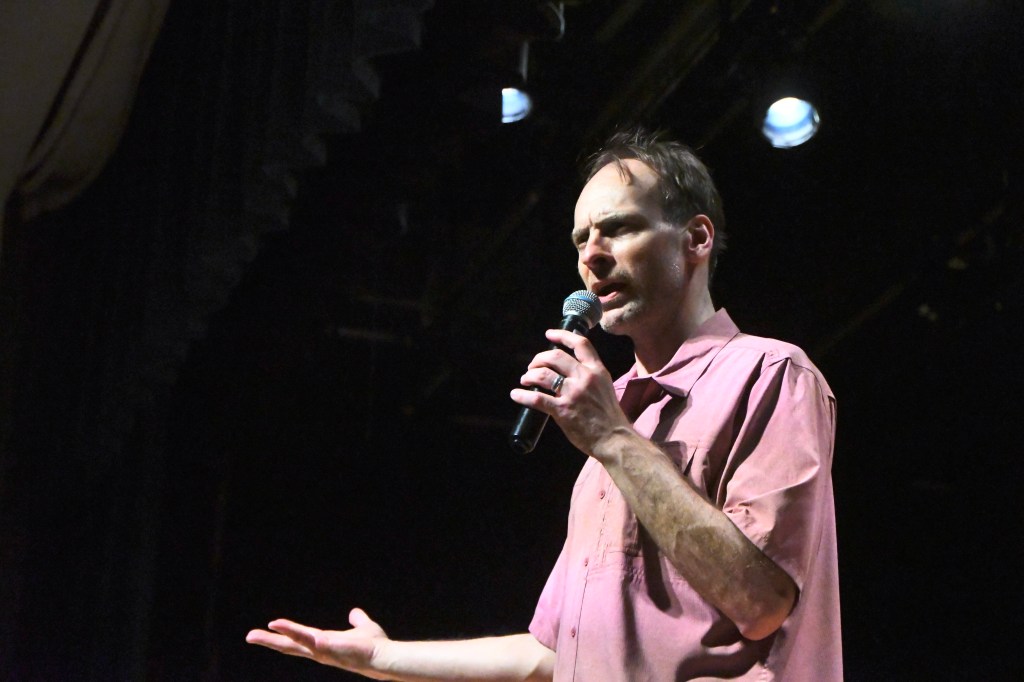
Above: Pilc checks his watch after the first set: 7:08 to 8:08 p.m.; the second set ran 8:34 to 9:38. Below: Hoenig explains things.

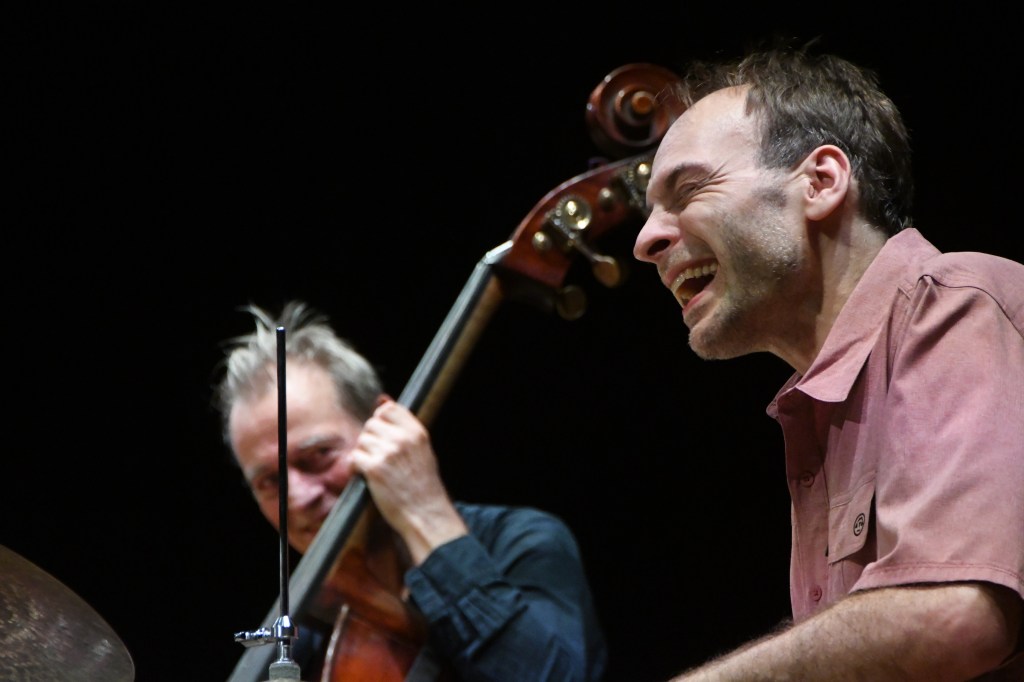
obody spoke onstage in the first set or intermission when we caught our breath. Launching the second, Hoenig compared their method with quantum mechanics and noted how they love playing together; unnecessarily, as they’re clearly a smiling happy band. Then Pilc announced they’d play…I think he said “You Don’t Know That Love Is” in his heavy French accent. As at the start of the first, Hoenig started playing with hands rather than sticks or brushes early in the second. The song grew with his increasingly hard-hitting play, his bass pedal a blur, sticks hitting hard in hot counter-rhythms on cymbals and snare. As Moutin locked in, Pilc stealthily cooked up “Bye Bye Blackbird,” pushing out fierce glissandos to insist everybody say bye-bye to the blackbird. Then the two tunes took turns through rapid obscure variations until we couldn’t sort them anymore.

Miles’s “So What” started simply enough, then mutated. After his first melodic statement, Pilc jumped up as if the song’s energy vaulted him to his feet. Hoenig pumped the “So What” cadence under whatever wild noise Pilc invented, as Moutin invited new riffs into the party. Then Hoenig urged it forward with a freight-train groove, brisk brushes on the snare. A suave blues walk sounded like Monk walking into Pepper’s Lounge in Chicago while Muddy Waters was onstage. Hoenig played the tones of the melody, they called it “Blues for Schenectady,” by elbowing the toms and snare as he hit them. When Pilc promised/threatened to take things a step further in “Schenectady Today,” he noticed some in the crowd seemed scared. When he nervously asked if we were, a fan placated him: The music was scary-good.

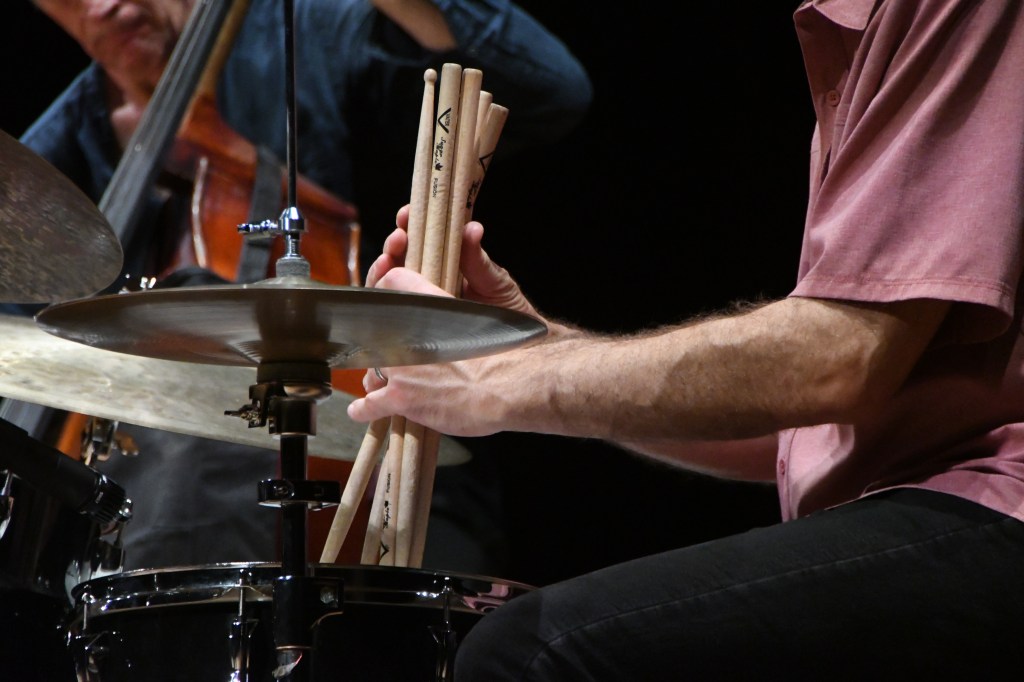
Moutin etched the melody, soft and sparse; Pilc followed in the same elegant restraint while Hoenig clustered a handful of sticks into a random jangle on the snare. Pilc smoothed things before Moutin claimed the melody in suave arco runs.

As A Place for Jazz impresario Bill McCann noted afterward, the second set was a melange, understating its abrupt changes, energetic/bewildering theme-and-variations uproar and voracious gobbling of riffs turned inside out, spun in circles and put on a bus to somewhere else. Things got hot and wildly fun; unpredictable to almost comic intensity. Late in their hard-rambling closer they became the second jazz crew (after the Hot Club of Saratoga last month at Jazz on Jay) to play “Ochi Chorniye.”

Individually, they can play anything, Pilc’s imagination fueling endless oblique digressions with irresistible swing and melodic curiosity; Moutin specializing in speedy, dazzling upper-register riffing, and Hoenig echoing the late Tony Williams in blasts of syncopation, counter rhythms and melodic mastery. Late in the first set, he held a stick vertically, its tip on the snare head below. Rubbing his other hand along the stick produced an eerie treble noise he claimed “Once I get started, I can’t stop.”

Nobody wanted them to stop Friday, telling another story, then another.

Next up in the five-show 39th season of A Place for Jazz is singer Nicole Zuraitis and her Quartet on Friday, Oct. 2. The new showtime this season is 7 p.m.

And, AND, if you’re reading this any time Saturday, remember Schenectady Porchfest.

A Calendar Cluster

Preview: Music Moves Indoors, or Onstage at Late-Season Festivals

A PLACE FOR JAZZ REVS UP STRONG

The Pilc Moutin Hoenig Trio of (mostly) European stars opens the 39th season of A Place for Jazz Friday in the Carl B. Taylor Auditorium of the SUNY Schenectady County Community College music school. Both pianist Jean-Michel Pilc and bassist François Moutin hail from Paris, though Pilc was raised in Montreal and teaches at McGill University’s music school. 

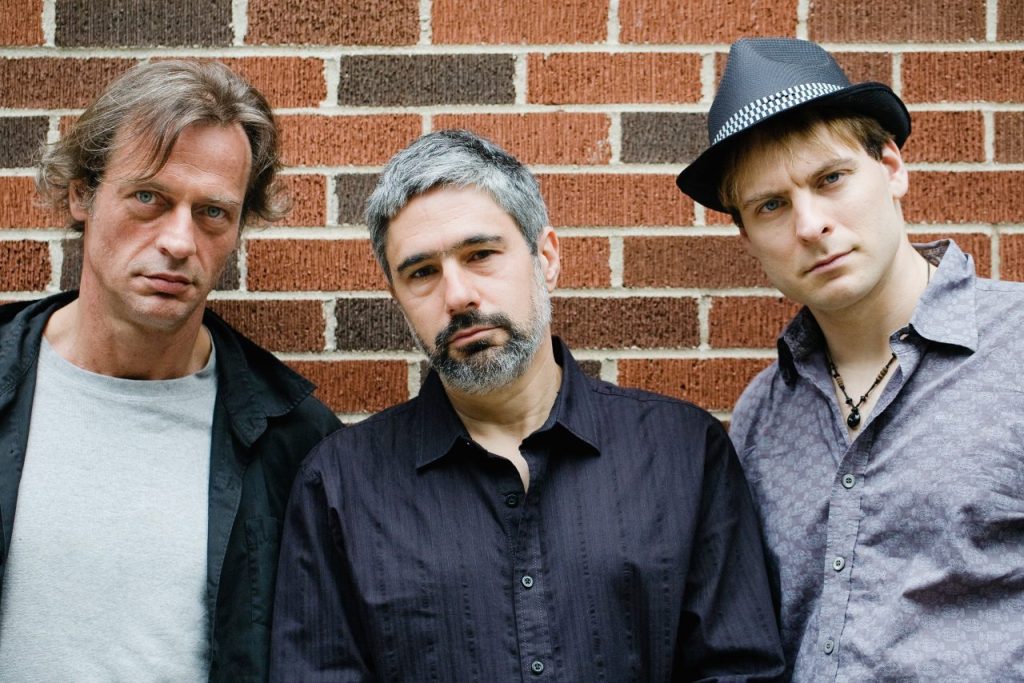
Jean-Michel Pilc, piano; François Moutin, bass; Ari Hoenig, drums. Photo provided

Philly-born drummer Ari Hoenig trained in the jazz crucible at the University of North Texas, met Pilc and Moutin in New York in the mid-1990s and formed this trio. Recording their debut album and several others live onstage testifies to their performing power as intuitive collaborators. 

Pilc also served as Harry Belatonte’s musical director and has composed film scores in addition to his own albums; and he received the French Jazz Academy’s Django Reinhardt Prize. His unique phrasing shows both elegant restraint and aggressive, Monk-like exploration. 

The precocious Mouton started playing guitar at five and piano at 11 before switching to bass and teaming up at 29 with his twin brother-drummer Louis in a quintet that still performs and records. Moutin has played with jazz masters in traditional and modern styles, often showcasing a distinctive guitar-like upper register.

In addition to 13 albums as a leader since 1999, the versatile Hoenig has released five with Pilc and many more with such diverse artists as Macy Gray’s neo-soul, the string-band zip of the Jazz Mandolin Project and the globe-spinning curiosity of Armenian keyboardist Tigran Hamasyan.

This year, showtime is 7 p.m.; the format is two sets with intermission and the seating is general admission at $25, $10 for students with ID. Membership – check www.aplaceforjazz.org for details – offers package deal discounts.
This season’s concerts are in memory of the late, great Tim Coakley, longtime leader of the non-profit all-volunteer A Place for Jazz. Season underwriters are Joel Blumenthal and John and Donna Moroney.

While this year’s line-up may lack some categories familiar in recent years, no big band and no local acts, its range and quality remain typically impressive.

Oct. 2: Nicole Zuraitis Quartet. The young singer-songwriter-pianist scaled a top peak in jazz with the Grammy-winning (Best Jazz Vocal Album, 2024) “How Love Begins.” Her sixth album, co-produced with bassist Christian McBride, this marks the first time a jazz singer also wrote and arranged an entire Grammy-winning album.

Oct. 16: The Cookers. An all-star octet, these cats came together after co-starring in top bands, some since the 1960s: drummer Billy Hart, trumpeters Eddie Henderson and David Weisse, saxophonists Donald Harrison and Azar Lawrence, pianist George Cables and bassist Cecil McBee.

Oct. 30: Ernie Watts Quartet. Underwriters: Musicians Peg and Bill Delaney. Watts has led his quartet for 18 years while also collaborating busily; straight ahead jazz with Pat Metheny and Charlie Haden, vocals-centered projects with singers Kurt Elling and Diane Schurr, fusion with Frank Zappa, blues with Corky Siegel, global fusion with Dr. L. Subramaniam and more.

Nov. 13:  Ali Ryerson Quartet. Daughter of jazz guitarist Art Ryerson, flutist Ali followed into the family business, training with top classical players, founding the NFA Jazz Flute Big Band, authoring an instruction book and teaching. Her quartet comprises Hudson Valley players familiar to area audiences: pianist Larry Ham, bassist Lou Pappas and drummer Tom Melito. 

THREE GUITARS

Grammy-honored guitarists play here this week and next: soulful bluesman Robert Cray Friday at Troy Savings Bank Music Hall (30 Second St.), the ever-funky Wooten Brothers Saturday at The Egg (Empire State Plaza, Albany) – where jazz giant Pat Metheny plays next Wednesday with his often-changing band Side-Eye.

With five Grammys and admission to numerous halls of fame, Cray delivers the whole package: effortless-looking dazzle and swing at the guitar, songwriting and singing from the heart. He commands the stage in a confident presentation of timeless depth and right-now sincerity. Side notes: Bluesman Albert Collins played Cray’s high school graduation party, and Cray played a soul band bassist in “Animal House.” 8 p.m. Tickets 518-273-0038 http://www.troymusichall.org.

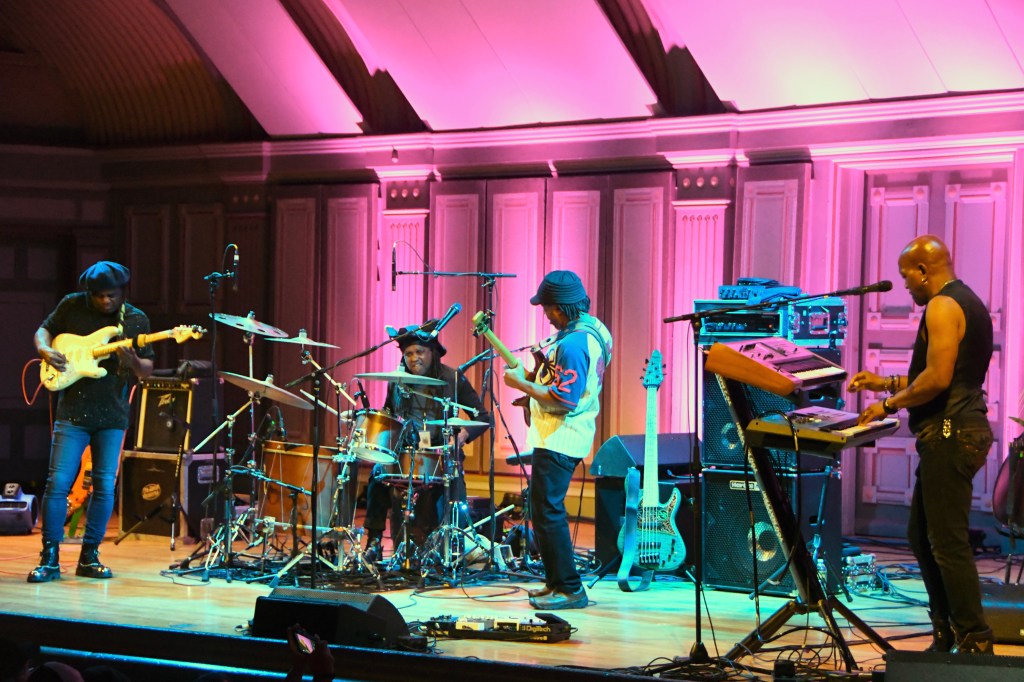
The Wooten Brothers at Troy Savings Bank Music Hall, October 7, 2024; from left: Regi Wooten, guitar; Roy “Futureman” Wooten, drums; Victor Wooten, bass; Joe Wooten, keyboards.

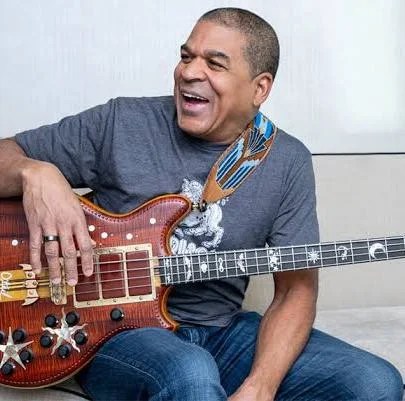
Guitarist Regi Wooten funks up The Egg with his brothers. Regi is the eldest, revered as “the Teacher.” Bassist-leader Victor (the youngest Wooten, who recently celebrated a birthday) may be the most famous as member of Bela Fleck and the Flecktones and solo albums with many collaborators. Drummer/electro-percussionist Roy “Futureman” is a fellow Flecktone. Keyboardist Joe has toured for decades with the Steve Miller Band. Another brother, saxophonist Rudy, died in 2010, memorialized by the Nashville jazz club Rudy’s. Onstage, the four Wootens play very together, bringing the funk like they’re all carrying the same suitcase, dancing steps, ganging up on their instruments two at a time. They’ve played together as a family since 1985, winning 10 Grammys. 7 p.m. 518-473-1845 www.theegg.org
Ever-fluent jazzman Pat Metheny needs a wide mantle for his 20 Grammys in several categories. He started recording a decade before the Wootens, both with his own self-named Group and many collaborators; but recently started an ambitious youth movement project. Even before he played in the recent all-star memorial to somewhat older musical friend and neighbor Jack DeJohnette, Metheny had launched a next-generation band that achieved impressive unity despite its fluid membership. Called Side-Eye III+, it now comprises keyboardist Chris Fishman, drummer Joe Dyson, bassist Jermaine Paul and singer-percussionist Leonard Patton. 7 p.m. next Wednesday, Sept. 23. 
Backstage after a show in a Saratoga jazz club years back, I complained to Metheny that he only played here about every 18 months, wanting more. He mildly explained that he likes to wait until he has new music before returning. He checks that box with his 4,723rd album – I’m exaggerating, a little – “Side-Eye III+,” released in February.

FYI; Two top rock guitarists played Troy’s Hangar on the Hudson recently: local-and-everywhere hero Eddie Angel with his surf-rock powerhouse Los Straitjackets, and Johnny Spampinato who followed his years with NRBQ by leading the Loss Leaders.

TWO FESTIVALS

The recent “Yikes!-Summer’s-Ending!” calendar cluster of festival after festival keeps rolling this weekend. Last Saturday blurred with Schenectady hosting Little Italy, Caribbean and Greek festivals on the same day as Albany’s PearlFest – obviously all with music.

This weekend, Jazz at the Lake (George) in its 42nd year and Schenectady’s much younger PorchFest are all music and both are free.

Local/regional artists play indoors all over Lake George Village Friday starting at 7:30 p.m., Saturday morning, the new Shepard Park amphitheater presents an introductory tour at 9 a.m. and jazz with coffee at 10 a.m.

Saturday afternoon, new breakthrough acts play the amphitheater starting at 1 p.m. with Kneebody headlining at 7.

Sunday afternoon, more established acts take over the amphitheater, the veteran Paul Winter Consort opening at 1 p.m., young singer Ekep Nkwelle from Cameroon at 3 and pianist Miguel Zenon closes, starting at 5 p.m. 

Details on music and food vendors: https://www.lakegeorge.com/annual-events/jazz-festival/#:~:text=This%20incredible%20jazz%20event%20will,what%20food%20vendors%20to%20expect!

Like every free festival, it’s a wide open discovery zone to find out about acts that could become favorites.

So is Schenectady’s Porchfest: https://schenectadyporchfest.org/. It’s both a walking tour of the shady GE Plot neighborhood on the city’s north side and a showcase for 15 area artists on six porches and a sidewalk by a church.

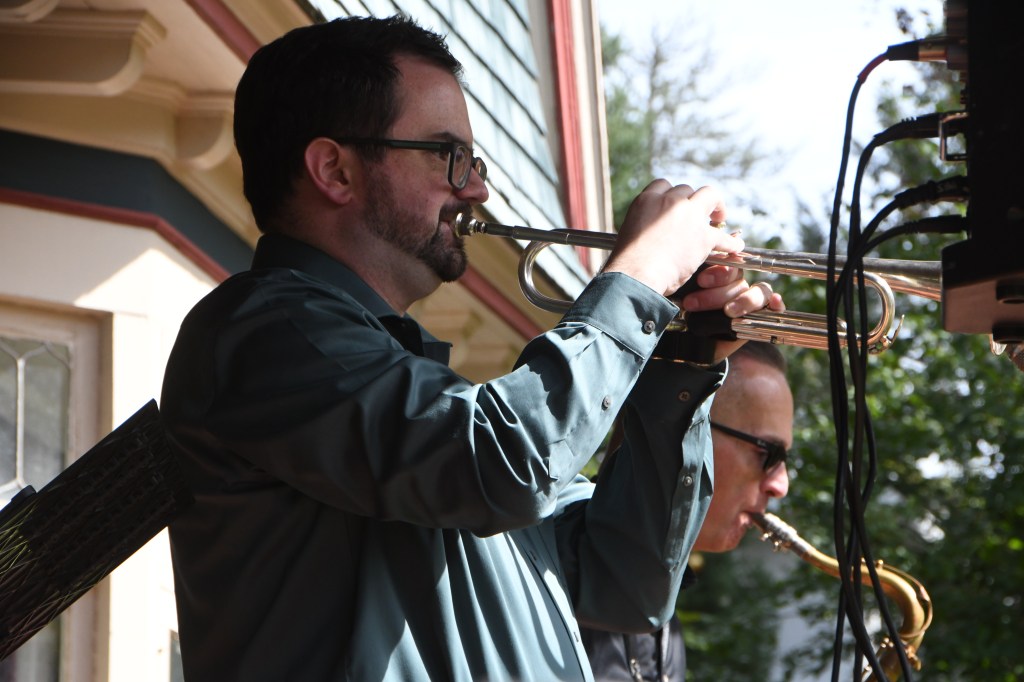
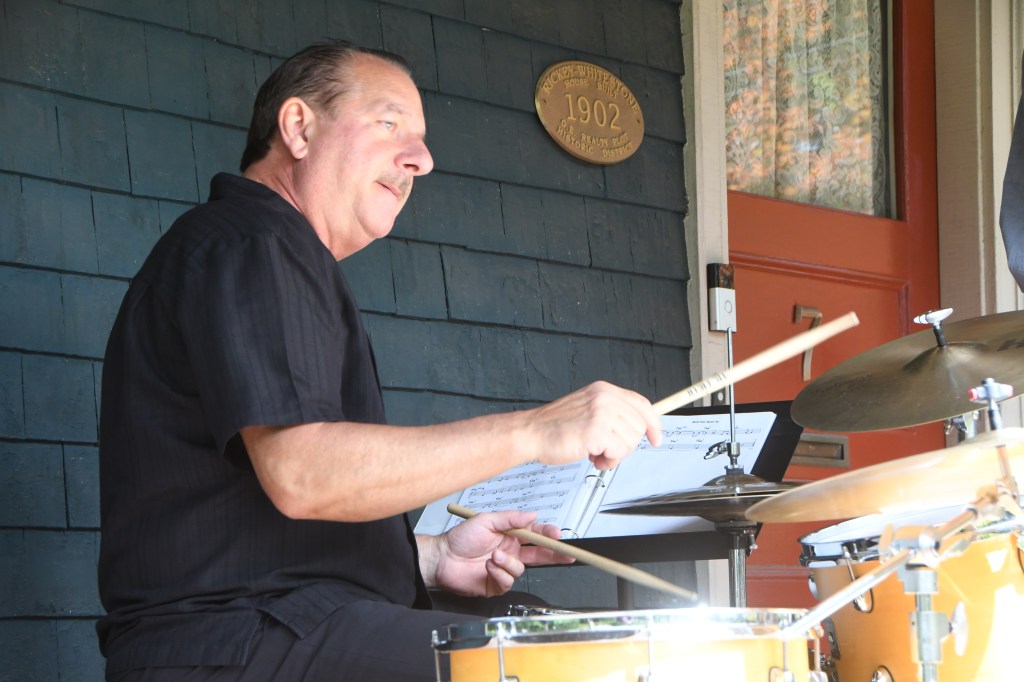
Scenes from Porchfest 2025, below

These include such jazz scene stalwarts as the Art D’Echo Trio, MB Jazz Vibes, Keith Pray, Matty Stecks and more; plus the hard-to-categorize crews Nice Hockey and Unken Brew. 11 a.m. to 6 p.m.

Festival time jams the calendar of In-demand players. For example, tenor saxophone ace Brian Patneaude plays this Friday at 6 p.m. with his Trio at the Landing Hotel of Rivers Casino in Schenectady. Saturday at 1 p.m., he’s with Dylan Canterbury’s Quintet at Schenectady Porchfest. And Sunday at 1 p.m., he’s with keyboardist Rob Lindquist’s Group at Wayward Lane Brewing in Schoharie.

TWO ETHNO-CULTURAL FESTS

This Saturday, Albany hosts the Ukrainian Festival at the Polish Community Center (225 Washington Ave. Ext.; Albany) and the New York State Hispanic Heritage Celebration at the Empire State Plaza Convention Center. 

Both feature live music. However, the musical menu is TBA at the Ukrainian Festival which charges admission and the music is for dancing 6 p.m. to midnight.

The Hispanic Celebration is free and presents Miriam Cruz, TKA, Alex Torres and His Latin Orchestra and. DJ Boy Boy 5 to 9 p.m.

Cassandra Wilson, Dolly Parton

Fair Warning: I digress

First came the name, then the presence, then the sound, and the soul.

Generally, I research some before I go hear a new-to-me artist; but I skipped that step before Cassandra Wilson played The Egg, back when I knew her name and nothing more.

She came onstage before a small band with a skinny Juilliard kid at the piano. Cassandra introduced him; John Batiste, from New Orleans. Her presence onstage changed the air in the place, her confidence opening us for discovery, a sense of occasion and suspense focusing our attention before something, as yet undefined but likely special, began happening.

When she started singing, her sound completely filled the space where the air had been; low, lower than Nina Simone who created drama like Wilson now wielded; but also easy flowing. As the cliche goes, we’d have been rapt if she’d just sung the phone book; but this felt more like singing the compressed emotional power of great novels. Even when the words were familiar, in songs we’d heard, they felt new in her voice.

I don’t recall a single song title she sang that night, but I remember how it felt to hear her.

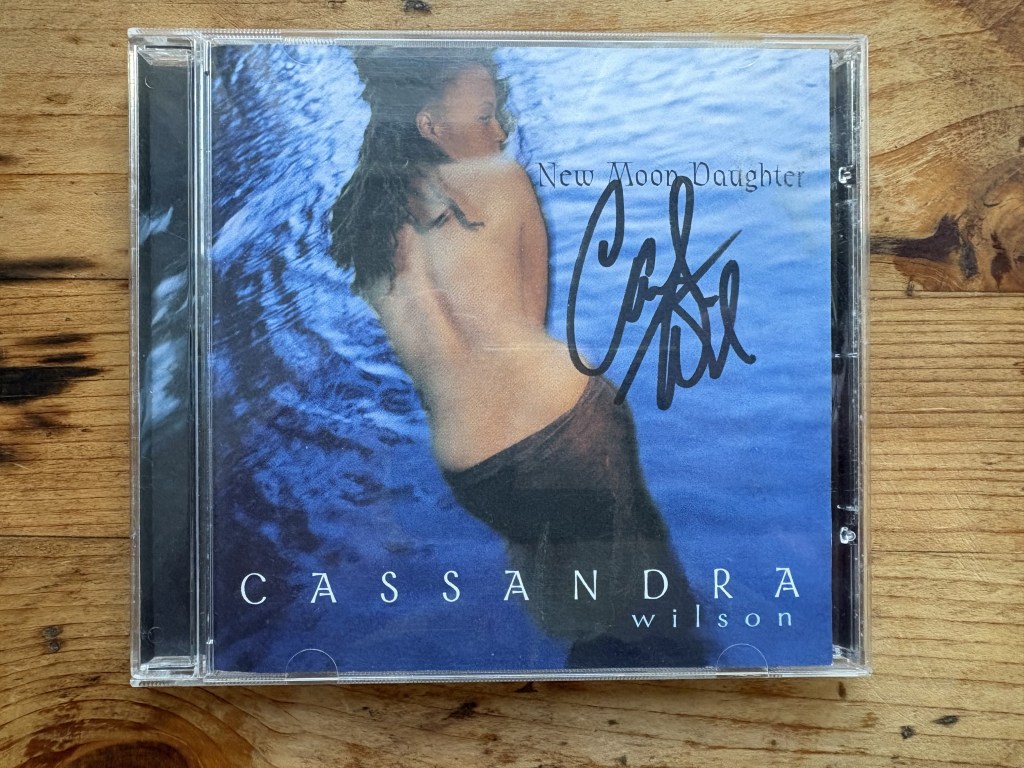
After that first night, I went to see Cassandra Wilson whenever I could. We shared a candid, fun phone interview and a merch-table meet-up where she signed “New Moon Daughter” (Blue Note Records 1995), my favorite of her albums. She sang those songs in her swan song here, the last time I saw her, at the Saratoga Jazz Festival in June 2025.

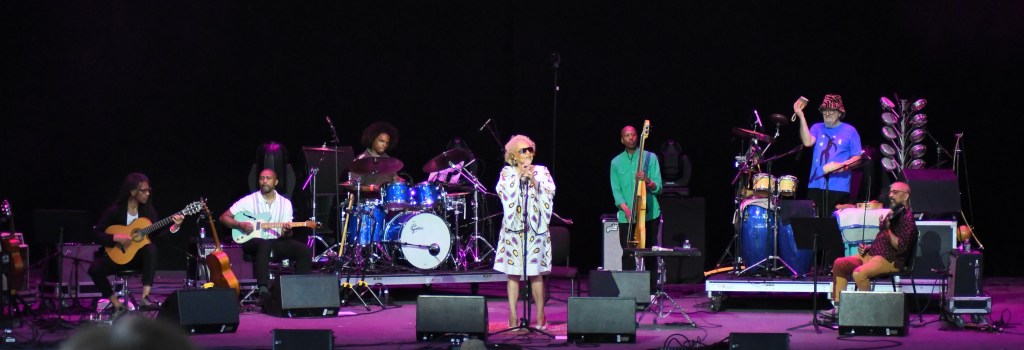
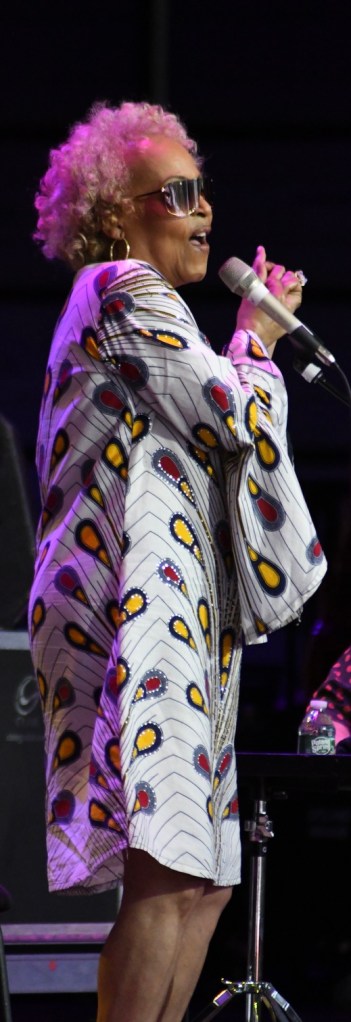
Cassandra Wilson, center, in white, at Saratoga Jazz Festival in June 2025

But now that Cassandra is gone too soon at 70, I feel her absence.

A pile of her CDs stands by this keyboard, but I’m not feeling any of that cheerful cant about “we can still hear them” – the artists we’ve lost but left us recordings.

Mostly, now, we miss, we mourn and their absence rings louder than any residual evidence why we loved them, how they awed us.

So it was, too, with Dolly Parton: a prototype of the larger-than-life, talent-and-ego-triumphant, self-invented American hero. That image was so noisy it drowned out her achievements in a pink cotton-candy fame-haze. 

My own appreciation for Dolly, past the glitz that sort of blinded me, grew through the proxy of Diane Aliferis, a brilliantly creative woman who extolled Dolly’s talent as a song-crafter. Diane knew about this. She made songs of Robert Service poems and introduced me to a songwriter friend who penned the indelible tale of a Freihofer’s bread-van horse who died in its traces on a hot summer day, exuding a vast, city-wide  stank. He called it “Follow Your Nose to Cohoes.”

Bottom line: any songwriter Diane recommends deserves my attention.

Before I ever saw Cassandra Wilson, I had met Dolly Parton – on the top evening for name-dropping of my entire musician-adjacent “career.”

It began in a Beverly Hills restaurant with my Rotterdam-born friend Nancy Lyons and her then-husband Albhy Galuten, the Grammy-winning record producer of the Bee Gees disco-era hits and much more.

We sat with musician friends; Chicago trombonist Jimmy Pankow and Eagles guitarist Don Felder and their wives; Karen and Susan respectively. There was wine, and Ted Knight came in, to happy hubbub of star-time uproar.

Afterwards, Albhy and I went to the Country Club music bar in Reseda to see Lone Justice, a country rock band Arista Records chief Clive Davis wanted Albhy to produce. Felder joined us later.

At the Country Club, the Eric Martin Band played first: OK LA pop rock. Then Los Lobos rocked the middle slot, mostly in Spanish. Years later, when Mona Golub brought them to Albany’s Washington Park, she took me backstage as they ate dinner on the deck behind the Park Playhouse. They remembered that gig and corrected my recollection of the location. Felder and Galuten were less impressed with Los Lobos than I was that night, but Lone Justice singer Maria McKee knocked Galuten out; everybody else, too.

Watching her that night, he whispered, “That’s a hell of a fucking singer!” Then 19, black boots up to there, McKee was half-sister of guitarist-singer Bryan MacLean of Arthur Lee’s under-rated LA band Love (“Forever Changes” – a classic!). Maria had the whole package: vocal sound, soulful delivery, projection and looks. 

When Dolly Parton came into the dressing room, Maria burst into tears in sheer starstruck awe, mascara running down her cheeks. Dolly was wonderfully gracious to her, praising her talent and calming her gently. 

I’d spotted Dolly at a front table with bassist Lee Sklar whom I’d met at Proctors playing with James Taylor in a Union College show. Taylor used to introduce the spectacularly-bearded long-haired Sklar as “Coming to us from deep in the forest: Leland Sklar!” Sklar remembered me and introduced me to Dolly by name. She was sweet as could be to me, smiling close and taking my hand.

Dolly was dressed down, relatively speaking, all in denim and a small wig, but her presence – like Cassandra Wilson’s – felt electric.

BUT I DIGRESS, a few times here

OK, so I also did that same Go See Her Without Research thing with singer Lizz Wright, also at The Egg. 

And it worked again; Wright also proved wonderful on first hearing and many times since.

Wright is among many musicians who posted tributes to Cassandra Wilson. Her Facebook contribution simply showed a video of her own sad face, mourning in the most poignant, silent way. Other posts I admired include Elvis Costello with Diana Krall, Jason Moran and Jon Batiste; he said she sounds like the South.

About “New Moon Daughter,” my favorite Cassandra Wilson album. The marvelous, magical thing starts with Lewis Allan’s lynching lament “Strange Fruit.” Billie Holiday sang it decades ago to tearful emotionally devastating effect; Cassandra Wilson owns it in the here and now. And what a nervy move to start from that hymn of heartbreak.

Who else could give the same artistic weight to both the doomed-love blues “Death Letter” of Son House and the Monkees’ pop-corn “Last Train to Clarksville”? Right after “Letter” comes Hoagy Carmichael’s serene “Skylark” that has never taken wing so gracefully as here. At a similar slow tempo, calm as breathing by a mirror-smooth lake, she sings Neil Young’s “Harvest Moon” as a lullaby. Among all these classics, Wilson’s own “Solomon Sang” more than holds its own. Here, Craig Street’s production and her band co-star to compelling effect, the guitars of Kevin Breit and Brandon Ross linking like hearts in tune.

If you don’t have this thing, you should.

It was Nancy who hatched the idea with me to wear gorilla suits to a spring 1975 Frank Zappa show at the Palace, co-starring Captain Beefheart! – playing mostly soprano sax – and the Fowler brothers. 

When Nancy first donned the molded rubber gorilla head, it felt too claustrophobic. Nonetheless she paid the rental for our friend Ray Marshall, busted flat at that time, to wear one. So Ray and I rode to the Palace in Nancy’s vast red Ford station wagon. We went buck wild: You’d be surprised as I was that I burst out of the Nancy-mobile to run right over the hoods of cars stopped in traffic, and one entirely from front bumper to back over the roof.

Palace security (the cowboy-hatted gnome known as Grumpy) laughed and didn’t bother to frisk me: I held my ticket in one hairy paw. I never broke character as I sat down next to Don Wilcock, then my editor at Kite and still a friend, and deeply clueless that night that it was me in long brown fur. 

At the end of the show, Ray emulated King Kong (Nancy and I had been inspired into this caper by Zappa’s song of that name) and picked up a woman in the aisle and carried her out of the Palace: It was my future wife, Ellie. 

Years later, Don and I were kibitzing/reminiscing/bitching about unfortunate concert episodes. He recalled that as soon as he saw the guy in the gorilla suit at the Zappa Palace show, “sure as shit, I knew that asshole would sit right next to me, and – you know – he did!” 

Thereupon I told him how offended I was that he hadn’t greeted me. Don sprang up and exclaimed, “That was YOU?”

Fast forward to a SPAC show where solo artist Maria McKee (living in Ireland, like Rhiannon Giddens) was opening for Neil Young, He was playing solo on that tour after leading his big band – the Blue Notes, 14 pieces – there the summer before. 

Maria was singing great with just a second guitarist when Vinnie Birbiglia, voluble longtime chief of J.B.Scott’s music club in downtown Albany, dashed breathless up to my seat (section 2, row W, seat 138 – SPAC publicist Peter Hopper always put me there). Vinnie barked “C’mon!” in his outer-borough bray, urging “Neil wants to talk with somebody from the press!” I looked around, but didn’t see David Bauder, Seth Rogovoy or Steve Morse – more notable music scribes than I and guys I’d sometimes see at SPAC shows. 

When I realized Vinnie actually meant me, I went to meet Neil Young.

Unprepared, trying to hide how flustered I felt, I first asked about his tour buses, maybe the coolest on the road. He was then using the old-school chariot with “Buffalo Springfield” on the front-window destination sign over its windshield, and the top half of a ’56 Plymouth welded into the roof with a sofa where you could watch the world from on high, as if from a railroad dome car. (He later updated, grafting the top of a Buick onto an Eagle bus he’d also retrofitted with a lift to swing his handicapped son in and out.)

I asked him about Maria and he said predictably nice, noncommittal things about her but said they had no plans to perform or record together.

Then I noted the profound change in his performing formats, from the previous summer’s giant, roaring Blue Notes big band, complete with horn section; to play alone onstage with guitars, piano and pipe organ. 

He talked about the need to mix things up, change things up – “for me, you understand, for me,” he stressed. 

Maybe they all make music for themselves; and maybe only the great ones fully invite us inside, to feel it with them.