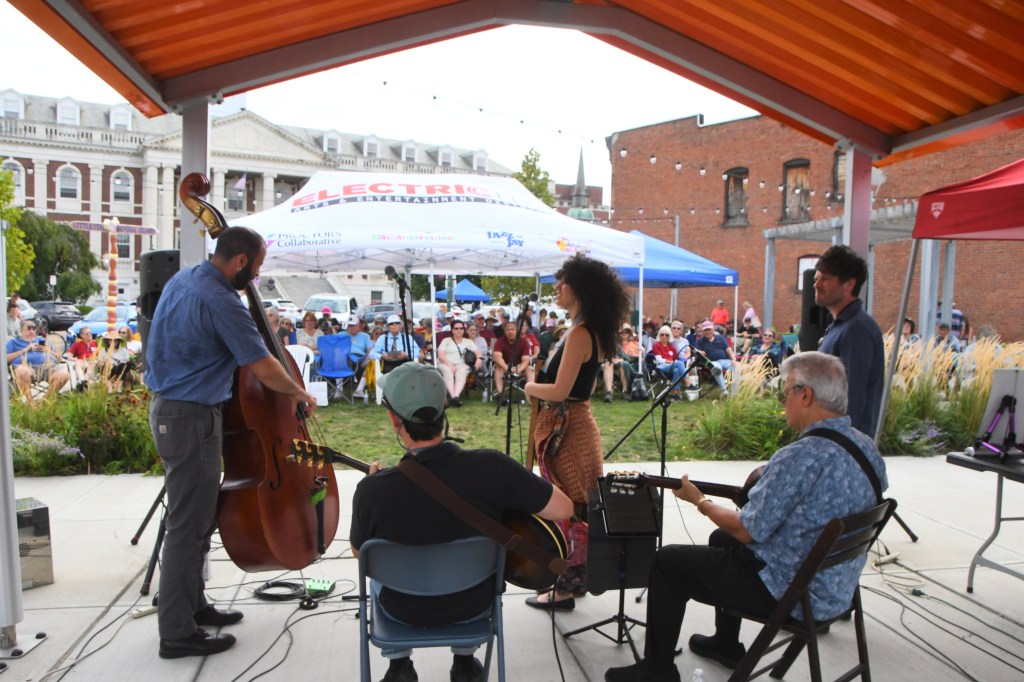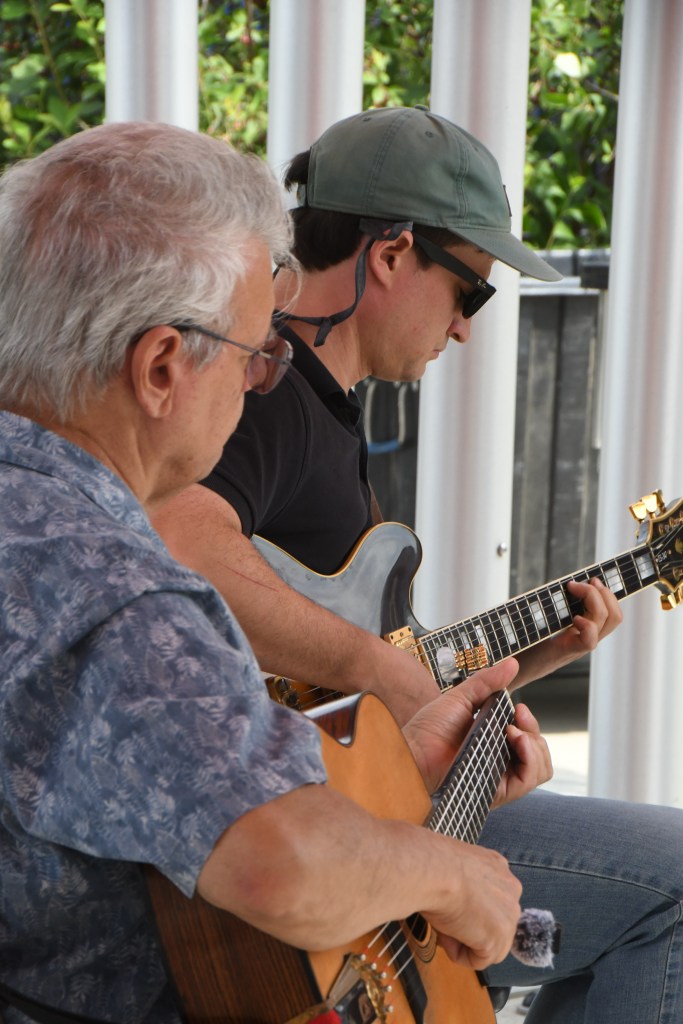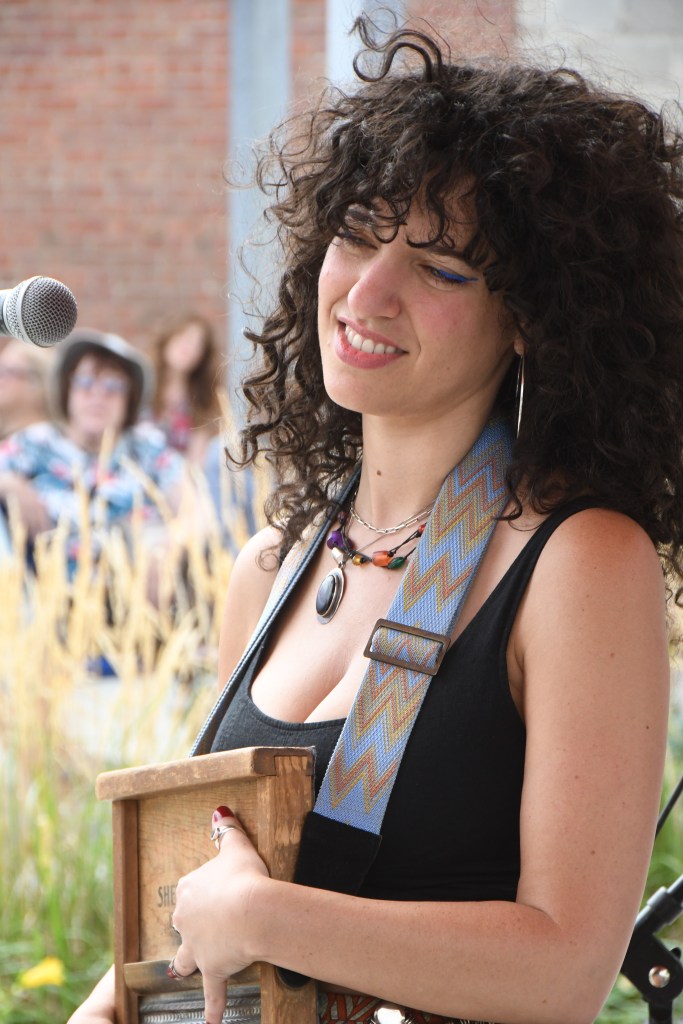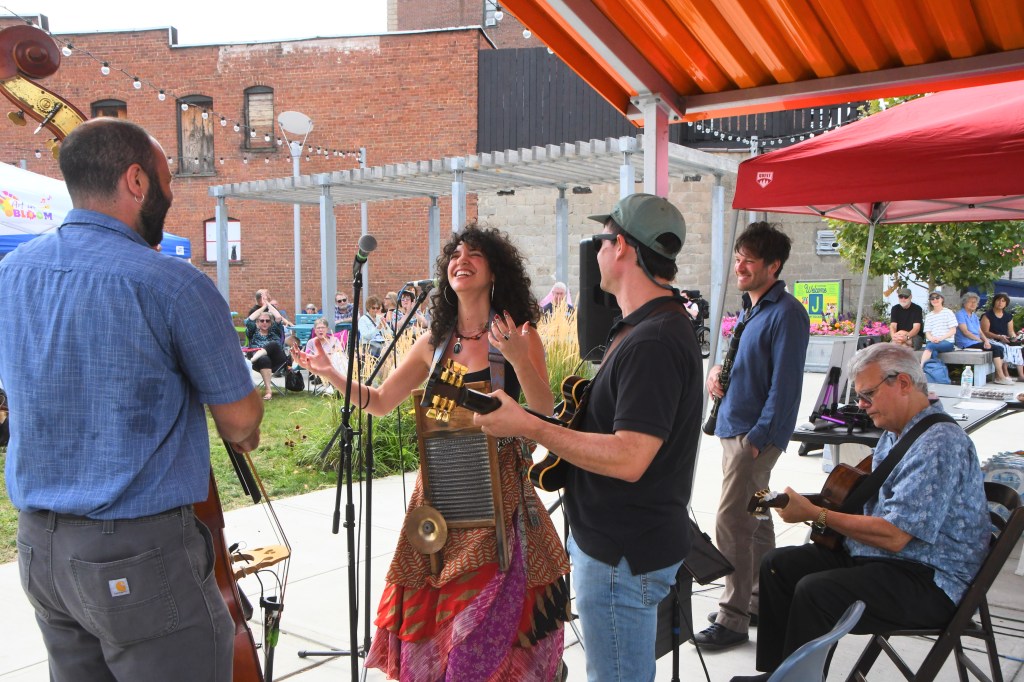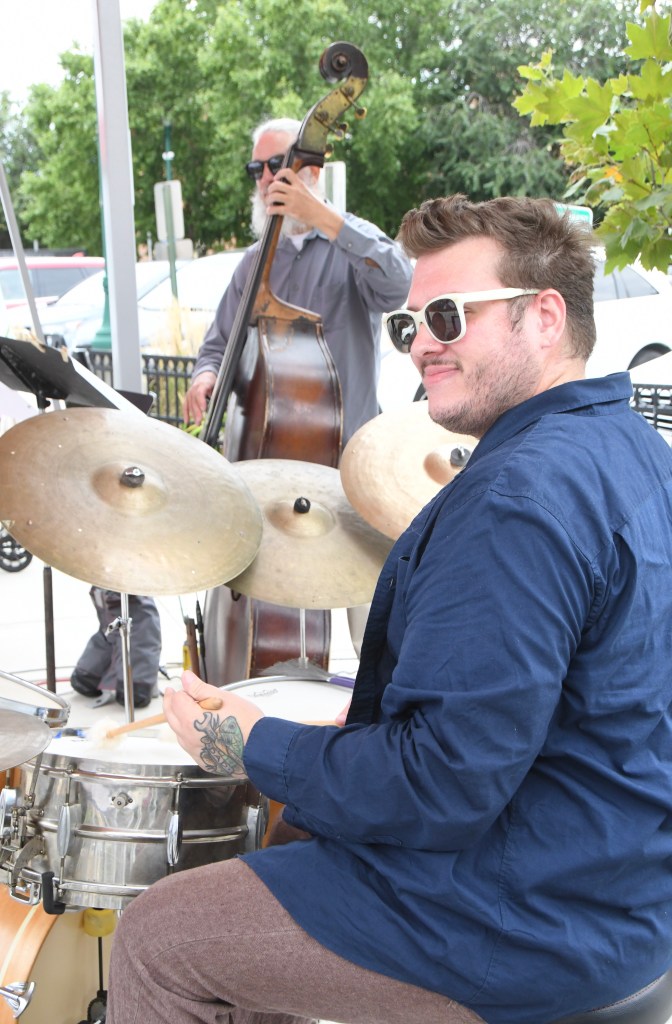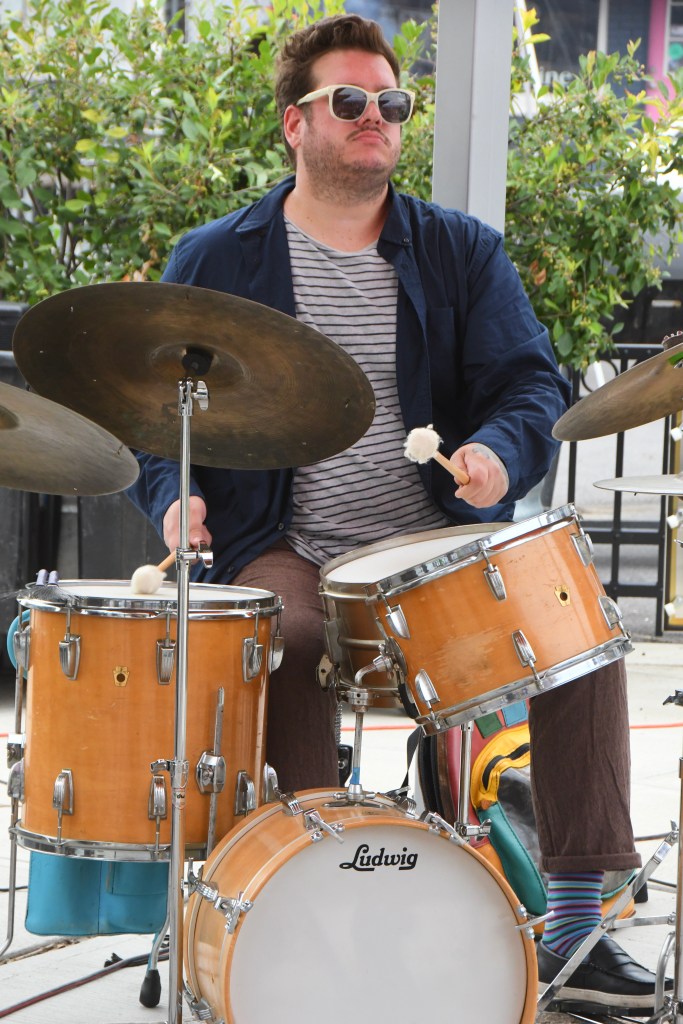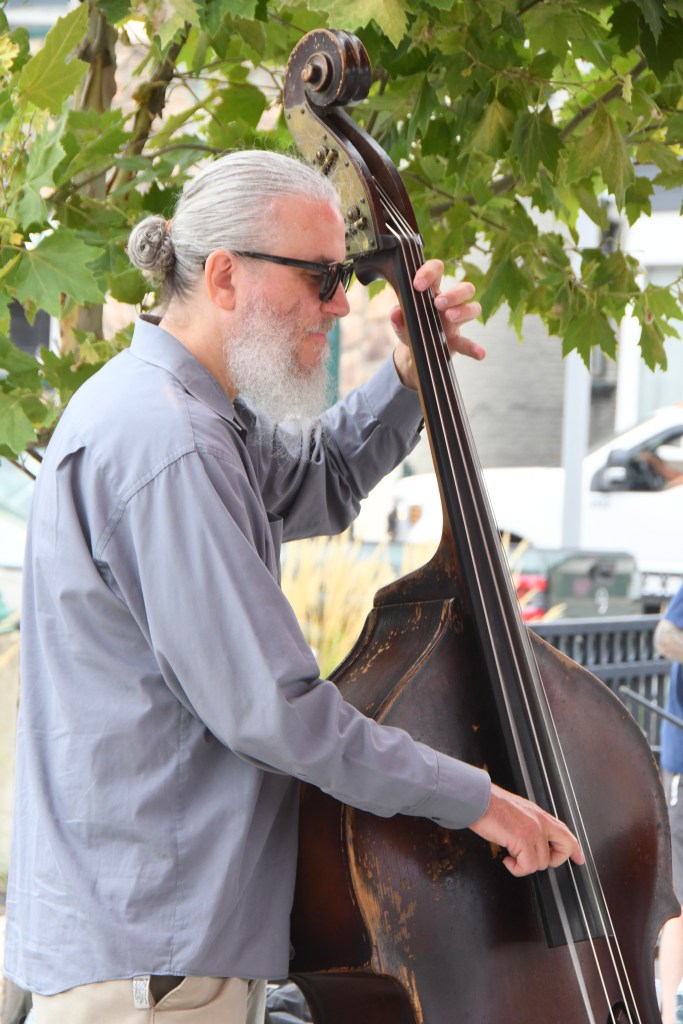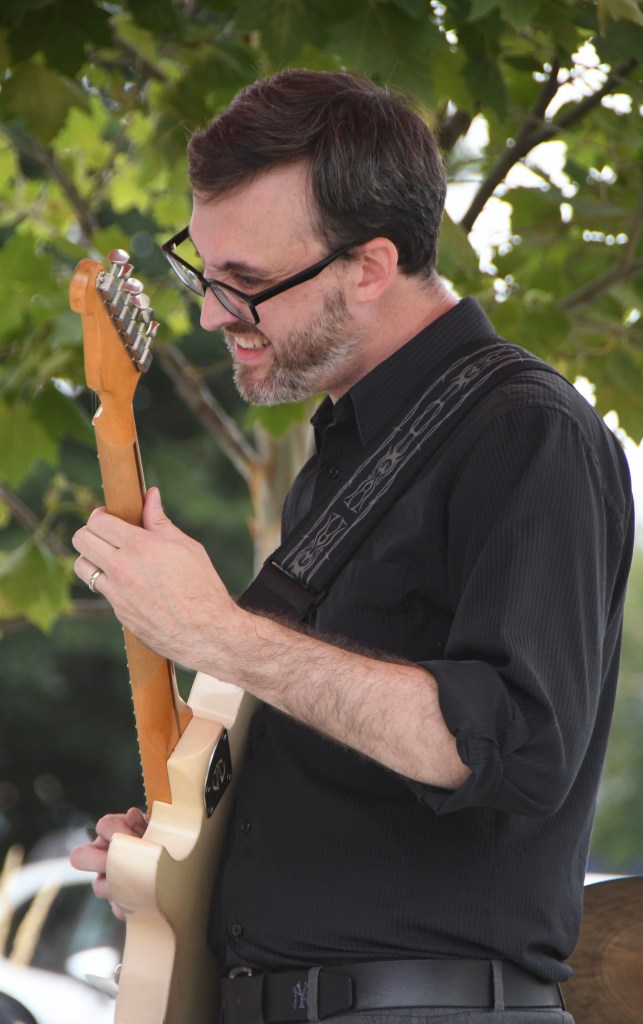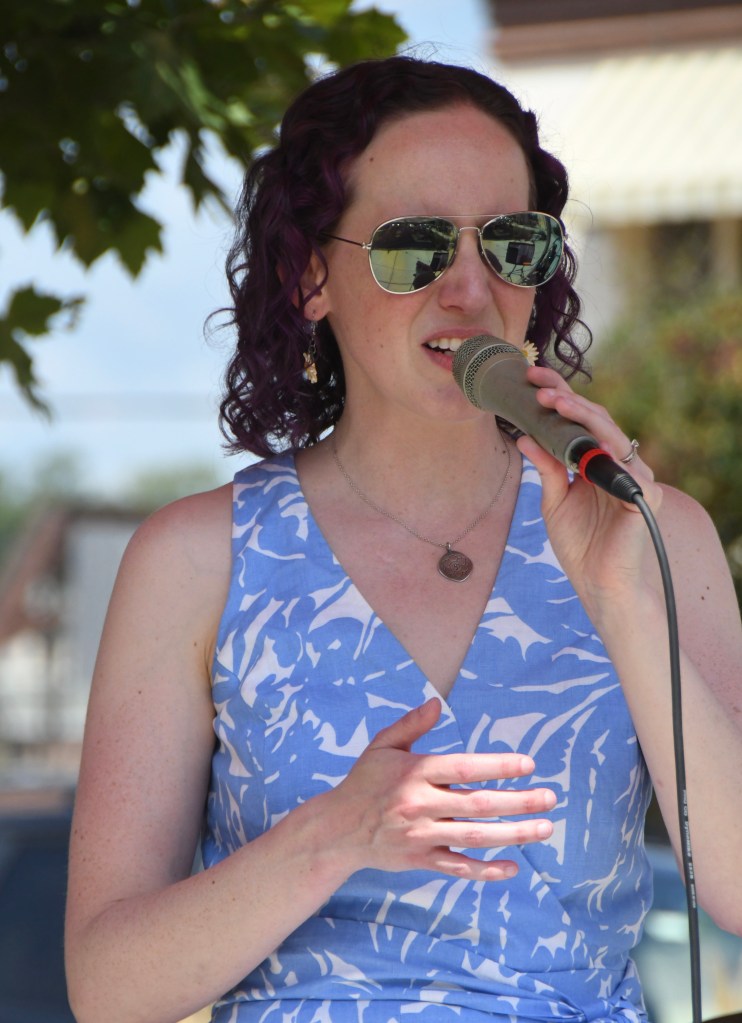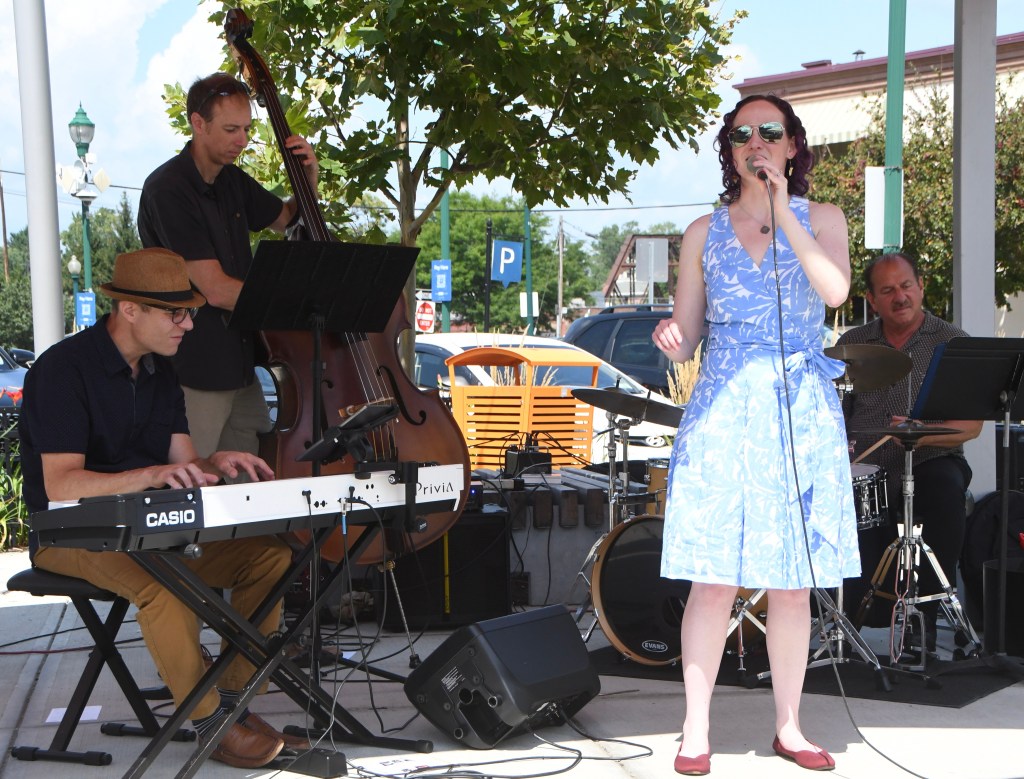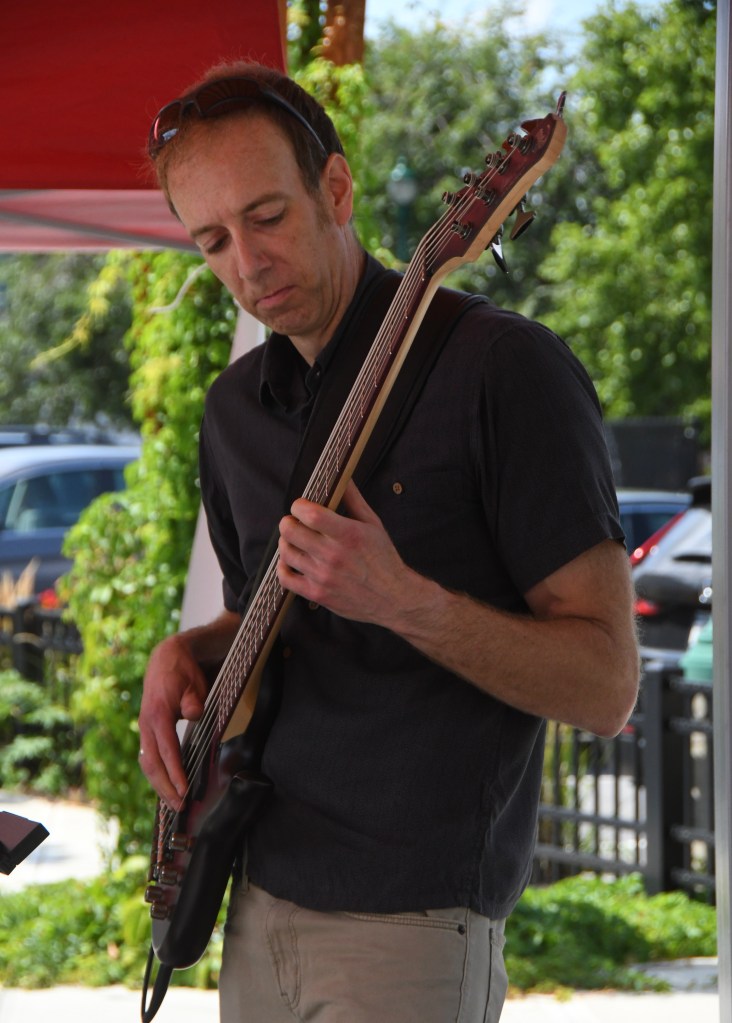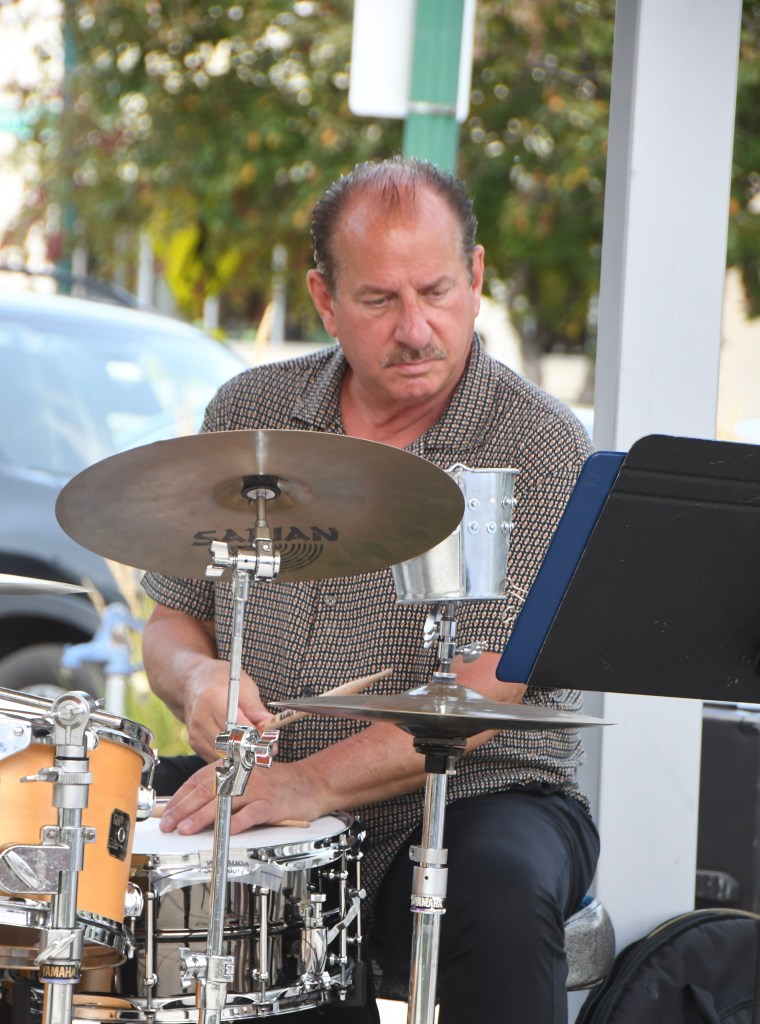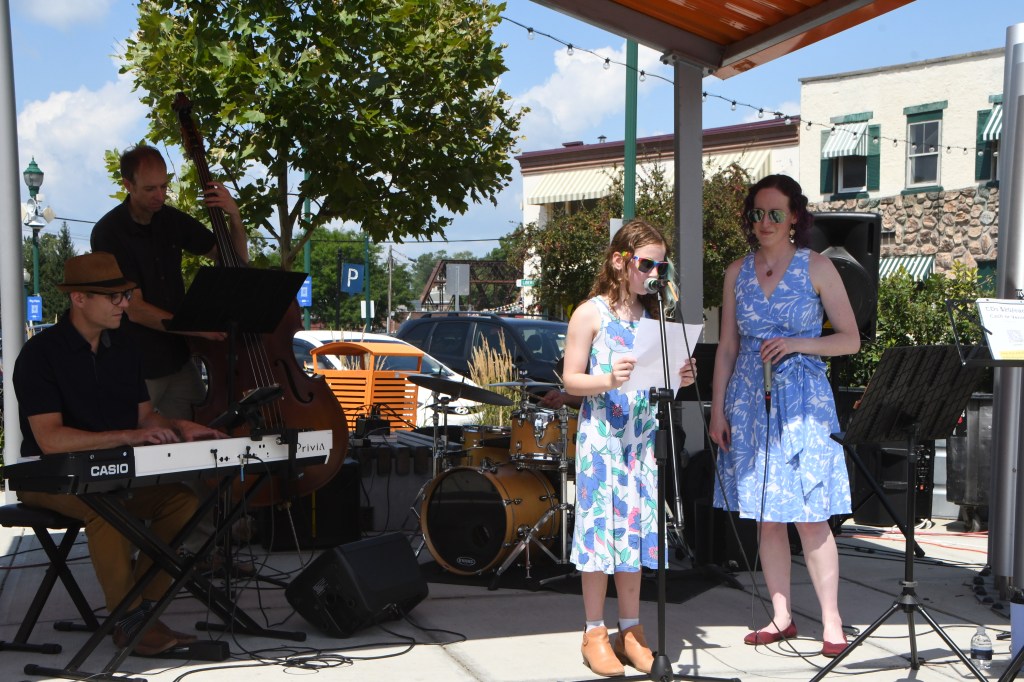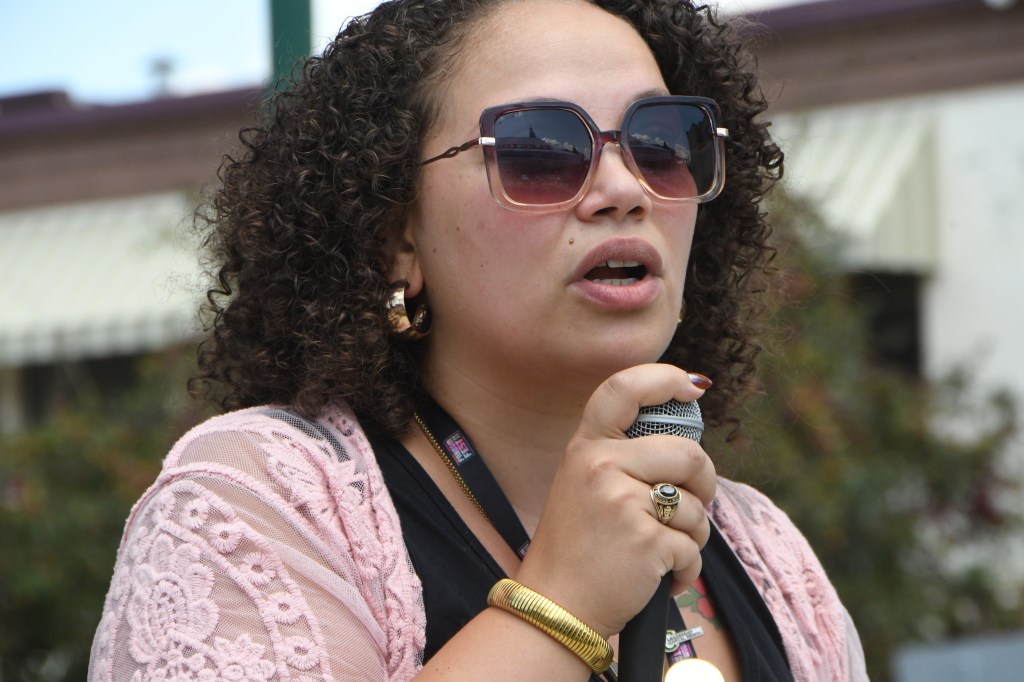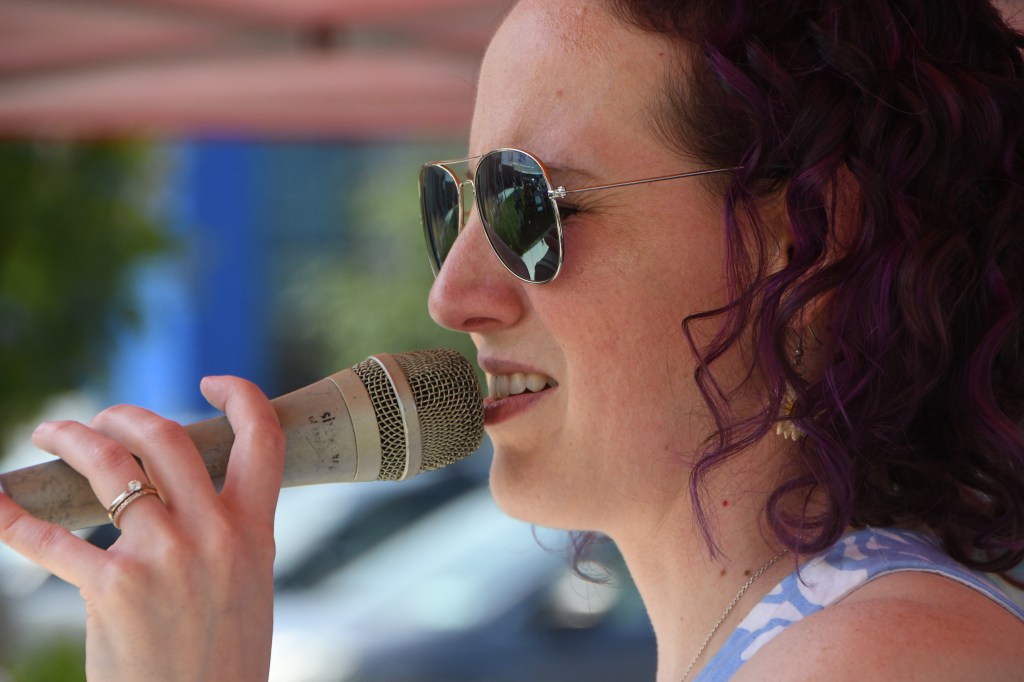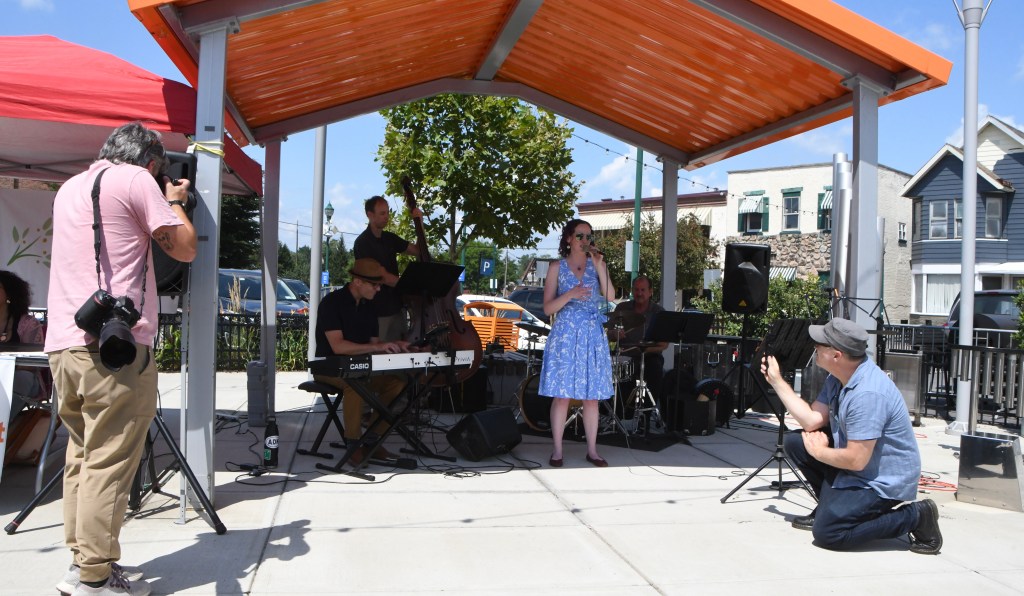
The Hot Club of Saratoga closes the curtain on Jazz on Jay Thursday, just days after Music Haven presented its final concert this season: the Lost Bayou Ramblers, and Cecilia, last Sunday.
Music Haven presents its final film offering Friday: “Song Sung Blue.” But we digress
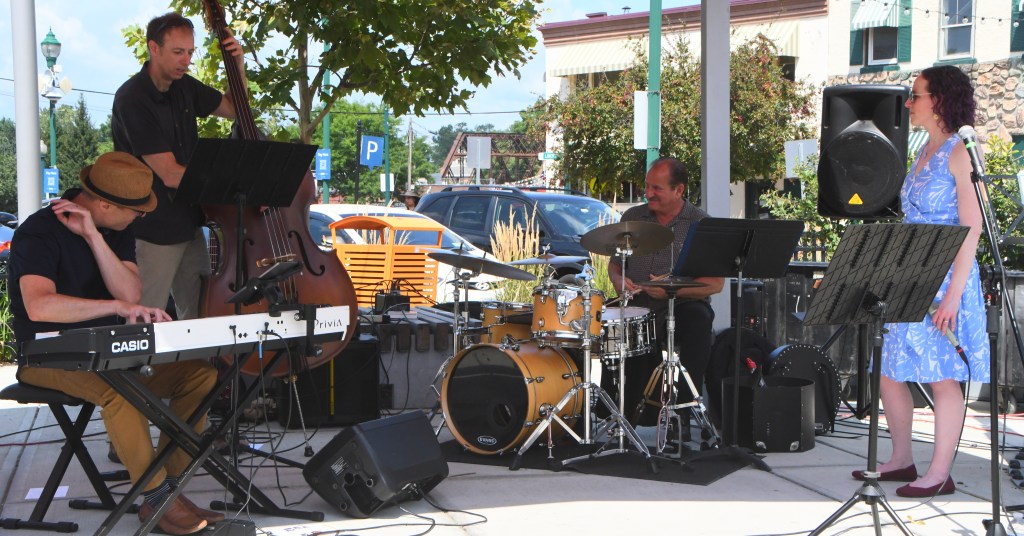
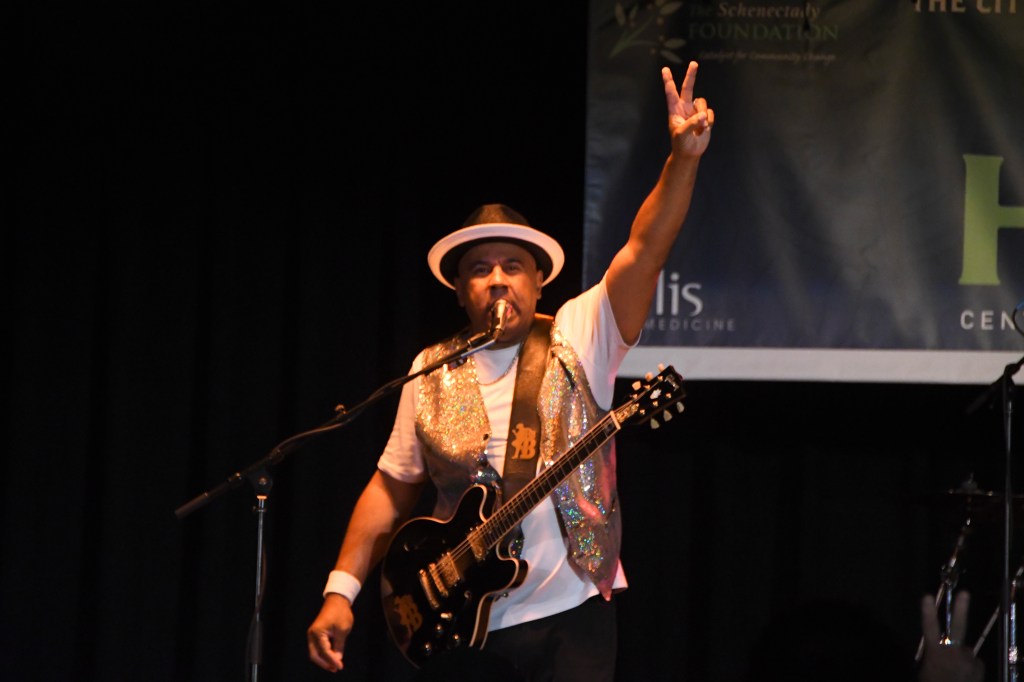
When the Hot Club of Saratoga plays gypsy jazz, they generate such engaging, fresh energy in this 1930s style that they’ve become one of our most honored jazz groups.
They won the Thomas Edison (Eddies) Music Award as Jazz Artist of the Year in 2022 and 2025 and played the main stage in SPAC’s 2021 and 2022 Saratoga Jazz Festivals.
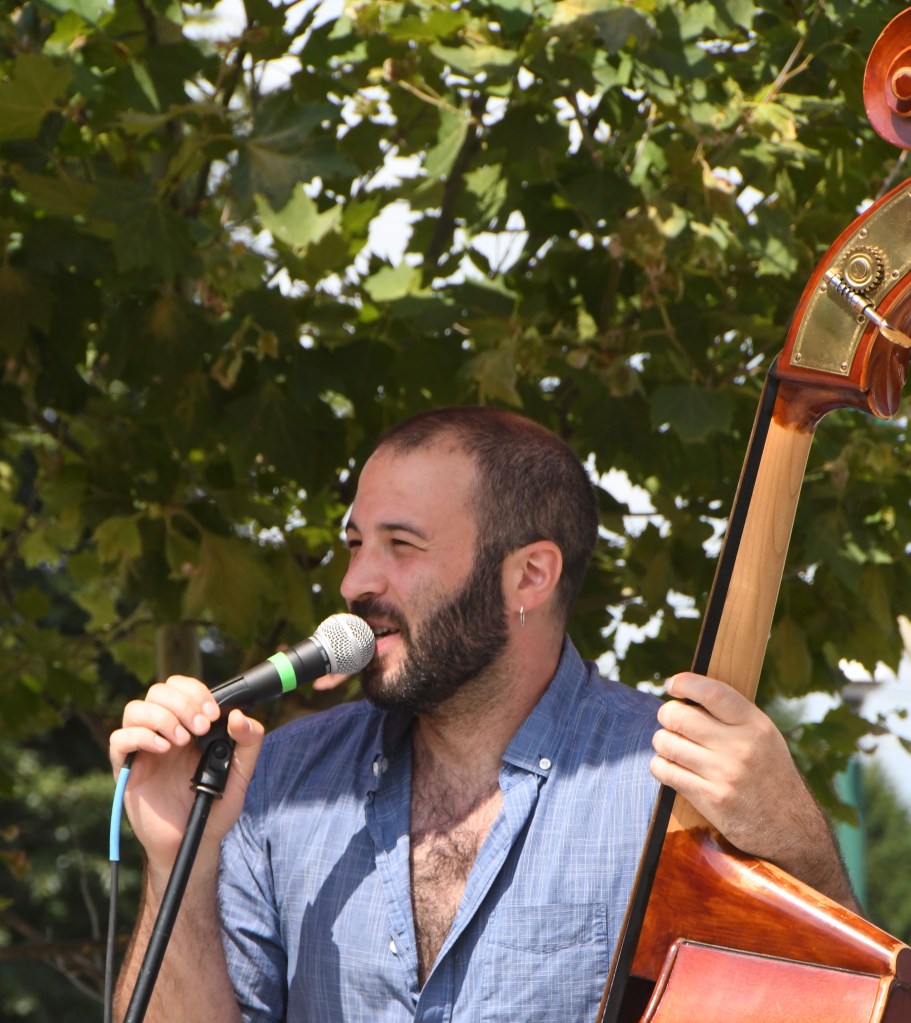
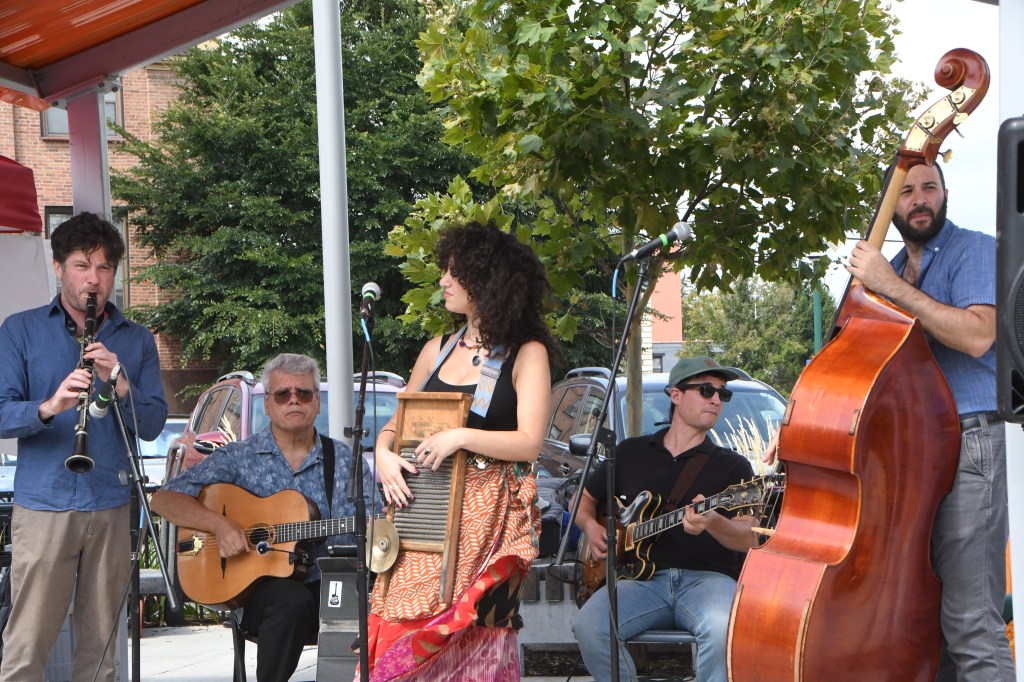
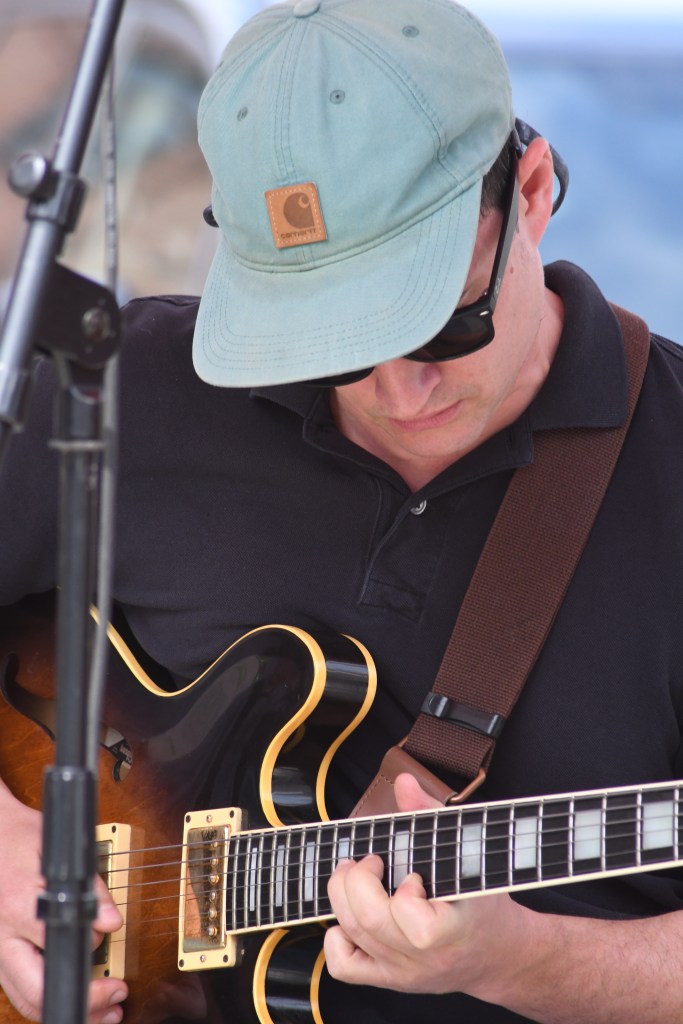
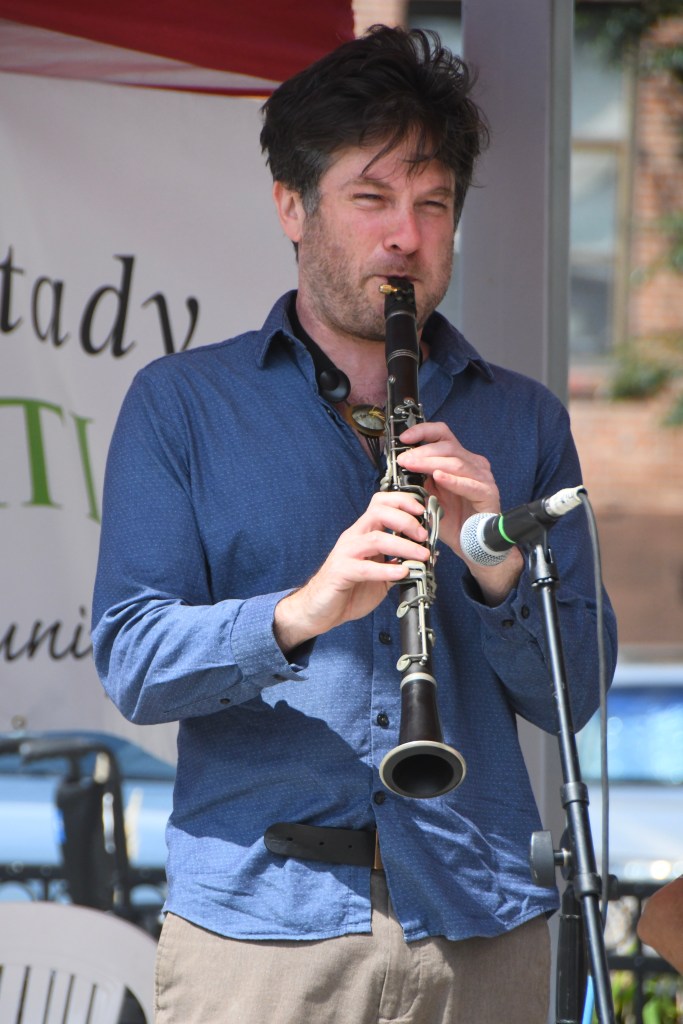
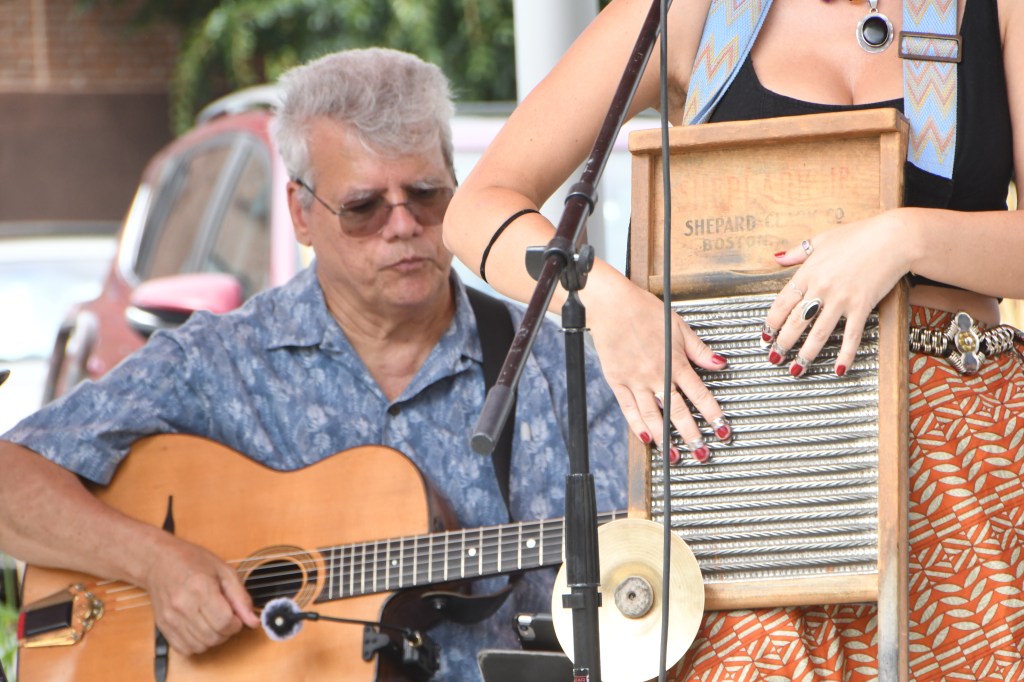
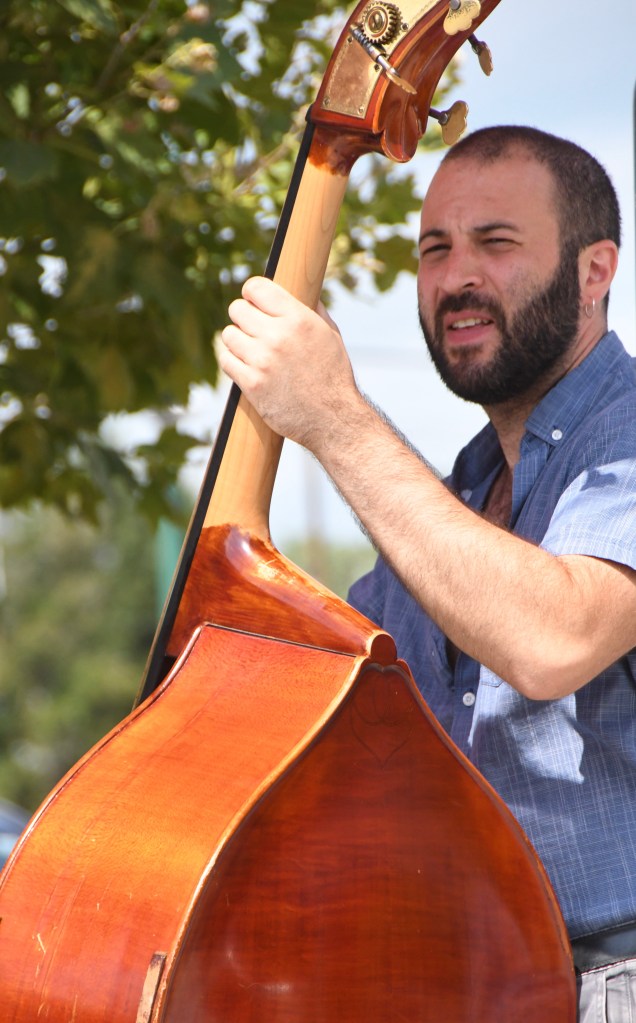
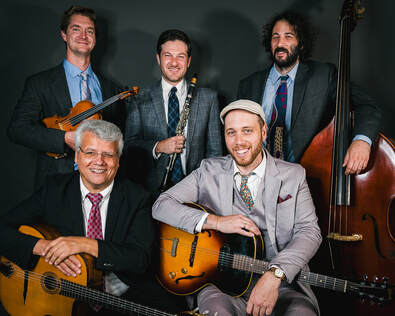
The Hot Club of Saratoga. Photo provided. Credit: Kiki Vassilakis
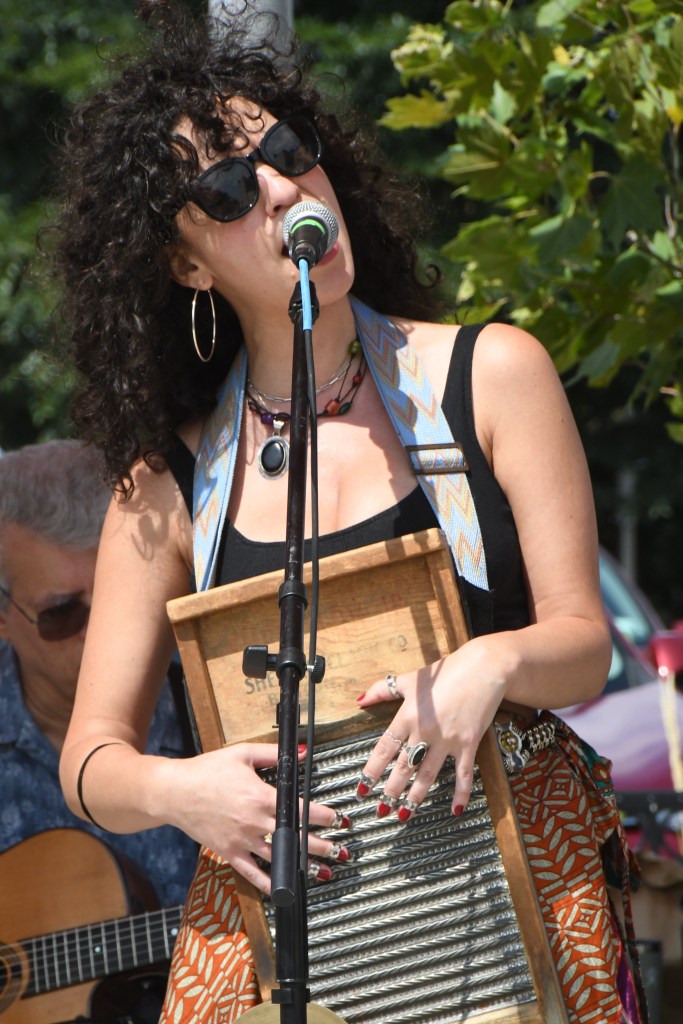
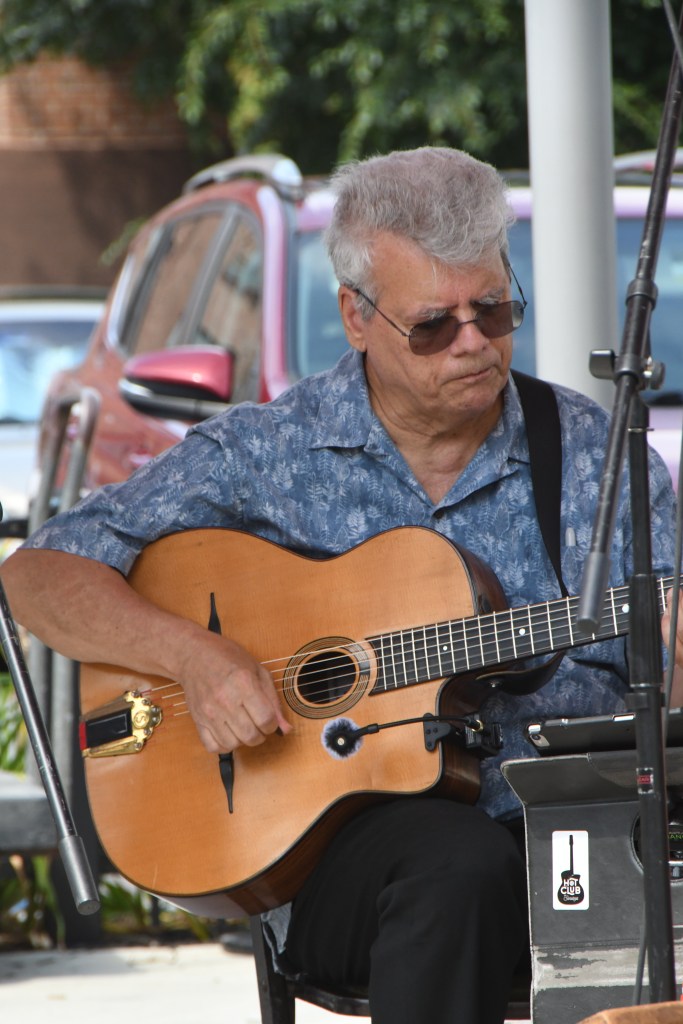
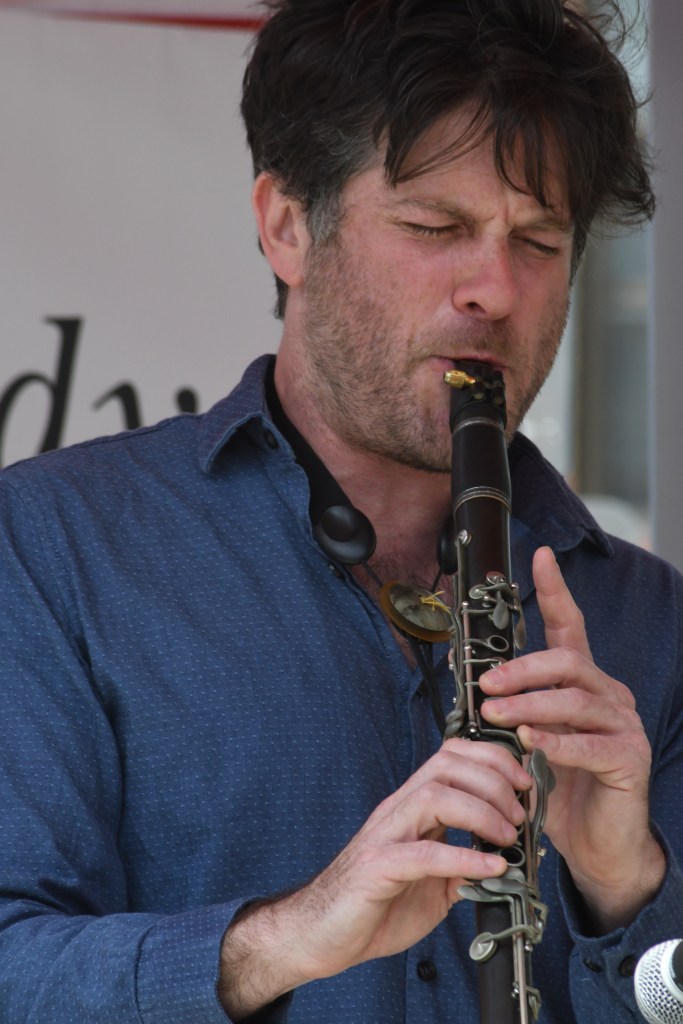
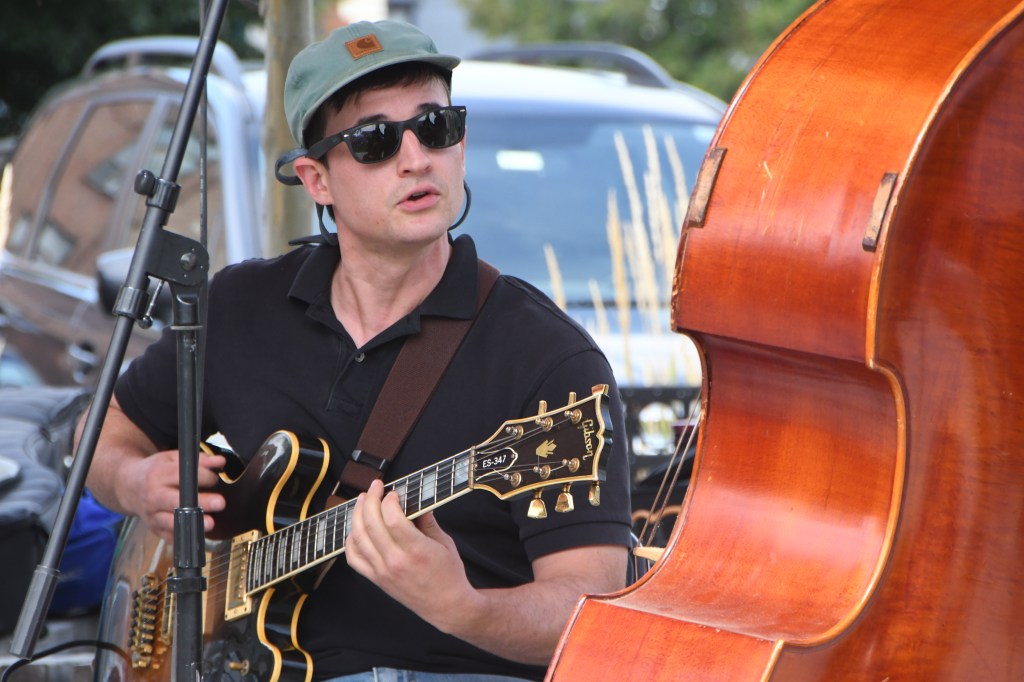
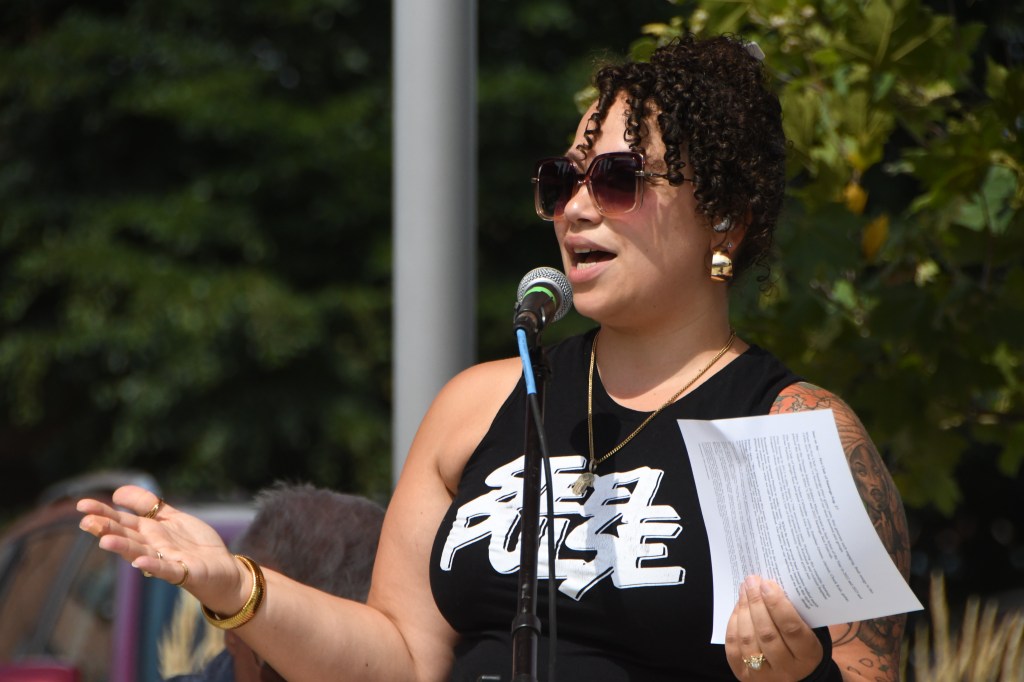
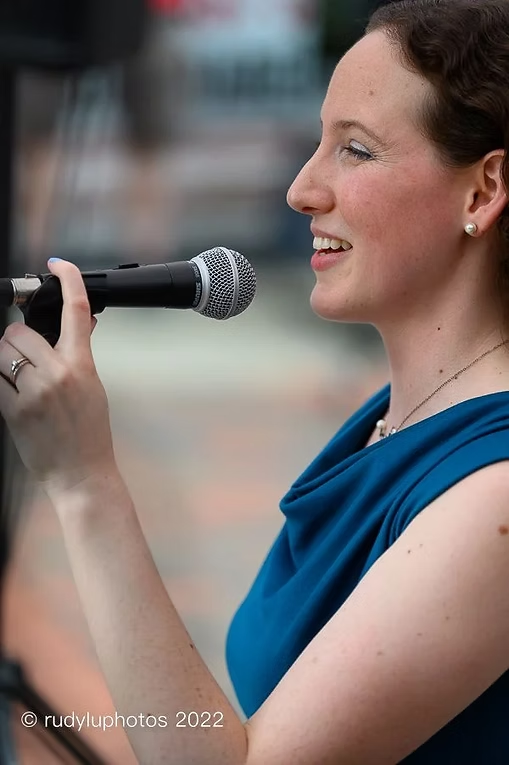
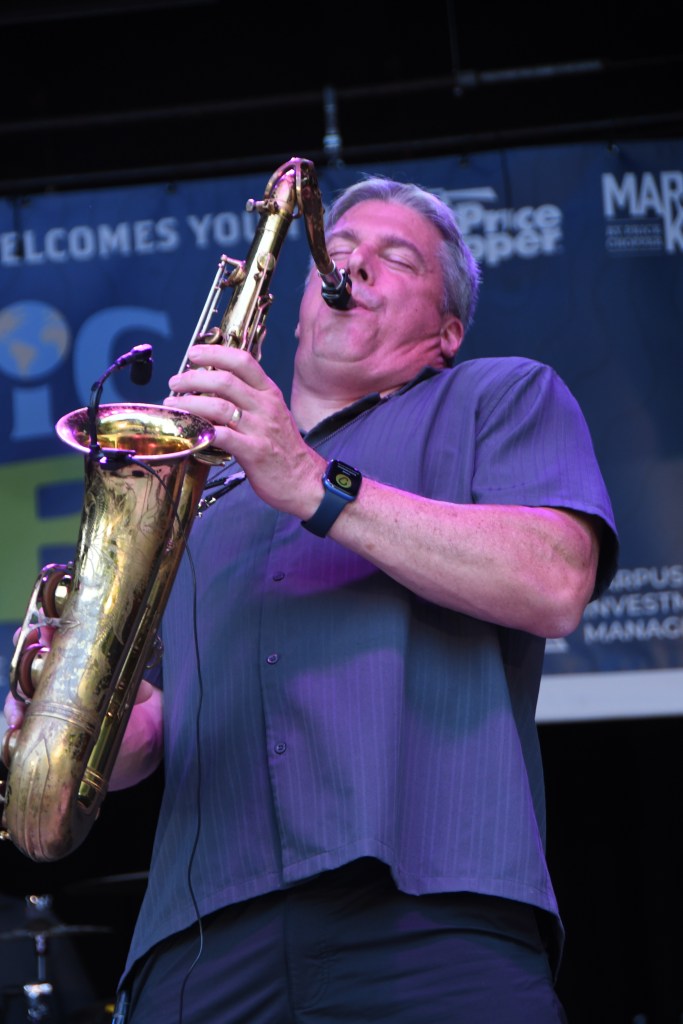
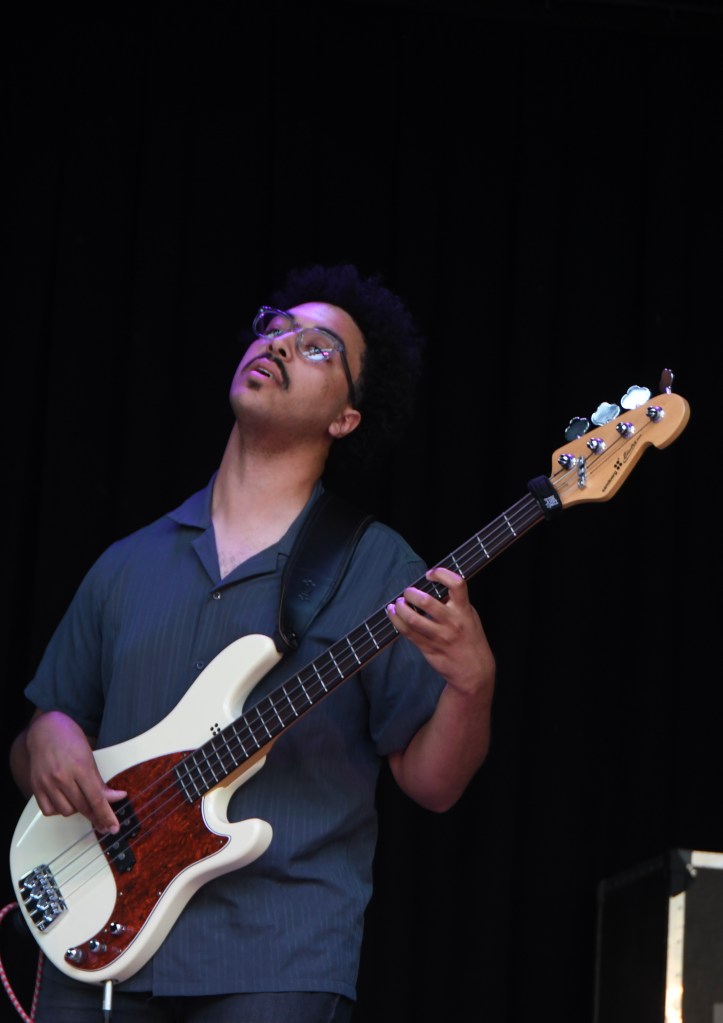
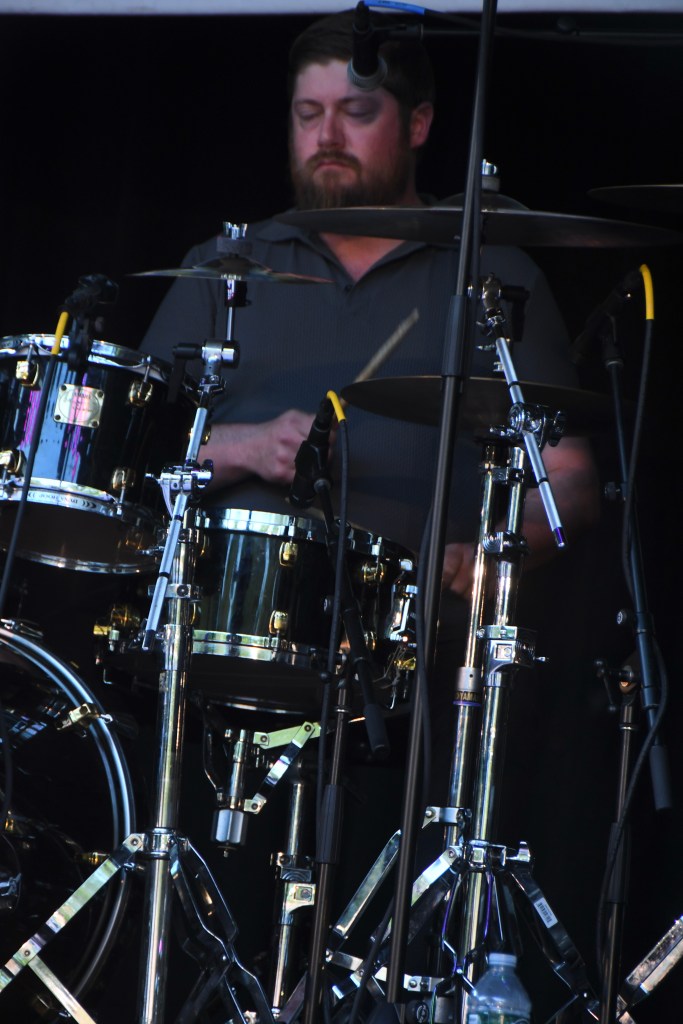
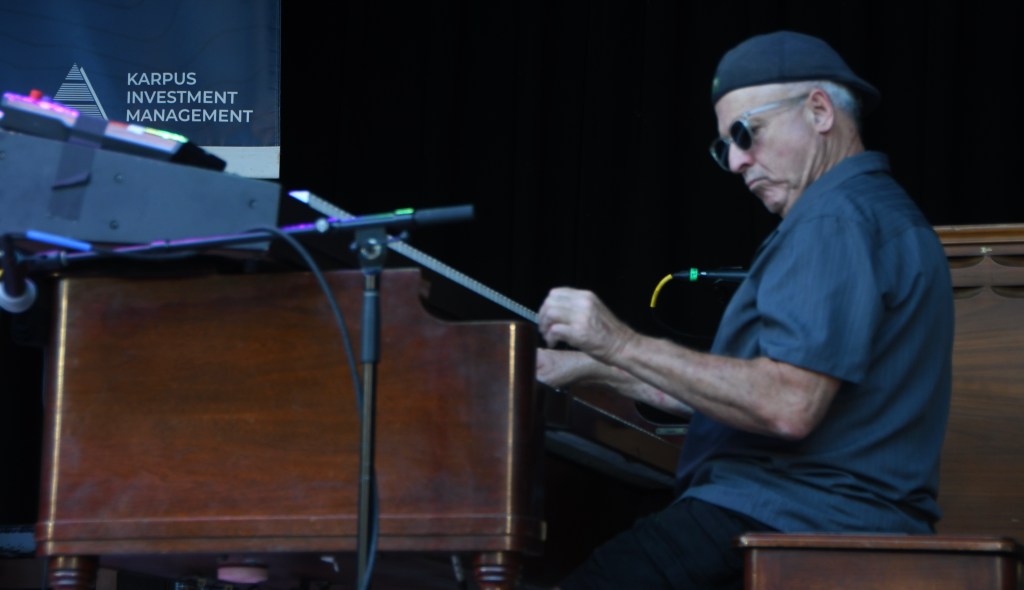
The Hot Club of Saratoga is Tucker Callander, violin; Jonathan Greene, clarinet; Chuck Kish, guitar; Dylan Perrillo, upright bass and guest vocalist Julia Posin.
They formed in 2013 to play Hattie’s 75th anniversary party. Honoring this venerable Saratoga institution, they celebrated the lively music of guitarist Django Reinhardt and violinist Stephane Grappelli whose Quintet of the Hot Club of France famously invented gypsy jazz.
Perillo recalls that Reinhardt first inspired to make music. While he notes several band members studied mainly classical music in conservatories, Perillo says, “The majority of what we’ve learned in this style of music comes from what we call the folk method. Our peers are our teachers, and we learn…through playing together.”
Perillo says, “We approach playing this music with reverence for the original makers of it including Django Reinhardt and Stephane Grappelli. But of course we mix in our individual musical experiences…to our sound.” He explains, “Jazz has so much depth and history, it would be impossible to play it without doing our due diligence about the fantastic musicians who came before us.”
“Improvisation is the name of the game!” exclaims Perillo. “Ninety percent of what we are performing is improvising over a mutually agreed-upon musical form; the rest is as the wind takes us.”
On Thursday, they’ll play music from the late 1920s to the 1950s, but in their own original arrangements. Perillo lists “Snowfall,” “Topsy,” “I’ll See You in my Dreams,” “Minor Swing” and “Honeysuckle Rose” as performance favorites.
The Hot Club of Saratoga has released three albums: “Swingin’ With the Hot Club of Saratoga (2015), “Just Horsin’ Around” (2023) and “Comes Love” (2025) featuring vocalist Julia Posin who guests with them today. They also play Sunday brunch at the Adelphi Hotel on Broadway in Saratoga Springs.
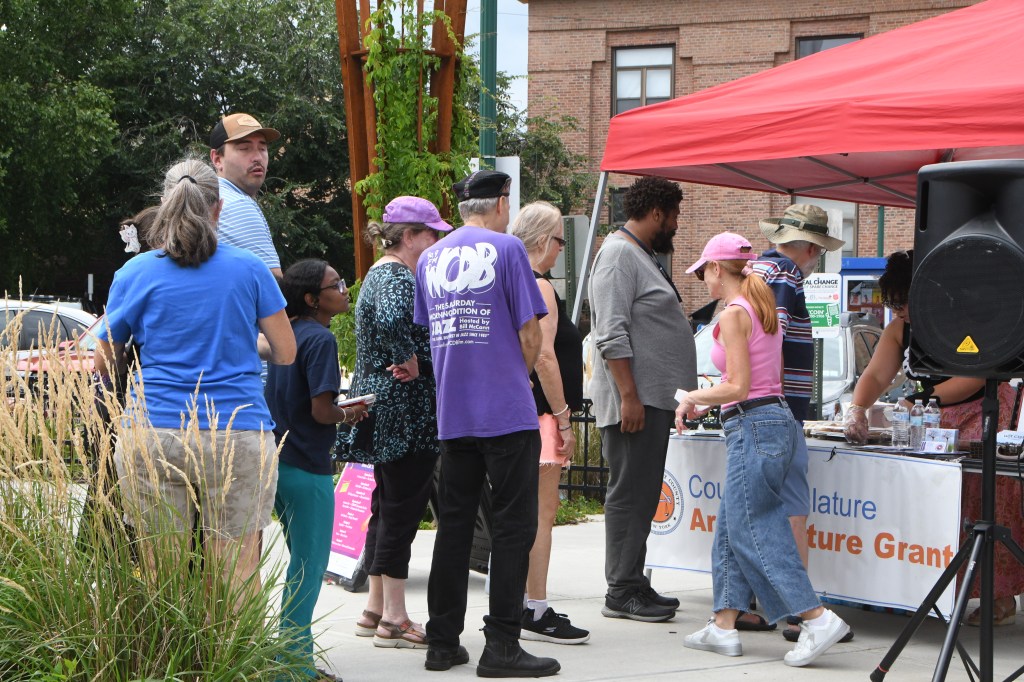
Today’s concert concludes this Jazz on Jay season. Its volunteers present these dozen-plus concerts for free, thanks to the series sponsors, both public and private. We offer special thanks for the invaluable technical and logistical support of Proctors Collaborative whose housekeeping staff sets up and removes the tents every week and installs, operates and removes the audio equipment, plus additional support.
Jazz on Jay is presented by the ElectriCity Arts and Entertainment District.
Sponsors are the New York State Council on the Arts, a Schenectady County Legislature Arts & Culture Grant, Downtown Schenectady Improvement Corporation and The Schenectady Foundation. We also receive support from Schenectady City Hall and this blog: Hoke’s Juke Box.
Review: Lost Bayou Ramblers, and Cecilia, at Music Haven; Sunday, Aug. 23, 2026
What Cajun band rocks the Who’s “My Generation” – in French – and quotes Coltrane’s “A Love Supreme”?
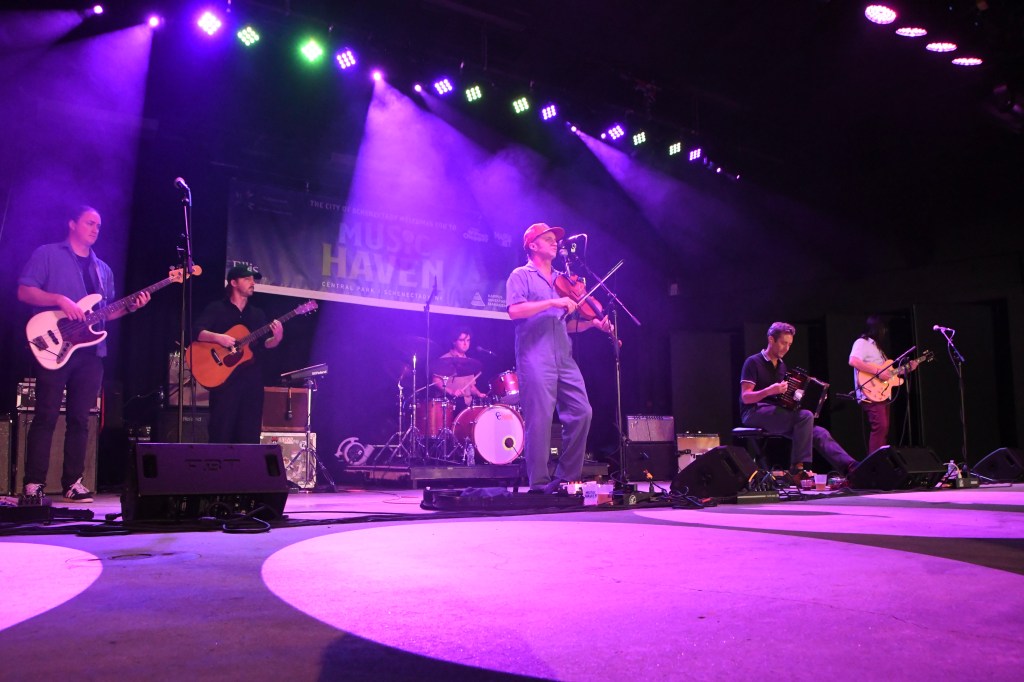
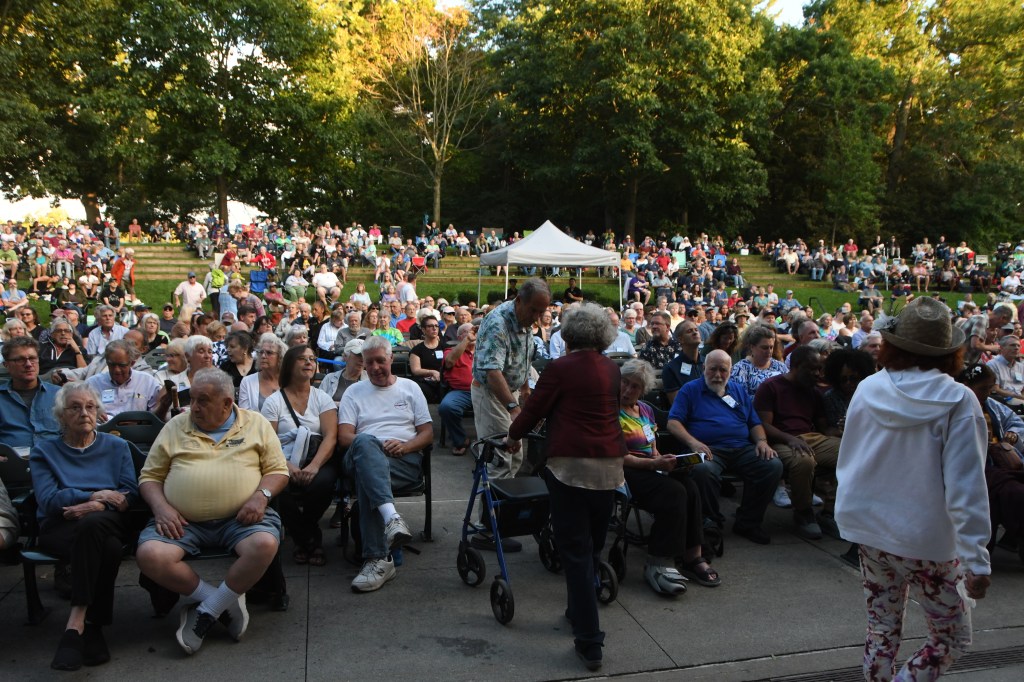
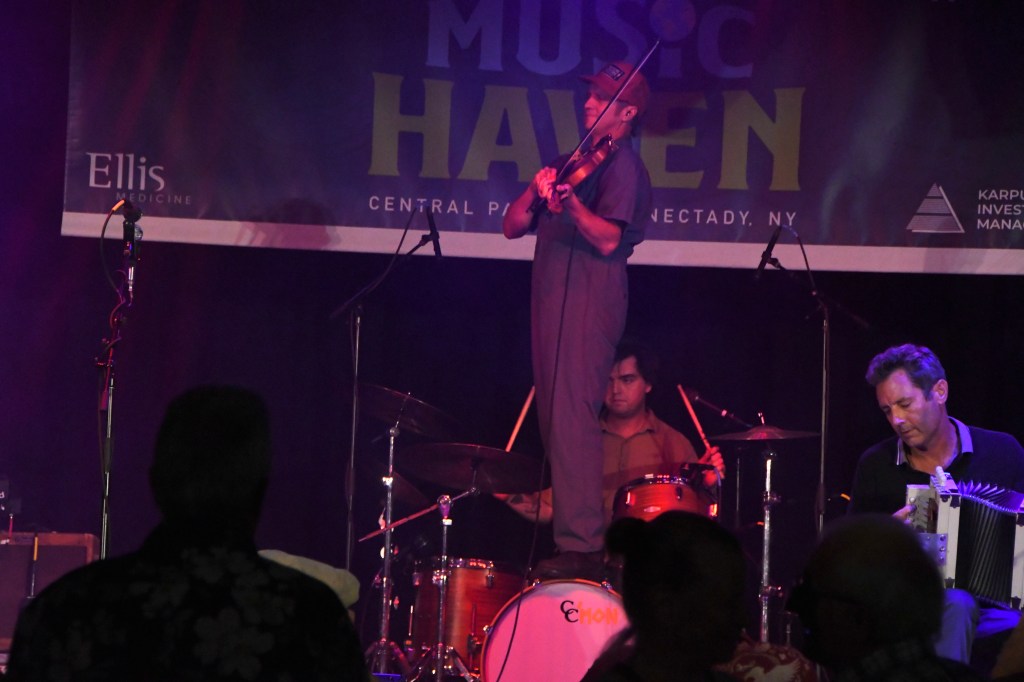
Just one: The Lost Bayou Ramblers; south Louisiana’s deep-rooted, gloriously noisy, electro-acoustic crew. They rang down the curtain at Music Haven Sunday in a happy haze of folkloric fiddle and accordion, plugged-in bass and guitars, even more plugged-in synthesizers, solid and steady drums and high, plaintive voice.
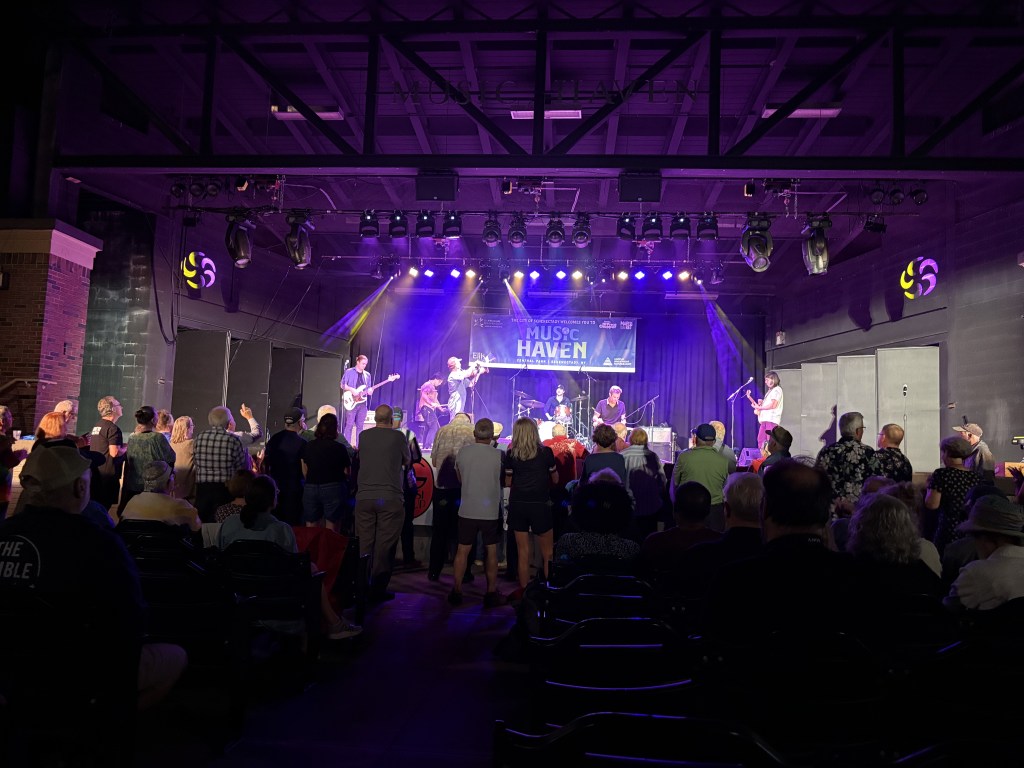
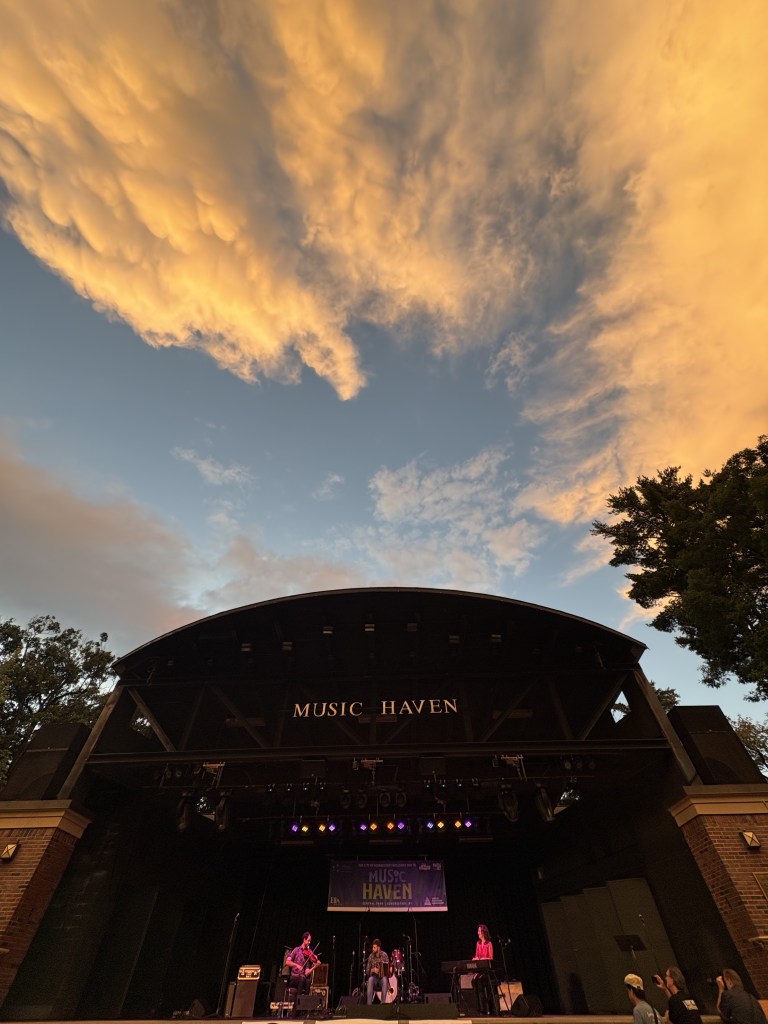
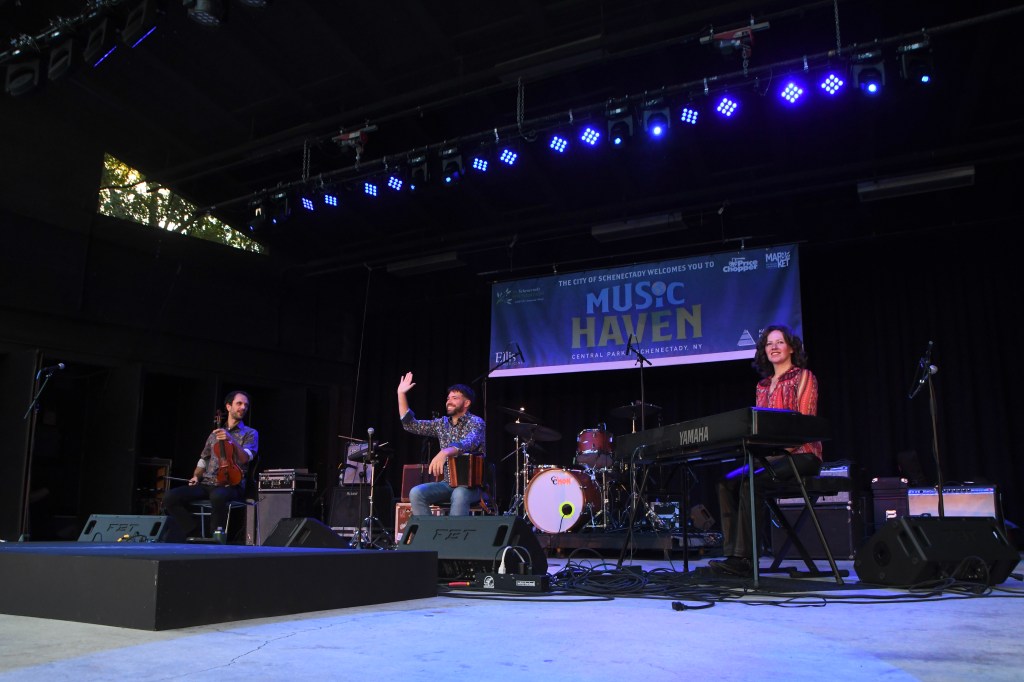
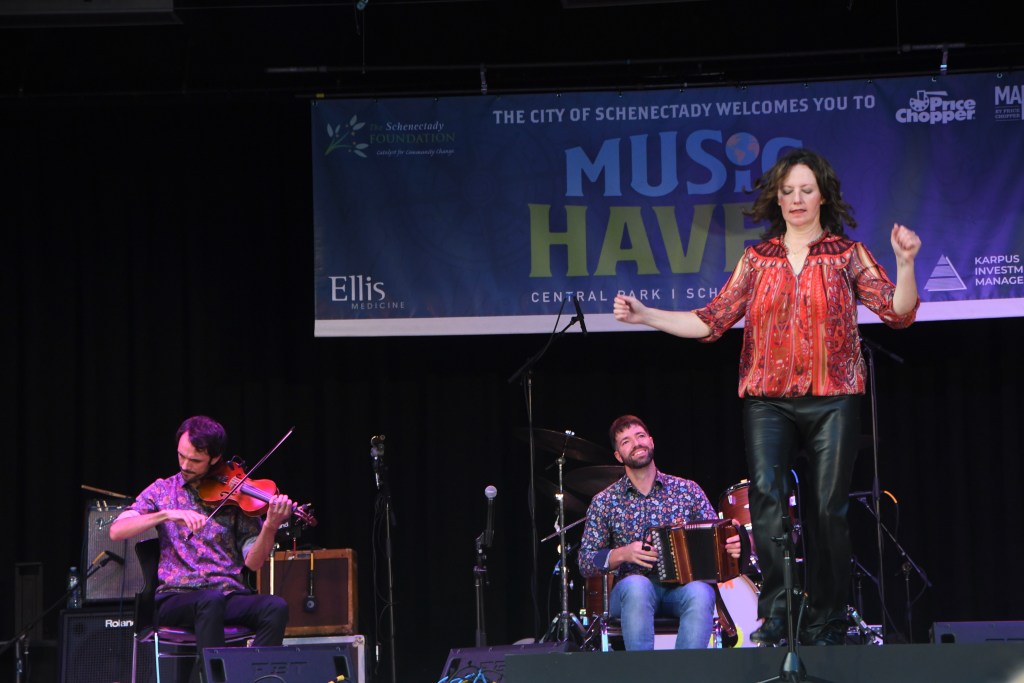
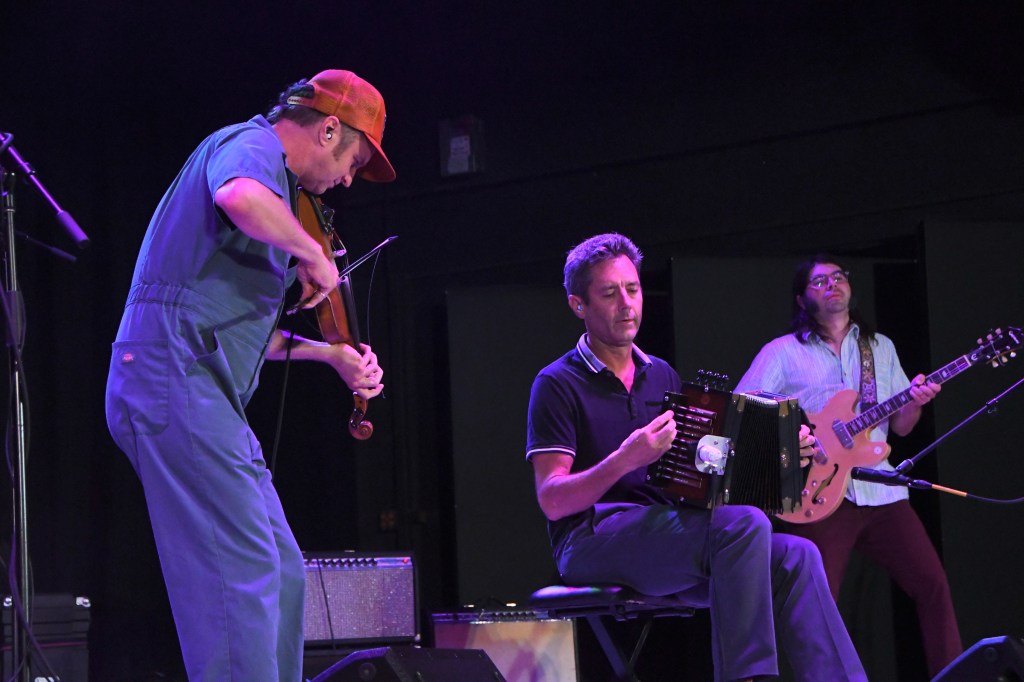
Above: Lost Bayou Ramblers onstage at Music Haven. Below: openers Cecilia trio plays at sunset.
First, the recorded walk-in music sounded a strong Louisiana welcome: Dr. John funk, Professor Longhair’s whistling and punchy piano in the anthemic “Tipitina,” more Dr. John.
Then the trio Cecilia showed where Cajun music came from in French Canada before the ethnic cleansing mourned in “Evangeline.”
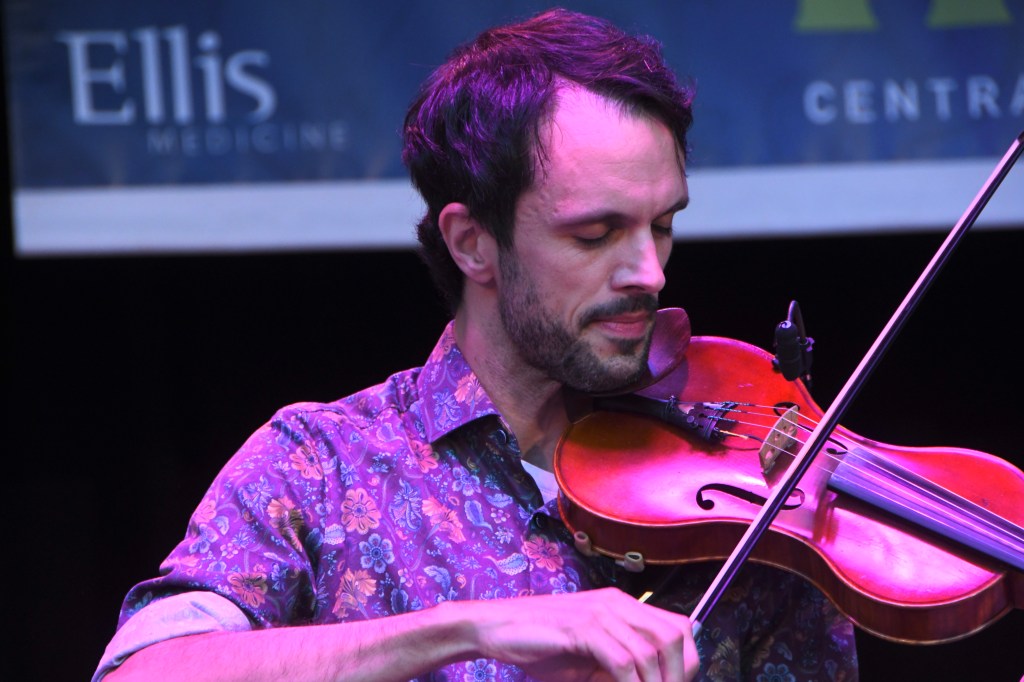
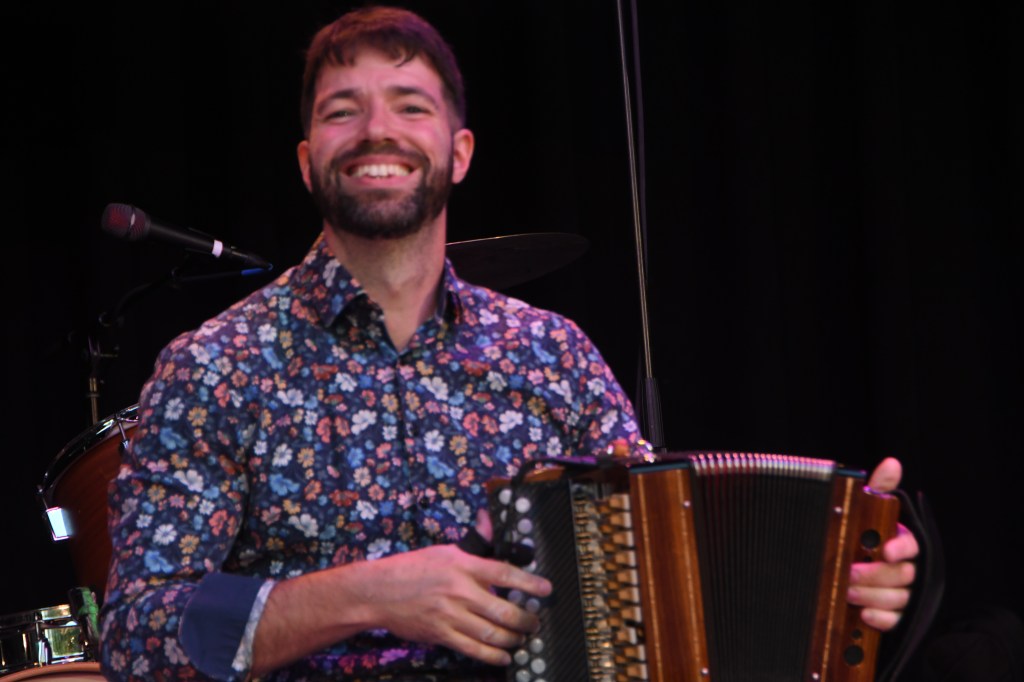
Cecilia cherished musical connections not only between Acadian (Canadian) and Cajun (Louisiana) but between us and neighbors to our north now. They exported these sounds to us, without tariff, but with grinning glee and virtuoso skill. Folk reels and dances spun fast, faster, then really fast; fiddler Tom Fitzgerald and accordionist Timi Turmel racing in vintage riffs as Erin Leahy’s piano pushed the beat.
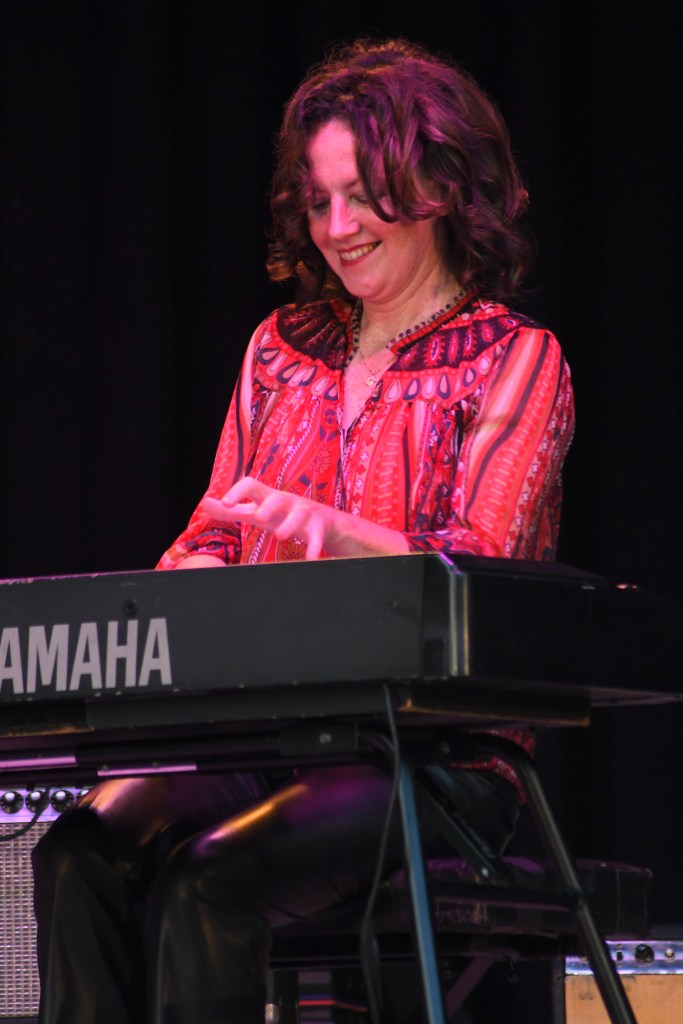
Above, Cecilia, from left: Louis Schryer, fiddle; Timi Turmel; Erin Leahy. Below: Eric Leahy
She took over to hail American music in dazzling ragtime romps including Scott Joplin’s “The Entertainer,” all in a hot honky-tonk rush. Their Canadian dance material only slowed for the sweet waltz “Homage A Dorothee,” sincere and warm. Then Leahy came forward to step-dance, flying feet and spirits, before they updated the spunky energy of their antique sources with a fun take on current trends in unlikely search of an accordion pop hit.
Above: Tom Fitzgerald; below: Timi Turel
This worked as comedy, even better as uplifting music of undeniable structural strength and fun energy.
In the break, after presentations and season-end musings, Music Haven presenting artistic director Mona Golub quoted World Cafe’s David Dye’s description of the headlining Lost Bayou Ramblers, given as half-joking warning: “The Grammy winning group plays a revved-up version of Cajun music, shot through with punk energy and psychedelic fuzz.”
Correct.
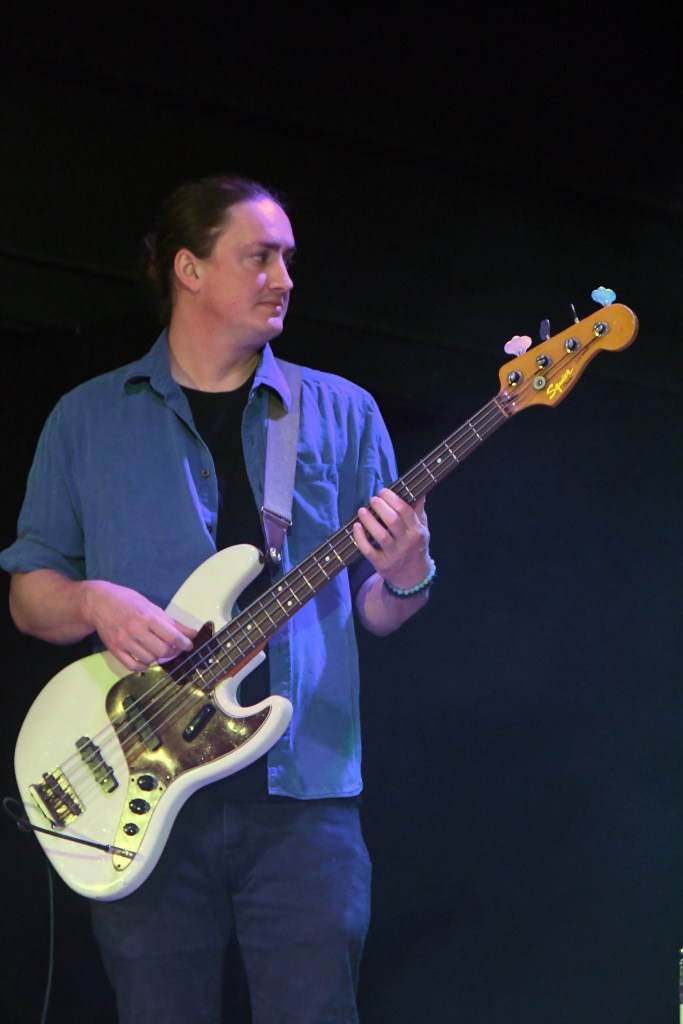
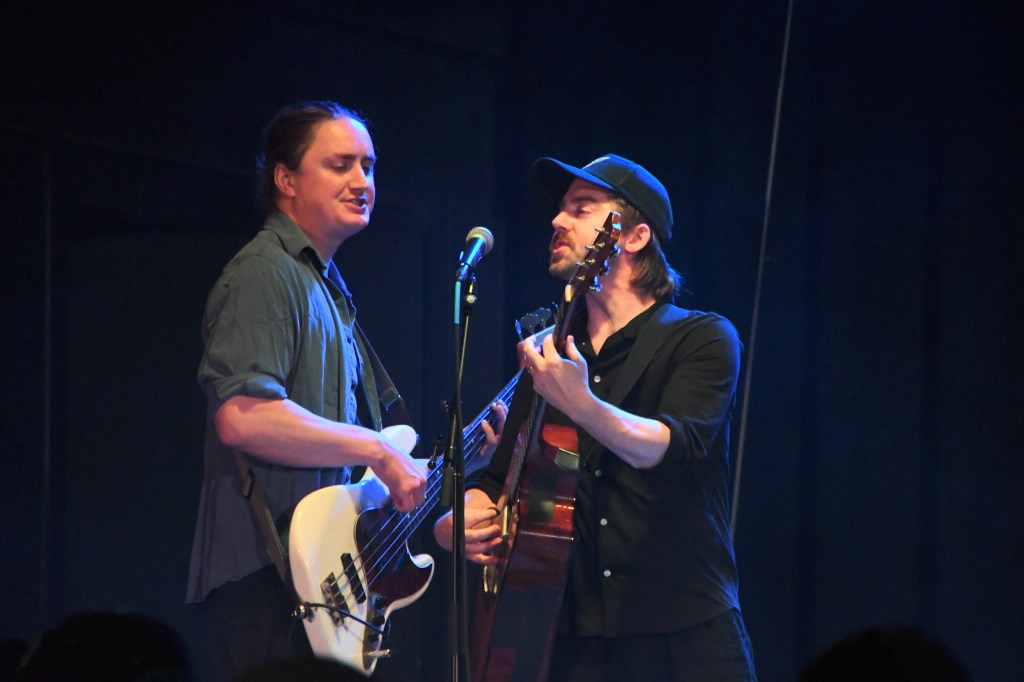
The Lost Bayou Ramblers, from left: Korey Rich, Bryan Webre, Kirkland Middleton, Louis Michot, Andre Michot and Johnny Campos
They acknowledged their Acadian/Cajun musical kinship with Cecilia, started strong with an instrumental two-step, sang two songs in English – “Don’t Shake My Tree” and “Stay” – then erased and re-drew North America’s musical map.
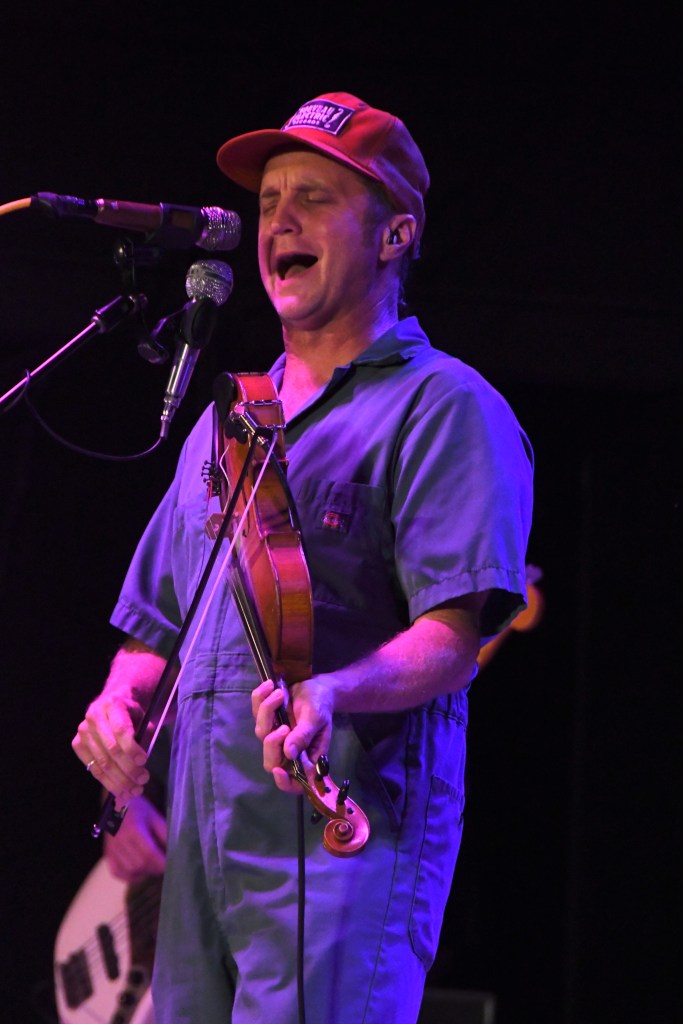
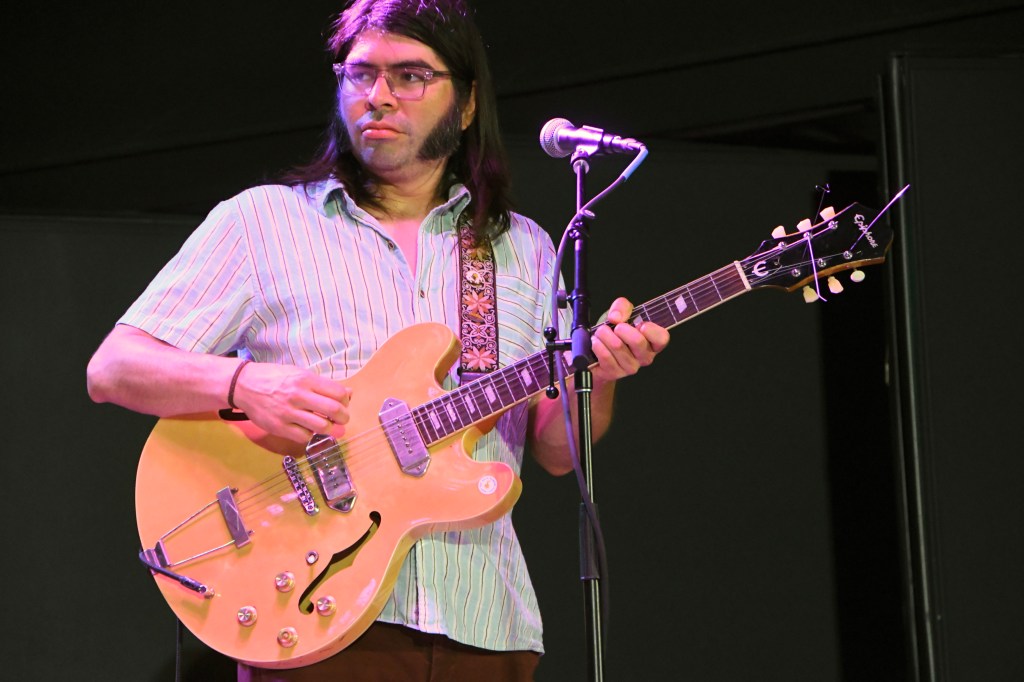
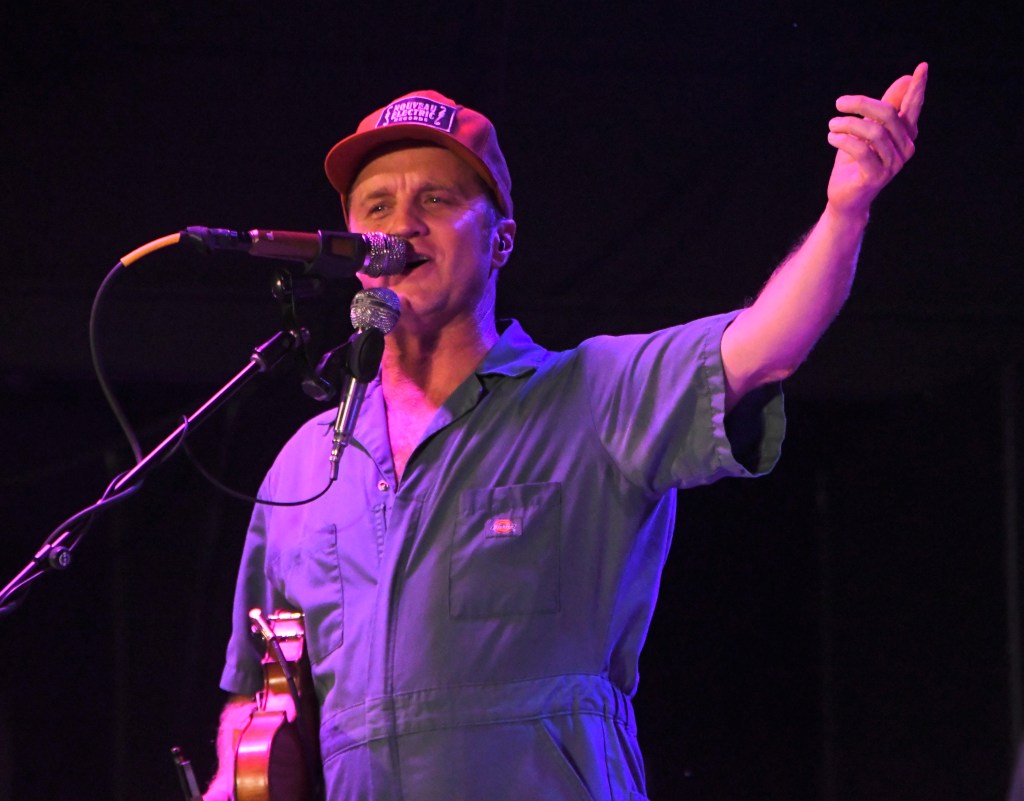
Above: Louis Michot; below: Johnny Campos
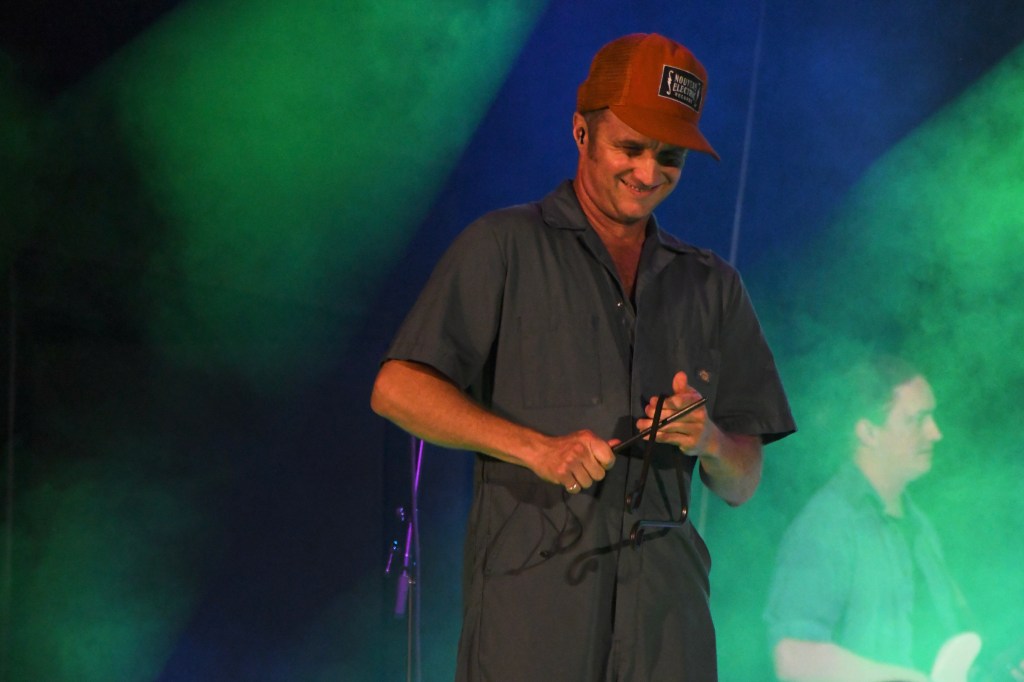
An amiable host, high-voiced, flaming fast on fiddle – sometimes held low on his arm like Doug Kershaw – rocking a jumpsuit just right for the feed store, Louis Michot stepped up on Kirkland Middleton’s kick drum in “Stay” and jumped down without missing a note. Across the stage, guitarist Johnny Campos sported the most superb sideburns this side of 1969 and a fat Gibson at times plugged into an electronic zoo of roars, wails and growls.
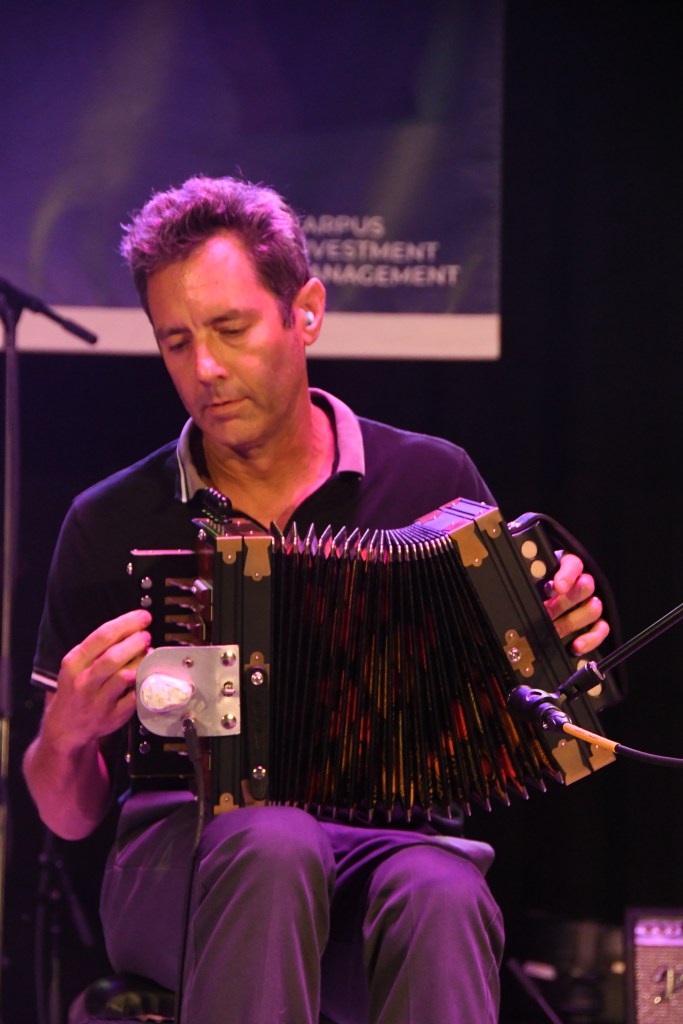
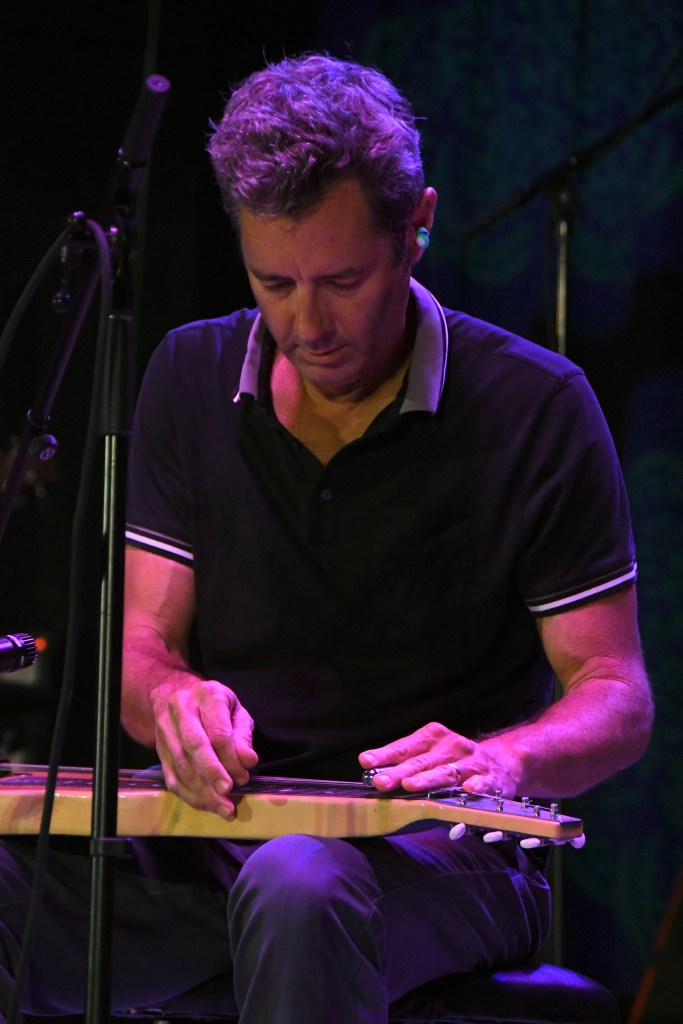
Steady, workmanlike, Louis’s brother Andre played accordion and lap steel, sometimes in the same song, while bassist Korey Rich also played guitar, synthesizer or electronic drums and acoustic guitarist Bryan Webre doubled on electronic drums; also acoustic drums when Middleton switched to the electronic, virtual kit or triangle.
Above: Andre Michot; below: Korey Rich
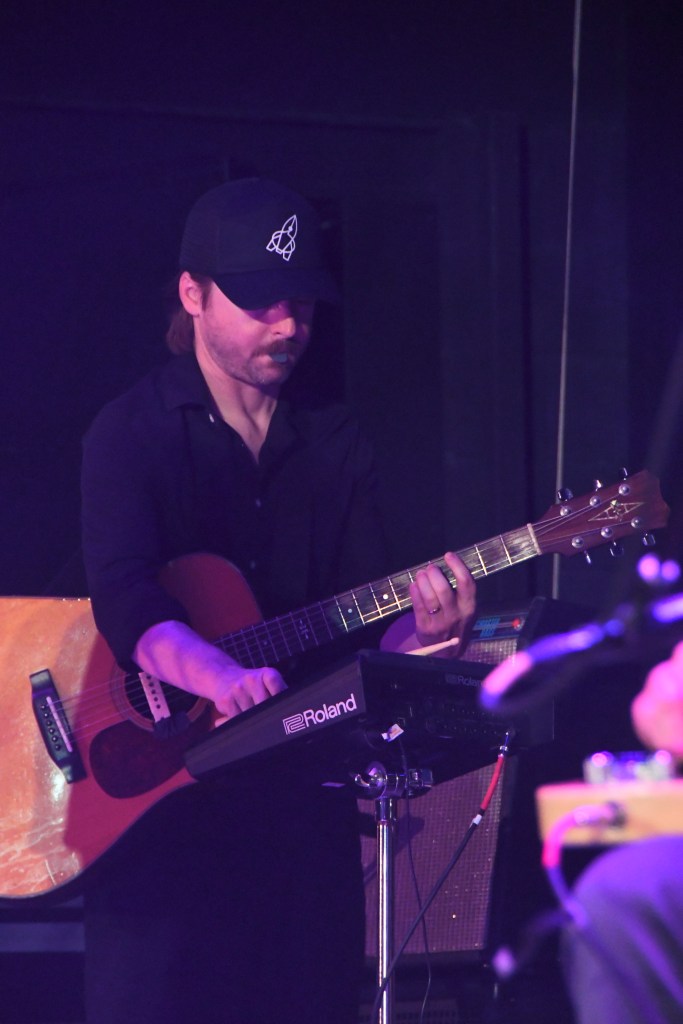
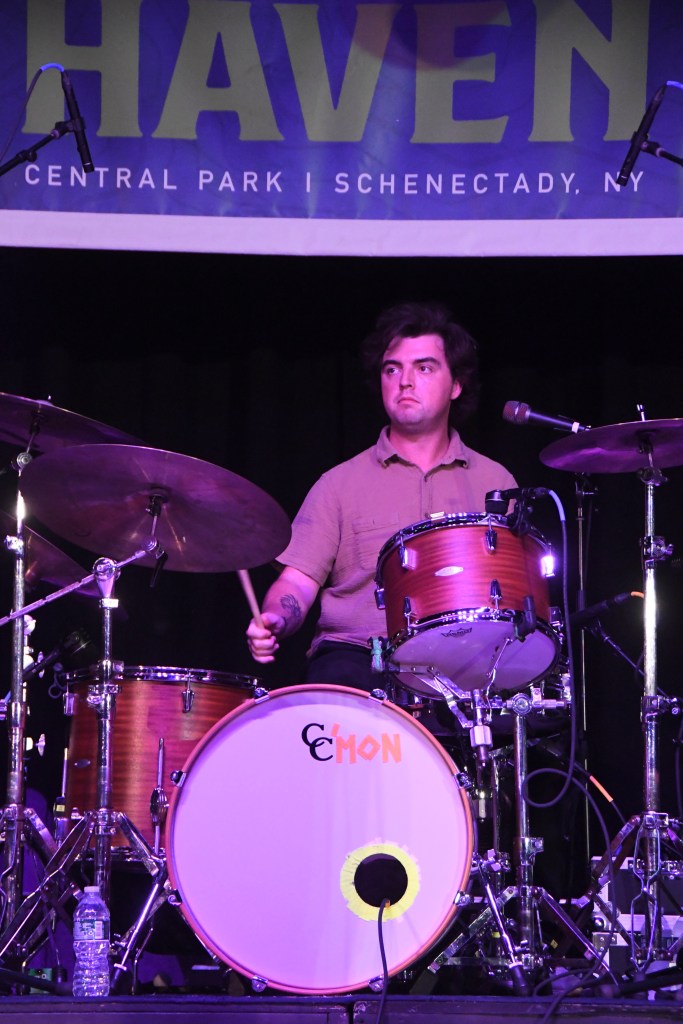
Above: Bryan Webre, wearing his guitar, pick between his teeth, playing synthesizer; below: drummer Kirkland Middleton
When an artist’s recordings* include numerous live sets, it’s a good sign; they believe they can kick ass. The Lost Bayou Ramblers’ releases do, and they did Sunday.
In “Blues De Bernadette,” a surging electric throb framed conventional accordion and fiddle runs, accompanying but not taking over and adroitly balancing old and new. “O Bebe” drew fans into a chant-along and dancers bopped, zigged and zagged like a hot night at Rock ’N’ Bowl.
They sounded authentic, folkloric when they played it straight; their graceful, melancholy “Gueydan Waltz” could have come from decades ago. When a later waltz faded into a sparse feedback space–out, they jumped decades back into fusion-jazz musings.
They shape-shifted often. In “Granny Smith Waltz” from their Grammy-winning “Kalenda” album, Middletown swapped drums for triangle, Rich traded bass for acoustic guitar, Webre jumped on the drums while the Michot brothers and Campos stayed put. The majestic “O Marie,” a Daniel Lanois cover, respectful at first , erupted into guitar noise that rose, peaked and faded. “I think you’ll know it,” promised Louis before punk-style singing “My Generation” in French as Rich’s bass went all John Entwistle.
“One More!” agreed Louis and Golub so they revved up “Louisiana Aces Special” in tribute to D.L. Menard who led his Louisiana Aces band in a Golub-produced (1994?) Washington Park show. A two-step blitz provided a big finish.
* The LBR’s 13 recordings include not only some live sets but a benefit for flood relief, a collaboration with the Louisiana Symphony Orchestra, a film soundtrack, even an Hawaiian project.
WAIT, THERE’S MORE
While the Lost Bayou Ramblers wrapped Music Haven’s Central Park live concerts for 2026, the non-profit presenter screens the film “Song Sung Blue” on Friday, August. 28. Food service and recorded music (spun by archivists/DJ Rochmon Music Club) starts at 6:30 p.m.; film showing at dusk.
Then, Music Haven’s Passport Series with Proctors Collaborative begins Sept. 24 with Maruja Limon from Catalonia at Proctors GE Theatre and continues Nov, 5 with the Naghash Ensemble from Armenia at Universal Preservation Hall, then Gili Yalo from Ethiopia and Israel back at Proctors GE Theatre on Feb. 4, La Banda Morisca from Spain at Universal Preservation Hall on March 6, and Yacouba Sissoko from West Africa on Apr. 16 at Proctors GE Theatre.
SUMMER SOCIAL
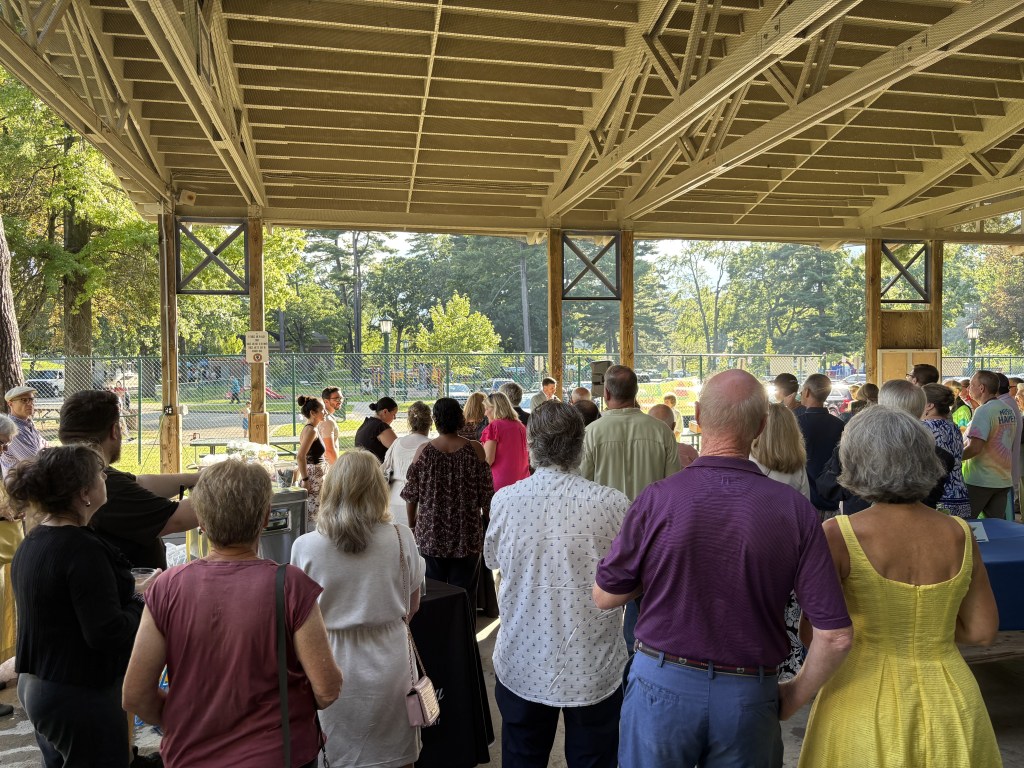
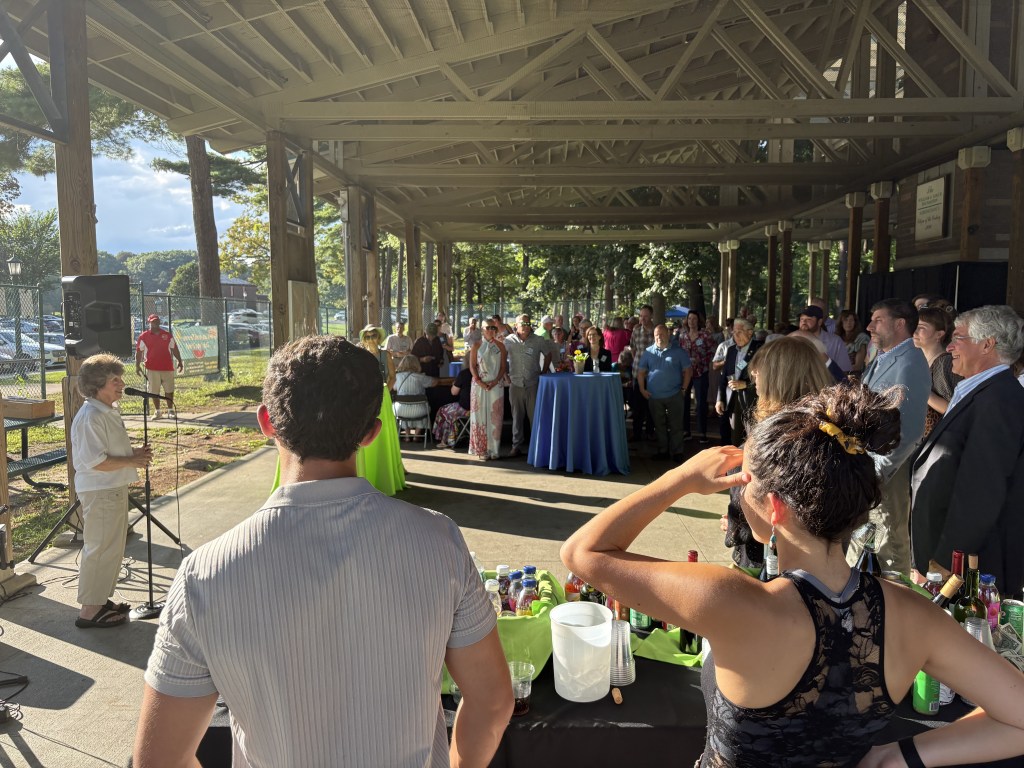
Sunday’s pre-concert Summer Social drew 200 paying diners to the Tom Isabella Picnic Pavilion. Electeds included Gary McCarthy whom I spotted in Jackson Square during Jazz Fest in New Orleans some years back; also Jim Tedisco, Phil Steck and likely more I missed; the place was happily packed.
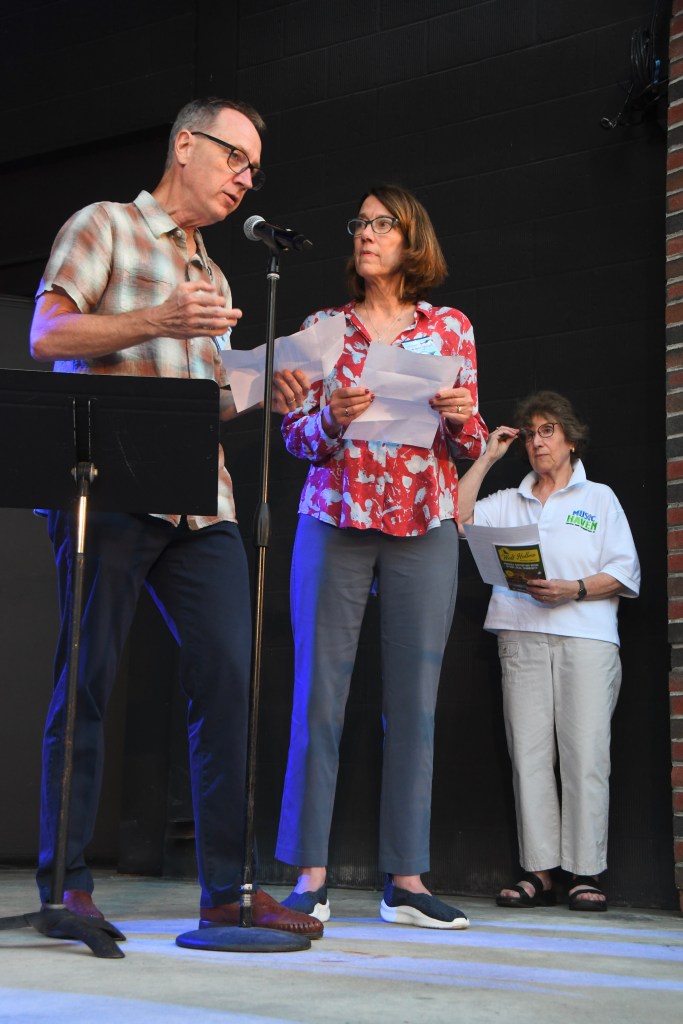
Mona Golub addresses the Summer Social throng before Sunday’s Music Haven concert finale.
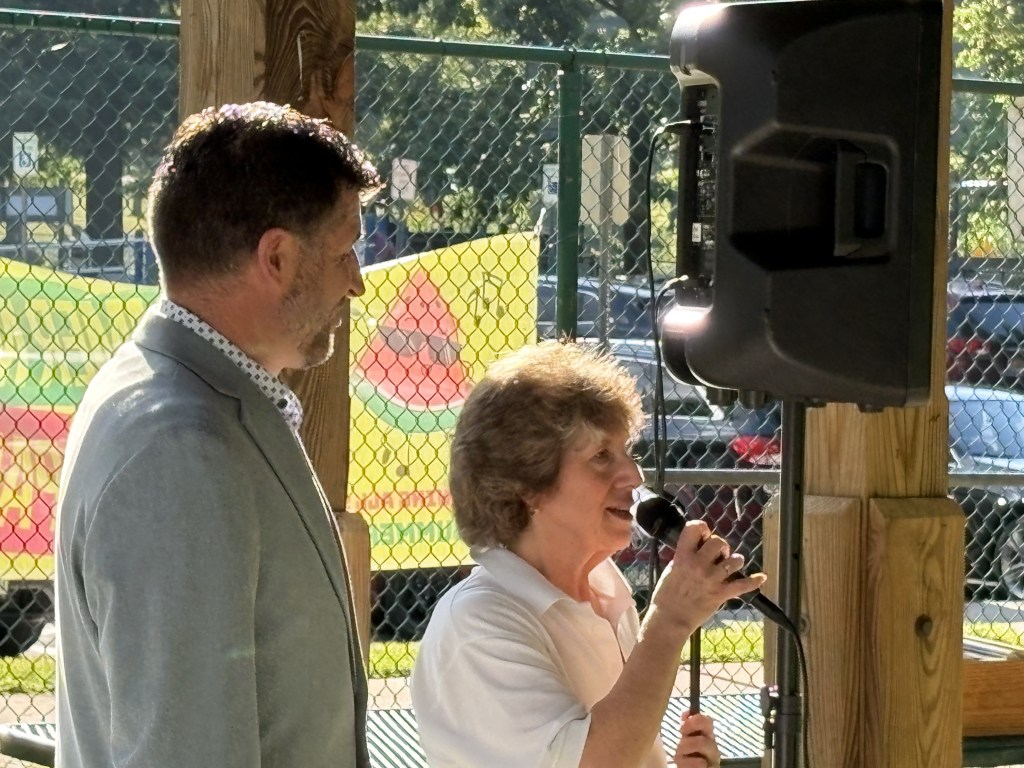
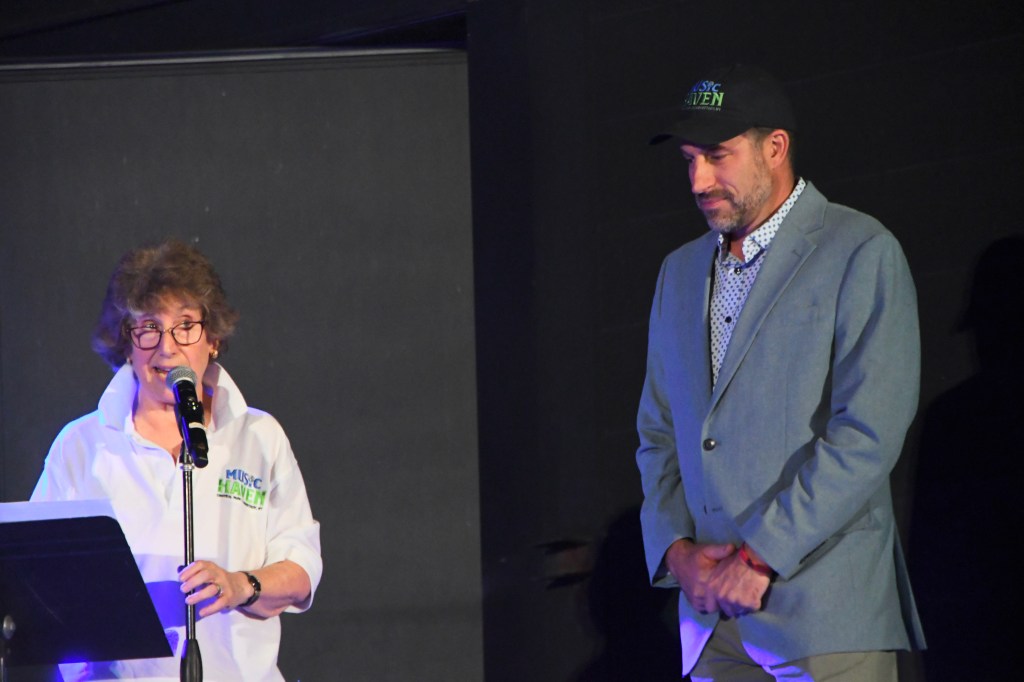
Mona Golub introduces Music Haven Peter Bednarek
Some pavilion table areas were flooded by the afternoon deluge, but food and beverages flowed efficiently as David Gleason entertained at the piano.
The event honored new Music Haven Music Maven Peter Bednarek of Wolf Hollow Brewing Company, longtime supplier of brews at Music Haven shows. Fellow longtime supporters Tom and Karen Ambros were honored onstage before showtime. At intermission Golub and Proctors President Jean Leonard touted the 100-year-old venue’s anniversary season and Ian Munro highlighted the Capital Region Scottish Games September 5 at the Altamont Fairgrounds.
Above: Tom and Karen Ambrose with Mona Golub. Below: Golub introduces Peter Bednarek
Review: Alex Slomka and Friends at Jazz on Jay; Thursday, Aug. 20, 2026
See an artist twice in a short time and we notice different things.
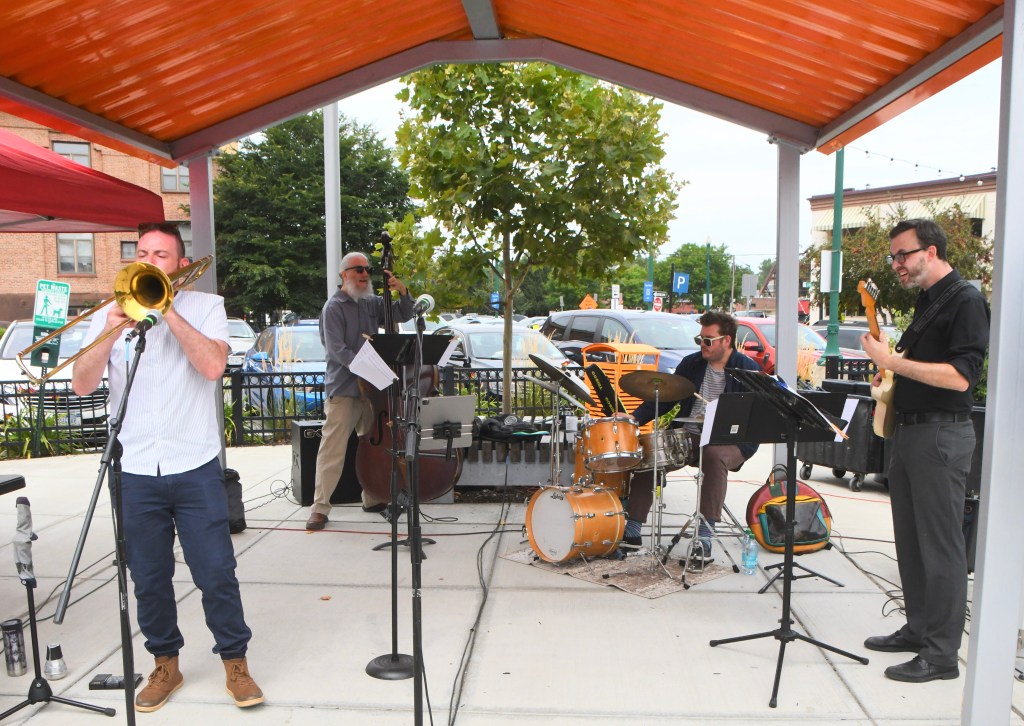
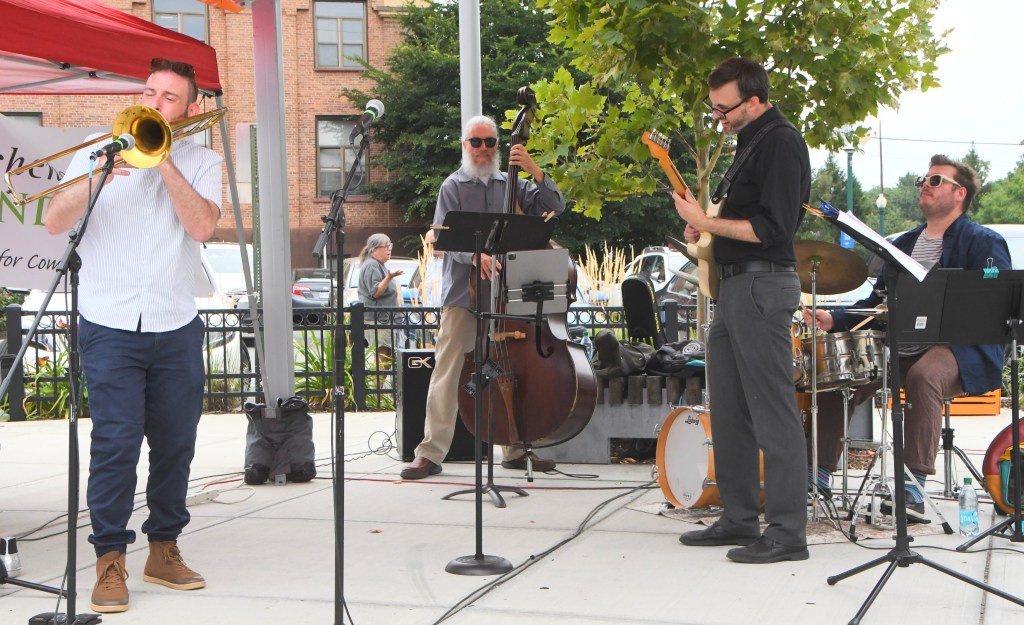
Seeing trombonist Alex Slomka at Jazz on Jay Thursday felt objectively different from his July show at the Van Dyck: different players except for bassist Lou Smaldpne who played both, and with guitarist Shaun McCarthy in for Wyatt Ambrose and drummer Eric Binder added.
Some songs repeated from show to show, but played differently and in a single set, rather than the two-sets-with-break Van Dyck format.
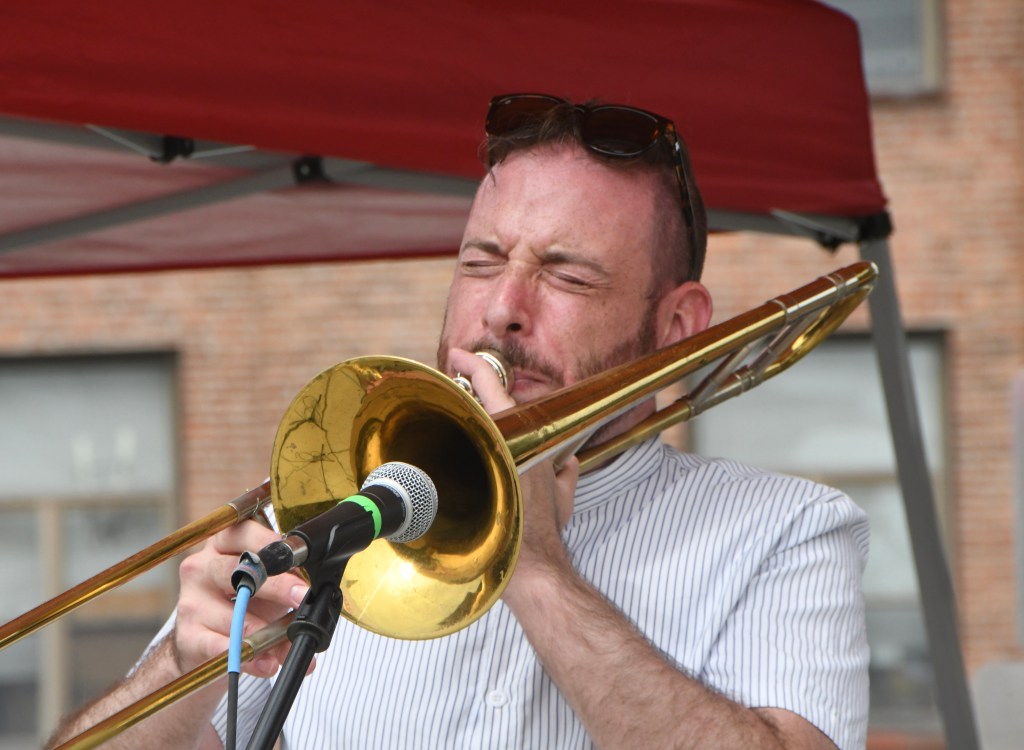
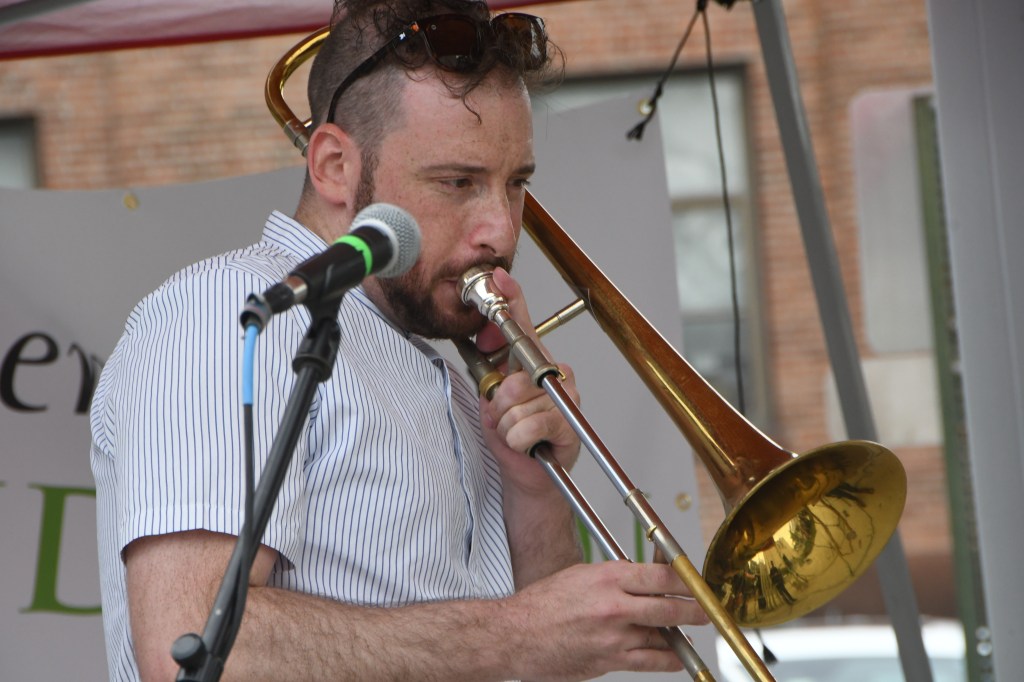
Alex Slomka, above; the band, below, from left: Slomka, trombone; Lou Smaldone, bass; Eric Binder, drums; Shaun McCarthy, guitar
Early on, I heard again how clearly Slomka solos by shaping and structuring in coherent, logical phrases without sounding stiff. The band felt different, though. While McCarthy’s guitar tone resembled Wyatt’s in its clarity, he relied more on single-note runs than Ambrose who mixed in chords. Wild-card addition drummer Binder played a small kit with a tom-sized kick, and this might have felt treble-dominated, top-heavy, with a less aggressive bassist than Smaldone. Things balanced well and everybody helped everybody by listening and commenting; especially Slomka who chimed in on others’ solos more than in July.
They started with Slomka noodling around the melody of “September in the Rain” before stating it clearly and injecting an emphatic rasp early in his first solo. Playing through the smallest amp in town, McCarthy more than held his own; Smaldone did, too, as usual; and Binder took the last break before Slomka raised his slide to signal the recap.
Citing his debut recording “A Box of Socks” in a droll intro, Alex led “Shiny Stockings” at a slower tempo, but easy-swinging. He reverted to the Miles Davis whisper-growl he’d used at the Van Dyck to set up the New Orleans classic “Yellow Moon” as a cozy bolero, Binder playing with mallets.
“You’re My Everything” swung ballad-style, Slomka’s solo a model of clearly-crafted structure that still sounded spontaneous and Smaldone weaving a happy scramble on his break. Here, McCarthy stepped front, away from the chart on his music stand, to play from memory.
Slomka introduced “Bachnawa” as an original, a tidy waltz, and asked afterward, as a test, “Did anybody catch the composer?” Then he spoke in simple sincerity, introducing “Lil’ Darlin’” as a tribute to our late, great jazz-scene energizer Tim Coakley. This Neal Hefti classic had New Orleans flourishes and the sort of hesitation beat Coakley liked to hear and to play.
Coakley would also have enjoyed the upshift from quiet noodling to full flight in “I’ve Never Been in Love Before,” as the beat bumped around, especially in Binder’s busy hands and feet.
After the rock-soul two-part melody of “I Can’t Help It,” Slomka darting in and out of McCarthy’s solo before grabbing his own, “All of Me” was a late-set highlight. Slomka was clearly feeling it in his solo and stretched out, going around again. Intro’ing his own “Mammatus,” he re-joked about fans heading for the exits to avoid his originals. With “Bachnawa” earlier, he claimed he hated playing outdoors since he couldn’t lock the doors to retain fleeing fans. No need to lock up his listeners in the swinging vintage closer “Remember;” his “Mammatus,” either.
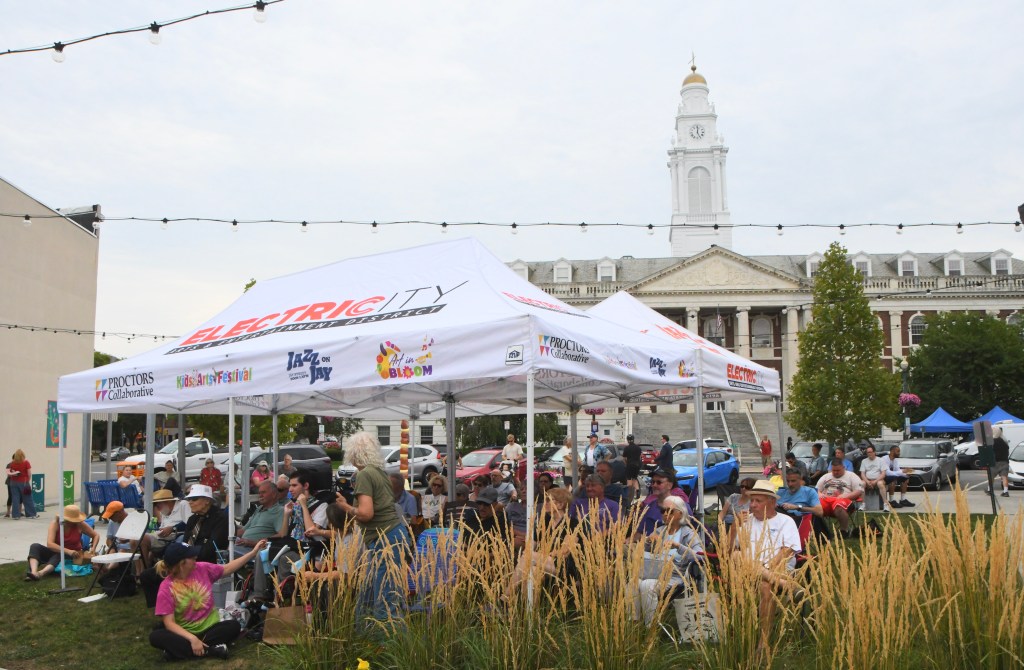
Afterward, ace Jazz on Jay volunteer Betsy Sandberg announced, “The summer of free music is not over,” as fans folded their lawn chairs, crews took down the tents and friends clustered around congratulating Slomka and his band-mates.
Jazz on Jay wraps up on Thursday, Aug. 13 with the Hot Club of Saratoga.
As flyers handed out in the crowd announced, Schenectady PorchFest on Saturday, Sept. 19 presents 15 acts on seven porches; all free.
Music Haven presents the Lost Bayou Ramblers from Louisiana and Cecilia from Quebec in its last concert this season on Sunday, Aug. 23 at 7 p.m., and its final film “Song Sung Blue” on Friday, Aug. 28. Food service and recorded music by Rochmon Record Club start at 5:30 p.m., film at dusk.
Scotia’s Freedom Park presents its season’s final show at 5 p.m. on Saturday: Jimmy Kenny and the Private Beach Band.
Preview: Alex Slomka & Friends at Jazz on Jay, Thursday, Aug. 20, 2026
Trombonist Alex Slomka reunites Thursday with bandmates from pre-COVID Albany shows.
Alex Slomka
“We often played at the Speakeasy 518 in Albany years ago,” he says, listing bandmates bassist Lou Smaldone, guitarist Shaun McCarthy and drummer Eric Binder. (Now sadly closed, the Speakeasy 518 was a basement bistro near the original Grinch and City Beer Hall, with a cozy, clandestine vibe where cellphones were banned and cool jazz reigned.)
Slomka came to jazz from a music-loving family; his father a stalwart supporter and volunteer with A Place for Jazz, his mother a longtime pianist. “My older sister took piano lessons when she was growing up…to do anything cool that she was doing, I also wanted to take piano lessons until I learned that practicing was involved.”
Practicing became a way of life for Slomka, studying with Mark Hartman and Bret Zvacek at the Crane School of Music and with John Mosca, Tim Albright and David Dejesus at SUNY Purchase Conservatory.
Before studying jazz at those schools, “Growing up in the capital region, I learned so much from locals,” Slomka recalls, naming Mike Meidenbauer, Phil Pandori, Keith Pray and Brian Patneaude. His early love for the Beatles turned into an infatuation with punk rock and ska, playing the latter with the Late Night Show; then came an avid interest in jazz.
Locally, he’s played with Keith Pray’s Big Soul Ensemble (Smaldone is a longtime member), the Dylan Perrillo Orchestra, the Joey Thomas Big Band, Professor Louie and the Cromatix/Woodstock Horns, and The Big Takeover. Living and teaching now near New York City, he often plays there in big bands.
Thursday, he’ll mix originals with standards. In jazz classics, “I usually get inspired by hearing it and then I think ‘I can probably play on that tune,’” he says; joking, humble. ”Typically this is followed by realizing the song I’ve chosen is too hard for me and then I hide for some time until I summon the courage again.”
He’ll choose originals from his EP “A Box of Socks” and newer, unrecorded compositions.
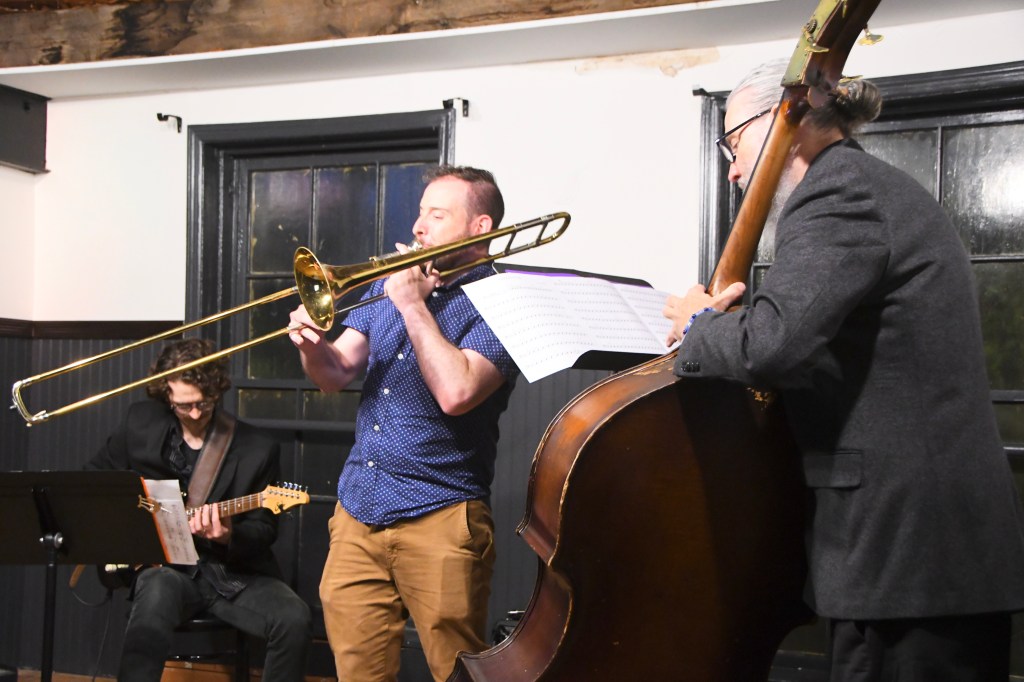
The Alex Slomka Trio at the Van Dyck in July, from left: Wyatt Ambrose, guitar; Slomka, trombone; Lou Smaldone, bass
At the Van Dyck in July, he and his trio with Smaldone and guitarist Wyatt Ambrose played “September In the Rain;” “If I Had You;” “Yellow Moon;” “Let’s Stay Together;” “From out of Nowhere;” “Bachnawa;” “Lil’ Darlin’;” “Never Been in Love” – then, in the second set – “After Supper;” “Mammatus;” “Without a Song;” “A Message to You Rudy;” “Day In, Day Out;” “Polka Dots and Moonbeams” and “After You’ve Gone.”
As reported here, “A fellow trombonist at our table noted there’s nowhere to hide when playing trombone. Sound, intonation and phrasing must all be precise; and Alex’s were. He also proved to be a confidently amusing host with plenty of schtick. He encouraged generosity at the tip jar by lamenting heavy World Cup bets on Ireland, but he was all simple sincerity paying tribute to the late, great Tim Coakley – a Gazette work colleague of his dad – with the deeply felt ballad “Li’l Darlin’” late in the first set.
Unconventional with no drums, piano or second horn, Slomka’s trio applied a theme and variations approach to a mid-tempo romp through “September In The Rain” to open, varying the order and length of solos some from tune to tune. They usually launched from a unified melody statement, Slomka taking the lead; then, usually, Ambrose took the second solo, alternating chords and single-note runs with the always smooth Smaldone accompanying, steady and unobtrusive. They’d swap roles then, Smaldone leading, Ambrose comping. Then Slomka would bop to the top, sum up or simmer down.
This Jazz on Jay season closes Thursday, Aug. 27 with the Hot Club of Saratoga, 2025 Eddies Jazz Artist of the Year Award winner.
Jazz on Jay is presented by the ElectriCity Arts and Entertainment District.
Sponsors are the New York State Council on the Arts, a Schenectady County Legislature Arts & Culture Grant, Downtown Schenectady Improvement Corporation and The Schenectady Foundation. Jazz on Jay also receives support from Schenectady City Hall and this site, Hoke’s Juke Box.
Show time is 12 noon at Jay Square opposite City Hall. Rain site: Robb Alley at Proctors; seating is provided indoors.
“Surprise!” tells of my surprise birthday party; but that was just part 1.
My actual birthday Saturday began on son Zak-and-Charlotte’s nearby porch, holding their daughter/our first grand-baby Ophelia. She was eight days old the day I turned 80; the day between the birthdays of NRBQ founders Terry Adams and Joey Spampinato.
That afternoon, I joined vintage friends, some half-remembered, at my high school reunion – Bishop Gibbons-Notre Dame, or the reverse, class of 1964 – in a Thacher Park picnic pavilion.
Name tag from a previous reunion
In this gathering – which I’m claiming as part 2 of my birthday celebration – three times as much food as we all could consume in days filled tables in a pot-luck of barbecue, sandwiches, salads and desserts. Most nourishing of all were memories and current lives shared; marveling at who’d made it and hoping those who hadn’t are all OK but knowing some aren’t. Two friends who’d attended my surprise party were also at the Thacher Park gathering where everybody sang “Happy Birthday” to me and another Michael whose birthday is Tuesday.
As usual, leaving was long; head for the exit and folks gather for more conversation.
Then, part 3: Ellie, our daughter Pisie and I drove to Saratoga Performing Arts Center to see the Philadelphia Orchestra play Beethoven’s Symphony No, 9.
As SPAC CEO Elizabeth Sobol announced, the Philadelphians had played Beethoven’s 9th in its venue-premiere performance 60 years ago. She hailed the epic work for orchestra and chorus as a “miracle of human experience,” noting its idealistic content and that Beethoven had created it purely as an act of imagination while deaf, unable ever to hear what many consider his masterpiece.
The concert began with Mississippi-born composer William Grant Still’s nature-worshipping five-movement Wood Notes. A sort of thematic parallel to Beethoven’s 6th, it described natural environments and events in melodies both intimate and assertive and with dynamic but deliberate development that reminded me of Dvorak’s use of folk themes, Debussy’s tonal atmospheres and Copland’s uplift.
Beethoven’s 9th may fit the sometimes dismissive “warhorse” category of over-familiar classical concert fare. But it is so well know for very good reasons: It’s majestic, expressive and emotional in powerful, compelling ways.
While we’ve all heard it, even in cartoons and commercials, hearing its detail and drive live onstage still felt thrilling Saturday, particularly its dazzling and intricate detail.
Philadelphia Orchestra Music and Artistic Director Yannick Nezet-Seguin primed us for an especially poignant and powerful performance by honoring three retiring Orchestra players. Warm words and hugs to the two players onstage felt genuinely touching. Nezet-Sequin also praised Saturday’s opening piece, Stills’s Wood Notes. He hoped hearing this rarely-played, very American composition would encourage us to hear it again; then mildly bragged that “we may have spoiled it for you” with a performance that felt and sounded superb.
So did the Beethoven, which he, like Music Haven Presenting Artistic Director Mona Golub, urges recognition of “our common humanity.” Big sentiments for a big piece, concluding in its famous climactic choral movement extolling joy for all on this earth.
Attentively operated video cameras carried images to wide raised screens. Visual perspectives shifted from front views of dark-clad Nezet-Seguin, with the audience in the dark background, to brighter views of the full white-clad orchestra or close-ups of soloists or sections. These visual changes at times coincided with those in the density and tone of the music.
The three early movements prepared us for the finale’s cathartic drama. And there was no impatient toe-tapping in the crowd through the tumultuous fanfares of the first, the peace of the second and dignified serenity of the third. Conducting from memory, without a score, Nezet-Seguin pushed quickly from the third movement into the energetic finale as four vocal soloists entered from stage right, adding suspense.
The fabled Philadelphia smoothness impressed, as expected; but the emergence of small, detailed elements felt even more effective. We’ve all heard Beethoven’s 9th, but the clarity they brought to it Saturday exerted a fresh force. A trumpet burst here, a subtle woodwind blend there, these eloquent gestures made it feel subtly new.
Beethoven teases us some in the orchestral build up to the sublime moment when the voices rise from behind the players. Saturday those voices were Albany Pro Musica, our chorus of neighbors as massed virtuosi, guided by Jose Daniel Flores-Caraballo. The four celebrity soloists had their say, but hearing the massed might of the chorus hit as a full-body rush.
Voices subsided, then rose again, in waves of emotion-as-words in Schiller’s “Ode to Joy.” They sang of wishes that “all men become brothers” and consoled “Be embraced, ye millions!”
Perfect sentiments for a magnificent birthday party, with orchestra and chorus.
Review: The Kaitlyn Fay Quartet at Jazz on Jay; Thursday, Aug. 13, 2026
Thursday at Jazz on Jay, Kaitlyn Fay said jazz-ified Broadway show tunes constitute her comfort zone, her bread and butter as a singer; and that songwriting is her scary frontier. She sounded confident in both, however, relying on her elegant, usually understated voice, going for flow more than fireworks, with expert swinging support by pianist Dave Gleason, bassist Dave Shoudy and drummer Bob Halek.
Kaitlyn Fay, above; below with her trio, from left Dave Gleason, keyboard, Dave Shoudy bass (acoustic and electric), Fay, and Bob Halek, drums
She started with the (over?) familiar “On The Street Where You Live,” definitely in her Broadway comfort-zone, but then added Latin syncopation to Gretchen Parlato’s more recent “Circling.” The tight trio swung both, and everything that followed – showing off her full palette early with the antique “Moonglow” then sailing past her scary (songwriting) frontier with the original “Library of Anxiety” whose uptempo Latin swing and agile skat-singing belied its horror-movie title.
Gleason gloried in the solos that spiced every tune, Shoudy soloing more on electric six-string bass than upright and Halek pushing forward only late in the 90-minute show. In support or soloing, these guys are the trio any singer would love; and Fay surely did. And she earned a happy Halek grin when she nailed a complicated skat run in “Cockeyed Optimist,” title track of her 2025 album.
Dave Gleason, above; Dave Shoudy, below
Bob Halek
She stretched beyond the familiar flavor of “Street” and “Moonglow” – here, she swooped high – for Sondheim’s very Broadway “Everybody’s Got the Right” from “Assassins.” Then she brought up young daughter Quentin to duet in “Worthy,” also from “Cockeyed Optimist.” An able vocalist, Quentin showed precocious aplomb and the audience loved her.
Above: singers Quentin Fay and Kaitlyn Fay; below: with band
The show gained altitude and attitude, flying in “Blue Skies” as the band loosened into spirited riff-swapping and swinging hard in “This Could Be the Start of Something Big” – which had a big feel. They took “I Have Dreamed” from “The King and I” to Brazil as a punchy bossa with Gleason as terrific in this Latin mode as fans of his superb tropical band Sensemaya would expect.
Fay paid sincere/playful tribute to WCDB/WAMC jazz DJ Bill McCann, by name, in the bluesy, bouncy “Radio Man.” And she kept the mood light with in a smooth shift from the comic to the sincere in “I Could Have Danced All Night.” Here, and throughout, she courteously danced backward from the mic to give the audience clear view of her trio. “Garbage Isn’t What It Used to Be” had a wry flavor; one of many Alan J. Lerner Broadway numbers she swung Thursday, this one is from the unfinished “My Man Godfrey.”
They turned serious, and sweet, with the stately “Old Time Revival Blues,” a Gleason/Fay original from “Cockeyed Optimist.” In its elegant nostalgic flavor, it evoked Allen Toussaint, and that’s a compliment. Fay’s vocal here stretched syllables over multiple notes, free and fine.
They closed hot with “Show Me” from “My Fair Lady,” exactly in Fay’s comfort zone, which actually seemed wider than she claimed.
Both keyboardist Gleason and drummer Halek are playing a double Thursday; at Jazz on Jay with Fay at noon and at Music Haven in the SUNY Schenectady’s Faculty Jazz Combo’s showcase with guest trumpeter Jon Faddis at 7 tonight.
Lanaea Bailey
Jazz on Jay Committee Chair and frequent host Lanaea Bailey announced her departure from both Jazz on Jay and her full-time programming position at Proctors Collaborative; she’s moving to Florida which needs all the sane humans it can get. Fittingly, she was the only listener to answer Fay’s quiz correctly: “What musical introduced the song ‘Everybody’s Got the Right’?”
Jazz on Jay continues Thursday, Aug. 20 with Alex Slomka and Friends; then concludes Aug. 27 with the Hot Club of Saratoga.
Preview: The Kaitlyn Fay Quartet at Jazz on Jay at noon; and the SUNY Schenectady Faculty Jazz Combo with featured guest Jon Faddis at Music Haven at 7 p.m.
Yeah, you can do both.
Kaitlyn Fay Quartet: Vocals with Rhythm Section
Kaitlyn Fay’s music celebrates connection; to family in childhood productions, to area players, and in the link between her well-trained ears and open, expressive heart.
Thursday at Jazz on Jay, she sings with keyboardist Dave Gleason, bassist Dave Shoudy and drummer Bob Halek. She also plays baritone saxophone in both Keith Pray’s Big Soul Ensemble, where she met Gleason and Halek, and in the BWC Jazz Orchestra, where she met Shoudy. Thursday also marks a return: She sang at Jazz on Jay in 2022.
For Fay, singing began as a family thing.
Kaitlyn Fay. Rudy Lu photo
“When I was in elementary school, my (now-retired public school music teacher) mother orchestrated a Von-Trapp-Family-style performance…my parents, me, and both of my siblings…for the school talent show,” recalls Fay. Her parents met while performing musical theater productions, still a unifying family passion. Fay also teaches, in Waterford-Halfmoon, and cites her mother as her first musical inspiration.
“Playing baritone saxophone in my high school’s jazz band, I was drawn to Gerry Mulligan’s playing and the West Coast cool jazz sound,” says Fay, citing saxophonist Joey Berkley as her first jazz horn teacher. “My biggest vocal jazz influences and sources of inspiration have been Ella Fitzgerald and Anita O’Day,” also Jane Monheit among contemporary vocalists. “I have internalized some of the inflections and nuances of jazz singers such as Ella Fitzgerald, Anita O’Day, and Blossom Dearie. But I focus my attention more on the harmonic progressions with my ears and the lyrics with my heart.”
“Kim Nazarian was my first vocal jazz teacher,” says Fay, noting Nazarian, of the New York Voices, conducted her in the All-State Vocal Jazz Ensemble. Fay studied with Jon Metzger at Elon University, then with Nancy Marano and Pete McGuinness at William Paterson University.
Fay sings classics from the Great American Songbook and jazz standards, plus originals co-written or arranged with Gleason or guitarist Wyatt Ambrose. Both collaborated on her “Cockeyed Optimist” album, released last year. Both this and her earlier “Curiosity” (2013) are available today at Jazz on Jay.
“I like to incorporate space for improvisation wherever possible,” says Fay. “The spontaneity inherent in jazz is my favorite thing about making music with other musicians.”
These particular musicians fit Fay’s approach beautifully. “I have been playing with each of the rhythm section musicians in a variety of groups for the last several years,” she says. “I am fortunate and grateful that they are so often available to be a part of my group’s rhythm section, as they are each in high demand in the Capital Region jazz scene.”
Fay also sings Saturday, Aug. 22 at The Landing Hotel and plays sax Tuesday, Aug. 25 with Keith Pray’s Big Soul Ensemble at the Cock ’N’ Bull. And she often sings with Gleason’s Art D’Echo Trio and Michael Benedict’s Jazz Vibes, alongside Gleason and Shoudy.
Show time for Jazz on Jay is 12 noon at Jay Square opposite City Hall. Rain site: Robb Alley at Proctors; seating is provided indoors.
Jazz on Jay continues Thursday, Aug. 27 with trombonist Alex Slomka and Friends.
Trumpet Master Jon Faddis with Area Jazz Players, Teachers
Eight teachers at SUNY Schenectady County Community College’s Music School also perform actively in its Faculty Jazz Combo. This double-duty virtuoso crew comprises Mia Scirocco, vocals; Dylan Canterbury, trumpet; Brian Patneaude and Music School Dean Christopher Brellochs, saxophones; Kevin Grudecki, guitar; David Gleason, piano; Erik Johnson, bass; and Bob Halek, drums; he’ll move his kit to Music Haven after playing Jazz on Jay with Kaitlyn Fay.
After opening at Music Haven for touring jazz artists, the Combo graduated to headliner status with top-talent guests; trombonist Delfeayo Marsalis in 2024, flautist Nestor Torres in 2025 and trumpeter Jon Faddis tonight.
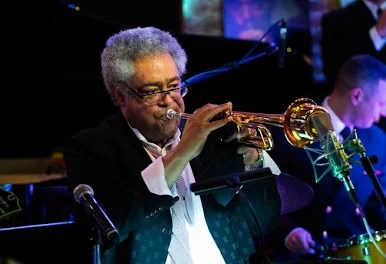
Jon Faddis. Photo provided
“His playing is defined by his technical mastery, most notably in the upper register,” says Combo trumpeter Dylan Canterbury. He noted that Dizzy Gillespie mentored Faddis as a teenager, nurturing a style that incorporates the trumpet’s entire history.
In addition to prolific recording and performing activity – including his own bands and leading the Carnegie Hall Jazz Ensemble and the Dizzy Gillespie Alumni All-Stars – Faddis also teaches at SUNY Purchase, “He played a key role in the education of countless young jazz musicians, myself included,” says Canterbury. Gillespie taught Jon Faddis who taught Canterbury who teaches at SUNY Schenectady County Community College School of Music – it’s how jazz evolves.
Technically commanding, at home in many styles, Faddis is the ideal collaborator after many projects with Gillespie, Charles Mingus, Stanley Turrentine, Blue Mitchell and David “Fathead” Newman. The versatile Faddis has also supported rock and pop stars Bo Diddley, Eric Clapton, Tina Turner, Lou Reed, Bette Midler, Frankie Valli and others.
Faddis will perform Thursday at Music Haven with the Combo in two sets; one features students.
“We play a combination of jazz classics and original compositions, or arrangements, by members of the band,” says saxophonist and Dean Christopher Brellochs. “We plan on performing ‘Con Alma,’ composed by Dizzy Gillespie…along with ‘Seven Steps to Heaven,’ which was recorded by trumpet legend Miles Davis.”
Music Haven is in Schenectady’s Central Park. Show time is 7 p.m. Check www.musichavenstage.org for rain site updates, if necessary.
Review: Ronnie Baker Brooks, Misty Blues, and Mulebone Sunday
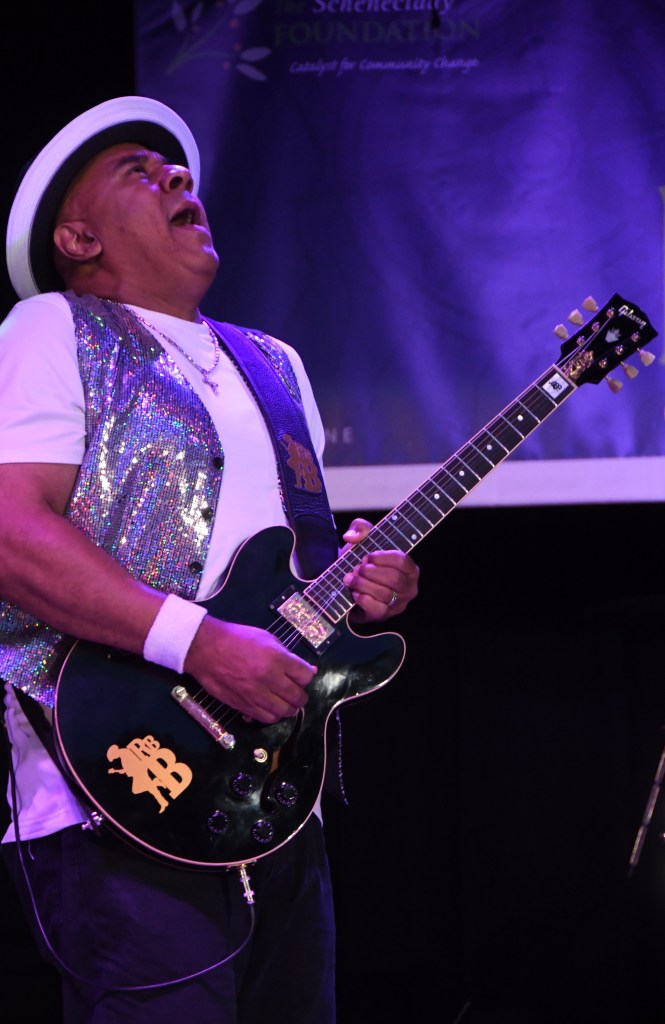
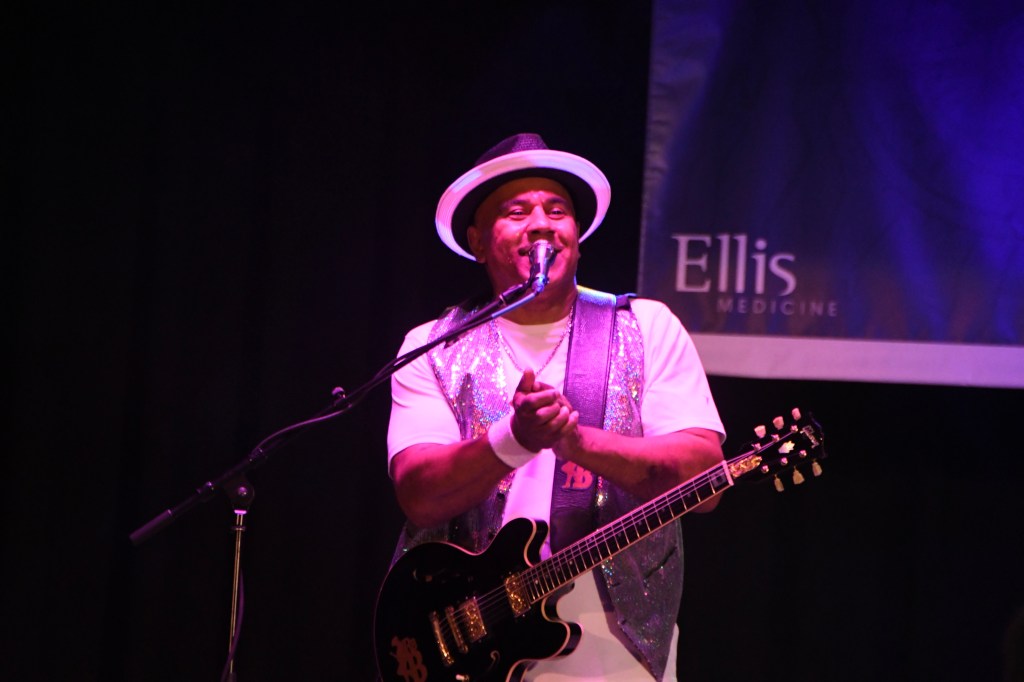
Ronnie Baker Brooks claimed “I’ve got blues in my DNA” Sunday at Music Haven and made us believe.
His blues DNA came from father Lonnie Brooks who brought the younger Brooks onstage at nine. Brooks also claimed B.B. King, Muddy Waters, Howlin’ Wolf, Jimi Hendrix, Buddy Guy, Hubert Sumlin and more as mentors and models. Brooks knows all the blues guitar tricks and where they came from, and showed a bit of where they’re going.
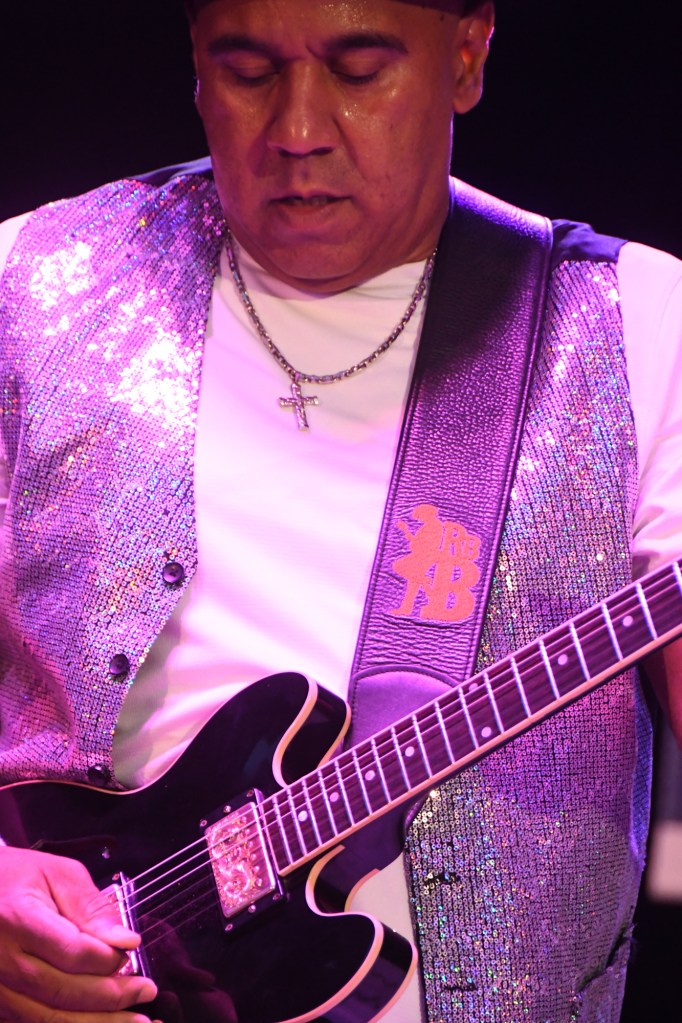
Ronnie Baker Brooks
Brooks mostly represented tradition in Music Haven’s annual three-act Blues BBQ; Misty Blues showed how that tradition has expanded while opener Mulebone stripped it way down and added some mischievous noise.
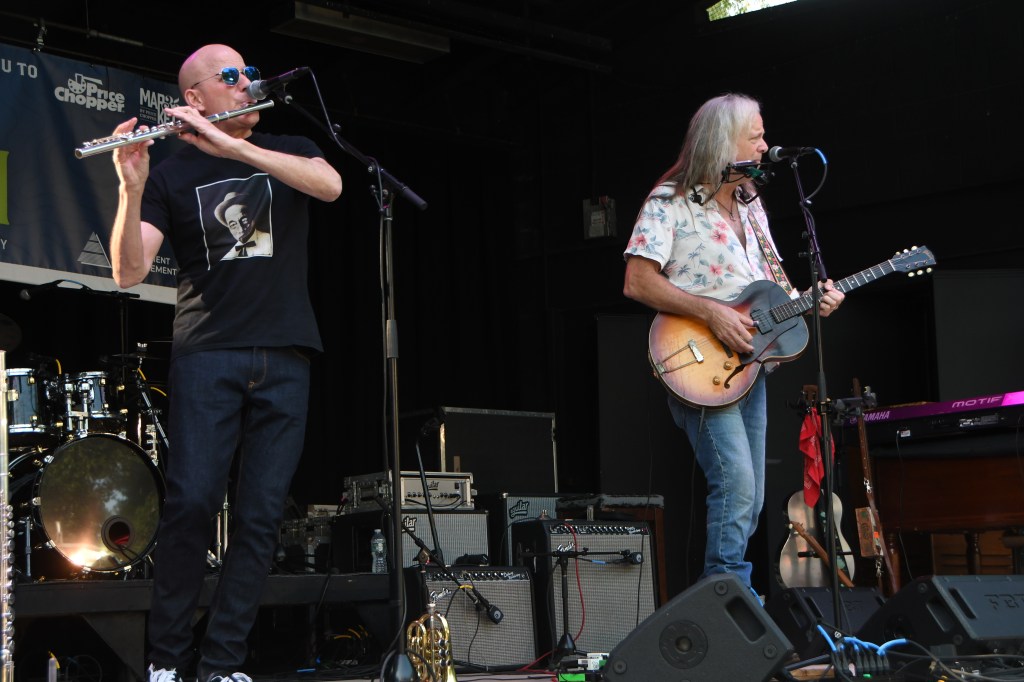
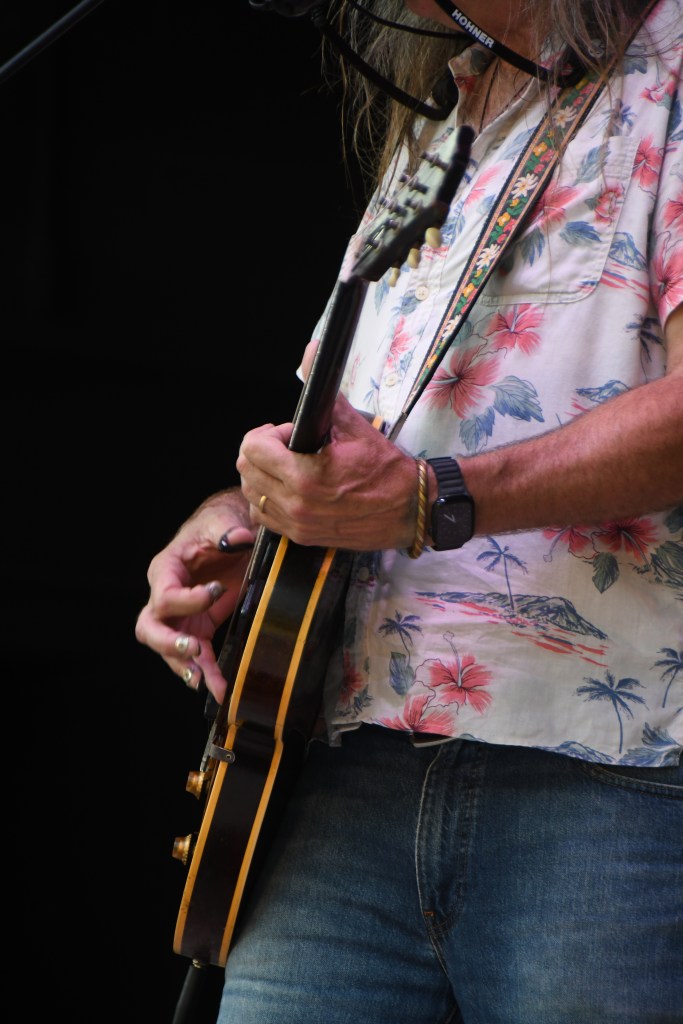
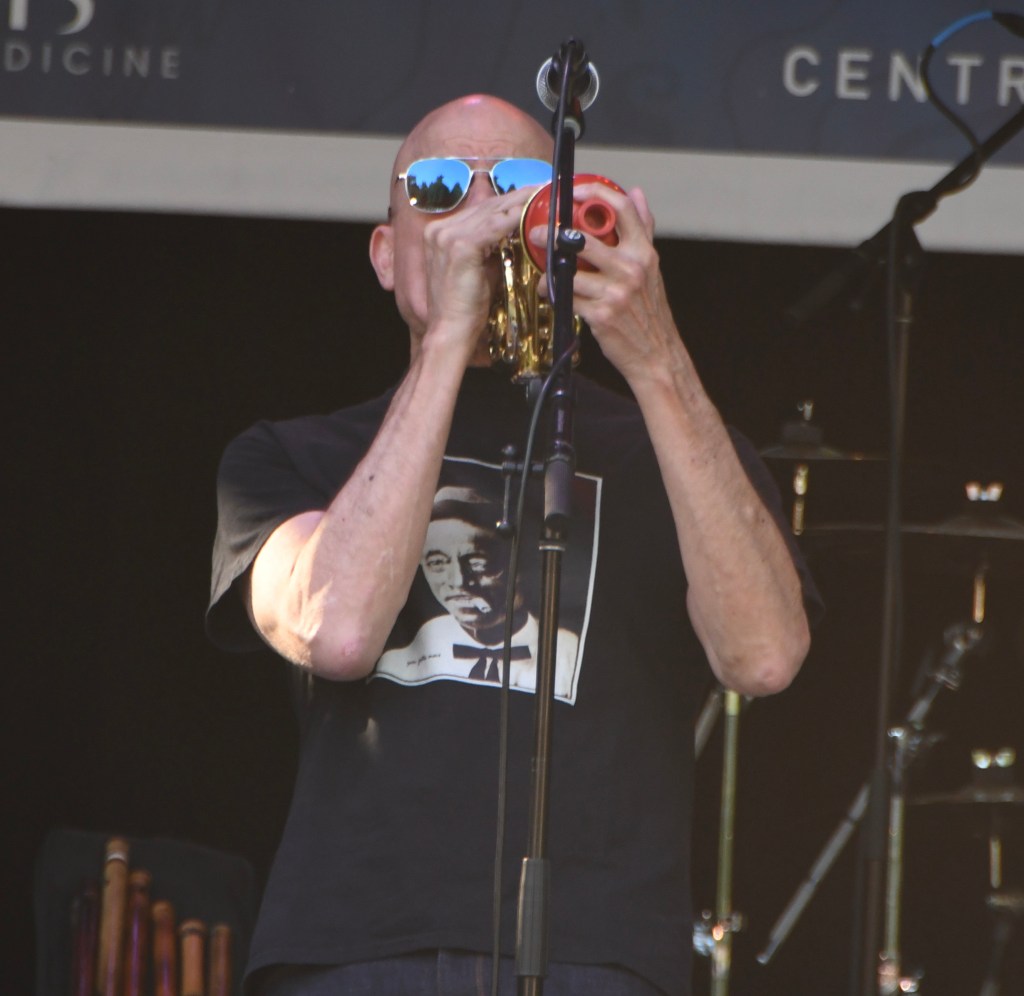
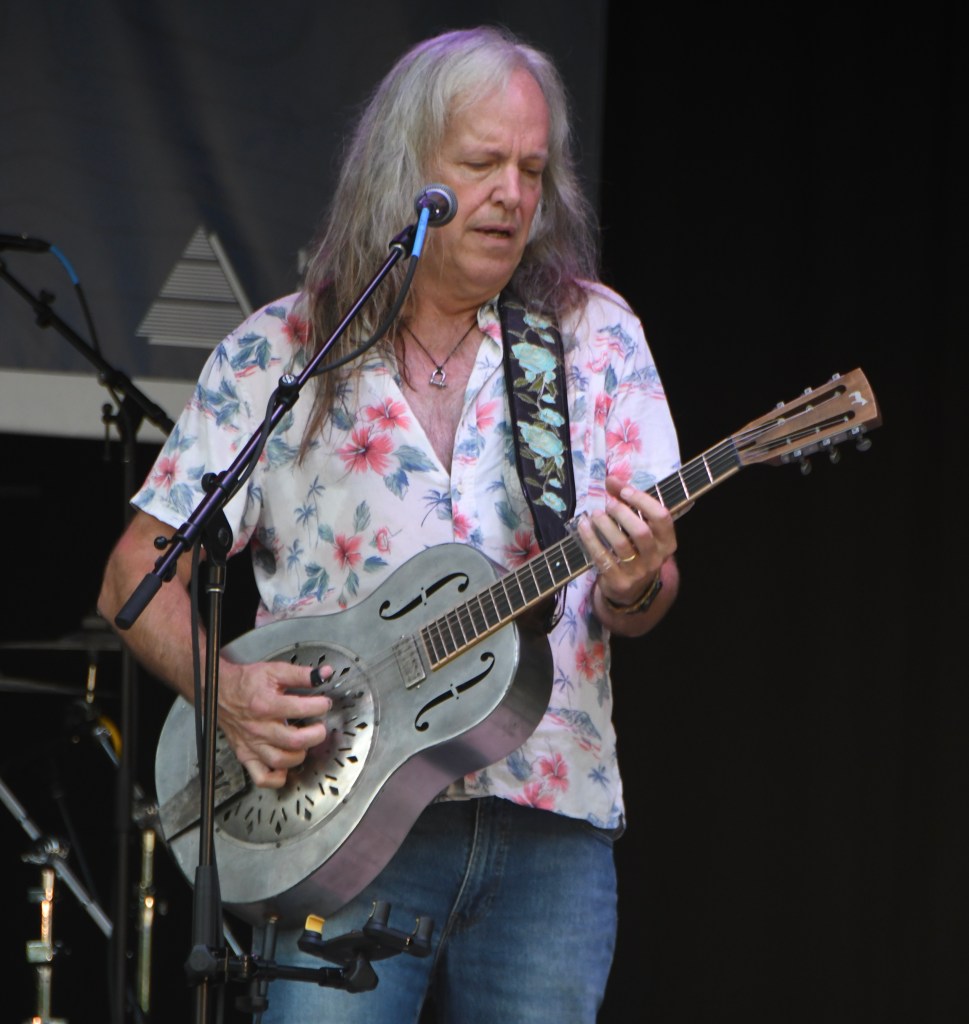
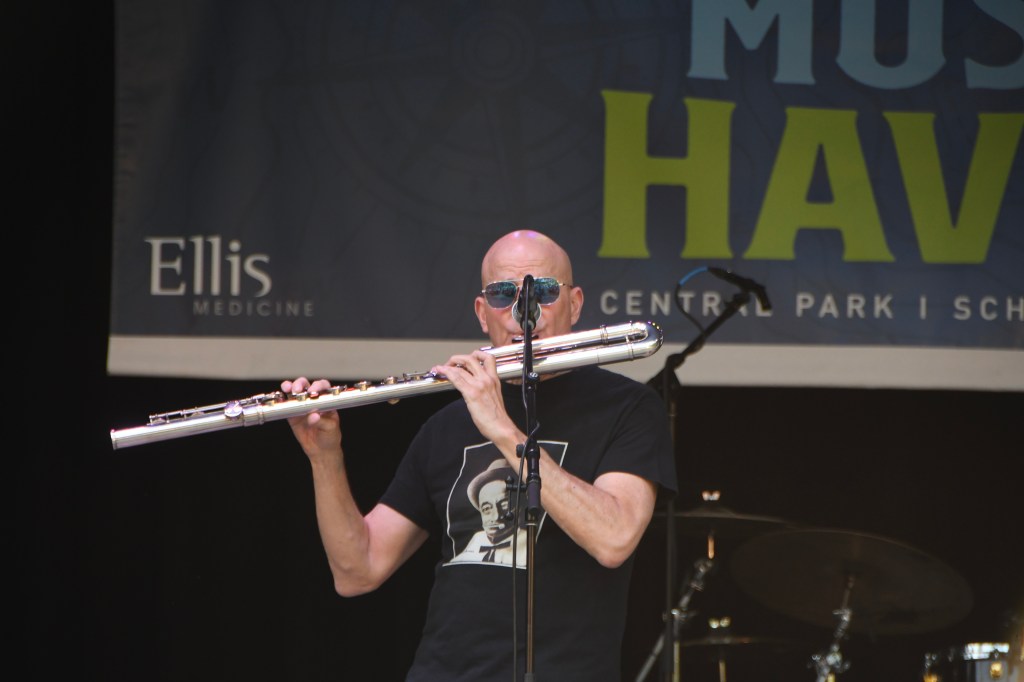
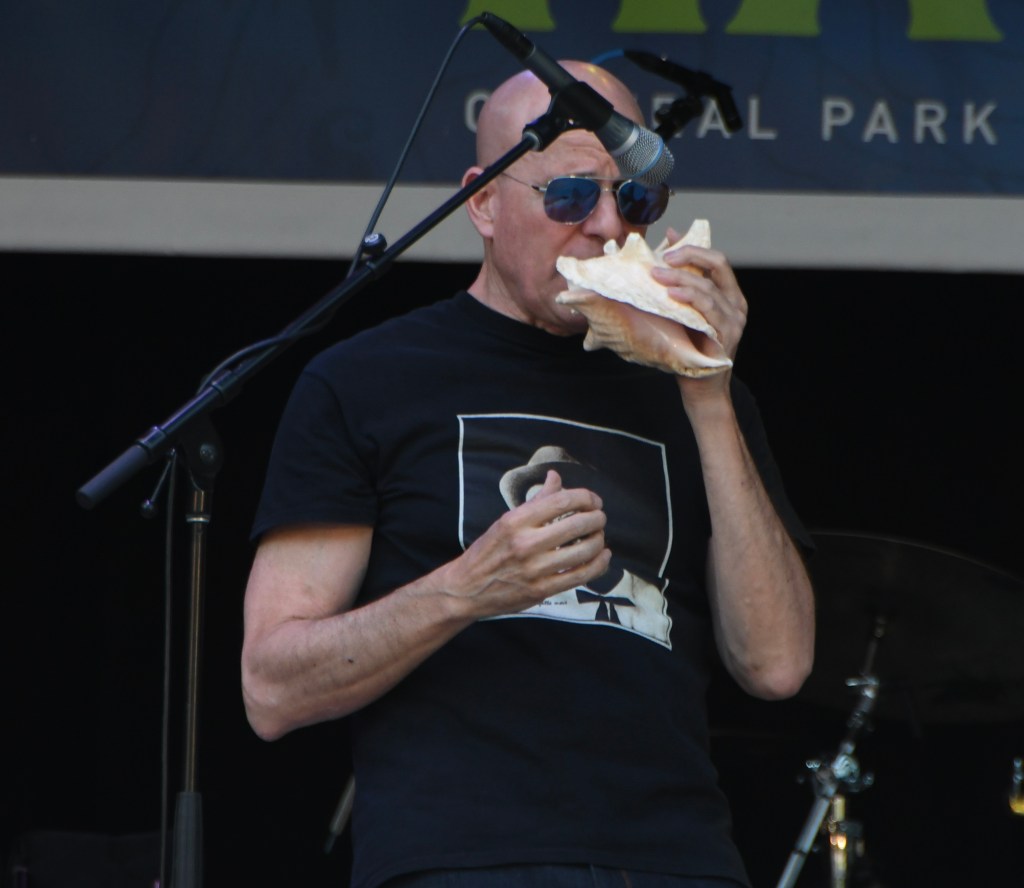
A duo of guitarist-singer-harmonica player Hugh Pool and former Albanian John Ragusa with flutes, fife, cornet and conch shell, Mulebone played primal and powerful; simplicity their strength. Soon after a fairly conventional “Candy Man,” their own “Long Winding Road” featured jagged, alternating flute and harmonica riffs welded together in tight conversation. Shuffle beats carried tunes old and new as Pool played solos or rhythm support, a thin-body Gibson bookending around several mid-set songs on a steel-body slide dobro while Ragusa switched off like a (virtuoso) kid loose in a music store.
Mulebone: John Ragusa at left, with Hugh Pool
Promising “some weird stuff up here,” they delivered in “How Many More Days” a blues classic mutated by Ragusa’s conch-shell screams and Pool singing through a harmonica. They landed gently with “Come Back Baby,” but detoured into “Low Rider” before taking things home.
Misty Blues from the Berkshires touted their new Ida Cox tribute album with “Bama Bound Blues” as a rocking-railroad glide, then shifted from Alabama to Memphis in the soul groove “Up All Night,” leader-singer Gina Coleman’s raspy growl framed in (left-handed) Seth Fleischmann’s fiery guitar, hard-honking sax from Aaron Dean, secret-weapon Hammond by David Vittone and linked-up beats of bassist Diego Morgue and drummer Rob Tatten.
Misty Blues, above, from left: Seth Fleischmann, guitar; Gina Coleman, leader and vocals; Aaron Dean, alto and tenor saxophones; Rob Tatten, drums; Diego Mongue, bass; David Vittone, keyboards. Gina Coleman, below
Rocking shuffles dominated until “Señor Blues” dove deep into funky reggae; they revisited island beats later in “Travelin’ Man.” Their straight-up blues, notably Cox’s spirited, funky “Blues Ain’t Nothing But” crackled and popped; but they were most rewarding insisting, as Coleman said like a mission statement, “the blues are not static.” Their big finish one-two of “Sinner Man” – faster than most, and fierce – and “Hold On” with Dean injecting ‘Trane’s post-bop hymn “A Love Supreme” into a blistering alto break over surging beat waves were knock-outs deluxe.
Brooks took full advantage of the blues’ unparalleled power as autobiography. Revving up nice and loud, he took us on a breakneck tour of Chicago with drag races of guitar overdrive, poignant chapters of family-nourished aspiration and achievement, all adding up to the irresistibly joyous tale of a seven-year old who adapted his father’s fame as the framework of his own.
Ronnie Baker Brooks, above, at left, with Chris Singleton, drums; Phil Castleberry, bass; Daryl Coutts, keyboards
Brooks works the crowd, late in Sunday’s show
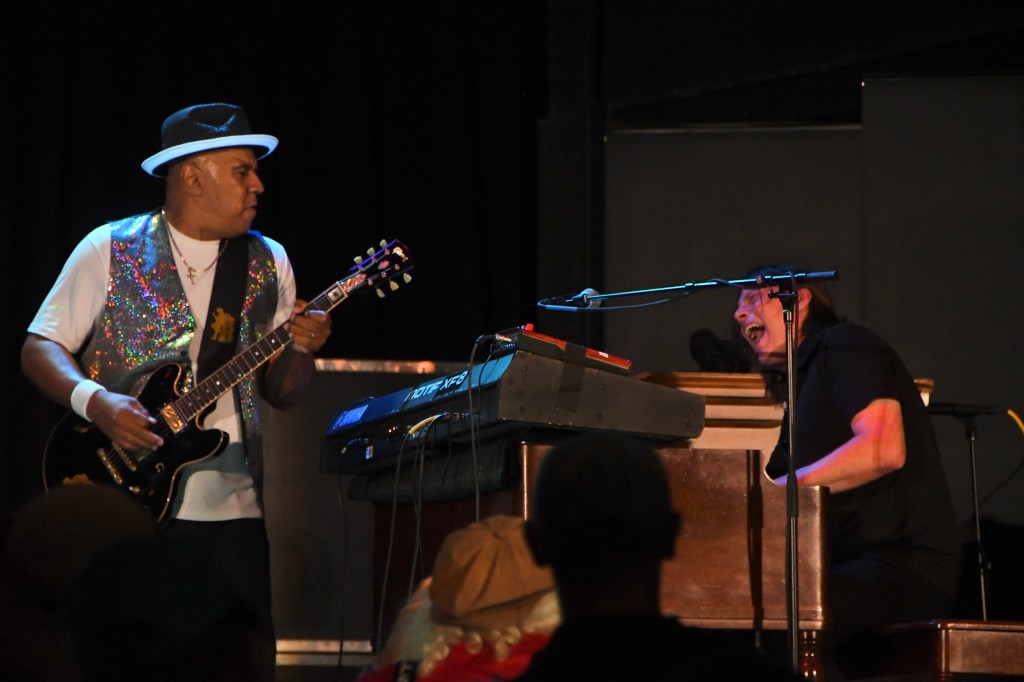
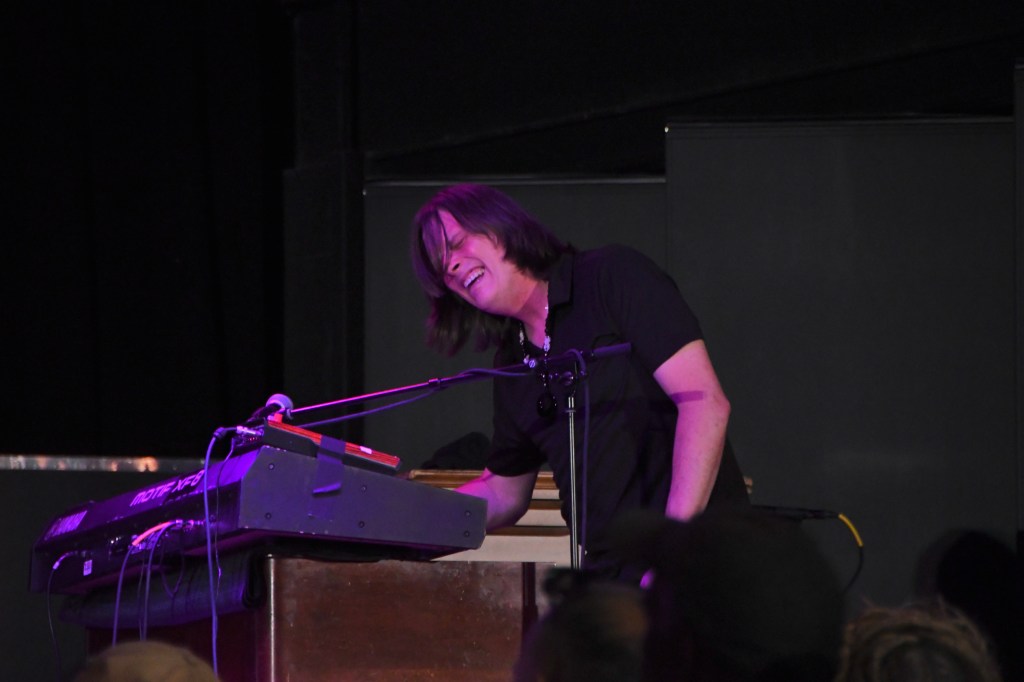
Eager to strut his stuff, Brooks sidestepped the blues cliche of delaying entry until the band had cooked a groove; he was quick to join bassist Phil Castleberry, drummer Chris Singleton and keyboardist Daryl Coutts – on the same synth-and-Hammond rig Vittone played in Misty Blues.
A complete make-it-look-easy master, Brooks set up a righteous ruckus in “I Had My Chance.” Pain and power fought it out and both won this tooth-and-claw opener. Drenched in regret, Brooks seemed likely to bounce back from it, and revisited that rueful-resilient neighborhood in “Stuck on Stupid” later.
Proclaiming the crowd “our boss tonight,” Brooks promised “what you give to us, we’ll give you back 10 times.”
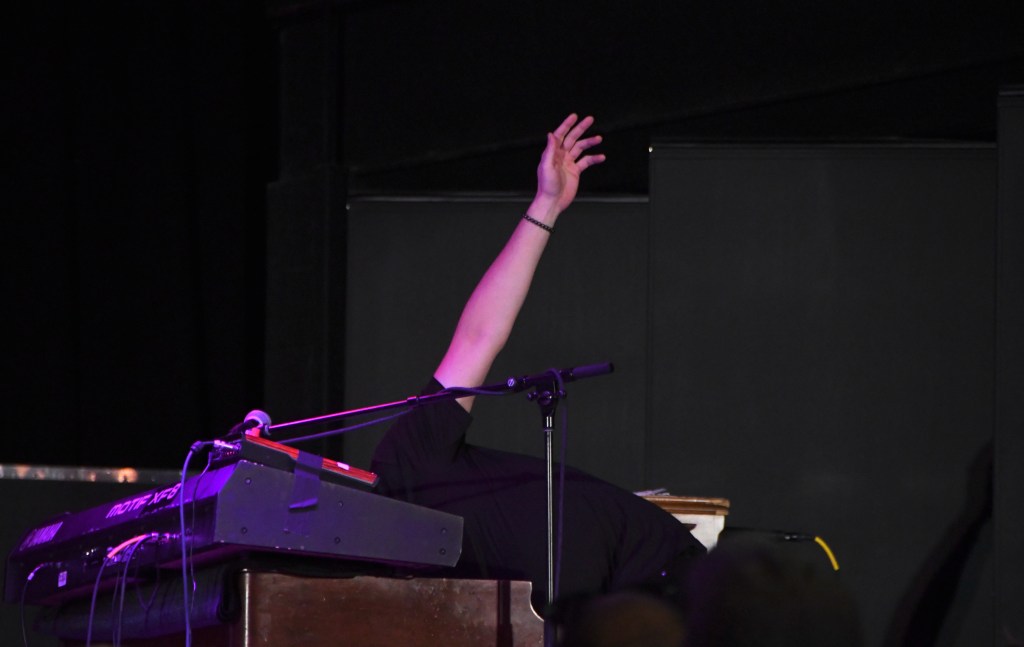
This proved a bargain on both sides of the stage as fans slowly filled the dance-space up front and increasingly shouted out, starting with a fervent “Amen!” early on and “Hold that NOTE!” in “Stuck on Stupid” as Brooks blasted a protracted feedback burst. Brooks gave plenty, roaming the front of the stage while showing off a loud library of fiery blues licks in an engaging, confident flow, effortless-looking but strong. He also uncorked stagy tricks likely learned in Southside blues bars no bigger than the Music Haven stage. He flipped his guitar backward to rub notes from it across his vest, crediting the move to Buddy Guy. Coutts caught the spirit and played piano with his face in the plaintive “My Boo,” arms flailing.
Early on, Brooks tugged the whole place back into yesterday with “I Just Want to Make Love to You,” citing Muddy Waters and Willy Dixon, then John Lee Hooker – whom he praised as “cool as the other side of the pillow” – and Howlin’ Wolf, echoing Wolf’s trademark vocal trick of deep growl and falsetto in the same phrase. “How Many More Years” wrapped neatly around “Sweet Home Chicago,” evoking Hubert Sumlin, Howlin’ Wolf’s longtime guitarist.
Brooks also sang of love’s sometimes painful, sometimes hopeful here and how: “Accept My Love,” crooned “for the ladies,” then “My Love Will Make You Do Right” directed to “the fellas;” and “I Gotta Make You Mine,” volatile with dynamic desperation.
Then, briefly, Brooks turned topical, contemporary. “Times Have Changed” began in weary fatalism; but when he swapped abrupt rapping cadences for smooth singing, he changed up the mood to encourage hope as inevitable. This felt like church, but Brooks detoured again, closing with the jaunty juke-joint number “Ready for Me.”
Instead of just “one more,” Brooks stretched the encore with the tale of his earliest days onstage to set up “Blues in My DNA” – spiced with some Hendrix-y “Voodoo Chile” in a free-wheeling jam. He roamed the crowd and kept playing, led the band in a recap onstage and ended with his arms wide as feedback clawed the sky.
His agile, incendiary guitar – revved and rocking like B.B. King, uptempo; subtle and sweet like Buddy Guy when quiet – and soulful voice mark Brooks among the top traditional Chicago artists of his time.
Food-and-drinks service and music both began just past five p.m.; long lines forming fast and re-forming during breaks between acts. Several vendors ran out, but the music didn’t as Brooks stretched things longer than usual to nearly 10.
The Music Haven free summer concert series continues Thursday with the SUNY Schenectady Jazz Faculty Combo with guest Jon Faddis, then Sunday with Kaleta & Super Yamba Band on Sunday.
Music Haven’s film series begins Friday with “Michael,” “Saturday Night Fever” on Friday, Aug. 21 and “Song Sung Blue” Friday, Aug. 28. Rochmon Record Club supplies music until showtime at dusk for all three.
The Lost Bayou Ramblers and Cecilia close the live concert season on Sunday, Aug. 23.
Gallery
Above, Daryl Coutts plays keyboard; below, Daryl Coutts plays keyboard with this face.
“Thank you for adding a few days onto your visit from Atlanta to be in town for this.”
“Thank you for driving from Nazareth, PA with your wife and year-old baby.”
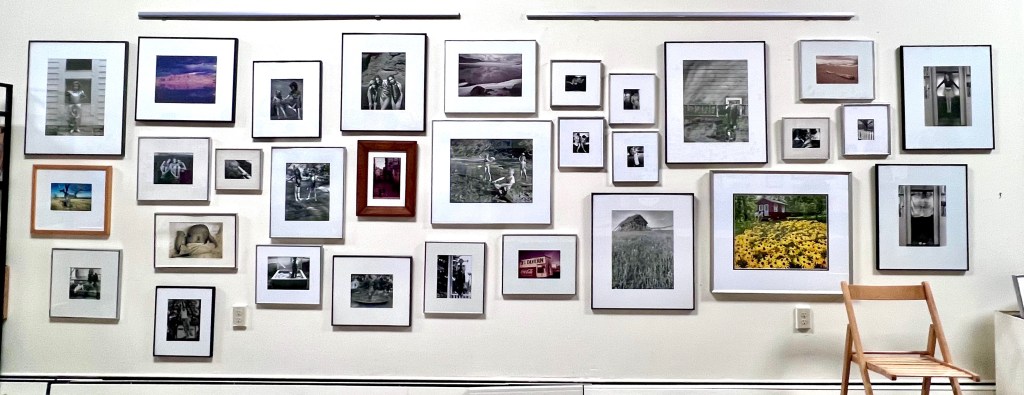
“Thank you for smoke-screening/distracting me with a road trip to a terrific photo show at the Center for Photography in Woodstock in Kingston (I know!) so family and friends had time to prep the C.R.E.A.T.E. Studio on Erie Boulevard in Schenectady to host my surprise birthday party.”
And, most of all, “Thank you Ellie for rounding up such a wonderful crew of friends and family.” (A friend since high school looked around and dubbed them all my ‘pride,’ like a gang of lions.) “And thank you for organizing the facility, the guests, the food and drink, and a pop up exhibit of my framed photos.”
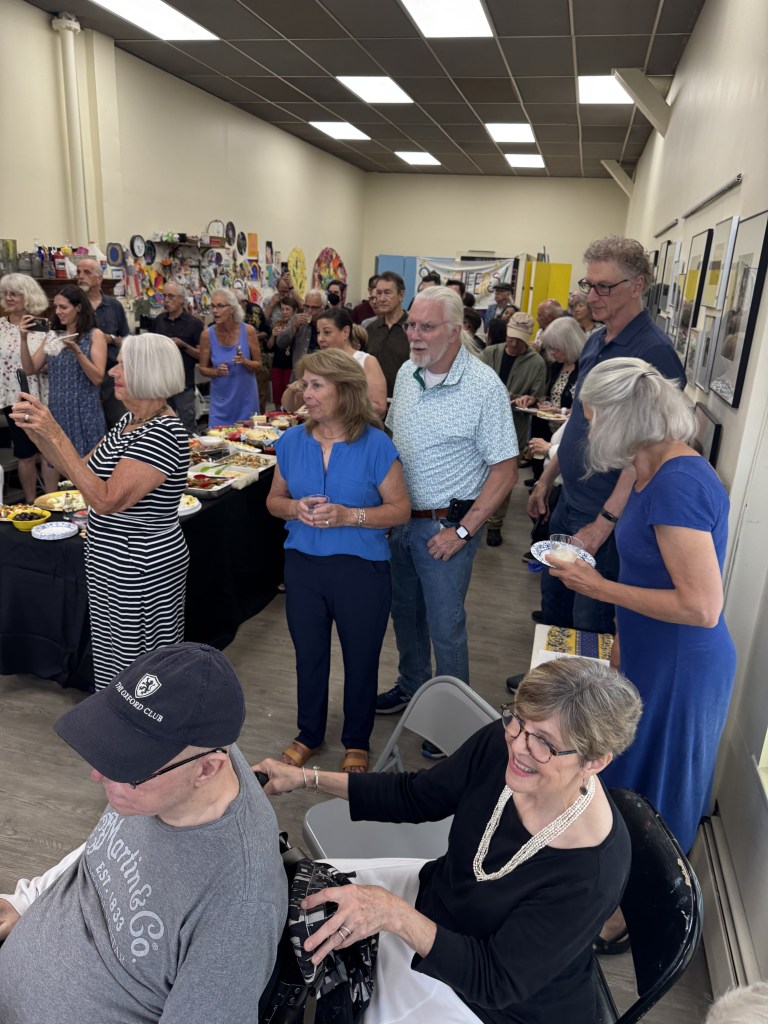
My sister Annie (in black, and necklace) and her husband Dave (in Martin Guitars shirt)
The last time Ellie organized a surprise birthday party for me, she arranged for the Auratones, my musician brother Jim Hoke’s high school band, to reunite for their first gig in decades. Seeing the same guys who used to practice in our basement playing the same songs moved me to tears more than once. Then, on their break, she led everybody through the woods at the former Glenville Girls Inc. day-camp she’d borrowed for the occasion, into a clearing where people casually started looking up.
Soon a biplane appeared and performed astounding aerobatic maneuverers overhead while the pilot’s wife directed him by radio: “Go up, you’re behind the trees again!” Hammerhead stalls, barrel rolls; you name it, Jeff did it.
Ellie blindfolded me, handed me a ribbon to guide me through the woods to the pond where the ribbon’s other end was tied to the thwart of my birthday gift yellow canoe.
Meanwhile a woman sidled up to Ellie and snarled in mock rage, “You BITCH! My Fred’s birthday is in two weeks and NO WAY can I do anything half as cool as this!” But I digress – in fact, my sister had those words – But I digress – printed on a gift T-shirt; she also gifted me our great grandfather’s bamboo walking stick with silver band and tip. But I digress again.
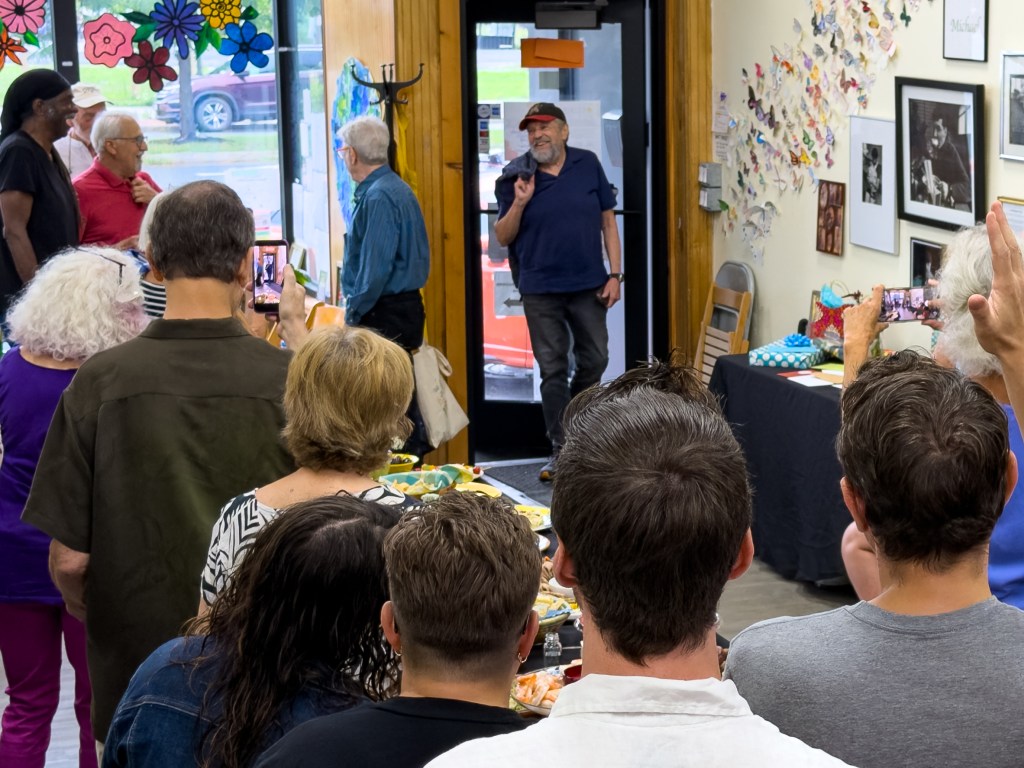
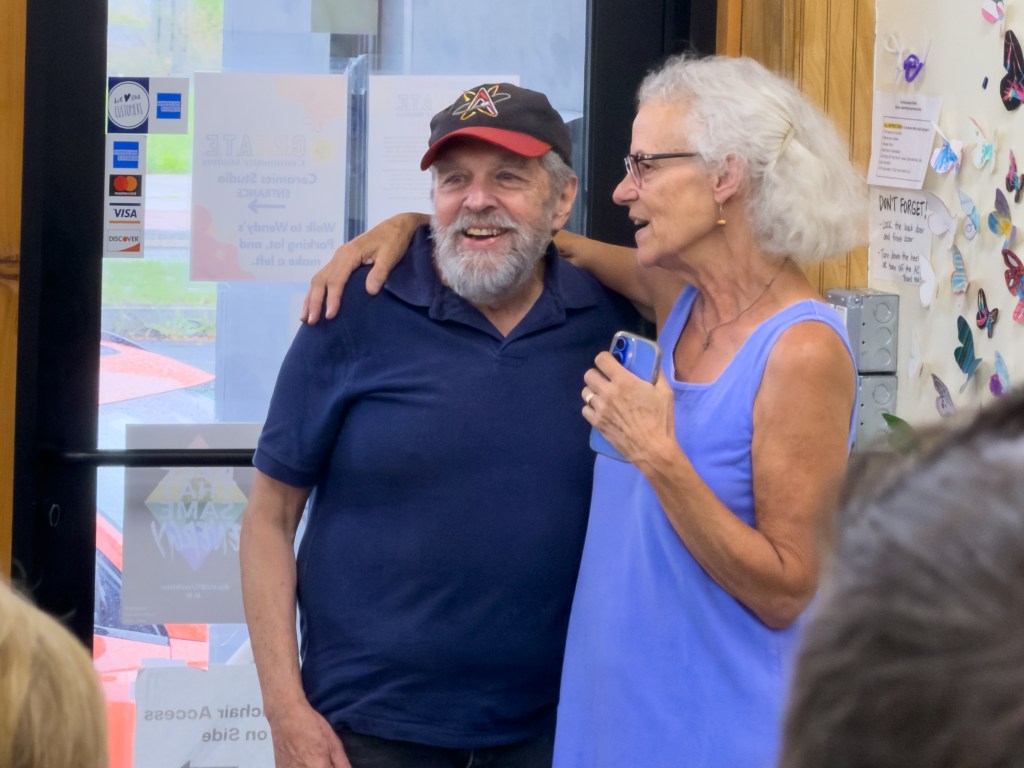
I walked into C.R.E.A.T.E. Studio Sunday afternoon with my smokescreen/distractor friend Charles and found it full of family and friends and food and drinks, my photos on the display walls along with a highly flattering artist statement Ellie and our son Zak wrote.
My “pride”:
Ellie, son Zak and wife Charlotte; daughter Pisie and husband Tony; sister Annie, husband Dave, their sons Jared and Noah, Jared’s wife Corrin and their son Waylon; and Noah’s partner Maria; my high school friends Ray, Tom and Bob; Charles and Ginger; John and Peg; Dennis and Mary Ann; Caleb and Linda; Jack and Dave; John-Michael and Gail; Monica and Steve; Louisa; Don and Lois; Michael and Jackie; Eric and Jess; Meredith; Paul; John and Khushi; Matthew; Anna and Mareesa; Helen – well, two Helens, one with Don – Susan; Ricardo; Jim and Teresa, Tim and Chickie; the RZA, and Needle – 54, plus me.
Brother Jim – you remember, the Auratones guy – and wife Lisa didn’t make it since they’d arranged months ago their annual weeks-long getaway to California’s Anza-Borrego desert.
The sheer fact of this happening at all, that was Surprise No. 1.
Surprise No. 2 was the wonderful sight of all those friends and family; all the loved ones of my “pride.”
And, Surprise No. 3 was the exhibit of my own photos, many taken from our own walls to hang at C.R.E.A.T.E. Studio after Charles had smoke-screened me away to Kingston.
Some images I hadn’t seen in years, including a few that friends had brought, or sent. A woman whose own family gathering in New Hampshire prevented her from joining us shipped two photos I’d gifted her so long ago I didn’t recognize where I’d shot them. And I was equally touched when Dave told me he still has a kinetic onstage shot of James Hatfield of Metallica that I’d shot at the RPI Fieldhouse, hanging on a wall at his home near Boston.
No music shots in this pop-up exhibit, though; it was all family and friends and landscapes I love: a late-sun-splashed island in Heron Lake, New Mexico; an Oklahoma City tavern; a tall-grass meadow near Little Falls with a barn that seemed to have grown there; the Colorado sand dunes; Sacandaga Lake with ice in the foreground paralleling low clouds over water in the distance; a street on Buyukada Island in the Sea of Marmara between Yalova and Istanbul. Those photos launched dozens of conversations.
A few photos showed me: in one, I’m quaffing a beer in a Yokohama bar, no beard yet
Nothing less than this magnificent gathering could have kept me from seeing John Doyle, and the Murphy Beds, at Music Haven. (The John Doyle at my surprise birthday party wasn’t the same John Doyle who played Music Haven, but rather one of Ellie’s favorite cousins.)
Preview: The Cribtet Plays Originals Thursday at Jazz on Jay
The Cribtet didn’t form a band when they were still in their cribs, but they did start making music as teenagers.
The son of area music teachers, drummer-leader Dan Jantson studied voice and cello in Bethlehem schools and didn’t play drums until freshman year. He met his future bandmates in the Center Square Jazz Collective when all were in the Empire State Youth Orchestra Jazz Band; the Center Square Jazz Collective played Jazz on Jay in 2021.
The Cribtet enjoys applause at the Van Dyck recently; drummer-leader Dan Jantson at right. Rudy Lu photo for Mirth Films; used by permission.
Thursday, Jantson, bassist Patrick Gordon and saxophonists Gavin Tarling (tenor) and Mae Czuba (alto) – who met at the Hartt School of Music – play as the Cribtet, along with pianist Coyne Connelly who completes today’s quintet line-up, subbing for Aidan Slate. Tarling, Czuba and Slate have all played with Delfeayo Marsalis.
“My inspiration on the drums is Art Blakey,” says Jansson, adding he was inspired to play jazz by Herbie Hancock. He studied with Chad Ploss through high school, then Jason Tiemann, Jonathan Barber, and Charles Goold in New York.
“This band was founded…for the members to bring in original music,” says Jantson. “About 80 percent of what we perform is original material.” Many of their originals are in the hard-bop style of Art Blakey and the Jazz Messengers.
Favorite originals include “Foxgloves” (Jantson), “Tadd Bones’ Demise” (Jantson), “Professor P” (Parker Lewis), “Your Middle Name is Not Tiberius” (Tarling), “Kettle Cove” (Tarling), and “Who Knew” (Slate). They also often play classics “When I Look in Your Eyes,” “Are You Real,” “Witch Hunt,” and “The Nearness of You.”
“I like to approach standards by trying something different every time I play, whether it be groove, space or solos,” Jantson says. “Sometimes I push other musicians out of their comfort zone to make something new out of these songs we play all of the time.”
“We like to trust each other, keeping things loose and seeing where a song goes.”
Cribtet released their debut album “Welcome Home” last year, as a sextet and have since scaled back to today’s quintet. They recently performed at the Van Dyck Music Club.
Jazz on Jay continues Thursday, Aug. 13 with the Kaitlyn Fay Quartet.
Jazz on Jay is presented by the ElectriCity Arts and Entertainment District.
Sponsors are the New York State Council on the Arts, a Schenectady County Legislature Arts & Culture Grant, Downtown Schenectady Improvement Corporation and The Schenectady Foundation. We also receive support from Schenectady City Hall and this site, Hoke’s Juke Box.
Show time is 12 noon at Jay Square opposite City Hall. Rain site: Robb Alley at Proctors; seating is provided indoors.