

Review: Pilc Moutin Hoenig at A Place for Jazz; Friday, Sept. 18, 2026
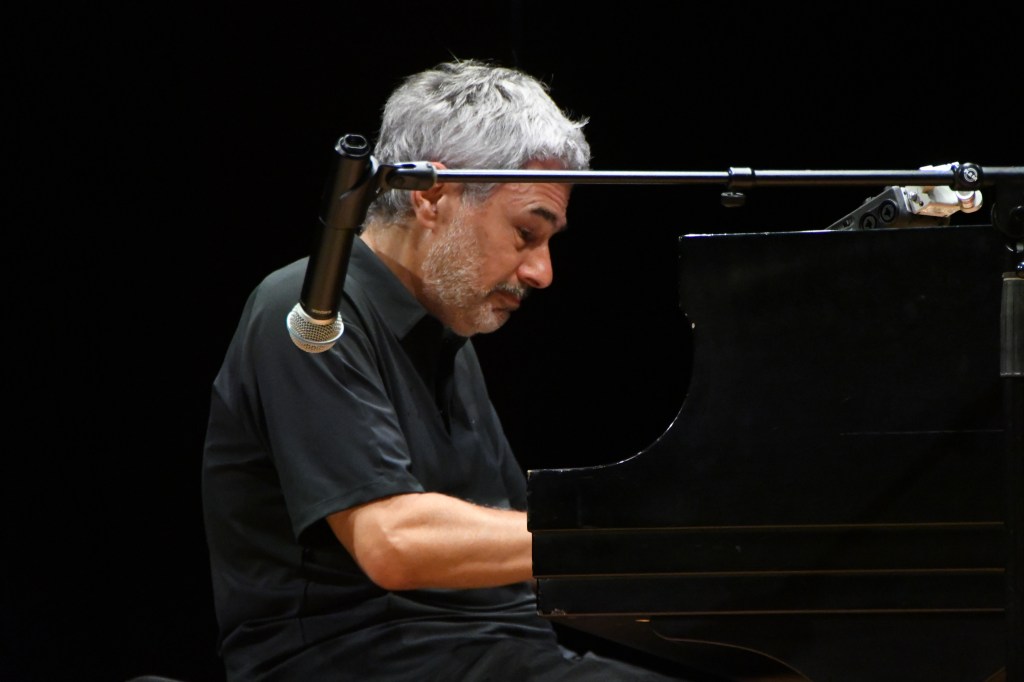
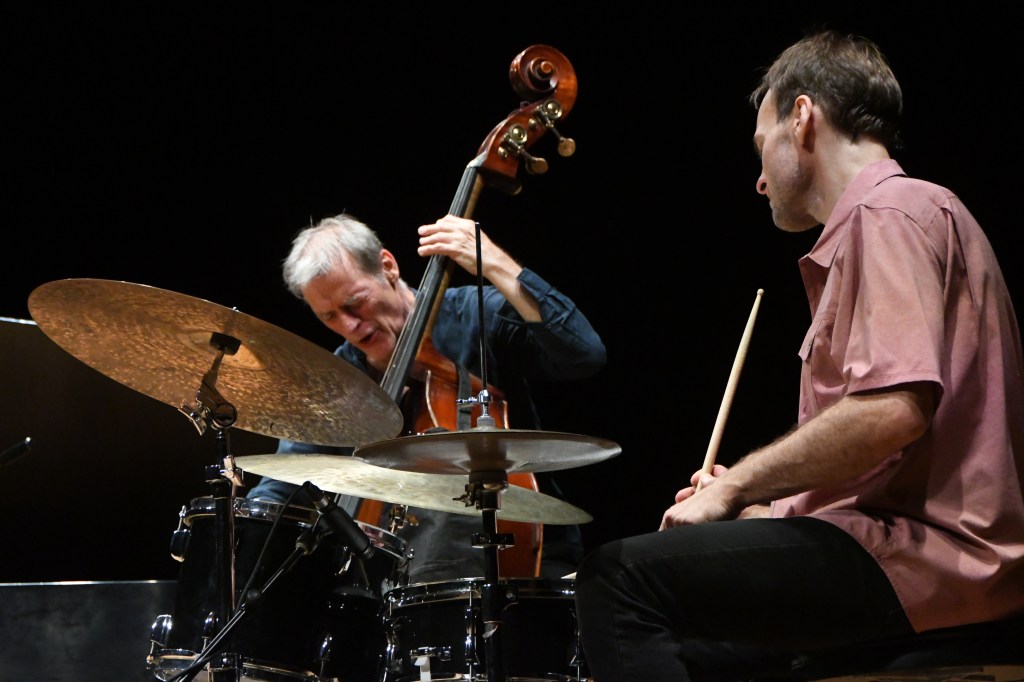
Pianist Jean-Michel Pilc, bassist François Moutin and drummer Ari Hoenig blazed through jazz history Friday in a dizzy blur.
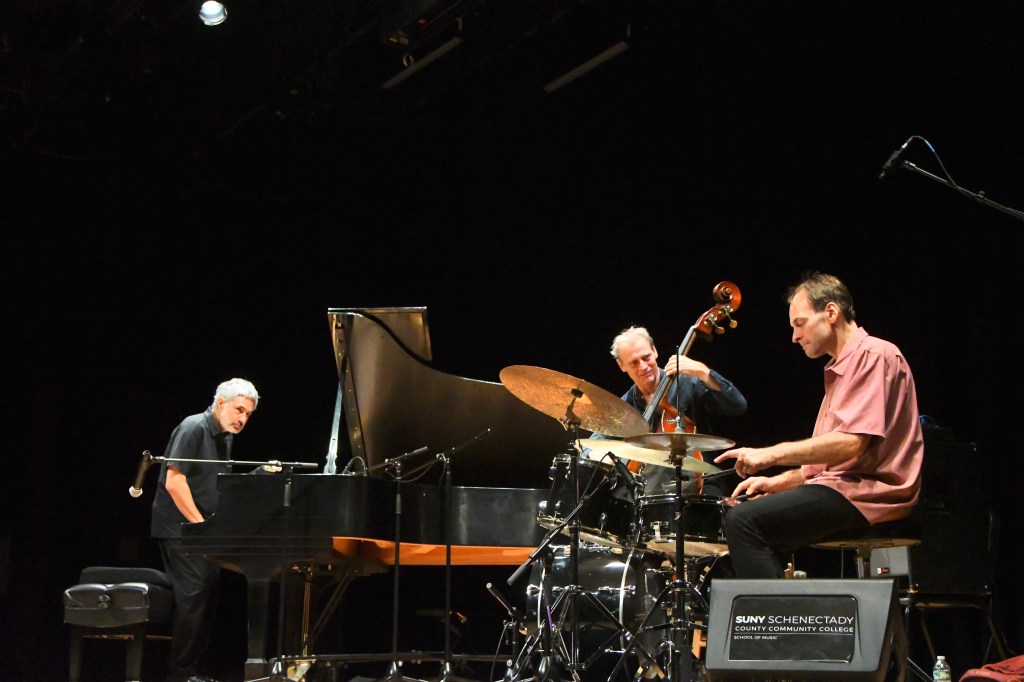
Opening the 39th season of A Place for Jazz in the Carl B. Taylor Auditorium of SUNY Schenectady County Community College music school, the ferociously intuitive trio led a kinetic game of “Name That Tune.” From Monk to Miles to somewhere over the rainbow – well, no, they didn’t actually play that. But they roamed so freely that afterward they claimed they couldn’t remember what they did play.
Then Moutin helpfully told Ricardo and me that the tune titles didn’t matter.
“We just use them to tell another story.”
The first set unfurled like a saga in sonic chapters. Tunes started up, sometimes in eerie silence or echoes from space; sometimes like a riot goin’ on. They went somewhere else, hijacked other tunes along the way, left them smoldering by the side of the road and raced on. In the second set, shorter stories hit in a more episodic flow. Both generated amazing energy, de-constructing one composition after another, then Krazy-Gluing them together.
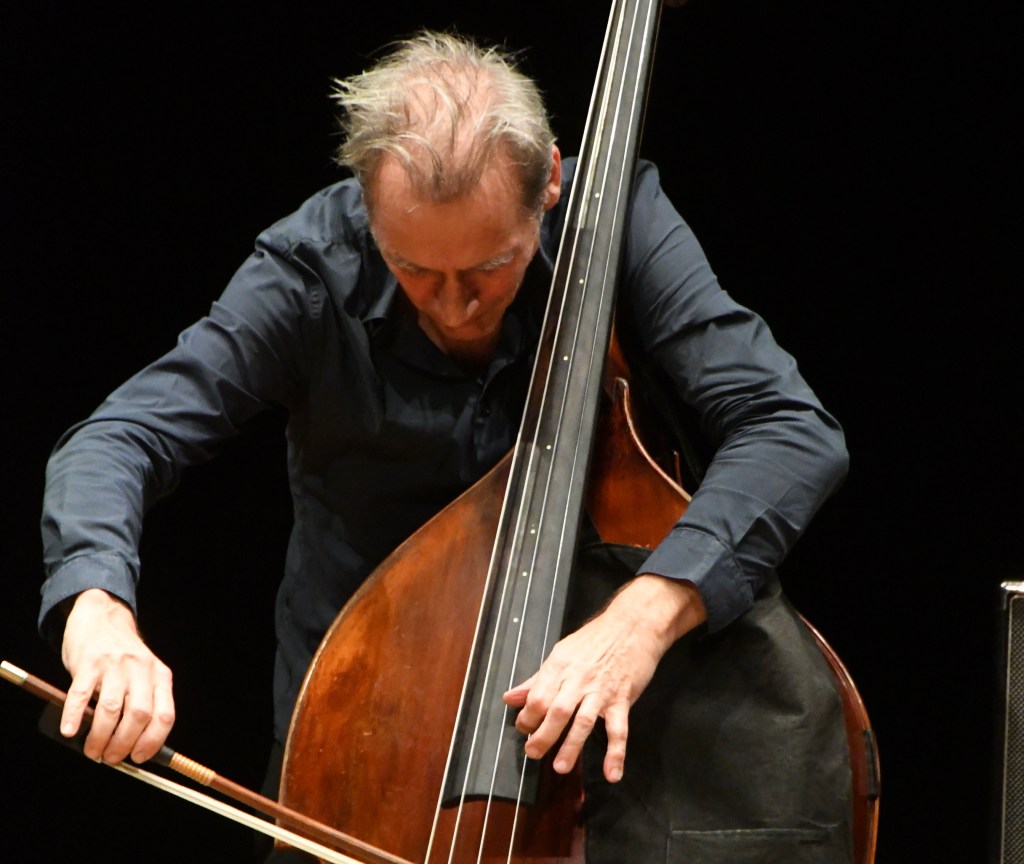
Monk’s “Bemsha Swing” formed in delicate string-plucked slow piano to open. Jagged bass tugged at the tune, then rollicking drums exploded it before the piano, now played with keys, rebuilt it. Arco bass slowly etched the next number, until delicate piano phrases announced a detour with an insistent repeating motif the drums appropriated as bass and piano faded into the woodwork until he shared it around.
A jagged, muscular thing barged onto the stage: Was it “Softly As In a Morning Sunrise”? Maybe? – though that came around in the second set, I think.
It flew fast and dense, with quotes and counter-melodies fighting it out for our attention, or awe. Intent at first, Pilc loosened up, springing off the piano bench to wander around, watching to see what Moutin and Hoenig would do with it; whistling – yes, whistling – the melody.
Sometimes the quotes – plentiful as in a library – felt playful, fading fast like fog in a breeze. Others felt conversational: Any of the three would offer a counter-melody and look around to see if it landed. The others might pick it up and run with it. If they didn’t follow the suggested new path, the sender would repeat; then repeat some more until everybody was on board. Or not. Even if the others didn’t buy the new idea right away, when they did, things usually got unanimous fast.
That was the story of this thrilling, explosively organic show/exploration, not the song titles. Chats in the audience at intermission noted “Nardis” and “Solar” as consensus titles; also maybe “The Song Is You,” “Twinkle, Twinkle” or “After You’ve Gone.”
The first set closed in a peppy romp of repeating piano figures that bass and drums helped evolve into Miles’s “All Blues” in an oblique way even Miles would have enjoyed for how it tested fans’ patience. Pilc echoed McCoy Tyler, Bill Evans, Oscar Peterson and Jerry Lee Lewis; Moutin dropped a pulse like that of an excited cheetah into the gaps between Hoenig’s fast, fiery cymbal splashes.
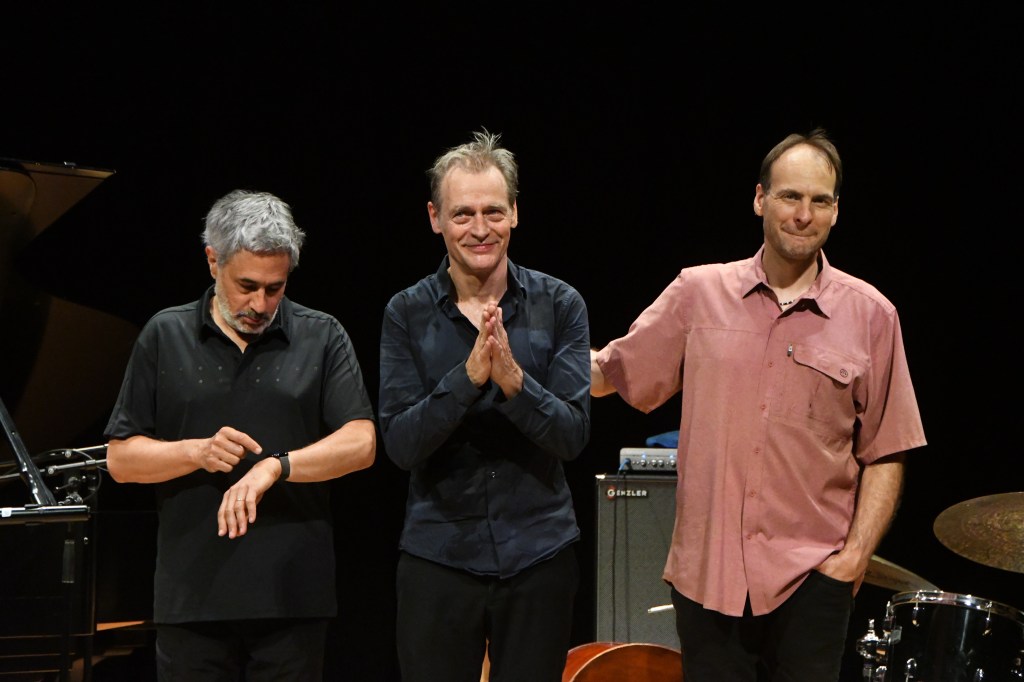
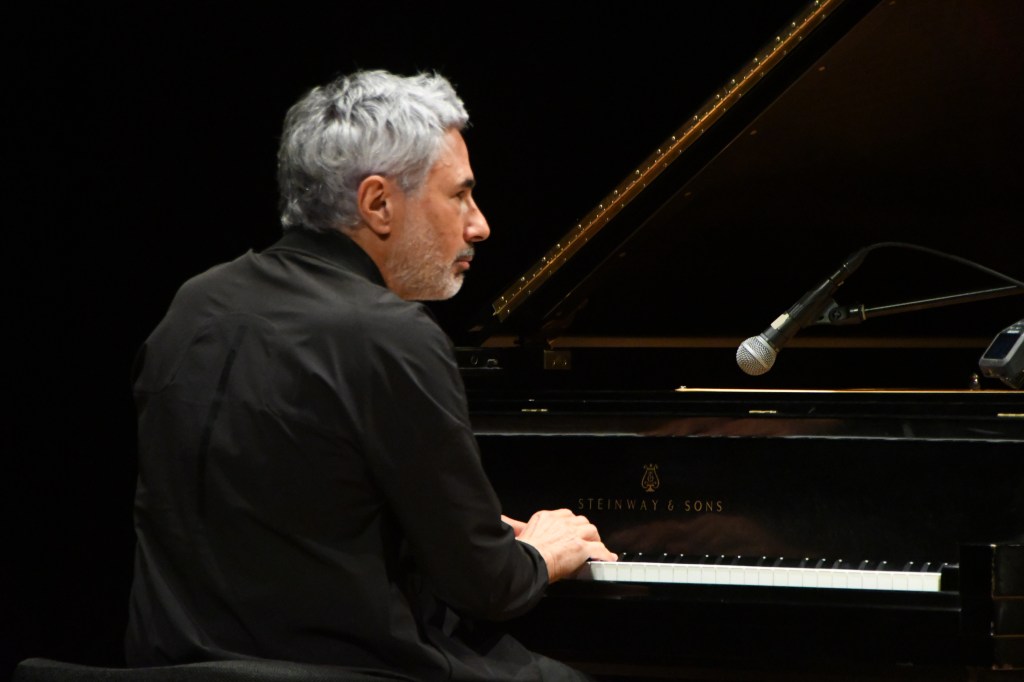
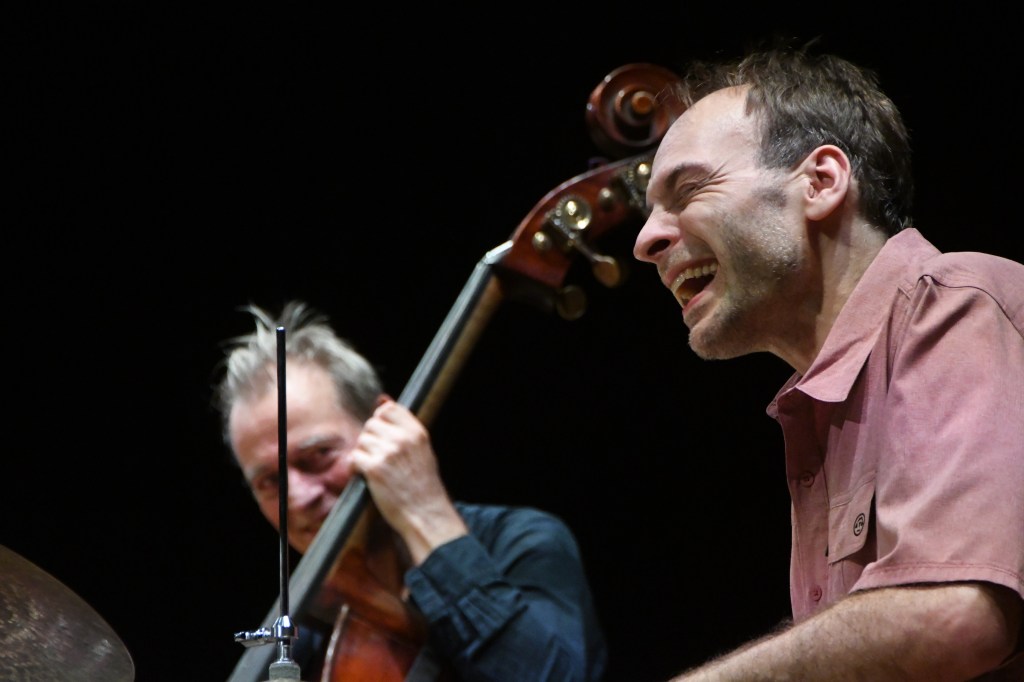
Above: Pilc checks his watch after the first set: 7:08 to 8:08 p.m.; the second set ran 8:34 to 9:38. Below: Hoenig explains things.
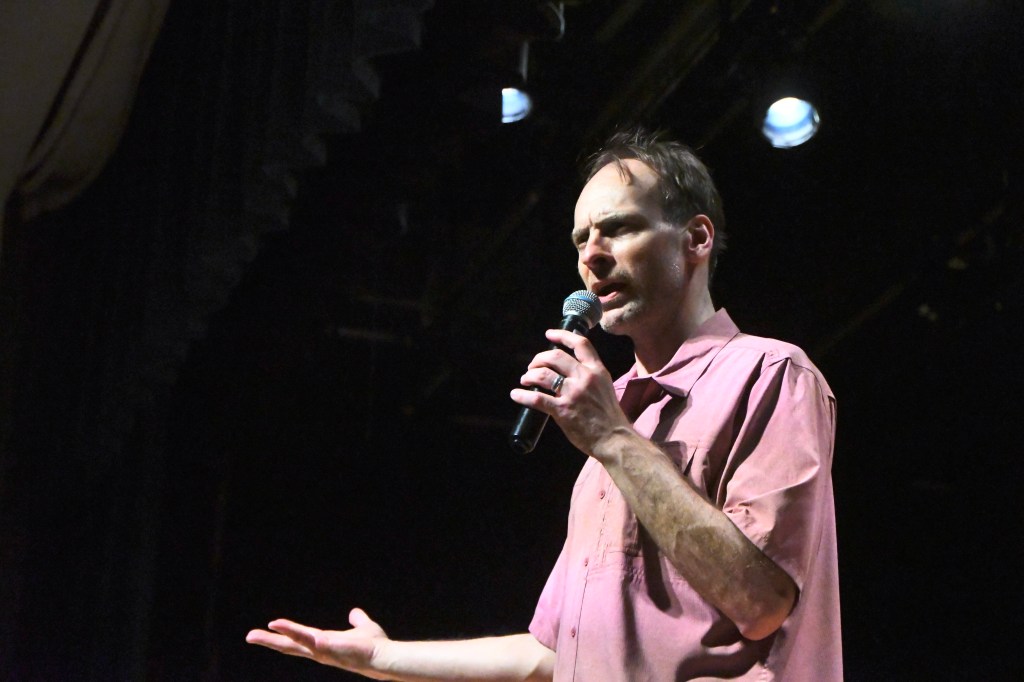
obody spoke onstage in the first set or intermission when we caught our breath. Launching the second, Hoenig compared their method with quantum mechanics and noted how they love playing together; unnecessarily, as they’re clearly a smiling happy band. Then Pilc announced they’d play…I think he said “You Don’t Know That Love Is” in his heavy French accent. As at the start of the first, Hoenig started playing with hands rather than sticks or brushes early in the second. The song grew with his increasingly hard-hitting play, his bass pedal a blur, sticks hitting hard in hot counter-rhythms on cymbals and snare. As Moutin locked in, Pilc stealthily cooked up “Bye Bye Blackbird,” pushing out fierce glissandos to insist everybody say bye-bye to the blackbird. Then the two tunes took turns through rapid obscure variations until we couldn’t sort them anymore.
Miles’s “So What” started simply enough, then mutated. After his first melodic statement, Pilc jumped up as if the song’s energy vaulted him to his feet. Hoenig pumped the “So What” cadence under whatever wild noise Pilc invented, as Moutin invited new riffs into the party. Then Hoenig urged it forward with a freight-train groove, brisk brushes on the snare. A suave blues walk sounded like Monk walking into Pepper’s Lounge in Chicago while Muddy Waters was onstage. Hoenig played the tones of the melody, they called it “Blues for Schenectady,” by elbowing the toms and snare as he hit them. When Pilc promised/threatened to take things a step further in “Schenectady Today,” he noticed some in the crowd seemed scared. When he nervously asked if we were, a fan placated him: The music was scary-good.
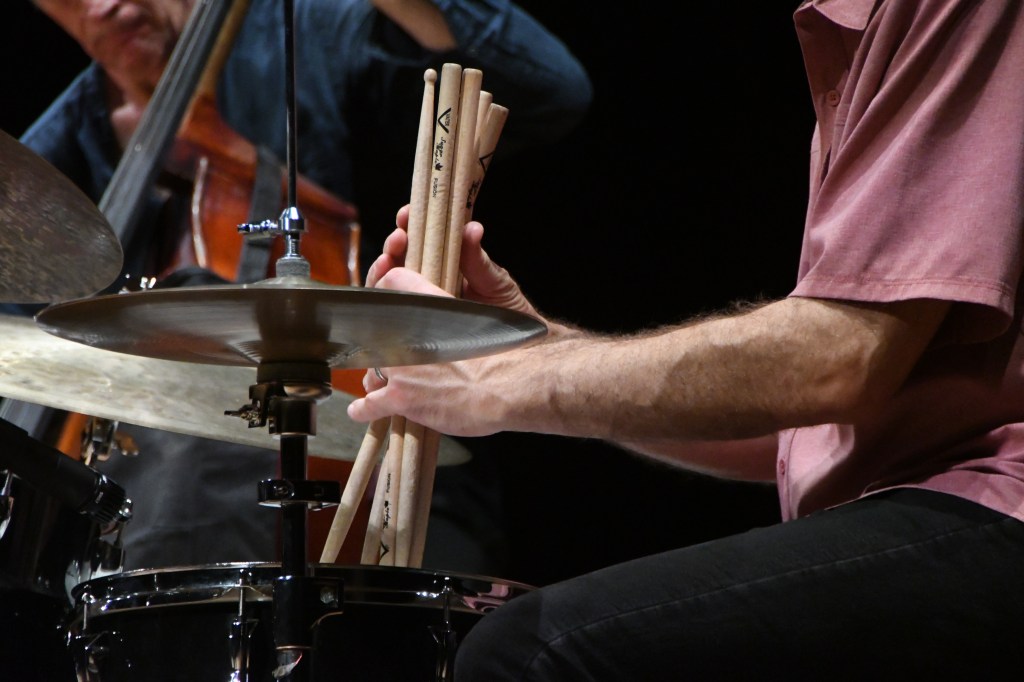
Moutin etched the melody, soft and sparse; Pilc followed in the same elegant restraint while Hoenig clustered a handful of sticks into a random jangle on the snare. Pilc smoothed things before Moutin claimed the melody in suave arco runs.
As A Place for Jazz impresario Bill McCann noted afterward, the second set was a melange, understating its abrupt changes, energetic/bewildering theme-and-variations uproar and voracious gobbling of riffs turned inside out, spun in circles and put on a bus to somewhere else. Things got hot and wildly fun; unpredictable to almost comic intensity. Late in their hard-rambling closer they became the second jazz crew (after the Hot Club of Saratoga last month at Jazz on Jay) to play “Ochi Chorniye.”
Individually, they can play anything, Pilc’s imagination fueling endless oblique digressions with irresistible swing and melodic curiosity; Moutin specializing in speedy, dazzling upper-register riffing, and Hoenig echoing the late Tony Williams in blasts of syncopation, counter rhythms and melodic mastery. Late in the first set, he held a stick vertically, its tip on the snare head below. Rubbing his other hand along the stick produced an eerie treble noise he claimed “Once I get started, I can’t stop.”
Nobody wanted them to stop Friday, telling another story, then another.
Next up in the five-show 39th season of A Place for Jazz is singer Nicole Zuraitis and her Quartet on Friday, Oct. 2. The new showtime this season is 7 p.m.
And, AND, if you’re reading this any time Saturday, remember Schenectady Porchfest.

