First-Ever Earth Fest

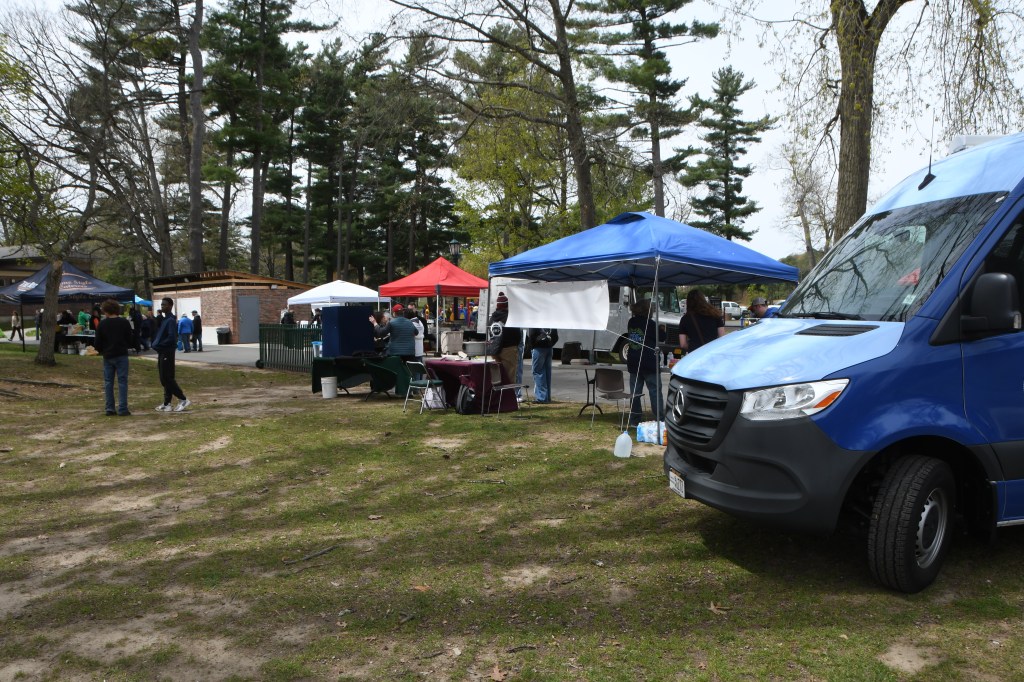
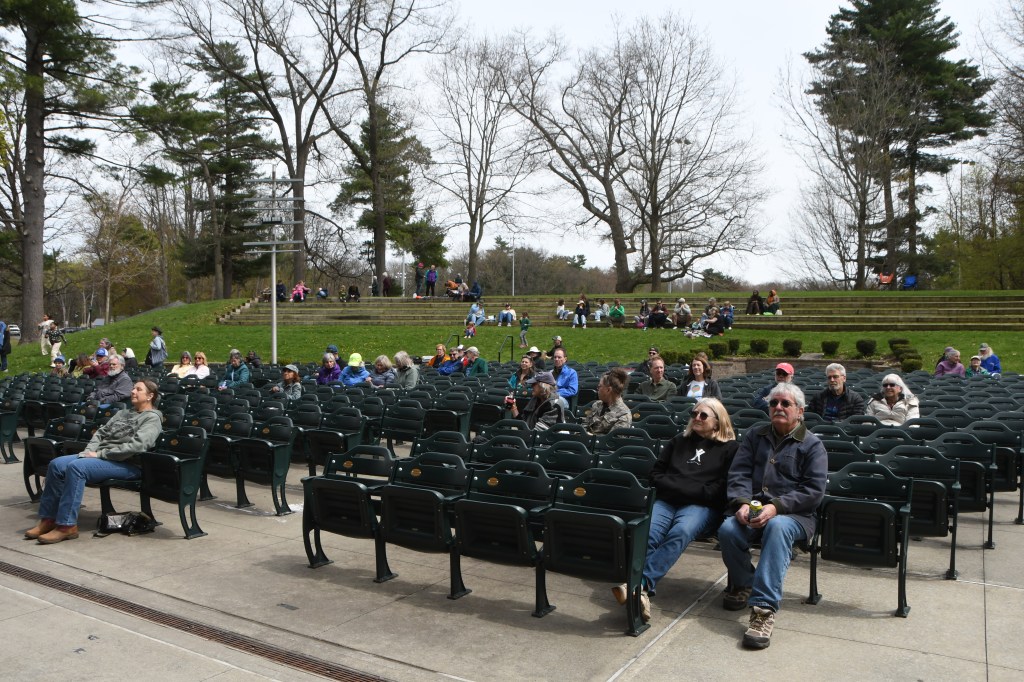
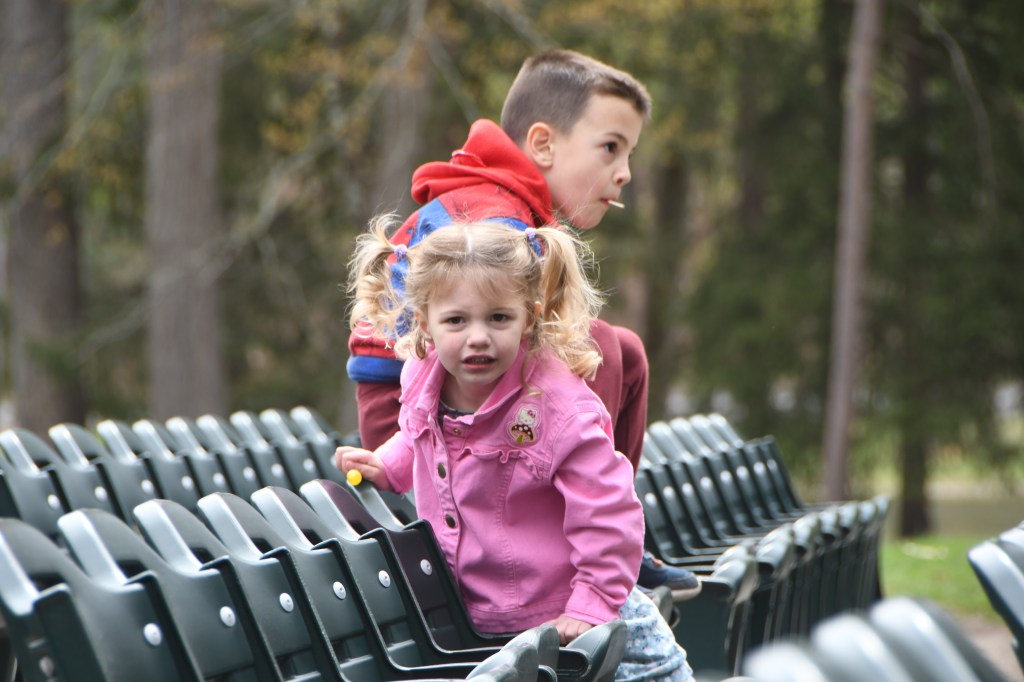
The first Mohawk–Hudson Earth Fest drew families and folk fans to Schenectady’s Central Park Saturday, despite chilly gray weather, for music and messages mixing alarm and hope on environmental concerns.

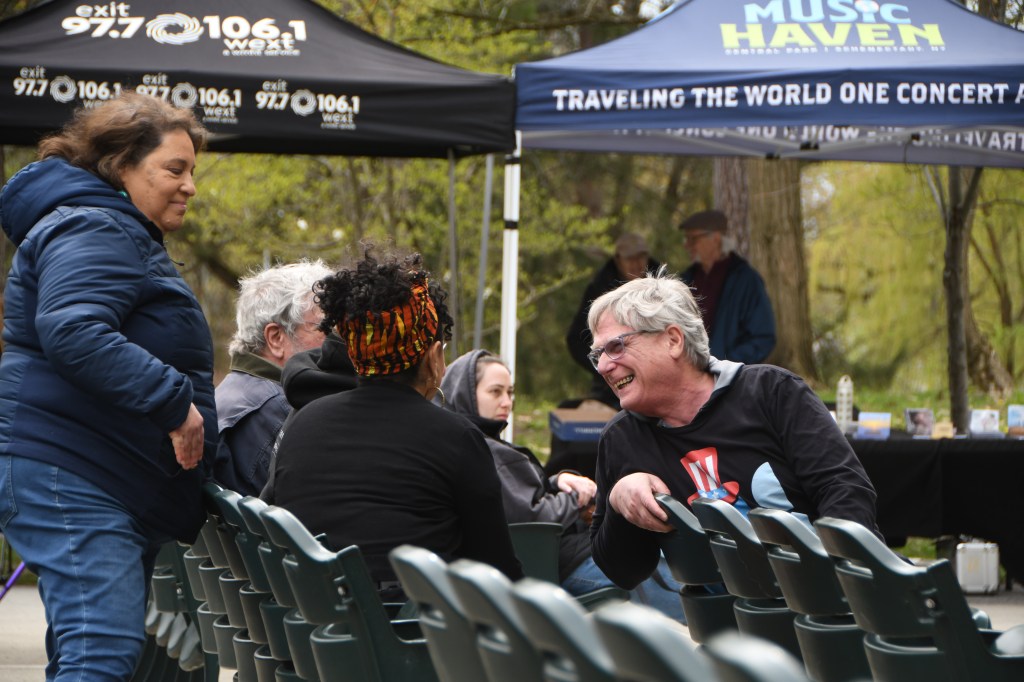
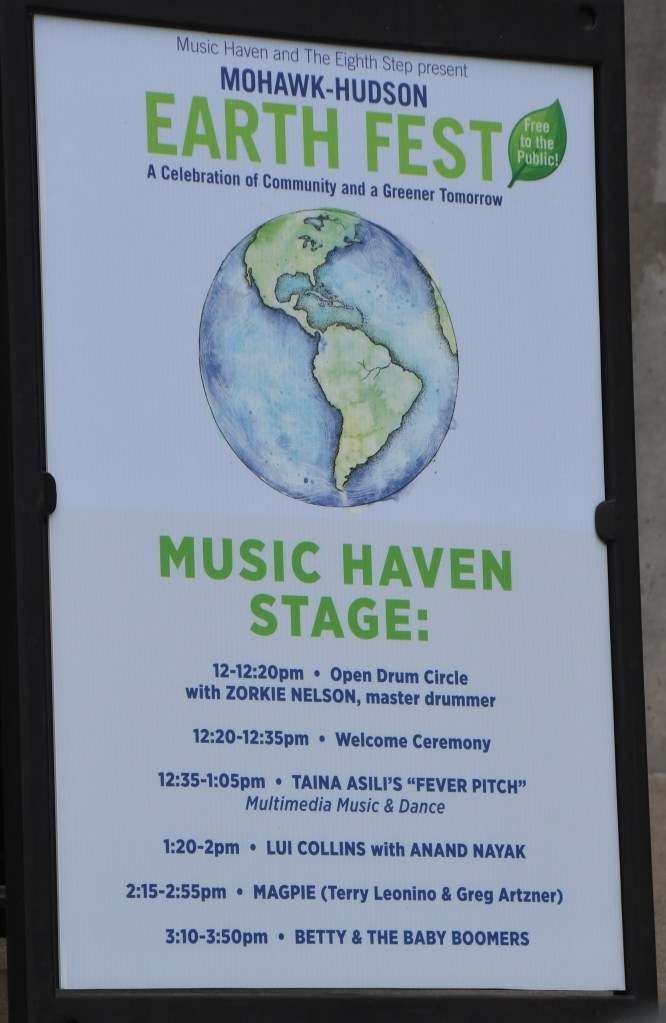
The free-admission noon to 4:30 p.m. co-production of Music Haven and the Eighth Step folk Coffeehouse at Proctors alternated music with speeches on the Music Haven stage; plus family activities in the Kids Area.

Speaking between musical acts, representatives of many of the 14 sponsoring organizations and some guests highlighted community environmental programs. 

Musically, the ghost of Pete Seeger stood tall in songs urging cultural diversity and environmental action inspired by biologist Rachel Carson’s alarmist 1962 warning “Silent Spring” that jump-started citizen environmental action across America.

Thrilling sounds of area world-music hero Taina Asili’s electric mixed media Fever Pitch presentation rang through Central Park as I arrived late after reviewing Club D’Elf at The Egg the night before. Broke my heart not to see her show; but she then joined the audience and sang along.

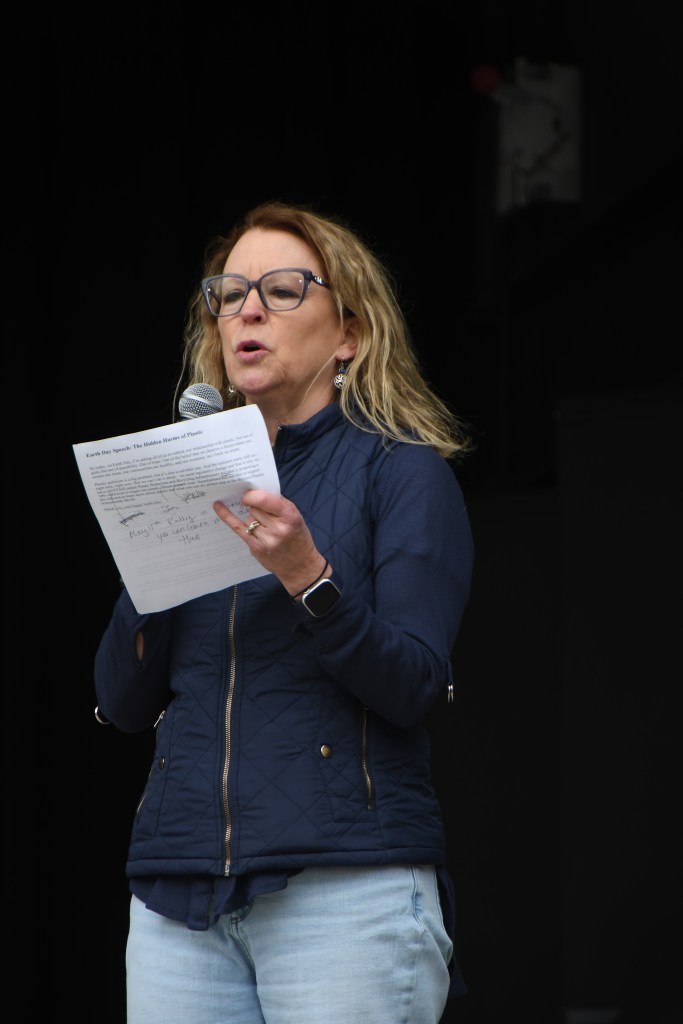
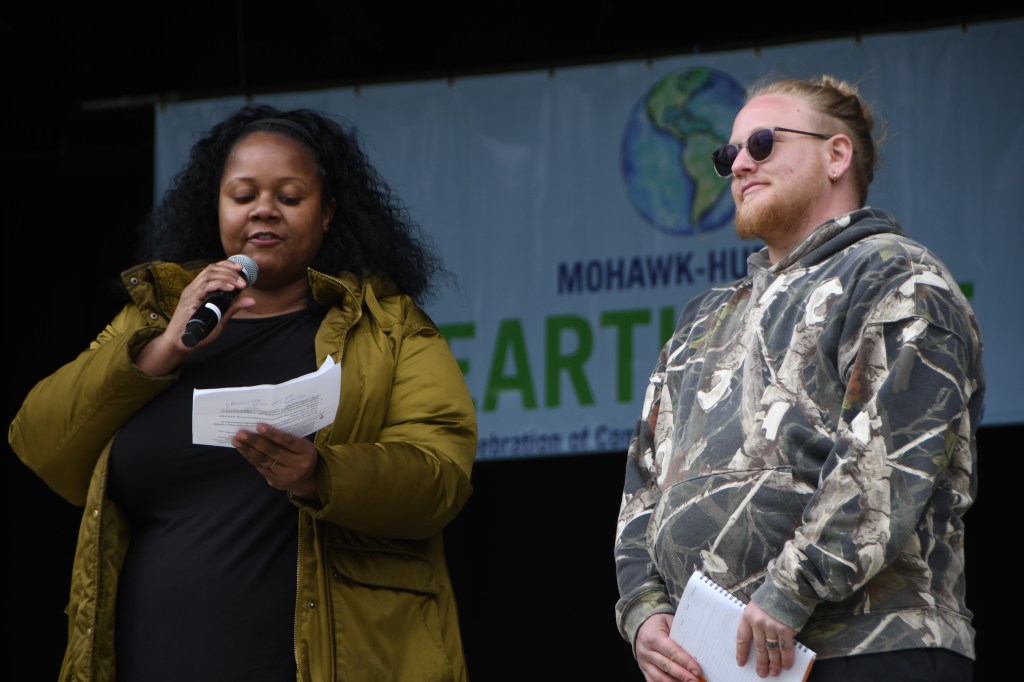
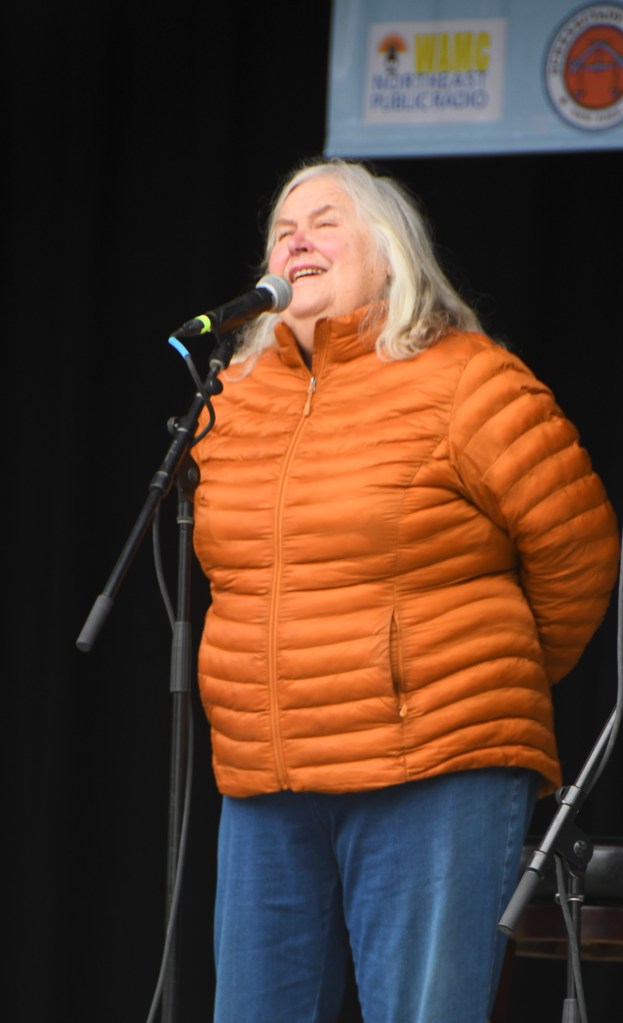
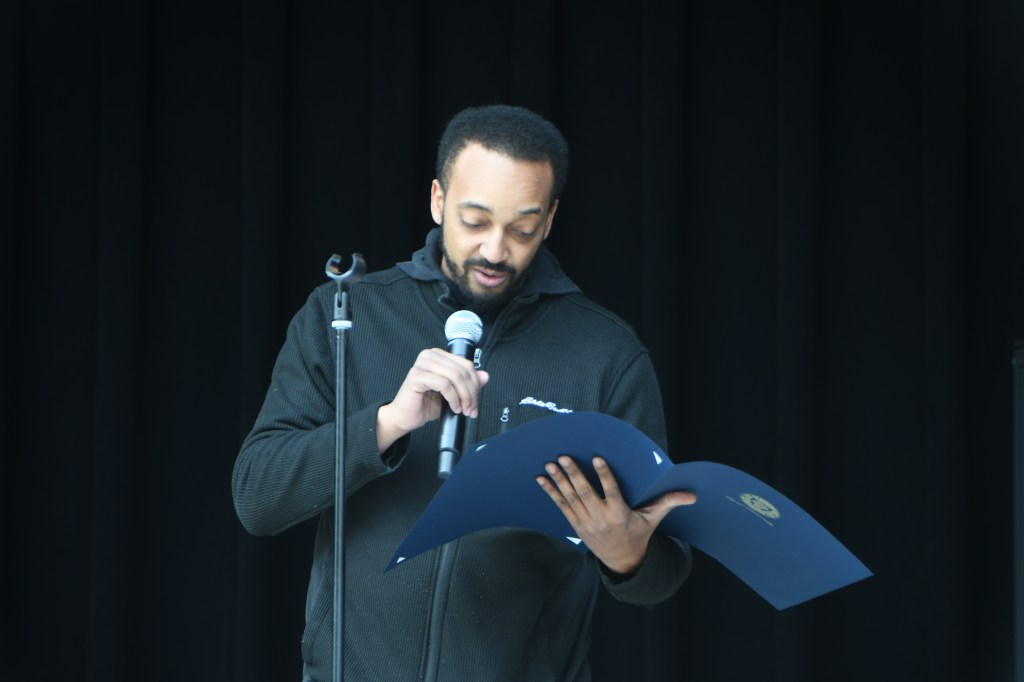
Schenectady City Council member Justin Chaires read a Council proclamation supporting the event. Kim Ireland spoke of National Grid volunteers working a recent park clean-up, and Brendan Woodruff of NYS ENCON urged home energy conservation; all introduced by Music Haven managing creative director and co-host Mona Golub. 
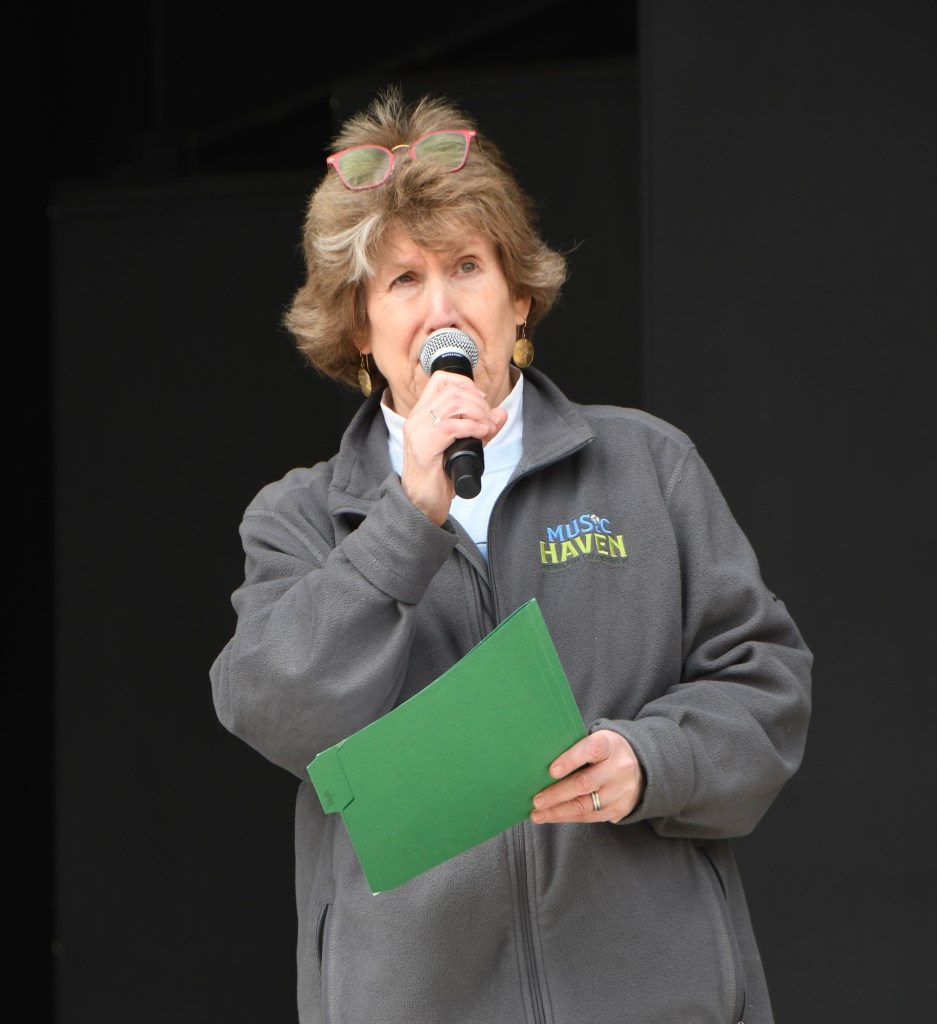
Mona Golub, above; Justin Chaires, below
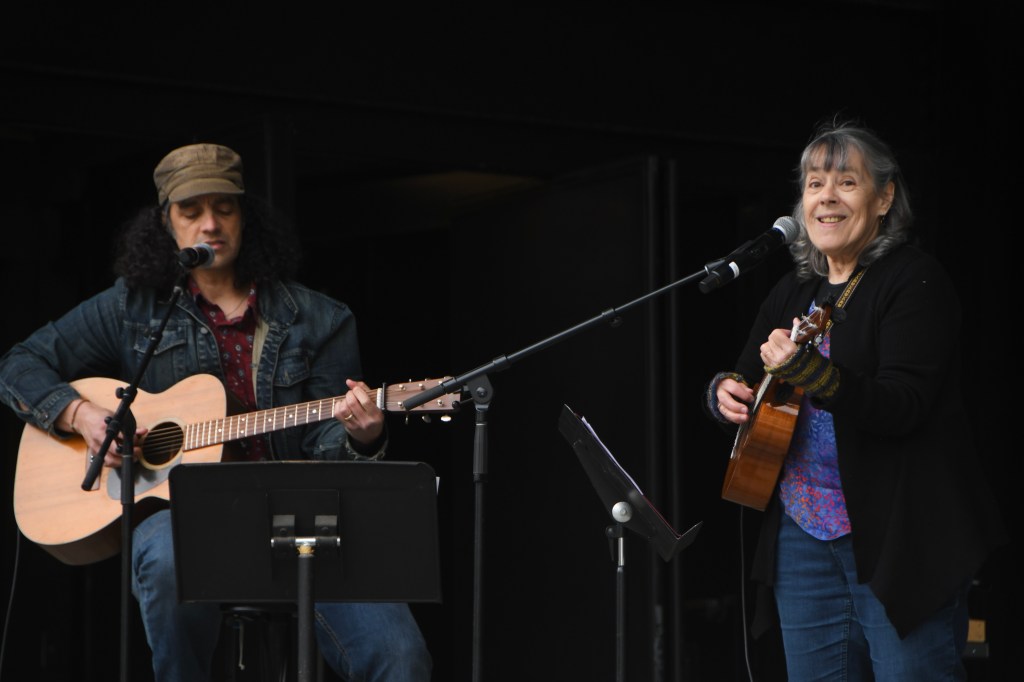
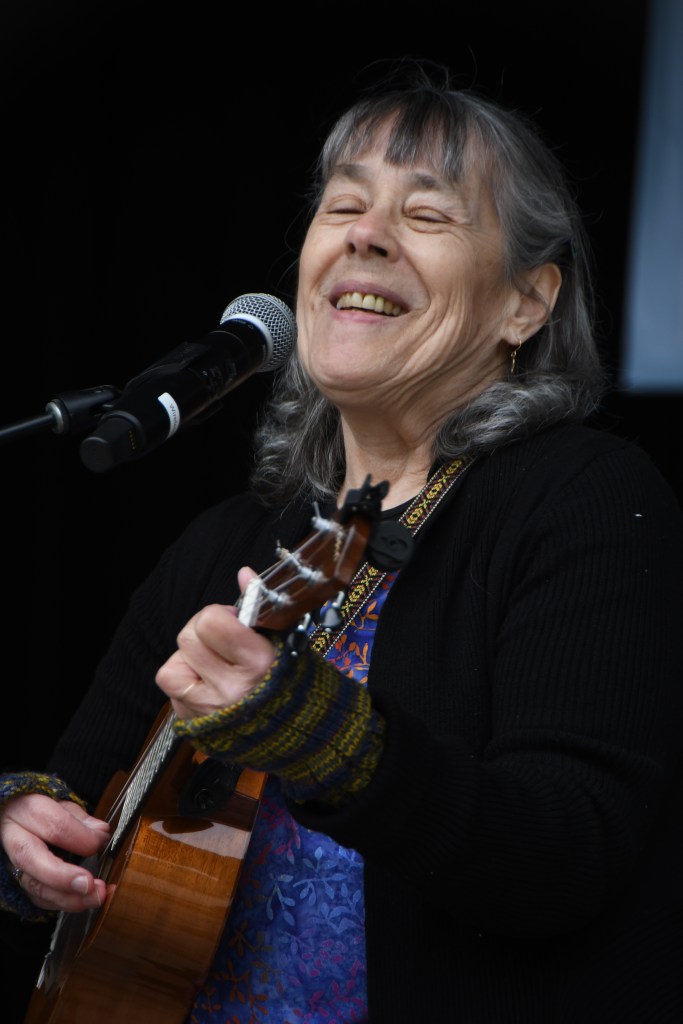
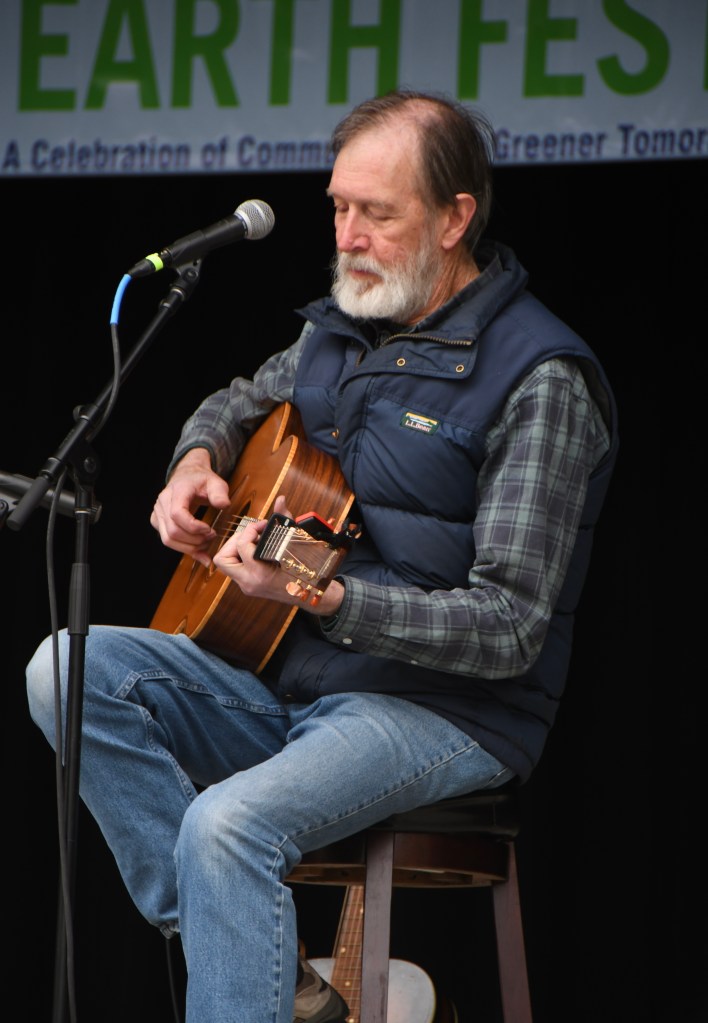
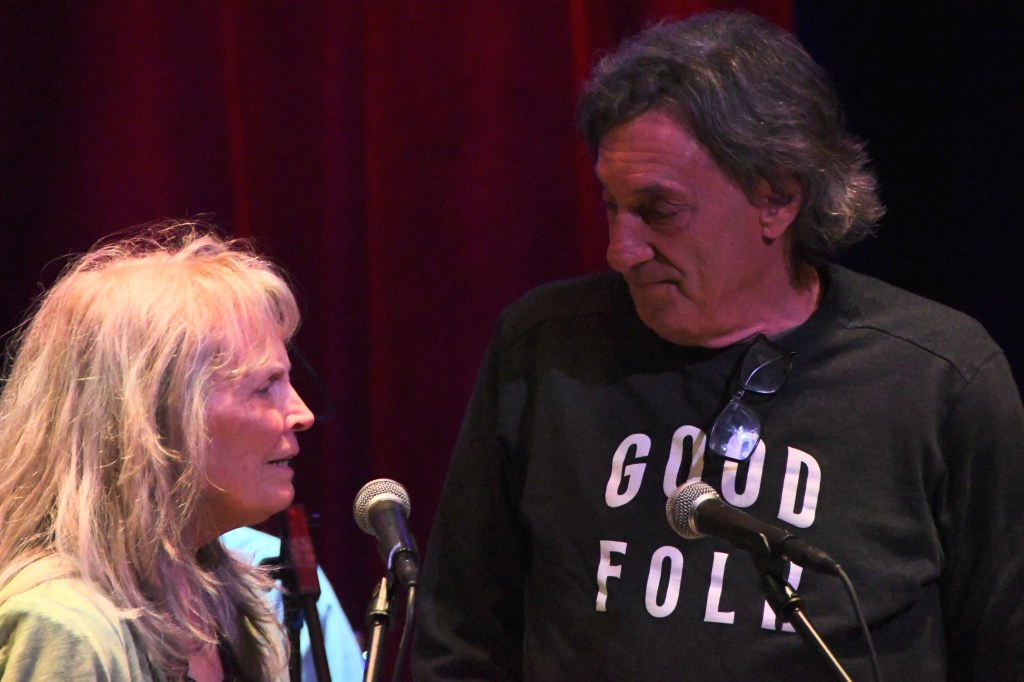
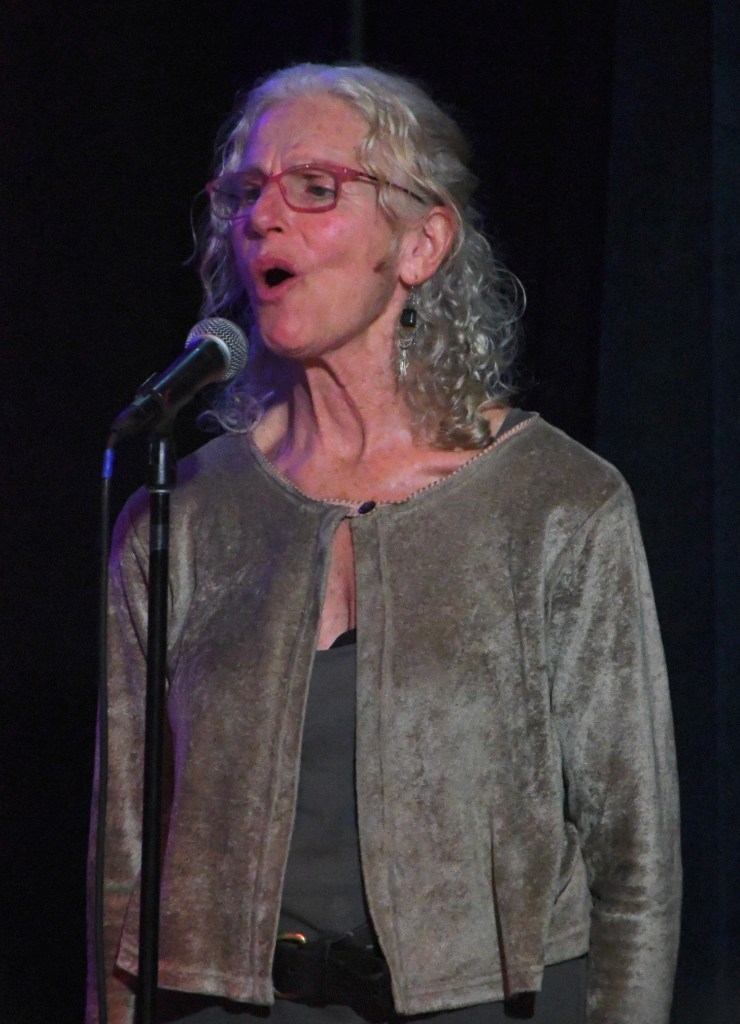
WAMC folk DJ Wanda Fischer and Eighth Step director Margie Rosenkranz then brought on folksinger Lui Collins and accompanist Anand Nayak for 45 minutes of mostly hopeful and always well-sung and -played folksongs on environmental themes. Singalong songs by Peter Mayer, and Garnet Rogers with David Tamulevich, stood out for compelling singing and thematic uplift. So did Woody Guthrie’s compassionate “Deportee” which put a human dimension on farm labor as environmental and social asset.
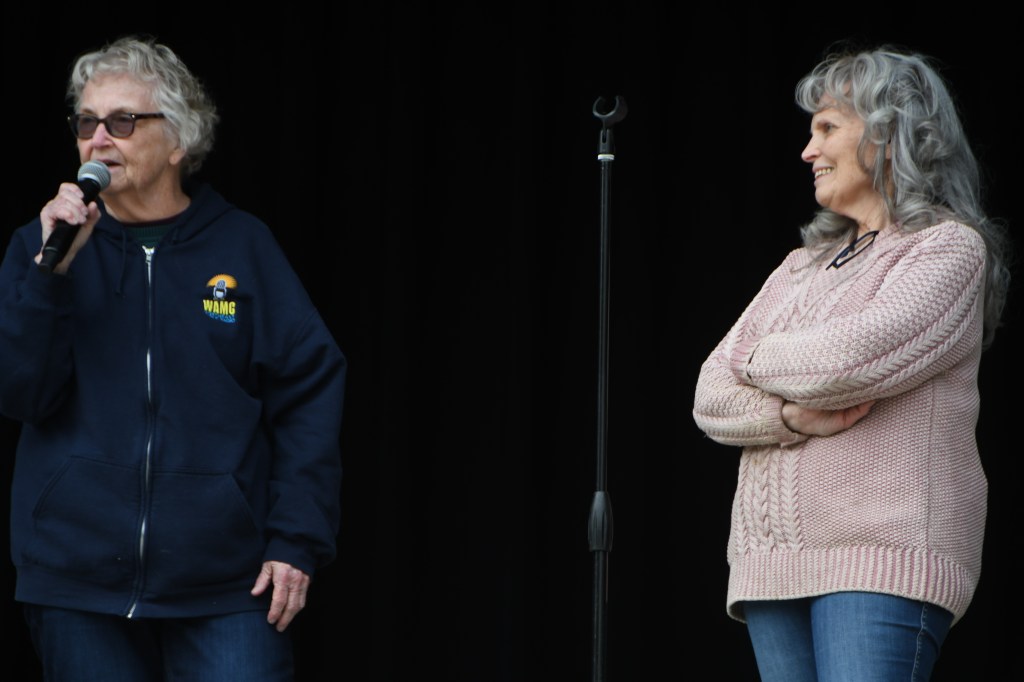
Wanda Fischer, left, and Margie Rosenkranz, above; Lui Collins, right, and Anand Nayek, left, below

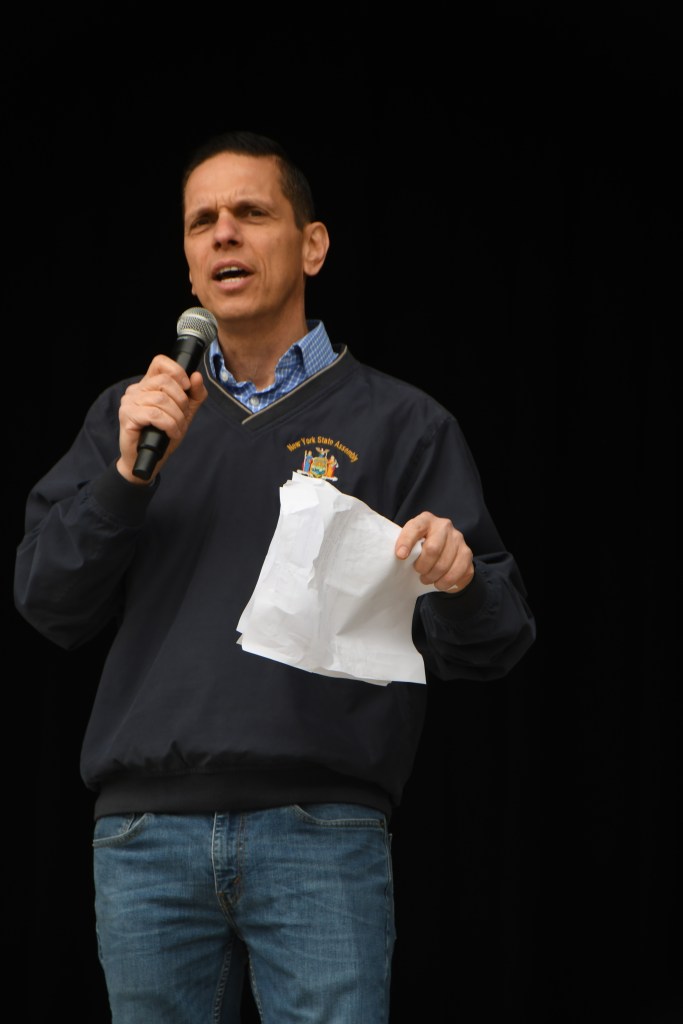
Judith Tutor spoke of a world beyond plastics, NYS Assemblyman Angelo Santabarbara noted legislative action and converting the park’s dormant “casino” building into an environmental education center. Ariel White and Hayden Schwartz linked carbon capture to urban farming and food-based initiatives before Union College’s first woman President Elizabeth Kiss read an Earth Day poem.
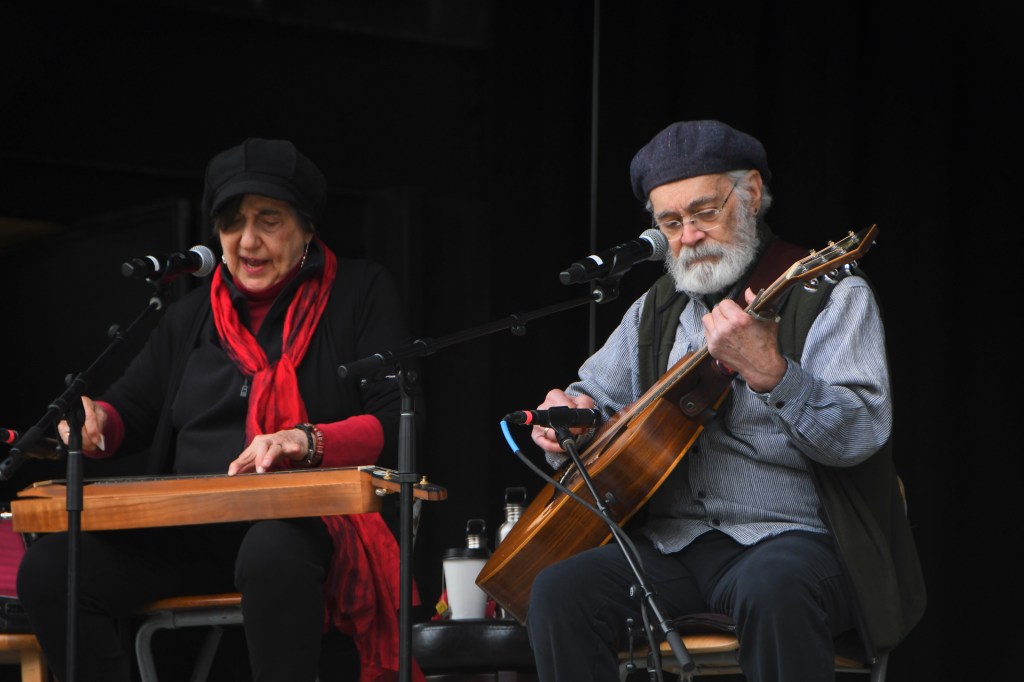
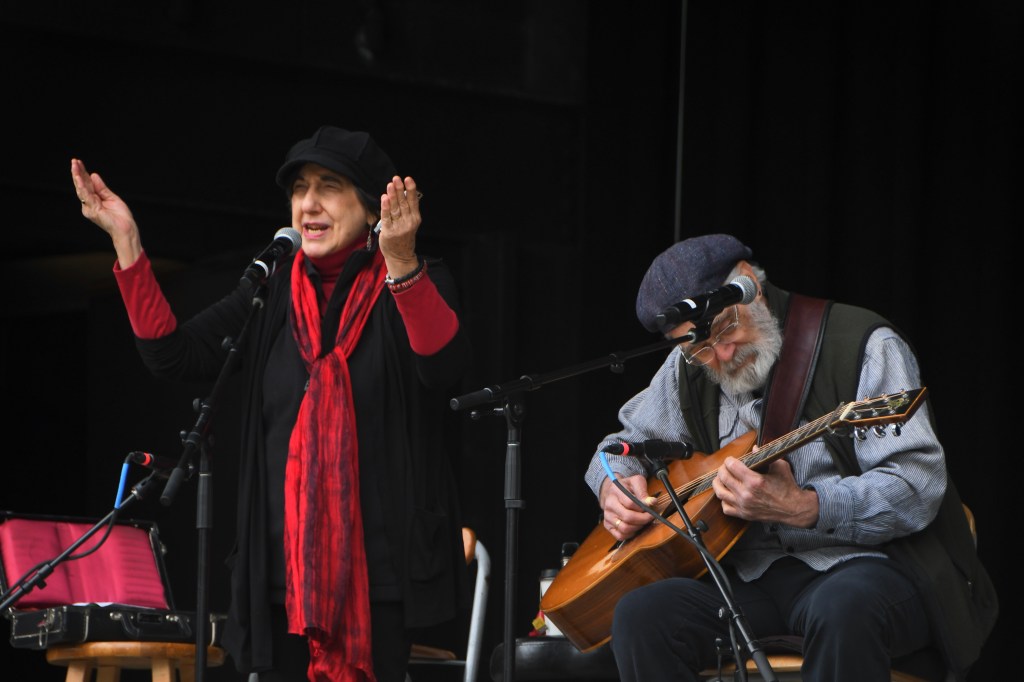
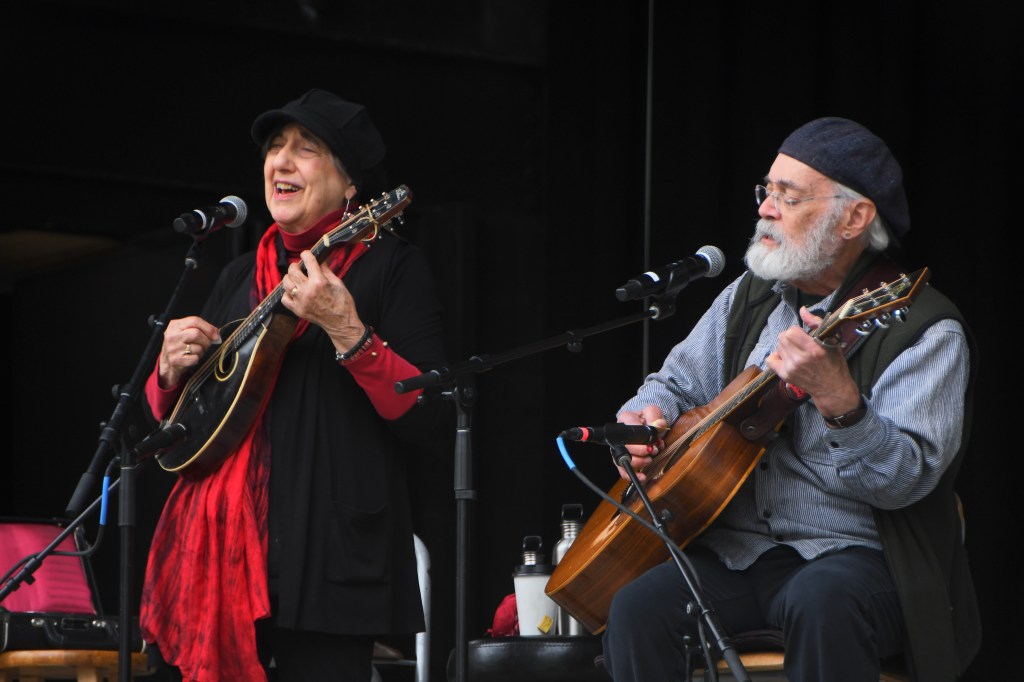
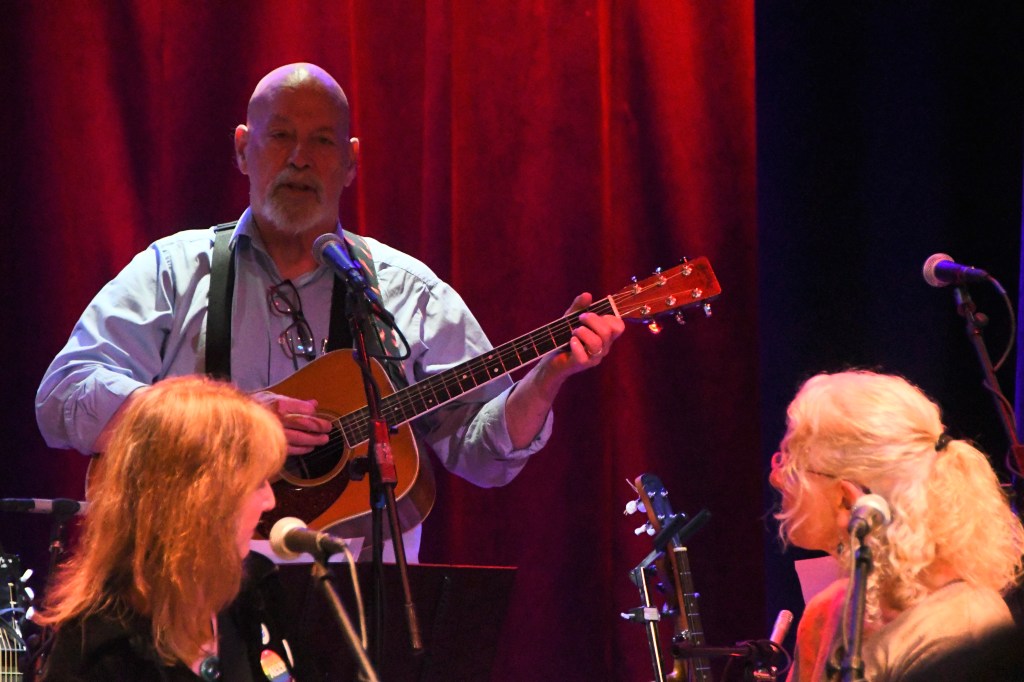
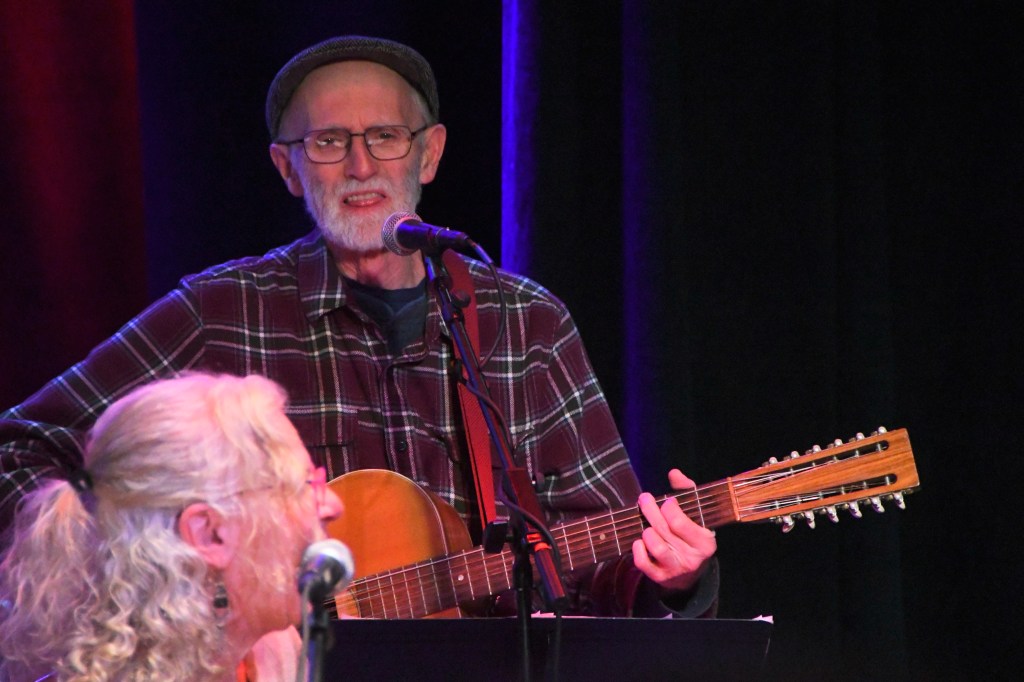
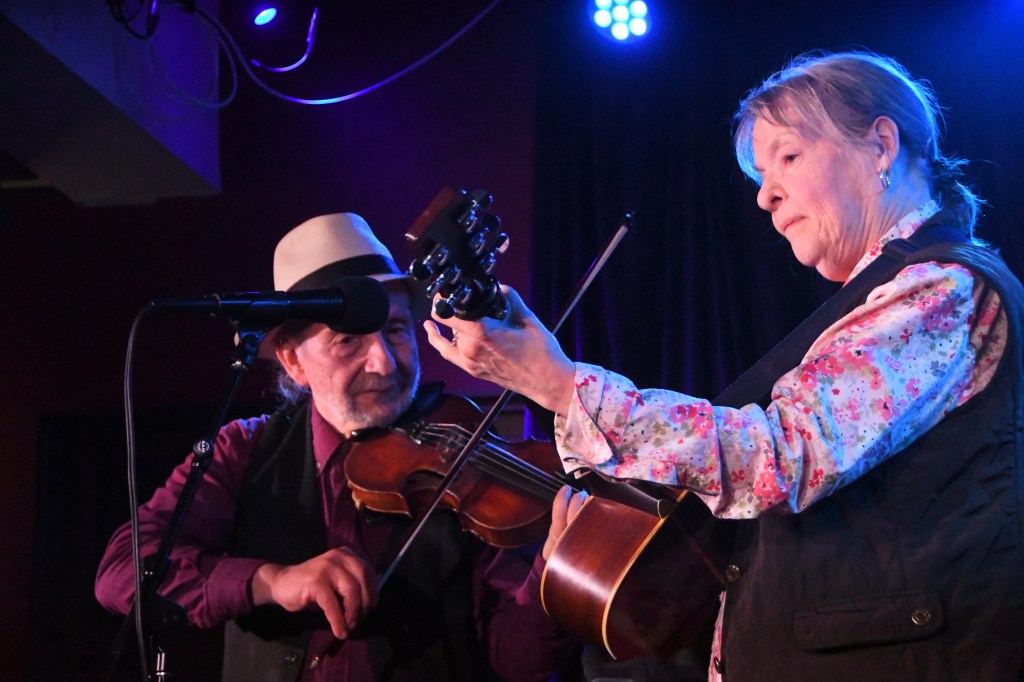
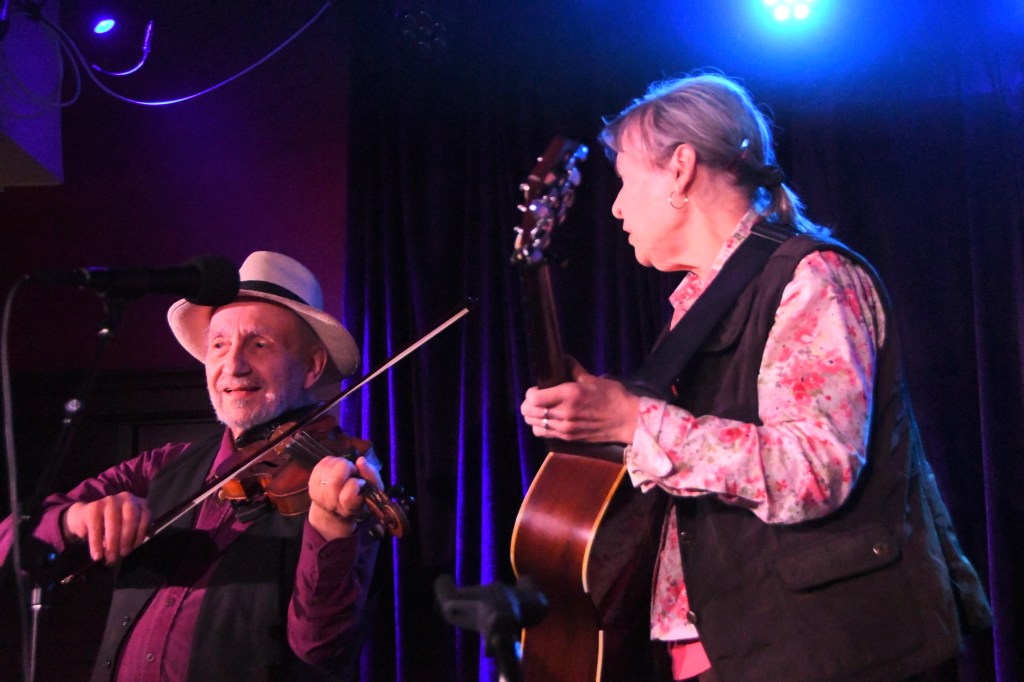
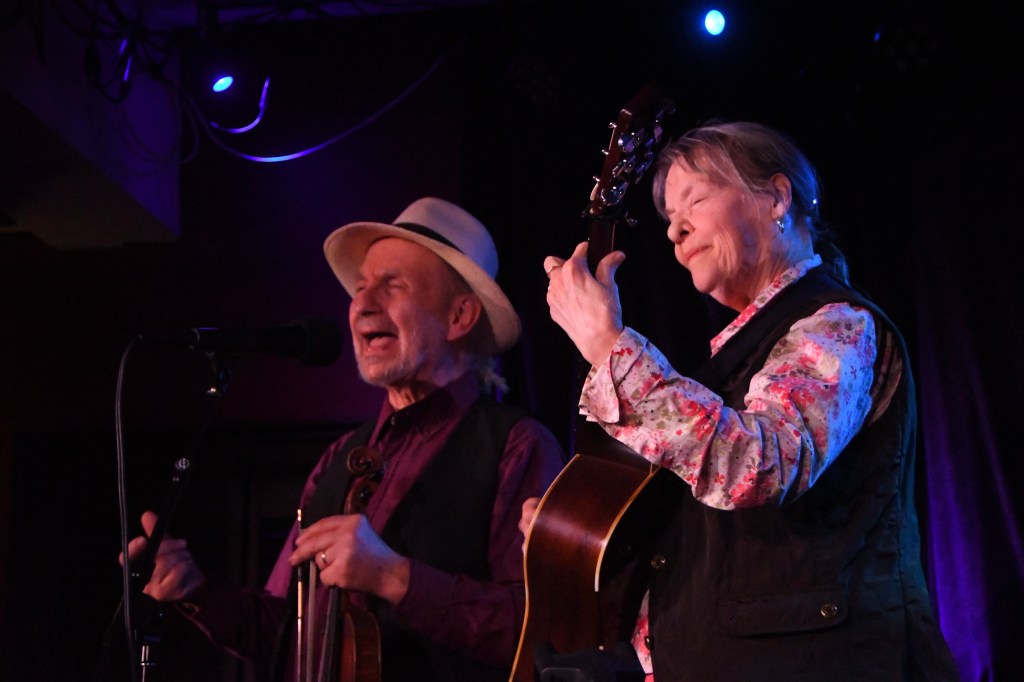
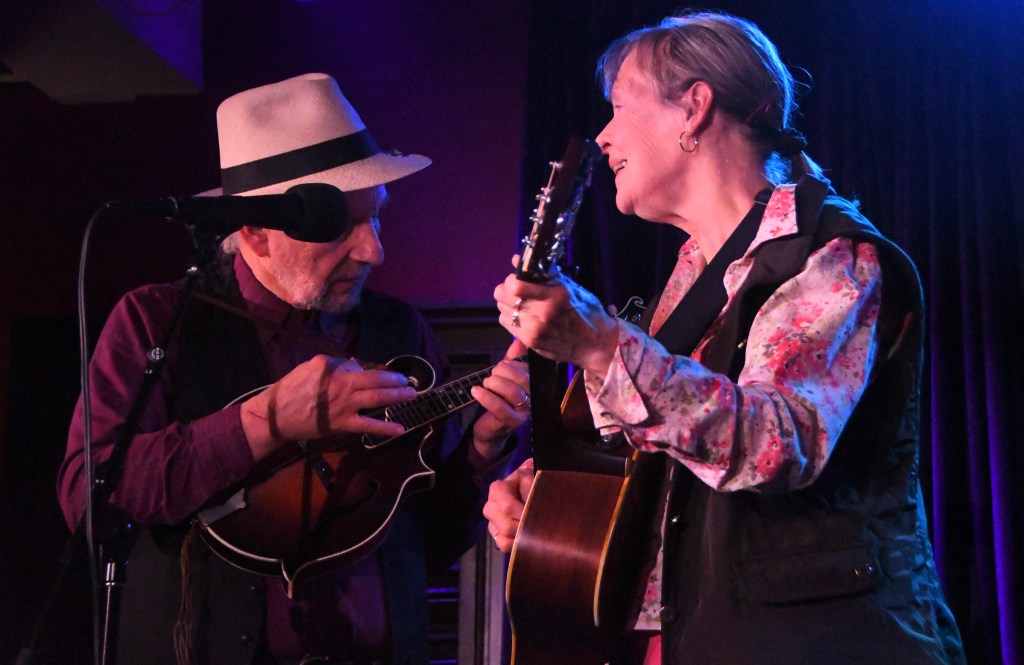
Magpie: Terry Leonino plays dulcimer at left; Greg Artzner guitar, right

Then, back to music with Magpie, the folksinging duo of voluble multi-instrumentalist Terry Leonino and partner-guitarist Greg Artzner. Seeger’s “My Rainbow Race” urged gratitude as inspiration for environmental stewardship. They cited Seeger’s reading of “Silent Spring” as impetus for leading many water-centered actions. The jaunty antique “River’s Taking Care of Me” and hopeful “We Belong to the Earth” kept the mood mostly upbeat and entertaining, not preachy. Leonino changed instruments often and mimed lyrics at times as Artzner’s solid guitar riffs supported everything. 

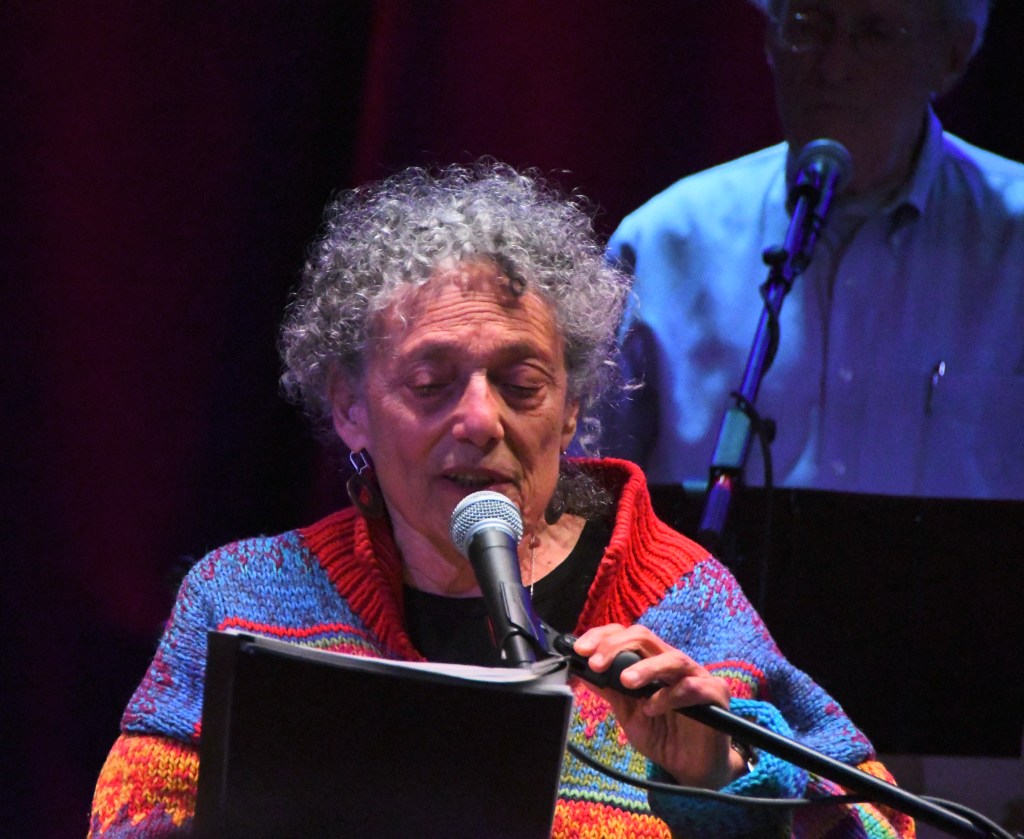
Speakers in the stage changeover break between Magpie and Betty and the Baby Boomers also stayed upbeat. Schenectady Foundation Chief Catalyst Bob Carreau explained the Foundation’s “One Schenectady” initiative to engage “civic muscle,” Kate Kruk pointed to the success of Lynkwell in developing electric vehicle infrastructure here, and longtime Music Haven volunteer and Kids Arts Fest spark plug Betsy Sandberg read a Keats poem on benevolent insects. 

Kids Arts Fest is June 6, and Lynkwell will be involved in National Drive Electric Week starting October 4.
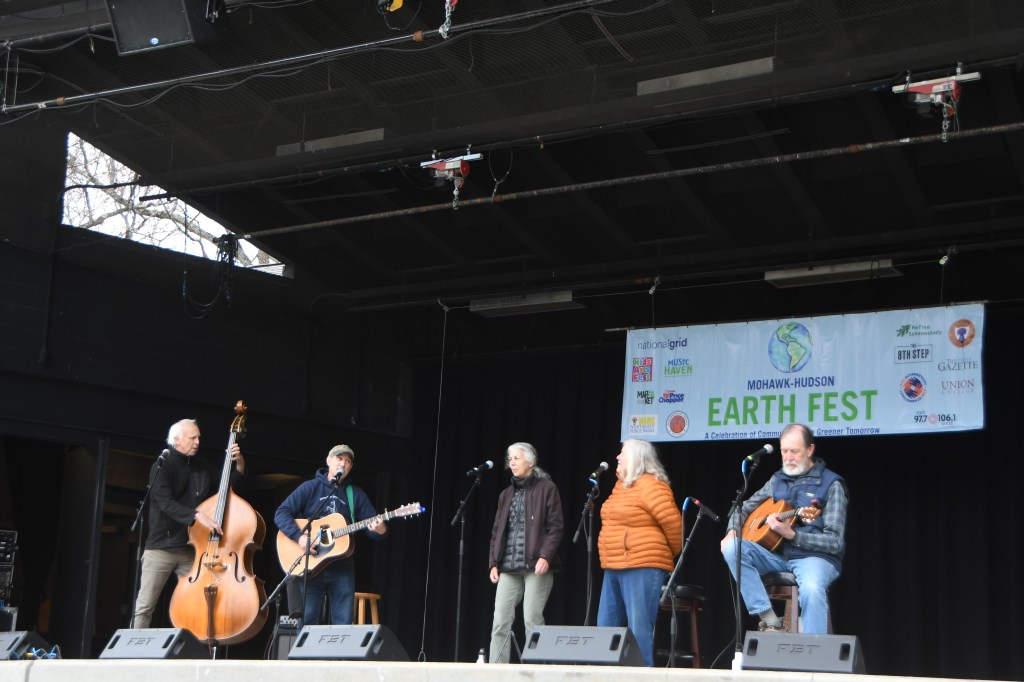
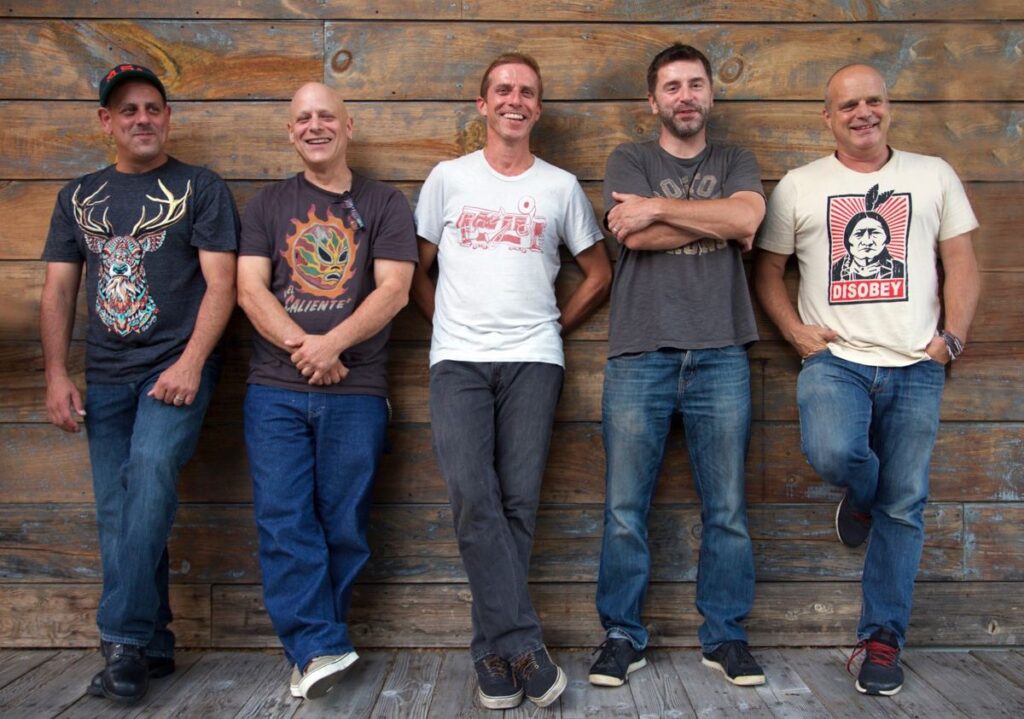
Betty and the Baby Boomers: From left, Robert Bard, Paul Rubeo, Jean McAvoy, Betty Boomer, and Steve Stanne

Betty and the Baby Boomers closed the show strong, embracing their long record – 30 years together – making music to persuade with principled messages as well as to charm with closely linked voices and instruments. 

Betty Boomer sang some leads, belting out the closing verses of “The River Rag,” continuing the water-centered theme of both Lui Collins and Magpie before them. More often she harmonized with Jean McAvoy and guitarists/singers Paul Rubeo (who also played bodhran) and Steve Stanne (who played leads on both guitar and dobro) while Robert Bard anchored the quintet with acoustic bass. They made a big sound, on big sentiments, indicting environmental damage and urging correction. 
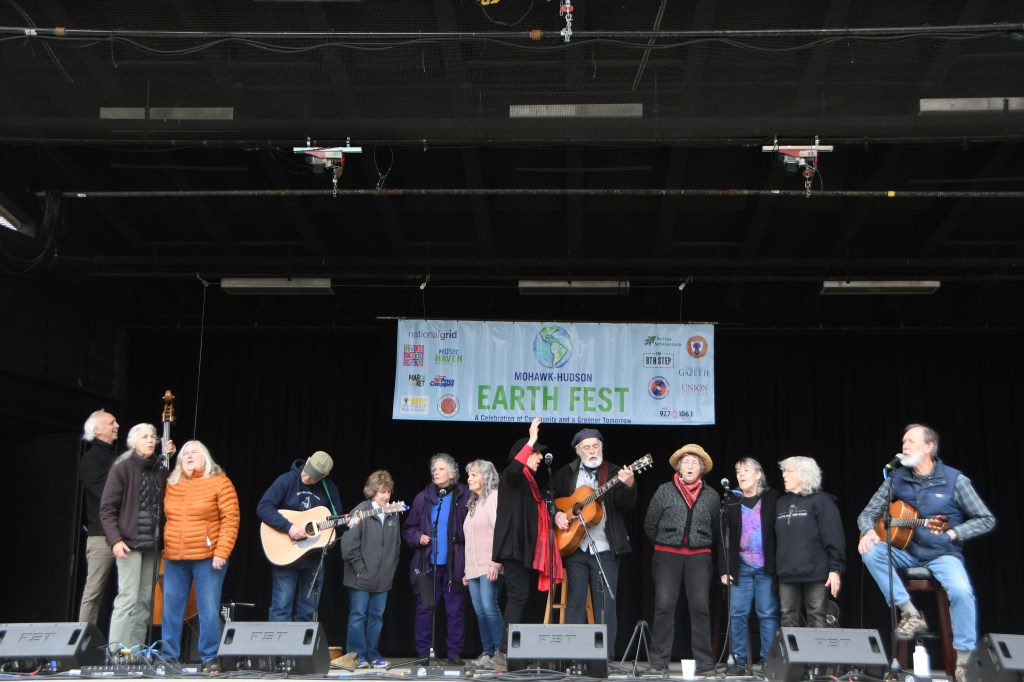
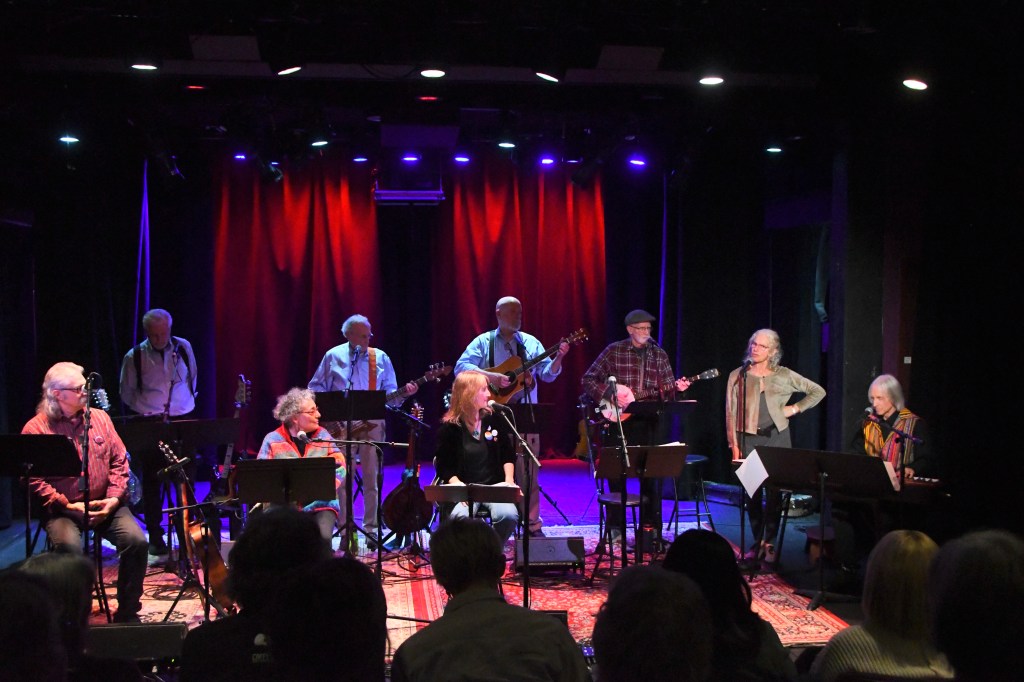
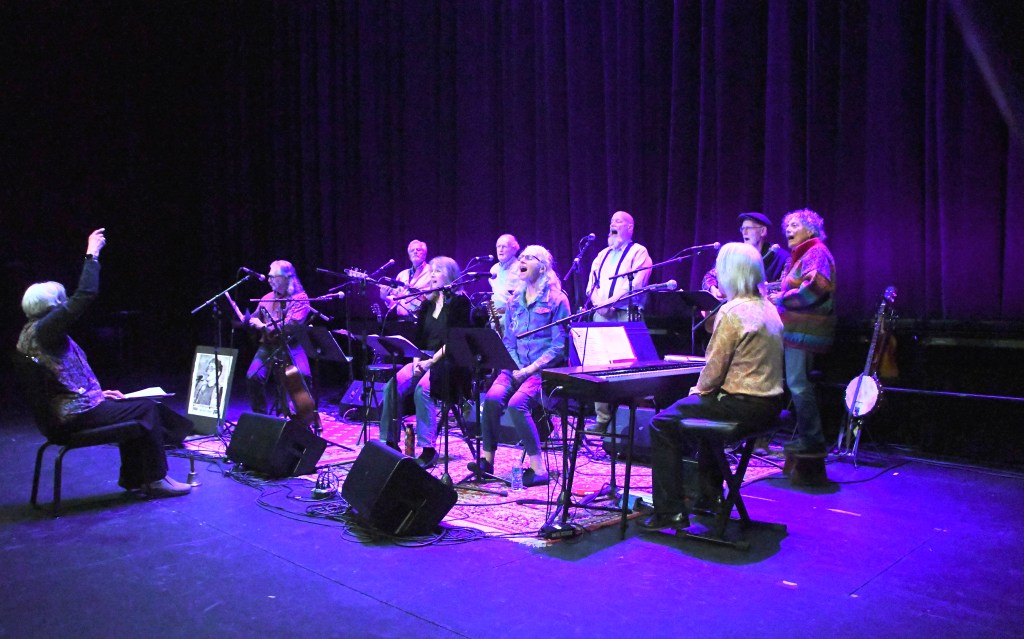
The finale, with nearly all the performers onstage

Then, nearly all the day’s performers from both stages clustered together on the Music Haven stage in a reprise of Seeger’s “My Rainbow Race” that Magpie had played earlier.

By then, the afternoon’s raw chill had thinned the audience. Those who stayed – some dressed as if for Alaska’s Iditarod dog-sled marathon – shared the warming mood of engagement in a unifying cause and enjoyment of earnest, gentle music.

Many sponsors staffed tables while hot food from HomeStyle drew longer lines than Ben & Jerry’s Ice Cream.

Without setting a date, organizers announced Saturday’s inaugural Earth Fest would repeat next year; as some fans headed across town to the six-act Golden Oldies Spectacular on Proctors Main Stage.

A thrilling-sounding baseball game, fans loudly cheering every pitch, filled the park’s nearby main diamond. Some artists accepted the noisy baseball fan uproar as applause, as their own. Sweet.

Music Haven will soon announce its 2026 summer season of free concerts.

The Sponsors: Music Haven, the Eighth Step, National Grid, Kids Arts Fest, One Schenectady (Schenectady Foundation), Union College, Schenectady County, The Daily Gazette, ReTree Schenectady, WAMC Northeast Public Radio, Price Chopper Market 32, Exit 97.7 WEXT and the City of Schenectady

Gallery
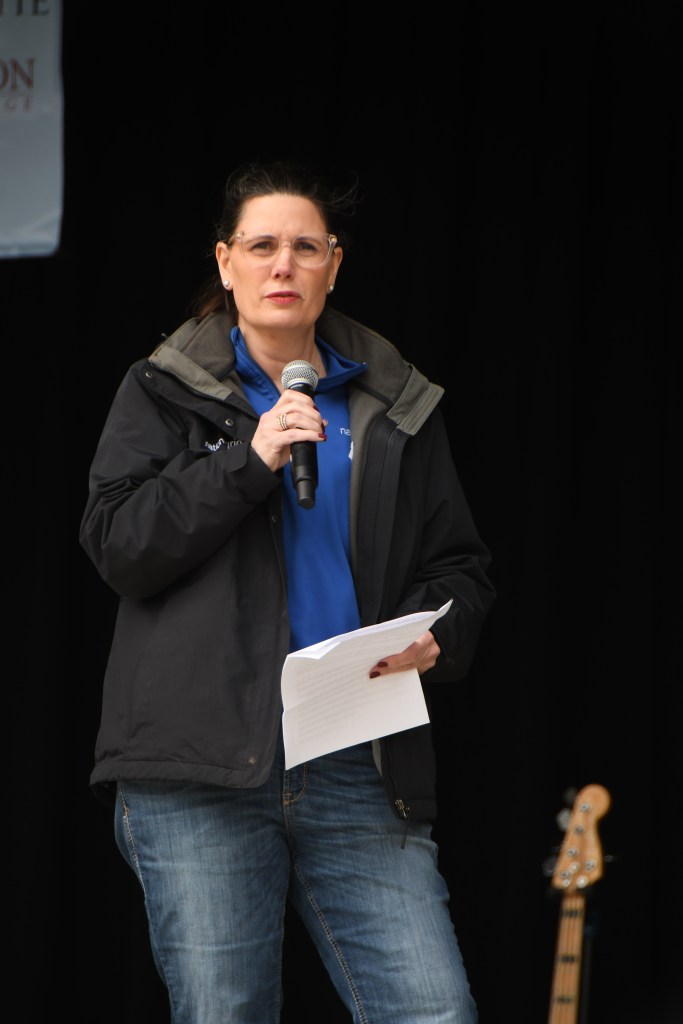
Kim Ireland, National Grid, above; Brendan Woodruff, NYS ENCON, below
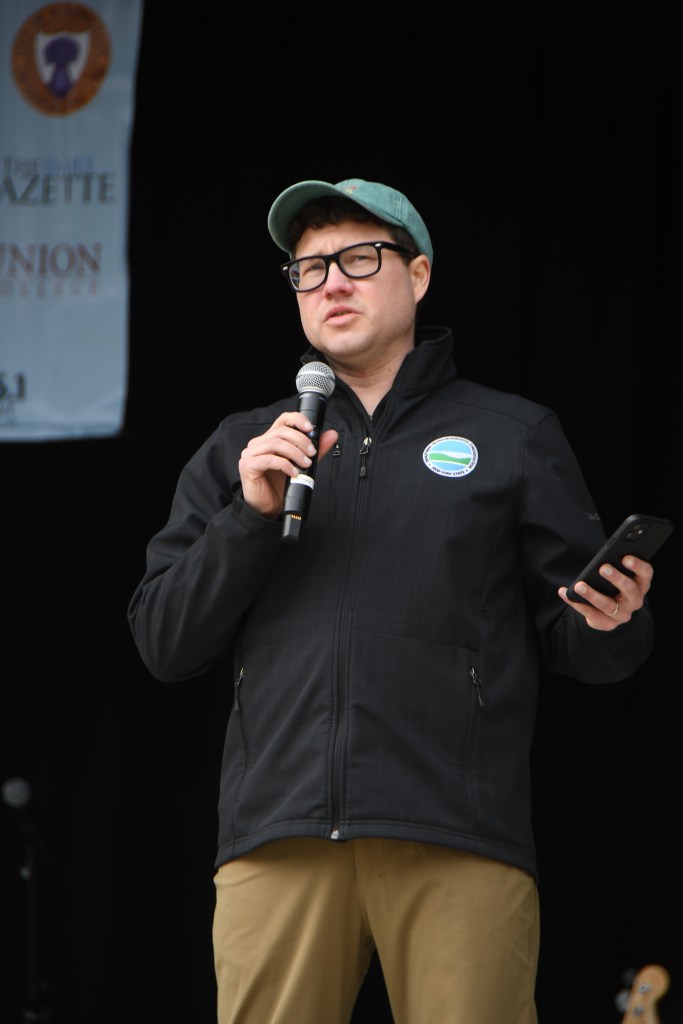
Elizabeth Tutor, Beyond Plastics, above; Angelo Santabarbara, below
Ariel White and Hayden Schwartz
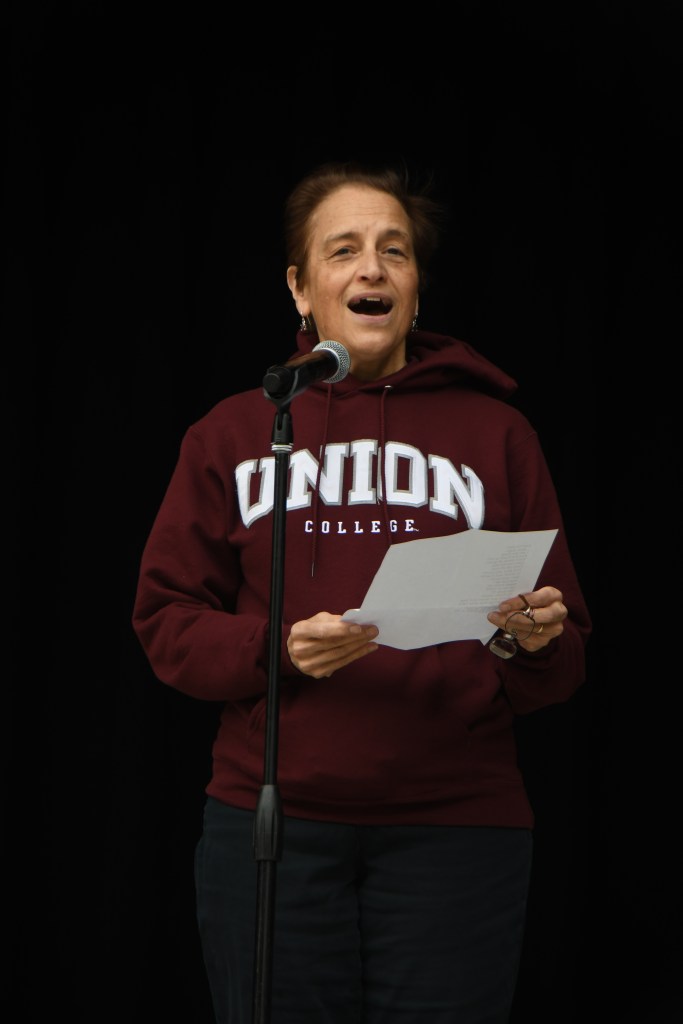
Elizabeth Kiss, Union College
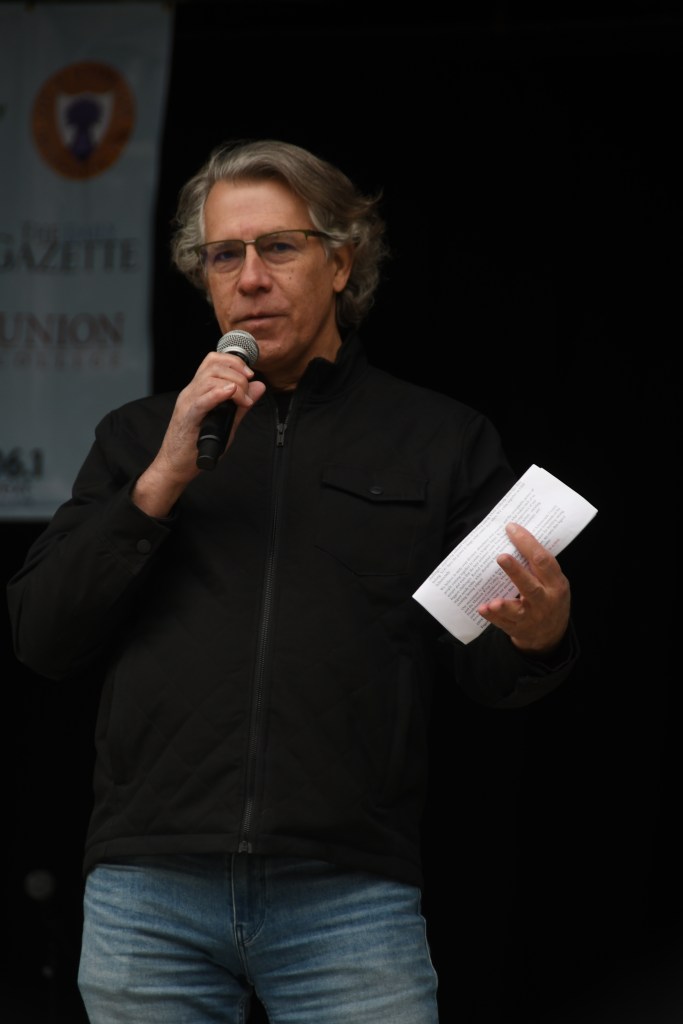
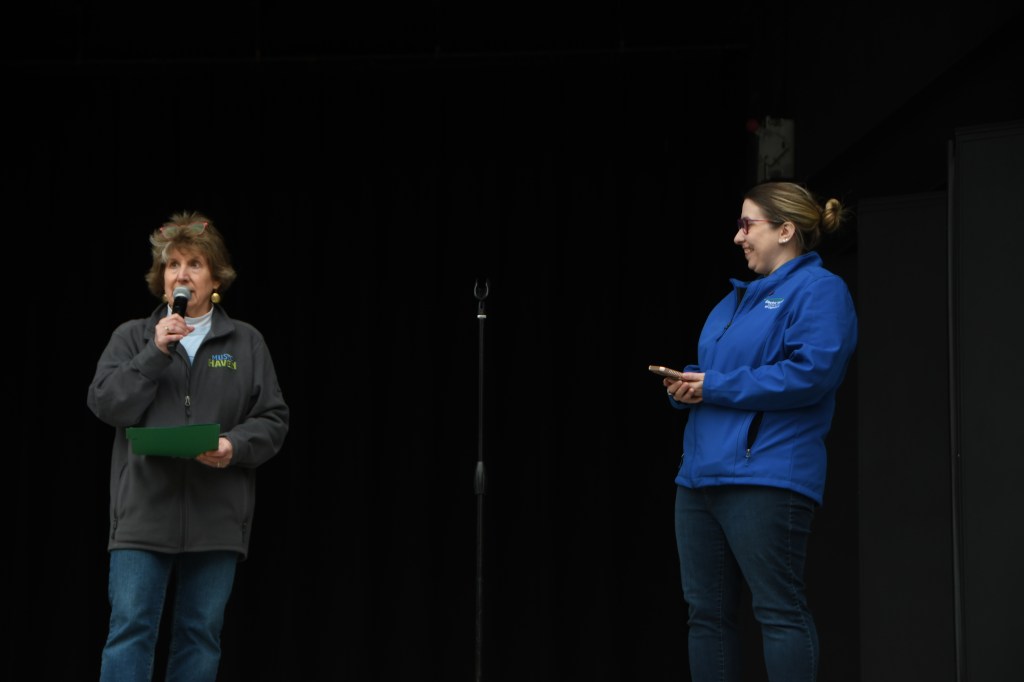
Robert Carreau, Schenectady Foundation’s One Schenectady initiative, above; Mona Golub introduces Kate Kruk, Lynkwell, below
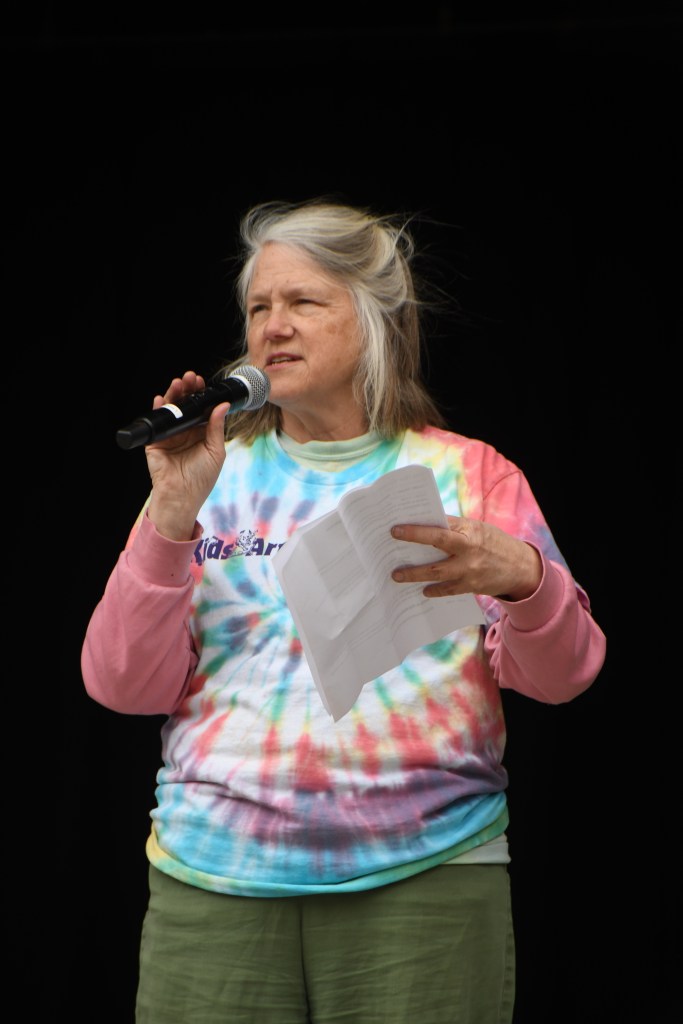
Betsy Sandberg
Lui Collins, above; and Anand Nayak, below
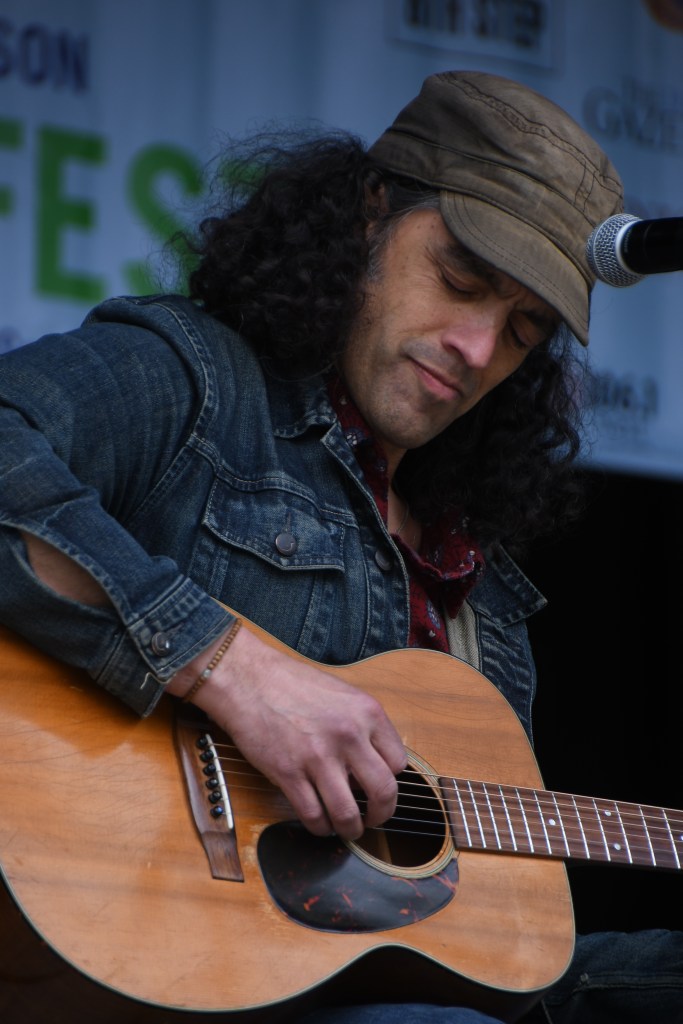
Magpie
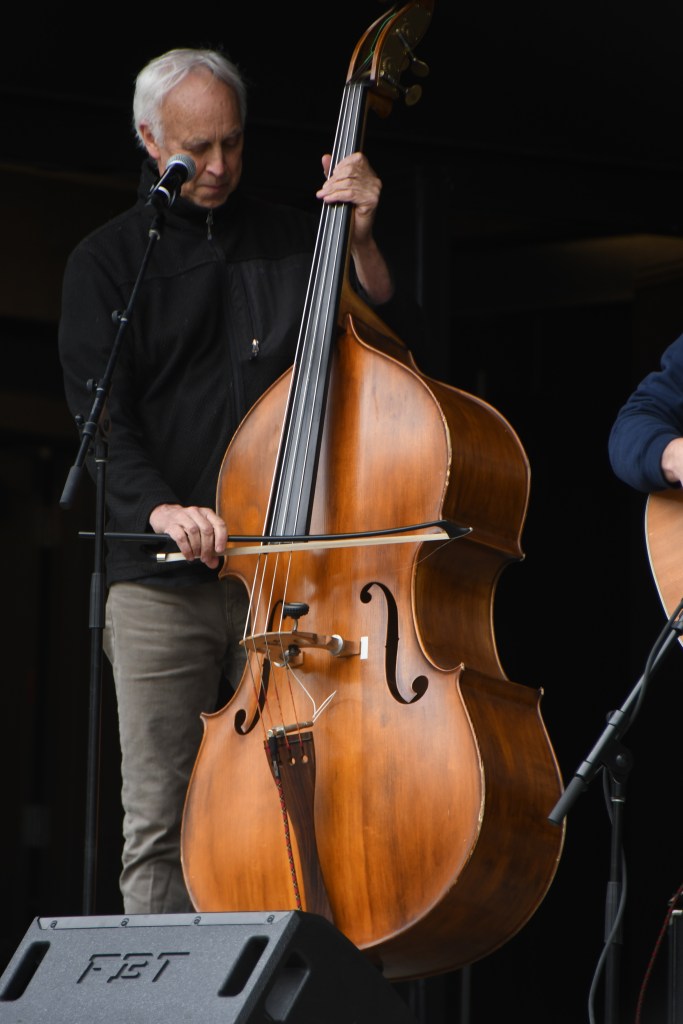
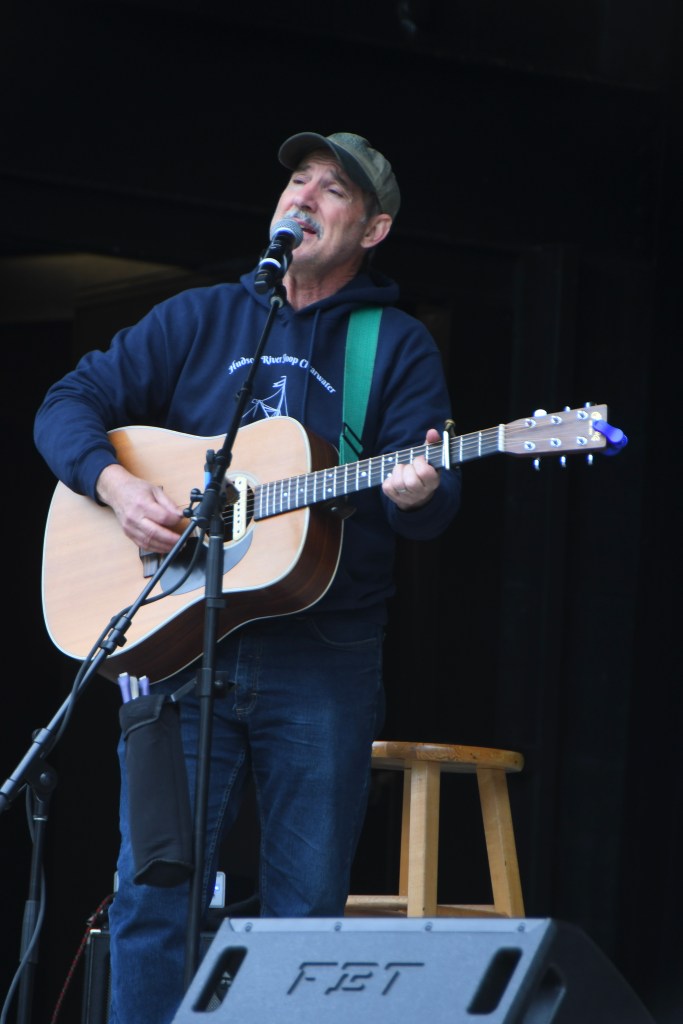
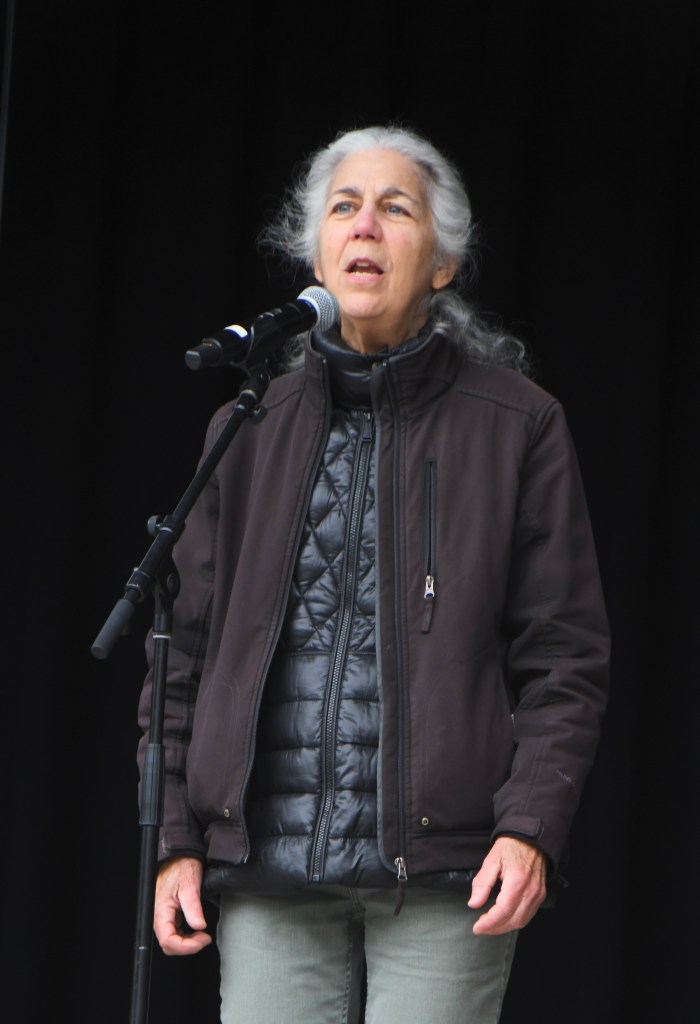
Betty and the Baby Boomers, in this order top to bottom, Robert Bard, above; Paul Rubeo, Jean McAvoy, Betty Boomer, and Steve Stanne
Club D’Elf at The Egg Swyer Theatre; Friday, Apr. 24, 2026

When Jerry Garcia likened the Grateful Dead to licorice, he noted, “Not everybody likes licorice,” then said, “but the people who like licorice really like licorice.”

So it was with Club D’Elf Friday at The Egg’s Swyer Theatre. Not everybody came to the (smaller, 400-seat) room which was far from full – but those who did really liked it. 

Club D’Elf mutated two Dead tunes and turned Frank Zappa’s “King Kong” inside out to close. They transformed these numbers with a singular inventive World-Music richness, spicing up jazzy jams by sprinkling in trance-y repeating Moroccan gnawa rhythms, south Indian chants, and hip-hop-y turntable eruptions of wild sounds and wilder vocals. 

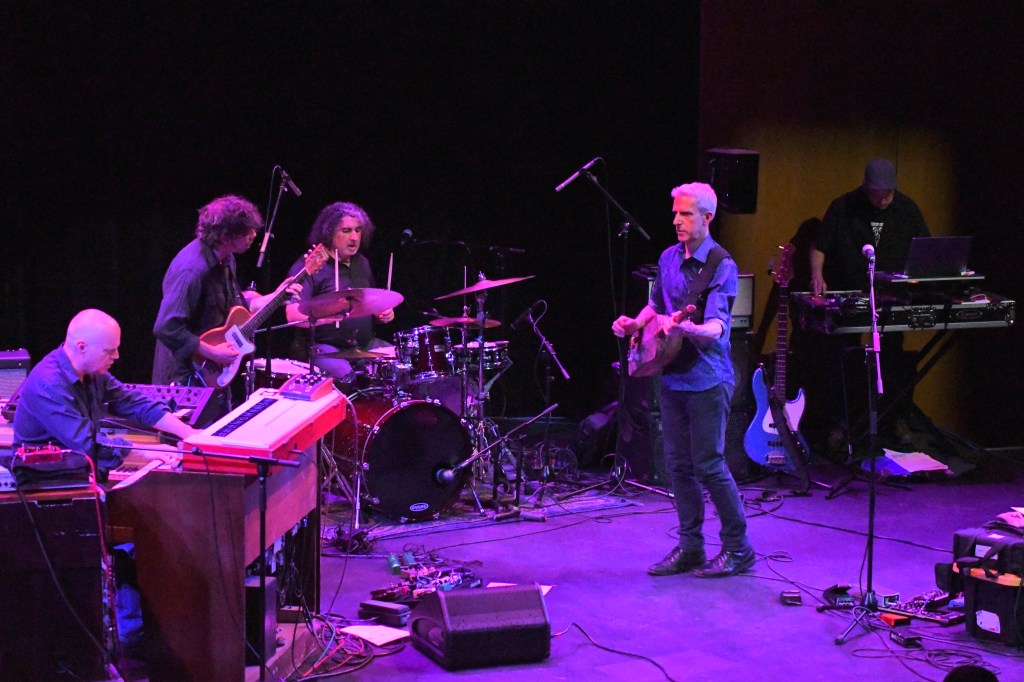
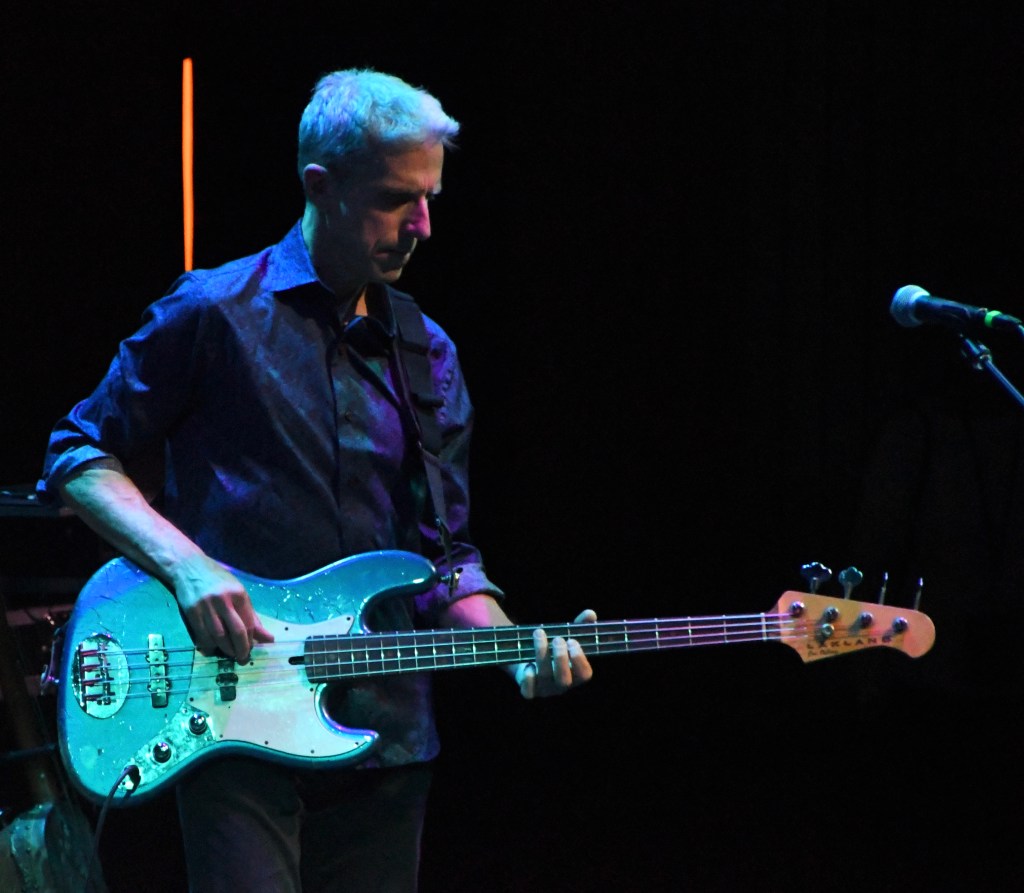
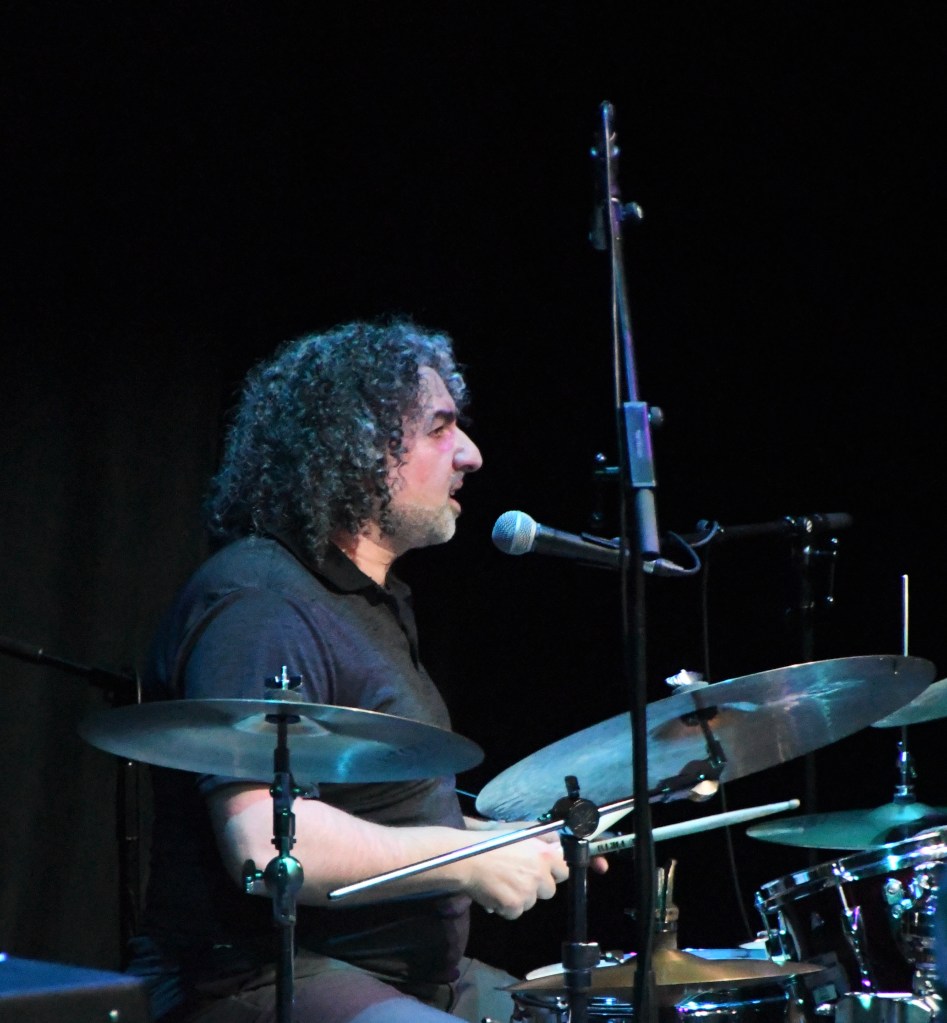
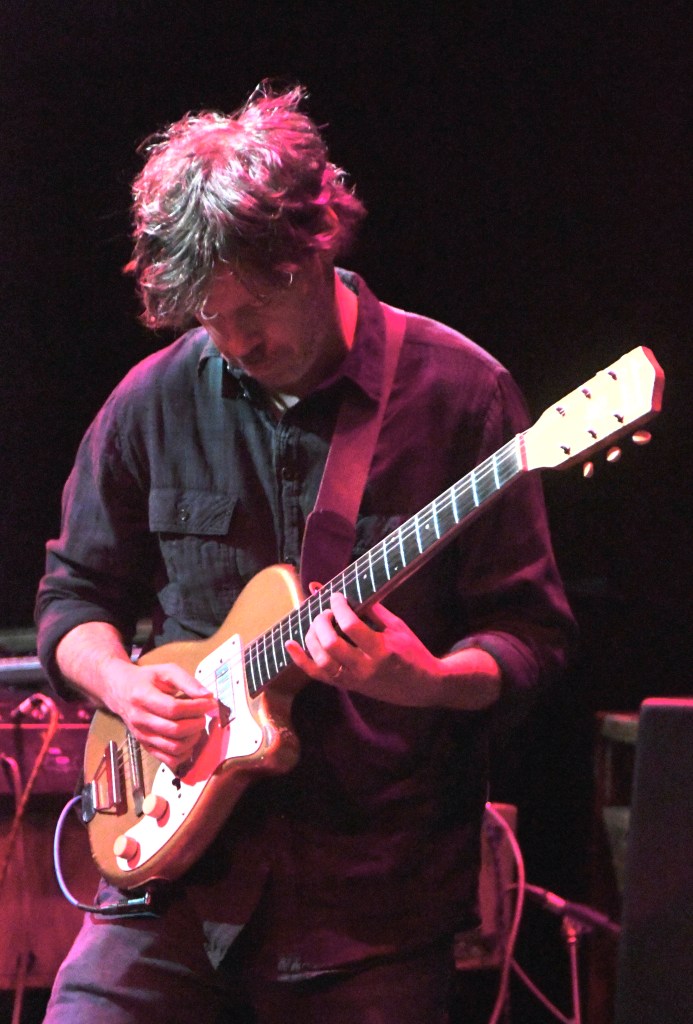
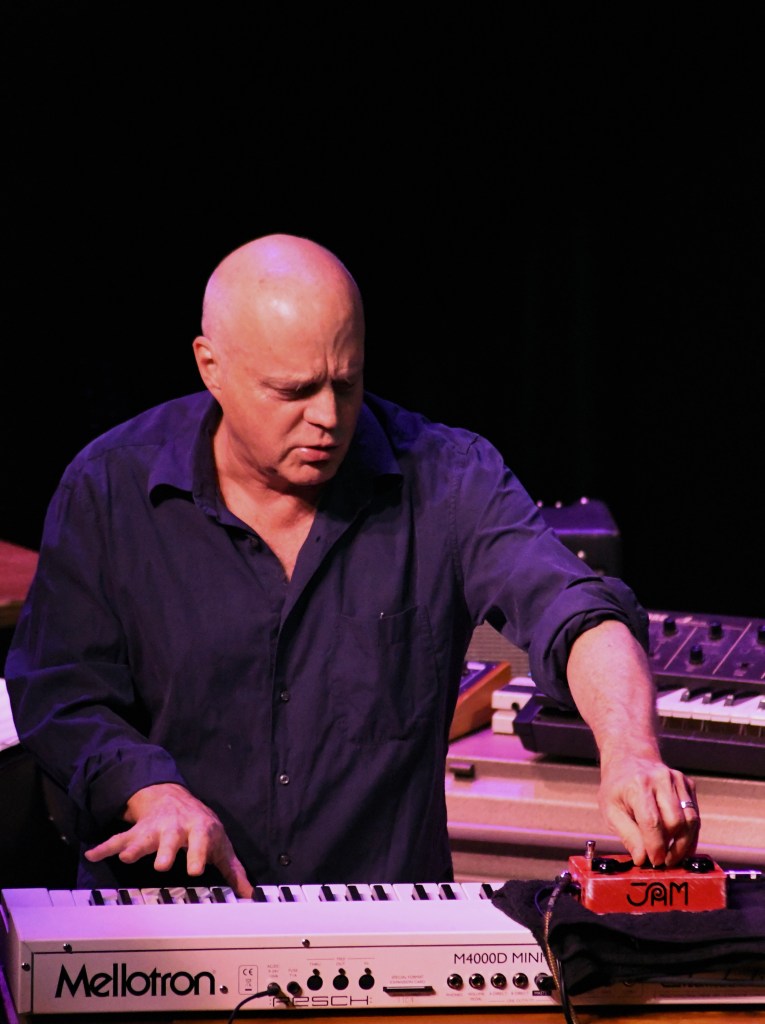
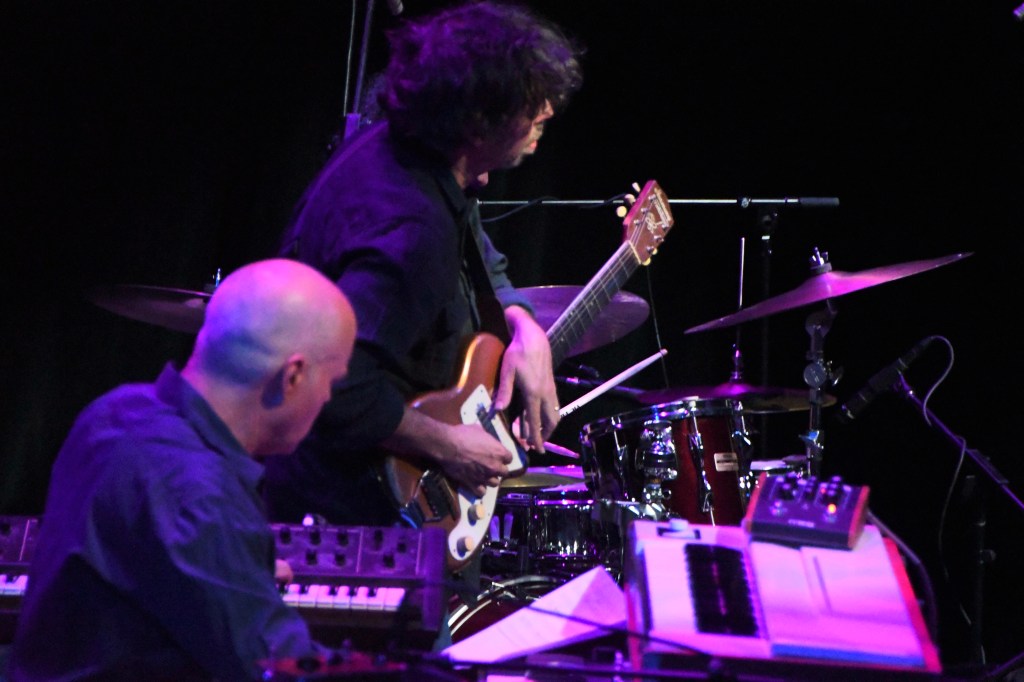
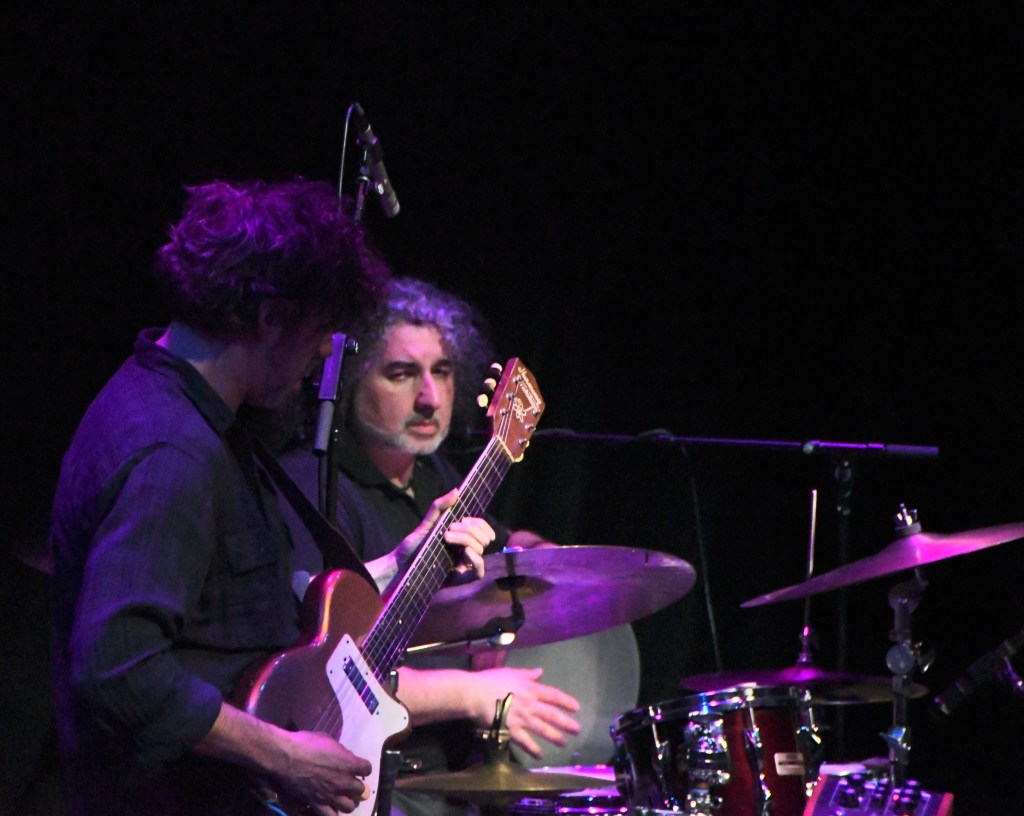
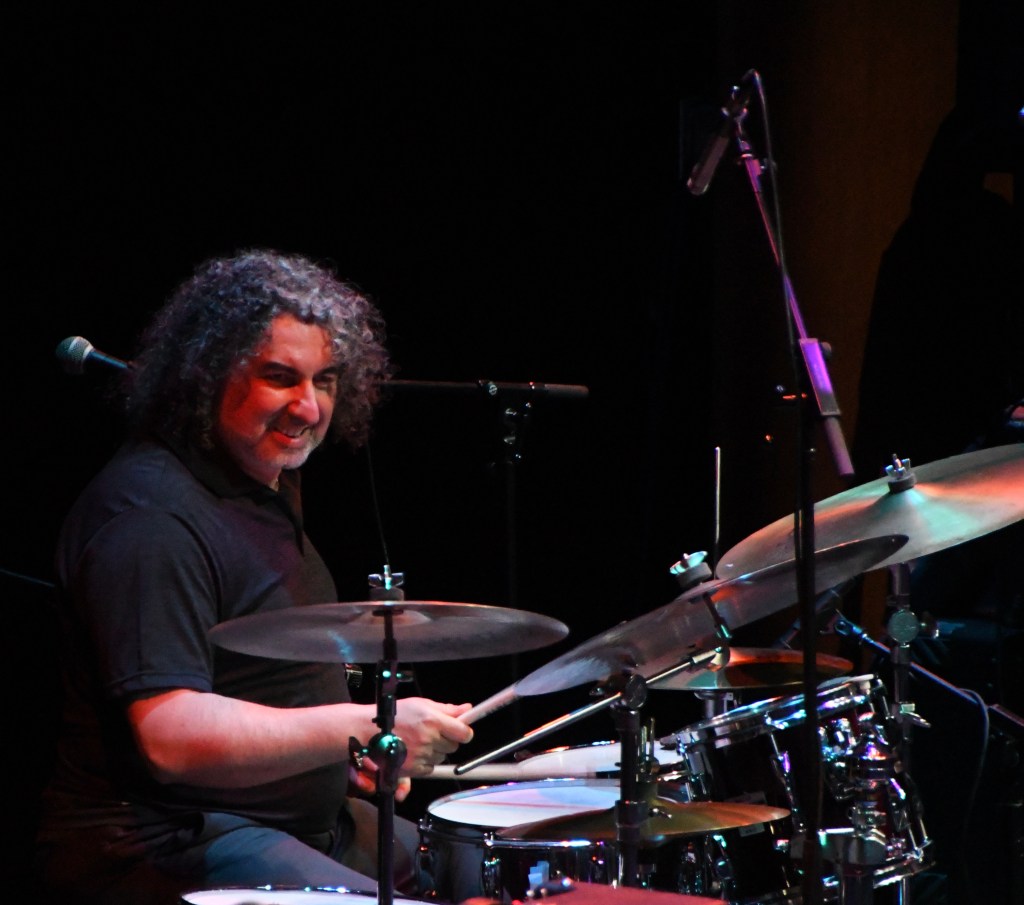
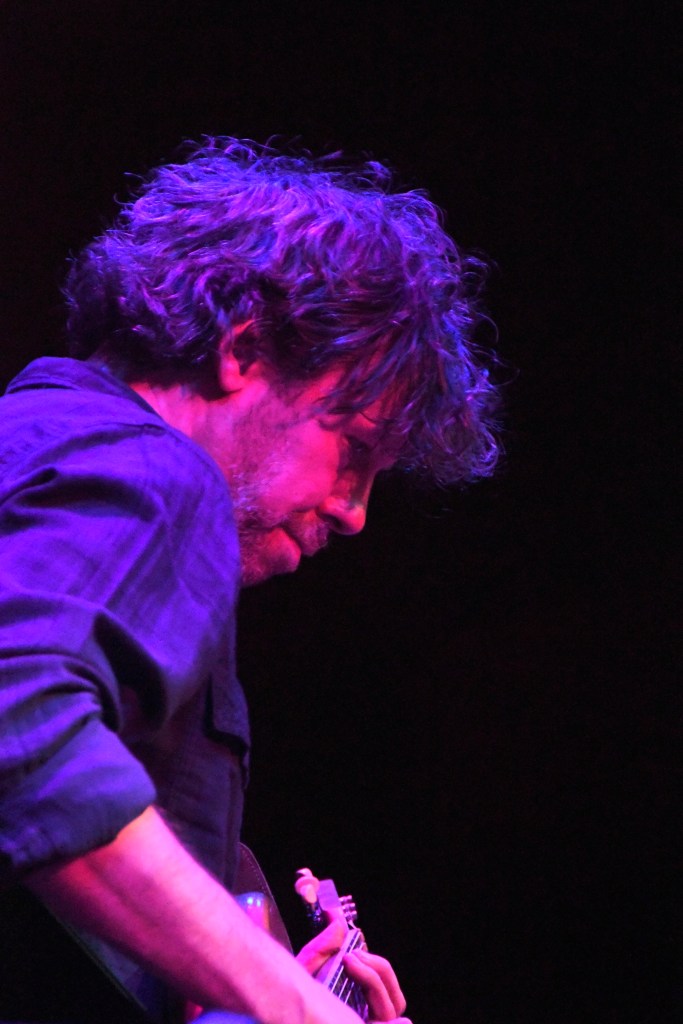
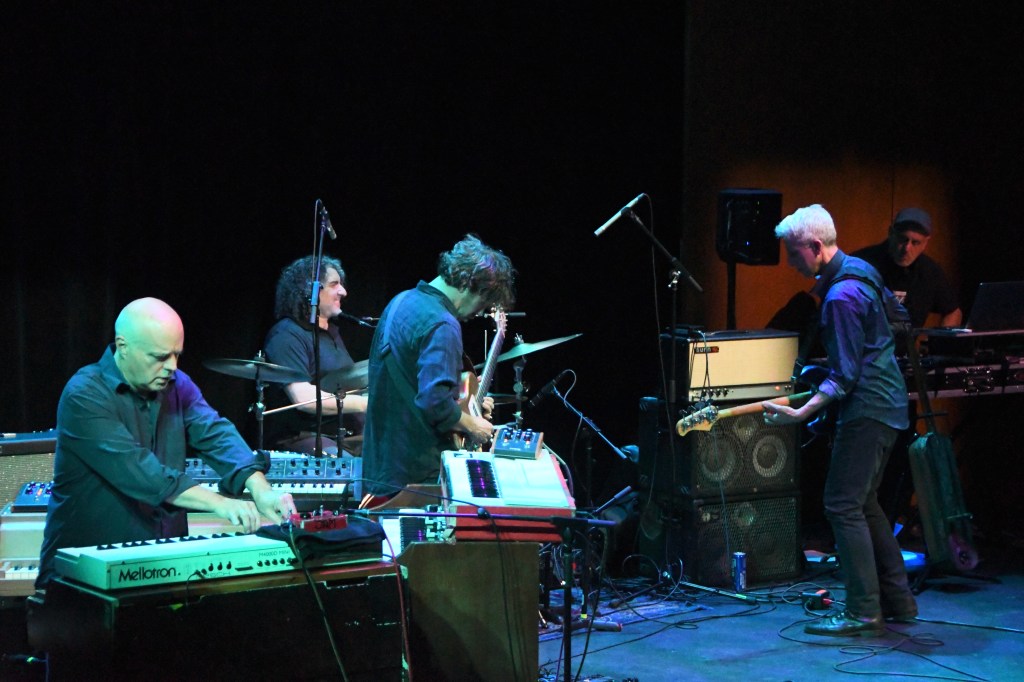
Club D’Elf – from left: John Medeski, keyboards; Scott Metzger, guitar; Fabio Pirozzolo, drums and chant; Mike Rivard, bass and sintir; Mister Rourke, turntables

Even apart from fearlessly mixing up these fresh ingredients, Club D’Elf stood out as a highly elastic ensemble. Leader-bassist Mike Rivard said each show in their current tour features a different line-up, Friday’s show was guitarist Scott Metzger’s first, and keyboardist John Medeski replaced Reeves Gabrels when the guitarist bowed out.

It all worked because they all spoke the same language(s) in complex conversations that required close listening and instant response among superbly skilled players.

It all felt eerie at first, diffuse individual riff noodling in circular patterns that took their time to form into first, a groove; then, a melody. Well, a series of melodies. They wove a multi-part flow of three songs in a seamless 50-minute suite, the most out-there music of the night. 

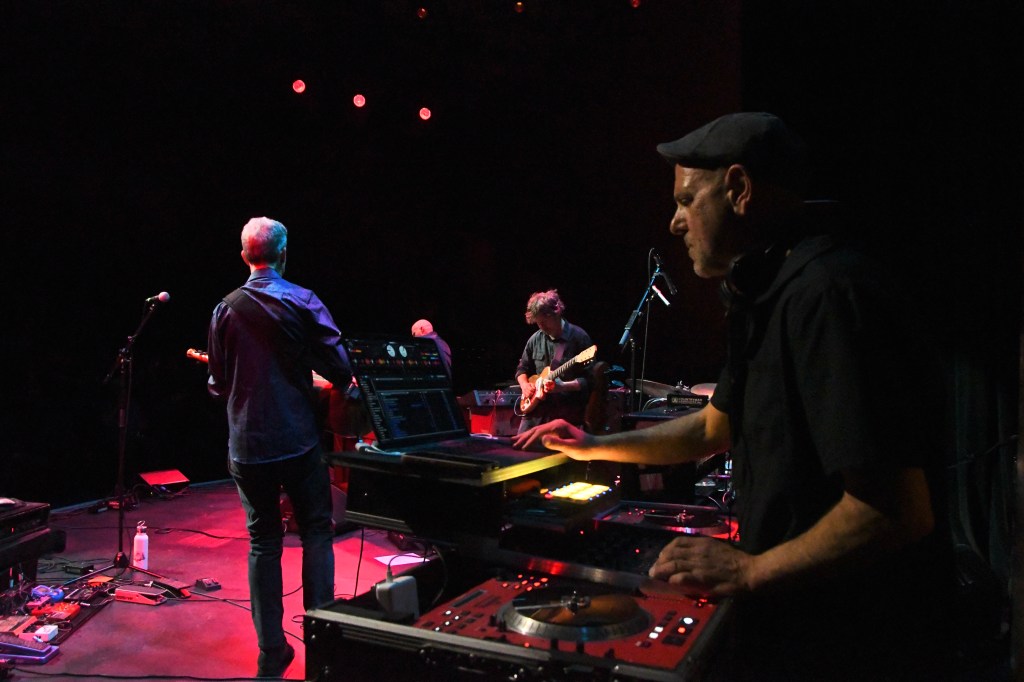
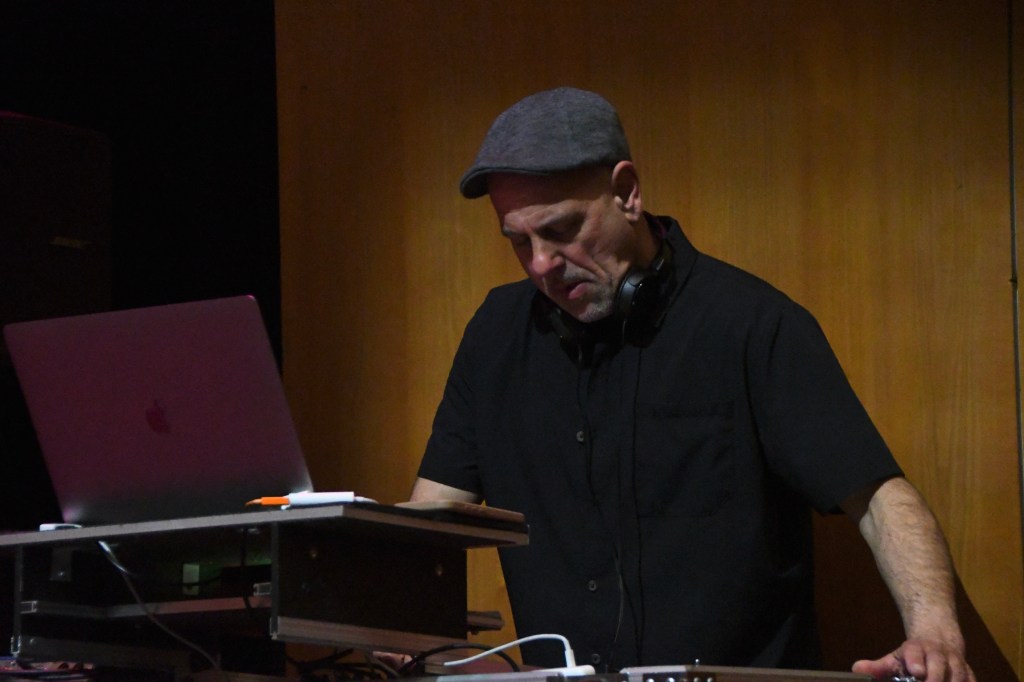
Mister Rourke, foreground, at right, works turntables with, from left, Mike Rivard, sintir, back to camera; John Medeski, keyboards, Scott Metzer, guitar. Drummer Fabio Pirozzolo is behind Rourke

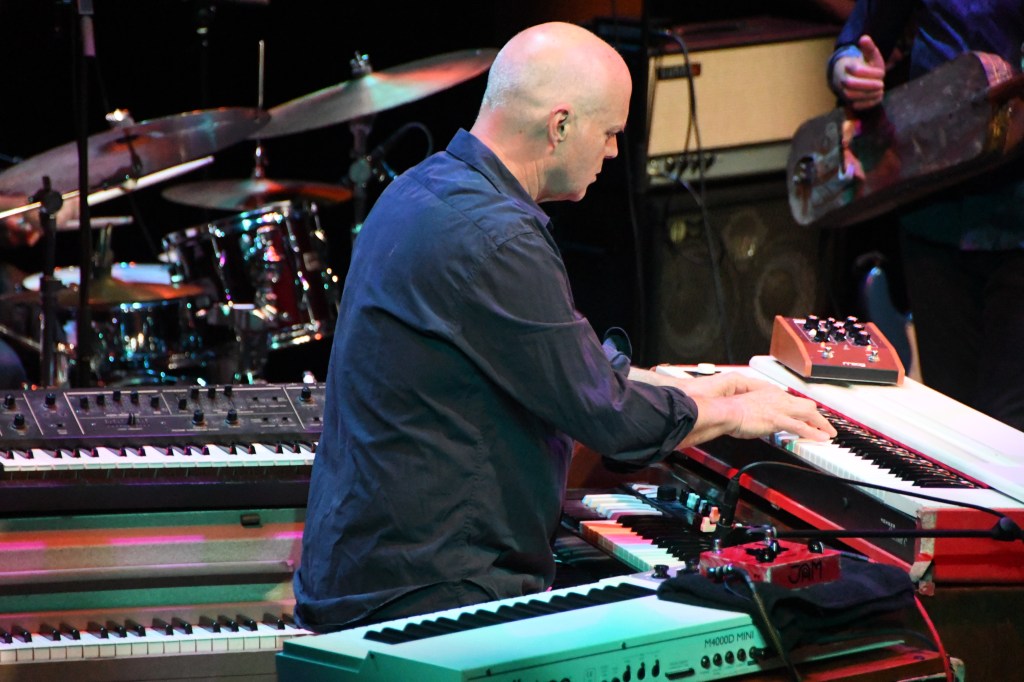
The flow-in music turntablist Mister Rourke had played as fans filed in gradually picked up passengers as the other players joined. Rivard lay down repeating bass lines on a rectangular fretless Moroccan sintir, simple and strong. His right hand hit its gut strings downward at times, like a (pre-Scruggs) frailing banjoist. When he switched to electric bass guitar later, he mostly plucked upwards, conventionally, but kept his distinctive, quietly urgent flavor. Drummer Fabio Pirozzolo kept that same pulse, but decorated it. Metzger’s guitar formed a bridge between bass and drums below and Medeski’s (eight!) keyboards in solos as wild as Rourke’s turntables up top. 

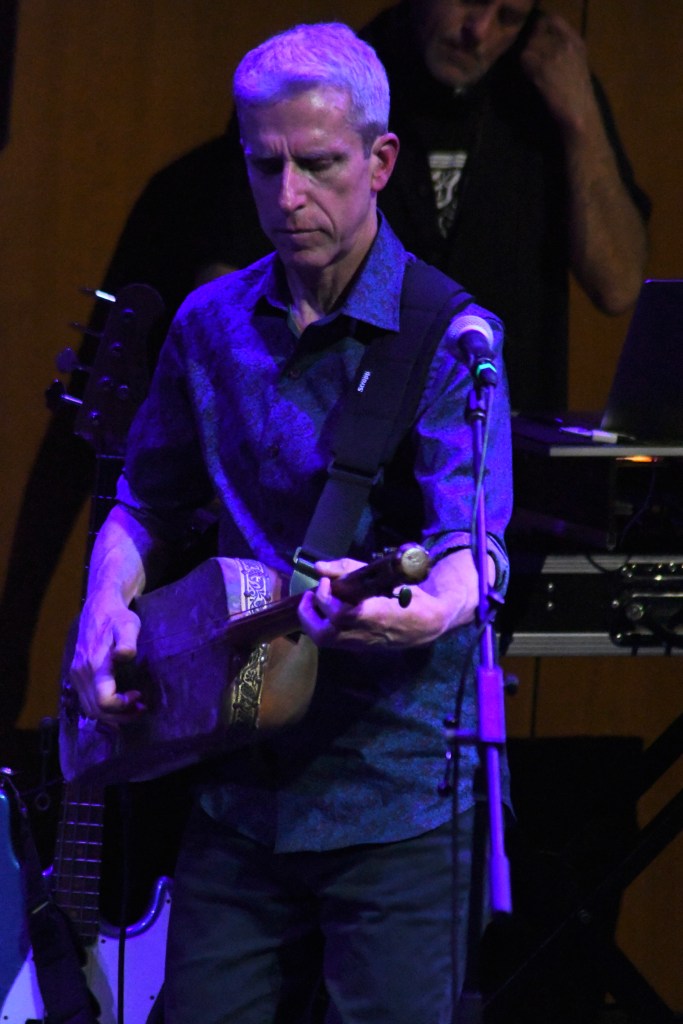
Mike Rivard plays sintir, above; and electric bass guitar, below

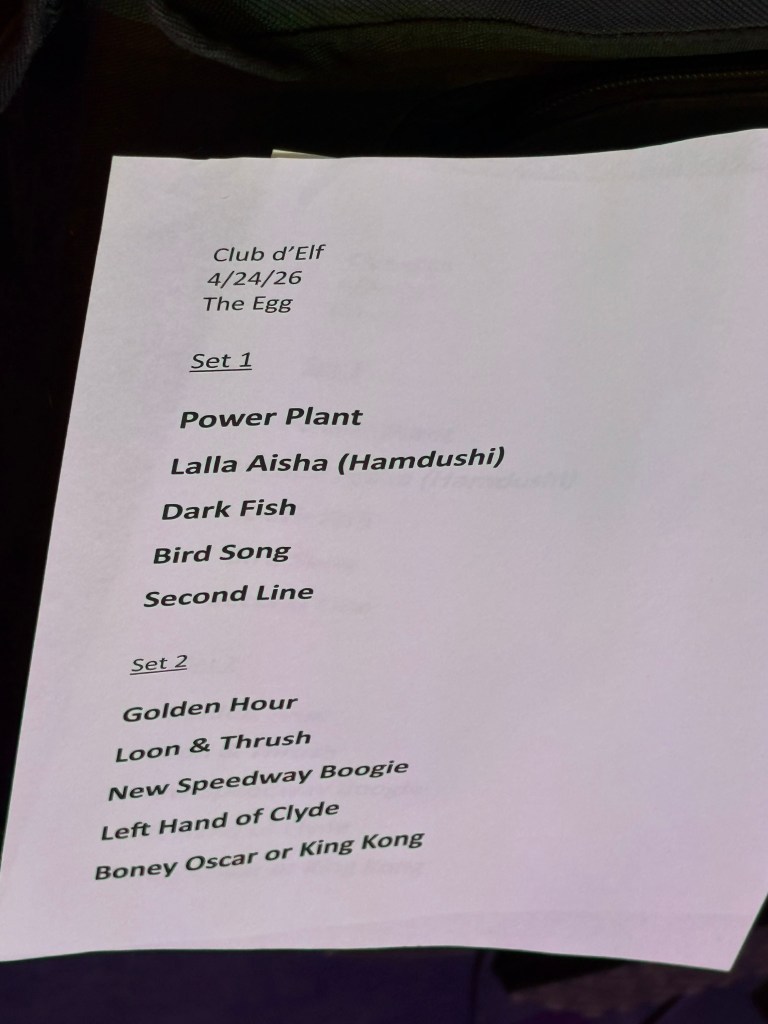
The opening suite pulsated in a happy relentlessness, the aptly named kinetic jam-jazz “Power Plant” cruising hot before simmering down into “Lalla Aisha” with drummer Pirozzolo chanting in the percussive chopped-syllable style Americans first heard in Ravi Shankar’s ragas. In “Dark Fish,” Metzger came into his own, matching Medeski in power riffs.

Fabio Pirozzolo chants, above; Scott Metzger riffs, below

Rivard announced “Bird Song” as a tribute to Jerry Garcia (remember? – the licorice guy), a mellow groove that sprouted more complex beats, like a power tool, with accessories. Metzger co-starred here, too, echoing Garcia-like tones and an explosion of speed strums. As always, Medeski had plenty to say here, too; and not just in fiery solos, either. An ace accompanist, especially on Hammond organ, he kicked back into the rhythm section when Metzger or Rourke soloed.

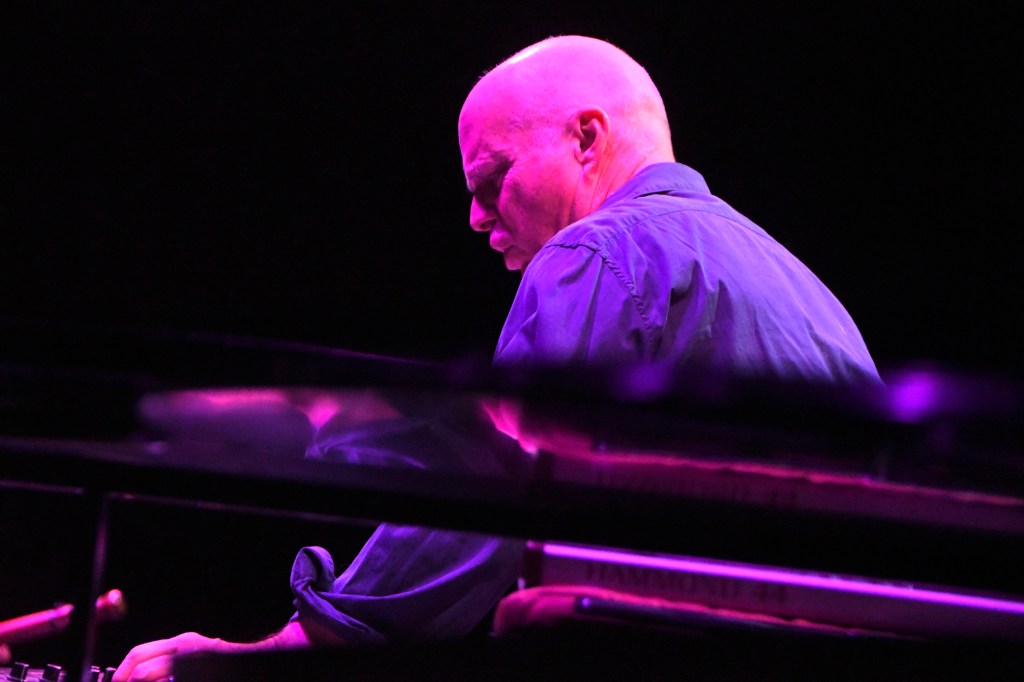
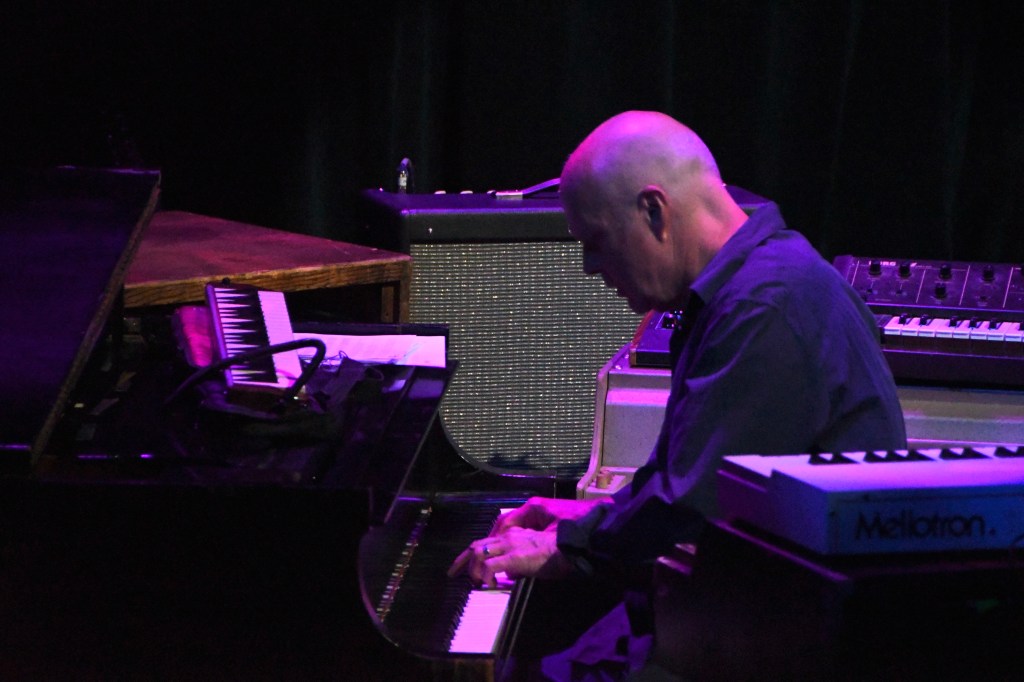
John Medeski plays Mellotron, above; synthesizer as seen through the lid of his grand piano, below; then piano below that

Afterward, Rivard dedicated “Bird Song” to Moroccan-born Brahim Fribgane who brought gnawa trance rhythms into Club D’Elf’s music before his death in 2024. 

They’d planned “Second Line” (a new song from their ”Loon and Thrush” album) to end the first set, but held it to start the second instead. This New Orleans funk shuffle started from march-time drums, then added chopped guitar licks like Jimmy Nolen (James Brown’s longtime guitarist) or Leo Nocentelli (the Meters) as Medeski underlined everything with staccato organ riffs.

Here, Rivard seemed to cue everybody back to the head while still in full flight and the second set featured both shorter pieces and propulsive shuffles.

They soon returned to the Grateful Dead songbook in “New Speedway Boogie,” though they scrawled new rhythms across it. All the beats were there, but the accents were different. Metzger and Medeski both soloed over the moon and discreetly echoed Garcia and original Dead keyboardist Ron “Pigpen” McKernan in their phrasing.

Rambunctious, hard-hitting riffing cast a playful mood in the new “Left Hand of Clyde.” This loose, fun number beautifully set up Zappa’s “King Kong.” As with the Dead tunes, they aggressively played around with it, returning to its majestic riff again and again after explorations far, far away.

Like licorice to licorice lovers, fans really liked it. A few danced down front while more moved at the theatre’s back corners and in standing, swaying islands, wherever. Studious instrument and riff nerds industriously took it all in. And it was a lot to take in. 

Club D’Elf dove off the set-list here at times

FLASHBACKS, SOME WITH FUR

I honored Frank Zappa’s “King Kong” by donning a full gorilla suit when Zappa’s Bongo Fury tour, featuring Captain Beefheart, played Albany’s Palace Theatre on April 24, 1975. This was, in several respects, a spectacularly hot night. 

Captain Beefheart returned to Albany with his Magic Band, playing J.B. Scott’s on November 29, 1980. No gorilla suit that night, but some seriously hairy music. 

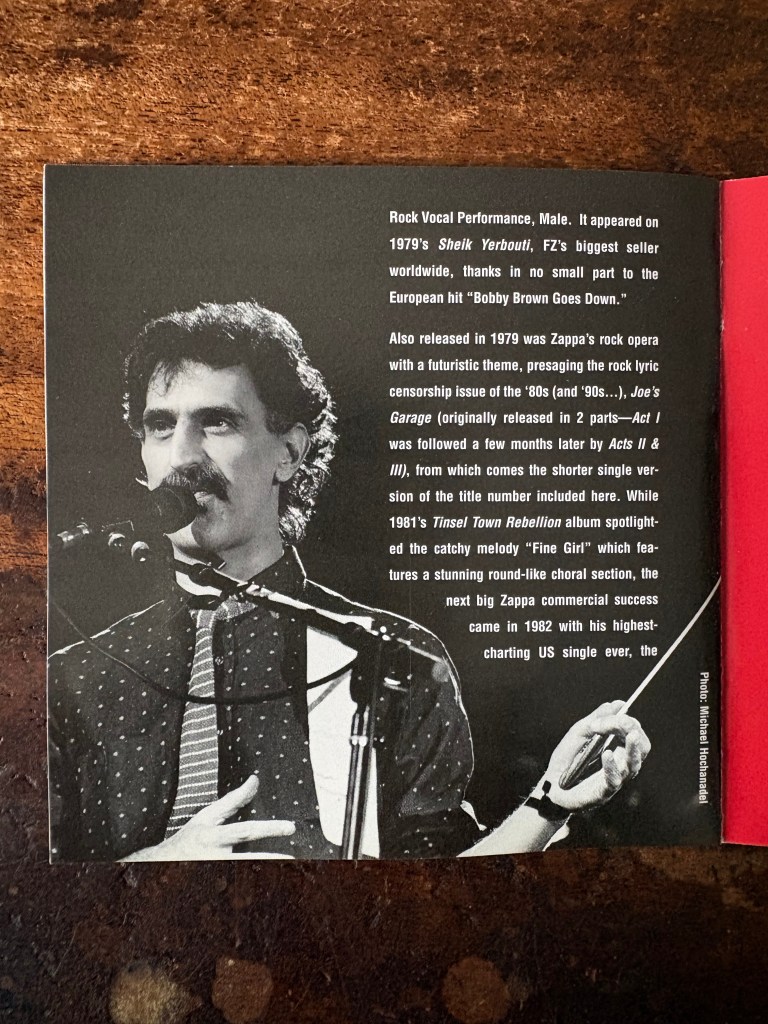
Zappa launched his last-ever tour Feb. 2, 1988 at the Palace after a week of rehearsals here. He kindly invited me to the sound-check that afternoon for a memorable double feature. Rykodisc published my photo of Zappa conducting the 14-piece band he led on that tour in their compilation album “Strictly Commercial: The Best of Frank Zappa” 

Gallery, below

Dave Mason: Rocking, Resilient, Restless; RIP

Only Dave Mason could quit more bands than he actually joined, but he made memorable marks with many. 

He co-founded 1960s British band Traffic, left, rejoined, left again. He also passed through Delaney & Bonnie and Friends, as did George Harrison and Eric Clapton, also Derek & the Dominos and Fleetwood Mac.

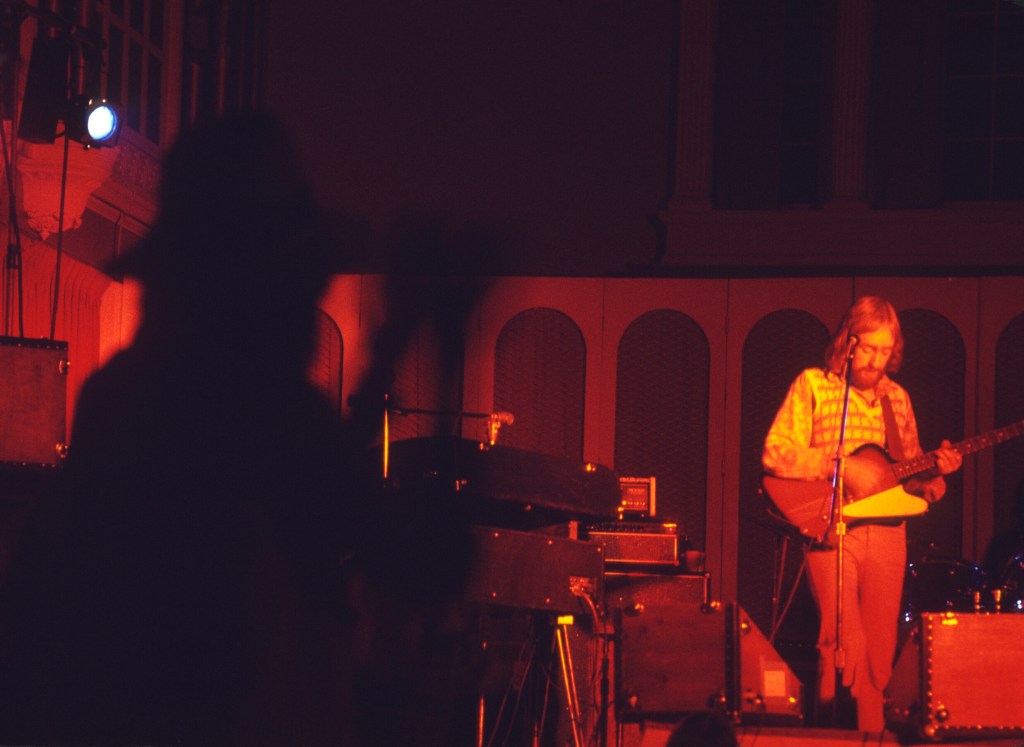
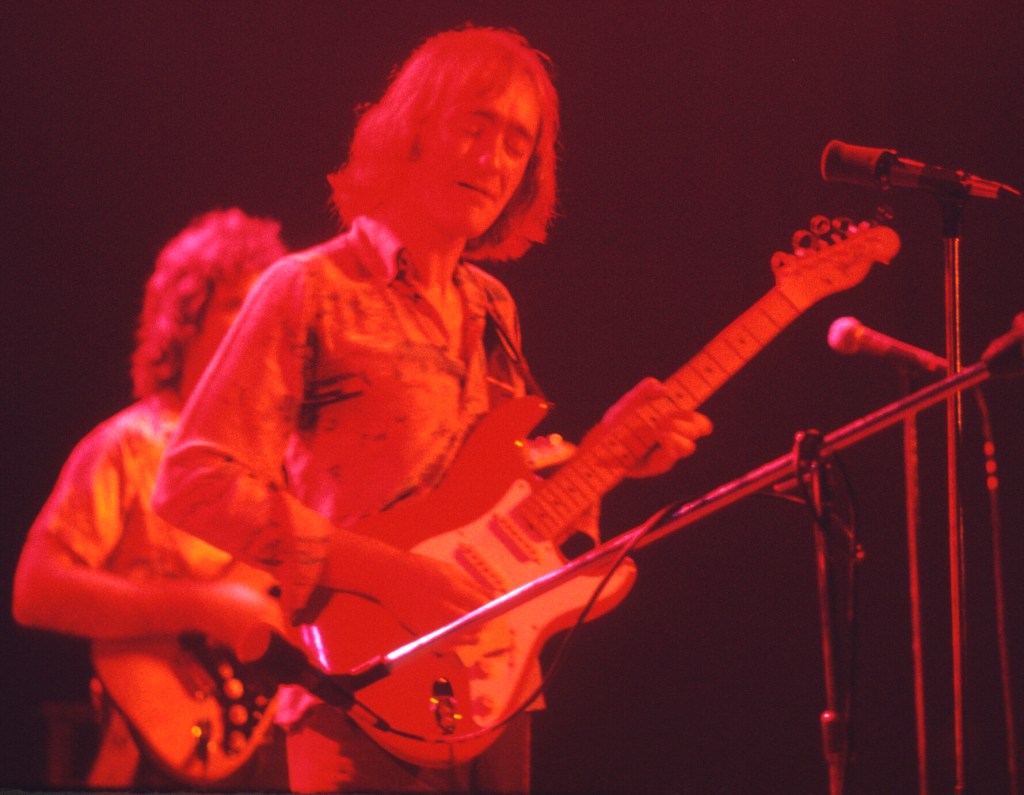
Dave Mason at the Union College Memorial Chapel, 1972. Check the guy in the hat, at left

Between others’ bands, he made his own albums including the landmark “Alone Together” (1970), a tuneful, rocking favorite of mine. The album co-starred top talents of that vivid time including keyboardists Leon Russell, Larry Knechtel and John Simon; guitarist Don Preston; bassists Chris Etheridge and Carl Radle; drummers John Barbata, Jim Gordon and Jim Keltner; and singers Bonnie Bramlett, Rita Coolidge and Claudia Lennear. But Mason’s own songs and forceful guitar really make the album. Some listeners even checked the credits expecting to find Jimi Hendrix listed as the guitar soloist. No, it’s Mason.

Mason also played recording sessions with star-level rockers. The first sound we hear in Hendrix’s epic cover of Dylan’s “All Along the Watchtower” is Mason’s surging 12-string. He played an Indian reed instrument on the Stones’ “Street Fighting Man” and recorded with both George Harrison and Paul McCartney among others.

As litigious as he was prolific, he sued record label after record label, made hits and misses, stole his own master recordings from studios and gloried in his resiliency, as the New York Times reported in the obituary marking his death Sunday near Lake Tahoe. 

The Times borrowed a Mason quote from Goldmine: “I’ve been through four earthquakes, three marriages, two bankruptcies, one major hurricane and I’ve survived the music business,” he said. “That’s a pretty good record.”

Here, let’s also remember Hunter S. Thompson: “The music business is a cruel and shallow money trench, a long plastic hallway where thieves and pimps run free, and good men die like dogs. There’s also a negative side.”

The positive side of Mason’s decades-deep music-making resides in his sound and his songs, notably “Feelin’ Alright?,”  “Only You Know and I Know,” “World in Changes,” “Sad and Deep as You.”

Like most of the musicians whose deaths we’ve mourned recently, Mason passed through here many times. He played the Union College Memorial Chapel in Schenectady in 1972 (Jimmy and Vella opened), Albany’s Palace Theatre in 1973 (opening for the second line-up of the Paul Butterfield Blues Band); and most recently at The Egg in Albany, shortly before health issues forced his retirement from touring.

Dave Mason at Albany’s Palace Theatre, 1973

Pardon the fuzzy, badly-exposed “quality” of my photos of those early-70s shows here: slow film, slow lenses, and I was just learning to shoot concerts – before I started watching Marty Benjamin to learn how.

When Dave Mason’s World in Changes Tour brought him to The Egg in February 2022, he played Traffic tunes, solo-career songs and closed with “All Along the Watchtower.” 

That’s a pretty good record.

Music and Memories of Jackie Alper

Eighth Step Folk Community Tribute Repeats November Premiere

In a poignant reprise Sunday afternoon in Proctor’s cozy The Addy upstairs, Margie Rosenkranz’s Eighth Step crew reunited the nine folksingers and players of last November’s premiere tribute to the late, great folk scene hero Jackie Alper. Among the capacity crowd sat Alper family members, heightening the event’s strong emotion. 

Eighth Step Director Margie Rosenkranz introduces Jackie Alper’s son George in Proctors The Addy

“Ms. Music: Jackie Alper – Her Story” alternated narration, often in her own words, with folk and blues songs; 12 in the first set, 16 in the second. Narration sketched an extraordinarily full life combining music with activism. Songs operated in parallel, lamenting societal ills, urging solidarity in protest and balancing outraged principle with optimism in action. 

Singer Toby Stover, hand on hip, sings with pianist Alan Thomson Sunday in “Ms. Music Jackie Alper – Her Story”

Some spoken segments felt somber; others, seriously funny. When Alper was arrested at a protest as a teen, her mother took comfort that at least she’d know where young Jackie would be that night. Alper herself lamented the experience only because she learned to smoke in jail. A sort of musical and movement Zelig, Alper was seemingly everywhere: in labor union protest marches; at the Rosenbergs’ trial; the origin jams of the Almanac Singers, the Weavers and others; the Peekskill riots; hundreds of hootenannies, spinning records on WRPI.

If the same social inequity and aggressive militarism that galvanized Alper and her friends including Woody Guthrie and Pete Seeger still torment Americans decades after Alper’s time, the hope these heroes shared through lives in music still lives, too. It united performers and audience in agreement Sunday.

Union organizing songs hit first, hearty anthems that raised voices and fists onstage and off. This was both movement music and quite personal. A song Alper’s father Jacob Leiserowitz wrote in Yiddish highlighted immigrants’ hopes and challenges in the first set; an anti-racism blues Alper herself wrote with Nina Simone and a friend fit nicely among both protest songs and blues in the second.

Songs from Alper’s times took listeners far down memory lanes including both early radio classics “Frankie and Johnny” and “Brother, Can You Spare a Dime” and feisty flag-wavers “There Is Power in a Union,” “Which Side Are You On?” And “Waist Deep in the Big Muddy.” 

Singalongs and shout-outs showed where Alper and both artists onstage and audience members stand. When narration noted Alper joined the Communist Party, a fan shouted in mock outrage, “Say it isn’t SO!”

Production co-writer Andy Spence had conducted the November premiere from a chair facing the performers, her back to the audience. But Sunday’s reprise proceeded without her as she recovers from recent surgery. Her absence may have contributed to some looseness in the performance as singers lost their places in the lyrics and spoken segments shrank some in omissions from the text. Overall, the women sang better than the men, including one gent whose blithe humorous covering for some scrambled words amused those onstage and off.

Guitars, banjo, bass, dobro, harmonica and piano blended in sparse Americana flavors while singers told tales either solo or in full choruses. Greg Giorgio and Ruth Pelham handled the narration, for which Pelham’s interviews with Jackie Alper in 2000 supplied many of the memories. Pelham milked boos from the audience at mentions of scummy Trump mentor Roy Cohn.

Ruth Pelham sang and spoke, and had compiled stories from Jackie Alper for the production

Before it began, the stage, far smaller than in the GE Theatre of the November premiere, seemed a too-dense forest of music- and mic-stands. But when populated by performers engaged with the words, the music, the audience and each other, it felt full but fine. In the front row, Alper’s son George, his wife Mary Ellen and their grown children Rowan, Charlie and Joe (named for Jackie’s husband and George’s father) quietly wept at times, laughed out loud in others – like all the rest of the crowd. George and family flew in from Arizona for Sunday’s performance; for local fans it felt like a pilgrimage.

Both November’s polished premiere and Sunday’s at times ragged repeat showed the strength of the production, a wondrous weave of words as both spoken and sung. While the premiere’s novelty and honed cohesion gave the one-shot feel of a unique performance, Sunday’s repeat reinforced how this entire heartfelt production belongs in the folk repertoire.

Narrator/singer Greg Giorgio, above; singer Kate Blain, below – both wearing buttons, a Jackie Alper trademark

Howard Jack sings, above; Charlie Rhynhart plays dobro and sings, below

Michael Slik sings; with Kate Blain, left, and Toby Stover; above; George Wilson sings and plays 12-string, below, as Toby Stover harmonizes

Toby Stover

Play It Again, Jake (and Bela, Edmar & Antonio; plus John and multitudes; also Linda, Azzaam and Teresa)

Top instrumentalists star on area stages this week including many with long track records here.

Hawaiian-born ukulele master Jake Shimabukuro returns Monday, April 20 to the recently renovated Troy Savings Bank Music Hall (30 Second St.), a frequent tour-stop. The solo virtuoso has expanded the capabilities of the humble acoustic four- or six-string to stratospheric levels of skill and imagination. He comes onstage alone and delivers epic dazzlement and depth.

Jake Shimbukuro. Photo provided

For all his unprecedented flash, Shimabukuro’s music doesn’t feel like show-off tricks since he communicates feeling in such a personal way. 

Since he explored George Harrison’s “While My Guitar Gently Weeps” in a YouTube video that made him an international sensation, he’s played here many times, most often in The Hall. 7:30 p.m. $52.50 ukulele workshop and concert, $41.50 concert only www.troymusichall.org 518-273-0038

Half a musical generation before Shimabukuro took the ukulele to new heights, Bela Fleck was doing the same with the banjo; so it’s not terribly surprising that both busy collaborators have played together.

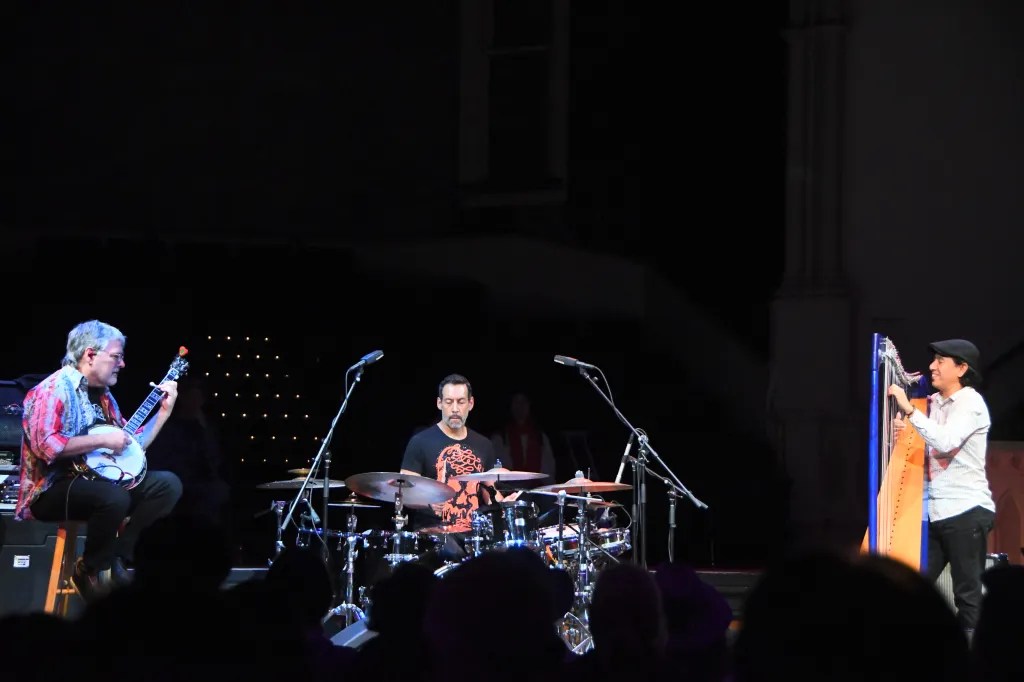
These days, Fleck leads a handful of ensembles, most famously his fusion Flecktones, most cozily his duo with fellow banjoist-wife Abigail Washburn; and maybe most surprisingly in BEATrio with harpist Edmar Castaneda and drummer Antonio Sanchez. After playing one of the top shows I saw all last year, at Universal Preservation Hall, Fleck leads BEATrio Thursday into Troy Savings Bank Music Hall where he’s played many shows with many collaborators.

Like Fleck, Castaneda has played almost everywhere hereabouts since his 2008 area debut at the Spa Little Theatre in Saratoga Springs, while Sanchez played The Hall with jazz guitar great Pat Metheny even before his score for Alejandro Gonzalez Inarritu’s film “Birdman” earned him a Grammy and the picture took home four Oscars including Best Picture.

At UPH, Fleck – who’s won 19 Grammys – explained he chose Castaneda and Sanchez since, like himself, nobody else plays like them. Their ensemble combines combustible elements into a fierce fire of shared inspiration. All compose, all contribute to a distinctive blend and all solo out past where the Artemis astronauts just explored.

BEATrio at UPH. From left: Bela Fleck, Antonio Sanchez, Edmar Castaneda. My photo

As I reported here, “the self-proclaimed ‘world’s most unlikely band’ blended bluegrass, folkloric Latin dances and brisk jazz invention into something unprecedented and irresistible. Each member introduced a segment around their own repertoire, but their unified ensemble force dazzled throughout.” 7:30 p.m. $66.50, 54.50

The next night – Friday, April 24 – the highly elastic ensemble Club D’Elf plays the (also recently refurbed) Egg (Empire State Plaza, Albany). 

How elastic? Thanks for asking. Around the core trio of Mike Rivard, bass; Dean Johnston, drums; and Mister Rourke, turntables, spins a galaxy of stars from jazz, world-music, fusion and rock worlds. Their website lists dozens as Special Guests and dozens more as Rotating Cast members including Mike Gordon (Phish).

Club D’Elf; John Medeski at right. Photo provided

Guitarist Reeves Gabrels (David Bowie, Tin Machine, The Cure) was originally set to play Friday’s show, but a scheduling conflict required a sub. In came pianist John Medeski, another frequent flyer on area stages and a student of the late great Lee Shaw whom A Place for Jazz honors in its tribute show/season announcement Sunday April 19. In addition to his longstanding trio Medeski, Martin & Wood, Medeski collaborates in all directions across a stylistic range wide as you’d find in a good record store.

Club D’Elf’s new album “Loon & Thrush” hit last week, described as “offering Moroccan-infused takes on Grateful Dead classics ‘Bird Song’ and ‘New Speedway Boogie;’’ within an “overarching theme of ‘flight’ itself.” 8 p.m. &39.50–64.50. http://www.theegg.org 518-473-1845

FYI: Jake Shimabukuro – at Troy Savings Bank Music Hall Monday – also plays Grateful Dead tunes.

Among Albany Musicians Union offerings here in Jazz Appreciation Month is Sunday’s Neil Brown Memorial Jazz Gala at Margarita City (1118 Central Ave., Colonie).

The three-act show by local jazz heroes honors bassist Linda Brown’s late brother Neil. Pianist Azzaam Hameed and singer Jeanne O’Connor play first, at 2 p.m., Brown follows at 3 p.m. with her trio, and the Teresa Broadwell Quartet plays at 4. Admission is free, thanks to support by the American Federation of Musicians Local Union 14 and the Jim Clark Community Trust Fund.
Sunday Matinees Honor Musical Giant Women

Preview: Sunday Schenectady Matinees (Wish I could hit both…)

Both afternoon concerts in Schenectady Sunday honor eminent women musical and cultural heroes. In showtime order, area jazz stars honor our late great piano goddess Lee Shaw at the Carl B. Taylor Auditorium at SUNY Schenectady County Community College Music School; and a stage full of folksong players and singers celebrate another late, great – Jackie Alper – at the Eighth Step at Proctors Addy Theatre. 

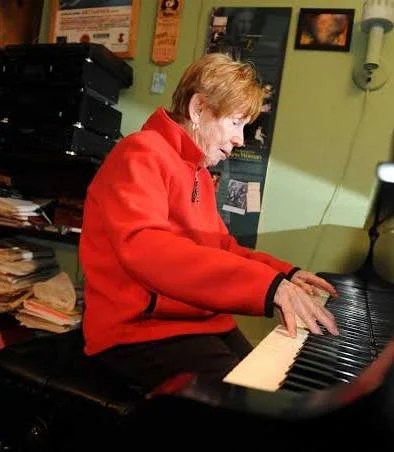
Lee Shaw. Wikipedia photo

The Lee Shaw Centennial Tribute stars, alphabetically: guitarist Mike DeMicco, pianists Dave Gleason and Nick Hetko, drummer Jeff “Siege” Siegel and bassist Rich Syracuse. They’ll play a tribute show with extras, honoring a giant talent in a tiny frame. Oklahoma-born Lee Shaw settled hereabouts with bassist husband Stan in the 1960s and galvanized the jazz scene. They led bands and played everywhere, until Stan died. Then Lee continued amazing audiences from stages large and small, mentoring many musicians including John Medeski and recording albums fans treasure to this day. 

Sunday’s tribute will include excerpts from Susan Robbins’s documentary on Shaw, “Lee’s 88 Keys,” plus live performances. A tiny dynamo, she took over every stage she played, but she confessed to being so nervous about performing at the Saratoga Jazz Festival that she donned two left shoes before the gig.

The last group Shaw led up to her death in 2015 co-starred Siegel and Syracuse, who still often perform as a team. They played with Hetko at the recent Eddies Hall of Fame show at Universal Preservation Hall in Saratoga Springs that honored Shaw and other musicians and music scene notables.

Presented by A Place for Jazz, it’s also both a season announcement event and a season-ticket sale. A Place for Jazz supports music education through a scholarship program and Sunday’s show will feature Lee Shaw scholarship award winners in an opening set led by school faculty member and trumpeter Dylan Canterbury.

Show time is 2 p.m. Sunday. Admission is $25 and season memberships will be on sale as well. Different membership levels provide different ticket packages. At $125-$249, buyers receive tickets to all seven shows in the fall 2026 season (five tickets at full price, plus 2 bonus tickets). Buyers at $250-$374 get 14 tickets on the same formula: 10 purchased tickets and four bonus. The same math applies at $375, $500 and $1,000 levels. 

Again, Sunday’s Lee Shaw Centennial Tribute begins at 2 p.m. $25. http://www.aplaceforjazz.org.

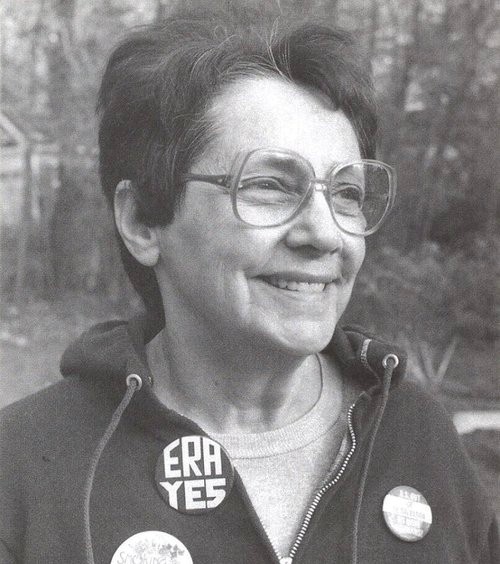
Jackie Alper – another physically small, culturally enormous star – arguably cast as imposing a shadow as Shaw. At 3 p.m., the 8th Step at Proctors presents “Ms. Music: The Jackie Alper Story” in Proctors upstairs Addy Theatre. 

Jackie Alper. Photo provided. Famed for the many political buttons she always wore, Jackie could sometimes be heard coming into a room as they clicked together.

A repeat performance of last November’s premiere, this features the same extraordinary cast – an area ensemble like the Lee Shaw crew. Again, alphabetically, it’s Kate Blain, vocals; Greg Giorgio, vocals and narration; Howard Jack, vocals and bass; Ruth Pelham, guitar, vocals and narration; Mike Slik, dobro, steel guitar and vocals; Charlie Rhynhart, guitar, bass and vocals; Toby Stover, keyboard, percussion and vocals; Alan Thompson, piano and vocals; George Wilson, fiddle, banjo, 12-string guitar and vocals.

Researched and assembled over a year’s work by Old Songs founder Andy Spence and her successor Sarah Dillon, the project culminates work 8th Step impresario Margie Rosenkranz began years ago. The production combines songs Jackie Alper sang, wrote and introduced to folk fans thorough her “Mostly Folk” WRPI radio show – with narration summarizing her extraordinary career as creative catalyst, activist and guiding light.

I knew Jackie Alper for decades, including non-stop talk on road trips; and I still learned amazing things from the premiere performance. To sum up, she sang with Woody Guthrie, Pete Seeger and Paul Robeson; she worked with the archivist Lomax team presenting shows and preserving history; she introduced area folk fans to new music – and new-to-us old music – on her decades-long “Mostly Folk” WRPI-FM “Mostly Folk” show, and she supported every progressive political and social movement from the Depression-wracked 30s through the turbulent 60s to her passing in 2007.

Andy Spence conducted the premiere performance of “Ms Music: Jackie Alper,” confidently keeping everyone on track in a complex presentation combining narration with music; tales and tunes spun together in a fine flow.

Andy Spence, left, conducts the ensemble that honored Jackie Alper last November. My photo

Show time Sunday is 3 p.m. General admission $32.21, Gold Circle front and center $51.76. 518-346-6204 www.proctors.org 

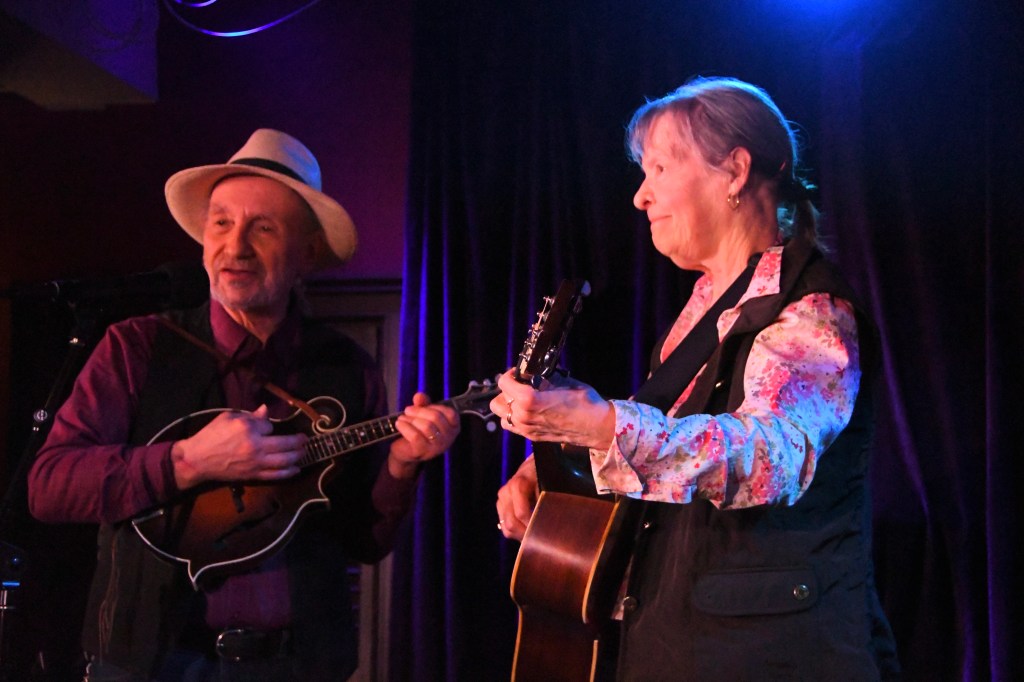
Jay Ungar and Molly Mason at Caffe Lena: Sweet, Smooth, Spirited

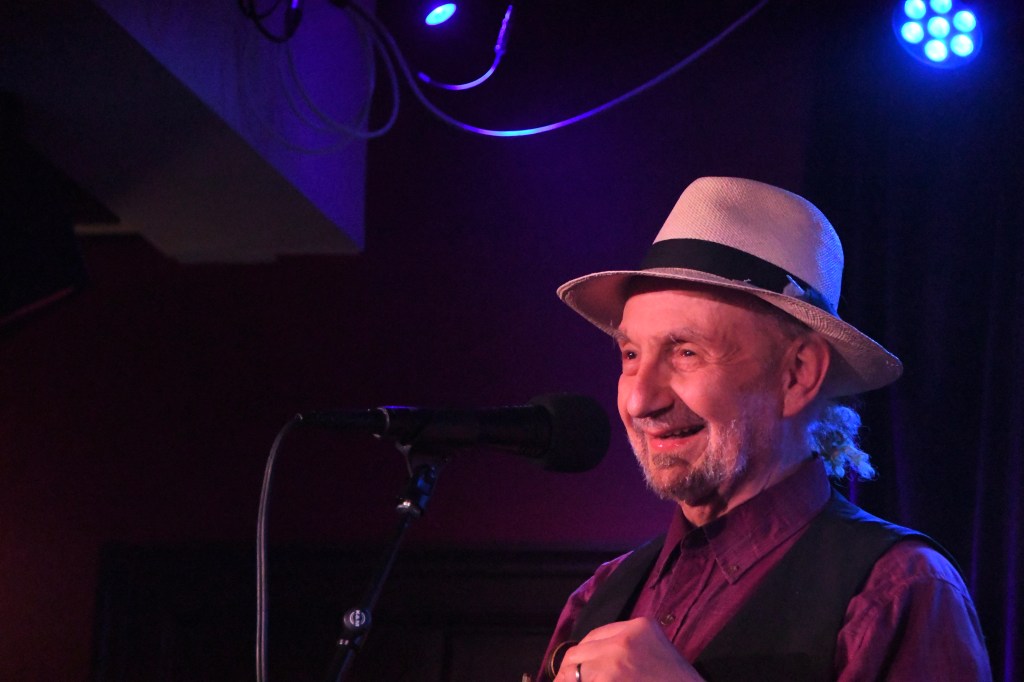
When Jay Ungar, a fiddler and singer in his 70s, announced plans to play “hits of the 60s” Saturday at Caffe Lena, it didn’t sound terribly surprising. But then music-and-life partner Molly Mason clarified – “the EIGHTEEN-60s” – it made perfect sense and shaped the musical history lessons they performed to a capacity crowd.

They’ve built a long career of reaching past vintage sounds to the emotions behind old tunes and by crafting timeless new ones.

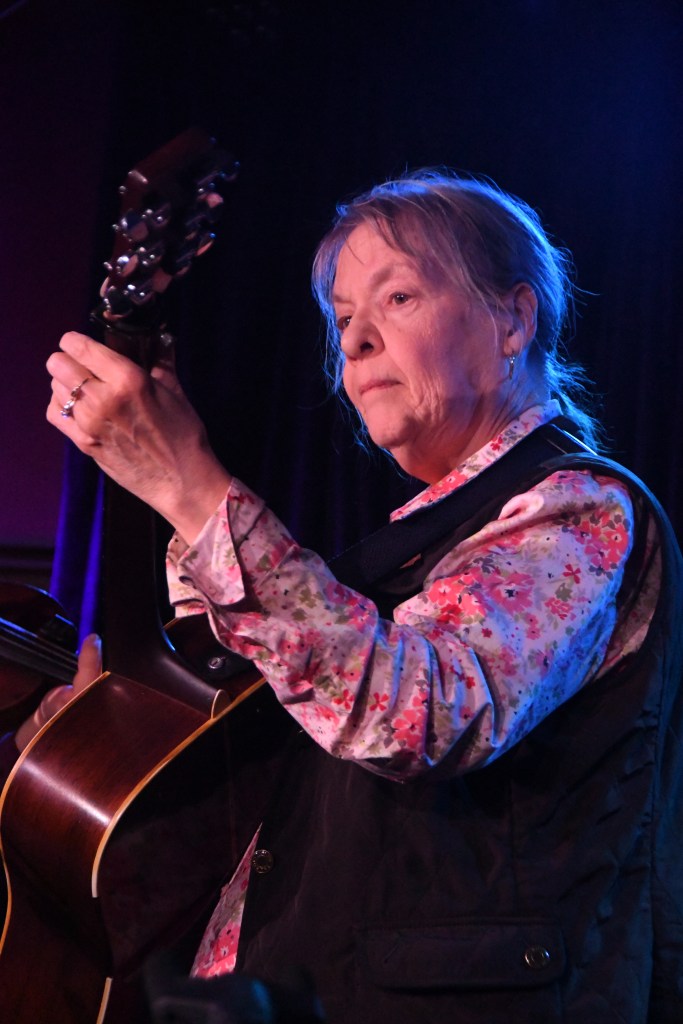
It all started conventionally enough Saturday in a warming-up medley of reels and hornpipes, Ungar’s spry fiddle leading Mason’s supportive guitar. Then, after their cozy pastorale “Backyard Symphony,” they moved into the living-history mode that dominated their two-set show, citing their decades-deep collaboration with documentarian Ken Burns. His films survey history by integrating long-ago events with right-now concerns, a prismatic perspective that perfectly suits their down-home music.

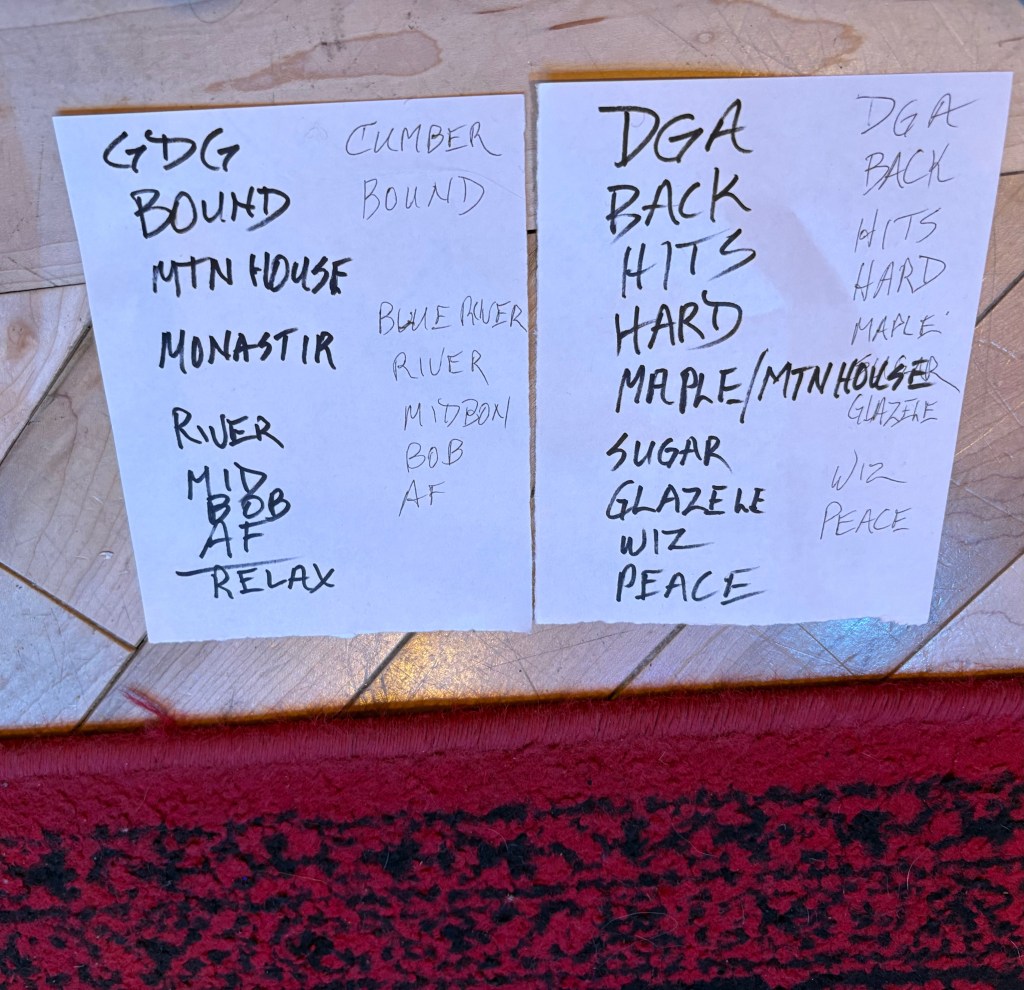
Introducing “Blue River Waltz” from Burns’s celebration of national parks, Mason suggested a closed-eyes canoeing reverie; the song’s message urges reverence for the land, a recurring theme. So was the Civil War, a hit for both Burns and Ungar-and-Mason in their “Ashokan Farewell.” A few songs later, Ungar would wryly note they wouldn’t play that just yet, after a run of 1860s “hits.” He noted a spunky fiddle tune had been re-named in its time to honor “Lincoln and Liberty” before going all red, white and blue with “Rally ‘Round the Flag” and “Battle Hymn Of the Republic.” Here fans first hummed along then sang in a subdued but sincere chorus.

Mason sang Stephen Foster’s “Hard Times” in compelling simplicity, trusting the words to carry the feel, after Ungar noted John Adams and Thomas Jefferson had died within hours of each other, the same year Foster was born. 

They celebrated maple sugar shacks in rustic folkloric style, then cited how combining Catskills ethnic traditions yielded the Irish-Jewish amalgam they called “Celto-Klezmer” for another spirited paring of “Vladimir’s Steamboat” – no, not THAT Vladimir, Mason assured us – and “Wizard’s Walk” before closing the first set with the serene “Peace on Earth.” Ungar explained he and Mason had separately developed the two motifs they combined into this elegant tune, noting “they’re married, like us.”

Caffe kitchen manager and volunteer coordinator Paul Machabee added his fiddle to the mix after the break in a tuneful guest spot that fit well in a medley of dance tunes like the first-set opener. 

When Mason forgot her lyrics in an ode to old-fashioned farming, they cruised past this rough spot instrumentally, then she recited the missing verse. “The Mountain House” (for Mohonk Mountain House) cruised just as smoothly, as did “Monastir,” Ungar’s family saga of loss and displacement in WWII Europe. Their intro to “Love Song to a River” also cited troubles in the prickly person of jazz violinist Joe Venuti. Ungar recalled seeing Venuti at the Caffe where he taught Ungar and Matt Glaser some riffs then scared them by bringing them onstage to play. Mason cited his stern injunction during a lesson to “make believe you have a soul” – a harsh intro to a serene song.

Waltzes flowed together late in the second set including “Prairie Spring,” “Midnight on the Water” and “Bonaparte’s Retreat” – basis of Aaron Copland’s “Hoedown.” Some Bob Wills Texas swing held that party mood, especially “San Antonio Rose.” Then they settled into the exquisite melancholy of “Ashokan Farewell.” Few songs we’ve all hard so many times wear as well.

They hadn’t gotten far offstage after this climactic number before they came back to encore with Leadbelly’s “Relax Your Mind.” Swapping his fiddle for mandolin, Ungar played it seriously but they sang it for laughs. 

Their dynamic was calm and cozy; their set list more a menu than a map as they periodically paused to discuss what’s next. Mason played solid, simple support to Ungar’s fiddle leads and seldom soloed, switching to piano occasionally and once drawing applause for a flashy glissando. Mostly their music felt like well-aged flannel, smooth and comforting.

Preview: Anne Hills at the Eighth Step Saturday
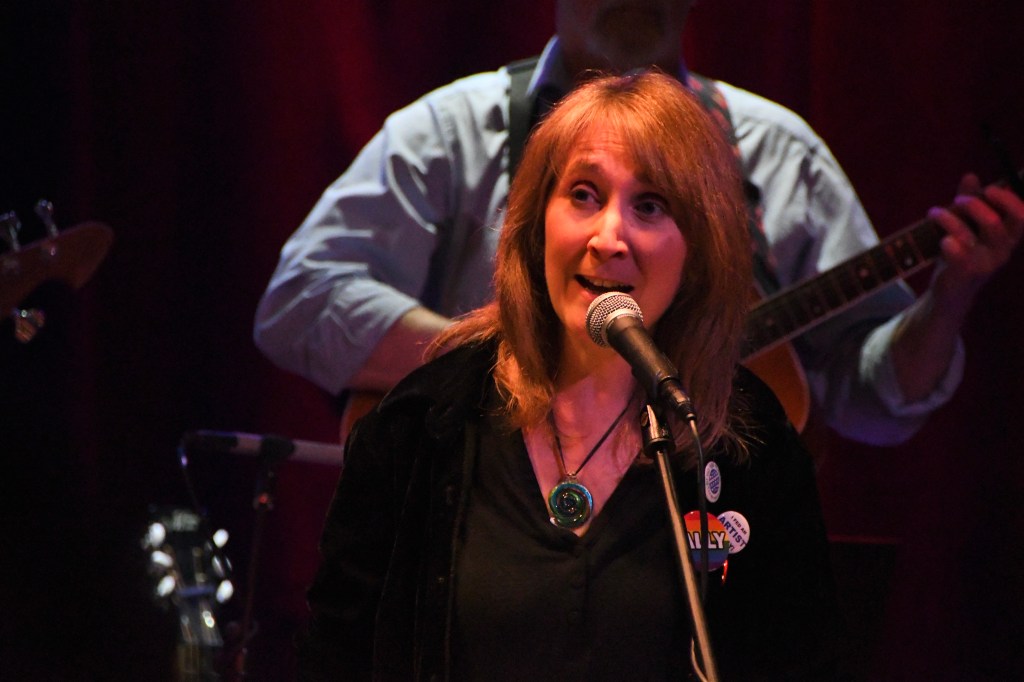
Jay Ungar and Molly Mason’s Caffe Lena show Saturday is deservedly sold out, simplifying the otherwise tough choice folk fans would face between that show and singer-songwriter Anne Hills the same night at the Eighth Step.
Hills emerged in the same bustling 70s Chicago folk scene that nurtured the late, great John Prine and Michael Smith; both died in 2020. Like both, the strength of Hills’s art is clarity of expression in her writing, but she also sings with compelling beauty in her vocal sound, like Joan Baez and Judy Collins. Hills recently performed in “You Got Gold,” the Eighth Step’s Prine tribute, singing several of his songs, reminiscing about early days in Chicago and commenting on the documentary film “You Got Gold: A Celebration of John Prine.”

Anne Hills. Photo provided

Over a stellar career, Hills has proved both a compelling soloist and able collaborator with top contemporary folk heroes. With Tom Paxton and Bob Gibson in Best of Friends; with Cindy Mangsen and Priscilla Herman in TRIO; and with Mangsen, Steve Gillette and Michael Smith in Fourfold, she has harmonized with the best onstage.

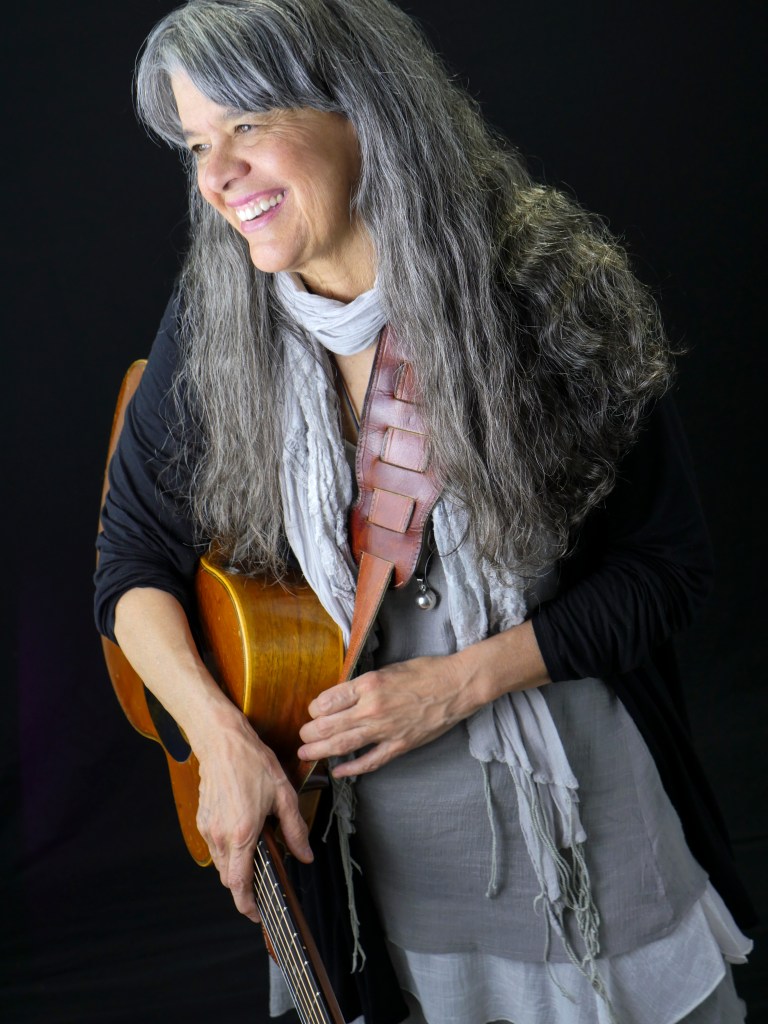
Hills also performs heartfelt tributes, notably to Pete Seeger and Phil Ochs; and she brings songs of Michael Smith to the Eighth Step Saturday. Her new “Every Town” is her second album of Smith’s songs; of course it features ace collaborators including Gillette and John Gorka. Her 25 albums include numerous co-credits.

Al Powers. Photo provided

She sings with pianist Al Powers – see, another collaboration – Saturday at the Eighth Step at Proctors, in the cozy upstairs Addy Theatre, served by an elevator and wheelchair accessible. The nearby Broadway Garage offers free parking.

Showtime is 7:30 p.m., doors at 7 and onstage meet and greet at 6:30 with gold circle seating – admission $45. Otherwise, $28 in advance, $30 general. 518-434-1703 8thstep.org or through Proctors box office 518-346-6204.

Adios, Jon Dee Graham (Charlie, too…)

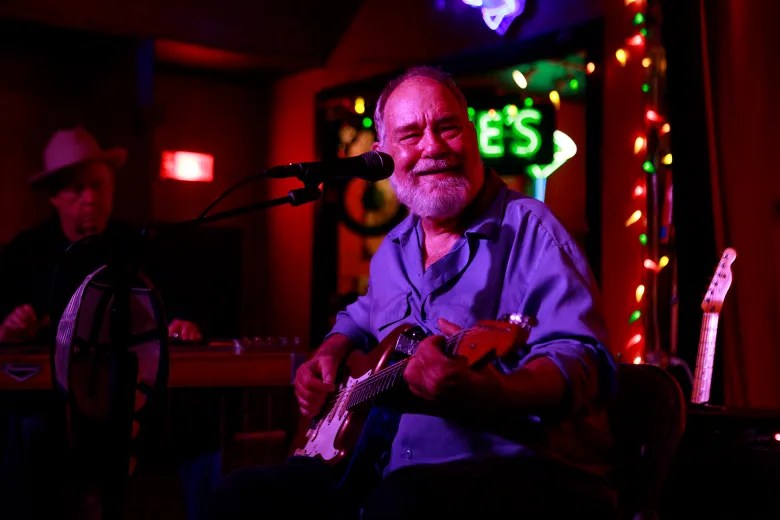
Jon Dee Graham reportedly disliked the label often applied since his passing: “Greatest songwriter you’ve never heard of” –  but it’s still likely true.

Thanks to the Austin Chronicle for the photo here, by Jana Burchum, and some facts in this post.

More influential than famous, the Austin music master died Friday after numerous health challenges that sometimes made him miss his three-decades deep weekly residency at the Continental Club. His son William would cover for him on dates he couldn’t make, and was by his side when the 2005-2006 Austin Music Awards honored Graham as its Musician of the Year. Father and son recorded an album together more recently; release date unclear.

With semi-star bands the Skunks, and the True Believers (with brothers Alejandro and Javier Escovedo), Graham was widely credited with helping weld punk brute force to rootsy country lyricism in a late-90s amalgam that inspired dozens of bands. He released his debut solo album at 38 in 1997, when True Believers broke up. 

My own sole exposure to Graham onstage came when he toured with the Alejandro Escovedo Orchestra, the vast performing force led by Graham’s former band mate in the True Believers.

They played Troy’s Revolution Hall, filling the stage from end to end, just days before the Rolling Stones played what’s now the MVP Arena on their 2005-2006 A Bigger Bang tour.

That came 20 years after I’d last seen them play a ragged show (Buffalo) and a somewhat better one (Syracuse); so I really didn’t want to go. Neither did anybody else around. I tried to hand off the review assignment, mainly because the Alejandro Escovedo Orchestra was set to play Revolution Hall – and I knew that would be great.

I really didn’t know HOW great though.

That spring night, I stood in the tech booth at the front of the Revolution Hall balcony, above the stage but no more than 40 feet from it. The Orchestra was 13 pieces strong, including two cellos and two violins; Mark Andes (from Spirit!) played bass, and both Graham and Escovedo’s longtime band mate David Pulkingham played guitar.

The Orchestra was celestial, earth-shaking, brain-melting deluxe. But first, two opening acts.

Michael Eck opened; he’d once operated a cash register at Austin’s Watermelon Records, right next to Alejandro Escovedo’s; they were old friends. Eck stood below the stage, on the audience-level floor of Revolution Hall. He sang and played solo; strong and authentic.

Graham played next, and I doubt anybody knew or cared who he was. But, then, he took over the place so completely, all by himself, that jaws dropped open. Everybody shut up in utter awe and disbelief, and clapped our hands raw after that first song. 

Graham stalked to the front of the stage. He planted his hands on his hips. He scanned us with blazing eyes and allowed, “Well, I should think SO!”

After that, who cared about the decrepit, decadent old Rolling Stones?

As noted, I grumbled my way to that gig because nobody else would take the assignment.

I picked up my press ticket – $351 worth, and one of only four press tickets granted for this show. And I watched those decrepit, decadent old Rolling Stones tear the roof off. 

Everything worked. The room was right-sized: 15,000, versus the ridiculous-for-music scale of Buffalo’s Rich Stadium and Syracuse’s Carrier Dome. The music completely filled it and then some. Not just volume, either – energy and commitment. This was the tour right after drummer Charlie Watts’s cancer scare and they all seemed grateful that he was alive and they all were, too. They managed to communicate that glorious feeling with the music.

The two best shows here that year, and probably for three to five years or more in either direction, had happened in just three days.

Now Charlie is gone, and Jon Dee Graham, too. 

So, the lesson is: Go to the show. 

Yeah, go.