
When Jerry Garcia likened the Grateful Dead to licorice, he noted, “Not everybody likes licorice,” then said, “but the people who like licorice really like licorice.”
So it was with Club D’Elf Friday at The Egg’s Swyer Theatre. Not everybody came to the (smaller, 400-seat) room which was far from full – but those who did really liked it.
Club D’Elf mutated two Dead tunes and turned Frank Zappa’s “King Kong” inside out to close. They transformed these numbers with a singular inventive World-Music richness, spicing up jazzy jams by sprinkling in trance-y repeating Moroccan gnawa rhythms, south Indian chants, and hip-hop-y turntable eruptions of wild sounds and wilder vocals.
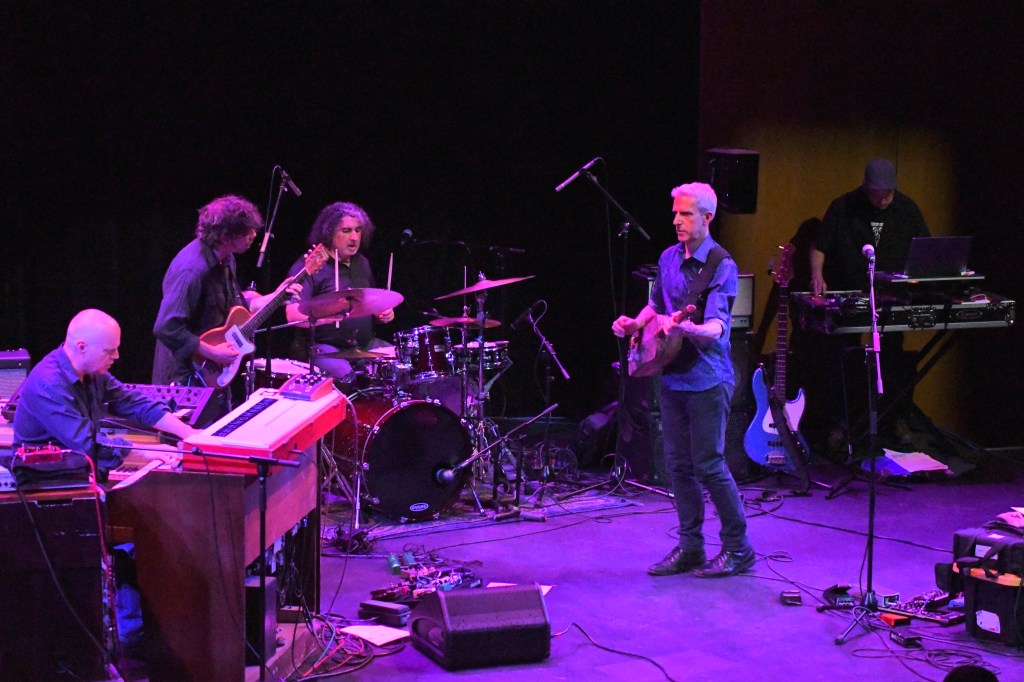
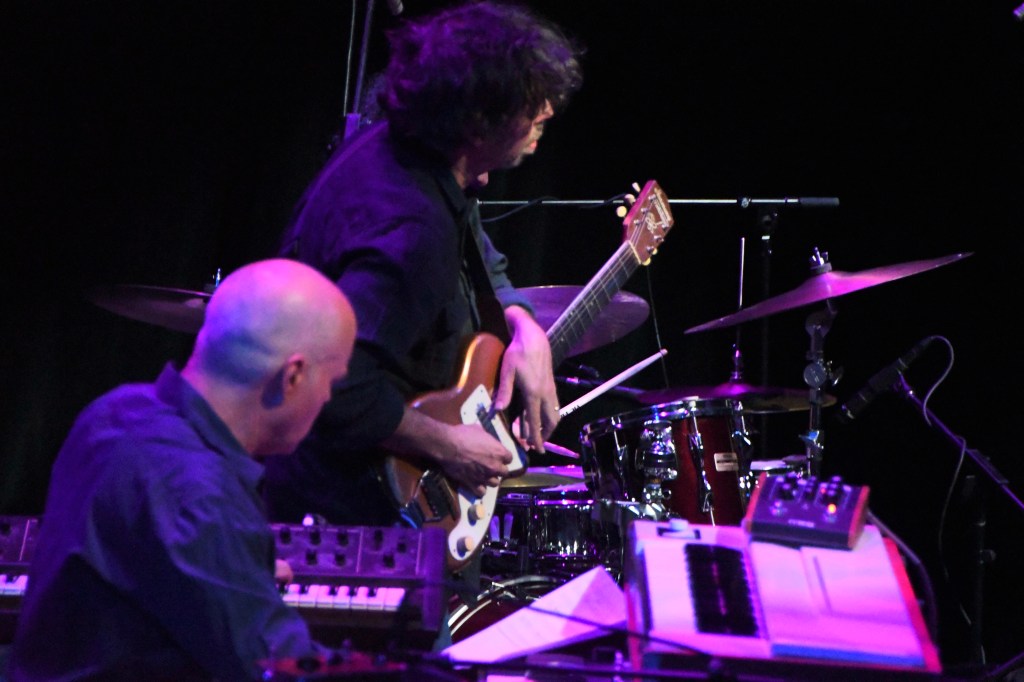
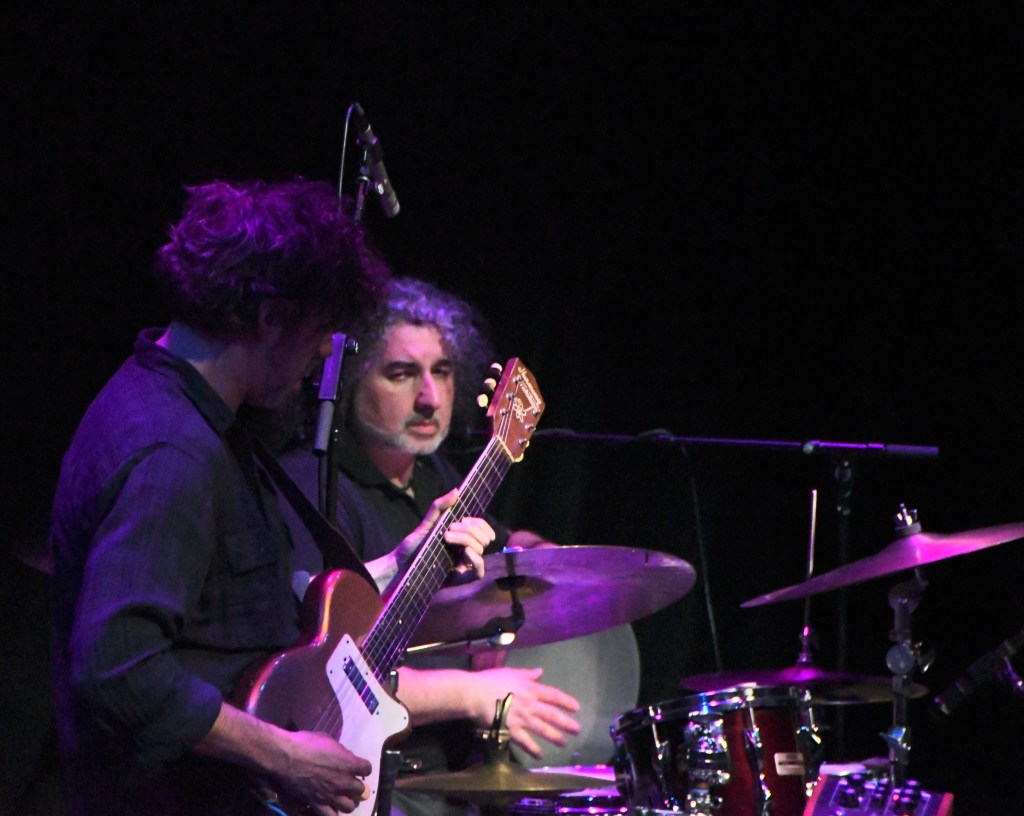
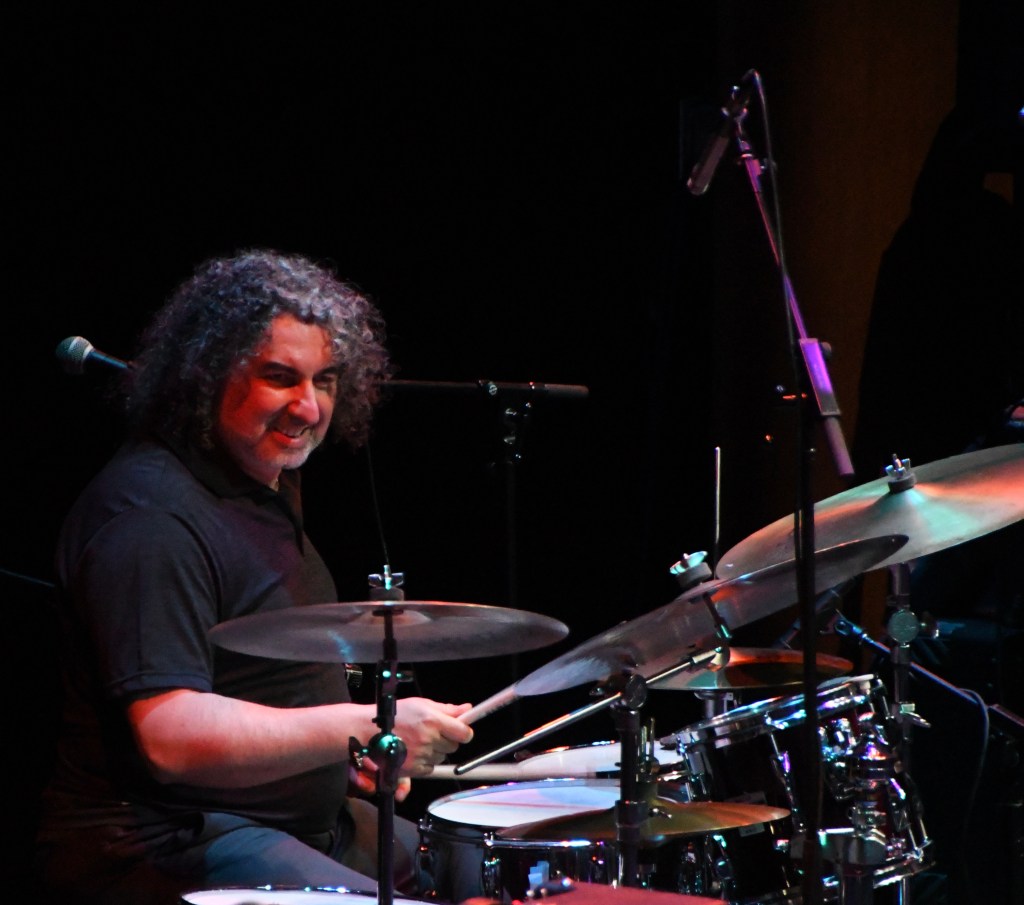
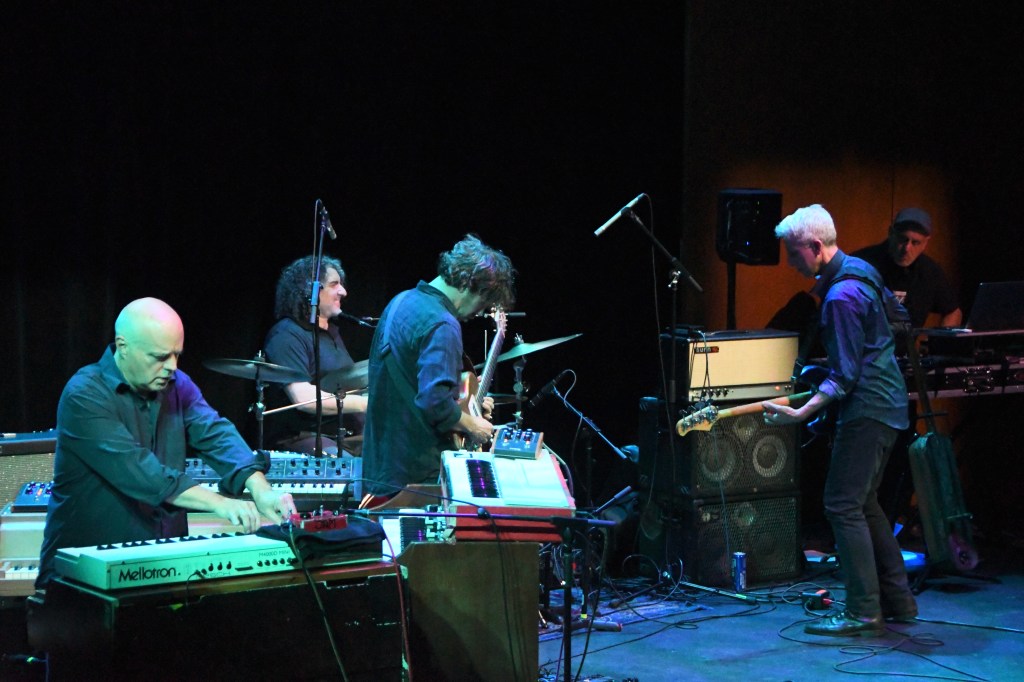
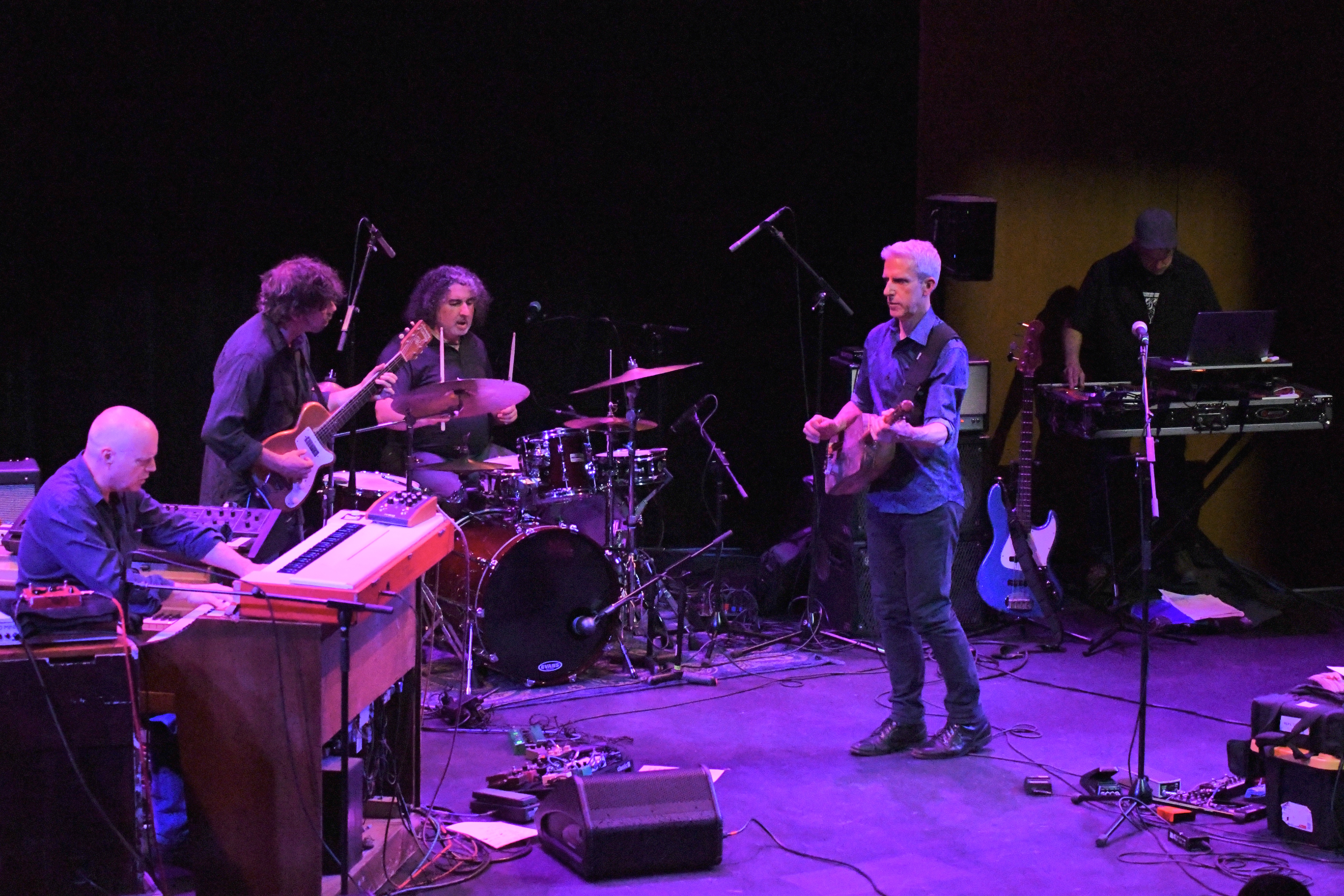
Club D’Elf – from left: John Medeski, keyboards; Scott Metzger, guitar; Fabio Pirozzolo, drums and chant; Mike Rivard, bass and sintir; Mister Rourke, turntables
Even apart from fearlessly mixing up these fresh ingredients, Club D’Elf stood out as a highly elastic ensemble. Leader-bassist Mike Rivard said each show in their current tour features a different line-up, Friday’s show was guitarist Scott Metzger’s first, and keyboardist John Medeski replaced Reeves Gabrels when the guitarist bowed out.
It all worked because they all spoke the same language(s) in complex conversations that required close listening and instant response among superbly skilled players.
It all felt eerie at first, diffuse individual riff noodling in circular patterns that took their time to form into first, a groove; then, a melody. Well, a series of melodies. They wove a multi-part flow of three songs in a seamless 50-minute suite, the most out-there music of the night.
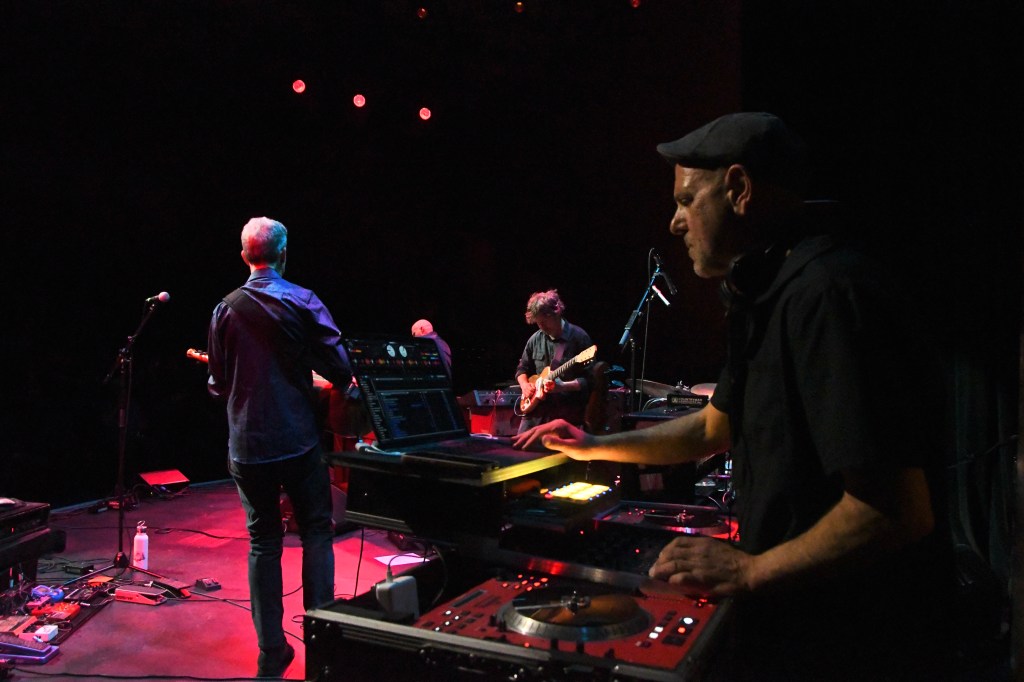
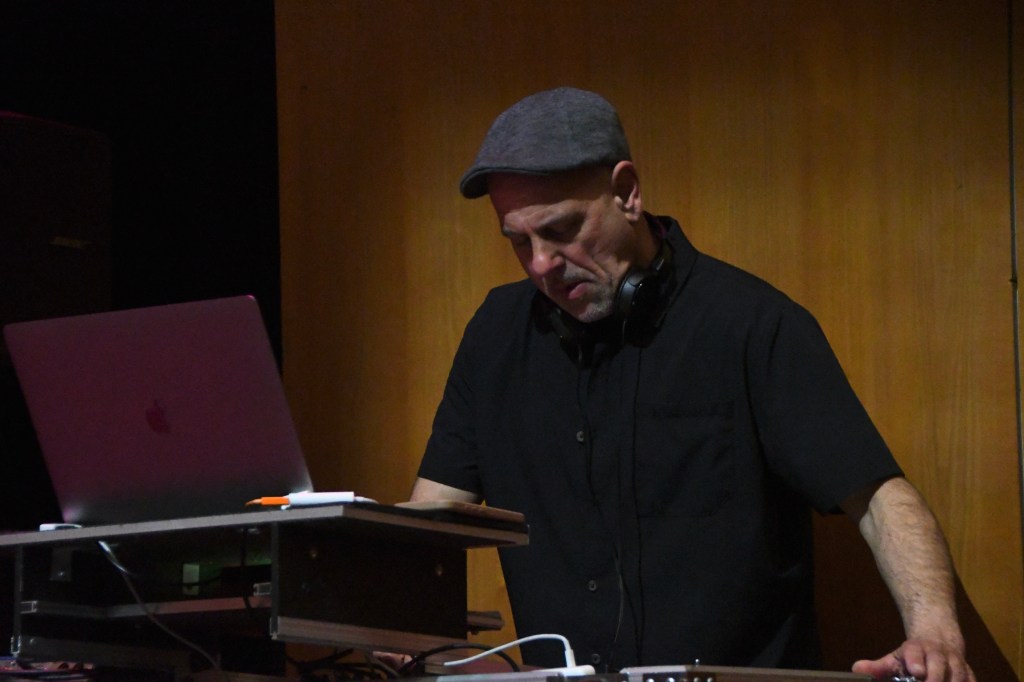
Mister Rourke, foreground, at right, works turntables with, from left, Mike Rivard, sintir, back to camera; John Medeski, keyboards, Scott Metzer, guitar. Drummer Fabio Pirozzolo is behind Rourke
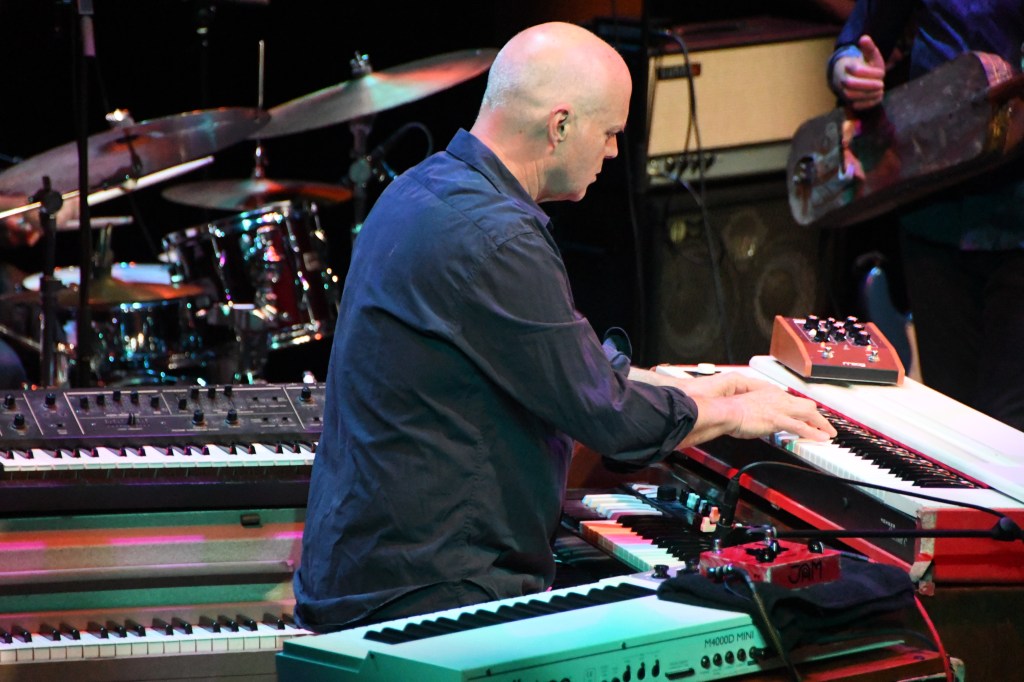
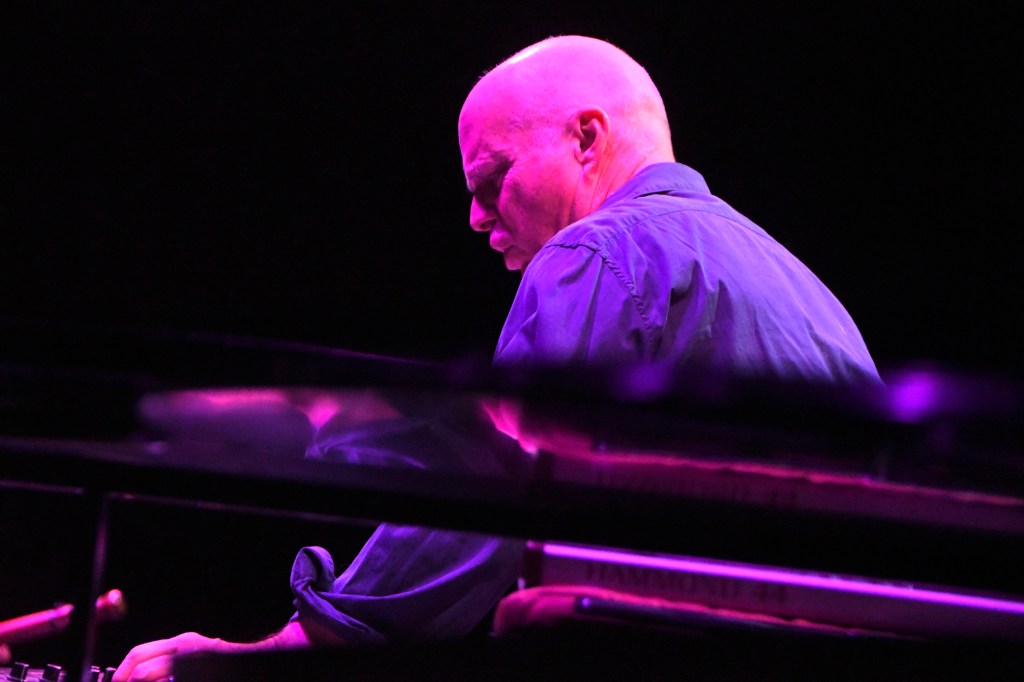
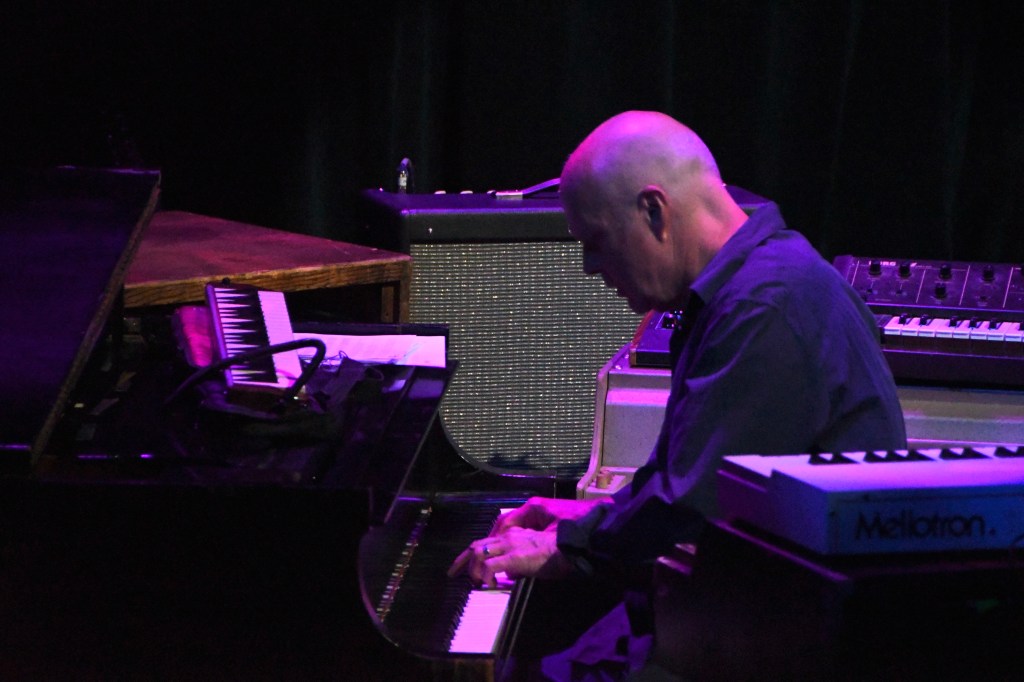
The flow-in music turntablist Mister Rourke had played as fans filed in gradually picked up passengers as the other players joined. Rivard lay down repeating bass lines on a rectangular fretless Moroccan sintir, simple and strong. His right hand hit its gut strings downward at times, like a (pre-Scruggs) frailing banjoist. When he switched to electric bass guitar later, he mostly plucked upwards, conventionally, but kept his distinctive, quietly urgent flavor. Drummer Fabio Pirozzolo kept that same pulse, but decorated it. Metzger’s guitar formed a bridge between bass and drums below and Medeski’s (eight!) keyboards in solos as wild as Rourke’s turntables up top.
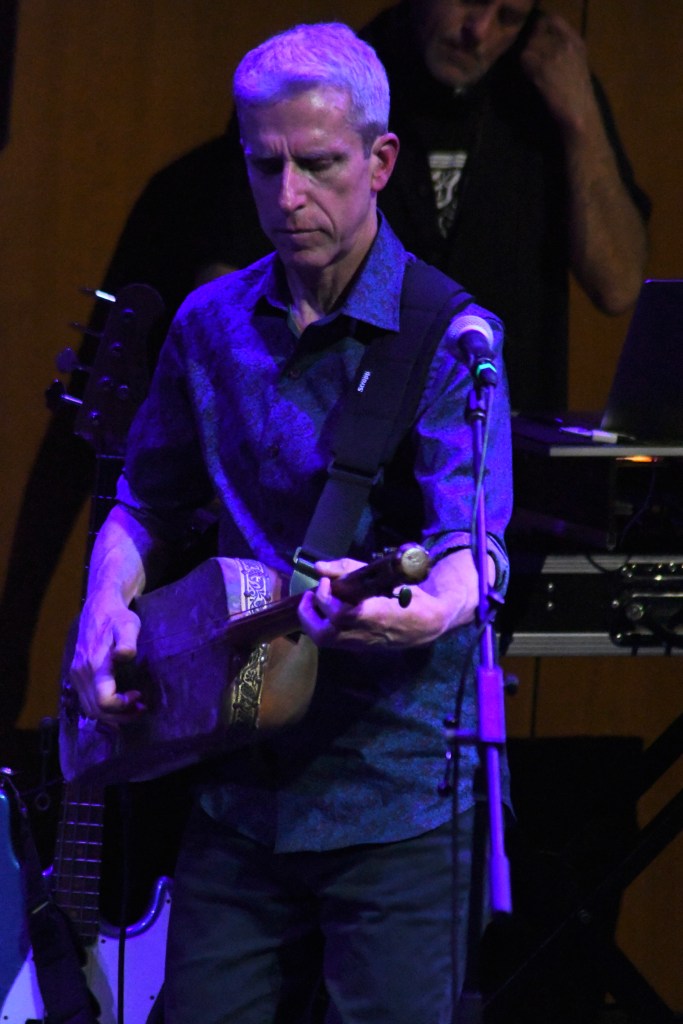
Mike Rivard plays sintir, above; and electric bass guitar, below
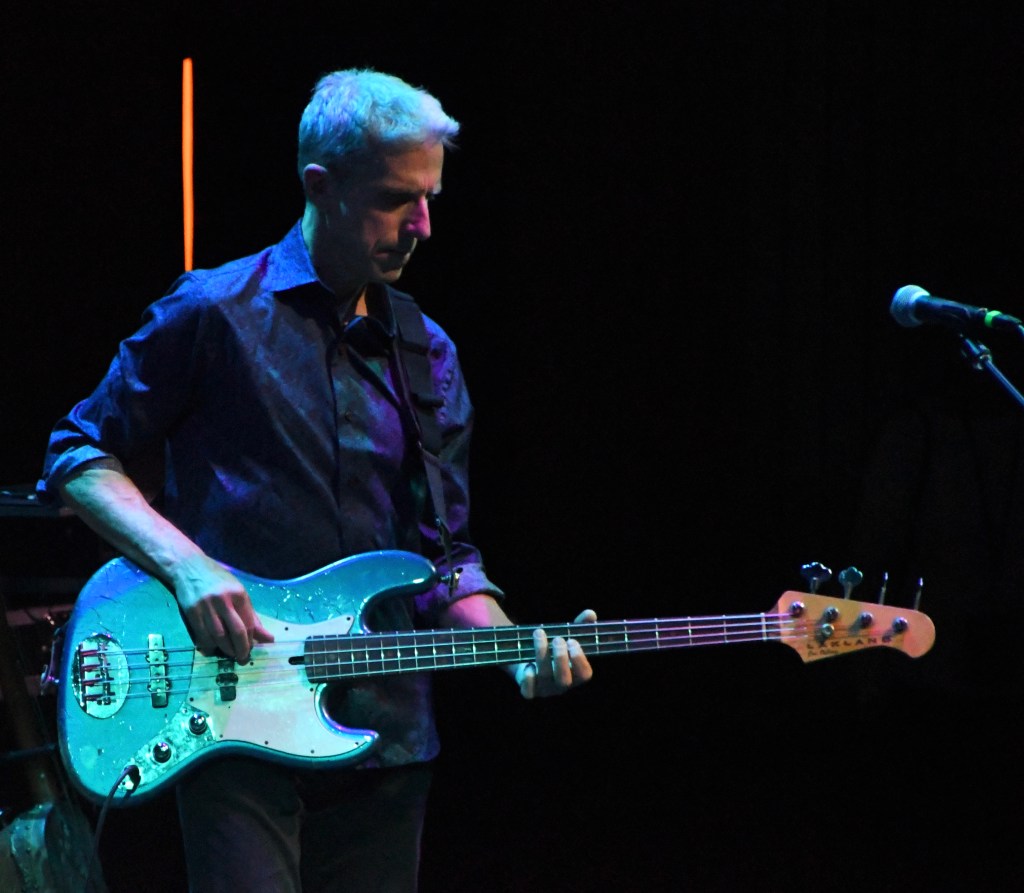
The opening suite pulsated in a happy relentlessness, the aptly named kinetic jam-jazz “Power Plant” cruising hot before simmering down into “Lalla Aisha” with drummer Pirozzolo chanting in the percussive chopped-syllable style Americans first heard in Ravi Shankar’s ragas. In “Dark Fish,” Metzger came into his own, matching Medeski in power riffs.
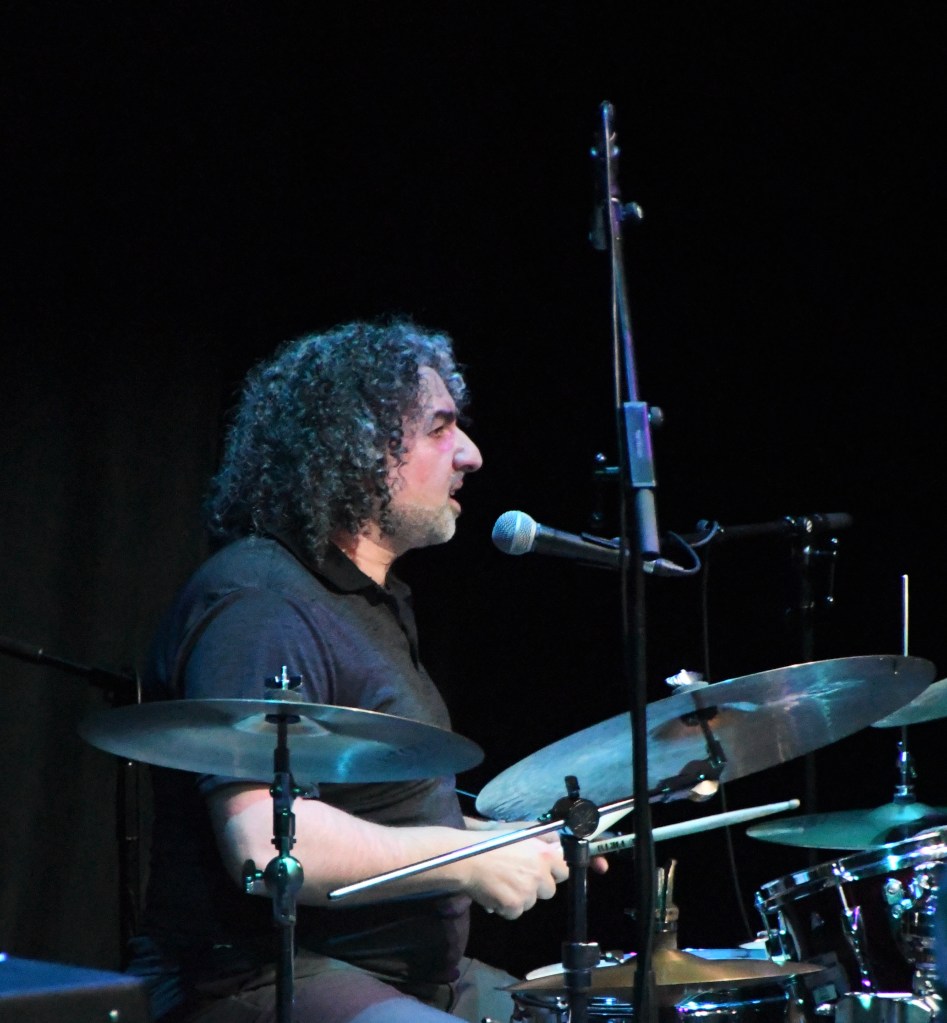
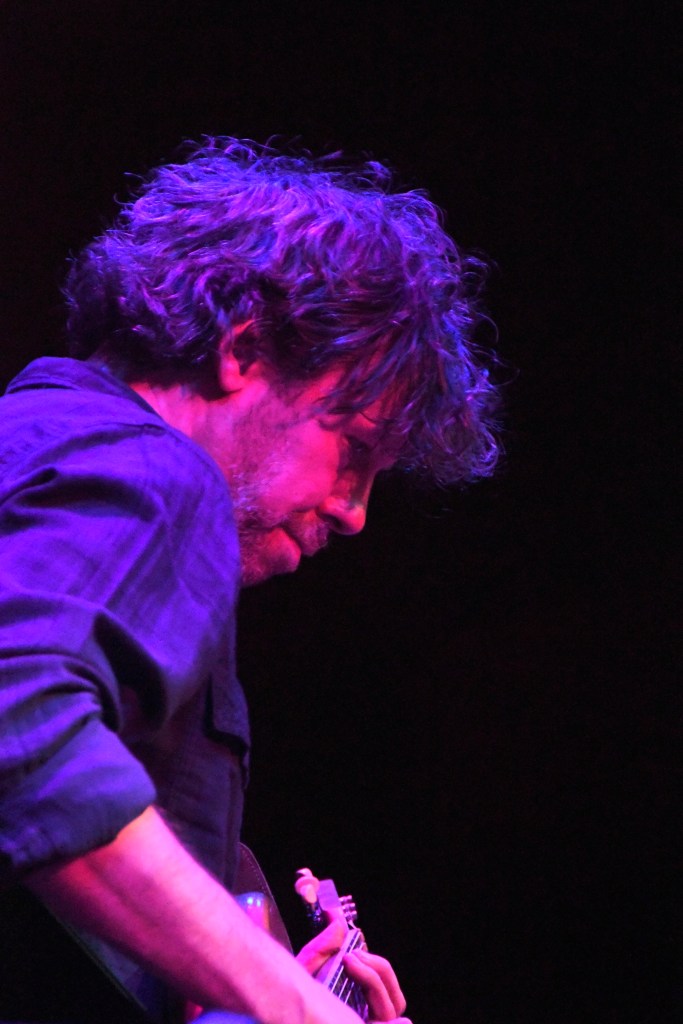
Fabio Pirozzolo chants, above; Scott Metzger riffs, below
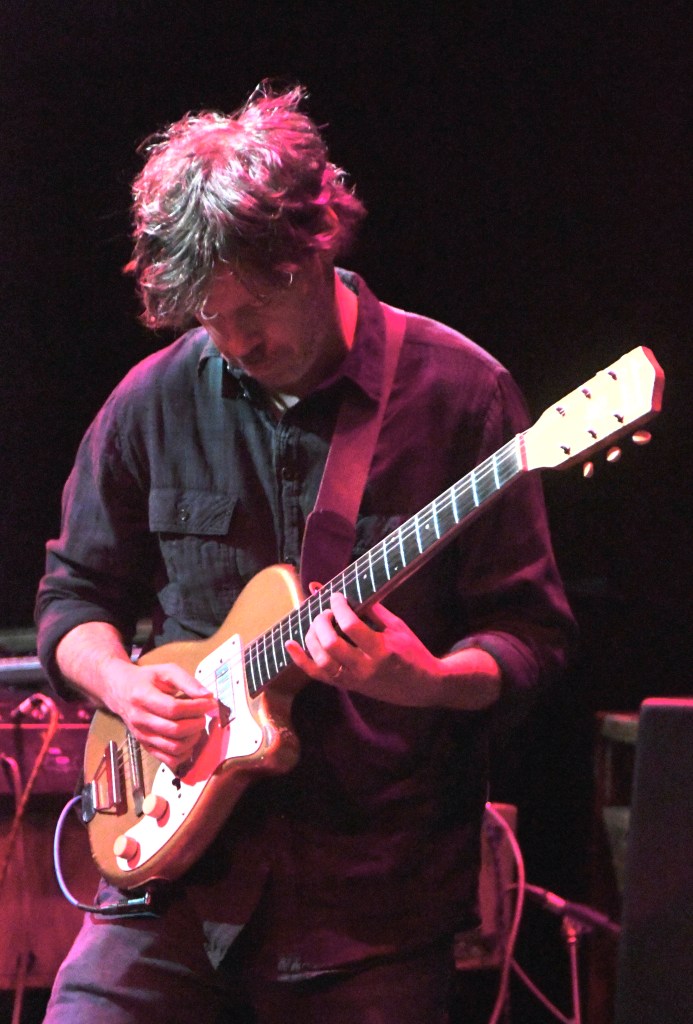
Rivard announced “Bird Song” as a tribute to Jerry Garcia (remember? – the licorice guy), a mellow groove that sprouted more complex beats, like a power tool, with accessories. Metzger co-starred here, too, echoing Garcia-like tones and an explosion of speed strums. As always, Medeski had plenty to say here, too; and not just in fiery solos, either. An ace accompanist, especially on Hammond organ, he kicked back into the rhythm section when Metzger or Rourke soloed.
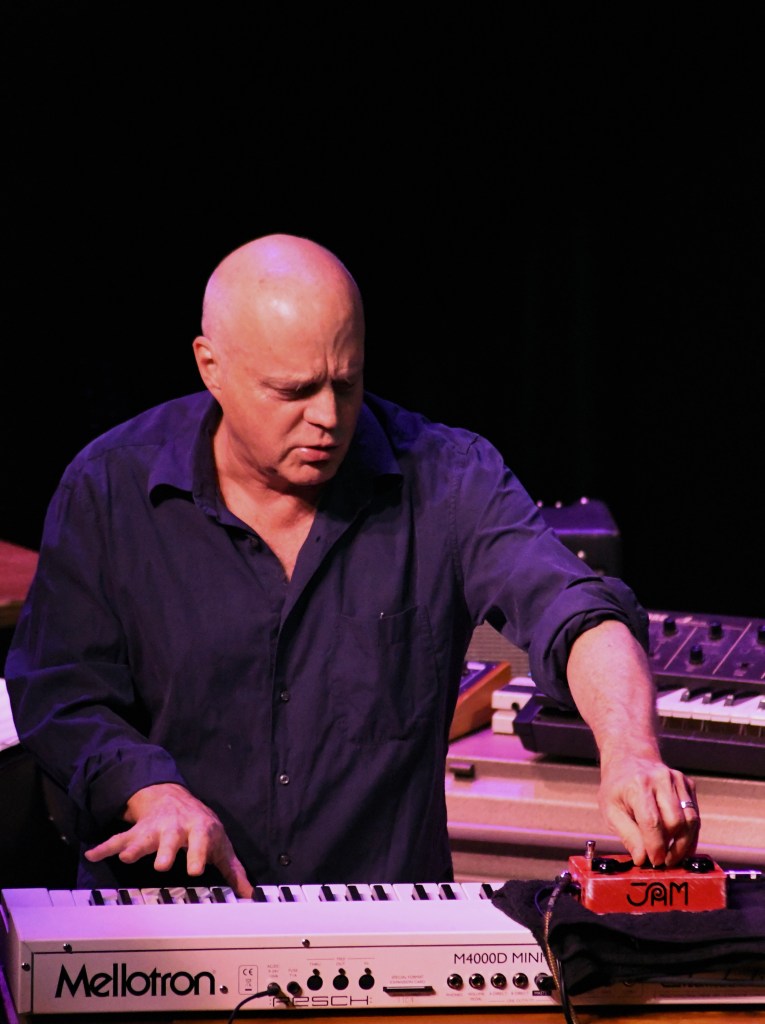
John Medeski plays Mellotron, above; synthesizer as seen through the lid of his grand piano, below; then piano below that
Afterward, Rivard dedicated “Bird Song” to Moroccan-born Brahim Fribgane who brought gnawa trance rhythms into Club D’Elf’s music before his death in 2024.
They’d planned “Second Line” (a new song from their ”Loon and Thrush” album) to end the first set, but held it to start the second instead. This New Orleans funk shuffle started from march-time drums, then added chopped guitar licks like Jimmy Nolen (James Brown’s longtime guitarist) or Leo Nocentelli (the Meters) as Medeski underlined everything with staccato organ riffs.
Here, Rivard seemed to cue everybody back to the head while still in full flight and the second set featured both shorter pieces and propulsive shuffles.
They soon returned to the Grateful Dead songbook in “New Speedway Boogie,” though they scrawled new rhythms across it. All the beats were there, but the accents were different. Metzger and Medeski both soloed over the moon and discreetly echoed Garcia and original Dead keyboardist Ron “Pigpen” McKernan in their phrasing.
Rambunctious, hard-hitting riffing cast a playful mood in the new “Left Hand of Clyde.” This loose, fun number beautifully set up Zappa’s “King Kong.” As with the Dead tunes, they aggressively played around with it, returning to its majestic riff again and again after explorations far, far away.
Like licorice to licorice lovers, fans really liked it. A few danced down front while more moved at the theatre’s back corners and in standing, swaying islands, wherever. Studious instrument and riff nerds industriously took it all in. And it was a lot to take in.
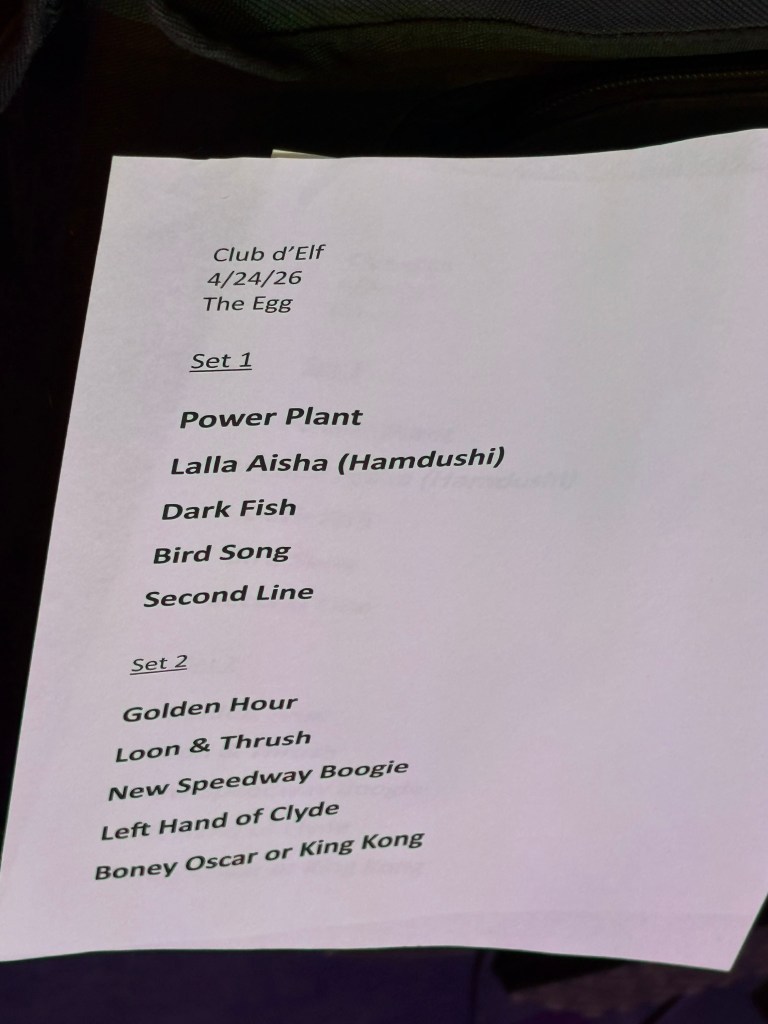
Club D’Elf dove off the set-list here at times
FLASHBACKS, SOME WITH FUR
I honored Frank Zappa’s “King Kong” by donning a full gorilla suit when Zappa’s Bongo Fury tour, featuring Captain Beefheart, played Albany’s Palace Theatre on April 24, 1975. This was, in several respects, a spectacularly hot night.
Captain Beefheart returned to Albany with his Magic Band, playing J.B. Scott’s on November 29, 1980. No gorilla suit that night, but some seriously hairy music.
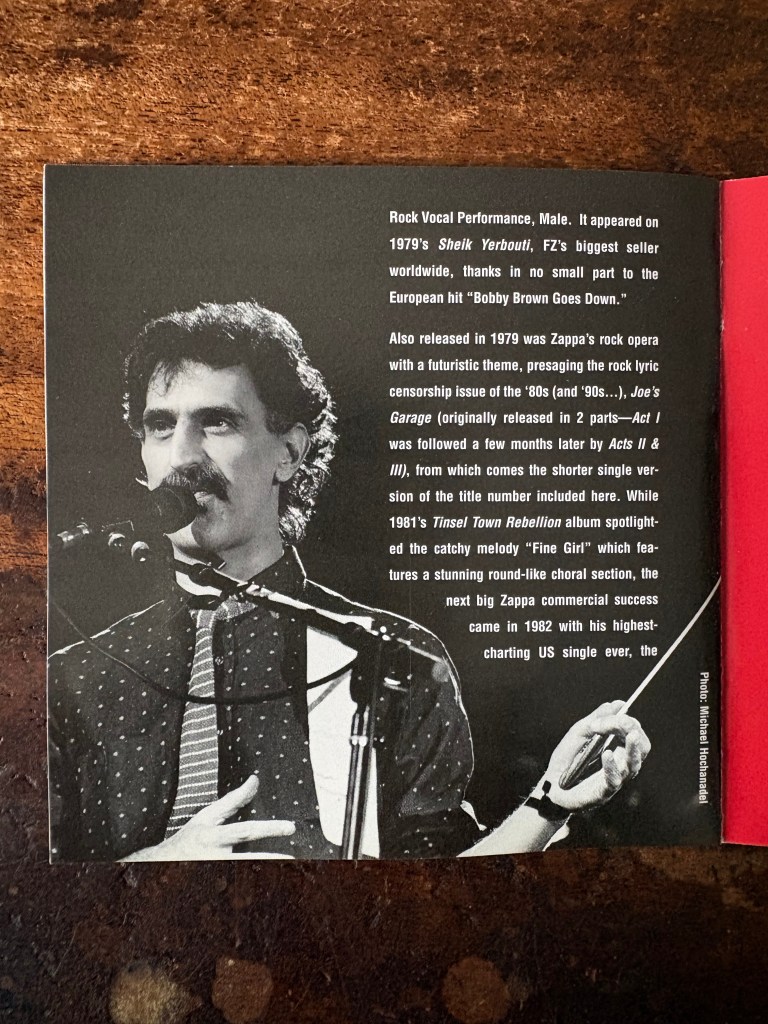
Zappa launched his last-ever tour Feb. 2, 1988 at the Palace after a week of rehearsals here. He kindly invited me to the sound-check that afternoon for a memorable double feature. Rykodisc published my photo of Zappa conducting the 14-piece band he led on that tour in their compilation album “Strictly Commercial: The Best of Frank Zappa”
Gallery, below