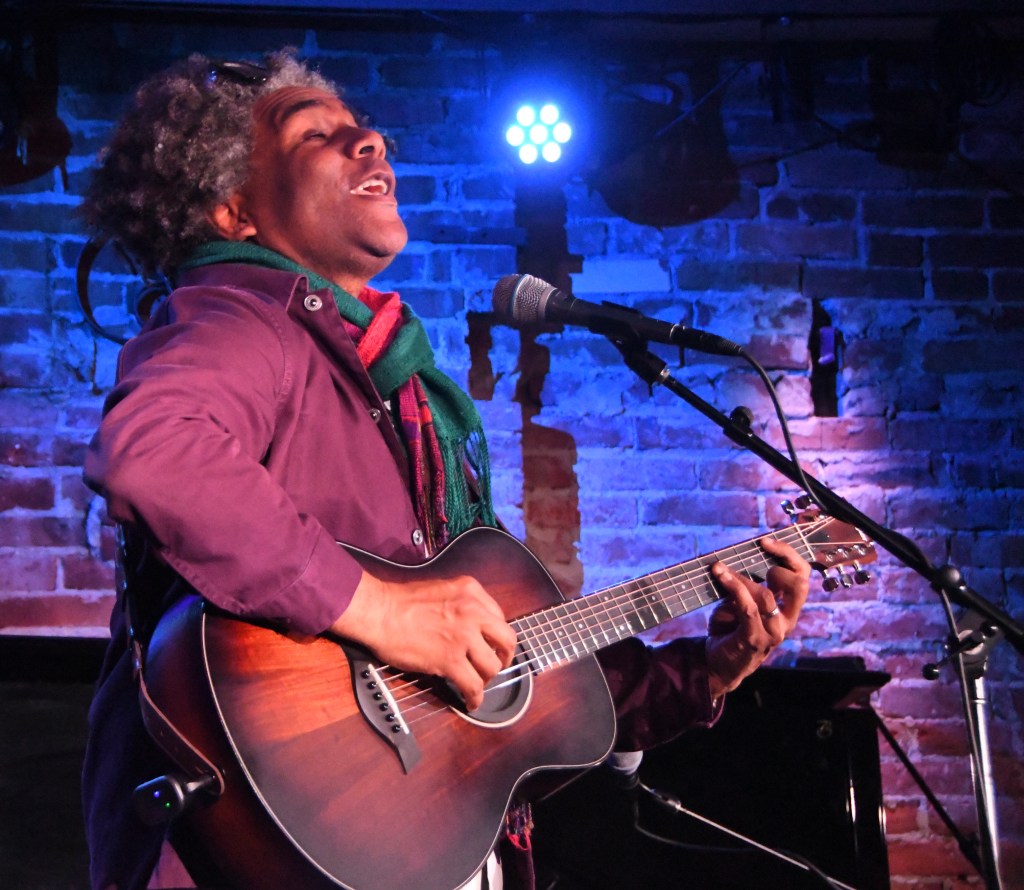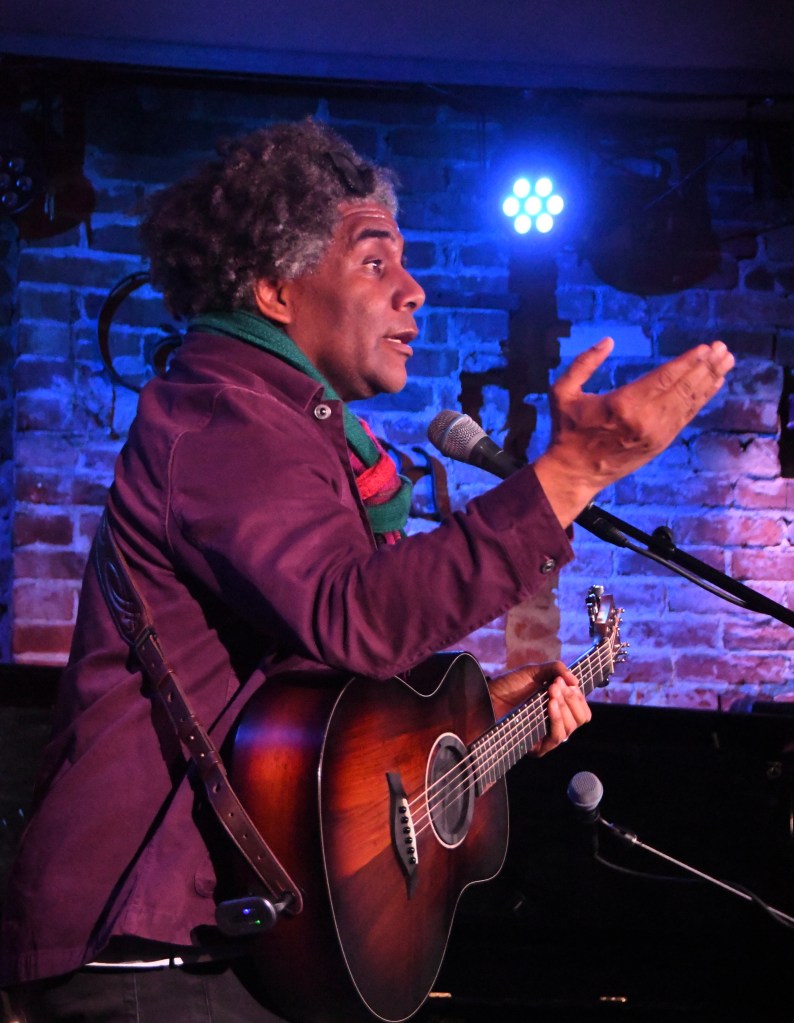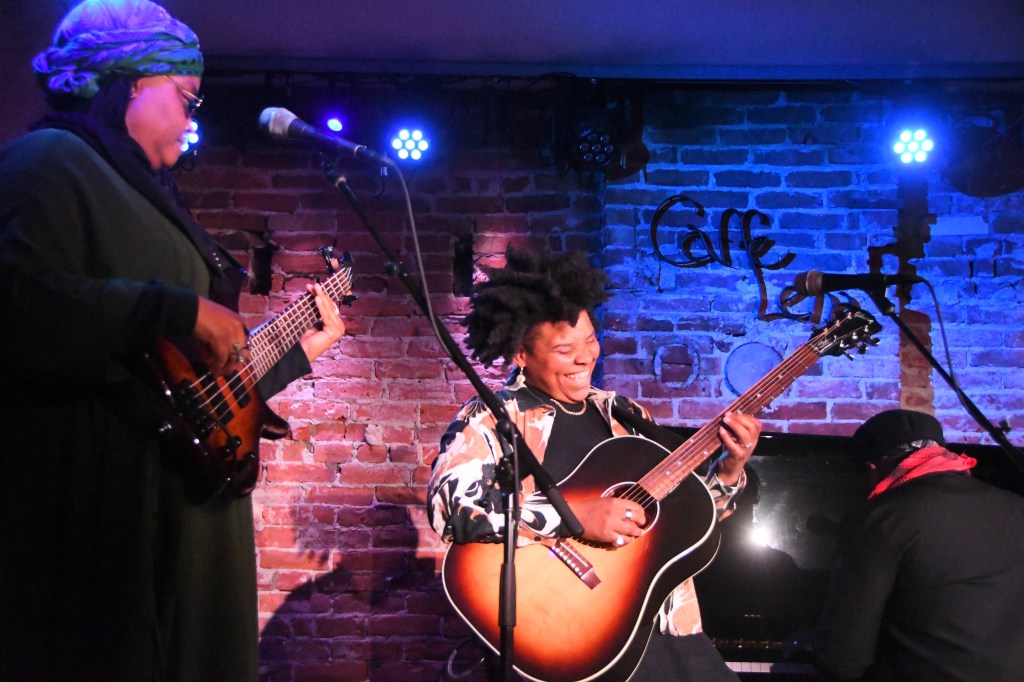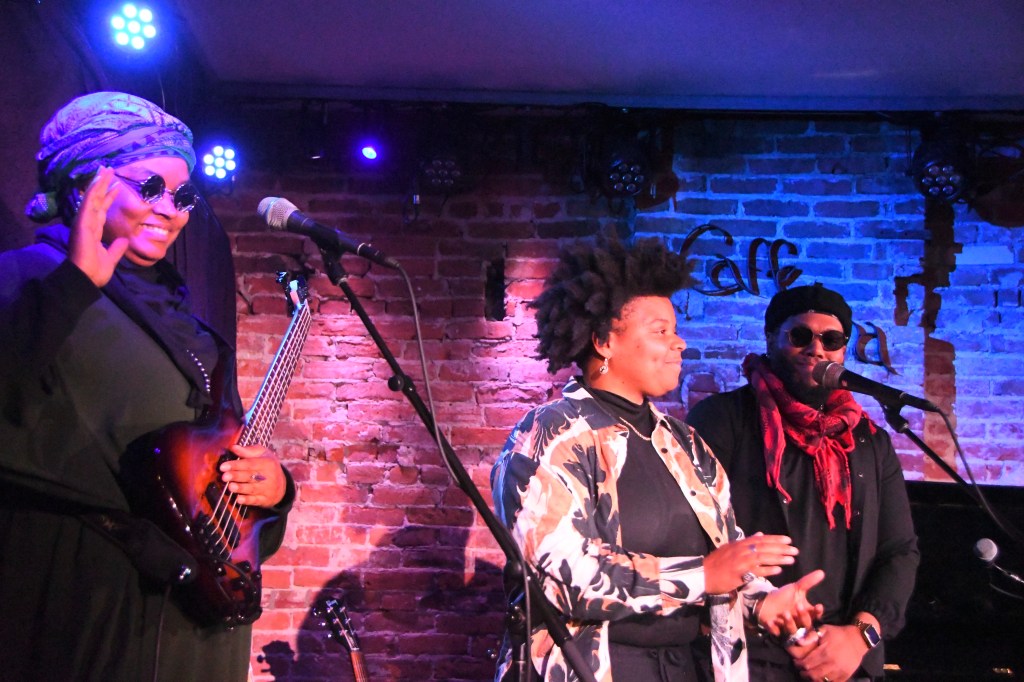
Catherine Russell, Twice, at Caffe Lena

Catherine Russell Saturday, March 28 at Caffe Lena; Two shows in the Peak Jazz Series sponsored by Joe and LuAnn Conlon in memory of Corinne Simmons

Car trouble and a dental problem kept me from getting to Saratoga Saturday for either of Catherine Russell’s two shows. (Painless, so far; but ugly – thanks for asking)

At showtime, glum, I remembered my subscription to Caffe Lena TV that live-streams shows fans with car trouble and dental problems can’t get to.

At first, I bumbled, failing to connect. When things started working, 20 minutes in, only bassist Tai Ronen and pianist and accordion player Ben Rosenblum flanked Russell onstage; guitarist, Matt Munisteri nowhere in sight.
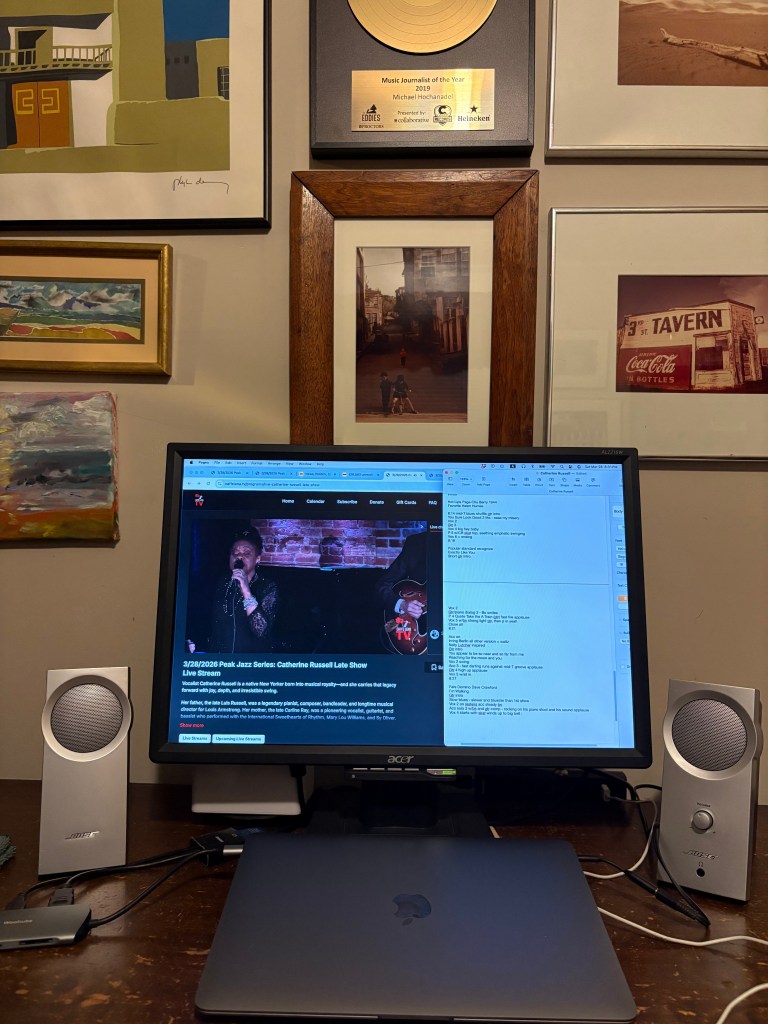
Catherine Russell Sings at Caffe Lena – on My Desk

They were swinging “The Best Things Happen While You’re Dancing,” a light-footed romp Rosenblum’s piano set aglow with an antique but lively aura.

They slowed into Fats Domino’s “I’m Walkin’,” a mellow, rocking blues shuffle with Rosenblum switching to accordion under Russell’s torchy, belted vocal that used repeats to let things cool down. After, she said she wanted Rosenblum to “put a little energy in it!” Big laughs.

Munisteri arrived then, Russell decrying travel troubles as he plugged in and joined the intro to “Fortune Telling Man,” a lively musing on possible infidelity: her man is a fiddler, was he “fiddling around?” Russell sang her suspicion with wry fatalism.

Noting our days getting longer, she fired up “(There Oughta Be a) Moonlight Saving Time,” a happy love ballad with Munisteri in graceful Joe Pass lyrical mood and Rosenblum definitly putting energy in it at the piano; both earned applause.

Russell introduced “At the Swing Cats Ball” by recalling she’d found this 1938 party number, composed by her bandleader father Luis, while clearing out her mother’s home. No sadness here: big fun at a brisk tempo, engaging melody and joyful spirit in superb solos by accordion and guitar.

Russell praised radio where she first heard “If it Ain’t One Thing It’s Another,” cheerful piano underlining lyrics of trouble following us around. Everybody soloed, then ganged up on the song.

She revved up in Ray Charles’s bouncy “Ain’t That Love,” a spunky blues with a high, swooping vocal and sharp solos.

Slow guitar introduced the wistful “My Ideal,” a musing quest for love with Russell’s voice expressing hope – a bit naive, maybe – then disappointment, then optimism, her emotional range as impressive as her mastery of melody. 

She said a student introduced her to “Now You’re Talking My Language,” the 1937 Chu Berry and Hot Lips Page jump-blues romp. Everybody soloed, to happy applause; including a rare bass breakout by Ronen. Another antique followed, “You Stepped out of a dream,” starring Rosenblum’s accordion and a subtle fade Russell sang to great effect.

Things turned bawdy in the sly kiss-off “You Got the Right Key, But the Wrong Keyhole,”* a slow-drag blues of mismatched lovers. Munisteri got awed applause for an extra-fine solo of rapid single-note runs chasing the melody around.

Russell told the audience: “Without you, this is a rehearsal!” Then she closed, all happy upbeat, by claiming Nat King Cole’s spry “Errand Girl for Rhythm” for her own.

No encore after the 5 p.m. first show; they had another show, at 8.

As the Caffe emptied and refilled, I thought Russell may be the most superbly deserving Nepo kid this side of Rosanne Cash, whose band Russell sang in years ago at the Egg. Russell did cite her father Luis, composer of tunes in each show. On her own terms, backed by a cozy ensemble as skilled as she is, Russell is one spectacularly effective singer and a tasteful curator of a vintage repertoire. She said she doesn’t sing anything newer than 70 years old (her age at her next birthday), and she doesn’t need to.

I watched the second show, curious to see what was different from the first.

They opened with the upbeat “Now You’re Talking My Language;” they’d played it later in the first show. Other first-show songs also hit in the second, but Russell also chose different songs by composers whose tunes she sang in the first show.

Bluesy guitar set up Junior Wells’s shuffle “You Sure Look Good to Me,” Russell’s voice strong in exultant “Hey, BABY!” shout-out, then a skat chorus amid emphatic, seething swing.

They seemed looser in the second show, Munisteri’s guitar showing, even more closely than earlier, how elegant jazzman Joe Pass and brash T-Bone Walker are riff cousins of a sort. A brisk, brash pianist, Rosenblum was even more impressive rocking around the accordion. Steadfast, tasteful, Ronen gave the drummer-less band plenty of rhythm.

In “Exactly Like You,” Munisteri briefly quoted “Take The A-Train” as everybody onstage looked around and grinned.

Guitar introduced “Reaching for the Moon” at a tempo too fast to feel yearning, but blinding fast accordion erupted out of the groove to own the song, until Munisteri reclaimed it, and equal applause.

“I’m Walkin’” rocked stronger with Munisteri than it had without him in the first show, and Russell rolled from staccato skatting into a big, belted finish.

In her father’s “Bocas Del Toro” about seaside landscapes in his native Panama, Russell and the band went Latin, Rosenblum’s accordion and Munisteri’s guitar alternating single-note runs with chords. They followed with another Luis Russell tune, the straight-ahead “At the Swing Cats Ball,” stripped down at the end to Russell’s voice and Ronen tapping his bass.

In Ray Charles’s rocking “I Don’t Need No Doctor” Russell’s high notes handed off to Munisteri’s low chords; they teamed up again at the ending in fast repeats fading away.

The kiss-off “I Just Refuse to Sing the Blues” combined defiance with the pain of love lingering past its time, Munisteri at his most lyrically delicate.

Aiming “Don’t Advertise Your Man” to “the ladies,” Russell cruised through the Sippie Wallace cautionary tale that Bonnie Raitt made a big hit, first offering advice, then warning she might not be trustworthy, either. Guitar and piano pulsated with melodic energy in emphatic rhythms here.

In Slim Gaillard’s bouncy calypso “Make It Do,” Russell sang of adapting to changes in fates and places, blithe and flexible rather than resentful or resisting. She updated its auto/lifestyle references from Cadillac versus Ford to Mercedes versus Toyota. This stretched more than most, its tropical beat was fun, all around.

Russell’s last notes at the end of her closer “Errand Girl for Rhythm” were high as any in ether show.

Russell’s next album, recorded live at Jazz at Lincoln Center, will include songs she also sang Saturday at Caffe Lena, really well.

The next show in Caffe Lena’a Peak Jazz Series stars guitarist Charlie Ballantine on April 30.

* Here I have to mention NRBQ’s similarly titled rocking romp “You Got the Right String, Baby, But the Wrong Yo-Yo.” You knew if I could make an NRBQ connection, I would.
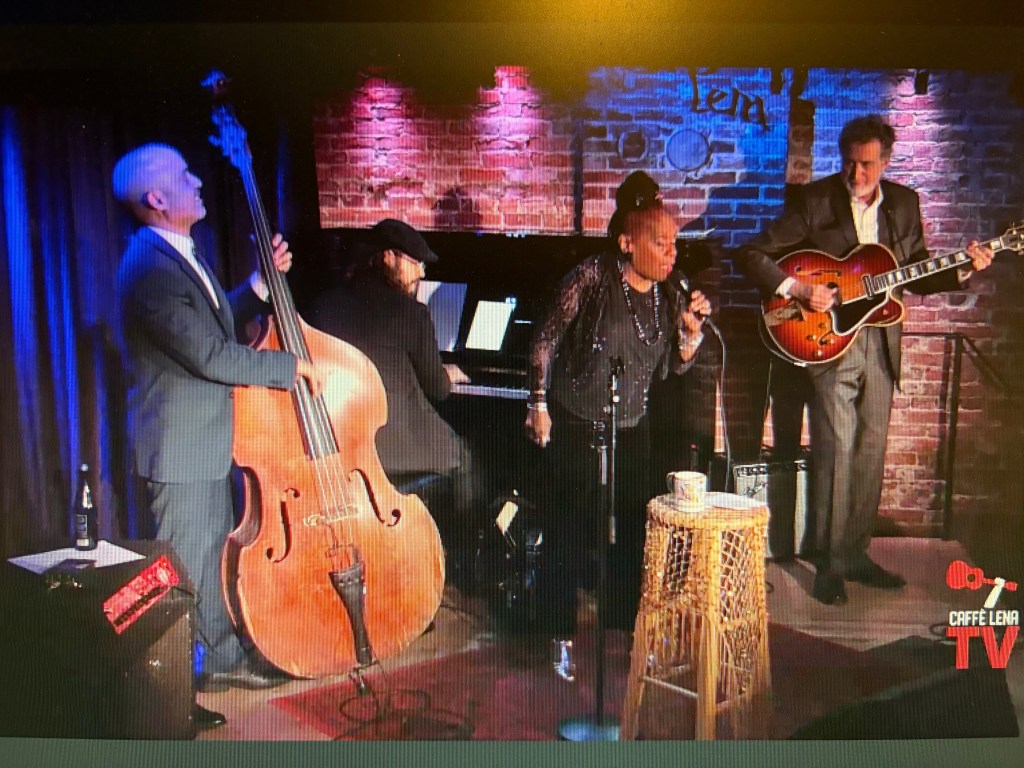
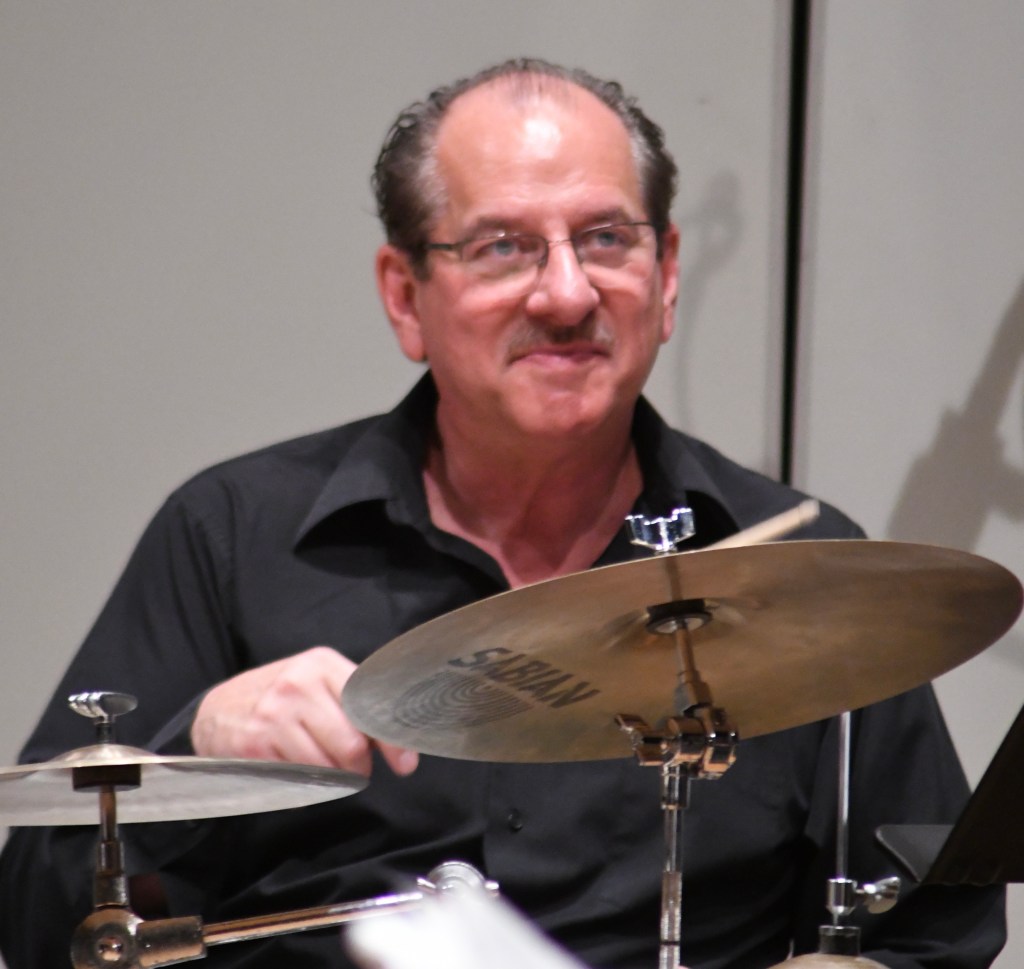
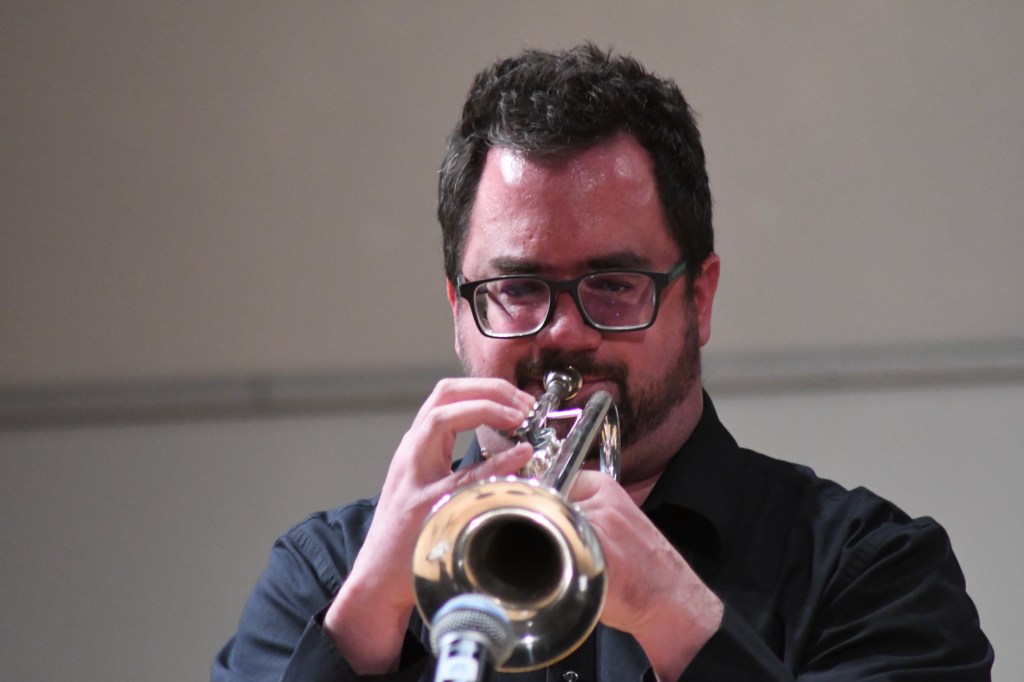
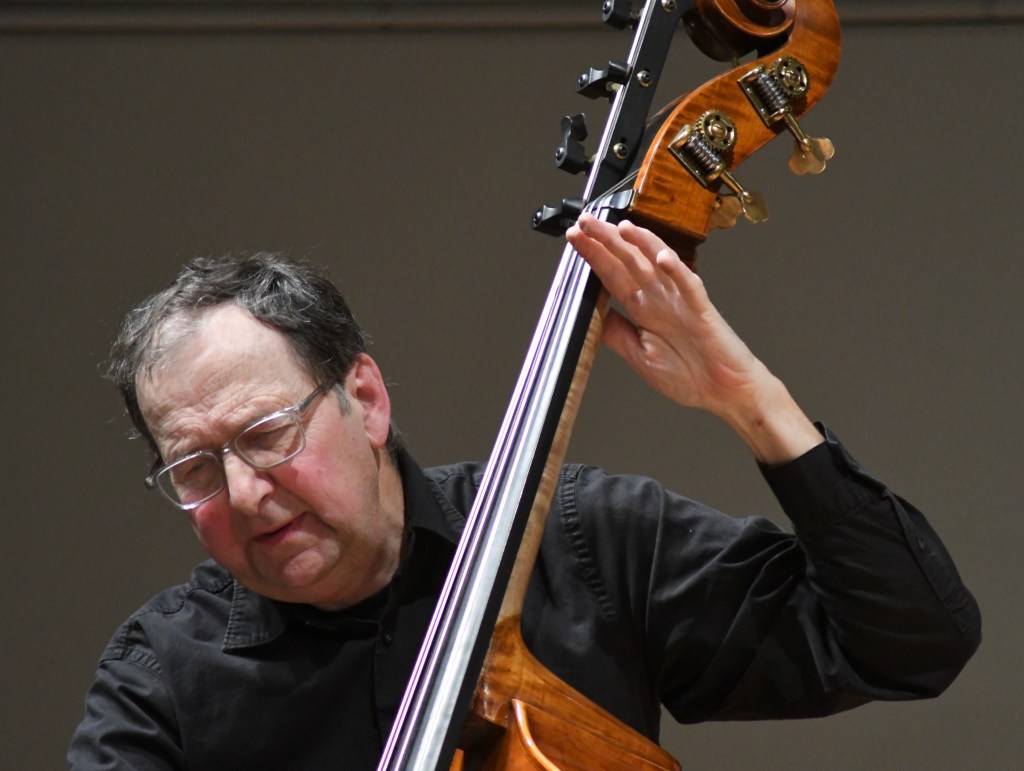
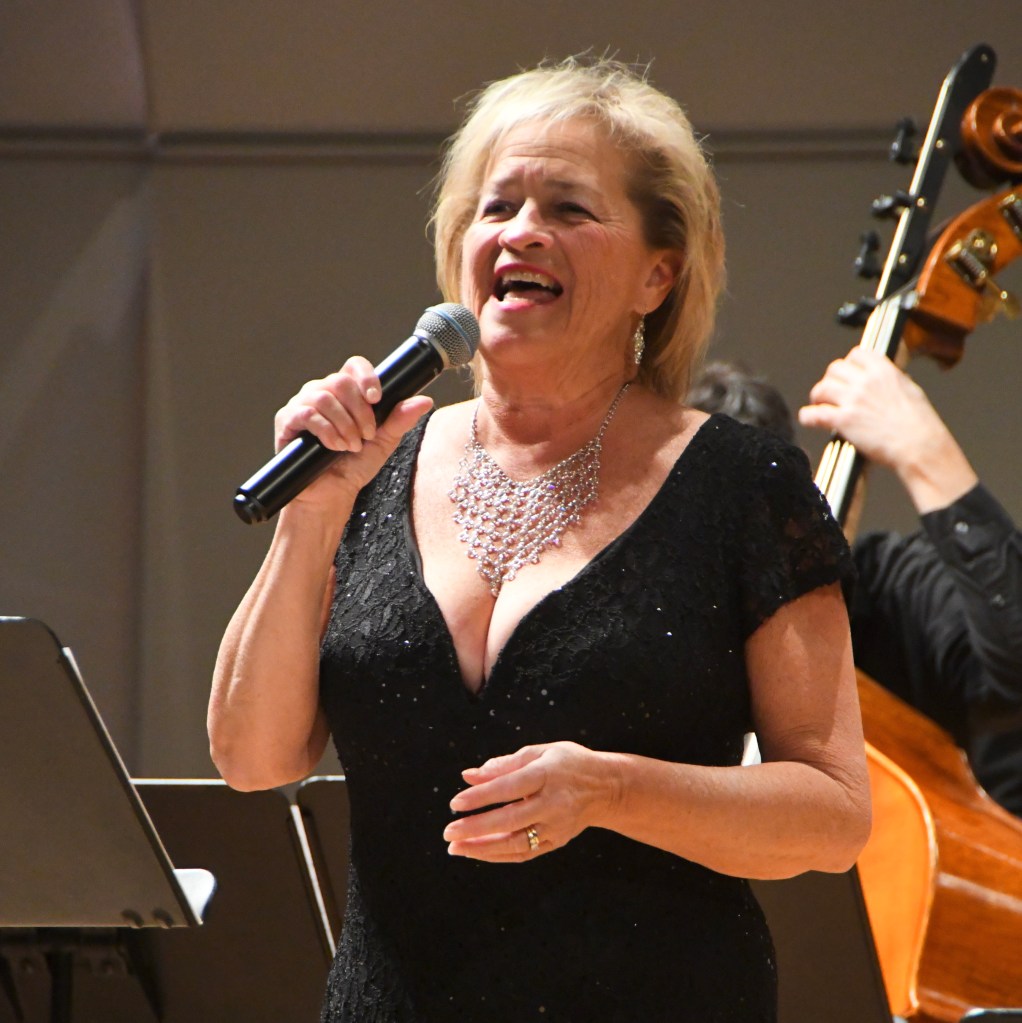
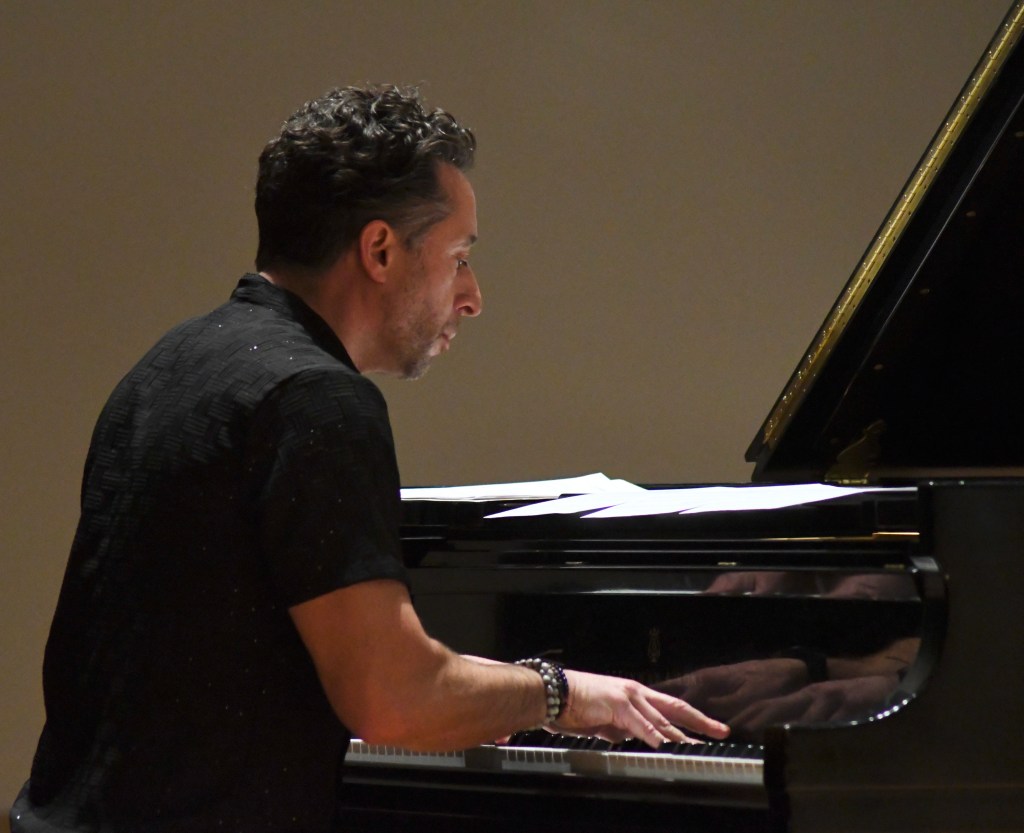
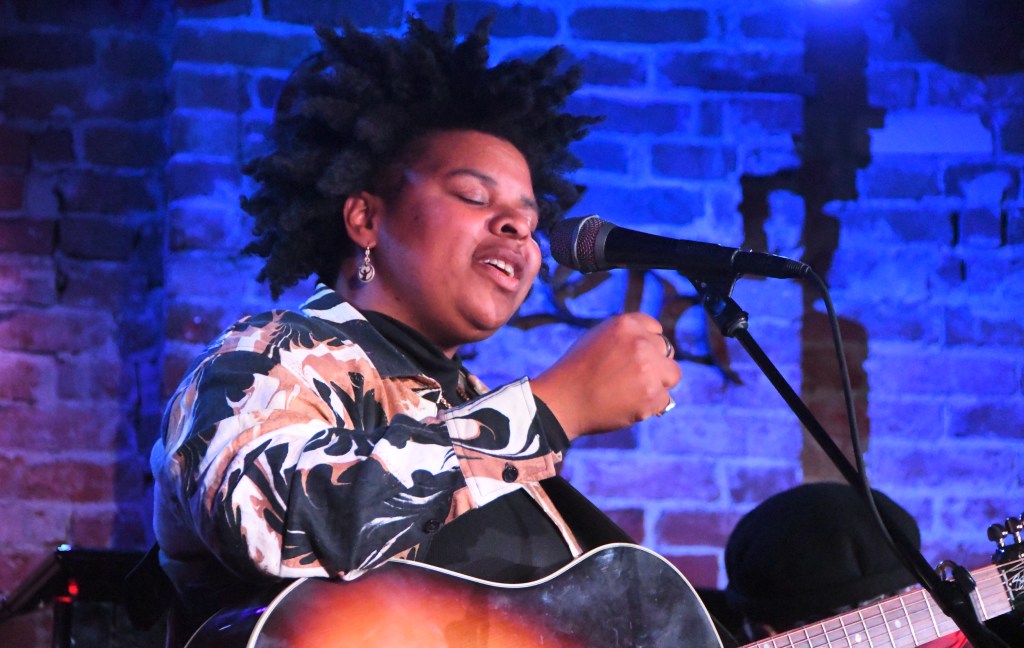
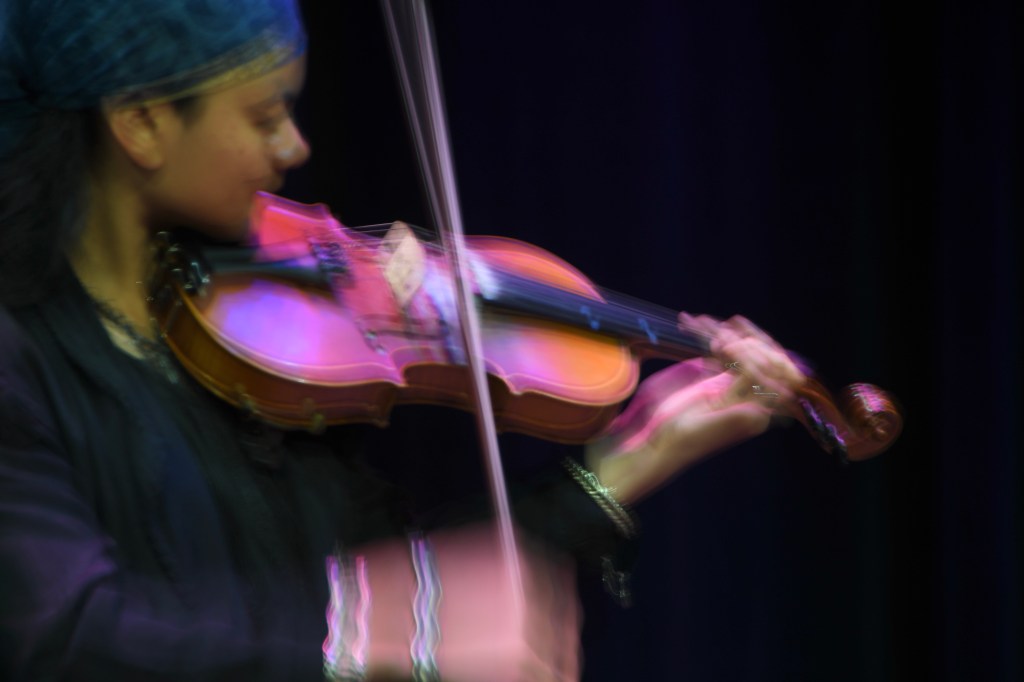
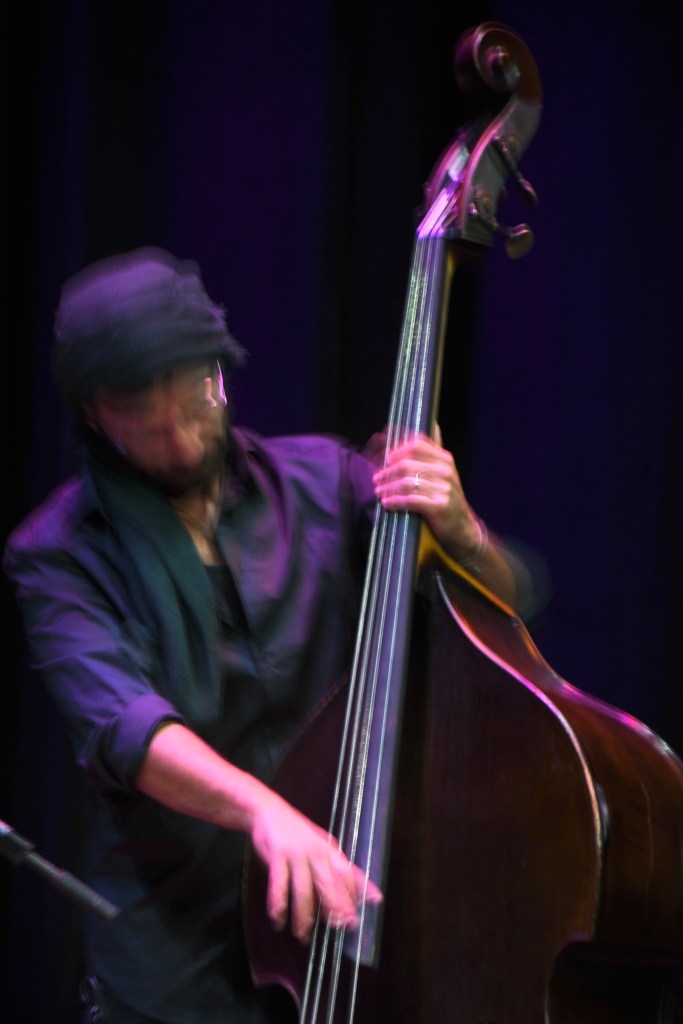
From left, Tal Ronen, bass; Bob Rosenblum, piano (also accordion); Catherine Russell, vocal; Matt Munisteri

First Show (Connected to the live stream late: 5:20 p.m.)

The Best Things Happen While You’re Dancing

I’m Walkin’

Exactly Like You

Fortune Telling Man

Moonlight Saving Time

At the Swing Cats Ball

If it Ain’t One Thing It’s Another 

Ain’t That Love

My Ideal

Now You’re Talking My Language

You Stepped out of a Dream 

You Got the Right Key but the wrong Keyhole

Errand Girl for Rhythm 

6:24 end

Second show 8:09 start

Now You’re Talking My Language

You Sure Look Good To Me

Exactly Like You

Reaching for the Moon

I’m Walkin’ 

Bocas Del Toro 

At the Swing Cats Ball  

I Don’t Need No Doctor

I Just Refuse to Sing the Blues

If It Ain’t One Thing It’s Another

My Ideal

Ain’t That Love 

Don’t Advertise Your Man

Make It Do

Errand Girl for Rhythm 

9:23 end

Empire Jazz Orchestra: A big sound, by a big and united ensemble, in support of a worthy enterprise

Review: Empire Jazz Orchestra Thursday, March 26, 2026 at SUNY Schenectady County Community College Music School Carl B. Taylor Auditorium

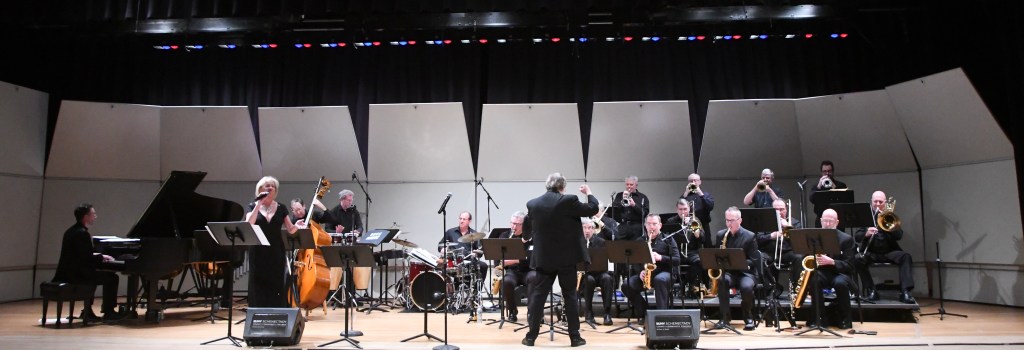
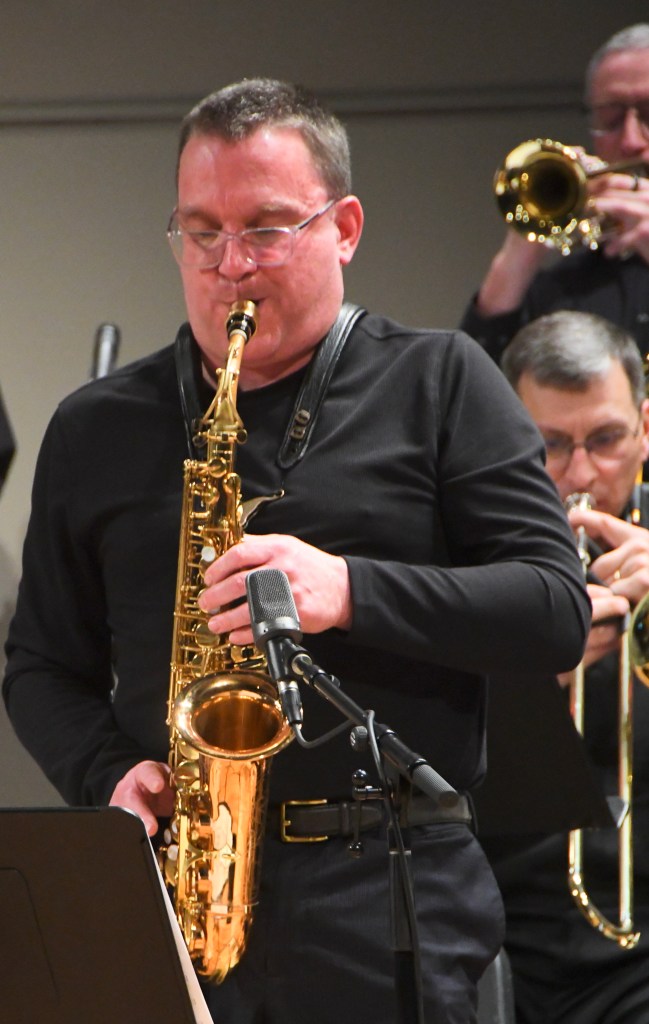
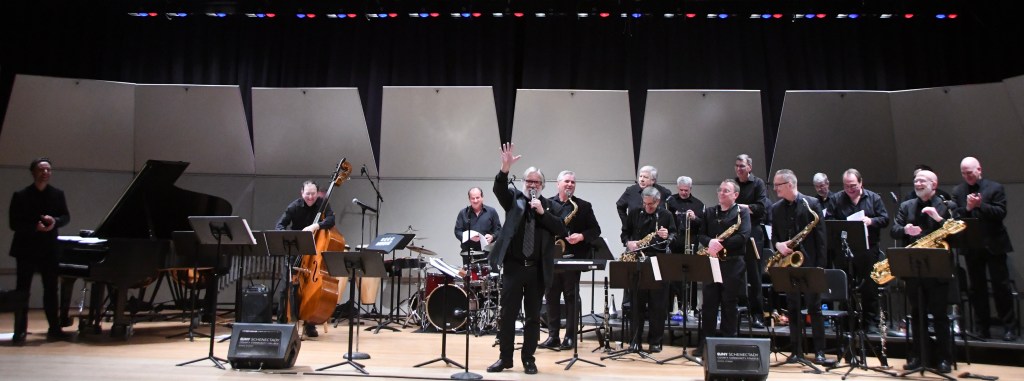
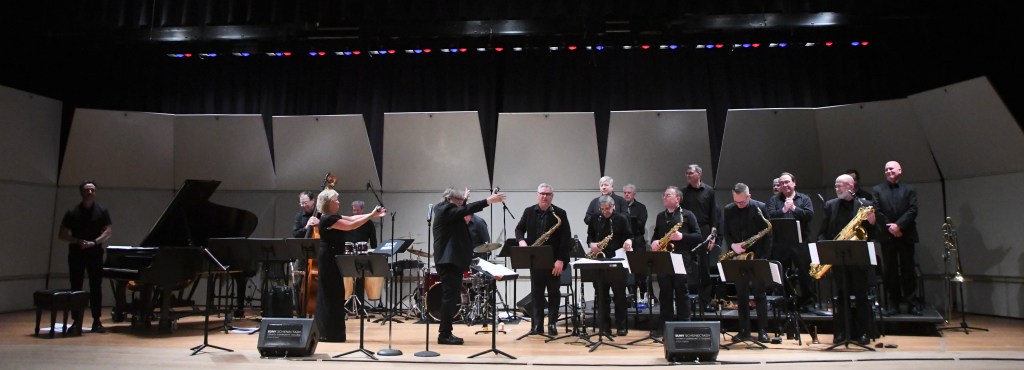
“Not bad, for just one rehearsal,” noted Bill Meckley, including his 18-piece Empire Jazz Orchestra (EJO hereafter) in his claim Thursday. Reviving EJO on a visit from his Kentucky home felt like a labor of love on both sides of the bandstand at the SUNY Schenectady County Community College music school Carl B. Taylor Auditorium. His hand-picked crew of area jazz virtuosos followed him through musical history in two sets heavy on vintage tunes, but sparkling in the spirit of shared expertise, united in the moment.

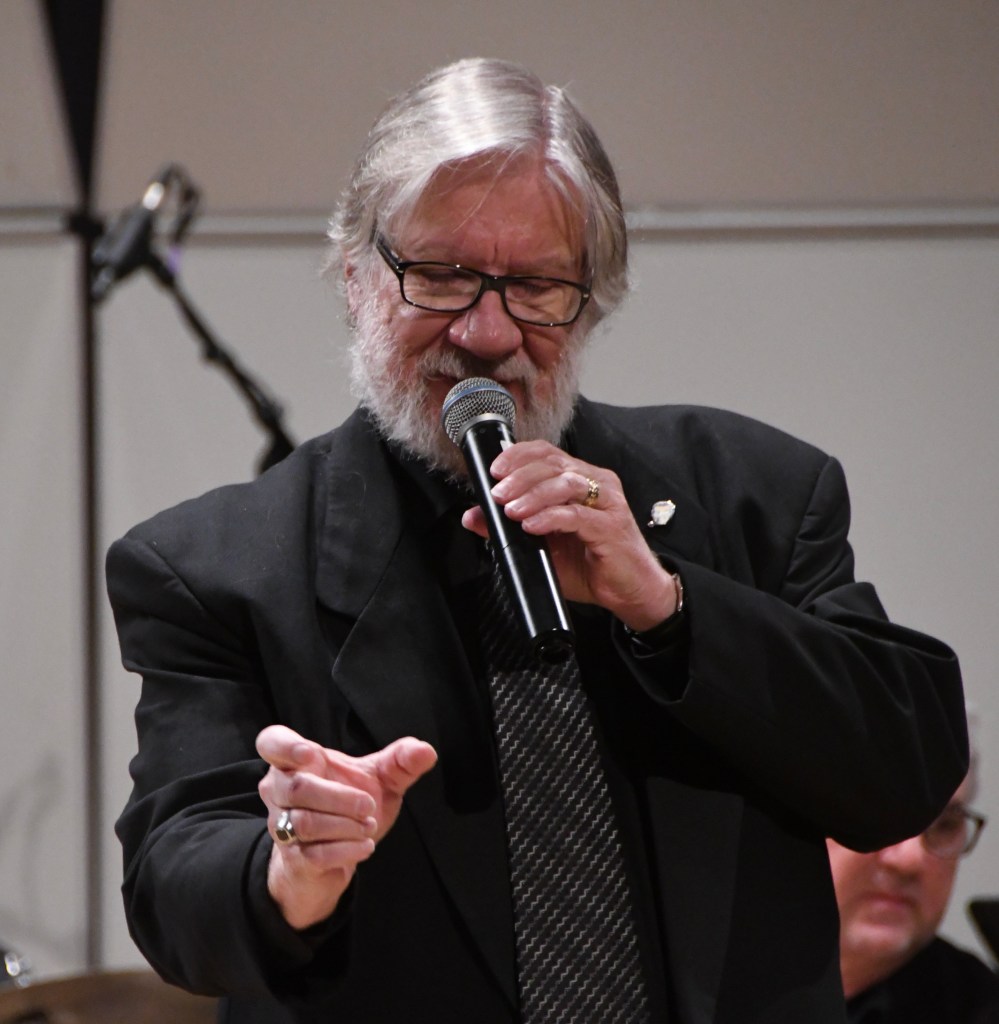
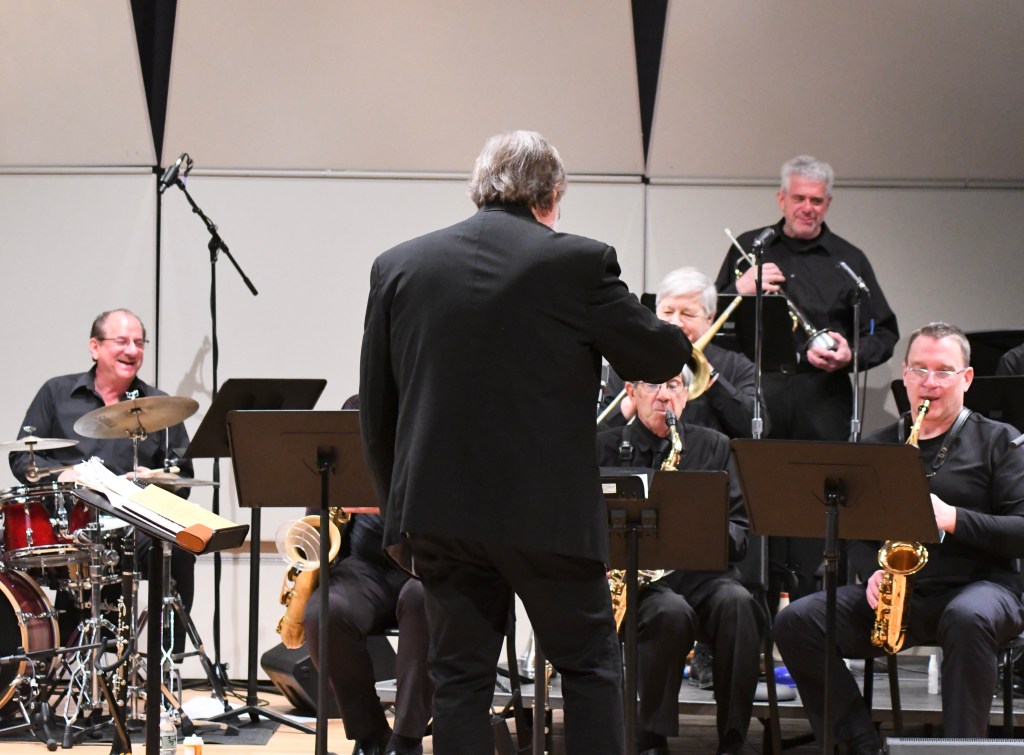
Bill Meckley announces, above; and conducts, below

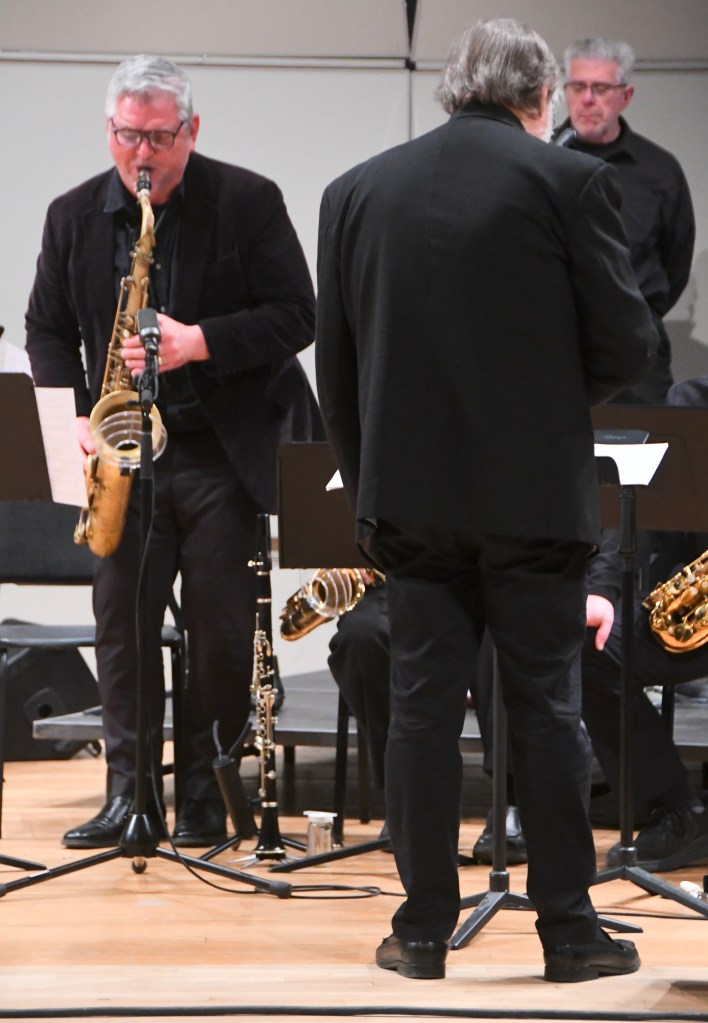
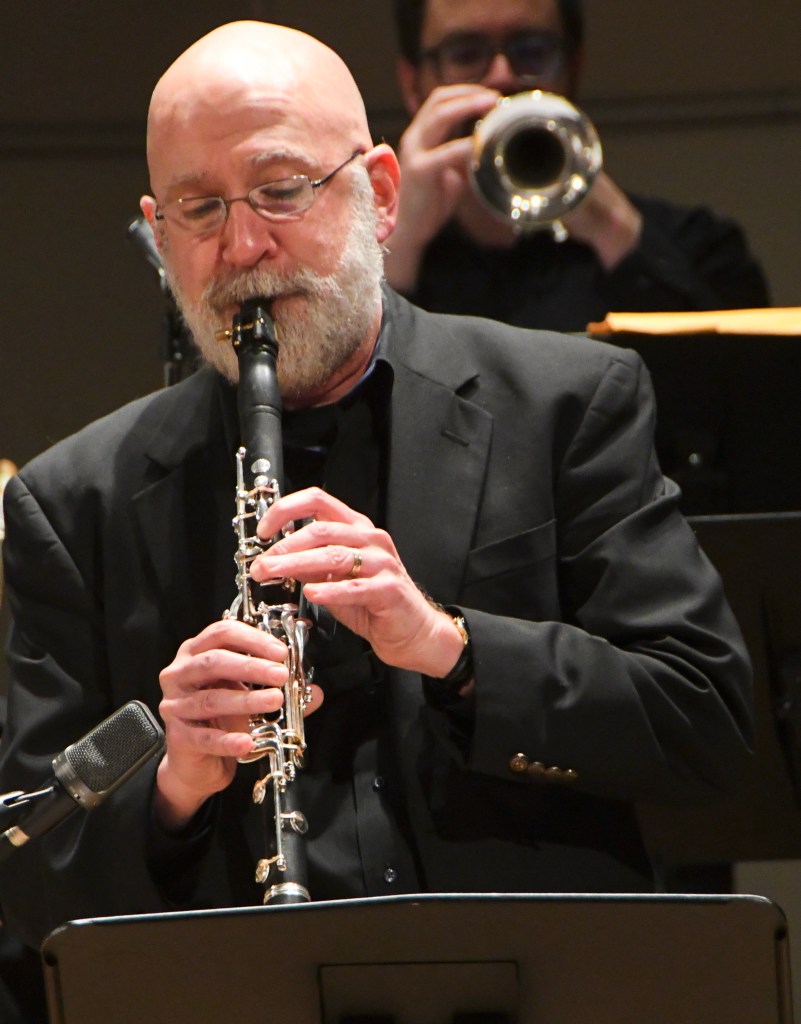
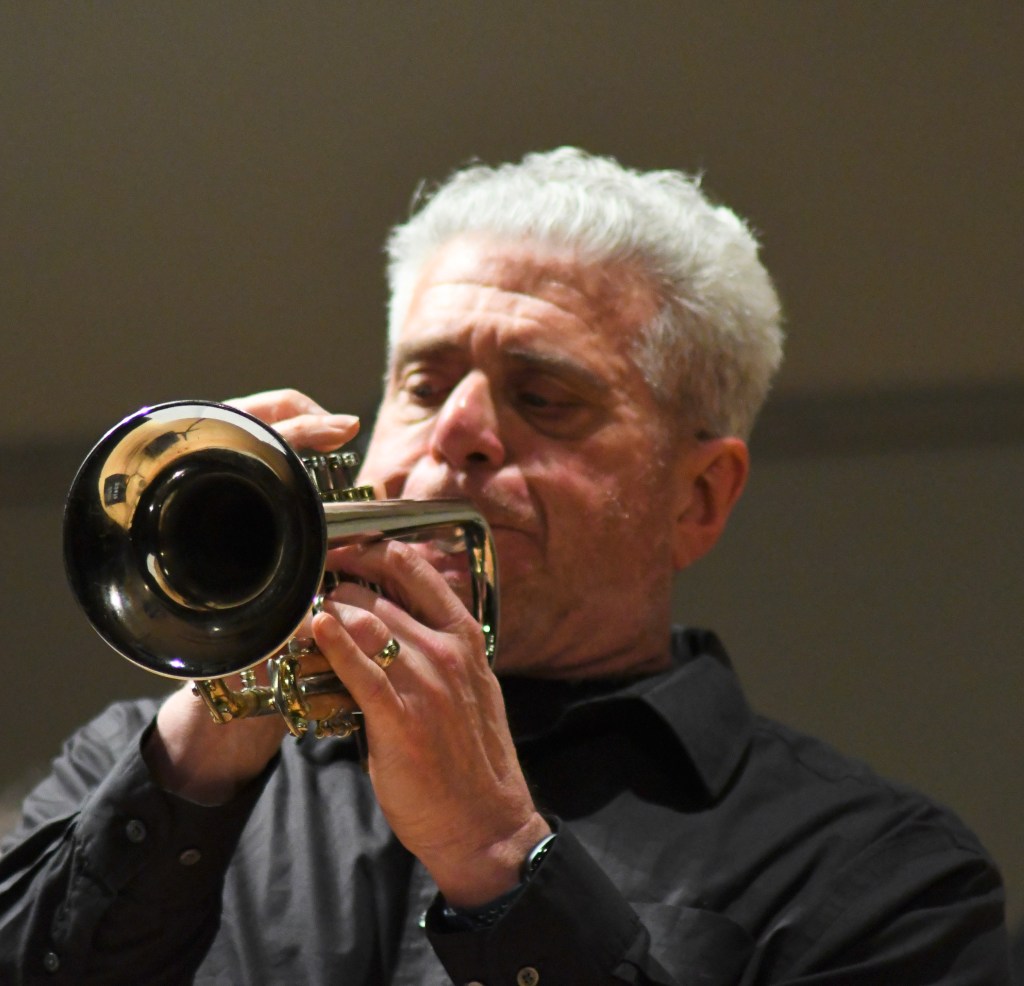
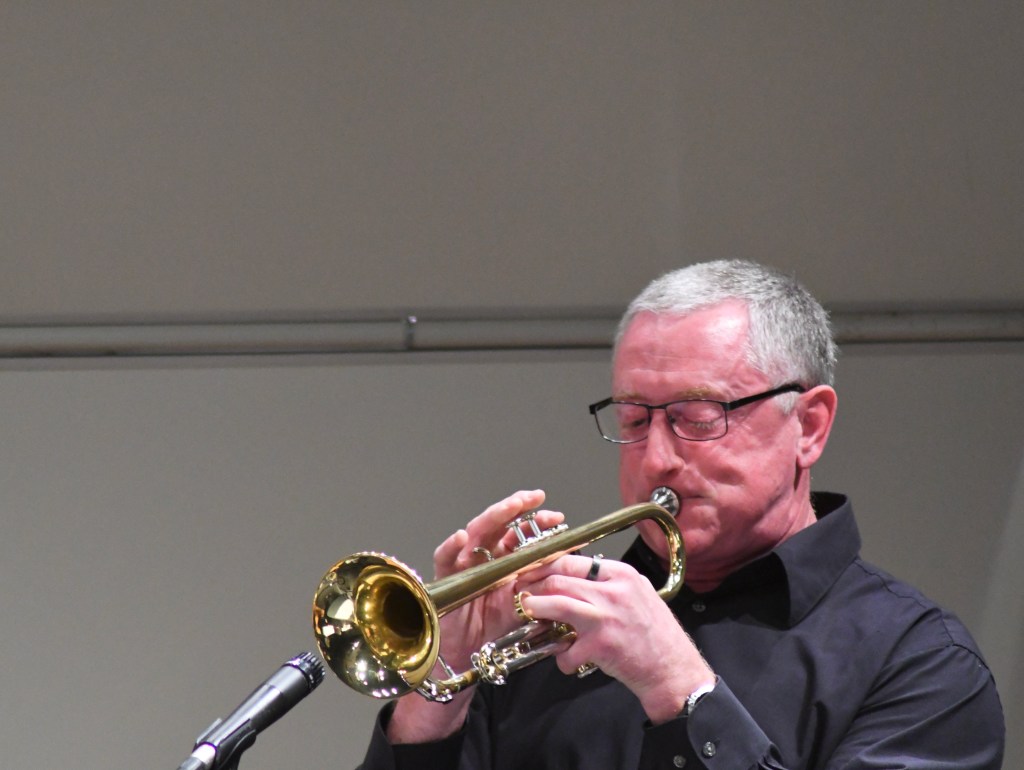
Meckley conducted the stage-filling crew in kinetic glee, crediting both composers and arrangers, giving shout-outs to soloists including former colleagues in the music school, notably reeds player Brett Wery and trumpeters Dylan Canterbury and Vito Speranza.

First up, “Max,” Jeff Hamilton’s spirited tribute to Max Roach, arranged by John Clayton, hit as a happy, roaring blues shuffle with standout tenor break from Kevin Barcomb and riff-swapping coda, drummer Bob Halek holding his own with full-band clamor.

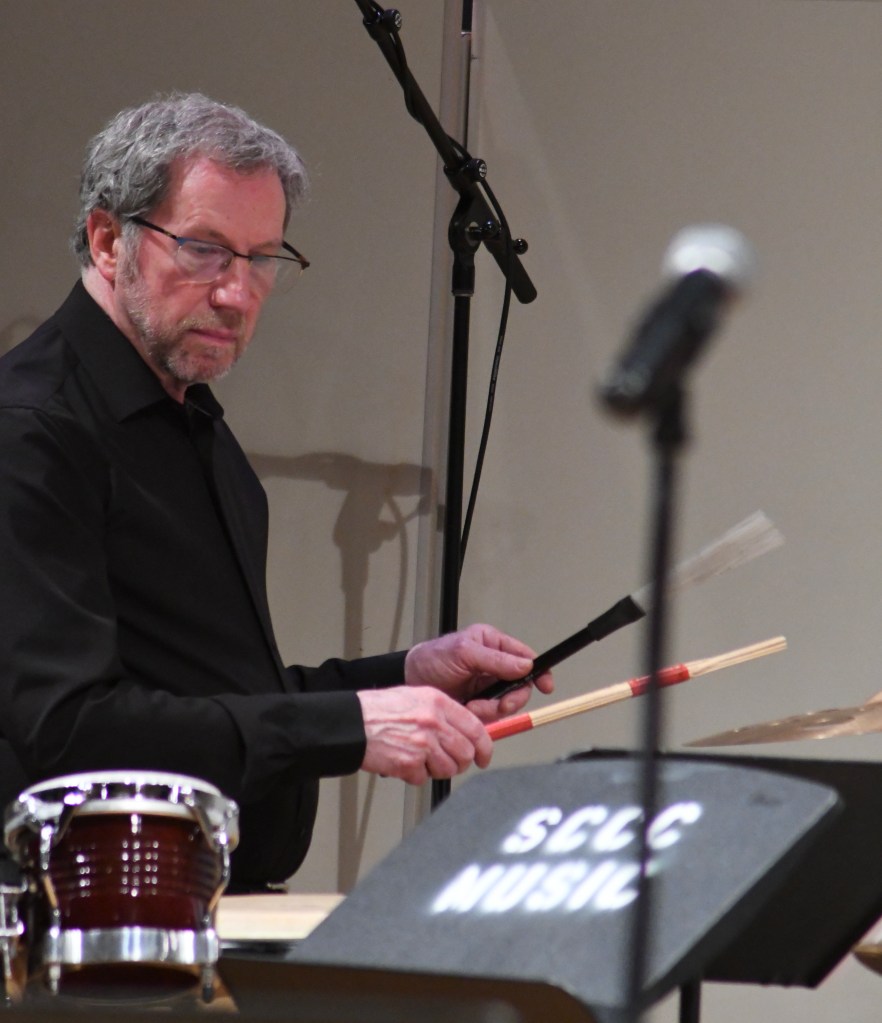
Kevin Barcomb, above; Bob Halek, below

Oliver Nelson’s “Emancipation Blues,” another blues, followed, launching from a slow brass hymn into swinging dialog of saxes and trombones that slid under Dylan Cantertury’s sky-high trumpet break like a firm floor. Canterbury co-starred also in “A Night In Tunisia,” its familiar melody launching from Otto Gardner’s bass; Brian Patneaude’s bustling tenor and Ken Olsen’s agile trombone also took big bites.

Dylan Canterbury, above; Otto Gardner, below

Meckley then told how Thursday’s reunion show benefits scholarships to the music school he once led, urging the sizable audience to donate via QR code in the printed program and buy CDs on sale in the lobby. He said many music students work nights, explaining how scholarships fill in the financial voids on concert nights when they miss out on paid work.

Colleen Pratt came on to sing “On a Wonderful Day Like Today” (Leslie Bricusse, Anthony Newley), rambunctious and upbeat, with a tasty Barcomb tenor solo.

Colleen Pratt

A big brassy blast revved “Makin’ Whoopie,” sly and sweet in band-member Jim Corigliano’s arrangement and Pratt’s torchy vocal. She closed her first-set contribution in the jittery rush of “Johnny One Note,” another Corigliano chart.

The band paved a smooth road for alto saxophonist Keith Pray to cruise in “Geller’s Cellar” (Maynard Ferguson, Ernie Wilkins), a slippery slow shuffle with mellow sax blend, blunt brass blasts and spirited riff swapping before Pray’s dazzling cadenza. (Pray leads his own more modernist Big Soul Ensemble at the Cock ’N’ Bull the last Tuesday of each month, among other ensembles, but is also a flexible sideman.)

Keith Pray, above; Brett Wery, below

Benny Goodman’s “Let’s Dance,” maybe the most antique-sounding selection all night, also set a mellow massed sax sound, cushioning music school faculty member Brett Wery’s clarinet.

Then they stretched out to close the first set in a medley of arranger Sammy Nestico’s charts on Gershwin’s “Porgy and Bess,” a highlight film of sorts with “Summertime” in both Latin and straight-ahead renditions, trombones as transition to “I Loves You Porgy” – all adding up to a 12-minute flow of familiar melodic charm and fresh re-invention.

A similar roadmap shaped the second set, “Bright Eyes” (Louis Prima, Bill Holman) an upbeat full-band blast kicking open the door for Brian Patneaude’s eloquent/elegant tenor.

They slowed way down for “Goodbye, Porkpie Hat” (Charles Mingus’s tribute to Lester Young), Barcomb’s tenor edging toward Young’s trademark tasty restraint before brass and reeds tag-teamed this tender ballad.

Dylan Canterbury stepped up front to solo in Duke Ellington’s “Concerto for Cootie” (another tribute, to Duke’s longtime trumpeter Cootie Williams). Like Barcomb in “Porkpie,” Canterbury adopted Williams’s plunger mute technique here, shifting to open trumpet to swap riffs with the whole crew.

Pratt returned for “Minnie the Moocher” (Cab Calloway), and here the band’s solo rehearsal showed as she and the ensemble needed a restart to get on the same page. Vito Speranza’s trumpet kept things on track in a strong read of this bouncy novelty.

Like the first-set Gershwin medley, Pratt and band strung together a cheerful run of upbeat classics, singing strong through “Get Happy,” “Keep the Sunny Side Up,” “Bye-Bye Blues,” back to “Get Happy.”

Vito Speranza

Stepping front, trumpeter Speranza owned Ellington’s “Portrait of Louis Armstrong,” sounding like himself even while recalling Armstrong’s distinctive hesitation rhythm and playful rasp at the end.

“Nostalgia In Times Square” (Mingus, Ronnie Cuber) swung happy, all syncopated grace and counter-point energy, sparked by hot solos from Jon Bronk’s trumpet, Jim Corigliano’s tenor, Nick Lue’s piano and Bronk again.

Jon Bronk, above; Nick Lue, below

Meckley delivered end-of-show-style thanks, but then led an encore-style finale, summoning Pratt back onstage for “Come Rain or Come Shine,” a mellow blues with tempo shifts, slowing to an easy glide and whispery vocal.

The reunited Empire Jazz Orchestra, which Meckley had founded at SUNY Schenectady’s music school, played with a unity that belied its long hiatus – since Meckley’s 2015 retirement, with just one prior reunion in 2018.

Everyone seemed fully engaged in the often-complex arrangements; soloists respected their predecessors in the songs while remaining fully themselves. Although ailing guitarist Mike Novakowski was absent, it was a glorious sound, by a big and united ensemble, in support of a worthy enterprise, and it delivered a lot to like.

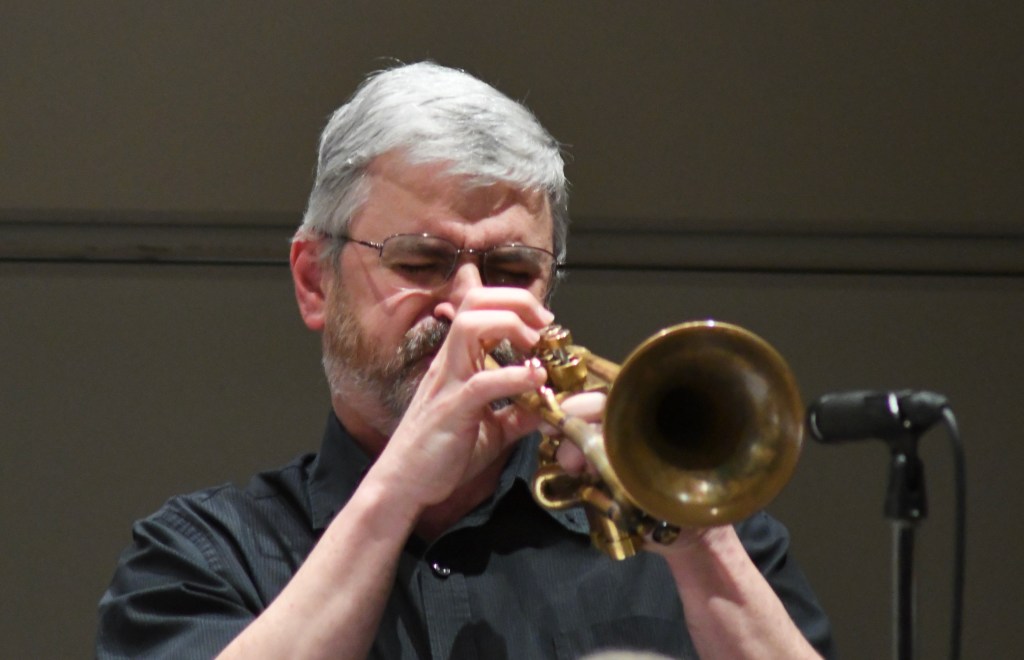
Mark Foster, percussion. above; Terry Gordon, trumpet, below

Eddies Hall of Fame Induction Honors Musicians and Community

Monday at Universal Preservation Hall, musicians, families, fans and friends gathered to honor seven area music community culture heroes in the 8th Eddies Hall of Fame induction.

The inductees appeared onscreen in video and at the podium live, speaking their thanks. Four were honored by live tribute performances of respectful/revved band-mates, including deceased inductees blues singer Ernie Williams and jazz pianist Lee Shaw. 

On a large screen over the stage, videos showed photos, interviews and performances of the inductees. Their acceptance speeches told tales of challenges and sacrifices that talent, persistence and support of fans and families, which several acknowledged had been neglected, enabled them to overcome.

The live tributes sparkled, punk-rockers Dryer honoring Dominick Campana’s great punk band Dirty Face; a reassembled Wildcats remembering the charismatic Ernie Williams, Lee Shaw’s sidemen playing one of her originals and jumping into “C-Jam Blues” with Nick Hetko courageous and skillful at the piano, and Johnny Rabb’s rockabilly crew “The Sound Minds” rocking almost as hard as Dryer when they honored Eddie Angel.

It all added up warmly and persuasively to a group portrait of community and continuity. Just as the sharp tribute live segments engaged the crowd ably in the here and now, videos and speeches alike framed achievements as collective enterprises. The crowd at tables and seats in the pews and balcony contained numerous past (and future?) inductees, and it surely felt like a community, united and energized by music.

The Heavenly Echoes gospel group – the first to be honored and the best-dressed crew all night – spoke onscreen and at the podium of longevity by dedication and community engagement. Their hard work, shared in friendship, has powered a decades-deep career with no signs of ending. They both mourned departed members and introduced newcomers.

Punk-rock musician turned audio engineer and Paintchip Records chief Dominic Campana honored his mentors including QE2’s Charlene Shortsleeve, in attendance; also both the performing musicians who inspired him and the audio engineers and producers who trained him in those skilled, essential trades.

Video of Ernie Williams showed folkies Pete Seeger and Ruth Pelham guesting with his band, which included dozens of players including the late David Malachowski, another past inductee. Guitarist Mark Emanation marveled that, after Williams invited him to “play a few gigs,” they performed 287 live shows the next year. 

Lee Shaw’s bandmates, bassist Rich Syracuse and drummer Jeff “Siege” Siegel recalled her leadership and inspiration. Her eclectic, energetic style spanned decades of jazz history and enabled them to continue to this day, respecting what came before and exploring what’s next. Hat’s off to Nick Hetko for daring to play piano in her place.

Like the Heavenly Echoes, running the Van Dyck jazz venue is the work of generations; all got respect onscreen and in acceptance speeches: founder Marvin Friedman, then Don Wexler, Peter Olsen and current impresario Chris Sule. (The McDonald family, between Olsen and Sule, wasn’t represented.) Donna Wexler spoke of heritage, Olsen recited dozens of jazz heroes who’ve played the room, and Sule spoke with dedication of the future.

Jim Furlong, like Campana, mixed performing with a backstage role; leading punk-rockers the A.D.s and buying and selling records for 36 years at his Last Vestige shop. Humble, humorous, Furlong – again like Campana – thanked his mentors in music retailing, a tough trade in a changing marketplace, but with its own satisfaction in getting music into the ears that need it.

Last, and arguably the biggest star of the evening, guitarist Eddie Angel first appeared onscreen in the leather Mexican wrestling mask he wears in his surf-rock instrumental combo Los Straitjackets. Then came the raucous live salute by longtime bandmate Johnny Rabb. Angel’s remarks offered a performing veteran’s perspective on the persistence and luck music-making requires; like other speakers, he spoke of this calling as inevitable, inescapable. He cited writers Mario Puzo and William Kennedy, recalled how playing with 60s area pop-rockers Tino and the Revlons put him through college and how “40 years just flew by” since his move to Nashville. And he told happily how he loves coming back home here to play with friends. 

In this, Angel sounded a note the other inductees all played; the bands honored Monday are all friends; mentors and presenters, too.

Proctors Collaborative’s Kelly Auricchio and WEXT’s Chris Weink and Andy Gregory hosted, introduced the segments and wrapped up the efficient two-hour induction event. 

Ed Conway, who travels with wife Cathy to more music than anyone else I know, photographed the Hall of Fame event Monday. See his pictures at https://www.facebook.com/media/set/?vanity=61578823102301&set=a.122153735072960770

Proctors Main Stage will host The Eddies Awards on April 26.

And Now, This

Thanks to John Oliver’s This Week Tonight for this banner. Other thanks appear below.

A Reminder: 

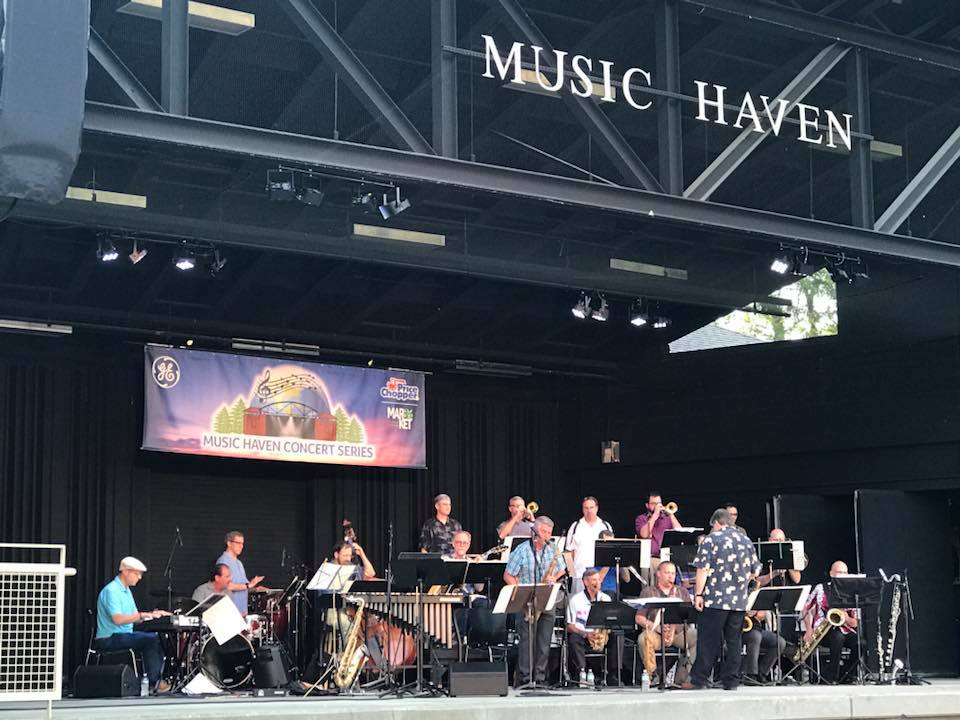
The Empire Jazz Orchestra (EJO) reunites Thursday at SUNY Schenectady County Community College for its first concert since 2018 – shown here in Rudy Lu’s photos. A truly all-star crew, EJO expertly plays historic jazz compositions by past masters and fresh material by contemporary artists including EJO members.

EJO last played in July 2018 at Music Haven in Schenectady’s Central Park. Rudy Lu photo

Thursday’s show presents such classics as “A Night in Tunisia” (Dizzy Gillespie), “Portrait of Louis Armstrong” (Duke Ellington), and “Let’s Dance” (Benny Goodman).

EJO stars 19 local jazz heroes; many lead their own groups and many teach next-generation jazz artists in area colleges and public schools.

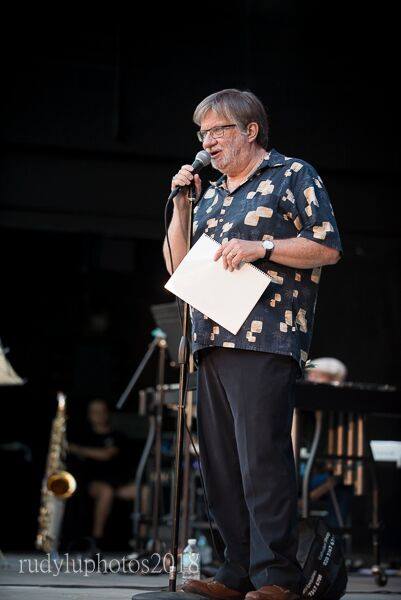
Bill Meckley. Rudy Lu photo

Thursday’s reunion show is a benefit funding scholarships for the College’s Music School, which EJO founder Bill Meckley ran until his 2015 retirement. He leads this reunion concert. 7 p.m. in the SUNY Schenectady County Community College Carl B. Taylor Auditorium. $25 http://www.sunysccc.edu/ejo.

Rudy Lu kindly lent me these photos showing EJO’s 2018 show at Music Haven. A respected colleague and good guy, Rudy covers concerts for Mirth Films and New York State Music. I owe him big for these.

A Correction or Two:

In my review of Friday’s Caffe Lena show by Joy Clark and Buggy Jive, I mis-attributed sponsorship of the Caffe’s Bright Series, which is actually sponsored by Caffe supporters Kevin and Claudia Bright.

I also erroneously announced next Saturday’s Peak Jazz show. The quite wonderful Catherine Russell sings at the Caffe next Saturday. Two shows: 5 and 8 p.m. (doors open half an hour earlier) $75.92 members, $81.34 general. As part of the Caffe’s Peak Jazz Series, this show is supported by Joseph & Luann Conlon in memory of Corrine Simonds. 518-583-0022 http://www.caffelena.org.

Thanks to Caffe Lena impresario Sarah Craig for corrections.

Powerful TroubadourTag-Team at Caffe Lena

Review: Joy Clark, and Buggy Jive on Friday, March 20 at Caffe Lena

“This is what church is trying to be,” Joy Clark announced Friday at Caffe Lena late in a show full of fervor and aimed at crafting a community. Performing with bass and piano alongside, the young Louisiana singer-songwriter and guitarist looked inward in songs blueprinting the construction of a self while opener Buggy Jive (a self-proclaimed Delmar recluse) looked outward, singing solo and scrambling pop culture elements into a kaleidoscopic brilliant blur.

Joy Clark, above; Buggy Jive below

Playing first, Buggy Jive cast a sardonic, skeptical light on religion in “Saving Myself for Sunday,” his complex humor contrasting with Clark’s engaging sincerity to come. “Hurry Up Please It’s Time” called out those who “ruin it for the rest of us” while “She Wants to Party While the World Burns Down” indicted escapism. An engaging soul-ballad sound cloaked this criticism in something kinder, like understanding or forgiveness; it didn’t reduce the sting, but somehow humanized it. In other words – and he sang lots of them, often in rapid rap-like torrents – humor and musical skill made commentary feel entertaining. He invited us all into the jokes.

Shaped with thematic ambition, crafted with cleverness, his tunes shuffled restlessly through several episodes each and multiple moods and influences; some Funkadelic riff-crash here, a Joni Mitchell short-story next, then curly echoes of Prince-baroque, and a straight-up Black Sabbath cover over there. At times it felt like stand-up, in a soulful voice, with guitar zip. He found a rhyme for “ephemeral,” looped his falsetto into a chorus and sang over it, like those multi-Buggy Jive videos where he gangs up on a song. He revved to a staccato word-flow, asked quizzically “What Do Y’all Know about Shakespeare?” in picaresque musing about a NYC stage-play pilgrimage, a tale stuffed with inside jokes.

Clark followed Buggy Jive’s one-man uproar with a quiet confidence and the simple moral force of sincerity, the courage of candor.

Joy Clark, center; with Tiffany Morris, left, and Jentleman Sharp

She sang most of her “Tell It To the Wind” album, which she has called “my story of how I learned to shine.” In her opener “Shine,” she sang of the isolation of not seeing herself, or other Black gay women, in a magazine or on a screen. This cultural erasure challenged her to be herself, an original, an assertion that felt more proud than forlorn, especially over Tiffany Morris’s sparse, spry bass lines and piano riffs in the songs’ seams from Jentleman Sharp.

Following with “One Step in the Right Direction,” she gained momentum on a path paved with hope. It also bore bumps, as in the pained break-up lament “All Behind,” her straightforwardly sweet voice going taut with grief. Redemption came through love of the natural world, a mystical and comforting place, in “Tell It to the Wind,” the album’s title track and a sort of rescue mission for feelings. She addressed “Love Yourself” to her 12-year old self, advising her “square peg in a round hole” person-in-the-making while engaging the crowd in a singalong.

She easily brought her sold-out crowd into the music with her, in singalong choruses or in clapping when Morris and Sharp heated up. Clark’s guitar brought fire and fervor in uptempo exhortations, as in the combustible break in “Love Yourself.” Or she cooled into delicate love-song finger-picking giving quieter voice to “Watching You Sleep.” And when she linked voice and strings in “Shimmering” – riffing and skit-singing in harmony with herself – she earned the sparse, slow song’s title; also a singalong.

While she credited making music in the evangelical church for launching her musical quest, she also acknowledged in “Guest” the need to step outside its walls into a different conception of herself, her voice soaring past the confining gravity of convention, expectation. 

She advocated a “fierce kindness, a rude kindness” to bridge from “Guest” about struggle into “Lesson,” about her nurturing grandmother’s acceptance as a role model, plugging in her electric guitar to syncopate its mid-tempo, gently emphatic message.

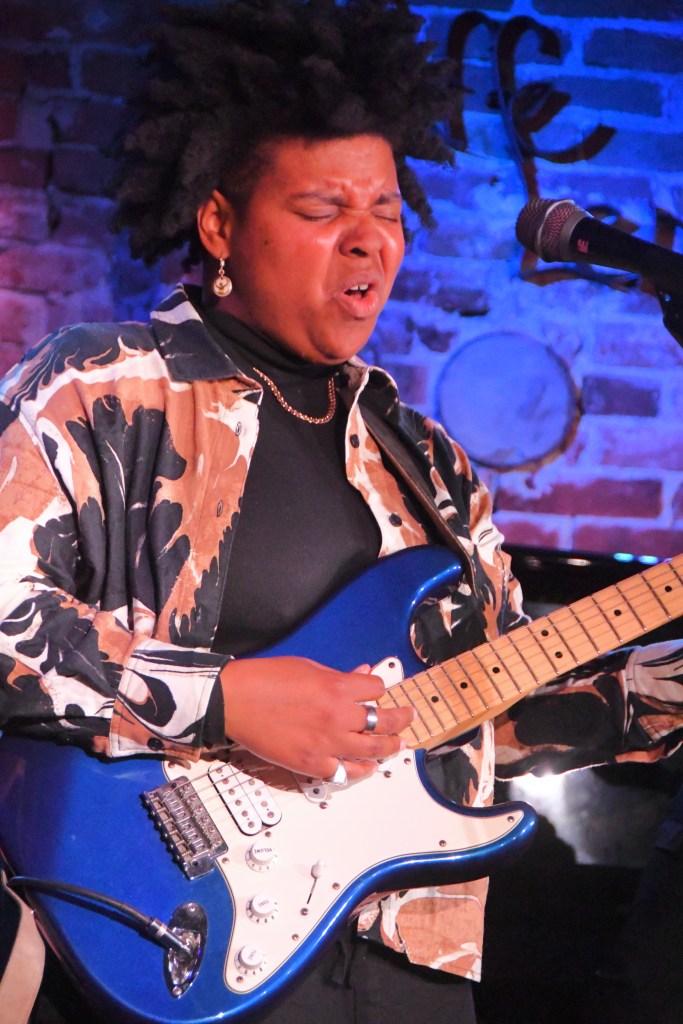
Everyone stood as she took off her blue Strat and looked around, happy, then quizzical before strapping her acoustic guitar back on for a stay-there encore of Allen Toussaint’s “Southern Nights.” This joyful salute to a patron saint of New Orleans music showcased Sharp’s only solo in the set for a mood of fond farewell.

At Caffe Lena Friday, Joy Clark and Buggy Jive wrapped a three-night tour; they played New York’s fabled Bitter End the night before.

Friday I shared a front table with Joseph and Luann Conlon, sponsors of the Caffe’s Momentum Series in honor of Thom O’Neil. Their Bright Series presents Andrea von Kampen tonight, and their Peak Jazz Series presents singer Allison Russell next Saturday.

A Big Encore: EJO Jazzes Up SCCC

Preview: The Empire Jazz Orchestra Reunion Benefit Concert Thursday, March 26 at SUNY Schenectady Community College

Call it an encore, a one-night-only reunion after nearly a decade.

Founder Bill Meckley leads the reunited Empire Jazz Orchestra Thursday at SUNY Schenectady Community College, bringing top area jazz performers to the same stage that was longtime home for the big band. Then and now, it plays both historic and forward-looking music, on a strong educational mission. It will benefit scholarships at the music school where Meckley first organized it.

“I was teaching at SCCC in the late 80’s and had been thinking about starting a band,” said Meckley recently from his Lexington, Kentucky home. 

A Place for Jazz (APFJ) founder/leader Butch Conn helped form the vision, and then-SCCC president Gabe Basil gave the green light.

“Butch knew I was interested in historic jazz and asked if I would put together a children’s concert,” said Meckley. “I formed an eight-piece group which I named the Empire Jazz Orchestra.” After two APFJ shows, Meckley expanded the octet into a flexible big band. 

Historic jazz scores formed Meckley’s EJO blueprint. “Many original scores of Duke Ellington and other important composers were becoming available for the first time.”

Meckley searched for vintage scores across jazz history. Noting Jazz at Lincoln Center published the The Ellington scores, he said other historical scores began to resurface, by Billy Strayhorn, Oliver Nelson, Jelly Roll Morton, Mary Lou Williams and Benny Carter. Early on, EJO played major Ellington/Strayhorn works including “The Far East Suite” and “The Latin American Suite,” also shorter pieces.

“Some music I found in weird places,” Meckley said. “The early Gil Evans scores, for example, which he wrote for the Claude Thornhill band in the 1940s, I got from Drury College in Missouri.” In addition to historic scores, contemporary transcribers are re-constructing vintage pieces; Joe Muccioli revived Gil Evans/Miles Davis big-band works including “Sketches of Spain” that the EJO plays.

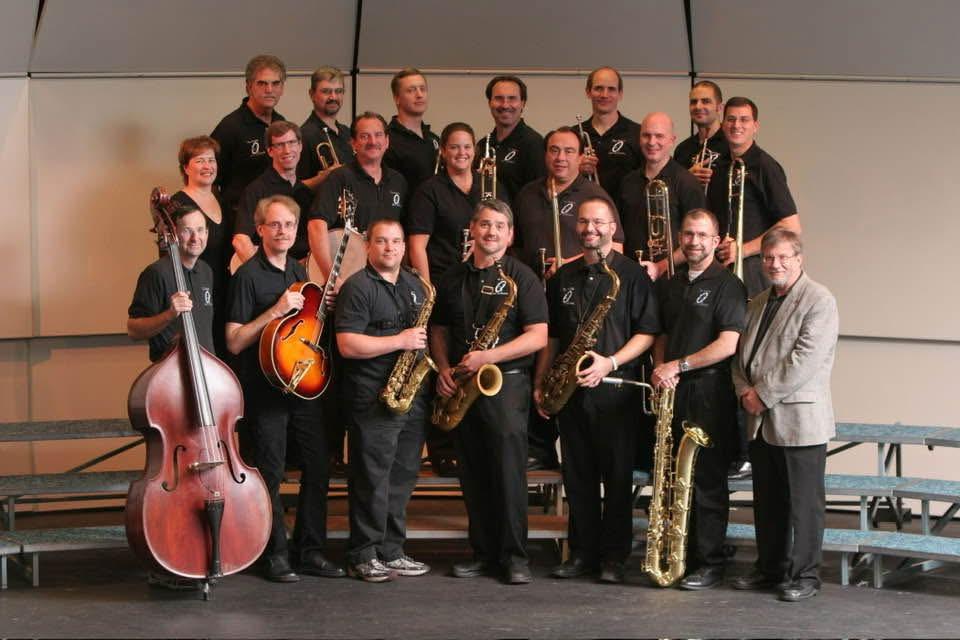
Bill Meckley provided this EJO photo; he stands at left in gray jacket. This shows a past line-up, but many of the same players perform Thursday.

In Thursday’s reunion concert, EJO will play original scores of Duke Ellington, Oliver Nelson, John Clayton, Charles Mingus and Cab Calloway, plus Sammy Nestico’s big band charts on Gershwin’s “Porgy and Bess.” 

“We will also be playing original music by EJO members Keith Pray, Dylan Canterbury and Jim Corigliano,” Meckley said. “Featured soloists will include SUNY Schenectady Jazz faculty members (saxophonist) Brian Patneaude and (trumpeter) Dylan Canterbury on ‘A Night in Tunisia;’ saxophonists Keith Pray and Kevin Barcomb and trumpeter Vito Speranza will be featured on Duke Ellington’s ‘Portrait of Louis Armstrong,’ (clarinetist) Brett Wery on Benny Goodman’s ‘Let’s Dance,’ and Colleen Pratt will be featured vocalist, singing music of Cab Calloway, Pat Williams, and others.”

The EJO roster Thursday: Keith Pray, Jim Corigliano, Kevin Barcomb, Brian Patneaude and Brett Wery, saxophones and reeds; Jon Bronk, Vito Speranza, Dylan Canterbury and Terry Gordon, trumpets; Ken Olsen, Gary Barrow, Ken DeRagon and Dan Cordell, trombones; Mike Novakowski, guitar; Otto Gardner, bass; Bob Halek, drums; Nick Lue, piano; Mark Foster, percussion; and Colleen Pratt, vocals.

Again recalling EJO history, Meckley noted how successful shows at APFJ and SCCC (in conjunction with the musicians union) led to what Meckley called “an extremely successful partnership.” When he approached SCCC then-president Gabe Basil about establishing EJO as a resident jazz repertory ensemble, they agreed the school would provide facilities and assistance with publicity and grant applications.

In EJO’s 20 years on campus, SCCC also funded EJO’s popular and influential Jazz Masters Series featuring guest stars including Jimmy Heath, Benny Golson, Dave Holland, Slide Hampton, Lew Soloff, David “Fathead” Newman, Randy Brecker and others.

Averaging two on-campus concerts annually, EJO played historic works large and small, including the Gil Evans/Miles Davis “Sketches of Spain” and “Miles Ahead,” plus the original Paul Whiteman version of “Rhapsody in Blue.” They also commissioned new music by visitors Rufus Reid and Bill Holman plus EJO members Keith Pray and Jim Corigliano. “The Holman piece ‘Nautilus’ was commissioned as a solo feature for Nick Brignola, a dear friend,” said Meckley, who recalled playing big-band charts of Frank Zappa music, “which I loved doing.”

Meckley retired from SCCC in 2015, closed down EJO and moved to Lexington, Kentucky where he leads the Lexington Brass Band, and plays trombone with the Lexington Chamber Brass and others. A Porsche enthusiast, he also instructs sports car race drivers, including at Watkins Glen.

Looking back through the decades of EJO, Meckley said, “I believe our first performance was at APFJ in 1997. We also played occasional festival performances, and we did the Price Chopper Mothers Day concert at SPAC one year.”

In 2018, the EJO reunited at Music Haven in an “Encore” concert.

Thursday marks another, at the Carl B. Taylor Auditorium of SUNY Schenectady County Community College – a benefit supporting scholarships to the music school Meckley once led.

7 p.m. $25 http://www.sunysccc.edu/ejo

Two Generations of Chapins, One Message of Hope

Preview: Tom Chapin, and the Chapin Sisters, Saturday, March 21 at the Eighth Step in Proctors GE Theatre

As another misguided overseas war of choice drags on and magnifies troubles here, Tom Chapin and daughters Abigail and Lily sing much-needed “Songs of Hope” Saturday at the Eighth Step at Proctors GE Theatre.

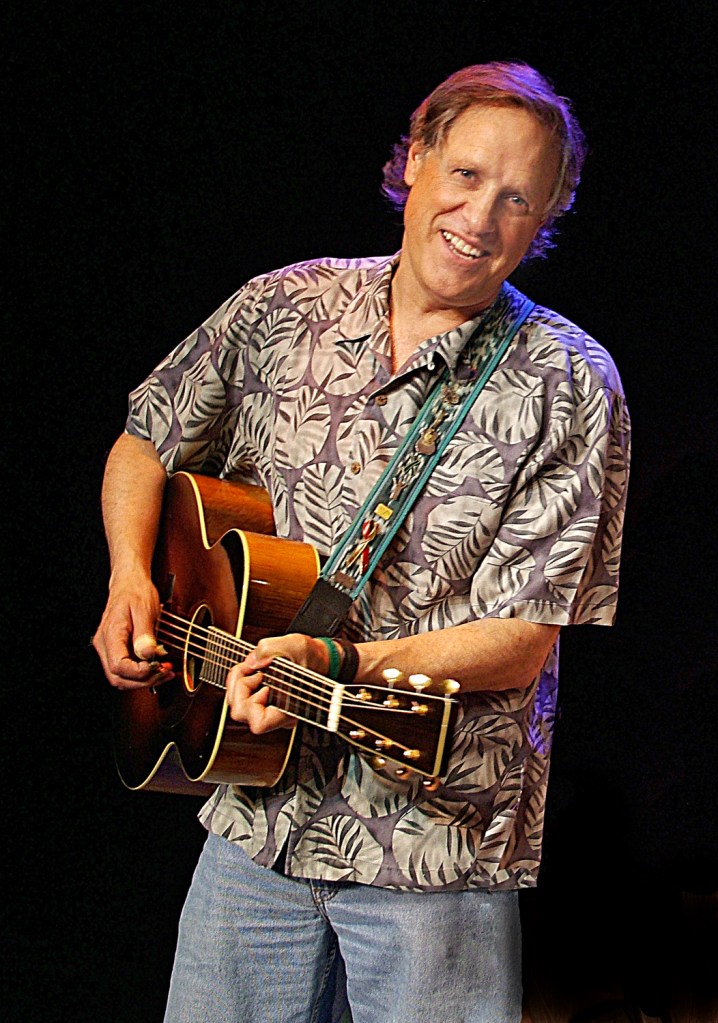
Tom Chapin. Photo supplied

The show introduces a new album of that optimistic title, but it collects past tunes from Chapin’s 27-album career. Some protest persistent societal problems, hopeful lyrics standing strong in opposition or promoting solutions, while his love songs share a thoughtful, quiet romantic flavor. The music is also fun, too tuneful to feel pedantic. Much of it is aimed at youthful ears: Chapin’s three Grammy awards honor his spoken word albums for children.

Saturday, Chapin will sing his hopeful songs with support from the third Chapin musical generation. Tom Chapin is one of three singing brothers, all sons of jazz drummer Jim Chapin who often played with his troubadour sons Tom, Steve and the late folk-pop star Harry.

Tom has had no trouble working around the long shadow of his big-star brother; prolific, poetic and powerful in his own right, whether urging advocacy or nuzzling close in tender romantic musings. The New York Times has hailed his “Warm spirit, infectious humor, and sensitive satiric songs … one of the great personalities in contemporary folk music.”

The Chapin Sisters. Photo supplied

His music-making daughters have also combined voices in a distinctive flavor of contemporary acoustic folk-pop. Their nine albums reach back farther than their father or uncles to echo Appalachian bedrock styles at times, while paying tribute to the family sound, to Pete Seeger, and the Everly Brothers. Just as Tom has continued his late brother’s advocacy work supporting remedies for hunger and Seeger’s Clearwater environmental projects, the Chapin Sisters have performed often with their father and uncle Steve in an elastic family band, and recorded albums of their elders’ tunes.

Saturday, the three Chapins, father and two daughters, will sing of hope at the Eighth Step at Proctors GE Theatre (432 State St., Schenectady). 7:30 p.m. $34.51 general, $63.26 (gold circle, front and center) 518-346-6204 www.8thstep.org

Singer-Songwriter Caffe Lena Weekend

Preview: Joy Clark, then Buggy Jive on Friday; Andrea von Kampen Saturday

Singer-songwriters tag-team Friday at Caffe Lena in a rare two-artist, two-set format; Albany’s Buggy Jive opens, Louisiana’s Joy Clark closes.

They’re well-matched in expression as exploration, self-examination as bold reaches for the universal.

Home-schooled, the youngest of five in a devout family, Clark first sang and played guitar at church in tiny Harvey, Louisiana. Turning her music-making muse inward on leaving for college in New Orleans, she built her place in the world as a gay Black woman, a place onstage as background singer with Cyril Neville of the famous brothers and Allison Russell’s Rainbow Coalition that shared stages with Brandi Carlisle and the Indigo Girls. Carlisle describes Clark as “a brilliant artist, writer, and singer.” 

Takes one to hail one – and Russell plays here on March 28 in Caffe Lena’s Peak Jazz Series.

Joy Clark. Photo provided

On her debut album “Tell it to the Wind,” Clark worked with Grammy-nominated producer Margaret Becker, exploring and expressing a search for herself. She found, “There’s room for all of us and the world is only made more beautiful when we all shine as our unique selves.” The album, she explains, “is my story of how I learned to shine, and I hope that it might encourage others to stand out as their whole, true selves too.”

Her sound is cozily folkie and compact, her clear voice conveying sincerity and ease in her search and discovery. And the album also boasts former Prince and the Revolution keyboardist Lisa Coleman in a guest keyboard spot.

Buggy Jive. Photo provided

On Buggy Jive’s Eddies-nominated Music Video of the Year “What Do Y’all Know About Shakespeare?” four of him play and sing together through video magic, all costumed as if Shakespeare wore Chucks and an explosive ‘do.

The punchline of the video slyly suggests the song would work better solo – and that’s how Buggy Jive will play Friday. It’s also how he played opening slots for Macy Gray and Ben Folds, an Official Showcase slot at the recent Folk Alliance meet-up in New Orleans and an NPR Tiny Desk concert, winning Top Pick honors. For a guy who describes himself as reclusive, he gets around.

His “Shakespeare” video is just one of his four Eddies nominations, a record. “Shakespeare” is from “Icarus Rising,” an Album of the Year nominee. He’s released five albums, three EPs and three singles; several recorded live, underlining his onstage power as a funky mix of soul, rock and story-telling. He cites Led Zeppelin, Prince and Joni Mitchell as inspirations, and honors them all by himself.

Joy Clark and Buggy Jive perform Friday in Caffe Lena’s Momentum Series, sponsored by Joseph and Luann Conlon in honor of Thom O’Neil. 8 p.m., doors 7:30. $27.11 member, $30.37 general $15.18 children and students. Streaming at Caffe Lena TV. 518-583-0022 http://www.caffelena.org.

Another Caffe regular series, its Bright series for emerging talents, presents singer-songwriter Andrea von Kampen on Saturday with her trio. 

Andrea von Kampen. Photo provided

The time is right – troubled and terrifying – for her protest songs to hit with both musical and moral force. These days she sings protest songs of Bob Dylan and Woody Guthrie, plus her own originals on her handful of albums and EPs including “Sister Moon” (2024) and more recent “Before I Buy a Gun.” 

The New York Times praised von Kampen as “a fine singer with guitar work reminiscent of the cult hero Nick Drake.”

The Nebraska-born von Kampen expresses often-tough truths in a lovely clear voice that also lets hope shine through. Like both Joy Clark and Buggy Jive Friday, von Kampen has impressive tour-opener credits: Punch Brothers, Wood Brothers, Tallest Man on Earth and Trampled by Turtles. Like Buggy Jive, she also played an NPR Tiny Desk concert. 8 p.m., doors 7:30. $21.69 members, $23.86 general, $11.93 children and students  

International, Deep in the Heart

Review: Baklava Express Friday, March 13, 2026 at Proctors GE Theatre, Passport Series

The refreshing foreign-ness of the lively international music Baklava Express made at Proctors GE Theatre Friday was only part of the picture – or the map.

The quartet spun together musical traditions from Europe to Western Asia in a tight, kinetic Middle Eastern weave: Jewish (both Ashkenazi [European] and Mizrahi [Middle Eastern/north African) – and Muslim (both Arab and Turkish). That all sounds academic, analytical – but it felt like a rush of skill and swagger, energy and intelligence.

It was country music, but from several countries; tight as chamber music, free-flying as jazz – and it felt, most inspiringly, like friendship in sound.

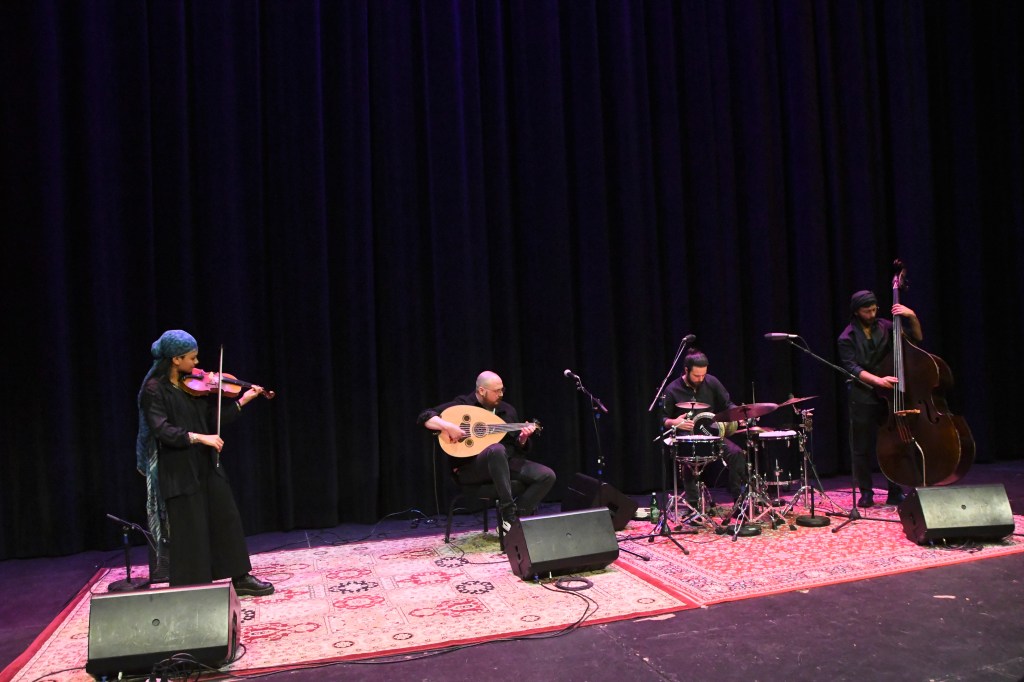
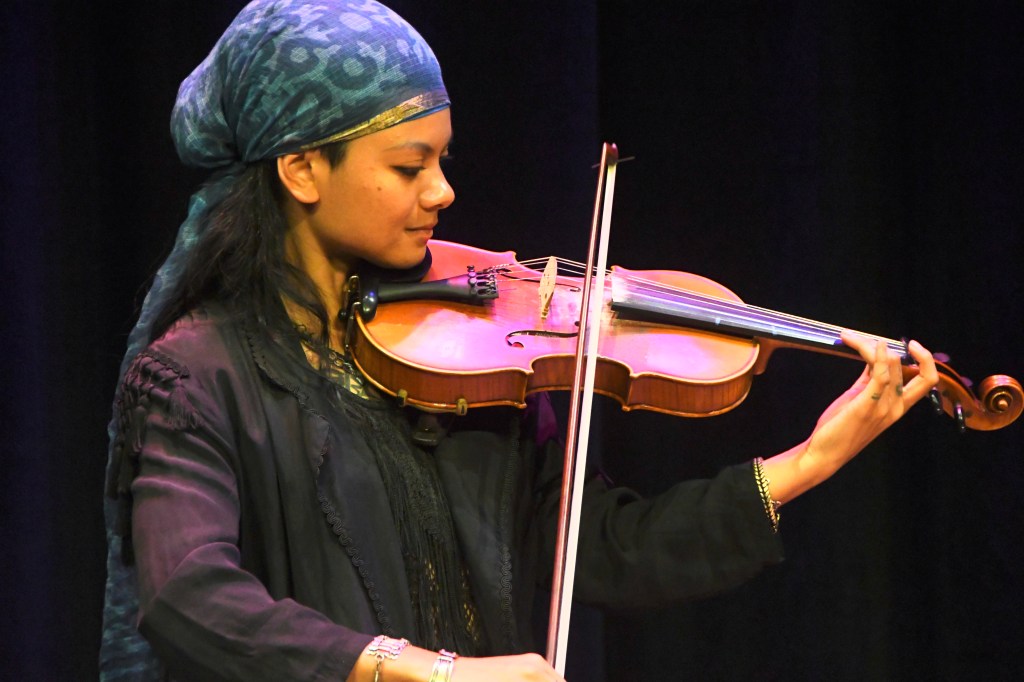
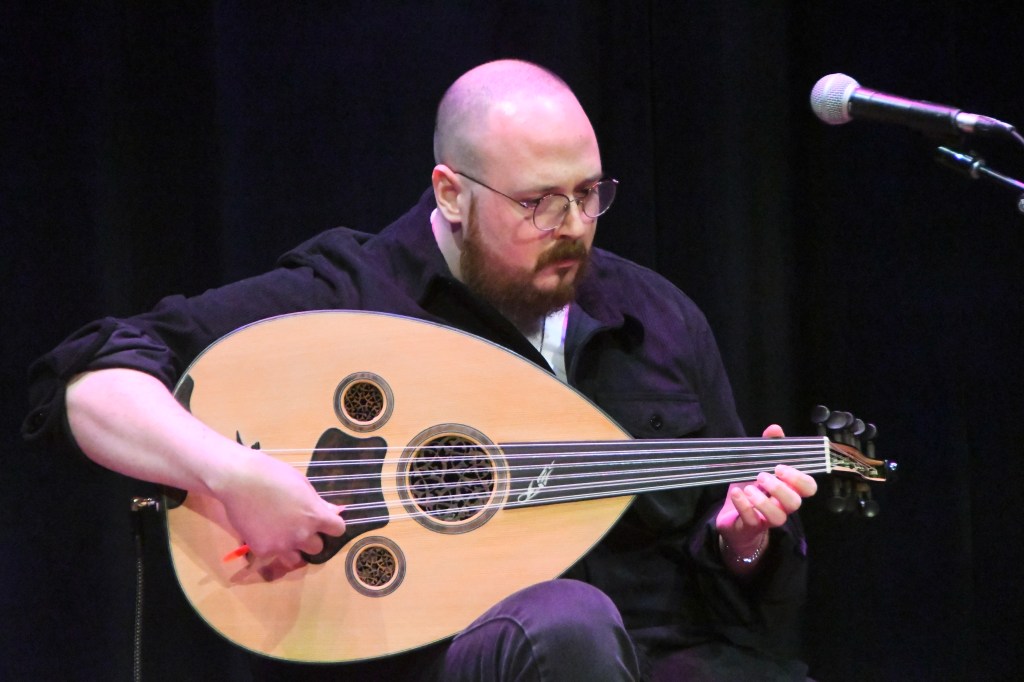
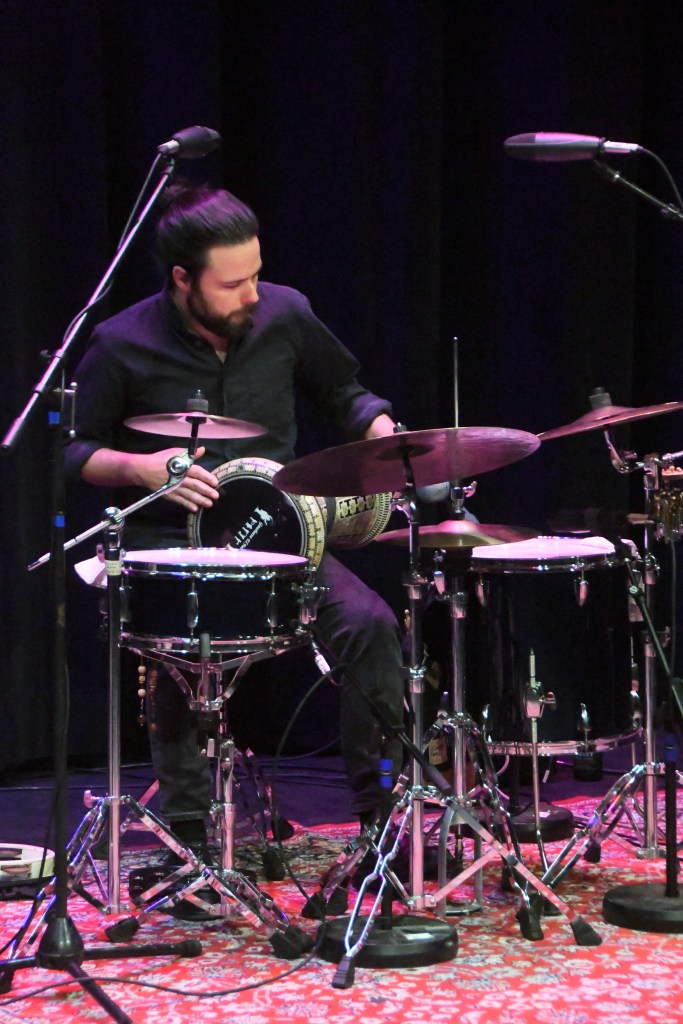
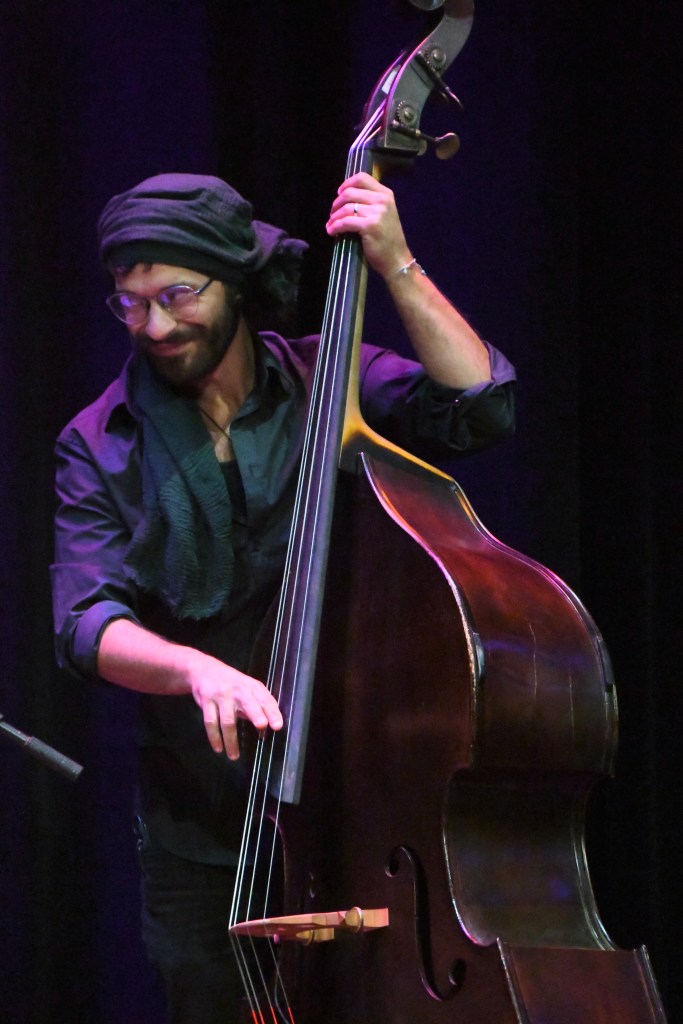
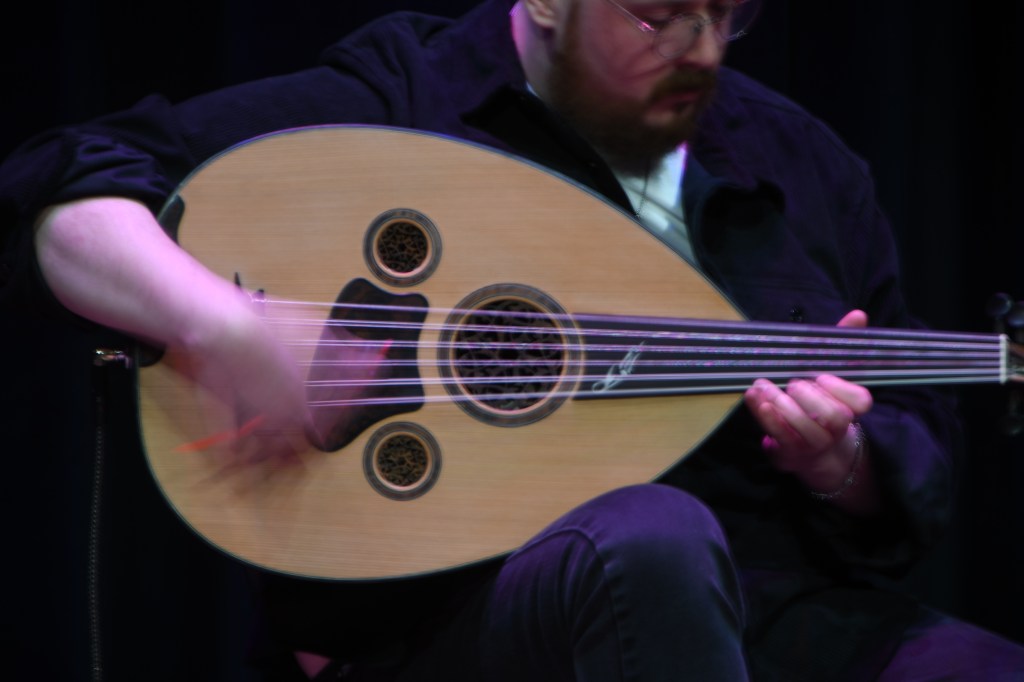
Leader/composer oud player Josh Kaye and violinist Daisy Castro made the melodies, stage right; opposite percussionist Jeremy Smith and bassist James Robbins. Most often, Kaye started his tunes with an ostinato in clipped percussive tones, like guitarist Jimmy Nolen in James Brown’s band. Then Kaye and Castro formed melodies together, violin etching long melodies over staccato oud phrases. Then they swapped, and swapped back again, one reeling out rhythms, the other telling tune-full tales. Smith held a djembe on his knee, clamping its body with his elbow to change the tone, like story-telling African drummers or as the subdudes Steve Amedee does with his fingers pressing the skin of a tambourine. Smith tapped the djembe head with one hand, aiming sticks or mallets at snare, toms and cymbals with the other. Just as Kaye and Castro often sounded like one musical mind with four hands, jazz-trained bassist Robbins linked tight with Smith’s busy gliding clatter.

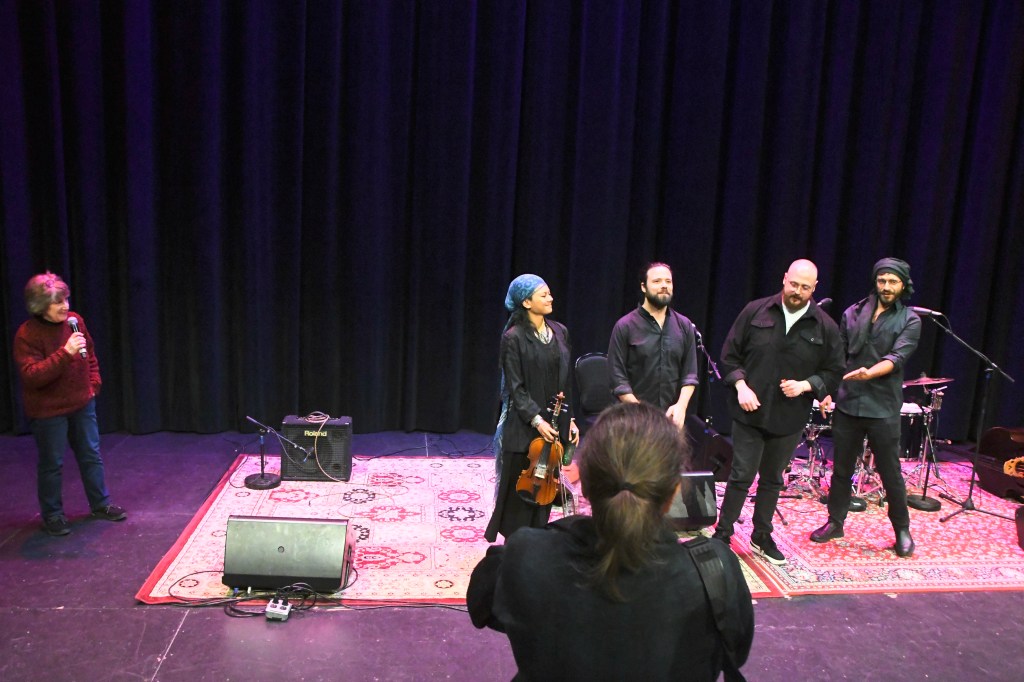
Baklava Express, from left: Daisy Castro, Josh Kaye, Jeremy Smith and James Robbins

They played tight and loose at once, like bebop, like bluegrass. Dense and driving, it felt free as they left spaces between the notes; like what Art Neville of the Neville Brothers once told me was their “secret groove; what I don’t play.”

What Baklava Express did play were Kaye’s original compositions on their two albums, “Davka” (2023) and “Sababa,” due next month; advance copies sold fast at the merch table.

Kaye writes sounds from over there to express feelings from right here, as a British-born Jewish expatriate who discovered both gypsy jazz and Arabic music in Brooklyn. And it swung, from the misnomer-named “Kosher Bacon” to their self-named closer 80 minutes later. 

Daisy Castro, above; and Josh Kaye, below

“Kosher Bacon” introduced their episodic groove-with-solos performing style, Castro bowing long-line melody over Kaye’s staccato oud chops to fit, then pushing and pulling the beat in his own solo. The faster, dance-y “Davka” felt even more rhythmic, speeding and slowing to a hard stop. The new “White Sauce Hot Sauce” honored a Brooklyn halal food truck – Kaye told us where to find it – a delicious menu of melody and busy beats that alternated clear speedy runs with trance-y drones.

Flowing slower, the mood piece “I’ll Figure It Out” found Castro and Kaye in close parallel, forming waves that built and subsided into a repeating coda. Both “Figure” and “Nistar,” which Kaye explained in his quiet English accent meant hidden or concealed, addressed a period after “Davka” and before “Sababa” as he realized he had to write more songs, whose purpose initially felt hidden from him.

Clarity arrived quickly enough – easy for us to say, in the audience – in the abrupt cadences of “Nistar;” compact, emphatic, in crisp formation by oud and violin. A stop-and-go groove pushed the solos then settled into a calmer section until a hard stop slammed the door.

“Salt and Paprika” also cruised close to home, though it could have come from anywhere between Istanbul and Cairo. It referred to the gray starting to emerge in Kaye’s red beard, with an apt, complex pointillism in short punchy passages, notably a sizzling oud and violin duet.

Kaye called an audible before the cosmologically titled “Turtles All the Way Down,” stretching his intro on repetition first, then exploration that Castro followed. Then she led, then followed again until they arrived at the coda together, then repeated it, Kaye at double-time.

He explained he wrote “Begin Again” as the first of the new songs on “Sababa,” but it appears last on the album and near the end Friday. Sparse and syncopated at first, it grew wings in Castro’s solo, then an especially strong oud break, climbing and climbing.
The new album’s title track featured short-but-cool breaks by Robbins, then Smith, who otherwise played supportively beneath oud and violin. Shorter than most tunes Friday, “Sababa” got to the point quickly.

Jeremy Smith, above; James Robbins, below

Their namesake closer “Baklava Express” did the opposite. It stretched through syncopated episodes, dense then sparser, Castro taking the last solo then cueing the B-section again as the coda. They took their bows then looked out at the crowd on its feet, glanced at each other, took up their instruments again and revved up the melody in a brief, hard-hitting departure-less encore.

Wielding a stick-like pick, Kaye relied on the oud’s deep double-stringed resonance in early-song melodic statements, then spun out in widening patterns, jazz-like, as he sped up his phrasing, like Jerry Garcia speed strums.

Tiny, the scarf around her head stretching to near her ankles all of five feet below, Castro played powerhouse, punchy passages or, as in “I’ll Figure It Out,” lyrical, relaxed musings. At times, she echoed European jazz violinists Jean-Luc Ponty or Michal Urbaniak; just as Kaye (more distantly) evoked Django Reinhardt occasionally.

Proctors Passport Series of international artists is a co-presentation with Music Haven which presents similarly globe-spinning fare summers in Schenectady’s Central Park. The Passport Series concludes May 14 with cumbria accordionist Yeison Landero. While the Proctors Passport Series offers full-season passes at a discount, Music Haven Central Park concerts are free.

Music Haven impresario Mona Golub, at left, hails Baklava Express

SONGS

Kosher Bacon

Davka

White Sauce Hot Sauce

I’ll Figure It Out

Nistar

Salt and Paprika

Turtles All the Way Down

Begin Again

Sababa

Baklava Express

GALLERY

Country Joe McDonald, a Voice of Conscience Stilled

Spring 1968. Morning inspection at the Defense Language Institute in Monterey, California. Hundreds of my fellow students stood in uniformed rows below: Army, Navy, Air Force, Marines. 

A pretty good Russian student, I wasn’t really on board with the uniform stuff. Years later, my annual performance review noted, “Militarily, Hochanadel remains basically a civilian.”

On a second floor barracks balcony above that inspection, I placed speakers connected to a borrowed stereo inside.

I cranked it all the way up and dropped the needle. A rock band boomed and loud words drawled, “For it’s one, two, three; what are we fightin’ for? Don’t ask me, I don’t give a damn. Next stop is Vietnam.”

Below me, angry shouts and rapid footsteps running up the stairs urged all due speed as I ran to the far end of the barracks, sped down the fire escape, slid fast down the slippery ice-plant slope and ran.
I got away clean, my laugh felt like a song.

I didn’t know music could do that, make The Man anger-scream and chase me.

Joe at 75. Photo by Steve Read, from the crew of the BBC documentary on the Summer of Love.

Years later, when Country Joe McDonald was headed east to play the Van Dyck, I told him how he and his band the Fish had protested morning inspection with their “I Feel Like I’m Fixin’ to Die Rag” and he laughed over the phone. A Navy vet, himself; he knew what that meant.

Country Joe McDonald went silent Saturday, March, dying of Parkinson’s at home in Berkeley at 84.

Country Joe and the Fish may have been the most overtly political of all the San Francisco bands that played the Monterey Pop Festival the previous June, and I enjoyed seeing them many times during my year-long language training. 

Their sun-splashed mid-afternoon show in a beach-side Santa Cruz pavilion was maybe the most quintessentially California experience of that complicated, mostly wonderful time. But Joe didn’t remember the Berkeley Community Theater show where dancers on roller skates, wearing lights on their bodies in the dark behind a scrim, moved in sci-fi grace as he and the Fish played in front.

Joe came by his activism honestly, a “red diaper baby” raised by socialist parents who named him after Stalin, as the New York Times reported in his obituary, which provides other information noted here. 

His rock-star status flowed directly from his activism as his first recordings were audio inserts in his political magazine Rag Baby. While his producer barred “I Feel Like I’m Fixin’ To Die Rag” from the May 1967 Fish debut album “Electric Music for the Mind and Body” (source of my first music column title), he let slide “Super Bird,” lampooning LBJ.

He led the F-word Fish cheer solo before his biggest-ever crowd, at Woodstock; two years, later he led 250,000 protesters in the same cheer-and-song protest at the Capitol in Washington DC. This chant and “Rag” earned him a place on Richard Nixon*s enemies list, got him cancelled off the Ed Sullivan show and fined for obscenity onstage.

War was the obscenity to Joe, and he protested it all his life, supporting Vietnam Veterans Against the War, Swords to Plowshares, Vietnam Veterans of America and other organizations. 

After the Fish disbanded in 1970, McDonald recorded a blues album with Jerry Garcia and paid tribute to protest-folksinger Woody Guthrie. And he continued protesting in “Vietnam Experience” (1986) and slammed the Iraq War in “Support the Troops.” 

He sang both protests and love poems at the Van Dyck, the last time I saw him, as I reported in the Gazette.

There’s nothing nostalgic about his indignation. He updated “Yankee Doodle” into an anti-nuclear broadside on penny-whistle, followed “The Fish Cheer” and the anti-Vietnam-War tirade “I Feel Like I’m Fixin* To Die” with “Support the Troops,” which focused a similar outrage on the Iraq War. The same compassion for those fighting it and those who love them powered “Picks and Lasers,” a science fiction epic decrying the destructive waste of a war fought on Mars for mining resources. It sounded like a movie plot as folk murder ballad. Before launching into “Support the Troops,” which criticizes the Iraq War as being fought over oil, but “not in my name,” McDonald dedicated the spell-out-“Fish Cheer” – using another F-word – to George Bush.

The show wasn’t all billboards and broadsides, however.

“Janis” was genuinely tender, as was “Come With Me,” written for the first of his five children, named Seven Anne. He followed this with “All My Love In Vain” and “Waited in Vain,” paired lost-love songs of aching poignancy.

I think we all know what Country Joe McDonald would sing about the horrifying news today.

“Gimme an ‘F’…”