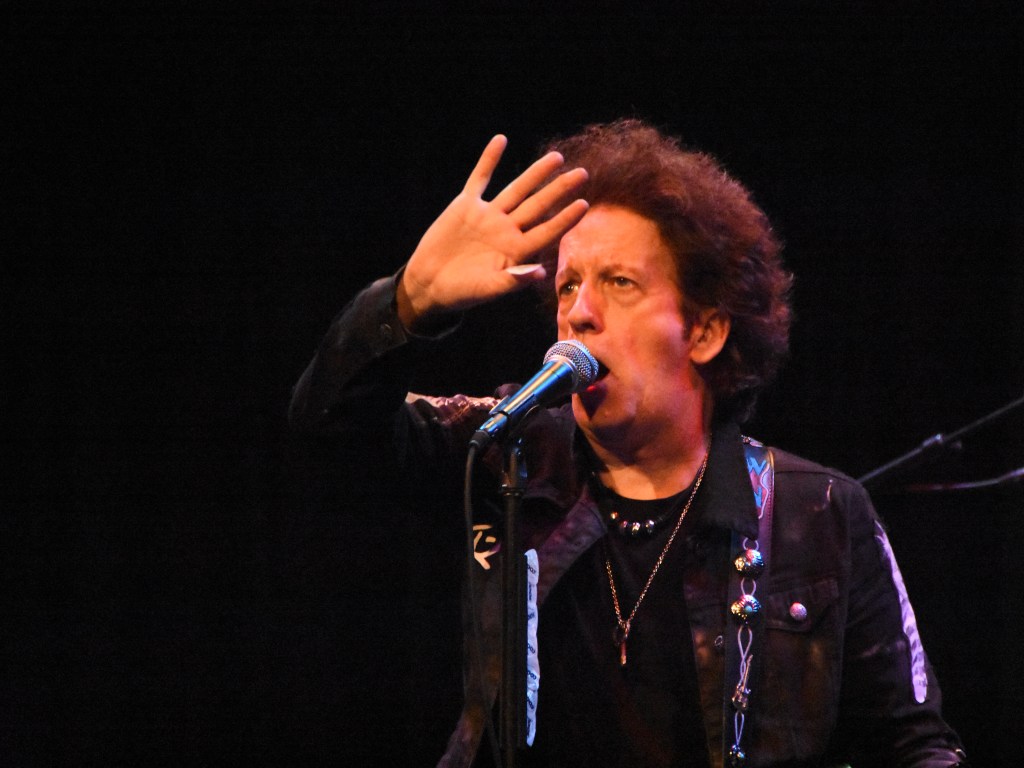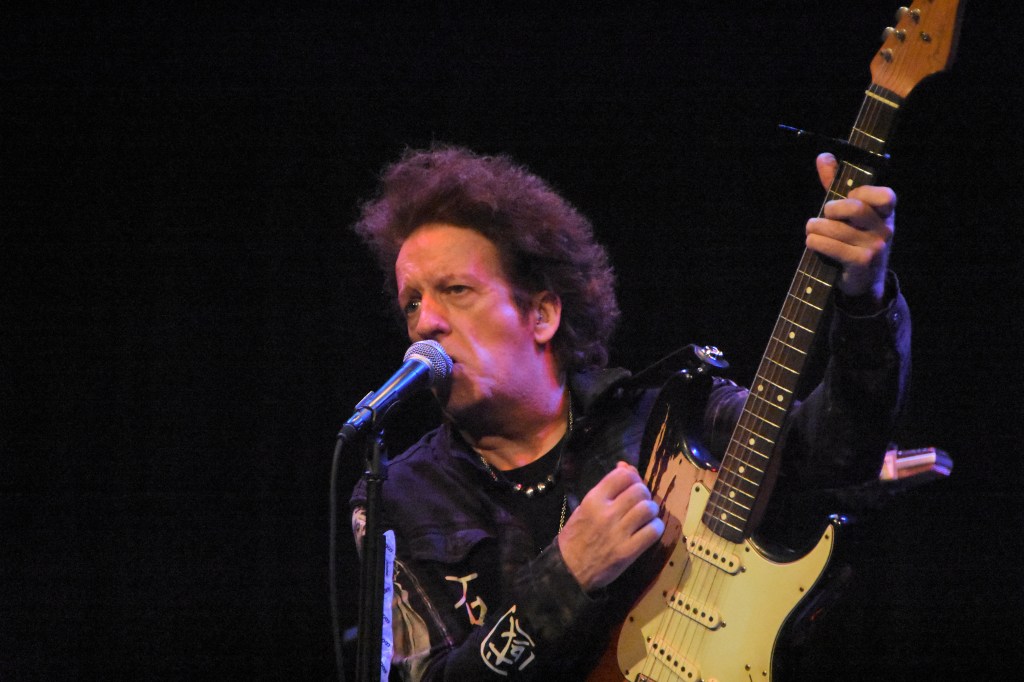
MORE WILLIE NILE

We talked for an hour on Saturday after a shoot in Washington Square Park for the documentary film now in production. Willie spins a good story and I recorded what he told me.

Willie Auditions

When I commiserated with Nile about the recent death of Richard Lloyd of the punk band Television, Nile said, “Television was miles above anybody else that played back then.” Then he said this about where they’d met, at CBGBs, a rock club from 1973 to 2006, closing after founder Hilly Crystal died.

I saw it all. I’ve been here since ’72 in New York. I played CBGBs before it became the punk Mecca – three months before – after this new place opened up on the Bowery.

I’d pick up the Village Voice every Wednesday and see what clubs were there and I’m just playing open mics and stuff and there’s this thing OMFUG – Other Music For Underground Gormandizers – run by Hilly Crystal.

Back then, you could not play in a club or a bar in New York unless you played cover songs. But, Hilly Crystal, his place – you couldn’t play if you played cover songs. He deserves all the credit. In New York, you couldn’t play anywhere – original music, forget it – unless you were a folkie. I was an acoustic player, I was not a folkie.

It was a Wednesday afternoon when I walked down there with my guitar. It was in the Bowery, and that was when the Bowery was the Bowery: There was a mens flop house up above, so it was sleazy.

I walked in and I asked, :Who do you see to play here?”

“That would be Hilly,” said the woman behind the bar. “He’s in the back, have a seat, he’ll be out.”

I got a beer and sat down and 20 minutes, no nothin’.

I went over to the jukebox, they didn’t have it for long, but it was a great jukebox – “Mull of Kintyre” was on that jukebox. The last two songs on the jukebox were by a guy called Hilly Crystal. How many Hilly’s are there?

So I put in four dollars in quarters and played the same song 12 times. I sat back with my beer and if you and me were there, we’d have been laughing our heads off.

After seven times the song played, the same song, out from the back comes a guy – clearly I woke the guy up. A tall grizzly bear with a beard comes out of the back and says, “What the (deleted)?”

I went up to him and asked him “You Hilly?”

He goes, “Yeah.”

“I like your song; How do I get to play here?”

“Get up onstage and play something.”

So I got up onstage and played a couple songs and he says, “You’re hired.”

I was still just learning, playing live – and I’m onstage (the first time) and I did 45-50 minutes.

While I was playing, a whole bunch of people came in and I couldn’t see them because the lights were dark (in the house), blinding lights (onstage)

They were all Hells Angels. So I’m playing to 50 Hells Angels. I didn’t know that, had I known that, I might have said, “What?!”

They loved it, a lot of applause, and that was my introduction to CBGBs.

A month or two later, Tom Verlaine and Richard Lloyd and their manager came in and said, “Could we do something every week?” Television started their residency, then Patti Smith – so after Patti Smith (took over that slot) they would open.

I went every time and it was amazing.

I knew Richard (Lloyd); we went onstage any number of times.

There was a phone booth, the stage was at the back of the room and at the front of the club was a phone booth.

And I would go in it at 1 o’clock in the morning and call my friends in Buffalo and hold the phone out “Listen to this, you gotta come to New York! It’s like Hamburg in ’62” when the Beatles played there. “But nobody came.”
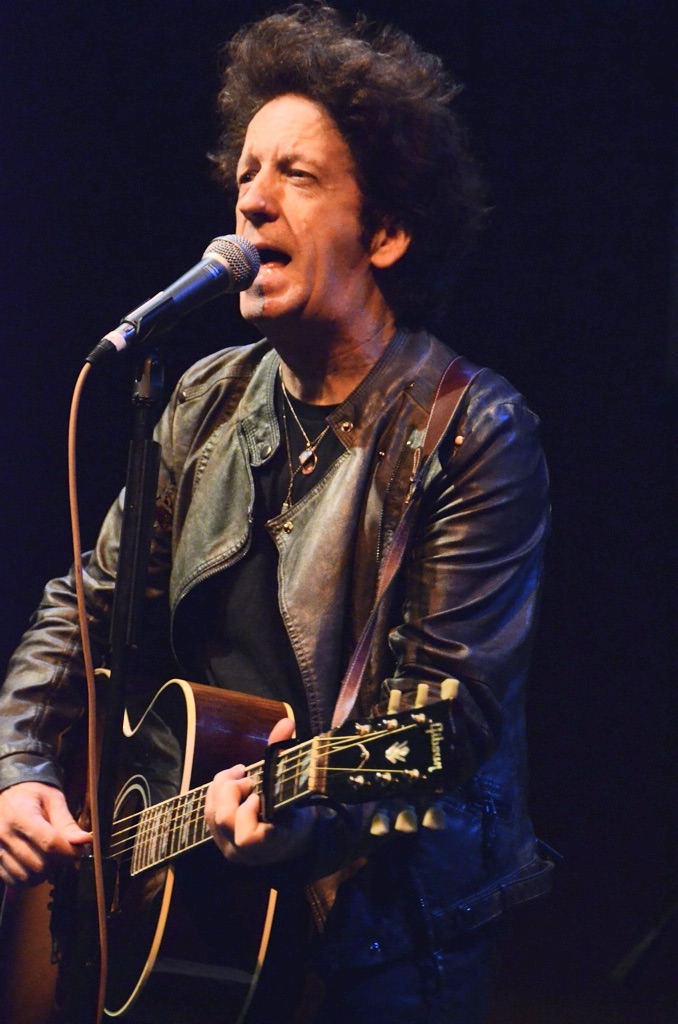
Willie Gets Discovered

Kenny’s Castaways opened on Bleecker Street in ‘77 and I started there in ’78. I did six days a week, opening up – February, April, May and July – six nights, two shows.

In July Robert Palmer of the (New York) Times came by and saw me play.

He had called the club and said, “What time does the headliner go on? I want to review him.”

Don Hill, God bless him, who ran the club at the time, he said, “He goes on at nine, but you want to come at eight. You need to see the guy because he’s really special.”

He came at eight and he wrote a review two days later that you and I couldn’t have written if we tried to make something up.

He changed my life.

He compared me to Bob Dylan, Buddy Holly, Gene Vincent – “Once in a while, the Times breaks an artist” – that kind of thing.

So, that night when the review came out, six record companies were in the audience – you couldn’t get in.

I played there some nights to 20 people, but this Friday night you couldn’t get in – it was packed to the rafters.

“Who was this guy?”

People who knew me, half of them were thinking “He’s not all that.”

Luckily, luckily, I had two kids and a wife and I was having trouble feeding us.

So I was struggling, so it did not knock me off my balance. It didn’t. I thought Maybe this can help us.

So I’m onstage; I did my usual thing, introducing imaginary…William Shakespeare on bass, Paul (muffled, couldn’t catch it) over on drums, and I’m jumping around, jumping off the stage.

I finished the set, place went nuts I wasn’t even off the stage when a guy jumps onstage and gives me his card, says, “I’m Paul Rothschild and I manage the Doors, I produce the Doors and I’d like to work with you.”

That didn’t happen; lots of things people promised Willie didn’t happen, but early on and often thereafter, other good things did.

Willie Remembers His Dad

Willie would sometimes phone his dad back in Buffalo from onstage during his shows; this charmed audiences. On Saturday, Willie told me about him. He didn’t sound sad that his dad had died just days before turning 109; he sounded grateful.

I’m a guy who never gave up and I’m still not giving up. Life is hard, our job is to tough it out – and I learned that from my dad.

Three Decembers ago, could be two, I’m in Buffalo; I went back a lot as he got older. It was cold, four degrees out, and dad’s getting ready to go to church. It’s eight in the morning and I’m just waking up.

He’s gonna go out and get the paper, and he’s got a regular shirt on and his pants and shoes.

And I go, “Dad it’s pretty cold out there, it’s four degrees.”

He goes outside, door closes, and he comes back in with the paper and he goes, “Oooh, yeah, it’s cold.” Under his breath he goes, “Bring it on.”

He was that guy.

I was lucky, I was blessed to have amazing parents – that’s the bottom line.

I’m one of eight and we were really lucky.

He Never Quit

Preview: Willie Nile at Lark Hall on Thursday, Nov. 19, 2026

The film-maker from Vienna told Willie Nile something that stopped the veteran rocking singer-songwriter in mid-”No.”

“Scorsese is a fan of mine,” Nile said last week from a Greenwich Village bar. “So, if Scorsese wanted to make a movie (about me), ‘Yeah, sure.’ But I didn’t know this guy.”

Nile reluctantly agreed to meet, to say no. He asked the film-maker, “Why me? I’m not a rock star, not a famous guy.”

Not famous, maybe, but Nile is widely hailed for tackling big issues in straight-ahead rock songs and passionately detonating them in fiery, joyfully noisy live shows.

The film-maker told Nile, “You never gave up, and you’re doing your best work now.”

Nile agreed, filming is nearly finished, and he plays Lark Hall Thursday full of best-work-now confidence.

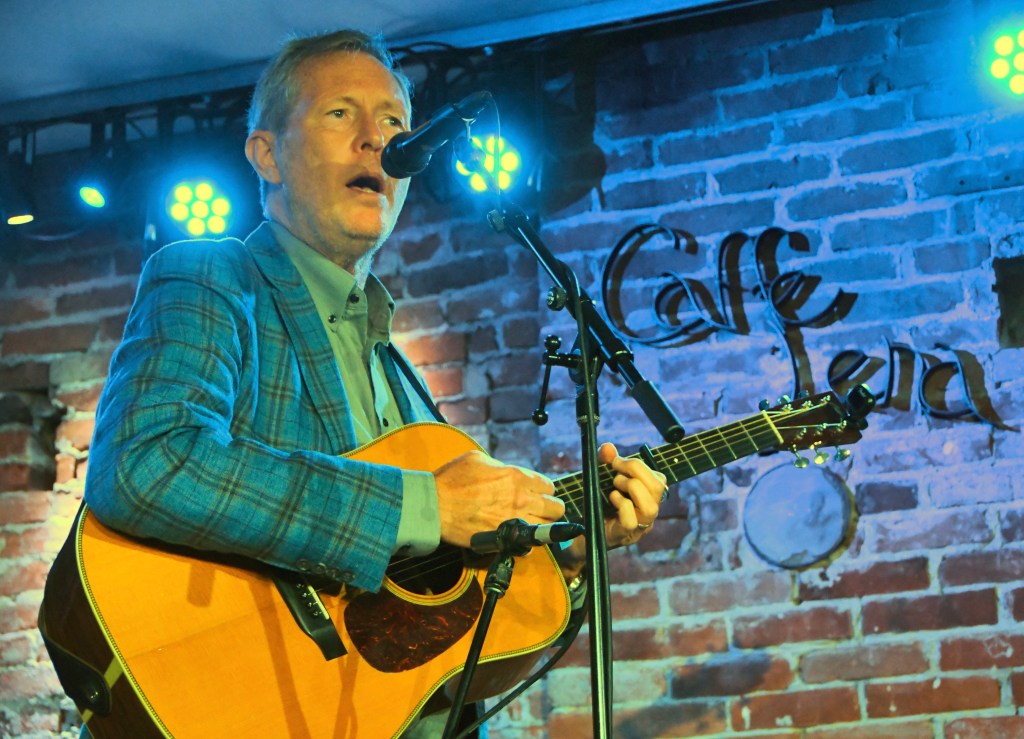
Willie Nile at WAMC’s The Linda in May 2019, guitar pick balanced on his thumb

He’ll bring the same band as on last year’s “The Great Yellow Light” album, his 21st since 1980 when we met. They’re the same cats Springsteen guested with in a recent benefit: bassist Johnny Pisano, drummer Jon Weber and guitarist Jimi Bones.

“We’re gonna call the fire department before we play,” said Nile. “So that they’re aware that the roof is coming off.”

He said, “When I walk on stage, I think I can make magic. It’ll pick my spirits up, the band’s spirits up and the audience’s spirits up.” Nile said, “People who come to my shows; they leave a hell of a lot better off than they did when they walked in. Life is hard, people die – and music can be a healer.”

That mission motivated Nile early, in a Buffalo family of piano players, one of eight grandkids of big-band leader Dick Noonan. “Six days a week he was a postman delivering mail,” said Nile. “Six nights a week he would come home, have dinner, put a tux on and from seven to 10 lead an orchestra.” Bill Bojangles Robinson sent Christmas cards every year, and Eddie Cantor gave condolences on national TV when Dick died in 1953.

Nile trained in classical piano from eight to 16, loving Rachmaninoff – “he rocked!” – Chopin and Beethoven, then took up drums at 10. He started writing poetry in high school, inspired by a teacher who taught about Shelley, Keats and Blake. Then Nile discovered the Beats, then Elvis, Buddy Holly, Little Richard, Chuck Berry and the Beatles. “I saw the culture change and the resistance to the change.” In college, he started playing his roommate’s guitar. “Right away, my poetry went into songs.”

After he and his wife, pregnant with their first child, moved to Greenwich Village in 1972 to make a life in music, he caught pneumonia on a holiday visit to Buffalo. He recovered enough to limp back to New York the following spring and ran a book publisher’s mail room.

Recovery proved fleeting. Misdiagnosed with leukemia, he became too weak (with mononucleosis, Epstein-Barr?) To hold his young son. Struggling up five flights to his apartment took half an hour. When he signed up for open mics, he ran out of energy before he could go on. He didn’t play for years, costing him an opportunity he’s now stoic about missing.

A woman who’d caught a late-1972 Nile afternoon open mic urged him to audition for her boss, John Hammond, the Columbia Records chief who’d discovered Count Basie, Benny Goodman, Aretha Franklin, Bob Dylan and Bruce Springsteen.

“I was late, I got on the wrong elevator bank,” said Nile. “I played ‘Dear Lord’ and I was jumping out of the seat.” Nile sang its chorus – “Lord, Lord; won’t you help me come up with the dough!” – over the phone, laughing.

Hammond took Nile into the studio to record some songs, then told him, “You’ve got something, you’ve got some real talent, but you need more experience. Keep me posted.”

“Did I keep him posted?” Nile asked. “No! I got so sick…out of commission for three years.”

Around that time, he’d played CBGB-OMFUG (See Willie Auditions, tomorrow). Years later, after he’d recovered, a gig at Kenny’s Castaways put him on the map. (See Willie Gets Discovered)

Nile signed with Arista Records, toured with the Who, and made his area debut at SUNY Albany’s MayFest, a student freebie where he dazzled. “That show you saw, that was either my first or second show I ever did with a band, ever,” Nile recalled.

He played Tanglewood with Joan Armatrading, and SPAC with Ringo. Pub-crawling around Saratoga afterward, Nile’s bassist Fred Smith (RIP) spoke only French, confusing everybody.
Then came a decade-long drought. After two albums, he left Arista, went bankrupt, signed to Geffen Records but was dropped immediately.
“In early ’82, I walked and left the record business,” he said. “There were all these wolves and sharks and they were killing my love for music.” He moved with his wife and four children back to Buffalo. “I was borrowing money, struggling, I had no job, no nothing; it was really hard.” A song publishing deal with MCA provided some income, but he vanished from being the Next Big Thing to obscurity. “In Buffalo, I kept writing and after about two years I had a bunch of songs, but I couldn’t get my phone calls answered. Nobody was interested.”

On the upside – Nile always seems to see the upside – “I was able to grow as a writer, away from the lights… I was home with my children at a young age and and we were all so close;” despite a divorce in 1991.

When he played a benefit show in Norway in 1987, “everybody found I wasn’t dead.” NYC DJ Vin Scelsa said in a radio interview, “We all thought you had OD’ed or drunk or whatever.” Nile explained he’d walked away. “I wanted to protect my love of music, which I did.”

When a Columbia Records producer saw a video of Nile playing that Norway gig, he urged the label to sign him. Through misfortune after disaster, Nile never quit and managed to take the advice Columbia chief John Hammond gave him in 1972: He got nearly 20 years of experience.

In 1991, Columbia released “Places I Have Never Been” to strong reviews and short tours including a Central Avenue Albany club show. When he played SUNY Albany’s Page Hall a few years later, unannounced solo opener with the Roches, someone yelled, “Who ARE you?”

Patiently rebuilding his career from obscurity, Nile has self-released nine albums in 12 years and played often at WAMC’s The Linda; some with full band, one solo at the piano, another on crutches.

Now, Nile is jazzed about the movie in the making and how it shows his father in Buffalo, including a phone call from Joe Biden congratulating him on his 108th birthday. Nile learned resilience from his father. “He was old school American, hard core, real…with character, grace, generosity. He taught me you pick yourself up and get on with it.”

Nile is also excited about Thursday’s Lark Hall show. “I’m having more fun than ever, the shows are better than ever,” he said. “I dare anybody to come out and see a show and tell me it ain’t better than whatever they’ve seen in the past. I’ve got 185 recorded songs and maybe 300 other songs to pick from; and I’m having fun.”

Willie Nile and band play Lark Hall (351 Hudson Ave., Albany) on Thursday, Nov. 19. 8 p..m. $36.06. 518-599-5804 www.larkhallalbany.com

Flute Finale

Review: Ali Ryerson Quartet at A Place for Jazz; Friday, Nov. 13, 2026

Proclaiming “theft is a tradition in jazz,” flutist Ali Ryerson led her Quartet in musical recycling Friday at A Place for Jazz.

Playing “mash-ups,” as she called them, of standards alongside her originals, she charmed fellow musicians and fans young and old.

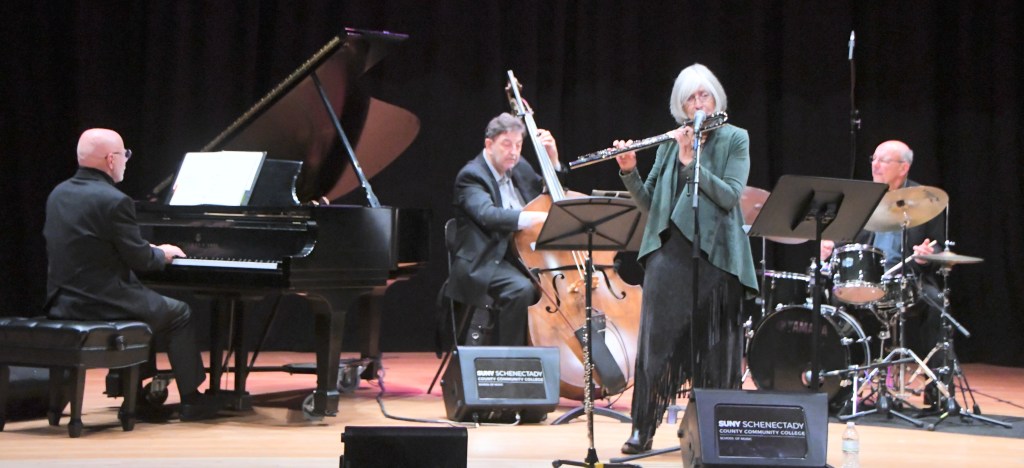
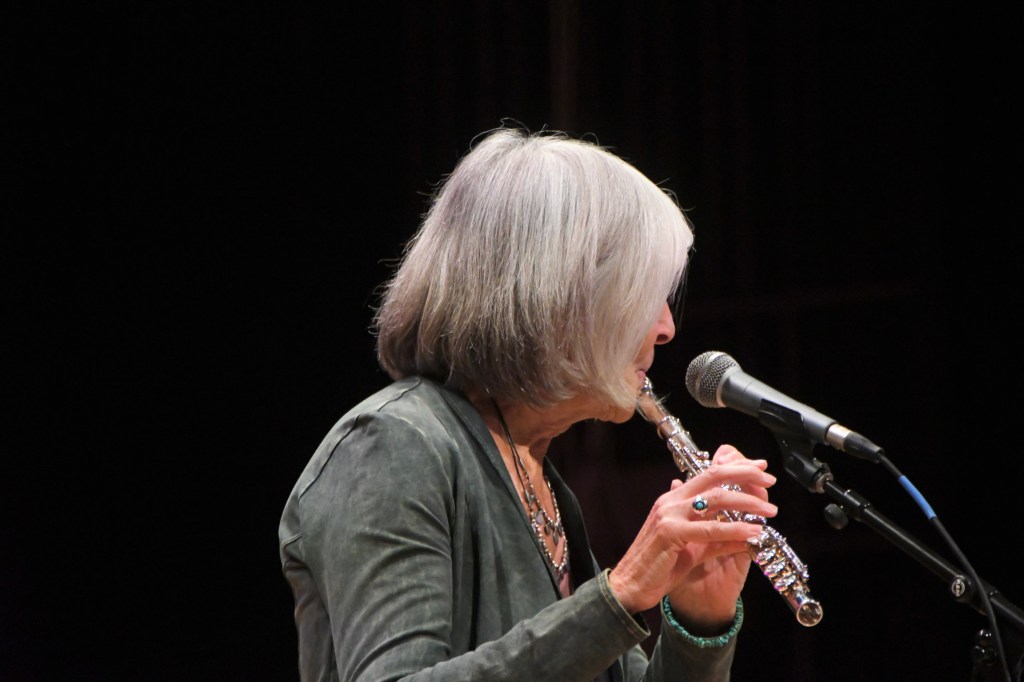
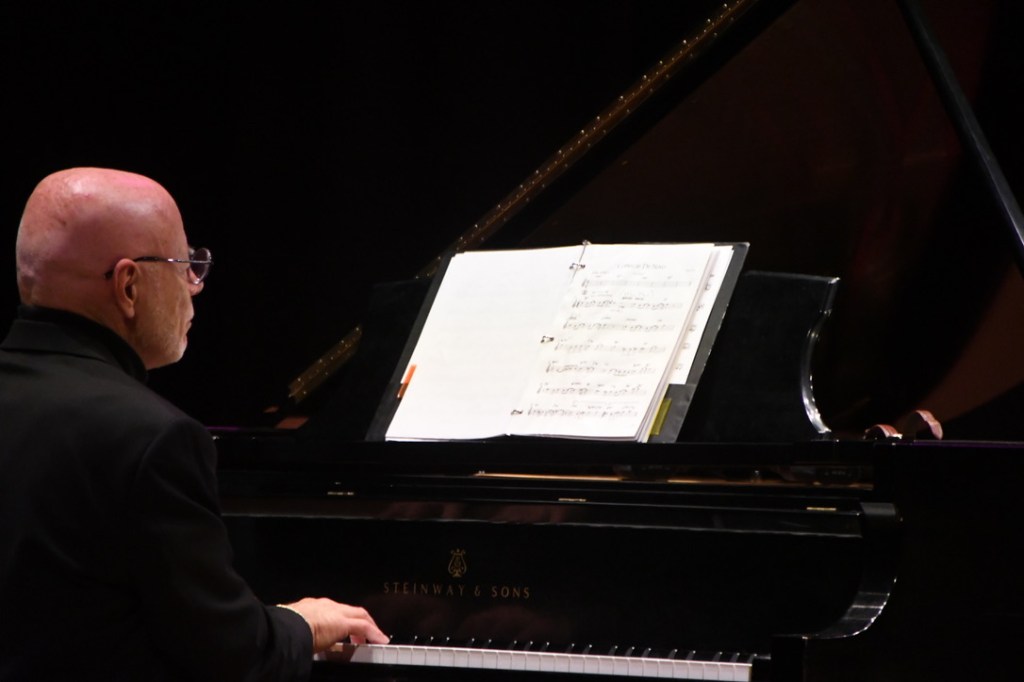
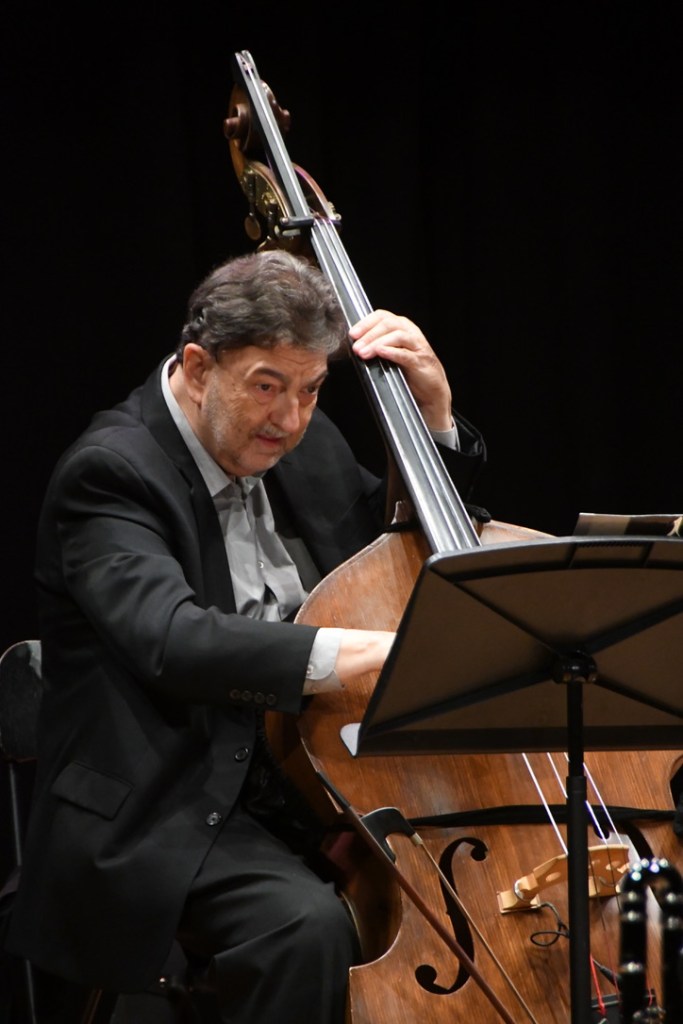
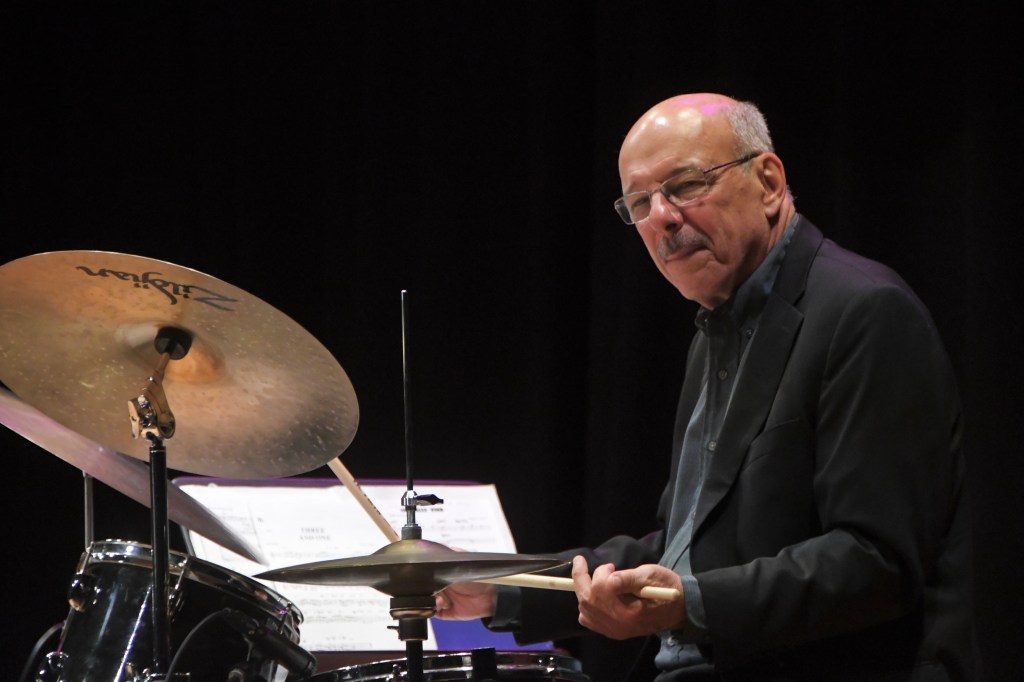
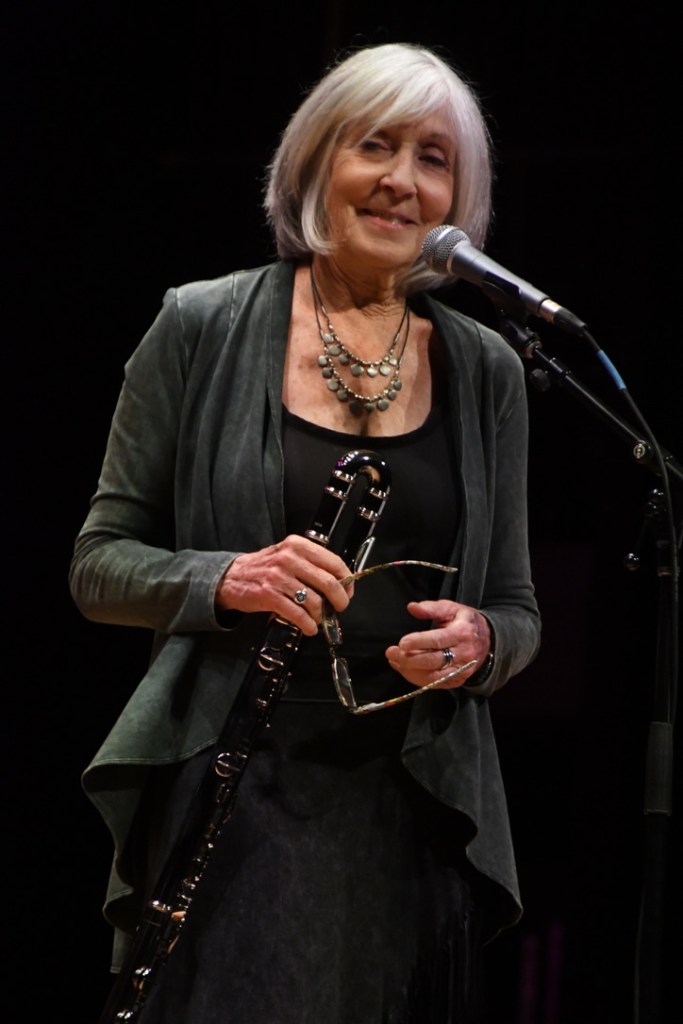
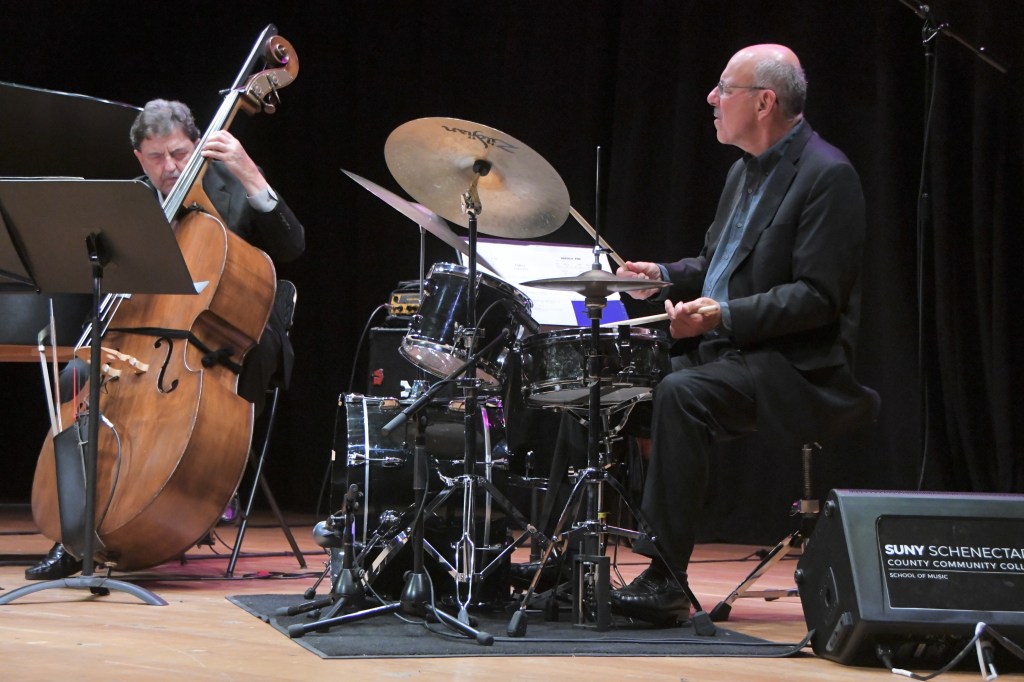
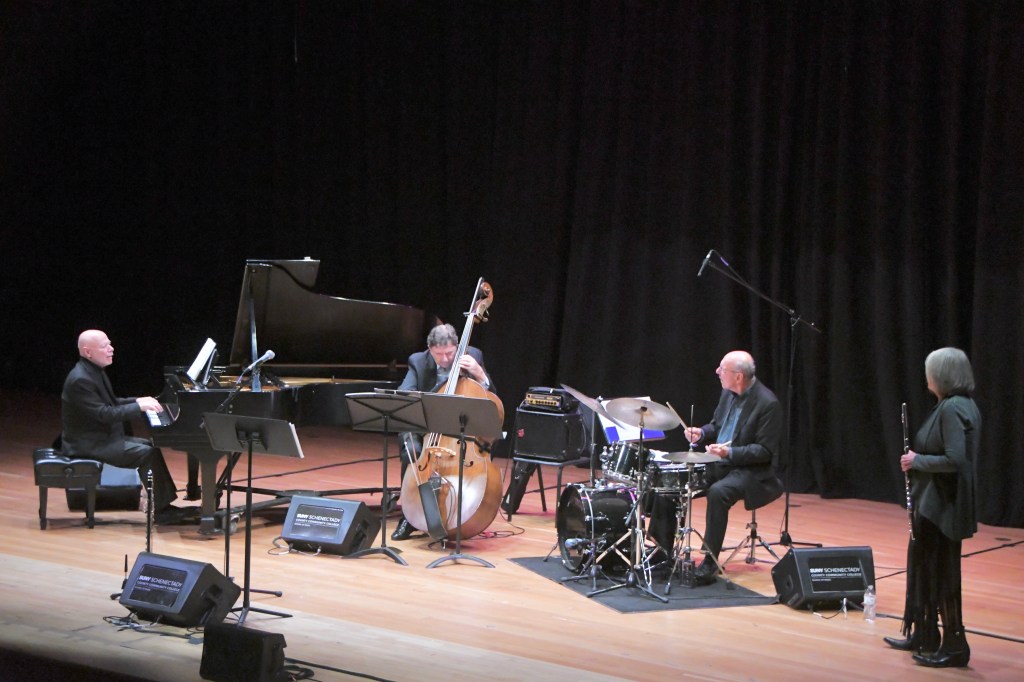
Ali Ryerson Quartet, from left: Larry Ham, piano; Lou Pappas, bass; Ryerson, flute and alto flute; Tom Melito, drums

A tilted bebop fanfare settled into a groove with solos by Ryerson and bassist Lou Pappas before a complex coda that echoed the opening. Ryerson explained she’d grafted her own “Chuck’s Tune” in answer to Wayne’s “Solar,” the Miles Davis favorite she’d used to set up her own.

She applied the same mutation to Steve Swallow’s “Falling Grace,” taking it further outside as “Flying in Space.”

These felt seamless, launching imaginative explorations from familiar platforms. Her original “Cold Snap” swung in similar graceful ways to the earlier standards-with-extras, but with more scramble, and featured high-flying solos from Ryerson’s flute, Larry Ham’s fleet piano and Pappas’s bass. Tight from the first, they sounded especially muscular and crisp in the B-section here, riding on Tom Molito’s tasty/propulsive drumming.

A gracious guest, Ryerson touted students of the SUNY Schenectady Community College music school that hosts A Place for Jazz and presented her afternoon master class there. A busy teacher herself, she calls her students “Ali Cats” and publishes instruction books.

Resuming with the Sammy Fain Disney theme “Alice in Wonderland,” she rebranded it as “Through the Looking Glass,” a cheerful, swinging waltz with a fast, complex Ham piano exploration and Pappas bowing his bass serenely in the coda.

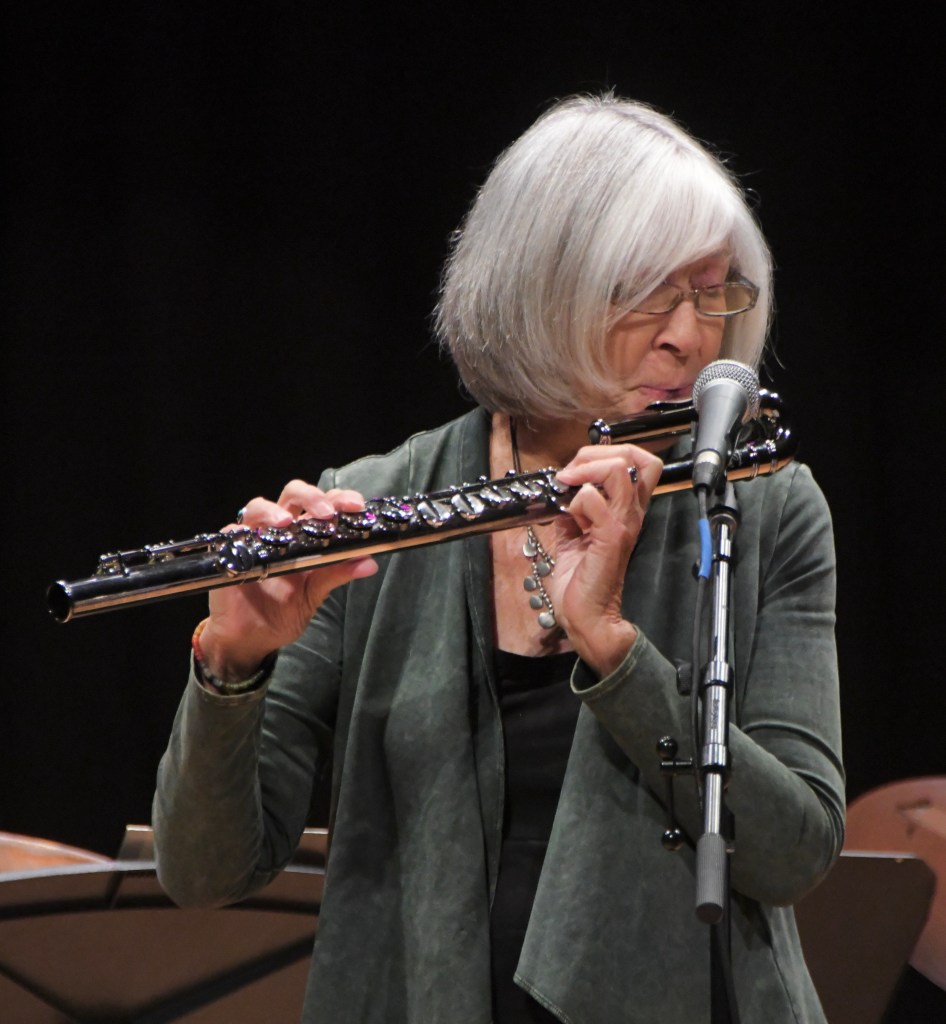
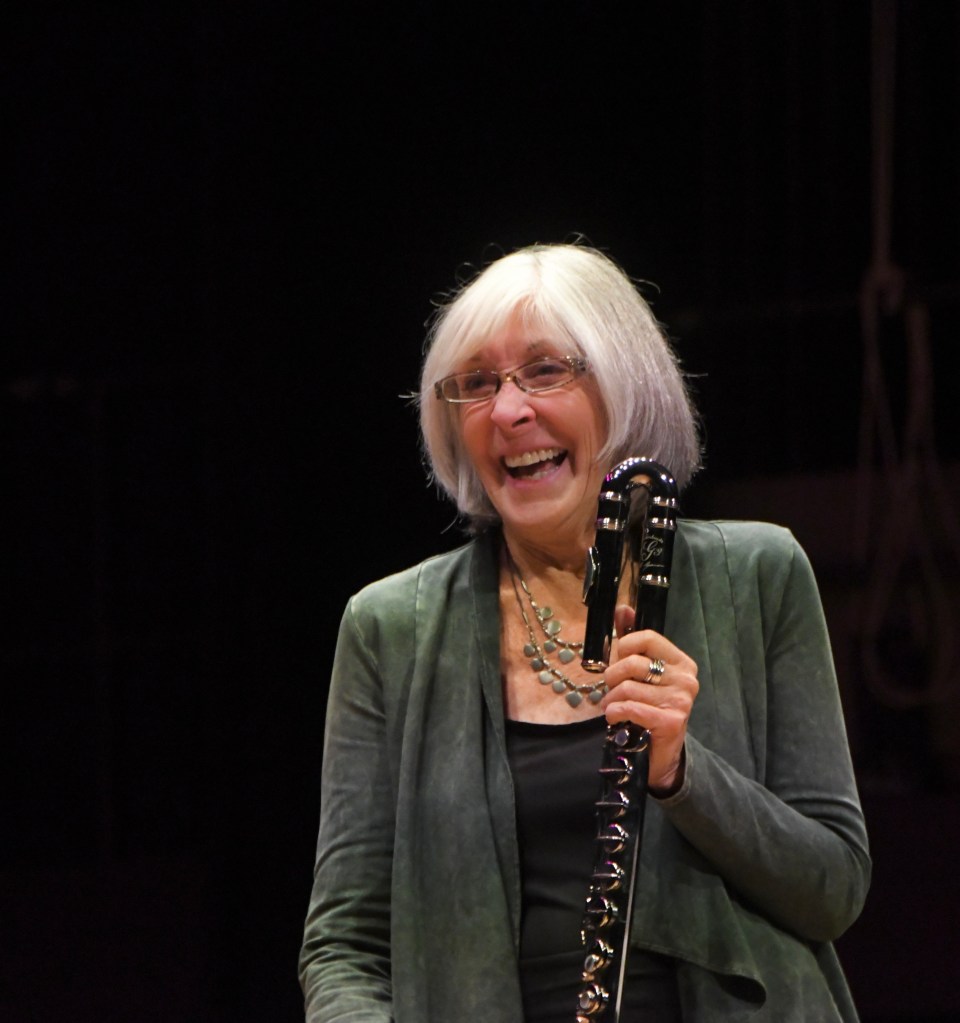
Ali Ryerson, above; Larry Ham, below

Jerome Kern’s “Yesterdays” became “Before Today” in Ryerson’s hands. A syncopated bebop romp eased into a more gently swinging flow that livened up again in riff-swapping as Melito’s drums erupted into peppy dialog with everybody in turn – highlight of the first set. A spirited Brazilian-flavored dialog of Ryerson’s alto flute with Ham’s piano on a steady bed of bass and drums showed why Brazil is on her bucket list in a serene bossa. Her “Ali Cat Blues” used stop-and-go transitions and busy extended riff swapping before intermission.

Opening the second set, “Stella by Starlight” felt faithful to its original swing feel before she eased into Brazilian bossa mellowness in Paul Desmond’s “Samba Cantina.” After citing her family jazz pedigree, stretching back to the big-band era with her guitarist father Art, Ryerson revved her band with Thad Jones’s “3 in 1.” In this engaging bop-swing number, Pappas and Ham were strong as her alto flute.

Lou Pappas, above; Tom Melito, below

She paired vintage love songs, letting the band run fast and far in “What Is This Thing Called Love” before tapping her head to signal the recap; fine, fine work from Ham here, taffy-pulling the tempo, turning the chords inside out.

However, the second set peaked with Horace Silver’s serene ballad “Peace,” Ham’s meditative Bill Evans’y piano inviting everybody in. Ham returned in a tasty trio section while Ryerson’s solo near the end soared every bit as high. Just plain wonderful.

She lightened the mood promising “one more tune, and an encore – I take no chances” – before her jaunty original “Boppin’ Love,” pulsating to a breathless hard stop after a happy clatter of drums.

Thanking everyone for asking for an encore, but without leaving the stage, Ryerson took us back to Brazil with “Fe” (Faith), uncorking an energetic up-the-scale run of jaw-dropping speed and melodic force.

Ryerson seemed mostly to play within herself, sometimes sight-reading prepared solos for precision. The music breathed a bit better whenever anybody went “off-book,” as actors say. Early on, she said with warm gratitude, “At 74 years old, I feel I’ve found my band.” They seemed a happy crew of easy smiles and clear cues, sometimes toying with each other as they tossed the lead back and forth.

She shared that comfort, that cohesion, with the band, the audience and the songs.

Ryerson’s concert Friday closed the 26th season of A Place for Jazz; the nonprofit, all-volunteer presenter goes dark until April 4 when its spring fundraiser, early in Jazz Appreciation Month, honors its late president Tim Coakley. A Place for Jazz also publishes a jazz calendar at http://www.aplaceforjazz.org.

This season’s shows were in memory of Coakley and underwritten by Joel Blumenthal and John and Donna Moroney.

Gallery

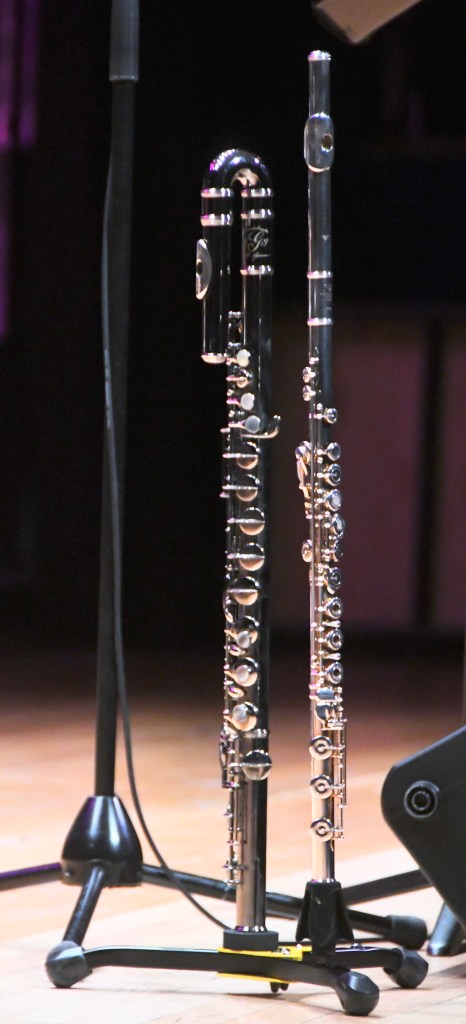
When I sent this photo to brother Jim Hoke who plays flute and everything else and asked him to sort them for me, he wrote back, “Looks like a curved alto and a C (regular) flute. My alto is straight; most are. All basses are curved like this one.”

Esquire magazine hailed Jim’s flute solo on a Kacey Musgrave album. https://www.esquire.com/entertainment/music/a37502547/kacey-musgraves-flute-solo-star-crossed/

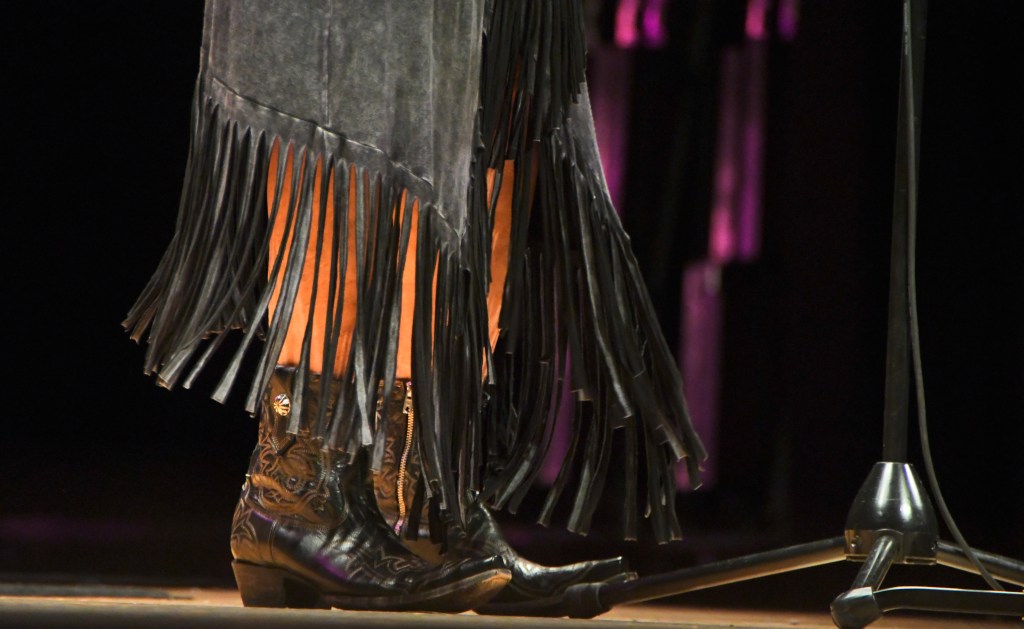
Ryerson’s Boots – posted in honor of the late great Greg Haymes who often posted footwear pix on the original Nippertown.

Jazz TONIGHT, Friday, Saturday

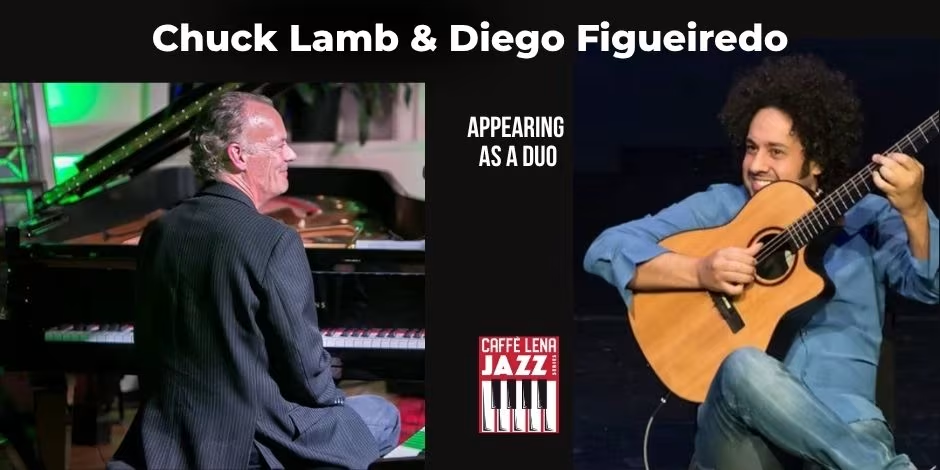
Tonight, pianist and longtime Caffe Lena jazz host Chuck Lamb teams up with young Brazilian jazz guitarist Diego Figueiredo in a stripped-down duo format. If the guitarist’s name feels unfamiliar, George Benson calls him “one of the greatest guitarists I’ve seen in my whole life.“

Photo provided

Lamb has toured and recorded for decades with the Brubeck brothers and also leads his own quartet or other groups with elegant vocalist wife Ria Curley. Jazz piano giant Dave Brubeck said this about Lamb: “Chuck is an extremely creative, harmonically interesting, rhythmically exciting pianist and one of the best improvisers I’ve heard in recent times!”

Like Lamb who hosts a parade of talent in his Caffe showcases, Figueiredo gets around, playing with fellow Brazilian Gilberto Gil, fellow guitarists Stanley Jordan and Larry Coryell, Caffe Lena regular Cyrille Aimée plus stars Jeff Hamilton, Terell Stafford and Wycliffe Gordon.

The Caffe’s late, great Oscar and Grammy winner, tech wizard and cultural spark plug Joel Moss helped launch Lamb’s regular jazz presentations.

7 p.m. TONIGHT. doors 6:30 $27.11 members, $30.37 general, $15.18 students and children. 518-583-0022. www.caffelena.org

Swan Song on Flute

Friday, flute-player Ali Ryerson wraps the five-concert 26th season of A Place for Jazz with her Quartet.

Trained and adept in both classical music and jazz, she accompanied Luciano Pavarotti with the Monterey Bay Symphony, for example. Her jazz credits include Billy Taylor, Kenny Barron, Stephane Grappelli, Frank Wess, Red Rodney, Laurindo Almeida, Art Farmer, Maxine Sullivan and Roy Haynes. She’s released 20 albums as a leader since 1991, several with longtime collaborator guitarist Joe Beck.

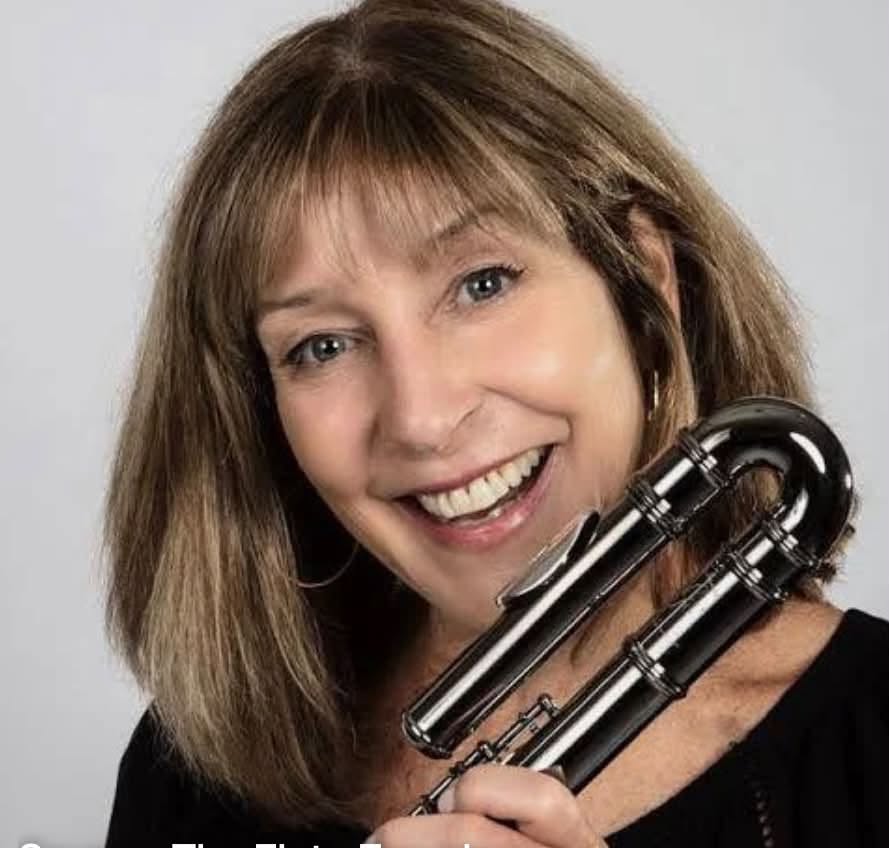
Ali Ryerson, with bass flute. Photo provided

She brings her regular quartet Friday to A Place for Jazz: pianist Larry Ham, a Hudson Valley resident who often plays here with Cliff Brucker; bassist Lou Pappas and drummer Tom Melito. Ryerson plays alto and C flutes, plus the larger bent-tube bass flute.

A Place for Jazz presents its concerts in the Carl B. Taylor Auditorium of the music school at SUNY Schenectady County Community College. This season’s shows are underwritten by Joel Blumenthal and John & Donna Maroney, and in memory of longtime AP4J president Tim Coakley, RIP. 7 p.m. $25. www.aplaceforjazz.org

The 2026 five-concert AP4J schedule lacked elements of prior seasons: No local act and no real big-band, though the Cookers (Oct. 16) comprised seven players.

However, it’s veteran-heavy lineup drew substantial crowds of both longtime and younger jazz fans including Schenectady music students; some of whom benefit from the non-profit, all-volunteer presenting program’s scholarship fund and artist workshops.

More at Caffe Lena

The Caffe stays busy this week with singer-songwriter Robbie Fulks and opener Henry Ferland Thursday, omni-instrumentalist and singer The Suitcase Junket Friday and Woodstock rockers Professor Louie and the Crowmatix Saturday.

Robbie Fulks at Caffe Lena in September 2024. My photo

Few troubadours match Fulks’s command of serious and humorous writing, solid and simple guitar under laid-back vocals with easy momentum even in the most serious messages. He’s as insightful as our own Michael Jerling in sharply observing his adopted southern home country, but taller.

When Fulks and violinist-singer Jenny Scheinman opened for Mary Gauthier in 2024, I reported here that “Fulks stirred up a melancholy zesty cocktail with goofball observations…pained or pointed, edgy/witty…Famed for sardonic writing, Fulks flat-picks a mean Martin six-string; not flashy but plenty fast and always clever-logical…Fulks’s aim is true and his lance is sharp.” And I admired his “Zappa-meets-Prine skewerings of cracker cliches…alongside affectionate snapshots of a south Fulks…(also) portrayed as very mixed.”

Both Fulks and Scheinman – who’s not on Thursday’s show – have strong new albums, by the way: Fulks with “Now Then” and Scheinman with “One Hundred Years Today.” But I digress. Fulks’s opener, Hudson Valley native Henry Ferland, plays tight and tidy finger style guitar.

Thursday, Nov. 12. 7 p.m.. doors 6:30. $29.28 members, $32.53 general, $16.27 students and children

The Suitcase Junket introduces his new album Friday at the Caffe, “To Go On,” mourning the passing of his singer-songwriter sister Kate Lorenz. Born Matt Lorenz, TSJ adopted a stage name that aptly describes his suitcase of makeshift instruments – like a curious tinkerer’s arsenal of found objects and adapted junk items that make a remarkable one-man-band’s variety of sounds.

The Suitcase Junket (Matt Lorenz) Photo provided

TSJ’s sonic ingenuity supports writing and vocal skills so strong he could come onstage without instruments or props and still engage and amaze. He says he made the new album to express grief, surely – but also “comfort, a little bit of surprise, a little bit of discomfort… and after all that, a sense of joy and hope.”

Friday 8 p.m. doors 7:30. $29.28 members, $32.53 general, $16.27 students and children

Saturday, Professor Louie and the Crowmatix bring their stalwart Woodstock rock to the Caffe stage. Like Matt Lorenz as The Suitcase Junket, Professor Louie is a stage name; of Aaron L. Hurwitz who produced three late albums by The Band including indelible covers of “Atlantic City” (Bruce Springsteen) and “Blind Willie McTell” (Bob Dylan).

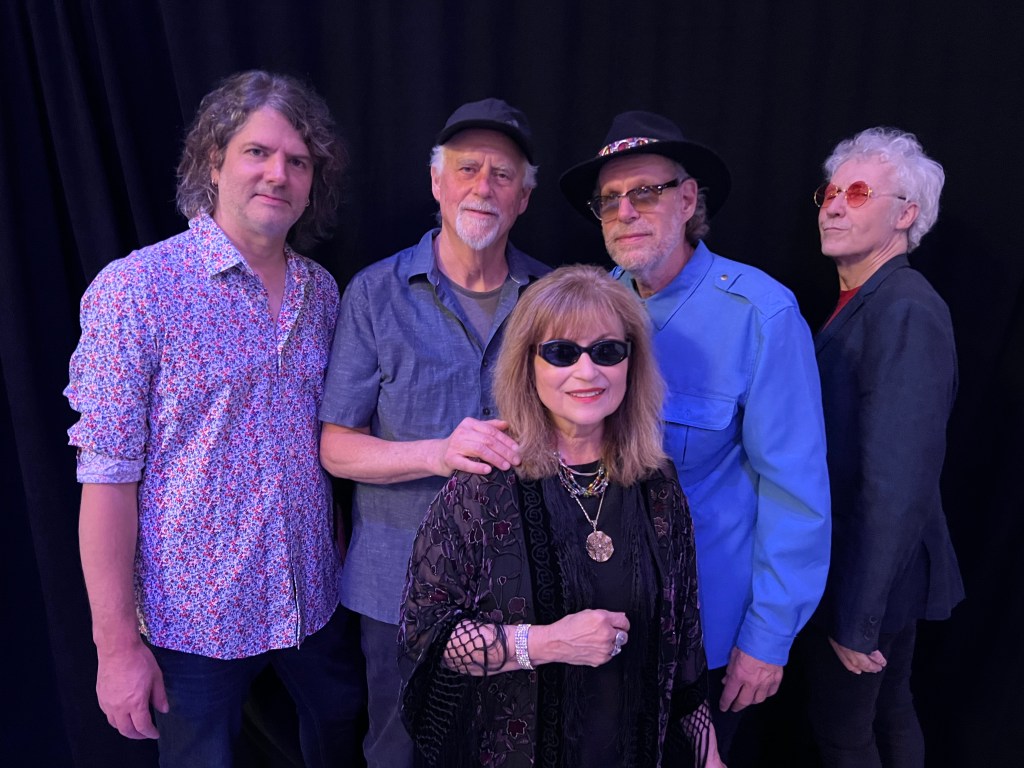
Professor Louie and the Crowmatix. Photo provided

Since those projects, he and the Crowmatix have earned their own place in the Americana/roots-music pantheon. Professor Louie leads the crew from his keyboard array (including accordion): singer Miss Marie, bassist Frank Campbell, guitarist Todd Mihan and drummer Dan Hickey who replaces the late, great Gary Burke. Born in Troy, Burke played on Dylan’s Rolling Thunder Revue tour; at SPAC with Joe Jackson and everywhere with Shania Twain’s first touring band, recruited by guitarist, Twain bandleader and local hero David Malachowski, also RIP.

Saturday, Nov, 14. 8 p.m., doors 7:30. $27.11 members, $30.37 general, $15.18 students and children

More Schenectady Jazz

The same fans who go see Ali Ryerson close A Place for Jazz 2026 Friday can see more jazz in Schenectady Saturday at the Van Dyck Music Club.

Saturday, the Studio Blue Jazz Octet plays the longtime Stockade neighborhood venue. All area jazz scene regulars, Studio Blue is Chris Alsdorf, trumpet; Jim Corigliano, tenor saxophone; Tom Gerbino, baritone saxophone; Jay Mosier, trombone; Mike Novakowski, guitar; Steve Viglucci, keyboards; Ed Tourge, bass; and Gene Garrone, drums. 7:30 p.m. $23.18. 518-630-5173 http://www.stellapastabar.com/vdmc

Exile and Uplift

Review: The Naghash Ensemble of Armenia at Universal Preservation Hall (Proctors Collaborative Passport Series presented with Music Haven), Thursday, Nov. 5, 2026

The most compelling music expands in the heart from the particular to the universal. To deeply poignant effect Thursday at Universal Preservation Hall, the Naghash Ensemble of Armenia transmuted long-buried medieval poetry about the pain of exile into something joyful, of belonging.

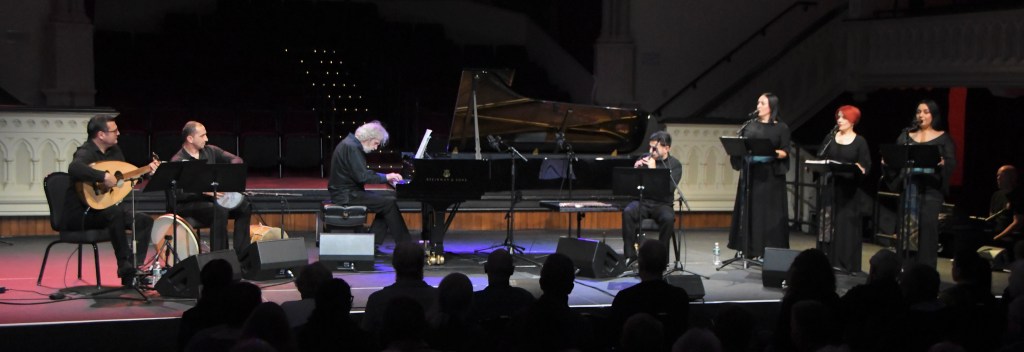
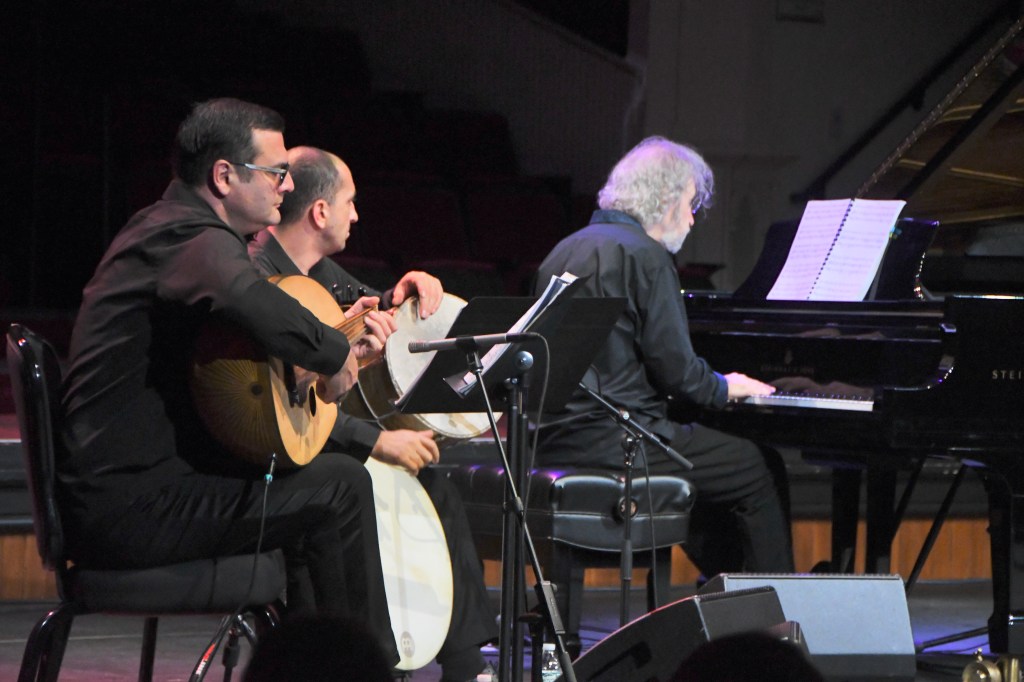
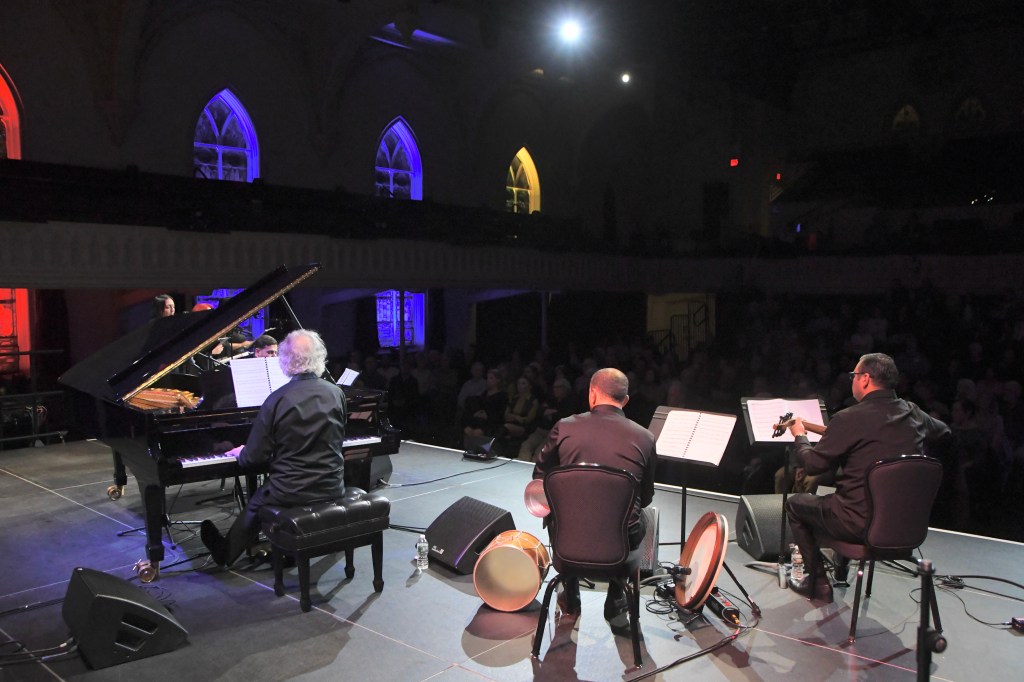
Above, the Naghash Ensemble of Armenia. Below, John Hodian

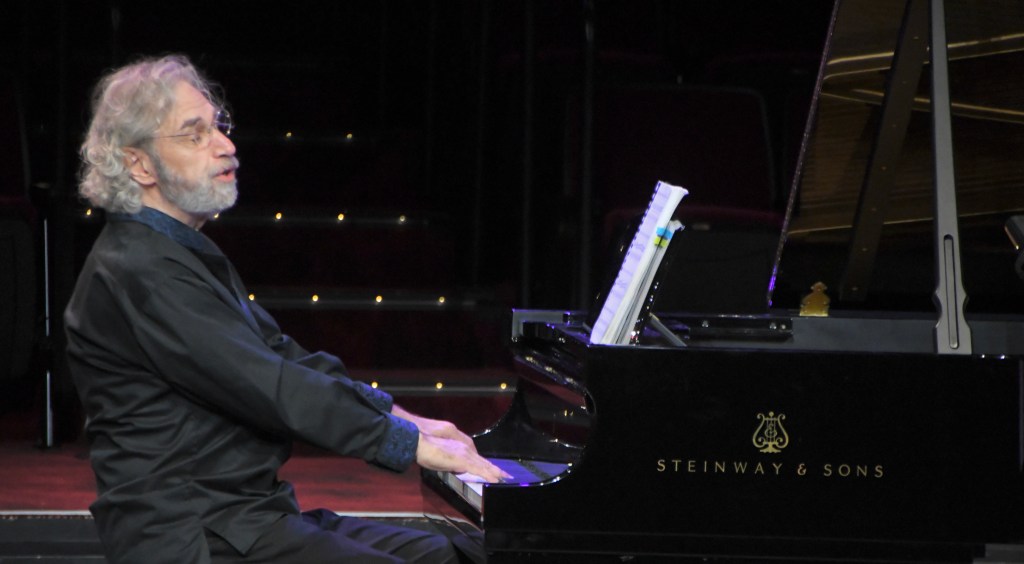
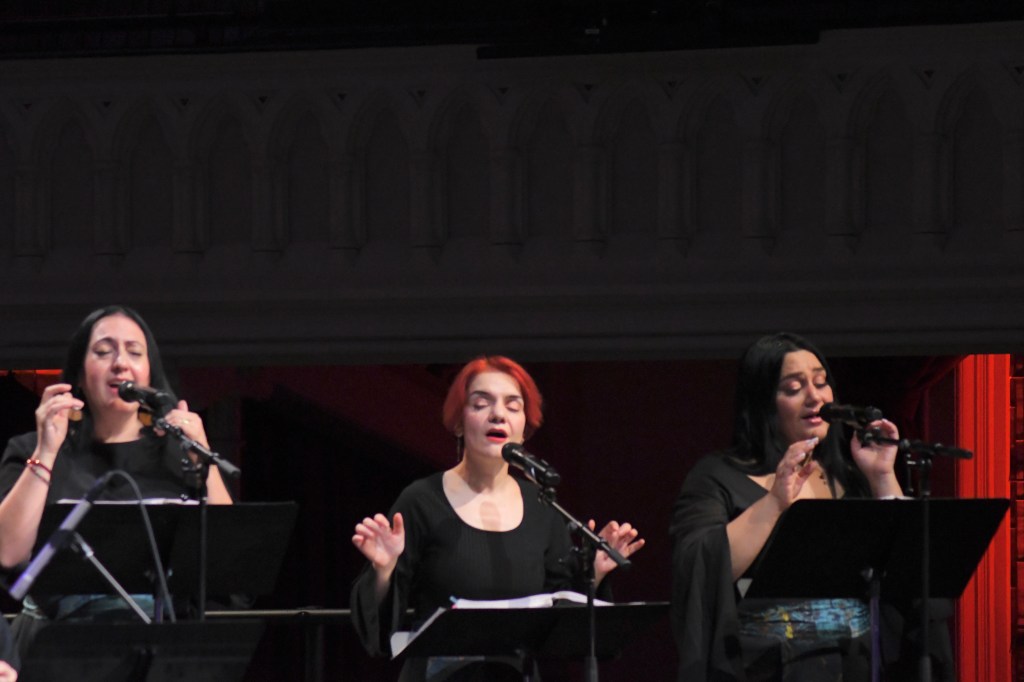
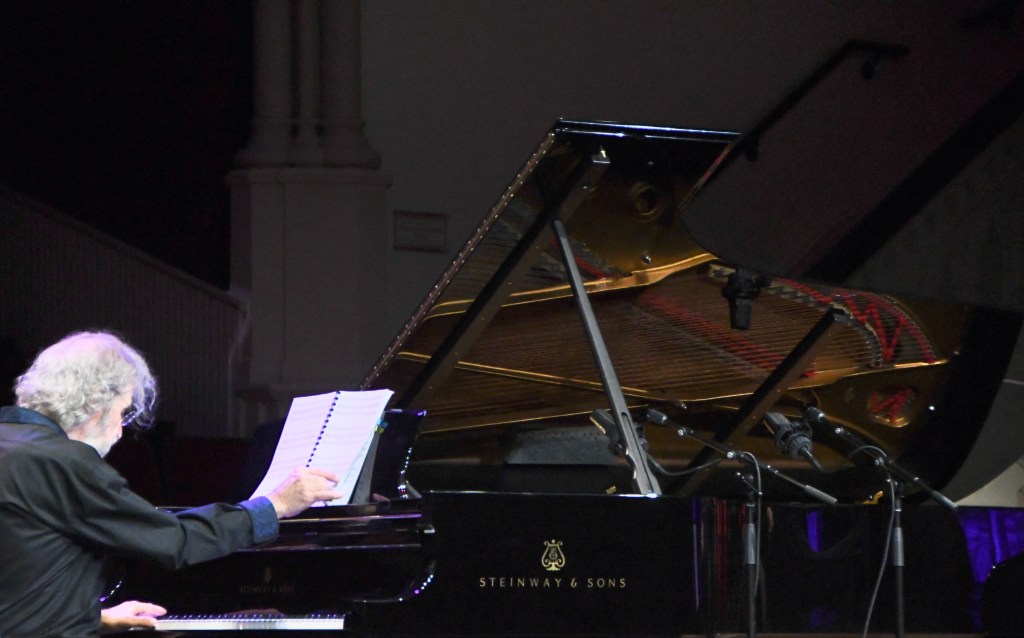
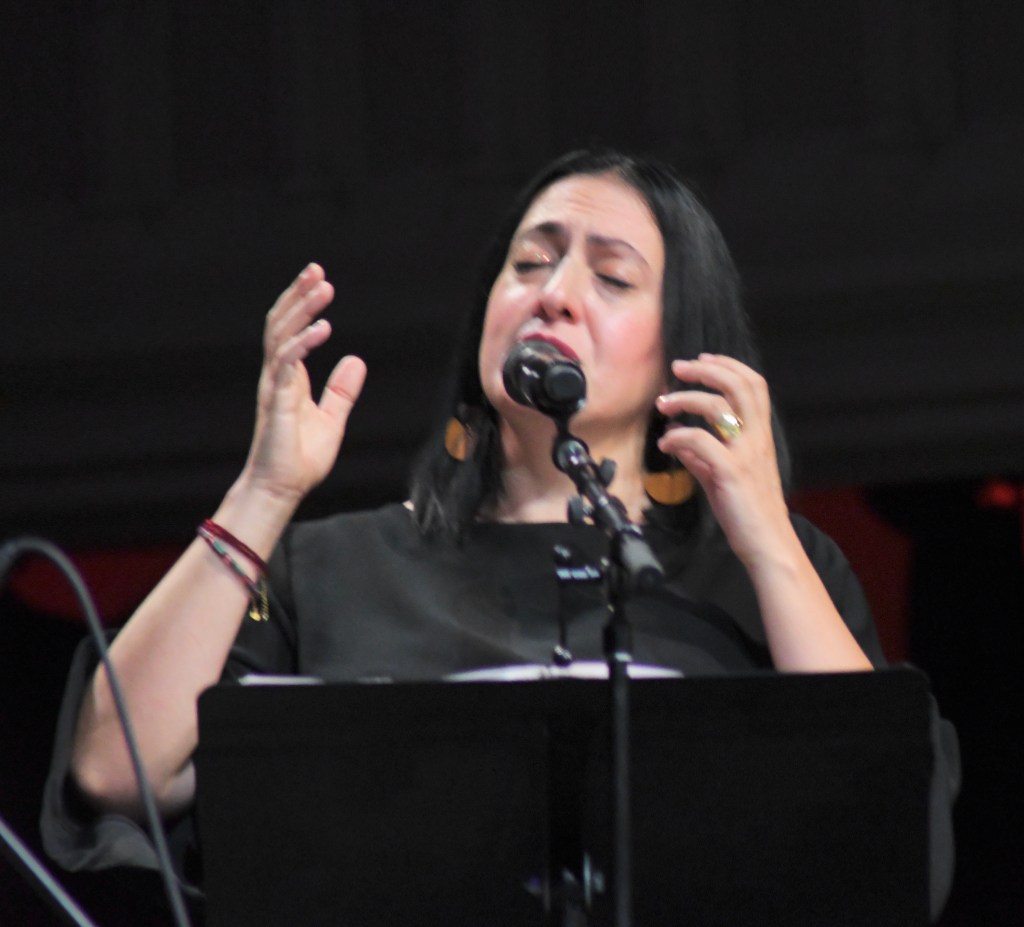
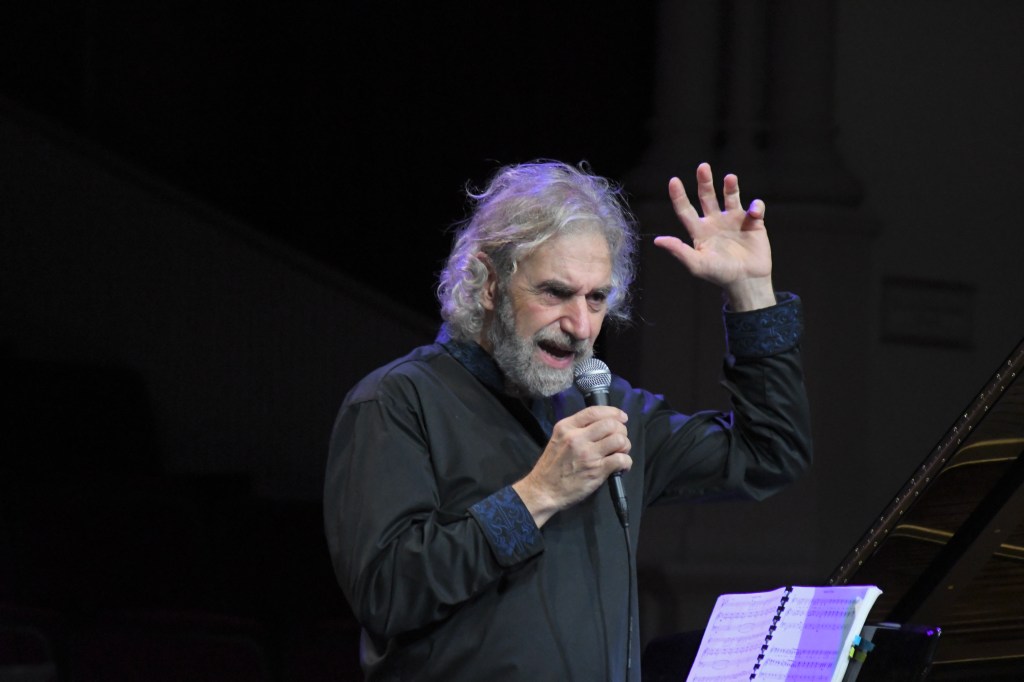
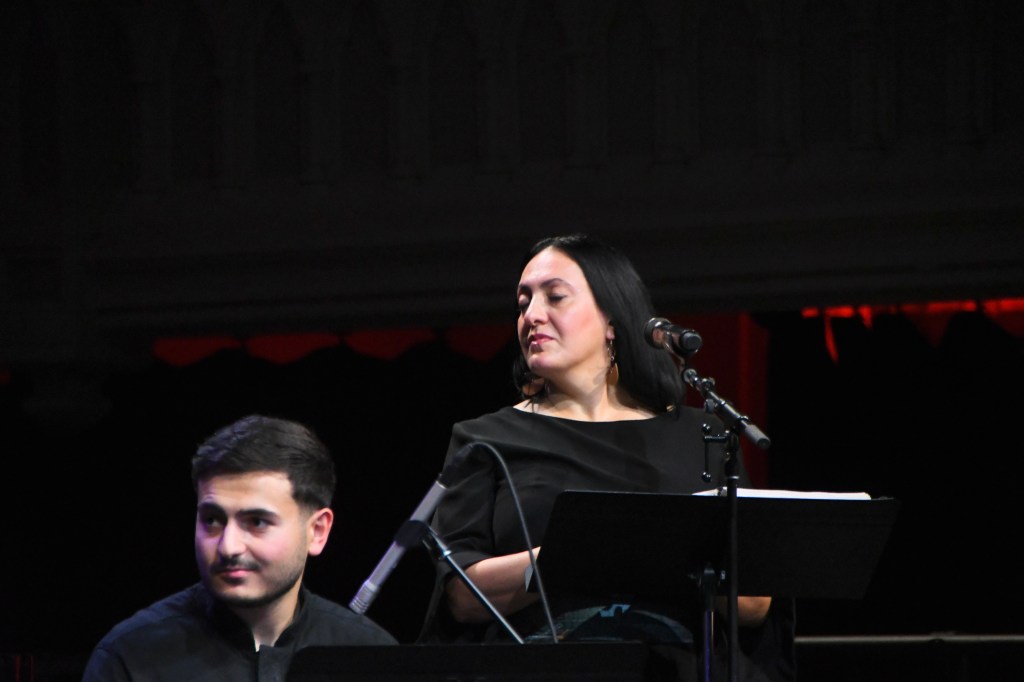
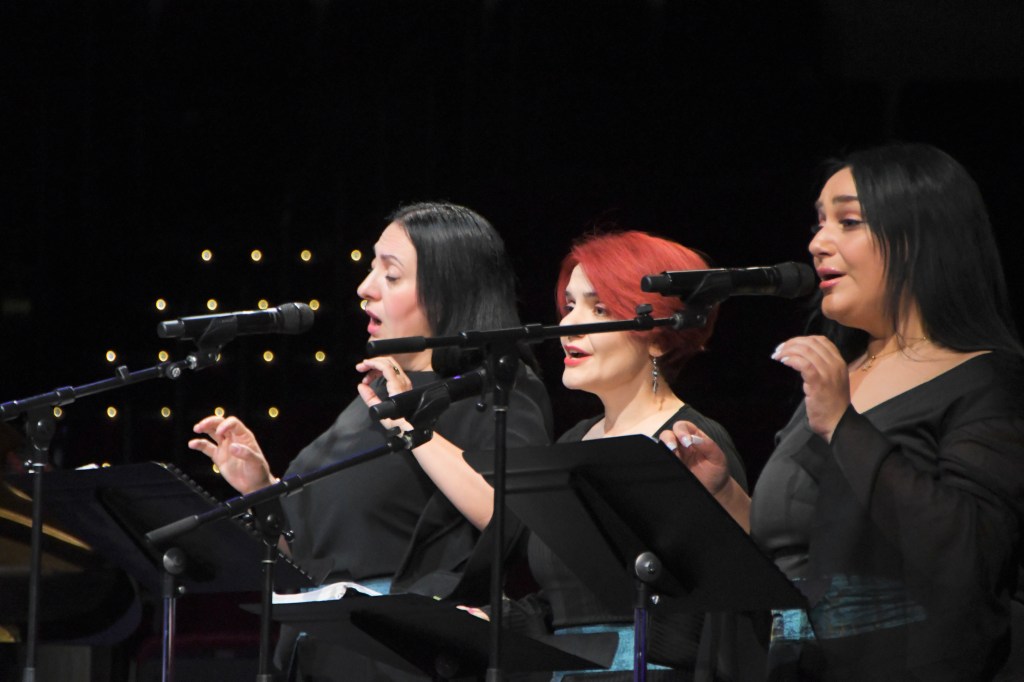
Late in their 105-minute concert, American born Naghash composer, leader and pianist John Hodian rightly described as grim the pained history poets Mkrtich Naghash and Kostandin Erznkatsi mourned. Their words lamenting human failings while praising God, sometimes ironically, supplied lyrics that the Ensemble’s three vocalists sang beautifully, both solo and in harmony, with graceful gestures.

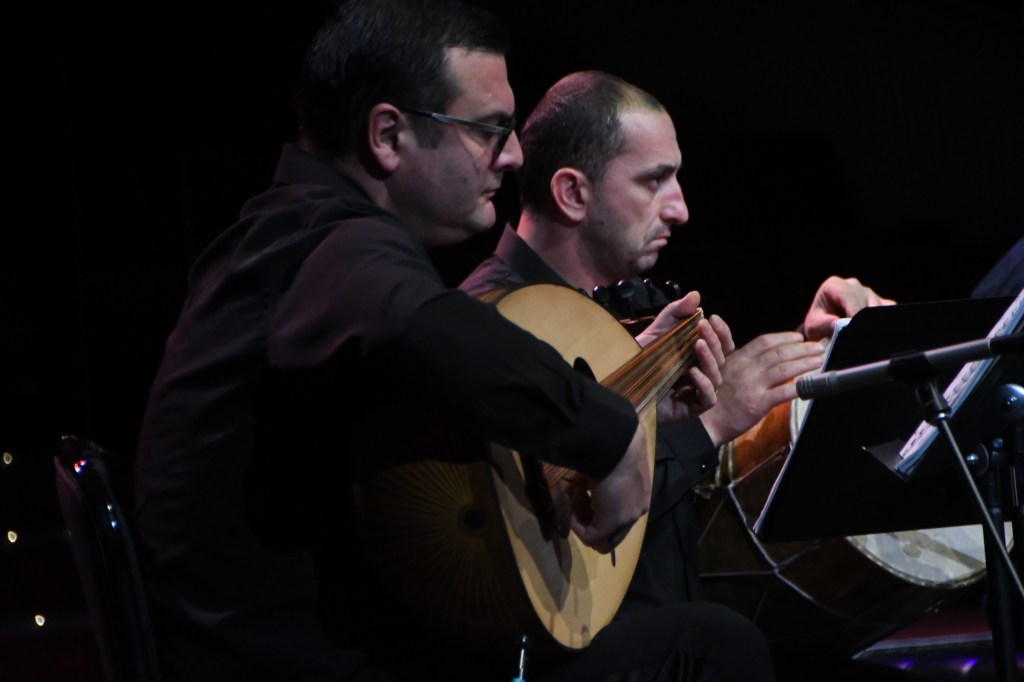
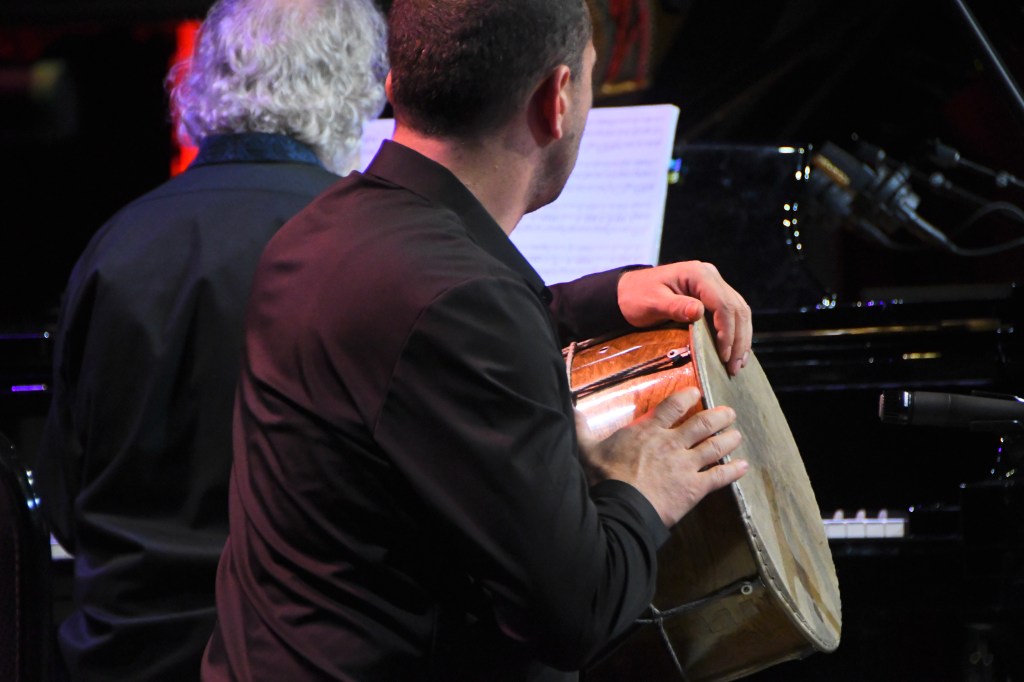
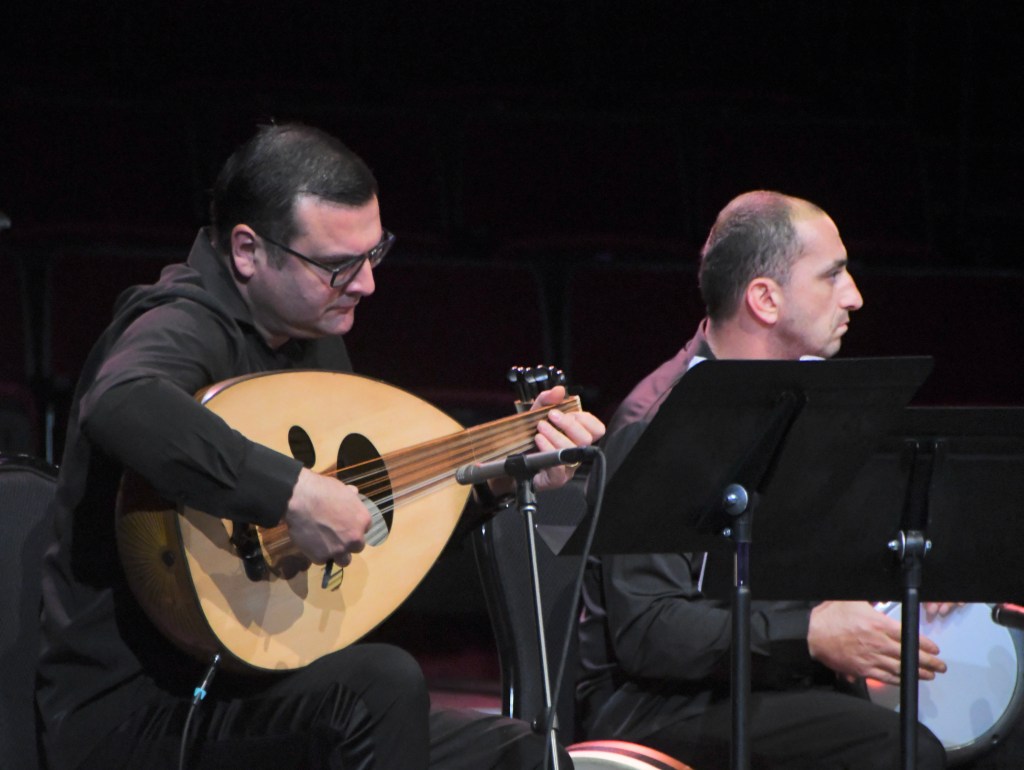
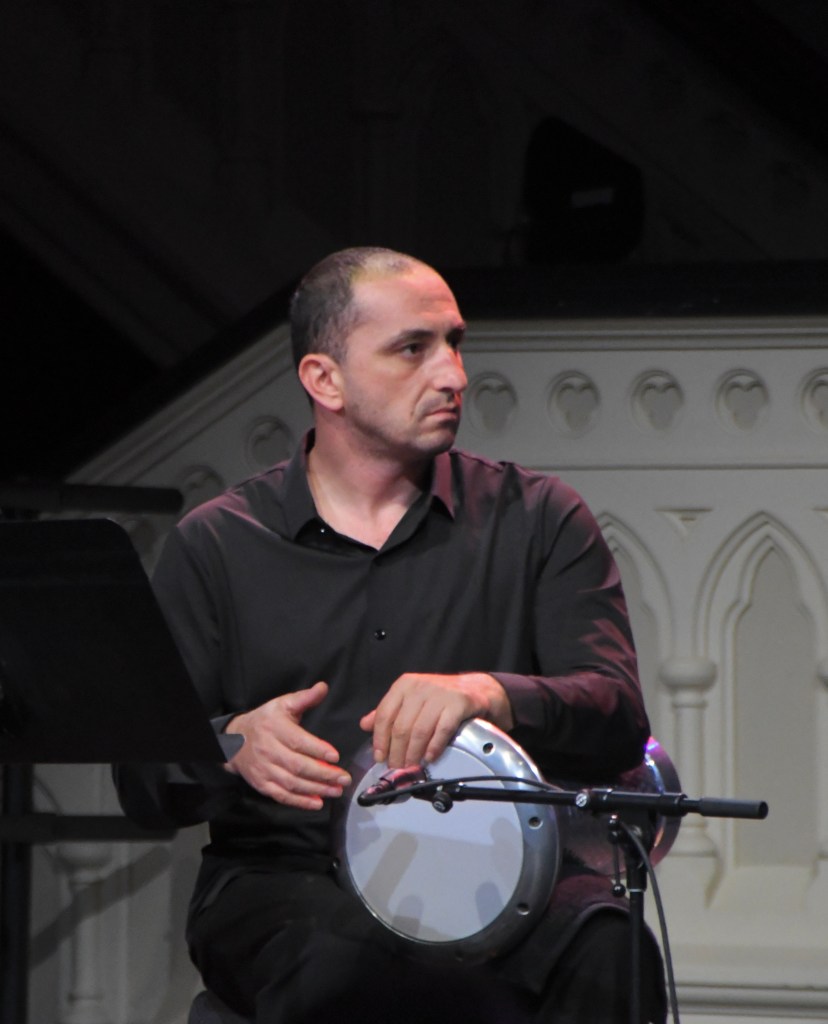
Above, from left: singers Hasmik Baghdasaryan, Tatevik Movsesyan and Shahane Zalyan. Below, Aram Nikoghosyan, left, and Tigran Hovhannisyan.

Ancient instruments gathered from across a map marred by almost constant conflict framed the vocals in Middle Eastern/southern European sounds. Hodian’s piano rang in classical or jazzy modes at the center of a rich soundscape where lacy single-note oud phrases rode hand-drum beats and woodwind sounds of resonant wood spanning high-flown melodies to cello-like drones.

Andranik Gasparyan

The concert seemed an emotional transatlantic homecoming for the many Armenians in the audience that filled UPH’s downstairs – some sat with eyes closed – and a marvel of matched sentiment and sounds for everyone.

The singers introduced Thursday’s early pieces, mostly based in Naghash’s poetry, with excerpted phrases translated into English. This helped set up “Meditation on Greed and Poverty” from the Ensemble’s first of three “Songs of Exile” CDs to open. Quiet piano vanished into a hearty fanfare, then joined it, before voices and instruments rose and fell in waves.

Hodian’s extensive musical training here offered a wide stylistic palette, cozy or expansive in developing themes methodically through repeats and classical logic, or freely, feeling improvised. Some pieces had the serene gravity of hymns; others, livelier and more emphatic rhythms. At times things flowed in Intricate patterns, the vocals weaving in spry precision like the Swingle Singers’ jazz-ification of Bach, popping from unison passages into freelancing as playful as the Roches or dynamic as the Supremes. The players swung things tight as a chamber group; or loose as Thelonious Monk taking over a Conservatory.

Fond of wave forms and delighted in his band-mates’s skills, Hodian conducted group dynamics from the piano. Sometimes expansive gestures sailed high above the keyboard, or nods and glances spoke subtle and quiet.

Almost an hour in, Hodian shifted from Naghash poems-as-lyrics to those of Kostandin Erznkatsi, an earlier but no less grim Armenian bard. The first lyrics quoted in English read “The sea has no shore.” This grew from a meditative sadness to something more lively and modernist, the oud growing more prominent here as an underlying waltz beat slowed into a stop-and-go staccato format Hodian used often.

A second Erznkatsi piece started and stayed in a celestial peace before the Ensemble shifted back to Naghash lyrics with “Lamentations for Those Who Die in a Foreign Land.” As despairing as its words, this flowed stately, slow and sparse, low woodwind sound anchoring its melancholy in a drone under rhythmic voices.

Recounting how a concert presenter urged him to compose a Bach-style oratorio, Hodian introduced a two-part lamentation on the crucifixion and the apostles’ feeling of abandonment.

Yeah, grim.

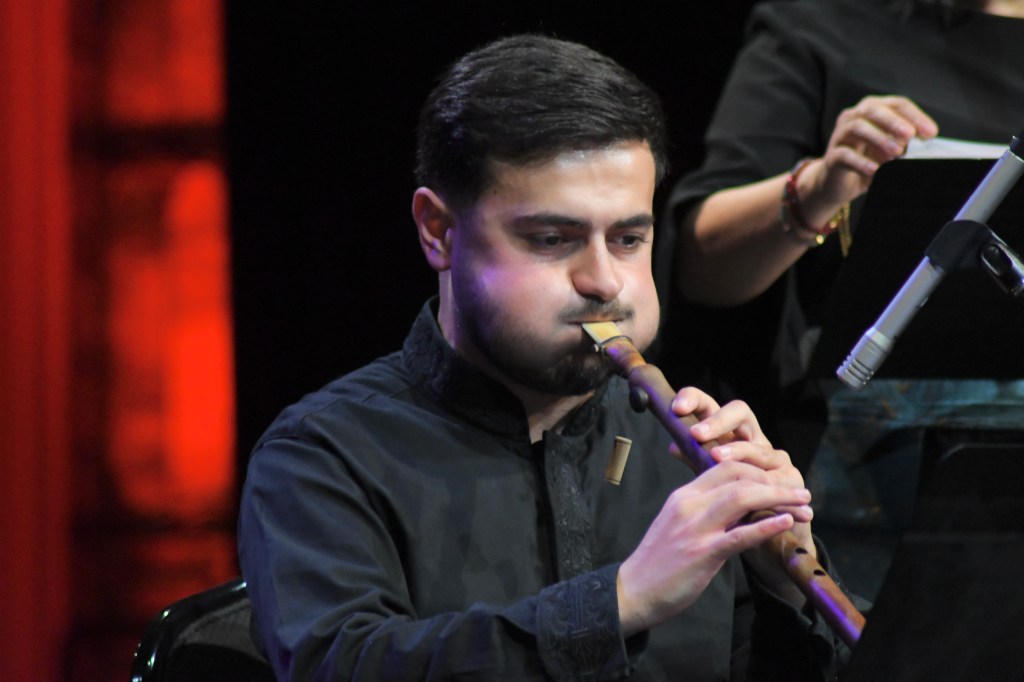
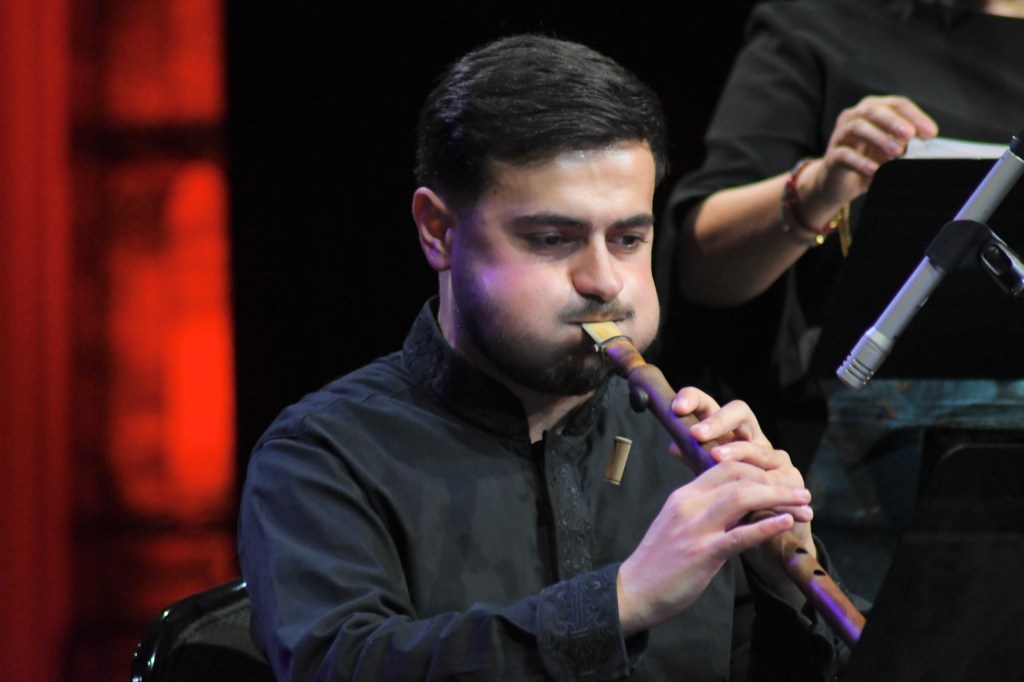
Their closing “Morning Darkness” – another Erznkatsi-based piece from the Ensemble’s “The Work of Darkness” album – showed a wide range of woodwind sounds from the treble echo-ey feel of the ancient duduk to more modern recorder-like tones and the long-note cello-like resonance of a low pipe. Also hand-drummer Andranik Gasparyan doubled here, bringing low tones from a large drum at his knees as well as duduk beats in a busy cascade.

As Hodian told the publication Armenian Prelacy of the work of Naghash and Kostandin that he’s resurrected for his Ensemble, after a 2023 concert in Zankel Hall of Carnegie Hall, “These poems spoke of war, plague and pestilence, so relevant because they are all happening in today’s world.”

The often modernist or even jazzy pieces he created to carry sentiments he acknowledged are grim somehow left a soothing feel, carrying listeners from complex places to somewhere simple and compelling in how those sounds reach the heart.

A suggestion: The impact of this music might have been heightened by printed programs sharing the lyrics in English.

The Naghash Ensemble of Armenia is Hasmik Baghdasaryan and Tatevik Movsesyan, sopranos; Shahane Zalyan, alto; Andranik Gasparyan, duduk and other wooden whistles; Aram Nikoghosyan, oud; Tigran Hovhannisyan, dhol and other drumss; and John Hodian, piano and compositions. All but Hodian are from the Armenian capital Yerevan; he’s from Philadelphia.

Hodian explalned how hearing Baghdasaryan’s soprano singing Armenian spiritual music in the resonant Temple of Garni on his first visit to Armenia inspired him to make something new of this ancient music.

New but timeless, he uses ancient sounds to create an immediate feeling.

Hasmik Baghdasaryan

The Naghash Ensemble of Armenia performed Thursday as one of six in the Proctors Collaborative Passport series presented with Music Haven.

The season continues with Gili Yalo at Proctors GE Theatre, then:

March 6: La Banda Morsica at UPH

Apr. 16: Yacouba Sissoko and Siya at Proctors GE Theatre

May 14: Kiran Ahluwalia

Gallery

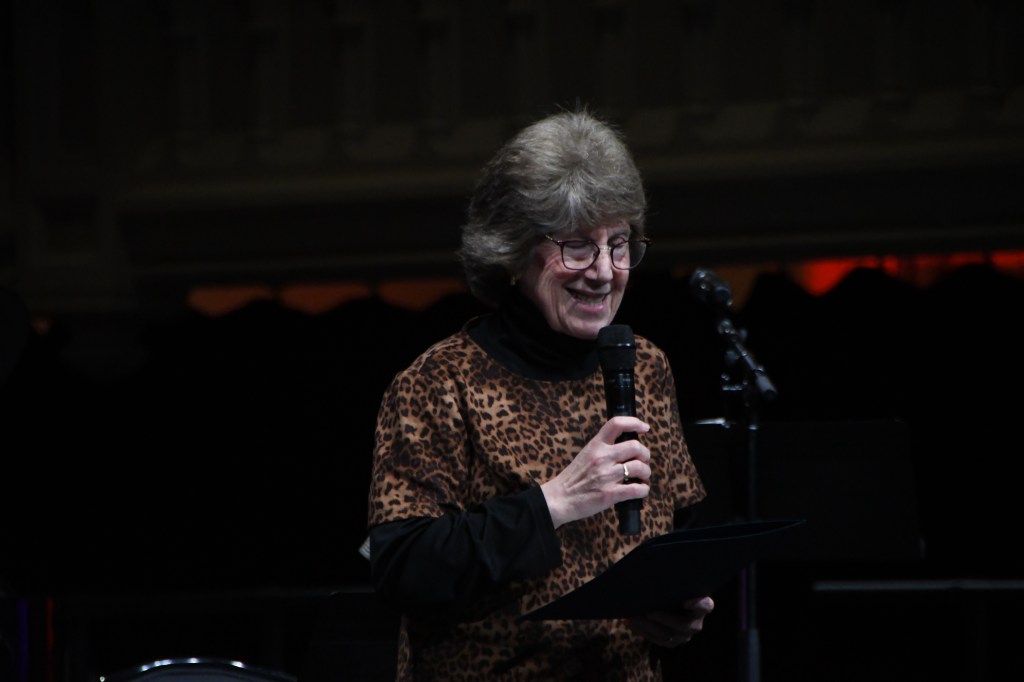
Mona Golub introduces the Naghash Ensemble of Armenia

Naghash Ensemble’s Crossroads Music

Preview: Naghash Ensemble of Armenia on Friday, Nov. 5 at Universal Preservation Hall

The Naghash Ensemble makes music from the crossroads of Europe and Asia; land of both hazards and beauty. Performing Thursday at Universal Preservation Hall – one of only 11 US shows on a world tour – its three women singers and four men players honor Armenia’s tortured history in poetry powering serene sounds from a land in almost constant conflict.

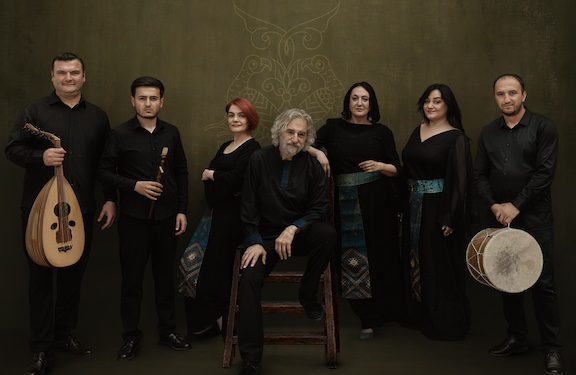
Naghash Ensemble, formed in 2014 by John Hodian, at center. Photo provided

History: A Lament

“Between the 4th and the 19th centuries Armenia was conquered and ruled by, among others, Persians, Arabs, Byzantines, Mongols and Turks,” reads our State Department Historian’s summary. Armenia once stretched from the Mediterranean to the Caspian Sea, before the Ottoman and Persian Empires divided it in the 16th Century. Russia took it over in the 19th, while the Ottoman Empire murdered 1.5 million Armenians in the first tragedy called a genocide.

Armenia only became independent again after the USSR collapsed in 1990.

Armenian music mixes pride and pain, like songs of many oppressed peoples: Here we call it the blues.

Words Becomes Songs

Armenian-American John Hodian founded the Nagash Ensemble to make music from poems of Mkrtich Naghash. His work, Wkipedia says, “describes the perils of living a life in exile and man’s relationship with God.” Poet, priest, painter, Naghash lived for decades in exile.

When Hodian began setting Naghash’s to poems to music in 2006 to make what became “Songs of Exile,” he joined a centuries-deep tradition of tunesmiths fitting sounds to words – from the ancients to Shakespeare, Blake, Tennyson and Yeats to recent times.

Proto-punk band the Fuggs set Matthew Arnold’s “Dover Beach” to a rock beat in 1968, for example; and composer Peter Lieberson set five Pablo Neruda love poems to music his wife Lorraine Hunt Lieberson sang on their touching 2005 album “Neruda Songs.”

When Woody Guthrie’s daughter Nora discovered hundreds of poems her late father had never set to music, she enlisted British troubadour Billy Bragg to complete them as songs. Bragg and Chicago rockers Wilco recorded 15 as “Mermaid Avenue” (1998) – a Grammy nominee as Best Contemporary Folk Album and no. 4 in the Village Voice’s Jazz and Jop Poll that same year. This summer, Wilco, Bragg and Natalie Merchant performed those songs live for the first time at Wilco’s Solid Sound Festival at nearby MASSMoCA. But I digress.

“We didn’t set out to be cultural ambassadors of Armenia,” Hodian told the Asbaraz newsletter. “When I wrote this music, I just followed my intuition. It’s natural outcome of someone who grew up in a tight-knit Armenian family, but studied Western classical music and was surrounded by contemporary music in all its forms.”

Sound and Feel

“I fell head over heels in love with their music when I saw them perform at globalFEST at Lincoln Center back in January 2026,” Music Haven Passport Series Producing Artistic Director Mona Golub told me.

The Naghash Ensemble’s music expresses both an anguished heritage and cultural resilience, while its poetry-to-music evolution shows ambitious compositional intent. Sonically, it feels like the vocal splendor of the Bulgarian Women’s Choir stirred into the complex Euro-Asian instrumental sound of Jordi Savall’s “Istanbul” to express a DNA-deep sense of identity, like DakhaBrakha, who thrilled Music Haven with its defiant assertion of Ukrainian resilient courage several summers ago.

Although it arrives from a complex place, Nagash music reaches the heart with straightforward impact, a sort of transcontinental blues.

Breaking it down, the voices combine in a powerful mass until solo singers wander and different personalities, ranges and emotions emerge before they re-blend.

Then the instruments. Hodian’s piano leads from center stage. The other players weave woodwind, stringed and percussion sounds whose tones and phrasing evoke Middle Eastern styles.

The wood-carved duduk has two reeds, like an oboe; and is played like an Irish pipe or classical recorder; a woody, sweet sound. Pear-shaped, also made of wood, the oud casts a wide shadow across Middle Eastern, North African and Central Asian music. Its 11 strings stretch along a fretless neck so players can glide their fingers to bend notes, like a slide guitar. A two-headed drum played with the hands or wooden beaters, the dhol is as essential to Armenian music as the duduk.

The Naghash Ensemble of Armenia is Hasmik Baghdasaryan and Tatevik Movsesyan, sopranos; Shahane Zalyan, alto; Andranik Gasparyan, duduk; Aram Nikoghosyan, oud; Tigran Hovhannisyan, dhol; and John Hodian, piano and compositions.

Proctors Passport Series

The Naghash Ensemble is the second of six Proctors Passport Series concerts that alternate between Proctors GE Theatre and Universal Preservation Hall (UPH), between-the-summers presentation of Music Haven whose “traveling the world, one concert at a time” programming shapes the series:

Feb. 4: Gili Yalo at Proctors GE Theatre

March 6: La Banda Morsica at UPH

Apr. 16: Yacouba Sissoka and Siya at Proctors GE Theatre

May 14: Kiran Ahluwalia at UPH

7:30 p.m. $34.50. 518-346-6204 www.proctorscollaborative.org/passportseries