
Review: Ernie Watts Quartet at A Place for Jazz; Friday, October 30, 2026
After Ernie Watts mutated the conventional, compact post-bop “O.P.“ into the wild, high-altitude “Freaky Flyers” Friday at A Place for Jazz, the delighted tenor saxophonist laughed to his quartet and exclaimed, “That was a good one! That was a good one!”
Yes, yes.
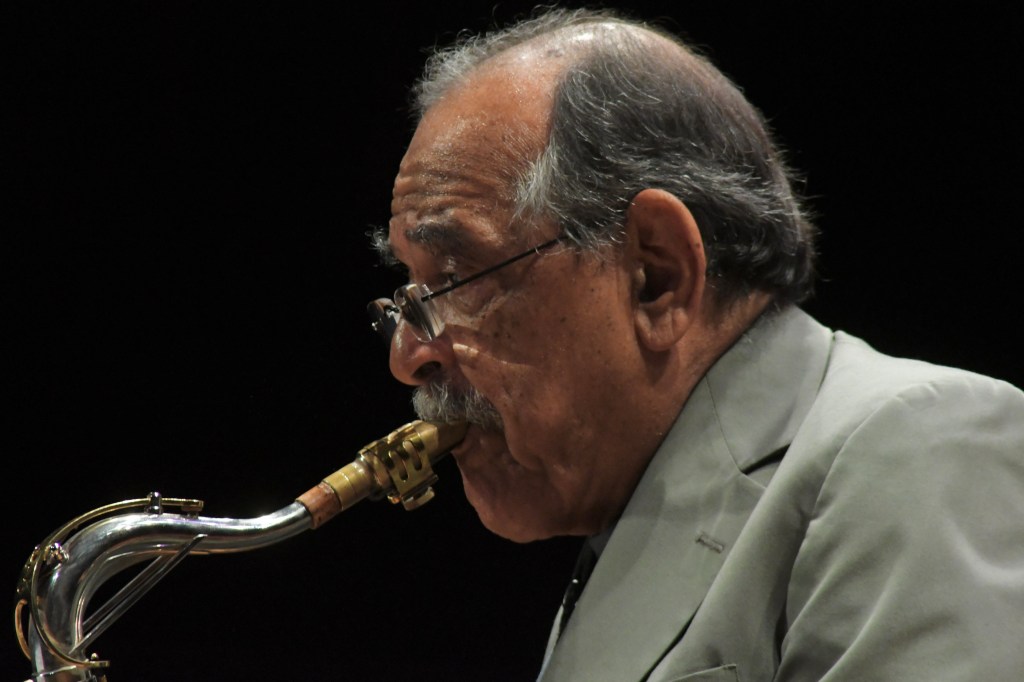
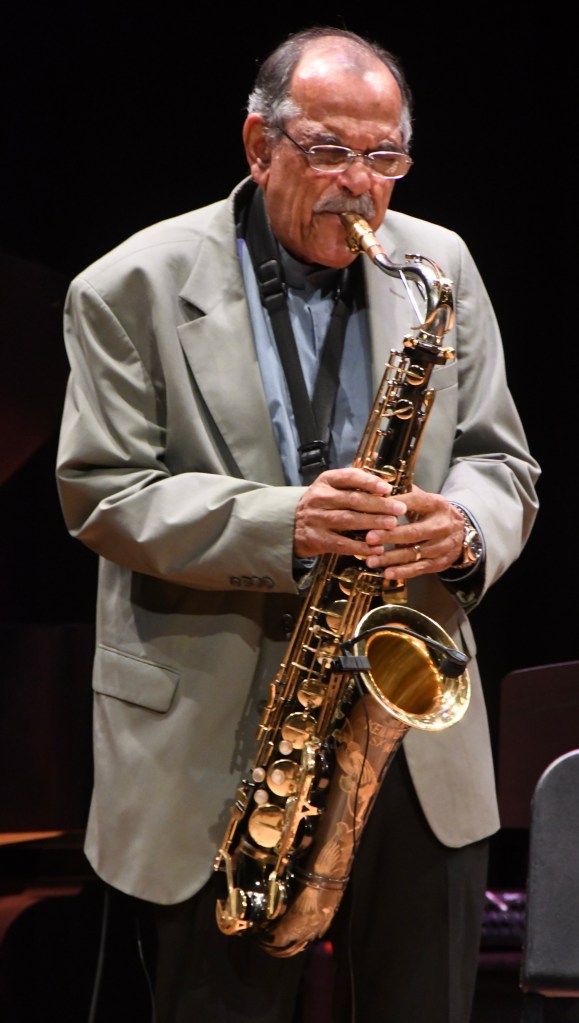
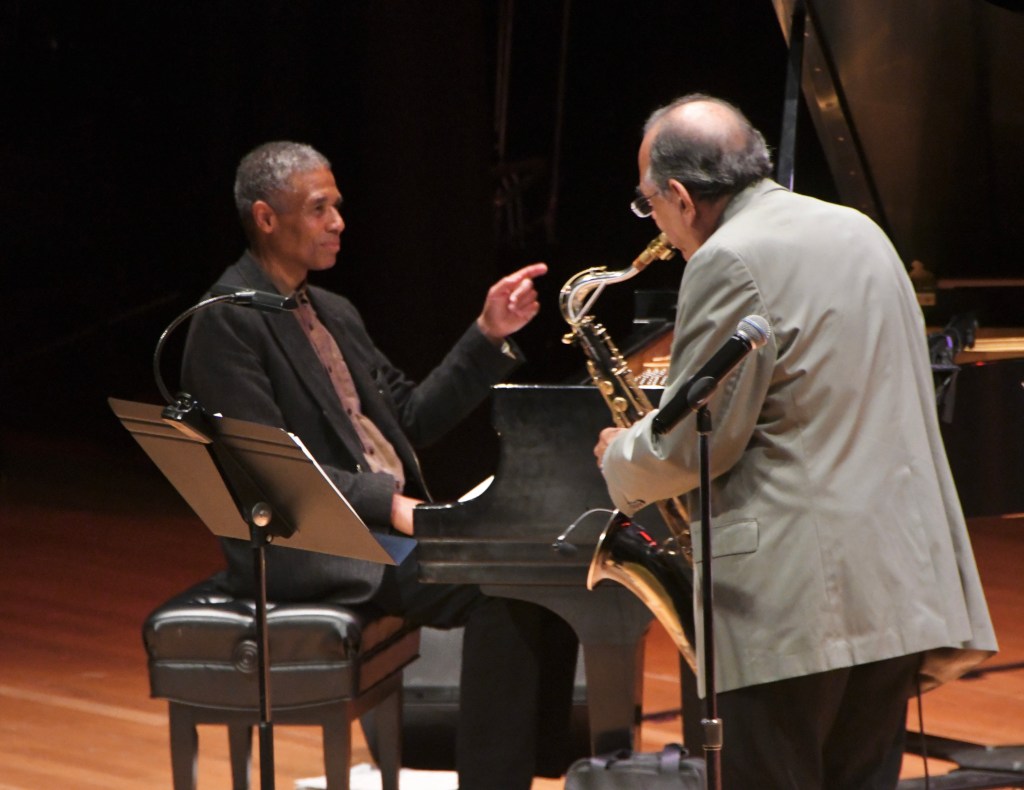
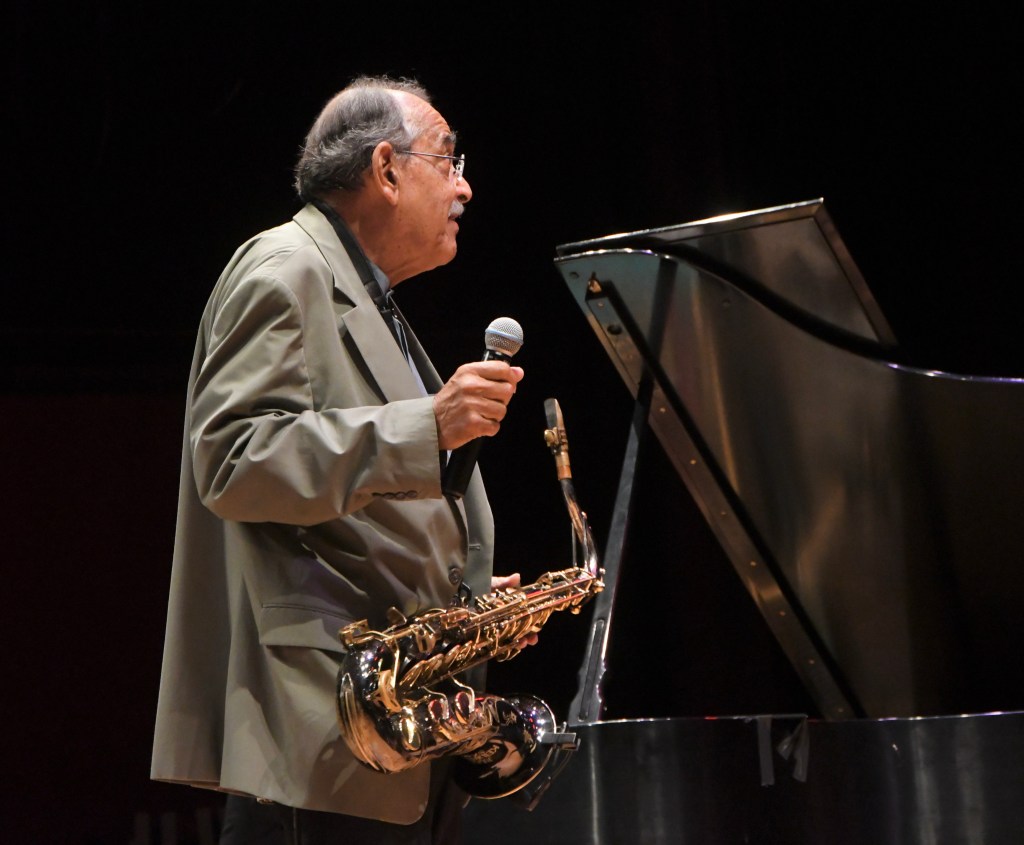
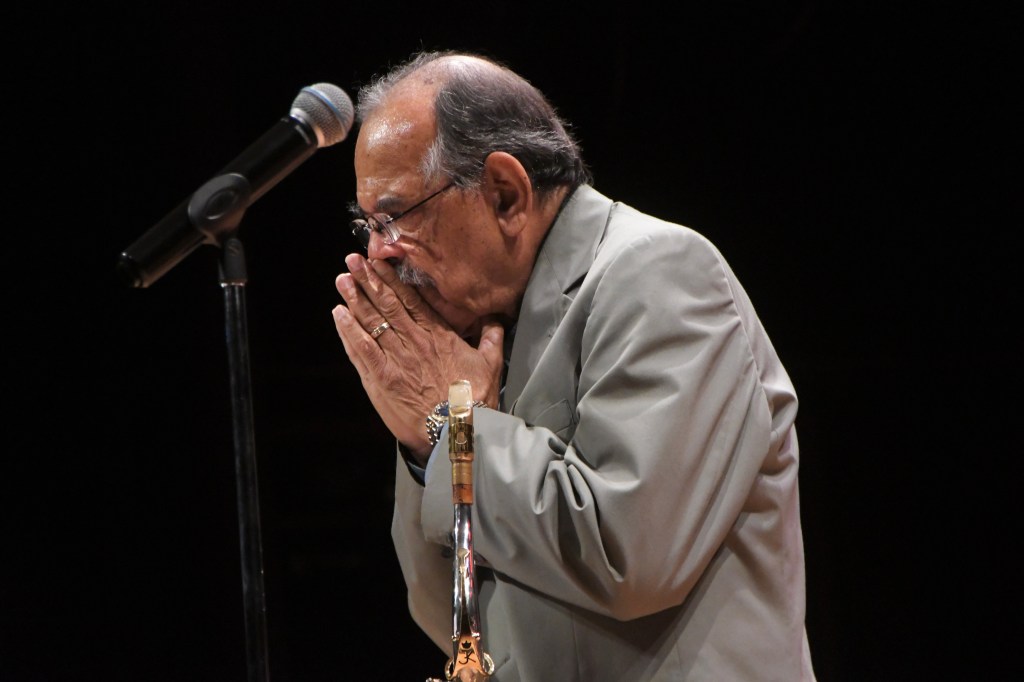
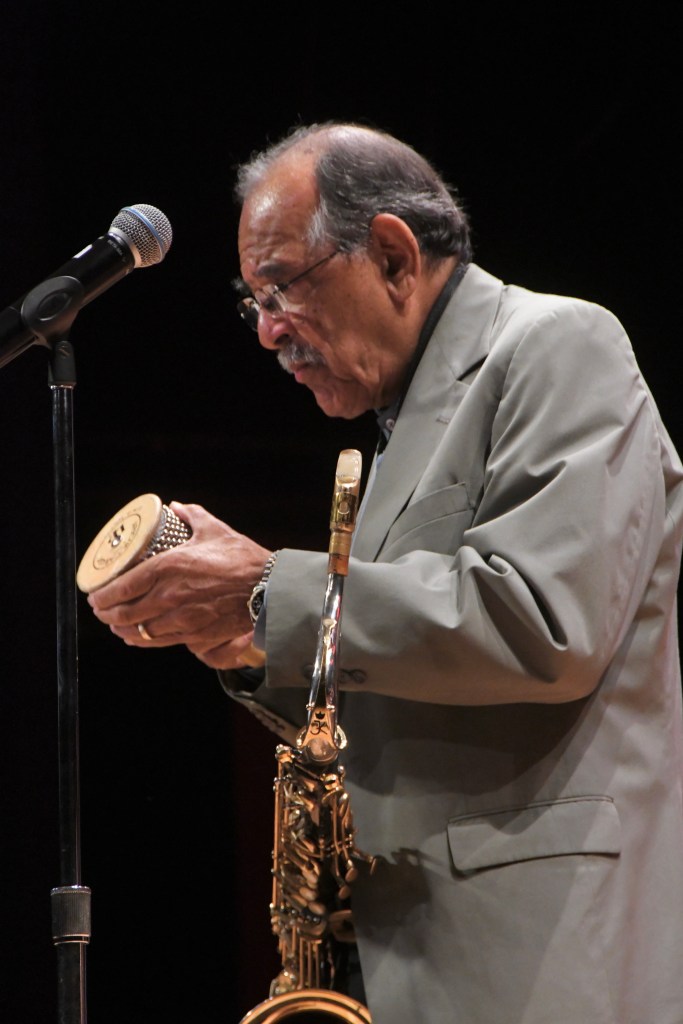
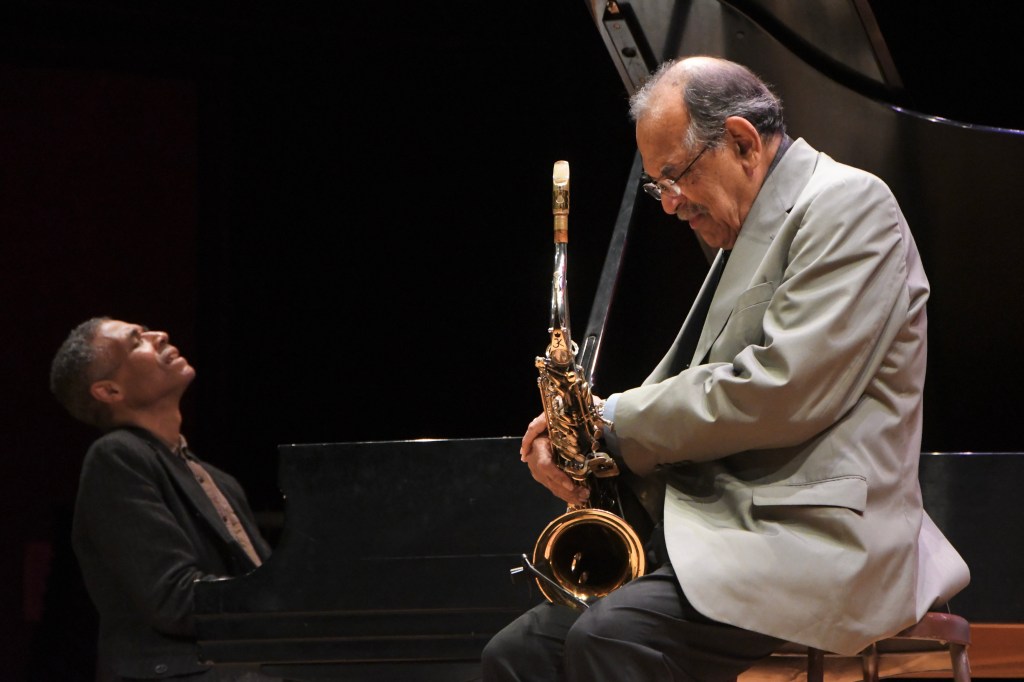
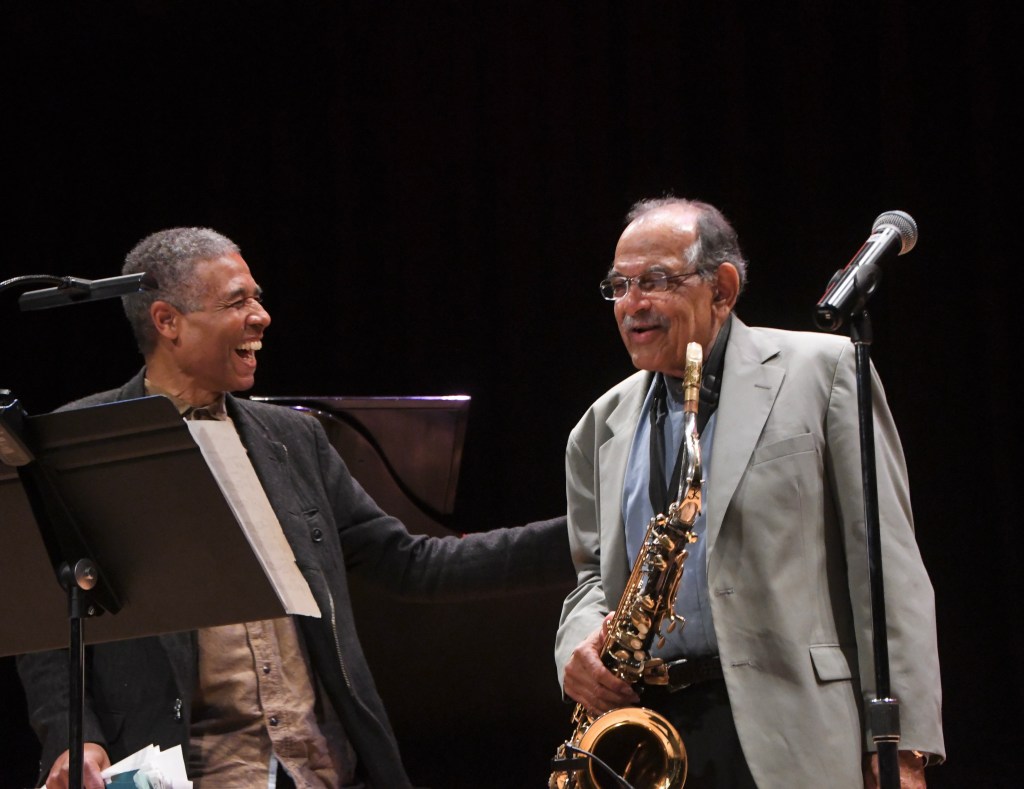
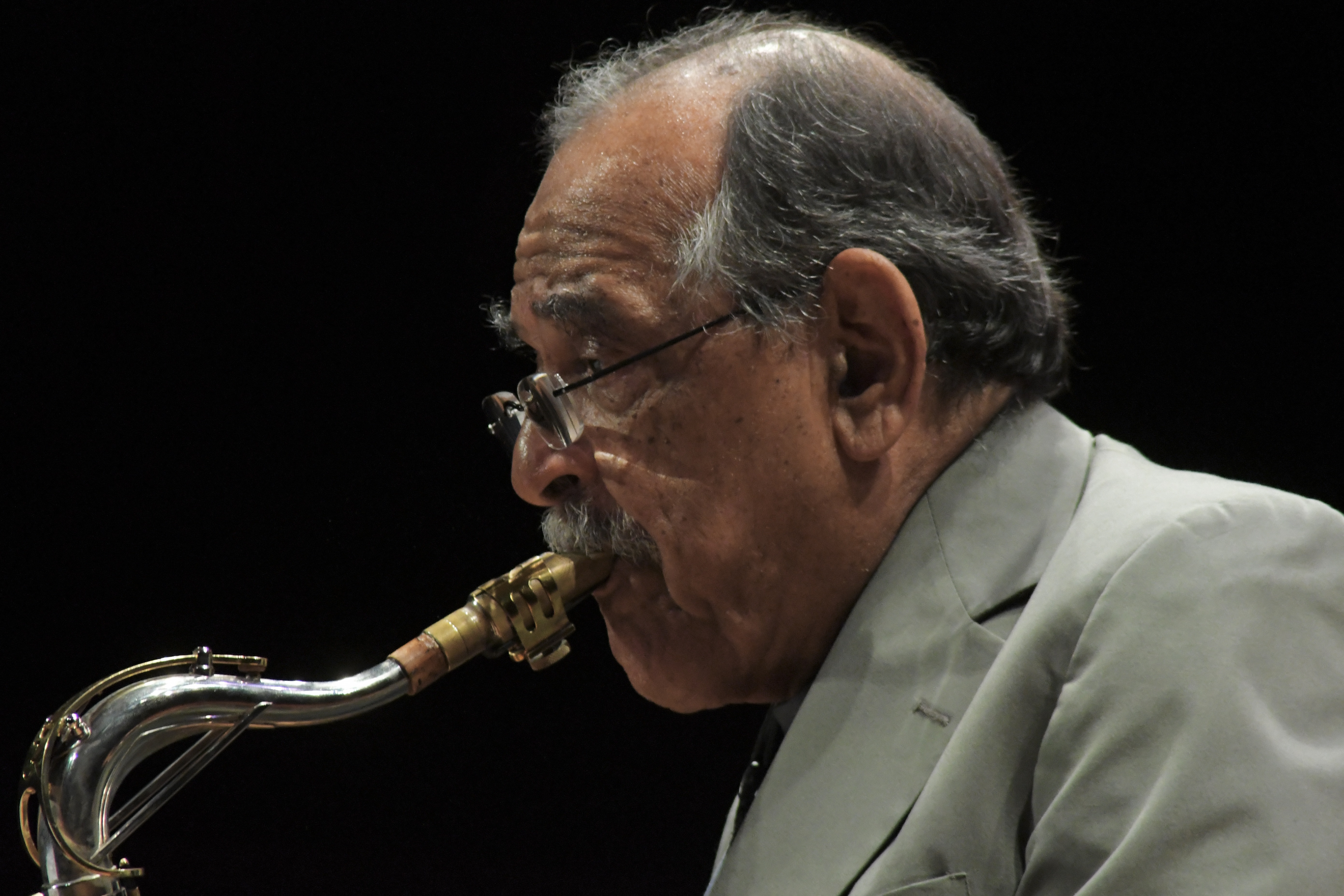
Ernie Watts, above; and below, at right, with, from left; Marc Seales (back to the camera), piano; Bruce Lett, bass; Bob Leatherbarrow, drums
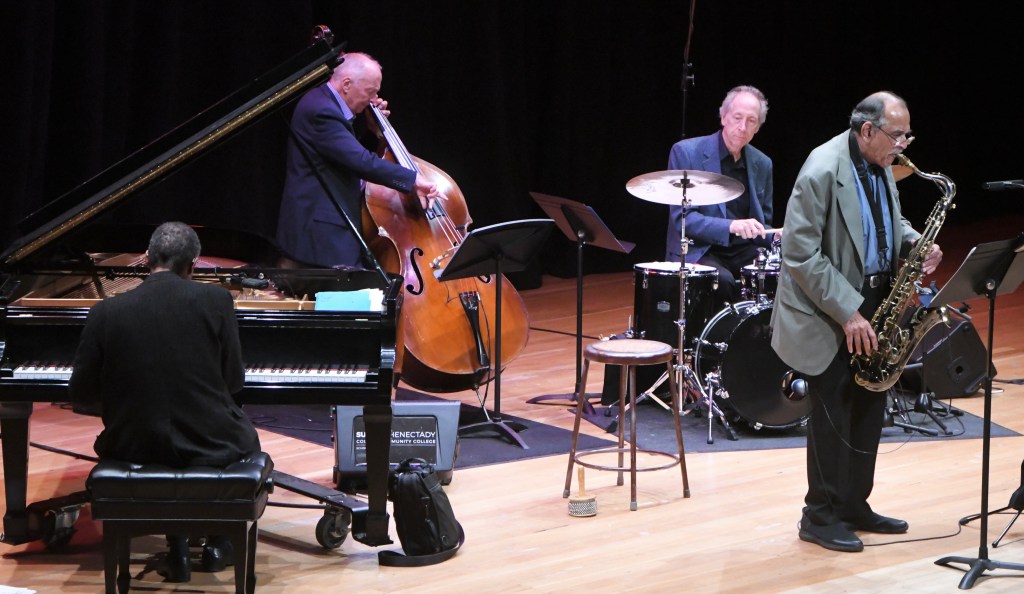
Watts started in high gear (as most AP4J acts have, this season) with an anarchic Archie Shepp/Pharaoh Sanders/Sonny Stitt fanfare before pianist Marc Seales, bassist Bruce Lett and drummer Bob Leatherbarrow built waves of groove. Riffs jelled and circled before Watts poked his tenor through these shared comfort zones into hotter, more intense explorations. High notes soared, fast runs dazzled, before he dipped back to earth in calmer, serene passages.
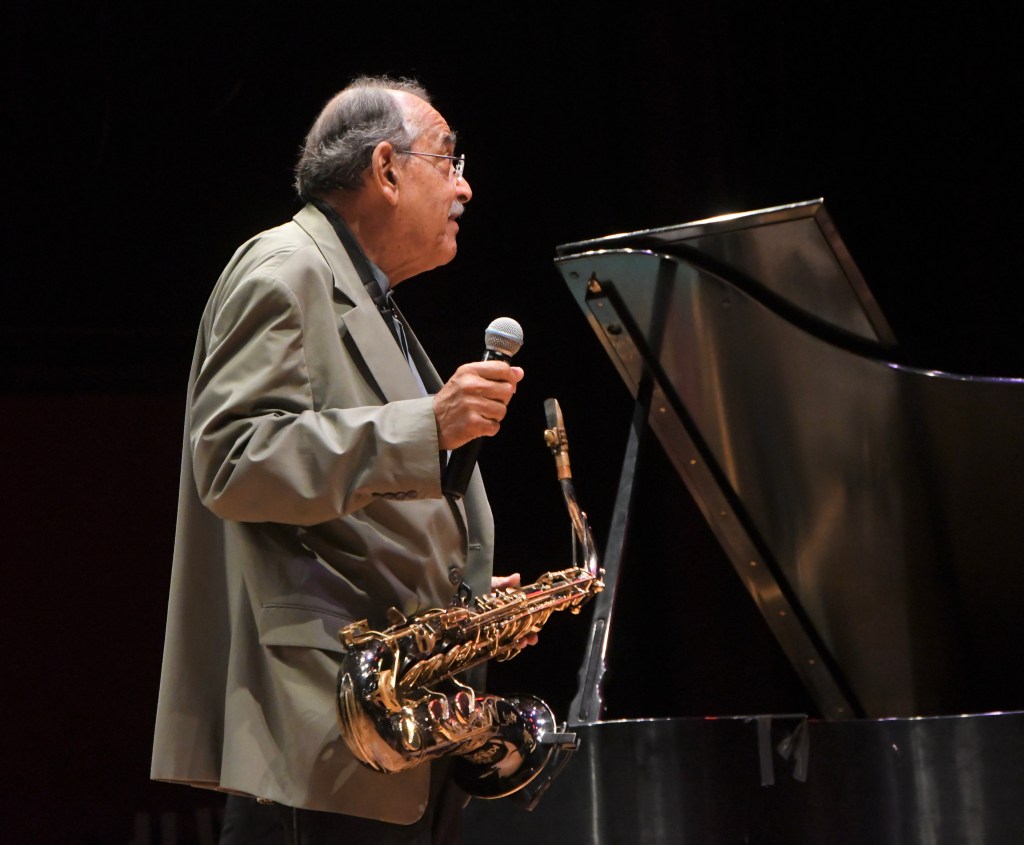
Then, professorial, voluble, Watts told how Miles Davis and John Coltrane revolutionized jazz writing, playing and recording; how Davis’s “Kind of Blue” (featuring Coltrane) nudged him from bebop fan of Dizzy Gillespie and Charlie Parker into a more melodic approach. This melodic emphasis – and Coltrane’s aggressive later solo work that caused teenaged saxophonist Watts to marvel at “all that stuff, coming out of this thing,” holding up his sax – shaped Watts’ two-set show.
Bouncy and playful “O.P.” swung happy, cozy and contained, a smile together with drums in dialog that led to a big finish. But Watts then skewed its solo coda into “Freaky Flyers,” abrupt and emphatic, seamless and strong. The whole thing swung hot, grins across the bandstand as they surprised each other through dramatic outbursts cooled by serene stretches calm as a lullaby.
Watts hailed this “good one” as something that would never happen again, noting “it’s never the same, once.”
Professorial again, Watts traced Coltrane and Cannonball Adderley (with whom he made three albums) to Wayne Shorter in Miles Davis’s bands to set up Shorter’s post-bop soaring-groove “Children of the Night,” his tenor flying in the groove, above, below and all around.
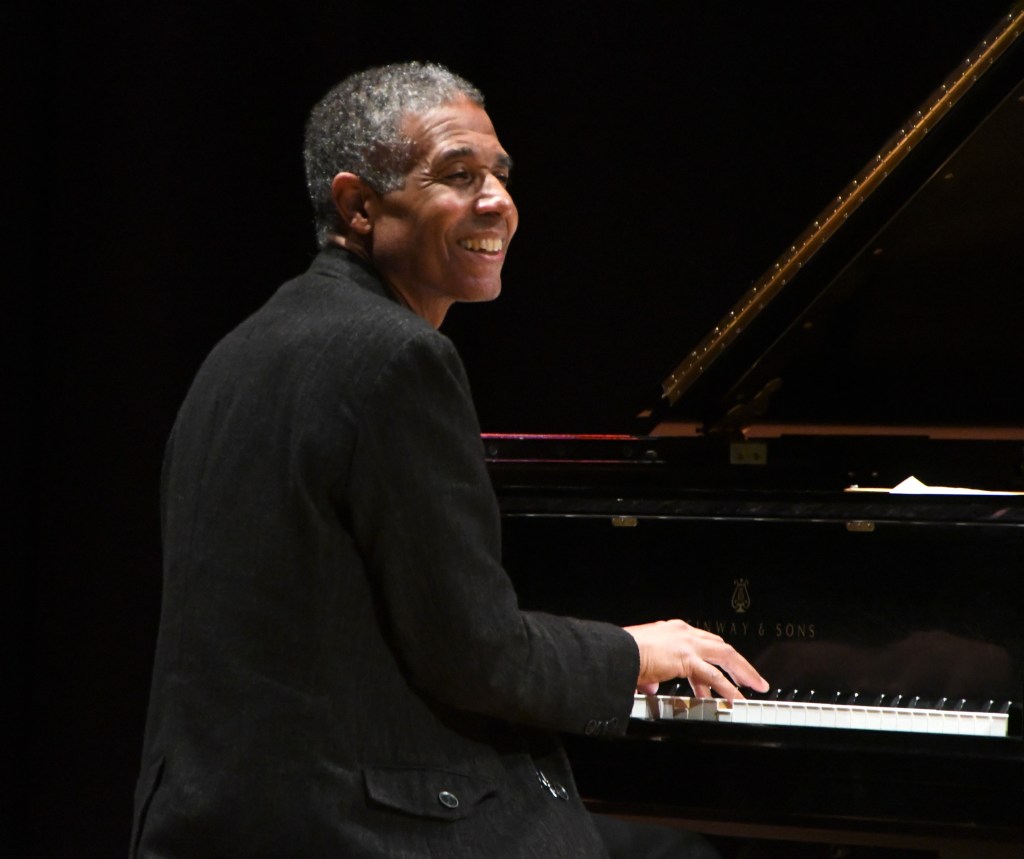
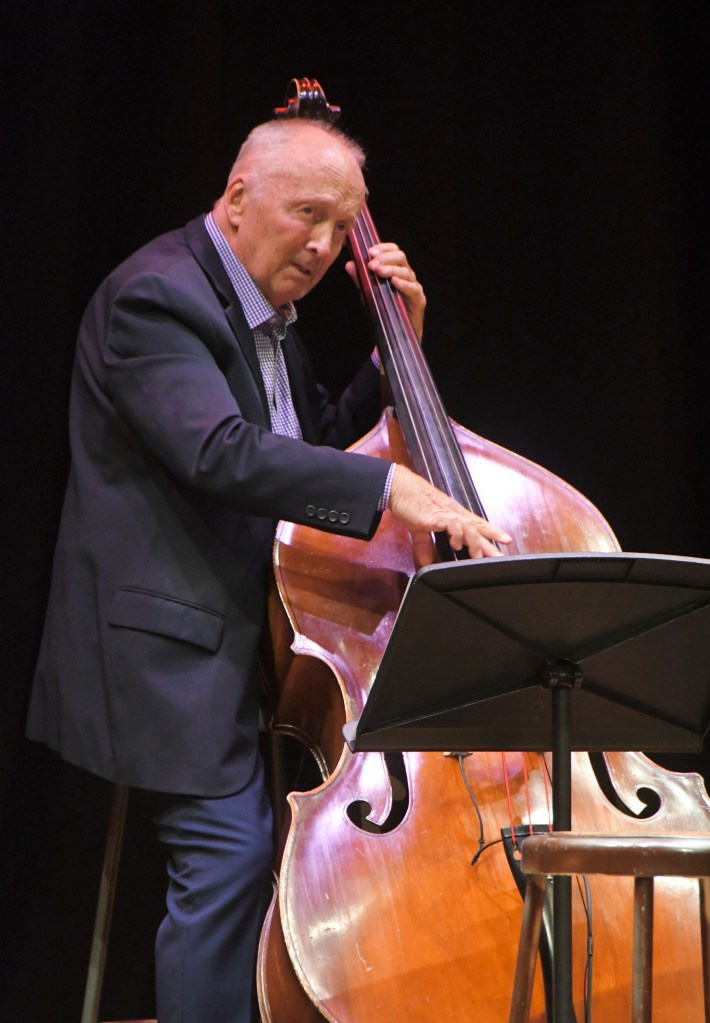
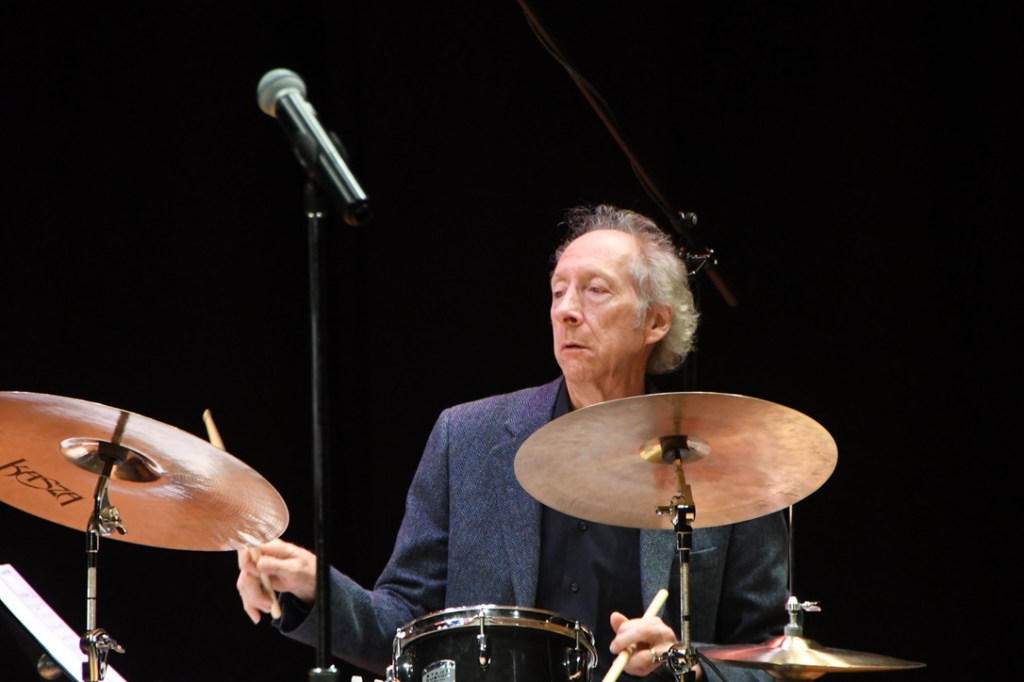
Marc Seales, piano; above. Below, bassist Bruce Lett at left, and drummer Bob Leatherbarrow
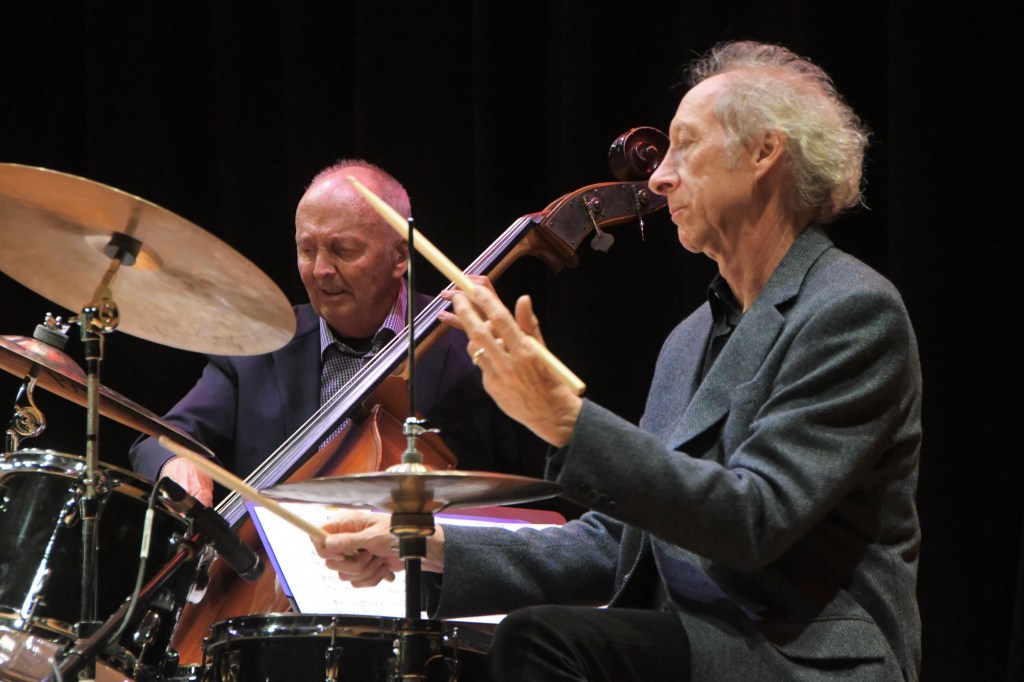
Before the break, he promised a relatively short version – “just 27 minutes” – of his and Seales’s co-written “Through the Veil”before promising the second set would bring music to set our hair on fire, with back-flips into splits. At just 11 minutes, “Veil” delivered gymnastics enough, with tempo shifts and a soaring solo from Seales.
Announcing you can’t play a jazz show without a Thelonious Monk tune, Watts opened the second set with Monk’s swinging “I Mean You,” then slowed for Wayne Shorter’s “This Is for Albert,” etching a slow tenor solo to start, smiling at Seales’s solo and then mime-cueing a duet with Lett’s bass before inviting everybody onboard.
Showcasing Lett in “I Mean You” nicely set up (bassist) Jaco Pastorius’s “Teen Town,” a rollicking romp Watts said afterward was “funk Bach.” Or did he say “funk bop” – either is correct. Lett has cited Pastorius as an inspiration, and it showed in his rocking solo – all peppy beat energy and melodic freshness.
Afterward, Watts mimed emptying “the funk out of my horn” before introducing “Soul Eyes,” a bluesy ballad of alternating sparse and dense passages, Seales’s piano starring in a nice trio section before Watts’s coda.
Seales also co-starred in “Ascending Truth,” the only Latin tune all night, a smooth glide capped by a close piano and tenor duet.
That combination also powered “Home Light,” a Gospel-y mood piece both Watts and Seales recognized felt like church as they co-wrote it. Friday’s performance sure felt spiritual and sweet, soulful in its elegance and vice versa.
They revved back up with “Reaching Up,” growing from a seething piano figure into a happy melodic groove with Watts hitting any notes or riffs unplayed previously, all exuberant rapid scales. Late in that tune, he shuffled his charts to locate Coltrane’s anthemic “Giant Steps,” an instant segue. This launched a happy jumble of Coltrane melodies, a romp of shared surprise instantly coordinated as brief, familiar riff statements chased each other.
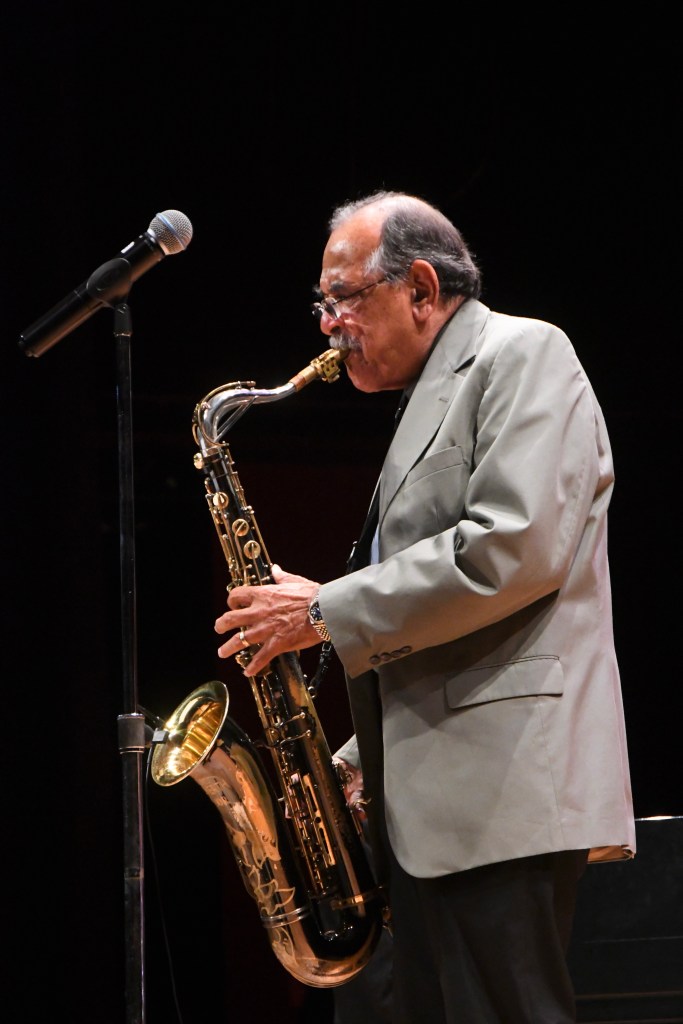
Throughout, Watts paid his debt to Coltrane, with interest, and fresh genuine surprise and confident eloquent ease. He played with a mostly sweet and mellow tone, only briefly hitting a snarl or rasp in “Freaky Flyers” and “Reaching Up.” He sometimes flew his right hand away from the keys in dramatic flourishes after an especially hot or heartfelt phrase. Unified in understated expertise and feel, the quartet also shared unerring taste and quick-change dynamics. Lett and Leatherbarrow got short solo spots, but sharp and steadfast support was their main strength. Seales did that, too – but also stepped up nearly as often and impressively as Watts. He pulsated at times like (Coltrane’s main pianist) McCoy Tyner, but also showed off Bill Evans-like delicacy or Oscar Peterson punch.
A Place for Jazz wraps up its 26th season Friday, Nov. 13 with singer Ali Ryerson and her quartet. Next April 4, the non-profit all volunteer jazz presenter and music education supporter will dedicate its spring fundraiser to the memory of its late president, longtime WAMC jazz DJ Tim Coakley.
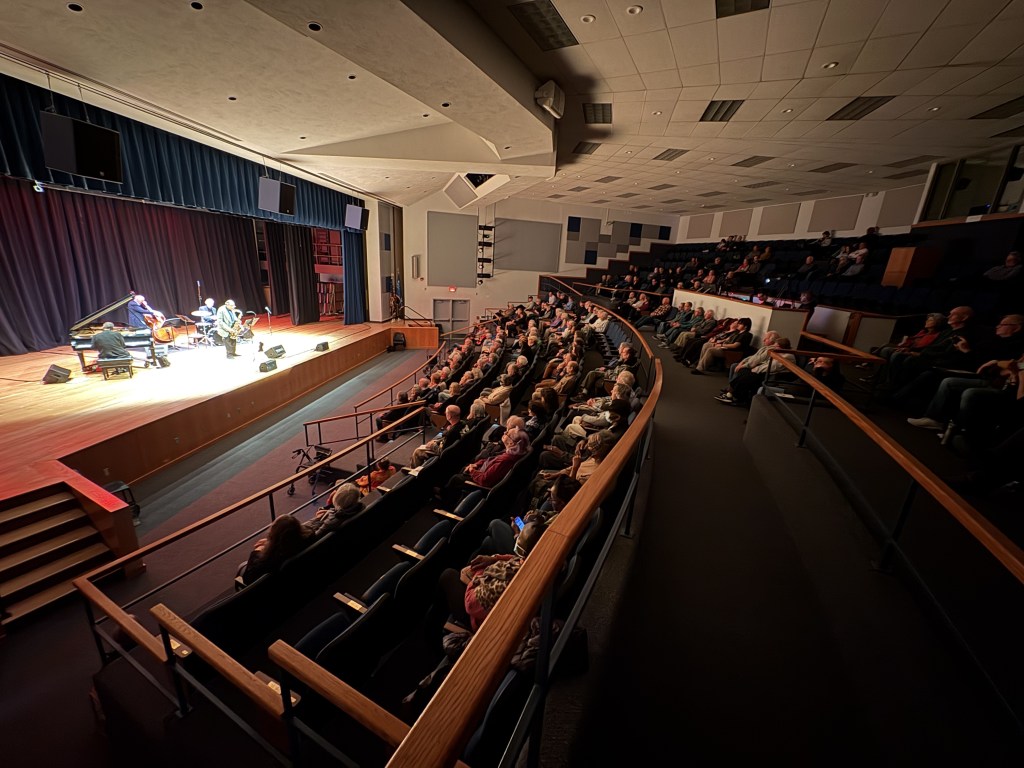
A Place for Jazz presents its handful of fall concerts in the Carl B. Taylor Auditorium of the SUNY Schenectady County Community College music department.
The Songs
7:01 p.m.
Acceptance (Ernie Watts)
O.P. (Sam Jones’s tribute to bassist Oscar Pettiford)
Freaky Flyers (Ornette Coleman)
Children of the Night (Wayne Shorter)
Through the Veil (Marc Seales & Watts)
8:06
8:28
I Mean You (Thelonious Monk)
This is for Albert (Shorter)
Teen Town (Jaco Pastorius)
Soul Eyes (Mal Waldron – a classic John Coltrane performance)
Ascending Truth (Seales)
Home Light (Watts & Seales)
Reaching Up (Watts)
Giant Steps (Coltrane)
9:51
Gallery