Intermission, Between NRBQ Shows

Part 2 of 3

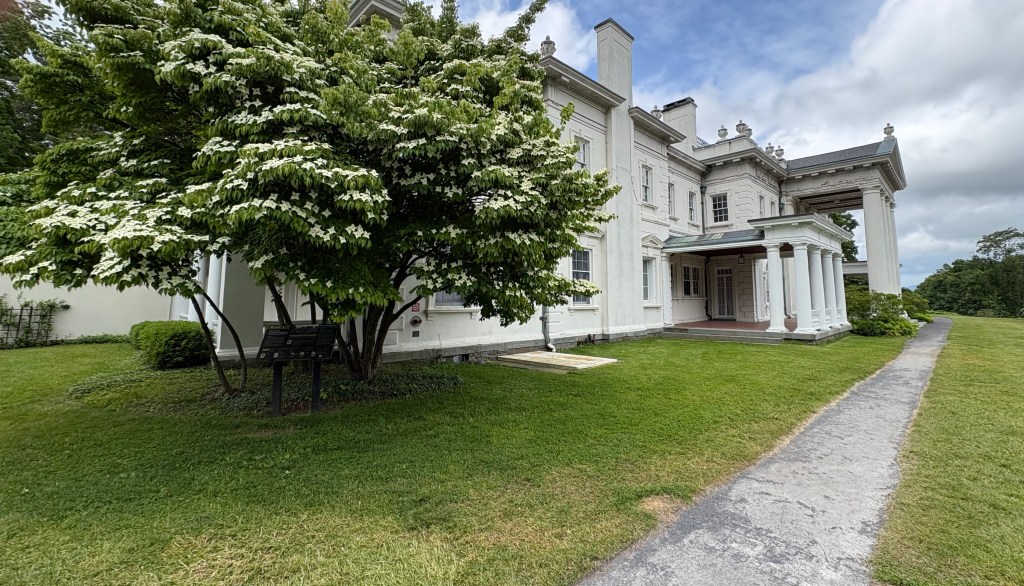
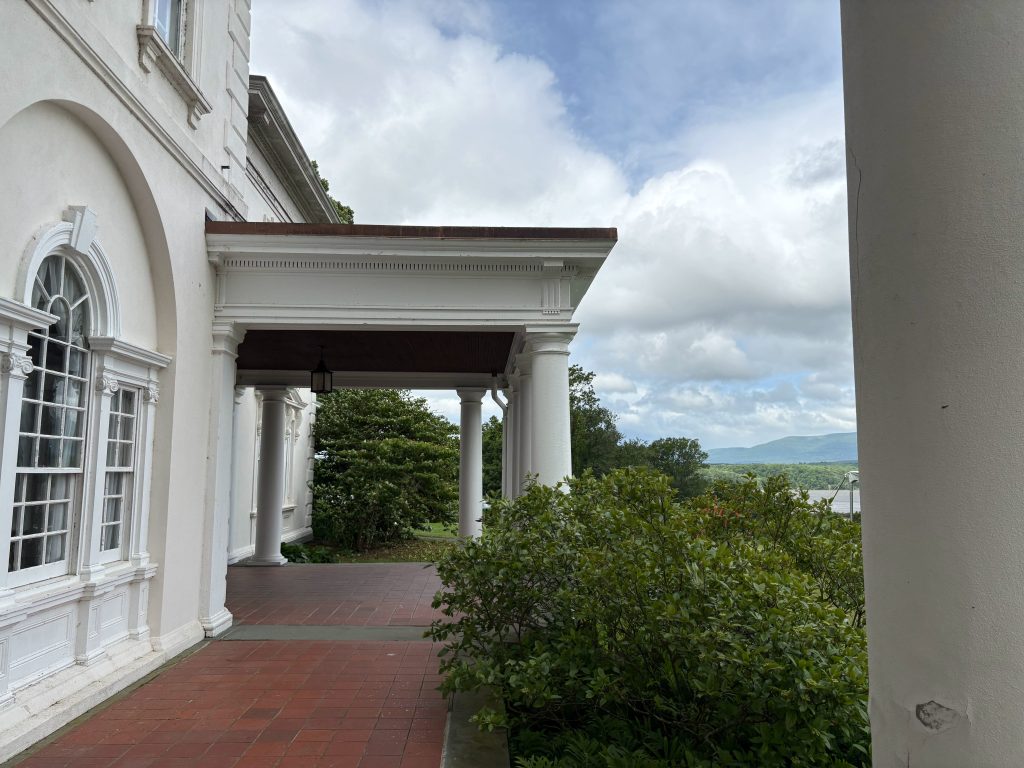
Thin rain flew sideways on wind so strong it earned warnings on the Kingston Rhinebeck Bridge over the whitecap-etched Hudson far below. On a rainy Saturday morning sentimental journey to the Bard campus, where my son, daughter and son’s wife all graduated, there was not a soul in sight. The art gallery was closed, everything seemed closed; but memories of happy dinner-time visits with my young ones, just an hour south of my Albany ad-and-pr agency office, echoed sweet. I remembered an Easter picnic at Blithewood, the mansion Bard had absorbed on a high bluff over the river.
The rain blew out of town as I recrossed the Hudson toward Woodstock.

The tie-dyed, pot-smoked town looks backward so strongly it’s become an easy target as a ‘60s cultural anachronism. But as skies brightened over my quest for parking, it felt cozy, charming.
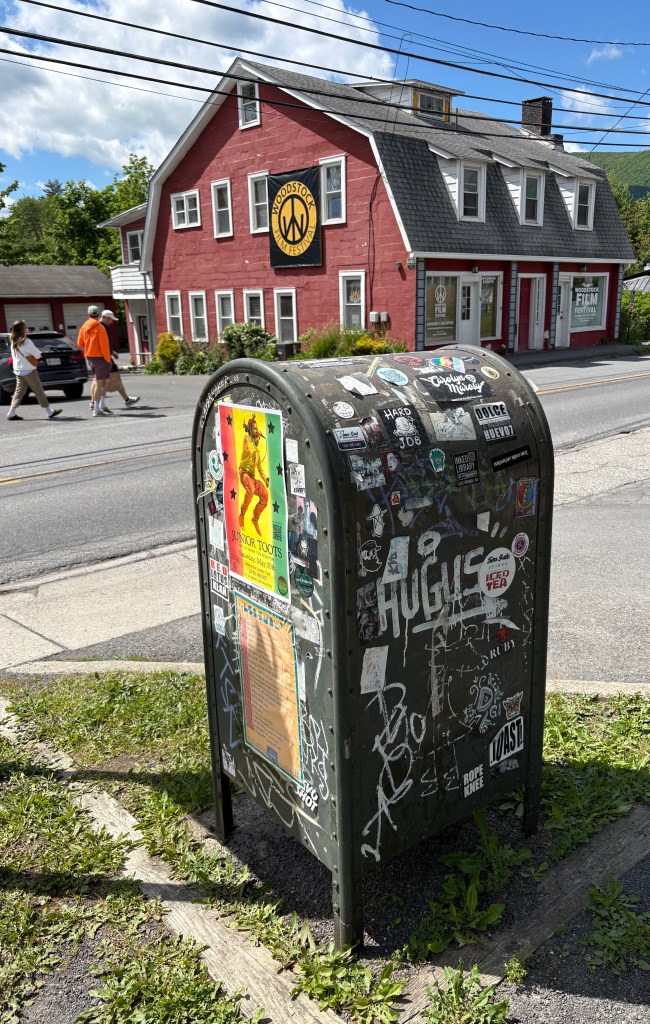
Looking closer, it also seemed clamorous: many cars and people, and too many dogs, like the large, ill-managed and aggressive one that routed a woman from her bench by jumping on her repeatedly. 

She’d asked permission to occupy her spot from a throng gathered behind it to watch a band playing on the patio in front of a Haight- or East Village 60s-style boutique. The building bore a sign claiming Dylan hung out there when it was Cafe Espresso. The band had the vintage-jam sound in its pocket, stretching out on the Velvets’ “Sweet Jane” as I had walked from the Woodstock Artists Association and Museum art gallery through a bookstore visit. I found an empty folding chair just off the sidewalk by the boutique and watched the band ease confidently into Traffic’s “Feelin’ Alright” then segue into the Dead’s “I Know You Rider” over a relaxed half hour. Later came “Come Together,” “Turn On Your Lovelight,” complete with Pigpen-style rap, and “Sitting In Limbo” with all its Caribbean flavor bleached out, but rocking OK. “You’d almost think we’d rehearsed,” claimed the lead singer.
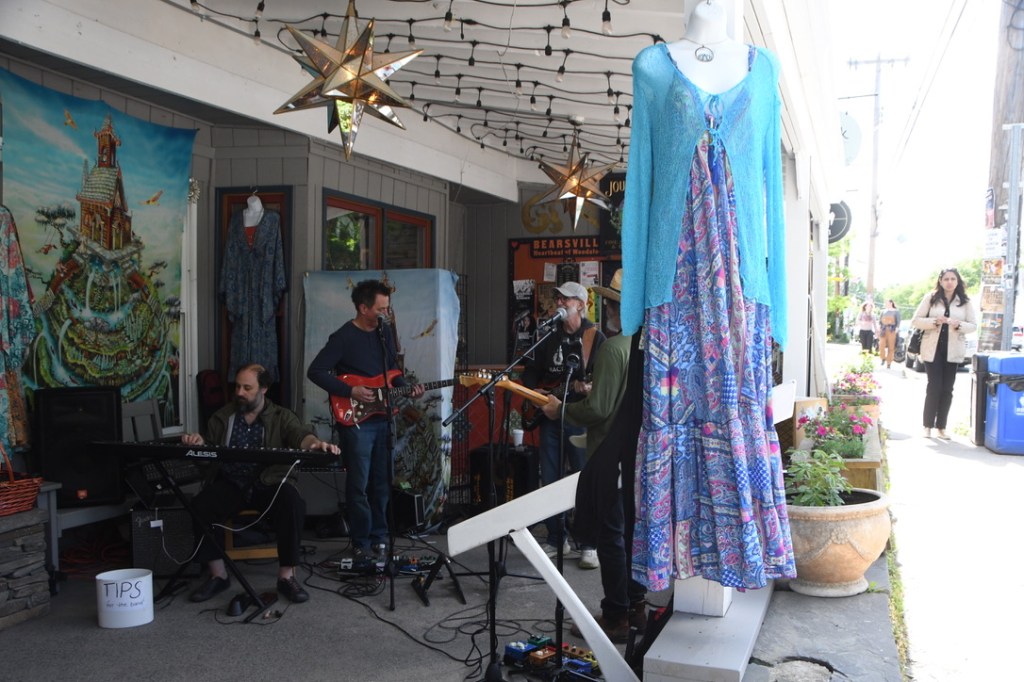
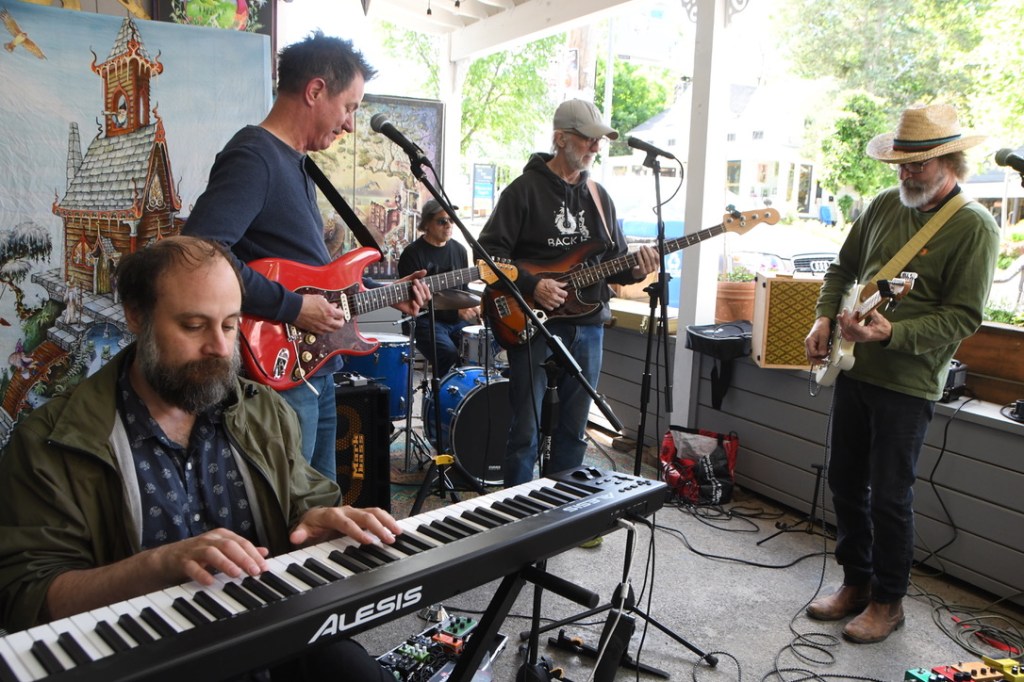
A woman offered her pre-rolled to the drummer. A pro, he toked without losing the groove. Later, the lead singer pulled a bourbon pint from his guitar case and passed it among the band. Google “Old Woodstock hippie” and you’d find the guy in white beard and big hair who approached the band and reached for the bottle. The singer hesitated a bit before laughing and handing it over for a hefty snort.

As they shifted to 80s gloom and started the Cure’s “Pictures of You,” I scanned the folks whose look and affect seemed Woodstock-perfect but might not work as well elsewhere. They looked and acted like stars; maybe some were, some I thought I’d seen onstage somewhere, with somebody. Was that guy in lots of turquoise Steve Stevens from Billy Idol’s band? Was that wide-shouldered, big-jawed guy behind me Donald Fagen?
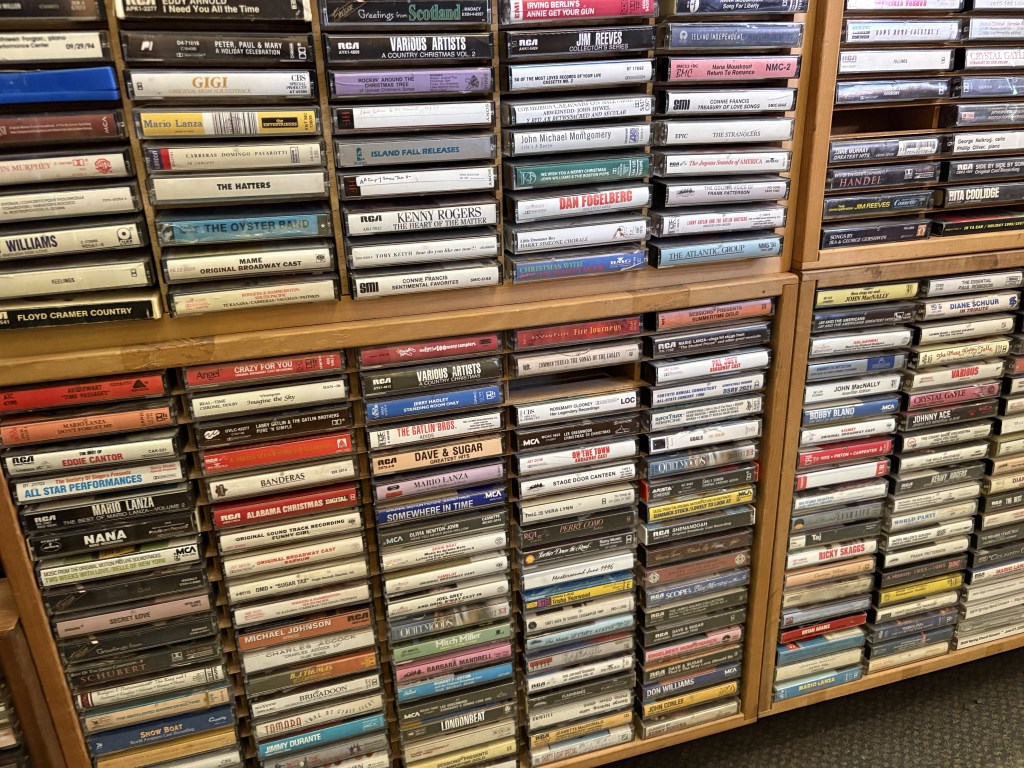
Heading back to the middle of town, I stopped to buy the novel I’d knocked off the shelf earlier in the Golden Notebook, managed not to buy any record-label cassettes ($6, about what they cost new) in Woodstock Music Shop with its stacked amps, guitars hung on racks overhead and knee-to-ceiling shelves offering albums in crammed bins. Step-stools gave views of the highest strata. I sat in a park nearby reading, watching the scene change in the lowering sun as the sound turned up.
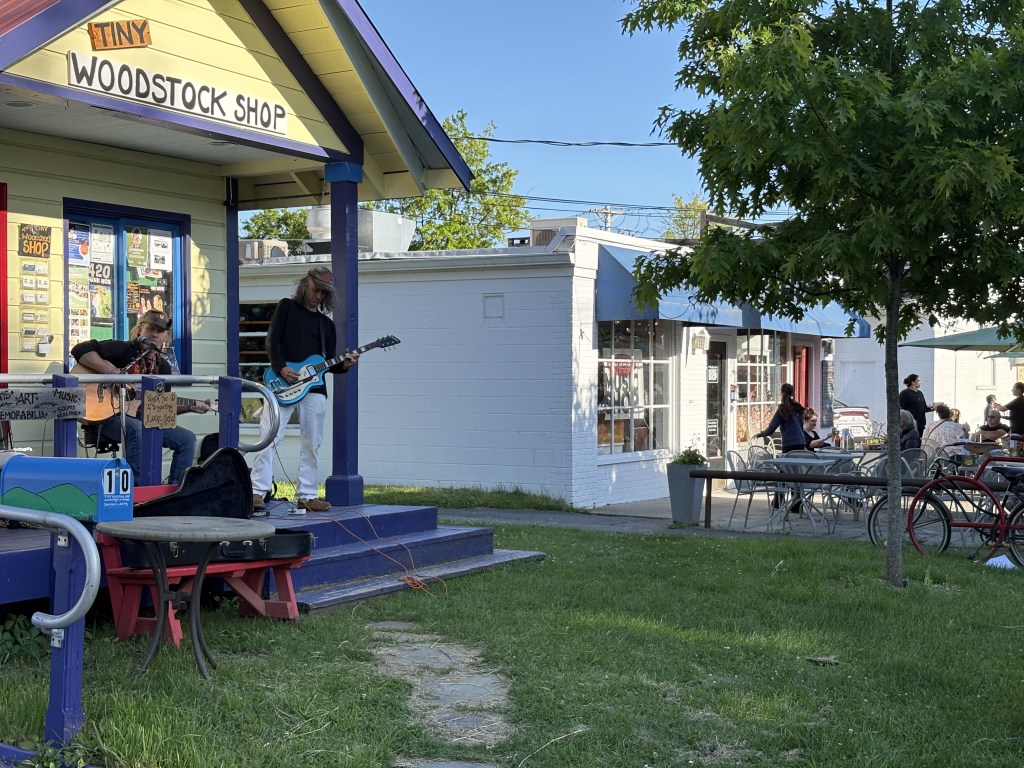
The municipal parking lot behind me – $10 all day, free after dinner – filled up with more vehicles than earlier. A lean gent in cowboy glitz with braided beard set up amp and mic on a small shop’s even smaller porch. His accompanist tuned his guitar, then unplugged and walked, still wearing the guitar, to grab something from his car. A woman who’d brought her djembe to the porch decided not to play after all, packed it up and left as another woman walked past, music stand in one hand, guitar case in the other and a ukulele in her backpack, headed for a gig somewhere.

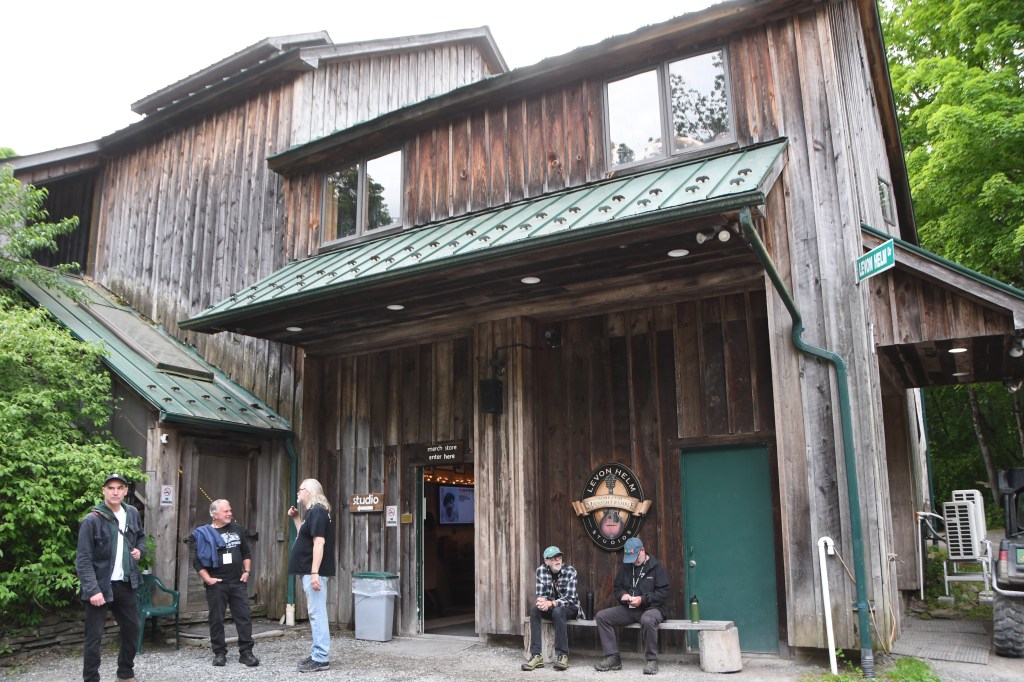
The glitzed cowboy started to sing in a Tom Waits growl as a full band down the street started to rock “Statesboro Blues.” The place felt happily alive, but it was time to head back to Levon’s.

Woodstock remains a town made by music and other arts; but on the weekend of The Festival (mid-August, 1969), NRBQ played the Aerodrome in Schenectady. My brother Jim skipped Woodstock to see NRBQ instead, and they changed his life. In bands himself since fourth grade and later a frequent guest saxophonist with them, he felt amazed, charmed, by the possibility their freedom and fluency in any style of music showed him.

And that’s what they still do.

Like Friday and Saturday, in Woodstock.

NRBQ at Levon Helm Studios, Woodstock; Friday, May 29 (First of two nights)

Boarding their flight from Los Angeles to JFK, Fred and Mary compared destinations with a stranger across the aisle. “We said we were headed to Woodstock,” Fred recalled. “Oh, you’re going to see NRBQ,” said plane neighbor Mark Rowland, a writer who’d profiled the ‘Q’ decades before in Musician magazine. “Seeing NRBQ play…for the first time is a little like sauntering into an amusement park with all-new rides,” Rowland wrote then. “You’re happy to be in on the discovery, and you’re having fun, but it’s still a little uncertain just what is going on.”

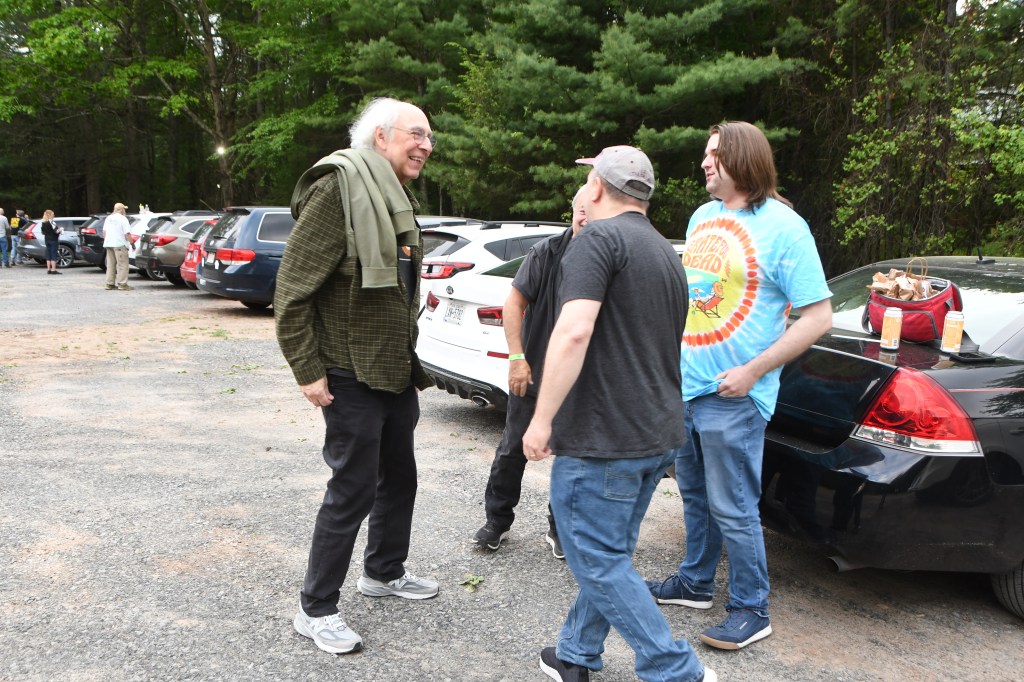
Other fans I met or re-met Friday at Levon Helm Studios flew from Atlanta, Seattle, Dallas, Omaha. Or they drove from Chicago, Boston, or across town, as John Sebastian did to guest on both Friday and Saturday shows, the beloved band’s first in weeks and last until August.

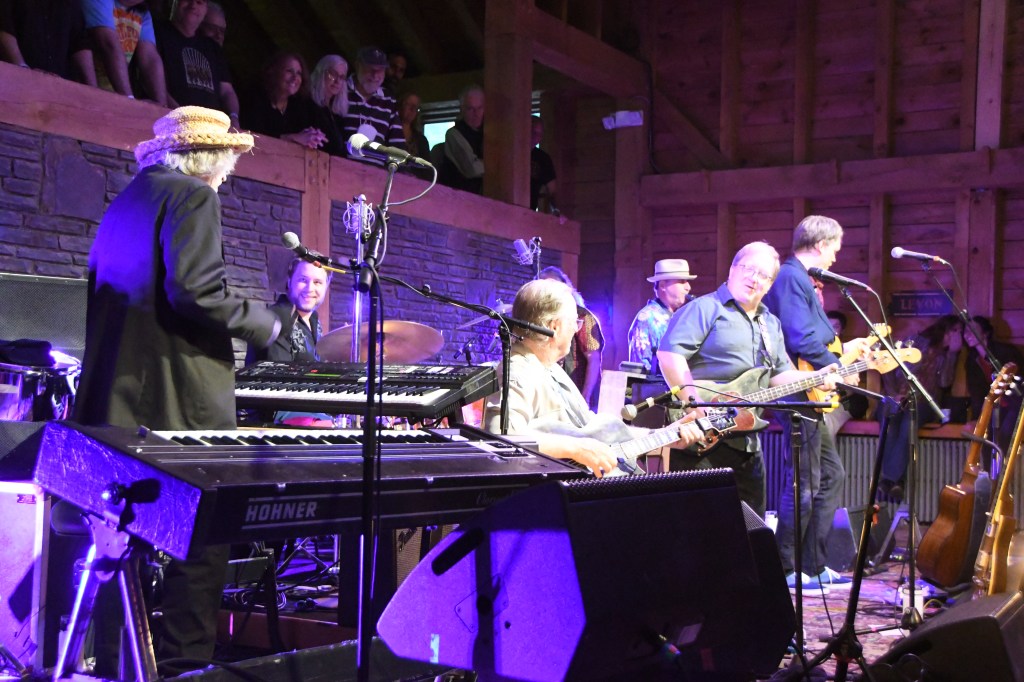
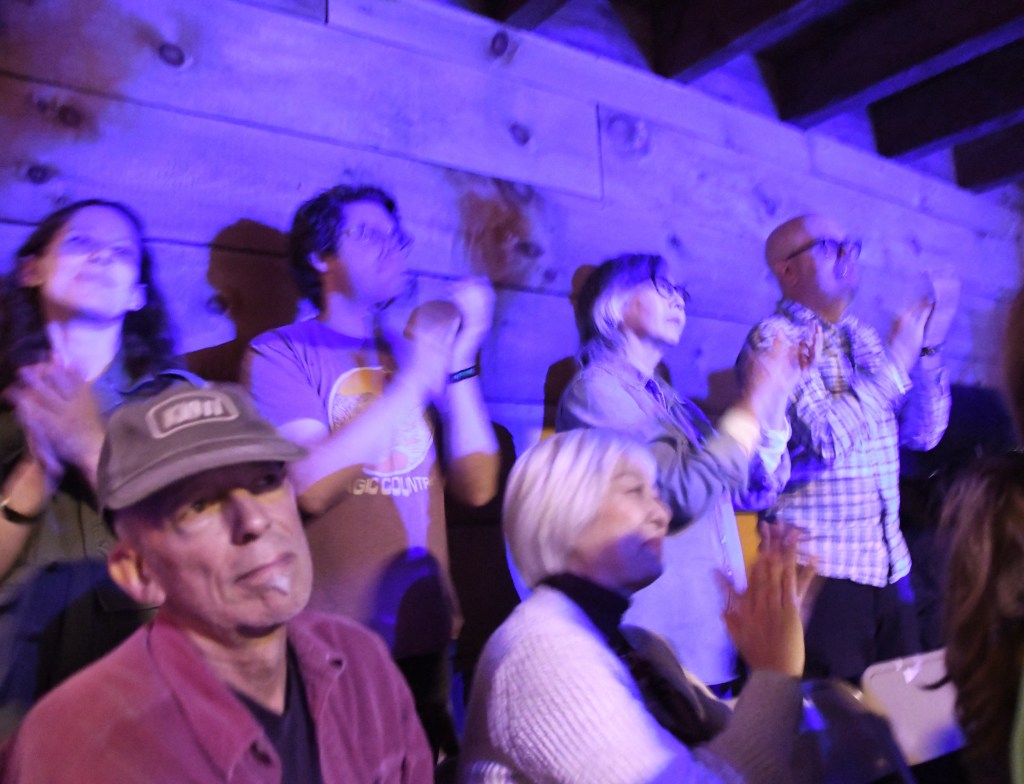
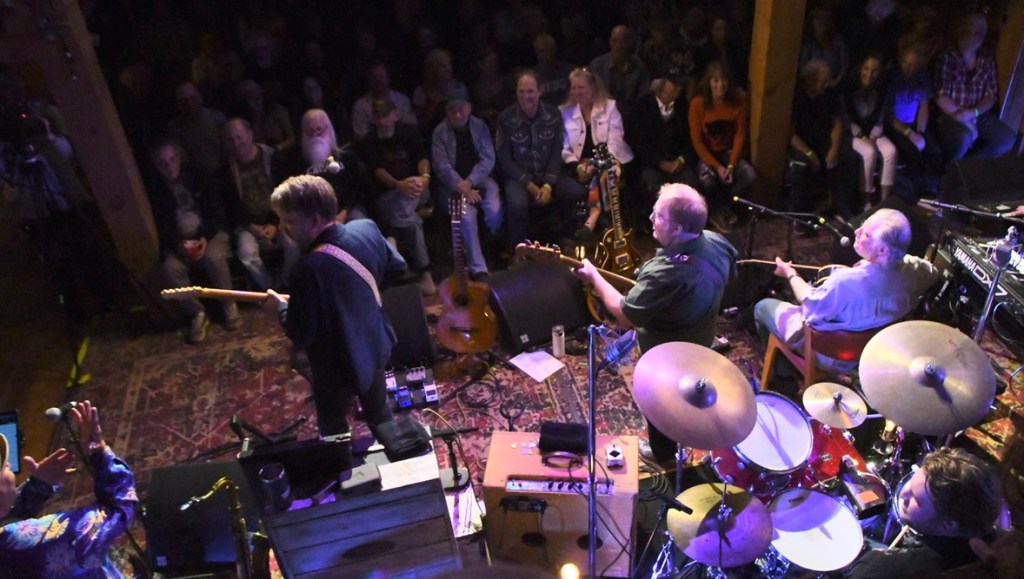
NRBQ fans may be dedicated as Deadheads. Super fan “Johnny D” DeAngelis followed them for a full summer as a teen and has seen them hundreds of times since. But they’re far fewer. Both shows sold out immediately, but the Levon Helm Studios hold only 250: 100 seats plus standing room for 150. It’s closer than intimate: Front row fans sit about a yard from the monitors; balconies stack tall in the timbered space. 

Johnny D and friends

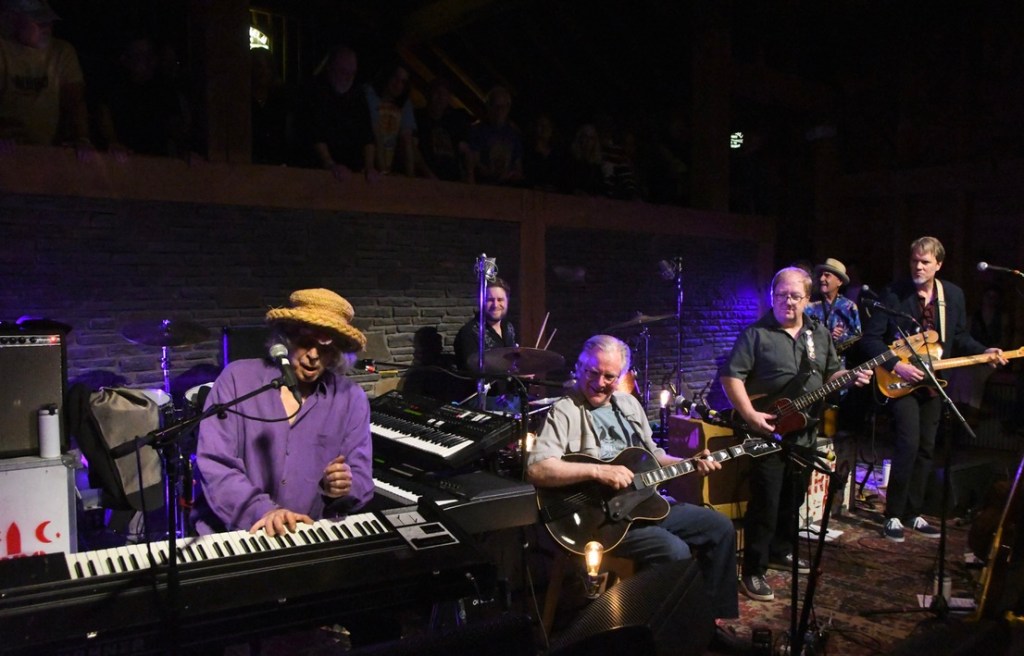
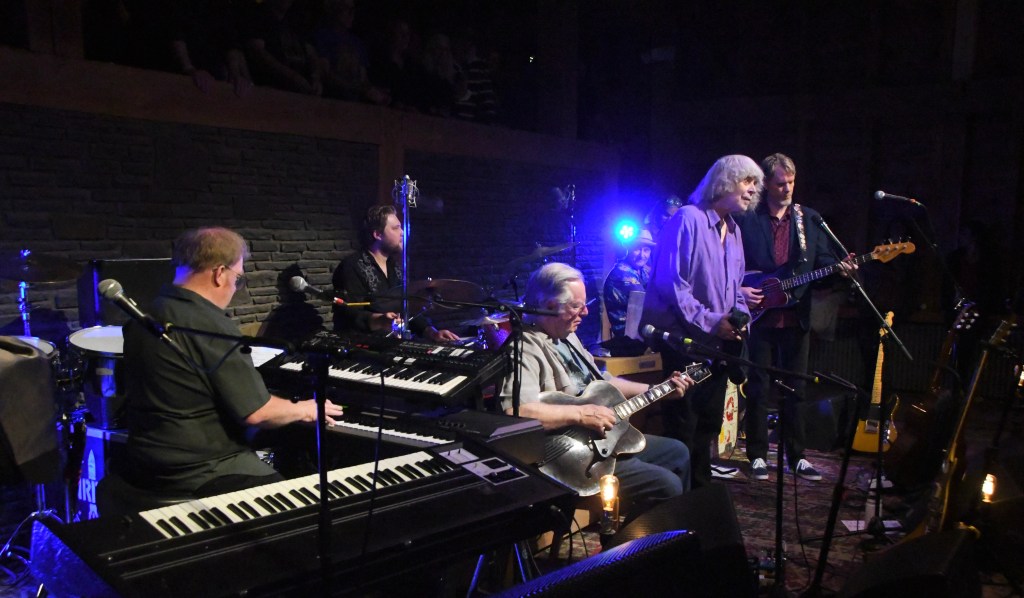
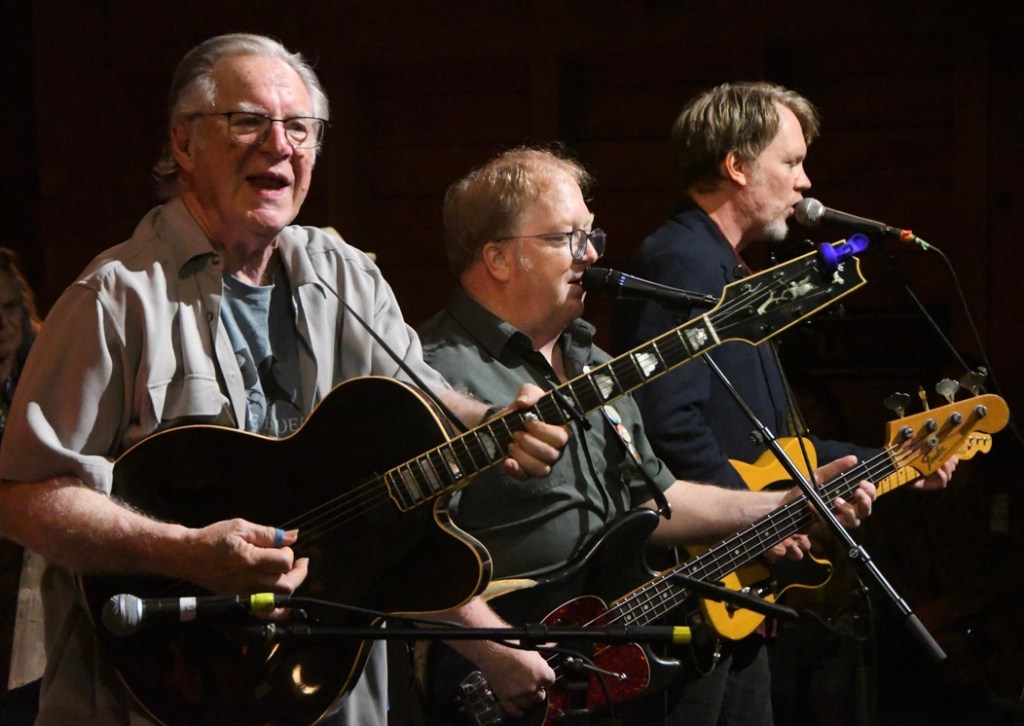
NRBQ Friday, from left: Terry Adams, Jake Edwards, John Sebastian, Casey McDonough, Klem Klimek, Scott Ligon; Gene Oliveri obscured behind Scott

Friday felt thrilling, spiced with scarcity, the tang of something much missed; but also raw at times, tentative and uncertain, like Rowland wrote. Saturday felt focused, sharp, soaring; as if Friday was practice, Saturday the pay off. Yet even if Saturday hadn’t happened, fans from far and near wouldn’t have complained. 

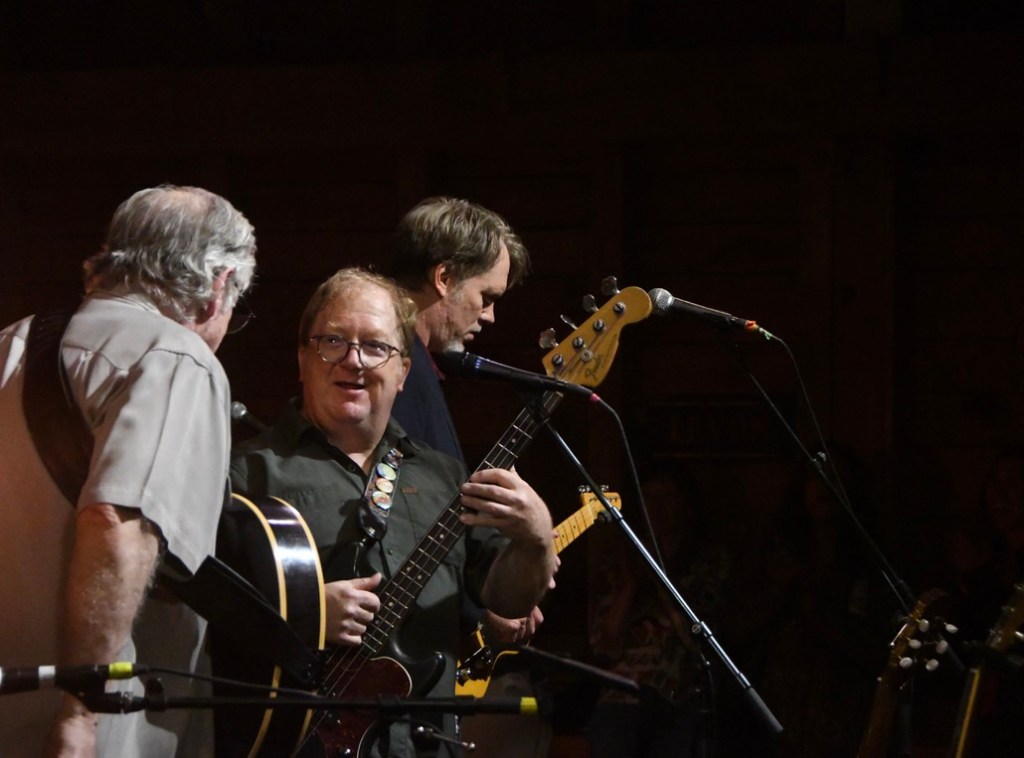
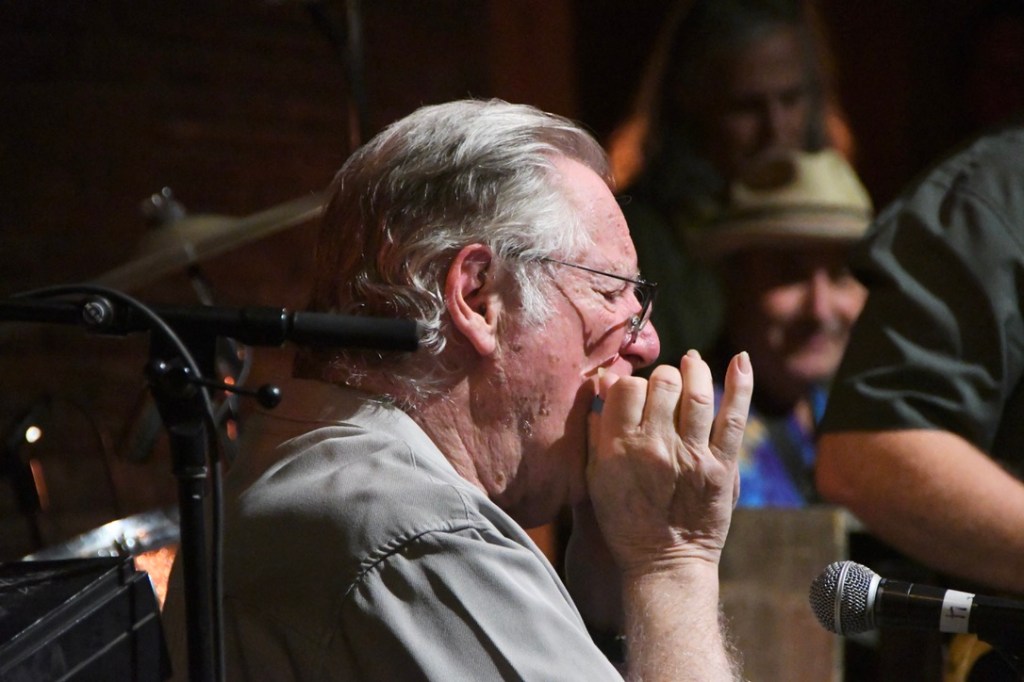
When I bumped into John Sebastian just before show time Friday, I asked how much he’d play. “I don’t know,” he laughed. “I never know.” Uncertain, but ready, he went onstage right away as old friend, NRBQ co-founder, leader, keyboardist Terry Adams waved him to right join. He strapped on his baritone guitar and checked his harmonica case as bassist-singer Casey McDonough, guitarist-singer Scott Ligon, young new drummer Jake Edwards and saxophonists Klem Klimek and Gene Oliveri took up their instruments.

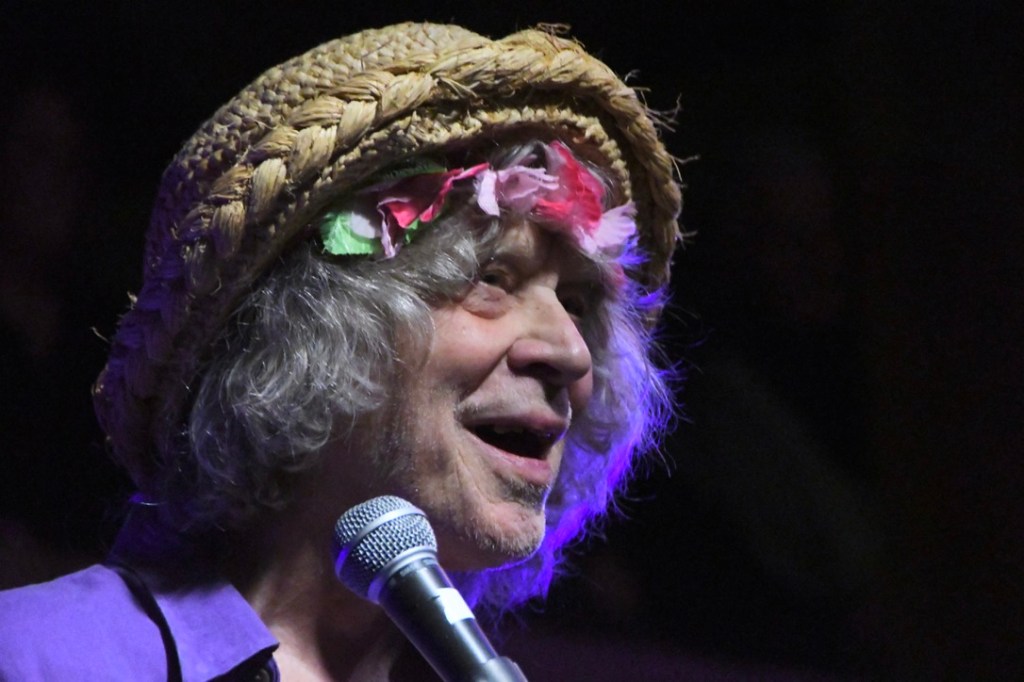
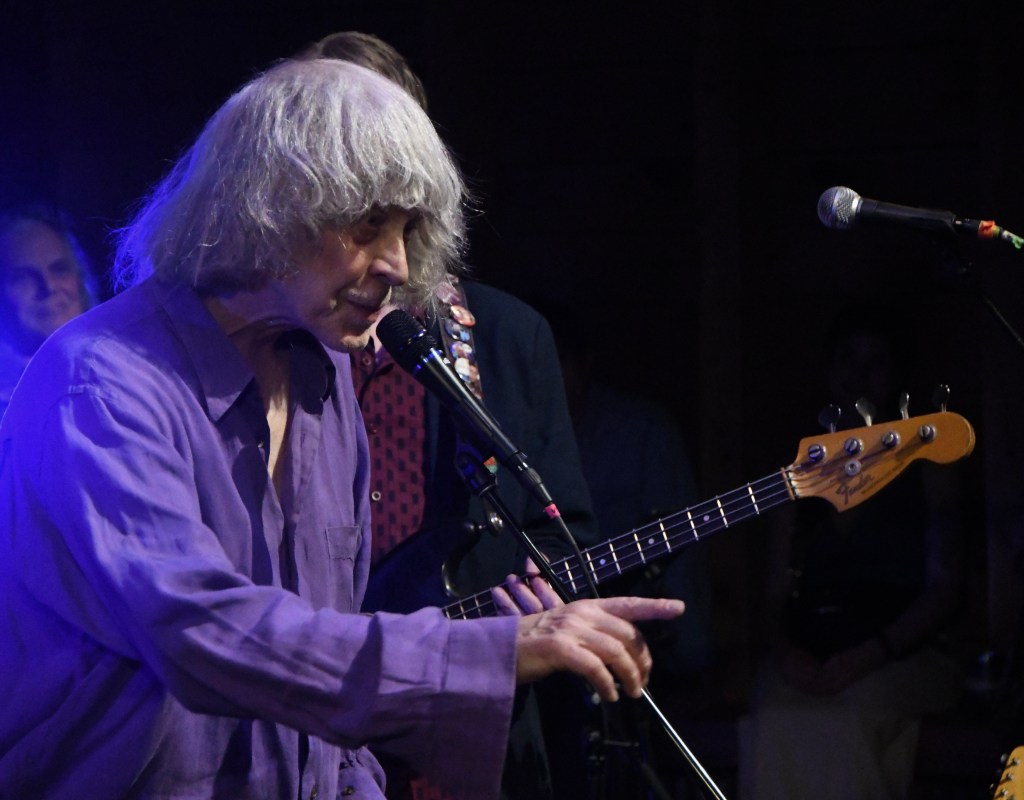
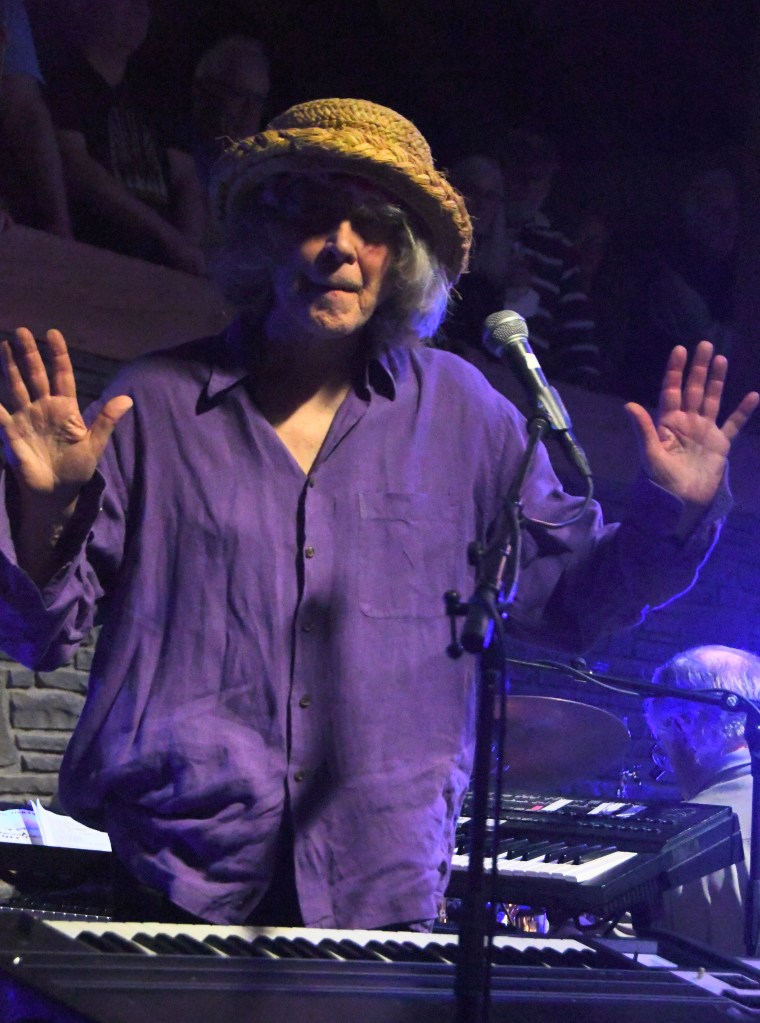
Terry Adams, above; John Sebastian, below

They bounced “That’s Neat, That’s Nice” as a jazzy hello, Scott singing lead and Terry taking the last solo after Klem, Scott and John – all compact statements without frills or fuss, drums signaling a stop-and-go coda. “Singin’ In the Rain” rolled at a similar upbeat tempo and feel, an agile strut, Oliveri taking his first yakkety bebop solo. Klem sang first in “You Got Me Going,” another happy rocker. 

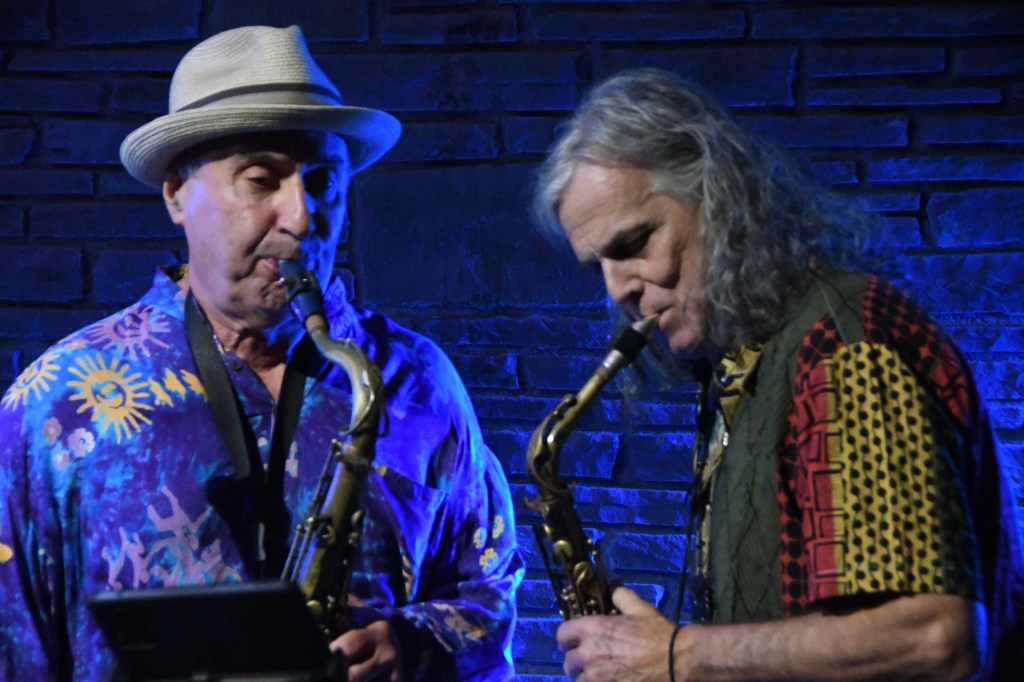
Klem Klimek, left; and Gene Oliveri

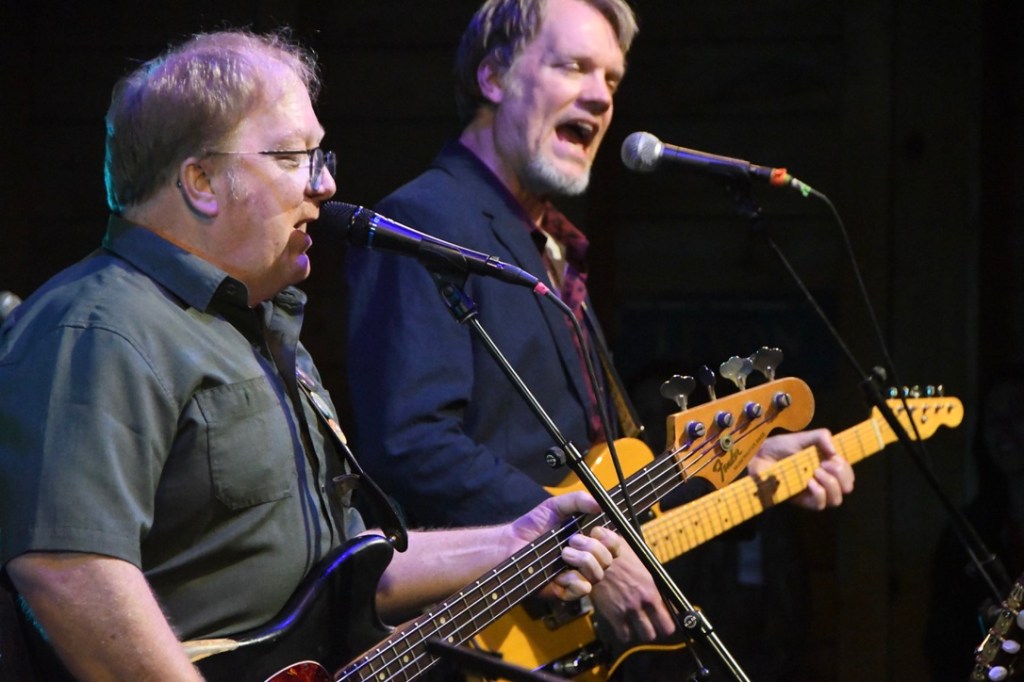
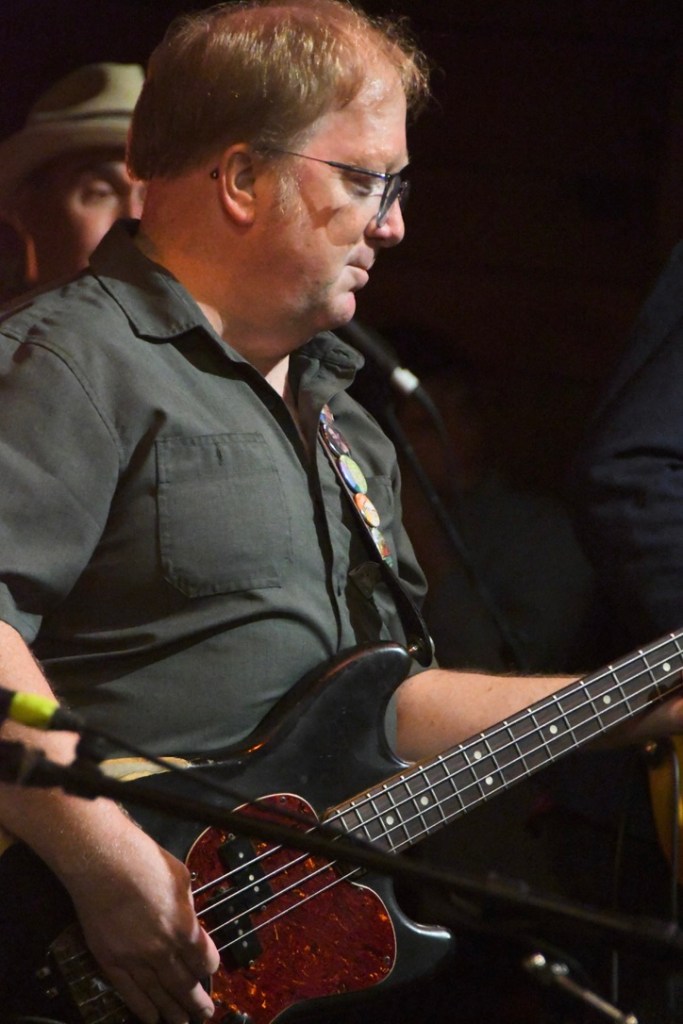
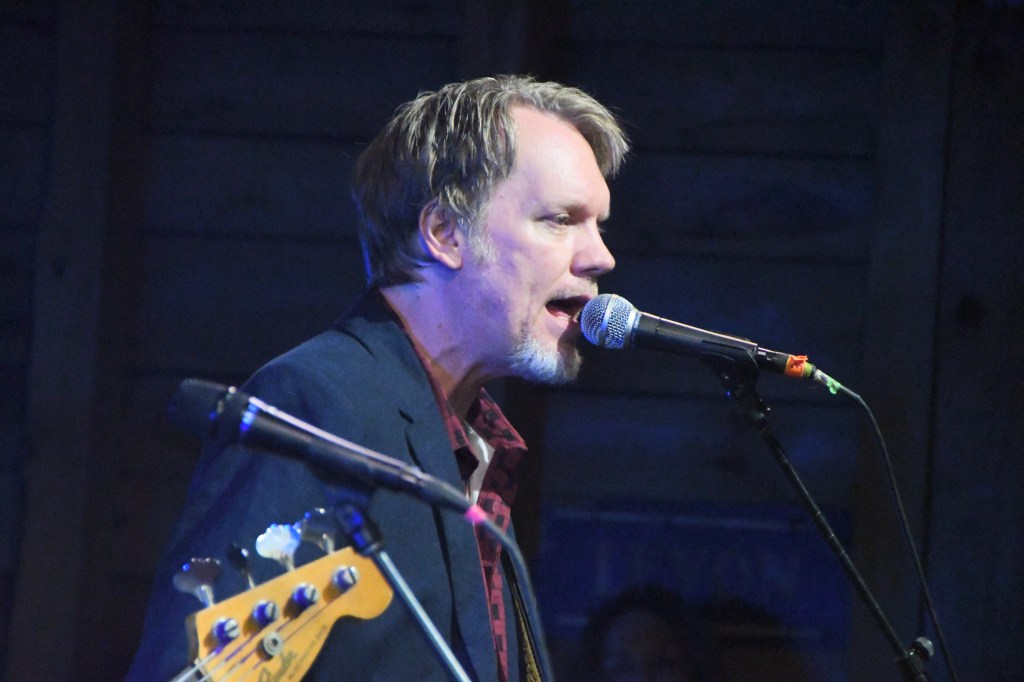
Klem wields the ‘Q’s biggest, most extraverted personality and strongest voice while workmanlike Scott’s rings the prettiest, perfect on ballads and happy numbers. Casey shows off both low-range grit and sky-high falsetto. As Terry told me when Casey joined a decade ago, his voice links beautifully with Scott’s; both sing in Chicago’s Flat Five group. 

Casey McDonough, left; Scott Ligon, right

Friday, they sang tight on the joyous “End of the Road” and “Waitin’ On My Sweetie Pie” early on, then in both choruses and leads thereafter. Voices well worn, Terry and John left most leads to Scott, who once took over a tune mid-song when Terry’s voice faltered. John sang lead on his Lovin’ Spoonful classic “Did You Ever Have to Make Up Your Mind?” and his newer wistful “Passing Fantasy” on Friday; he chimed in happily in some bluesy guitar solos and the occasional harmonica break, and comped chords behind Scott’s skilled, often fiery breaks.

Terry Adams, left; and Jake Edwards

As usual, the show built in waves, both in the feelings powering the lyrics and the wonderfully wack mastery of many musical feels. Love songs worked because they felt sincere. “This Love Is True” and “Never Take the Place of You” expressed longing while “I Want You Bad” and “The One and Only” romped in romantic gladness.

As Johnny D rightly observed, years ago, “They make you feel young” – upbeat energy revving the comic “Wacky Tobacky” and “Get Down Grandpa,” the antiques “This Old House” and “The Music Goes ‘Round and Around” to end the set.

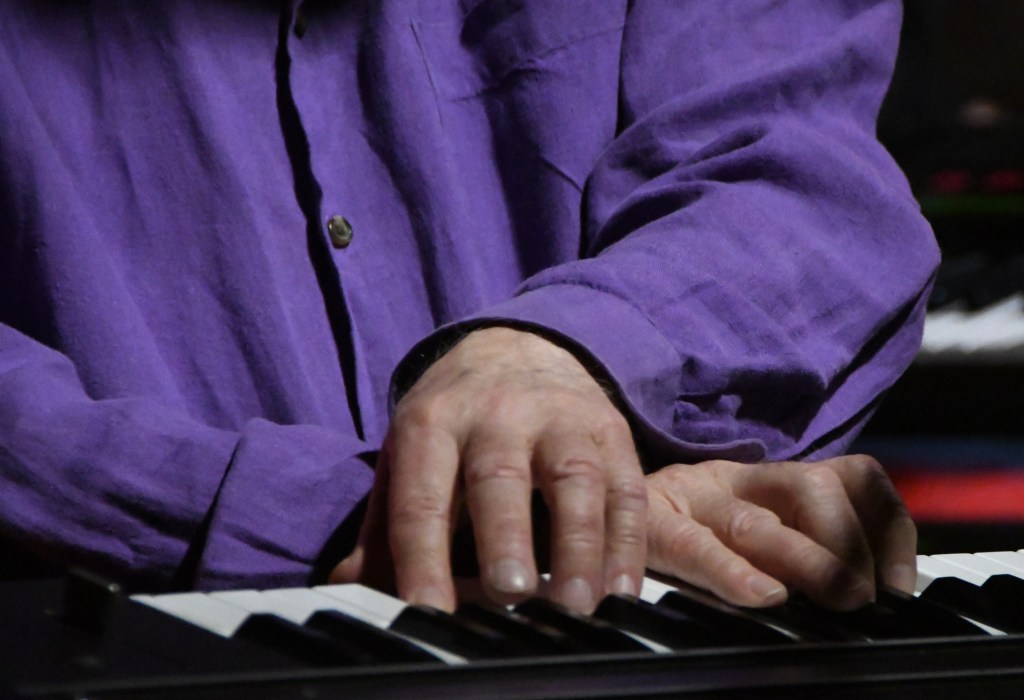
Quieter moods may be their most compelling, though. Adams’ soulful, understated piano gave the Monk classic “Ruby My Dear” a calm, sweet eloquence; his own “Tragic Magic” cruised on sci-fi weirdness and “Snowfall” mixed vintage melody with rock energy, updating this antique without bruising it.

On the quiet, nostalgic side, “Imaginary Radio” hailed Terry’s heroes in poignant words. He also revved up the comedy, leaving the piano to Casey and cautioning “Remember Your Name and Address” as if in a classroom.

The mood lightened then soared in the later songs, pulsating rockers “Magnet” and “Grandpa” setting up Clarence “Frogman” Henry’s funk shuffle “Ain’t Got No Home” with exciting Casey vocal and hot Scott guitar. That New Orleans mood bounced back to launch the encore with “Boozoo and Leona,” a happy zydeco chug. Monk’s “Well You Needn’t” held the mood, and momentum, through “Get Rhythm” to sign off.

Terry mostly chose the tunes early on, sometimes just starting up and trusting everybody to climb on board. He later looked around, accepting suggestions on the bandstand. Things flowed too smoothly for a rehearsal’s informality, with Klem quickly bringing newcomer Gene up to speed at each surprise. They blended well, both in section-like linked playing in harmony, soloing hot, or improvising parts together.

It all felt organic, made with fresh ingredients, as Terry has long described things. Tight parts crackled, loose stuff charmed in relaxed ways. The players all helped each other, listened and grinned. Fun reigned, and fans left wondering, in happy uncertainty, what surprises might happen Saturday.

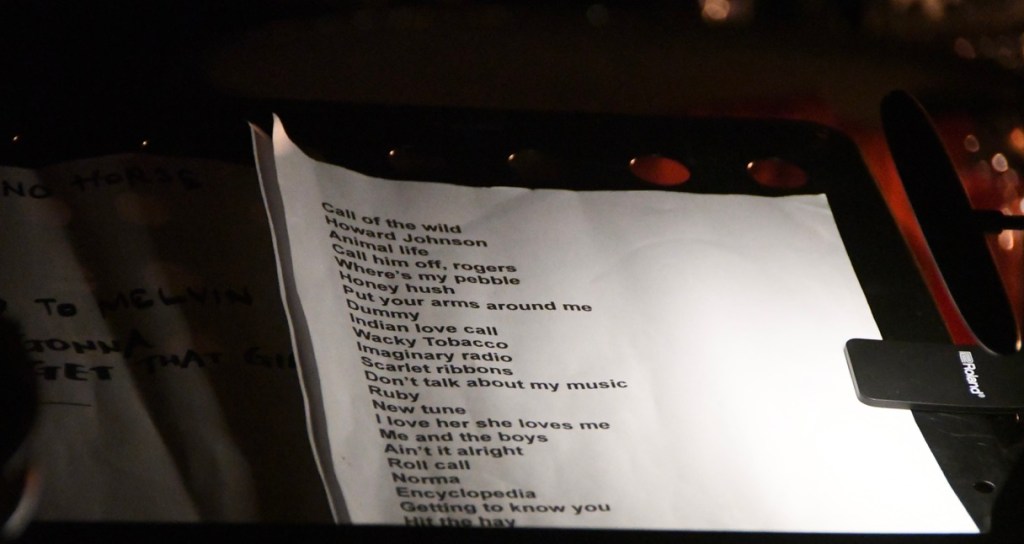
Below, the song list on Terry Adams’s music stand; a menu more than a map. The actual set list is below this photo.

Set List Friday, June 29

8:12 – 10:25 p.m.

That’s Neat, That’s Nice

Singin’ in the Rain

You Got Me Going

End of the Road

This Love is True

I Want You Bad

Waitin’ on my Sweetie Pie

Never Take the Place of You

Wacky Tobacky

Ruby, My Dear

Passing Fantasy

This Old House

Howard Hughes

Tragic Magic

Remember Your Name and Address

The Same Old Thing

Did You Ever Have to Make Up Your Mind?

Too Much

Imaginary Radio

Snowfall

Magnet

Get Down Grandpa

Ain’t Got No Home

The One and Only

The Music Goes ‘Round and Around

Encores: Boozoo and Leona

Well You Needn’t

Duet for Cousins

Get Rhythm

Above, John Sebastian congratulates Casey McDonough on his hot vocal in “Get Rhythm.”

Below, Casey McDonough plays piano, at left, as Terry Adams cautions “Remember Your Name and Address.”

Next up: Intermission, Woodstock Between Shows