
Review: The Cookers at A Place for Jazz, Friday, October. 16, 2026
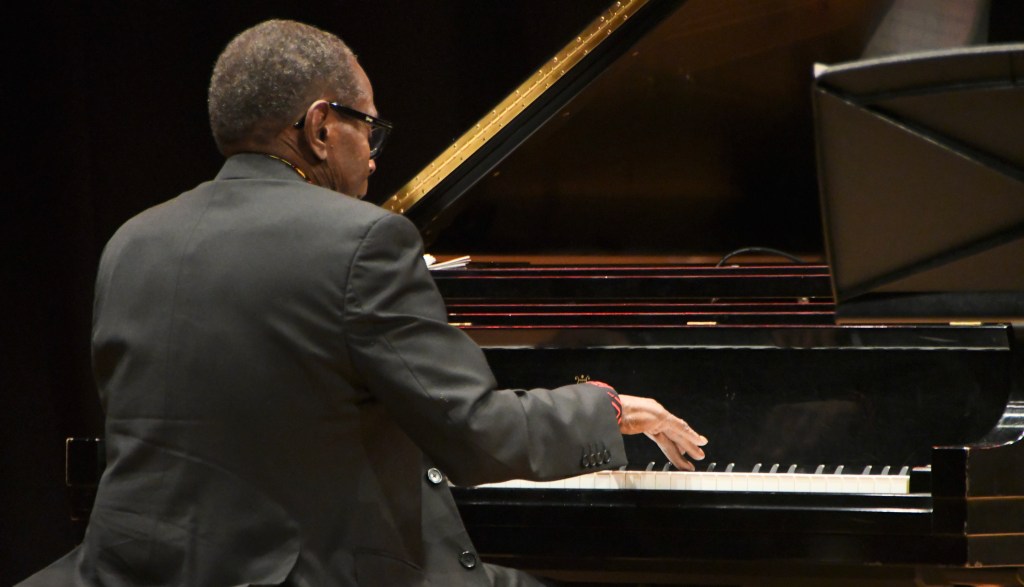
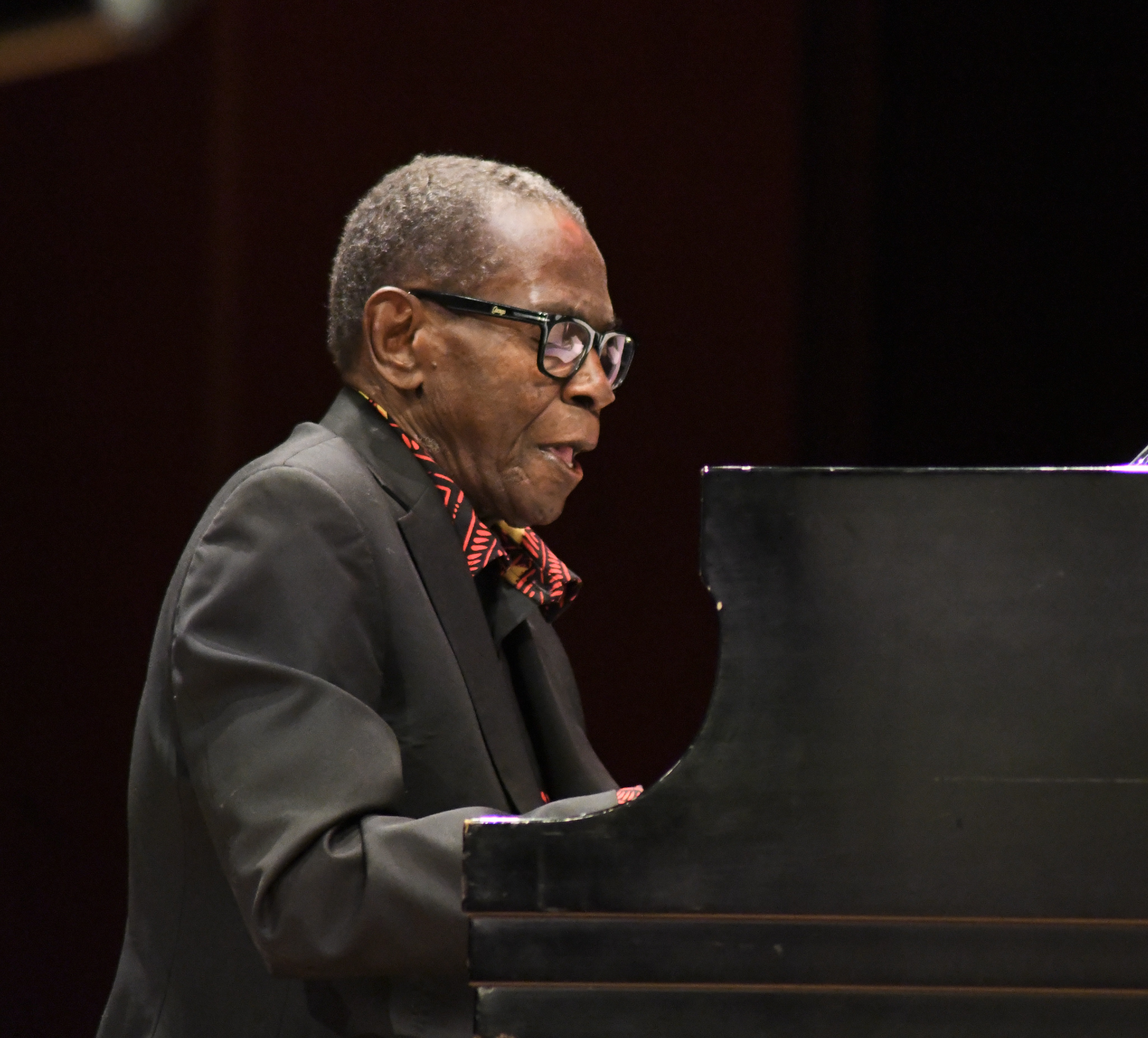
We weren’t fooled by the walker George Cables needed to approach the piano Friday at A Place for Jazz.
He reached for the keyboard and many of his 81 years faded away. The Cookers, aged 50 (trumpeter Jeremy Pelt) to 91(bassist Cecil McBee), relied on taste nurtured by long experience to charm in post-bop swinging section playing. They also detonated fiery outbursts that amazed a crowd of both teenaged music students and gray-haired contemporaries of the cats onstage.
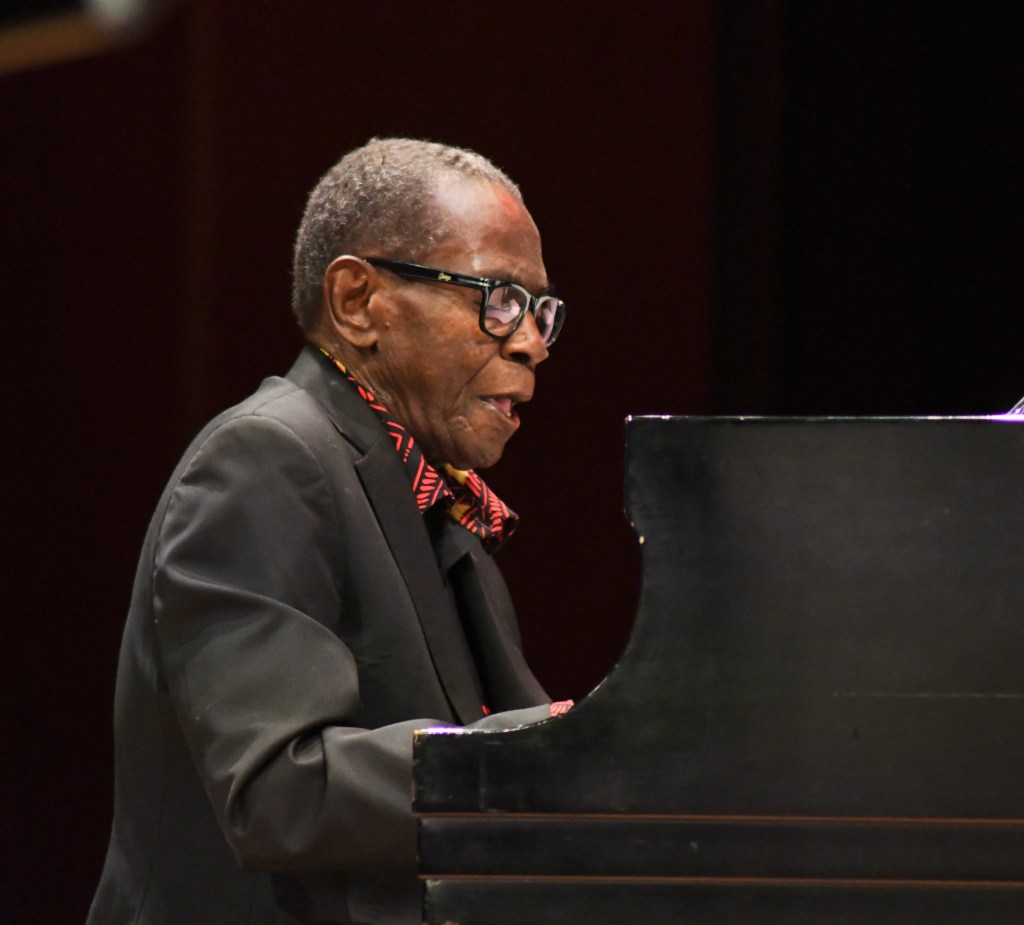
George Cables
The rhythm section were the oldsters, the horn players up front mostly decades younger. All seven were very together, though, in ensemble smoothness right out of the box with some beautifully nuanced passages in their opener, Cables’s “The Mystery of Monifa Brown.” Built on a brisk downhill riff, it stretched in Craig Handy’s whole-horn alto break of hot scales, both hands keying up high at times in percussive runs. David Weisse also ran scales in his trumpet exploration before Cables reclaimed it in a trio romp of breathtaking cohesion before everybody jumped back on board.
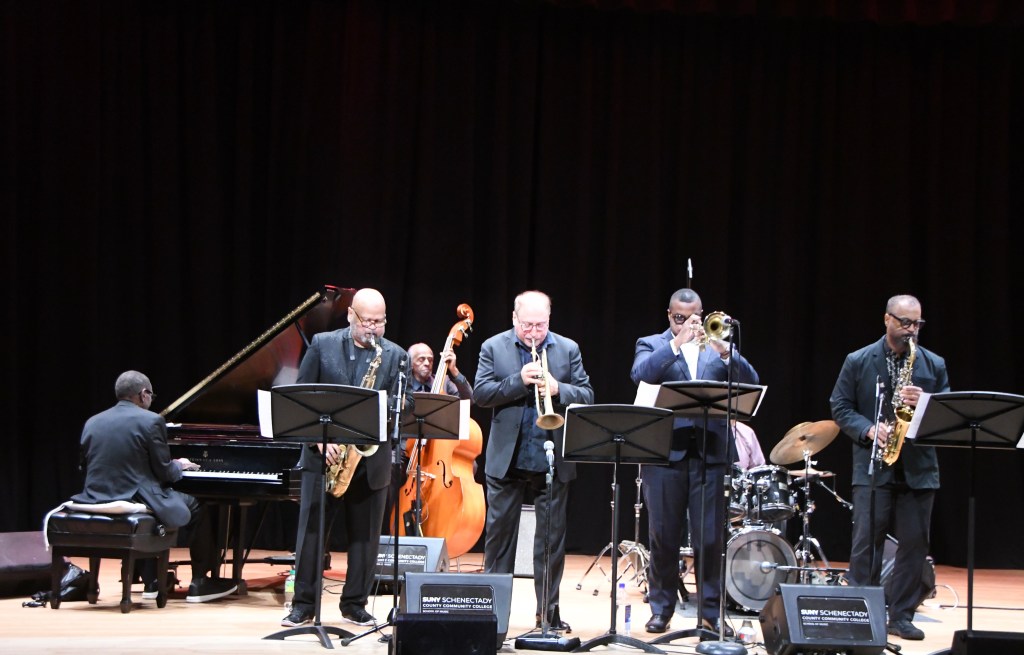
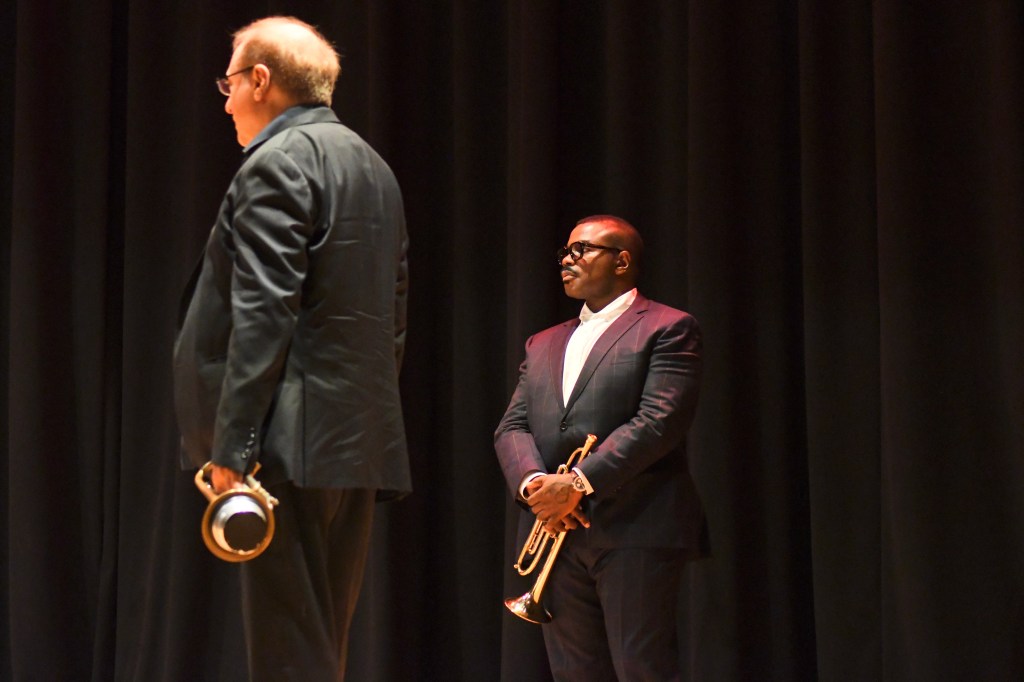
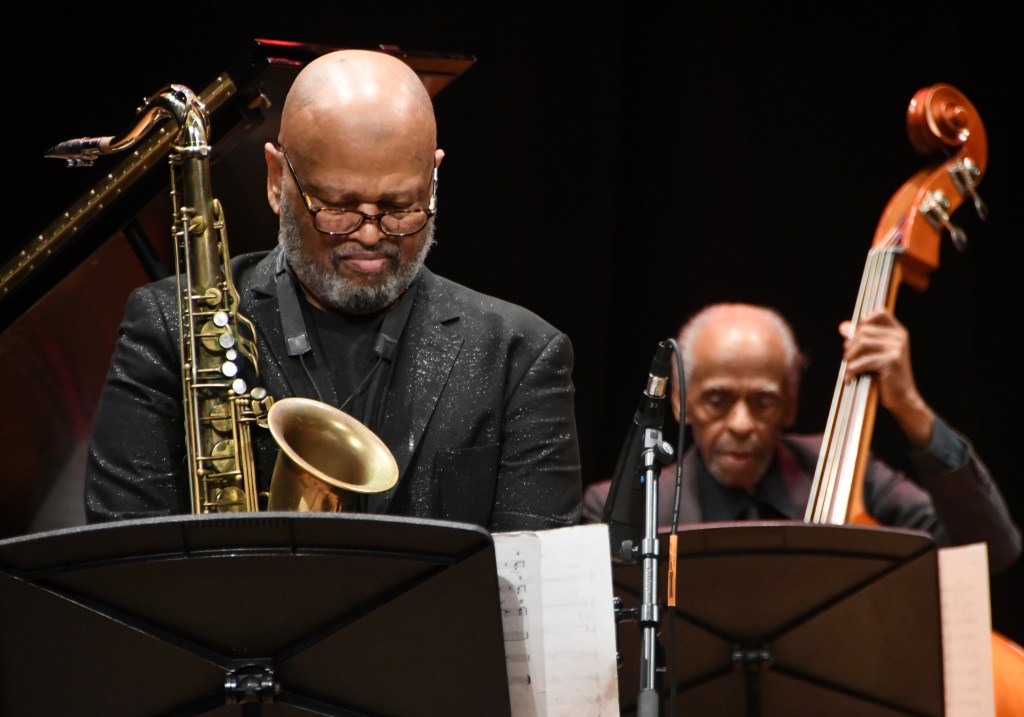
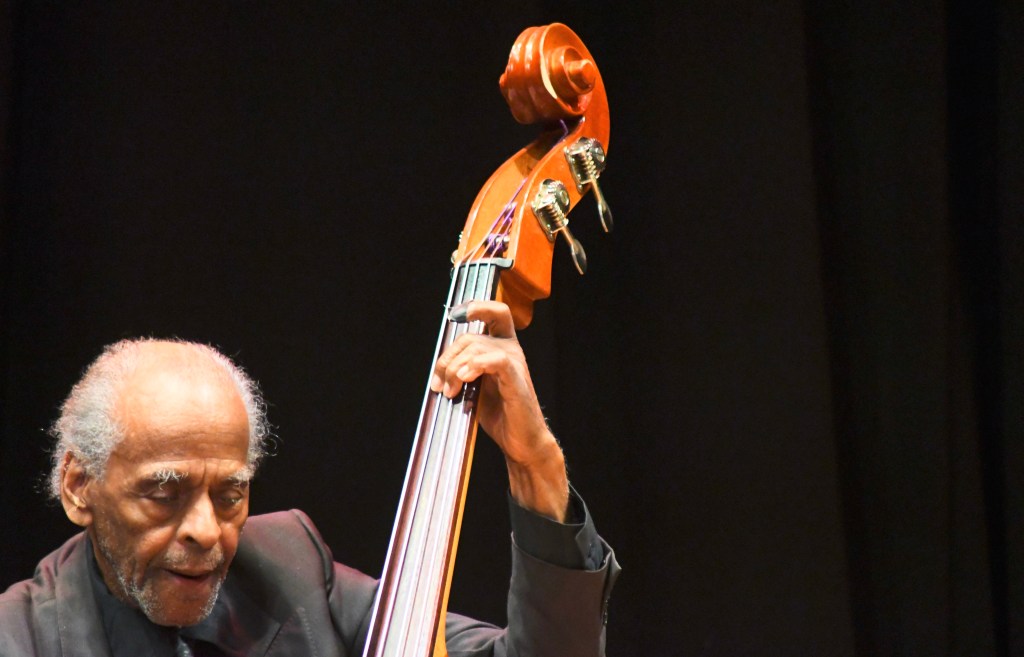
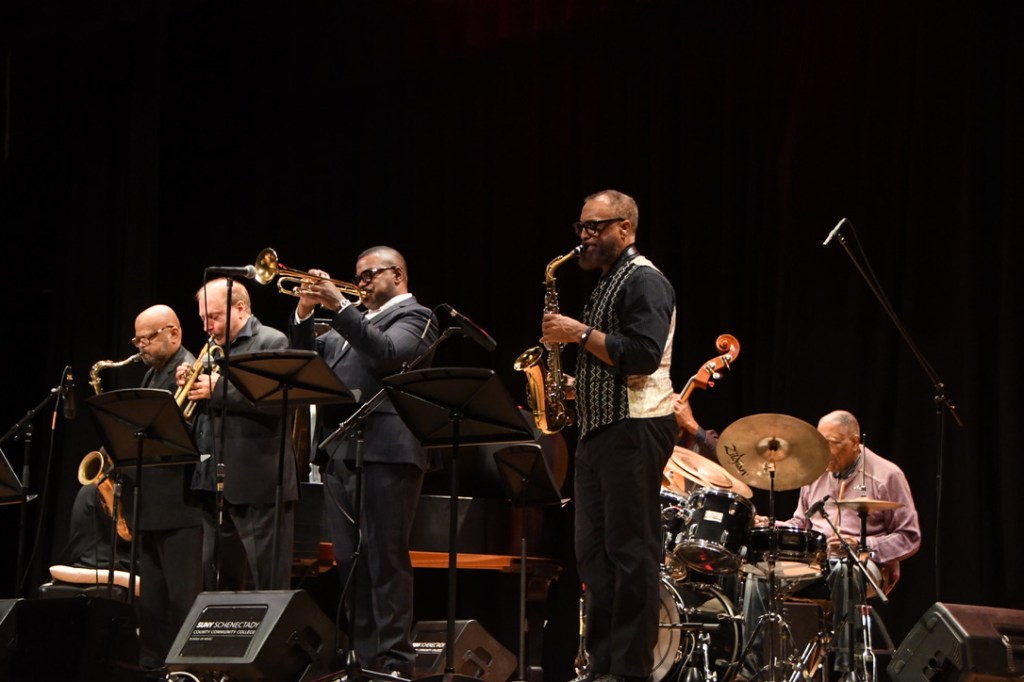
The Cookers, from left: George Cables, piano; Azar Lawrence, tenor saxophone; Cecil McBee, bass; David Weisse trumpet; Jeremy Pelt, trumpet; Billy Hart (in mauve sweatshirt, behind Pelt); Craig Handy, alto saxophone
In the syncopated “Blackfoot,” also from Cables’ pen, Jeremy Pelt’s trumpet sparkled in sky-splitting riffs and earthy rasps, and Azar Lawrence’s tenor also pushed it hard.
They slowed for McBee’s “Peacemaker,” but it packed exciting rhythmic energy. Hart’s drums dropped into the seams, Pelt used slurs and high swoops against a dramatic stop-and-go group cadence and Handy’s alto quoted “Softly As in a Morning Sunrise” – all sweet swagger that McBee echoed in his own solo.
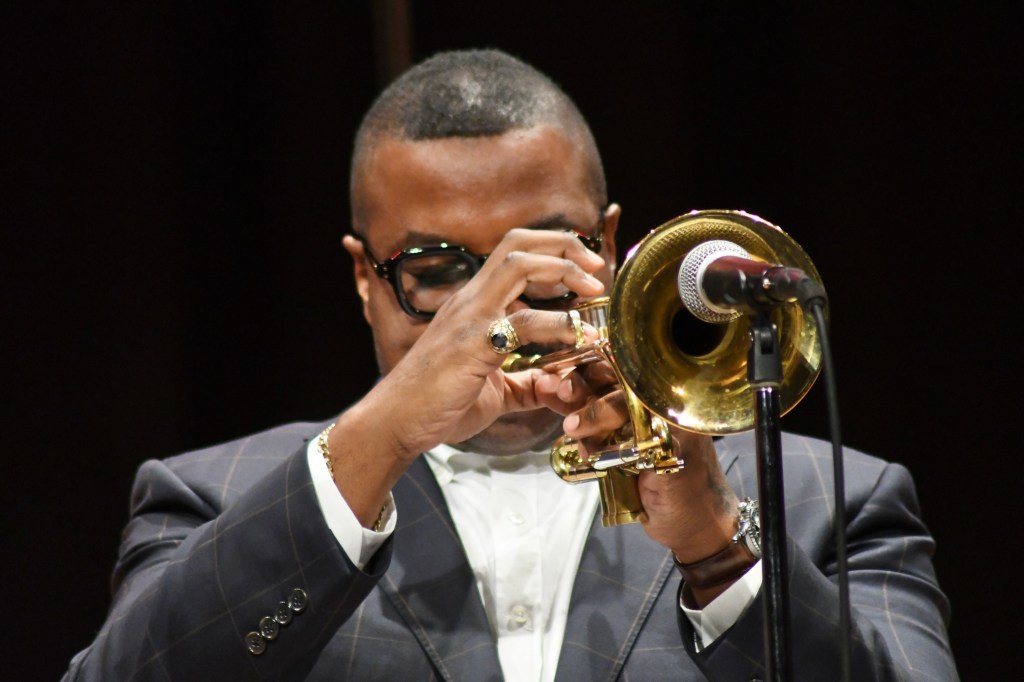
Jeremy Pelt, above; Craig Handy, below
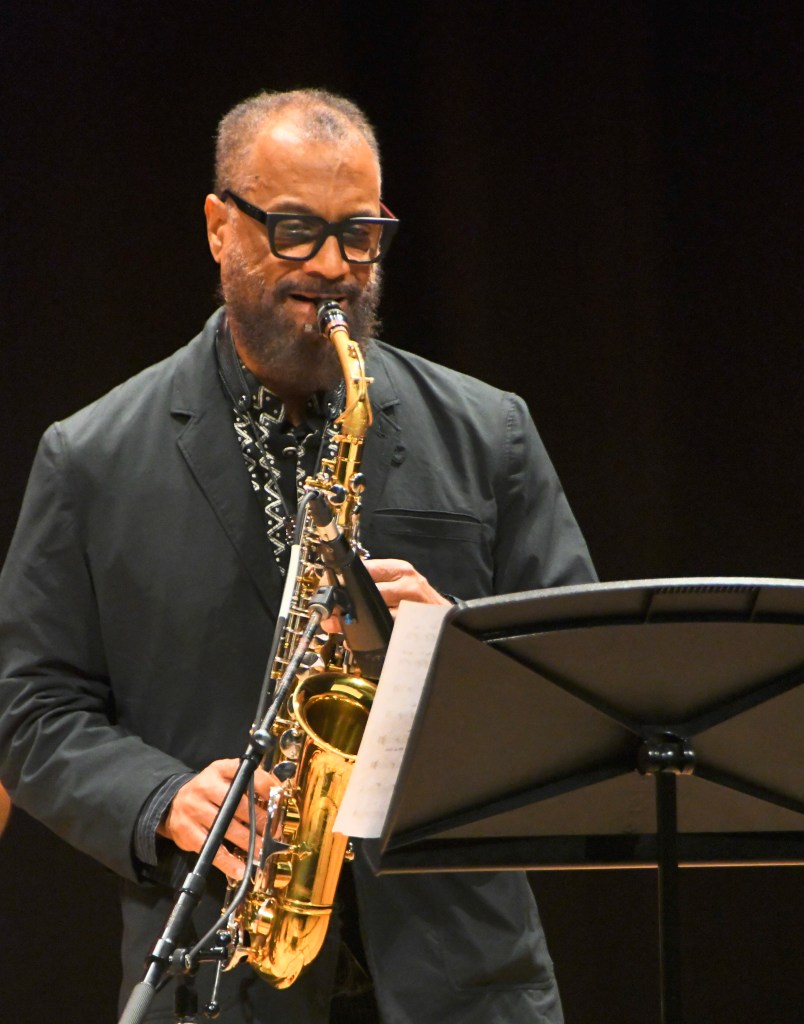
After the break, just three more songs, all from the Cookers’ six albums of mostly originals. Stretched out to share the adventure, everything felt generous, open and unhurried, even when they sped up in Weisse’s “Three Fall” to open the second set.
Weisse also hosted, announcing pieces and players. The repertoire and arrangements gave every player both workmanlike stretches of support in crisp section playing and spotlight moments in solos. Some may have played sparser or slower than on earlier stages or albums, but who could say, really?
For example,“Three Fall” brought big fanfare energy, bolstered at solo time with Weisse’s boil-then-simmer break, a loose and playful all-in middle section and a delicious tight-as-telepathic piano and bass foray.
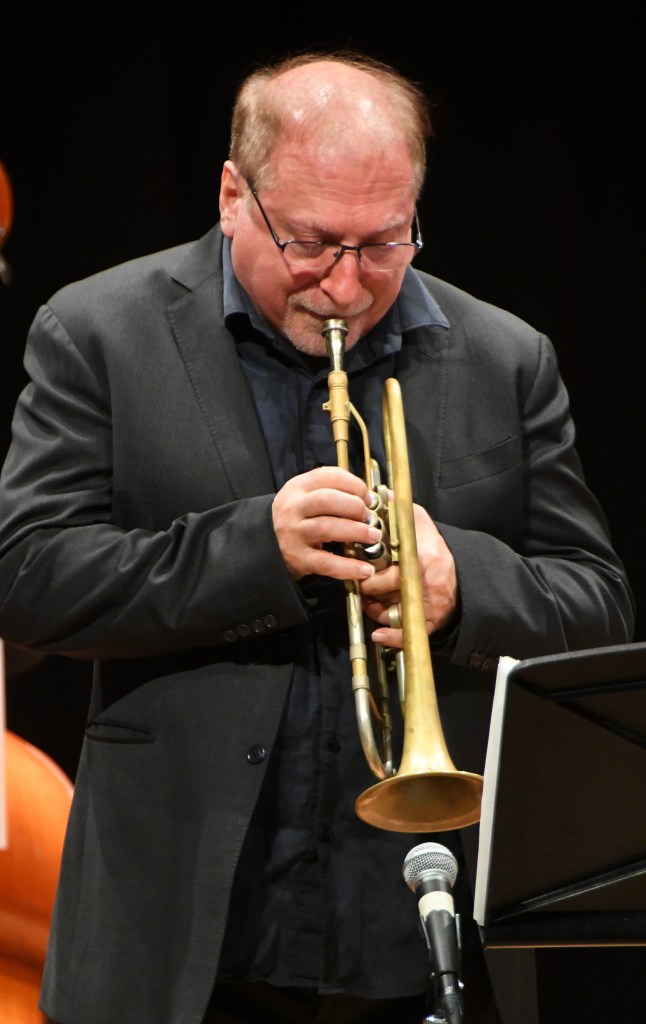
David Weisse, above; Azar Lawrence, below
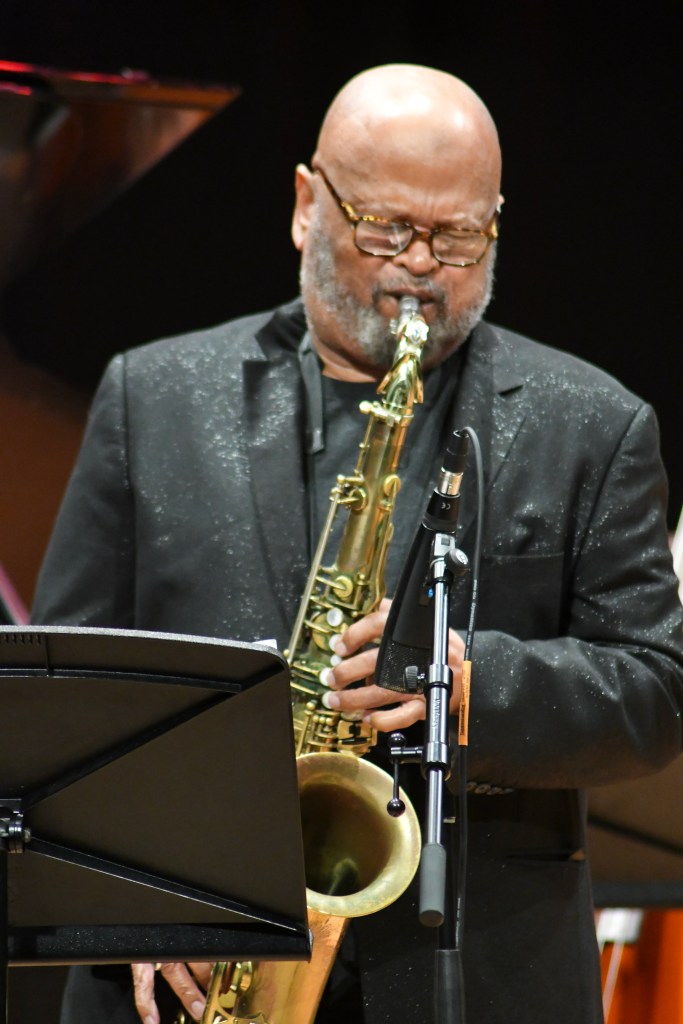
McBee’s melodic ballad “Close to You Alone” slowed from Hart’s double-time cymbals into lovely lyrical expression from Handy’s alto over subdued sweet horns as Hart tugged things forward with flying brushes. This seemed to give Handy permission to pump the pulse; after he took things outside, Weisse, Pelt and Lawrence, in turn then together, brought the tune back home. A tasty piano trio section faded quietly, Hart switching to mallets, before Handy, unaccompanied, led a sped-up coda of pulsating scales.
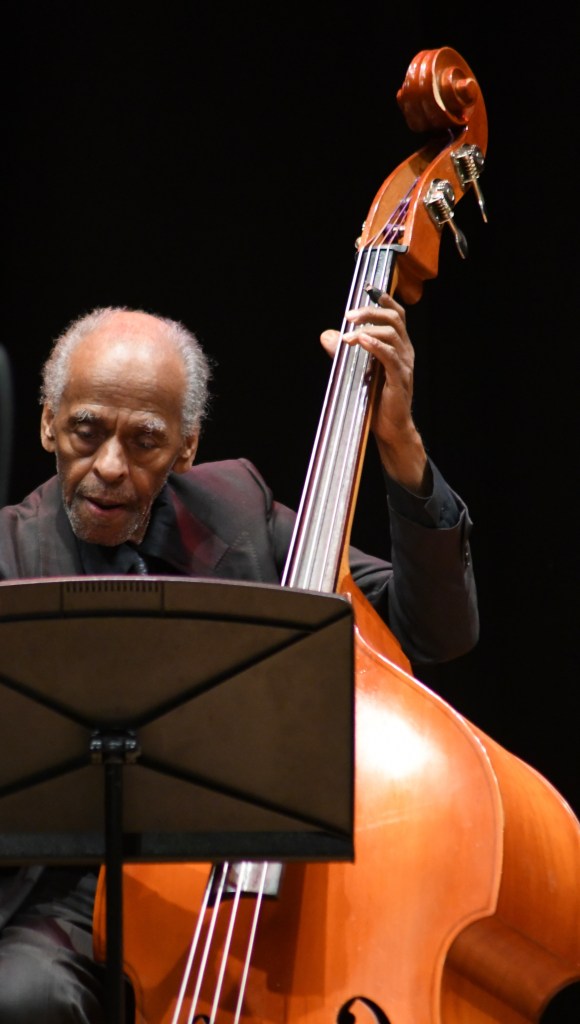
Cecil McBee, above; Billy Hart, below
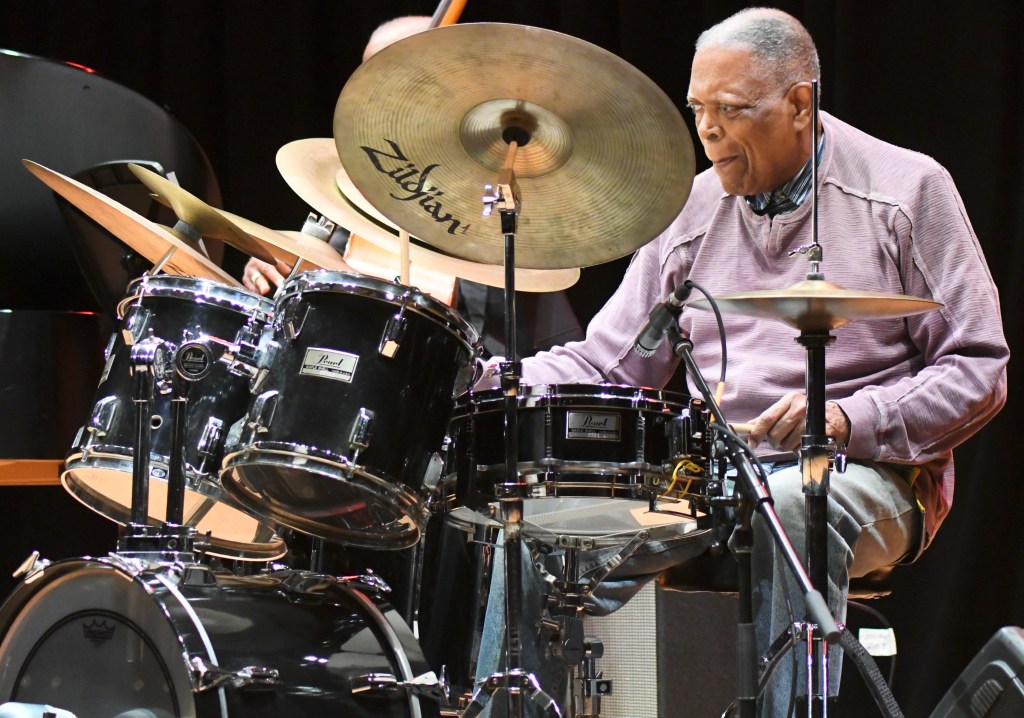
Weisse announced their closer and only non-original number, Freddy Hubbard’s happy riff-rocker “The Core,” would feature “our magnificent drummer.” Hart rose to the challenge in a long break, an encyclopedia of drum dynamics. This followed upbeat solos from Pelt and Lawrence over the seething rhythm section, smoldering under staccato horns that faded to let Hart shine. He cooked, all by himself, until Cables and McBee joined discretely as Hart settled into a groove they comfortably joined. The horns came back in and built a riff that repeated and repeated, like a farewell by guests who didn’t really want to leave.
For every “oops” moment – a ragged coda in “Cables’s “Blackfoot” and a later hasty rush back onstage by the horns who’d drifted into the wings when an early solo ending caught them off guard – came 10, or 100, “wow!”s.
At Carnegie Hall years and years ago, I saw maestro Leopold Stokowski rely on help to cross the stage to the podium. Once up there, he seemed struck by lightning; energetic, animated and dynamic. He conducted – the American Symphony Orchestra in Beethoven’s Seventh – from memory with just his hands, no baton; and even offered an encore.
So it was with the elders of the Cookers Friday: struck, very together, by jazz lightning.
A Place for Jazz continues with the Ernie Watts Quartet on Friday, October. 30, 2026. (The saxophonist turns 81 a week before the show.) A Place for Jazz presents its concerts in the Carl B. Taylor Auditorium of the SUNY Schenectady County Community College music school.
The Songs
The Mystery of Monifa Brown (Cables)
Blackfoot (Cables)
Peacemaker (McBee)
Three Fall (Weisse)
Close to You Alone (McBee)
The Core (Freddy Hubbard)
Photo Gallery
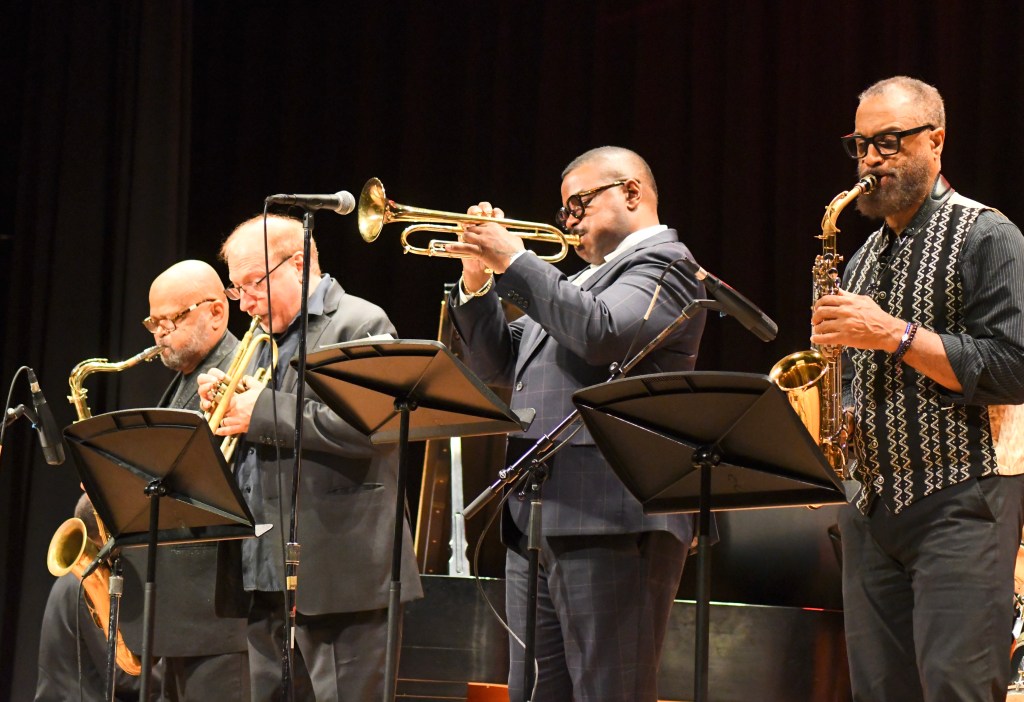
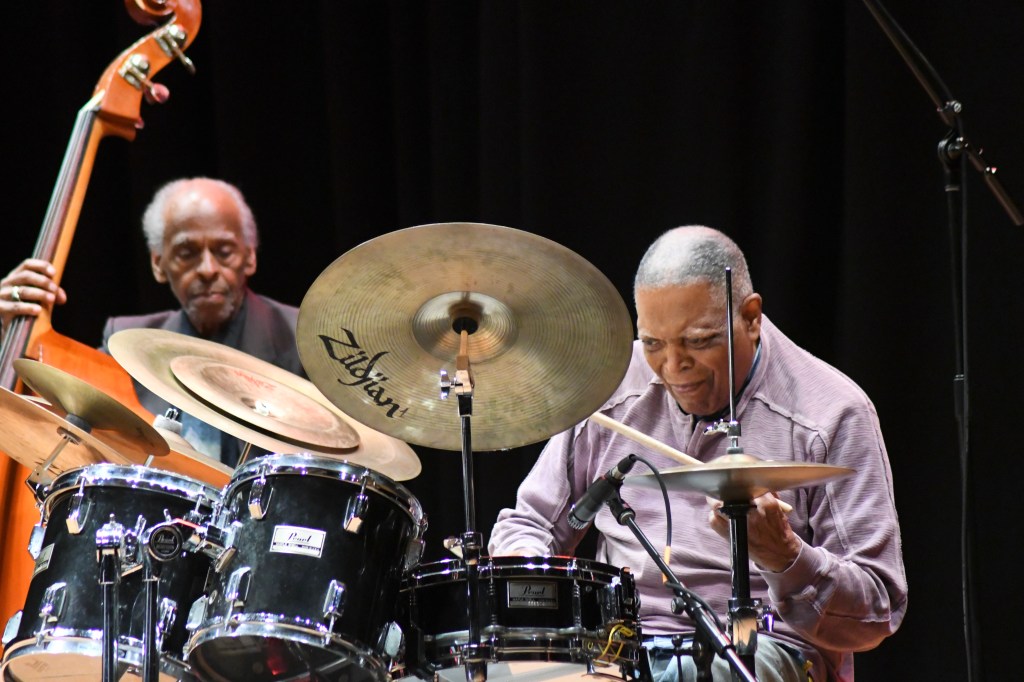
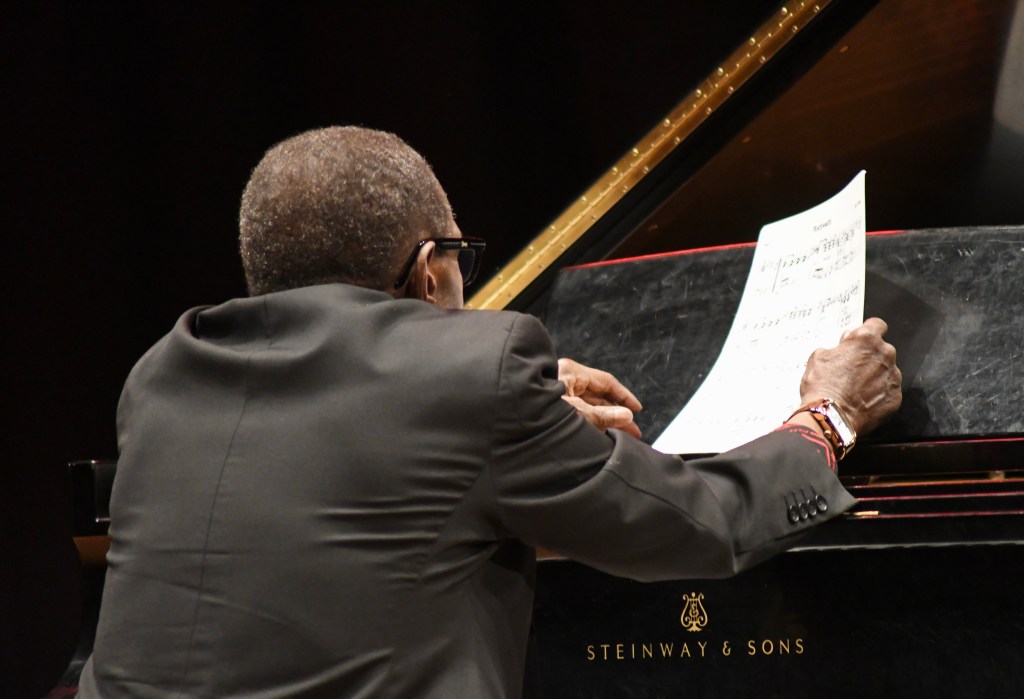
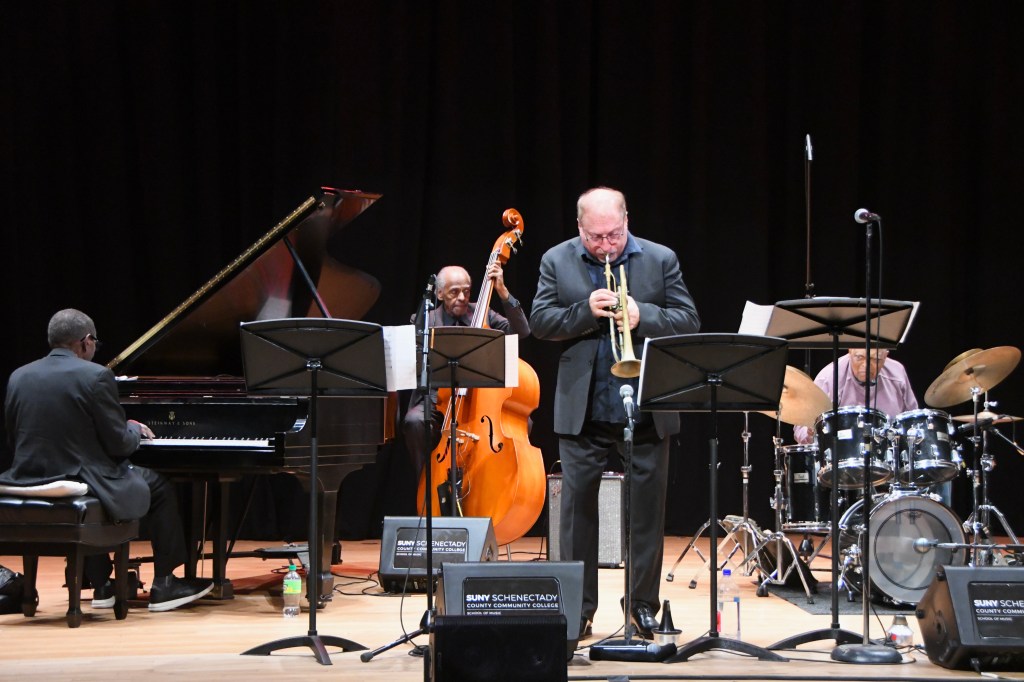
The players sometimes drifted offstage after section play, or their own solos, had ended. Above, trumpeter David Weisse solos with the rhythm section of George Cables, Cecile McBee and Billy Hart. Below, Weisse and Pelt await their turn.