

Review: The Evidence at Jazz on Jay, Thursday. August. 14, 2025
Sure, jazz musicians Eliane Elias, Woody Herman and Astrud Gilberto recorded the Doors’ “Light My Fire;” so did singers Al Green, Jose Feliciano and Trini Lopez, plus countless others.
With all these cover versions out there, the straightforward version that jazz-blues trio The Evidence performed as set-closer Thursday at Jazz on Jay steamrolled past any sense of transgression because they had already blues’ed up or jazz-ified vintage pop ballads, jump-blues, soul numbers and Tin Pan Alley selections from the Great American Songbook.
In a pre-concert written interview for the program bio handed out Thursday, The Evidence keyboardist, singer and trumpeter Rob Aronstein noted, “I’m really a blues player, so (those styles) tend to show that influence pretty heavily.” Arguably guitarist Mike Derrico and drummer Andy Hearn played in more conventionally jazz styles that would have placated any purists in the musical border patrol because the thing swung, the familiar tunes worked and it was all good fun – entertaining rather than ground-breaking.
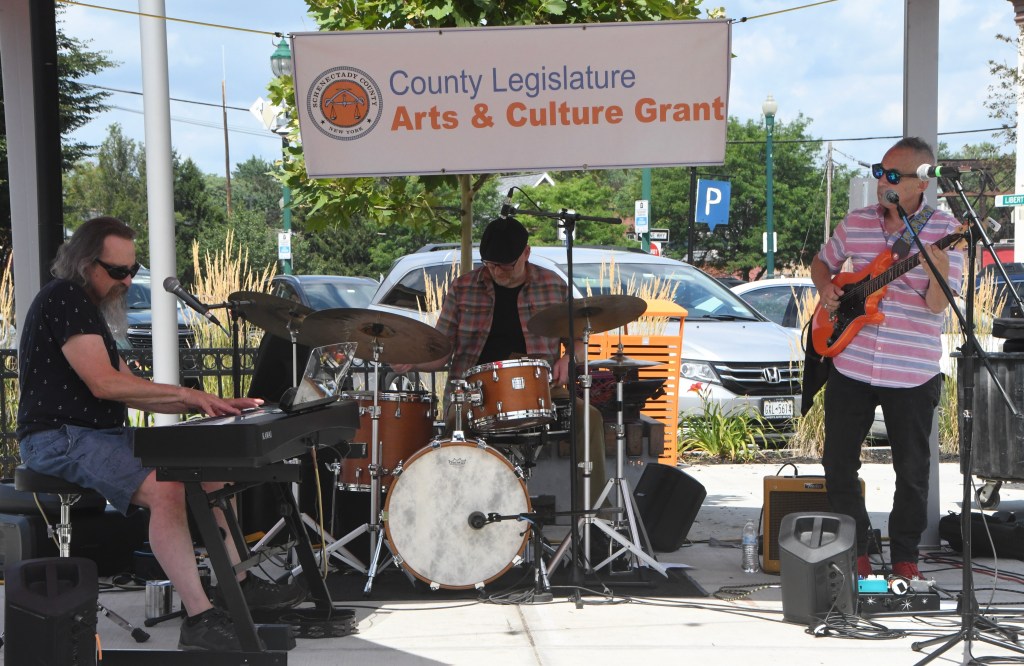
The Evidence, from left: Rob Aronstein, keyboard, vocals and trumpet; Andy Hearn, drums; Mike Derrico, guitar
The spunky instrumental blues groove “Honky Tonk” earned its title, a smoky shuffle that opened the 90-minute set with happy riff energy. The next two, both classics, featured Aronstein’s vocals, accurate and solid: a spry “Straighten Up and Fly Right” and a hot-weather-languid “Summertime.”

Rob Aronstein, above and below

A Derrico instrumental “Catz’s Bossa” was all tropical groove and aggressive guitar, though Aronstein’s piano held its own. Then they did “That’s the Time I Feel Like Making Love to You” as an instrumental, showcasing crisp unified playing with solos springing up amid the flow. Aronstein played firm bass lines with his left hand, adroit melodies and chords with his right, while Derrico finger-picked both chords and single-note runs with pleasing tone, good taste and skillful touch. Hearn fit well between keys and guitar, low-key and economical. The Evidence most often plays as a duo; he did a fine job of making it a trio.

Mike Derrico, above; and Andy Hearn, below

In “Nobody Knows You When You’re Down and Out,” Derrico’s accompaniment for Aronstein’s keyboard and vocal showed off more snazzy electronic effects than his plainspoken solo, clear sign of a honed and confident trio approach. But he brought the fire to his original “Catz’s Blues;” then Aronstein similarly cut loose at the keyboard in the jump-blues antique “Choo-Choo Ch-Boogie.”
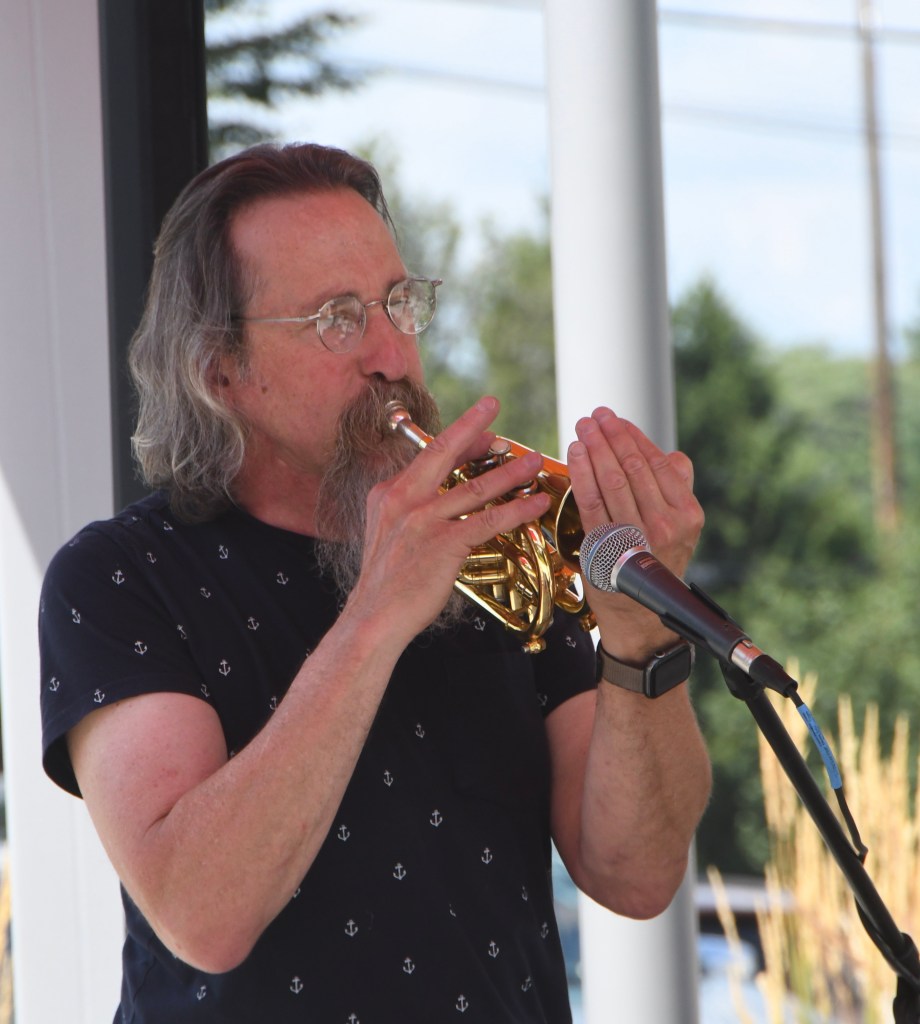
Rob Aronstein plays pocket trumpet
Noting the next number was new for them, Aronstein swung the band into a funk shuffle the setlist ID’ed as “April.” Hearn sat out the next number; a trumpet and guitar duet on “The Nearness of You.” Muting the bell with his hand, then playing open, Aronstein sounded both sincere and a bit shaky here, answering a fan’s query about his instrument by explaining the compact pocket trumpet is “a standard trumpet but wound tighter – like me!”
As with the earlier “Feel Like Making Love,” they transformed “You Better Shop Around” into a stop-and-go instrumental shuffle before three vocal antiques: “Sunny” with terrific Derrico guitar; “Fly Me to the Moon,” refreshed with bustling tempo shifts and “This Masquerade” with Aronstein’s only foray into skat-singing all day.
Then, “Light My Fire;” although Aronstein nixed the familiar Ray Manzarek organ solo, Derrico did recreate, briefly, Robbie Krieger’s similarly patented staccato guitar runs.
Next Thursday, Jazz on Jay continues with the Arch Stanton Quartet, although nobody in the band is named Arch Stanton…

The Evidence at Jazz on Jay































 Hoke's Jukebox