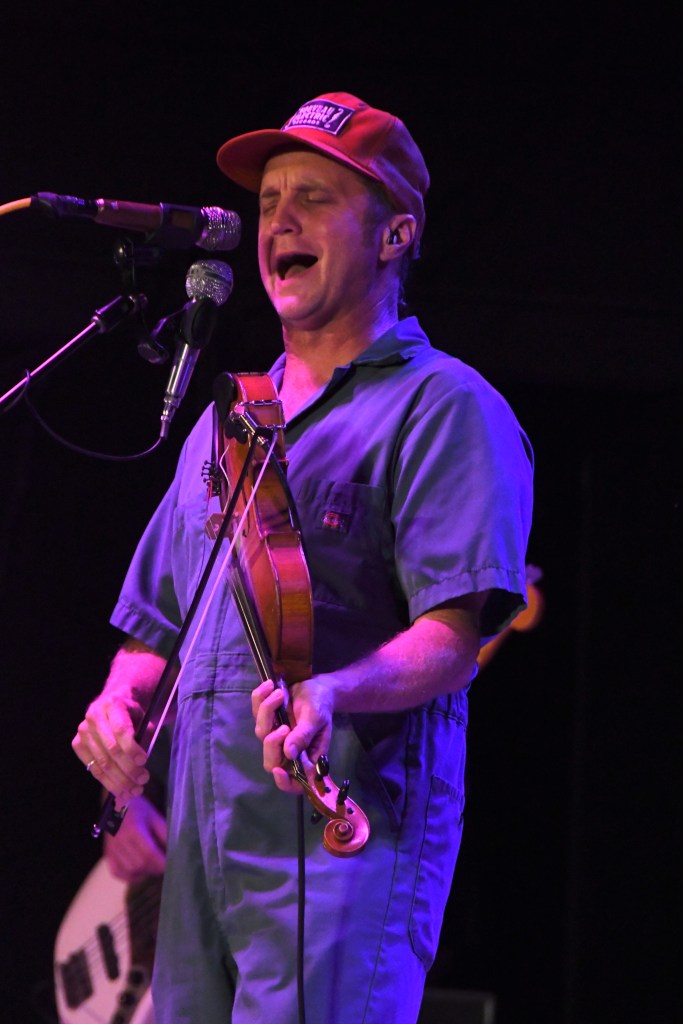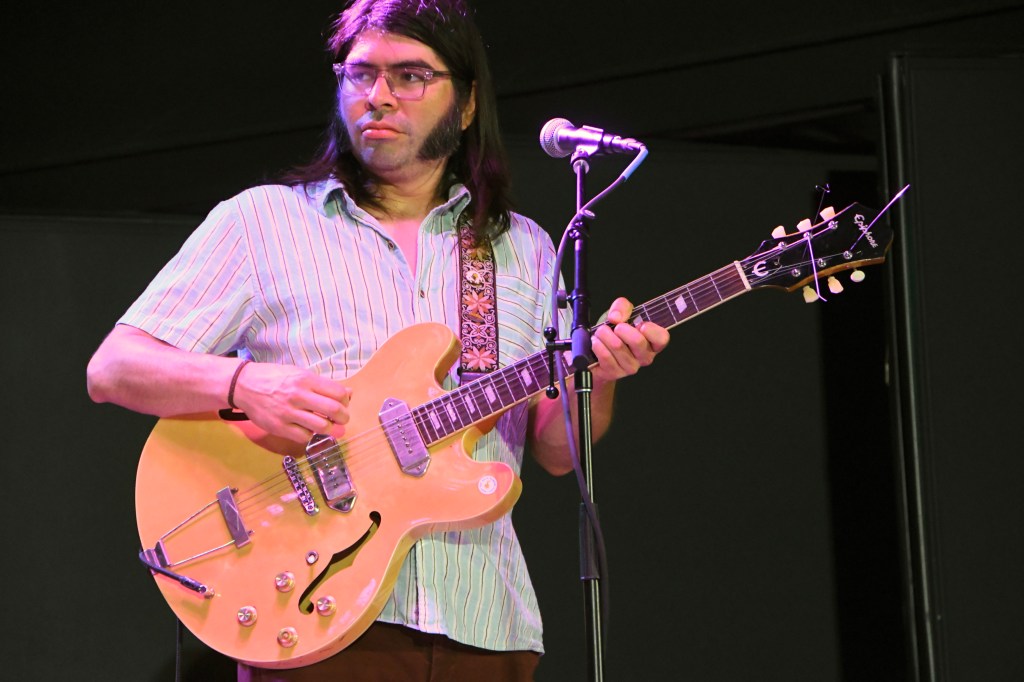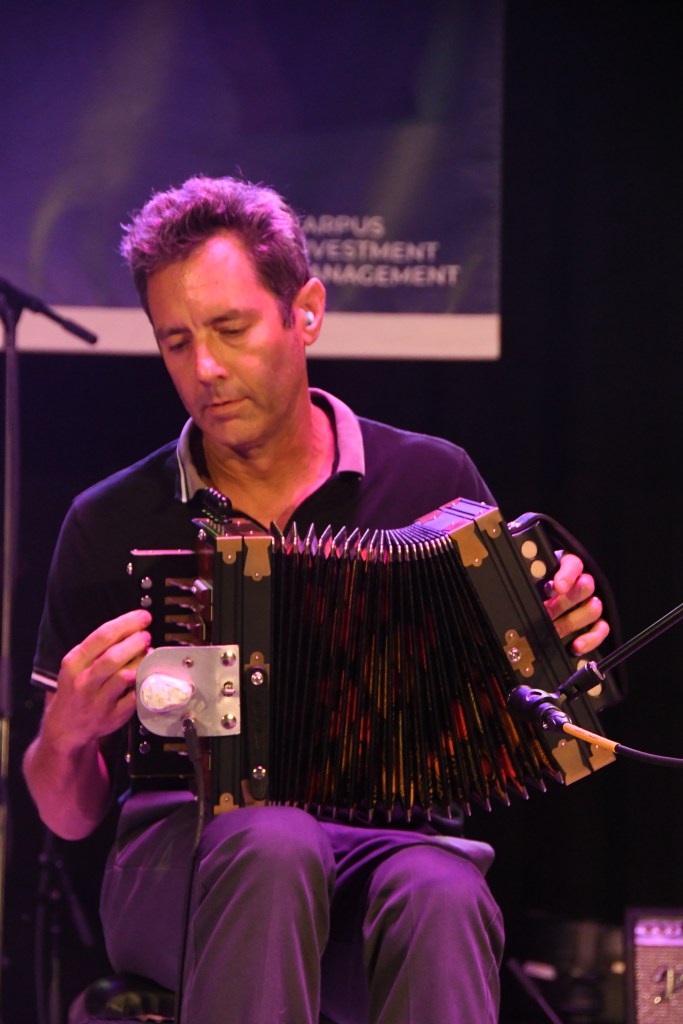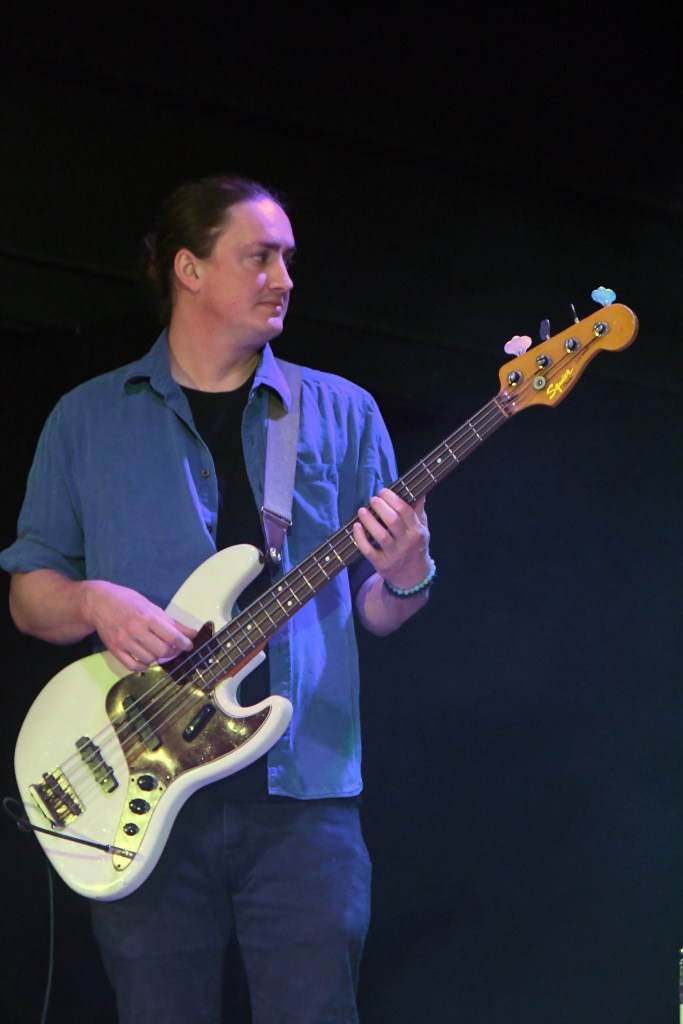
Preview: Tom Chapin, and the Chapin Sisters, Saturday, March 21 at the Eighth Step in Proctors GE Theatre
As another misguided overseas war of choice drags on and magnifies troubles here, Tom Chapin and daughters Abigail and Lily sing much-needed “Songs of Hope” Saturday at the Eighth Step at Proctors GE Theatre.
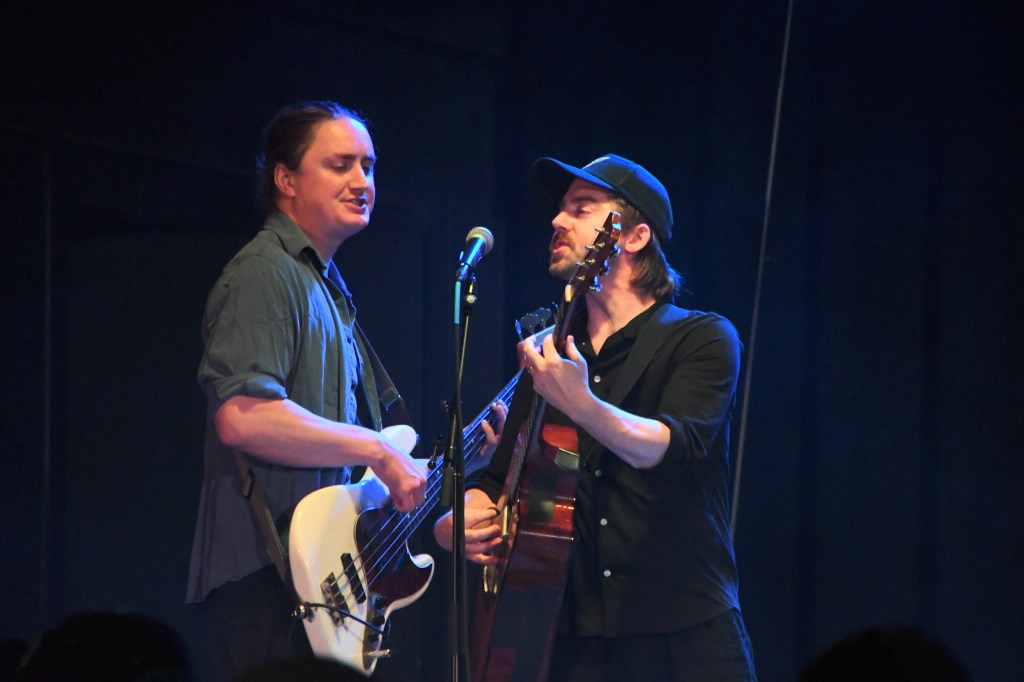
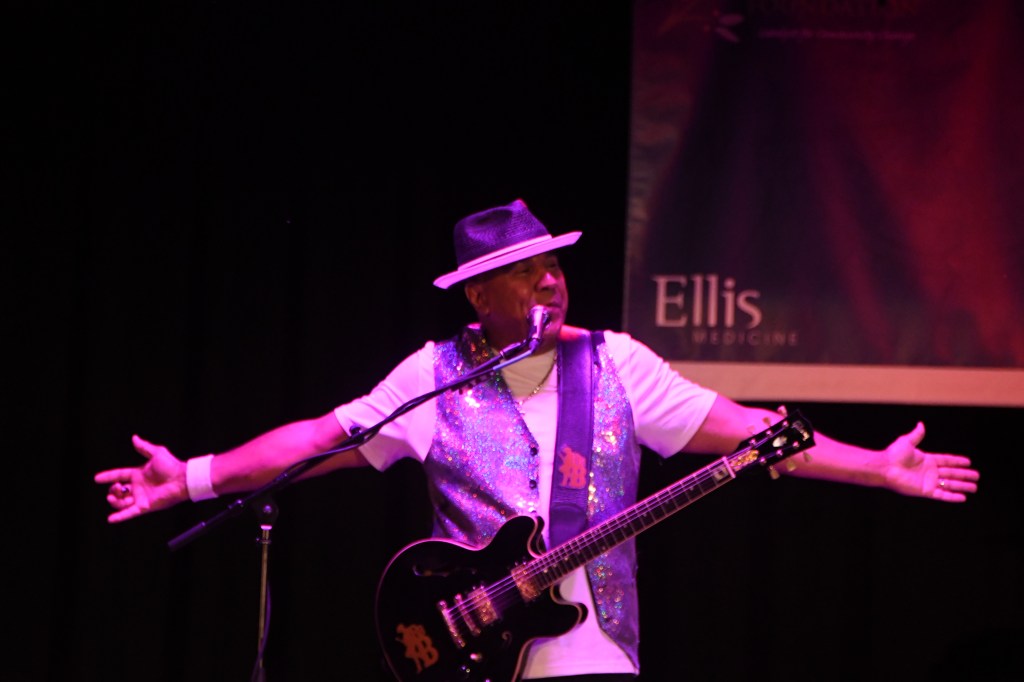
Tom Chapin. Photo supplied
The show introduces a new album of that optimistic title, but it collects past tunes from Chapin’s 27-album career. Some protest persistent societal problems, hopeful lyrics standing strong in opposition or promoting solutions, while his love songs share a thoughtful, quiet romantic flavor. The music is also fun, too tuneful to feel pedantic. Much of it is aimed at youthful ears: Chapin’s three Grammy awards honor his spoken word albums for children.
Saturday, Chapin will sing his hopeful songs with support from the third Chapin musical generation. Tom Chapin is one of three singing brothers, all sons of jazz drummer Jim Chapin who often played with his troubadour sons Tom, Steve and the late folk-pop star Harry.
Tom has had no trouble working around the long shadow of his big-star brother; prolific, poetic and powerful in his own right, whether urging advocacy or nuzzling close in tender romantic musings. The New York Times has hailed his “Warm spirit, infectious humor, and sensitive satiric songs … one of the great personalities in contemporary folk music.”
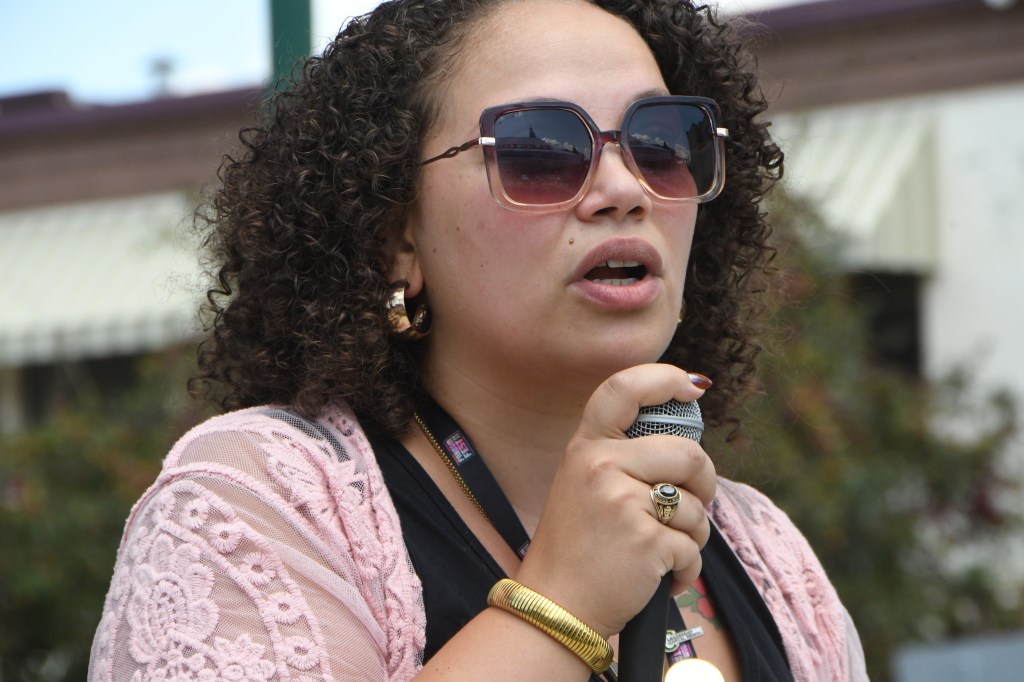
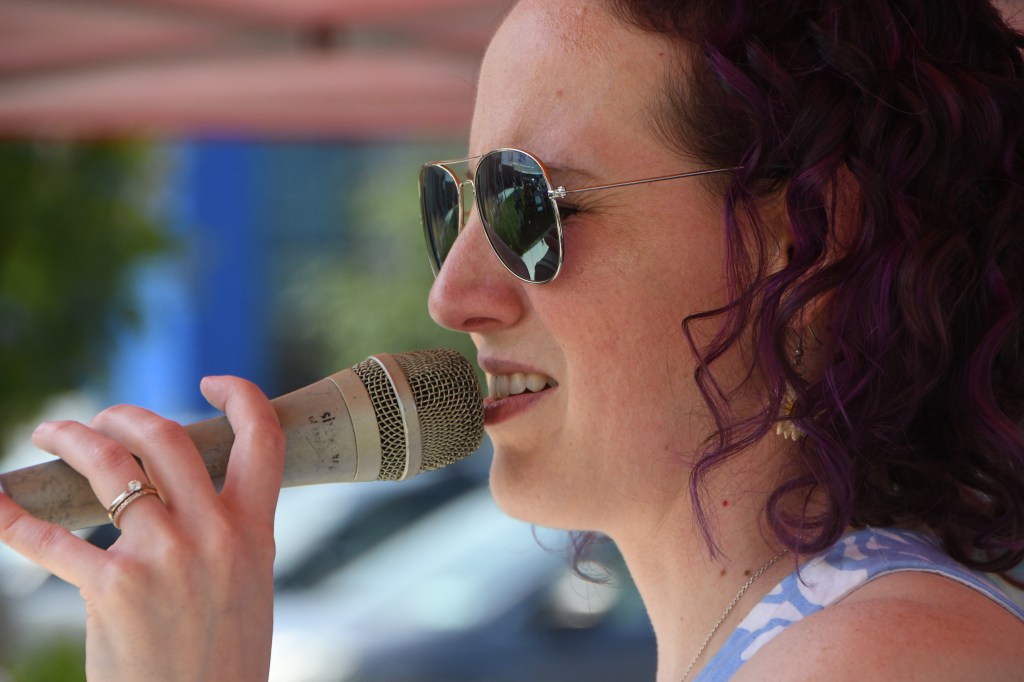
The Chapin Sisters. Photo supplied
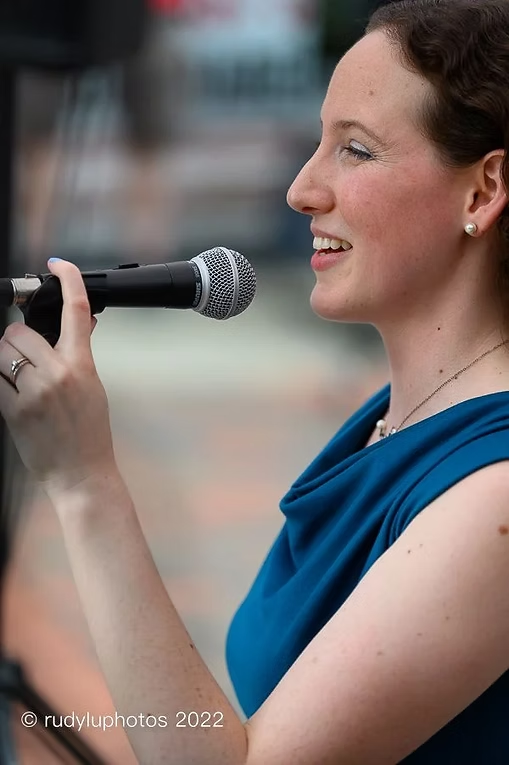
His music-making daughters have also combined voices in a distinctive flavor of contemporary acoustic folk-pop. Their nine albums reach back farther than their father or uncles to echo Appalachian bedrock styles at times, while paying tribute to the family sound, to Pete Seeger, and the Everly Brothers. Just as Tom has continued his late brother’s advocacy work supporting remedies for hunger and Seeger’s Clearwater environmental projects, the Chapin Sisters have performed often with their father and uncle Steve in an elastic family band, and recorded albums of their elders’ tunes.
Saturday, the three Chapins, father and two daughters, will sing of hope at the Eighth Step at Proctors GE Theatre (432 State St., Schenectady). 7:30 p.m. $34.51 general, $63.26 (gold circle, front and center) 518-346-6204 www.8thstep.org
Preview: Joy Clark, then Buggy Jive on Friday; Andrea von Kampen Saturday
Singer-songwriters tag-team Friday at Caffe Lena in a rare two-artist, two-set format; Albany’s Buggy Jive opens, Louisiana’s Joy Clark closes.
They’re well-matched in expression as exploration, self-examination as bold reaches for the universal.
Home-schooled, the youngest of five in a devout family, Clark first sang and played guitar at church in tiny Harvey, Louisiana. Turning her music-making muse inward on leaving for college in New Orleans, she built her place in the world as a gay Black woman, a place onstage as background singer with Cyril Neville of the famous brothers and Allison Russell’s Rainbow Coalition that shared stages with Brandi Carlisle and the Indigo Girls. Carlisle describes Clark as “a brilliant artist, writer, and singer.”
Takes one to hail one – and Russell plays here on March 28 in Caffe Lena’s Peak Jazz Series.
Joy Clark. Photo provided
On her debut album “Tell it to the Wind,” Clark worked with Grammy-nominated producer Margaret Becker, exploring and expressing a search for herself. She found, “There’s room for all of us and the world is only made more beautiful when we all shine as our unique selves.” The album, she explains, “is my story of how I learned to shine, and I hope that it might encourage others to stand out as their whole, true selves too.”
Her sound is cozily folkie and compact, her clear voice conveying sincerity and ease in her search and discovery. And the album also boasts former Prince and the Revolution keyboardist Lisa Coleman in a guest keyboard spot.
Buggy Jive. Photo provided
On Buggy Jive’s Eddies-nominated Music Video of the Year “What Do Y’all Know About Shakespeare?” four of him play and sing together through video magic, all costumed as if Shakespeare wore Chucks and an explosive ‘do.
The punchline of the video slyly suggests the song would work better solo – and that’s how Buggy Jive will play Friday. It’s also how he played opening slots for Macy Gray and Ben Folds, an Official Showcase slot at the recent Folk Alliance meet-up in New Orleans and an NPR Tiny Desk concert, winning Top Pick honors. For a guy who describes himself as reclusive, he gets around.
His “Shakespeare” video is just one of his four Eddies nominations, a record. “Shakespeare” is from “Icarus Rising,” an Album of the Year nominee. He’s released five albums, three EPs and three singles; several recorded live, underlining his onstage power as a funky mix of soul, rock and story-telling. He cites Led Zeppelin, Prince and Joni Mitchell as inspirations, and honors them all by himself.
Joy Clark and Buggy Jive perform Friday in Caffe Lena’s Momentum Series, sponsored by Joseph and Luann Conlon in honor of Thom O’Neil. 8 p.m., doors 7:30. $27.11 member, $30.37 general $15.18 children and students. Streaming at Caffe Lena TV. 518-583-0022 http://www.caffelena.org.
Another Caffe regular series, its Bright series for emerging talents, presents singer-songwriter Andrea von Kampen on Saturday with her trio.
Andrea von Kampen. Photo provided
The time is right – troubled and terrifying – for her protest songs to hit with both musical and moral force. These days she sings protest songs of Bob Dylan and Woody Guthrie, plus her own originals on her handful of albums and EPs including “Sister Moon” (2024) and more recent “Before I Buy a Gun.”
The New York Times praised von Kampen as “a fine singer with guitar work reminiscent of the cult hero Nick Drake.”
The Nebraska-born von Kampen expresses often-tough truths in a lovely clear voice that also lets hope shine through. Like both Joy Clark and Buggy Jive Friday, von Kampen has impressive tour-opener credits: Punch Brothers, Wood Brothers, Tallest Man on Earth and Trampled by Turtles. Like Buggy Jive, she also played an NPR Tiny Desk concert. 8 p.m., doors 7:30. $21.69 members, $23.86 general, $11.93 children and students
Review: Baklava Express Friday, March 13, 2026 at Proctors GE Theatre, Passport Series
The refreshing foreign-ness of the lively international music Baklava Express made at Proctors GE Theatre Friday was only part of the picture – or the map.
The quartet spun together musical traditions from Europe to Western Asia in a tight, kinetic Middle Eastern weave: Jewish (both Ashkenazi [European] and Mizrahi [Middle Eastern/north African) – and Muslim (both Arab and Turkish). That all sounds academic, analytical – but it felt like a rush of skill and swagger, energy and intelligence.
It was country music, but from several countries; tight as chamber music, free-flying as jazz – and it felt, most inspiringly, like friendship in sound.
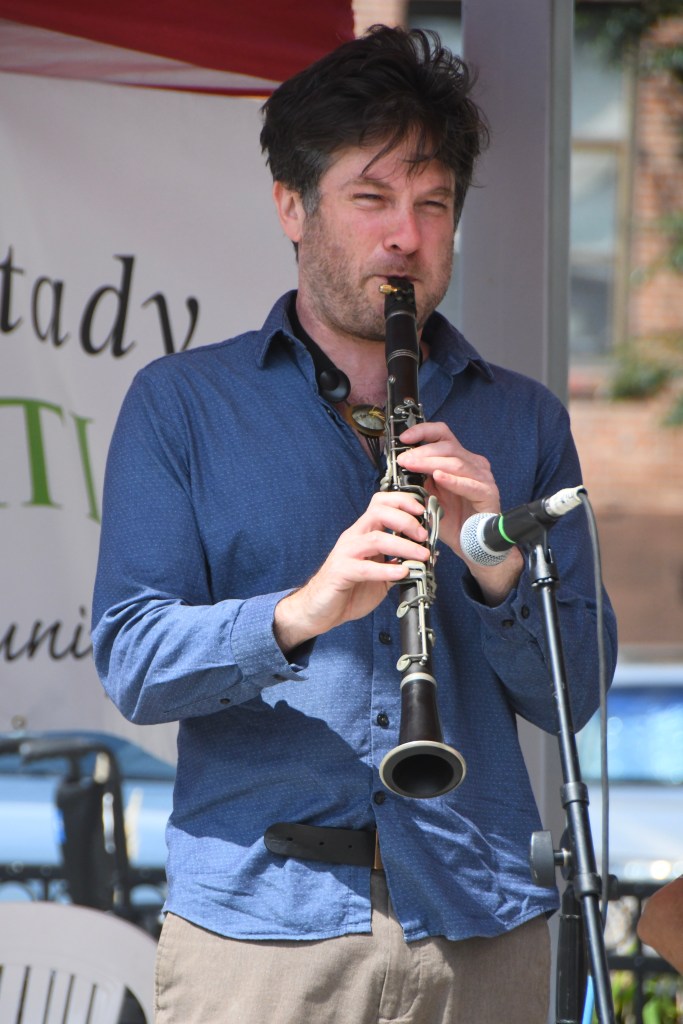
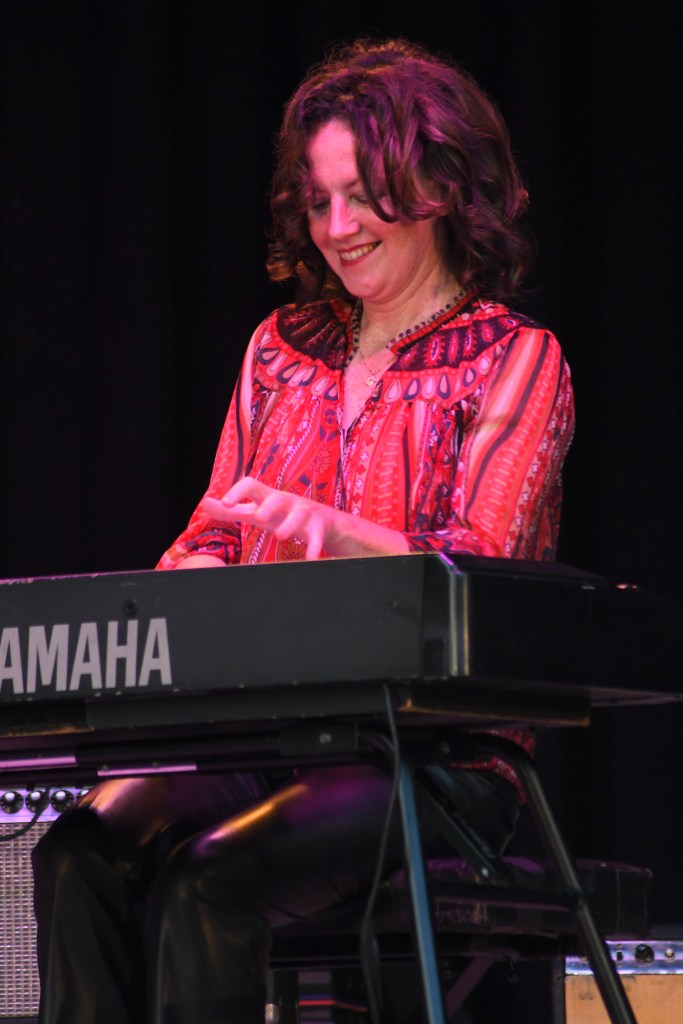
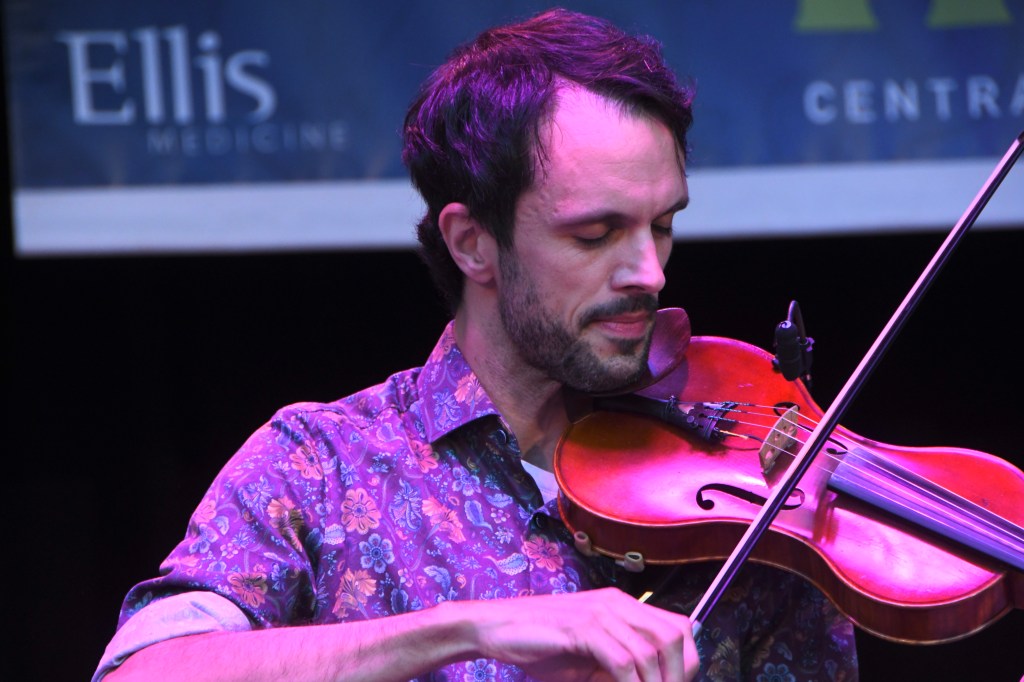
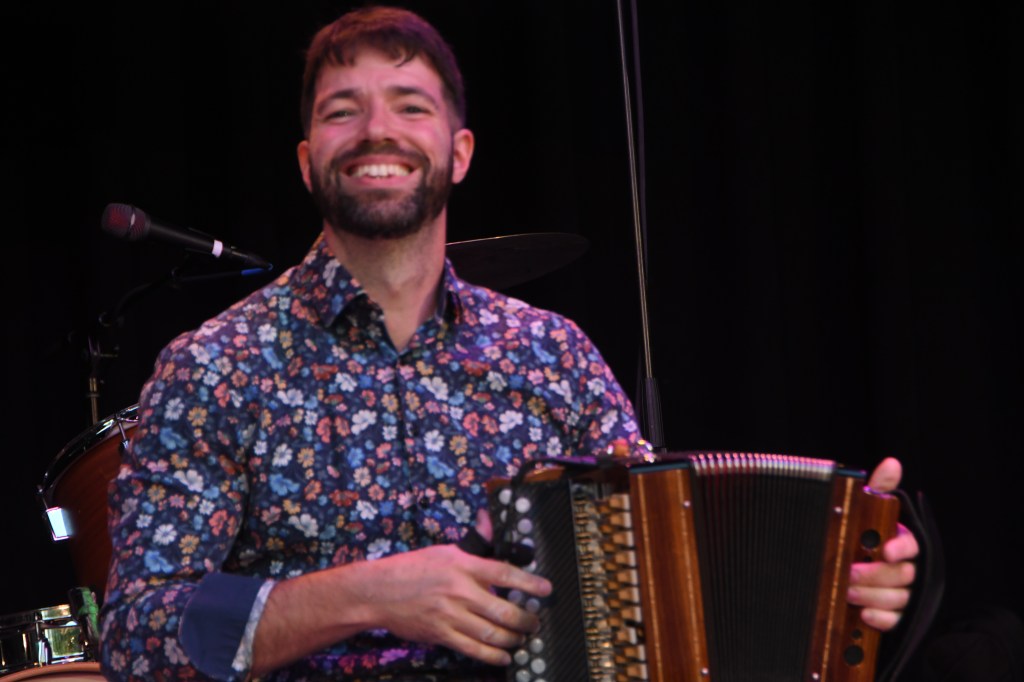
Leader/composer oud player Josh Kaye and violinist Daisy Castro made the melodies, stage right; opposite percussionist Jeremy Smith and bassist James Robbins. Most often, Kaye started his tunes with an ostinato in clipped percussive tones, like guitarist Jimmy Nolen in James Brown’s band. Then Kaye and Castro formed melodies together, violin etching long melodies over staccato oud phrases. Then they swapped, and swapped back again, one reeling out rhythms, the other telling tune-full tales. Smith held a djembe on his knee, clamping its body with his elbow to change the tone, like story-telling African drummers or as the subdudes Steve Amedee does with his fingers pressing the skin of a tambourine. Smith tapped the djembe head with one hand, aiming sticks or mallets at snare, toms and cymbals with the other. Just as Kaye and Castro often sounded like one musical mind with four hands, jazz-trained bassist Robbins linked tight with Smith’s busy gliding clatter.
Baklava Express, from left: Daisy Castro, Josh Kaye, Jeremy Smith and James Robbins
They played tight and loose at once, like bebop, like bluegrass. Dense and driving, it felt free as they left spaces between the notes; like what Art Neville of the Neville Brothers once told me was their “secret groove; what I don’t play.”
What Baklava Express did play were Kaye’s original compositions on their two albums, “Davka” (2023) and “Sababa,” due next month; advance copies sold fast at the merch table.
Kaye writes sounds from over there to express feelings from right here, as a British-born Jewish expatriate who discovered both gypsy jazz and Arabic music in Brooklyn. And it swung, from the misnomer-named “Kosher Bacon” to their self-named closer 80 minutes later.
Daisy Castro, above; and Josh Kaye, below
“Kosher Bacon” introduced their episodic groove-with-solos performing style, Castro bowing long-line melody over Kaye’s staccato oud chops to fit, then pushing and pulling the beat in his own solo. The faster, dance-y “Davka” felt even more rhythmic, speeding and slowing to a hard stop. The new “White Sauce Hot Sauce” honored a Brooklyn halal food truck – Kaye told us where to find it – a delicious menu of melody and busy beats that alternated clear speedy runs with trance-y drones.
Flowing slower, the mood piece “I’ll Figure It Out” found Castro and Kaye in close parallel, forming waves that built and subsided into a repeating coda. Both “Figure” and “Nistar,” which Kaye explained in his quiet English accent meant hidden or concealed, addressed a period after “Davka” and before “Sababa” as he realized he had to write more songs, whose purpose initially felt hidden from him.
Clarity arrived quickly enough – easy for us to say, in the audience – in the abrupt cadences of “Nistar;” compact, emphatic, in crisp formation by oud and violin. A stop-and-go groove pushed the solos then settled into a calmer section until a hard stop slammed the door.
“Salt and Paprika” also cruised close to home, though it could have come from anywhere between Istanbul and Cairo. It referred to the gray starting to emerge in Kaye’s red beard, with an apt, complex pointillism in short punchy passages, notably a sizzling oud and violin duet.
Kaye called an audible before the cosmologically titled “Turtles All the Way Down,” stretching his intro on repetition first, then exploration that Castro followed. Then she led, then followed again until they arrived at the coda together, then repeated it, Kaye at double-time.
He explained he wrote “Begin Again” as the first of the new songs on “Sababa,” but it appears last on the album and near the end Friday. Sparse and syncopated at first, it grew wings in Castro’s solo, then an especially strong oud break, climbing and climbing.
The new album’s title track featured short-but-cool breaks by Robbins, then Smith, who otherwise played supportively beneath oud and violin. Shorter than most tunes Friday, “Sababa” got to the point quickly.
Jeremy Smith, above; James Robbins, below
Their namesake closer “Baklava Express” did the opposite. It stretched through syncopated episodes, dense then sparser, Castro taking the last solo then cueing the B-section again as the coda. They took their bows then looked out at the crowd on its feet, glanced at each other, took up their instruments again and revved up the melody in a brief, hard-hitting departure-less encore.
Wielding a stick-like pick, Kaye relied on the oud’s deep double-stringed resonance in early-song melodic statements, then spun out in widening patterns, jazz-like, as he sped up his phrasing, like Jerry Garcia speed strums.
Tiny, the scarf around her head stretching to near her ankles all of five feet below, Castro played powerhouse, punchy passages or, as in “I’ll Figure It Out,” lyrical, relaxed musings. At times, she echoed European jazz violinists Jean-Luc Ponty or Michal Urbaniak; just as Kaye (more distantly) evoked Django Reinhardt occasionally.
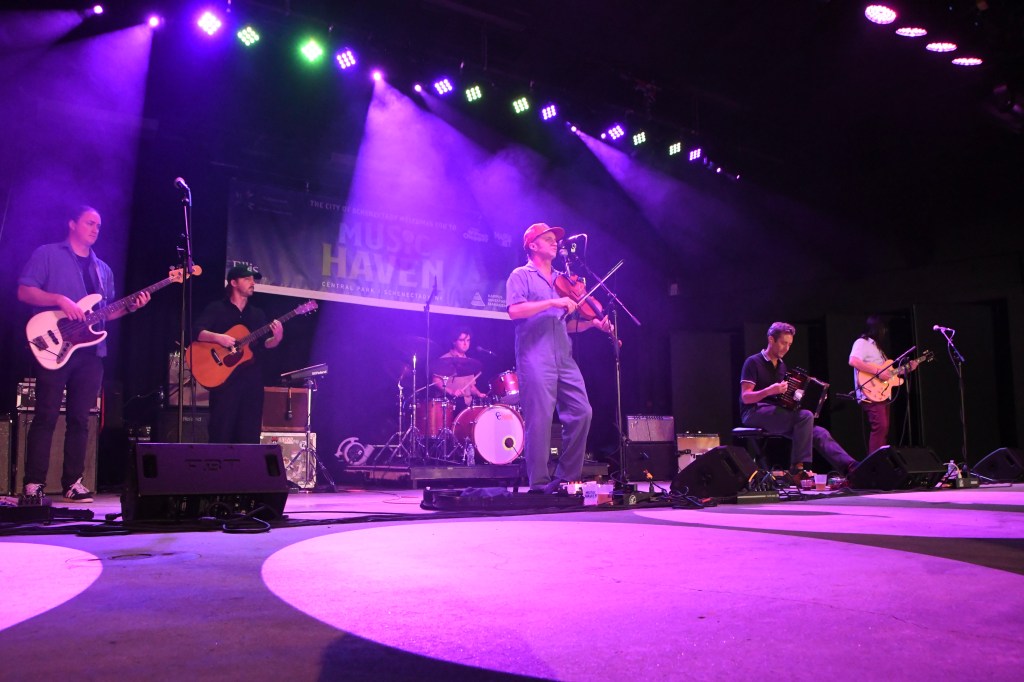
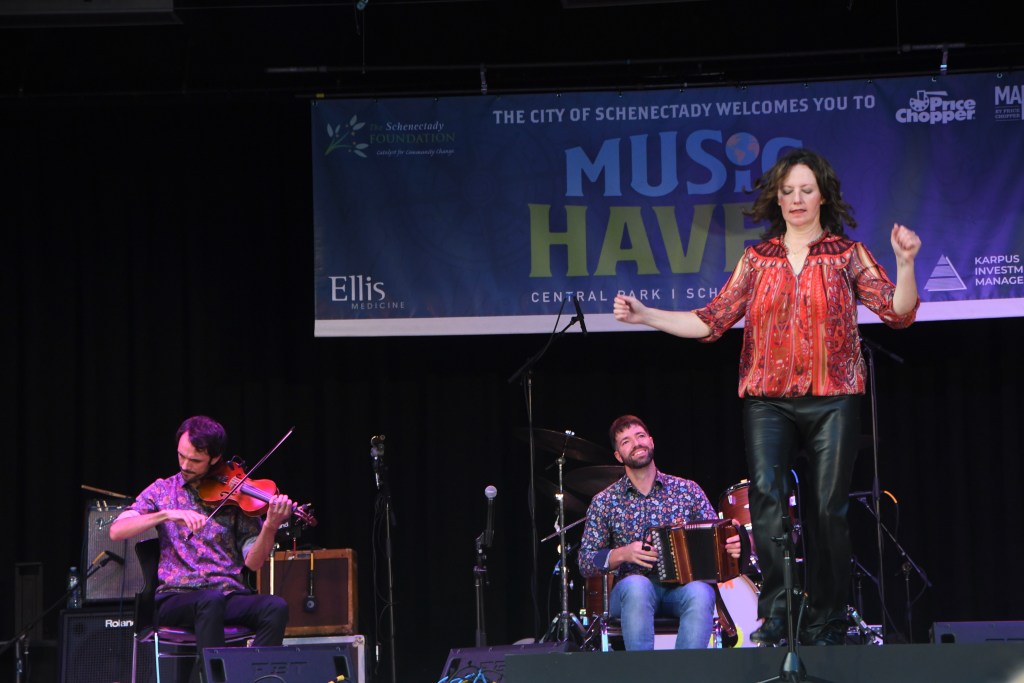
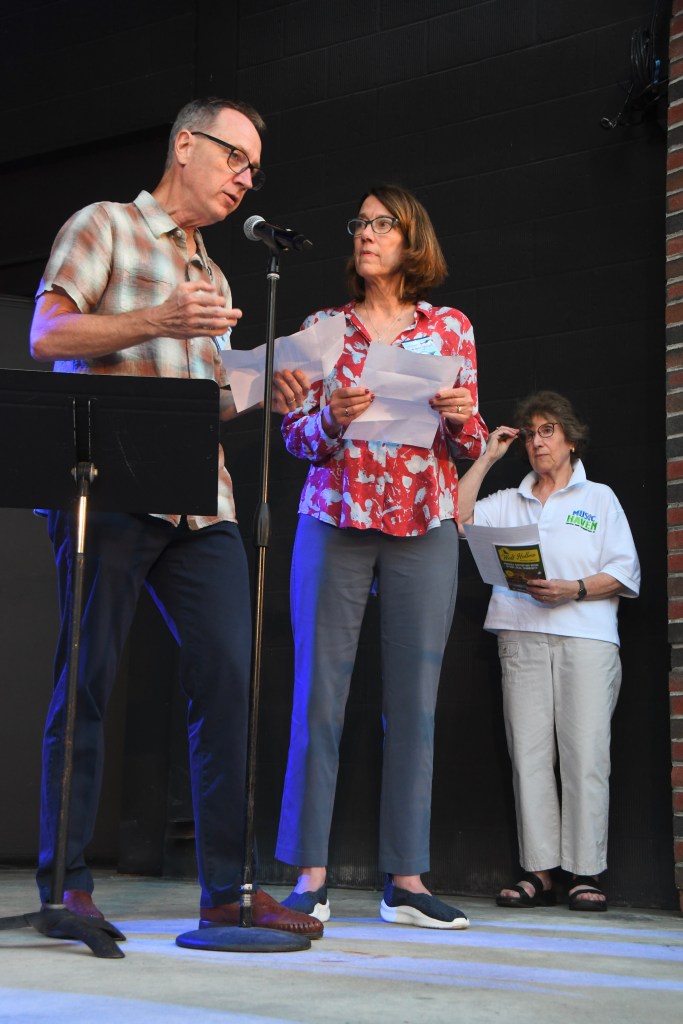
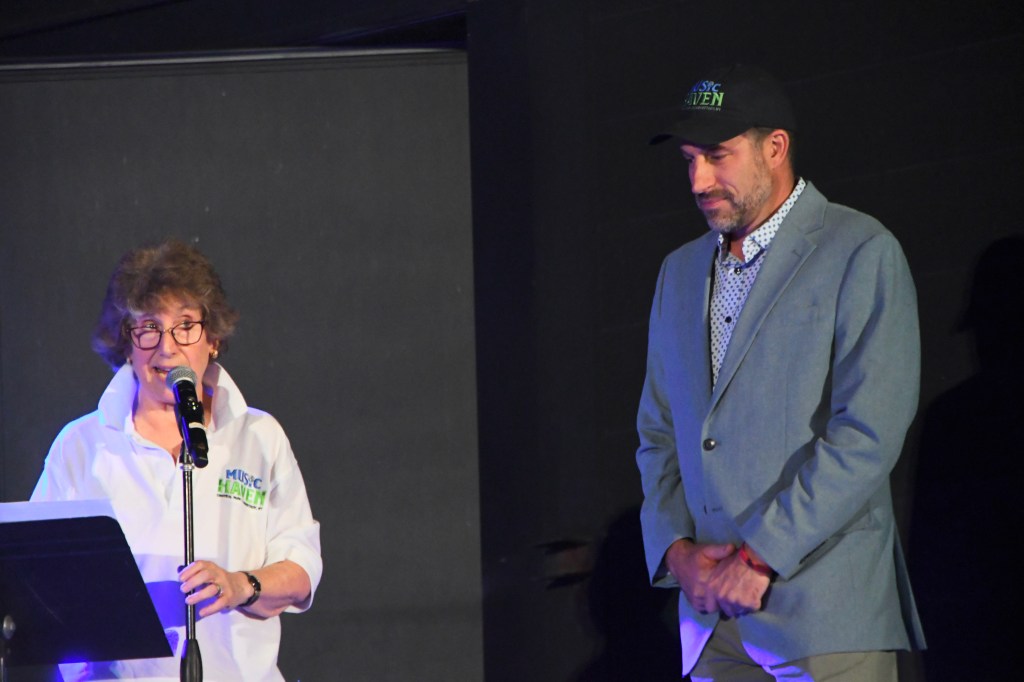
Proctors Passport Series of international artists is a co-presentation with Music Haven which presents similarly globe-spinning fare summers in Schenectady’s Central Park. The Passport Series concludes May 14 with cumbria accordionist Yeison Landero. While the Proctors Passport Series offers full-season passes at a discount, Music Haven Central Park concerts are free.
Music Haven impresario Mona Golub, at left, hails Baklava Express
Spring 1968. Morning inspection at the Defense Language Institute in Monterey, California. Hundreds of my fellow students stood in uniformed rows below: Army, Navy, Air Force, Marines.
A pretty good Russian student, I wasn’t really on board with the uniform stuff. Years later, my annual performance review noted, “Militarily, Hochanadel remains basically a civilian.”
On a second floor barracks balcony above that inspection, I placed speakers connected to a borrowed stereo inside.
I cranked it all the way up and dropped the needle. A rock band boomed and loud words drawled, “For it’s one, two, three; what are we fightin’ for? Don’t ask me, I don’t give a damn. Next stop is Vietnam.”
Below me, angry shouts and rapid footsteps running up the stairs urged all due speed as I ran to the far end of the barracks, sped down the fire escape, slid fast down the slippery ice-plant slope and ran.
I got away clean, my laugh felt like a song.
I didn’t know music could do that, make The Man anger-scream and chase me.
Joe at 75. Photo by Steve Read, from the crew of the BBC documentary on the Summer of Love.
Years later, when Country Joe McDonald was headed east to play the Van Dyck, I told him how he and his band the Fish had protested morning inspection with their “I Feel Like I’m Fixin’ to Die Rag” and he laughed over the phone. A Navy vet, himself; he knew what that meant.
Country Joe McDonald went silent Saturday, March, dying of Parkinson’s at home in Berkeley at 84.
Country Joe and the Fish may have been the most overtly political of all the San Francisco bands that played the Monterey Pop Festival the previous June, and I enjoyed seeing them many times during my year-long language training.
Their sun-splashed mid-afternoon show in a beach-side Santa Cruz pavilion was maybe the most quintessentially California experience of that complicated, mostly wonderful time. But Joe didn’t remember the Berkeley Community Theater show where dancers on roller skates, wearing lights on their bodies in the dark behind a scrim, moved in sci-fi grace as he and the Fish played in front.
Joe came by his activism honestly, a “red diaper baby” raised by socialist parents who named him after Stalin, as the New York Times reported in his obituary, which provides other information noted here.
His rock-star status flowed directly from his activism as his first recordings were audio inserts in his political magazine Rag Baby. While his producer barred “I Feel Like I’m Fixin’ To Die Rag” from the May 1967 Fish debut album “Electric Music for the Mind and Body” (source of my first music column title), he let slide “Super Bird,” lampooning LBJ.
He led the F-word Fish cheer solo before his biggest-ever crowd, at Woodstock; two years, later he led 250,000 protesters in the same cheer-and-song protest at the Capitol in Washington DC. This chant and “Rag” earned him a place on Richard Nixon*s enemies list, got him cancelled off the Ed Sullivan show and fined for obscenity onstage.
War was the obscenity to Joe, and he protested it all his life, supporting Vietnam Veterans Against the War, Swords to Plowshares, Vietnam Veterans of America and other organizations.
After the Fish disbanded in 1970, McDonald recorded a blues album with Jerry Garcia and paid tribute to protest-folksinger Woody Guthrie. And he continued protesting in “Vietnam Experience” (1986) and slammed the Iraq War in “Support the Troops.”
He sang both protests and love poems at the Van Dyck, the last time I saw him, as I reported in the Gazette.
There’s nothing nostalgic about his indignation. He updated “Yankee Doodle” into an anti-nuclear broadside on penny-whistle, followed “The Fish Cheer” and the anti-Vietnam-War tirade “I Feel Like I’m Fixin* To Die” with “Support the Troops,” which focused a similar outrage on the Iraq War. The same compassion for those fighting it and those who love them powered “Picks and Lasers,” a science fiction epic decrying the destructive waste of a war fought on Mars for mining resources. It sounded like a movie plot as folk murder ballad. Before launching into “Support the Troops,” which criticizes the Iraq War as being fought over oil, but “not in my name,” McDonald dedicated the spell-out-“Fish Cheer” – using another F-word – to George Bush.
The show wasn’t all billboards and broadsides, however.
“Janis” was genuinely tender, as was “Come With Me,” written for the first of his five children, named Seven Anne. He followed this with “All My Love In Vain” and “Waited in Vain,” paired lost-love songs of aching poignancy.
I think we all know what Country Joe McDonald would sing about the horrifying news today.
Baklava Express continues Proctors Passport Series Friday in its GE Theatre; multi-cultural explorations of rare imagination and creative energy. Its four members explore in several directions; their wide interests never outrun their skills.
Oud player Josh Kaye’s transatlantic background and Brooklyn upbringing prepped him to lead a quartet with violinist Daisy Castro, bassist James Robbins and percussionist Jeremy Smith. They rummage among Jewish, Arabic, Turkish and jazz traditions to make something new, music whose deep roots and right-now virtuosity recall Jordi Savall*.
Baklava Express. Photo provided
Some definitions via Wikipedia (which I support with donations).
Baklava: a layered pastry dessert made of filo pastry, filled with chopped nuts, and sweetened with either syrup or honey.
Oud: a Middle Eastern short-neck lute-type, pear-shaped fretless stringed instrument, usually with 11 strings grouped in six courses (pairs).
Talking about a new album due next month – and likely to contribute to Friday’s repertoire – Kaye cites Mizrahi and Ashkenazi Jewish communities among prime musical sources.
Again, Wikipedia clarifies.
Mizrahi: Jewish communities originating from the Middle East and North Africa,
Ashkenazi: a major Jewish diaspora population descending from medieval Jewish communities in the Rhineland (Germany) and Northern France, later migrating to Eastern Europe.
London-born Kaye came here at 13, studied philosophy at Hartford College before abandoning his Ph.D. program at New York’s New School to play heavy metal electric guitar before joining French guitarist Stephane Wrembel’s acoustic gypsy jazz band. When Kaye first heard an oud in a Brooklyn barber shop jam session, he invited himself in, bought an oud and began to explore Middle Eastern sounds. The fretless oud allows more complete tonal control than a guitar whose fretted neck steers players into conventional scales.
Daisy Castro started playing Suzuki method violin at six; then a family trip to France at 12 brought her into contact with the same Django Reinhardt and Stephane Grapelli gypsy jazz tradition Kaye explored. Before leading her own jazz band and joining Baklava Express, she played in her family band Infidel Castros. In addition to Baklava Express, she also plays with Wade Schuman’s hybrid multi-traditional crew Hazmat Modine and the Latin rock Gonzalo Bergara Quartet.
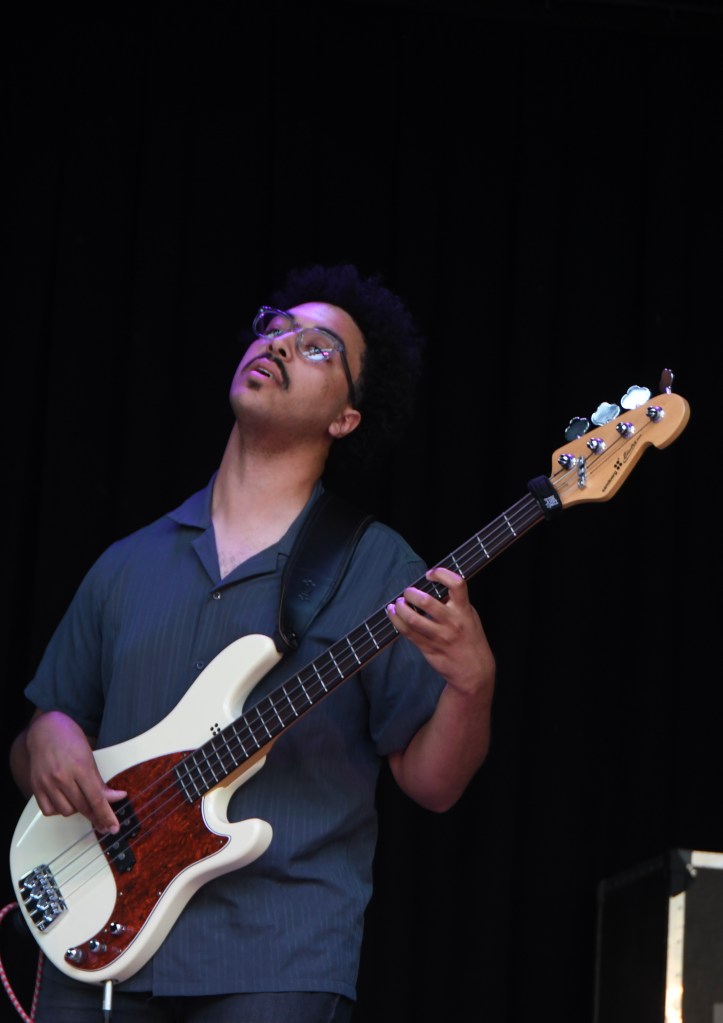
Bassist James Robbins – not to be confused with DC punk stalwart J Robbins (Jawbone and other hardcore crews) – played mainstream jazz with stars including Clark Terry, Billy Taylor, George Benson and Freddie Hubbard before joining Baklava Express. He also plays with the Colombian electro band Delsonido and rockers Thank You Scientist.
Percussionist Jeremy Smith also hybridizes in several directions including the Afro-Peruvian band Festejation, Mr. Ho’s Orchestrotica big band, and the Knights, the classical ensemble that played Troy Savings Bank Music Hall last month.
In other words, they can go in any direction as their 2023 debut album “Davka” demonstrates on nine songs starting from “Kosher Bacon,” a delicious oxymoron.
Baklava Express expands tradition in cozy, tasteful explorations; clear melodic statements spin out, jazz-like, from repeating patterns that prepare the listener for detours and delights.
After Friday’s Baklava Express show, Proctors Passport Series – a project of Music Haven – wraps up with Colombian cumbia accordionist Yeison Landero on Thursday, May 14, also in Proctors GE Theatre.
* Jordi Savall is a Spanish-born musical explorer, genius-level viola da gamba player and longtime leader of ensembles from compact chamber size to symphonic. His “Orient-Occident” and “Istanbul” albums are multi-cultural favorites in a career as prolific as Bill Frisell’s: Savall released nine albums in 2011 alone.
Yeah, OK. Viola da gamba: a bowed and fretted string instrument that is played da gamba (i.e. “on the leg”). It is distinct from the later violin or viola da brachia…one of the earlier viol family of bowed, fretted and stringed instruments with hollow wooden bodies and pegboxes…to adjust the pitch of each of the (five to seven) strings.
Joel Harrison proclaimed his love for two-guitar bands Friday at the Van Dyck Music Club, extolling the Grateful Dead, the Allman Brothers, Joe Pass and Herb Ellis, Ralph Towner and John Abercrombie. Fans chimed in with their own favorite pairings in what felt like a seminar for a minute, though nobody noted this also describes the Beatles. But Harrison demonstrated that respect even more vividly than words in a dynamic show with his own two-guitar band.
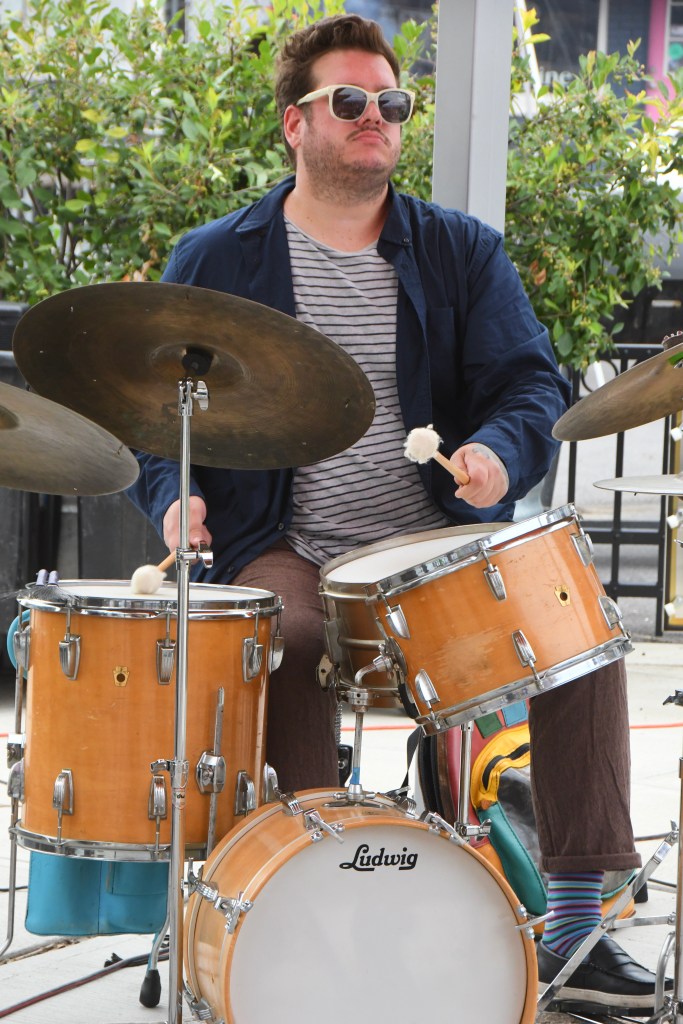
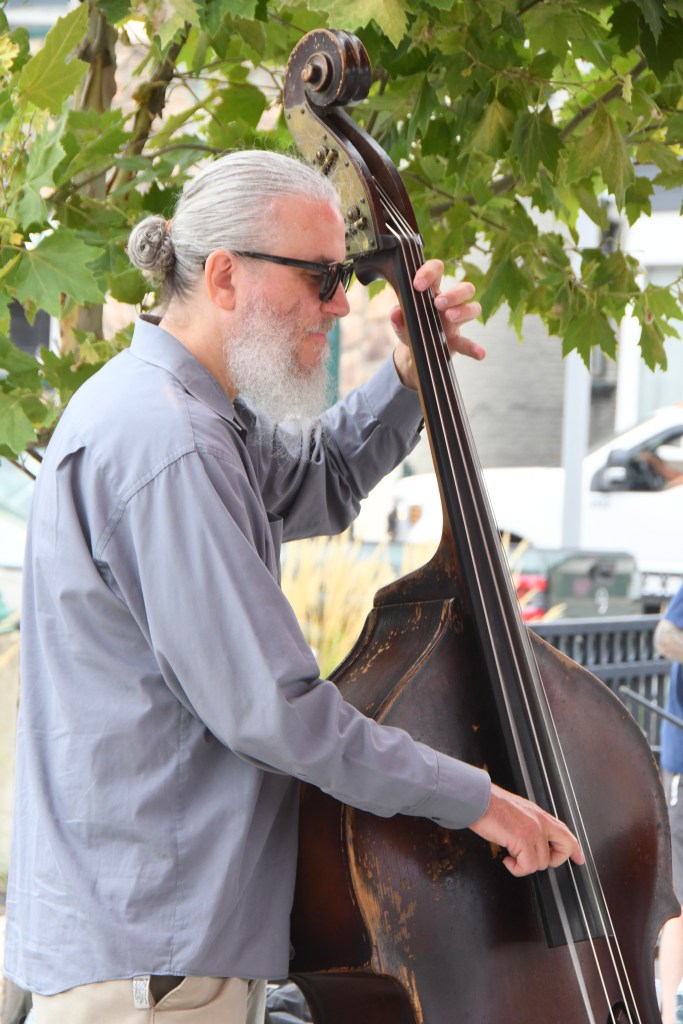
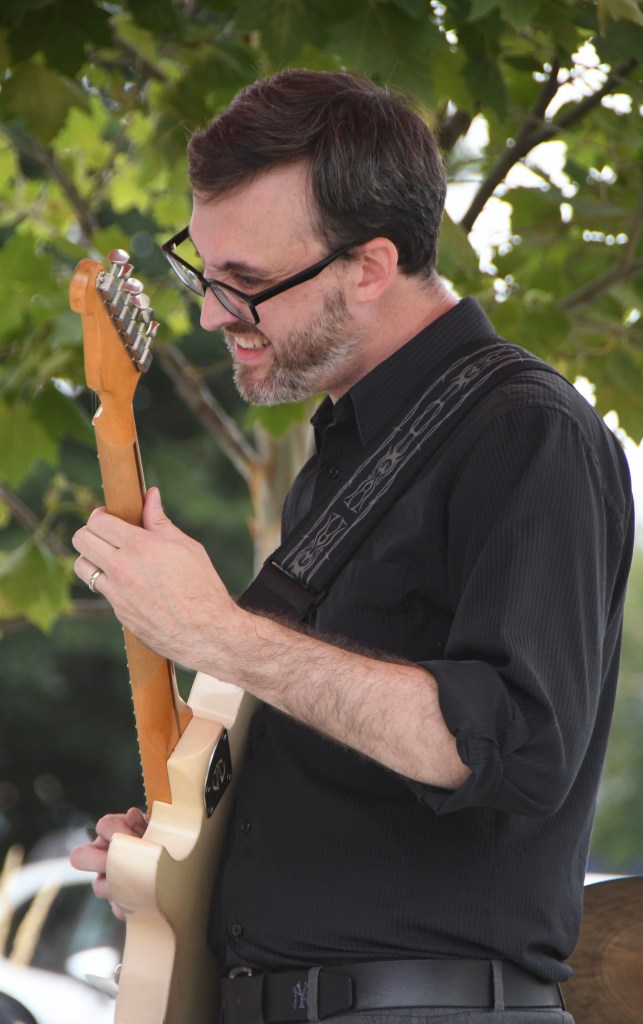
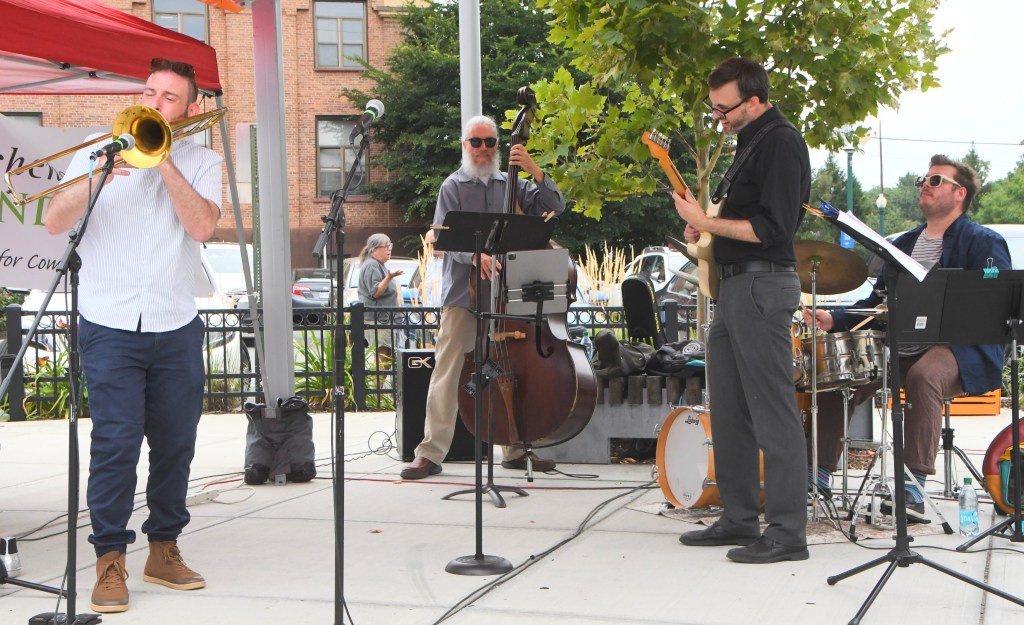
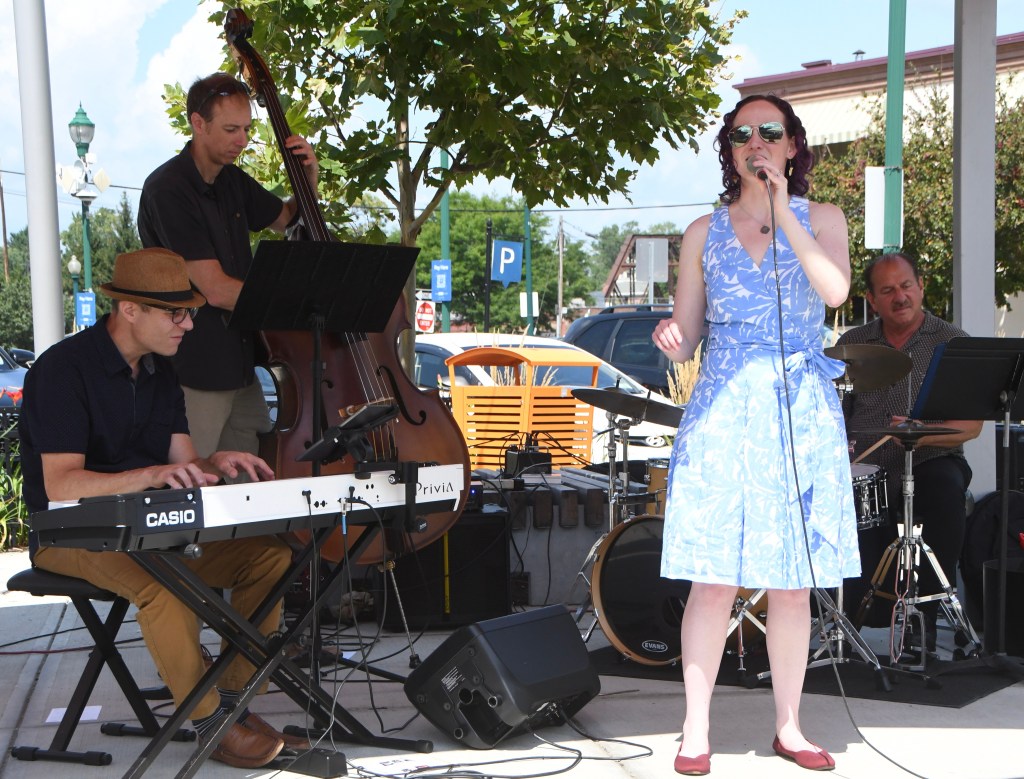
Joel Harrison Quartet. From left: Mark Dzuiba, Rich Syracuse, Jeff Siegel, Joel Harrison
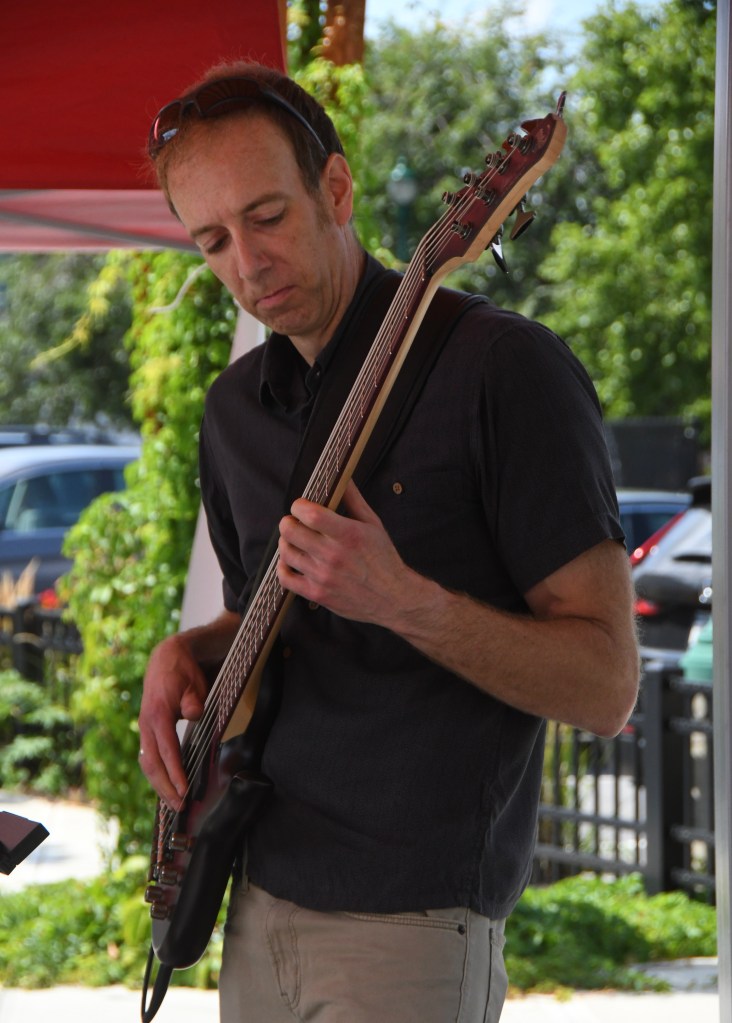
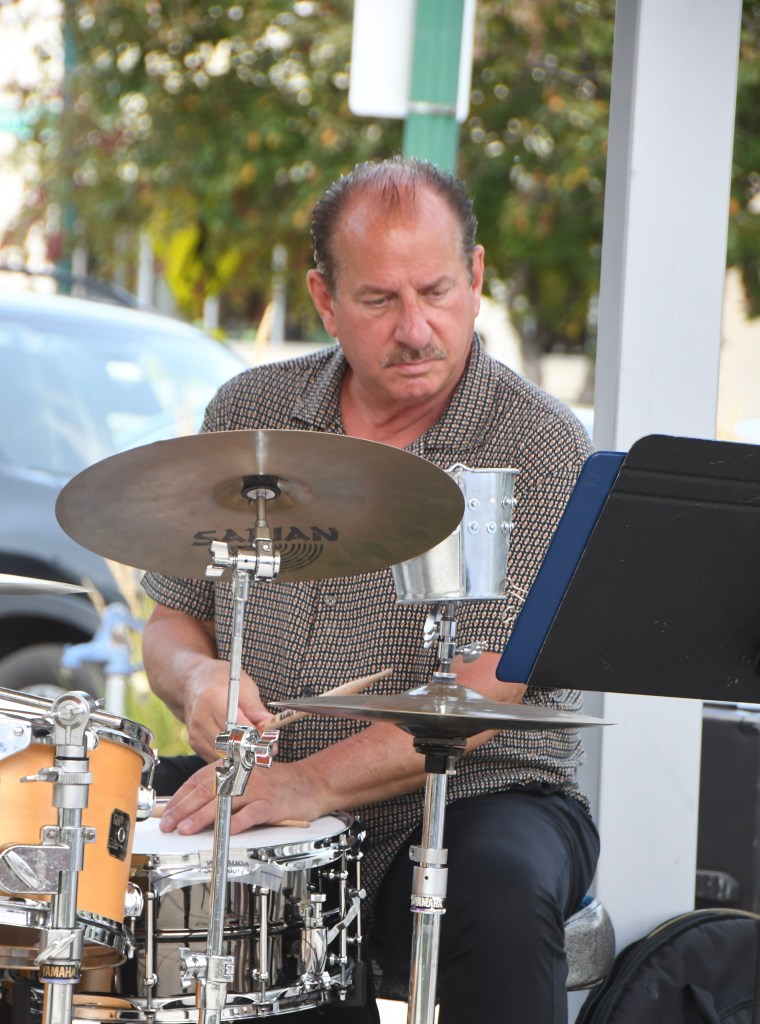
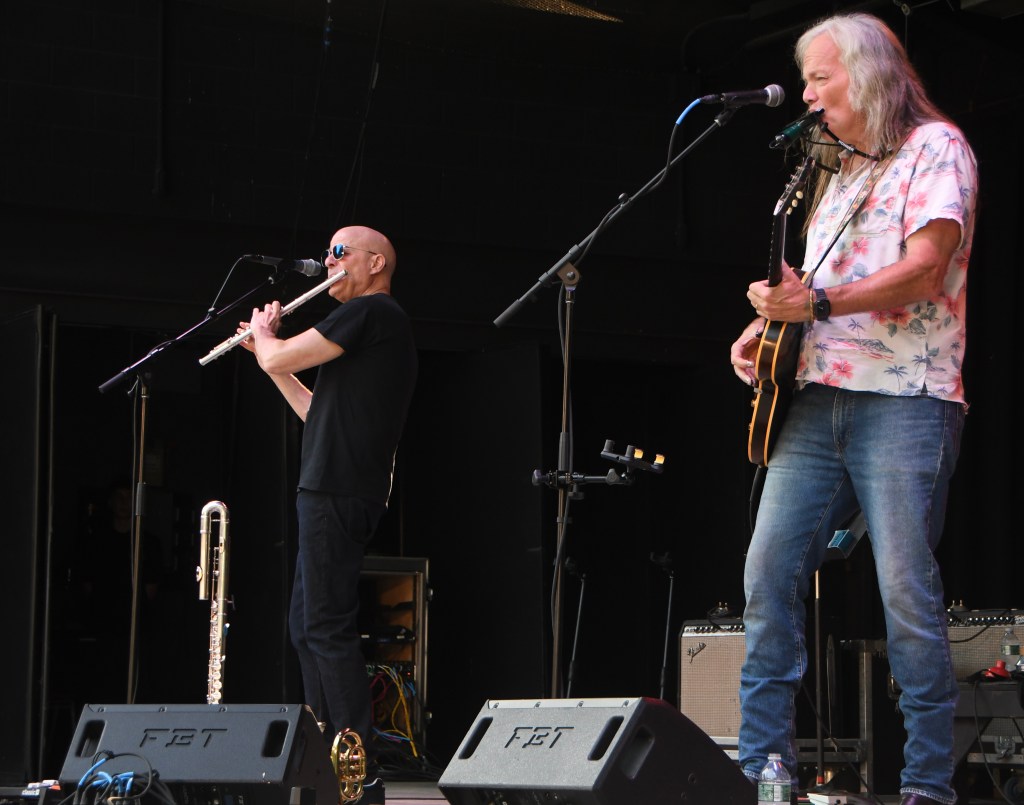
Harrison and fellow guitarist Mark Dzuiba played off each other in harmony, counterpoint, echoes near and far, comments straight or playful; Harrison flat-picking a skinny Gibson hollow-body, Dzuiba flat- and finger-picking a Fender Telecaster solid-body. Bassist Rich Syracuse and drummer Jeff Siegel – the Sly and Robbie rhythm section of our regional jazz stars – crafted firm foundations under everything, from earthy blues shuffles to high-altitude bebop flights.
“Doxy” spun the spotlight around at everybody onstage in turn, a fun funk shuffle with spry solos all around. This wasn’t a warm-up; all four were at full operating temperature, though Harrison’s second solo was the tune’s hottest and his duet with Dzuiba wrapped the thing like a gift.
Rich Syracuse, above; and Jeff Siegel, below – the Sly and Robbie rhythm section of our regional jazz stars
Harrison’s own “Sunday Night With Vic” for fellow guitarist Vic Juris felt like pals out fishing or raising glasses on a shady porch, peaceful and slow – guitarists sunny up top in a smooth cruise but complex beats below, uniting in a stately coda.
The set simmered and soared in a simple, strong shape. “It Falls on You” from Harrison’s 2021 “Guitar Talk” album of duets felt like a sibling to “Vic” in its grace before the intense, at times menacing “Survival Instinct” scrambled with dangerous energy to a hard-stop, all hot drama and force before dramatic silence. They kept the energy high with “Webb City,” brisk bebop bounce spiced with a strong swing under Dzuiba’s solo like a seminar in tones and phrasing styles. Syracuse shone here, too, turning a walking bass line into a strut.
“Body and Soul” grew from a guitars-only glide into melodic reverie, elegant and graceful; then “Bird Song” cruised from similar sparse musings into a meditative melody, Siegel’s tasty hand percussion spicing the mood.
Siegel also starred in the bebop blast of “Solar,” erupting free in a groove that flowed jagged and jaunty by turns; guitars echoing licks at the end.
Another “bird”-titled tune followed – Harrison’s “Migratory Birds” – introduced by his spoken environmental alarmism that translated musically in double-time drums and clattering solos on top before a coda fade.
Two Guitars: Joel Harrison, above, and Mark Dzuiba, below
Things peaked in maybe the 90-minute set’s least-likely song choice, the pop classic “Wichita Lineman.” A high-flying exploration of this (overly?) familiar melody, this showed Harrison and his quartet at their cohesive, intuitive best. Everybody knows the tune, but they all brought something personal, powerful and fresh to it while ensuring everything fit – as Harrison’s repeating riff underscored Dzuiba’s solo, for example. Syracuse sparkled here, too.
Harrison noted “Anthem of Unity” was a “good title for these times we’re living in,” and their closer shone a sunny happy funk groove around the room, loose in a fun way. Harrison set the mood with a repeating riff that grew wings as a cozy R&B groove.
Throughout, they showed a confident cohesion, though they read parts from charts. Everybody played nearly all the time, listening and helping out. So sparser sections took on a distinctive drama. The two guitars glowed in both cohesion and contrast, in lead or rhythm roles, Harrison using more sustain than Dzuiba whose usually terse, clipped phrasing fit perfectly.
SONGS
Doxy” (Sonny Rollins)
Sunday Night with Vic (Harrison)
It Falls on You (Harrison)
Survival Instinct (Harrison)
Webb City (Bud Powell)
Body and Soul (Johnny Green, Edward Heyman, Robert Sour, Frank Eaton)
Bird Song (Paul Motion)
Solar (Bill Evans)
Migratory Birds (Harrison)
Wichita Lineman (Jimmy Webb)
Anthem of Unity (Harrison)
MORE GUITARS
Bluegrass/Newgrass acoustic guitar master Tim O’Brien plays tomorrow, Saturday, March 8, in a duo with wife Jan Fabricius at Caffe Lena (47 Phila St., Saratoga Springs). O’Brien had already built an imposing reputation as an immaculate and propulsive picker with Hot Rize and other bands before his wife Jan Fabricius began playing mandolin and singing around their home in what became a duo. 7 p.m, doors 6:30. $37.96 members, $43.38 general, $21.69 children and students. 518-583-0022 http://www.caffelena.org.
Guitars may seem almost incidental to the creative powers of brilliant singer-songwriters John Hiatt and Lyle Lovett, playing Wednesday at Troy Savings Bank Music Hall (30 Second St., Troy). But six-string acoustics shape their songwriting just as they underline the songs. Their duo shows combine tunes and tales, jokes and jams as well as anyone onstage these days. They’re old pals at play. 7:30 p.m. Few seats remain: $67.50, $55. 518-273-0038 http://www.troymusichall.org.
Gypsy-jazz acoustic jazz master Stephane Wrembel plays Caffe Lena with his quartet on Friday, March 13. French-born, Wrembel studied in Europe before enrolling at Berklee in Boston on scholarship. Composing and recording hot-swing instrumentals for Woody Allen film soundtracks brought a deservedly ever-expanding audience. 8 p.m. doors 7:30. $34.70 members, $39.04 general, $19.52 children and students.
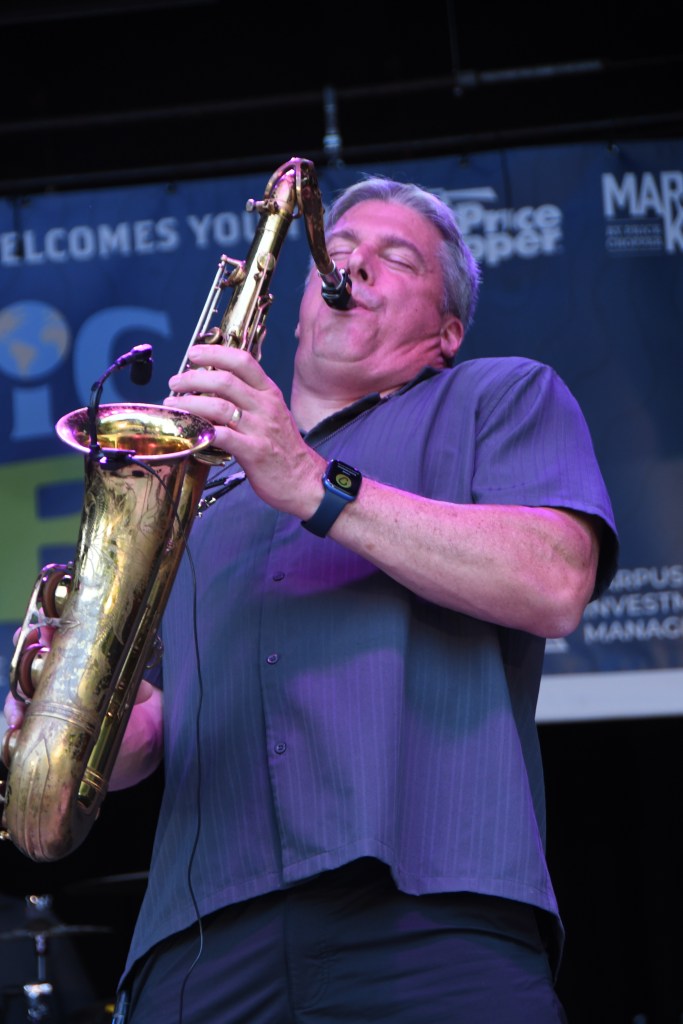
Anybody in the happily packed Universal Preservation Hall Friday night who might somehow be unaware that Branford Marsalis is from New Orleans surely knew it after his soprano sax sang through “On the Sunny Side of the Street” with all the neon soulfulness of Sidney Bechet.
Translating his musical ancestors into modern musical might allowed plenty of fast freedom, even as he and his quartet played in the tradition(s). They reworked antiques by Jimmy McHugh (“Sunny Side of the Street”), John Coltrane (“26-2”), Fred Fisher (“Ain’t No Sweet Man That’s Worth the Salt of My Tears” – greatest song title ever?) and only slightly older eminence Keith Jarrett (“As Long As You Know You’re Living Yours”). But originals by band members pianist Joey Calderazzo (“The Mighty Sword” and “Conversation Among the Ruins”) and bassist Eric Revis (“Nikaste”) stood tall among those classics through honed performance power; this is one of the top straight-ahead ensembles working today.
“The Mighty Sword” set a happy mood to open; airy bebop on an emphatic cadence and laced with jaunty soprano sax before Marsalis retreated to a stool upstage and Calderazzo took over in a bouncy ramble. He briefly quoted “There Will Never Be Another You” to knowing nods across the bandstand. It was fun, full flight, then Marsalis switched to tenor and led a downshift into Jarrett’s “As Long As You Know You’re Living Yours” at a more relaxed tempo. A subtle early Latin flavor gradually revved into an R&B groove drummer Justin Faulkner pushed double-time; big beats yielded to melody in Marsalis’s coda.
Faulkner had doffed his suit jacket even before sitting and taking up his sticks; now he took off his tie, maybe fearing it would burst into flame. Marsalis never even loosened his tie and was the cool, calm host. Revis wore a plain blue shirt, unbuttoned on top while Calderazzo looked relaxed in a white jacket except when he rocked hard, feet swinging free. Fashion digression ends here.
Calderazzo’s “Conversation Among the Ruins” set a meditative mood, a subdued melody whose sparse piano statements gave Revis space for eloquent bass accompaniment. Marsalis’s soprano sax engaged the piano in close conversation, first A-B dialog, then harmony and stratospheric runs until Revis’s bowed bass carried into the coda.
They swung “Ain’t No Sweet Man That’s Worth the Salt of My Tears” with no ironic distance at all, everybody on board with beefy tenor sax runs – again, in dialog with Calderazzo’s piano – a spirited drums bust-out and supple bass, with Calderazzo laying out until a brief recap.
A thoughtful quiet ballad followed, bluesy and mostly quiet. By the time I thought to ask Bill McCann for the title – I spotted him in the same neighborhood, pews under the balcony on the west side – he was already on the air on WCDB. So, rather than bug the Maestro at the mic, I can only praise the tune’s elegance and eloquence, without its title. Marsalis’s tenor work here had a restrained glow; fast soft runs, and everybody was on the same gentle page with airy, almost inaudible cymbals locked to sparse bass lines and tasty, tasty piano.
Then, back to bebop in Coltrane’s zippy “26-2,” Marsalis’s tenor stating the main theme only briefly before Calderazzo led a spirited trio romp, happy and hot. Marsalis rejoined to swap riffs and push things all the way to a hard stop.
This brisk, airy number perfectly set up the show’s high point for me as Marsalis shifted back to soprano for “On the Sunny Side of the Street” as a relaxed late-at-night New Orleans waltz. This swung soft and sweet, cadences shifting underneath for drama. Marsalis was at his melodic best here, paying respect to the original but remaking it confidently his own at times, too.
A traditionalist of the best kind, Marsalis’s next album pays tribute to Keith Jarrett by recreating entirely Jarrett’s 1974 album “Belonging,” source of “As Long As You Know You’re Living Yours” Friday. And as R.J. DeLuke reported in the Times Union last week, a Coltrane tribute comes next. After ‘Trane’s “26-2” Friday, Marsalis mock threatened that audiences would tire of too much Coltrane; this seems seriously unlikely.
They played from 7:35 to 9:03 without a break, then encored for 10 minutes with Revis’s “Nikaste,” a complex, episodic number that prompted some discussion. Marsalis had earlier called for this tune, but Revis demurred, waving it off – so Marsalis pushed it back to encore time. Then they discussed Revis’s claim that it’s a love song. “Maybe two o’clock in the morning, with hand-cuffs!” quipped Marsalis, maintaining the easy informality of the whole show, which felt, always, like a conversation among friends. They tossed riffs around, to share or elaborate, comment or explain in counter-riffs – sometimes loose and airy, more often tight and muscular. They hollered out praise when somebody hit a hot lick, and that warm ease made the whole thing feel like love songs.
We’d still revere John Prine as a songwriting immortal even if he’d only left us “Hello In There,” “Sam Stone” and “Angel From Montgomery.” Just ask Bonnie Raitt or Bob Dylan, just two of many artists who sing his songs. And we’d still curse COVID, even if he were its only casualty.
The Eighth Step honors Prine at Proctors GE Theatre on Friday, Feb. 17 with a film showing and panel discussion. The film – “You Got Gold: A Celebration of John Prine” – shows us a memorial concert on what would have been Prine’s 76th birthday, October 10, 2022 at the Ryman Auditorium in Nashville, the last place Prine called home.
It shows fellow troubadours mourning their friend by singing his songs and recalling him in backstage conversations, including veterans Bonnie Raitt, Lucinda Williams, Bob Weir, Lyle Lovett, Dwight Yoakam and Steve Earle. It also shows the deep respect of younger musicians, including Brandi Carlyle, Tyler Childers, Jason Isbell, the Milk Carton Kids, Kacey Musgraves and more.
Prine’s widow Fiona Whalen Prine produced the film; Michael John Warren directed; and it’s trailer promises it will be far too much fun to feel as sad as Prine’s death deserves.
After the 90-minute film, area folk music stalwarts will talk about Prine and the Chicago scene where he transformed himself from mailman who’d hide out in blue sidewalk relay boxes to write songs into a star onstage and on record. Wanda Fischer of the Hudson River Sampler on WAMC, Eighth Step impresario Margie Rosenkranz and troubadour Anne Hills – who came up in the same Chicago clubs and festivals as Prine – will speak of Prine onstage while others will contribute by video.
While the film looks forward by demonstrating the permanent power of his songs, a backward scan across his life and career tells a remarkable story.
Born near Chicago, Prine adopted the Kentucky homeland of his parents and grandparents as his musical origin point/inspiration. He served in the Army, with stints as mailman before and after, and was discovered by fellow songwriter Kris Kristofferson, then by Atlantic Records chief Jerry Wexler. This launched a sporadic but universally respected output of albums and tours.
Cancer beat up his always-rough voice, but also amplified the emotional power of his songs.
How damn cruel was the fate that he survived cancer only to die of COVID.
In 2009, Bob Dylan told Huffington Post that “Prine’s stuff is pure Proustian existentialism; midwestern mindtrips to the Nth degree. And he writes beautiful songs.” Dylan, who knows about such things, cited “Lake Marie” as his favorite Prine song.
“Lake Marie” is on Prine’s 1996 album “Lost Dogs + Mixed Blessings.” It appeared 25 years after his self-titled debut that earned his first Grammy nomination with powerfully poignant, casually insightful folk-rock numbers “Paradise,” “Angel from Montgomery,” “Illegal Smile,” “Hello in There” and “Sam Stone.”
Prine’s press-kit bio touts his four Grammy wins plus a Lifetime Achievement award, three Artist of the Year wins at the Americana Music Honors and Awards, which also added another Lifetime Achievement Award, for Songwriting. Prine also won the PEN/New England Song Lyrics of Literary Excellence Award (2016), joined the Songwriters Hall of Fame (2019) and was named Honorary Poet Laureate of Illinois (2020).
Since Prine’s death, his family created The Hello in There Foundation to honor his spirit of generously helping many in need. Fiona Prine and their sons also manage Prine’s song catalog, most tunes available through his independent record label, Oh Boy Records.
PRIME PRINE
A young John Prine in the studio. Photo provided
Life-size statues of Prine – and his fellow Kentuckians the Everly Brothers – stand in Central City, Kentucky (Muhlenberg County, title of a Prine song). T-shirts, camp flags, collected singles, coffee mugs and, best and most essential of all, 20 albums, are available at https://www.johnprine.com/.
His albums span his self-named 1971 debut to “I Remember Everything” (2020, the year he died) and include “The Best of John Prine” (1976).
Numerous books tell his story or explain his songs:
John Prine: In Spite of Himself June 2017 Eddie Huffman
Join Prine Beyond Words June 2017 (Explanations of songs)
Prine on Prine: Interviews and Encounters with John Prine Sept. 2023 Holly Gleason
Living in the Present with John Prine Sept. 2025 Tom Piazza (Piazza appeared at the Saratoga Book Festival to discuss this book in October.)
John Prine – Guitar Songbook (15 songs transcribed for guitar)
“John Prine live from Sessions at west 54th” (2001) collects live performances of 13 songs on DVD; Prine sings onstage with multi-instrumentalist Jason Wilbur, bassist Dave Jacques and singer Irish Dement, a frequent duet partner.
Prine performed on Austin City Limits eight times and he received the long-running PBS show’s Annual Hall of Fame Honors in 2024.
He played here many times, including with his rocking Lost Dogs Band at Troy Savings Bank Music Hall on Sept. 22, 1995 with Delevantes. Onstage at the fragile non-smoking Hall, he lamented “I’m dying for a cigarette.” He also played The Egg in 2009 and Albany’s Palace Theatre in 2012 and 2017.
After he played The Egg (Nov. 7, 2009), I reported in the Gazette: “Looking more and more grandfatherly himself, like actor Oskar Homolka portraying a commissar in a dark slab of a suit, with thinning hair, widening everything else and lumpy features, Prine proved himself a consummate carpenter of song, nailing each one.
He spoke of making up ‘Souvenirs’ in the car enroute to an early gig, noting a few songs later that ‘Fish and Whistle’ almost never got written at all and that this could be said of most of his compositions, due to laziness. Maybe so, short term; but cumulatively, Prine is some kind of genius, hammering songs together of simple materials but achieving a monumental permanence.”
Before his 2017 show with Margo Price, I wrote: “Check ‘durability’ in the dictionary, you’ll find Prine’s photo. Recording since 1971, he’s influenced/scared every songwriter in sight: Kris Kristofferson threatened, “He’s so good, we’re gonna have to break his fingers,” and Dylan said, “Nobody but Prine could write like that.” Johnny Cash put Prine in his ‘big four’ with Rodney Crowell, Guy Clark and Steve Goodman, and Roger Waters (Pink Floyd) ranks him with Neil Young and John Lennon. He’s beaten cancer, twice, and keeps writing and singing.”
On Friday, the Eighth Step at Proctors GE Theatre presents “You Got Gold: A Celebration of John Prine.” 7 p.m. $25 plus Proctors box office fees. 518-434-1703.
Vanessa Collier unpacked the whole kit Wednesday at Caffe Lena: alto and tenor saxophones, guitar and dobro. Non-hardware items completed a most impressive package: soul-deep command of fire and funk in her soaring or simmering voice, from-the-heart songwriting skills, a discerning ear for cover tunes, and a compact band. Scorching at hot tempos, slow-cooking in R&B ballads and highly interactive, the quartet co-starred guitarist Mighty Mike Schermer, seen on the same stage previously with Maria Muldaur and Marcia Ball. Turning up the heat, spicing with soul sauce, they barbecued the place.
Vanessa Collier and band. from left: guitarist Mighty Mike Schermer, saxophonist Vanessa Collier, drummer Byron Cage and bassist Justice Guevara
When a late-coming couple threaded through to a front table, a fan called, “Now, it’s sold out!” The packed room had that happily jammed feeling of something shared and cool happening.
The vigorous blues shuffle “Whiskey and Women” set the pace, Collier singing first, then scrambling all over her alto sax, notes fluttering fast, before stepping back as Schermer took the lead; then they played in harmony, intuitive and tight.
Those two held eyes and ears with such confident easy, unified musical force that we could almost take for granted workmanlike drummer Byron Cage and bassist Justice Guevara, toiling solidly away on muscular beats. Almost.
Schermer’s guitar set a menacing mood in the slower “Take Me Back,” its groove pushed hard when Collier clapped double-time between vocal and alto fire; then Schermer wrapped things up with a serene echo of his agitated intro.
“Can’t Stand the Rain” flowed at a similar tempo, full emotional force at first, then simmering down as Guevara sang harmony with Collier. This Memphis soul classic felt conversational all the way as Collier’s alto chatted up Schermer’s guitar. She played a riff, he played back “Yeah, that’s right!” Then his new riff commented “What about this?” – and she answered.
Backstage afterward as he poured a beer, Schermer told me he still felt somewhat new to the gig, but his musical dialogs with Collier sparkled all night, altering his phrasing and tone to follow, to lead, to embellish or glide away when she soared alone.
Collier said she loved playing the Caffe, seeing it filled with fans “packed in like sardines,” and explained how she found the saxophone, as a precocious introvert at age nine, to express emotion as her second voice.
This set up “What Makes You Beautiful,” written for her younger sisters to teach the strength she found to overcome self-doubt. She shifted to tenor for this mid-slow shuffle, using bluesy jazz phrasing to show self-pride emerging from insecurity as it simmered, then built.
Similar tempo shifts pushed the buoyant “Bloodhound” as Collier played slinky slide guitar through fast runs while Schermer comped soul chords behind her. Her alto stuttered and fluttered through a syncopated solo and she closed by urging everyone to howl.
While “Sweatin’ Like a Pig, Singin’ Like an Angel” might serve as mission statement, Collier seemed unruffled and unsweaty throughout. If touring with blues hero Joe Louis Walker taught her outgoing, confident command, she was candid and confiding as a songwriter, going romantically wistful late in her seamless 90-minute set.
“When Love Comes to Town” had a fresh, episodic feel, a slow soul-funk groove with stop-and-go story-telling drama, a wordless vocal chorus and circular alto riffs generating compelling centrifugal force.
The torchy “Just One More” felt more direct and cozy, a candle-lit tango with Schermer supportive in clipped phrases among the seams of Collier’s alto runs until he claimed the spotlight with high squeals and cyclic repeats.
Collier shifted to dobro in “When It Don’t Come Easy,” a pandemic-inspired anthemic call to strength and resilience. It flowed on stop-and-go funk beats with harmony vocals by Cage and Guevara, Schermer’s racing strums, wordless vocals at the coda.
She revved big on “Do It My Own Way,” clapping fast and counting off “One, two, ELEVEN!” to launch a Southern-fried James Brown tribute. She cited Brown’s saxophonist Maceo Parker among her inspirations, but Schermer’s relentless Jimmy Nolen-style rhythm chops helped carry things. The simple phrasing of Guevara’s bass clearly emerged as propulsive riff power here, funky as Bootsy Collins or Larry Graham and locked with Cage’s drums.
They left the stage to general tumult, which Cage answered alone by taking the stage to erupt a happy drum solo clatter that drew the band back on. And, of course, Collier took everyone to New Orleans with “Bad News Bears,” a sizzling vamp under solos by everyone including Guevara, his only instrumental break all night.
When the riff storm slowed and everybody else laid out near the end of this “Bears” encore, Collier’s alto continued, alone and eloquent, fluttering around the melody and taking it home.
Caffe Lena shows this weekend: Lucy Wainwright Roche tonight (daughter of Loudon Wainwright III and Suzzy Roche of the Roches), old-style banjoist Carolyn Shapiro Friday, the New Orleans-style brass band Soggy Po’ Boys Saturday – sold out, sorry – and Rev. Robert Jones, a keeper of the acoustic blues flame on Sunday.
Vasen plays in Proctors Passport Series Thursday at Universal Preservation Hall. These two Swedish musicians span the centuries since their strange-looking instruments were devised, but they sail on timeless melodic flow and intricate string-band kick.
Ears and eyes might report very different descriptions.
Ears might answer that question above by noting the two men are playing a cozy, folkish string-band music, a bit astringent in its Scandinavian simplicity, but rich in feeling and telepathically close in the hands of a duo formed in 1980.
Eyes offer a different answer.
Mikael Marin
Mikael Marin (beard) plays violoncello da spalla, “cello of the shoulder.” He clasps it under his chin and it stretches along his arm. It looks like a burly hybrid somewhere between a viola and a cello, but it has five strings to a cello’s four. He plucks bass lines on it with his fingers, or bows it to make melodies.
Olov Johansson
And if you think that looks strange, check out Olov Johansson (no beard) who bows what looks like a violin that got all ripped at the gym, then blundered into a woodworking shop where beefy structures were hammered onto the bottom. It sits across his knees, like Jerry Douglas holds a dobro, and its complex hardware transforms its sound the way chord bars of an autoharp expand the look and language of a zither. This 14th century contraption is the Nyckelharpa, a keyed fiddle with three melody strings whose pitch changes as keys, in three rows across the bottom, raise and lower wooden pins against them from underneath, a bit like a pedal steel, There’s also a drone and a dozen strings that never get plucked or bowed but vibrate in the air currents of the melody strings.
If all that weren’t instrument-nerdy enough, complex configuration of the nyckelharpa allows it to make chromatic music, which takes its name from “chroma,” or color. Wikipedia tells us chromatic music uses all 12 notes within an octave, arranged in half-steps, rather than the seven notes of the diatonic scale. This enables a more detailed sonic nuance.
If you got all that, somebody from the Royal Swedish Academy of Music in a dark suit will knock on your door to present a gilt-edged certificate of Advanced Musical Curiosity and Openness.
Of course, any fan who faithfully follows Proctors Passport Series or its presenting partner Music Haven would likely qualify. As its Presenting Artistic Director Mona Golub likes to put it, the Passport Series is how she presents music from around the world “between the summers.”
Vasen has released 19 studio albums since 1985; their newest is “Vagor,” Swedish for waves, and water is a theme throughout. It’s no surprise, considering that water comprises most of the 1,112 air miles from Stockholm (Sweden) to Dublin (Ireland), that Vasen’s music sounds somewhat Celtic. That’s just about exactly the distance from New Orleans to Saratoga Springs, but that won’t prevent the Soggy Po’Boys from making Mardi Gras magic at Caffe Lena in a sold out show on Valentine’s night. But I digress.
“It’s the melodies,” answered the late, great Paddy Maloney of the Chieftains when I asked him to explain the appeal of Irish music. Vasen does that, too. If Paddy were here to hear Vasen, he’d likely nod, grin and grab a tinwhistle.
They play in Ireland, a lot. Nicki French Davis reported in the Irish Examiner on a 2012 show at Bantry House in County Cork this way. “The second half of the concert featured Sweden’s Väsen, who showed why they are regular headliners at folk festivals worldwide. Featuring the extraordinary nyckelharpa, Väsen have taken old Swedish polskas and turbo-charged them, and their own compositions are lively adventures full of humour and surprises.
“The trio’s arrangements are incredible, full of counter-melodies, rhythmic tricks and spicy harmonies. The highlight was an unexpected, almost jazz-rock improvisation played with gusto.”
When they crossed the Atlantic to play the 2013 Celtic Colours festival on Cape Breton Island, Kate Molleson reported in The Herald, “They write gorgeous tunes and deliver them with a spry step, airtight ensemble and bittersweet lyricism that gets deep under your skin. They’ve lost none of their daft banter, none of their warm and raucous rapport. A hearty cheer went up when they ambled on stage at the Mitchell: they’re Celtic Connections favourites and for obvious reason.”
Vasen has played with Nashville acoustic folk-country instrumental masters Mike Marshall and Darol Anger, earning “Showcase Artist” honors at the World Music Expo in Seville.
Thursday, Vasen plays Universal Preservation Hall (25 Washington St., Saratoga Springs). 7:30 p.m. $34.51 518-346-6204. www.proctors.org