PREVIEW: New, Improvising Jazz Trio Creates on the Fly
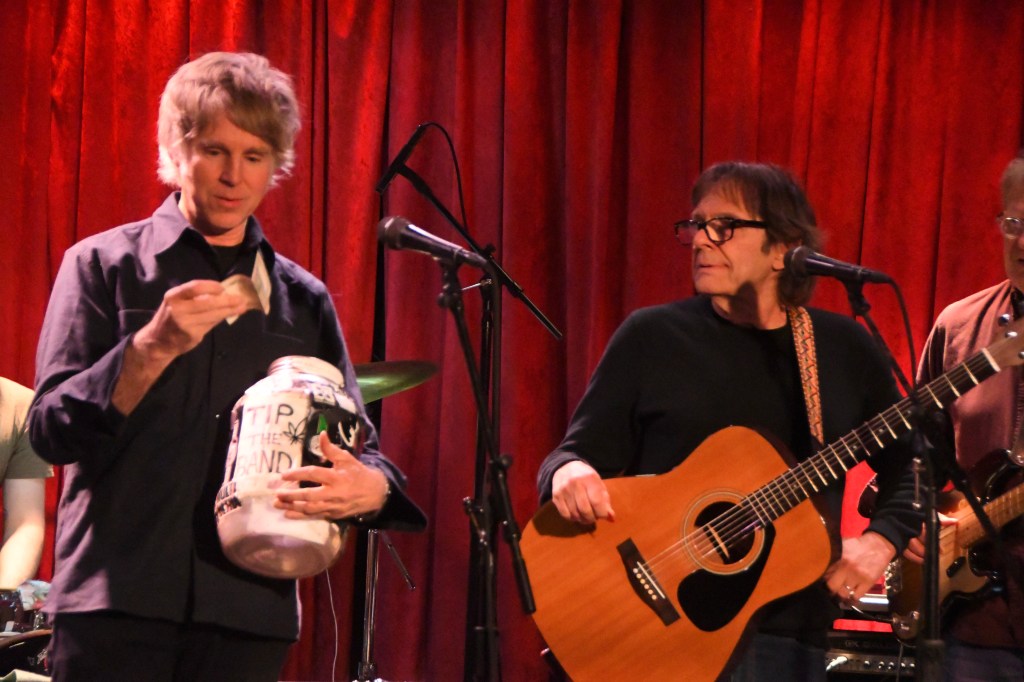
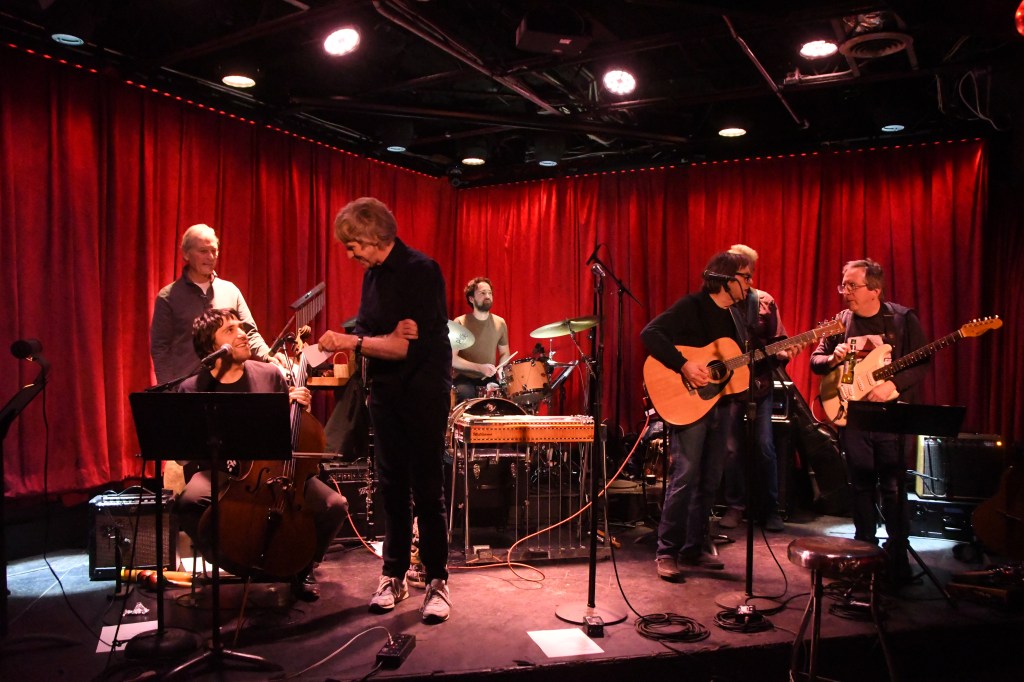
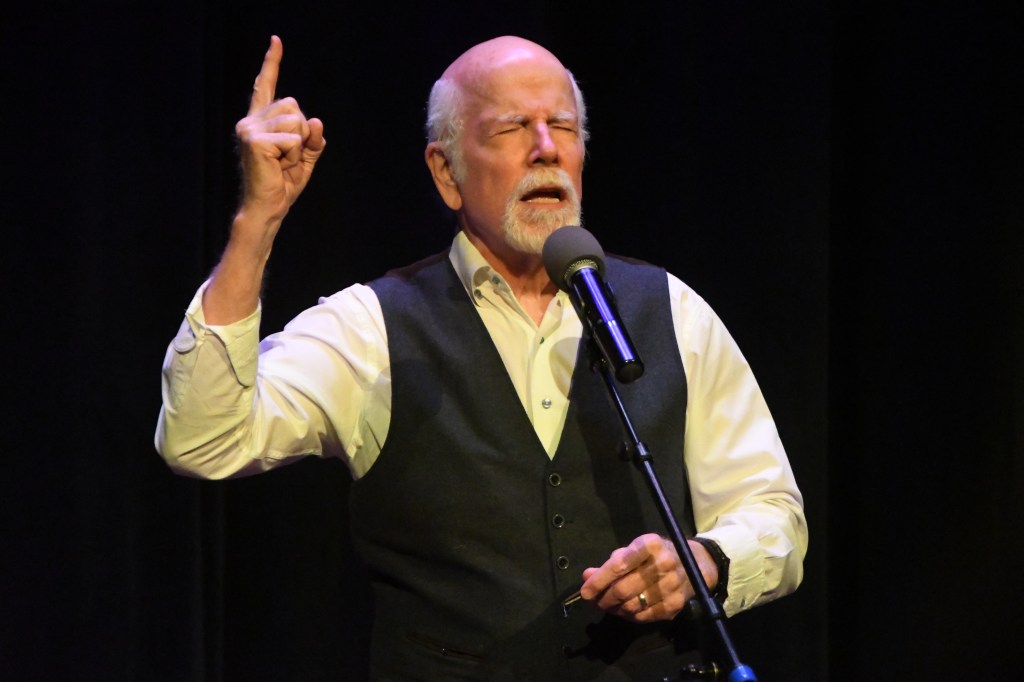
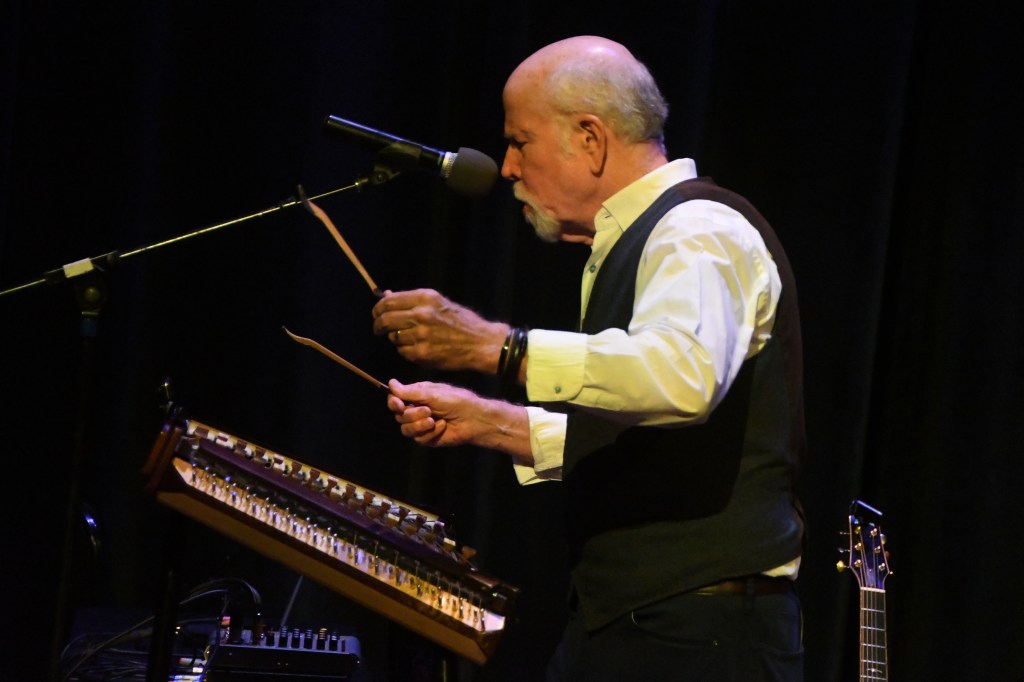
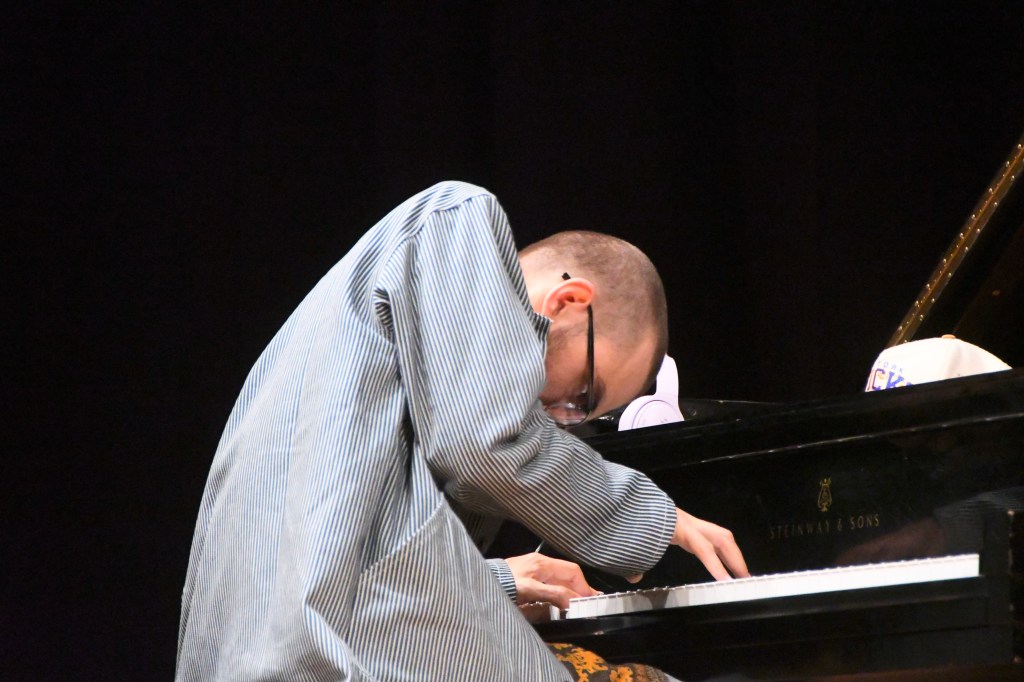
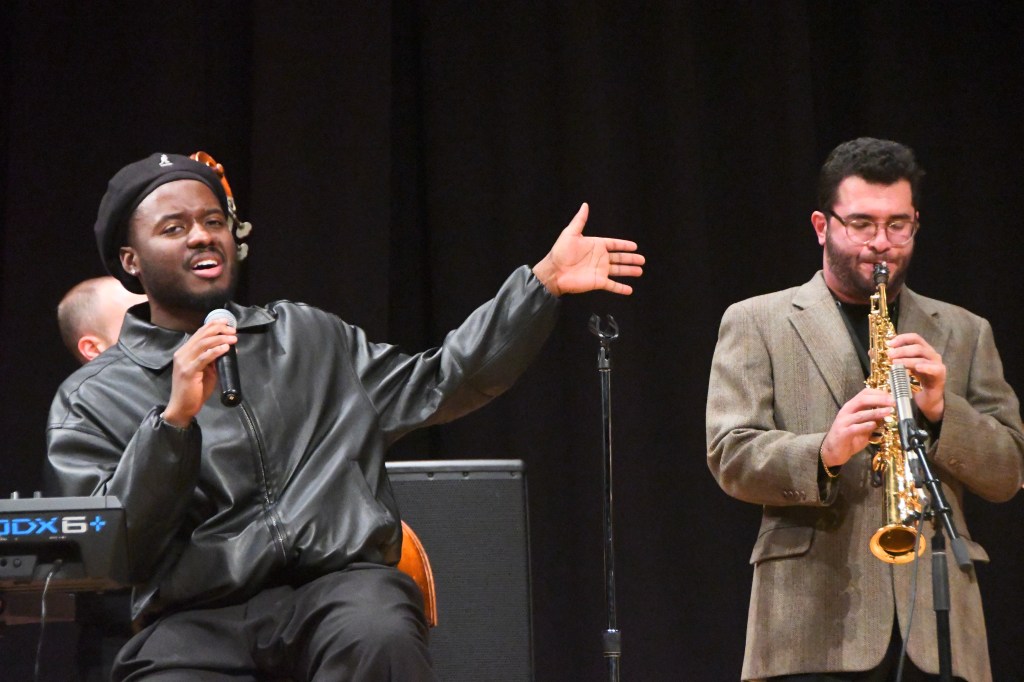
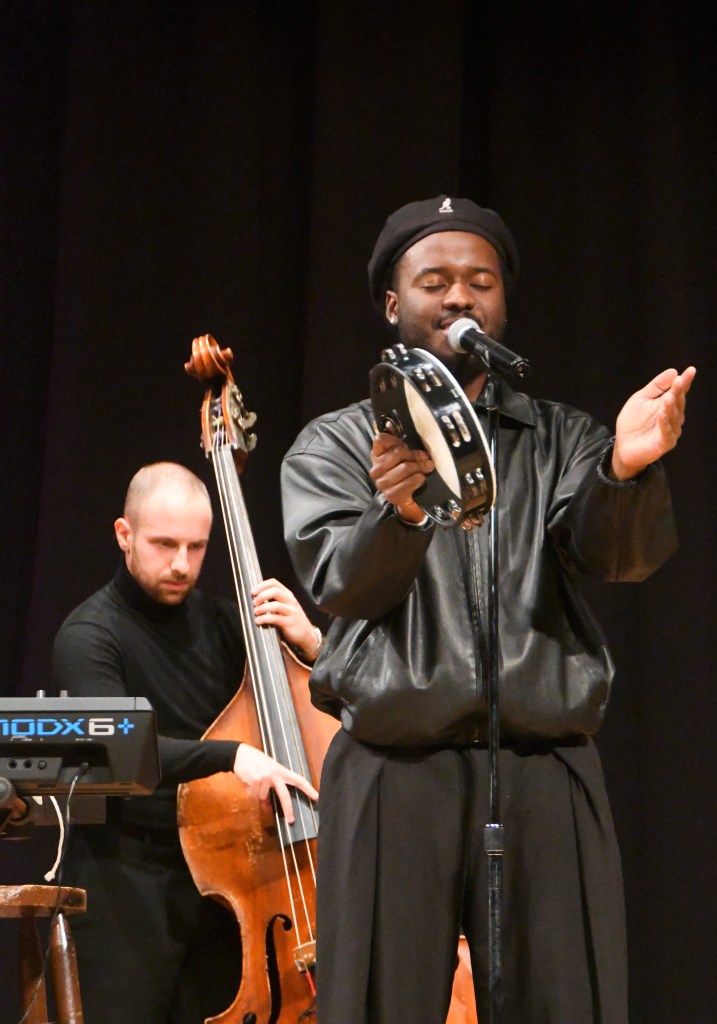
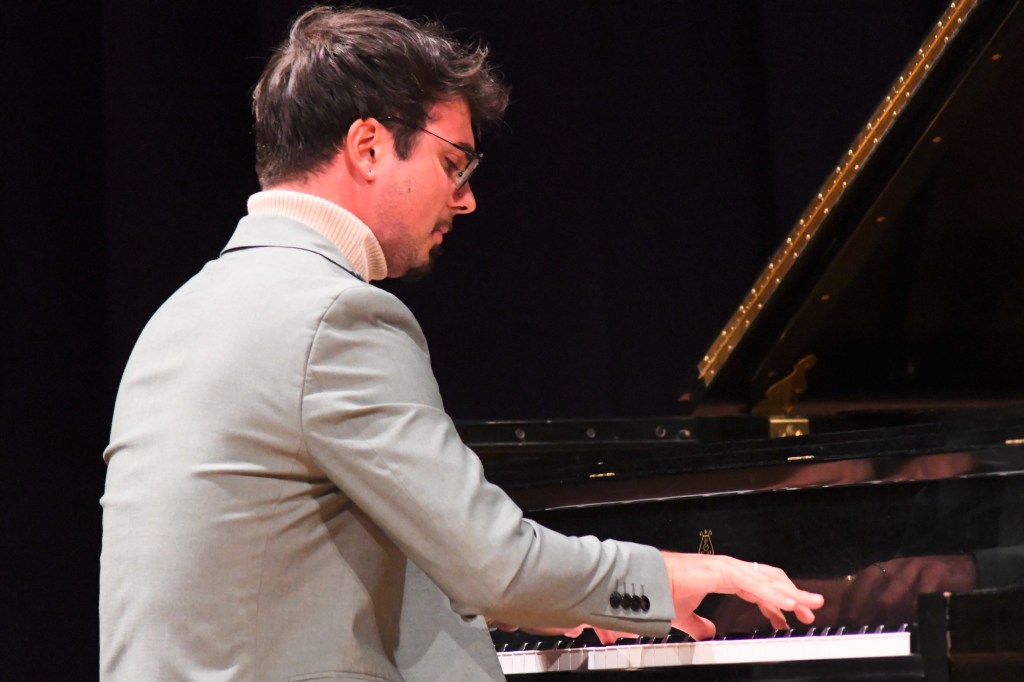
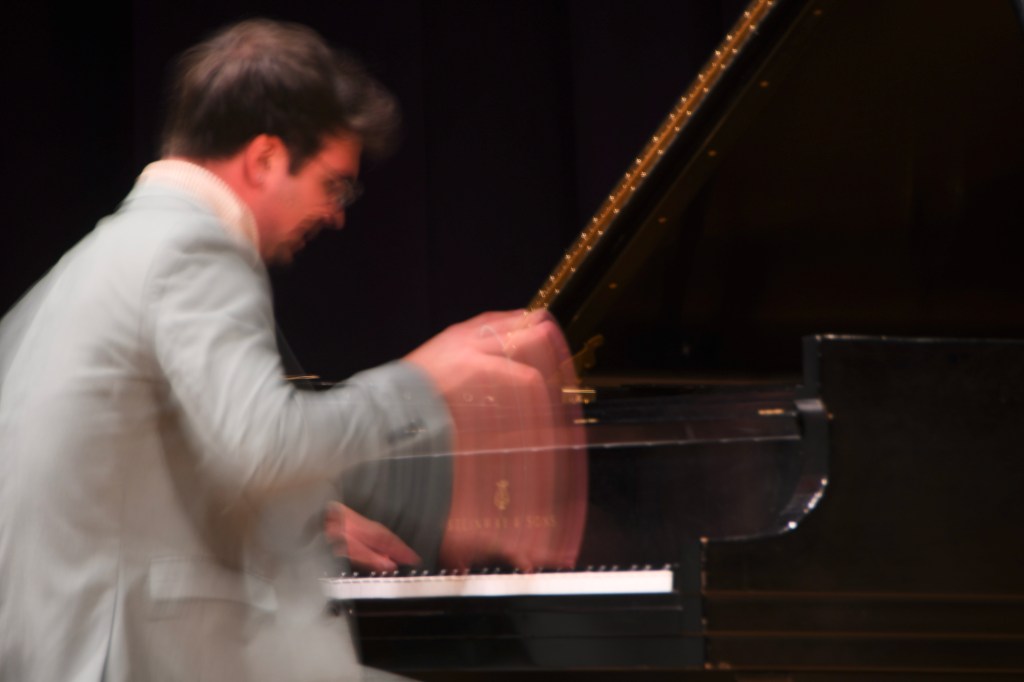
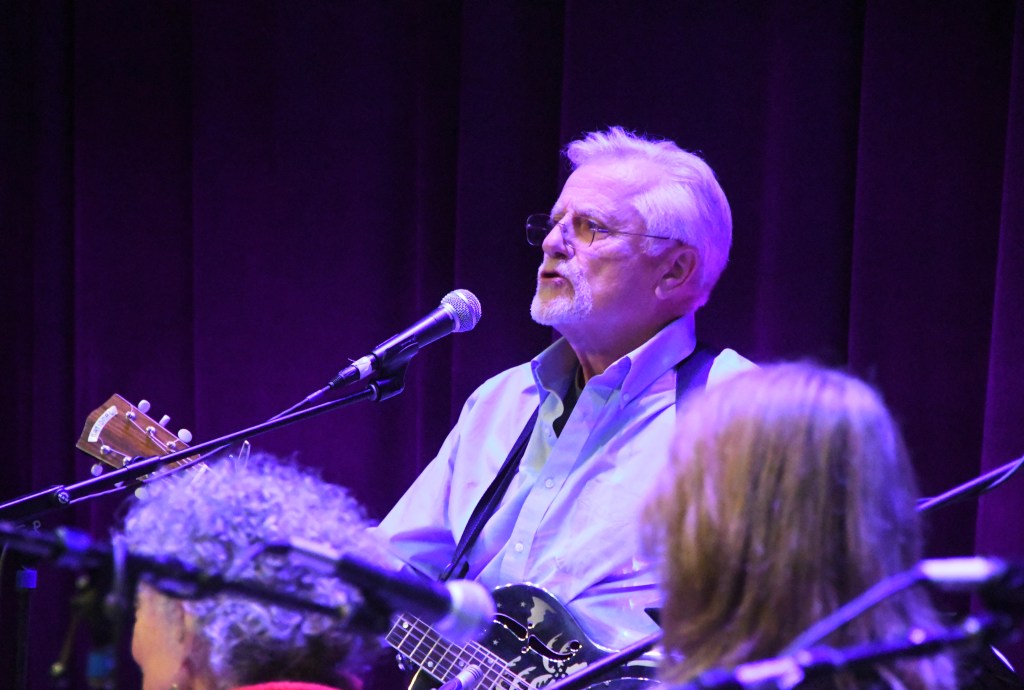
Jazz guitarist Mark Kleinhaut introduces his new trio, In This Moment, Wednesday, June 25 at the Spring Street Gallery.
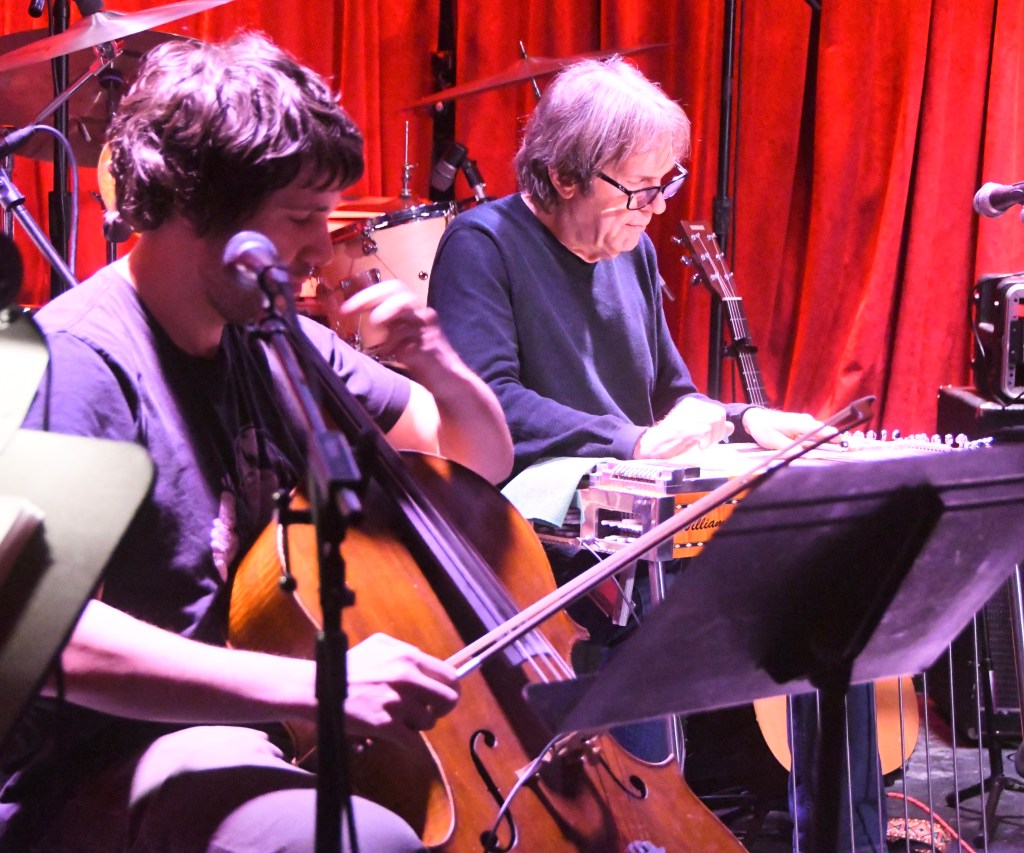
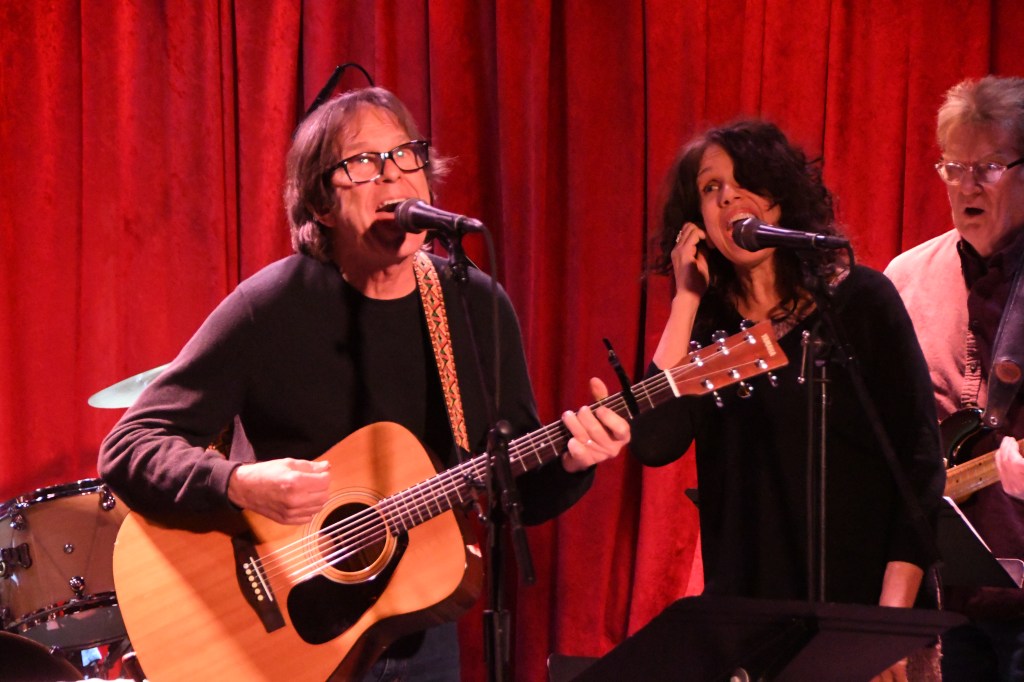
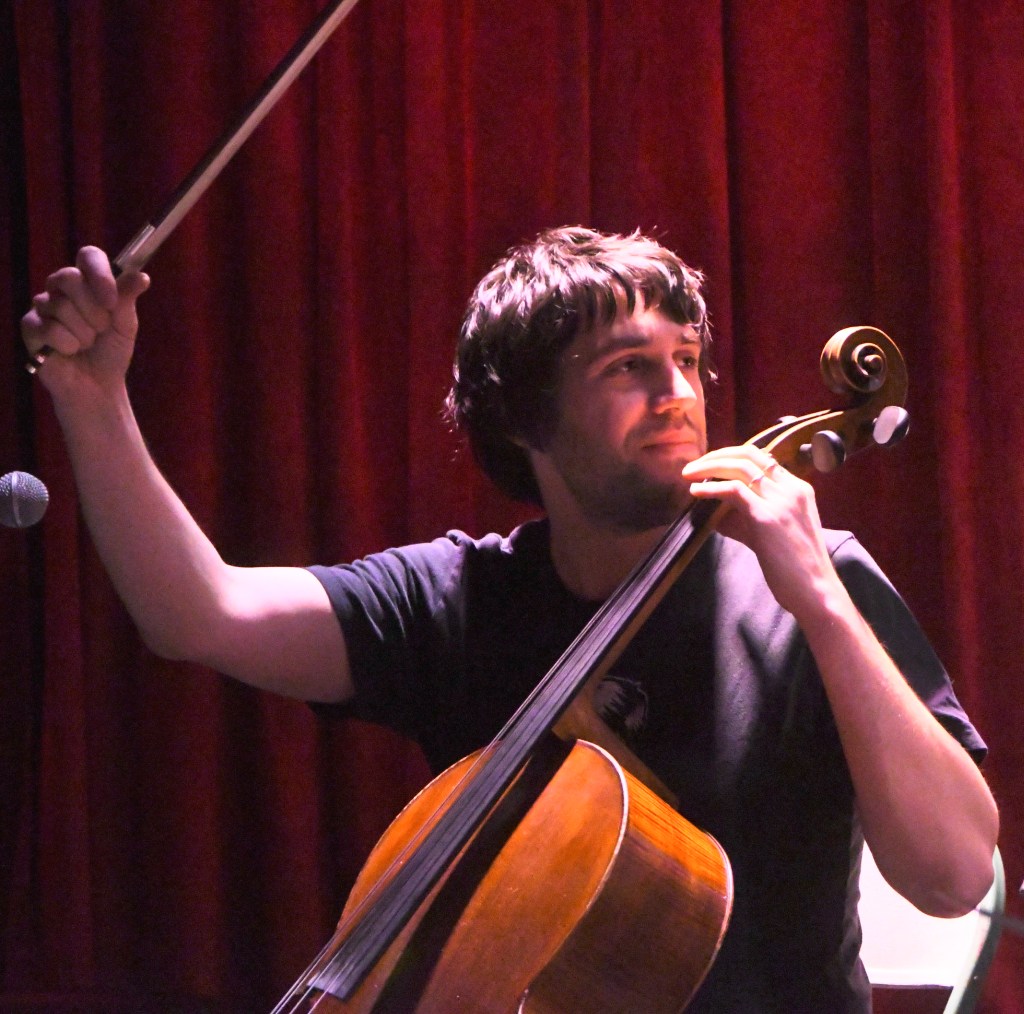
Kleinhaut played the cozy Gallery regularly before COVID, then turned to online performing, mostly solo. His videos showcase a tasteful amplified-acoustic guitar sound whose warm charm feels invitingly comfortable even when he ventures off the map of conventional song forms. Building a new band with longtime cellist Ed Green and new singer Shiri Zorn, the guitarist-composer-leader expands that elegance-with-freedom approach.
The trio seems his natural habitat and most frequent context on more than half of his dozen or so albums.
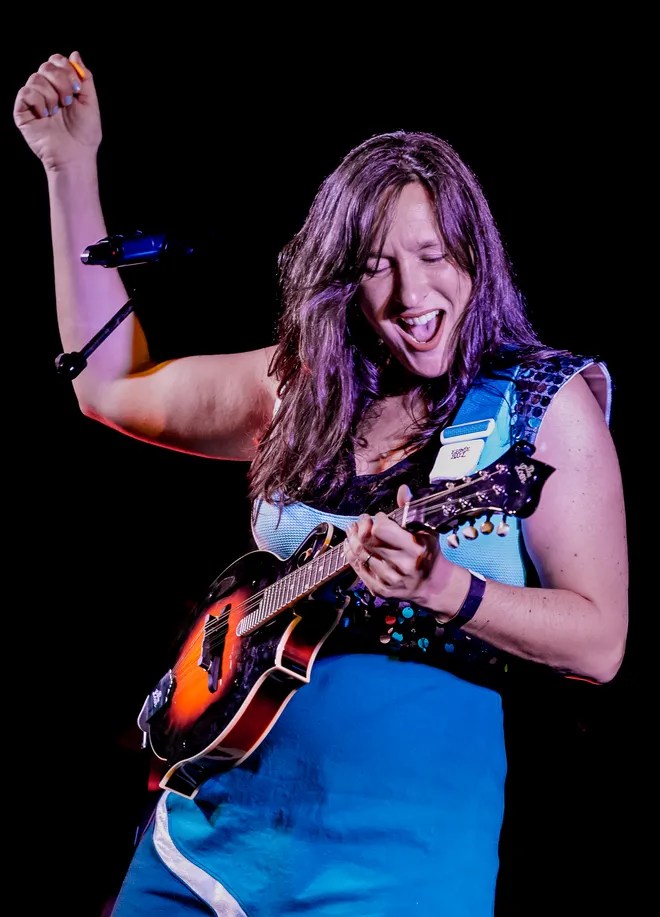
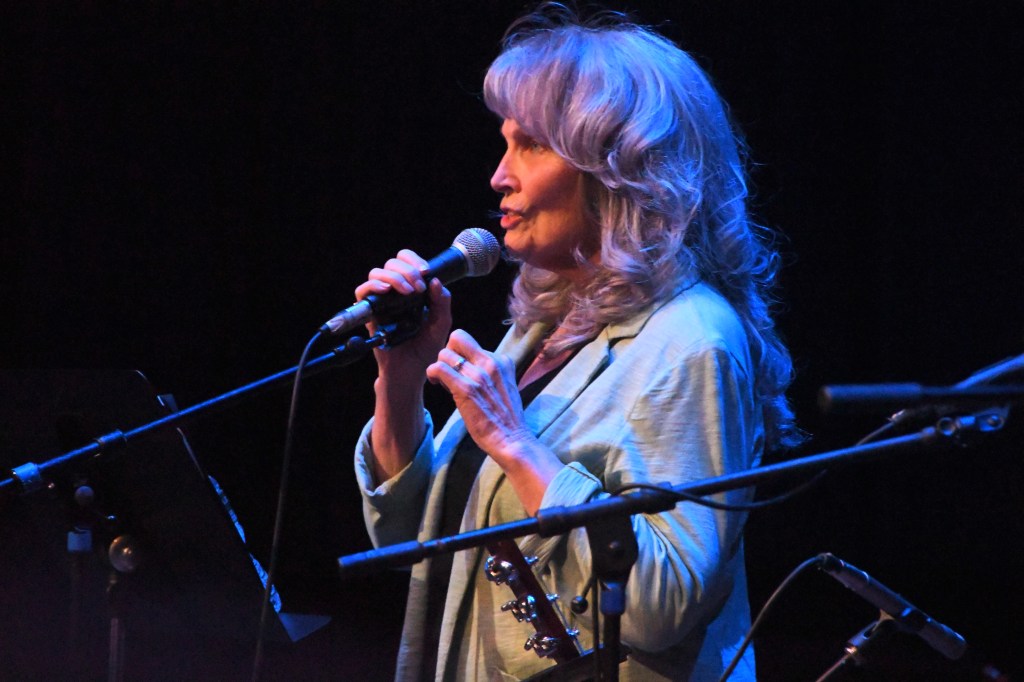
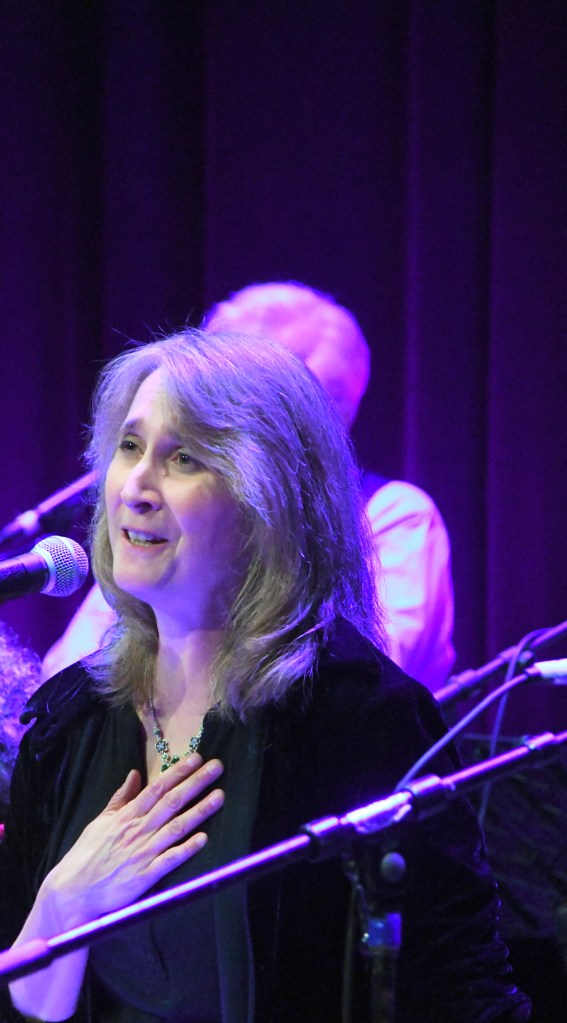
Shiri Zorn often sings without words. Her low-pressure restraint leaves room to add regional influences onto either standards or free improvisations. On her two albums – fellow singer Tierney Sutton produced her debut “Into Another Land” and “Looking for the Light” just arrived – and you’ll hear Middle Eastern minor key explorations or spry bossa bounce. Even without words, you can hear her meaning.
Green first trained on trombone before moving to bass, then cello; so he plays more emphatic rhythms than most string players, plus horn-players’ breath-shaped phrasing. He played in (fellow trombonist) Kai Winding’s Septet and local hero Lee Shaw, plus jazz and pop stars including Nancy Wilson, Charlie Byrd, the Temptations, Tom Jones, Paul Anka and many more.
Longtime bandmates, Kleinhaut and Green smoothly leave space for one another and support each other’s solos. Kleinhaut comps chords behind Green’s pizzicato runs and Green plucks or bows chords behind Kleinhaut. Zorn has learned this language and fits and flows fluently with the guys.
Show time for In This Moment is 7:30 p.m. Wednesday, June 25 at Spring St. Gallery (110 Spring St., Saratoga Springs). 20 in advance, $25 at the door eventbrite.com
Review: Steve Horowitz Quartet at Jazz on Jay, Thursday, June 19, 2025
Brevity may be the soul of wit, as the saying goes. To trot out another tired truism/cliche; in jazz brevity may seem honored more in the breach than the observance. In other words, it can feel scarce when players stretch, jam and explore.
Not Thursday at Jazz on Jay before likely the largest-ever indoor show in the series. Onstage at the bad-weather site in Proctors Robb Alley, the Steve Horowitz Quartet mostly kept things concise, cool and calm; swinging at medium tempos. They earned the title “I’m Old Fashioned,” one of 11 antique standards they dusted off with unfailing elegant understatement.
The Steve Horowitz Quartet, from left: Cliff Brucker, drums; Rich Syracuse (behind mic stand)’ Steve Horowitz, trumpet; and Larry Ham, piano
Noting he seldom leads a gig or session, Horowitz introduced his sidemen as the veteran players and old friends they clearly are: Larry Ham, piano; Rich Syracuse, electric upright bass; and Cliff Brucker, drums.
“Road Song” set the upbeat mood; this road had the occasional yellow-light of a stop and go groove, but they avoided the fast lane as everybody soloed in turn: trumpet, piano, bass and drums, clocking in at seven minutes; “Sweet Pumpkin,” another easy swinger, ran eight, even with Horowitz cueing Ham to stretch his solo, enjoying the groove.
Everybody played within themselves, never going far outside or pushing too hard. The vibe was cooperative, respecting the tunes and composers; but it didn’t lack for personality as their phrasing supplied. Horowitz chose some tunes for their association with other trumpeters: “Sweet Pumpkin” with Blue Mitchell, “Up Jumped Spring” with Freddie Hubbard, “Uno Mas” with Kenny Dorham. However, “I Told You So” paid tribute to Dexter Gordon, they grabbed “Triste” from Antonio Carlos Jobim’s deep songbook, and “Wouldn’t It Be Loverly” from “My Fair Lady.” This one was loverly; a delicious ballad in the quartet’s confident hands.
They hit their highest altitude in a rousing trio romp through “It’s You Or No One,” their fastest riffs – Horowitz’s rapid scalar trumpet runs – in “Triste.” He switched to flugelhorn in the middle of “Up Jumped Spring,” luxuriating in its mellow sound through about half the 90-minute set.
Every tune clocked in at under 10 minutes, and this economy worked well for them. Inventive players, their solos had their say then yielded to the next cat. Ham really shone in “I’m Old Fashioned,” Syracuse owned “It Could Happen to You” and “One Mint Julep” while Brucker brought the power in swapping fours at the codas of many tunes and made the most of his solo breaks, especially “Triste” where he stirred a happy uproar.
The rhythm section played “It’s You Or No One” as a trio, spry and strong.
Always tasteful, coloring inside the lines, Horowitz enjoyed his players as much as anybody but took a back seat to nobody; an elegant soloist of swinging clarity.
Fans filed into Robb Alley in such numbers that the crews scrambled to set up more chairs. Some had gone originally to Jay Square, the Jazz on Jay outdoor venue. and arrived relieved to escape the heat. Singers Kaitlyn Koch and Jody Shayne sat side by side among the many musicians who especially enjoyed classic tunes without frills.
Setlist
Road Song
Sweet Pumpkin
Up Jumped Spring
Wouldn’t It Be Loverly
I Told You So
It’s You or No One
I’m Old Fashioned
Triste
It Could Happen To You
Uno Mas
One Mint Julep
MORE JAZZ? COMING RIGHT UP
Tonight at 7:30 p.m., Michael Benedict leads his straight-ahead Boptitude quintet at the Van Dyck (237 Union St., Schenectady). It’s no. 008 in the Van Dyck’s Thirdsday Nite series; third Thursday of each month. Tonight, it’s Benedict, drums; with David Gleason, piano; Mike Lawrence, bass; Chris Pasin, trumpet; and Brian Patneaude, saxophone. 7:30 p.m. $20 at the door.
Jazz on Jay continues next Thursday, June 26 at noon with the Jeff “Siege” Siegel Quartet, co-starring bassist Rich Syracuse. They were bandmates for decades behind pianist Lee Shaw.
And, as Horowitz announced, the BWC Jazz Orchestra, which Brucker co-leads with trumpeters Steve Weisse and Dylan Canterbury, plays the Caroga Lake festival July 19.
Preview: Trumpet and Flugelhorn Player Leads Area Stars
Thursday, trumpeter and flugelhorn player Steve Horowitz leads a quartet of Larry Ham, piano; Rich Syracuse, bass; and Cliff Brucker, drums. Horowitz says Brucker also assembled the rhythm section, modestly adding, “They all have resumes about a mile long and mine is maybe a few feet by comparison.”
Steve Horowitz holding trumpet; flugelhorn at left. Photo supplied Ham played with Lionel Hampton and Illinois Jacquet and recently joined Brucker’s band Full Circle. Brucker also leads the BWC Jazz Orchestra, and Syracuse played for decades with piano giant Lee Shaw. Horowitz also plays with Gypsy jazz bands Gadjo and Helderberg Hot Club and occasionally with the Hot Club of Saratoga. He was the only trumpeter among 250 players at Northampton’s guitar-dominated Django in June festival of workshops and jam sessions.
Jam sessions were his entree into the area jazz scene for the Long Island native who came to SUNY Albany to study computer science. Here he met many players including saxophonist Cliff Lyons, drummer Mark Foster, bassist Otto Gardner, pianist Ray Rettig and guitarist Sam Farkas. He played some with Don Dworkin’s Doc Scanlon’s Rhythm Boys and often saw saxophone hero Nick Brignola.
Trumpeter Mike Canonico particularly inspired Horowitz who hails the late master as “one of my favorite trumpet players and a major influence.” Horowitz calls Canonico “a complete player…with a very strong upper register and a wonderful tone, a very melodic improviser.”
It all began when a music teacher told Horowitz’s parents their 10 year old has perfect pitch and recommended lessons. He studied trumpet technique systematically, like the software engineer he later became. On “Cherry Pink and Apple Blossom White” from one of his father’s 40s and 50s Latin jazz records, for example, he heard a trumpeter bend a note and tried for years to learn the trick, with the third valve and a flexible lip.
Returning here after his work with IBM in Poughkeepsie ended, Horowitz again found mentors and friends in jam sessions, including Peg and Bill Delaney and Cliff Brucker. “I was just having fun going to wherever the jam sessions were.”
He learned by listening and playing; inspired first by assertive high-register masters Maynard Ferguson and Freddy Hubbard before emulating melodic players Warren Vache, Chet Baker, Harry James, Ruby Braff and Roy Hargrove – especially when Hargrove played flugelhorn.
Horowitz calls flugelhorn his “secret weapon.” When he took his used flugelhorn to a jam session the same day he bought it, fellow players asked, “Where have you been hiding that?” Horowitz recalls, “They said, ‘More flugelhorn, less trumpet!’”
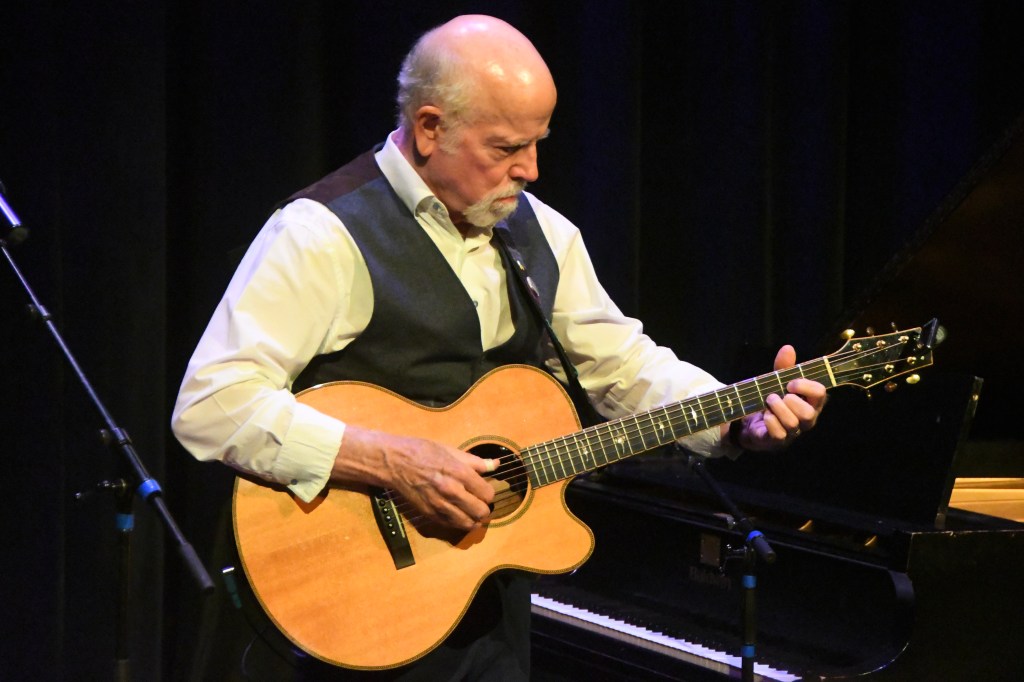
Horowitz says the flugelhorn “has a naturally forgiving, softer sound,” and will play flugelhorn, the larger, lower cousin to the trumpet, on about half the tunes Thursday at Jazz on Jay.
“The simpler I can keep it, on flugelhorn, the better,” he says. More generally, he says of his all-standards program, “I like to keep things relatively short so we can fit a few extra tunes into the hour and half.”
Jazz on Jay free concerts are noon to 1:30 p.m. at Jay Square, the new park space opposite Schenectady City Hall. The rain site is Robb Alley at Proctors, 432 State St. Seating is provided indoors at Robb Alley, but patrons are invited to bring their own seating and refreshments to Jay Square.
Jazz on Jay is presented by the ElectriCity Arts and Entertainment District and sponsored by the New York State Council on the Arts, a Schenectady County Legislature Arts & Culture Grant, Downtown Schenectady Improvement Corporation, The Schenectady Foundation, Price Chopper/Market 32, MVP Health Care, Schenectady County, Schenectady City Hall, and Proctors Collaborative. This blog is a series media sponsor.
Review: Todd Nelson’s JazzAmericana at Jazz on Jay, Thursday, June 12, 2025
Everybody knows “Wichita Lineman,” but Jimmy Webb’s melancholy road song went all fresh in Todd Nelson’s hands Thursday.
We all knew what it was, but it was new.
JazzAmericana – From left: Todd Nelson, guitar; Justin Tracy, drums; Kyle Esposito, fretless electric bass
The longtime Albany guitarist and one-time rock star with Silver Chicken, the Units/Fear of Strangers and other past-decades crews, started it slow and meditative. Soon his imagination brought a new vision into focus. Adding complexity in chords and melody to the familiar tune, he added new twists and turns, plus effects from the pedals at his feet. All original, and all lovely.
Todd Nelson
Apart from “Lineman” and Dave Holland’s complex, episodic “The Backwoods Song,” JazzAmericana played Nelson originals (see setlist), reinventing each after initial melodic statements; though some of those flowed wild and oblique. Nelson’s inventions augmented without wandering too far outside; his clarity of tone and thought those of a thinking fans’ guitar hero.
The 90-minute set, standard at Jazz on Jay, mused thoughtfully from the vintage opener “Blacksmith,” then the similarly serene and more recent “Peregrine.” Both set a structure followed thereafter: Nelson led a trio intro, then soloed, then handed off to bassist Kyle Esposito whose contributions often sped things up or held the tempo but went more dense. Justin Tracy’s drums held the pulse, mostly, but also pushed and pulled some. Nelson usually brought things home in his second break.
Kyle Esposito
His ringing, chiming chords launched “Paper Machete” in circular motion, then went deep before coming back up in bluesy runs. Esposito made a bold grab, playing up high and fast, before Nelson held the mood with sustained echoing licks resolved in a melodic cascade.
Next, Esposito launched “Springland” with a bassline borrowed from the Allman Brothers’ anthemic “Whipping Post” before Nelson steered the whole thing into a sunny reggae waltz. They used a similar detour surprise in Holland’s “Backwoods Song,” the main melody emerging from repeating riffs that built momentum in one direction before taking another.
The slower, sweeter “Sophist Intrigue” (name of the band Nelson led at 11) pumped some Allmans spice in agile repetitions that broke out into hard-driving variations. Nelson acknowledged Tracy’s drumming afterwards; he was right.
Justin Tracy
They held this upbeat energy into “Space Jelly,” using repetition again to build momentum before they pumped the brakes with a hard stop. Then a mood and tempo change in “Dream Alibis” showed how well Nelson’s clarity fits ballads, with single (and sometimes bent) notes etching a pleasing melody. Esposito played in that same eloquent simplicity, high up in a short break before Nelson recapped with a shimmering delicacy.
Similar title but way different mood: “Dog Dreams” bounced all playful in energetic riff variations – before Nelson downshifted at the bridge into a more meditative mood; Esposito and Tracy perfectly matching the flow.
Then “Wichita Lineman,” Nelson’s discrete wah-wah and reverb taking its elegant pop purity into new directions. “In Stride” had the momentum its title suggests, but surprised as much as “Lineman” – as if twang master Duane Eddy (RIP) roamed around a shuffle until it carried him into higher registers, with discrete but effective echo.
In “Dune Buggy,” melodic playfulness set up repeating riffs, and Tracy got the only solo of the set, in its last song. Here, Nelson played further outside than usual, strumming behind the bridge in staccato treble scratches, ganging up on the tune with pedal effects.
Handing Off – Todd Nelson, center, hands off the solo spot to Kyle Esposito, right; as Justin Tracy, left, holds down the beat.
Although Nelson only formed JazzAmericana in January, he’d played with both Esposito and Tracy in previous bands, so the trio has already reached a fine-tuned, telepathic closeness that was serious fun to hear.
The weather behaved, mostly – though wind blew the sign on nearby Tara Kitchen so it swung as hard as the band.
SETLiST
Blacksmith
Peregrine
Paper Machete
Springland
The Backwoods Song
Sophist Intrigue
Space Jelly
Dream Alibis
Dog Dreams
Wichita Lineman
In Stride
Dune Buggy
Jazz on Jay continues Thursday, June 19 with the Steve Horowitz Quartet. Even sooner, crews half a block away were busy as Nelson, Esposito and Tracy wrapped up, erecting a stage where Da Schmooze would play at five p.m., another free show.
Preview: Todd Nelson’s JazzAmericana, Thursday, June 12, 2025
Guitarist Todd Nelson ignores music’s genre “border patrol.” His first teachers were a folksinger and a classical virtuoso, and his high school band ambitiously tackled the Mahavishnu Orchestra’s intense jazz fusion “Dance of Maya.”
Todd Nelson
“Instrumental jazz and improvised music, that’s what I’ve been doing since 2011,” says the son of musical parents. His father sang gospel and played piano, also trombone in a brass quintet whose trumpeter played in the Philadelphia Orchestra. His mother played piano and mandolin.
When a buddy started guitar lessons, so did Nelson. When the friend quit, Nelson kept going; studying and performing while still in elementary school in Rhode Island. “We called ourselves the Incidentals,” he says, recalling his first band. That sounded too much like a barbershop quartet, so they became Sophist Intrigue when their drummer’s sister returned in 1967 from San Francisco with suggestions. “She came up with a name for us and painted my guitar case all psychedelic,” says Nelson. “We had no idea what [Sophist Intrigue] meant, and I still don’t know.” Now, it’s a song title on his “jazzamericana” album, released in March.
JazzAmericana (with added capitals) also names the new (since February) band he leads Thursday. Nelson plays guitar with bassist Kyle Esposito and drummer Justin Tracy. Esposito played with Nelson and drummer Manuel Quintana in NEQ and with Tracy and singer Mark Delgado in Spanish Ghost. London-born Tracy led his own band at European jazz festivals while Esposito also plays with Hudson Valley saxophonist Jay Collins.
Inspired by rockers Jimi Hendrix, Eric Clapton and Peter Green initially, Nelson discovered jazz, first as a fan of Miles Davis and John Coltrane. Then, as a player, he admired John Scofield – “so original in his sound,” says Nelson; and Kenny Burrell, for “…the simplicity of his playing…no wasted notes, so melodic.”
After high school in Delmar, Nelson cross-enrolled at SUNY Albany (now UAlbany) and (now closed) College of St. Rose to continue guitar training. And he found in Albany’s Lark Street/J.B. Scott’s 1980s scene a do-it-yourself ethos that encouraged creativity, playing with “some really good musicians and singers who could play all kinds of stuff,” he recalls.
Those “really good musicians and singers” became the Units (later Fear of Strangers). One of Albany’s best and best-known late 70s-early 80s rock bands, they started by playing covers but soon turned to creating original songs. “We were fortunate to start writing at a time when there was a kind of anything-goes ethos about songs…A lot of the stuff we wrote was pretty out there,” notes Nelson. He found, “It was OK to write songs about buildings and food,” he says, citing a Talking Heads album. “It freed us up.”
In JazzAmericana, Nelson takes full advantage of his freedom. He plays mostly originals today, including “Paper Machete,” “Sophist Intrigue,” “The Dogleg of Panhandle,” “Block Party” and “Nevertheless” – tunes from two NEQ albums (“None of the Above,” 2014; and “Nevertheless,” 2021) and two under his own name (“Here,” 2011, and “jazzamericana,” 2025).
“Some of the (original) songs are highly composed and they all have some improvising space in there,” says Nelson, where “we just let our freak flag fly.”
They also play covers including “Black Orpheus,” “Love for Sale,” the Kenny Burrell favorite “Midnight Blue,” the Miles Davis classic “Blue in Green,” “The Backwoods Song” and the Jim Hall version of Rodrigo’s classical “Concerto de Aranjuez.” Nelson says, “Playing covers, it’s best to start simple….I just try to learn the melody and see how I can get some chords in there and map out where I’m going.”
Jazz on Jay free concerts are noon to 1:30 p.m. at Jay Square opposite Schenectady City Hall. The rain site is Robb Alley at Proctors, 432 State St. Seating is provided indoors at Robb Alley, but patrons are invited to bring their own seating and refreshments to Jay Square.
Jazz on Jay is presented by the ElectriCity Arts and Entertainment District and sponsored by the New York State Council on the Arts, a Schenectady County Legislature Arts & Culture Grant, Downtown Schenectady Improvement Corporation, The Schenectady Foundation, Schenectady County, Schenectady City Hall, and Proctors Collaborative. This blog is a series media sponsor.
REVIEW – Steve Earle and Zandi Holup at Universal Preservation Hall, Thursday, June 5, 2025
Both veteran omni-troubadour Steve Earle and opener Zandi Holup had self-improvement on their minds Thursday at Universal Preservation Hall. Both took their demons out for a walk, and vanquished them.
Earle’s autobiography in songs and stories took a decades-long walk; from San Antonio childhood to New York City bodegas via Nashville music-biz travails; success on radio and world tours despite genre-jumping; addiction, prison and recovery; reconciliation with a sometimes troubled self and confident serenity.
He started in the 1970s and wound up at 70, at peace after spectacular highs and lows. Onstage from 8:35 to 10:40, his stories sometimes took longer to tell than the songs to sing.
Alone with his carbon-fiber guitar, he started uptempo with “Tom Ames’s Prayer,” written at 20 but not recorded until 20 years later, after prison and sobriety. The Civil War lament “Ben McCulloch” dug deeper into history, after Earle set it up with family-history episodes including his father’s FAA career. “Devil’s Right Hand,” he said, wasn’t originally a gun-control song, until it was; he wrote it while living in “a trailer full of guns” and cited murder stats as changing his mind. Springsteen’s approval, he recalled, made “Guitar Town” a success – a very up and down experience for the defiantly mercurial songwriter.
He gave each song its due in extended intros, mostly around three minutes, though sometimes much more; but “My Old Friend the Blues” flowed into “Someday,” both thoughtful musings, with no stops or seams.
He added harmonica in “I Ain’t Satisfied” and enlisted the first singalong, stepping away from the mic to lead the chorus. He then intro’ed “Number 29” with seven minutes of musing about tough teen times in San Antonio until friend Bubba (football jersey no. 29) defended him. Here his gravelly voice took on an affectionate, grateful sweetness. He muscled up again in “Copperhead Road” from his (1988) “rock and roll record;” here the forceful cadence and groove meant as much as the words as he lamented the Vietnam War like “Ben McCullouch” had the previous century’s mistake.
Then, his own came out, in the super-sad prison and execution tale of “Billy Austin.” He acknowledged self-destruction via drugs just when things were going well; he’d shrugged off many interventions before rehab and sobriety. Noting son Justin’s fentanyl overdose death somberly set up “Goodbye,” “Nashville Blues” and “Cocaine Cannot Kill My Pain” – nor Earle, fortunately.
“Transcendental Blues” marked his return to a better self and active music-making, and the joyful anthemic “Nation of Immigrants” urged acceptance and empathy; the latter, he said, is the purpose of music. Honoring John Hartford, the Grand Ole Opry (he’ll be admitted in September, at Vince Gill’s invitation) and bluegrass as hillbilly bebop in the intro, his bluegrass experiment “The Mountain” waltzed serenely on cozy mandolin riffs. It also beautifully set up the epically angry talking blues-indictment-eulogy “It’s About Blood” mourning those lost in a mine-disaster. A few fans stood in tribute as Earle recited the names of the dead.
In his encore, Earle bought out opener Zandi Holup to duet on “Everything But You,” returned UPH to its church origins in the singalong “Tell Moses” and honored the Irish musicians he much admires in “Galway Girl.”
Burly, with Popeye arms and John Brown beard, he framed his un-pretty but powerful and accurate voice in mostly six-string guitar picking or chord strums. He changed occasionally to 12-string, mandolin or octave mandolin in simple settings that directed the ears to his words. Always the words.
Octave mandolin
Now 29, opener Zandi Holup shared Earle’s candor about fears and failings; fewer years but similar bumps and bruises. Her clear strong voice carried the authority of harsh lessons learned; sometimes on her own, as in the family-strife lament “Hurt People,” sometimes in the challenges of cherished friends. The compassionate cries in “Mary Jane” about a junkie friend yielded to happy reflection of now she got clean.
Zandi Holup
Pennsylvania-born and Nashville-based, her sturdy folk-country songcraft showed lessons chiefly from Earle, tour-mate over three summers now. In “Preacher’s Daughter,” she echoed his writing style so closely in rhyming and repetitions that you could almost hear his voice alongside hers – foreshadowing nicely their co-write and duet “Everything But You” in his encore.
Review – Dylan Canterbury Quintet Kicks Off Jazz on Jay Season Thursday, June 5, 2025
Trumpeter Dylan Canterbury put a confidently positive spin on things Thursday, opening the new 13-show season at Jazz on Jay in Schenectady’s Jay Square.
He led his quintet through his original swing-bop “Spin” to open, then followed with “Quiet Revolution” which he explained urges us to be the change we want to see. They closed 90 minutes later with the similarly optimistic standard “Wrap Your Troubles in Dreams and Dream Your Troubles Away.”
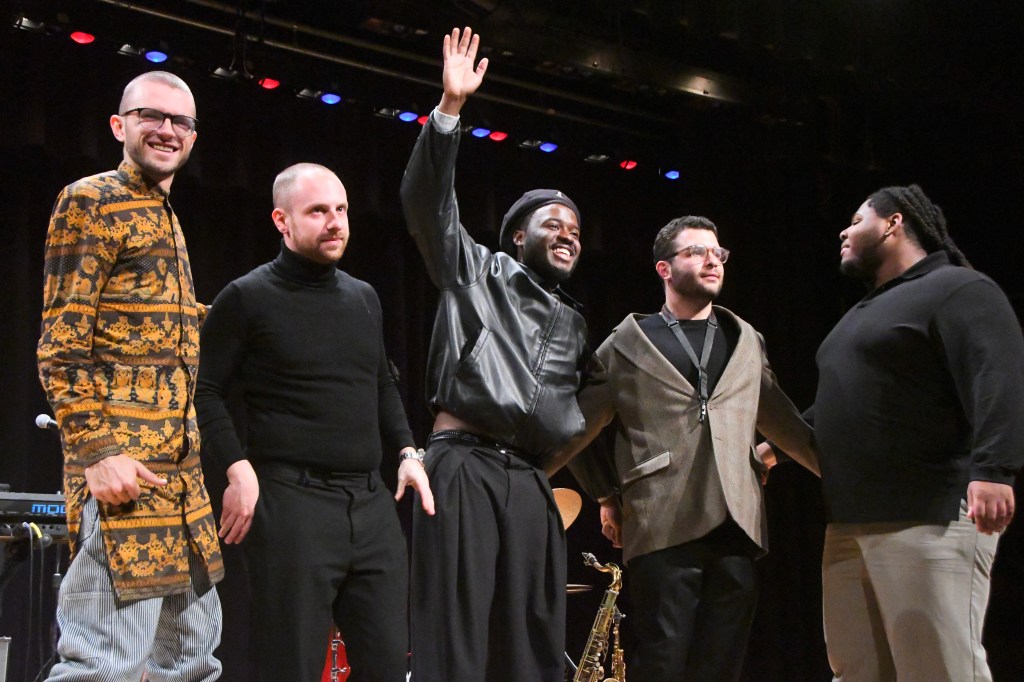
Dylan Canterbury’s New Quintet – From left; Wyatt Ambrose, guitar; Dave Shoudy, bass; Canterbury; Matt Niedbaski, drums; and Tyler Giroux, keyboard
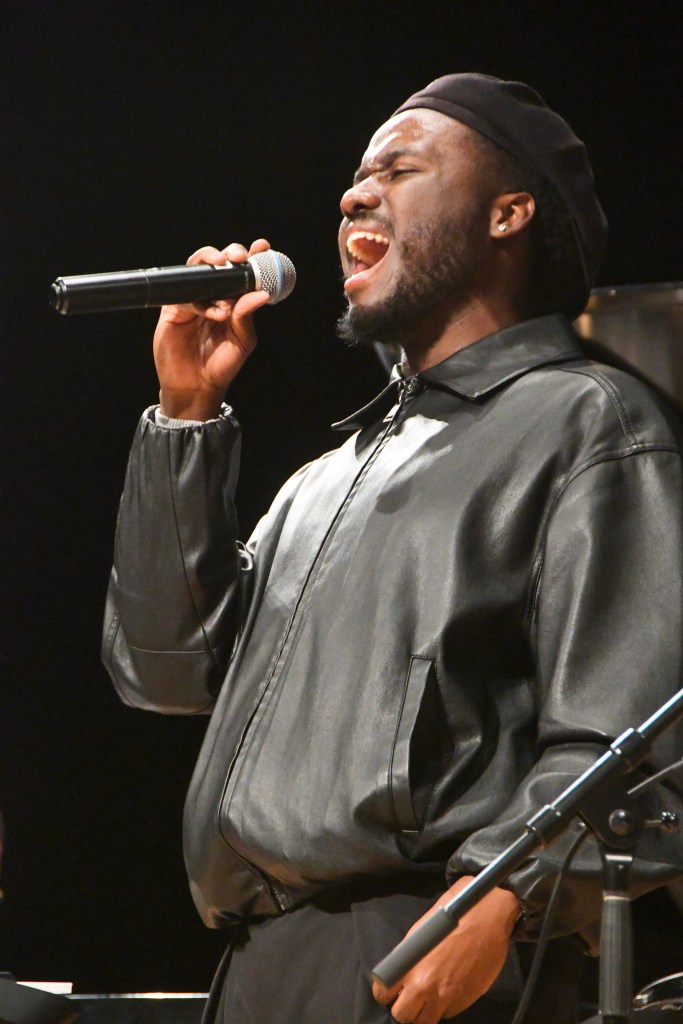
There was nothing didactic or naively simplistic about this since the well-made originals and carefully curated standards all inspired complex and sophisticated playing by all hands: Canterbury, trumpet and flugelhorn; Wyatt Ambrose, guitar; Tyler Giroux, piano; David Shoudy, bass and Matt Niedbalski, drums. Familiar faces to jazz fans hereabouts – Canterbury had introduced “Quiet Revolution” with Keith Pray’s Big Soul Ensemble at the Van Dyck years ago – the quintet played its first gig just four days before. But there was nothing tentative or loose about this, either. They showed they know how to blend and how to emerge from the blend in individual statements that shed a personal light on things.
After the spry opener “Spin,” Canterbury noted “We’re off,” in racetrack parlance, shifting to a more reflective, slower tempo in “Quiet Revolution.” He took the best solos in both but let everybody shine throughout. Though Shoudy and Niedbalski took the fewest solos, they jumped out of their supporting roles whenever Canterbury cued them, with gusto and grace. Ambrose and Giroux bought fresh thinking and fluent playing to everything.
Noting they were shifting from their most serious-themed song, with its Buddhist serenity, to the least – “Torgo’s Lament” inspired by what Canterbury called a terrible movie* – they slowed to a waltz-time amble, Canterbury shifting to flugelhorn for a mellow feel, then stepping back for Shoudy to make his solo statement.
“Trust Fall” cruised on their more customary mid-tempo, and here Canterbury gave the drummer some and Niedbalski rose to the challenge, without distorting things, playing within the song and his groove.
Matt Niedbalski
Steve Swallow’s “Eiderdown” slid back to a mellow and conversational expression, nicely balanced but spiced with short, punchy statements. Then it was back to originals, the lively flugelhorn reverie “Bullfrog” with its complex cadence and bright, lively flow.
Tyler Giroux
The challenge of COVID shaped “One More Step,” an “it’s-always-SOMETHING” lament that launched from a sweet intro sentiment to adventurous riffing. Inspired by “Watershed Down,” the new “El-Ahrairah” – Canterbury enjoys celebrating animals – set breezy trumpet and guitar riffing in a cozy flow that resolved in a pulsing coda.
Wyatt Ambrose
Two covers closed the show, to pleasing effect. Canterbury preemptively discouraged any smooth jazz expectations around Dave Grusin’s “Chanson” by mixing mockery with a faithful quote of Chuck Mangione’s saccharine “Feels So Good” before launching into a hearty, mellow, easy and very adult rendition as Shoudy’s bass pulsed sweet and strong.
Dave Shoudy
Reprising the optimistic mood of his own “Quiet Revolution” earlier. Canterbury acknowledged our tough times of strife and stress, offering an antidote to trouble in Bill Evans’ arrangement of “Wrap Your Troubles in Dreams.” This was no over-reverent antique, as everybody’s skill and spirit engaged the familiar melody in confident ownership and expression. And, like everything they tackled all the say, it swung, offering sweetness and light, but nothing obvious or superficial. Canterbury said in a pre-show interview a few days ago that he and this new quintet would play “largely in the post-bop style, influenced primarily by 1960s Blue Note recordings.” The songs, and performances, respected that promise to strong and effective purpose. Everybody was solid and confident, but Canterbury played as the first among equals. His ideas and phrasing were strong from the first times I saw him play in Keith Pray’s big band at the Van Dyck, but he has grown impressively since then, in confidence, complexity and imagination; swinging mellow or urgently proclaiming.
From left: Tyler Giroux, Dylan Canterbury, Wyatt Ambrose, Matt Niedbalski, Dave Shoudy
Sultry air – 88 degrees at show time, and throughout – drove fans under the four tents that organizers kindly provided, taking refuge from heat that almost, almost, discouraged Steve Nover from dancing. A few dozen third-graders marched in from the nearby charter school to sit in sometime fidgety rows up front. Discovering painter Ubu working in the wings off stage right, they clustered around her and she invited a few of the braver ones to help. Sweet.
Jazz on Jay continues Thursday, June 12 with guitarist Todd Nelson’s JazzAmericana trio: Nelson, guitar; Kyle Esposito, bass; and Justin Tracy, drums.
*Manos: The Hands of Fate.”
Linnea Bailey of the Proctors Collaborative Hosted Jazz on Jay
All Jazz on Jay shows are free. The rain site is Robb Alley at Proctors, 532 State St., Schenectady. Seating is provided indoors; fans bring their own seats to Jay Square.
Jazz on Jay is presented by the ElectriCity Arts and Entertainment District and sponsored by the New York State Council on the Arts, a Schenectady County Legislature Arts & Culture Grant, Downtown Schenectady Improvement Corporation, The Schenectady Foundation, Price Chopper/Market 32, MVP Health Care, Schenectady County, Schenectady City Hall, and Proctors Collaborative. This blog is a series media sponsor.
Dylan Canterbury’s New Quintet Plays New Season’s First Show, 12 Noon on Thursday, June 5
Dylan Canterbury opens the new season at Jazz on Jay Thursday; the busy trumpeter, composer and arranger played his first-ever show as bandleader at Jazz on Jay in 2021. All 13 noontime shows are free, open to everyone.
Thursday, Canterbury leads a new quintet whose guitarist Wyatt Ambrose opened last season at Jazz on Jay. While this lineup is new – Ambrose; Tyler Giroux, piano; Dave Shoudy, bass; and Matt Niedbalski, drums – “we’ve all worked with each other in different settings before,” says Canterbury.
Dylan Canterbury. Photo provided
For Canterbury, it all started with a birthday CD. “Louis Armstrong was and continues to be my primary inspiration,” he says. “My parents got me a CD of his for my 10th birthday, and I still remember the feeling I had when I listened to it for the first time. Even as a kid, I knew I was experiencing something uniquely special, and that I wanted to be a part of that in any way possible,” he recalls.
Making music himself seems a natural for this member of a musical family. Canterbury’s father played trombone in high school and college, one cousin teaches music and another is training as a music therapist. Canterbury’s wife is a classically trained violinist and vocalist, and her father plays cello with the Syracuse Orchestra.
Locally, Canterbury studied with Eric Latini and Joe Lamb and played his first gig at 15; at SUNY Purchase he trained with Jon Faddis, Jim Rotondi and Ray Vega.
“Most of the tunes (he’ll play Thursday) are originals,” says Canterbury, “largely in the post-bop style, influenced primarily by 1960s Blue Note recordings.” He adds, “For originals, we’ll be playing some of my older compositions such as ‘Spin’ and ‘Quiet Revolution,’ as well as debuting a new tune called ‘El-Ahrairah.’” They’ll also play Steve Swallow’s “Eiderdown,” Dave Grusin’s “Chanson” and Bill Evans’ arrangement of “Wrap Your Troubles in Dreams.”
“When playing standards, I try to keep the song’s original intent in mind while finding some kind of new wrinkle to lean into,” he says. “It’s important to maintain the integrity of a tune while also not just treading the same ground as those who came before us,” he explains, adding. “There’s ample room for improvisation.”
Busy as player and composer, Canterbury leads own quintet, co-leads the BWC (Brucker-Weisse-Canterbury) Jazz Orchestra, and he plays with Keith Pray’s Big Soul Ensemble, Bobby Previte’s Upstate Composers Orchestra, the Empire Jazz Orchestra, the Tim Olsen Big Band and Alex Torres and his Latin Orchestra. His “Going Places” album hit in 2020.
He also teaches at SUNY Schenectady where he directs the jazz ensemble and teaches jazz-focused courses in trumpet, improvisation, and history. “Until its closure last year, I was on faculty at the College of St. Rose,” says Canterbury, “where I taught improvisation and arranging. I also maintain a studio of private students.”
For the nonprofit Jazz Lines Publications that preserves historic jazz literature and scores, he does engraving, the craft of using musical notation to produce cleaned-up versions of classic music scores by referencing original source material. When written sources aren’t available, Canterbury’s well-tuned ear enables him to copy scores from original recordings, a craft called transcribing.
On Friday, July 18th, Canterbury will play Music Haven in Schenectady’s Central Park with the SUNY Schenectady Jazz Faculty Combo; and he plays with Keith Pray’s Big Soul Ensemble on the last Tuesday of every month at the Cock ‘n Bull in Galway. Both ensembles often play his original compositions, as does the BWC Jazz Orchestra whose performances are less frequent these days.
Jazz on Jay free concerts are noon to 1:30 p.m. at Jay Square, the newly park space opposite Schenectady City Hall. The rain site is Robb Alley at Proctors, 432 State St., Schenectady. Seating is provided indoors at Robb Alley, but patrons are invited to bring their own seating and refreshments to Jay Square.
Jazz on Jay is presented by the ElectriCity Arts and Entertainment District and sponsored by the New York State Council on the Arts, a Schenectady County Legislature Arts & Culture Grant, Downtown Schenectady Improvement Corporation, The Schenectady Foundation, Price Chopper/Market 32, MVP Health Care, Schenectady County, Schenectady City Hall, and Proctors Collaborative. This blog is a series media sponsor.
The Levin Brothers at Caffe Lena; Tuesday, May 27, 2025
“Some nights we don’t play it that well,” Pete Levin mused after the Levin Brothers romped through Lenny White’s horror-movie bebop “Wolfsbane” at Caffe Lena Tuesday.
The Levin Brorthers – From left, Pete Levin; Jeff Siegel (behind mic stand), Pat LaBarbara, Tony Levin
They played it all well, belying Pete’s modest mock worry, introducing Erik Satie’s elegant “Gymnopedie No. 1,” that the band’s experiments with others’ music meant they’d become “just a cover band.” Right, “just a cover band” that launched from quiet solo piano into Paul Simon’s “Scarborough Fair” earlier. They’d celebrated the ballad’s pure, familiar prettiness, then bopped into a bustling B-section that energetically took the tune apart and reassembled it as LaBarbara’s electronic wind instrument brought it home.
Pat LaBarbara
The quartet – keyboardist Pete Levin, bassist-brother Tony, tenor saxophonist-EWI player Pat LaBarbara and drummer Jeff Siegel – delighted the Caffe full of musicians and mostly-boomer fans, often re-inventing “covers.”
They didn’t start that way. Their original opener “Out of Darkness” wandered between fusion and bossa with Tony plucking a five-stringed electric upright bass in close sync with Siegel under solos from LaBarbara’s EWI and Pete’s piano-sounding synthesizer. A repeating, circular vamp set Siegel loose.
Below, Tony Levin
Pete Levin
Pete’s synthesizer mostly emulated a piano but beefed up to a menacing organ sound in “Wolfsbane” – as Tony left his electric upright for a five-string bass guitar – and resonated with a Fender-Rhodes-like ring in Wayne Shorter’s lovely “Fall.” LaBarbara switched to tenor first in “Dream Steps,” an original bebop based, he said, on “You Fell Out of a Dream.” He said this came from a 40s film starring Lana Turner, whose entrance to nightclubs thereafter detoured jazz bands from whatever they were playing to greet her with “Dream.” Mock-cranky, LaBarbara complained bands don’t do that when he comes in. Such self-deprecation marked many intros, especially Pete’s, but their playing blew away any need for it.
Below, Pat LaBarbara
Three songs in, they were in full flight, but after “Dream Steps,” they flew higher in a swinging, spunky – well, yeah – cover of Steely Dan’s “Aja” that Pete called an experiment. Like “Scarborough Fair,” this flowed in familiar fashion through its wistful main melody before diving off the map, this time via bebop tenor sax, abrupt tempo shifts and an all-in coda with a repeating riff by LaBarbara and the Levins as Siegel drummed wild.
“Brothers Take a Ride” recalled a California tour (before Siegel replaced drummer Joe LaBarbara) with bristling, jagged cadences where Pete seemed to lose his way for a moment, cueing (Pat) LaBarbara’s tenor to the rescue before a second and more successful chorus. Here Tony and LaBarbara echoed riffs in harmony.
Things got pretty in Satie’s “Gymnopedie,” a slow reverie whose sweetly delicate melody charmed the place before – as in “Fair” and “Aja” – experimental forays outside. They did the reverse in “Wolfsbane,” a horror movie mood leavened (Levin’ed?) by LaBarbara’s tenor quote of “Softly As In a Morning Sunrise” but revved again by Tony’s propulsive bass guitar.
Jeff Siegel
In “another pretty one” (like “Gymnopedie”) as Pete promised, the sweetly tuneful original “Fade to Blue” rode a cozy Pete piano vamp that LaBarbara used as launching pad for bold explorations. Then they punched up the energy in “Bringing It Down to the Bass,” alternatively “Bringing It Down to Laid-Back Lee,” echo of an earlier title for this original. They made maximum fun of this cheerfully self-confident freeway funk number.
LaBarbara stayed upbeat, starring in “Good News” which they’d recorded with Brazilian percussionist Emilio Martins. Sounding more straight-ahead than Brazilian, this featured Tony donning finger extensions to percussive effect as Pete used electric piano sounds for a modern mood.
He emulated a clavinet in “Gimme Some Scratch” from their self-named first album (2014), suave and swinging on short riffs and a stop-and-go cadence.
They left unplayed a planned encore of “Icarus” but nobody seemed to feel short-changed.
Afterward, as fans clustered in the lobby where both Levins met and greeted, LaBarbara and Siegel greeted Don McCormack, patron saint of Saratoga jazz, and his family. At the table next to mine, the two band members then sat flanking Hal Miller, smiling as the Albany percussionist and archivist told old jazz stories.
From the first, Willie Nile has welded messages of compelling moral force onto high-impact, stripped-down rock and roll. “The Great Yellow Light,” his 21st album, may be his most powerful, passionate and compassionate collection.
Willie Nile has rocked at the highest international-star levels since 1980 when his debut album hit, backed by Patti Smith’s band. Within weeks, the Buffalo-born but very New York City rocker was opening shows for The Who, by Pete Townshend’s request, drawn by Nile’s irresistible amalgam of musical and moral force. The next May, Nile played UAlbany’s freebie MayFest on campus, singing most of that first album, plus “Radiation,” a blistering attack on deadly corporate nuclear carelessness that may have cost him that first record deal.
Some of his power comes from sheer sonic muscle: chainsaw guitars over insistent drumbeats. But most of it is simply him: a yearning or declamatory voice exerting the moral force of fiery conviction. He means what he sings, at a bone-deep level.
Since his 1980 area debut, Nile has played everywhere hereabouts, from cozy clubs to SPAC’s wide stage. Opening solo for the Roches at UAlbany’s Page Hall in a band-less period between record deals, he went on without an introduction and slew the place, prompting a fan to holler, “Who ARE you?” By now, especially after many shows at WAMC’s (sadly, soon to close) The Linda, everybody knows.
Willie Nile at The Linda. Michael Hochanadel photo
Now, when those whom Nobel Prize-winning economist/columnist Paul Krugman calls “sadistic zombies” in a befouled White House attack and threaten musicians Bruce Springsteen, Taylor Swift and Beyonce, we need Nile’s new album of truth, of free expression from a brave moral conscience.
Old friends, Nile and Springsteen sing on each other’s shows, and they show more courage than a passive Capitol-full of Congressional cowards, and cowed, over-cautious corporate media.
Play this one loud; it’s tuneful enough to sing along, righteous enough to inspire.
“Wild Wild World” kicks off “The Yellow Light” with a list of troubles Nile hopefully transmutes into a rousing call to action. Nile has said it’s “a call out to our better angels.” He has explained, “Even though the history of America is riddled with pain and injustice and the divisions between us are greater than ever, I refuse to give in. I know we can do better than this.”
Next, in “We Are, We Are,” he offers a consoling assurance that we indeed can do better: “They can’t stop us any more.” Later, “Wake Up America” urges courage in the fight with those Krugman calls “sadistic zombies.”
Even the love songs proclaim strength and hope. In “Electrify Me,” Nile calls for mutual inspiration and energy, not just with a lover, but also across his community. The title track romances a powerful woman “with wonder in her eyes and thunder in her heart.” A few tracks later, the heartfelt slow ballad “Fall on Me” offers an all-purpose helping hand.
Before the calls to action that close the album comes that lovesong respite, plus the pipes-spiced “An Irish Lullabye” and the autobiographical “Tryin’ to Make a Living in the USA” – a fun-rocking, rollicking knock on the music business.
Then Nile lets his indignation rev up again in the call-to-action “Wake Up America,” insisting that we MUST do better. In the stately waltz-time album-closer “Washington’s Day,” Nile inspires with the invitation to be, and work, together.
The credits list impressive guests swirling around Nile’s band of Johnny Pisano, bass; Jon Weber, drums; and Jimi Bones, guitar. Steve Earle (at Universal Preservation Hall this Thursday, June 5) and Paul Brady guest at the mic, Rob Hyman and Eric Bazilian (the Hooters, for whom he opened recently), Larry Kirwan, Fred Parcells and Chris Byrne (Black 47) and Waddy Wachtel (every southern Cali rocker) and David Mansfield (Rolling Thunder Revue) play simple parts. Nile’s longtime producer Stewart Lerman once again achieves a honed, high-energy primal rock sound that relies mostly on guitar power although Nile plays piano some, as on “What Color Is Love.”
All this skill is focused in fine-tuned unity behind a small man with a giant message of alarm balanced with hope in action. The music rocks to exhilarating effect, mostly, but with quieter interludes, notably “Irish,” to catch our breath. Nile’s voice croons quietly or rises in rousing calls to action; compelling and inviting, either way.