Fire and Funk; Vanessa Collier at Caffe Lena on Wednesday, February 11, 2026

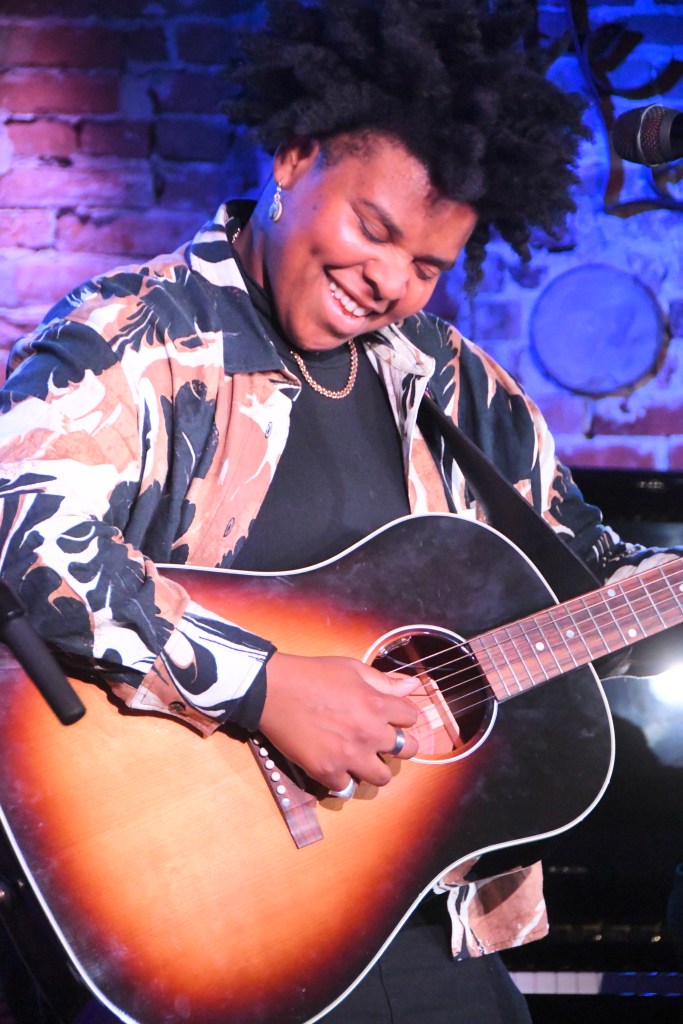
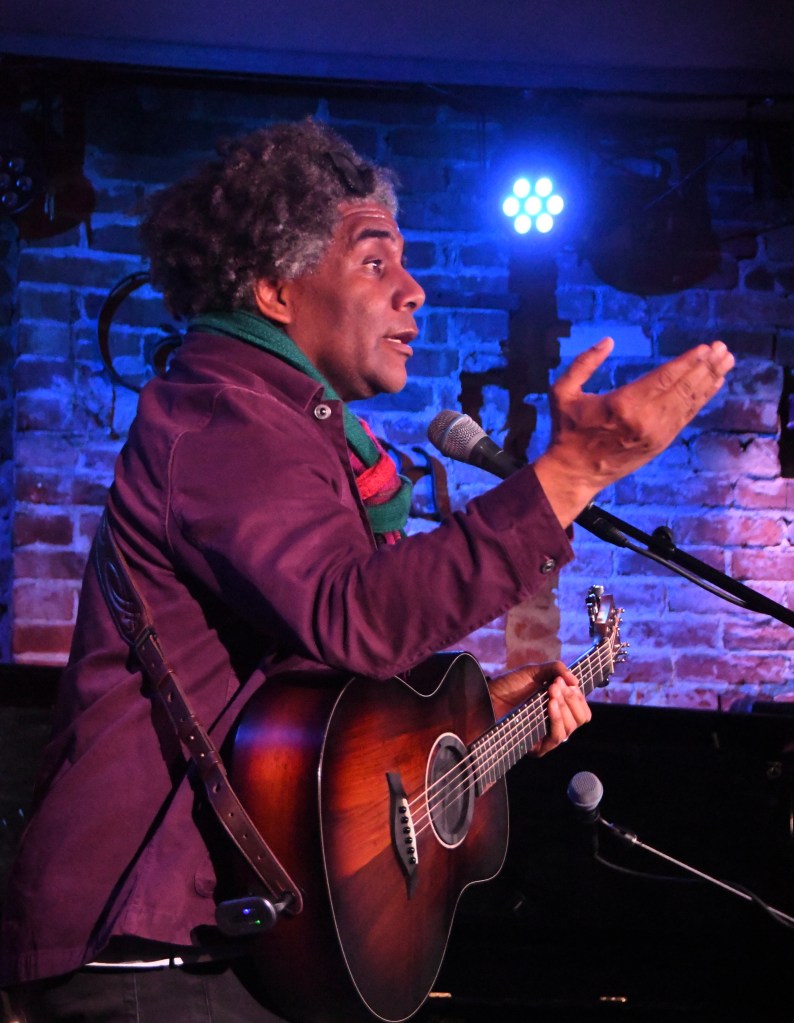
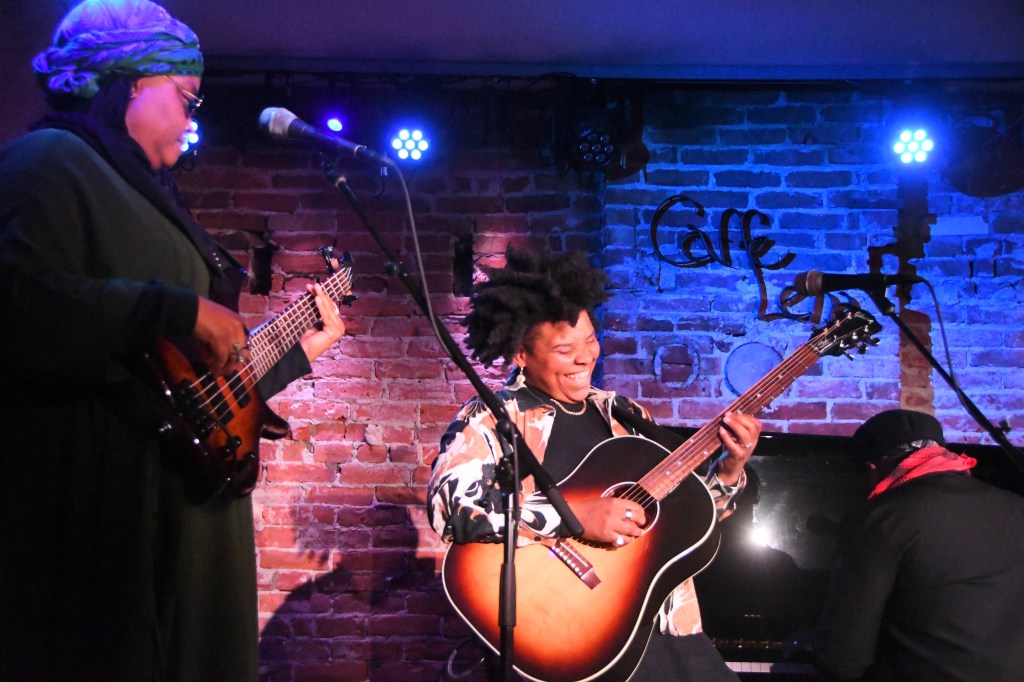
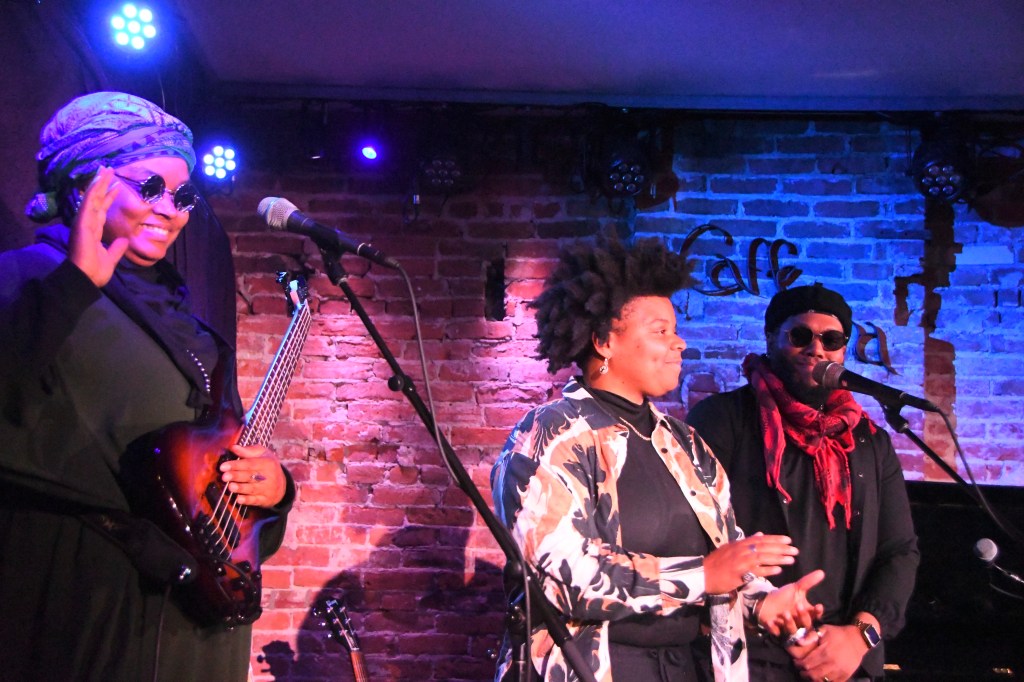
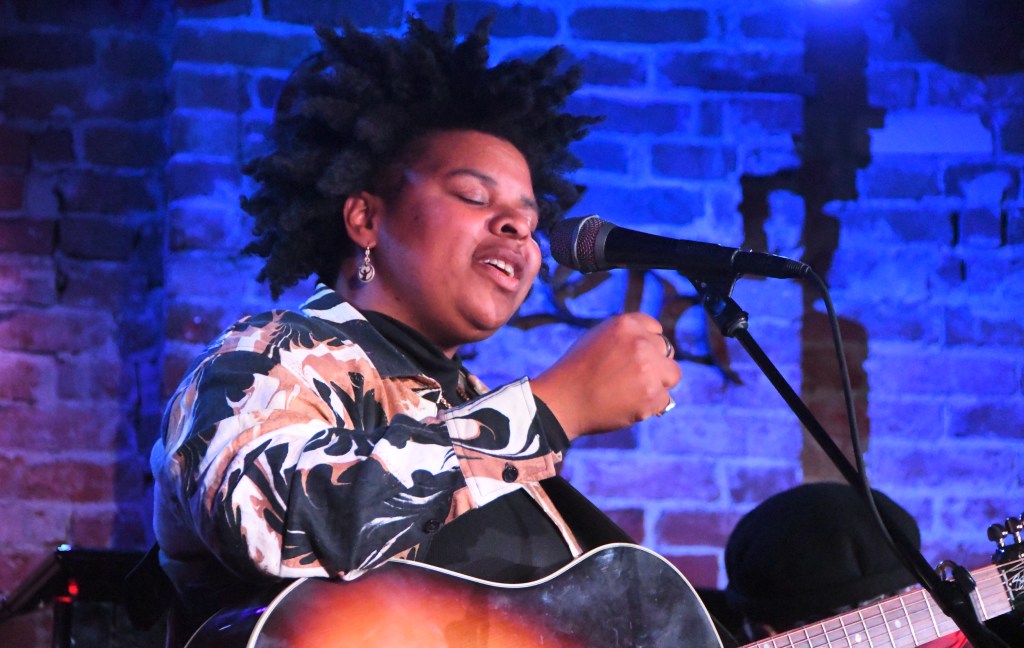
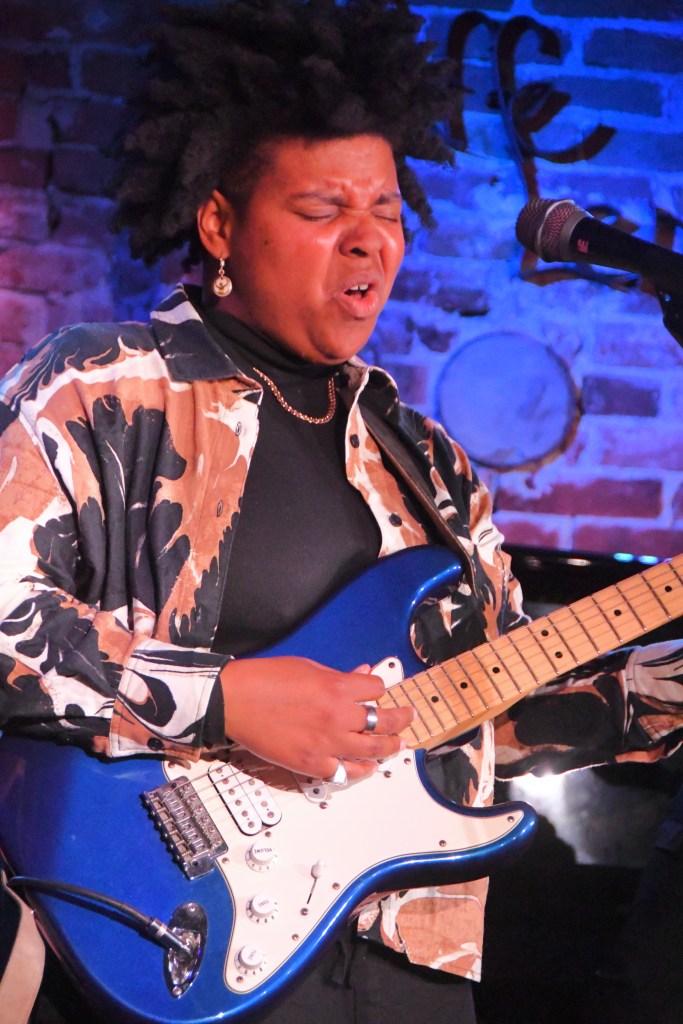
Vanessa Collier unpacked the whole kit Wednesday at Caffe Lena: alto and tenor saxophones, guitar and dobro. Non-hardware items completed a most impressive package: soul-deep command of fire and funk in her soaring or simmering voice, from-the-heart songwriting skills, a discerning ear for cover tunes, and a compact band. Scorching at hot tempos, slow-cooking in R&B ballads and highly interactive, the quartet co-starred guitarist Mighty Mike Schermer, seen on the same stage previously with Maria Muldaur and Marcia Ball. Turning up the heat, spicing with soul sauce, they barbecued the place.

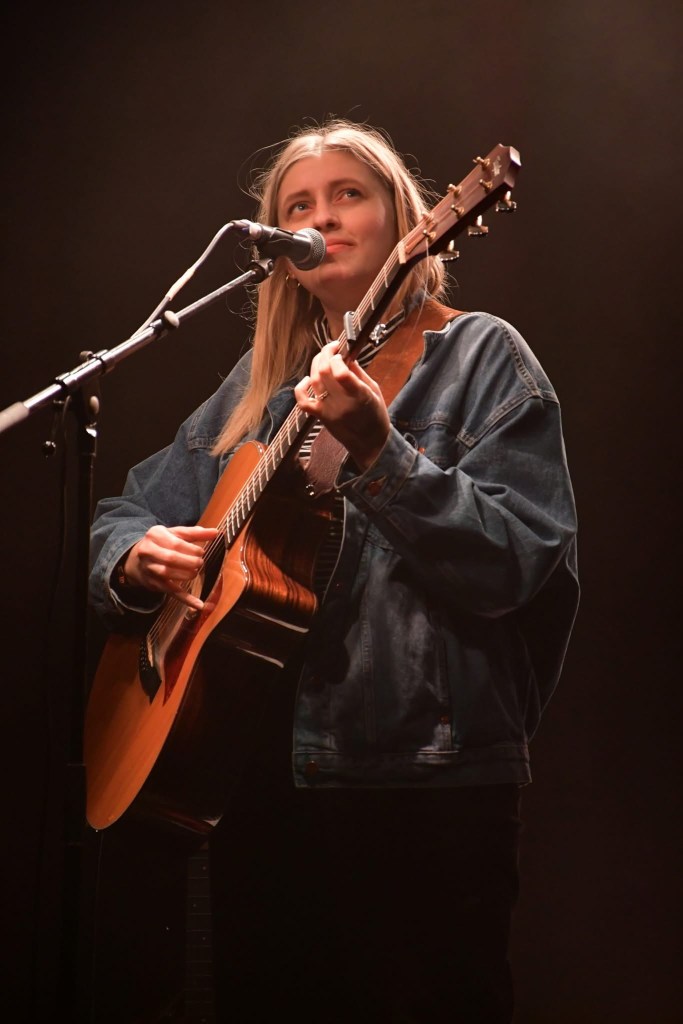
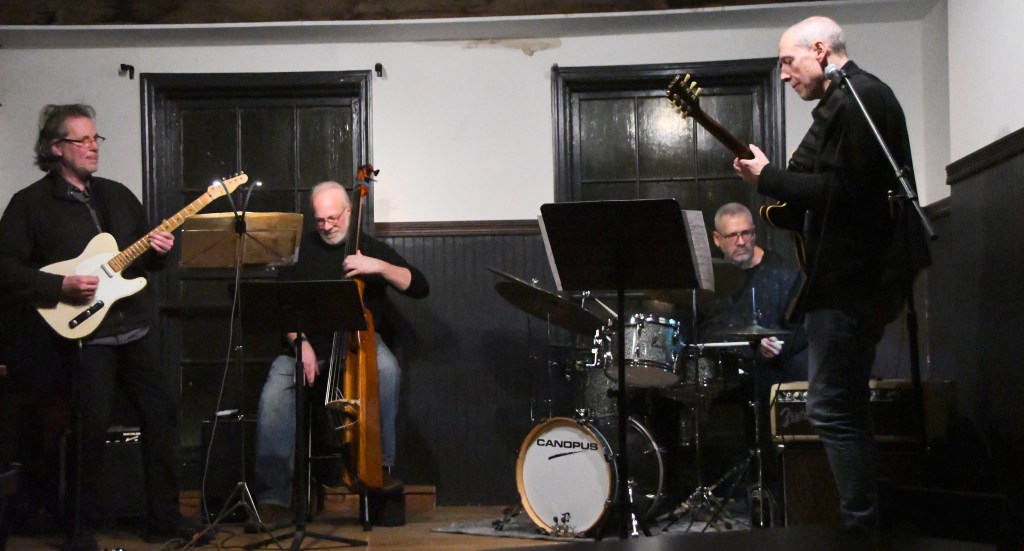
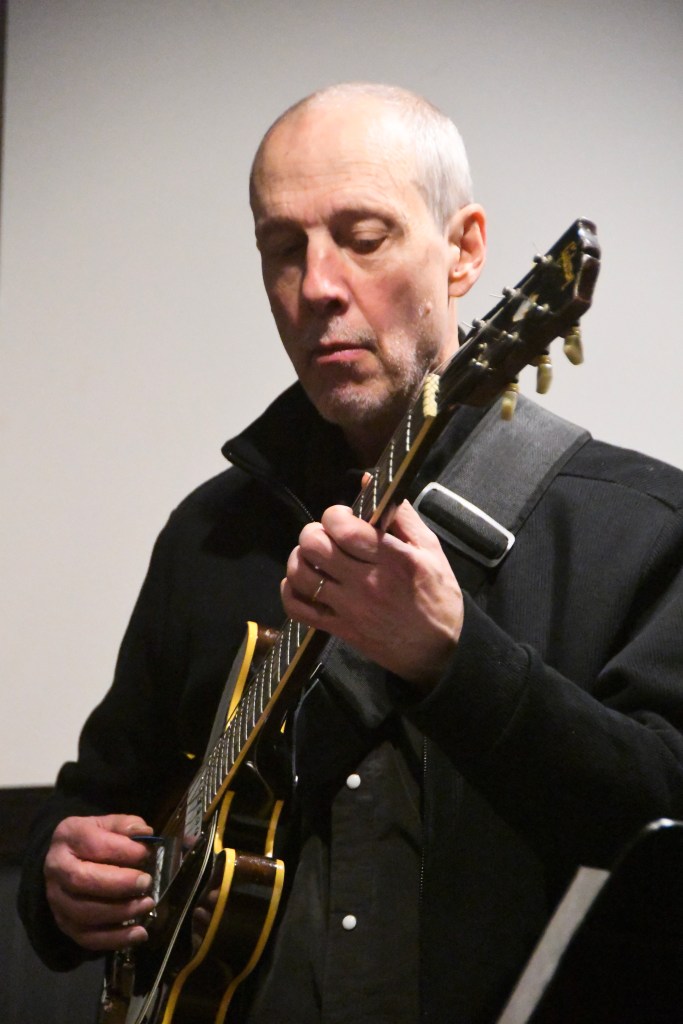
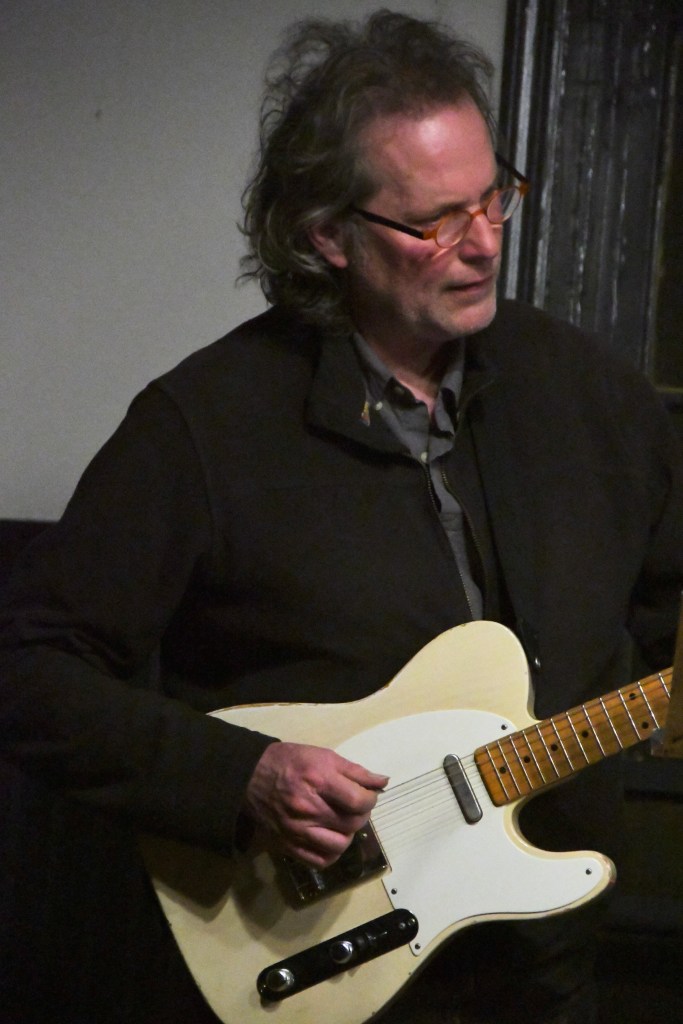
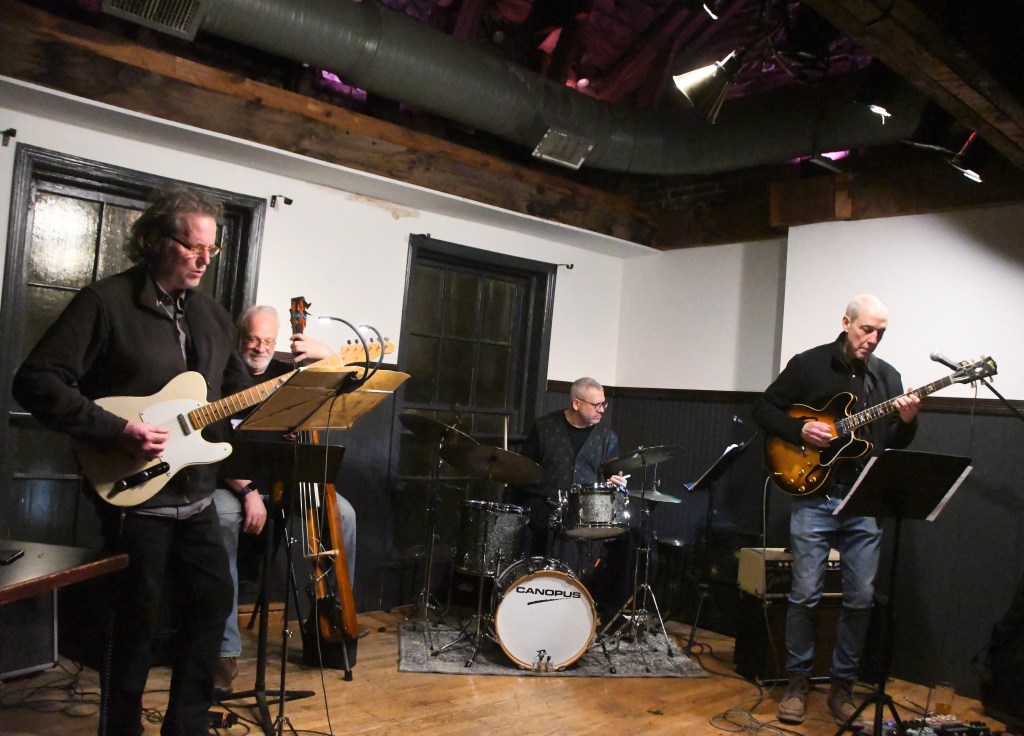
Vanessa Collier and band. from left: guitarist Mighty Mike Schermer, saxophonist Vanessa Collier, drummer Byron Cage and bassist Justice Guevara

When a late-coming couple threaded through to a front table, a fan called, “Now, it’s sold out!” The packed room had that happily jammed feeling of something shared and cool happening. 

The vigorous blues shuffle “Whiskey and Women” set the pace, Collier singing first, then scrambling all over her alto sax, notes fluttering fast, before stepping back as Schermer took the lead; then they played in harmony, intuitive and tight.

Those two held eyes and ears with such confident easy, unified musical force that we could almost take for granted workmanlike drummer Byron Cage and bassist Justice Guevara, toiling solidly away on muscular beats. Almost.

Schermer’s guitar set a menacing mood in the slower “Take Me Back,” its groove pushed hard when Collier clapped double-time between vocal and alto fire; then Schermer wrapped things up with a serene echo of his agitated intro.

“Can’t Stand the Rain” flowed at a similar tempo, full emotional force at first, then simmering down as Guevara sang harmony with Collier. This Memphis soul classic felt conversational all the way as Collier’s alto chatted up Schermer’s guitar. She played a riff, he played back “Yeah, that’s right!” Then his new riff commented “What about this?” – and she answered.

Backstage afterward as he poured a beer, Schermer told me he still felt somewhat new to the gig, but his musical dialogs with Collier sparkled all night, altering his phrasing and tone to follow, to lead, to embellish or glide away when she soared alone.

Collier said she loved playing the Caffe, seeing it filled with fans “packed in like sardines,” and explained how she found the saxophone, as a precocious introvert at age nine, to express emotion as her second voice.

This set up “What Makes You Beautiful,” written for her younger sisters to teach the strength she found to overcome self-doubt. She shifted to tenor for this mid-slow shuffle, using bluesy jazz phrasing to show self-pride emerging from insecurity as it simmered, then built.

Similar tempo shifts pushed the buoyant “Bloodhound” as Collier played slinky slide guitar through fast runs while Schermer comped soul chords behind her. Her alto stuttered and fluttered through a syncopated solo and she closed by urging everyone to howl.

While “Sweatin’ Like a Pig, Singin’ Like an Angel” might serve as mission statement, Collier seemed unruffled and unsweaty throughout. If touring with blues hero Joe Louis Walker taught her outgoing, confident command, she was candid and confiding as a songwriter, going romantically wistful late in her seamless 90-minute set.

“When Love Comes to Town” had a fresh, episodic feel, a slow soul-funk groove with stop-and-go story-telling drama, a wordless vocal chorus and circular alto riffs generating compelling centrifugal force.

The torchy “Just One More” felt more direct and cozy, a candle-lit tango with Schermer supportive in clipped phrases among the seams of Collier’s alto runs until he claimed the spotlight with high squeals and cyclic repeats.

Collier shifted to dobro in “When It Don’t Come Easy,” a pandemic-inspired anthemic call to strength and resilience. It flowed on stop-and-go funk beats with harmony vocals by Cage and Guevara, Schermer’s racing strums, wordless vocals at the coda.

She revved big on “Do It My Own Way,” clapping fast and counting off “One, two, ELEVEN!” to launch a Southern-fried James Brown tribute. She cited Brown’s saxophonist Maceo Parker among her inspirations, but Schermer’s relentless Jimmy Nolen-style rhythm chops helped carry things. The simple phrasing of Guevara’s bass clearly emerged as propulsive riff power here, funky as Bootsy Collins or Larry Graham and locked with Cage’s drums.

They left the stage to general tumult, which Cage answered alone by taking the stage to erupt a happy drum solo clatter that drew the band back on. And, of course, Collier took everyone to New Orleans with “Bad News Bears,” a sizzling vamp under solos by everyone including Guevara, his only instrumental break all night.

When the riff storm slowed and everybody else laid out near the end of this “Bears” encore, Collier’s alto continued, alone and eloquent, fluttering around the melody and taking it home.

Caffe Lena shows this weekend: Lucy Wainwright Roche tonight (daughter of Loudon Wainwright III and Suzzy Roche of the Roches), old-style banjoist Carolyn Shapiro Friday, the New Orleans-style brass band Soggy Po’ Boys Saturday – sold out, sorry – and Rev. Robert Jones, a keeper of the acoustic blues flame on Sunday.

Preview: Vasen at Universal Preservation Hall on Thursday, Feb. 12, 2026

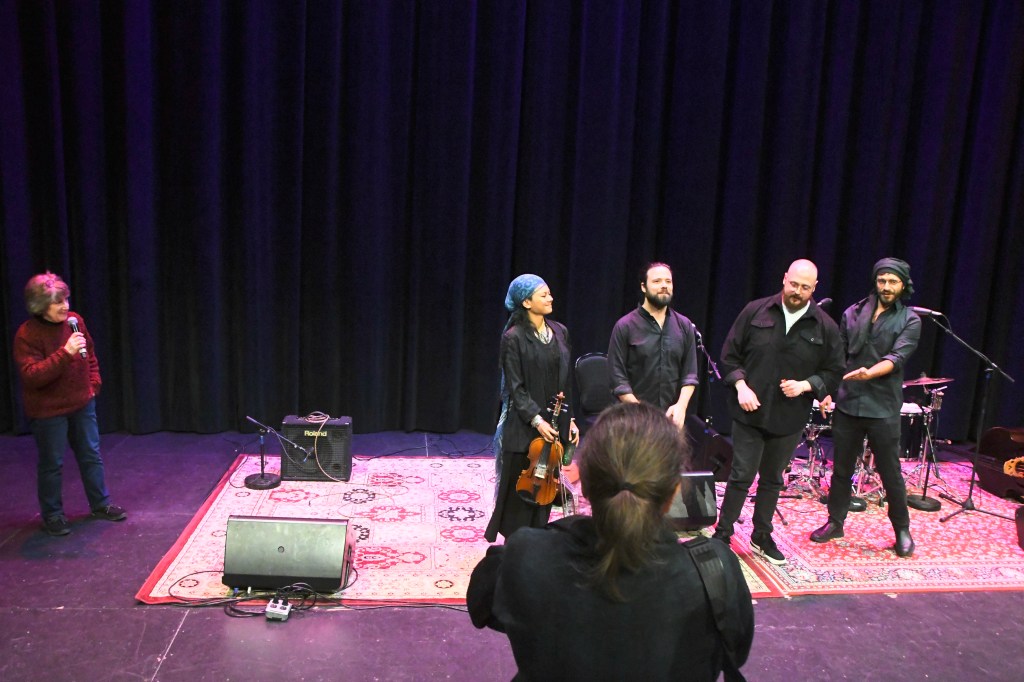
What ARE those men playing?

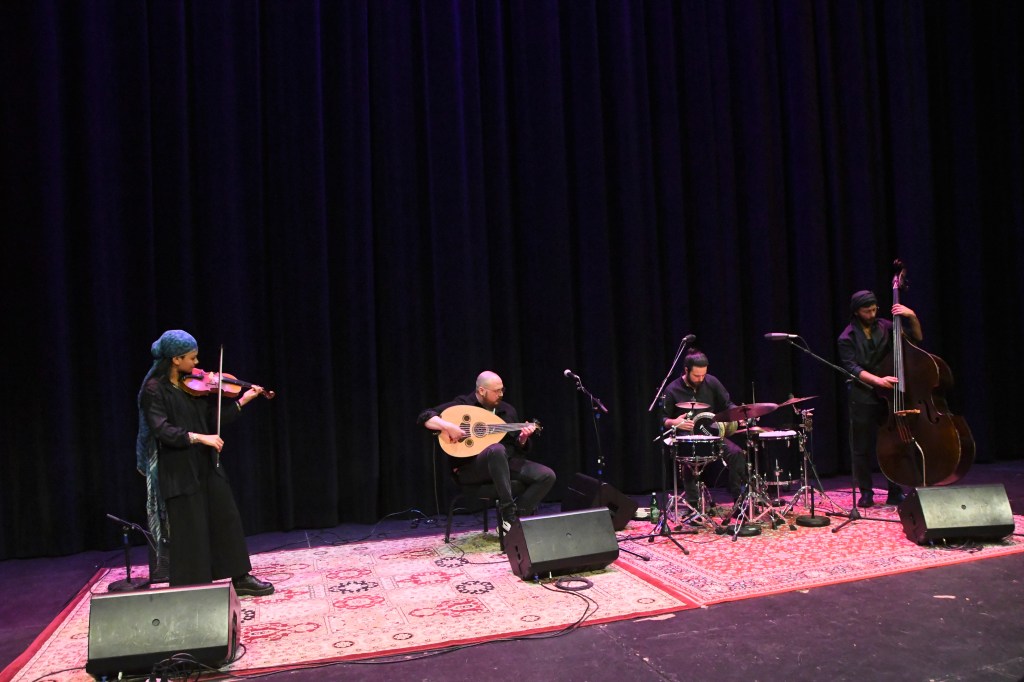
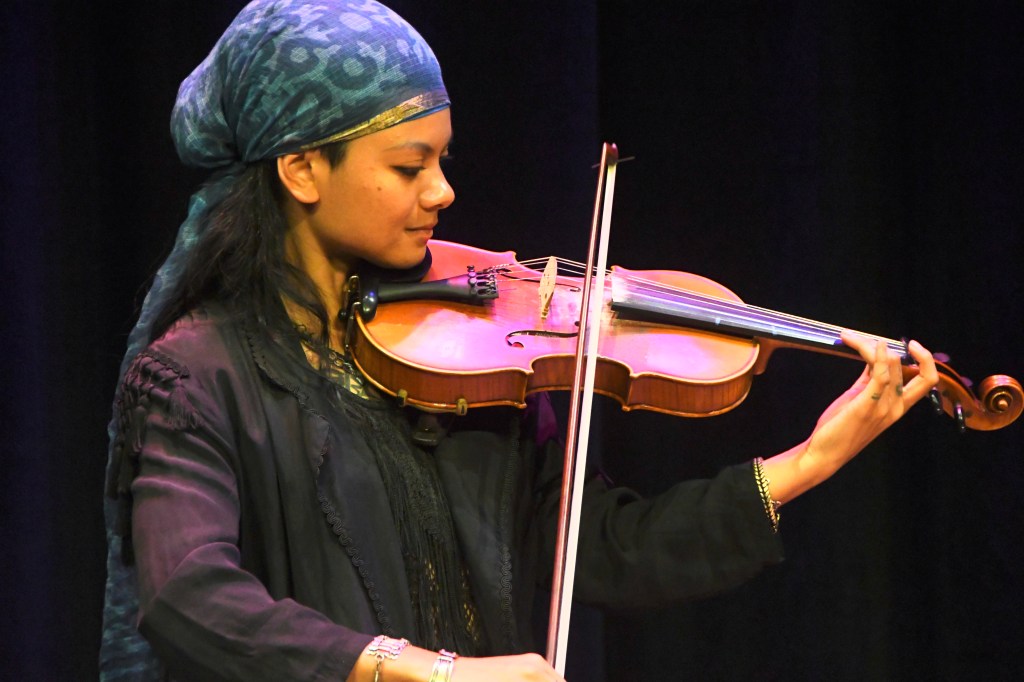
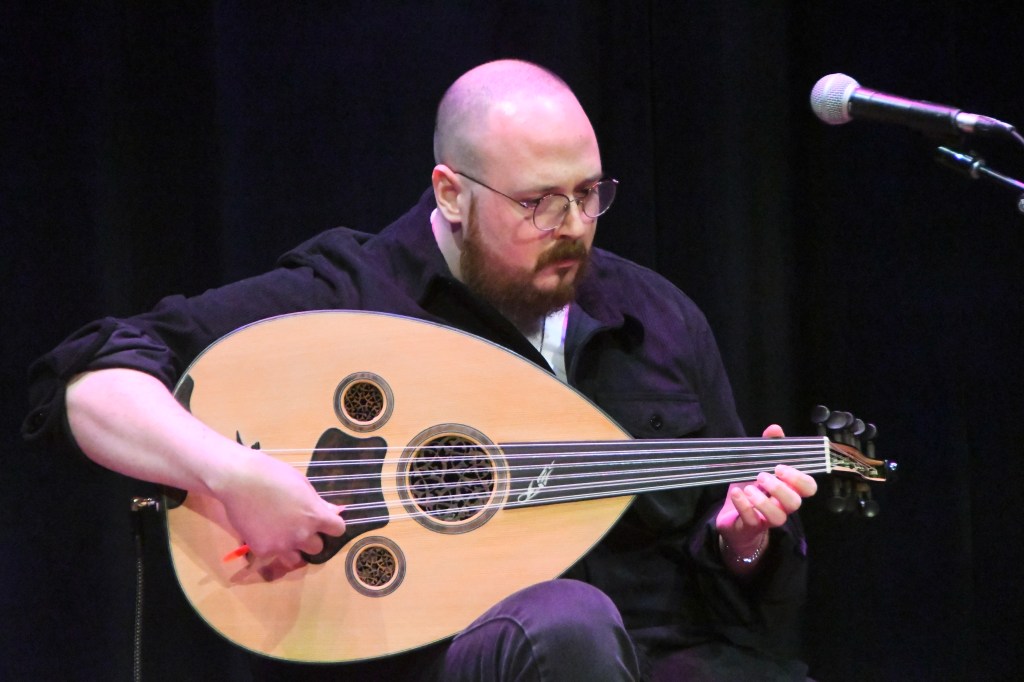
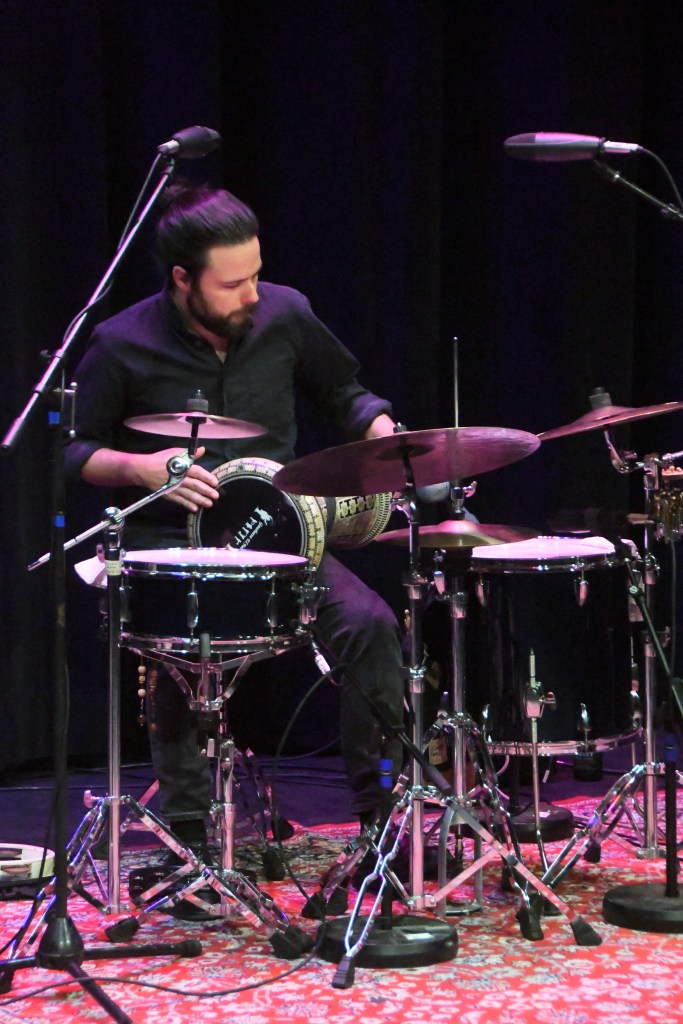
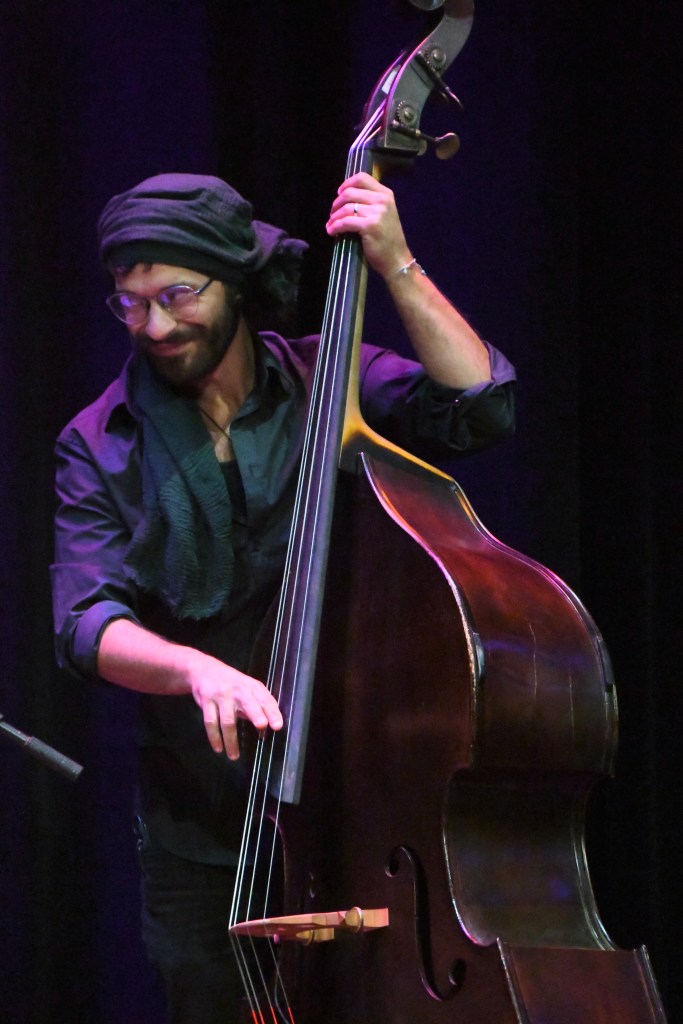
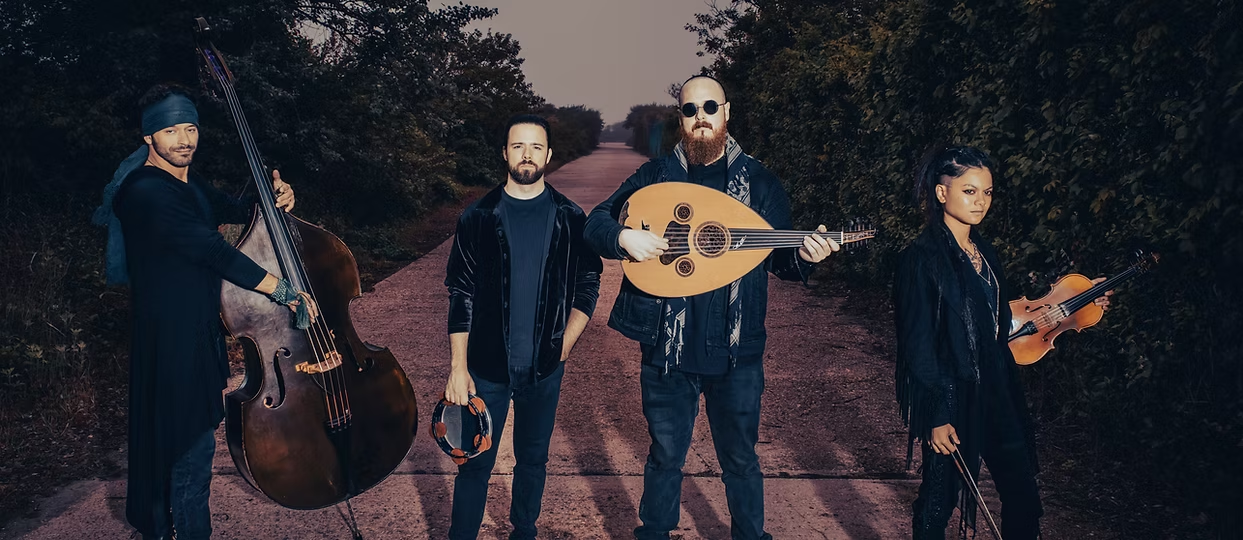
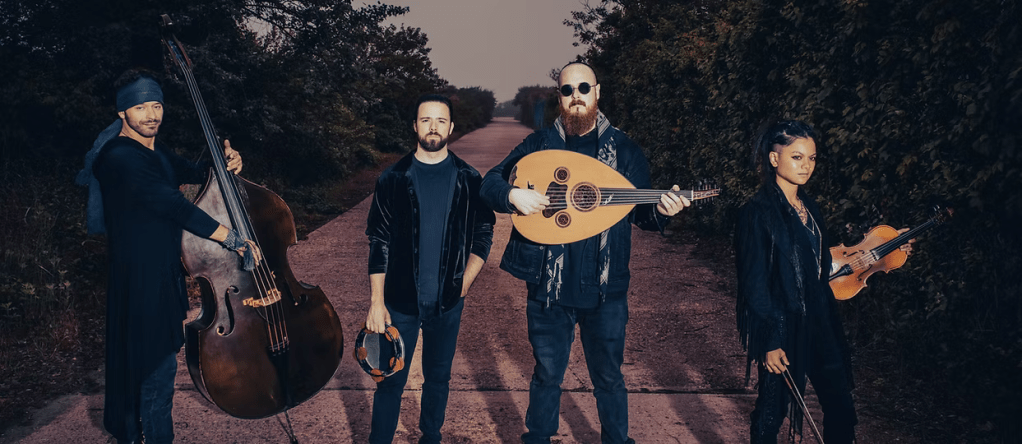
Vasen plays in Proctors Passport Series Thursday at Universal Preservation Hall. These two Swedish musicians span the centuries since their strange-looking instruments were devised, but they sail on timeless melodic flow and intricate string-band kick.

Ears and eyes might report very different descriptions.

Ears might answer that question above by noting the two men are playing a cozy, folkish string-band music, a bit astringent in its Scandinavian simplicity, but rich in feeling and telepathically close in the hands of a duo formed in 1980.

Eyes offer a different answer. 

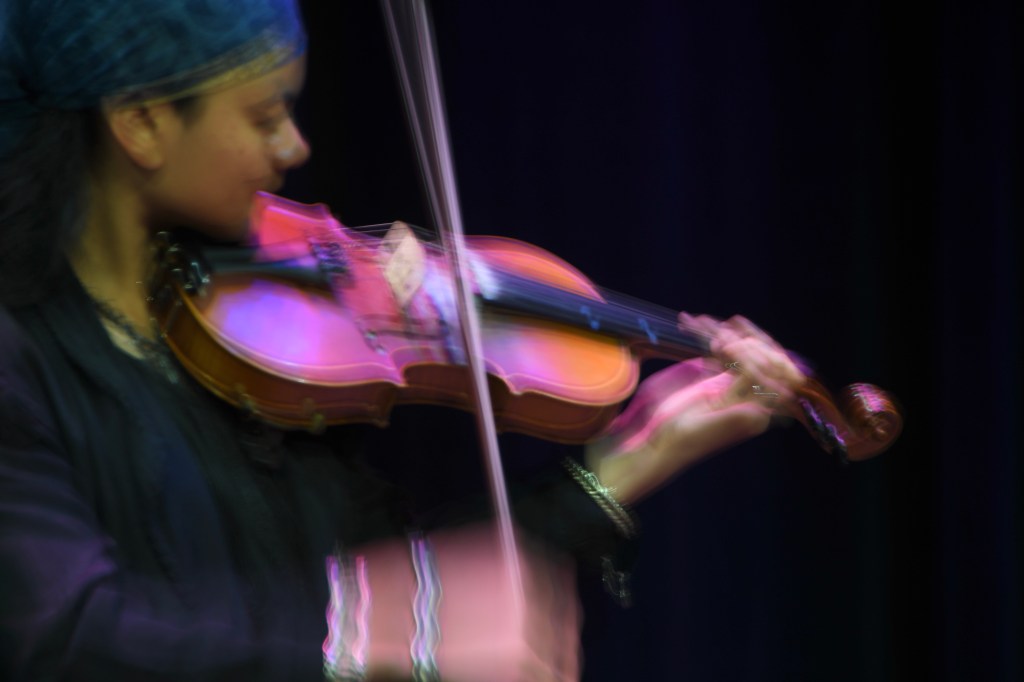
Mikael Marin

Mikael Marin (beard) plays violoncello da spalla, “cello of the shoulder.” He clasps it under his chin and it stretches along his arm. It looks like a burly hybrid somewhere between a viola and a cello, but it has five strings to a cello’s four. He plucks bass lines on it with his fingers, or bows it to make melodies. 

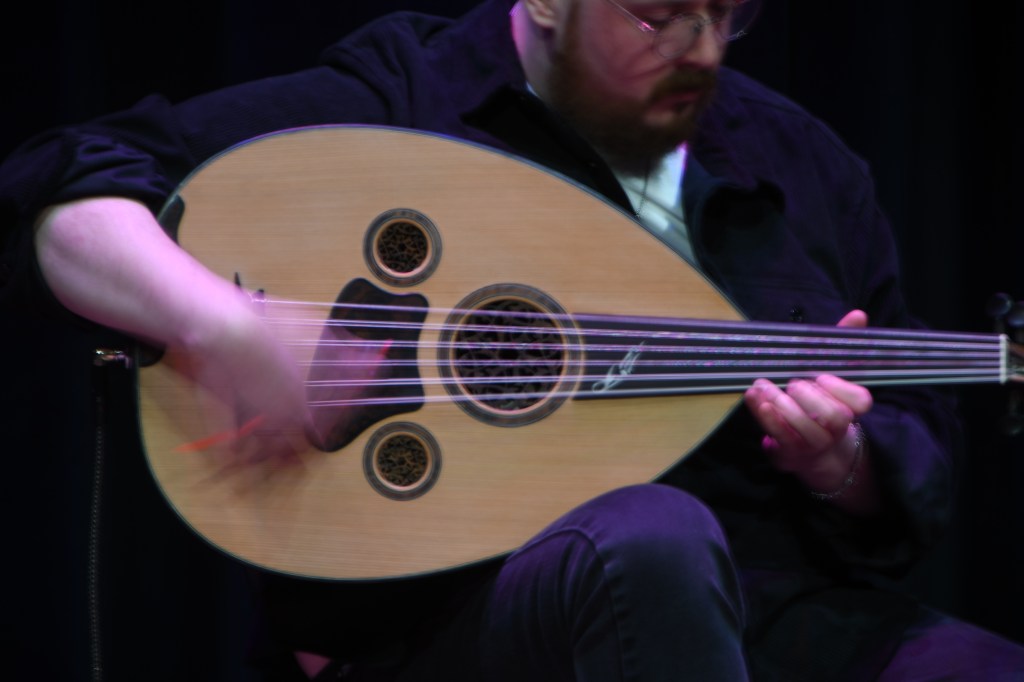
Olov Johansson

And if you think that looks strange, check out Olov Johansson (no beard) who bows what looks like a violin that got all ripped at the gym, then blundered into a woodworking shop where beefy structures were hammered onto the bottom. It sits across his knees, like Jerry Douglas holds a dobro, and its complex hardware transforms its sound the way chord bars of an autoharp expand the look and language of a zither. This 14th century contraption is the Nyckelharpa, a keyed fiddle with three melody strings whose pitch changes as keys, in three rows across the bottom, raise and lower wooden pins against them from underneath, a bit like a pedal steel, There’s also a drone and a dozen strings that never get plucked or bowed but vibrate in the air currents of the melody strings.

If all that weren’t instrument-nerdy enough, complex configuration of the nyckelharpa allows it to make chromatic music, which takes its name from “chroma,” or color. Wikipedia tells us chromatic music uses all 12 notes within an octave, arranged in half-steps, rather than the seven notes of the diatonic scale. This enables a more detailed sonic nuance.

If you got all that, somebody from the Royal Swedish Academy of Music in a dark suit will knock on your door to present a gilt-edged certificate of Advanced Musical Curiosity and Openness.

Of course, any fan who faithfully follows Proctors Passport Series or its presenting partner Music Haven would likely qualify. As its Presenting Artistic Director Mona Golub likes to put it, the Passport Series is how she presents music from around the world “between the summers.” 

Vasen has released 19 studio albums since 1985; their newest is “Vagor,” Swedish for waves, and water is a theme throughout. It’s no surprise, considering that water comprises most of the 1,112 air miles from Stockholm (Sweden) to Dublin (Ireland), that Vasen’s music sounds somewhat Celtic. That’s just about exactly the distance from New Orleans to Saratoga Springs, but that won’t prevent the Soggy Po’Boys from making Mardi Gras magic at Caffe Lena in a sold out show on Valentine’s night. But I digress.

“It’s the melodies,” answered the late, great Paddy Maloney of the Chieftains when I asked him to explain the appeal of Irish music. Vasen does that, too. If Paddy were here to hear Vasen, he’d likely nod, grin and grab a tinwhistle.

They play in Ireland, a lot. Nicki French Davis reported in the Irish Examiner on a 2012 show at Bantry House in County Cork this way. “The second half of the concert featured Sweden’s Väsen, who showed why they are regular headliners at folk festivals worldwide. Featuring the extraordinary nyckelharpa, Väsen have taken old Swedish polskas and turbo-charged them, and their own compositions are lively adventures full of humour and surprises.

“The trio’s arrangements are incredible, full of counter-melodies, rhythmic tricks and spicy harmonies. The highlight was an unexpected, almost jazz-rock improvisation played with gusto.”

When they crossed the Atlantic to play the 2013 Celtic Colours festival on Cape Breton Island, Kate Molleson reported in The Herald, “They write gorgeous tunes and deliver them with a spry step, airtight ensemble and bittersweet lyricism that gets deep under your skin. They’ve lost none of their daft banter, none of their warm and raucous rapport. A hearty cheer went up when they ambled on stage at the Mitchell: they’re Celtic Connections favourites and for obvious reason.”

Vasen has played with Nashville acoustic folk-country instrumental masters Mike Marshall and Darol Anger, earning “Showcase Artist” honors at the World Music Expo in Seville.

Thursday, Vasen plays Universal Preservation Hall (25 Washington St., Saratoga Springs). 7:30 p.m. $34.51 518-346-6204. www.proctors.org 

ROAD TRIP To Northampton

Review: Bobby Rush at the Iron Horse, Northampton. Mass. on Feb. 4, 2026

Bobby Rush may actually BE the “Hoochie Coochie Man” – as he sang-claimed Wednesday at the Iron Horse. Now 91, Rush sang his vivid story in soulful, raunchy, hard-swinging blues. 

As a child in a complex, mixed-race Louisiana family, he was ripped off by an employer who joked for days about his coming payday, then handed him a Payday candy bar for a week’s work. After playing body percussion in Delta jukejoints at 14 behind a painted-on mustache, he landed at Chess Records in Chicago in 1951 when Willie Dixon offered him “Hoochie Coochie Man” to record. He declined, feeling he wasn’t yet old enough.

No such modesty marred Wednesday’s two set marathon show that would have exhausted a much younger performer. His band started without him, grooving on Stevie Wonder’s “Superstition.” Drummer Bruce Howard (in Rush’s band 41 years) sang lead, with guitarist Kenny Lee, bassist Arthur Cooper and a keyboardist introduced only as Robert – Rush’s son? Grandson? Then Rush took over, slim, spry and smiling under a genuine mustache in an incandescently bright jacket.

Singing strong and playing harmonica to bridge phrases and verses, he proclaimed “You So Fine,” its mildly lascivious lyric foretelling the playful sexiness spicing his blues shuffles and soul grooves. “Evil,” his next tune, overstated his intent; for him, it’s all fun; and “Big Fat Woman” described what he likes. 

Here he started engaging the crowd directly, addressing front-table fans with sly suggestions the women there should be with him and not the guys who’d brought them. Rush showed sharp radar in judging how far to push these jibes, noting incredulously, “You don’t like me?” or strategically apologizing to lighten the mood.

Between leering grins in silly/sexy songs lurked the pain that relationship problems can bring, introduced by the wry torment of “I Can’t Stand it,” alternating sung and spoken sections underlining its reality. More pain flowed through “Crazy ‘Bout You” with its doomstruck refrain “You don’t care nothing in this world for me,” its sting sweetened only somewhat by tasty guitar.

Noting he’s recorded 429 songs and claiming he can sing any of 350 of them on a given night, Rush reminisced about declining to record “Hoochie Coochie Man” when offered it in 1951; then sang it hard, reclaiming it. Its bravado faded fast in “Garbage Man,” a hurt-pride lament whose umbrage also flowed through “Ride in my Automobile” to the punchline assertion song: “You’re Gonna Need a Man Like Me.”

Pride and good mood restored, Rush and band cracked up in the middle of “Same Thing” and sailed happily through “Night Fishing” and the sex comedy “G-String.”

Umbrage threaded through such autobiographical recollections as being denied a record deal because he could read the contract. But real gratitude for his collaborator Kenny Wayne Shepherd emerged as he introduced their wistful “Long Way from Home.” 

As the 90-minute first set wound down, Rush widened his lyrical focus from the personal to the political, proclaiming “I’m Free” before lamenting the courtroom saga “Got Me Accused.”

Then, radiating good cheer, he crossed to the merch table to sign CDs and his book (“I Ain’t Studdin’ Ya: My American Blues Story”) – and take photos with fans.

Out of sight just long enough to swap his shiny gold jacket for a white one printed with blue butterflies, Rush re-emerged for more of the sexy, swinging same, cracking up with his band in “Bowlegged Woman, Knock-kneed Man.” He settled things down with a quick wave, his harmonica staccato over just bass drum and hi-hat as he spoke of his gratitude for living by making music. 

Such serious testimony faded in a reworked version of Rush’s defiant duet with Buddy Guy, “What’s Wrong with That.” The heartbroken blues “I Lost The Best Friend I Ever Had” went deep before the juke-joint novelty numbers “Chicken Heads,” “Hey, Hey, Bobby Rush” – yes, everybody did sing along – and “Porcupine Meat.”

Bobby Rush (light jacket) and band, from left: Robert, keyboards; Kenny Lee, guitar; Bruce Howard, drums; Rush; Arthur Cooper, bass

Listening to Rush’s records later suggests his voice is still all there, and his harmonica playing, too – with a straightforward, hearty drive or sparse poignant musings on both single-key blues harps and the more versatile chromatic instrument. Things flowed smooth and simple, mostly, though Rush changed up songs’ set arrangements at times with hand-cues to simmer down, rev up or jump into a new tune altogether. Drummer Bruce Howard heard and responded instantly, leading the band in whatever new direction the boss chose.

Rush remains a complex character, with ancestors’ enslavement and oppression still sharp in his rearview mirror, overlaid with his own travails including record company abuse. He didn’t tell us about the Payday bar, or about the loss of his first wife and their three children to sickle-cell anemia. He didn’t have to; the pain rang clear when he slowed to let it emerge. But the saving grace of the blues has sustained him in a career of unprecedented duration and consistency. He may be the last legend standing of the original 1950s Chicago inventors of electric blues, but he’s too fast-moving and too much fun for solemnity to get a grip for long.

49th Saratoga Jazz Festival Features Familiar and Fresh Faces

June 27 and 28 Two-Stage Shows Honor Tradition, Showcase the New

The 22 performers at the Saratoga Jazz Festival Presented by GE Vernova* include 13 making their Festival debuts among a line-up rich in singers and women artists. Some are both: veterans Dianne Reeves, a five-time Grammy winner; and (Saturday night closer) Patti LaBelle, plus relative newcomers Cecile McLorin Salvant and Sasha Dobson.

Patti LaBelle, above; photo provided; Cecile McLorin Salvant, below; Michael Hochanadel photo at New Orleans Jazz and Heritage Festival, May 2015

Women players also lead several groups: drummer Terri Lynne Carrington (a Skidmore Zankel attraction some seasons ago), with Social Science, blues guitarist Ana Popovic and saxophonists Lakecia Benjamin and Alexa Tarantino. Also, the Brooklyn-based all women Brass Queens represent New Orleans tradition(s), as do Sunday night closers the Revivalists rock band and quietly dazzling pianist Kyle Roussel.

“From legendary performers and centennial celebrations to festival debuts and cutting-edge artists, this year’s Saratoga Jazz Festival offers so much to discover,” said SPAC CEO Elizabeth Sobol in Thursday’s festival announcement.

Also emphasizing the event’s range, Festival Producer Denny Melnick added, “From Patti LaBelle to The Revivalists, and from Dianne Reeves to ‘Kingfish,’ this year’s line-up captures 49 years of presenting iconic artists alongside the next generation.” He said, “That mix of legacy and discovery is the heart of the Saratoga Jazz Festival.” Its second stage broadcasts that idea: “The Charles R. Wood ‘Discovery Stage’” hosts emerging artists.

Bill Frisell. Michael Hochanadel photo at The Egg; Nov. 16, 2024

Straight-ahead jazz artists have often dominated past festivals, though non-jazz artists have grown in number and boosted the box office. Jazz veterans turn up this summer in bands led by guitarist Bill Frisell, pianists Orrin Evans and Gonzalo Rubalcaba. All generate all-star punch. Frisell leads a trio with drummer Rudy Royston and bassist Thomas Hardy with guest saxophonist Gregory Tardy. Rubalcaba plays with ace talents saxophonist Chris Potter, bassist Larry Grenadier and drummer Eric Harland. By contrast, trumpeter Avishai Cohen leads the relatively new band Big Vicious, while Carrington’s Social Science represents a new direction for the drummer-composer and leader, and Evans appears with bassist Luques Curtis and drummer Mark Whitfield Jr.

Tribute bands honor tradition and legacy heroes both days. Saturday, the “Miles Electric Band: Celebrating Miles Davis’s Centennial” features veterans of the groundbreaking trumpeter’s later bands, including nephew/drummer Vince Wilburn, bassist Darryl Jones (longtime touring bassist with the Rolling Stones) and keyboardist Robert Irving. Younger players also join in, including trumpeter Keyon Harrold who played the festival last year.

Keyon Harrold. Michael Hochanadel photo at Saratoga Jazz Festival 2025

Sunday, the Skidmore Jazz Institute Faculty All-Stars, led by bassist-wit Todd Coolman, celebrate the centennial of sometime Miles bandmate (as on “Kind of Blue,” top selling jazz album of all time) John Coltrane.

Fresh talent also claims lots of spotlight time this year, notably the young singer Tyreek McDole, who closed Schenectady A Place for Jazz season in a smash performance last fall; blues guitar powerhouse Christine “Kingfish” Ingram whom I saw play an explosive opener for Buddy Guy in Springfield, Mass. in 2024, and Cuban funk-rap sensation Cimafunk who also played this festival in 2024. 

Tyreek McDole. Michael Hochanadel photo at A Place for Jazz 2025, above; Cimafunk, below; Michael Hochanadel photo at Saratoga Jazz Festival 2025

Numerous new-to-me acts include The Dip, Eddie 9V, Sasha Dobson. Here the Discovery Stage will earn its title.

As usual, the upside-down artist listings below reflect recognition rather than chronology: Those listed first will play last.

Now 81, soulful fire-voiced singer Patti LaBelle closes on Saturday. A star since the 1960s, she led the Bluebells, which became LaBelle, with Nona Hendryx and Sarah Dash. Active 1971 to 1976, they briefly reunited in 2008. Highlights of her busy decades-long stardom include the brilliant hits-charged “Nightbirds” album (1974), playing the first-ever popular music show at the Metropolitan Opera House and harmonizing behind Laura Nyro on her “Gonna Take a Miracle” doo-wop album (1971). She has also acted in films and on TV, including “Dancing With the Stars” and even contributed to a cookbook.

The Revivalists. Photo provided

In Sunday’s closing set, rockers the Revivalists face the tall challenge of LaBelle’s Saturday finale and superb recent Sunday festival wrap-ups by Trombone Shorty and Orleans Avenue (2025), Lake Street Dive (2024) and Bonnie Raitt (2023). A New Orleans rock collective, the Revivalists earned “10 Bands You Need to Know” notice in Rolling Stone in 2015. Their five studio albums have won Best Rock Band or Performer, Best Music Video, Artist of the Year or Song of the Year awards from New Orleans’ Offbeat magazine. 

SATURDAY, JUNE 27

Amphitheater:
Patti LaBelle
Miles Electric Band: Celebrating Miles Davis’s Centennial
Cécile McLorin Savant
The Dip 

Gonzalo Rubalcaba First Meeting Quartet with Chris Potter, Larry Grenadier and Eric Harland Terri Lyne Carrington + Social Science

Charles R. Wood “Discovery” Stage:
Bill Frisell Trio featuring Thomas Morgan & Rudy Royston with special guest Gregory Tardy
Orrin Evans Trio featuring Luques Curtis & Mark Whitfield, Jr.
Tyreek McDole
Ana Popovic
Avishai Cohen Big Vicious
Brass Queens

SUNDAY, JUNE 28

Amphitheater:
The Revivalists
Dianne Reeves

Christone “Kingfish” Ingram
Cimafunk
Lakecia Benjamin

Charles R. Wood “Discovery” Stage:
Eddie 9V
Alexa Tarantino Quartet
Kyle Roussel
Sasha Dobson
Skidmore Jazz Institute Faculty All-Stars

Please pardon spacing problems above

Tickets for the festival start at $89 – about $7.50 per artist on Saturday, $9 per artist Sunday. Box office www.spac.org opened today for members, with 15 to 20 percent discount, and Feb. 13 for the general public. Two-day passes are also available. Children 12 and under receive 50% off tickets in the amphitheater and are admitted free to the lawn. Full-time students with a school ID receive 25% off tickets in the amphitheater (except for top price levels), or $25 on the lawn; bring student ID to will call window. 

  • Billing now echoes the wording of the New Orleans Jazz and Heritage Festival Presented by Shell, crediting presenting sponsor GE Vernova after decades of sponsorship by Freihofers and prior sponsorship by Kool.

Los Lobos: Struggle, Survival, Soaring

Review: Los Lobos at Universal Preservation Hall on Sunday, Feb. 1, 2026

Right before Los Lobos came onstage Sunday at the jam-packed Universal Preservation Hall, Sting sang in “Englishman in New York” – last song of the recorded walk-in music – “Oh, I’m an alien, I’m a legal alien.” 

What a perfect choice, in this time of horrifying federal racism, for Mexican Americans from East LA to play the most magnificently American music.

Los Lobos, from left: Cesar Rosas, Conrad Lozano, Louie Perez, Alfredo Ortiz, David Hidalgo, Steve Berlin

In their own opener “One Time, One Night,” they claimed this “home of the brave in this land here of the free” for themselves. They proved their place in it with authentic original songs of hope and home, of trouble and triumph, of dance and daring assimilation in their own immigrant tradition. Some were folkloric, all were fervent, most steeped in rock and roll. But they also borrowed soul classics, anthemic southern rock, even the sci-fi blues of “Are You Experienced?”

All in black, business like, beards and hair all white and all wearing glasses, they took their time. Their set-list was less map than menu; possibilities more than a plan. They sometimes discussed what’s next, or what key; but they got there. 

Thanks to the monitor mixer for sharing this set list

David Hidalgo, the band’s prettiest voice, sang “One Time, One Night” and played its guitar solo. It’s their usual way: the singer keeps the spotlight, as guitarist-singer Cesar Rosas did next in “Maricela,” singing lead and soloing, too. Under this dance number in Spanish, Steve Berlin growled baritone sax riffs and keyboard accents at the same time, deep in the seams, as Louie Perez strummed jarana (baby acoustic eight-string) and bassist Conrad Lozano grinned back at drummer Alfredo Ortiz, locked way in. For all the attention the front line earns – mostly wielding three electric guitars, keys and/or sax – the Los Lobos rhythm section hits as hard as any in rock and restrained force even at their quietest. Ortiz is their best-ever drummer and Lozano a model of taste and touch.

David Hidalgo, above; Cesar Rosas, below

Louie Perez, above; Steve Berlin, below

Alfredo Ortiz, above; Conrad Lozano, below

Hidalgo and Rosas alternated vocal and guitar leads through the rockers “Emily” (Hidalgo), “Love Special Delivery” (Rosas), a hot shuffle inherited from the 60s East LA band Thee Midnighters with a searing Rosas wah-wah break and high octane Berlin sax riffs. 

After the majestic funk of “The Valley,” Rosas announced “It’s good to be back here” before pausing. “Have we been here before?” Laughs lit up the stage; together since the 70s and touring since the late 80s, they couldn’t remember. (UPH opened six years ago; Sunday was their debut.)

That moment of mirth ignited “Chucho’s Cumbia,” a happy, loose, explosive barrio blast Rosas sang in Spanish and soloed, Perez strumming jarana as fast as Berlin’s baritone sax licks. “A Matter of Time” felt dance-y, too, but rocked around Hidalgo’s voice and guitar solo before he cued Berlin to take the lead.

Then they started to wander.

Perez delivered his first lead vocal, and guitar break, on an upbeat rocker – Johnny Thunder’s “Alone in a Crowd”? – before Rosas went all wah-wah to intro the Temptations’ “Papa Was a Rolling Stone” with his own strong vocal, then a faster rocker with an equally cool Hidalgo guitar, back to “Papa” in full surge and into “One Way Out,” as hot as the Allman Brothers ever did it. This driving southern-rock shuffle that brought the crowd to its feet for the first time. 

Hidalgo introduced Jimi Hendrix’s “Are You Experienced?” as a request and sang and soloed slow and majestic; the band gaining momentum as Rosas did the wah-wah wail.

Their own slow, spooky “Kiko and the Lavender Moon” held that mood, Hidalgo harmonizing tight with Rosas.

Noting they’d just won a share in the Regional roots music album Grammy awarded to “A Tribute to the King of Zydeco,” Hidalgo played peppy accordion and sang their contribution: Clifton Chenier’s energetic “Hot Rod.” Then they waltzed through “Volver,” Rosas fervent and strong at the mic and guitar as Hidalgo stayed with the squeeze box. 

Bang-bang rockers “Rosalee” (Rosas vocal, Berlin switching to tenor to solo)  and “Don’t Worry Baby” (Rosas at the mic again; Berlin, tenor again) seemed to wrap things before Rosas pumped “Want one more? Maybe a couple more?” 

They sandwiched “La Bamba” – everybody sprang, or eased, up – around (the Olympics, then the Young Rascals, then a Grateful Dead live favorite) “Good Lovin’,” getting a good Spanish singalong in arguably their only-ever hit.

They left to a happy roar that held as they came back for more covers: Marvin Gaye’s anguished/sweet soul anthem “What’s Goin’ On” and the Grateful Dead’s straight-ahead “East L.A. Fadeaway.”

As usual, they built energy in a patient, deliberate way and surprised even themselves at times, pausing to discuss what to play next or agree on the key. They didn’t play the Dead’s “Bertha,” from the set list, but reached deeper for the obscure “Fadeaway.” And they didn’t play their own classic “Will the Wolf Survive?” – a hit for Waylon Jennings, though not for them.

They didn’t have to: 50 years on, these wolves survive.

Los Lobos – playing Sunday at Universal Preservation Hall – stands among our greatest rock bands.

Telling specific deep truths about particular people and places in universal ways, they make distance and differences disappear. 

Friends since high school in East LA, they developed a powerful hybrid style blending acoustic folk-based Mexican music of celebration and south-of-the-border blues with a high-impact rock style. It’s Latin and it’s rock, folk and funk; it feels home-made in a living room but packs arena-scale power.

As the late, great Greg Haymes wrote of their 2012 MASSMoCA show, “There are few bands that can entertain an audience as holistically as Los Lobos, and even fewer that have played with such gusto and imagination for so long. The multiple Grammy Award-winning band from East L.A., who appeared at Mass MoCA in 1999 for the venue’s grand opening celebrations, returned to North Adams for a sold-out acoustic show last Thursday that appealed to the mind, booty and soul.”

In a MASSMoCA courtyard walled in brick and glass they were magnificent that sunny afternoon, May 30, 1999. Among many area shows, they played one of the last concerts Mona Golub’s Second Wind crew staged in Washington Park, Aug. 4, 2004 and opened multiple times for the Tedeschi Trucks Band at SPAC.

Los Lobos opening for Tedeschi Trucks Band, July 13, 2016. From left, Cesar Rosas, Conrad Lozano, Louie Perez, David Hidalgo, Alfredo Ortiz, Steve Berlin. Michael Hochanadel photos
Cesar Rosas, center in red, guests with Derek Trucks, left, and Susan Tedeschi

My favorite of their albums “Colossal Head” (1996, their 8th) swaggers confidently among styles, from frantic, high-impact “Manny’s Bones” and “Mas Y Mas” (the latter in Spanish) to stoic-serene “Can’t Stop the Rain,” anthemic proclamations in “This Bird’s Gonna Fly,” and their “Little Japan” borrows far-Asian sounds as persuasively as Dave Brubeck’s “Koto Song” and McCoy Tyner’s “Valley of Life.” 

Masters of mutation in motion, their voracious appetite for variety and variation spins from thoughtful to ferocious, from gravitas to gleeful, wild to wistful. Their sounds spin from folkloric/acoustic to propulsive, plugged-in rock, agile dances including waltzes to heartbreaking blues.

Powering their sound, ambitious compelling song craft has inspired covers by outlaw country star Waylon Jennings, Brit rockers Robert Plant and Elvis Costello, even polka patriarch Frankie Yankovic; and they toured opening for Costello, Bob Dylan and the Grateful Dead, whose “Bertha” they covered on record and play often live.

While their 17 studio albums (plus seven live albums, three compilations, two live DVDs and two EPs) earned 12 Grammy nominations and notched four wins, they may be the most prolific and versatile one-hit wonders in rock history.

At arguably their greatest commercial success, they topped the Billboard Hot 100 with “La Bamba” (1987). But then, they followed with the gutsy, commercially risky move of making the Spanish language “La Pistola y El Corazon” (1988).

In his NPR review of “The Ride” (2004), our he-does-everything culture hero David Greenberger – also a Los Lobos collaborator – sheds some light on this.

He hails the album for mixing folk, blues, rock and Latin rhythms so intrepidly that the rock world doesn’t know what to do with them, noting they’re out of step, powered by positivity while remaining true to their roots.

Greenberger notes their many collaborators on the album include The Band’s Garth Hudson; soul diva Mavis Staples; British guitar god Richard Thompson and countryman Elvis Costello, Panamanian bard Ruben Blades, soul man Bobby Womack, and Dave Alvin and Tom Waits, compadres on the L.A. roots-punk scene that nurtured Los Lobos in the 80s. The review also notes how Womack imaginatively grafted the Los Lobos song “Wicked Rain” onto his own “Across 110th Street.”

Pointing out how these high-profile guests simply became part of the band, Greenberger hails their blend of old and new, of tradition with creative exploration, suggesting this follows their dedication to “do what is right for them.” 

Like their against-the-commercial grain return to the Spanish-language folkloric style on “La Pistols y el Corazon” after their star making success with ‘La Bamba,” the fact that their albums appear on eight different record labels since their 1978 debut “Los Lobos del Este de Los Angeles” reflects a defiant independence.

Following their muse is the path to greatness for Los Lobos whose main songwriters David Hidalgo and Louie Perez made the music for Greenberger’s Duplex Planet release “Growing Old in East L.A.” (2006). Their music supports his spoken monologues in a project supported by the California Council for the Humanities.

Los Lobos is guitarist-singer and accordion player Hidalgo, left-handed guitarist-singer Cesar Rosas, bassist-singer Conrad Lozano, guitarist-singer and player of acoustic folkloric instruments Perez, saxophonist and keyboard player Steve Berlin and drummer Alfredo Ortiz; Perez also plays drums occasionally.

David Hidalgo, above and below, at New Orleans Jazz and Heritage Festival, April 2015. Michael Hochanadel photos

Cesar Rosas, above, Conrad Lozano, below

Steve Berlin

Los Lobos plays Sunday at 7:30 p.m. at Universal Preservation Hall (25 Washington St., Saratoga Springs). $56.93, $79.93, $114.43. 518-346-6204 www.atuph.org

EXTRA NAME-DROP SPECIAL

In an early 80s LA visit, after dinner in Beverly Hills with BeeGees’ producer Albhy Galuten, Nancy Lyons (Albhy’s Schenectady-born then-wife Nancy Lyons, a friend), Don Felder (Eagles), Jimmy Pankow (Chicago) and their wives, Galuten took me to the Country Club bar in Reseda to check out Lone Justice and its singer Maria McKee for Clive Davis at Arista Records. Los Lobos opened, followed by the Eric Martin Band; Martin was later a member of Mr. Big. Los Lobos was the best of the three, though McKee, then 19, got the most attention. After their set, Dolly Parton came into the dressing room where bassist Leland Sklar, whom I’d met at Proctors playing in James Taylor’s band in a Union College concert, introduced us. Parton praised McKee, who broke into tears. My best name-dropping night so far. 

They’ve Got the Funk

Preview: Lettuce at Empire Live on Wednesday, Jan. 28, 2026

The seven-months since Lettuce played the Saratoga Jazz Festival and their Empire Live show on Wednesday may feel like just an extra-long set break. But since then, the funk-jazz juggernaut toured Europe and everywhere else – sometimes with the Wu-Tang Clan or Ziggy Marley – released a symphony-backed live album, then the new studio album, “Cook” – which they do. They even launched a wine brand and scholarships to Berklee where they met.

I reviewed their SPAC set here, contrasting “a deliciously relentless funk-fest by Lettuce” with the mellower soul-jazz baritone vocals of Gregory Porter who preceded them onstage – where they lifted off in an unusual, seamless way.

“The Boston sextet jammed in soundcheck, ’til we get it right,’ then flowed straight into their set. Festival producer Danny Melnick went to the mic to introduce them, smiled and waved them on. In an earth-shaking riff explosion, Eric Coomes’s seismic bass hit like the thunderstorm that mercifully never happened Saturday. Groove melted into groove, like a P-Funk show; storming from sonic overwhelm to simmering at less heat, and surprising late with Tears For Fears’ pop hit ‘Everybody Wants to Rule the World.’”

Talk about range: They jazz-rocked like Miles’ Bitches Brew band and rummaged through the funk traditions of James Brown and P-Funk, spicing things with soul fervor and emphatic hip-hop beat force. For a Boston band originally, they often sounded very New York. They echoed every uptown jam adventure since the bebop age to hyper-energetic downtown experimentation. And they wound up with one of the tastiest pop melodies of recent decades in full melodic flight; funky, too.

Lettuce at SPAC on June 28, 2025; from left: Eric “Benny” Bloom, trumpet; Ryan “Zoid” Zoidis, saxophone; Adam “Shmeaans” Smirnoff, guitar: Erick “Maverick” Coomes, bass; and Adam Dietch, drums. Keyboardist/singer Nigel Hall is obscured behind the horns at stage right.

Fun and fierce, they played with a happy relentless drive that easily engaged the crowd, even at their spikiest or most complex.

Lettuce’s website lists drummer Adam Deitch first; maybe because he’s the wheels on the bus carrying guitarist Adam “Shmeaans” Smirnoff, saxophonist and keyboard player Ryan “Zoid” Zoidis, trumpeter Eric “Benny” Bloom and keyboardist/singer Nigel Hall – while bassist Erick “Maverick” Coomes is the engine. At SPAC, Coomes reminded me of funk-powered and -powering bassists Bootsy Collins, Rocco Prestia (RIP) and (current) Marc van Waginen with Tower of Power and our own Tony Markellis (also, RIP). 

As Deitch told R.J. DeLuke in a fine Times-Union interview piece last Thursday, “…the time feel, the collective rhythm that we have as a band, is unique. And that’s our calling card. That’s who we are.”

Streams of past live shows are available on their website: http://www.lettucefunk.com.

Expect some of the 16 tracks from “Cook” Wednesday; the vinyl version of the new album offers favorite recipes by each band member.

  1. Great
  2. Clav it Your Way
  3. Sesshins 1
  4. 7 Tribes
  5. Rising to the Top
  6. Sesshins 2
  7. Gold Tooth
  8. Breathe
  9. The Matador
  10. Sesshins 3
  11. Cook
  12. Storm Coming
  13. Keep On
  14. Sesshins 4
  15. The Mac
  16. Ghosts of Yest 

Adam “Shmeaans” Smirnoff, guitar: Erick “Maverick” Coomes, bass

“Clav” is short for the clavinet, an electric keyboard instrument.

Bloom has explained they wrote the title track at a party in Denver, adopted home of half the band. He called it, and I quote from their website, “a hip little banger of a song to put a stank face on.”

Lettuce plays Wednesday at Empire Live (93 N. Pearl St., Albany). 8 p.m. doors 7. 16 and up, photo ID required. $45.15 general admission. 518-900-5900 www.empirelivealbany.com

TO THE RECORD SHELF

“…this is not ok…” by Matt Smith

Matt Smith may be the most prolific and consistent of our musical exports, you know: artists from here whose stars also shine elsewhere. 

From regional fan favorite bands including Interstate and E.B. Jeb, Smith went to New York then wound up in Austin. He’s moved back and forth some, with frequent summertime returns here – playing, recording, teaching and producing all the way. Like Jorma Kaukonen, who operates his Ohio Fur Peace Ranch as a teaching center, Smith runs 6 String Ranch in Austin, also the studio and record label of the same name.

Matt Smith. Photo provided

“…this is not ok…” – 20th album by the guitarist, songwriter, singer and producer – balances urgent timely messaging with solidly timeless expression. A soulful long view of present-day angst, of horror yielding to hope, its authoritative big rock sound would feel contemporary anywhere from a decades-old jukebox to tomorrow’s streaming services where the new album is available..

This comes from deep experience and honed mastery, sharpened with present-day concerns.

“I began this album in June of 2025,” Smith explained recently by email from Austin. “Things were looking grim for people of color, immigrants, and working class Americans,” he said, pointing an angry finger at “a megalomaniacal wanna be dictator in the White House, surrounded by sycophants who enabled his every whim.”

Smith said, “I was angry. very angry, to the point of contempt, for those who voted for this. I had seen this before, being New York born and raised being a centrist democrat and student of history.” Another motivation hit closer to home: the death of both parents.

In response, as he explained, “After much reflection I responded the way I always have. I make music.”

To make this music, “I realized I couldn’t be an agent of division, yet I had to voice my feelings or they would fester inside me.” He said, “I also hoped to inspire other artists to speak up.”

For a guitarist and master of many other stringed things, Smith employs lots of keyboards here. Right out of the box, the Gospel-y opener “World Is a Wheel” has a powerful electric organ undertow that echoes Memphis soul grooves, plus a drawling Dr. John-like vocal. The tune turns the corner from division, bitterness and stupidity to a search for hope in the earth’s momentum and durability.

“Cry for America” remakes Ray Charles’s trademark majestic take on “America the Beautiful,” painting a dire picture of doom yielding to dramatic defiance: “We will not be denied.” Mixed male and female vocals simmer with a seething piano.

“Orphans” gets personal, musing about death and memory’s power to outlast it, over wistful pedal steel (or slide guitar?), acknowledging loss but finding serenity in love’s power to preserve.

Solitary survival – his mother outlived his father by eight years – also relies on prominent piano in “Level Ground,” a slow waltz with a lyric that wraps around the album title.

Irony rings strong in “I’ll Never Fall in Love Again,” an upbeat rock shuffle starring stringed things in a hymn of heartbreak with hope breaking through.

A cinematic look at love frames “A Life In Love,” whose atmospheric sound Smith says stems from his love of moody film-noir jazz. We can imagine Gregory Porter singing his bluesy waltz, but not singing it any better than Smith does over electric piano and generous guitar at a deliberate tempo.

“Outside My Fence” shifts the focus back from the personal to the political, a chunky beat powering big guitar licks in a despairing isolationist/survivalist saga of futility. Appropriately, it hits a hard-stop wall after juggling rugged individualist pugnacity with loneliness.

Smith takes off the gloves in “Bad Man,” big-rock power punching up, as Smith said, “late-70s hard-rock…to match the anger I was feeling about a certain person.” It’s a knockout guitar scramble.

This emotional album needed strength in hope, and in quiet confidence, and Smith tunes those feelings right up in “From the Ashes.” Majestic, built on A-B vocals and sheer Gospel-y power like vintage Staples Singers, this one feels like a north star of moral clarity. It’s not preachy-righteous; it’s personal. Its message, sincere and strong, stirs the hopes of listeners by expressing those of its maker so clearly.

Smith’s online bio notes he plays a music store’s range of instruments: acoustic, electric and baritone guitars; bass;  banjo; mandolin; dobro; sitar, mohan vina; steel guitar; ukulele; saz; cumbus; charango; tiple. But he resists the temptation to go fussy or fancy. This music is about message, mood and mighty feelings.

Like every summer for decades, Smith will come home here to play a handful of live shows. (He leads an Austin band and a hometown band.) And he’ll have a new album with him, of live performances.

Meanwhile, “…this is not ok…” is available on Apple Music and many streaming platforms.

The Art Vandelay* Export–Import Roster

Our musical exports – musicians from here who left to do big things elsewhere – include the Knickerbockers, Nick Brignola, Steve Katz, Hal Ketchum, Eddie Angel, David Malachowski, Cliff Lyons, Gregg August, Sirsy, Super 400, Jocelyn and Chris, Felicia Collins, Sawyer Fredericks and too many more to list here.

Balancing those exports with imports, let’s tip the hat to Lee Shaw, Ed Hamell, Rory Block, Bert Sommer, Reeves Gabrels, and Commander Cody among others. When we look past Area Code 518 at 645 to our south we find veritable armies of musicians who went to, or came from, the Catskills, from The Band to John Sebastian, Jack DeJohnette, Pat Metheny, Sonny Rollins, the Felice Brothers and the Slambovian Circus of Dreams.

  • “Art Vandelay” is the name George Costanza adopted for an aspirational/phony identity as exporter-importer, or vice versa, on Seinfeld. “What does that have to do with music?” – you might well ask. Years ago, I phone interviewed the great Texas blues/country-rocker Delbert McClinton before a show here. The conversation was going nowhere, McClinton was distracted and curt. So I offered to call back another time. McClinton said, “Thanks; “Seinfeld just started,” and hung up. Things went way better when I called back later.

BOB Weir…”all the voices are now gone…”

“Wasn’t Weir great?” exulted Steve Webb.

We were in Buffalo to see the Rolling Stones play Rich Stadium, third date on their 1981 Tattoo You tour; Webb to review it for the Knickerbocker News, Don Wilcock for the Troy Record and me for the Gazette. But we had lucked into tickets for the Grateful Dead the night before; walking to our car afterward, Steve had distilled that exceptional show down to a right-on observation.

The publicist on that Stones tour was the always amiable Ren Grevatt, whom I’d known for years. When I requested review tickets, he said, “I’ve got the Grateful Dead playing the War Memorial Auditorium the night before: wanna go see that, too? It’s a one-off; they’re flying from Toronto to London the next day and got a good offer, so they took it to get a payday on the East Coast before touring Europe.” 

Thanks, Ren; sweet bonus. 

The Dead had rehearsed before heading east and were sharper than sharp, in fine form, totally unified and full of life. Far better than the Stones the next day and thoroughly wonderful, it was one of the top three Dead shows I ever saw.

That night, September 26, 1981, rhythm guitarist and singer Bob Weir was the star.

In an asymmetrical kaleidoscopic way, one or another of them would emerge from the big flow to direct, inspire and propel. 

Anybody could grab the wheel; so it wasn’t always guitar fire from Jerry Garcia, the Dead’s lead soloist, bearded icon and second-best singer. Third best when Pigpen was alive. One night, Phil Lesh’s bass would hit so hard your heartbeat would sync to it. The next, linked drums would make you dance in polyrhythms, like at a reggae show; or a soulful keyboard break would fly you to Memphis when Booker T and the MGs were still kids. That night in Buffalo, it was Weir, pushing the jams as “the best rhythm guitarist on wheels,” as Garcia once described him, singing strong and energizing the whole thing.

Bob Weir onstage at the Knickerbocker Arena; March 26, 1993. My photo

Obituaries have described Weir’s career with the Dead, from 1964 when he joined at 17 to Garcia’s death in 1995; acknowledging his writing of mostly upbeat songs and affection for country classics. They mention his solo album “Ace” (1972), his solo bands from the 1970s to just months ago, and echoes of the Dead including a 1997 Furthur Festival SPAC show when he joined moe. in their opening number “Cryptical Envelopment” and drove everybody crazy. 

Through generous Dead publicists Robbie Taylor, Ren Grevatt and – longest-tenured and best – Dennis McNally, I saw dozens of Dead shows, more than any other band but NRBQ. 

When I phone-interviewed Weir once, he introduced himself kind of formally as Robert Weir and spoke with easy open-ness of how the Dead did what they did. Then I met him briefly on the Ratdog tour-bus after a late 2007 Palace Theatre show the same night when McNally introduced me to Tom Davis (of SNL’s Al Franken and Tom Davis comedy team) over drinks before the show. I sent my Gazette review (see below) from the tour-bus, writing as Weir and the band filed aboard and Weir offered me a beer.

When I heard Saturday that Bob Weir had died, I emailed Dennis McNally:

Dennis, I have no idea what sort of connection you had with Bob Weir, but I have to believe some sense of loss follows the news of his passing. Sorry, man.

MH

Dennis wrote back:

Thank you. I rode the bus with him for four years of RatDog, and altogether we were pretty close, although less so in the last few years. But collectively, all the voices are now gone. And that’s a bit shocking…

As Dennis noted, everyone who sang in the Grateful Dead is now gone and the only original, founding member still with us is drummer Bill Kreutzmann who’d retired by the last (probably) Dead & Co. shows this spring with Weir and drummer Mickey Hart, a longtime but not founding member. 

In similar news, only drummer Jaimoe (Jai Johnny Johansen) survives of the original Allman Brothers Band. 

SOME EXTRAS – LOOKING BACK

THE STONES IN BUFFALO, THEN SYRACUSE

Years later, I wrote this in a letter to a friend:

The Rich Stadium show outside Buffalo was OK at best, thrilling at first for the scale and spectacle, but a let-down. When George Thorogood opened, rain was falling and folks were pissed. But the clouds parted and the sun came out when he played “Move it on Over” – then joy and exultation took over. Journey had a tough time in the middle slot, though, and left early; giving fans the finger. And the Stones were just OK: the songs were fun, but you wished they meant them more. 

A few months later at the Syracuse Carrier Dome, the Stones were barely OK and the opening acts were lame. The thing didn’t reach critical mass. But, Keith did something in that show that impressed me and told me a lot about those guys. The energy was flagging in one song, so Keith went around the stage, standing face to face with every other guy there, in turn, and playing the flaming blue fuck out of his guitar, hitting the strings so damn hard and glaring at them with such “Get your shit together!” fierceness that they all did. That song went from about 30 percent power to about 95. 

DEAD SET-LIST FROM THAT BUFFALO SHOW

SET 1

Shakedown Street >

C.C. Rider

They Love Each Other

Cassidy

Jack-A-Roe

On The Road Again

Ramble On Rose >

Looks Like Rain

Brown Eyed Women >

Let It Grow >

Don’t Ease Me In

SET 2

Playing In The Band >

Bertha >

Estimated Prophet >

Goin’ Down The Road Feeling Bad >

Drums >

Space >

Not Fade Away >

Morning Dew >

Playing In The Band >

One More Saturday Night

ENCORE

Johnny B. Goode

RATDOG CONCERT REVIEW (WRITTEN ON THE TOUR-BUS)

RatDog at the Palace on Sat., Nov. 2, 2007

By MICHAEL HOCHANADEL

ALBANY – There’s a lot of this going around: Veteran rock performers re-framing their music and making their boomer-age fans really happy. On Saturday, the night after Terry Adams introduced a new, younger mutation of NRBQ at WAMC and a few weeks after Grateful Dead bassist Phil Lesh & Friends detonated a tremendous show at the Glens Falls Civic Center, his former bandmate Bob Weir did the same thing at the Palace Theatre with RatDog, not so much paying tribute to the Dead’s legacy as expanding it.

The 90-minute first set generally moved at a deliberate piece, the capacity crowd often giving more energy to the band than the band projected from the stage. A leisurely launching pad vamp-with-solos slowly coalesced into “Terrapin Station” but it only attained significant momentum as it began to change into “All Along the Watchtower.” This wandered a bit, through a reggae episode, and reached its true instrumental majesty after Weir’s last fevered intonation “the wind began to howl” and the band did. A Tom Waits-like R&B skid-row pub crawl supplied the set’s second peak, as the band went somewhere past funk into another time zone, blasted there as much by Kenny Brooks’ tenor sax as by Steve Kimock’s Jerry Garcia-like jewel-beautiful guitar. Fans lifted off with the band, filling the aisles, dancing the furry biplane, the thunder-snake, the my-arms-don’t-respond-to-gravity. In a perfect and powerful feedback loop, the band rode the crowd’s energy, surging into “Eyes of the World” in a 20-minute, ecstatic roll that climaxed the first set.

After the break came an acoustic segment, paced quietly like the start of the first. “Peggy-O” and “Corrina” felt relaxed, restrained, especially when Weir reined in Kimock to toss the solo spot to Brooks. Robin Sylvester’s bass detonated “The Other One” and this venerable, can’t-miss classic had all the Dead-like essentials – swirling organ from Jeff Chimenti; a confident, questing drive flowing under the guitars; and hearty group vocals, plus Brooks darting in and out of the groove.

Weir was in good voice and complete, if loose, control of the band. Fans applauded his familiar tricks of building tension with repetition and eerie falsetto howls. Early on in both sets, he signaled the launch of each new episode. However, once he saw how well it was all working, he then directed traffic in a more relaxed fashion, offering clear but subtle direction via rhythm guitar riffs, sometimes insistent, sometimes soft-spoken but always effective. Playing alongside the famously intrepid Garcia cast Weir’s own playing within a long shadow, and it wasn’t always clear how well he held his own and how essential his propulsive chording was. Alongside Kimock, his playing stood out more strongly, the essential element in the band’s beats, its melodic force, its seamless flow from one tune to the next, its everything.

2025: A Different (Shortened) Year in Live Music

Annual lists bear a bad reputation for the very good reason that they’re hairy blue hell to write. My (very good) years-ago Gazette editor Maggie Hartley renamed our Year Ender summaries as Rear-Enders. Tear-out-your-hair frustrating, they subject us writers to endless second-guessing: “Is this really better than that?” Multiply those doubts by the number of engaged readers, and writers have prickly, explosive dialogs by email, phone and letters.

So, I’ll dodge that for now and go oblique with these 2025 Onstage Hokey Awards.

Hat’s off to Greg Bell, the tireless, tasteful promoter of top shows. I knew I loved the guy when I went up to him after a great but sparsely attended show some years back. He didn’t lament losing money on it; instead, he was so jazzed by the music that he was absolutely beaming, walking-on-air happy. He announced his retirement earlier this year, and punctuated this news perfectly with a handful of shows this weekend; some free, some featuring longtime pals moe. But even after that announcement some months ago, he nonetheless crammed the calendar with high-quality performers in theaters, bars and farm fields. So here’s hoping his retirement works no better than Cher’s.

Joel Moss, RIP

Gone But Impossible to Forget, Part 1: The late, great Joel Moss, our most modest music-tech super-hero. He came to Caffe Lena after award-winning, big-star studio work all across the country and made everybody sound world-class on the Caffe’s top-quality streaming channel. Quiet and self-effacing, you’d never know he won more Grammys than almost anyone who’d played the Caffe – until, that is, the place hosted a classy memorial fandango complete with a Second Line street parade led by New Orleans trombonist Glen David Andrews and a two-stage tribute.

Gone But Impossible to Forget, Part 2: The Eighth Step at Proctors GE Theatre celebrated the enormous respect musicians and fans share for DJ, singer and culture hero Jackie Alper in an all-star showcase of singer-songwriter fare, political-social messaging and community building. Longtime folk heroes Andy Spence (retired from running Old Songs) and Margie Rosenkranz (Eighth Step impresario) concocted the idea; Spence and a fine fine cast made it real.

Andy Spence, left, directs the Eighth Step’s tribute to Jackie Alper

“So Long, It’s Been Good to Know You:” Janis Ian’s film-and-talk farewell at Caffe Lena hailed and summarized the astounding career she launched in her mid-teens. She’s played places much larger than the cozy Caffe, including nearby SPAC; but the folk-and-more mecca was perfect for her good-bye.

Road Trip: Alejandro Escovedo Sept. 13 at the newly reopened Iron Horse in Northampton with a sparse but muscular trio. This was far easier than my first visit there; an hours-long pilgrimage through freezing rain to see Richard Thompson for the first time. Both runs were well worth it. Check out founder and longtime leader Jordi Herold’s “Positively Second Street: My 25 Years at the Iron Horse Music Hall,” a delicious, unconventional memoir.

Edmar Castaneda, shown here at Proctors

Double Header: Columbian jazz harp virtuoso Edmar Castaneda with a sprawling world-beat band at Proctors in a Music Haven presentation Aug. 24; then with Bela Fleck and Antonio Sanchez as BEATrio playing jazz Oct. 2 at Universal Preservation Hall. He also played two other shows here in between.

New-to-Me Discoveries – all jazz performers, at it happens: pianist Julius Rodriguez and harpist Brandee Younger; both at Saratoga Jazz Festival Presented by GE Vernova (Rodriguez June 28; Younger June 29); saxophonist Sarah Hanahan and singer Tyreek McDole, both at A Place for Jazz (Hanahan Oct. 3; McDole Nov. 7)

Julius Rodriguez, above; Brandee Younger, below

Sarah Hanahan, above, and Tyreek McDole, below; Hanahan’s saxophone further below

Also, in a sax-rich jazz season, veteran stars Kenny Garrett (SPAC Jazz June 28); Gary Bartz (SPAC Jazz 29) and David Murray (A Place for Jazz Sept. 5) earned Explosive-Elders Wings.

Kenny Garrett, above; Gary Bartz, below; David Murray even further below

Let Me Ask You a Question: Imagine Larry David (“Curb Your Enthusiasm”) demanding, “Do Jon Batiste and Gary Bartz use the same tailor?” Both wore jackets onstage that sparkled so hot you could see them from Montreal.

OK, OK – The (Shortened) Live List

Knee surgery and recovery tore some pages from my concert calendar: No shows from Feb. 12 (guitarist Yasmin Williams at Caffe Lena) to April 26 (jazz saxophonists Scott Hamilton and Harry Allen at A Place for Jazz) – both pretty good.

I missed both Jazz Fest in New Orleans and a memorial for instrumental-rock guitar pioneer Duane Eddy in Nashville, an all-star celebration with brother Jim Hoke as musical director.

I hit 41 shows in 2025; far fewer than 100 or so in my peak years, but with some high spots.

Shows by grass-roots non-profits drew me more than corporate enterprises. Meanwhile, repairs to mid-size venues The Egg, Troy Savings Bank Music Hall and Spa Little Theatre reshaped the scene. 

Admitting that even we music writers choose to hit shows by performers we know to be good, or by unknown artists, hoping for surprises, I looked for skill, soul and sincerity and found them in these top 10 – listed chronologically here.

David Greenberger, above; and with band, below

David Greenberger and the Huckleberries Jan. 19 at Universal Preservation Hall. Words Greenberger collected by talking with oldsters, the earnest life’s work of research and preservation he began in 1979 as “The Duplex Planet,” fit well with music by a versatile quartet. Unified, unique and organic, his recitations reminded us how we all age, if we’re lucky, and to cherish good times as fate serves them unpredictably. Somehow, it all felt upbeat.

Nathan and the Zydeco Cha-Chas Feb. 7 at Universal Preservation Hall. Conga lines looped together ‘tweens-to-boomers with wide smiles, waving arms, clapping hands and shuffling feet in kinetic joy. Onstage: five Louisiana virtuosos threw it down. Saddened by brother Sid’s death, bandleader Nathan Williams – accordion ace, gruff singer, spark plug – needed a party as much as anybody, so he gave us one.

Bettye LaVette May 17 at Caffe Lena. Japanese potters repair by pouring molten gold into cracks. LaVette’s voice cracked, burnishing lyrics with the pure gold of deep soul. Singers have pretty voices or they don’t; she doesn’t; saying hers is more James Brown than Doris Day. She cast an intimate spell, of “coming over to my house.” Few singers can summon such deep confiding candor and flow from desperation to outrage to peace so gracefully.

Saratoga Jazz Festival-1, June 28. Highlights of the day-long, two-stage showcase were newcomers pianist Julius Rodriguez and trumpeter Keyon Harrold, explosive veteran post-bop saxophonist Kenny Garrett, the funk fireworks of Lettuce, and blues guitarist-singer Gary Clark Jr. For all its stylistic variety, it was maybe most jazzy in music urging social justice. Lettuce plays Jan. 28 at Empire Live.

Bria Skonberg, above; Gary Clark Jr. below

Saratoga Jazz Festival-2, June 29. Like day 1, this hit like a highlight film of favorites and fresh discoveries. Harpist Brandee Younger topped the newcomer category as established stars showed why they are: trumpeter-singer Bria Skonberg, singers Cassandra Wilson and Gregory Porter, saxophonist Gary Bartz, and New Orleans brass-soul-band rocker Trombone Shorty. He should close every festival, everywhere.

Trombone Shorty, above; and with band, below

Red Baraat July 13 at Music Haven. Who can inspire Sikhs in turbans, Muslim girls in hijabs, friends I know to be Rastafarian, Jewish and agnostic – in short, as Boz Scaggs sang: “Every Kinda people” – to dance to “Hava Nagilah” together? Brooklyn’s Red Baraat making music from everywhere, that’s who. Big structures from short riffs like brassy soul bands, or Sun Ra-style anarchic jazz spiced like audio vindaloo invited fans to dance wild onstage.

Terrance Simien Aug. 17 at Music Haven. Per his simple mission statement – “help you feel it right” – the zippy accordionist, soulful singer and wide-grinned energy source blew up the common definition of zydeco from Creole dance music to include soul, rock, pop and folk. His all-aces band, co-starring keyboardist Danny Williams, played with jazz band precision. Few fans left even as rain fell, dancing in the wet.

Jon Batiste with band and Philadelphia Orchestra Aug. 22 at Saratoga Performing Arts Center. Glowing at the chance to play with full orchestra and homecoming glee in the town where he’d met his wife, he dazzled in tunes from a new album, soul classics and sweet sounds of his New Orleans home; complete with Second Line parade through the happy crowd. Nothing else I saw all year matched this for fun, fire and feel.

Alejandro Escovedo, above; and with band, below

Alejandro Escovedo Sept. 13 at the Iron Horse, Northampton, Mass. Leading a new band, just drums and keyboards, he showed how he fell in love with punk rock while sounding unmistakably Texan, writes songs like a heart’s road-map and sings them like life and death. Now 70, his shows have grown more autobiographical, and this sparse, strong format served him very well – reaching back to the 90s and toward the future.

From left: Bela Fleck, Antonio Sanchez and Edmar Castaneda

BEATrio Oct. 2 at Universal Preservation Hall. With banjo (Bela Fleck), drums (Antonio Sanchez) and harp (Edmar Castaneda), the self-proclaimed “world’s most unlikely band” blended bluegrass, folkloric Latin dances and brisk jazz invention into something unprecedented and irresistible. Each member introduced a segment around their own repertoire, but their unified ensemble force dazzled throughout.

OK, so I was jones-ing for Jazz Fest and therefore felt maybe more attuned to zydeco and Mardi Gras parade chants than usual. Also, I was happily loving on music given away free, so I hit a higher percentage of Jazz on Jay freebies than any other program. My favorites of those were guitarist Todd Nelson’s hybrid genre-jumping JazzAmericana and the similarly free-flowing Afro-jazz crew Heard.

Guitarist Todd Nelson’s JazzAmericana, above; Heard, below, leader Elizabeth Woodbury Kasius at the keyboard