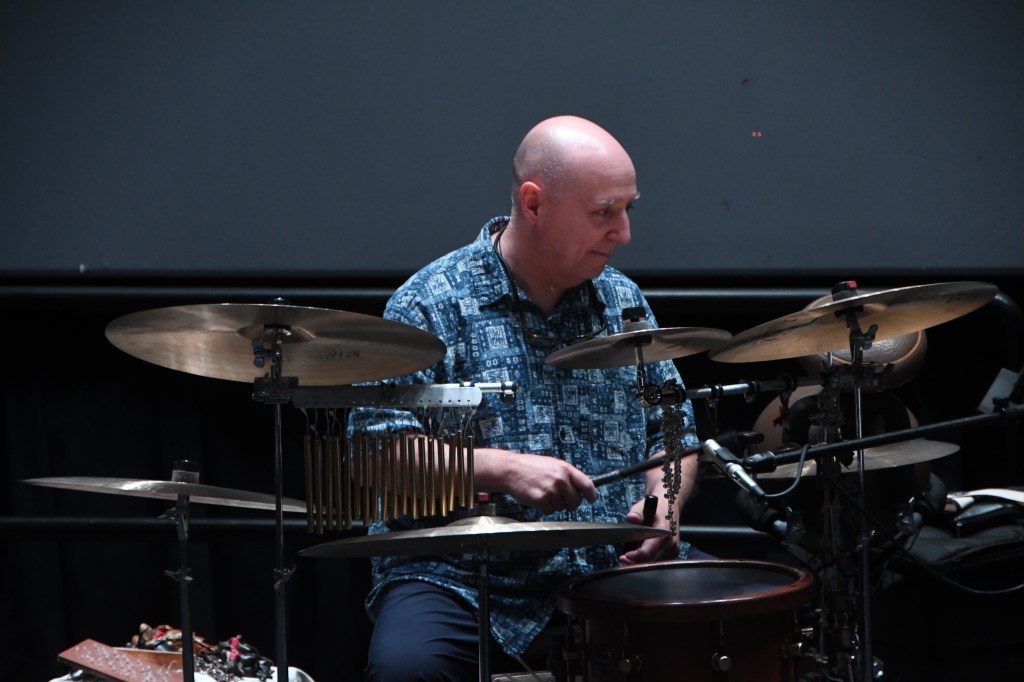
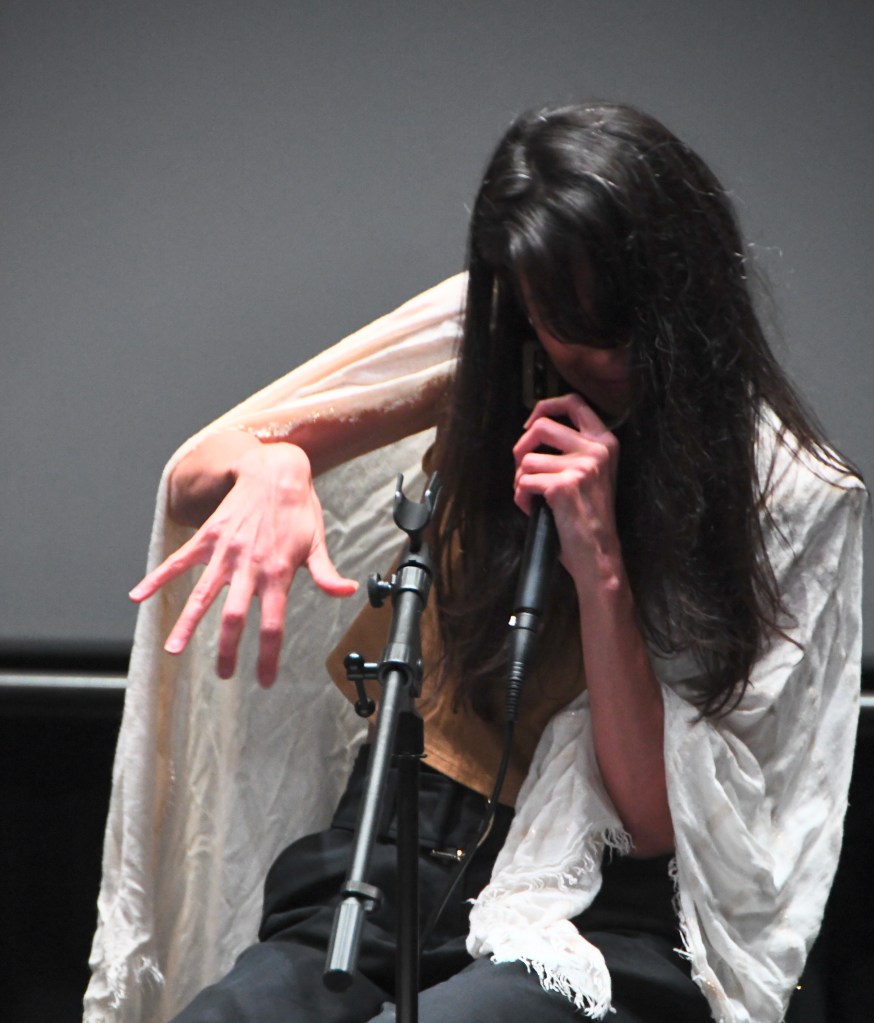
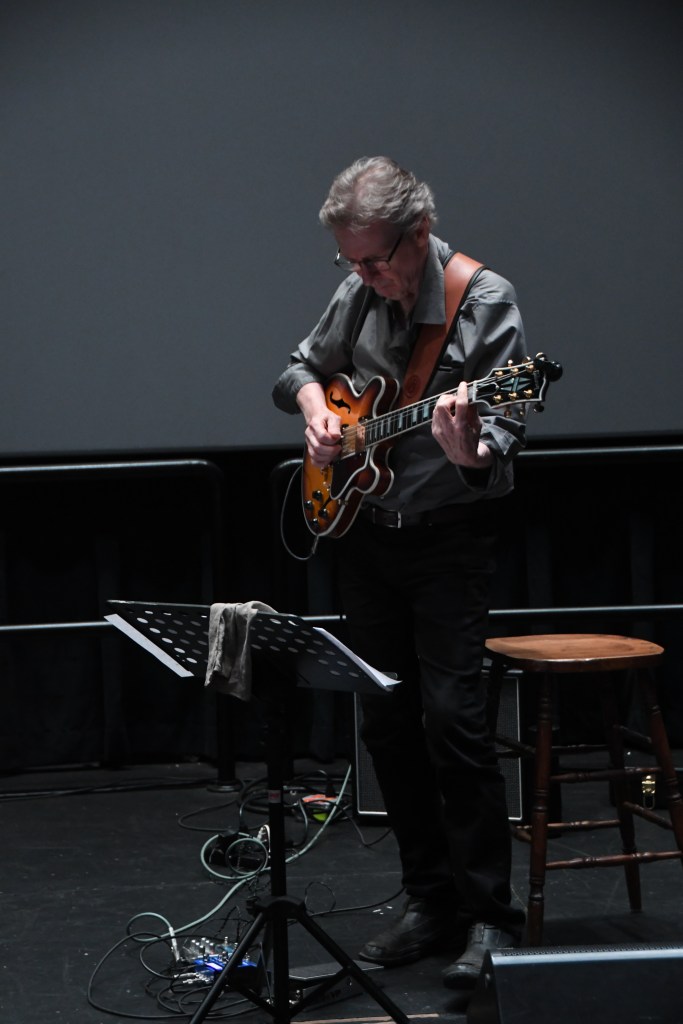
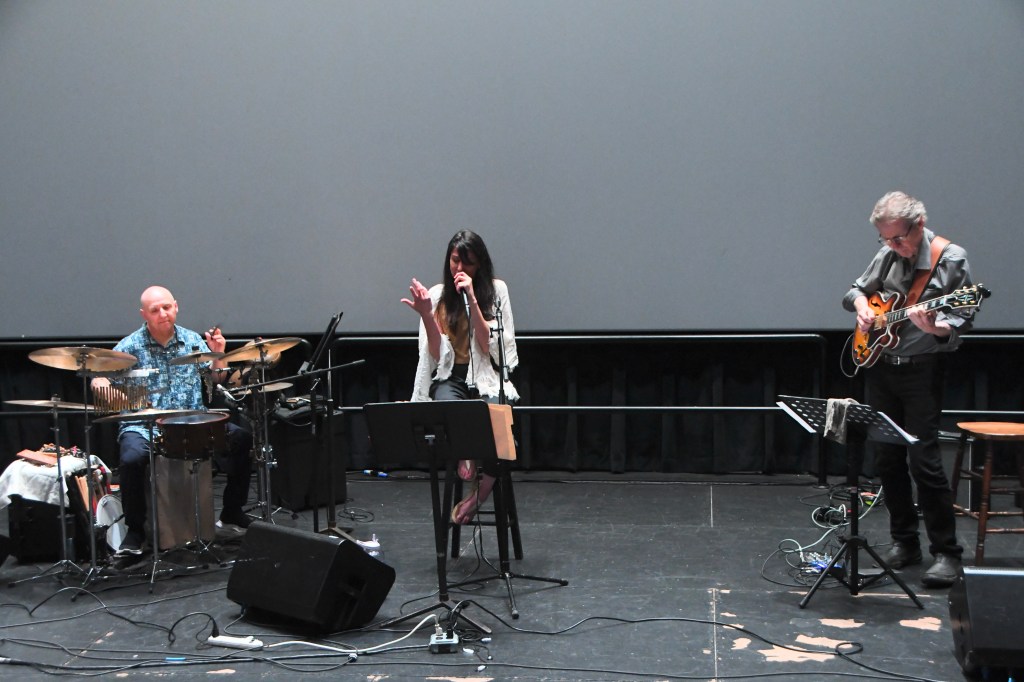
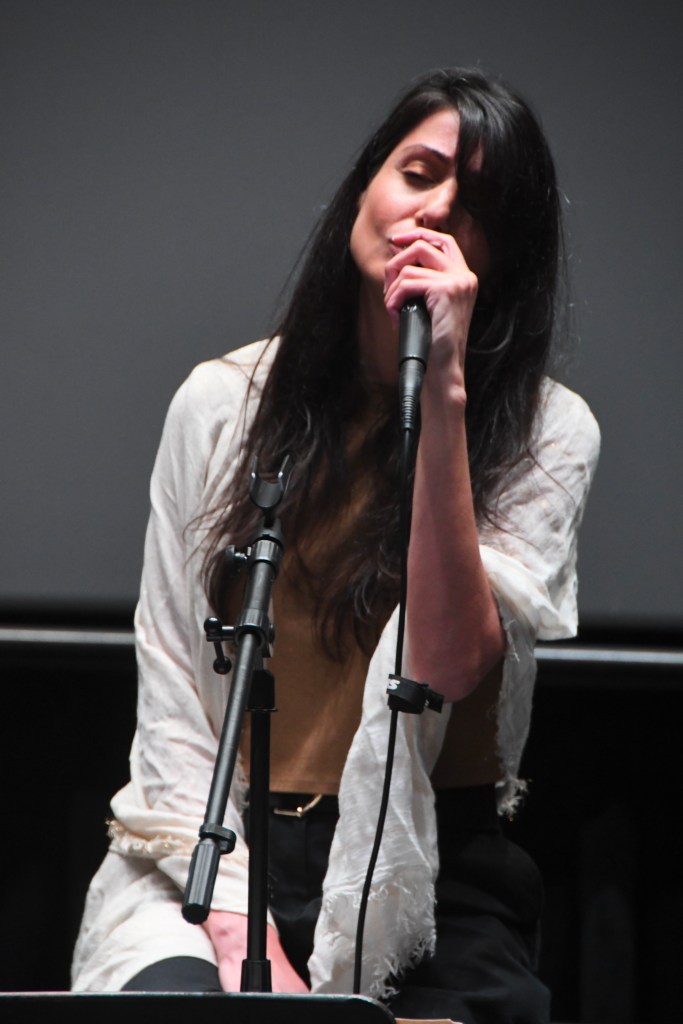
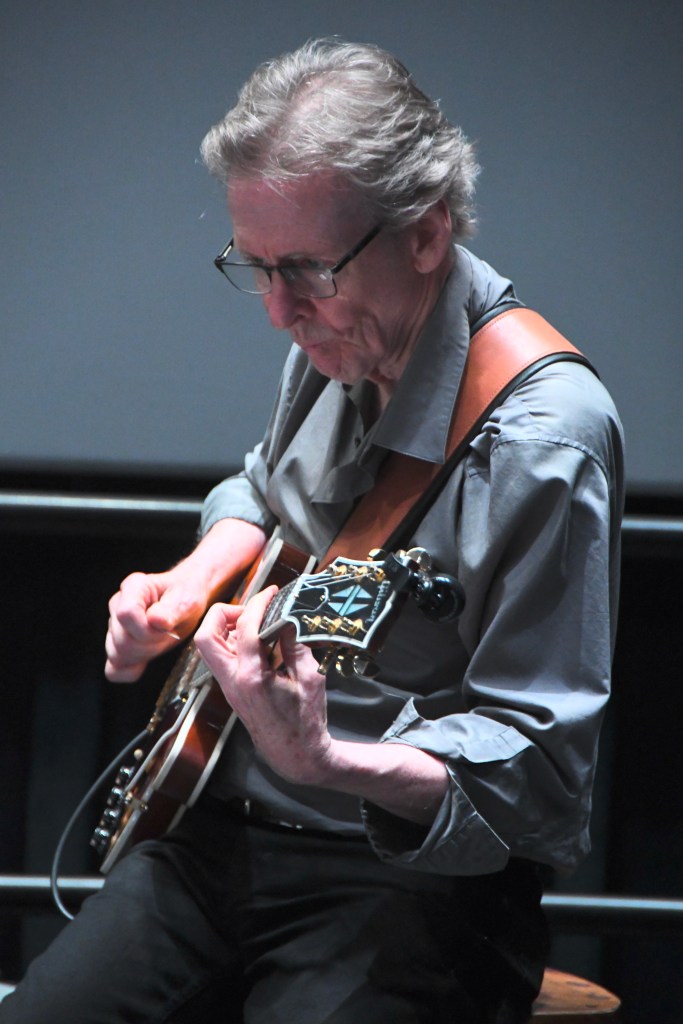
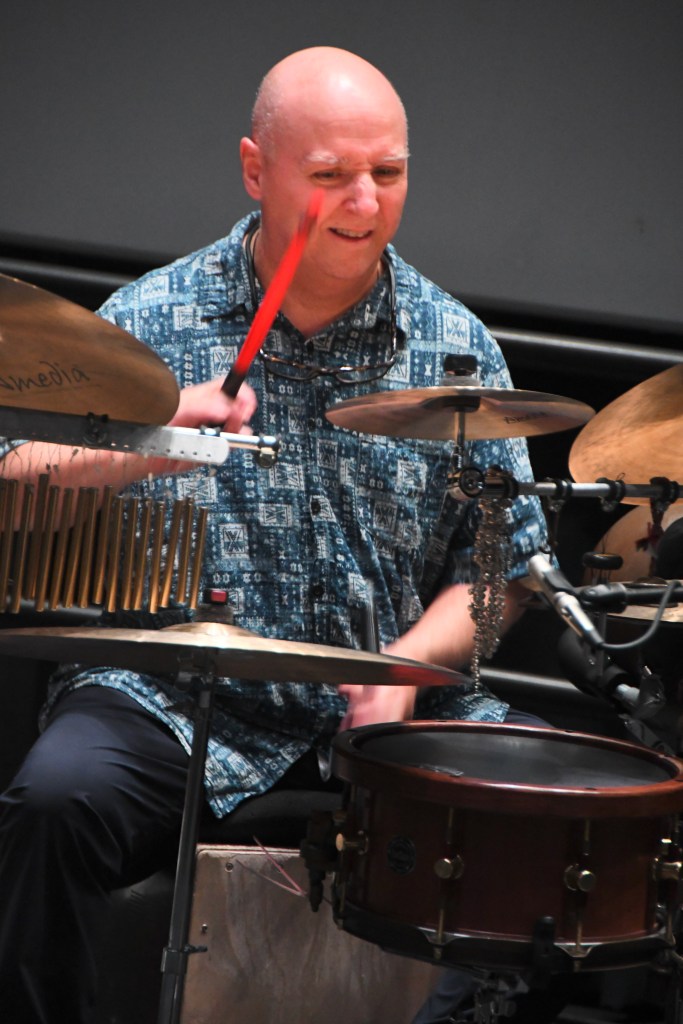
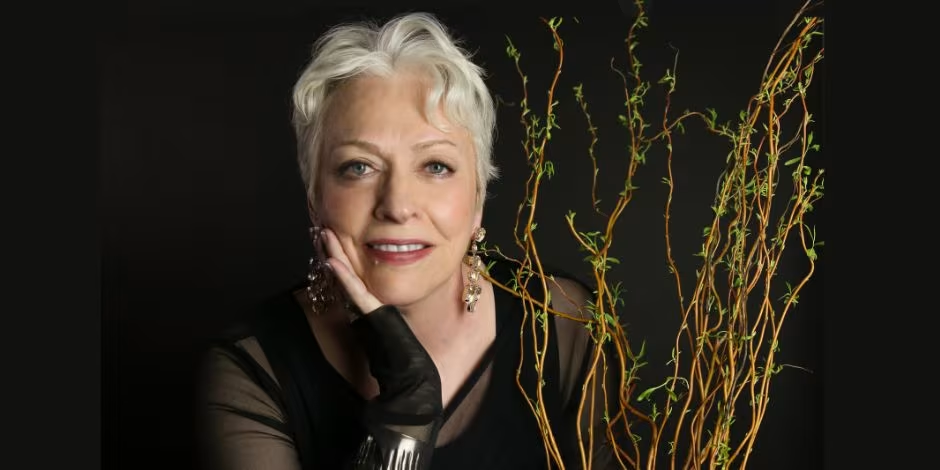
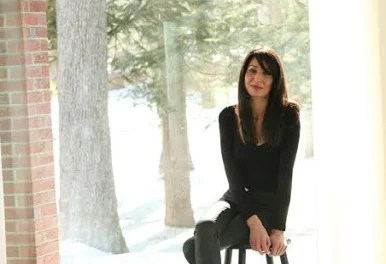
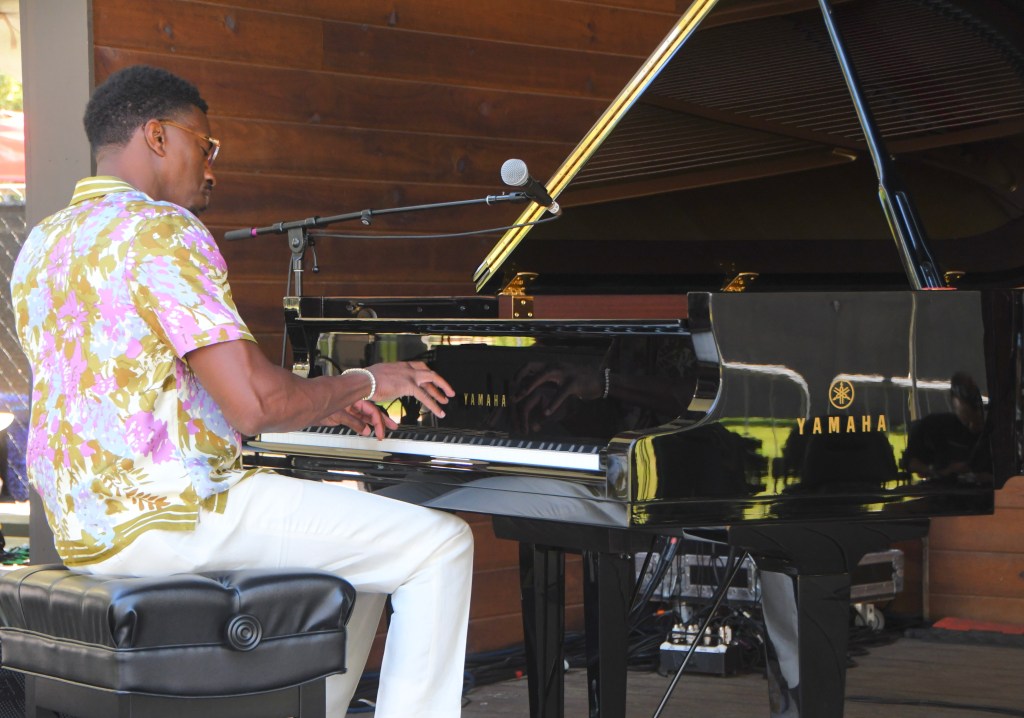
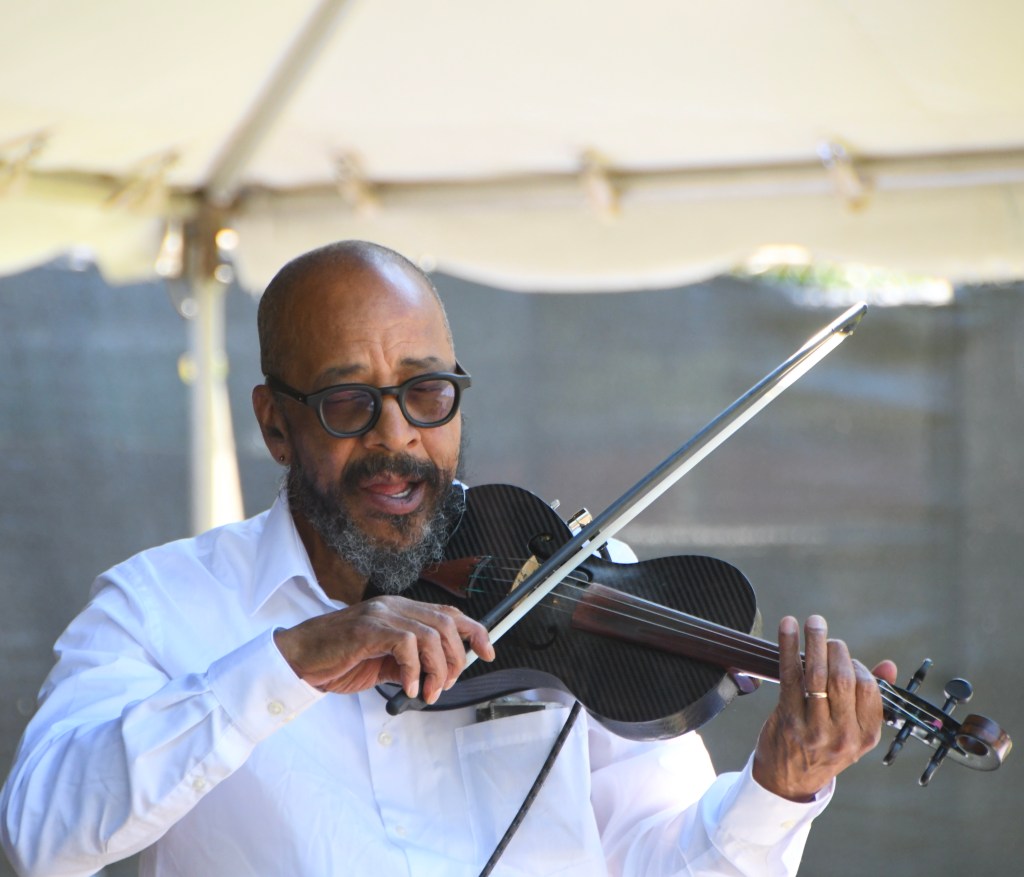
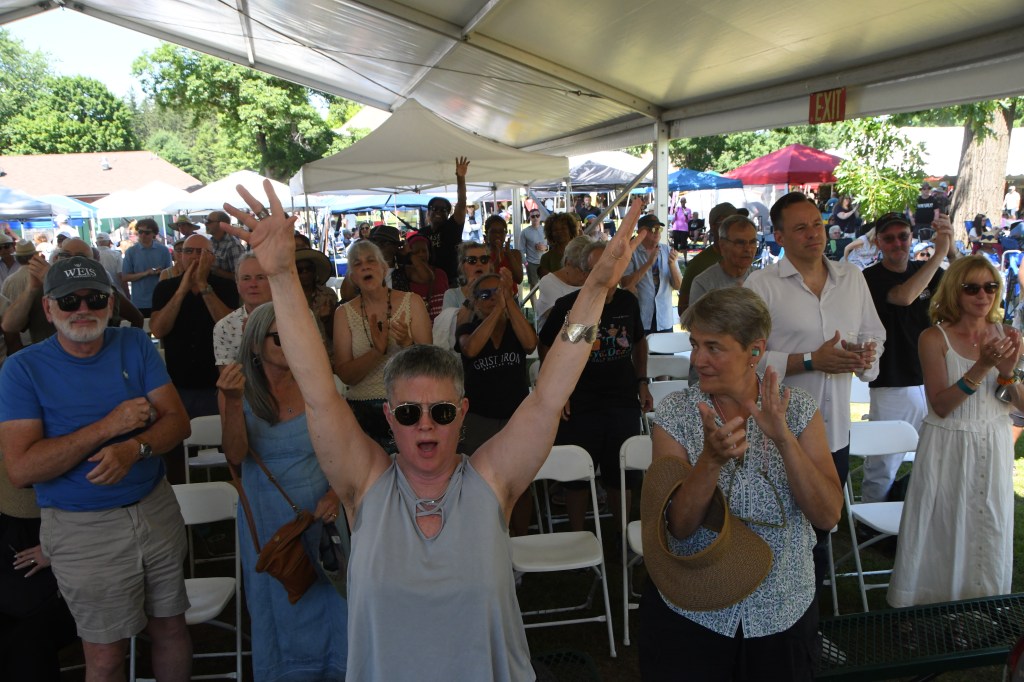
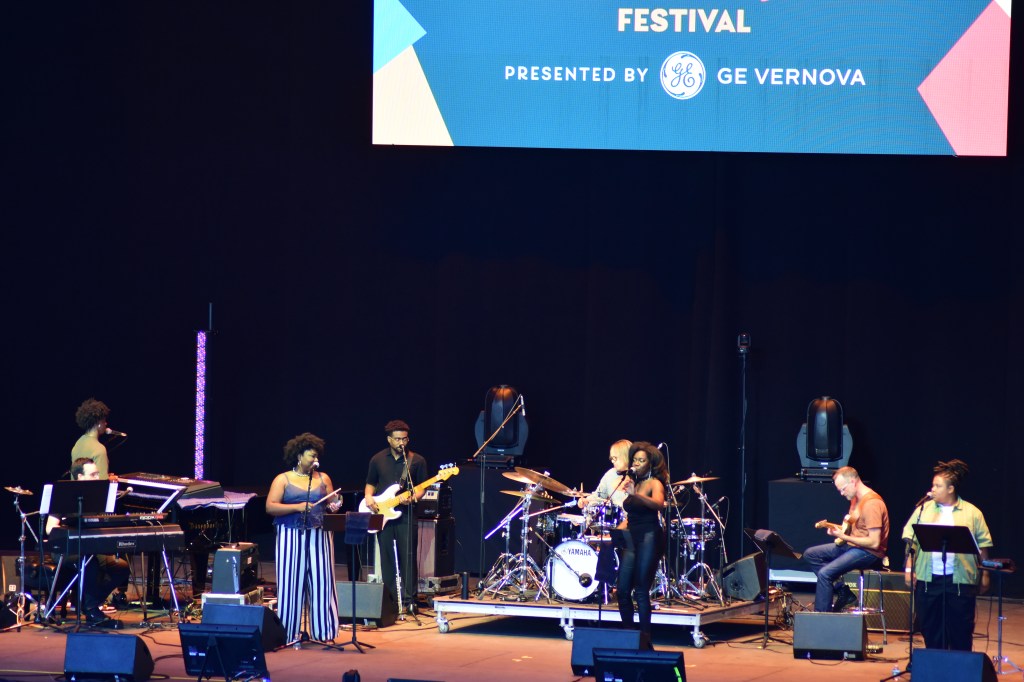
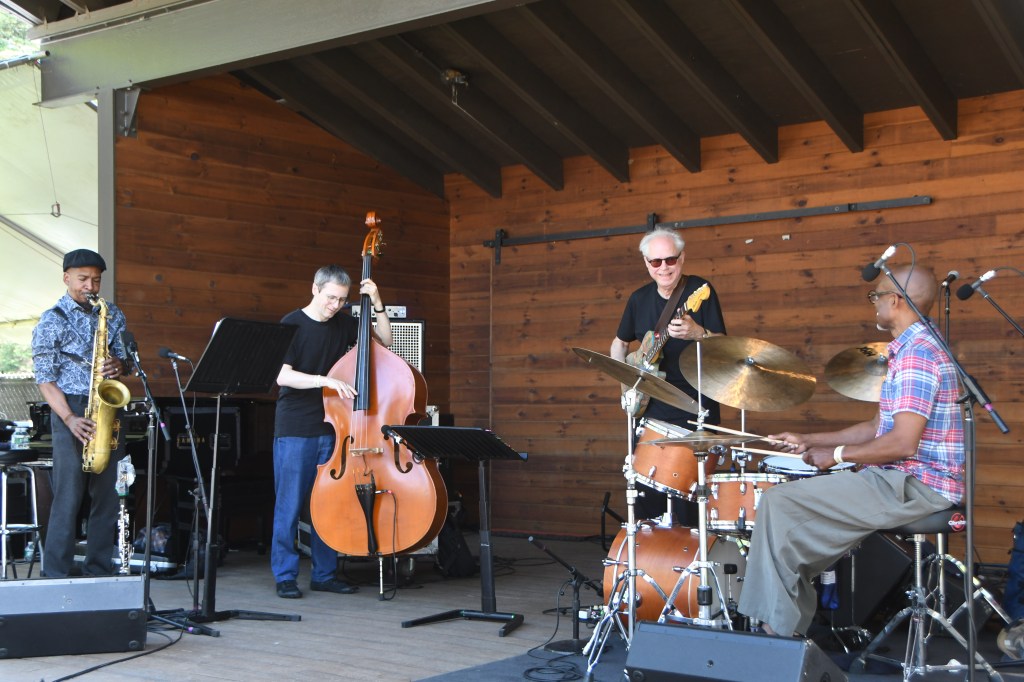
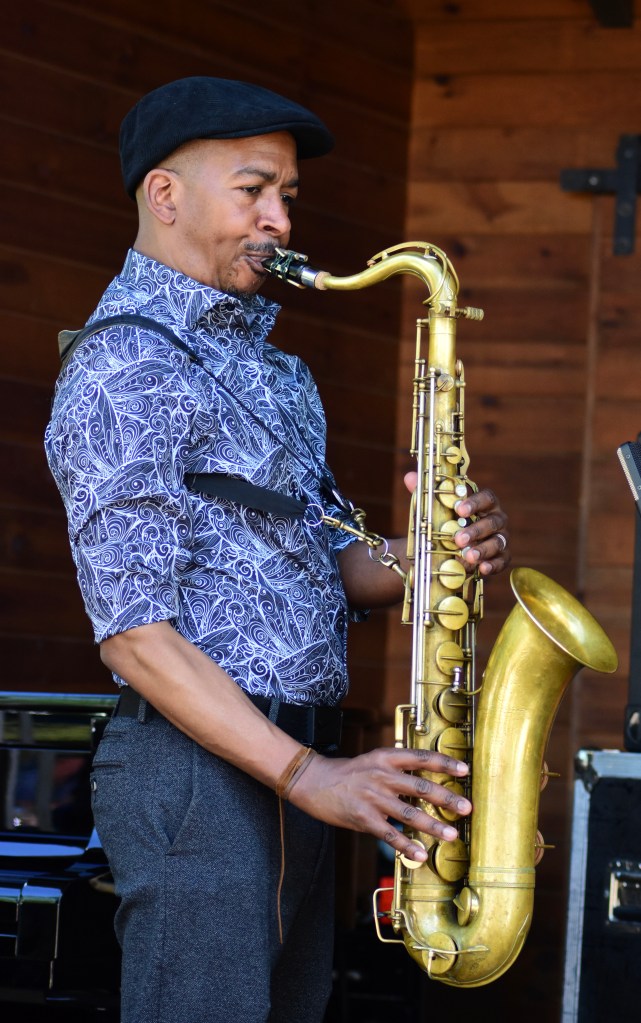
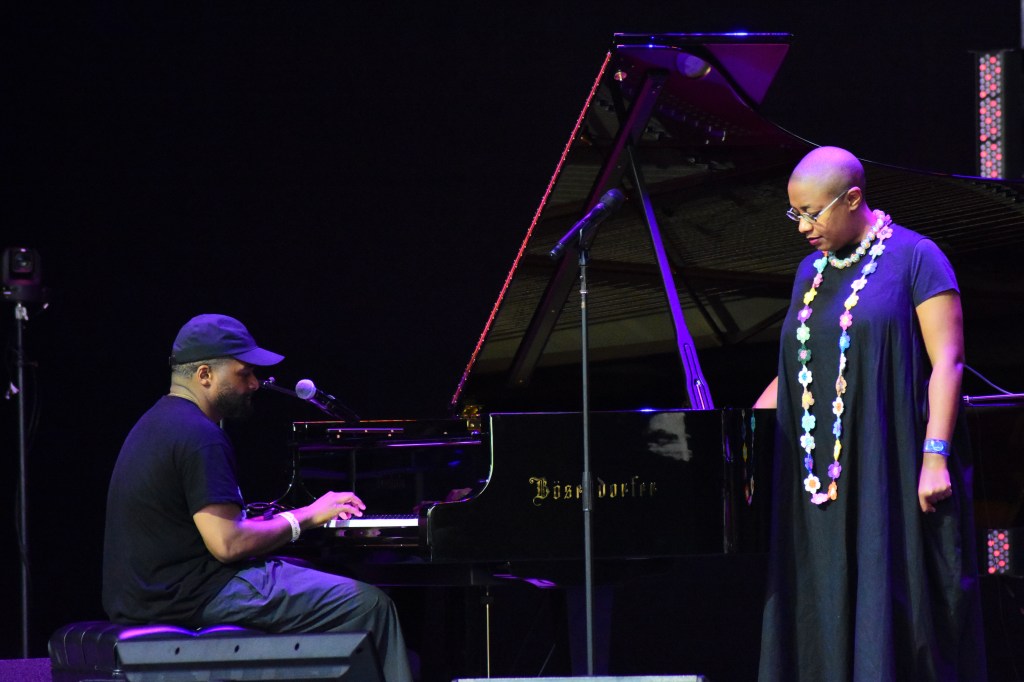
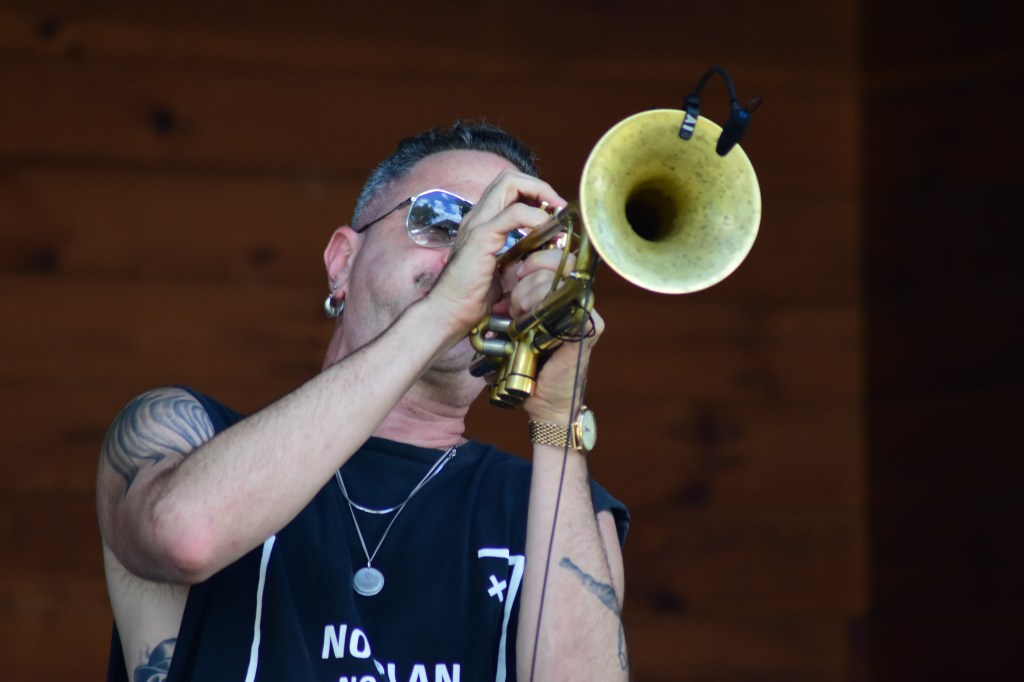
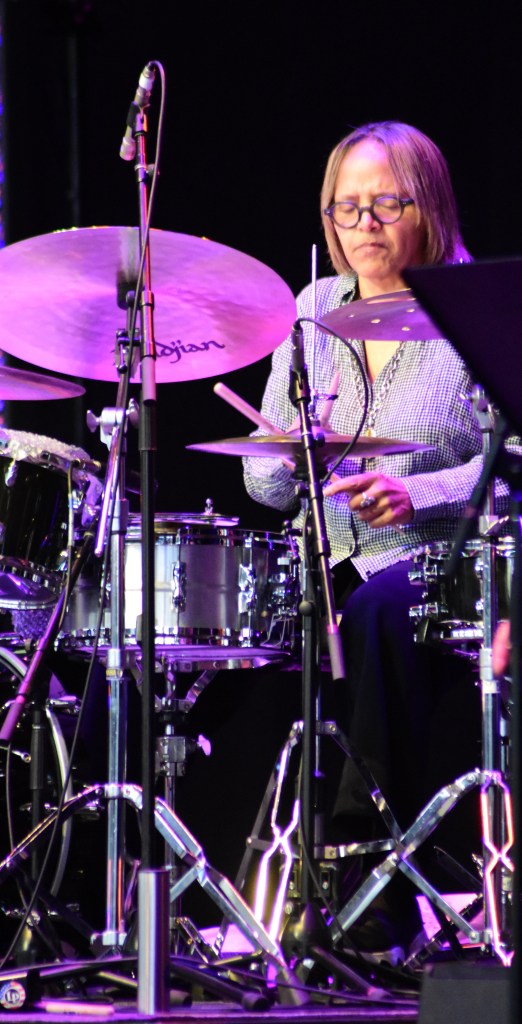
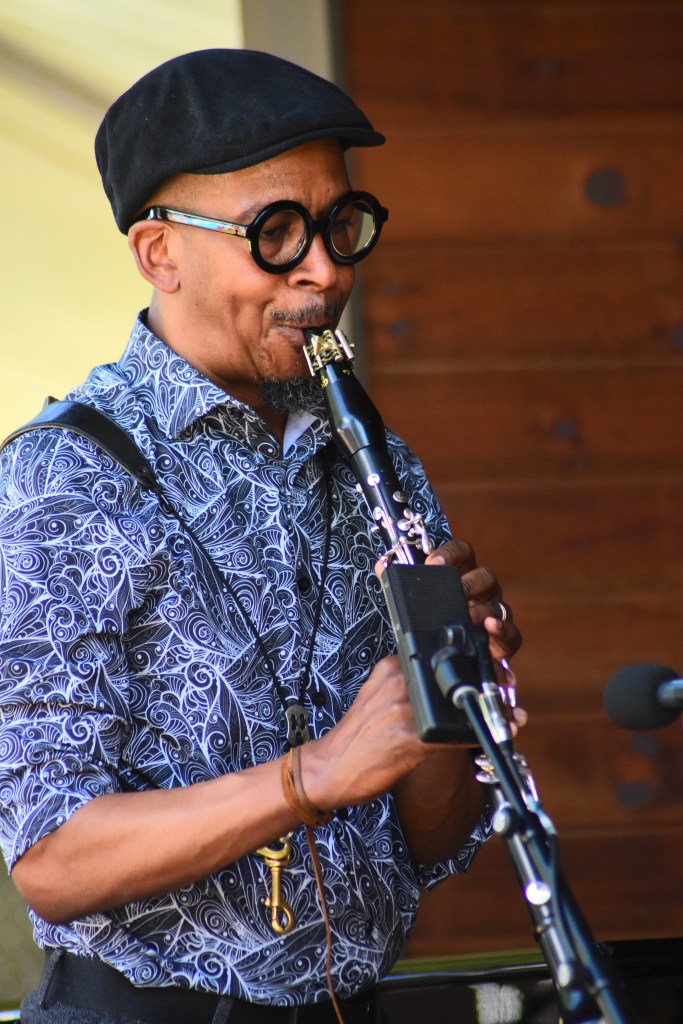
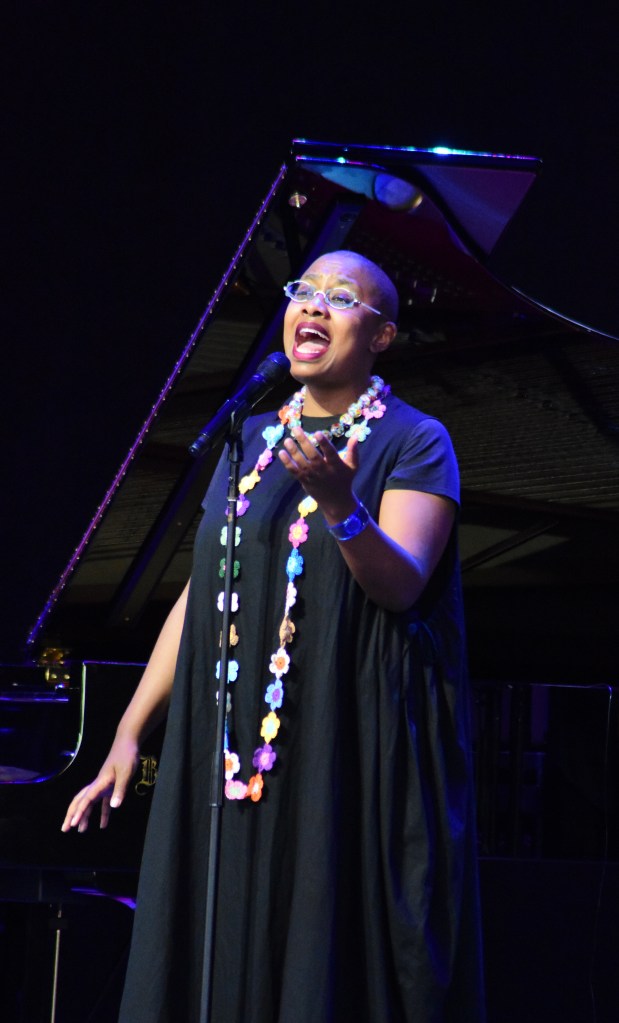
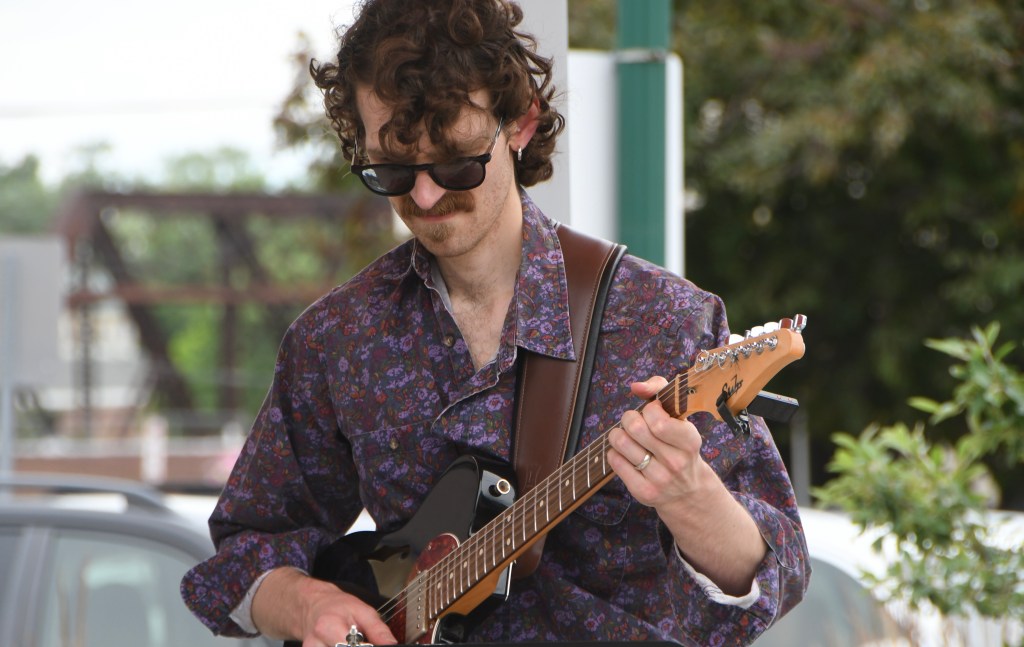
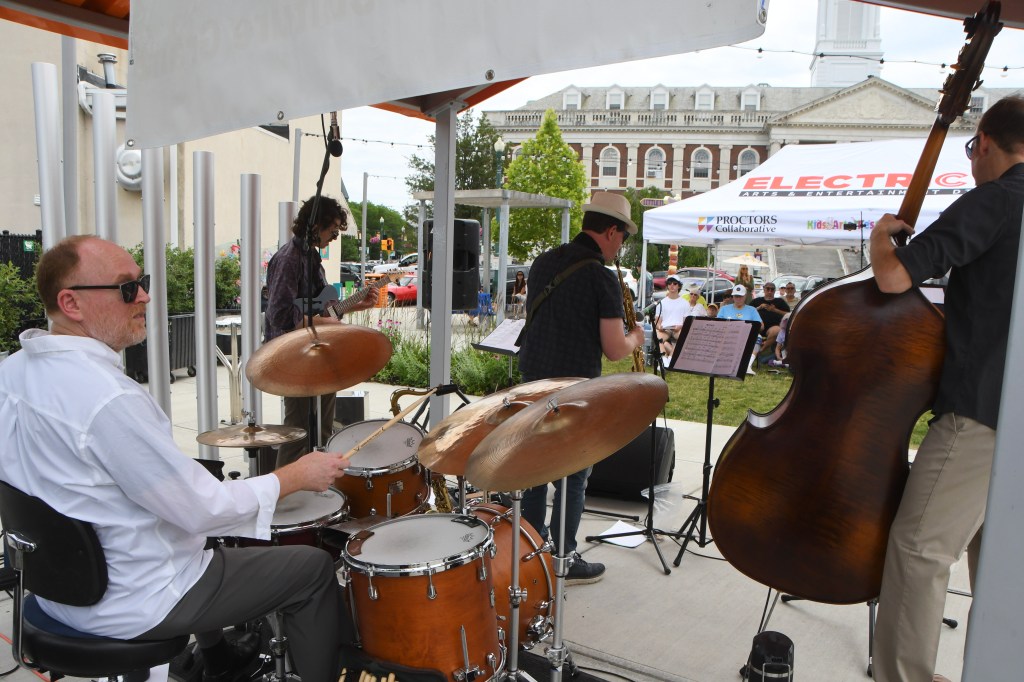
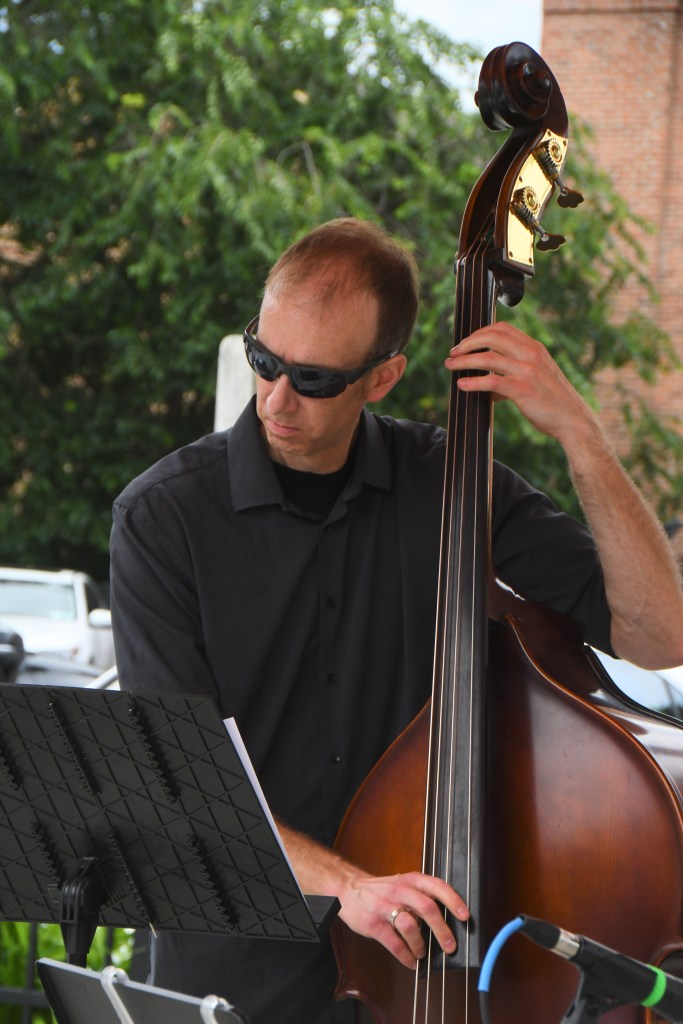
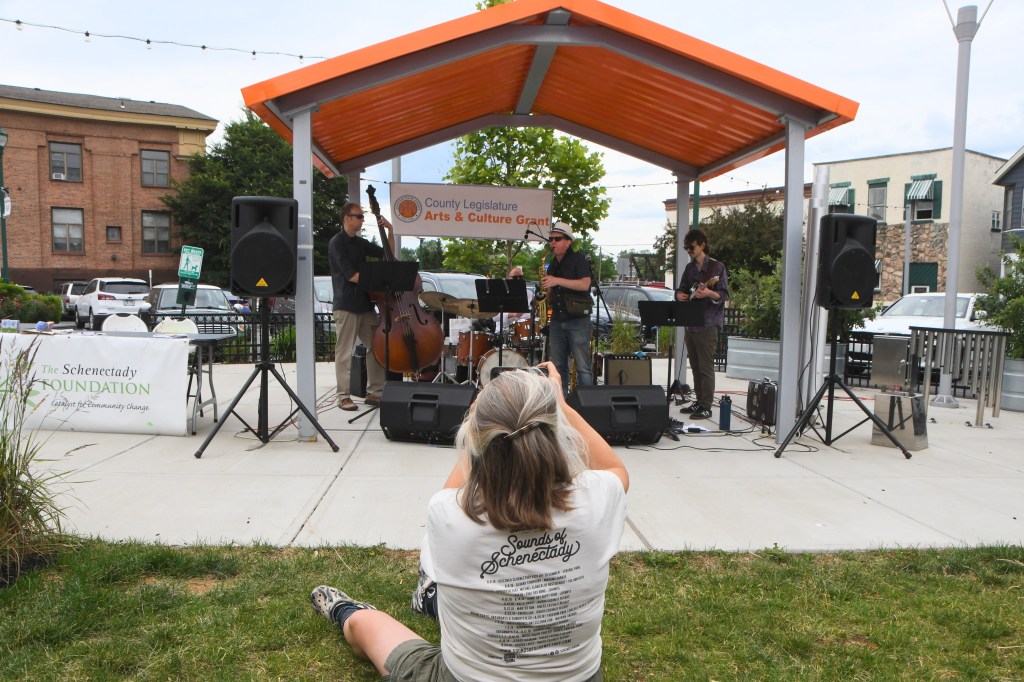
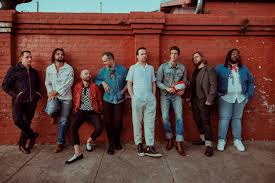
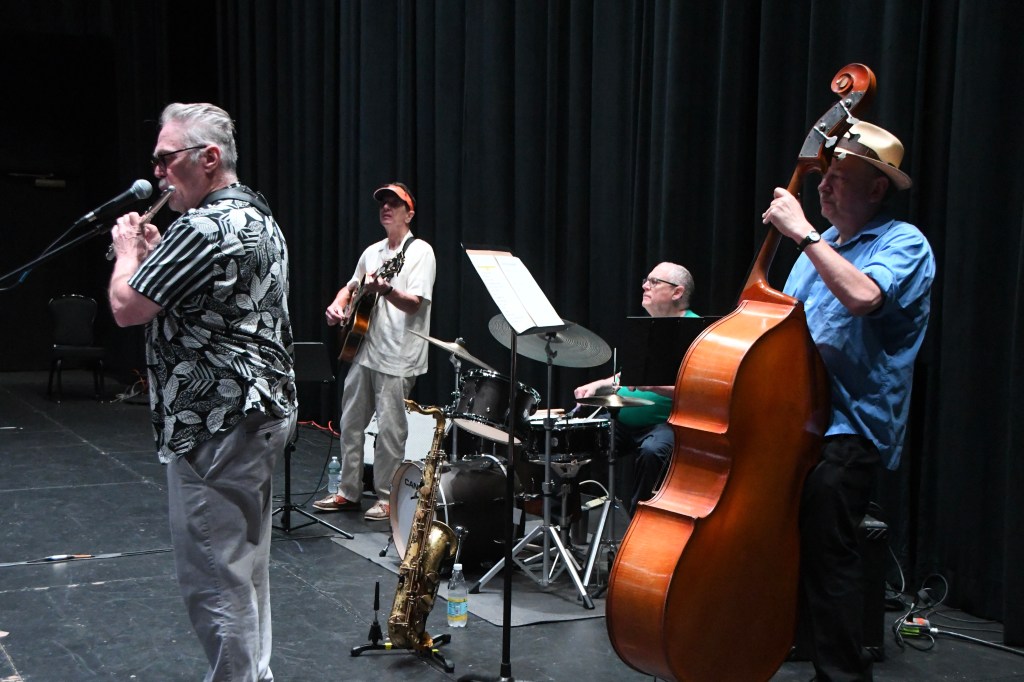
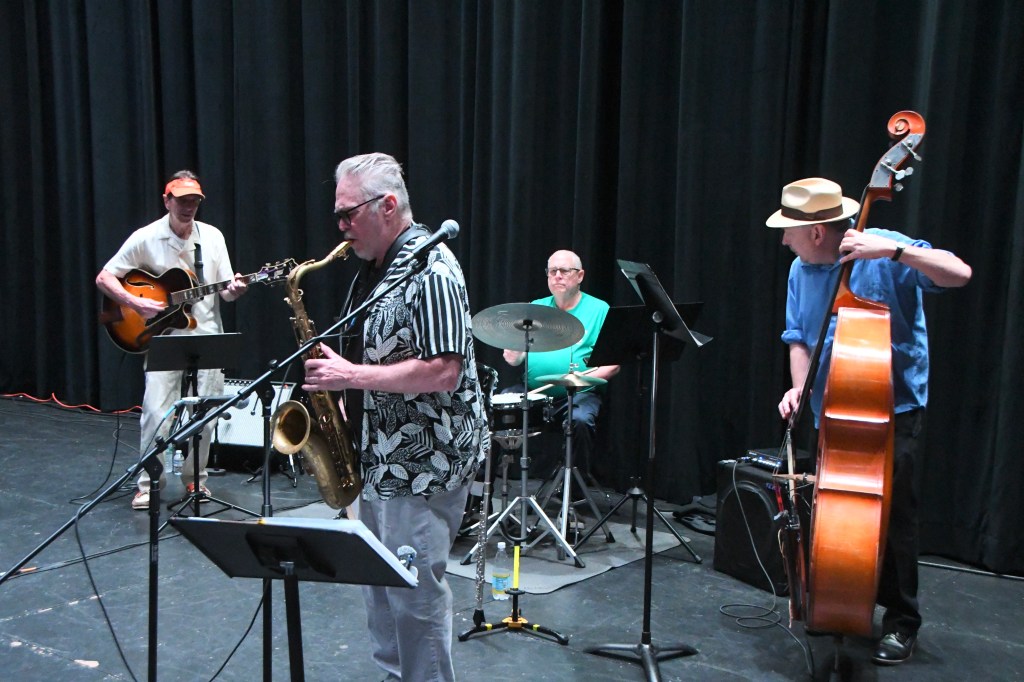
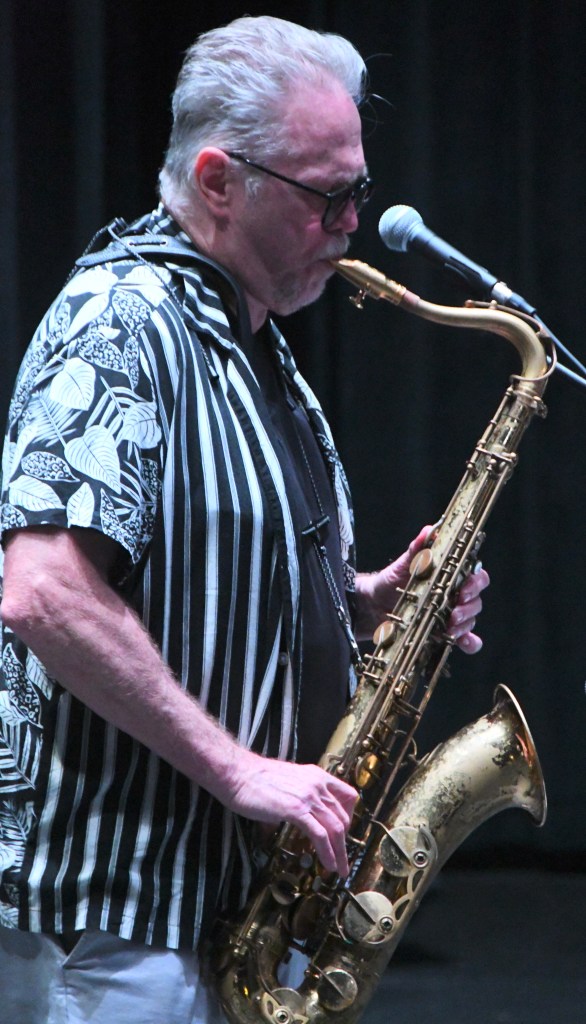
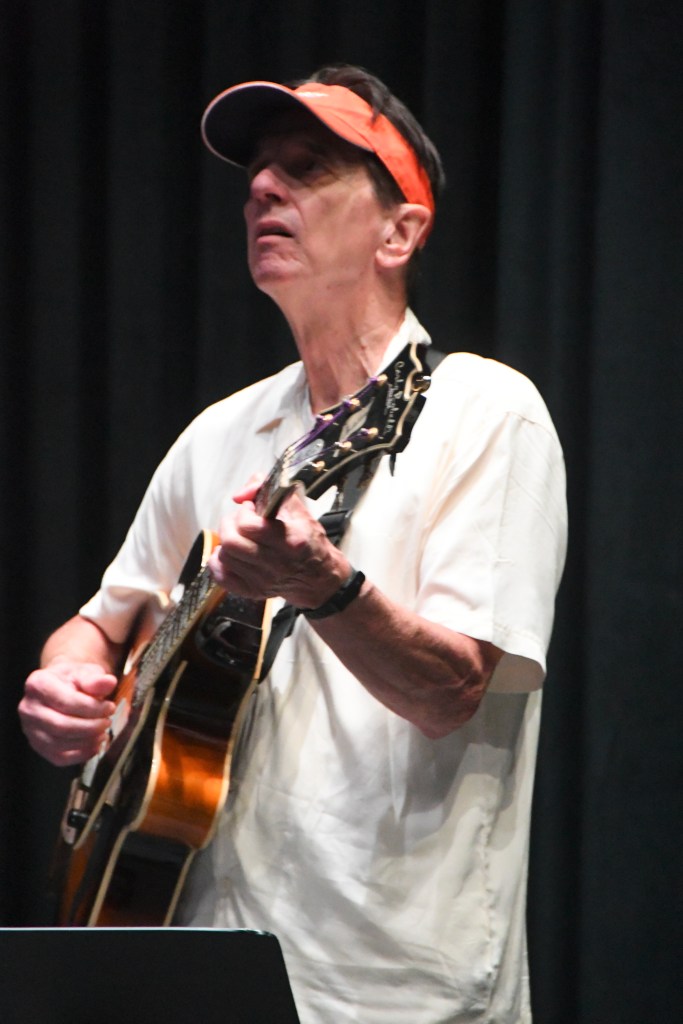
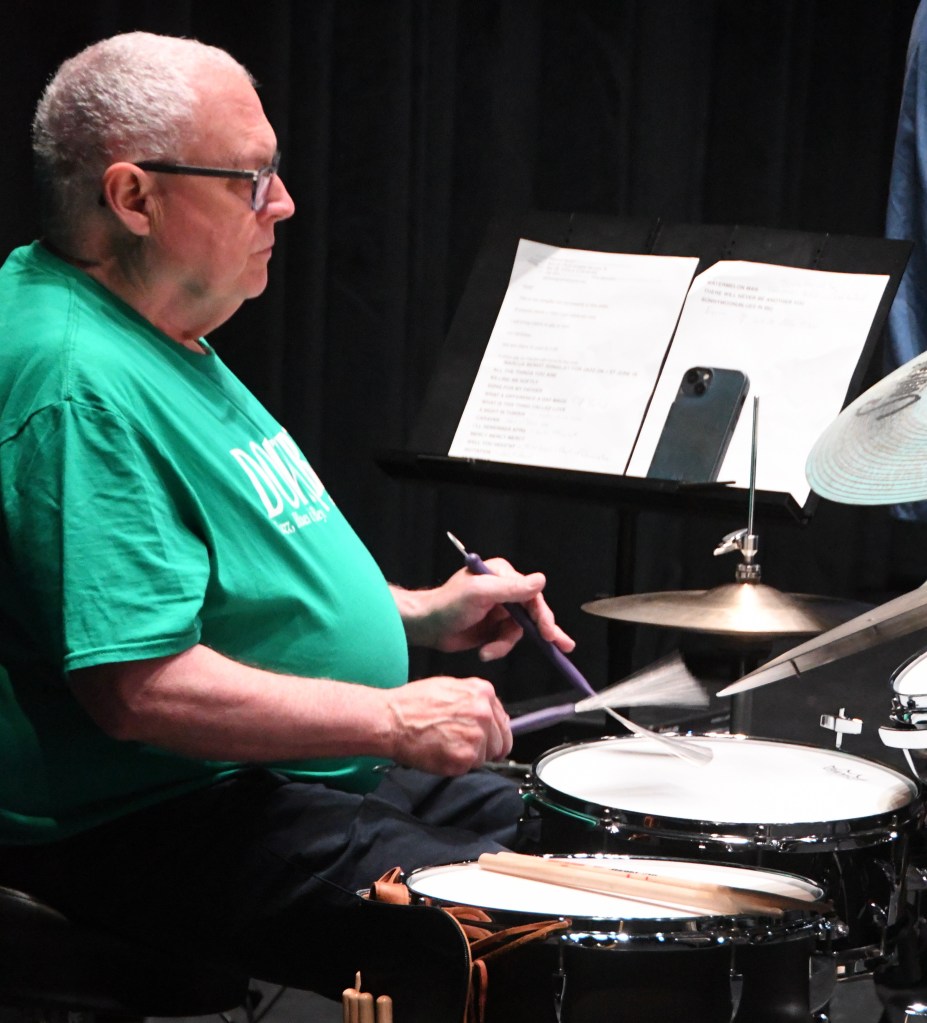
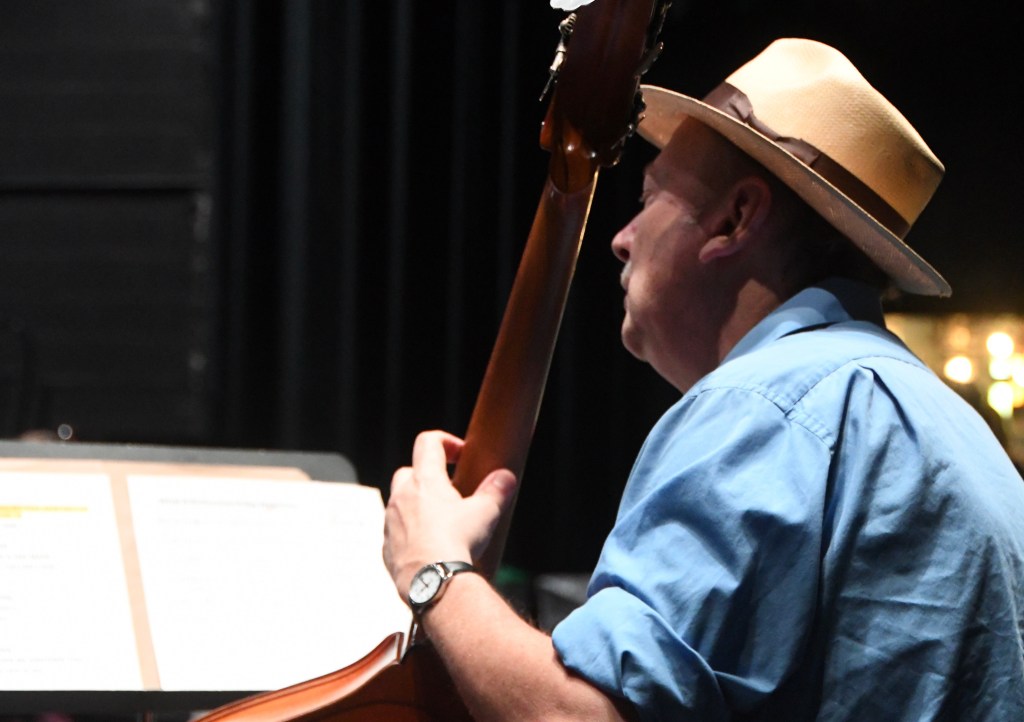
Eight area jazz crews perform Sunday in the 2nd Galway Jazz Festival, presented free by Capital District Jazz Ltd.
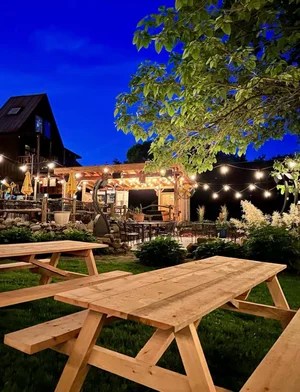
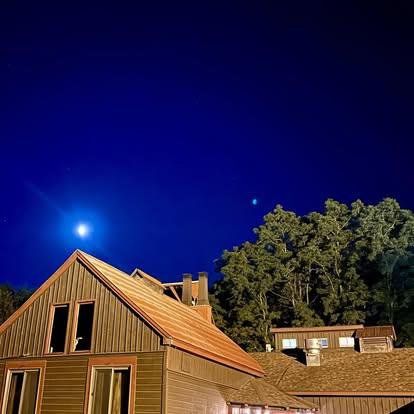
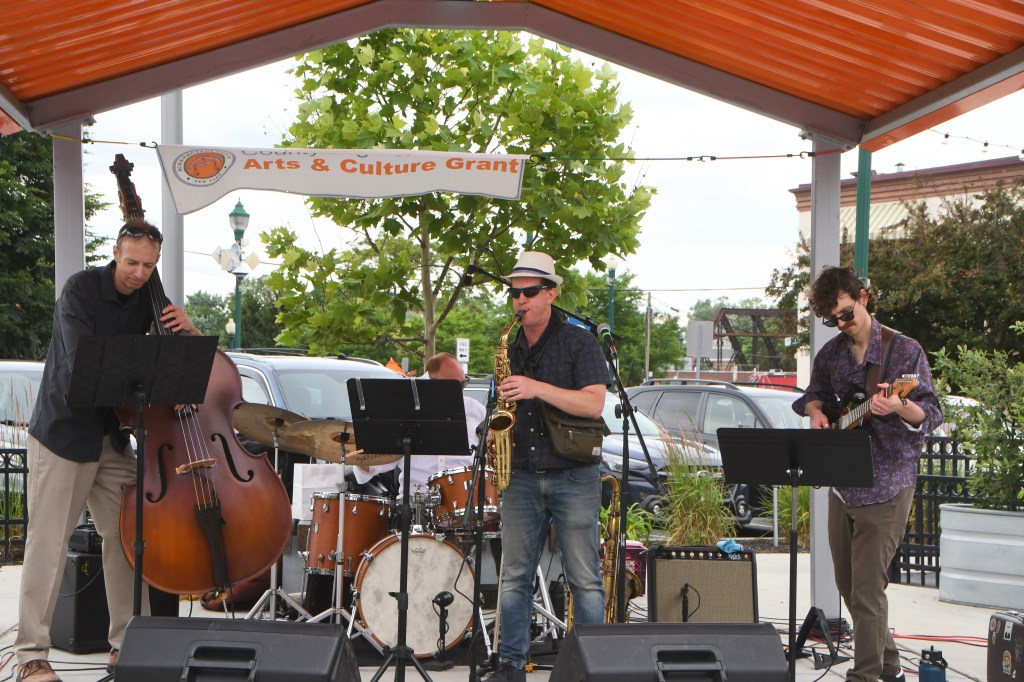
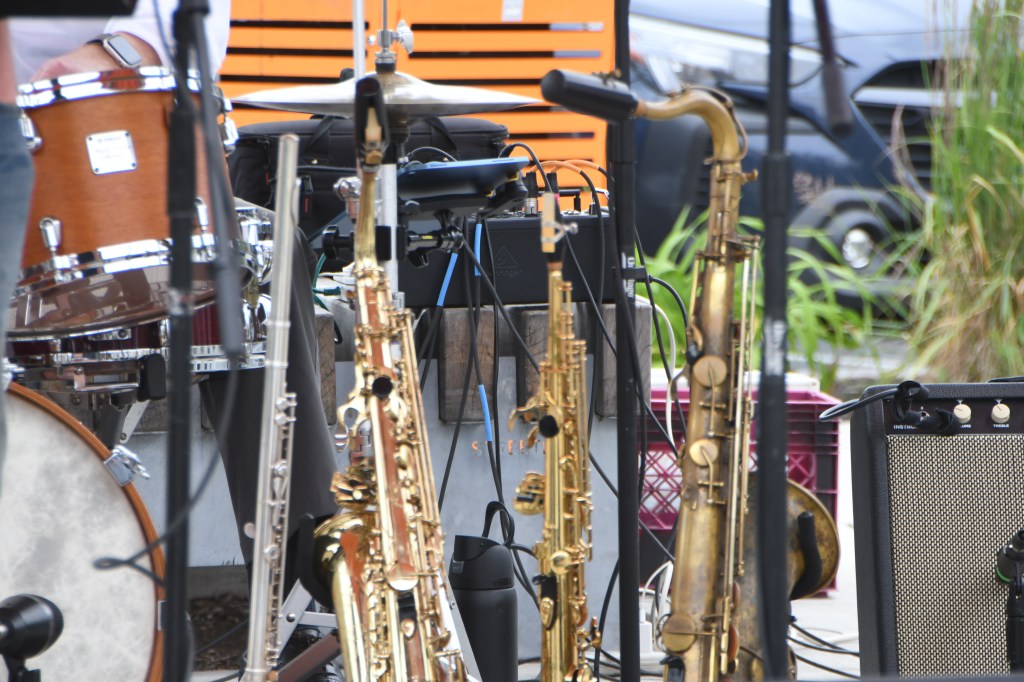
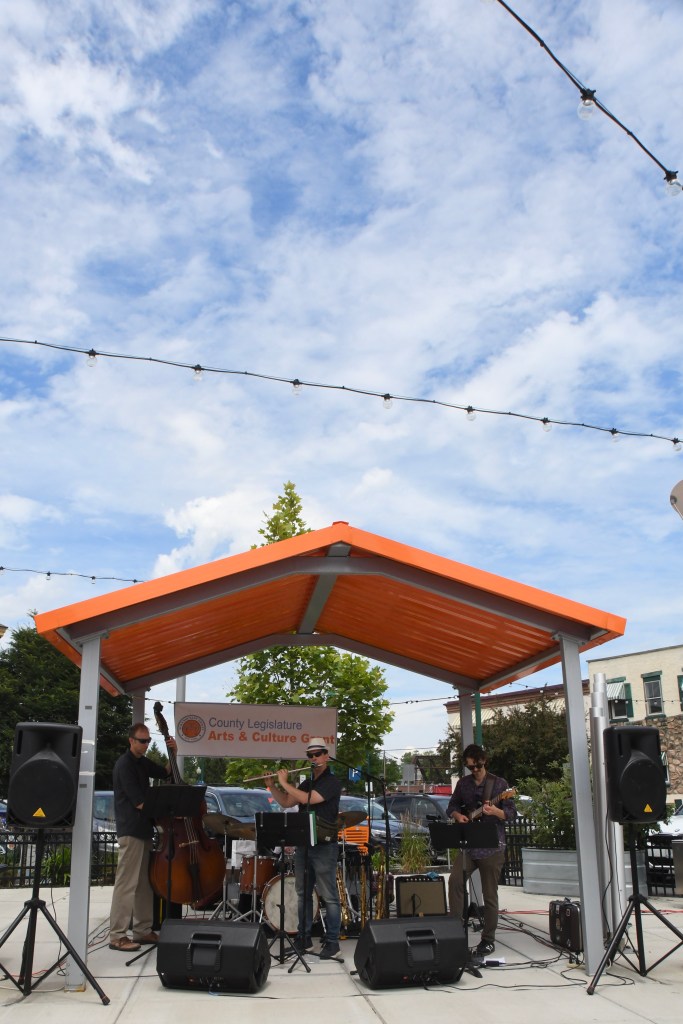
The Cock ‘N’ Bull outdoor performance area; roofed artists’ shed in the background. Photo provided
From 11:30 a.m. to likely past 9 p.m., the festival presents these local and regional jazz artists:
11:30 a.m.: The Vinnie Marotta Trio
12:15 p.m.: Michael Benedict and Bopitude
1:30 p.m.: Tarik Shah Quartet
2:45 p.m.: Out of the Box
4 p.m.: The Jeannine Ouderkirk Quartet
5:15 p.m.: Keith Pray’s Listen!
6:30 p.m.: Hot Club of Saratoga
8 p.m.: Brass Machine
The Cock ’N’ Bull Facebook page explains the event this way.
Rain or shine (indoors if inclement weather). A very family friendly venue and event so come one, come all! This event is made possible through donations, if you’d like to make a tax deductible donation visit www.cdjazz.org
PLEASE CALL AHEAD TO HELP THE VENUE PREPARE 518-882-6962
Feel free to bring lawn chairs and make a day of it, but no outside food or drinks are allowed. They will however be available for purchase throughout the day.
Partial view of Keith Pray’s Big Soul Ensemble, shown here playing indoors. Photo provided
The Cock ’N’ Bull (5342 Parkis Mills Rd., Galway) has long presented music in its converted barn dining and music room. It continued presenting music during COVID by adding an outdoor performance space whose roofed area accommodates even Keith Pray’s (17-piece) Big Soul Ensemble in its last-Tuesday-of-the-month residency.
A highly efficient sampler presenting selected artists from the area jazz scene, this festival – like most multi-act productions – offers the opportunity for tasty surprises. Find an act you hadn’t previously heard, fall in love, and go catch them elsewhere, down the road.
Preview: Keith Pray’s Ortet plays Jazz on Jay, Thursday, July 9, 2026
Keith Pray leads his Ortet organ trio today with guitarist Michael Novakowski and drummer Chad Ploss on a musical path he began exploring after seeing organist Dr. Lonnie Liston Smith in New York. Pray recalled, “His music was hypnotic, funky as could be and profoundly creative…The (organ) is like a full orchestra: It can whisper, roar and everything in between.”
Since moving here from New York and becoming a leading voice on saxophone, “The organ has proved to be a muse,” said Pray, “providing many new compositions.” In addition to his own sax-powered bands, large and small, plus guest spots, he built an organ trio about eight years ago. This sparse but powerful format features drums, guitar and the organ playing both melody and bass lines.
Keith Pray. Photo provided
Pray first bought an organ hoping to persuade keyboardists in his bands to play it. Exploring it himself, starting in late 2016, he played his first live organ gig four months later. He recorded an organ trio album in August 2021: “Down the Middle,” his sixth (of 12) as a leader.
Today, Ortet will play “what I feel fits the moment, likely some Jimmy Smith, some originals, maybe some James Brown and/or Beatles.” Pray said In general, the Ortet plays “soul jazz in the style of the classic organ trios of the 60’s &70’s.”
Playing these standards, “I always try to play them differently; some days more extreme than others,” he explained, noting there’s lots of room to improvise.
Pray has taught saxophone at SUNY Oneonta and jazz history and arranging at SUNY Schenectady County Community College. He directs Schenectady City School District’s high school bands and the SUNY Albany Jazz Ensemble. His master classes and clinics include the Proctors Summer Jazz Institute for nine seasons and co-founding All Ears Jazz to develop jazz education workshops.
Both Pray and drummer Chad Ploss trained at the Crane School of Music. Inspired by Motown, heavy metal, the Roots and area percussionist Andy Hearn, Ploss also plays with Raisinhead, in Family Tree jams and other groups.
Guitarist Mike Novakowski also plays in several bands including the trio Katalyst and the Teresa Broadwell Band.
Pray performs through the summer with his trio, quartet, Big Soul Ensemble and the Ortet; he also guests with Bobby Previte’s Quartet A and the Upstate Composers Orchestra. He’ll play the free admission Galway Jazz Festival at the Cock ’N’ Bull on July 12 with his new band Listen!
“This group plays my compositions that are written more like ‘normal’ jazz tunes (than free jazz),” said Pray. “But (they) can be more fluid in form, forcing us to listen to each other more intently and hopefully helping to keep things from going as expected.”
Jazz on Jay continues July 16 with the Ragtime Windjammers.
Jazz on Jay is presented by the ElectriCity Arts and Entertainment District.
Moving singer Shiri Zorn into Proctors GE Theater for Thursday’s Jazz on Jay show made double sense; extremely hot weather outside, extremely cool music inside.
Between guitarist Chad McLoughlin at stage left and percussionist Brian Melick stage right, Zorn sat throughout. Gesturing with long-fingered expressive hands, her controlled, cozy voice never pushed things; melodic motion and delivery in emotion both understated and subtle.
Shiri Zorn, above; the trio, below; from left: Brian Melick, Zorn, Chad McLoughlin
Mostly seated, McLoughlin played understated and subtle, too; high- and mid-range chords under everything, single-note runs in a clean, clear tone in solos. Across the stage, Melick again proved he should be in every band. Zorn rightly called him a “one-man-show,” a singularly musical beat magician. Melick’s mastery of tones underlined each song, adjusting the tone on the cajon where he sat by pressing or releasing his heel against its wood surface. Otherwise, his feet engaged a kick-drum pedal against the back of the cajon and the hi-hat.
Chad McLoughlin, above; Brian Melick, below
Zorn started soft, sparse and slow with “The Nearness of You,” upshifting into a light bossa and stretching “en-cha-a-a-nt” across a handful of notes, then skatting a repeating coda.
“Just In Time” flowed faster at first, Zorn fulfilling her promise to take it apart and sing it back together. McLoughlin opened it up in a kinetic solo and Melick stroked snare and cajon with brushes in a brisk beat rush.
Then Zorn challenged the audience – ever-growing as late-comers drifted across State Street from Jay, where the show wasn’t – to recognize her next tune. She sang its familiar words almost unrecognizably slowly, almost. Both words and melody charmed until, after a calm coda, Zorn asked its title and writer. “”For No One,’ by Paul McCartney,” sang out Dave Vroman a few seats down my row. Dave sang with my brother Jim in bands for years, including the Auratones, which Jim reunited as a surprise for my 50th birthday party. But I digress; and the crowd was delighted by Zorn’s graceful interpretation.
Citing 6/8 Afro-Cuban rhythms and preceding the tune with a poem that set up its theme of love without possessiveness, Zorn next sang “Alone Together,” saluting both McLoughlin’s guitar solo and the explosive break Melick added near the end. Here’s where Zorn dubbed him a “one-man show” and invited him to explain the cajon, the boxy instrument/seat that supplied many of the beats he created Thursday. He also played thumping melodies on molded clay udu drum at times, mostly early and late in the 90-minute set.
After the energetic “Alone Together,” “Born to Be Blue” relaxed both band and audience, a mellow 2 a.m. blues with Melick keeping time on snare and hi-hat, McLoughlin using his volume pedal to shape his notes. It moved in subtle, slow simplicity until Zorn skat-sang through the late verses and coda.
In Jobim’s “How Insensitive” (and Jobim’s later “No More Blues”), Zorn sang in both English and Portuguese, fine and fluent in both languages and tunes. Melick played the snare with his hands in “Insensitive,” also fluently, both McLoughlin and Zorn quietly persuasive in caressing the melody.
Now, everybody sings “Fly Me To the Moon,” but Zorn said they’d perform it in seven, demonstrating this combination of waltz time and four-beats before playing it that way, in what felt Latin and energetic. Melick’s cajon break brought big applause here, well deserved.
Medleying “You Don’t Know What Love Is” with “Yesterdays” (no, not the Beatles’ “Yesterday”) worked well, the slow swing of the former riding on Melick’s softly propulsive brushed snare then flowing straight into the slower-at-first latter; it then sped up. All three really soared here, so Zorn encouraged the audience to participate in the blood drive upstairs. “We’ve got your blood pumping now, so go donate!” she urged.
Echoing the guitar-and-vocal duet of “Detour Ahead” she’d recorded on her debut album “Into Another Land” with George Muscatello, Zorn and McLoughlin charmed this one together. Melick accompanied them at his quietest and most discreet with hand-bells and softly brushed cymbals.
Zorn introduced Jobim’s upbeat “No More Blues,” noting our troubled times provoke too many blues. She sang this brisk bossa at a winning pace as Melick blasted through a volcanic cajon break. Zorn, Melick and McLoughlin balanced beautifully, as they had throughout.
Jazz on Jay continues Thursday, July 9, with Keith Pray.
Saratoga-accessible, New York City hip, Jeanne O’Connor sings fresh tunes from her new album Friday at Caffe Lena – her 15th showcase here since moving from New York; you know, that other jazz city.
Her “The Sweetest Sounds” album releases next year, so this preview unwraps a new package, each song a surprise.
Friday, she sings with well-known area talents bassist Todd Coolman, guitarist Dave Stryker and drummer Bob Halek, plus pianist Ted Rosenthal, subbing for John di Martino, who played on the album. She’ll also bring up special guests Amy London and drummer Sam Zucchini. Both Coolman and Stryker played Sunday at SPAC’s Saratoga Jazz Festival with the Skidmore Jazz Institute All-Star Band, and London sings with O’Connor in the Royal Bopsters, a New York City vocal quartet.
Jeanne O’Connor. Photo provided
Even before moving to Saratoga Springs, O’Connor performed here regularly, at Justin’s in Albany, Upbeat on the Roof at Skidmore’s Tang Teaching Museum, “A Place For Jazz” in Schenectady and shows sponsored by the Swingtime Jazz Society and the Saratoga Arts Festival.
In New York, she’s sung at Lincoln Center, the Guggenheim, the Blue Note, Birdland and the Rainbow Room.
Both regional artists and New York-based players support O’Connor on “The Sweetest Sounds” – as if she recorded it aboard a Hudson River Dayliner.
In addition to those local stars onstage with her at Caffe Lena Friday, the album features New Yorkers percussionist Mino Cinelu, pianist John di Martino, trumpeter Randy Brecker and keyboardist/accordion player Gil Goldstein. Both Brecker and Goldstein played often with O’Connor’s late husband Don Grolnick, a respected keyboardist, producer and composer whose credits include top pop and rock stars James Taylor, Linda Ronstadt, Roberta Flack, Barry Manilow (who sang his farewell to Albany this week on his final tour), Steely Dan and others. Valued also in the jazz world, he played with Steps Ahead, Dreams, the Brecker Brothers, John Scofield, Billy Cobham, Dave Holland and many more.
O’Connor honors her late husband’s memory on her new/unreleased album by singing their collaboration “Medianoche” from his Grammy-nominated album of the same title. Here O’Connor’s emotionally complex performance leaves the listener with uplift.
Poignant power marks other new tunes, and local connections. Our own pianist/composer/bandleader Peg Delaney wrote the vocal skat section of the album’s title track and opener. And O’Connor wrote lyrics to a melody by too-soon-departed area pianist Scott Bassinson for “My October Song.” Saxophonist Keith Pray, who played on many Bassison recordings, plays on “My October Song” and “The Sweetest Things.”
“This album brings together songs that have lived with me over time — from the Great American Songbook to contemporary classics and original material,” says O’Connor in the news release announcing both album and show.
“The Sweetest Things” collects Songbook classics including the title track (Richard Rodgers), “The Great City” (Curtis Reginald Lewis), “Charade” (Henry Mancini/Johnny Mercer), “Baltimore Oriole” (Hoagy Carmichael/Paul Francis Webster), “My Ship” (Kurt Weill/Ira Gershwin), “Once Upon A Time” (Charles Strouse), and “I Didn’t Know What Time It Was” (Richard Rodgers/Lorenz Hart).
Both originals are collaborations: “Medianoche (Don Grolnick/Jeanne O’Connor), and “My October Song” (Scott Bassinson/Jeanne O’Connor).
The contemporary pop tunes swing in classic style: “Wichita Lineman” (Jimmy Webb [we were born on the same day, but I digress]) and “Save The Country” (Laura Nyro).
How very cool that the album closes with Nyro’s upbeat number, a bright ray of hope.
Show time for Jeanne O’Connor Friday at Caffe Lena (47 Phila St., Saratoga Springs) is 8 p.m., doors 7:30. Admission $27.11 members, $30.37 general, $15.18 children and students. 518-583-0022 www.caffelena.org
Later, Jeanne O’Connor sings all over the place, usually in duos with pianists:
July 31 at The Olde Bryan Inn in Saratoga Springs
Aug. 23 at The Roosevelt Room in Troy
Sept. 17 at the Van Dyck Music Club in Schenectady
Oct. 18 and Dec. 20 at the Market Bar in Saratoga Springs
A Cool Voice on a Hot Day; Jazz on Jazz Likely to Move Indoors Thursday
Shiri Zorn trusts her voice so completely that she sings with only minimal accompaniment.
Thursday at Jazz on Jay, she sings with guitarist Chad McLoughlin and percussionist Brian Melick, the same trio format as on her albums “Into Another Land” (2022) and “Looking for the Light” (2025).
“Shiri is my favorite kind of singer (and human, for that matter)—open-minded, creative, and honest,” singer Tierney Sutton told Downbeat. “Zorn’s voice is cool, calm and cerebral, her tone pure,” wrote the magazine’s Allen Morrison. “She articulates lyrics with perfect diction and scalpel-like precision.”
Shiri Zorn. Photo provided
Zorn studied classical piano before singer Cleo Laine’s intimate style and freedom inspired her to sing, at 14.
“I grew up listening to Carole King, the Beatles, Leonard Cohen as well as classical music,” said Zorn. She also noted the jazz singers Ella Fitzgerald, Sarah Vaughan and Carmen McRae, and Middle Eastern music, as important influences. After studying voice and piano at London’s Guildhall School of Music and Drama, she studied vocal technique with Greta Matassa in Seattle, then Tierney Sutton, who produced the vocal tracks on Zorn’s debut album.
Zorn didn’t grow up performing in bands, instead honing her solo technique with key mentors. “My first real band was with George Muscatello,” the ingenious Albany jazz guitarist and longtime Skidmore faculty member.
In her current trio, she replicates the dynamic style of her earlier trio with Muscatello. “We will be playing only standards,” said Zorn of Thursday’s show. “I always try to find a new way to introduce music that has essentially been written around 100 years ago and ask myself how I can make it relevant to me, my life experience and my work.”
She’ll apply this inventive approach to standards including “The Nearness of You,” “Alone Together,” “Fly Me to the Moon” and “How Insensitive.”
This worked well last August when she helped percussionist Brian Melick, who is playing in her trio Thursday, to open for Edmar Castaneda at Proctors in a Music Haven presentation. I reported that she sang sweet but bluesy and hailed her remarkable voice and how her expressive hands add to its effect.
Jazz on Jay continues next Thursday, July 9 with Keith Pray.
Jazz on Jay is presented by the ElectriCity Arts and Entertainment District.
Sponsors are the New York State Council on the Arts, a Schenectady County Legislature Arts & Culture Grant, Downtown Schenectady Improvement Corporation and The Schenectady Foundation. We also receive support from Schenectady City Hall and this website.
Show time is 12 noon at Jay Square opposite City Hall. Weather site: Robb Alley at Proctors, where seating is provided.
As customary, seven faculty members of the Skidmore Jazz Institute offered lessons in sound Sunday to open the Saratoga Jazz Festival’s second day. Playing the Wood stage, the Faculty All-Stars honored saxophone giant John Coltrane with often modernist arrangements of ‘Trane tunes. (Saturday had featured an electric band playing Miles Davis’s most plugged-in music; 1969-’91. Both Miles and ‘Trane would be 100 this year.)
As usual, this 49th festival mixed old and new, jazz and non-, and growing numbers of women onstage. Like Saturday’s first festival day, the weather was more than fine.
Young alto saxophonist Lakecia Benjamin declared Sunday women’s day and hailed the “legends in the house,” led by Patti Labelle, dubbing her the Queen of Shenanigans. In ten of the two-day festival’s 22 total acts, women led or appeared as featured guests; not quite half, but getting closer.
The festival presented just one semi-big band, but no modern jazz pop crossover stars to invite young fans, as Laufey did in 2024. She drew such droves that she returned to sing last summer with the Philadelphia Orchestra.
A stage-ful, a Mouthful: Skidmore Jazz Institute All-Star Band. From left: Miki Yamanaka, Todd Coolman (who noted his name imposes serious responsibility), Dave Stryker, Quincy Davis, Steve Davis, Jimmy Green; Clay Jenkins stands behind Steve Davis
Players AND scholars, the Skidmore cats avoided the obvious at first, revving their trumpeter Clay Jenkins’s chart on Coltrane’s “Just for the Love” to bebop intensity. Arranged by Dave Stryker, and starring his guitar, “Mr. Dave” also felt fresh, off-center funk in a happy tussle. Leader Todd Coolman, wryest bassist around, dedicated “Body and Soul” to Katz’s Deli, mixing the fervent style of its 1930s origin with a syncopated beat, like layers of audio pastrami. Pianist Miki Yamanaka’s kimono-and-obi garb symbolized the band’s approach, bridging styles in distinctive ways. Seeing newly-arrived, black-shirted teenaged Institute kids enjoy their teachers’ playing felt like a fun affirmation of jazz’s future.
Miki Yamanaka, above; Clay Jenkins crouching at center, below
Slim, hyperactive in shiny silver and gold, Benjamin also had ‘Trane in mind and bravely deconstructed his iconic “My Favorite Things” on the Main stage. Dedicating it to Alice Coltrane, she warned it would get turbulent: “Seat belts are required.” She played it straight, blew it up, then repeated.
Lakecia Benjamin
Her tone was somewhere between Bird’s fluidity and David Sanborn’s rasp, her phrasing fast and sure. She set stuff on fire, igniting beauty in the flames with melodic intent and effect.
Also, like Terri Lynn Carrington and Patti LaBelle Saturday, Benjamin spoke, rapped and played about social justice. After listing treasured virtues, she said her “Ascension” expressed respect, a hymn-like statement in quiet melody. She performed like a fully-formed star; not one in the making but here now.
New Orleans pianist Kyle Roussel exceeded the high expectations those three words before his name automatically conjure. Traditional at first, he expanded Professor Longhair’s classic “Frankie and Johnny” into sound pictures of parades, rumbas, late nights at the club, spinning hot riffs off a steady roll.
Drummer Peter Barnado and bassist Nick Salcido played like reading his mind. In the trio or exploring solo, Roussel put immaculate technique in service of soul, and humor. Relaxed wanderings formed into what fans laughingly recognized as the theme from “M.A.S.H.” “Fur Elise” grew wings, dressed up as a blues, or Beethoven as thunderstorm, with a side of “Georgia on My Mind.”
Once he had everybody in his pocket, Roussel added singer Erica Falls. Precise and powerful as his playing, her voice assured “Nothing Is Impossible,” then “Come Together” added fierce, unsinkable, shared optimism.
Singer-guitarist Christone “Kingfish” Ingram took the music to the people, direct. After hot guitar-blues blasts from the Main stage, he vanished as the band vamped on the defiant “Not Gonna Lie.”
Backstage? Melting from the heat? No, riffing hard, walking the aisle to stop right next to me. That close up especially, he seemed more commanding than in Springfield opening for Buddy Guy a while back. Freed of opening-act deference, he wailed wondrous and wild; a next-gen bluesman for our time.
Here’s his setlist, courtesy of SPAC VP of Communications Kristy Ventre:
Kingfish
Midnight Heat (live in london album)
Fresh Out (kingfish album)
Voodoo Charm (hard road album)
Empty Promises (single)
Not Gonna Lie (live in london album)
Mississippi Night (live in london album)
Bad Like Me (hard road album)
Outside of this Town (kingfish album)
662 (662 album)
After Kingfish’s happy hubbub on the Main stage (and off), singer-guitarist Sasha Dobson felt unfocused and too quiet on the Wood. Her languid pop-country tunes came to life, though, on the strong wings of Charlie Burnham’s agile, soulful violin.
Charlie Burnham
Dianne Reeves took over the Main as the queen she’s been for decades. Like her elder Patti Labelle on Saturday, Reeves has her whole voice, profound artistic depth and dedication to soulful song, anybody’s song. Fleetwood Mac’s “Dreams” hit early, a straight up rendition flowing into skat swing. She added uptempo Brazilian flavor to “What’s New?” – simmering down on a wordless repeating riff, a device she used often to tug tunes back down from the clouds where she rocketed them. She sang of peace, for everyone, her voice lifting to anthemic force; then Jobim’s “Samba de Bahia” flew even higher.
Dianne Reeves and band, top, Romero Lubambo at right; soaring alone, below. Smiling at Lubambo, below that
Here, Reeves’s decades-deep alliance with her Brazilian guitarist Romero Lubambo came to the fore, firing her “At Nine,” a hymn to children with bossa lilt and warm compassion. In the emotional, serene “Our Love is Here to Stay,” Reeves nodded at Lubambo and said with a quiet laugh, “I have to listen to him closely because he changes the chords on me.” She gracefully navigated even tricky harmonic detours. Like Lubambo, her band was aces, notably pianist Reuben Rogers and drummer Terreon Gully. And, like earlier words of welcome, she sang her introductions.
Then, she emerged from backstage to dance in the wings and phone-video Cimafunk tearing it up on the stage she’d just left to huge applause.
Like a Cuban James Brown, Cimafunk led a big band, got on the good foot and sang up a storm. He also drew the crowd into the music by inviting hordes onstage. So many happy dancers and awed stock-still fans came up that they all but hid the performers.
Singing in Spanish, he ring-mastered a big, joyful beat circus, funky and uplifting in any language, or none. Nobody had to understand the words to jump around happy and sweaty, though fans might parse the meaning from Cimafunk’s manner or how the band’s energy flowed.
Their flow felt mostly happy, relentless; a different sort of force from the electric shock-waves of the Miles tribute Saturday, but just as strong.
The Revivalists seemed an odd non-jazz choice to close on Sunday, but they surprised, as Kingfish had earlier Sunday.
Sorry to miss bold saxophonist Alexa Tarantino and bluesy soft-jazz singer Eddie 9V (whose new album is titled “Saratoga”) on the Wood, but the Revivalists’ strong set compensated.
For a proudly New Orleans band, they rocked steady, straight-ahead. Midway, strong-voiced always-in-motion singer David Shaw challenged the crowd to “make this a real rock and roll concert.” This did pump the energy, giving permission get wild; but the bustling band had long since made this intent clear. George Gekas’s bass hit as their loudest sound, pushing a thumping, two-drummers groove under hot electric guitar AND pedal steel, plus keyboards and sax.
Above. bassist George Gekas, left, and guitarist Zack Feinberg; David Shaw, below
As much as their tight performance, well-made songs impressed. Not what most would consider jazz, or New Orleans style, they engaged on their own terms and grabbed hard; shared fun in the groove, but meaning in the words. Songs from past albums drew recognition applause; “Down in the Dirt” from “Pour It Out Into the Night” cast a menacing mood, and both “Fade Away” and “Need You” from “Men Amongst Mountains” felt desolate, doomed. New tunes including “Razor Blades and Rumbas” (now, there’s a New Orleans title) and “Blood on the River” earned respect for words and music, writing and performance.
Festival producer Danny Melnick announced in one of many band intros that he’s already planning and booking acts for next year: the 50th Saratoga Jazz Festival June 26 and 27, 2027 at Saratoga Performing Arts Center.
Gallery
Lakecia Benjamin, above
5 Kyle Roussel photos below
Nick Salcido, above; Peter Barnardo, below
Kyle Roussel, above; bonkers fans hail his set, below
Kingfish – yeah, he was that close
Sasha Dobson
2 Dianne Reeves photos above
3 Cimafunk photos below
Set list
The Revivalists guitarist Zack Feinberg, left; and pedal steel player Ed Williams
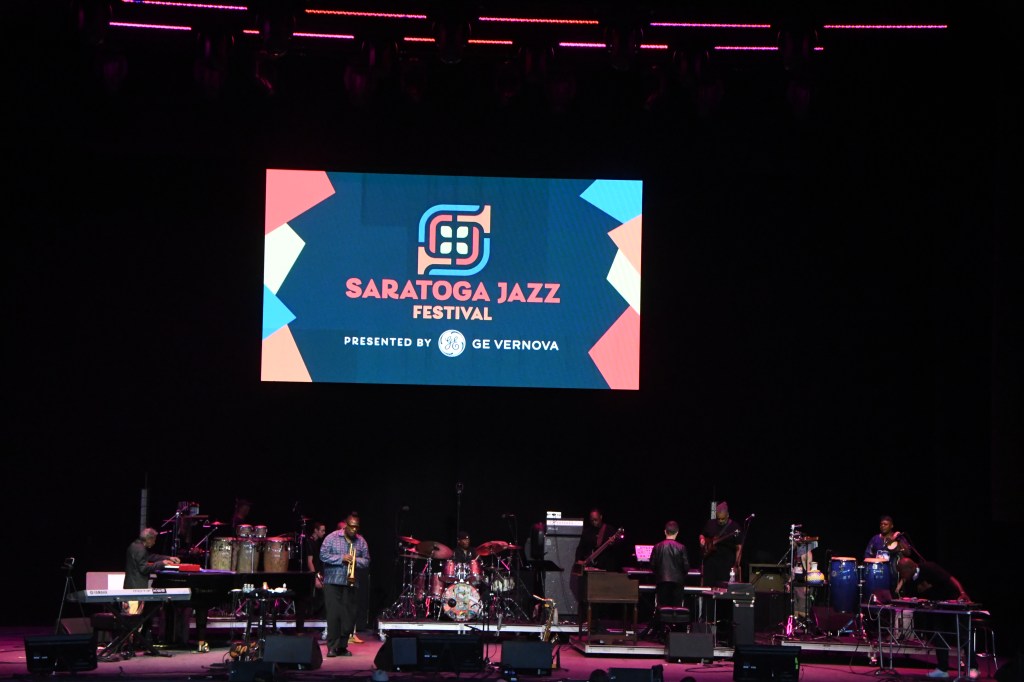
Review: The Saratoga Jazz Festival Presented by GE Vernova; Saturday, June 27, 2026
The first act at Saturday’s Saratoga Jazz Festival and the last both played “Lady Marmalade” – the Brass Queens in a sassy New Orleans romp and Patti Labelle, recreating her 1974 hit.
A tribute to Miles Davis’s amped electric bands hit just before Labelle; she didn’t remember she and Miles both played here in 1985.
Tradition, echoes, talents young and older – the usual mix marked the first day of the 49th summer jazz festival (and arguably non-jazz…) get-together; with extra-nice weather that put everyone in a fine mood.
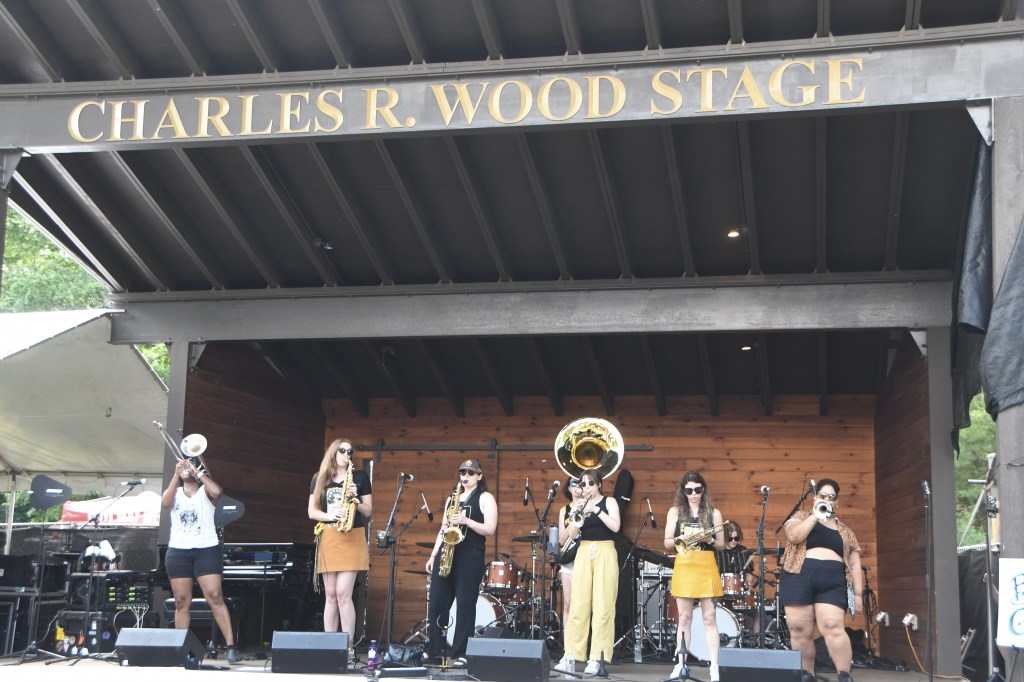
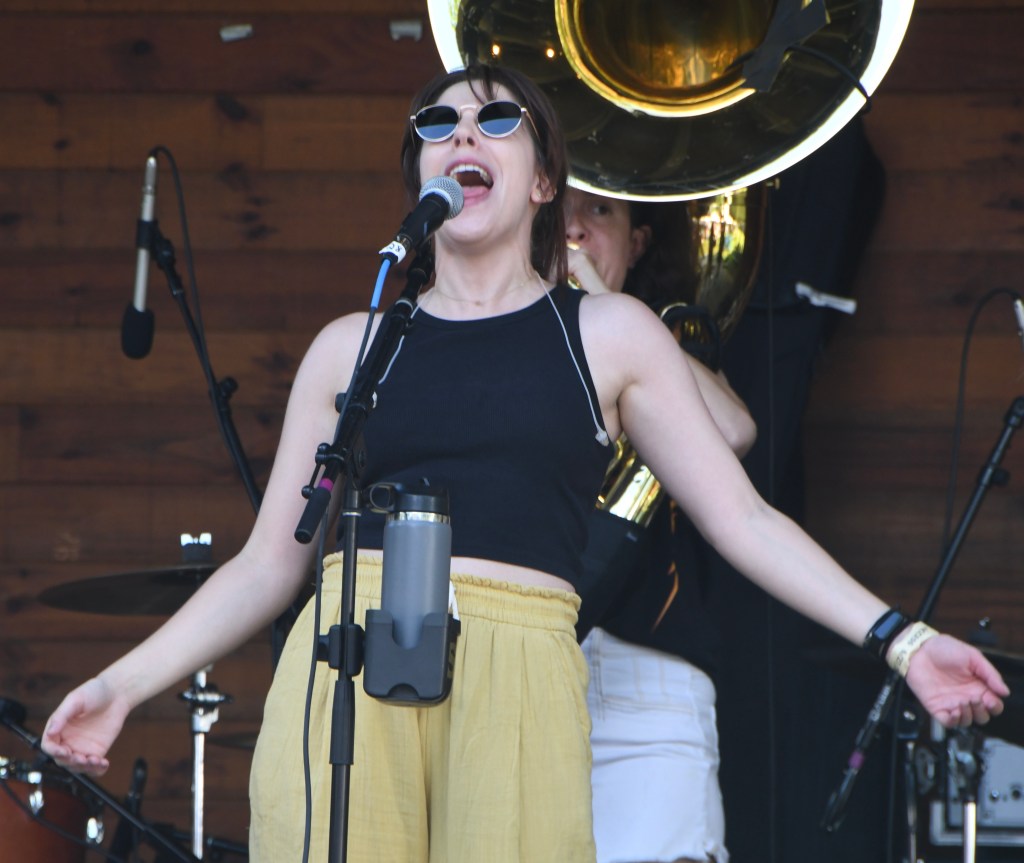
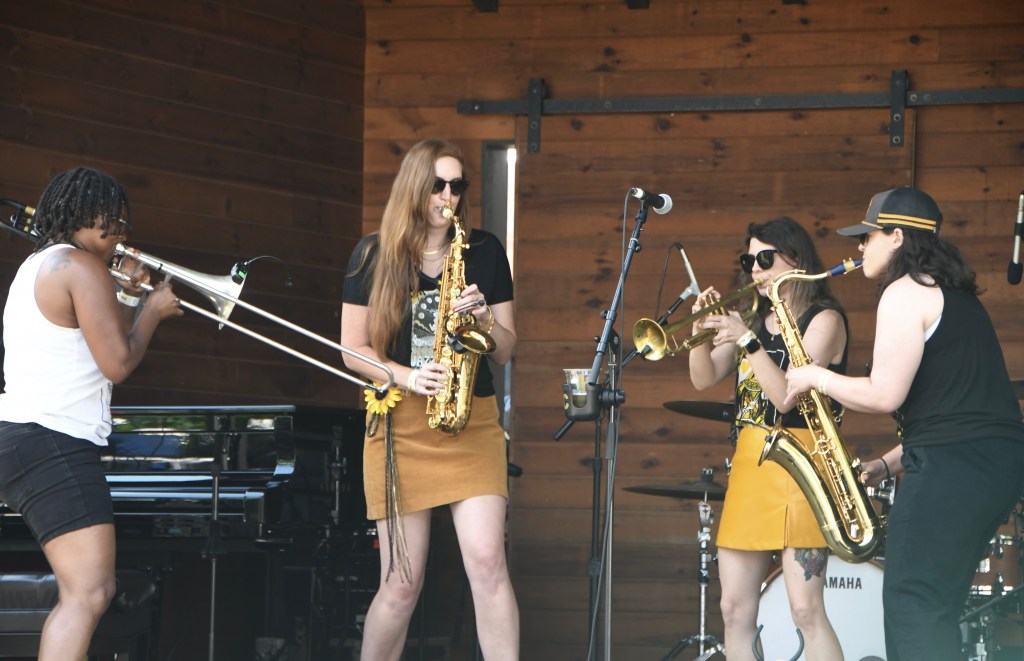
Brass Queens, from left: Stephanie Young, trombone; Jenna Murdoch, tenor; Ally Chapel, alto; Nora Nalepka, Sousaphone; Alex Harris, Stephanie King and Minerva Johnson, trumpets. Drummer Caitlin Cawley is behind the trumpets.
Brooklyn-based, New Orleans in their soul, the eight Brass Queens opened Saturday’s two-stage, 12-act festival at 11 sharp. Their eager opening-act energy pumped up the fun in the Charles R. Wood Discovery Stage. (Formerly the “Gazebo” but hereafter the “Wood,” the amphitheater is “the Main.”)
Most songs launched from circular Sousaphone riffs locked to march-beat drums, as in “Can’t Let Go,” their opener, borrowed from the New Breed Brass Band. Soon they were putting Second Line spin on the Temptations’ “Just My Imagination” AND “My Girl,” David Byrne’s “Strange Overtones” and Prince’s “When Doves Cry”– hot spirited stuff from unlikely, wonderful song choices. Raucous, rocking, gleeful in their power and pizzazz, they were formidable at full soar.
First Meeting, from left: Gonzalo Rubalcaba, Chris Potter, Larry Grenadier, Eric Harland
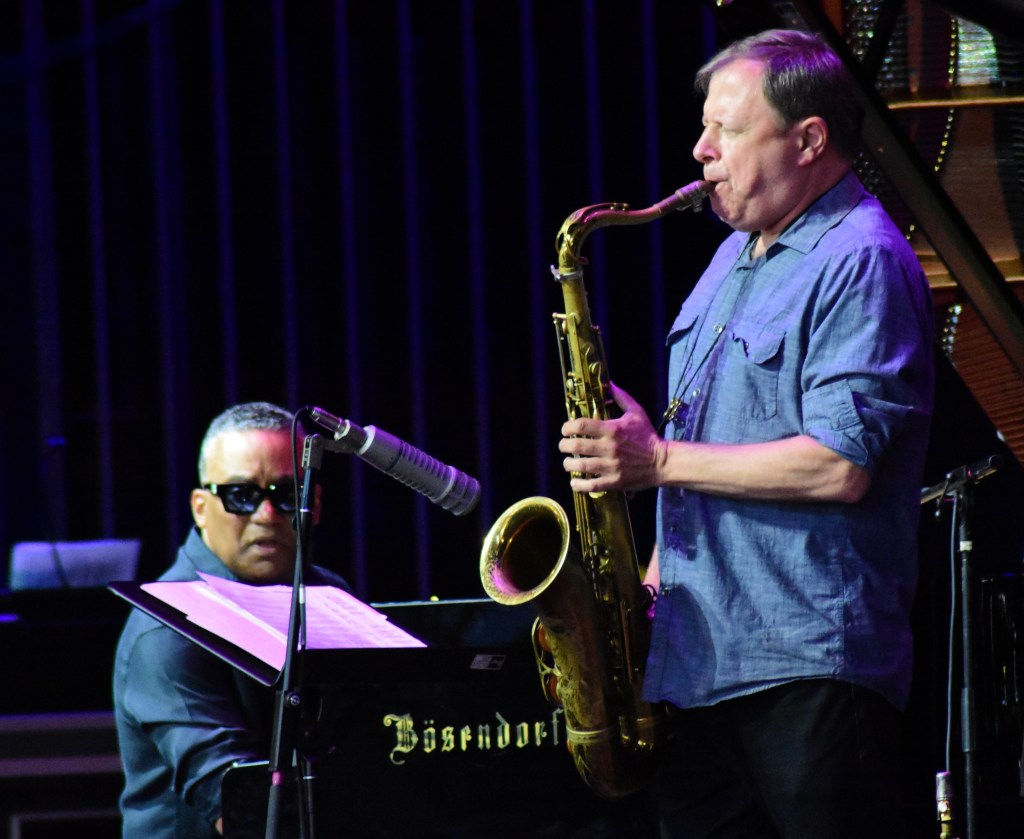
First Meeting, a virtuoso supergroup of Gonzalo Rubalcaba, piano; Chris Potter, saxophones; Larry Grenadier, bass; and Eric Harland, drums, revved up Chick Corea’s “500 Miles High” on the Main as the Brass Queens closed on the Wood. Breezy, punched up by Potter’s burly tenor and Rubalcaba’s pulsating piano, bracelets almost flying off his wrists, this flowed into a yearning ballad, Potter’s lyrical soprano etching a delicate melody.
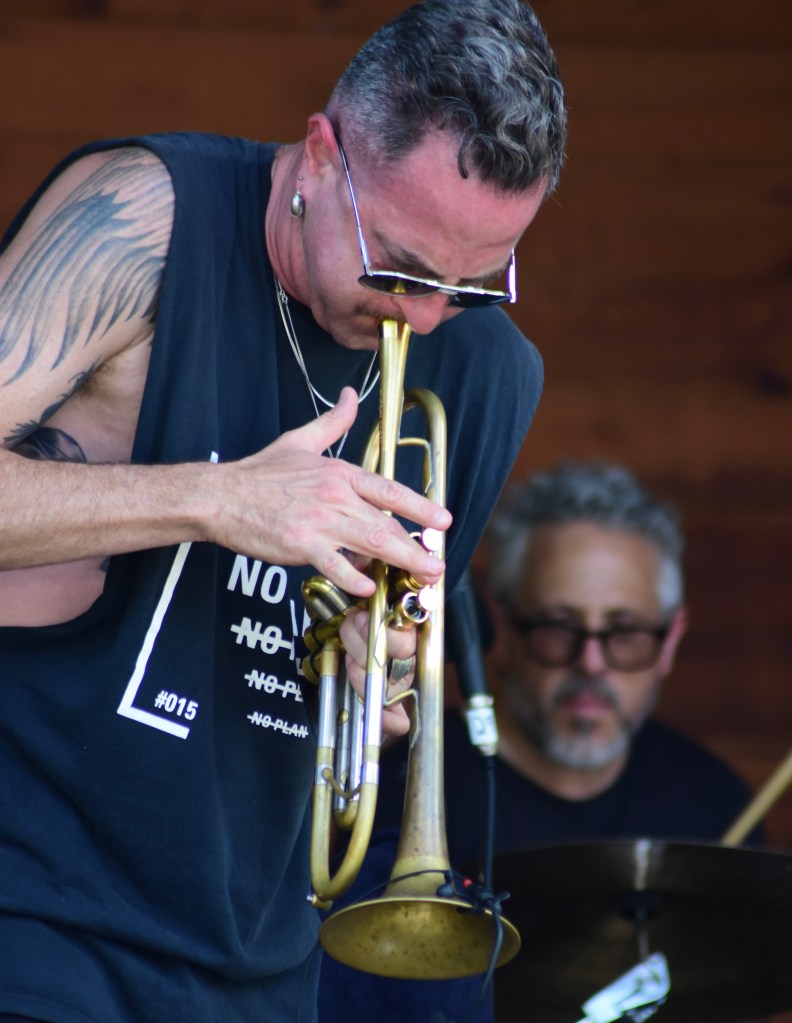
Avishai Cohen
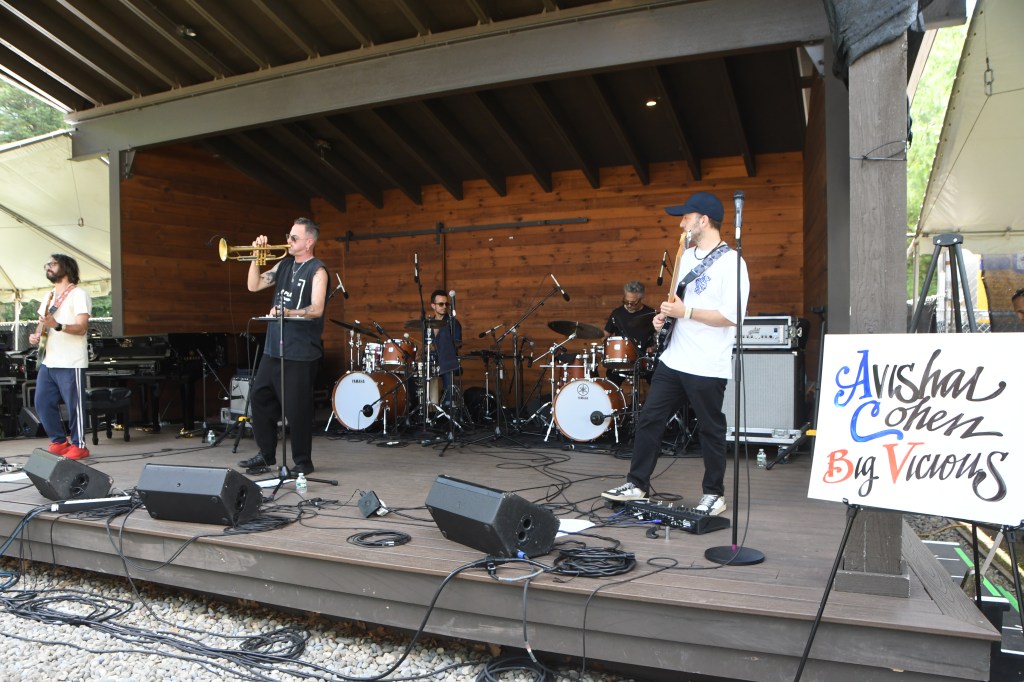
Curious about Avishai Cohen, I went back to the Wood; one of many tough choices. His bustling band Big Vicious, more like Big Sweet, Big Spacey, Big Strange, set the trumpeter amid two drummers and two guitarists. He also played a tiny keyboard, using effects to bend and stretch notes. The two guitars divided the stringed soundscape, one in conventional range, the other tuned down into bass territory. Cohen shared a mic with guitar-bassist Yonatan Albalak to whistle together in a strange/charming interlude. Their fresh, rich, exhilarating ensemble sound – by turns driving and dreamy – was my best surprise all day, except maybe when Patti LaBelle first opened her mouth. The songs (setlist below) zigged around in abrupt angular detours, or settled sweet and mellow; with some Beethoven’s “Moonlight Sonata” as antique treat.
Big Vicious Setlist, above; full stage below, from left: Uzi Ramirez, guitar; Cohen; drummers Aviv Cohen and Ziv Ravitz, Yonatan Albalak, guitar-as-bass
I hung at the Wood through singer Tyreek McDole’s extra-long sound check, pleased to see the same cats behind him as at A Place for Jazz last fall. They now seem a few months stronger and tighter. His voice soared in fearless Kurt Elling leaps and swung like Mel Torre, with more electronic treatments. But again, I bailed early for drummer Terri Lynn Carrington’s Social Science on the Main.
Tyreek McDole, above; Terri Lynn Carrington’s Social Science, below
Her groove flowed strong, no surprise, but vocal messages dominated, claiming independence and everyone’s rights in words of soaring defiance. Guitarist Matthew Stevens’s rhapsodic “Forest Song” injected an oasis of nature worship into a flow of often rap-sodic urgings, of passionate, compassionate, often feisty words. It balanced, though, as message music sometimes doesn’t. “Solidarity Song” accused, then “Children’s Song” more softly argued the value of all humans. The set gained gravitas after the smooth-jazz lightness of some early tunes, throwing moral punches later.
Bill Frisell’s Trio plus Gregory Tardy. Tardy is at left here, with Thomas Morgan, Frisell, Rudy Royston; Tardy, below
In the Wood, guitarist Bill Frisell played in a sort of parallel to Carrington. His trio felt compact, contained and cozy-quiet, until guest saxophonist Gregory Tardy exploded things. Ever restless Frisell makes new albums often, new bands to match. He named his new “In My Dreams” well. Its dreamy new tunes flowed easy in Saturday’s warm summer air. “Ishfahan” from the new album settled in, a soothing breeze of trademark treble guitar chords and laid-back drums from Rudy Royston and bass by Thomas Morgan. Then, like a hot gust, came Tardy’s tenor to take it outside, down the road. Tardy played clarinet with the same force, like the refreshing melodic push Frisell’s longtime violinist Jenny Scheinman (not on this gig) provides.
Cecile McLorin Salvant also started sweet and soft on the Main, stretching her voice low to croon the lovely ballad “With Every Breath I Take.” She gradually built force and feeling, waltzing through her “Take This Stone” before going all human trumpet in the brassy Brecht-Weill “Barbara’s Song” – stunning in range and power. Poignant again in her Toni Morrison tribute “What Does Blue Mean To You,” she lamented “unfixable pain,” then bandleader Sullivan Fortier tore up the piano in compassionate underdog rage. A 17th century French chanson learned in childhood charmed like the antique it was. A woman behind me said, “Sounds like opera” – not a good thing, her tone suggested. But it was; so was the Broadway-zesty “If They Could See Me Now.”
Salvant, at right, with Sullivan Fortner
She confessed nervousness at “my hero” Dianne Reeves’s presence. Unafraid, Salvant poured her idealism into a tour-de-force expression of hope for America, tomorrow.
The Dip. above; singer Tom Eddy, below
After Salvant – a solid trio with a superb singer – another trio without one seemed less appealing. I stayed where I was, missing Orrin Evans in the Wood to hang in the Main for the Dip. Liking them less than the crowd did, I stayed, giving the Seattle horn-and-vocals rock band another chance, then another. With Les McCann’s “Compared to What?” in a spirited roll, they managed to burst out of the late-period Blood Sweat and Tears and Chicago bag that felt second hand. Their own best songs had melody, punch and cohesion; “Fill My Cup” and “Real Contender” were standouts, as singer Tom Eddy led them well.
A Memorial in Sound, the Miles Electric Band, above; trumpeter Keyon Harrold, below
The Miles Electric Band paid wide-ranging tribute to music Miles Davis made from 1969’s “Bitches Brew” to his death (1991), a mixed bag of milestones “In A Silent Way” and “Jack Johnson,” pop song remakes and amped aggression. (A Bitches Brew band show I saw in Seattle in fall 1970 was an explosive surprise of vivid culture-clash discomfort as folks in suits and frocks fled something louder and harder-hitting than “Kind of Blue.” But I digress.)
The bustling Miles Electric Band started hard and hot Saturday and sampled Miles’s evolving styles of clipped trumpet bursts over knock-down funk, amped (very) hard bop and borrowed pop.
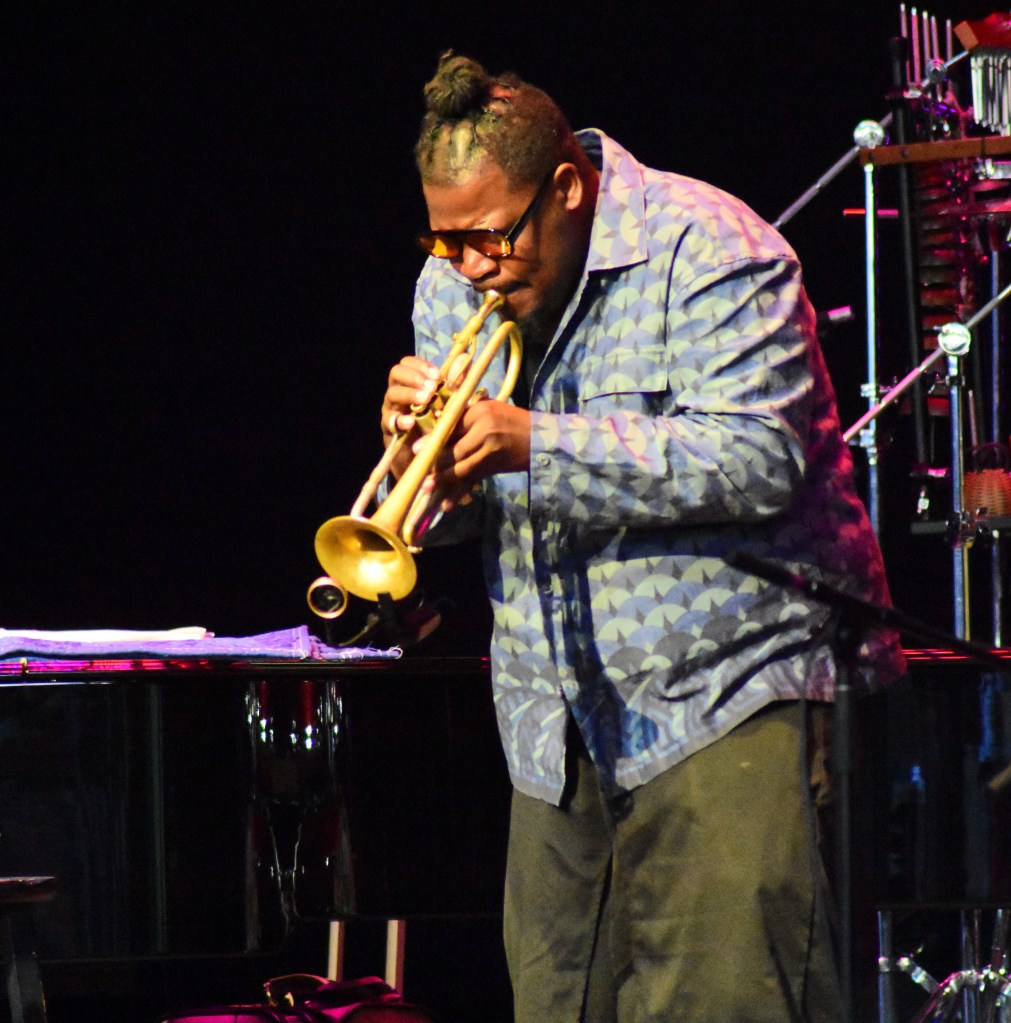
“Jack Johnson” kicked down the door, “In a Silent Way” and “It’s About Time” charmed,” as did “Time After Time” (a Cyndi Lauper hit ) and “Human Nature” (Michael Jackson), both wistful and low-key. Much else went wild and wilder; challenging, hard-driving and noisy. Up front, trumpeter Keyon Harrold (who played last year’s festival) and saxophonist Antoine Roney brought the melodies while a bristling rhythm section drove the delivery truck: drummer and Miles’s nephew Vincent Wilburn Jr., bassist Darryl Jones (stalwart for decades in the Rolling Stones touring band), guitarist Jean-Paul Bourelly, keyboardist Robert Irving II and others. A mighty funk engine, including turntables by DJ Logic. Some had played with Miles, notably Wilburn and Jones; but all had the spirit and brought the sound.
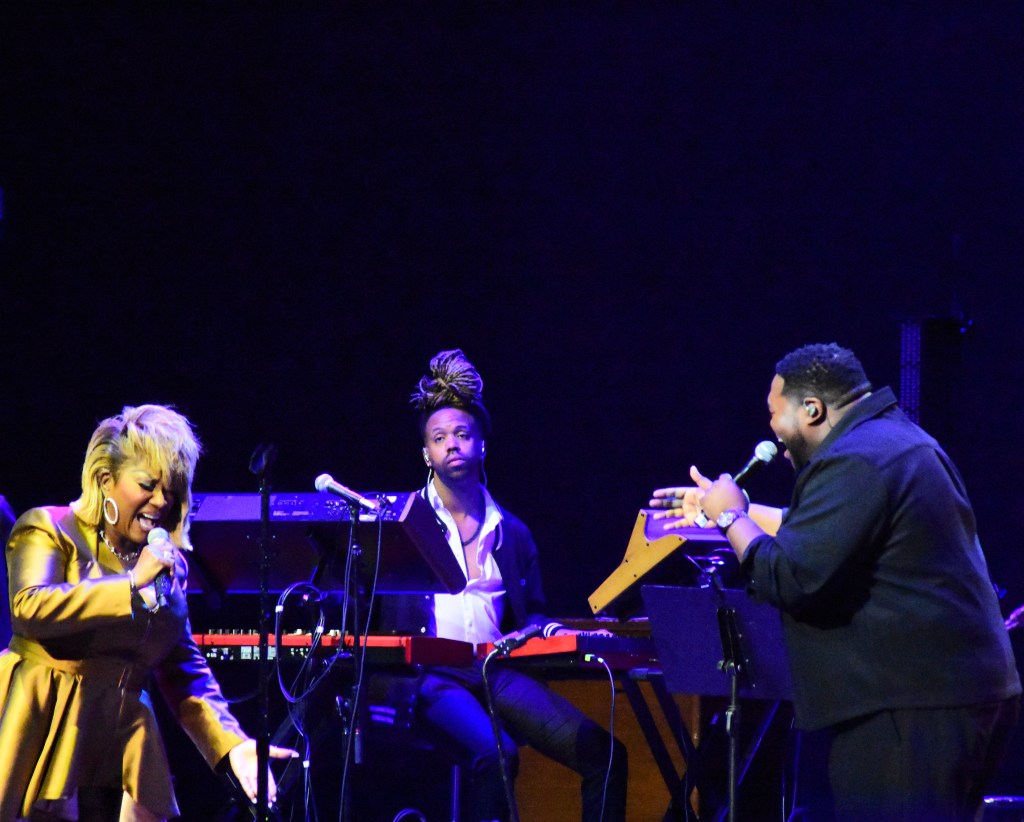
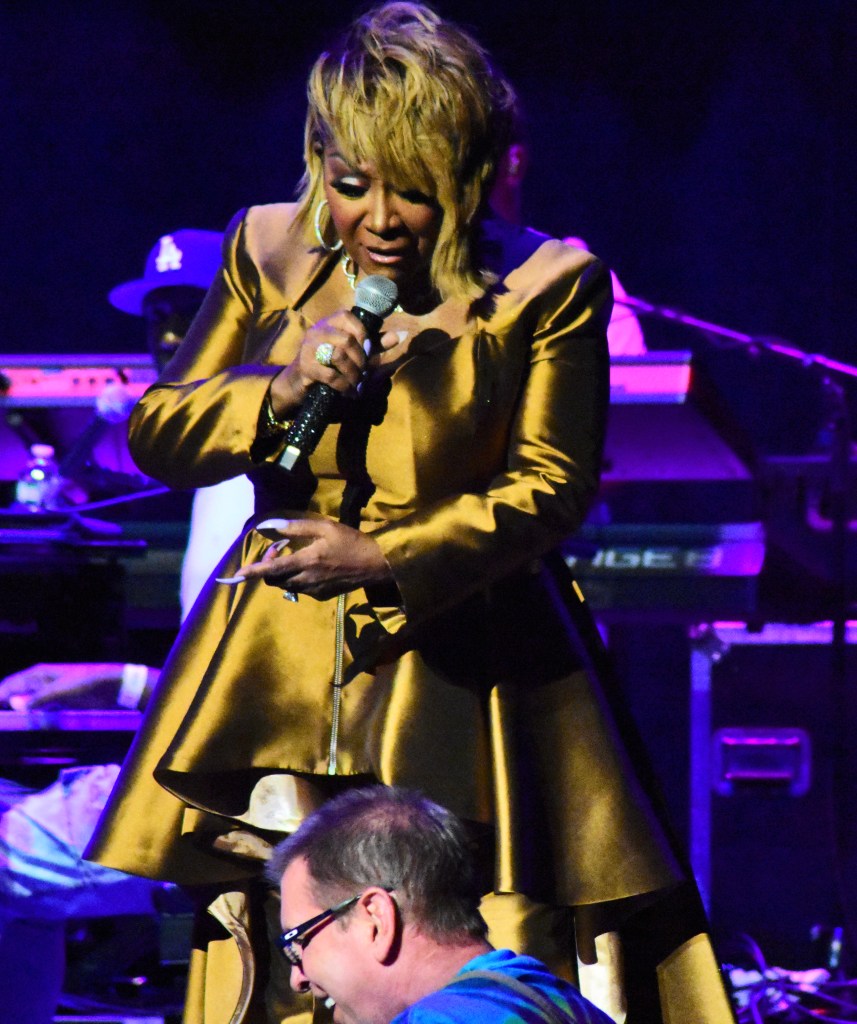
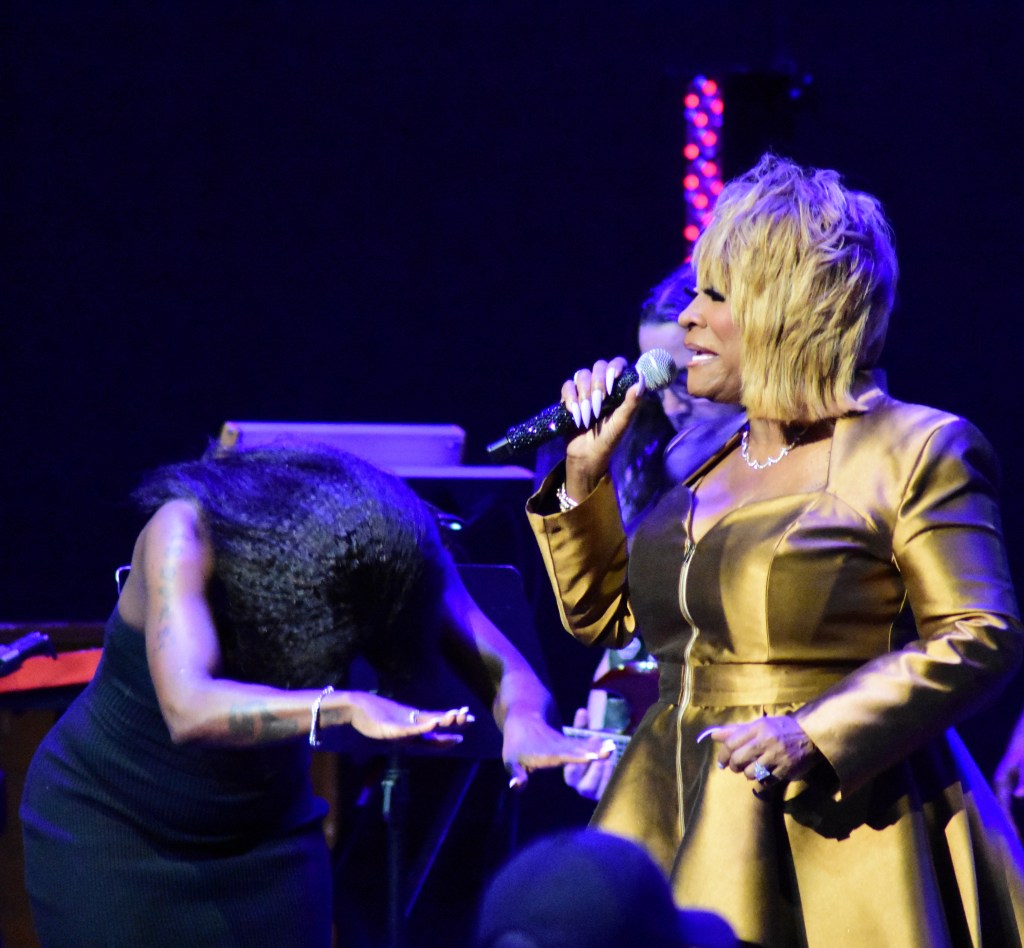
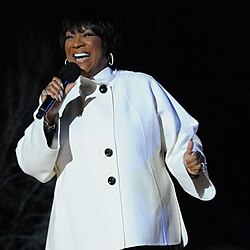
When Patti Labelle closed, also on the Main, her voice rang magnificently; all the way there, not just a condescending “still” there. At 82, overheated in a layered gold outfit, she commanded the crowded stage with voice and presence; saxophonist Lakecia Benjamin would dub her the Queen of Shenanigans Sunday on the same (Main) stage.
Goofing on her age, Labelle said what once was the fire of desire became that of menopause years ago.
She sang lightweight “Beverly Hills Cop” numbers “Stir It Up” and “New Attitude” with the same vocal and emotional investment as more substantial material worthy of her pipes and delivery. “On My Own” packed all the pain and pride of heartbreak, then endurance.
When she remarked on the heat, a woman in a green dress emerged from the crowd and handed her a small battery fan; she loved it. Art imitated life: When LaBelle changed outfits, she emerged in a similarly bright green outfit.
She tossed flowers to the crowd and band members when they hit a hot lick. She kicked off her glistening high-heels but didn’t stay barefooted long; a natty valet installed another sparkly pair from the rows waiting on the piano. When a fan called out “I love you!” she brought him to a closer seat and spritzed him with the same scent she’d just applied.
She coasted only a little; band-members revved flashy solos after she introduced them, and her four wonderful singers carried generous stretches in some songs. Both horn players came forward to work the crowd as she swapped outfits; but when she came back – wow! – she took over the song they’d been vamping – Michael McDonald’s “I Keep Forgettin’” – and turned it inside out with sky-splitting high notes. The intimacy of “Only You Knew” hit just as hard, but sweet and sad.
As I drove home, south toward the full moon, a bright meteorite flew straight overhead and right past it. Who could ask for more after a day of sunshine and music and meeting friends in the sounds and the summer glow?
Gallery
Brass Queens, above; setlist below
Gonzalo Rubalcaba, left; and Chis Potter, of First Meeting
Terri Lynn Carrington
Keyon Harrold, left; and Antoine Roney, of the Miles Electric Band
Review: Ambrose, Hearn, Shoudy & Steckler at Jazz on Jay; Thursday, June 25, 2026
The regular working jazz trio of drummer Andy Hearn, bassist Dave Shoudy and guitarist Kevin Grudecki changed things up Thursday at Jazz on Jay; one change by chance, one by choice. When Grudecki couldn’t make the gig, they subbed in Wyatt Ambrose; and they chose to add saxophonist and flute player Matt Steckler, completing a quartet that had never played together before.
Things worked out.
Veteran players in their prime who’d worked together earlier in different combinations, they knew how to make the pieces fit and swing and rock and charm. Ingenious song choices also helped keep things fresh.
At Jazz on Jay Thursday, from left: Dave Shoudy, bass; Andy Hearn, drums (obscured by music stand); Matt Steckler, alto saxophone; Wyatt Ambrose, electric guitar
Steckler announced early that they wouldn’t play the typical standards and later noted lots of lyrical melodies among their tunes; both proved correct, and effective.
Hearn’s “Drew’s Blues” walked an easy groove through tasty solos. Steckler’s flute ranged from laid-back melodic runs to breathy staccato rasps, Ambrose comped chords supportively behind Shoudy’s muscular bass break, then soloed himself before Steckler took it home. Just as Ambrose finger-picked in accompaniment and soloed with the harder, more emphatic flat pick, Hearn grooved with bushes at times but mostly soloed with sticks.
Matt Steckler, flute, above; tenor saxophone, below
The upbeat, open “Phases” (Dave Holland and John Scofield) also felt mellow at first, then lit up. Shifting to tenor sax, Steckler ran rapid scales, setting a pattern and breaking it to venture outside. Again, Ambrose supported Shoudy, then took the torch himself.
Ambrose paid tribute to a now-departed guitar mentor in “Waltz for Ed,” introducing its warm melodic feel with quiet finger-picking, then soloing more aggressively with flat pick as Steckler’s sweet soprano sax went warm and gentle.
Wyatt Ambrose, above; Andy Hearn, below, at left foreground
Ambrose admitted some hesitancy at playing “Bright Size Life,” protesting “It’s PAT METHENY’S song!” before leading the band into it anyway. This required, and rewarded, tight ensemble playing in tricky beats at a spirited tempo. Steckler’s tenor flowed just as hot as Ambrose’s guitar, both rising to the occasion. Hearn and Shoudy confidently navigated its tricky beats.
The bright sun dimmed some then as a breeze rose. Steckler hailed it as refreshing but everybody on the bandstand jumped fast to clip to music stands paper charts trying to fly away. His alto sax led in “A Lark” (Fred Hersch), slow and sparse, introduced by Ambrose’s guitar over nice swing by bass and drums. His solos book-ended Ambrose’s and likewise sandwiched quotes and scales between chord changes. Cool, propulsive vamp here.
Announcing a two-fer of “Kathelin Gray” (Ornette Coleman) and “Magnolia Triangle” (James Black, made famous by Yusef Lateef), Steckler’s alto lent a stately grace to the former but he revved his flute to its most percussive syncopated blues intensity in the latter. If “Gray” felt like a solo showcase, “Magnolia” rocked with unified ensemble fire. Hearn’s tom rolls packed both rhythmic and melodic force while Ambrose wove a solo of both fiery single-note runs and chord chops, like those he often slid into Shoudy’s solos.
Dave Shoudy
“Tom Thumb” reminded us, in its funky groove and soprano sax scalar runs, of what an ingenious and resourceful composer Wayne Shorter was before Weather Report. This really crackled, Shoudy and Hearn clearly enjoying its fun feel.
The guys needed a brief discussion to plan out “Kind Folk” (Kenny Wheeler), bass and guitar seething together in a jittery intro that settled into passages so relaxed a couple rose and slow-danced to it. Episodic, it shifted to a more rollicking feel (the couple sat back down), then a hot scramble. Ambrose used reverb in a mysterious, moody stretch before Steckler’s alto ran scales, then burst out, recapped the head and set up a soft coda that repeated as if they just didn’t want to let go.
Everybody climbed on “A Shorter Form” (John Scofield) at first a spry bossa, then trick beats under burly tenor sax, and guitar again mixing chords with single-note runs. Hearn’s solo here on cymbals and snare pushed the groove, everybody settling into rapid, precise repeats before assertive freelance breaks.
In “Black Nile,” another mellow-swinging Wayne Shorter number, they swapped riffs in that spirited more-than-the-sum-of-the-parts way, gusts of tenor sax flying high, just-as-fast guitar, running scales, a short bass break, then everybody linked up in the coda.
“Nile” ended almost exactly at the 90-minute mark, but the quartet was happy to oblige with just one more. Hearn’s original “Funkt If I Know” wrapped up with a happy funk groove, equal parts James Brown funk romp, with Ambrose emulating Brown’s rhythm guitar ace Jimmy Nolen, and “Watermelon Man.” Agile alto sax surfed on the funk, and everybody gave it a standing ovation.
Jazz on Jay continues Thursday, July 2, with singer Shiri Zorn. Show time is noon in Jay Square opposite Schenectady City Hall. The rain site (where seating is provided) is in Robb Alley at Proctors.
If every New Orleans kid grows up in a houseful of music, the sheer variety heard in his home enabled pianist Kyle Roussel to architecture a distinctive personal style. His precocious talent, listening in all directions and deep training bring him to Saratoga Sunday for its Jazz Festival; training that included what Art Neville called the “secret groove.”
Kyle Roussel. Photo provided
“They all were into listening to music but it was all different types,” said Roussel of his family from New Orleans Monday. His father liked straight ahead jazz. “I didn’t like it, but I still heard it.” His mother preferred old school R&B and funk, Stevie Wonder and Marvin Gaye. “Oddly enough,” Roussel noted, his grandfather liked the Beatles, BeeGees and Beach Boys. “Whether I liked it or not, I knew all those songs.”
Most useful of all, career-wise, “My grandmother was heavy into Gospel, so I knew every Mahalia Jackson song…as a teenager,” he said. “All that came in handy,” he said. “When I was 19, I went to Europe for the first time doing a Mahalia Jackson gospel tribute show.” Altogether, “I went all over with musical influences when I was coming up, whether I liked them or not.” Born in 1988, “my own music was rap and hip-hop” – but soon all music was his own.
“I started off playing classical (piano) at age 9 and playing in church at 12, and I got to NOCA (New Orleans Center for Creative Arts) around 15,” he said. “I didn’t want to do any more Chopin and Beethoven, so that was really when I started jazz.”
Back when he’d started piano, “I was in the (school) marching band, playing the drums,” winning spots in the State Honor Band and the Junior Philharmonic. “There wasn’t any piano in the symphonic and the concert band and the marching band, so I grew up playing the drums in those bands in school.”
Playing piano in church, starting at 12, he earned $100 per service. “That’s, like, rich for a 12-year old!” – four or five services a Sunday. He started playing clubs in his mid-teens while studying jazz at NOCA with bassist Chris Severin, who played Albany’s Alive at Five with the Neville Brothers.
One day a fellow student said, “Mr. Severin, I’m not going to be in class next Sunday because I’m going to Japan.” Roussel said, “As a 15 year old kid, your mind just explodes! So I can play music and go to Japan and make money?”
This revelation may have lingered in his exploded mind as he sidestepped a possible career detour. Intrigued by design and fashion, “I wanted to go to school for architecture and I showed up the first day” (at the University of New Orleans), thinking he’d minor in music.
He auditioned, that first day, and was told, “We won’t pay for you to be an architect, but we’ll give you a full, paid scholarship to be a musician. It was at that point that I became a musician and haven’t looked back since.”
However, he did scan his past to report, “I think there have been countless signs in my life since then that – ‘You’re supposed to be a musician…You were put here on this earth for that and this is supposed to be your profession.’”
Right place, right time.
At 23, he scored his first album credit, of 48, with the Headhunters, touring often with them, and with the Preservation Hall touring band. He’s recorded and performed with various Marsalises and other artists on SPAC’s Jazz Festival past and present including Ana Popovic who plays this Saturday. Credits also include the Soul Rebels who sold out Caffe Lena last Sunday, and Irma Thomas who returned the favor, singing on Roussel’s Grammy-nominated “Church of New Orleans” album, his third.
“My album features about 37 different New Orleans musicians,” said Roussel, name-checking singers Irma Thomas, John Boutte, Ivan Neville and Erica Falls. Falls will perform with him Sunday at SPAC, along with drummer Peter Barnado and bassist Nick Salcido, all New Orleans residents since Salcido moved down from Philadelphia.
“The first third is usually the trio,” Roussel said of his show. “Then Erica will come on and sing, and I might play a song solo. It will be mostly originals and mostly the music from my latest album…maybe one solo song but I’ll also be putting a personal spin on some jazz classics or maybe a cover song by the Beatles just to throw in a little bit of this and a little bit of that.”
Roussel’s other regular drummer is Herlin Riley, whom he credits with teaching what Art Neville calls the “secret groove.”
“I learned from some really great musicians,” he said gratefully, noting Riley, Zigaboo Modeliste and Shannon Powell. “They are masters of groove. A lot of times, it’s what they didn’t play that made the music groove so much.”
Playing in church, he said, “doesn’t call for that.” He said, “Sometimes you’ve got to flow in the spirit, in the spirit of the music. Most of the time, it’s what you don’t play that makes the impact, more than what you do play. There’s a lot of power in the silence. I learned how to do that from some great masters.”
“The drummer is the most important member of the band,” Roussel said when I noted his groove examples were all drummers. “He’s really the conductor, he determines the energy. I’ve been fortunate to learn from some really great and legendary drummers.”
He said, “I was very fortunate to have the type of musical education that I had,” citing formal classical training, then playing in church with “some guys who were really great musicians but they didn’t read any music, they didn’t know any theory.” For them, “It was all based on feeling and based on the spirit and the religion and them being self taught.”
After noting NOCA training in jazz, he summed up. “Whatever I do will have some jazz influences, some gospel influences, some classical influence, some R&B influence, some New Orleans influence – whatever I play, whether it’s the Beatles or (Professor) Longhair – you’ll probably hear that in there.”
“Up until I was about 19 or 20, (different musical styles) were different arenas,” he said, so he’d play them differently. “At a certain point I think you practice enough and you learn enough and you have your own life experience that you’re able to put your own spin on it.”
That was his breakthrough.
“As I developed that, it all became the same. It’s all spiritual to me, and it still has the same effect on people. My church members love my albums just as much as people who are atheists.”
“It’s just going to be me, wherever I am,” he said.
Kyle Roussel will be at SPAC’s Saratoga Jazz Festival presented by GE Vernova on Sunday at the Charles R. Wood Discovery Stage from 1:10 to 2:10 p.m.
Roussel has played in 48 states and more than 50 countries and may have played Saratoga but doesn’t remember. He’s sure this is his first here, billed under his increasingly well-known name.
Set times (artists, lineups and set times subject to change)
Saturday – Gates open at 10 a.m.
Amphitheater Stage
12-1:15 p.m.: First Meeting featuring Gonzalo Rubalcaba, Chris Potter, Larry Grenadier & Eric Harland
1:45-3 p.m.: Terri Lyne Carrington + Social Science
3:30-4:45 p.m.: Cécile McLorin Salvant
5:15-6:30 p.m.: The Dip
7-8:15 p..m.: Miles Electric Band: Celebrating Miles Davis’s Centennial
9 p.m.: Patti LaBelle
Charles R. Wood Discovery Stage
11 a.m.-12 p.m.: Brass Queens
12:20-1:20 p.m.: Avishai Cohen Big Vicious
1:40-2:40 p.m.: Tyreek McDole
3-4 p.m.: Bill Frisell Trio featuring Thomas Morgan & Rudy Royston with special guest Gregory Tardy
4:20-5:20 p.m.: Orrin Evans Trio featuring Luques Curtis & Mark Whitfield, Jr.
11:45 a.m.-12:45 p.m.: Skidmore Jazz Institute Faculty All-Stars Celebrate John Coltrane’s Centennial featuring Jimmy Greene, Clay Jenkins, Steve Davis, Dave Stryker, Miki Yamanaka, Todd Coolman, & Quincy Davis
Review: Marcus Benoit at Jazz on Jay; Thursday, June 18, 2026
“Just like we rehearsed it!” proclaimed Marcus Benoit with mock smugness after leading his quartet through “All Blues” at Jazz on Jay Thursday.
The truth/joke was; they hadn’t rehearsed it at all. Saxophonist/flute player and leader Benoit called it as an audible early in their 90-minute set, and later said they’d rehearsed mostly by phone. Nonetheless, their rendition never felt like a joke as they managed a mellow, smooth cruise through the Miles Davis classic.
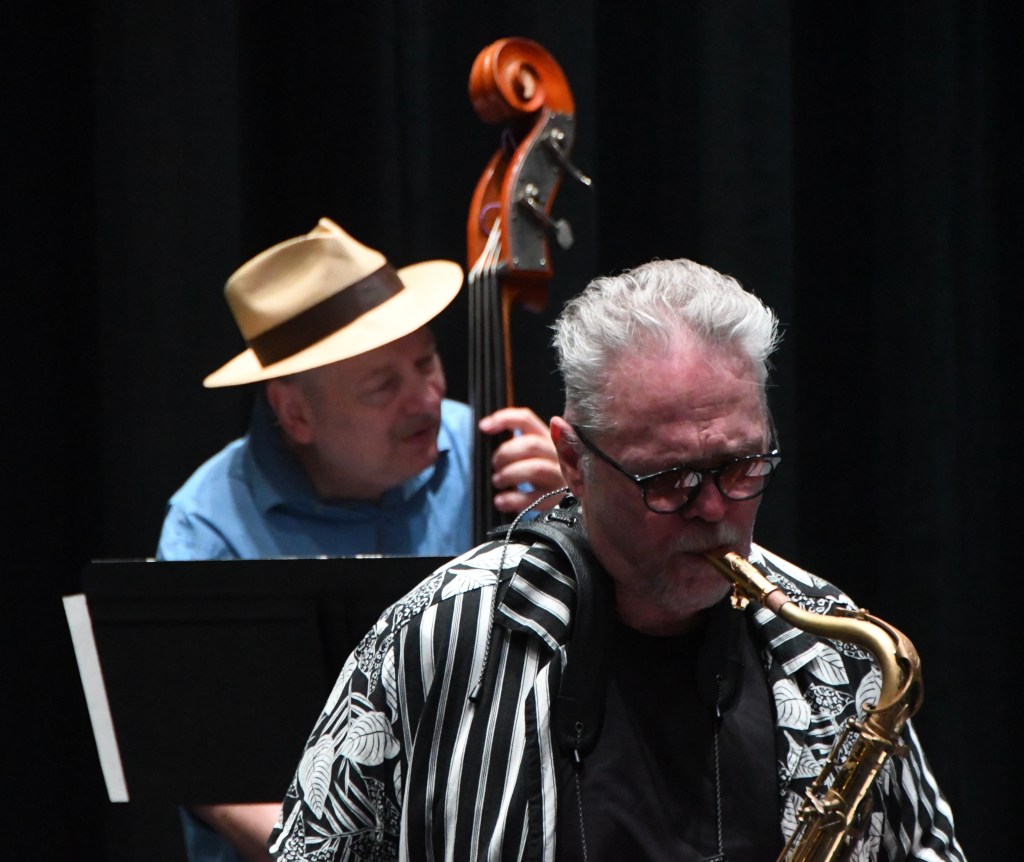
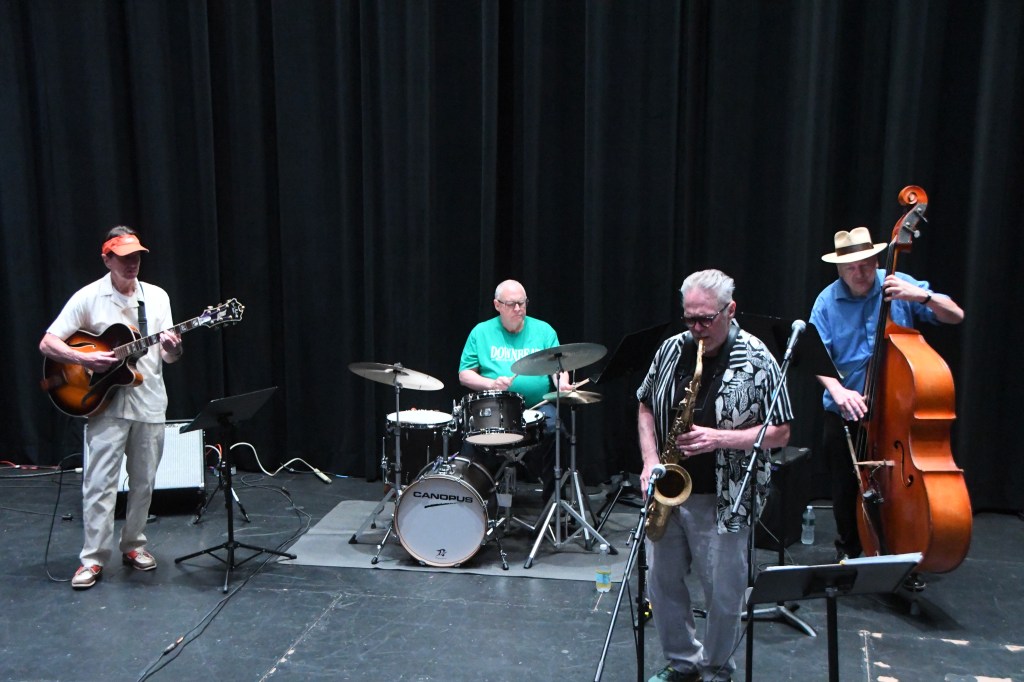
Marcus Benoit Quartet, above: from left: Benoit, flute; Joe Finn, guitar; Mike Benedict, drums; Pete Toigo, bass
Below, from left: Joe Finn, guitar; Benoit, tenor saxophone; Mike Benedict, drums; Pete Toigo, bass
Stuffing their 90-minute show with tunes every jazz player has performed many, many times; rehearsal or no rehearsal, their challenge was to find something new to say. They mostly managed this, too, with veterans’ assurance and fresh invention well within the songs.
Benoit mostly played tenor saxophone, launching a vigorous run through “All the Things You Are” to start before going off-script (or set-list) into “All Blues,” his fleet flute leading. They mostly followed straightforward theme and variations development; guitarist Joe Finn sometimes setting the rhythm before drummer Mike Benedict and bassist Pete Toigo filled in the groove and Benoit climbed on board with a familiar statement of the head, then ran changes. While Benoit cued Benedict and Toigo to solo at times, mostly he and Finn led. Finn built single-note solos with flat-pick and comped chords under everything else with his thumb, unifying things.
While Benoit said he’d hit his speed limit in “All the Things,” he revved into pulsating velocity in “A Night In Tunisia.” Everybody plays this, but they refreshed it with Benedict’s hi-hat going double-time, Toigo ably having his say and Finn underlining everything, right up to a unison hard stop after Benoit built energy with repeating riffs.
“Watermelon Man” felt a bit less focused, its mid-tempo funk feel gaining momentum before Benoit simmered things down, like a studio fade. He returned to flute for “Killing Me Softly,” crisp and cool, before “Caravan” loosened things up as Benedict used mallets on his toms to push from the start.
Benoit took the mic to wind things down before Toigo reminded him the gig was 90 minutes, not 60; and the show took its second wind with John Coltrane’s “Equinox.” Here Finn echoed Benoit’s whirlwind runs, Benoit quoted “Eleanor Rigby” and its stop-and-go cadence built the energy. The soul groove of “Mercy Mercy Mercy” had a laid-back charm, Finn especially eloquent here. The samba “I Remember April” had good lift-off, flute flying over a solid groove.
They slowed for a fervent “What a Difference A Day Breaks,” Benoit name-checking Dinah Washington among the artists he’d heard and learned from over Radio Free Europe in his Army Brat youth in Germany. You could hear his reverence for her, and fondness for those formative years, in his tender phrasing.
Benoit had prematurely begun to intro their finale of Sonny Rollins’s playful calypso “St. Thomas” around the 60-minute mark, but used it to close with upbeat happy force, inventive peppy variations racing around before he brought it home with repeating riffs up high.
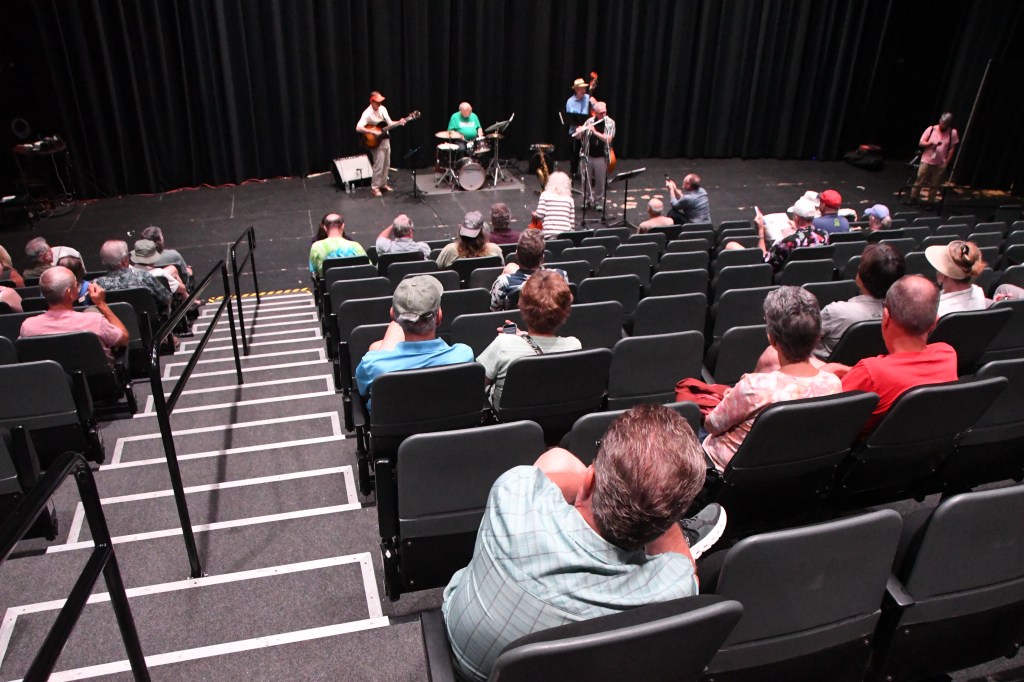
Thursday’s show was actually “Jazz Near Jay,” fleeing dire weather warnings into Proctors GE Theatre where some fans toted in their portable chairs. Good move: The place was dry, calm and cool, unlike the wet fury outside.
Jazz on Jay continues next Thursday, June 25, with the Ambrose, Hearn & Shoudy Trio featuring special guest Matt Steckler.
Jazz on Jay shows are presented free in Jay Square opposite Schenectady City Hall on Thursdays at noon. In wild weather, the customary rain site is Robb Alley at Proctors.
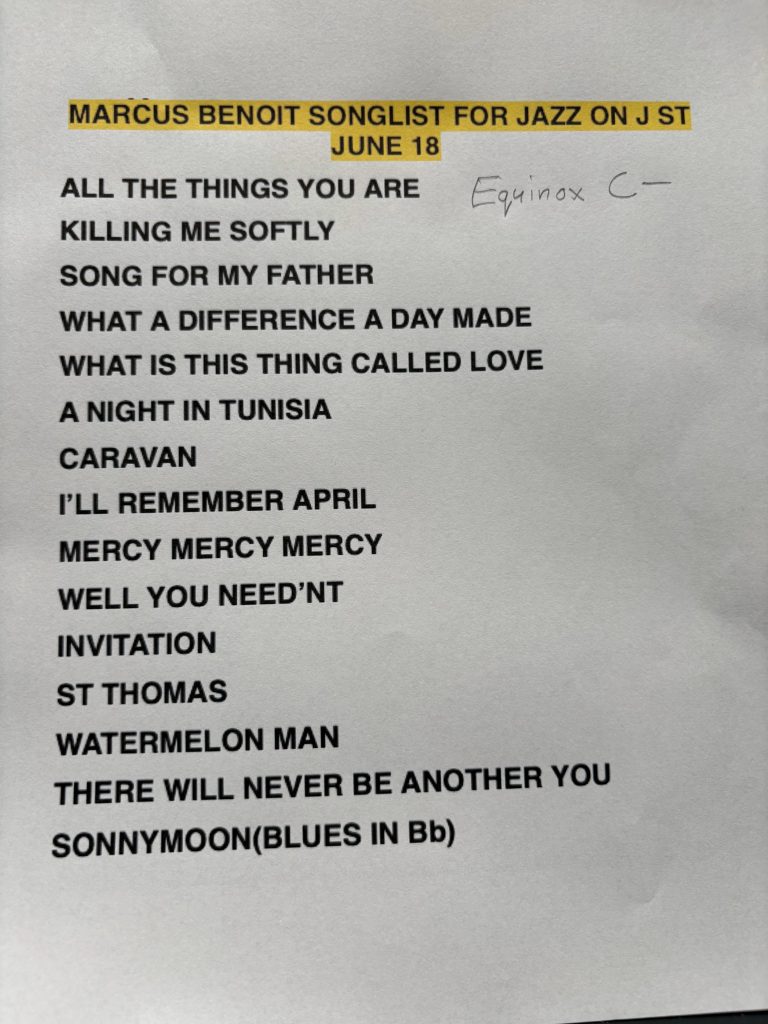
The Set List, above; as seen before the show
Actual:
All The Things You Are
Kind of Blue
A Night in Tunisia
Watermelon Man
Killing Me Softly (With His Song)
Caravan
Equinox
Mercy Mercy Mercy
I Remember April
What a Difference a Day Makes (Benoit announced it first this way, then amended to “Made”)