Twang in Peace

To the low slow voice at the used books-and-records store two counties away, I confessed: “I was in last week – I should have bought those albums.”

Quiet laugh, calm assurance; he’d heard this tune before: “I’ll put those aside for you.”

Some scenic road hours later, 1960s Duane Eddy albums filled my passenger seat. A talismanic early birthday gift to my brother Jim, they linked us to a cherished, disruptive sound – joyous rock and roll distilled to a wordless instrumental howl.
After Duane Eddy passed on April 30th, Jim Facebooked about losing his friend, the pioneering guitarist whose bold boom and simple swagger converted Jim from traditional jazz clarinetist to wild-eyed sax shouter. 

Recalling how the loudspeaker outside Greulich’s Market near our Guilderland home pumped Duane Eddy songs into the parking lot – a story he’d loved telling Duane – Jim also evoked their ear-opening joy. He cherished “the low primordial sounds of a slinky echo-drenched electric guitar, accompanied by a raging, evil saxophone and a gang of demons yelping in wild abandon.” Jim celebrated he disruptive effect this gorgeous raw sound had on our staid swing-fan Catholic parents.

Years In training for the mellow melancholy of Mr. Acker Bilk’s “Stranger On The Shore” or spry strut of “Begin the Beguine” flew out the window when I started bringing home Duane Eddy 45 singles (on Jamie Records) from Apex Music Corner.

Fast forward some decades and both Jim and Duane were new to Nashville and Jim got to play with his hero. “I was immensely qualified, having learned all the aforementioned raging, evil sax parts on Duane’s records before I was shaving,” wrote Jim. He’s shown here at a later Nashville show together, grinning behind his tenor sax while Duane twangs low irresistible guitar blasts into the stratosphere.
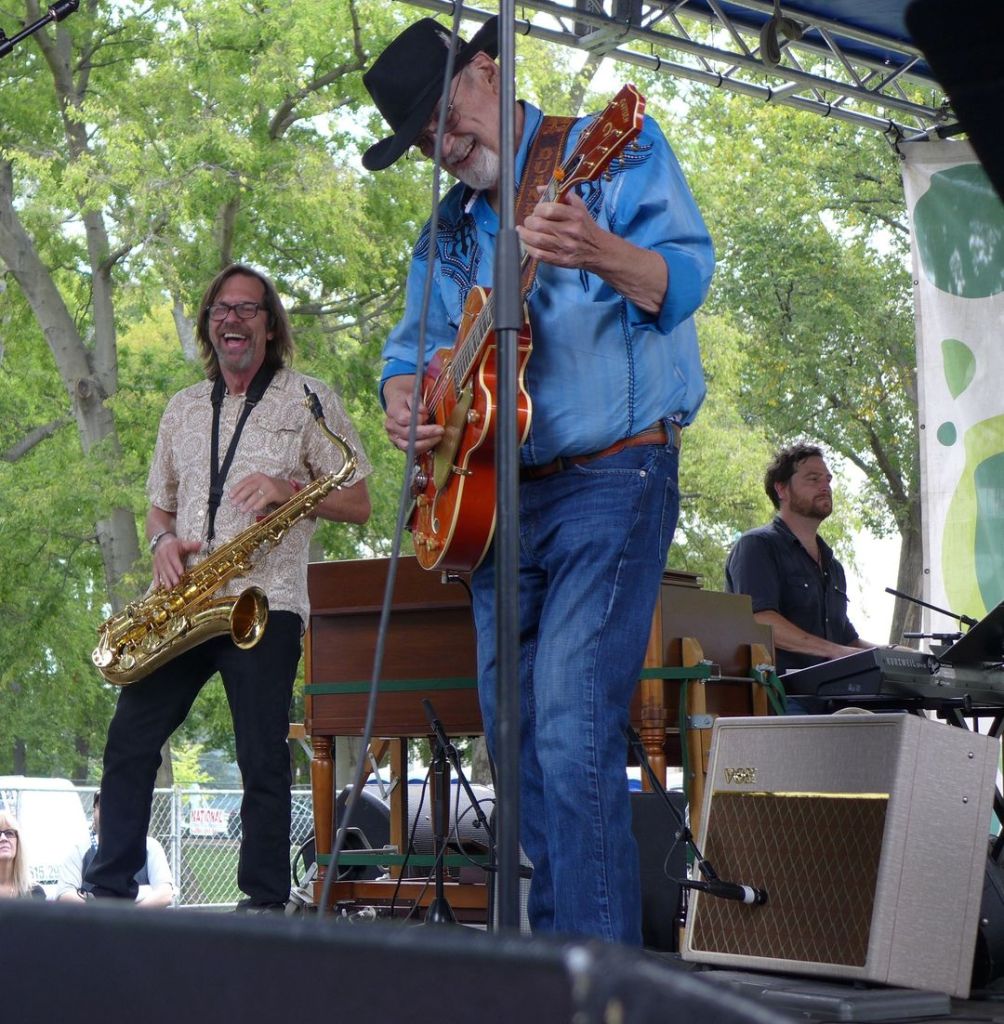
“He invented a sound in rock ’n roll that still resonates and he did it all with such grace,” wrote Jim. “I’m ever grateful.” Duane Eddy played melodies on the guitar’s low strings or on a six-string bass; mainly working with fat hollow-body guitars jazz players favor. His innovative sound was at once tonally rude and sweet in its feel.

At a Memorial Day weekend family wedding celebration, Jim loved unwrapping those Duane Eddy albums i’d brought and told tales Duane had told him, starting with a Cavalcade of Stars tour down south.

Duane told Jim of touring at 19 on rickety buses crowded with young hitmakers sharing the same band. 

When locals surrounded their bus after a Louisville concert and yelled racist insults at singer LaVerne Baker or Lloyd Price, “Dion and the Belmonts weren’t having this shit,” Jim said. “They were gonna jump off the bus and show some Bronx courtesy lessons to these (BIG expletive deleted). They had to be heavily restrained by Dick Clark and everybody because…they were all family.” 

Duane told Jim of hanging out with his father at a friend’s store and gas station in Corning, New York. Duane clambered onto a stone wall and ran along the top of it, speeding up when he noticed copperhead (poisonous!) snakes crawling onto the wall behind him. “An endless string of copperheads kept coming out of the wall, a copperhead condo,” said Jim. “Snakes kept slithering out of the wall and coming after him, and he was freaking out…” until he jumped off at the end. “They were driving him along the wall…not going fast, but interested.”

Guitarists, of course, were interested in Eddy’s pre-Beatles success making instrumental rock, hoping to copperhead onto the wall behind him. TV theme composers especially favored Duane Eddy’s approach, and this worked both ways. For every “Bonanza” theme somebody else recorded, Duane covered a “Peter Gunn.”

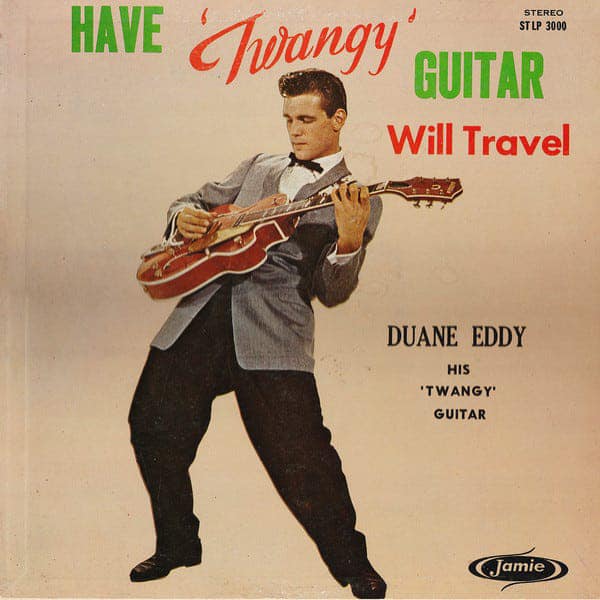
Duane’s 1958 debut album “Have Twangy Guitar Will Travel” hit number five on Billboard’s album chart and stayed on the charts for 82 weeks; he even acted in two episodes of “Have Gun – Will Travel,” the Richard Boone hired-gun Western whose title he’d borrowed. Britain’s New Musical Express (NME) voted him 1958’s World’s Number One Musical Personality, besting Elvis Presley. The Rock And Roll Hall of Fame inducted him early.

Later, when the Art of Noise remade Duane’s version of Henry Mancini’s “Peter Gunn” theme, Eddy became the only instrumentalist with top 10 hit UK singles in four different decades.

Tom Mitchell, whose Hambone record store stood in the shadow of Caffe Lena where he often played, once told me how music-timid buyers sought songs without lyrics in his shop. They gravitated to Windham Hill “new age” instrumentals to avoid triggering by lyrics with sexist or other objectionable content. Duane Eddy didn’t need words to raise alarm. His ominously low, almost menacingly resonant guitar tones, surging beats, brash saxophone hollers and massed, yelling choruses seemed plenty scary in the late 50s.

And therefore, Jim and I and multitudes loved him.

And, so, maybe, just maybe, I should have known something was up when Jim took me to the Musicians Hall of Fame on a Nashville visit a few spring-times ago – especially when Jay McDowell who ran the place came out to direct us personally into a door-side VIP parking spot.

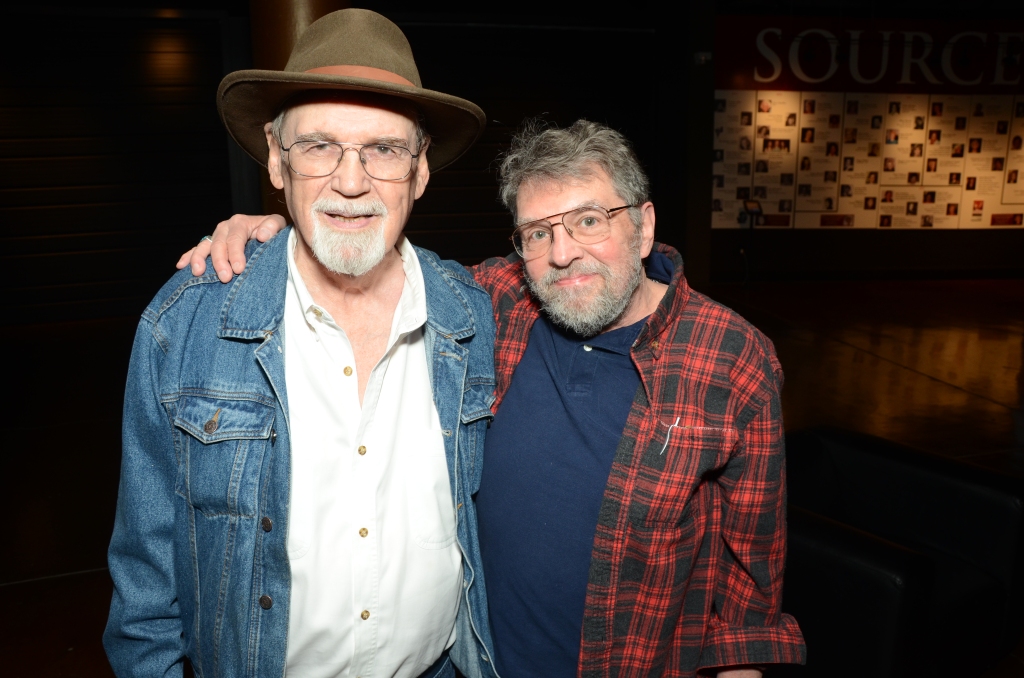
Jay ushered us into a comfy entry lounge where a bearded, be-hatted gent and his wife rose to meet us: Duane Eddy, and wife Deed.

There’s “star-struck,” and then there’s something else, an even more intense and rarefied place where I found myself in awed silence at the Musicians Hall of Fame. I had met James Brown, Johnny Cash, Neil Young, Ray Davies of the Kinks, Joan Baez, Levon Helm, everybody in Peter Paul and Mary, all the Neville Brothers, all the Meters, everybody in Crosby Stills and Nash, everybody in the Talking Heads, everybody in the J. Geils Band, traveled for days with NRBQ…you see what I mean?
But that wasn’t this, as I realized when we all wandered into a cozy cinema where a film on the invaluable roles of session players, producers, engineers and other behind-the-scenes giants got their due. I was startled to recognize that the narrator voice in the tribute film was the same voice I heard from the man in the next seat, at my elbow: Duane Eddy.

When we wandered into an instrument-equipped alcove, a band formed, instantly. Duane grabbed a guitar; Jay a bass, and Jim sat behind the drum kit as they tuned up. Maybe they played Duane’s first hit “Movin’ ’N’ Groovin’” (1957), maybe “Rebel Rouser” – I don’t remember. But I do remember a joyous sense of privilege to be there, an audience of one.

In the exhibit halls we wandered, fans would recognize Duane and rush forward to wrap him in grateful adulation. Nobody could have been more gracious and patient, genuinely pleased to be recognized and greeted – he was the same low-key way through our three-hour lunch. 

Those people who courteously swarmed him there at the Hall of Fame; they were right.
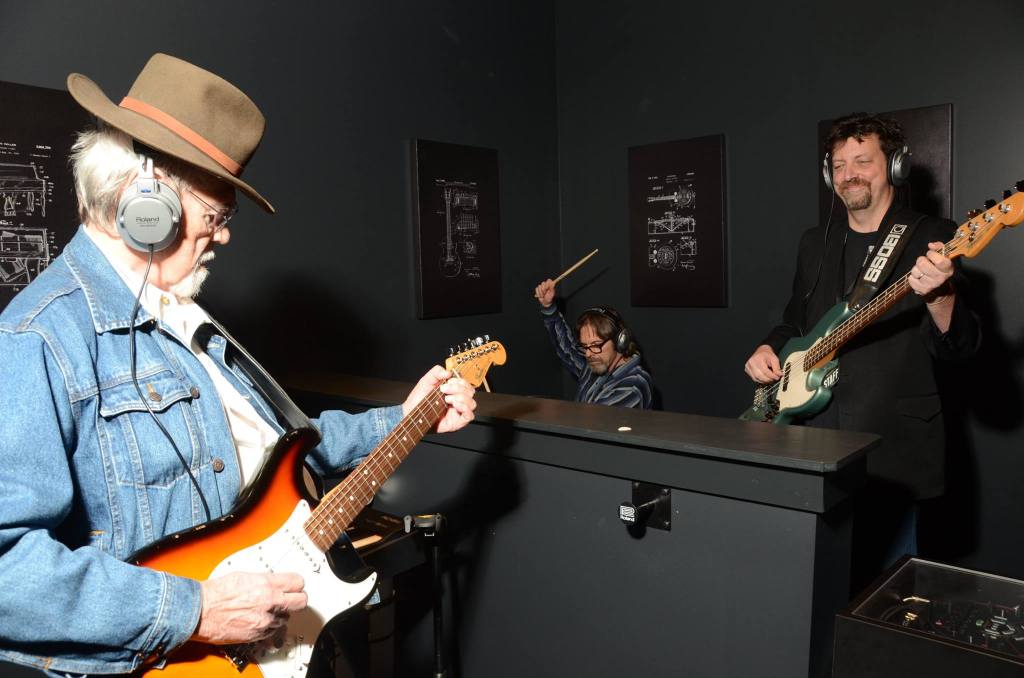
Duane Eddy, left; Jim Hoke, Jay McDowell

WENT TO THE DENTIST: WHAT’S SO MUSICAL ABOUT THAT?

If Chris Whitley could brave a big arena full of Tom Petty fans all by himself, I figured I could brave a filling or three. 

Chris Whitley opening solo for Tom Petty and the Heartbreakers. Knickerbocker Arena. Michael Hochanadel photo

You know the drill – yeah, right; too lame even for a bad pun – tilted way back, face in bright light, mouth full of tools. 

Last week, there I was, tilted, face lit, tools in mouth – but with Grado headphones filling ears and spirit with Whitley’s “Living With The Law” (1991). And I noticed his slide guitar solo in “Poison Girl” was in the same key as the drill. (You know the drill.) 

This took me right back to snowy nighttime Montreal streets with my brother Jim in a gang of musicians, seeking late dinner during sessions for a Chris Rawlings album. Fresh out of the Navy, I felt as lost in the wide world as a ship whose compass has failed, but felt welcomed by those players. A taxi hooted nearby and fiddler Gilles Losier, famed for his pitch, called out “F-sharp!” Others stopped walking to argue the taxi’s tone.

What would they have said of the Chris Whitley/drill chord in my dentist’s office?

And, more broadly, what is music for, and can it be for anything but itself? 

Paraphrasing the great band War, Maybe with more humor than truth: “Music, what is it good for? Absolutely everything” – but mainly just itself.

I was using Whitley’s music to help get through some dental work, just as I’d brought Miles Davis’s “Kind of Blue” into the Ellis Hospital cardiac “cath-lab” for angioplasty and son Zak told me he once used the same album to help fight the flu. 

Nonetheless, something about that made me uncomfortable, like using “sofa-sized” to measure art-work on a wall.

Listening for listening’s sake somehow feels more right than using music as background, as dinner party hosts do, or restaurants. And you’re correct if you feel restaurants now crank up the music to turn tables faster. Studies show they do. 

Some other offenses against music: 

Walking in Thacher Park with son Zak on Sunday, we met many parties on the trail including a woman toting Bluetooth speaker cranked way too loud. 

Whenever a commercial comes on that uses a song I love by an artist I admire – Bob Dylan, say, or Nick Drake’s “Pink Moon” – I always mute the TV.

No chance I’ll ever have to do that with a Chris Whitley song, or that any of his songs will fail to lift me and teach me and make me feel.

But I Digress, Pt. 1 – Whitley opened for Tom Petty and the Heartbreakers at the Knickerbocker Arena in Albany on Sept. 21, 1991. Nobody knew who he was except those few of us who already recognized his talent from “Living With The Law.” 

Digress, Pt. 2 – My now-retired dentist Jeff Wilson loved music and we talked about it all the time; i.e., he talked while working on me and I answered after rinsing. Early on, I used music-as-anesthetic/distraction; and he always wanted to know whose tunes I’d brought. I quickly felt more comfortable, we talked, and when we’d meet up at shows, I was always glad to see him.

Digress, Pt. 3 – Whitley went deeper into demon-land in his songs than almost any other songwriter. A restless, tormented talent and striving, soulful spirit, he made blues of a very original and intensely spooky flavor. 

He released more than a dozen albums from 1991 to 2003 but never earned mass success.

When I met him (backstage at Bearsville Theater, outside Woodstock), I noticed his guitar had words and drawings childishly scrawled on it in ballpoint. I asked him about this and he said Trixie did it. I like it that he didn’t try to stop her or remove her markings.

Trixie later played in Black Dub, the trance-funk band that Lanois built with jazz drummer Brian Blade and bassist Daryl Johnson.

Lanois produced such great albums as U2’s “Joshua Tree,” Bob Dylan’s “Oh, Mercy” and the Neville Brothers’ “Yellow Moon” – and Chris Whitley’s debut album “Living With The Law,” in his New Orleans studio.

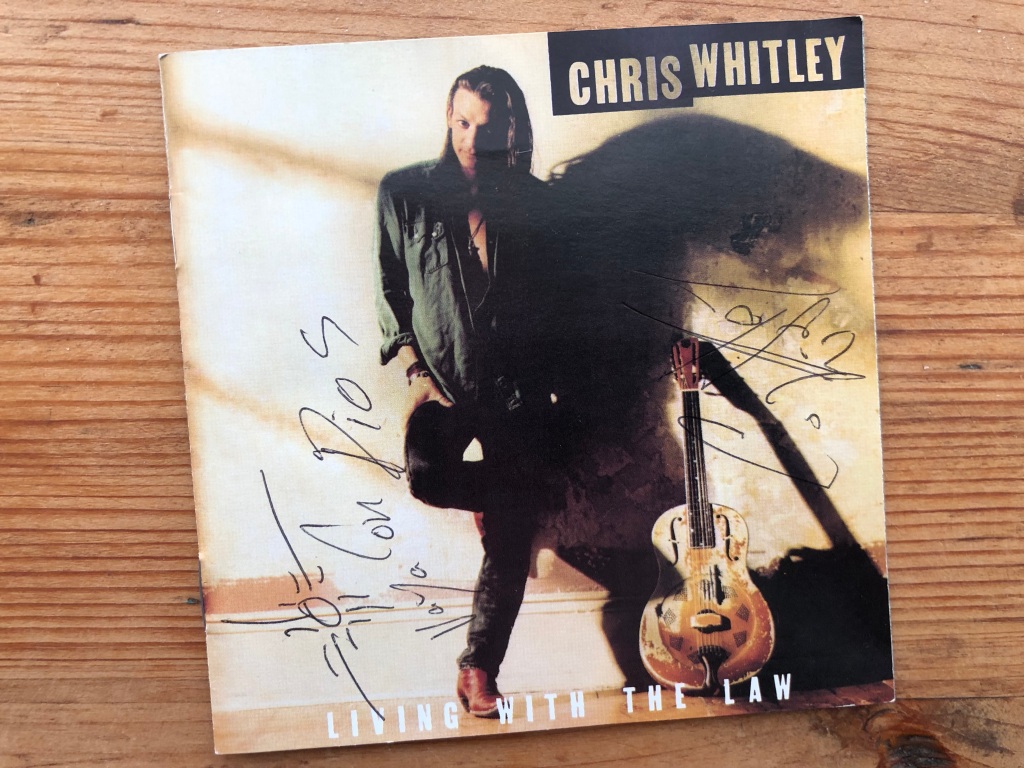
When Whitley signed this copy of “Living With The Law” for me, he wrote “Vaya Con Dios.” 

Right back at you, man. Whitley died November 20, 2005 at 45. 

Roger Rees summarized his time on earth eloquently here: 

https://www.loudersound.com/features/fallen-angel-the-life-and-death-of-chris-whitley

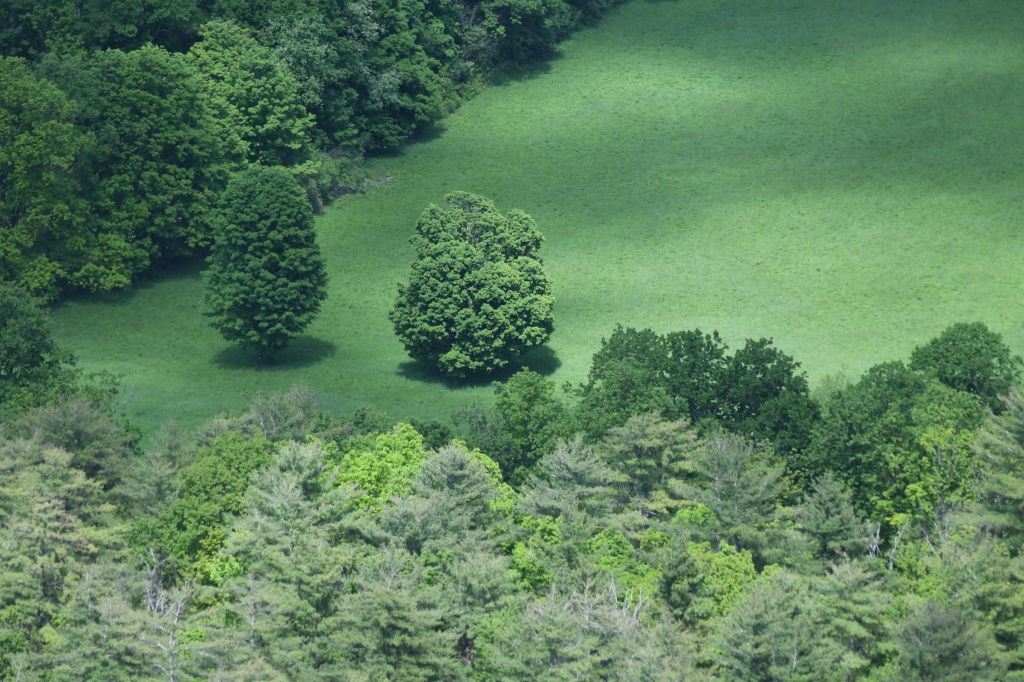
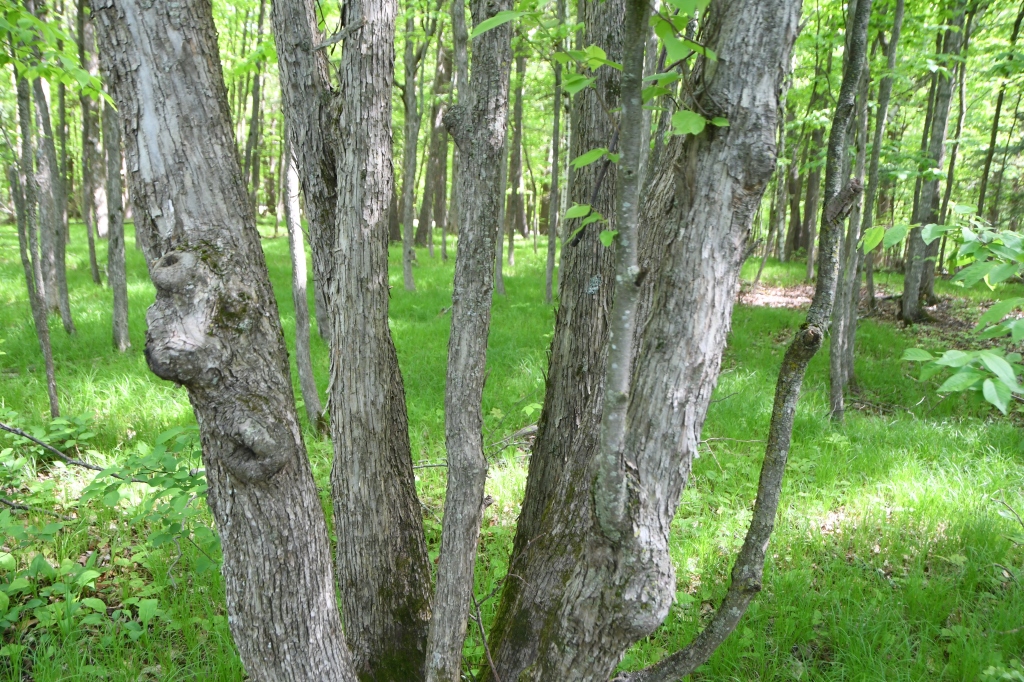
Some bonus photos: Thacher Park, Chris Whitley, Zak

ROLLIN’ EASY WITH ROWAN

A genial tour guide, Peter Rowan steered a Caffe Lena-full of fans Sunday through his New England childhood – “singing to the stars, listening to the ocean” as he nostalgically recalled – then in dusty-road rambles through the west. Rowan mapped those wanderings decades ago, in distinguished company.

When Rowan, Jerry Garcia, David Grisman, Vassar Clements and John Kahn formed Old & In the Way, everybody was in their 30s and 40s. 

Now 81, Rowan remains among the last living links to bluegrass pioneer Bill Monroe, like his somewhat spryer contemporary Buddy Guy (87) with Chicago blues inventor Muddy Waters. “Still standing” begs the question how well can they still sing and play?

Rowan’s cozy, familiar tunes have worn well, and so has his easy-chair voice and finger-picking guitar style, despite a bandage on his fretting hand insult finger. He seldom stretched far on Sunday, though he hit a falsetto yodel at times, mainly in the more relaxed second of two sets. Banjoist (first set) and guitarist (second set) Max Wareham and bassist Chris Sartori, both tasteful and tidy, flanked him, coloring inside the lines.

Some in the packed house seemed to sport as many miles on the clock as Rowan himself, calling out for favorite songs, whooping in delight when Rowan responded. Singer-songwriter Carolyn Shapiro at the next table seemed among the youngest fans there. A quick T-shirt scan: Grateful Dead, Rowan himself, Sirsy, Doc Watson, every acoustic music festival around and some bright Alohas. Soundman Joe Deuel told me Rowan first played the Caffe when Lena herself ran the show.

Max Wareham, left, Peter Rowan, and Chris Sartori

Rowan started at the top: “Panama Red” from “Old & In the Way” and a huge hit for the Dead-adjacent New Riders of the Purple Sage. It wrapped around the even more venerable “Freight Train.” Then the music hit the road with a similar one-two of “The Hobo Song” and “Lonesome LA Cowboy.” Some sang along; Rowan didn’t need to invite anybody, and he flexed his falsetto a bit in a Doc Watson tribute, then made easy octave leaps in the next tune before wrapping with “Cold Rain and Snow” from the Dead’s 1967 debut. 

Max Warham, banjo

Second-set songs stretched longer, from four or five minutes in the first set, sometimes past 10 in the second. They sang and played harder. If the first set was warm-up, it worked. 

Max Wareham, guitar

Wareham switched from banjo to electric guitar and Rowan played slide to start in a bouncy, bluesy “Motherless Children.” They pressed even harder in the gospel-y “Walking in Jerusalem,” a strong highlight, before the thoughtful “I Am a Pilgrim and a Stranger.” In “Tumbleweed,” Rowan and Wareham played a tight duo break and Sartori hit his best bass solo of the night. 

Chris Sartori

Chris Sartori, right, bows his bass

Later, they revisited this theme of Native American respect/lamentation in “Land of the Navajo.” Rowan spoke a wistful verse here, then Sartori’s arco bass underlined the beat and Rowan played his voice from gruff rumble to high yodel and desolate cry in his most expressive vocal of the show.

“Fetch Wood Carry Water” sailed on easy-reggae funk, and the grooves of the second set packed more muscle than earlier, even the slow waltz “Mississippi Moon” that closed in massed fingersnaps Rowan led.

The show felt comfortably loose, Rowan organizing it, if that’s the word, song by song and nodding to cue the solos, or calmly navigating them himself with deliberate, sparse fingerpicking.

The Songs

Panama Red

Freight Train

Panama Red (reprise)

The Hobo song

Lonesome LA Cowboy

It’s a Doc Watson Morning, Guitar Picking Kind of Day

Unknown (Was busier with camera than notebook here, sure I’d remember. Wrong.)

Cold Rain and Snow

Motherless Children

Walking in Jerusalem (Just Like John)

I Am a Pilgrim and a Stranger

River of Stone

Tumbleweed

Mississippi Moon

Fetch Wood Carry Water

Land of the Navajo

Moonlight Midnight

Peter Rowan at Caffe Lena Sunday; Deep Bluegrass Mastery

Check the hat; I’ll wait.

Peter Rowan’s Tom Mix-scale topper fits well; Rowan’s talent and accomplishments range so wide, stack so high. The veteran singer and picker, now 81, totes decades-deep experience onto the stage at Caffe Lena on Mother’s Day, Sunday, May 12. 

He’ll lead a sub-set of his bluegrass band. That fits, too. Rowan began in bluegrass and has wound up there after numerous detours. A Zelig of string-band players, he’s played with more bands than Neil Young.

Rowan started in bluegrass at the very top. 

So how would a 22-year-old Massachusetts Yankee join pioneer Bill Monroe’s Bluegrass Boys?

“I had immersed myself in his music,” Rowan told me recently, “listening to live taped shows and studying his lead singers like Jimmy Martin, Ed Mayfield, Carter Stanley, Mack Wiseman, and Del (McCoury), who proceeded me as a Bluegrass Boy.” Rowan said, “I learned all the vocal duets,” and he often wrote and sang alongside the key inventor of Appalachian up-hollow. home-made music.

As Rowan noted in his website bio, “One thing I started to like about the Monroe style was that there was a lot more blues in it than other styles of bluegrass.” Rowan said, “It was darker.  It had more of an edge to it.  And yet it still had the ballad tradition in it, and I loved that.”

Bill Monroe, left, and Peter Rowan

Bluegrass proved perfect for Rowan with its compelling blend of power and poignance: punch and precision in the instruments and elemental emotion in the voices. 

Rowan also learned about band leading with and from Monroe. 

Rowan told me Monroe was “the Boss Man.” He said that, in the Bluegrass Boys, Monroe exerted “very little correction.” He added, “But you felt it if you went too far.”

As bluegrass mutated from the traditionalist 60s into the experimental 70s, the old guard might have felt the younger players were going too far.

Not Rowan.

“There is no music police,” he asserted. “You have to really believe in the process; overcome doubt and fear.” Asked how he does this, Rowan answered, “A deep breath and let it flow.”Rowan rode a formidable flow after leaving Monroe, first forming the aggressively eclectic Earth Opera (1967-69) with David Grisman. Arguably the first Americana group with its mix of acoustic instruments and high-flying improvisation. Rowan said it was the most loose and organic of his many bands.

Earth Opera – Peter Rowan, top left; David Grisman, bottom left

When Seatrain (1969-1973) formed from the broken shards of the Blues Project, Rowan veered fast in the opposite direction; he said it was the most structured and organized of his bands. This got messy: released as a Blues Project album, “Planned Obsolescence” (1968) was actually an Earth Opera effort, although Rowan didn’t play on it.

Muleskinner (1973) with fellow Bluegrass Boy Richard Greene marked a traditional turn, and Rowan continued in this direction with Old & In the Way (1973) with Grisman (mandolin), Grateful Dead guitarist Jerry Garcia (banjo), Rowan (guitar), John Kahn (bass) and first John Hartford, then Vassar Clements (fiddle). Rowan said this bluegrass supergroup was the fastest of his bands to learn new songs, and this confident fluent efficiency helped make the band’s self-titled album (1975) one of the top-selling bluegrass releases of all time.

Old & In the Way – From left, Jerry Garcia, David Grisman, Peter Rowan, Vassar Clements. Not shown: John Kahn

Minus Garcia and Kahn, Old & In the Way reunited on “Old & In the Gray” (2002), then Rowan and Grisman (last two surviving members) played Old & In the Way songs with the String Cheese Incident at Gathering of the Vibes in 2015.

Peter Rowan, left, and David Grisman

Meanwhile, all along these musical transformations, Rowan played with brothers Lorin and Chris as the Rowans, releasing seven albums from 1972 to 1982.

Rowan also performed and recorded with bands that bear his name. He said working in bands led by Monroe, accordionist Flaco Jimenez and guitarist Tony Rice inspired him to form his own groups, which he does with gusto. He currently leads Peter Rowan Bluegrass Band, Peter Rowan’s Big Twang Theory, Peter Rowan and Crucial Reggae, Peter Rowan’s Walls of Time and Peter Rowan’s Free Mexican Airforce. Rowan explained, “Walls of Time is my main group, who are also my bluegrass band. Walls of Time is a more vast complex sound. Bluegrass for me is always straight ahead. I love to sing!”

Of working with multiple bands, Rowan observed, “It’s good to have players all over the country. It keeps things interesting with fresh ideas.”

He said his current group (double-dubbed Peter Rowan’s Bluegrass Band and Walls of Time) learn new material quickly and provide great fun in the studio and onstage. 

His latest release, “Calling You From My Mountain” adds top-level guests including his brother Lorin Rowan, Tony Trischka, Jerry Douglas, Sam Bush and Ricky Skaggs. 

Americana Highways hailed the album this way: “Despite the genre’s antique oeuvre, it’s loaded with modern charm. The bluegrass is fresh sounding, energetic and fueled with a tradition that obviously survives to shine yet again. No blowing dust off this artist.” The album reaches back in its track, which Rowan composed and originally sang with Bill Monroe. This resonant, full-circle, decades-deep move encapsulates his career – from bluegrass, to bluegrass, with lively stops along the way.

On this tour, Rowan may bring accompanists to Caffe Lena. “I’ll Have Max Wareham on guitar and banjo from my bluegrass band and Chris (Sartori) from Twisted Pines on acoustic bass!”

Rowan said he’ll miss his old musician friend Frank Wakefield, who played Caffe Lena often and died in Saratoga Springs on April 26 at 89. 

Frank Wakefield, left, two other guys, and Peter Rowan

On previous Saratoga visits, “I loved spending time with Frank Wakefield, the late great mandolin genius,” mourned Rowan, who didn’t stay sad for long. Amiable and friendly, he even answered my every-interview question which I warned him would be dumb. 

“What do you drive?” I wanted to know, noting many musicians drive Ford F-150 pickups, though jazz pianist Keith Jarrett impatiently brushed the question aside before laughing to reply, “A herd of goats! Tell everybody I’m driving a herd of goats!” 
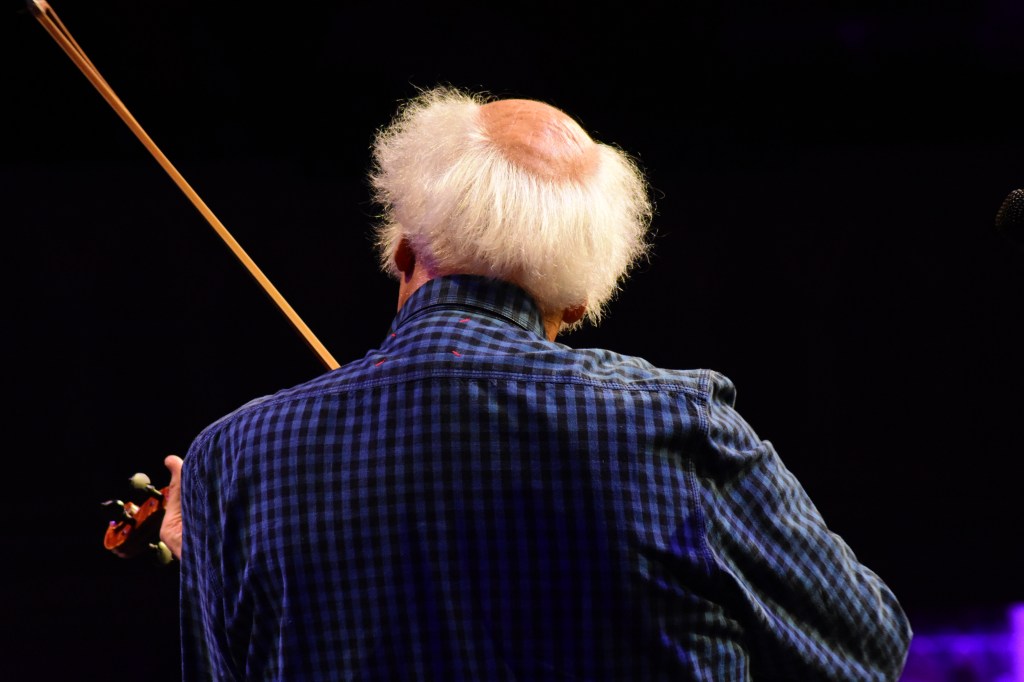
Rowan took this in, then said, “When I’m not driving myself up a tree, I like riding a horse. They are all characters who teach me a lot!”

Peter Rowan plays Sunday, May 12 at Caffe Lena (47 Phila St., Saratoga Springs). 7 p.m. $62.91, members $59.66, students and children $31.46. 518-583-0022 http://www.caffelena.org. Streaming at caffelena.tv.

About the Photos: I found these photos on Rowan’s website and Facebook posts and on Wikipedia, including the Earth Opera Elektra Records publicity shot. I contribute regularly to Wikipedia; if you use it, so should you.

A Kinda Non-Review: BeauSoleil avec Michael Doucet at Universal Preservation Hall in Saratoga Springs, NY
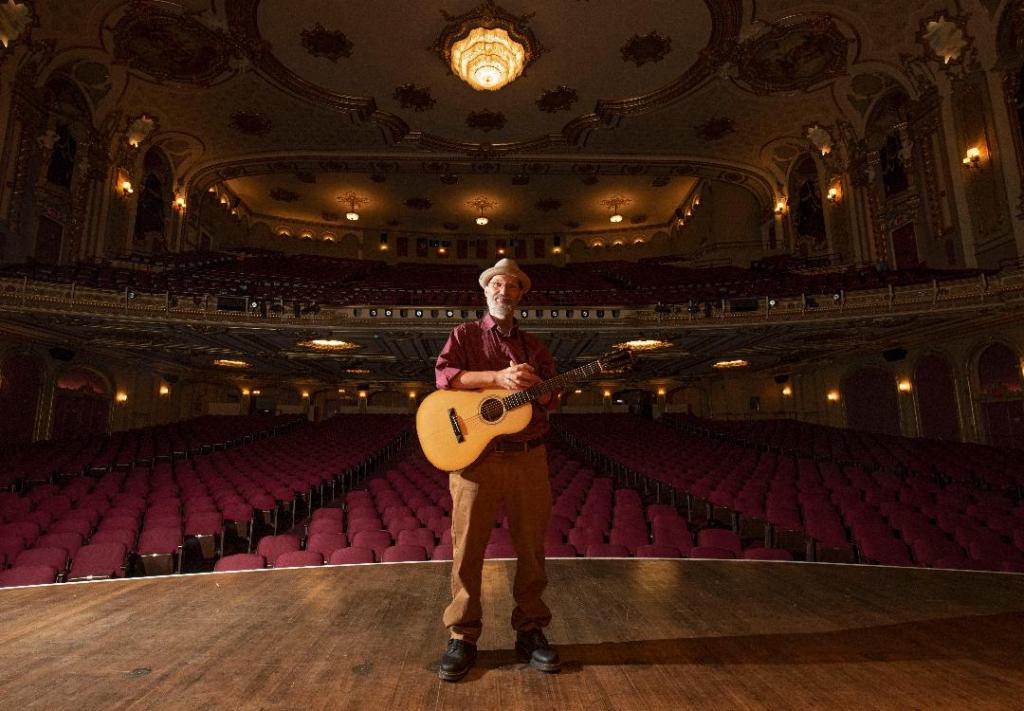
This is a non-review since my Nippertown colleague Don Wilcock got the assignment and I shot photos, on Thursday, April 18, 2024

So, this is mainly to share these images, though I also have some word-thoughts, including a stab at a set-list, below. 

This was a listening crowd, in a church-y space, and everybody sat to listen except a boy and girl, aged four or six, who jumped up when the music started and never stopped moving.

At first, fiddler/singer/leader Michael Doucet entertained with playful introductions in which the northeast weather, the state of Texas and a Montana fan who hailed their “Confederate music” took equal hits. Then, he increasingly stressed, though still playful, how his Cajun music honors a vulnerable minority population of immigrants. Near the end, he traced the painful history of his people as suffering marginalization and displacement, with its music-reinforced and family-based culture supplying a proud, enduring resilience.

The music etched a somewhat different dynamic arc, sounding sweet, sedate and folkloric to start and finish, but generating a ferocious head of steam mid-set with in “L’Amour ou la folie,” then “Poison Love” and “Le Chanky-Chank Francais” holding the pedal to the metal.

Stage right to left, the band was Matthew Doucet – Michael’s son, a fiddle-maker – playing some fiddle but mostly triangle. And if this sounds rudimentary, the guy is to the triangle what Steve Amedee (the subdudes) is to tambourine: Matthew made a short, emphatic metallic clank when he set the base of the triangle on his knee and struck it, but a more open, ringing tone, and higher pitch, when he raised it to strike in mid-air.

Michael Doucet proved his usual triple-threat self as fiddler, singer and talker.

Tradition shaped his rhythms and supplied venerable melodies he taffy-pulled with elastic, jazzy gusto; his tenor voice had the same clarity. His song intros and digressions would work as standup even if he set the fiddle aside; but he honored his predecessors among Cajun and zydeco pioneers, both famous and obscure.

Bill Bennett’s acoustic bass guitar competed the rhythm section, playing tastefully few notes, always in the right place, where dancers’ feet would hit. 

The band’s bridge between beats and lead vocals and solos up front and strengthening everything, Chad Huval flexed Popeye-like forearms to squeeze a joyfully relentless, powerful chug from his diatonic (button-style) accordion, fingers flying around the melody.

Flat-pick guitarist David Doucet – Michael’s brother – also served up equal parts beat push and melodic merriment, and sang both leads and harmonies with relaxed command.

Together, they played as tight as the highest string on Michael Doucet’s fiddle.

The songs all felt like dance numbers though some rocked and some swung. Some of these titles represent best guesses…

Eunice Two-Step

Jolie Blon – introduced as the Louisiana national anthem

Acadian Two-Step (Dewey Balfa)

L’Amour ou la folie

Poison Love

Le Chanky-Chank Francais

Tous Les Deux Pour la Meme

Freeman Zydeco (tribute to Freeman Fontenot)

Quelle belle vie – Here a front-row older woman yelled, “That’s my FAVORITE!” in joyful, show-stopping falsetto. Doucet graciously sang it to her 

Theogene Creole (by the almost unknown Barisse Chunav)

Starvation Waltz

Little Darlin’ (an audience request)

Zydeco Gris-Gris (an early Bo Diddley beat settled into two-step rhythm)

Fishing Song

Untitled waltz

Parlez-Nou A Boire (Encore)

MICHAEL ECK MAKES HIS MARK, SHARES THE SPOTLIGHT WITH FRIENDS, PLAYS HIS OWN BIRTHDAY PARTY

Michael Eck knows how to mark a milestone; right onto his own skin. 

On Friday, hours before he introduces his new album “fermata” in an all-star show at Caffe Lena, tattoo artist Deanna Louise* will etch a fermata symbol onto his arm. The show also marks Eck’s 60th birthday, another onstage major-birthday (with zeros) musical bash. In 2020, he played a sold out show celebrating 30 years since he first played Caffe Lena.

“Fermata” may sound like a menu item in a red-sauce restaurant, but it bears a specific, if elastic, musical meaning. Merriam-Webster defines it as “a prolongation at the discretion of the performer of a musical note, chord, or rest…” Its symbol, soon to mark Eck’s arm in a design adapted by his twin grown children, arches like an eyebrow over a pupil and gives a performer permission to stretch things. 

“To me, it speaks of freedom in music,” Eck wrote in the news release announcing Friday’s show. Freedom has never been a problem for the singer-songwriter and stringed-things picker who played electric guitar with a power drill in an early punk band and usually works with several bands at a time. These days, he performs with the Ramblin Jug Stompers and the Eddies-nominated Lost Radio Rounders; several other crews are on hiatus. On Friday, Eck, 2023 Eddie Award for Folk/Traditional Artist of the Year, leads a crew of longtime musical friends in vintage folk tunes, older tunes of his own and fresh fare from “fermata.”

Michael Eck onstage at the Palace Theatre in Albany. Lori Van Buren/Times Union photo

Eck’s “fermata” summarizes in 15 songs his thoughts during, then after, a pause around health issues including a stroke and COVID. Eck bridged the plague time hiatus of live shows with online workshops including songwriting exercises through the Beacon Music Factory and the Caffe Lena School of Music. The deadlines and direction each program imposed set him on a strong creative roll. Eck noted, “I’ve actually written…an album’s worth of songs since I started recording ‘fermata.’” 

His news release explains, “Each of the characters singing these songs, whether myself, an addict in Kentucky, an old coin, a bereft wife, or a bullet in a revolver, has been thrown an unexpected pause” – a fermata. The songs push and probe at limits, work tension and release, sketch potential energy in destructive or healing expression.

As with his previous “your turn to shine” album (2022), Eck recorded “fermata” at WEXT studios, his players and singers creating together in the same room at the same time. 

“I remain madly in love with the concept of playing live,” Eck told me Saturday. “All that dang folk music I’ve been playing was originally recorded in one take by a bunch of folks around a microphone in the first half the 20th century!” He prepped his musicians with plentiful rehearsal, and noted, “Four of my six albums have actually been live in the studio affairs.”

Eck recruited expert talent for “fermata,” both at WEXT and onstage Friday at Caffe Lena. Asked to list his one-night band mates, he explained – and here, we’ll let his own words convey his respect. “Mr. Eck sings and strums. Bob Buckley plays standup bass, piano and sings. Sten Isachsen plays guitar and mandolin, like a monster I might add. Kevin Maul couldn’t make the recording sessions, but he is flying from Florida for the show, god bless him, and playing dobro and Hawaiian guitar and singing. I’m very excited to work with him again. Finally, Rosanne Raneri** will sing and play some guitar.” In a conversation with himself, Eck marveled, “I’m sorry, did you say Rosanne Raneri? Yes, I damn well did. How cool is that!?” 

Also cool: “I realized while preparing materials for this show that at least one song from each of my five preceding albums has been recorded and released by another artist,” said Eck. “As a songwriter, there is no greater feeling than that.”

Well, except possibly the joy of hearing skilled, soulful friends play and sing your songs with you onstage.

Michael Eck and Friends play Friday, April 19 at Caffe Lena (47 Phila St., Saratoga Springs) 8 p.m. $21.69, members $19.52, students and children $10.85. Ticket buyers can also add $5 donations to Caffe Lena with their purchase. 518-583-0022 www.caffelena.org. CD copies of “fermata” will be available for sale.

  • *Tattooist Deanna Louise earlier inscribed a drawing by the late Greg Haymes, now five years gone, onto Eck’s other arm.

**Assistant professor of Theatre Arts at Hudson Valley Community College, Rosanne Raneri has set aside music making for a time. She received the SUNY Chancellor’s Award for Excellence in Teaching in 2018. 

Full disclosure: Raneri used a photo of mine in the artwork for her “Parhelion” album, Metroland magazine’s Best Local Release for 2000. The late, great Greg Haymes hailed it as “one of the finest albums ever recorded in this area.” 

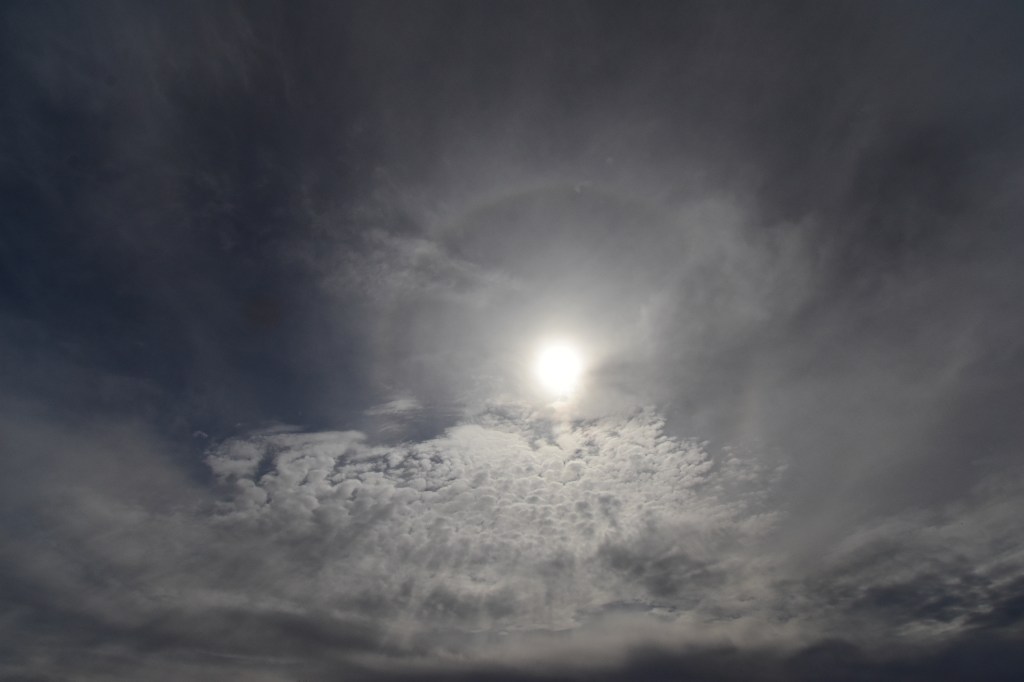
We defined “fermata;” might as well do “parhelion.” Merriam-Webster defines parhelion as “a bright spot, often with color, that appears on the parhelic circle on either side of the sun…also known as a sun dog.” Shown here, for reference, is the one that formed around last week’s eclipse, as seen from a farm road near Little Falls. 

When this happens around the moon, it’s a “moondog” – nickname of eccentric New York composer Edward Louis Hardin whose best line is worthy of an Eck lyric: “Machines were mice and men were lions once upon a time. Now that it’s the opposite, it’s twice upon a time.”

Clair, Eck Tag Team at WAMC’s The Linda Sunday

By MICHAEL HOCHANADEL

When singer-songwriters Stephen Clair and Michael Eck shared a New Orleans apartment, they tag-teamed a two-man poetry workshop on the same typewriter. One typed by day, the other by night. A tattoo of that typewriter on Eck’s arm marks that connection.

The two will tag-team again Sunday, Feb. 25 in WAMC’s Live at the Linda Live series, a tasty two-fer for fans of incisive songwriting and post-punk performing. The shared show celebrates a decades-deep musical friendship with shared stops on America’s musical map, but different paths at times.

Both have played live on the radio, both came up in Albany’s punk-rock scene, both have recorded with bands and solo. They’ve played in each other’s bands and together often, including with their hero Pete Seeger.

Another hero, one-man rock show Hamell on Trial, inspired both to play solo in area clubs and coffeehouses in the 80s. Eck – who has played electric guitar with a power drill – calls this approach “maximum solo acoustic,” where intensity and insight combine.

Early on, Eck and Clair collaborated “only in the most ridiculous ways,” as Clair said by phone from Beacon recently. “We would jump onto one another’s shows to both complement the show and make a mess of it.”

“I don’t think we’ll be sabotaging one another’s sets at The Linda,” he said, sounding innocent but playful.

Stephen Clair – Hillary Clements Photo

Each will play solo, Eck going first since Clair has the most recent album, the all-solo “The Presentation of Self in Everyday Life.” Clair said, “I’m really looking forward to this show because I think it has something to do with making this record.”

Playing live on radio suits both lovers of music on the air. One of Eck’s several active bands is the Lost Radio Rounders, and he produced and hosted “Performance Place: Live Concert Radio at WAMC.” As a teenager, he eavesdropped on punk-rockers the ADs in his Slingerlands neighborhood. “When I heard the ADs on the radio, I realized these were the guys I heard playing in the basement – and they’re on the radio,” Eck told me last year. “I realized you could do this, in your community.”

In Albany’s do-it-yourself music community, Clair played briefly in Eck’s band Doubting Thomas while Eck played in Clair’s punk-rock trio Glaze. Surprisingly, Glaze landed a  remarkably rare appearance on mainstream radio power-house WGY-AM which seldom paid attention to music in general, even less to local acts.

Neither Eck nor Clair stayed local. Both pilgrimaged to Austin as well as New Orleans, then their paths parted for a time. After recording his debut album “Altoona Hotel” (1997) with members of Oneonta rock band Subduing Mara, Clair earned an MFA in writing. He moved to Brooklyn and left music-making for a writer’s life. while Eck drifted back to Albany to start a family.

Clair resumed recording with “Little Radio” (2003) in Queens with friends. The album,“got what for me was a lot of attention,” he said. “WFUV started playing it in heavy rotation,” unusual attention to a completely independent album. When the New York station broadcast interviews with Clair and and live performances, “I was kind of riding high.”

Although made with a band, Clair’s “Little Radio” ride launched solo tours. In Texas, rich in stages and stations open to solo troubadours, he recalled, “Pretty much every live show I would do, I would also do a live on-air at the local radio station that day or the day before.” Playing live on radio, Clair found, “There’s the illusion of a concert in front of a live audience, physically, while also being on the radio.”

After touring with Texan Robert Earl Keen, Clair borrowed Keen’s band for “What Luck” (2007), and he worked with producer Malcolm Burn (a colleague of Daniel Lanois) on “Strange Perfume” (2019). By then he’d moved to Beacon, started a family, opened a music school and formed a regular band: Daria Grace, bass; Aaron Lapos, drums. 

New geography brought a new sound. “I got away from the rootsy thing and it’s this bridge that I’ve constantly been straddling my whole life,” he said, “the singer-songwriter who’s also a little bit rootsy, but simultaneously a little bit like New York, punk rock 70s too – all rolled into one ball.”

Making his new album “The Presentation of Self in Everyday Life,” he said, “took getting to the point where I felt brave enough, and had songs that were interesting enough on their own, when just laid bare like that.” He wrote 100 songs to feel confident he had 11 keepers. He recorded each song live, without edits.

“Some days I would do a dozen takes of a song, and it just wouldn’t be hitting and I’d walk away,” he said. “Then I would work on other songs for a few weeks and then I would come back to that song…Of course, no single take is perfect…These recordings have fully exposed warts – which I’m 100 percent fine with.”

Comfortable with playing solo, Clair now feels he’s reached a new level. “People come up to me and thank me for being so generous,” he said. I think it’s because I’m completely myself when I’m onstage.”

Clair added, “When you perform solo, it’s like you’re giving a talk or telling a story; those elements are more at the forefront than they are when you’re playing with a band… it’s really so pleasing and so energizing to just engage with an audience over these songs, so these songs feel almost like an excuse to be able to have that opportunity. It’s really, really great.”

When not performing, writing or recording, both Eck and Clair work musician-appropriate day-jobs. 

Clair founded and runs the Beacon Music Factory; his “full-time side-hustle,” he calls it, “a music school that lives a double life.” By day, it offers private lessons, mainly to school-agers. “Then at night, there are all these adults who come in and play in these adult rock band camps, or a string chamber group or a saxophone quartet,” said Clair, proudly noting how these ad hoc bands build close friendships. “That continues to be a huge inspiration to me in running this place.”

Eck has reviewed music and drama for the Times Union, worked in publicity for the Proctors Collaborative, then wrote promotional information for a west coast instrument maker. While a stroke, COVID and other health challenges curtailed day-job work, Eck continued to perform. Sitting to play initially, he performs regularly with the Ramblin Jug Stompers, the Lost Radio Rounders, Good Things and a duo with percussionist Brian Melick that grew from the all-star band Tin Can Alley. He has also curated performance series at Caffe Lena, WAMC’s The Linda, Union College and Borders, and produced recordings by Jim Gaudet, Coal Palace Kings, the Plague and others.

Michael Eck – Lori Van Buren/Times Union photo

Eck was inducted into the Eddies Hall of Fame in 2022 and his Lost Radio Rounders (a duo with Tom Lindsay) are nominated as Folk/Traditional Artist of the Year in the 2024 Eddies Awards (awards ceremony April 21 at Proctors), honors Clair would likely have harvested if he still lived here.

Both have raised creative offspring; Eck’s are twins and older than Clair’s. Eck is delighted his daughter and her husband live in his childhood Slingerlands home, where his first bands rehearsed and down the block from where Eck eavesdropped on the ADs. Clair notes his younger child Schuyler will surpass him as a musician, or already has.

 A few days after we spoke, Clair Facebooked a concise new mission statement: “Making songs filled with longing, love, chickens, drugs and flowers into records and hitting the road with a vengeance since the 90s, with more than ten studio albums, and at least that many fans.”

On that same (unnecessarily) humble note, Eck borrowed the words of Northampton area rock troubadour Ray Mason to proclaim, “I play the same show in front of four people as I would in front of seven.”

Stephen Clair and Michael Eck play solo at WAMC’s The Linda (339 Central Ave., Albany) on Sunday., Feb. 25 in the “Live at the Linda Live” series hosted by Peter Hughes, 7:30 p.m. $25. 518-465-5233 x158 www.thelinda.org

FURTHER ON, DOWN THE ROAD

Stay tuned for details on Eck’s plans for an ensemble show with guests on Friday, April 19. He’ll celebrate his 60th birthday and introduce his new album “Fermata,” his sixth. Eck recorded “Your Turn to Shine,” his previous release, live and solo in the studios of WMHT (for its “AHA” program) and WEXT.

Aloha

All due respect to my brother in law Richie, a Maui resident, this is something else.

Her name and face jumped off the page.

Alphabetically the first person listed in the Times Union obituaries on December 1, she bore the unforgettable name of Aloha Coleman. 

ALBANY – Aloha C. Coleman, 65 of Albany, passed away on November 17, 2022. Visitation will be held on December 3, at 10 a.m. with service to follow at 11 a.m. in the Metropolitan Baptist Church, 105 Second St., Albany.

How scanty this seems. No information on her family, her work, anything. Apart from noting that she passed at a younger age than I am now, I remembered actually, surprisingly, meeting her.

Years ago, she stopped my car on a Troy roadway. She was flagger on a busy construction crew. Dump trucks growled behind her. Some delayed drivers did, too, in their unmoving overheating cars. Whenever a driver grumbled out the window, she approached the car and spoke, low and calm, as I heard when she talked down the driver ahead of me.

She had something more than merely nice about her. She was warm and sweet, to everybody, with a glow of kindness I could see.

Maybe my eyes were extra tuned up when I saw her, as I was heading back to my PR agency office from a photo shoot. I had cameras in the car, so I asked to photograph her. She said OK, and I watched a bit as she spoke on her walkie-talkie and waved her flag. I chose a lens and started shooting. At times, she looked right through my camera, unselfconscious, at ease.

When I picked up the color slides I’d shot of her from the lab, I could see that comfort, her warmth, in the pictures. I filed them away in a storage box and inventoried them decades later in a spreadsheet my son Zak organized for me.

Her smile stayed with me even when I hadn’t seen those pictures for years. 

Every time I enjoy a happy encounter with any stranger, ever after, I remember Aloha Coleman; the prototype of surprise meet-ups. I was in her company for no more than five minutes, but she became the ideal of what could happen when fine new people cross our paths, or whenever things go better than expected with anybody.

Aloha had that same warm open-ness as Ellie, whom I had the great good fortune to marry a few years before Aloha stopped my car.

Now Ellie has a term she uses for a particular kind of surprise release from some obligation, for getting off an inconvenient hook without necessarily deserving to.

She once forgot an appointment with a clothing-alteration customer and was mortified when the customer phoned. “Oh, NO!” thought Ellie, expecting anger. But, no. A nice woman named Florence, the customer had forgotten the appointment, too. Florence apologized profusely, as Ellie gratefully forgave her. Ever after, when someone else’s mistake exonerates or erases one of our own, well, we call that getting “Florence’ed.”

And it now occurs to me that a surprising encounter with any stranger, or any interaction that goes better than expected– or deserved– that is an Aloha.

When I turned the page from her sparse obituary, I found an extensive mass culture one. Christine McVie of Fleetwood Mac, born Christine Perfect and a former member of Chicken Shack, had died at 79, 14 years older than Aloha Coleman.

The names of Christine’s bands offer only the scantiest clue about how euphonious, how harmonious she was, how essential to so many, in music and in life. 

With the blues band Chicken Shack, she had the sheer nerve and confident vocal chops to cover “I’d Rather Go Blind” by the R&B titan Etta James.

When you hear her on Fleetwood Mac records, her low, easy voice stands out in the mix. Onstage her power seemed clearer. Even from the the distant seats I somehow always got to see Fleetwood Mac (that’s why I have no photos of her), I could see she was the heart of things. 

For all the bluesy swing of the Mick Fleetwood and John McVie rhythm section, the ethereal soaring-scarf sound of Stevie Nicks’ voice and the guitar heroics and hearty tenor of Lindsey Buckingham, Christine McVie was the band’s center of sonic and emotional gravity. 

After she joined Fleetwood Mac and married John McVie– and apart from some breaks from the road and the band– she was there nearly from the beginning to the end. A guest on Fleetwood Mac’s second album in August 1968, she arguably went on to write many of the band’s best songs. Her “Show Me a Smile” is the best tune on “Future Games,” and “Say You Love Me” put the big Mac back on the charts for the first time in five years. “Over My Head” further confirmed the revived band, now (1975) featuring Buckingham and Nicks, as pop hit-makers. Two years later, “Don’t Stop” firmly steadied the band, reeling from multiple romantic break-ups, as the top-selling “Rumours” album raucously reflected. 

Although she and John McVie split, and she wrote and sang about it, the noisy drama exploded elsewhere, mainly between Nicks and Buckingham. For all the emotional candor of Christine’s lyrics, she expressed herself with calm reserve. It’s class, but with courage and craft, too; and it carries such emotional heft that everything revolves around her.

Since her passing, we hear the unmixed love and admiration of fans and fellow musicians. We share in her fellow stars’ respect and love.

I love how a Facebook post nailed it a few days ago. It’s by Damhnait Doyle, whom I otherwise don’t know:

To some, Christine McVie may have been in the shadows/ but that just means she was holding the whole thing up. The structure of Fleetwood Mac was built on the back of her tremendous songs and musicianship. When your light shines that bright/ you don’t need the spotlight- the light finds you. RIP Songbird

In the music she left us, Christine McVie was an Aloha.

Judge Woody

1966, San Angelo, Texas. Summer, or what felt like it on the sun-hammered flat wide. Late afternoon, a dive bar that mixed low-alcohol beer with Tabasco and tomato juice in its trademark “red bird.”

A bartender responded with innocent surprise when a patron remarked that dousing bowls of popcorn with chili powder revved up drinkers’ thirst. “Now, is that a fact?”

The city fathers forbade hard liquor so tipplers drove fast to the next county for the harder stuff, brilliantly effective for drunk driving. This was one of the more exciting pastimes available, along with the flashy thrills of climbing on our barracks roofs at Goodfellow Air Force Base to watch thunderstorms crash and crush.

Onstage in the bar sat a tall thin guy with a guitar and calm, twinkly charm. He was among friends; fellow military guys from Goodfellow where we trained in radio intelligence.

When applause rewarded a song, singer Woody Smith waved it off. “What I do best is pick fly shit out of pepper with boxing gloves on.”

For all the fun he has had making music and telling jokes, what he did best was at a different sort of bar. Over 40 years in court-rooms, Woody Smith was a public defender, prosecutor and judge.

Woody grew up in Carlsbad where his dad worked in the potash mines. Woody did, too, but he also waited tables in the snack bar at the famous caverns. One day, a feud with his cook erupted in the dining room to the consternation of a hungry family. The cook prepared what looked like the cheeseburgers everybody ordered. But when Woody served them, the confused dad beckoned him back and lifted his bun top. It was empty. The dad looked quizzically up at Woody as if the question was too obvious to need asking: Where were the burgers? 

Woody helpfully explained, “Maybe you should have ordered the deluxe.” 

Before the dad could react, Woody brought out his manager who comped the family’s cheeseburgers, fries and drinks.

After radio-spy school in Texas, we moved around the world, in uniform. I spent a year on the Black Sea coast of Turkey before I joined Woody and other pals already stationed on a Navy base between Tokyo and Yokohama. We all lived in nearby villages, graciously welcomed by our Japanese neighbors despite overloud stereos and other frat-brat misbehavior. In our “battle of the bands,” we cranked up warring stereos in different rooms. 

Woody lived nearby, so we partied together some. Once Bob Brown, drunk and over-confident in his navigational skills, mistook a maternity hospital for the home he shared with Woody and other sailors. Bob made himself comfortable, climbing into a delivery-room bed with a laboring mother to be. At his court-martial, the judge told Bob the Navy “takes a dim view of sailors acting like hairy monsters.”

Woody’s post-Navy path seemed more direct than the erratic trajectory most of us followed. We mostly blundered around; Woody went to law school. 

A framed motto in his home on an east Albuquerque cul-de-sac proclaims his judicial philosophy: “If it ain’t fair, it ain’t legal.”

Before his bench, as he once explained, “First I identify the ass-hole; then I use the law to make sure they don’t win.”

Sometimes this was easy.

When a woman sued a neighbor over her constantly-barking dogs, the defendant brought a box of cassette tapes to court. Judge Woody asked what was on the tapes. She said it was the sound of her dogs – not barking. Judge Woody pointed out that could be the sound of anybody’s dogs, not barking. So she called a witness. She spoke in a normal tone, and when nothing happened she gave a loud shout. “Mister MENDOZA!” Some shouts later, an old, clearly deaf man rose and headed for the witness stand.

Judgement for the plaintiff.

As a prosecutor, Woody laughed when jail inmates mooned him as he walked to his courtroom.

I only once saw him there, in action. When our fellow Navy vet John Collins, his partner Sally and I visited his courtroom years ago, he was assuring the accused that DWI is a serious offense. This observation grew increasingly ironic. 

“I’ve got nothing on under this robe,” he announced, leaving the bench after the trial. He actually wore a Rolling Stones T-shirt and jeans. 

We lunched at Sadie’s in a nearby bowling alley, with beers. Then, we all boarded Woody’s spacious Chrysler sedan. Worried that thirst might overtake us on our ramble, he stopped at a drive-through for a six-pack that was gone before we arrived at a bar in Bernalillo.

There we settled into lazy wet afternoon. We shot lots of pool, badly, draining pitchers of draft beers and playing the same song over and over on the jukebox – a lively Mexican polka, “La Gallina.” The guys at the bar – we bought their pitchers, too – told us it meant “The Hen;” but it also means “funk” – which makes more sense.

Woody then drove us back to Albuquerque, dropped us off for naps and a late dinner while he went home to practice, then pack up his sax.

He picked us up at dusk and drove us to our third bar of the day, if you count Sadie’s. In retrospect, I surely would. 

There, he climbed onstage with his band the Tube Worms. Every seat in the place was full but a barstool held vacant by a sign memorializing Chuy, its deceased occupant.

Woody and the guys had and delivered a high old time, playing rock and roll classics loose, fast and rowdy. Time flowed fast as the riffs and I was surprised on arriving back at John and Sally’s place to find it was 2 a.m.

I don’t know if Woody had court the next day.

As busy as his docket ever got, he never gave up music. For years, he led a crew he called the Woodpeckers in bars around Albuquerque and surrounding towns. And they opened for some stars at the Kino, an art-deco movie palace downtown.

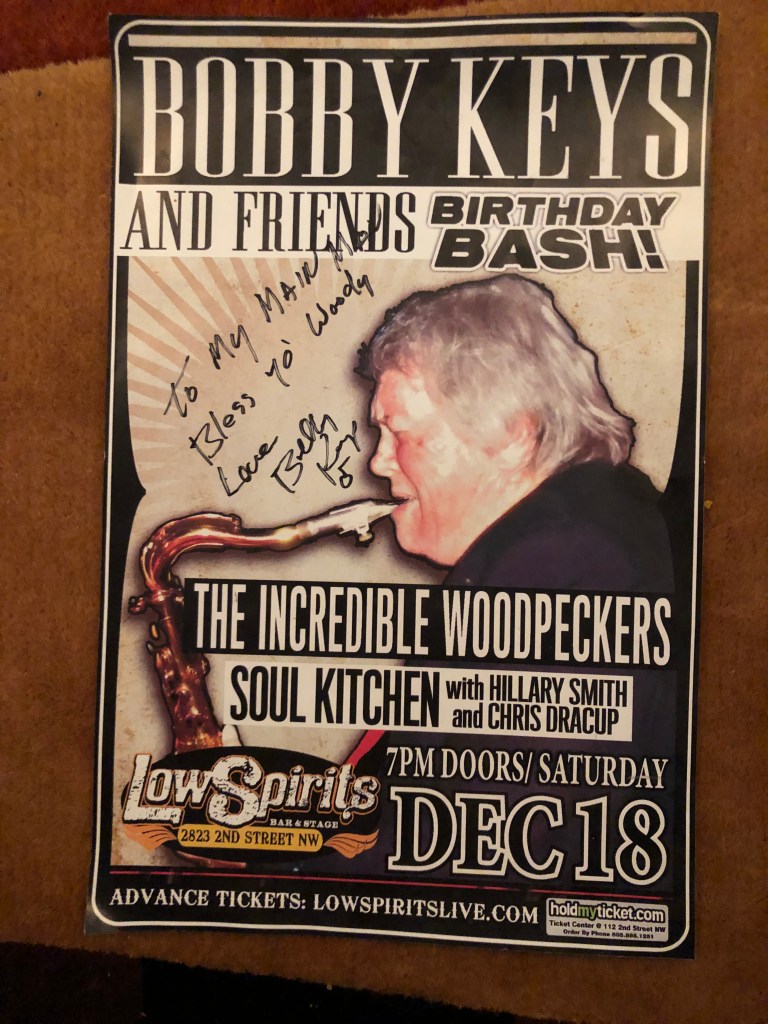
Rolling Stones saxophonist Bobby Keys played some of those gigs; as I found during a September reunion in Albuquerque with Navy vet/radio-spy friends including Judge Woody. He handed me a gleaming Virtuoso alto sax Keys had gifted him, for a magical/religious moment. 

Keys played with the Stones for decades, though they fired him during the “Exile on Main Street” (released in May 1972) sessions in Keith Richards’s basement studio in the south of France. Mick Jagger took umbrage when they wanted to record a sax part but Keys couldn’t be found. He was discovered enjoying himself in a bathtub he’d filled with Dom Perignon. He and two women friends were all naked there, “nekkid,” as Woody likes to say. Richards laughed and wanted to let Keys sober up and play but Jagger insisted that Keys be booted. 

Keys had previously toured with fellow Texans Buddy Holly and Buddy Knox, then with Delaney & Bonnie and Friends whose guests included Eric Clapton and George Harrison. This introduced him to top British musicians. Delaney & Bonnie bandleader Leon Russell hired Keys for Joe Cocker’s “Mad Dogs and Englishman” tour and live album.

Years later, the Stones rehired Keys. As Richards told Rolling Stone after Keys died in 2014, “…The Stones were rehearsing for another tour. This was 1980-something, and I bought Bobby a ticket and said, Just get your ass here. When we rehearse ‘Brown Sugar,’ just sneak up and do the solo, man. Once we did ‘Brown Sugar,’ Bobby hit the solo and then I looked at Mick like, You see what I mean, Mick? And Mick looked at me and says, Yeah, you can’t argue with that. Once he just played those few notes, there really was no question. So Mick relented and said, Okay, let’s get Bob back in the band.

Keys played on a dozen Stones albums and dozens more by artists from Ringo and B.B. King to Carly Simon and Leo Sayer.

When the Stones played in Albuquerque on their “A Bigger Bang” world tour (2005-06), they paid Keys $15,000 for that night’s work. Then Judge Woody picked him up, buzzed him across town to play a dive bar with the Woodpeckers. 

Keys’ cut of the door money: $25.

Woody told this tale at a late-September recent reunion in Albuquerque that brought together half a dozen old-friend Navy vets, some with our wives/patient partners. Some of us hadn’t seen others of us in 40 or 50 years, and we chose Albuquerque in deference to the two vet residents: Woody and John Collins.

We shared memories of the same episodes remembered differently and vice versa; tall tales of high times, and low.

And we recalled how we’d variously bridged big gaps in time and distance – most recently last fall when five of us assembled in Newville at the Herkimer County farmstead where my wife Ellie grew up and which she and some siblings still own.

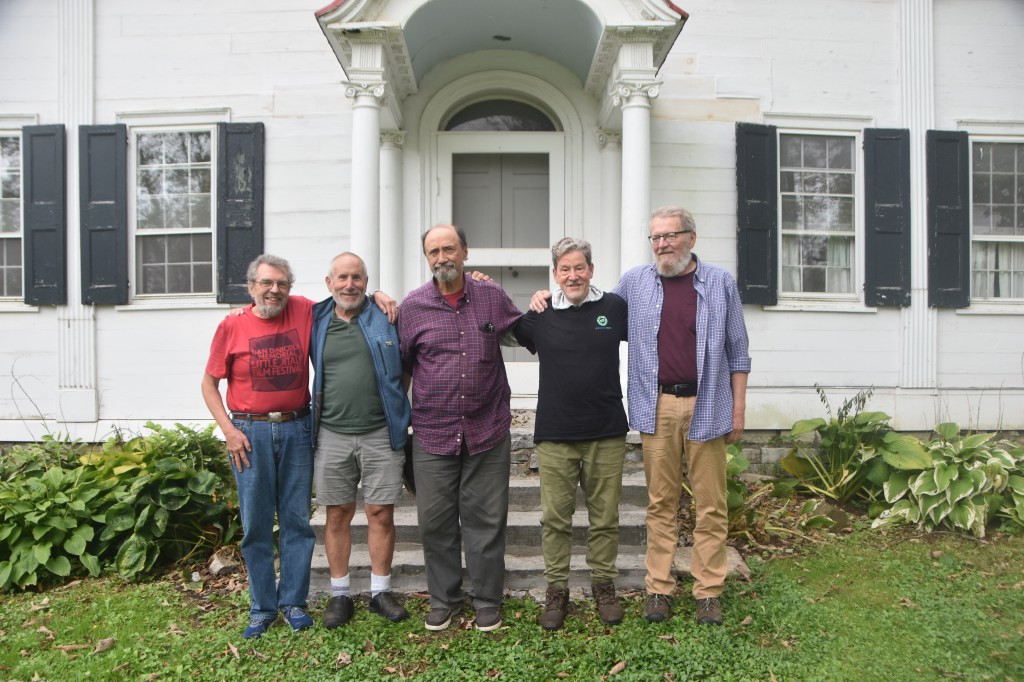
Old Vets’ Reunion – From left, me, Schmuel “Stuart” Ferency, John Collins, Steve Bouck, “Lew” (Michael Ayres) in Newville, NY; fall 2021. Ferency lives in Hull, Massachusetts, Collins in Newville or Albuquerque, Bouck in Muskegon, Michigan, and Ayres in Eau Claire, Wisconsin.

Once Steve Bouck had Amtrak’ed from Seattle across country unannounced to Schenectady where Ellie and I found him sun-bathing in Riverside Park. John Collins showed up once, also unannounced, in a new pick-up. We hung around drinking reunion beers just long enough to be in the right place at the right time to paddle my birthday-gift canoe along the Watervliet Reservoir and rescue two capsized paddlers. One was going down for what would likely have been the last time, so I felt pretty proud of us until John suggested the guy we’d saved could now fulfill his destiny as a serial killer.

Years before that, Woody and John visited me in a Hamilton Hill hippie flat where I lived with many housemates. We all went to Union College to see John McLaughlin’s Mahavishnu Orchestra all but level the Memorial Chapel – one of the loudest concerts I ever heard. Woody and John were en route home from travels in the Soviet Union, including Russia, Uzbekistan, Tadzhikistan, maybe other -stans. 

Some years later, I visited them both often in Albuquerque on side-trips from visiting Ellie who taught for 10 years at the Anne Hyde Institute of Design near Rocky Mountain National Park in Colorado. One of her students was Kim, then-wife of rocker Steve Miller who played Red Rocks during her term and sent a limo to pick her up. 

Those Albuquerque side-trips took me with son and traveling companion Zak to the Green Corn Dances at Santo Domingo Pueblo (every August 4th for hundreds of years) and other pueblo visits. We tent-camped in Chaco Canyon and on the shores of Heron Lake and enjoyed tasty times in Mexican restaurants around town. When asked my favorite meal, I still say: “A combination plate (three cheese enchiladas, a bean burrito, rice, beans and lettuce-tomato salad) at Los Cuates, an Albuquerque eatery run by twin sisters. 

Once on a visit to Woody’s place, his daughter Ramona, then maybe 10 years old, told us why she’d awakened her younger sister. She said, “I accidentally screamed” – an explanation we use in our family to this day to wave off any mishap. 

Recalling Ramona’s remark today reminds me that I accidentally wound up in the Navy, where I accidentally found many remarkable friends, for life.