

When Jay Ungar, a fiddler and singer in his 70s, announced plans to play “hits of the 60s” Saturday at Caffe Lena, it didn’t sound terribly surprising. But then music-and-life partner Molly Mason clarified – “the EIGHTEEN-60s” – it made perfect sense and shaped the musical history lessons they performed to a capacity crowd.
They’ve built a long career of reaching past vintage sounds to the emotions behind old tunes and by crafting timeless new ones.
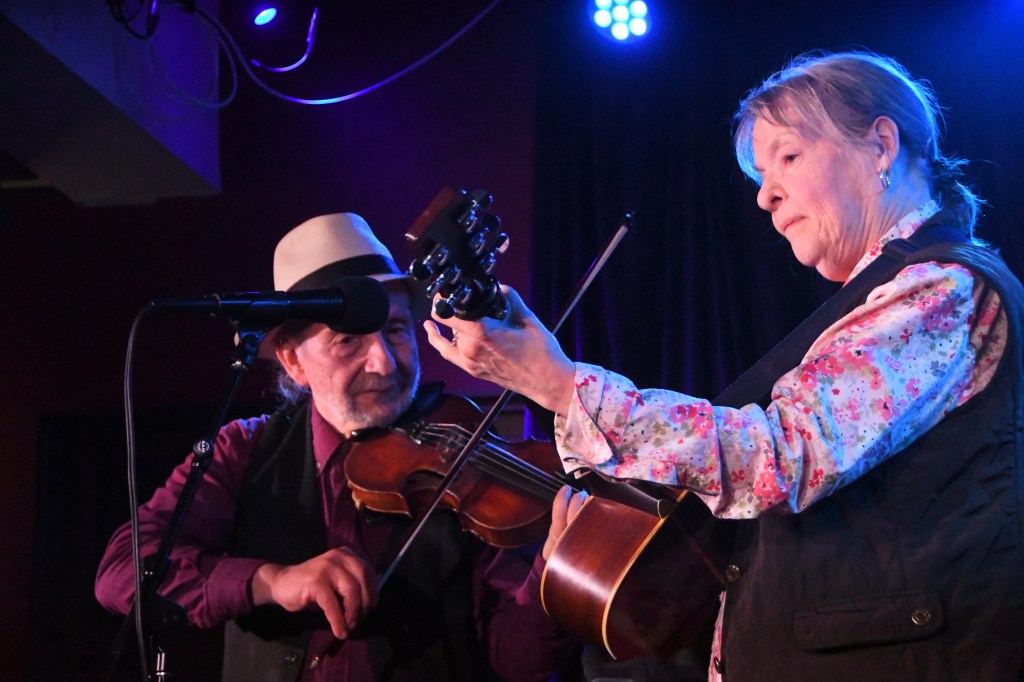
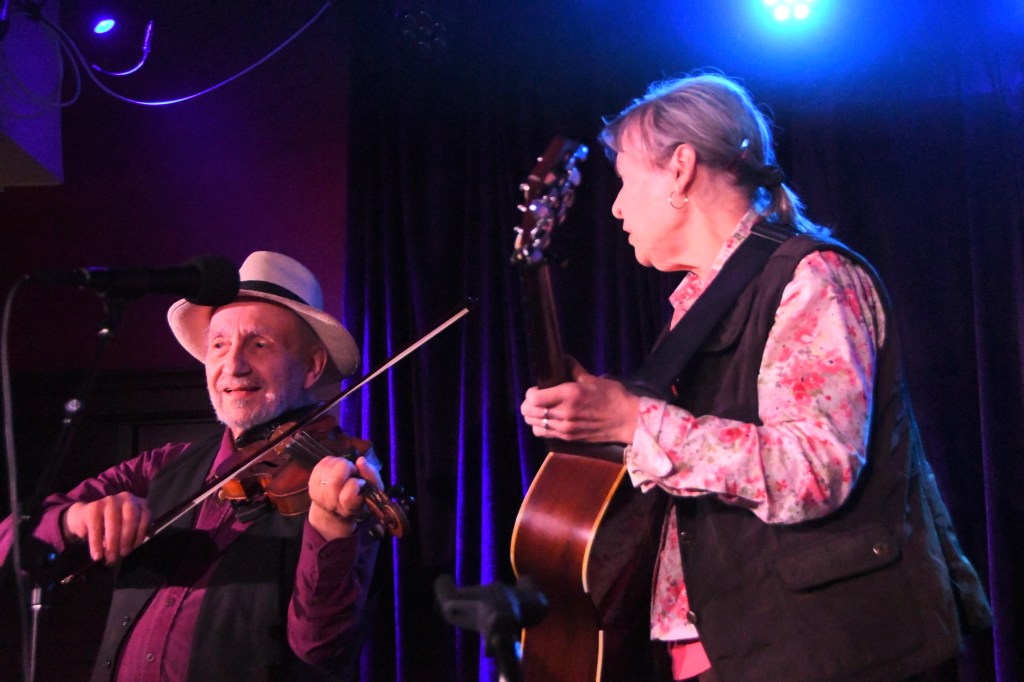
It all started conventionally enough Saturday in a warming-up medley of reels and hornpipes, Ungar’s spry fiddle leading Mason’s supportive guitar. Then, after their cozy pastorale “Backyard Symphony,” they moved into the living-history mode that dominated their two-set show, citing their decades-deep collaboration with documentarian Ken Burns. His films survey history by integrating long-ago events with right-now concerns, a prismatic perspective that perfectly suits their down-home music.
Introducing “Blue River Waltz” from Burns’s celebration of national parks, Mason suggested a closed-eyes canoeing reverie; the song’s message urges reverence for the land, a recurring theme. So was the Civil War, a hit for both Burns and Ungar-and-Mason in their “Ashokan Farewell.” A few songs later, Ungar would wryly note they wouldn’t play that just yet, after a run of 1860s “hits.” He noted a spunky fiddle tune had been re-named in its time to honor “Lincoln and Liberty” before going all red, white and blue with “Rally ‘Round the Flag” and “Battle Hymn Of the Republic.” Here fans first hummed along then sang in a subdued but sincere chorus.
Mason sang Stephen Foster’s “Hard Times” in compelling simplicity, trusting the words to carry the feel, after Ungar noted John Adams and Thomas Jefferson had died within hours of each other, the same year Foster was born.
They celebrated maple sugar shacks in rustic folkloric style, then cited how combining Catskills ethnic traditions yielded the Irish-Jewish amalgam they called “Celto-Klezmer” for another spirited paring of “Vladimir’s Steamboat” – no, not THAT Vladimir, Mason assured us – and “Wizard’s Walk” before closing the first set with the serene “Peace on Earth.” Ungar explained he and Mason had separately developed the two motifs they combined into this elegant tune, noting “they’re married, like us.”
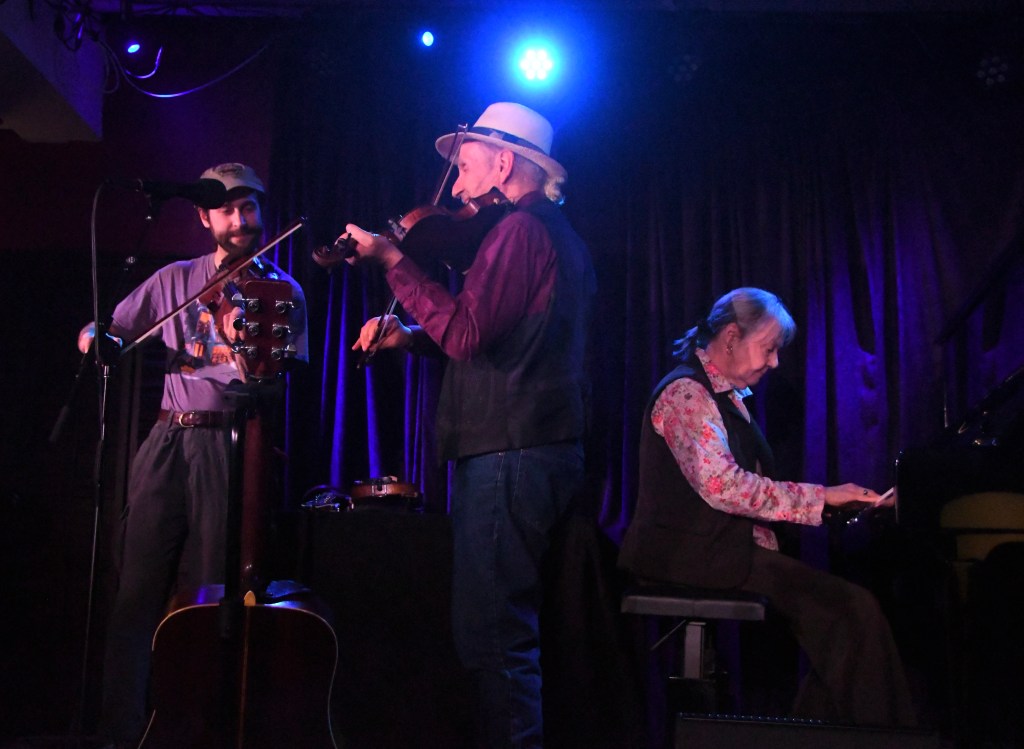
Caffe kitchen manager and volunteer coordinator Paul Machabee added his fiddle to the mix after the break in a tuneful guest spot that fit well in a medley of dance tunes like the first-set opener.
When Mason forgot her lyrics in an ode to old-fashioned farming, they cruised past this rough spot instrumentally, then she recited the missing verse. “The Mountain House” (for Mohonk Mountain House) cruised just as smoothly, as did “Monastir,” Ungar’s family saga of loss and displacement in WWII Europe. Their intro to “Love Song to a River” also cited troubles in the prickly person of jazz violinist Joe Venuti. Ungar recalled seeing Venuti at the Caffe where he taught Ungar and Matt Glaser some riffs then scared them by bringing them onstage to play. Mason cited his stern injunction during a lesson to “make believe you have a soul” – a harsh intro to a serene song.
Waltzes flowed together late in the second set including “Prairie Spring,” “Midnight on the Water” and “Bonaparte’s Retreat” – basis of Aaron Copland’s “Hoedown.” Some Bob Wills Texas swing held that party mood, especially “San Antonio Rose.” Then they settled into the exquisite melancholy of “Ashokan Farewell.” Few songs we’ve all hard so many times wear as well.
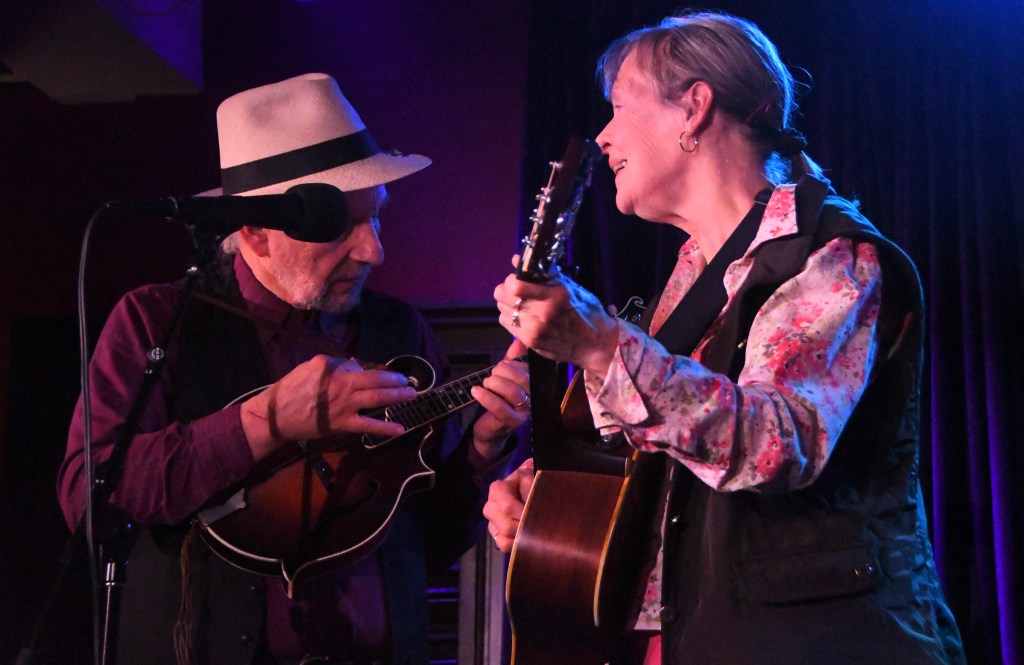
They hadn’t gotten far offstage after this climactic number before they came back to encore with Leadbelly’s “Relax Your Mind.” Swapping his fiddle for mandolin, Ungar played it seriously but they sang it for laughs.
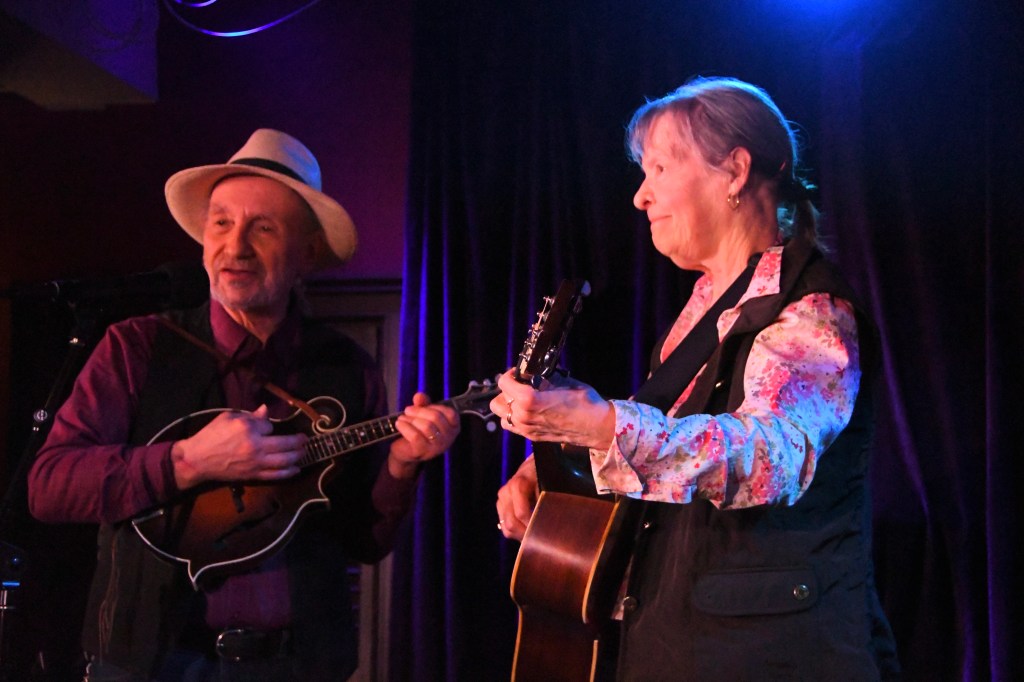
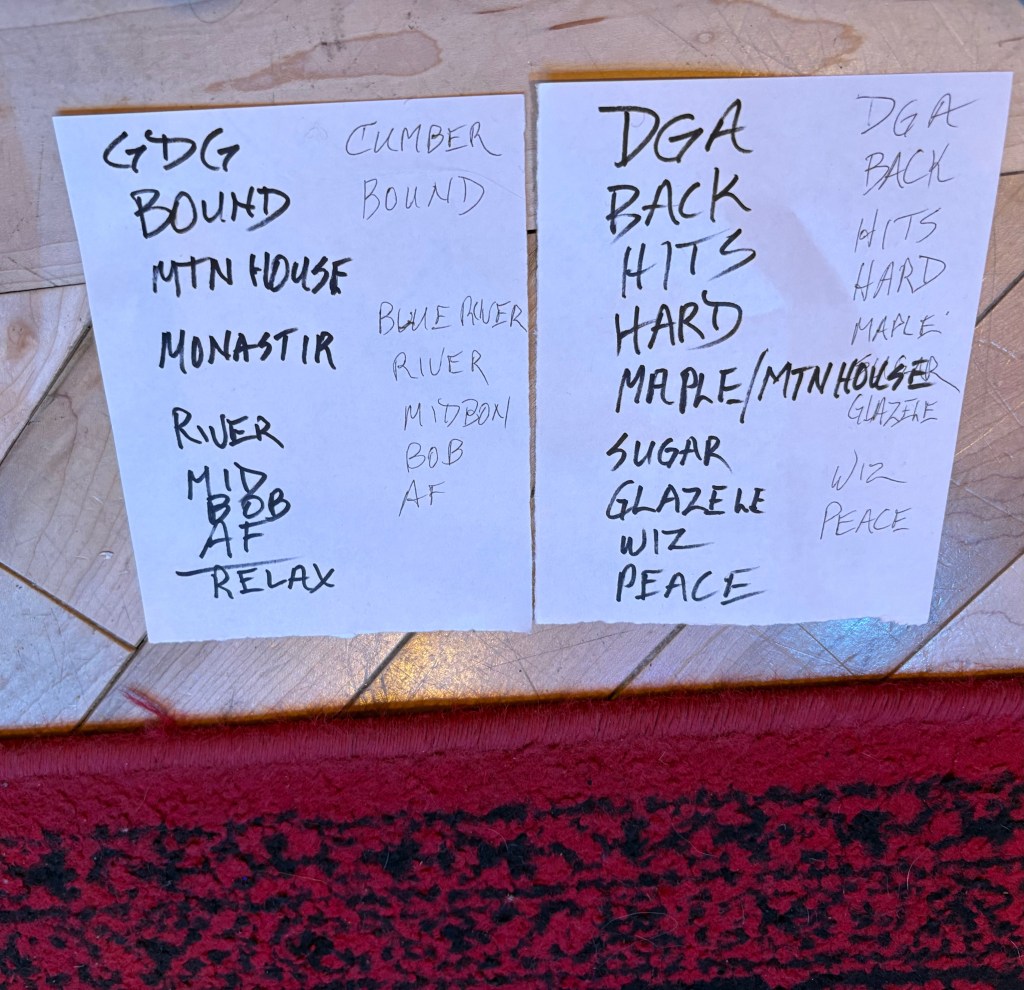
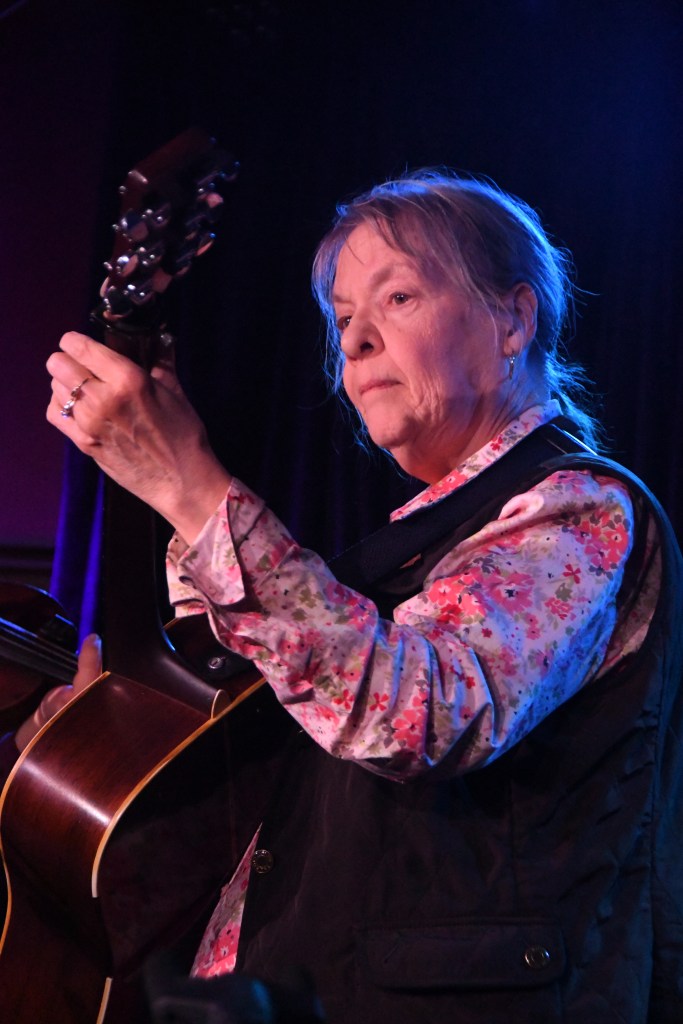
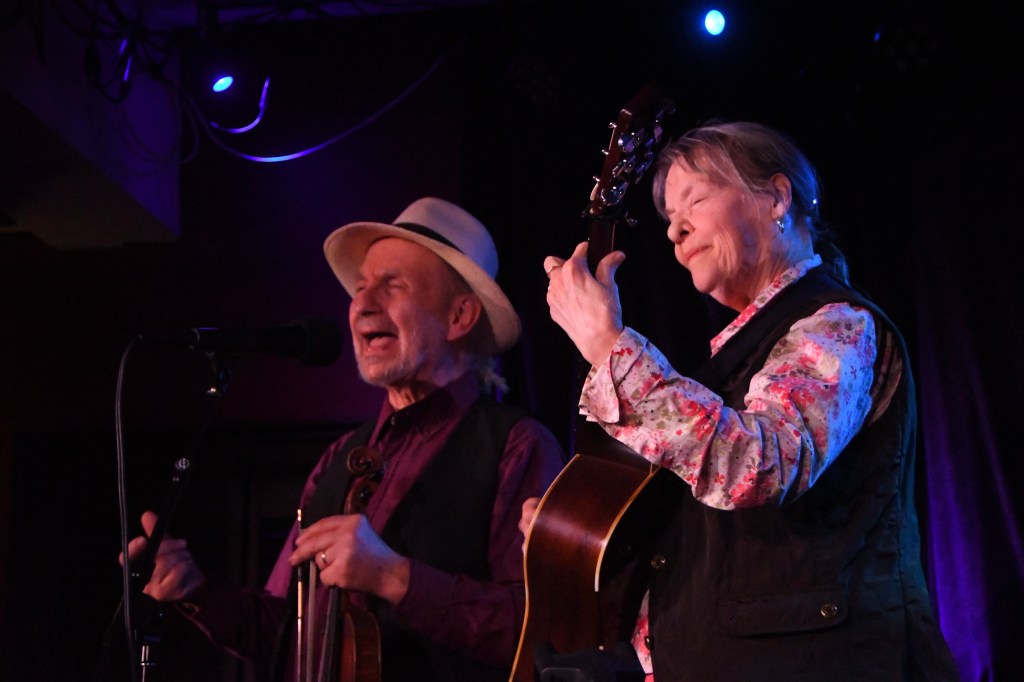
Their dynamic was calm and cozy; their set list more a menu than a map as they periodically paused to discuss what’s next. Mason played solid, simple support to Ungar’s fiddle leads and seldom soloed, switching to piano occasionally and once drawing applause for a flashy glissando. Mostly their music felt like well-aged flannel, smooth and comforting.

 Hoke's Jukebox