

Review: Joy Clark, and Buggy Jive on Friday, March 20 at Caffe Lena
“This is what church is trying to be,” Joy Clark announced Friday at Caffe Lena late in a show full of fervor and aimed at crafting a community. Performing with bass and piano alongside, the young Louisiana singer-songwriter and guitarist looked inward in songs blueprinting the construction of a self while opener Buggy Jive (a self-proclaimed Delmar recluse) looked outward, singing solo and scrambling pop culture elements into a kaleidoscopic brilliant blur.
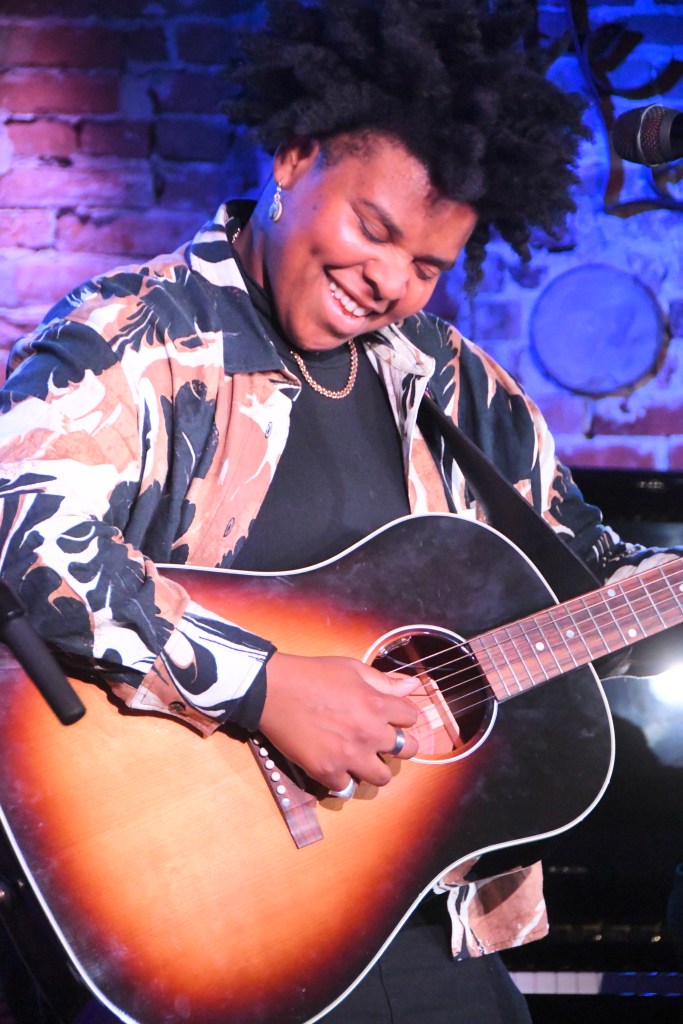
Joy Clark, above; Buggy Jive below
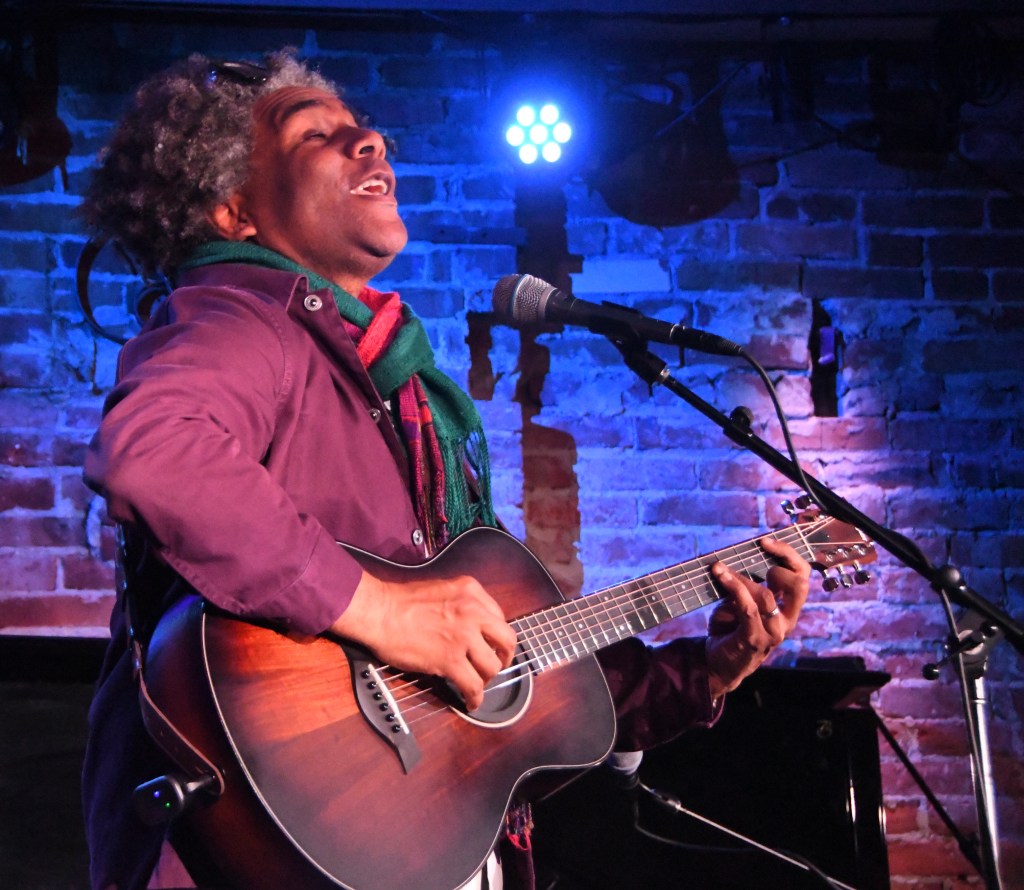
Playing first, Buggy Jive cast a sardonic, skeptical light on religion in “Saving Myself for Sunday,” his complex humor contrasting with Clark’s engaging sincerity to come. “Hurry Up Please It’s Time” called out those who “ruin it for the rest of us” while “She Wants to Party While the World Burns Down” indicted escapism. An engaging soul-ballad sound cloaked this criticism in something kinder, like understanding or forgiveness; it didn’t reduce the sting, but somehow humanized it. In other words – and he sang lots of them, often in rapid rap-like torrents – humor and musical skill made commentary feel entertaining. He invited us all into the jokes.
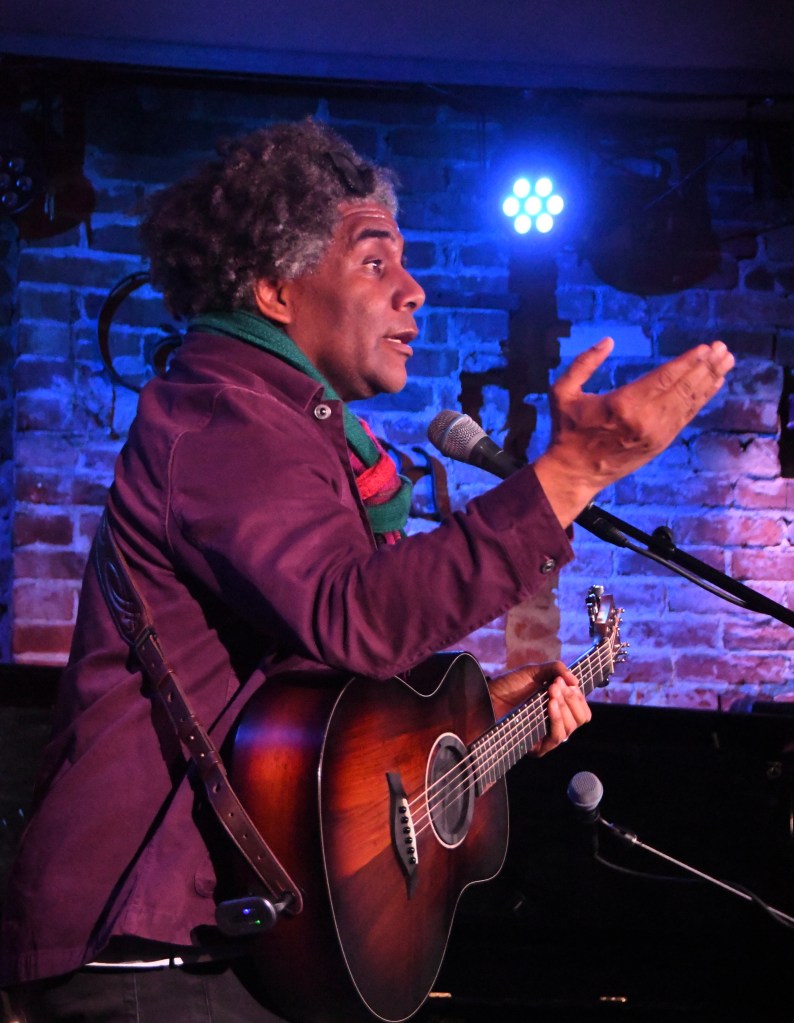
Shaped with thematic ambition, crafted with cleverness, his tunes shuffled restlessly through several episodes each and multiple moods and influences; some Funkadelic riff-crash here, a Joni Mitchell short-story next, then curly echoes of Prince-baroque, and a straight-up Black Sabbath cover over there. At times it felt like stand-up, in a soulful voice, with guitar zip. He found a rhyme for “ephemeral,” looped his falsetto into a chorus and sang over it, like those multi-Buggy Jive videos where he gangs up on a song. He revved to a staccato word-flow, asked quizzically “What Do Y’all Know about Shakespeare?” in picaresque musing about a NYC stage-play pilgrimage, a tale stuffed with inside jokes.
Clark followed Buggy Jive’s one-man uproar with a quiet confidence and the simple moral force of sincerity, the courage of candor.
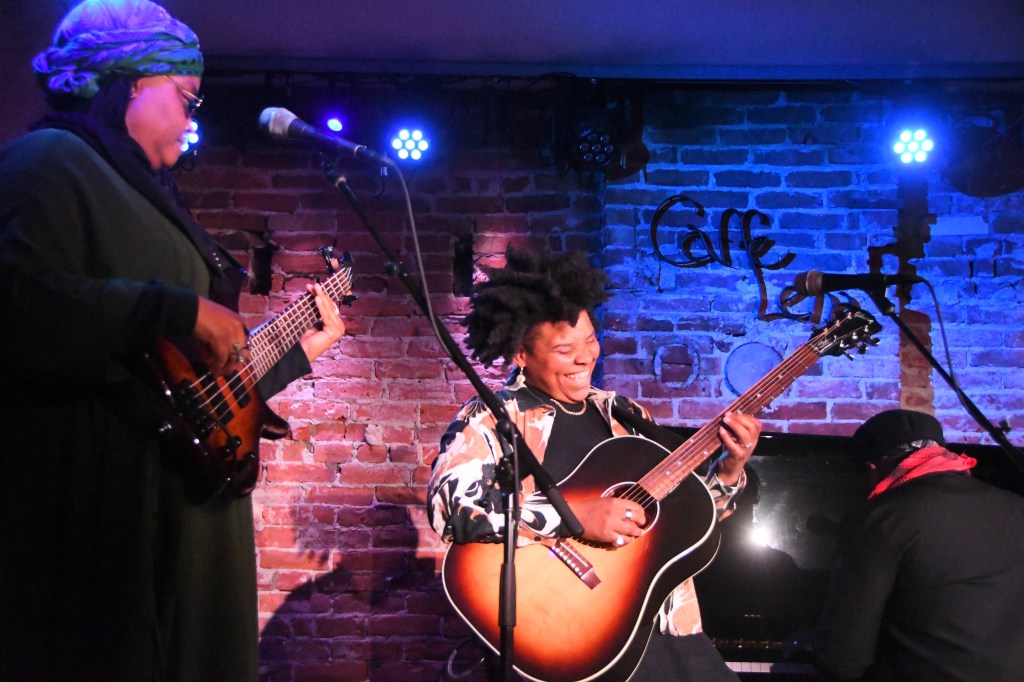
Joy Clark, center; with Tiffany Morris, left, and Jentleman Sharp
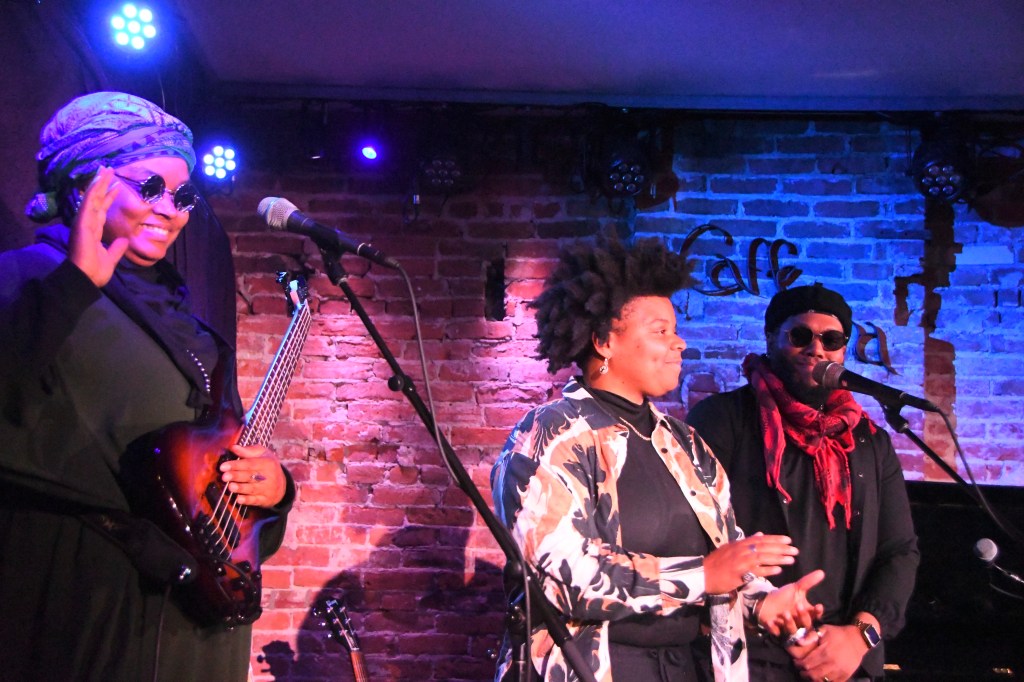
She sang most of her “Tell It To the Wind” album, which she has called “my story of how I learned to shine.” In her opener “Shine,” she sang of the isolation of not seeing herself, or other Black gay women, in a magazine or on a screen. This cultural erasure challenged her to be herself, an original, an assertion that felt more proud than forlorn, especially over Tiffany Morris’s sparse, spry bass lines and piano riffs in the songs’ seams from Jentleman Sharp.
Following with “One Step in the Right Direction,” she gained momentum on a path paved with hope. It also bore bumps, as in the pained break-up lament “All Behind,” her straightforwardly sweet voice going taut with grief. Redemption came through love of the natural world, a mystical and comforting place, in “Tell It to the Wind,” the album’s title track and a sort of rescue mission for feelings. She addressed “Love Yourself” to her 12-year old self, advising her “square peg in a round hole” person-in-the-making while engaging the crowd in a singalong.
She easily brought her sold-out crowd into the music with her, in singalong choruses or in clapping when Morris and Sharp heated up. Clark’s guitar brought fire and fervor in uptempo exhortations, as in the combustible break in “Love Yourself.” Or she cooled into delicate love-song finger-picking giving quieter voice to “Watching You Sleep.” And when she linked voice and strings in “Shimmering” – riffing and skit-singing in harmony with herself – she earned the sparse, slow song’s title; also a singalong.
While she credited making music in the evangelical church for launching her musical quest, she also acknowledged in “Guest” the need to step outside its walls into a different conception of herself, her voice soaring past the confining gravity of convention, expectation.
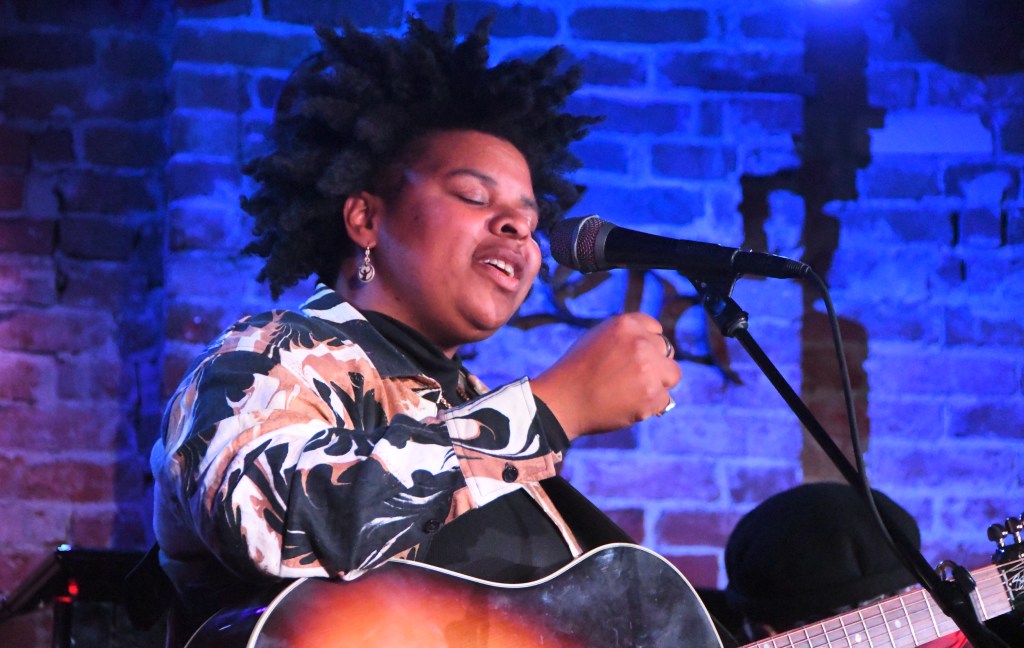
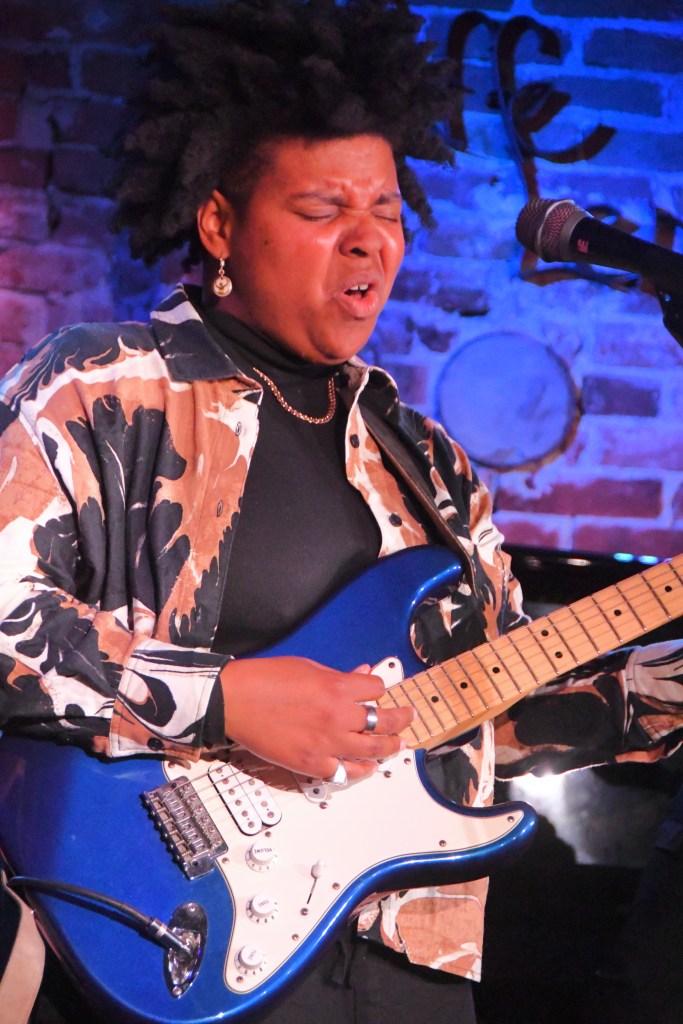
She advocated a “fierce kindness, a rude kindness” to bridge from “Guest” about struggle into “Lesson,” about her nurturing grandmother’s acceptance as a role model, plugging in her electric guitar to syncopate its mid-tempo, gently emphatic message.
Everyone stood as she took off her blue Strat and looked around, happy, then quizzical before strapping her acoustic guitar back on for a stay-there encore of Allen Toussaint’s “Southern Nights.” This joyful salute to a patron saint of New Orleans music showcased Sharp’s only solo in the set for a mood of fond farewell.
At Caffe Lena Friday, Joy Clark and Buggy Jive wrapped a three-night tour; they played New York’s fabled Bitter End the night before.
Friday I shared a front table with Joseph and Luann Conlon, sponsors of the Caffe’s Momentum Series in honor of Thom O’Neil. Their Bright Series presents Andrea von Kampen tonight, and their Peak Jazz Series presents singer Allison Russell next Saturday.
 Hoke's Jukebox