Preview: YOU GOT GOLD: A Celebration of John Prine at the 8th Step at Proctors on Friday, Feb. 27, 2026

We’d still revere John Prine as a songwriting immortal even if he’d only left us “Hello In There,” “Sam Stone” and “Angel From Montgomery.” Just ask Bonnie Raitt or Bob Dylan, just two of many artists who sing his songs. And we’d still curse COVID, even if he were its only casualty.

The Eighth Step honors Prine at Proctors GE Theatre on Friday, Feb. 17 with a film showing and panel discussion. The film – “You Got Gold: A Celebration of John Prine” – shows us a memorial concert on what would have been Prine’s 76th birthday, October 10, 2022 at the Ryman Auditorium in Nashville, the last place Prine called home.

It shows fellow troubadours mourning their friend by singing his songs and recalling him in backstage conversations, including veterans Bonnie Raitt, Lucinda Williams, Bob Weir, Lyle Lovett, Dwight Yoakam and Steve Earle. It also shows the deep respect of younger musicians, including Brandi Carlyle, Tyler Childers, Jason Isbell, the Milk Carton Kids, Kacey Musgraves and more.

Prine’s widow Fiona Whalen Prine produced the film; Michael John Warren directed; and it’s  trailer promises it will be far too much fun to feel as sad as Prine’s death deserves. 

After the 90-minute film, area folk music stalwarts will talk about Prine and the Chicago scene where he transformed himself from mailman who’d hide out in blue sidewalk relay boxes to write songs into a star onstage and on record. Wanda Fischer of the Hudson River Sampler on WAMC, Eighth Step impresario Margie Rosenkranz and troubadour Anne Hills – who came up in the same Chicago clubs and festivals as Prine – will speak of Prine onstage while others will contribute by video.

While the film looks forward by demonstrating the permanent power of his songs, a backward scan across his life and career tells a remarkable story. 

Born near Chicago, Prine adopted the Kentucky homeland of his parents and grandparents as his musical origin point/inspiration. He served in the Army, with stints as mailman before and after, and was discovered by fellow songwriter Kris Kristofferson, then by Atlantic Records chief Jerry Wexler. This launched a sporadic but universally respected output of albums and tours.

Cancer beat up his always-rough voice, but also amplified the emotional power of his songs.

How damn cruel was the fate that he survived cancer only to die of COVID.

In 2009, Bob Dylan told Huffington Post that “Prine’s stuff is pure Proustian existentialism; midwestern mindtrips to the Nth degree. And he writes beautiful songs.” Dylan, who knows about such things, cited “Lake Marie” as his favorite Prine song.

“Lake Marie” is on Prine’s 1996 album “Lost Dogs + Mixed Blessings.” It appeared 25 years after his self-titled debut that earned his first Grammy nomination with powerfully poignant, casually insightful folk-rock numbers “Paradise,” “Angel from Montgomery,” “Illegal Smile,” “Hello in There” and “Sam Stone.” 

Prine’s press-kit bio touts his four Grammy wins plus a Lifetime Achievement award, three Artist of the Year wins at the Americana Music Honors and Awards, which also added another  Lifetime Achievement Award, for Songwriting. Prine also won the PEN/New England Song Lyrics of Literary Excellence Award (2016), joined the Songwriters Hall of Fame (2019) and was named Honorary Poet Laureate of Illinois (2020).

Since Prine’s death, his family created The Hello in There Foundation to honor his spirit of generously helping many in need. Fiona Prine and their sons also manage Prine’s song catalog, most tunes available through his independent record label, Oh Boy Records.
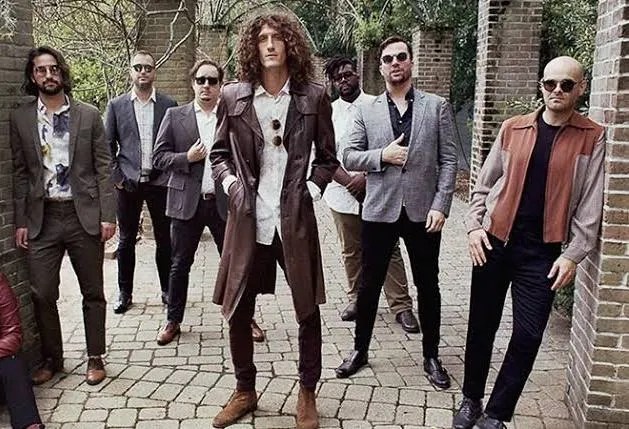
PRIME PRINE

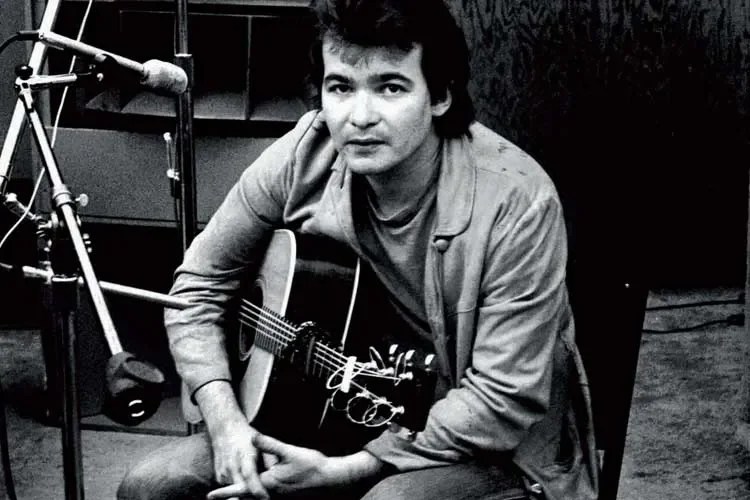
A young John Prine in the studio. Photo provided

Life-size statues of Prine – and his fellow Kentuckians the Everly Brothers – stand in Central City, Kentucky (Muhlenberg County, title of a Prine song). T-shirts, camp flags, collected singles, coffee mugs and, best and most essential of all, 20 albums, are available at https://www.johnprine.com/.

His albums span his self-named 1971 debut to “I Remember Everything” (2020, the year he died) and include “The Best of John Prine” (1976).

Numerous books tell his story or explain his songs:

John Prine: In Spite of Himself June 2017 Eddie Huffman

Join Prine Beyond Words June 2017 (Explanations of songs) 

Prine on Prine: Interviews and Encounters with John Prine Sept. 2023 Holly Gleason 

Living in the Present with John Prine Sept. 2025 Tom Piazza (Piazza appeared at the Saratoga Book Festival to discuss this book in October.)

John Prine – Guitar Songbook (15 songs transcribed for guitar)

“John Prine live from Sessions at west 54th” (2001) collects live performances of 13 songs on DVD; Prine sings onstage with multi-instrumentalist Jason Wilbur, bassist Dave Jacques and singer Irish Dement, a frequent duet partner. 

Prine performed on Austin City Limits eight times and he received the long-running PBS show’s Annual Hall of Fame Honors in 2024.

He played here many times, including with his rocking Lost Dogs Band at Troy Savings Bank Music Hall on Sept. 22, 1995 with Delevantes. Onstage at the fragile non-smoking Hall, he lamented “I’m dying for a cigarette.” He also played The Egg in 2009 and Albany’s Palace Theatre in 2012 and 2017.

After he played The Egg (Nov. 7, 2009), I reported in the Gazette: “Looking more and more grandfatherly himself, like actor Oskar Homolka portraying a commissar in a dark slab of a suit, with thinning hair, widening everything else and lumpy features, Prine proved himself a consummate carpenter of song, nailing each one.

He spoke of making up ‘Souvenirs’ in the car enroute to an early gig, noting a few songs later that ‘Fish and Whistle’ almost never got written at all and that this could be said of most of his compositions, due to laziness. Maybe so, short term; but cumulatively, Prine is some kind of genius, hammering songs together of simple materials but achieving a monumental permanence.”

Before his 2017 show with Margo Price, I wrote: “Check ‘durability’ in the dictionary, you’ll find Prine’s photo. Recording since 1971, he’s influenced/scared every songwriter in sight: Kris Kristofferson threatened, “He’s so good, we’re gonna have to break his fingers,” and Dylan said, “Nobody but Prine could write like that.” Johnny Cash put Prine in his ‘big four’ with Rodney Crowell, Guy Clark and Steve Goodman, and Roger Waters (Pink Floyd) ranks him with Neil Young and John Lennon. He’s beaten cancer, twice, and keeps writing and singing.”

On Friday, the Eighth Step at Proctors GE Theatre presents “You Got Gold: A Celebration of John Prine.” 7 p.m. $25 plus Proctors box office fees. 518-434-1703.

Fire and Funk; Vanessa Collier at Caffe Lena on Wednesday, February 11, 2026

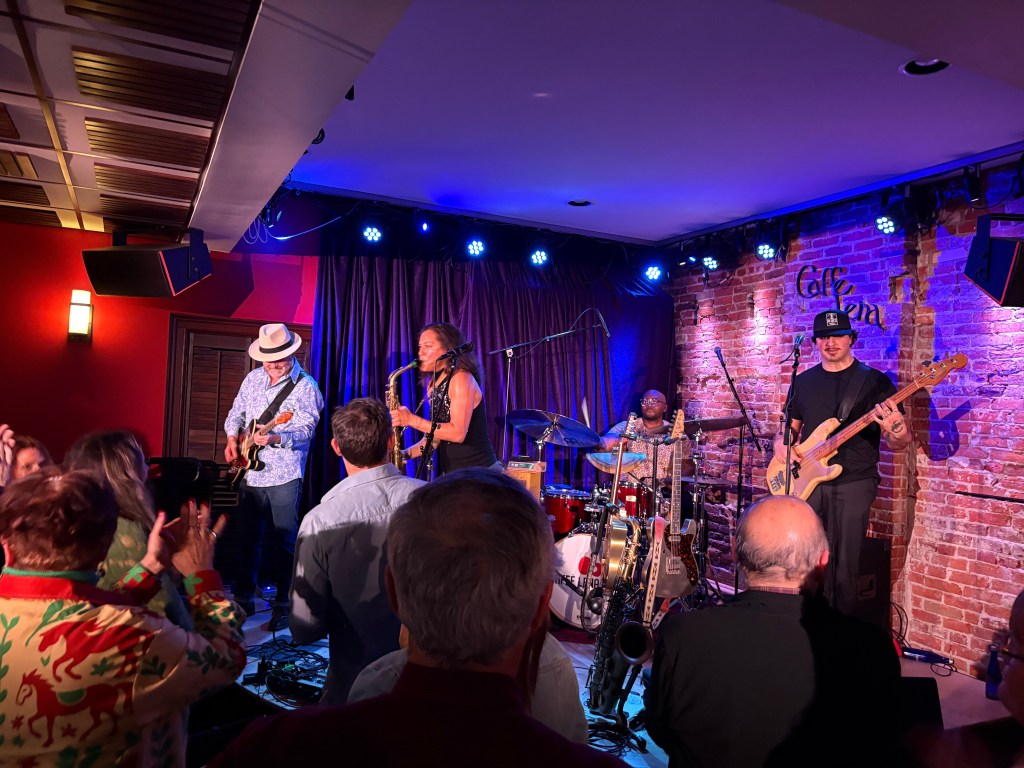
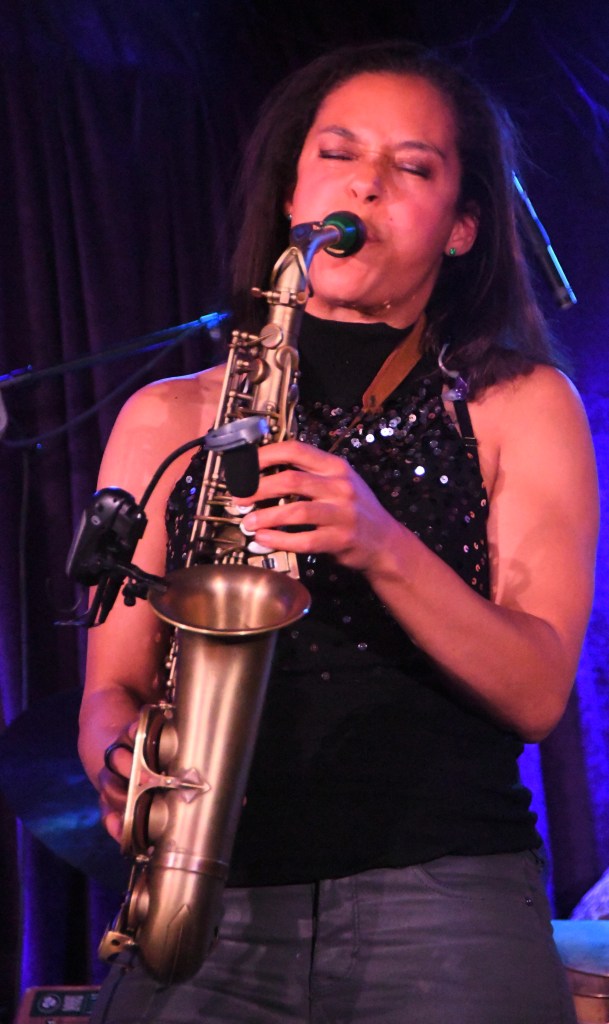
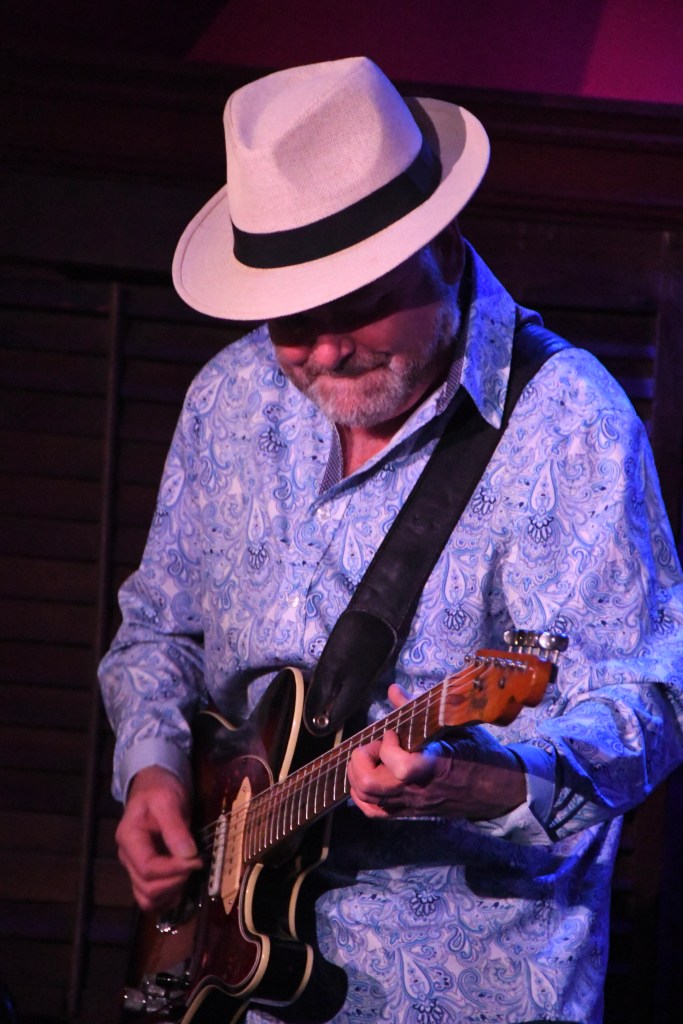
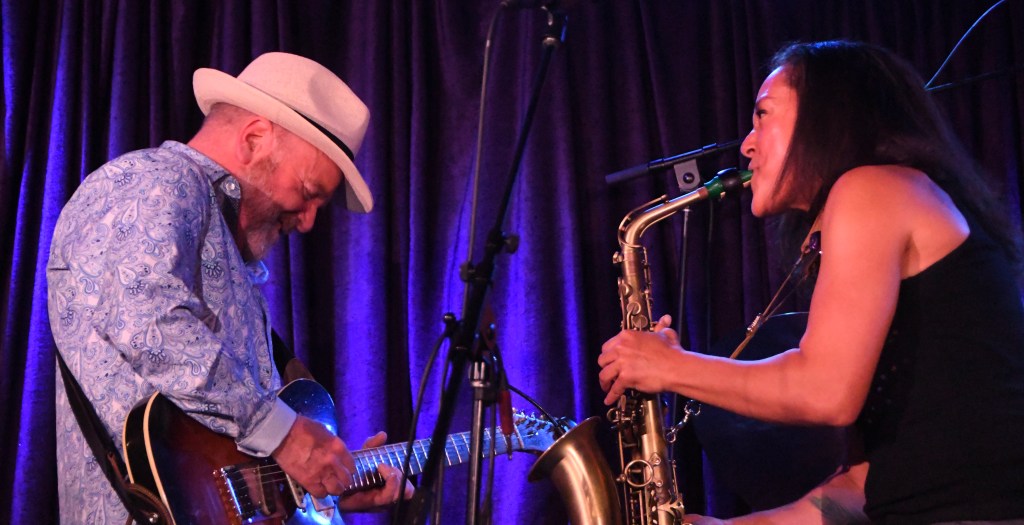
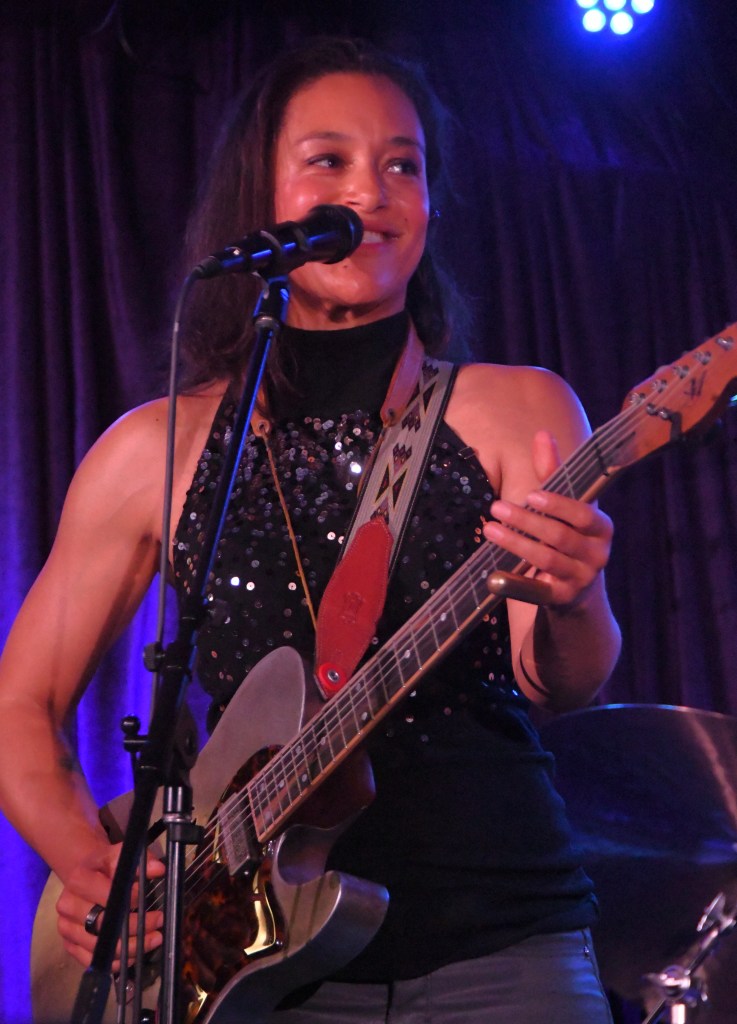
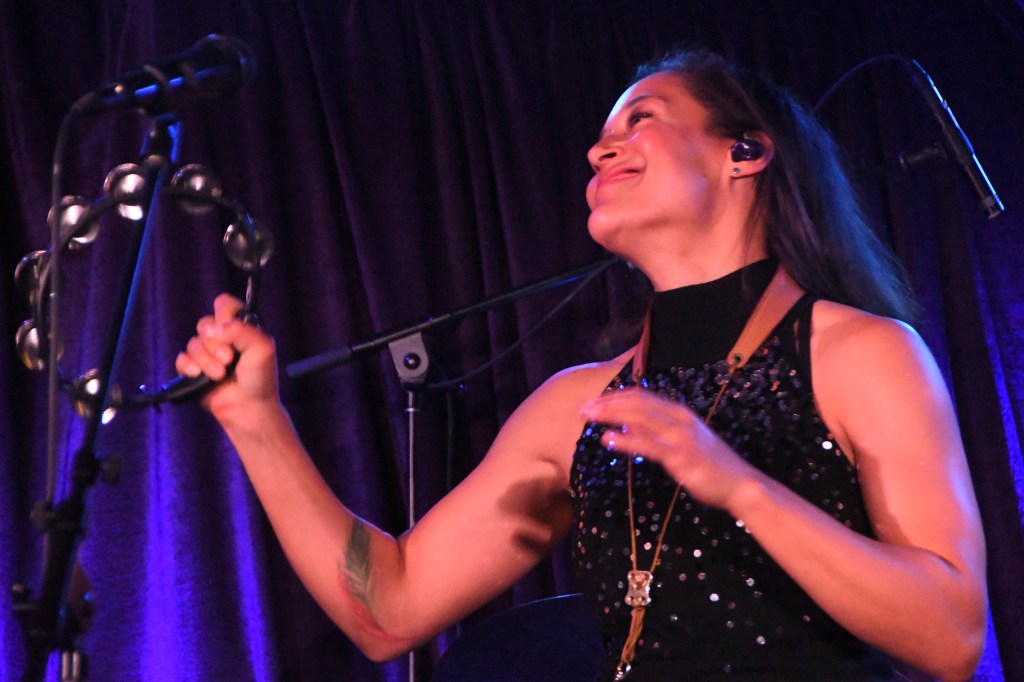
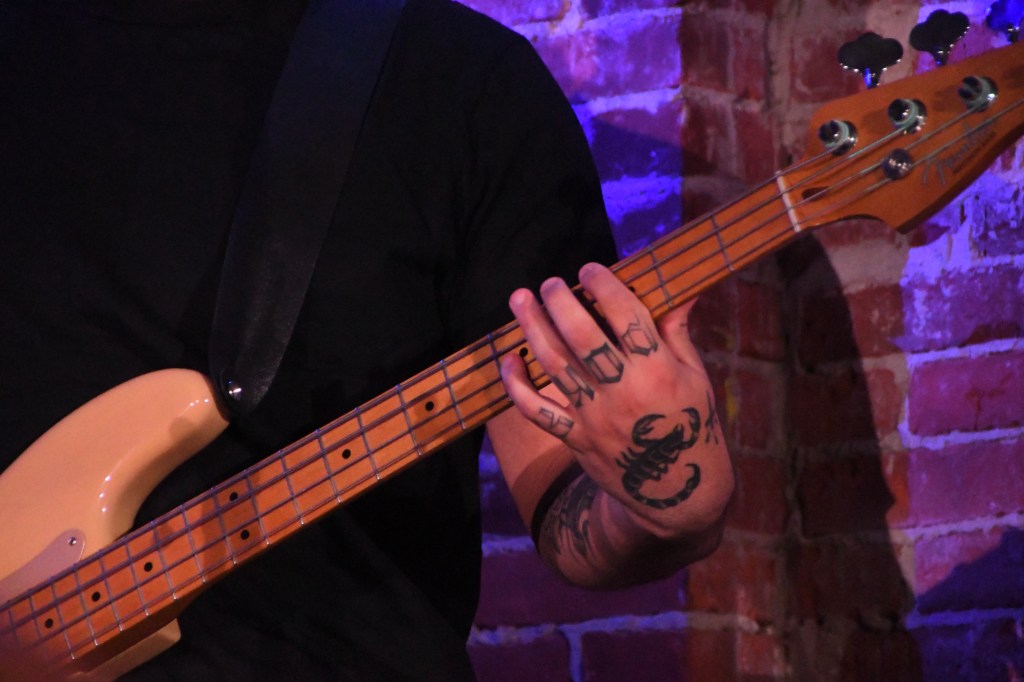
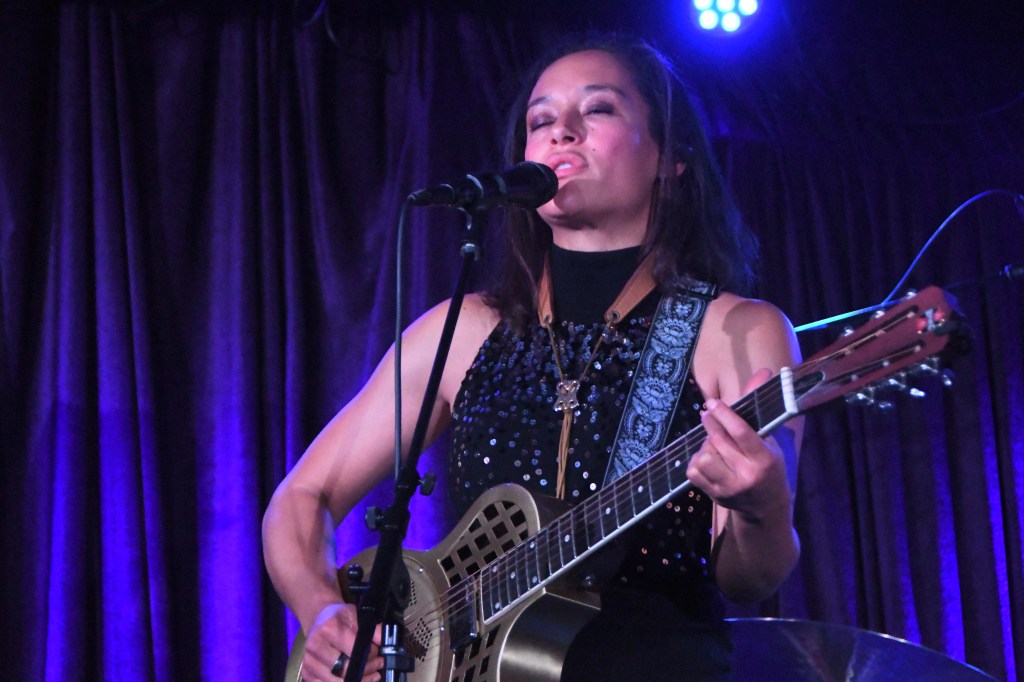
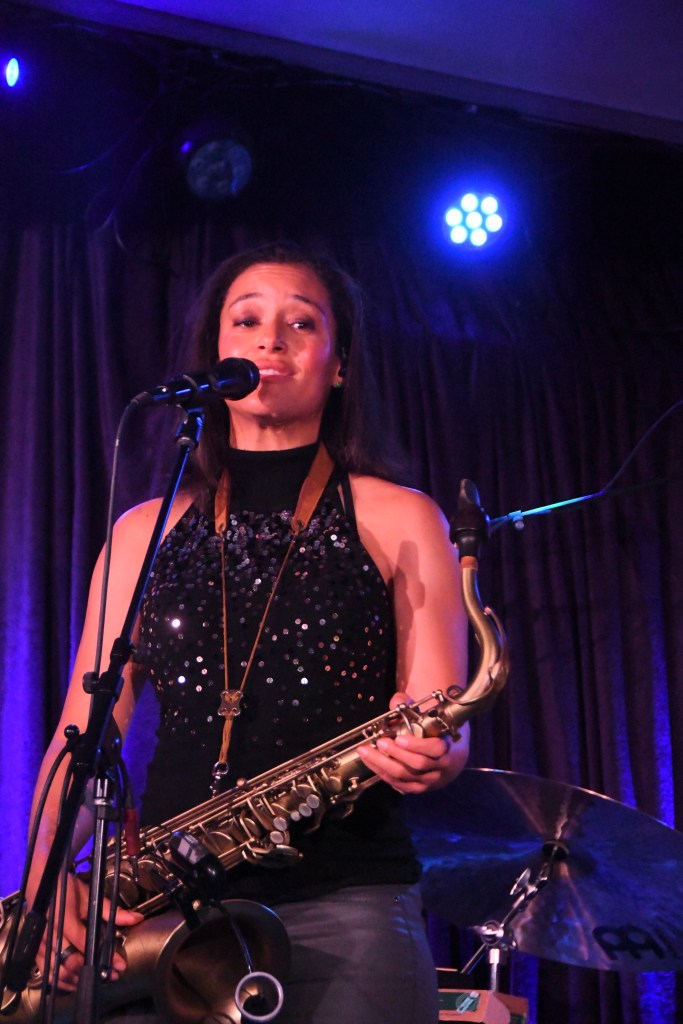
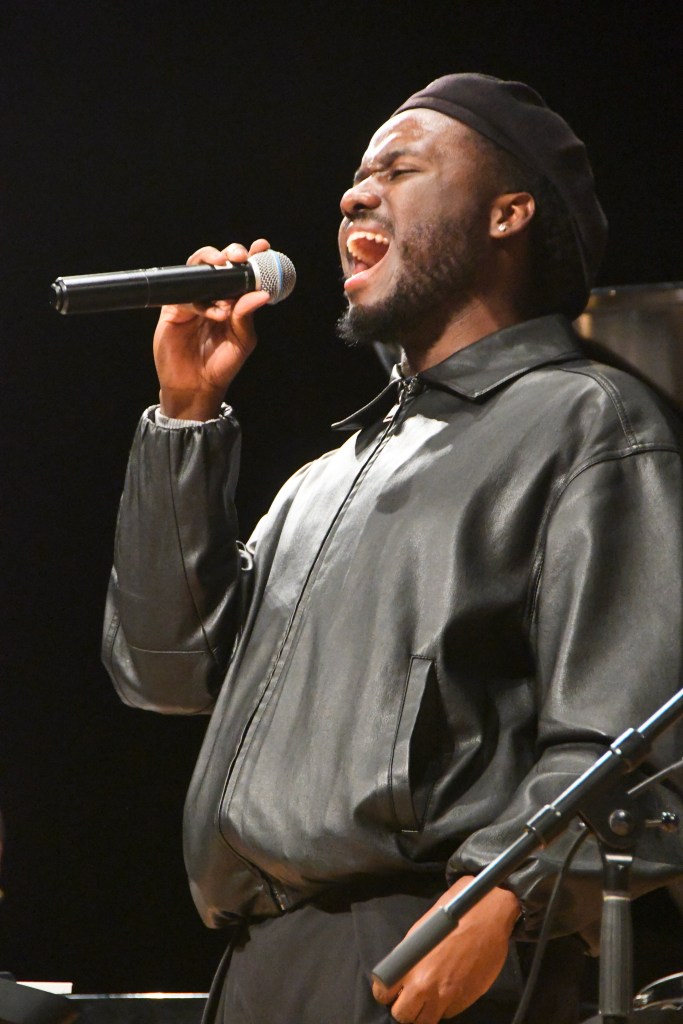
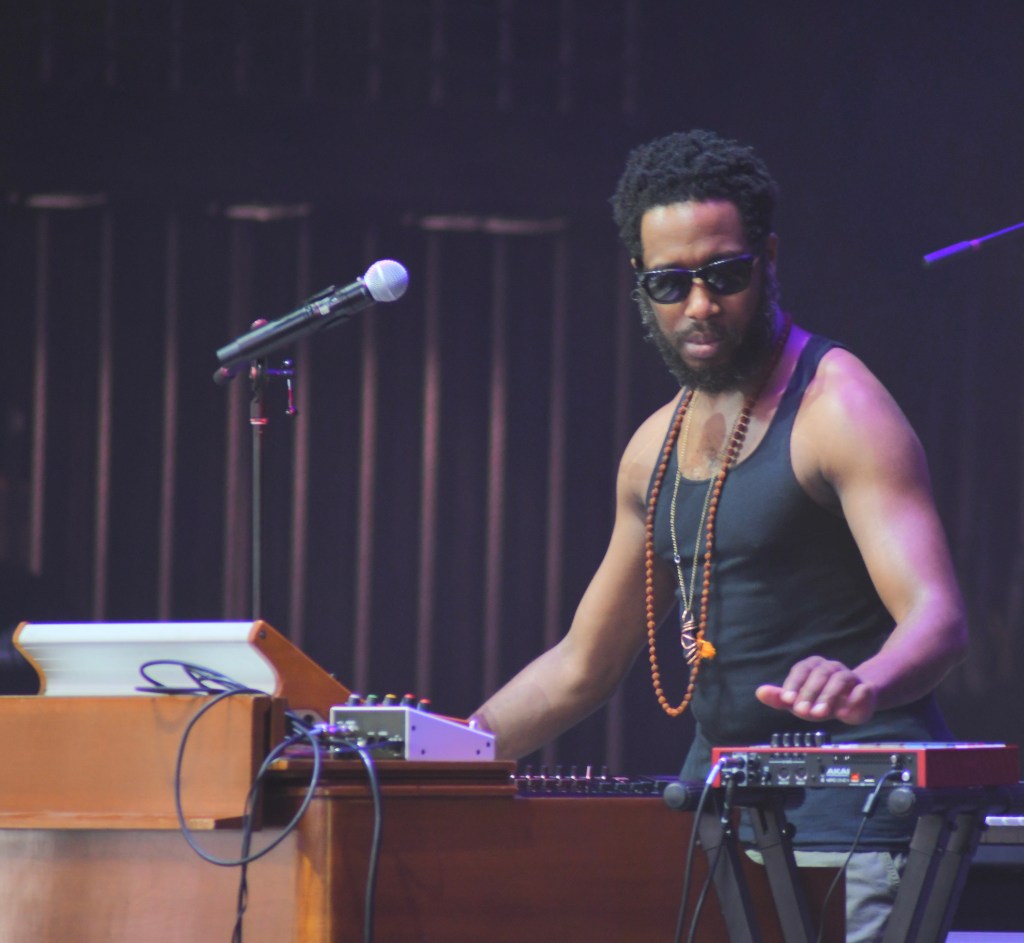
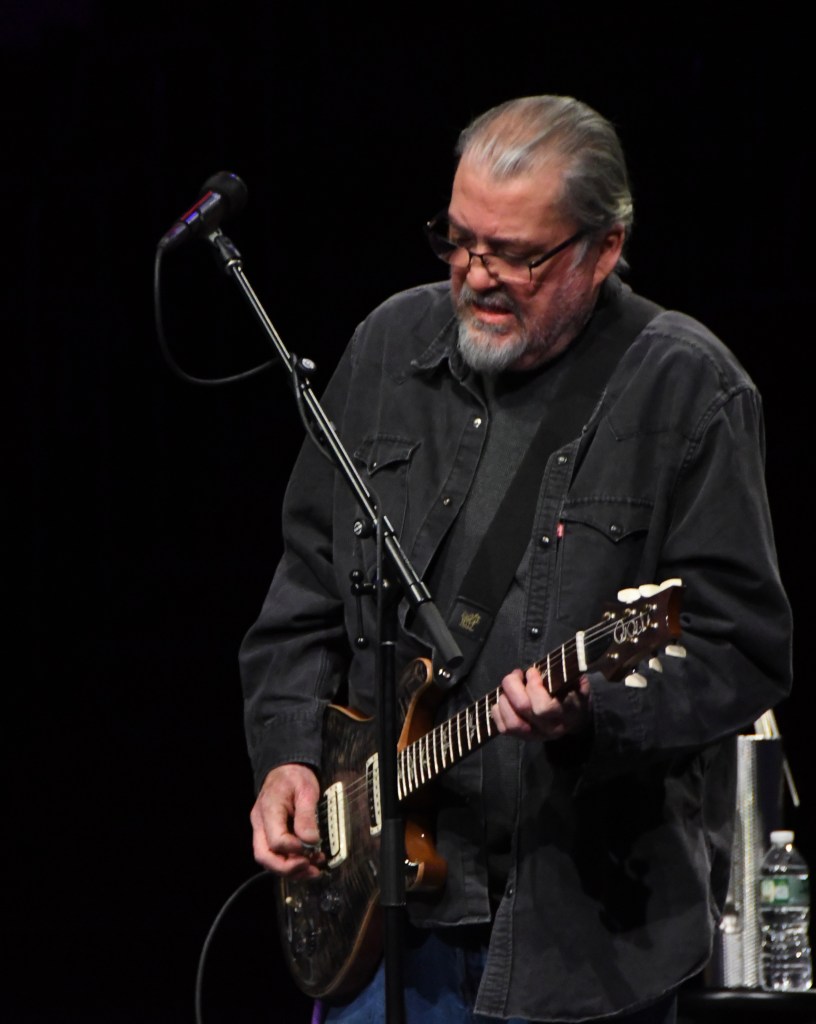
Vanessa Collier unpacked the whole kit Wednesday at Caffe Lena: alto and tenor saxophones, guitar and dobro. Non-hardware items completed a most impressive package: soul-deep command of fire and funk in her soaring or simmering voice, from-the-heart songwriting skills, a discerning ear for cover tunes, and a compact band. Scorching at hot tempos, slow-cooking in R&B ballads and highly interactive, the quartet co-starred guitarist Mighty Mike Schermer, seen on the same stage previously with Maria Muldaur and Marcia Ball. Turning up the heat, spicing with soul sauce, they barbecued the place.
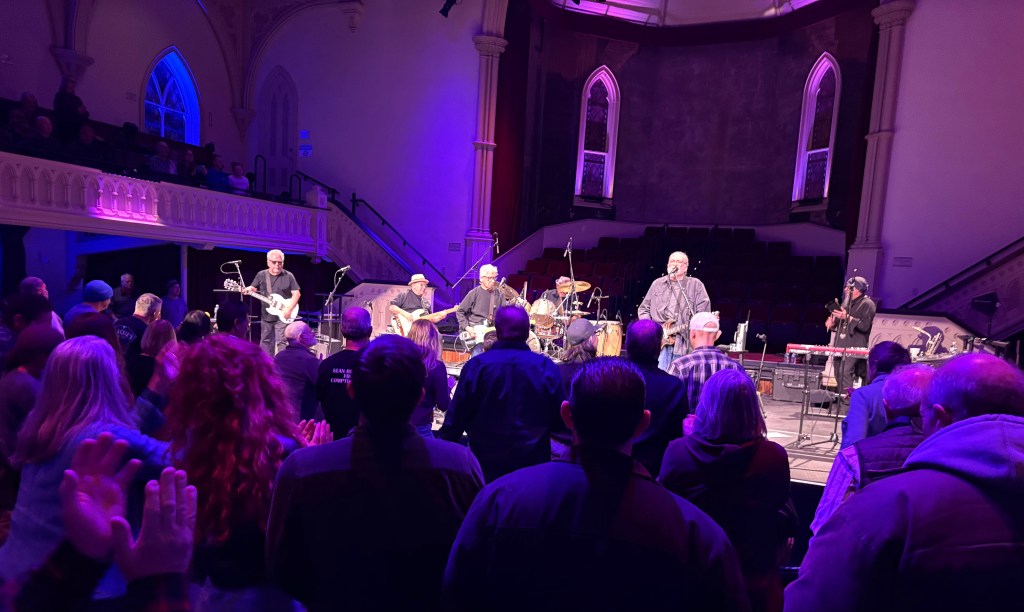
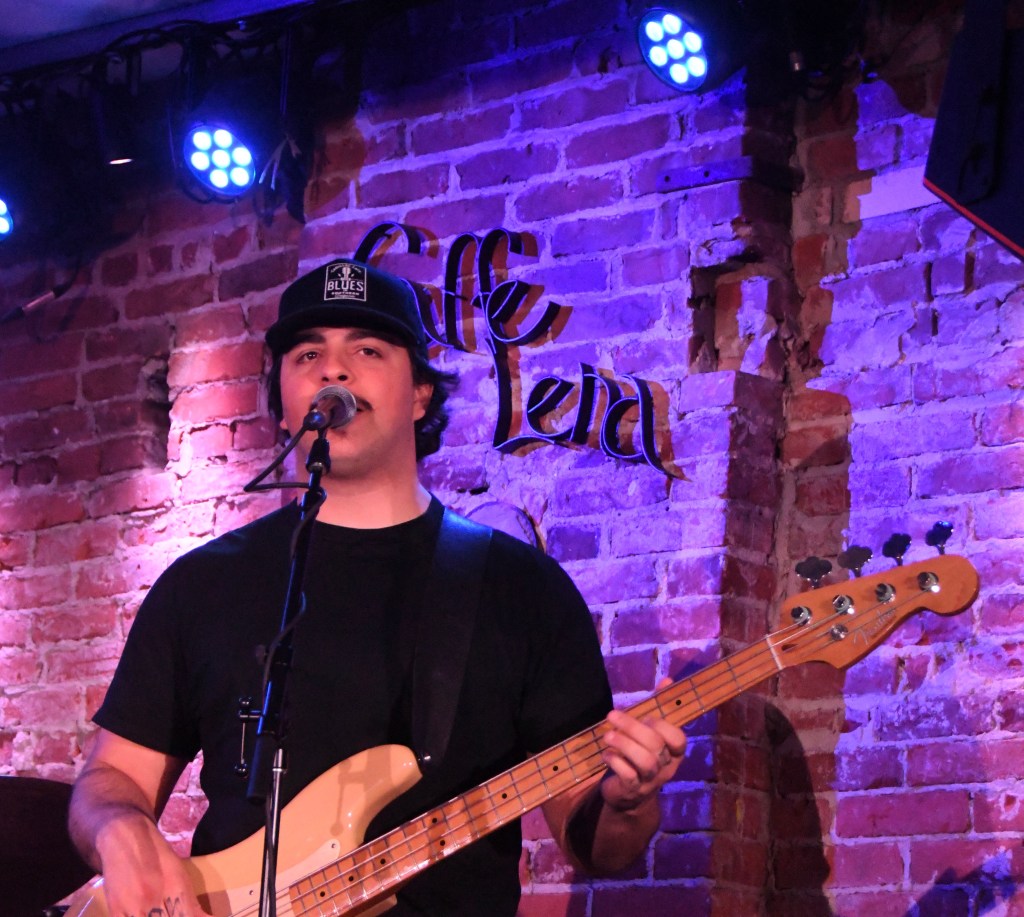
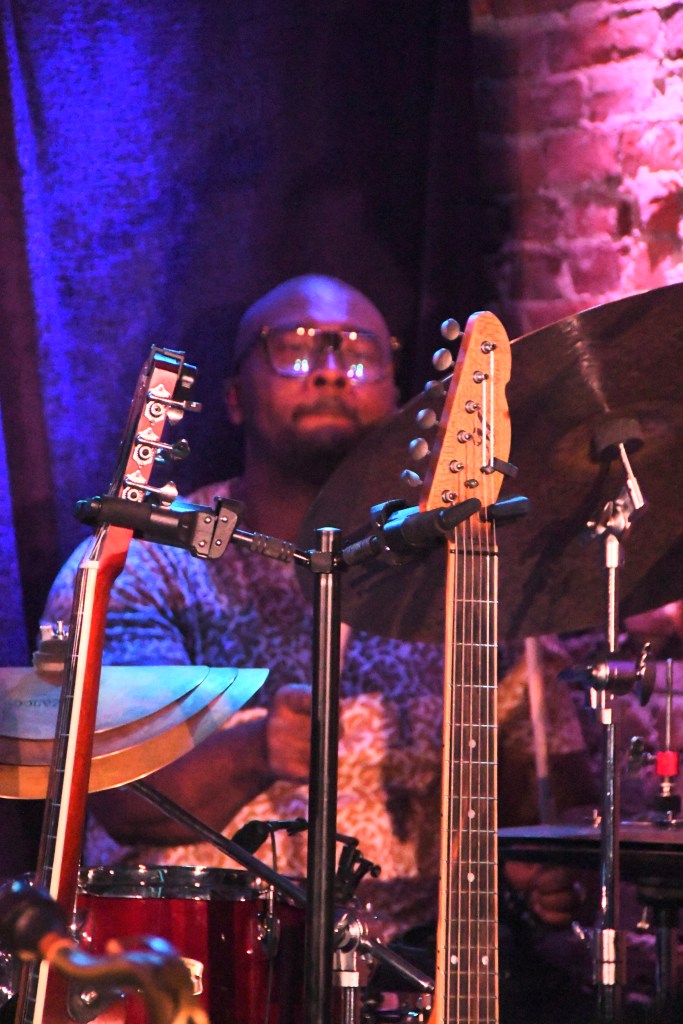
Vanessa Collier and band. from left: guitarist Mighty Mike Schermer, saxophonist Vanessa Collier, drummer Byron Cage and bassist Justice Guevara

When a late-coming couple threaded through to a front table, a fan called, “Now, it’s sold out!” The packed room had that happily jammed feeling of something shared and cool happening. 

The vigorous blues shuffle “Whiskey and Women” set the pace, Collier singing first, then scrambling all over her alto sax, notes fluttering fast, before stepping back as Schermer took the lead; then they played in harmony, intuitive and tight.

Those two held eyes and ears with such confident easy, unified musical force that we could almost take for granted workmanlike drummer Byron Cage and bassist Justice Guevara, toiling solidly away on muscular beats. Almost.

Schermer’s guitar set a menacing mood in the slower “Take Me Back,” its groove pushed hard when Collier clapped double-time between vocal and alto fire; then Schermer wrapped things up with a serene echo of his agitated intro.

“Can’t Stand the Rain” flowed at a similar tempo, full emotional force at first, then simmering down as Guevara sang harmony with Collier. This Memphis soul classic felt conversational all the way as Collier’s alto chatted up Schermer’s guitar. She played a riff, he played back “Yeah, that’s right!” Then his new riff commented “What about this?” – and she answered.

Backstage afterward as he poured a beer, Schermer told me he still felt somewhat new to the gig, but his musical dialogs with Collier sparkled all night, altering his phrasing and tone to follow, to lead, to embellish or glide away when she soared alone.

Collier said she loved playing the Caffe, seeing it filled with fans “packed in like sardines,” and explained how she found the saxophone, as a precocious introvert at age nine, to express emotion as her second voice.

This set up “What Makes You Beautiful,” written for her younger sisters to teach the strength she found to overcome self-doubt. She shifted to tenor for this mid-slow shuffle, using bluesy jazz phrasing to show self-pride emerging from insecurity as it simmered, then built.

Similar tempo shifts pushed the buoyant “Bloodhound” as Collier played slinky slide guitar through fast runs while Schermer comped soul chords behind her. Her alto stuttered and fluttered through a syncopated solo and she closed by urging everyone to howl.

While “Sweatin’ Like a Pig, Singin’ Like an Angel” might serve as mission statement, Collier seemed unruffled and unsweaty throughout. If touring with blues hero Joe Louis Walker taught her outgoing, confident command, she was candid and confiding as a songwriter, going romantically wistful late in her seamless 90-minute set.

“When Love Comes to Town” had a fresh, episodic feel, a slow soul-funk groove with stop-and-go story-telling drama, a wordless vocal chorus and circular alto riffs generating compelling centrifugal force.

The torchy “Just One More” felt more direct and cozy, a candle-lit tango with Schermer supportive in clipped phrases among the seams of Collier’s alto runs until he claimed the spotlight with high squeals and cyclic repeats.

Collier shifted to dobro in “When It Don’t Come Easy,” a pandemic-inspired anthemic call to strength and resilience. It flowed on stop-and-go funk beats with harmony vocals by Cage and Guevara, Schermer’s racing strums, wordless vocals at the coda.

She revved big on “Do It My Own Way,” clapping fast and counting off “One, two, ELEVEN!” to launch a Southern-fried James Brown tribute. She cited Brown’s saxophonist Maceo Parker among her inspirations, but Schermer’s relentless Jimmy Nolen-style rhythm chops helped carry things. The simple phrasing of Guevara’s bass clearly emerged as propulsive riff power here, funky as Bootsy Collins or Larry Graham and locked with Cage’s drums.

They left the stage to general tumult, which Cage answered alone by taking the stage to erupt a happy drum solo clatter that drew the band back on. And, of course, Collier took everyone to New Orleans with “Bad News Bears,” a sizzling vamp under solos by everyone including Guevara, his only instrumental break all night.

When the riff storm slowed and everybody else laid out near the end of this “Bears” encore, Collier’s alto continued, alone and eloquent, fluttering around the melody and taking it home.

Caffe Lena shows this weekend: Lucy Wainwright Roche tonight (daughter of Loudon Wainwright III and Suzzy Roche of the Roches), old-style banjoist Carolyn Shapiro Friday, the New Orleans-style brass band Soggy Po’ Boys Saturday – sold out, sorry – and Rev. Robert Jones, a keeper of the acoustic blues flame on Sunday.

Preview: Vasen at Universal Preservation Hall on Thursday, Feb. 12, 2026

What ARE those men playing?

Vasen plays in Proctors Passport Series Thursday at Universal Preservation Hall. These two Swedish musicians span the centuries since their strange-looking instruments were devised, but they sail on timeless melodic flow and intricate string-band kick.

Ears and eyes might report very different descriptions.

Ears might answer that question above by noting the two men are playing a cozy, folkish string-band music, a bit astringent in its Scandinavian simplicity, but rich in feeling and telepathically close in the hands of a duo formed in 1980.

Eyes offer a different answer. 

Mikael Marin

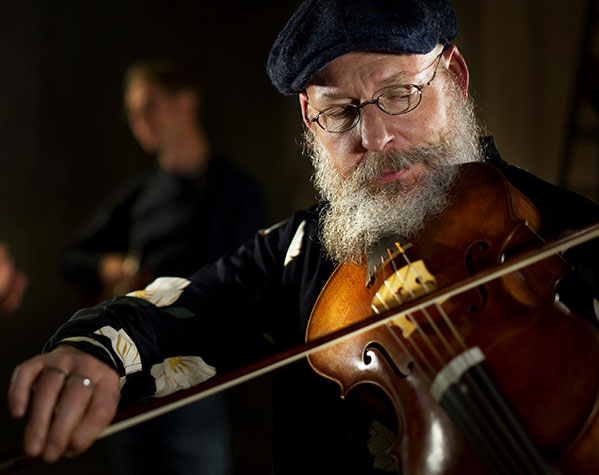
Mikael Marin (beard) plays violoncello da spalla, “cello of the shoulder.” He clasps it under his chin and it stretches along his arm. It looks like a burly hybrid somewhere between a viola and a cello, but it has five strings to a cello’s four. He plucks bass lines on it with his fingers, or bows it to make melodies. 

Olov Johansson

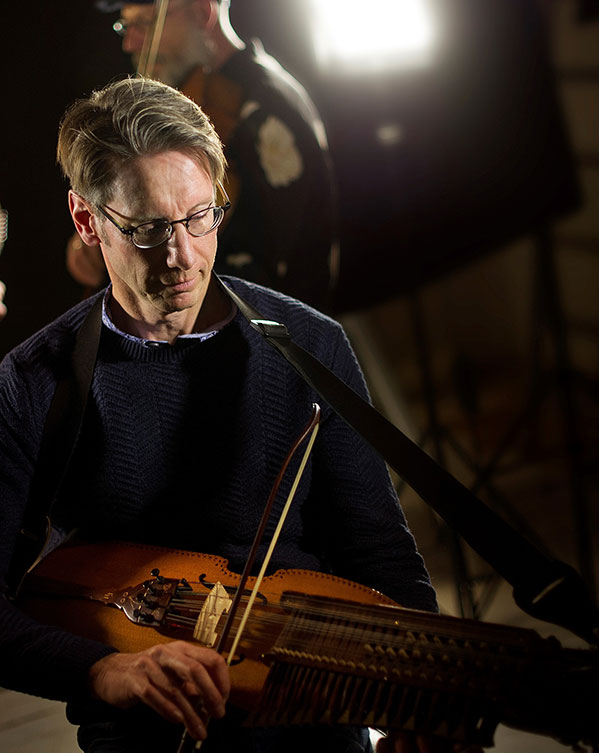
And if you think that looks strange, check out Olov Johansson (no beard) who bows what looks like a violin that got all ripped at the gym, then blundered into a woodworking shop where beefy structures were hammered onto the bottom. It sits across his knees, like Jerry Douglas holds a dobro, and its complex hardware transforms its sound the way chord bars of an autoharp expand the look and language of a zither. This 14th century contraption is the Nyckelharpa, a keyed fiddle with three melody strings whose pitch changes as keys, in three rows across the bottom, raise and lower wooden pins against them from underneath, a bit like a pedal steel, There’s also a drone and a dozen strings that never get plucked or bowed but vibrate in the air currents of the melody strings.

If all that weren’t instrument-nerdy enough, complex configuration of the nyckelharpa allows it to make chromatic music, which takes its name from “chroma,” or color. Wikipedia tells us chromatic music uses all 12 notes within an octave, arranged in half-steps, rather than the seven notes of the diatonic scale. This enables a more detailed sonic nuance.

If you got all that, somebody from the Royal Swedish Academy of Music in a dark suit will knock on your door to present a gilt-edged certificate of Advanced Musical Curiosity and Openness.

Of course, any fan who faithfully follows Proctors Passport Series or its presenting partner Music Haven would likely qualify. As its Presenting Artistic Director Mona Golub likes to put it, the Passport Series is how she presents music from around the world “between the summers.” 

Vasen has released 19 studio albums since 1985; their newest is “Vagor,” Swedish for waves, and water is a theme throughout. It’s no surprise, considering that water comprises most of the 1,112 air miles from Stockholm (Sweden) to Dublin (Ireland), that Vasen’s music sounds somewhat Celtic. That’s just about exactly the distance from New Orleans to Saratoga Springs, but that won’t prevent the Soggy Po’Boys from making Mardi Gras magic at Caffe Lena in a sold out show on Valentine’s night. But I digress.

“It’s the melodies,” answered the late, great Paddy Maloney of the Chieftains when I asked him to explain the appeal of Irish music. Vasen does that, too. If Paddy were here to hear Vasen, he’d likely nod, grin and grab a tinwhistle.

They play in Ireland, a lot. Nicki French Davis reported in the Irish Examiner on a 2012 show at Bantry House in County Cork this way. “The second half of the concert featured Sweden’s Väsen, who showed why they are regular headliners at folk festivals worldwide. Featuring the extraordinary nyckelharpa, Väsen have taken old Swedish polskas and turbo-charged them, and their own compositions are lively adventures full of humour and surprises.

“The trio’s arrangements are incredible, full of counter-melodies, rhythmic tricks and spicy harmonies. The highlight was an unexpected, almost jazz-rock improvisation played with gusto.”

When they crossed the Atlantic to play the 2013 Celtic Colours festival on Cape Breton Island, Kate Molleson reported in The Herald, “They write gorgeous tunes and deliver them with a spry step, airtight ensemble and bittersweet lyricism that gets deep under your skin. They’ve lost none of their daft banter, none of their warm and raucous rapport. A hearty cheer went up when they ambled on stage at the Mitchell: they’re Celtic Connections favourites and for obvious reason.”

Vasen has played with Nashville acoustic folk-country instrumental masters Mike Marshall and Darol Anger, earning “Showcase Artist” honors at the World Music Expo in Seville.

Thursday, Vasen plays Universal Preservation Hall (25 Washington St., Saratoga Springs). 7:30 p.m. $34.51 518-346-6204. www.proctors.org 

ROAD TRIP To Northampton

Review: Bobby Rush at the Iron Horse, Northampton. Mass. on Feb. 4, 2026

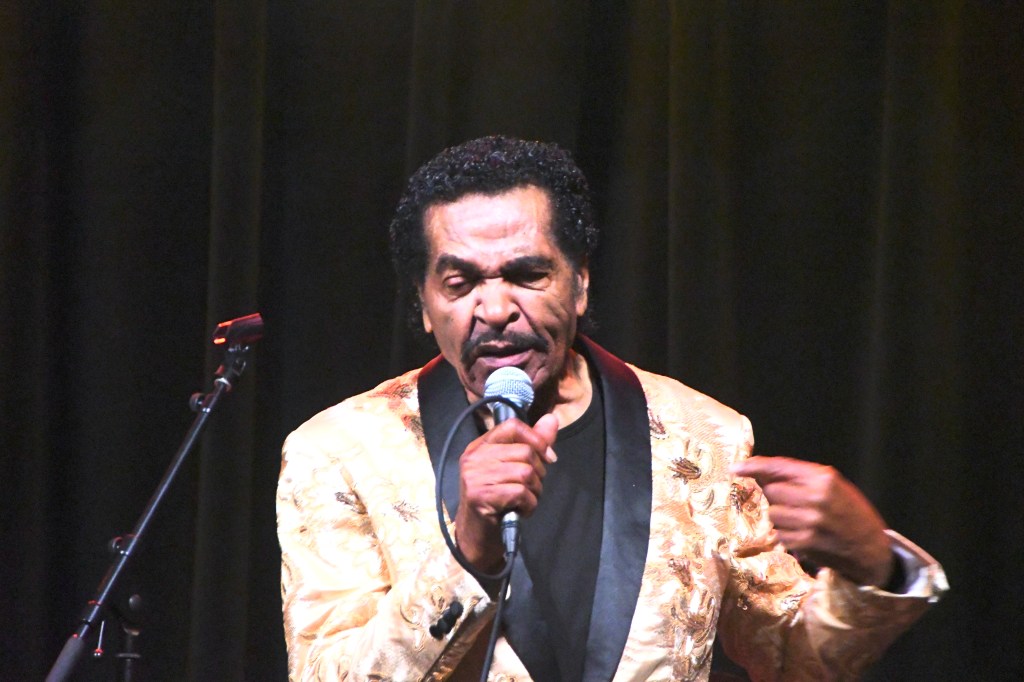
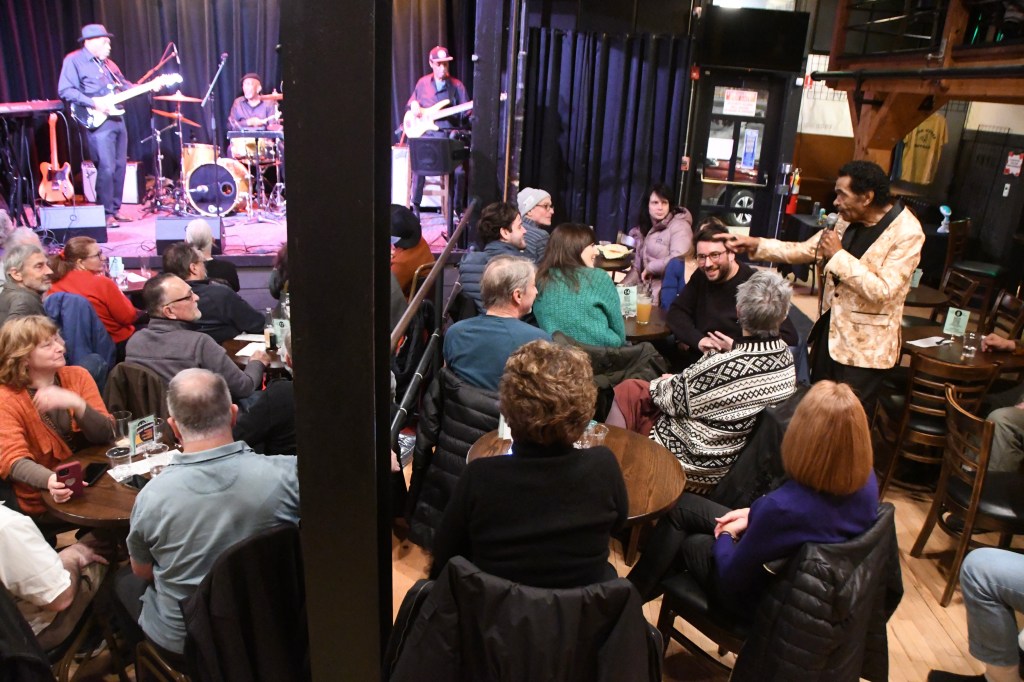
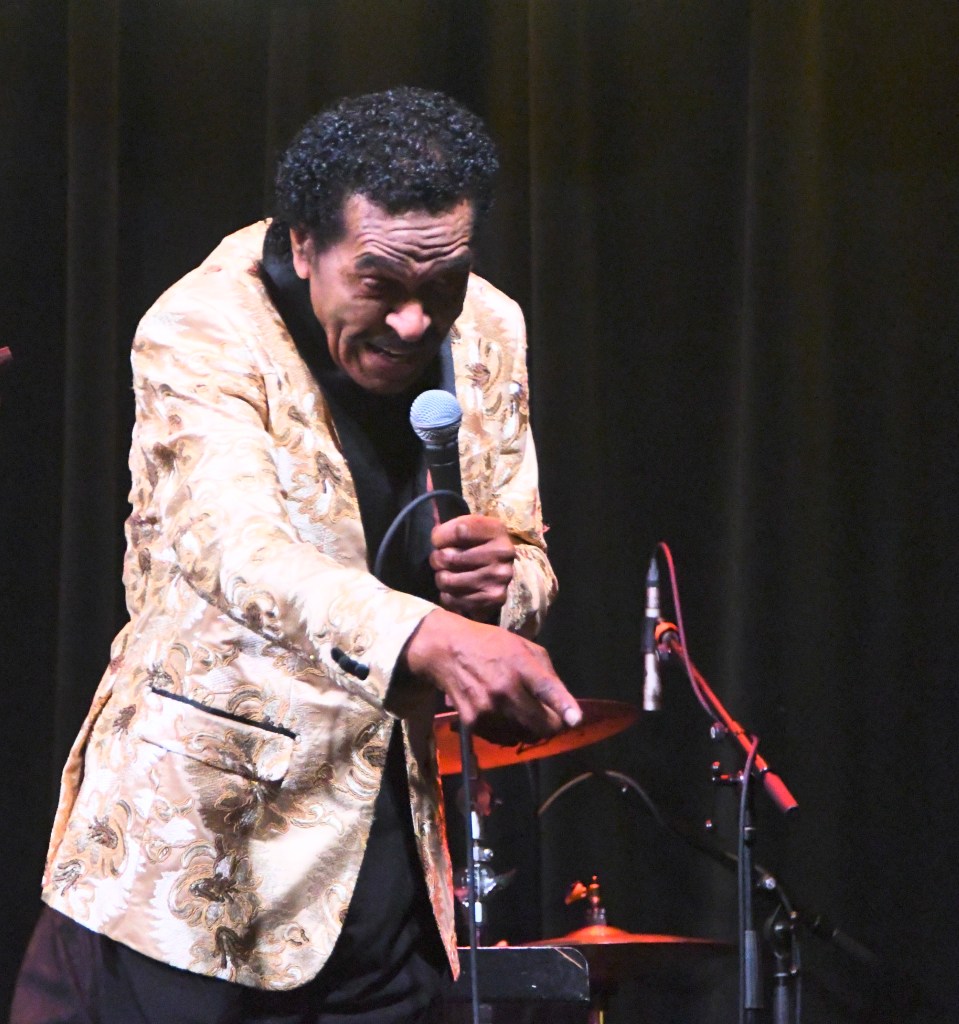
Bobby Rush may actually BE the “Hoochie Coochie Man” – as he sang-claimed Wednesday at the Iron Horse. Now 91, Rush sang his vivid story in soulful, raunchy, hard-swinging blues. 

As a child in a complex, mixed-race Louisiana family, he was ripped off by an employer who joked for days about his coming payday, then handed him a Payday candy bar for a week’s work. After playing body percussion in Delta jukejoints at 14 behind a painted-on mustache, he landed at Chess Records in Chicago in 1951 when Willie Dixon offered him “Hoochie Coochie Man” to record. He declined, feeling he wasn’t yet old enough.

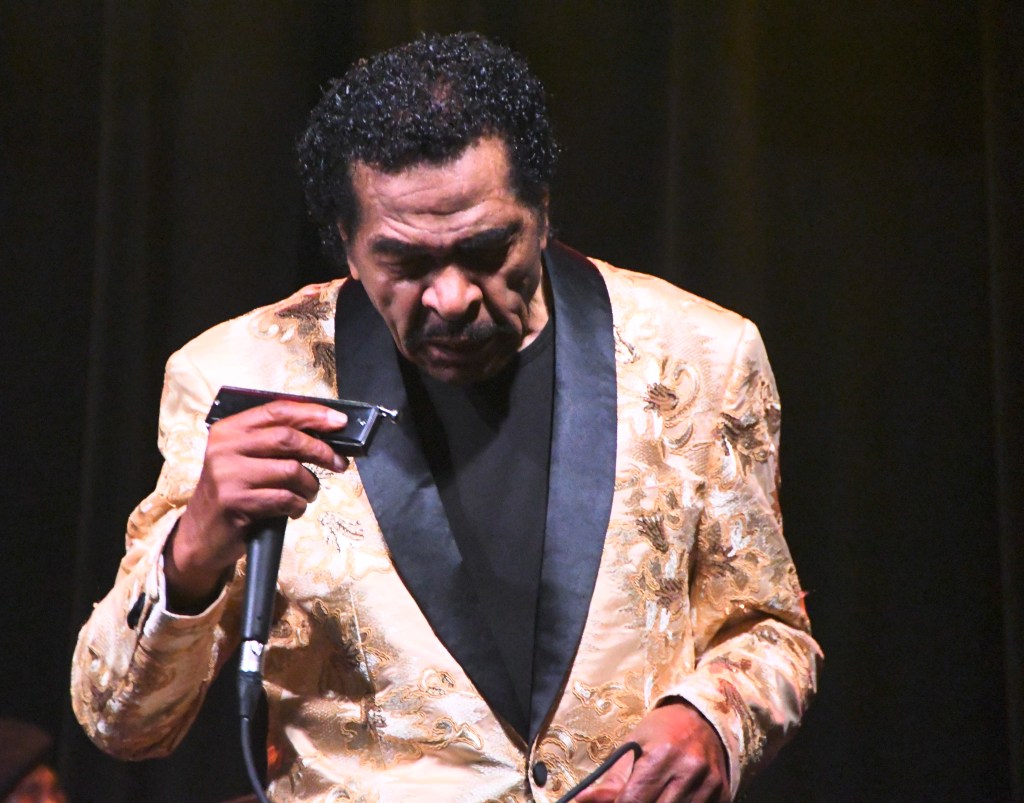
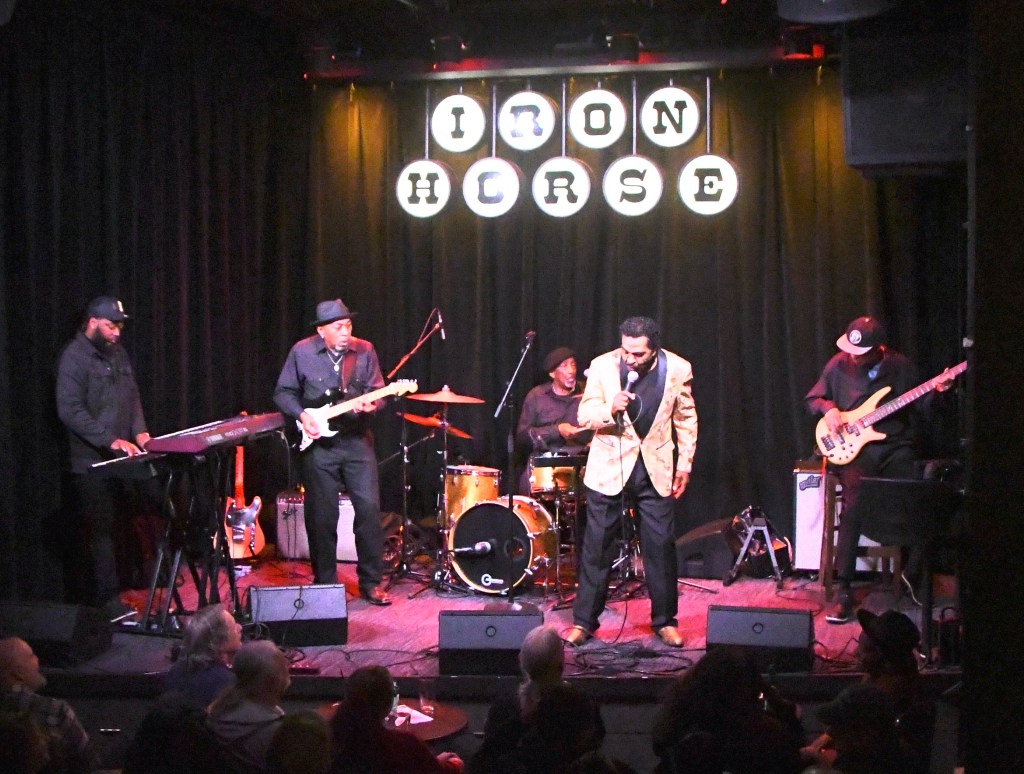
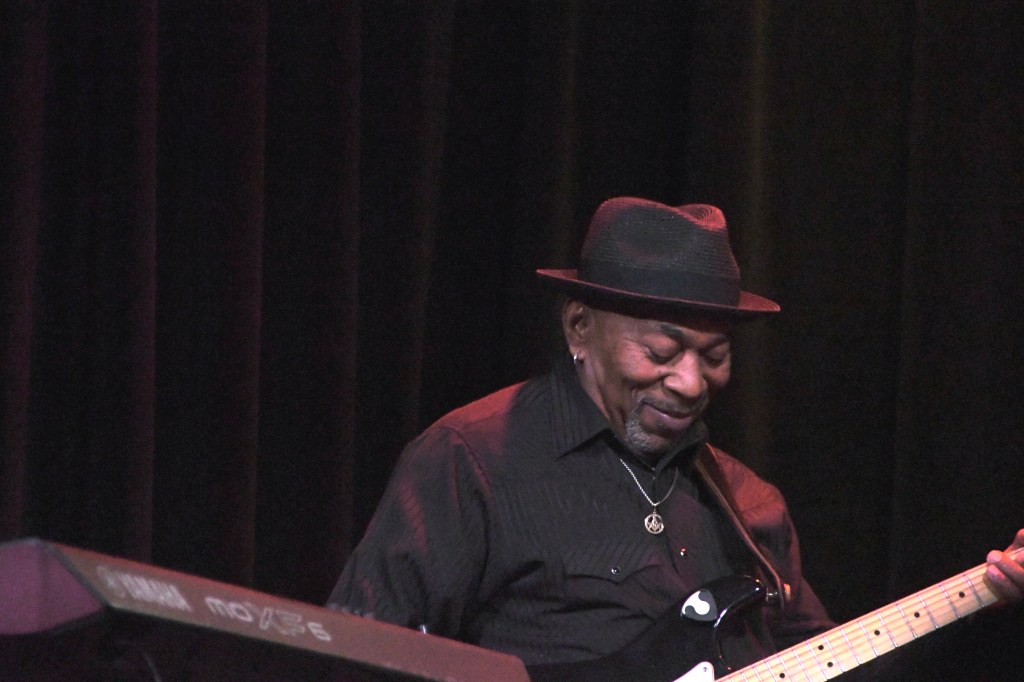
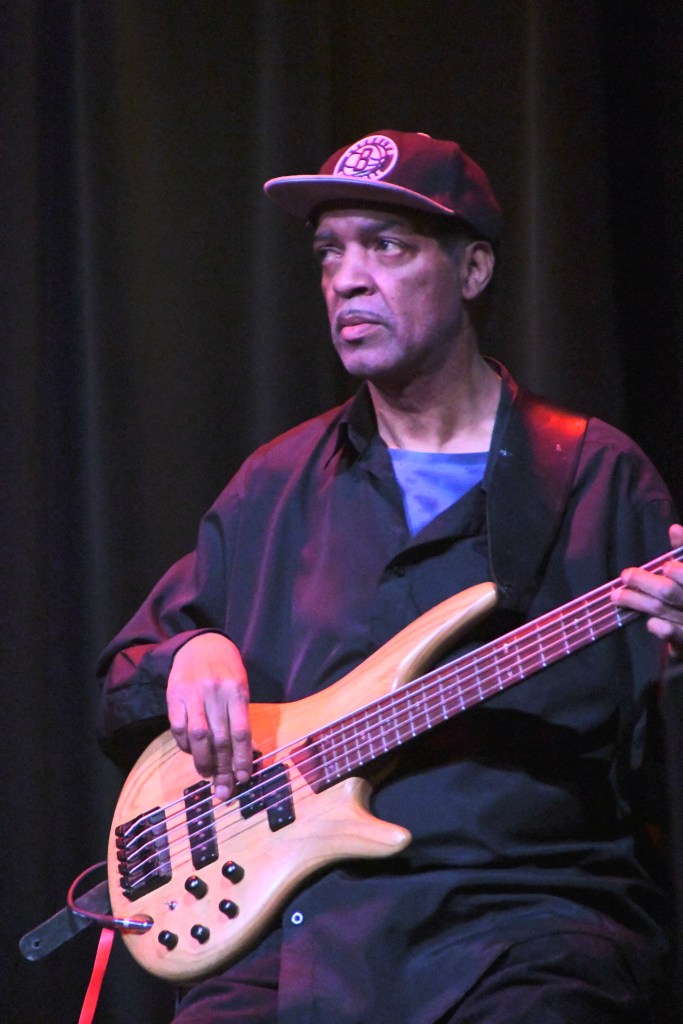
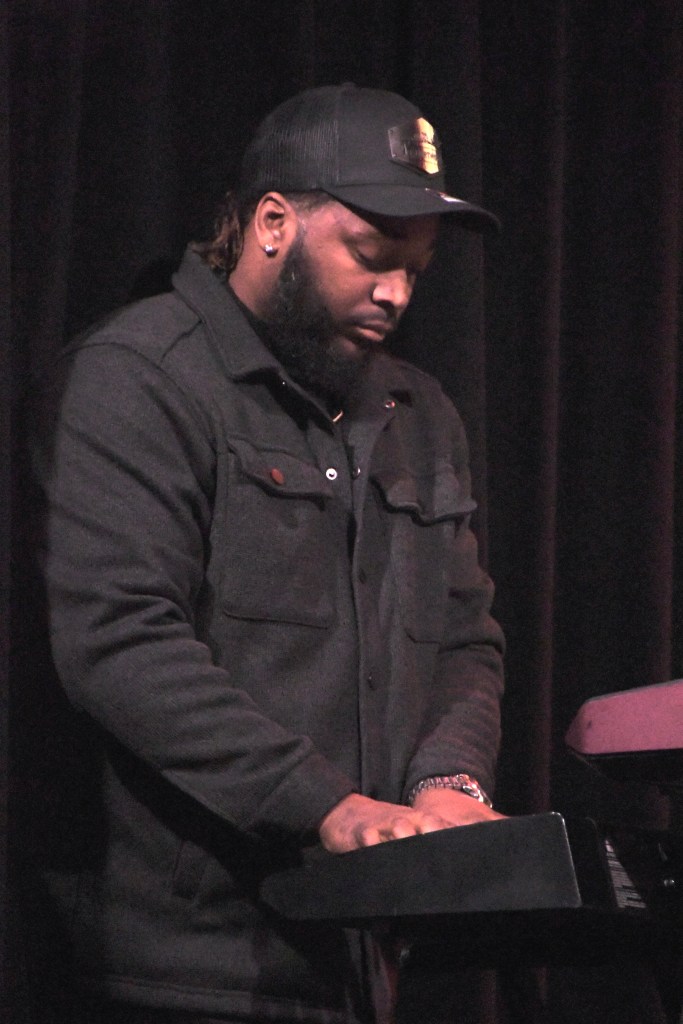
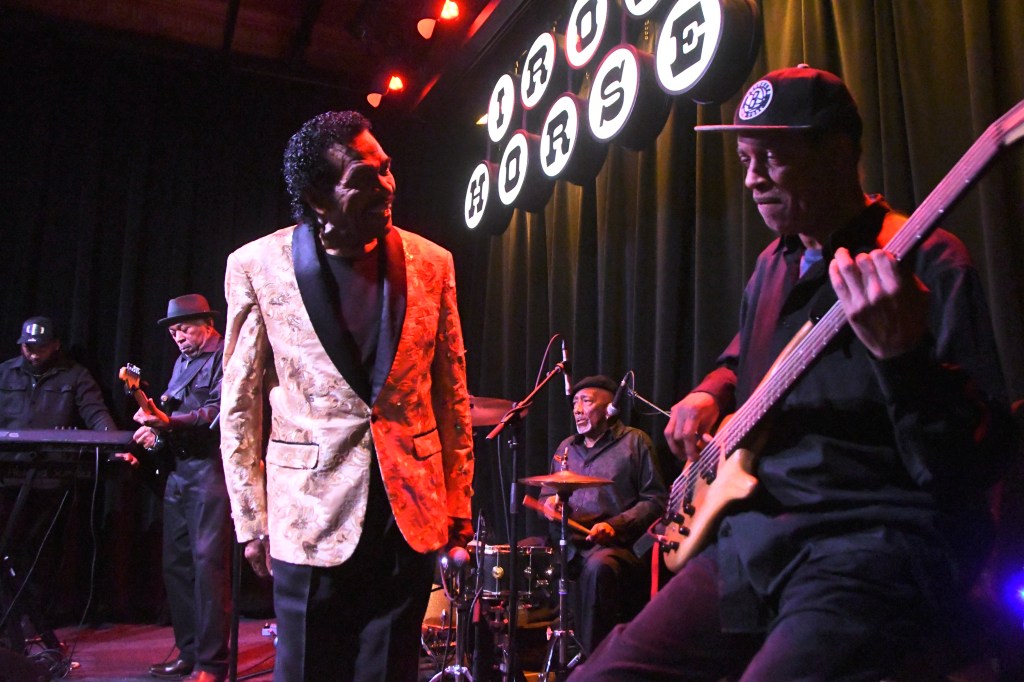
No such modesty marred Wednesday’s two set marathon show that would have exhausted a much younger performer. His band started without him, grooving on Stevie Wonder’s “Superstition.” Drummer Bruce Howard (in Rush’s band 41 years) sang lead, with guitarist Kenny Lee, bassist Arthur Cooper and a keyboardist introduced only as Robert – Rush’s son? Grandson? Then Rush took over, slim, spry and smiling under a genuine mustache in an incandescently bright jacket.

Singing strong and playing harmonica to bridge phrases and verses, he proclaimed “You So Fine,” its mildly lascivious lyric foretelling the playful sexiness spicing his blues shuffles and soul grooves. “Evil,” his next tune, overstated his intent; for him, it’s all fun; and “Big Fat Woman” described what he likes. 

Here he started engaging the crowd directly, addressing front-table fans with sly suggestions the women there should be with him and not the guys who’d brought them. Rush showed sharp radar in judging how far to push these jibes, noting incredulously, “You don’t like me?” or strategically apologizing to lighten the mood.

Between leering grins in silly/sexy songs lurked the pain that relationship problems can bring, introduced by the wry torment of “I Can’t Stand it,” alternating sung and spoken sections underlining its reality. More pain flowed through “Crazy ‘Bout You” with its doomstruck refrain “You don’t care nothing in this world for me,” its sting sweetened only somewhat by tasty guitar.

Noting he’s recorded 429 songs and claiming he can sing any of 350 of them on a given night, Rush reminisced about declining to record “Hoochie Coochie Man” when offered it in 1951; then sang it hard, reclaiming it. Its bravado faded fast in “Garbage Man,” a hurt-pride lament whose umbrage also flowed through “Ride in my Automobile” to the punchline assertion song: “You’re Gonna Need a Man Like Me.”

Pride and good mood restored, Rush and band cracked up in the middle of “Same Thing” and sailed happily through “Night Fishing” and the sex comedy “G-String.”

Umbrage threaded through such autobiographical recollections as being denied a record deal because he could read the contract. But real gratitude for his collaborator Kenny Wayne Shepherd emerged as he introduced their wistful “Long Way from Home.” 

As the 90-minute first set wound down, Rush widened his lyrical focus from the personal to the political, proclaiming “I’m Free” before lamenting the courtroom saga “Got Me Accused.”

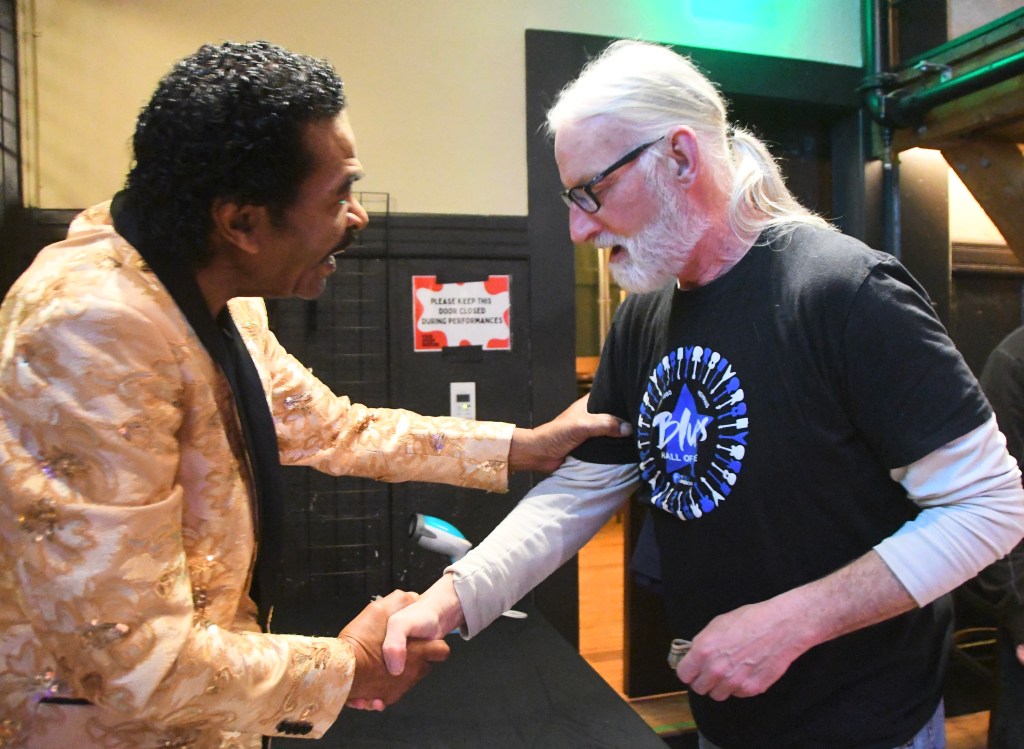
Then, radiating good cheer, he crossed to the merch table to sign CDs and his book (“I Ain’t Studdin’ Ya: My American Blues Story”) – and take photos with fans.

Out of sight just long enough to swap his shiny gold jacket for a white one printed with blue butterflies, Rush re-emerged for more of the sexy, swinging same, cracking up with his band in “Bowlegged Woman, Knock-kneed Man.” He settled things down with a quick wave, his harmonica staccato over just bass drum and hi-hat as he spoke of his gratitude for living by making music. 

Such serious testimony faded in a reworked version of Rush’s defiant duet with Buddy Guy, “What’s Wrong with That.” The heartbroken blues “I Lost The Best Friend I Ever Had” went deep before the juke-joint novelty numbers “Chicken Heads,” “Hey, Hey, Bobby Rush” – yes, everybody did sing along – and “Porcupine Meat.”

Bobby Rush (light jacket) and band, from left: Robert, keyboards; Kenny Lee, guitar; Bruce Howard, drums; Rush; Arthur Cooper, bass

Listening to Rush’s records later suggests his voice is still all there, and his harmonica playing, too – with a straightforward, hearty drive or sparse poignant musings on both single-key blues harps and the more versatile chromatic instrument. Things flowed smooth and simple, mostly, though Rush changed up songs’ set arrangements at times with hand-cues to simmer down, rev up or jump into a new tune altogether. Drummer Bruce Howard heard and responded instantly, leading the band in whatever new direction the boss chose.

Rush remains a complex character, with ancestors’ enslavement and oppression still sharp in his rearview mirror, overlaid with his own travails including record company abuse. He didn’t tell us about the Payday bar, or about the loss of his first wife and their three children to sickle-cell anemia. He didn’t have to; the pain rang clear when he slowed to let it emerge. But the saving grace of the blues has sustained him in a career of unprecedented duration and consistency. He may be the last legend standing of the original 1950s Chicago inventors of electric blues, but he’s too fast-moving and too much fun for solemnity to get a grip for long.

49th Saratoga Jazz Festival Features Familiar and Fresh Faces

June 27 and 28 Two-Stage Shows Honor Tradition, Showcase the New

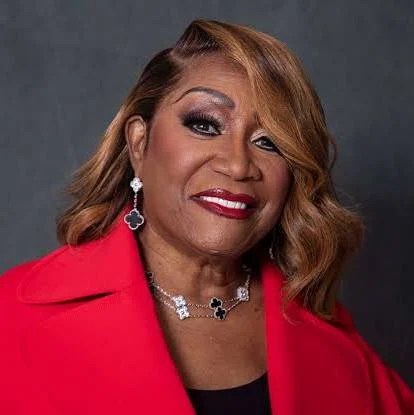
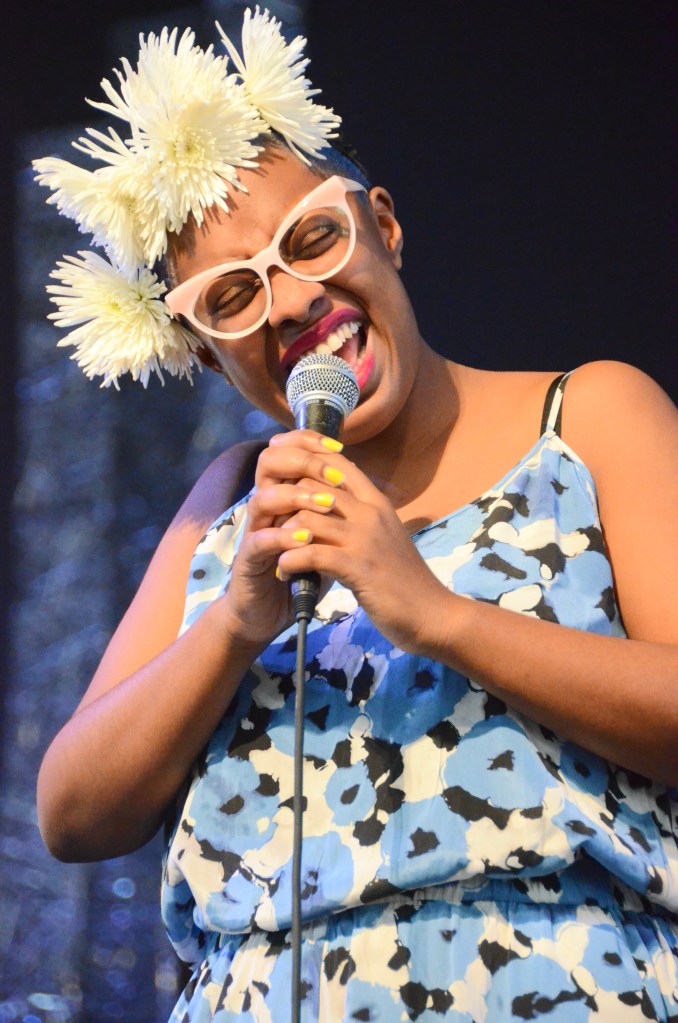
The 22 performers at the Saratoga Jazz Festival Presented by GE Vernova* include 13 making their Festival debuts among a line-up rich in singers and women artists. Some are both: veterans Dianne Reeves, a five-time Grammy winner; and (Saturday night closer) Patti LaBelle, plus relative newcomers Cecile McLorin Salvant and Sasha Dobson.

Patti LaBelle, above; photo provided; Cecile McLorin Salvant, below; Michael Hochanadel photo at New Orleans Jazz and Heritage Festival, May 2015

Women players also lead several groups: drummer Terri Lynne Carrington (a Skidmore Zankel attraction some seasons ago), with Social Science, blues guitarist Ana Popovic and saxophonists Lakecia Benjamin and Alexa Tarantino. Also, the Brooklyn-based all women Brass Queens represent New Orleans tradition(s), as do Sunday night closers the Revivalists rock band and quietly dazzling pianist Kyle Roussel.

“From legendary performers and centennial celebrations to festival debuts and cutting-edge artists, this year’s Saratoga Jazz Festival offers so much to discover,” said SPAC CEO Elizabeth Sobol in Thursday’s festival announcement.

Also emphasizing the event’s range, Festival Producer Denny Melnick added, “From Patti LaBelle to The Revivalists, and from Dianne Reeves to ‘Kingfish,’ this year’s line-up captures 49 years of presenting iconic artists alongside the next generation.” He said, “That mix of legacy and discovery is the heart of the Saratoga Jazz Festival.” Its second stage broadcasts that idea: “The Charles R. Wood ‘Discovery Stage’” hosts emerging artists.

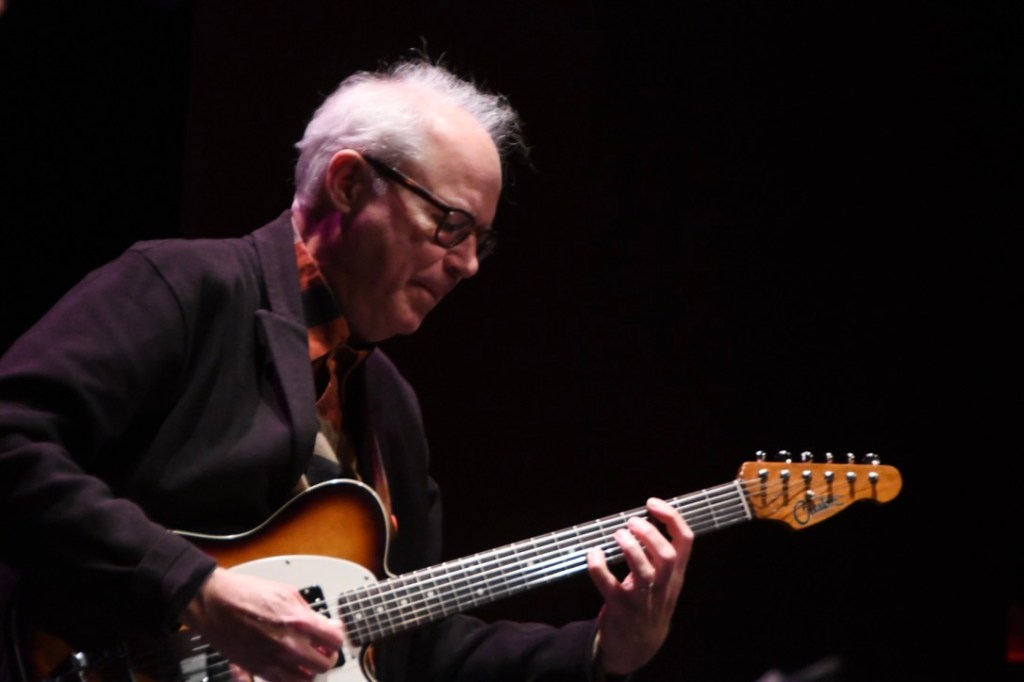
Bill Frisell. Michael Hochanadel photo at The Egg; Nov. 16, 2024

Straight-ahead jazz artists have often dominated past festivals, though non-jazz artists have grown in number and boosted the box office. Jazz veterans turn up this summer in bands led by guitarist Bill Frisell, pianists Orrin Evans and Gonzalo Rubalcaba. All generate all-star punch. Frisell leads a trio with drummer Rudy Royston and bassist Thomas Hardy with guest saxophonist Gregory Tardy. Rubalcaba plays with ace talents saxophonist Chris Potter, bassist Larry Grenadier and drummer Eric Harland. By contrast, trumpeter Avishai Cohen leads the relatively new band Big Vicious, while Carrington’s Social Science represents a new direction for the drummer-composer and leader, and Evans appears with bassist Luques Curtis and drummer Mark Whitfield Jr.

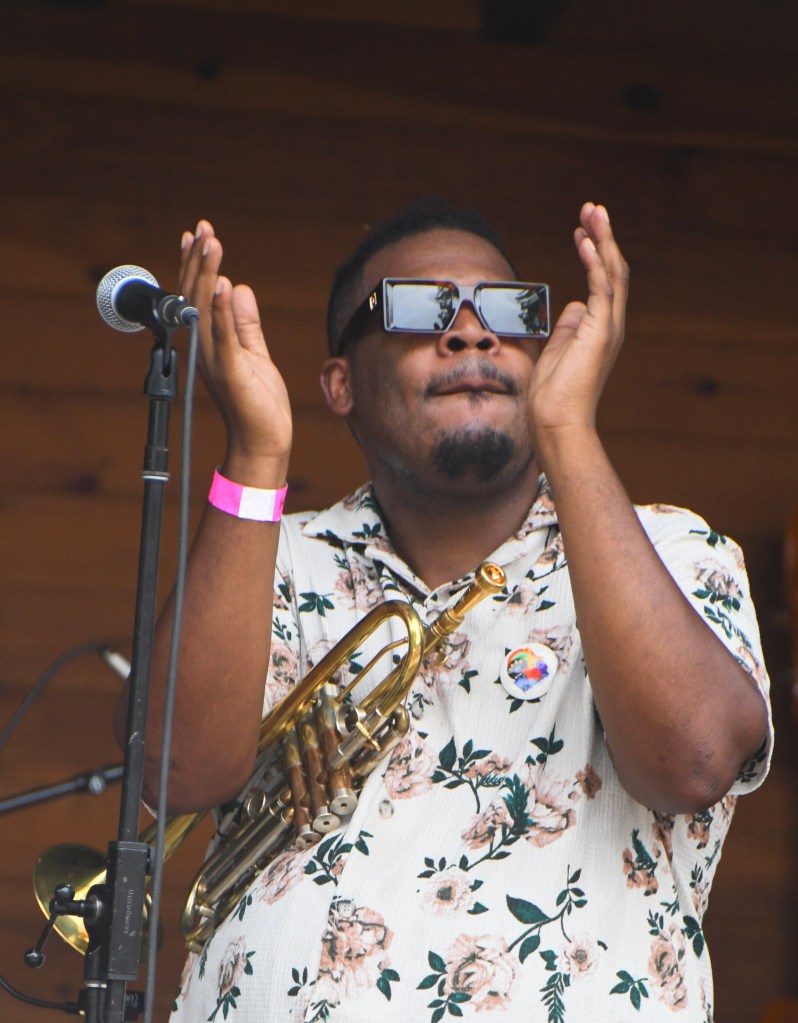
Tribute bands honor tradition and legacy heroes both days. Saturday, the “Miles Electric Band: Celebrating Miles Davis’s Centennial” features veterans of the groundbreaking trumpeter’s later bands, including nephew/drummer Vince Wilburn, bassist Darryl Jones (longtime touring bassist with the Rolling Stones) and keyboardist Robert Irving. Younger players also join in, including trumpeter Keyon Harrold who played the festival last year.

Keyon Harrold. Michael Hochanadel photo at Saratoga Jazz Festival 2025

Sunday, the Skidmore Jazz Institute Faculty All-Stars, led by bassist-wit Todd Coolman, celebrate the centennial of sometime Miles bandmate (as on “Kind of Blue,” top selling jazz album of all time) John Coltrane.

Fresh talent also claims lots of spotlight time this year, notably the young singer Tyreek McDole, who closed Schenectady A Place for Jazz season in a smash performance last fall; blues guitar powerhouse Christine “Kingfish” Ingram whom I saw play an explosive opener for Buddy Guy in Springfield, Mass. in 2024, and Cuban funk-rap sensation Cimafunk who also played this festival in 2024. 

Tyreek McDole. Michael Hochanadel photo at A Place for Jazz 2025, above; Cimafunk, below; Michael Hochanadel photo at Saratoga Jazz Festival 2025

Numerous new-to-me acts include The Dip, Eddie 9V, Sasha Dobson. Here the Discovery Stage will earn its title.

As usual, the upside-down artist listings below reflect recognition rather than chronology: Those listed first will play last.

Now 81, soulful fire-voiced singer Patti LaBelle closes on Saturday. A star since the 1960s, she led the Bluebells, which became LaBelle, with Nona Hendryx and Sarah Dash. Active 1971 to 1976, they briefly reunited in 2008. Highlights of her busy decades-long stardom include the brilliant hits-charged “Nightbirds” album (1974), playing the first-ever popular music show at the Metropolitan Opera House and harmonizing behind Laura Nyro on her “Gonna Take a Miracle” doo-wop album (1971). She has also acted in films and on TV, including “Dancing With the Stars” and even contributed to a cookbook.

The Revivalists. Photo provided

In Sunday’s closing set, rockers the Revivalists face the tall challenge of LaBelle’s Saturday finale and superb recent Sunday festival wrap-ups by Trombone Shorty and Orleans Avenue (2025), Lake Street Dive (2024) and Bonnie Raitt (2023). A New Orleans rock collective, the Revivalists earned “10 Bands You Need to Know” notice in Rolling Stone in 2015. Their five studio albums have won Best Rock Band or Performer, Best Music Video, Artist of the Year or Song of the Year awards from New Orleans’ Offbeat magazine. 

SATURDAY, JUNE 27

Amphitheater:
Patti LaBelle
Miles Electric Band: Celebrating Miles Davis’s Centennial
Cécile McLorin Savant
The Dip 

Gonzalo Rubalcaba First Meeting Quartet with Chris Potter, Larry Grenadier and Eric Harland Terri Lyne Carrington + Social Science

Charles R. Wood “Discovery” Stage:
Bill Frisell Trio featuring Thomas Morgan & Rudy Royston with special guest Gregory Tardy
Orrin Evans Trio featuring Luques Curtis & Mark Whitfield, Jr.
Tyreek McDole
Ana Popovic
Avishai Cohen Big Vicious
Brass Queens

SUNDAY, JUNE 28

Amphitheater:
The Revivalists
Dianne Reeves

Christone “Kingfish” Ingram
Cimafunk
Lakecia Benjamin

Charles R. Wood “Discovery” Stage:
Eddie 9V
Alexa Tarantino Quartet
Kyle Roussel
Sasha Dobson
Skidmore Jazz Institute Faculty All-Stars

Please pardon spacing problems above

Tickets for the festival start at $89 – about $7.50 per artist on Saturday, $9 per artist Sunday. Box office www.spac.org opened today for members, with 15 to 20 percent discount, and Feb. 13 for the general public. Two-day passes are also available. Children 12 and under receive 50% off tickets in the amphitheater and are admitted free to the lawn. Full-time students with a school ID receive 25% off tickets in the amphitheater (except for top price levels), or $25 on the lawn; bring student ID to will call window. 

  • Billing now echoes the wording of the New Orleans Jazz and Heritage Festival Presented by Shell, crediting presenting sponsor GE Vernova after decades of sponsorship by Freihofers and prior sponsorship by Kool.

Los Lobos: Struggle, Survival, Soaring

Review: Los Lobos at Universal Preservation Hall on Sunday, Feb. 1, 2026

Right before Los Lobos came onstage Sunday at the jam-packed Universal Preservation Hall, Sting sang in “Englishman in New York” – last song of the recorded walk-in music – “Oh, I’m an alien, I’m a legal alien.” 

What a perfect choice, in this time of horrifying federal racism, for Mexican Americans from East LA to play the most magnificently American music.

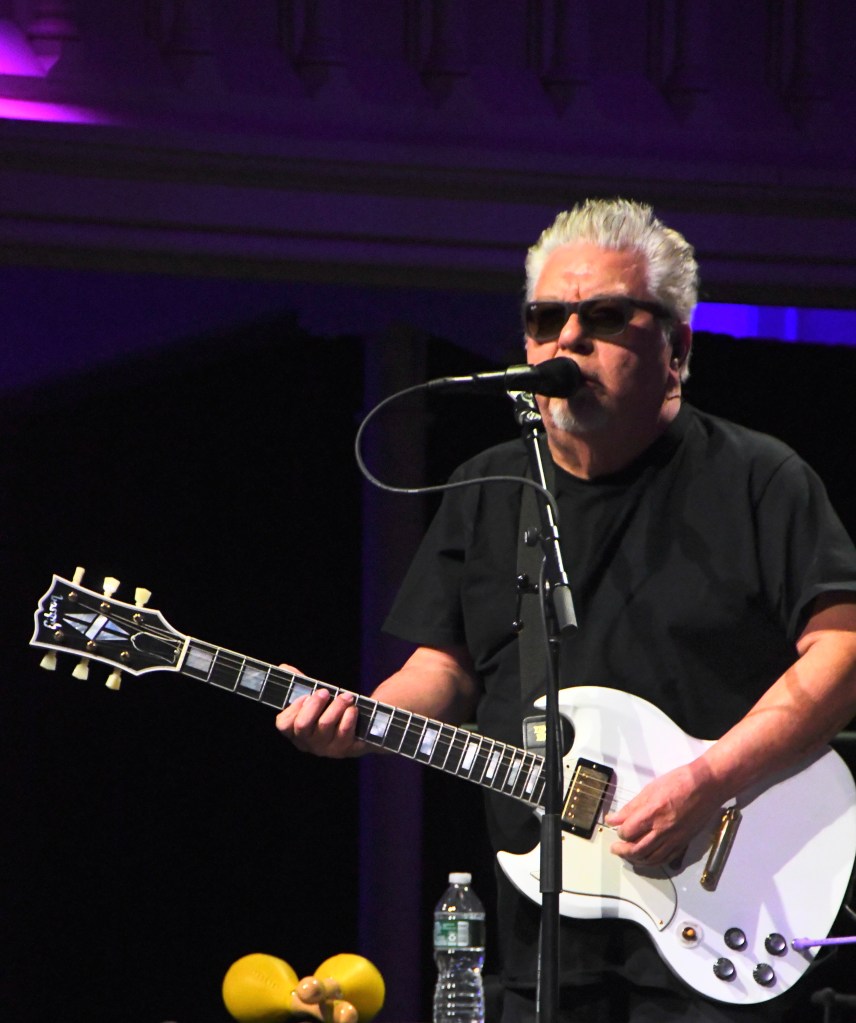
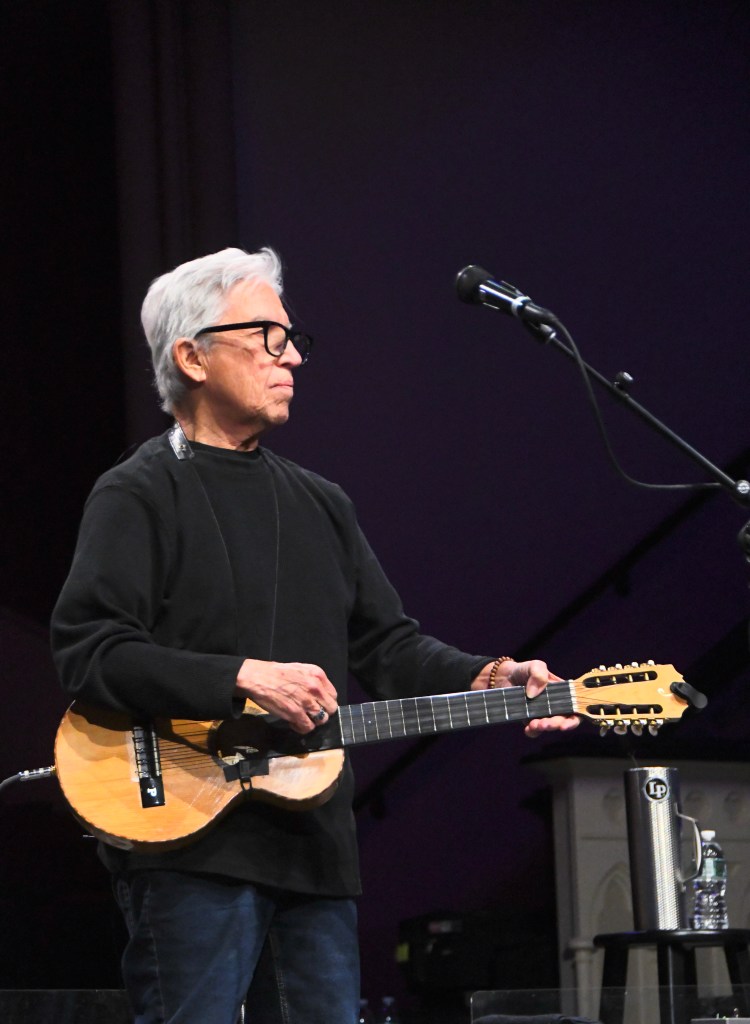
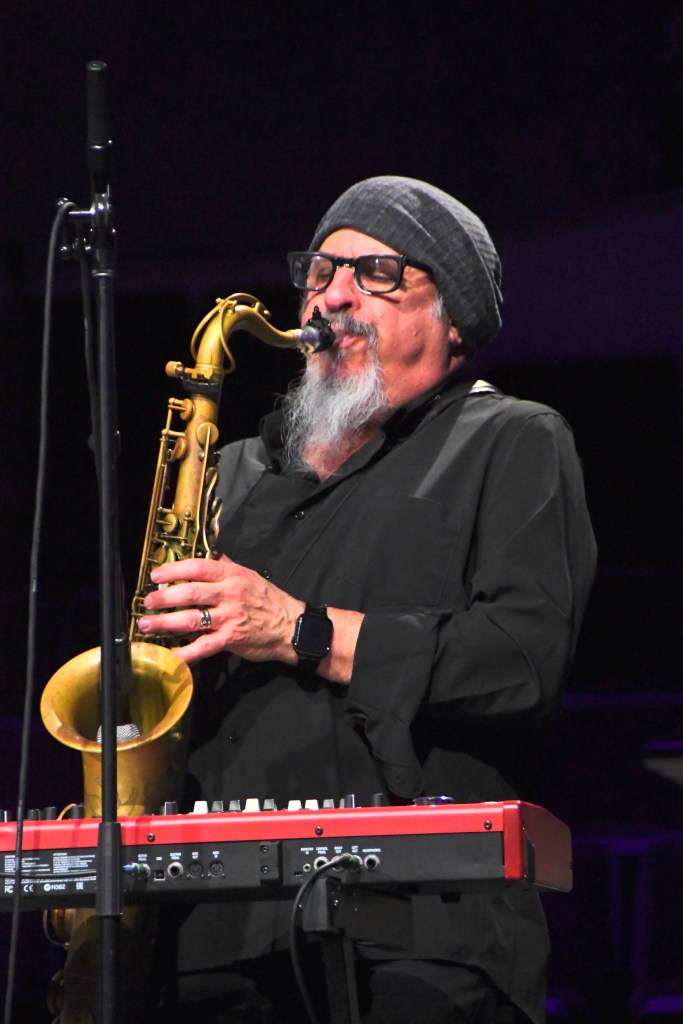
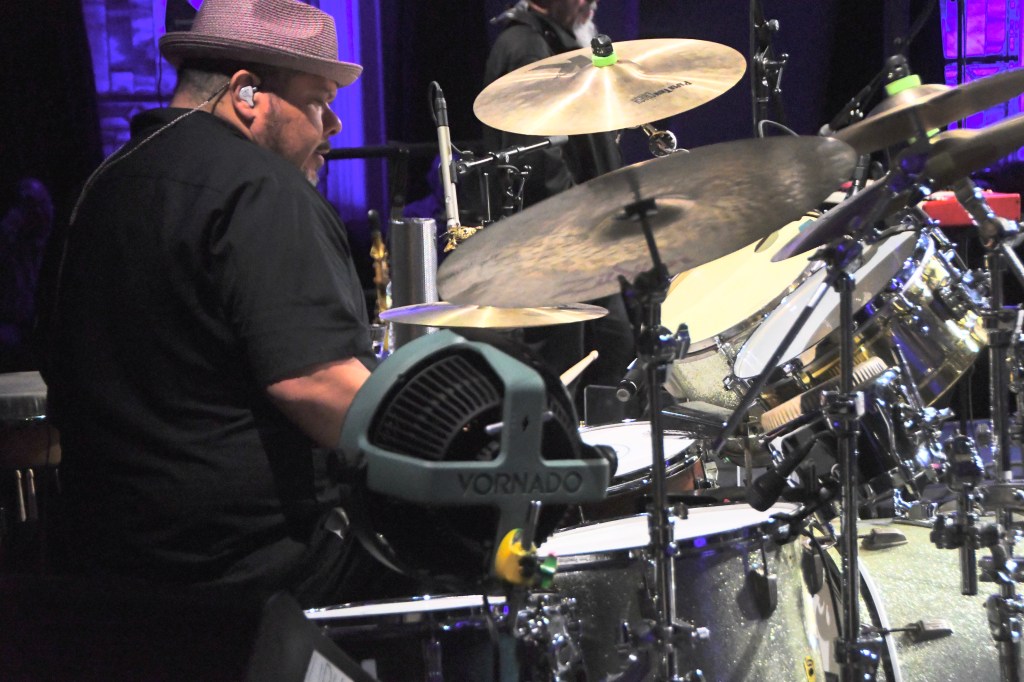
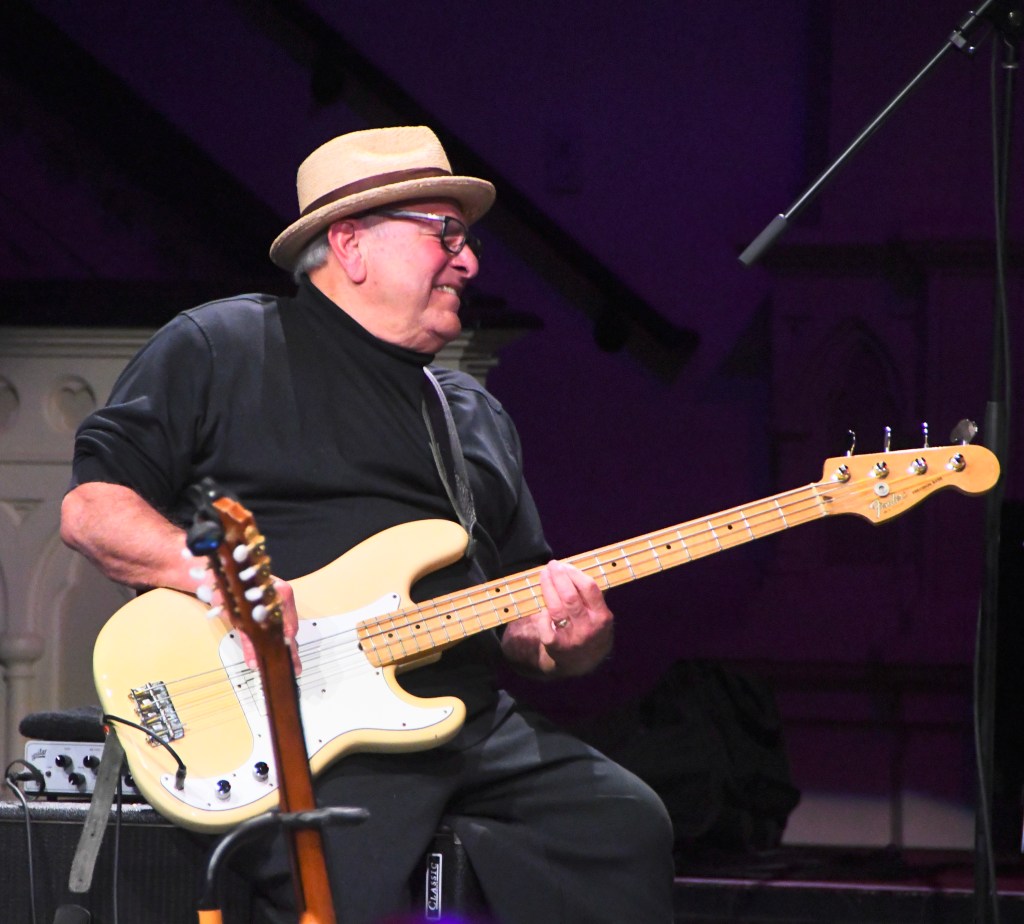
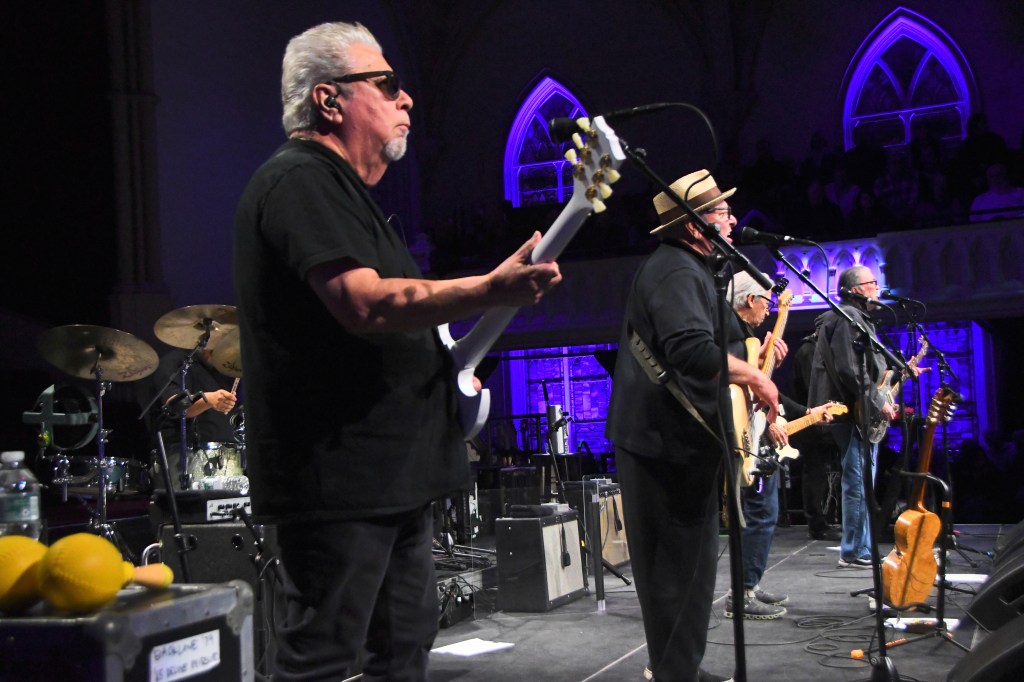
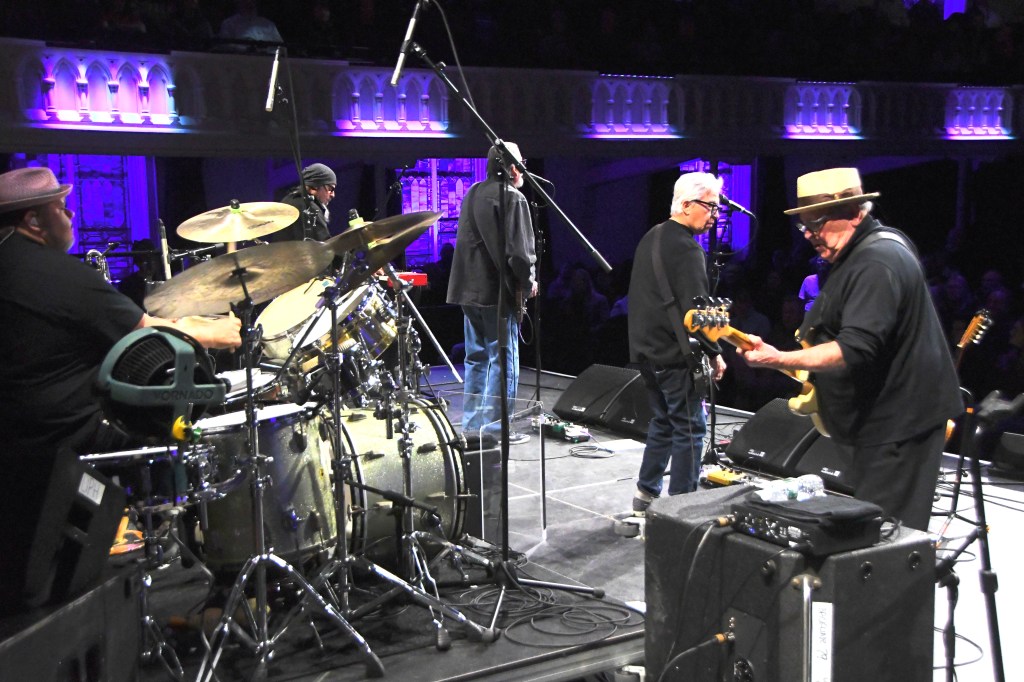
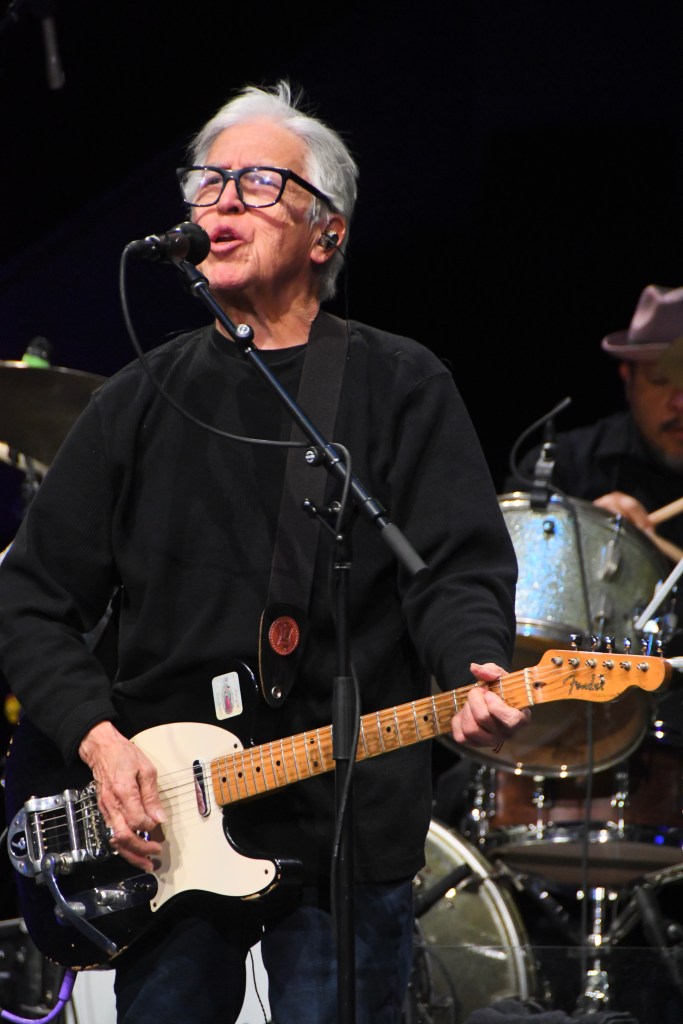
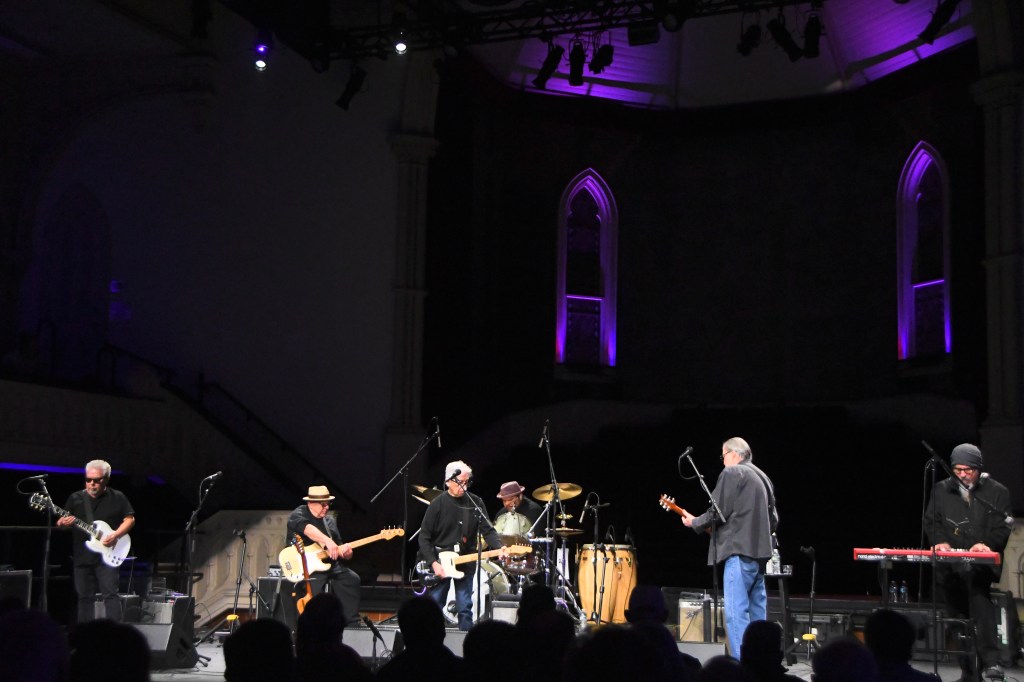
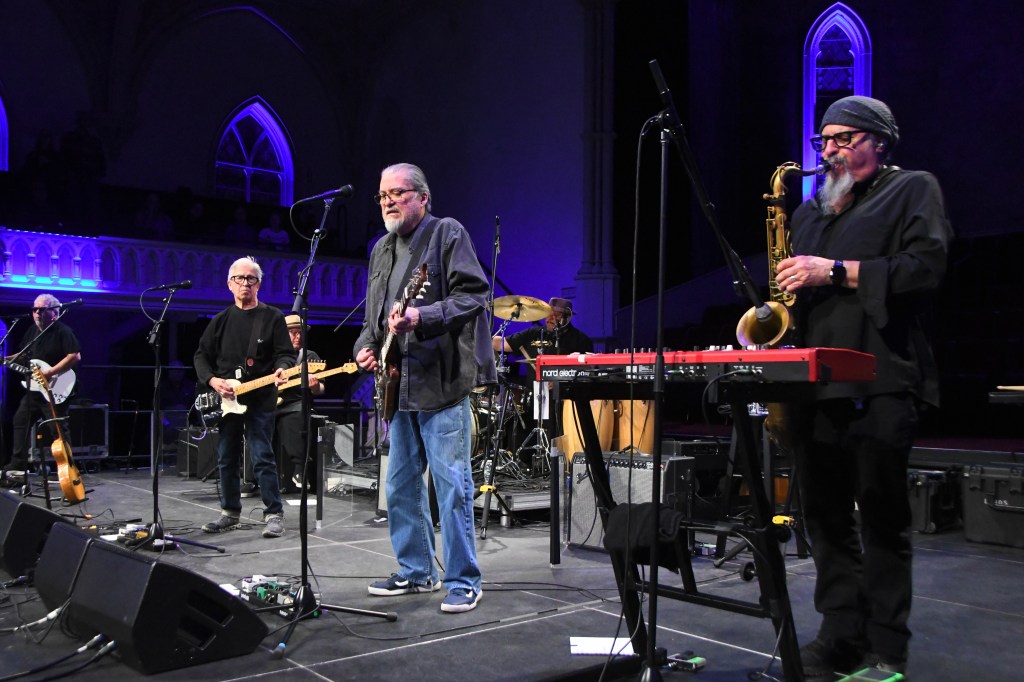
Los Lobos, from left: Cesar Rosas, Conrad Lozano, Louie Perez, Alfredo Ortiz, David Hidalgo, Steve Berlin

In their own opener “One Time, One Night,” they claimed this “home of the brave in this land here of the free” for themselves. They proved their place in it with authentic original songs of hope and home, of trouble and triumph, of dance and daring assimilation in their own immigrant tradition. Some were folkloric, all were fervent, most steeped in rock and roll. But they also borrowed soul classics, anthemic southern rock, even the sci-fi blues of “Are You Experienced?”

All in black, business like, beards and hair all white and all wearing glasses, they took their time. Their set-list was less map than menu; possibilities more than a plan. They sometimes discussed what’s next, or what key; but they got there. 

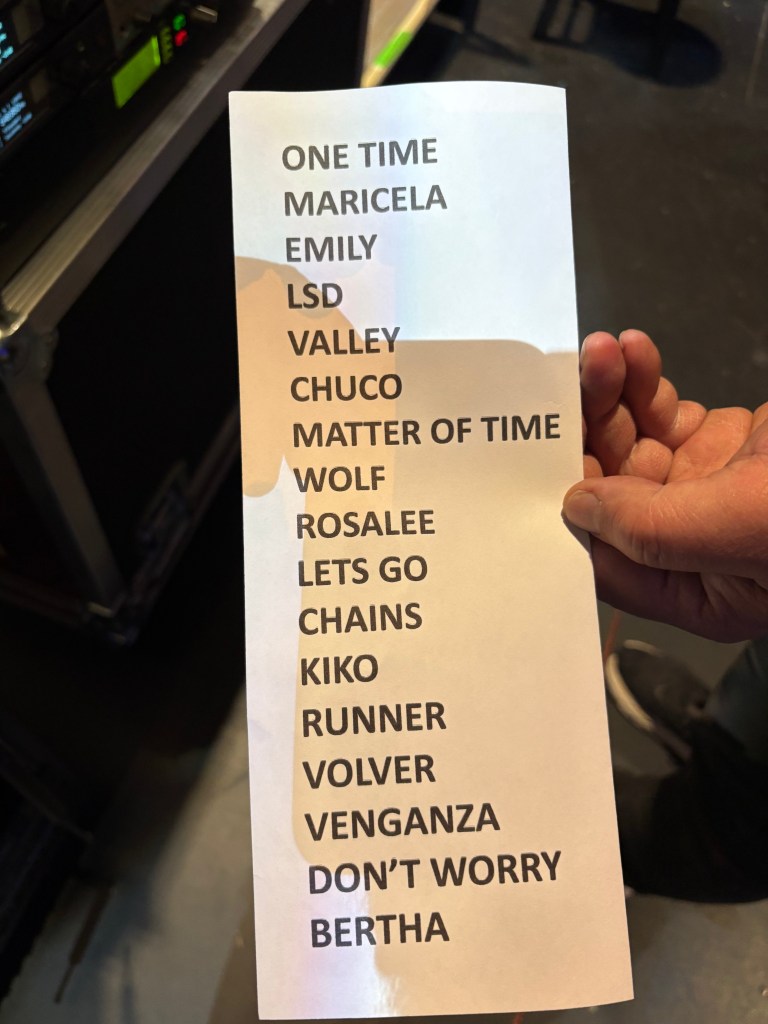
Thanks to the monitor mixer for sharing this set list

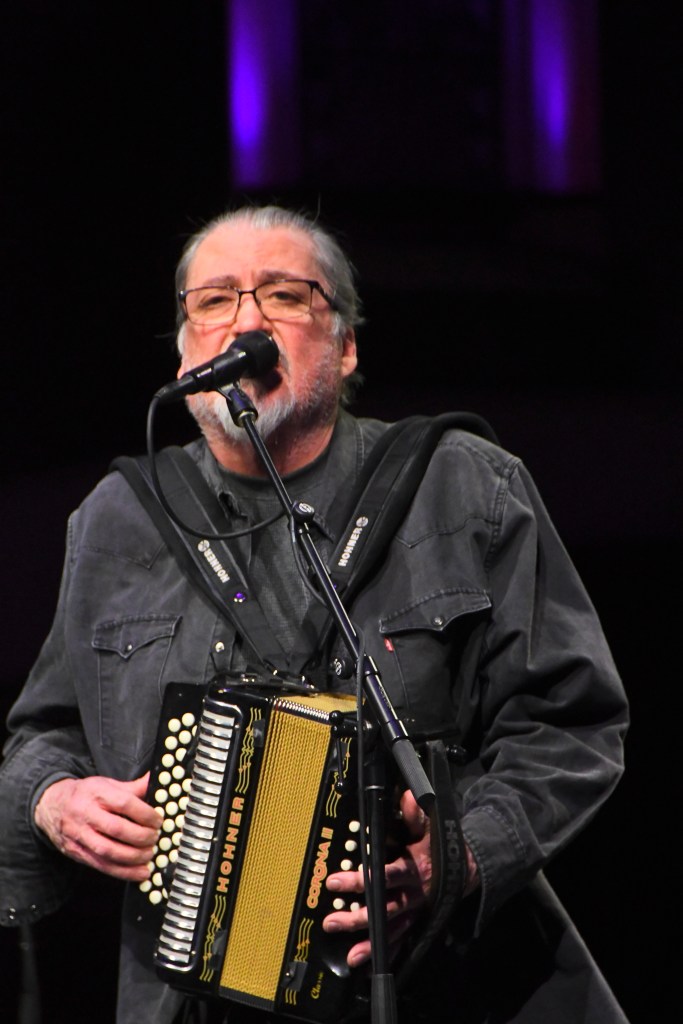
David Hidalgo, the band’s prettiest voice, sang “One Time, One Night” and played its guitar solo. It’s their usual way: the singer keeps the spotlight, as guitarist-singer Cesar Rosas did next in “Maricela,” singing lead and soloing, too. Under this dance number in Spanish, Steve Berlin growled baritone sax riffs and keyboard accents at the same time, deep in the seams, as Louie Perez strummed jarana (baby acoustic eight-string) and bassist Conrad Lozano grinned back at drummer Alfredo Ortiz, locked way in. For all the attention the front line earns – mostly wielding three electric guitars, keys and/or sax – the Los Lobos rhythm section hits as hard as any in rock and restrained force even at their quietest. Ortiz is their best-ever drummer and Lozano a model of taste and touch.

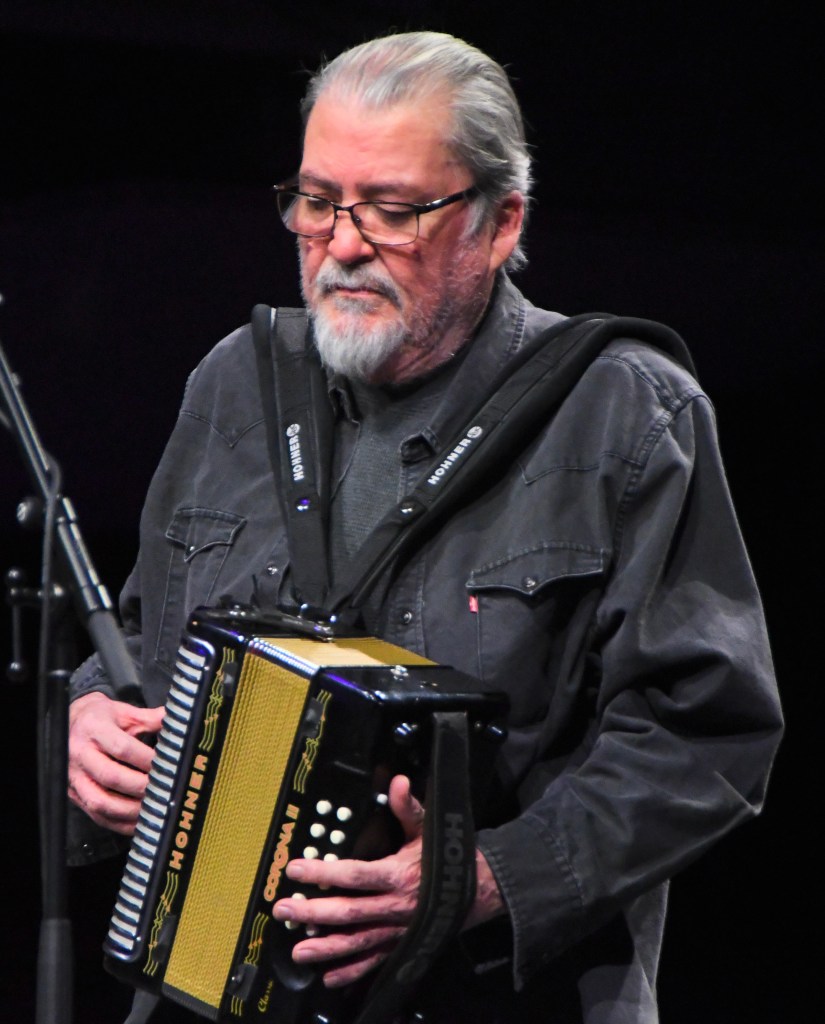
David Hidalgo, above; Cesar Rosas, below

Louie Perez, above; Steve Berlin, below

Alfredo Ortiz, above; Conrad Lozano, below

Hidalgo and Rosas alternated vocal and guitar leads through the rockers “Emily” (Hidalgo), “Love Special Delivery” (Rosas), a hot shuffle inherited from the 60s East LA band Thee Midnighters with a searing Rosas wah-wah break and high octane Berlin sax riffs. 

After the majestic funk of “The Valley,” Rosas announced “It’s good to be back here” before pausing. “Have we been here before?” Laughs lit up the stage; together since the 70s and touring since the late 80s, they couldn’t remember. (UPH opened six years ago; Sunday was their debut.)

That moment of mirth ignited “Chucho’s Cumbia,” a happy, loose, explosive barrio blast Rosas sang in Spanish and soloed, Perez strumming jarana as fast as Berlin’s baritone sax licks. “A Matter of Time” felt dance-y, too, but rocked around Hidalgo’s voice and guitar solo before he cued Berlin to take the lead.

Then they started to wander.

Perez delivered his first lead vocal, and guitar break, on an upbeat rocker – Johnny Thunder’s “Alone in a Crowd”? – before Rosas went all wah-wah to intro the Temptations’ “Papa Was a Rolling Stone” with his own strong vocal, then a faster rocker with an equally cool Hidalgo guitar, back to “Papa” in full surge and into “One Way Out,” as hot as the Allman Brothers ever did it. This driving southern-rock shuffle that brought the crowd to its feet for the first time. 

Hidalgo introduced Jimi Hendrix’s “Are You Experienced?” as a request and sang and soloed slow and majestic; the band gaining momentum as Rosas did the wah-wah wail.

Their own slow, spooky “Kiko and the Lavender Moon” held that mood, Hidalgo harmonizing tight with Rosas.

Noting they’d just won a share in the Regional roots music album Grammy awarded to “A Tribute to the King of Zydeco,” Hidalgo played peppy accordion and sang their contribution: Clifton Chenier’s energetic “Hot Rod.” Then they waltzed through “Volver,” Rosas fervent and strong at the mic and guitar as Hidalgo stayed with the squeeze box. 

Bang-bang rockers “Rosalee” (Rosas vocal, Berlin switching to tenor to solo)  and “Don’t Worry Baby” (Rosas at the mic again; Berlin, tenor again) seemed to wrap things before Rosas pumped “Want one more? Maybe a couple more?” 

They sandwiched “La Bamba” – everybody sprang, or eased, up – around (the Olympics, then the Young Rascals, then a Grateful Dead live favorite) “Good Lovin’,” getting a good Spanish singalong in arguably their only-ever hit.

They left to a happy roar that held as they came back for more covers: Marvin Gaye’s anguished/sweet soul anthem “What’s Goin’ On” and the Grateful Dead’s straight-ahead “East L.A. Fadeaway.”

As usual, they built energy in a patient, deliberate way and surprised even themselves at times, pausing to discuss what to play next or agree on the key. They didn’t play the Dead’s “Bertha,” from the set list, but reached deeper for the obscure “Fadeaway.” And they didn’t play their own classic “Will the Wolf Survive?” – a hit for Waylon Jennings, though not for them.

They didn’t have to: 50 years on, these wolves survive.