Twang in Peace

To the low slow voice at the used books-and-records store two counties away, I confessed: “I was in last week – I should have bought those albums.”

Quiet laugh, calm assurance; he’d heard this tune before: “I’ll put those aside for you.”

Some scenic road hours later, 1960s Duane Eddy albums filled my passenger seat. A talismanic early birthday gift to my brother Jim, they linked us to a cherished, disruptive sound – joyous rock and roll distilled to a wordless instrumental howl.
After Duane Eddy passed on April 30th, Jim Facebooked about losing his friend, the pioneering guitarist whose bold boom and simple swagger converted Jim from traditional jazz clarinetist to wild-eyed sax shouter. 

Recalling how the loudspeaker outside Greulich’s Market near our Guilderland home pumped Duane Eddy songs into the parking lot – a story he’d loved telling Duane – Jim also evoked their ear-opening joy. He cherished “the low primordial sounds of a slinky echo-drenched electric guitar, accompanied by a raging, evil saxophone and a gang of demons yelping in wild abandon.” Jim celebrated he disruptive effect this gorgeous raw sound had on our staid swing-fan Catholic parents.

Years In training for the mellow melancholy of Mr. Acker Bilk’s “Stranger On The Shore” or spry strut of “Begin the Beguine” flew out the window when I started bringing home Duane Eddy 45 singles (on Jamie Records) from Apex Music Corner.

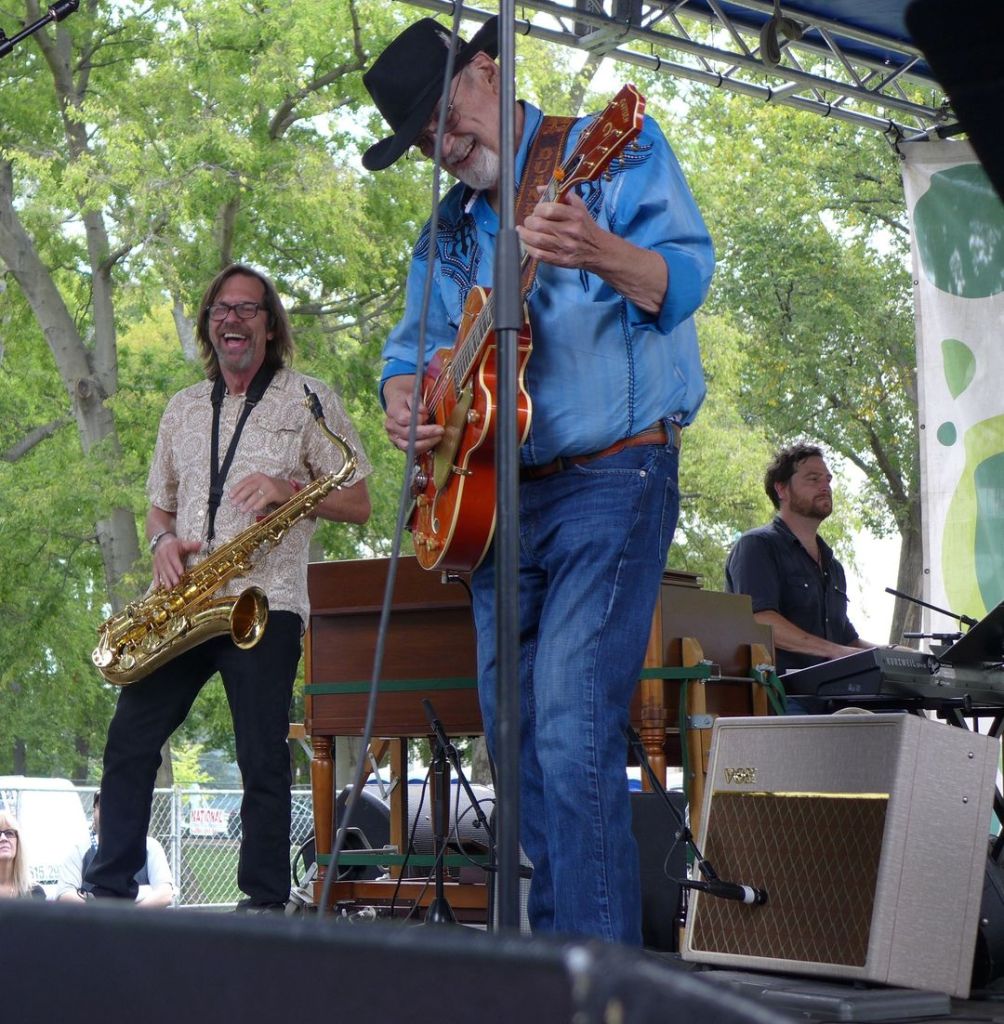
Fast forward some decades and both Jim and Duane were new to Nashville and Jim got to play with his hero. “I was immensely qualified, having learned all the aforementioned raging, evil sax parts on Duane’s records before I was shaving,” wrote Jim. He’s shown here at a later Nashville show together, grinning behind his tenor sax while Duane twangs low irresistible guitar blasts into the stratosphere.
“He invented a sound in rock ’n roll that still resonates and he did it all with such grace,” wrote Jim. “I’m ever grateful.” Duane Eddy played melodies on the guitar’s low strings or on a six-string bass; mainly working with fat hollow-body guitars jazz players favor. His innovative sound was at once tonally rude and sweet in its feel.

At a Memorial Day weekend family wedding celebration, Jim loved unwrapping those Duane Eddy albums i’d brought and told tales Duane had told him, starting with a Cavalcade of Stars tour down south.

Duane told Jim of touring at 19 on rickety buses crowded with young hitmakers sharing the same band. 

When locals surrounded their bus after a Louisville concert and yelled racist insults at singer LaVerne Baker or Lloyd Price, “Dion and the Belmonts weren’t having this shit,” Jim said. “They were gonna jump off the bus and show some Bronx courtesy lessons to these (BIG expletive deleted). They had to be heavily restrained by Dick Clark and everybody because…they were all family.” 

Duane told Jim of hanging out with his father at a friend’s store and gas station in Corning, New York. Duane clambered onto a stone wall and ran along the top of it, speeding up when he noticed copperhead (poisonous!) snakes crawling onto the wall behind him. “An endless string of copperheads kept coming out of the wall, a copperhead condo,” said Jim. “Snakes kept slithering out of the wall and coming after him, and he was freaking out…” until he jumped off at the end. “They were driving him along the wall…not going fast, but interested.”

Guitarists, of course, were interested in Eddy’s pre-Beatles success making instrumental rock, hoping to copperhead onto the wall behind him. TV theme composers especially favored Duane Eddy’s approach, and this worked both ways. For every “Bonanza” theme somebody else recorded, Duane covered a “Peter Gunn.”

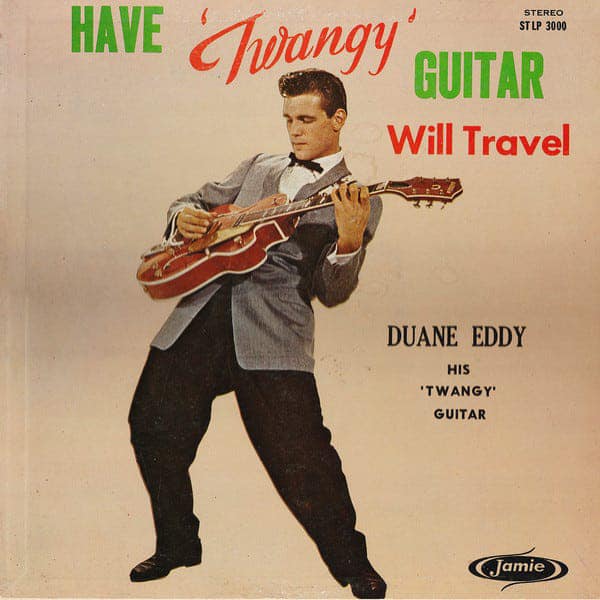
Duane’s 1958 debut album “Have Twangy Guitar Will Travel” hit number five on Billboard’s album chart and stayed on the charts for 82 weeks; he even acted in two episodes of “Have Gun – Will Travel,” the Richard Boone hired-gun Western whose title he’d borrowed. Britain’s New Musical Express (NME) voted him 1958’s World’s Number One Musical Personality, besting Elvis Presley. The Rock And Roll Hall of Fame inducted him early.

Later, when the Art of Noise remade Duane’s version of Henry Mancini’s “Peter Gunn” theme, Eddy became the only instrumentalist with top 10 hit UK singles in four different decades.

Tom Mitchell, whose Hambone record store stood in the shadow of Caffe Lena where he often played, once told me how music-timid buyers sought songs without lyrics in his shop. They gravitated to Windham Hill “new age” instrumentals to avoid triggering by lyrics with sexist or other objectionable content. Duane Eddy didn’t need words to raise alarm. His ominously low, almost menacingly resonant guitar tones, surging beats, brash saxophone hollers and massed, yelling choruses seemed plenty scary in the late 50s.

And therefore, Jim and I and multitudes loved him.

And, so, maybe, just maybe, I should have known something was up when Jim took me to the Musicians Hall of Fame on a Nashville visit a few spring-times ago – especially when Jay McDowell who ran the place came out to direct us personally into a door-side VIP parking spot.

Jay ushered us into a comfy entry lounge where a bearded, be-hatted gent and his wife rose to meet us: Duane Eddy, and wife Deed.

There’s “star-struck,” and then there’s something else, an even more intense and rarefied place where I found myself in awed silence at the Musicians Hall of Fame. I had met James Brown, Johnny Cash, Neil Young, Ray Davies of the Kinks, Joan Baez, Levon Helm, everybody in Peter Paul and Mary, all the Neville Brothers, all the Meters, everybody in Crosby Stills and Nash, everybody in the Talking Heads, everybody in the J. Geils Band, traveled for days with NRBQ…you see what I mean?
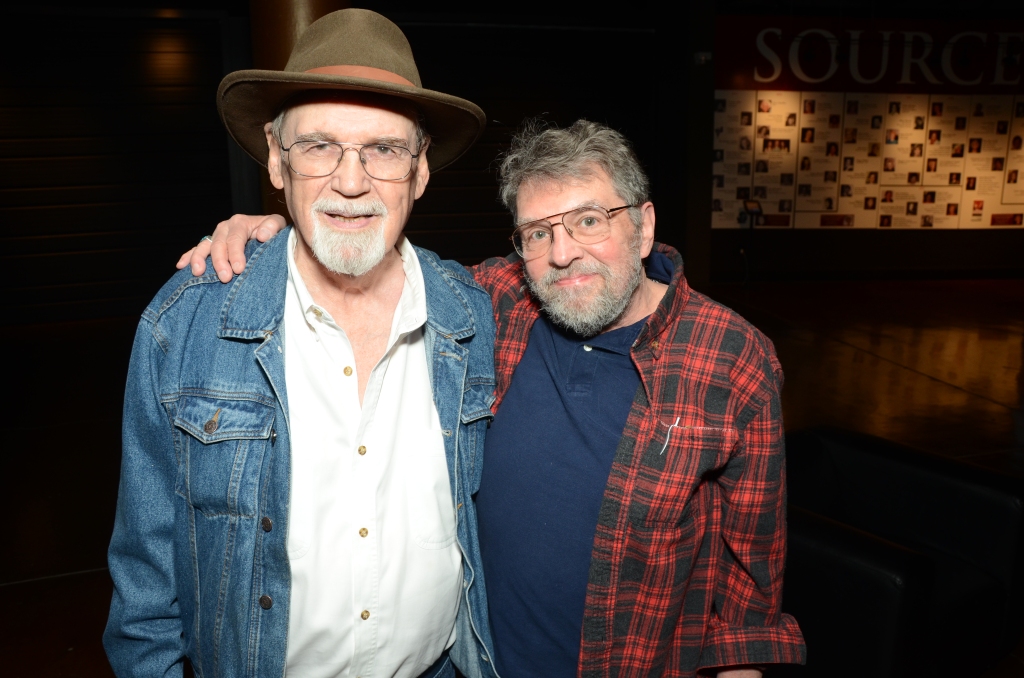
But that wasn’t this, as I realized when we all wandered into a cozy cinema where a film on the invaluable roles of session players, producers, engineers and other behind-the-scenes giants got their due. I was startled to recognize that the narrator voice in the tribute film was the same voice I heard from the man in the next seat, at my elbow: Duane Eddy.

When we wandered into an instrument-equipped alcove, a band formed, instantly. Duane grabbed a guitar; Jay a bass, and Jim sat behind the drum kit as they tuned up. Maybe they played Duane’s first hit “Movin’ ’N’ Groovin’” (1957), maybe “Rebel Rouser” – I don’t remember. But I do remember a joyous sense of privilege to be there, an audience of one.

In the exhibit halls we wandered, fans would recognize Duane and rush forward to wrap him in grateful adulation. Nobody could have been more gracious and patient, genuinely pleased to be recognized and greeted – he was the same low-key way through our three-hour lunch. 

Those people who courteously swarmed him there at the Hall of Fame; they were right.
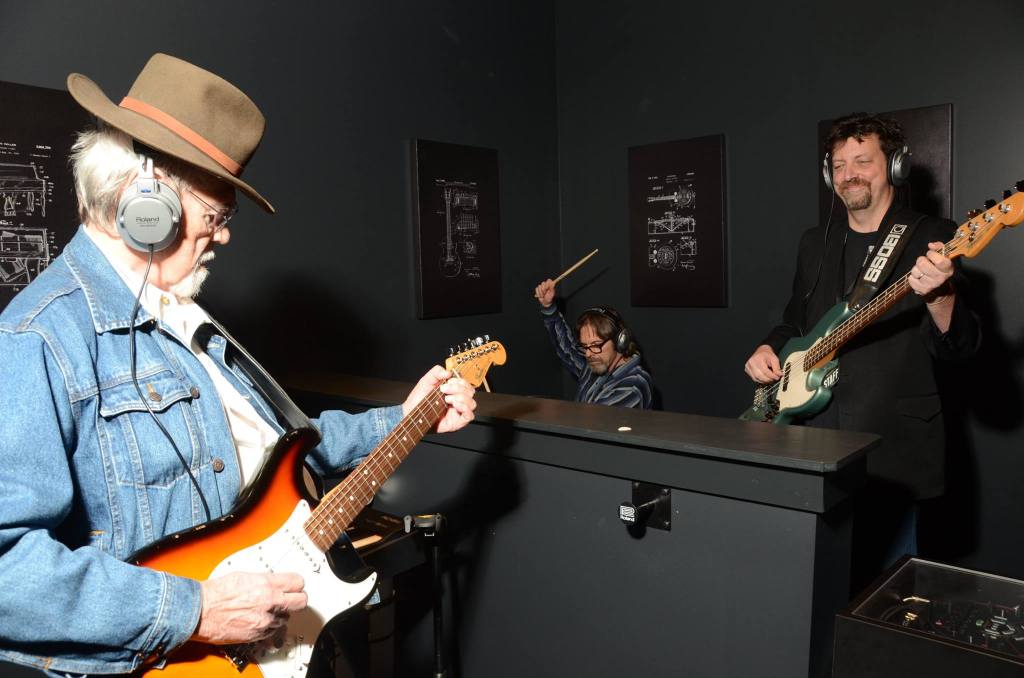
Duane Eddy, left; Jim Hoke, Jay McDowell

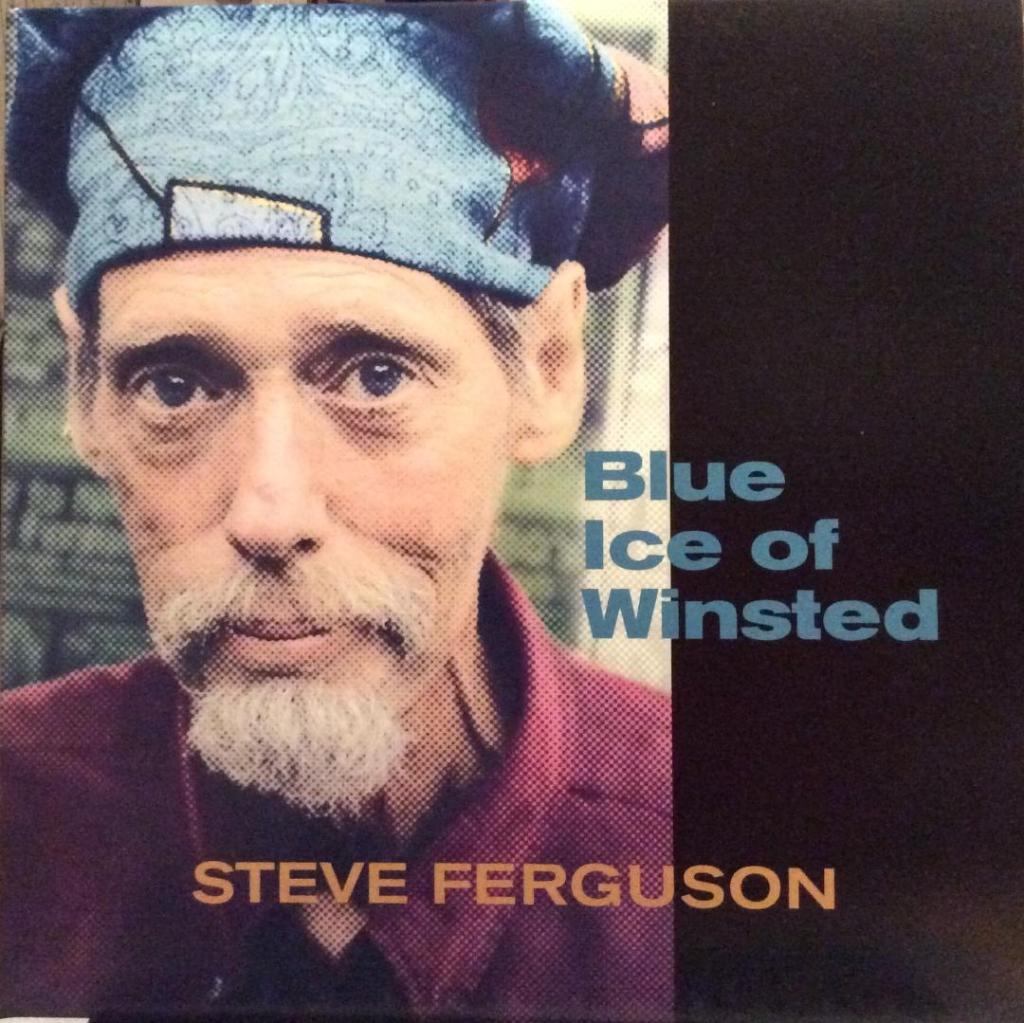
TO The Record Shelf #4 – “Blue Ice of Winsted” by Steve Ferguson

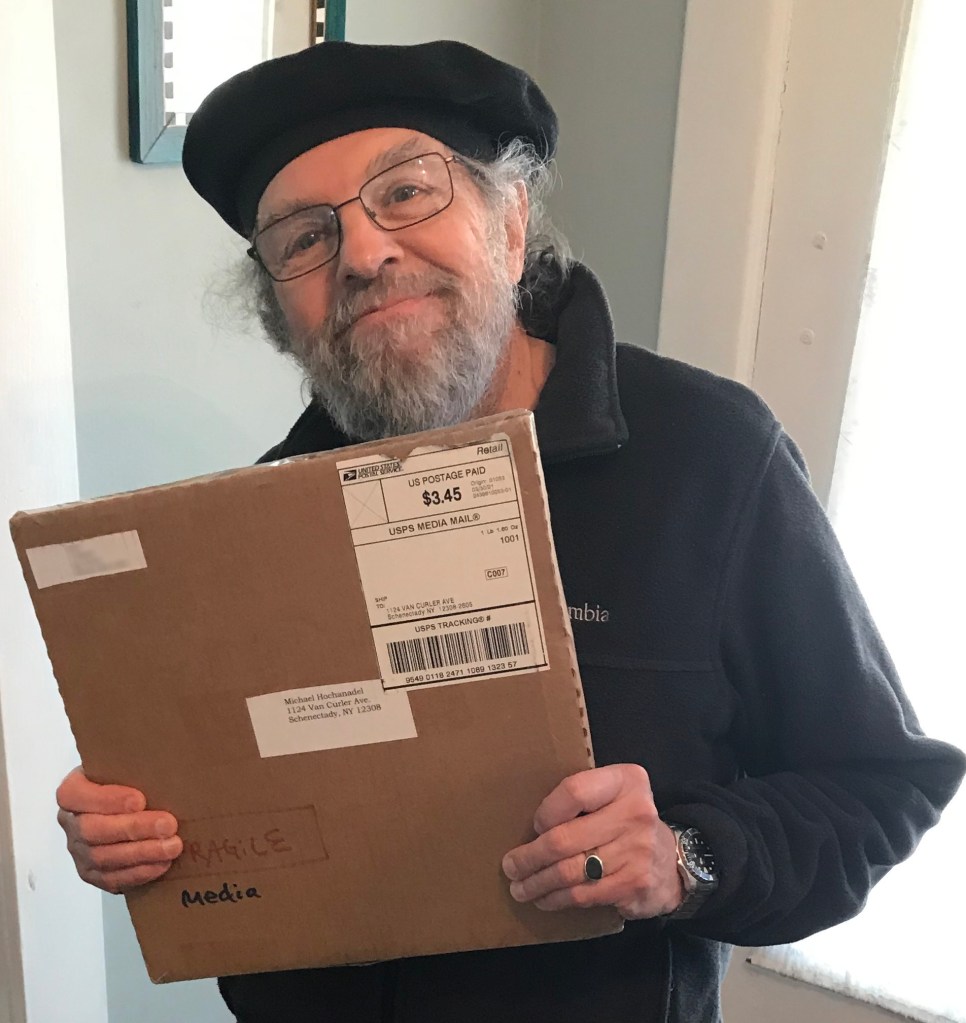
It came in a flat box, as vinyl albums did for decades. One day, YEARS ago, I got 29 albums in the mail on the same day. But the one that landed Saturday was the first new album I’d seen in years. 

The return address was Terry Adams’s P.O. box. 

Inside was: “Blue Ice of Winsted,” the last songs former NRBQ guitarist Steve Ferguson recorded before he died of lung cancer in 2009. He played this music on dulcimer, a late-in-life enthusiasm when his waning strength put the guitar out of reach. His former band-mate Terry Adams, NRBQ pianist and now clearly its leader, assembled it with care and devotion.

In 2006, Adams had brought his friend and erstwhile bandmate into the studio for “Louisville Sluggers,” a time-travel through NRBQ personnel and power that they also took on the road. 

That tour hit WAMC’s The Linda, the first venue Adams would visit with his Rock and Roll Quartet in May 2009. (He recorded and toured under that name until he felt satisfied the new band deserved the NRBQ name.) On a warm November night in 2007, Adams and Ferguson, bassist Pete Toigo and NRBQ drummer Tom Ardolino played a sold-out show spanning 20-plus songs including early ‘Q classics Ferguson played on, later NRBQ faves and such left-field numbers as “Suki Yaki” (Ardolino sang that one up front, Adams at the drum kit), also the “Dragnet” TV theme and “Flat Foot Flewzy.” 

For guitarist Al Anderson, who replaced Ferguson in NRBQ (mid-70s to mid-90s plus reunions) that song was crucial. “I heard him play the intro to ‘Flat Foot Flewzy,’ which was life-changing for me because all the other guitar players at the time were trying to distort and be like Hendrix,” Anderson told Mass.live.com before a 2009 Ferguson tribute show. “But Steve was the real deal, the only guy playing like that — real.” 

When frequent NRBQ guest saxophonist Jim Hoke complimented Anderson’s playing on a vintage NRBQ song that featured Ferguson on the original, Anderson modestly said, “Fergie could play stuff I can’t touch.” 

The sense of reality that Anderson cites, of somebody playing music they really mean, shines through “Blue Ice of Winsted.” As Rick Mattingly wrote in the album notes, “‘Blue Ice of Winsted’ combines Steve’s spiritual journey with his travels in the physical world.”

“This music was his last; he knew that,” said Terry Adams by email.

The opening and title track “Blue Ice of Winsted” describes a landscape in simple, sincere instrumental terms; portraying roadside ice formations Ferguson spotted on the way home with a new dulcimer he bought in Winstead, Connecticut after working with Adams on “Louisville Sluggers.”

“Waitin’ On the Avalon” traces a raffish riverboat journey complete with gamblers, fugitives and other ne’er-do-wells. Apart from a count-off later, It’s the only vocal number, a crackly, plaintive sound, and it testifies to Ferguson’s admiration for colorful miscreants.

In “Journey of the Magi,” his playing achieves a stately grandeur akin to viola da gamba master Jordi Savall’s early-music explorations.

Ferguson next manages a zippier evocation of Savall’s questing internationalism in “Melungeon Son Dance,” a celebration of the multi-culturalism he’s honored throughout his career, from the soul-rock-jazz amalgam of NRBQ through his own Midwest Creole Ensemble. (Check that band’s sparkling, funky album “Mama U-Seapa” Schoolkids’ Records 1995).

Flip the record over and up comes “Angelic Waltz,” the first song Ferguson crafted on dulcimer and a short, graceful mood piece here.

“Gathering of the Eagles” acknowledges a tribute to a tribute: a fundraising tribute at the Eagles Club in Louisville for Ferguson’s medical expenses. We hear his voice, for the last time, count off this quiet tune.

“WanDer of the Orient” is another tribute; Ferguson wrote it to honor his guide on wide wanderings in Japan when he and Adams toured there after “Louisville Sluggers” hit. It sounds like friendship more than anything specifically Japanese.

And the album ends with “Ode to McGuinn,” a contemporary of Ferguson and Adams. The Byrds were one of Ferguson’s favorite bands; but rather than echo how the Byrds echoed John Coltrane, Ferguson goes back to the source for a timeless feel.

As Adams said by email, “I just oversaw the project after the fact, seeing that it was mixed and mastered well, and looked good.” He said, “It was Steve’s gift to the world and I wanted to make sure it was received.”

“NRBQ was a rehearsal band, playing for ourselves only, at home,” Adams explained, noting how Ferguson transformed it. “When Steve came over and joined in, it didn’t take long to realize we would be living rich lives by bringing our approach to people,” said Adams, defining his own life’s work. “Even though Steve left the band in 1974, we remained musical brothers,” said Adams, explaining, “We did an album together called ‘Louisville Sluggers’” (Clang! Records 2007).

“When I became the producer for (Chuck Berry pianist) Johnny Johnson’s album (“Johnny B. Bad” Elektra Nonesuch 1991), he was the first person I called,” said Adams. Johnson’s album also featured Eric Clapton, Keith Richards, Bernie Worrell and members of NRBQ.

“His music still lives in our recordings and concerts,” said Adams of his late friend – a gifted music-maker with a distinctive, cleanly articulated approach, a now-vanished star who made music to cherish.

Steve Ferguson’s album “Blue Ice of Winsted” is available at http://nrbq.com/store_lps.html.

Live (Sorta): Mark Emanation Duo @ Caffe Lena 5/6/2020

This story first appeared in Nippertown, my first story there in months, and I’m pleased to be back, again. Let me explain. The late, great Greg Haymes (“Sergeant Blotto” in Albany rock-comedy band Blotto) and his partner in life and creativity Sara Ayers published Nippertown for a decade until Greg passed last year. I wrote and photographed stories there when they didn’t fit the Gazette style or format and felt proud doing so: It was the hippest, best-curated view of music and other arts in the Albany area. It retains that mantle since Sara handed the keys to publisher Jim Gilbert late last year. A big shout-out to Jim for opening this door.

I miss the stairs, and much else about Caffe Lena – but we don’t have to miss the music entirely. 

Blues great Mississippi John Hurt was playing there, first time I climbed those stairs; and blues were on the menu when I went up the virtual stairs Wednesday as the Mark Emanation duo (with guitarist Tom Dolan) played to three cameras in a house empty but for host Sarah Craig, stage tech Ian Hamelin and camera-video/broadcast sound tech Joel Moss.

The venerable (60 years) Saratoga Springs coffeehouse presents live music nearly every night in its Stay Home Sessions, both live streams and archived shows; plus instructional sessions.

Accessing Wednesday’s show was easy via Youtube at www.caffelena.org, Choosing what virtual show to watch via Mac from my Schenectady home-office desk, less so. Shows streaming Wednesday included the peripatetic Erin Harkes from hereabouts, also Nashvillians I’ve met while visiting my brother Jim Hoke there: Joe Pisapia at my cellist-nephew Austin Hoke’s poker-dinner parties, John England leading the hardest-hitting hard country band on the neon-splashed lower Broadway bar strip from Roberts Western Wear. But I digress.

The blues seemed right for me Wednesday, though, in memory of both Mississippi John Hurt from my first Caffe visit and Emanation’s long association with Ernie Williams, whose ghost climbed the stairs with him and Dolan.

Emanation, hereafter MA, started by placing himself in the Caffe’s history, citing past shows there including benefits that burnish the bluesman’s long reputation with Williams, Folding Sky, current crew Soul Sky and almost uncounted others.

MA and TD have made music together since their early teens in Watervliet schools; and it showed Wednesday. At their best, they flowed smooth and easy. Handoffs and endings sometimes felt ragged, though, yet that seemed OK in these days when practicing seems problematic. They know what their best stuff is, so after warming up on two songs with more generic than specific messages, they hit an early peak by getting sadly real in “Watervliet Waltz.” Here they mourned change as loss, noting globalism as a zero-sum game our Rust-Belt towns are losing. 

The production was sharp, MA’s vocals and both guitars coming through clear. Three cameras caught the action (though both played seated), pivoting on the beat to catch TD’s solo in “What Am I Gonna Do,” then right back to MA for his break, for example. MA aimed his voice south in songs set there including the plaintive post-Katrina “Rain Keep Fallin’ Down,” pleading “Can we make it” in words that seem sadly apt today. Mourning marked the next number, too: “He Don’t Live Here Any More,” dedicated to departed fellow bluesman Tom Healey; but in this number and others with local settings, MA sang in a distinctly northeastern, Springsteen-echoing, Rust-Belt howl.

The mood shifted to anger in CSN&Y’s “Ohio,” intro’ed with MA’s recollection of protests announced in placards inserted in newspapers he delivered as an 8thgrader appalled by the Kent State National Guard murders. They nailed it, and held their mood of modulated outrage through “I Remember Bobby Sands” about the Irish hunger-strike hero. While TD riffed most of the hot solos – his break in “”Frozen” might have melted a glacier – MA’s coda in “Ohio” and fiery lead in “”Sands” sparkled just as bright. So did his slide solo driving the stoic shuffle “Tomorrow’s Gonna Be Another Working Day.”

Late in the show, they riffled back through the Ernie Williams songbook, MA explaining how he and his band mates transmuted Williams’ road-trip stories and recollections into songs they’d write for their elder-leader to sing. MA’s humility in noting they’d had to grow into those songs spotlighted in powerful poignancy how the blues flow from generation to generation. 

Their best songs followed me down the Caffe’s virtual stairs as they wound down, reaped the applause from their audience of three; so did CSN&Y’s “Ohio,” written in a time as troubled as our own. I remembered, too, how Graham Nash told me in an interview how proud he was of “Ohio” – although it followed and eclipsed his own idyllic “Teach Your Children Well.” Nash recalled “Ohio” pushed “Teach” off the singles chart, but suggested it deserved to, that its message was that important. 

We don’t know what important angry, compassionate or even funny messages our  singers will sing about these times. But we can expect to hear many of them at the top of the stairs of Caffe Lena.

Live chat and a virtual tip jar to support the performers and the Caffe are available during streams.