Jazz on Jay Season Opens Thursday

Dylan Canterbury’s New Quintet Plays New Season’s First Show, 12 Noon on Thursday, June 5

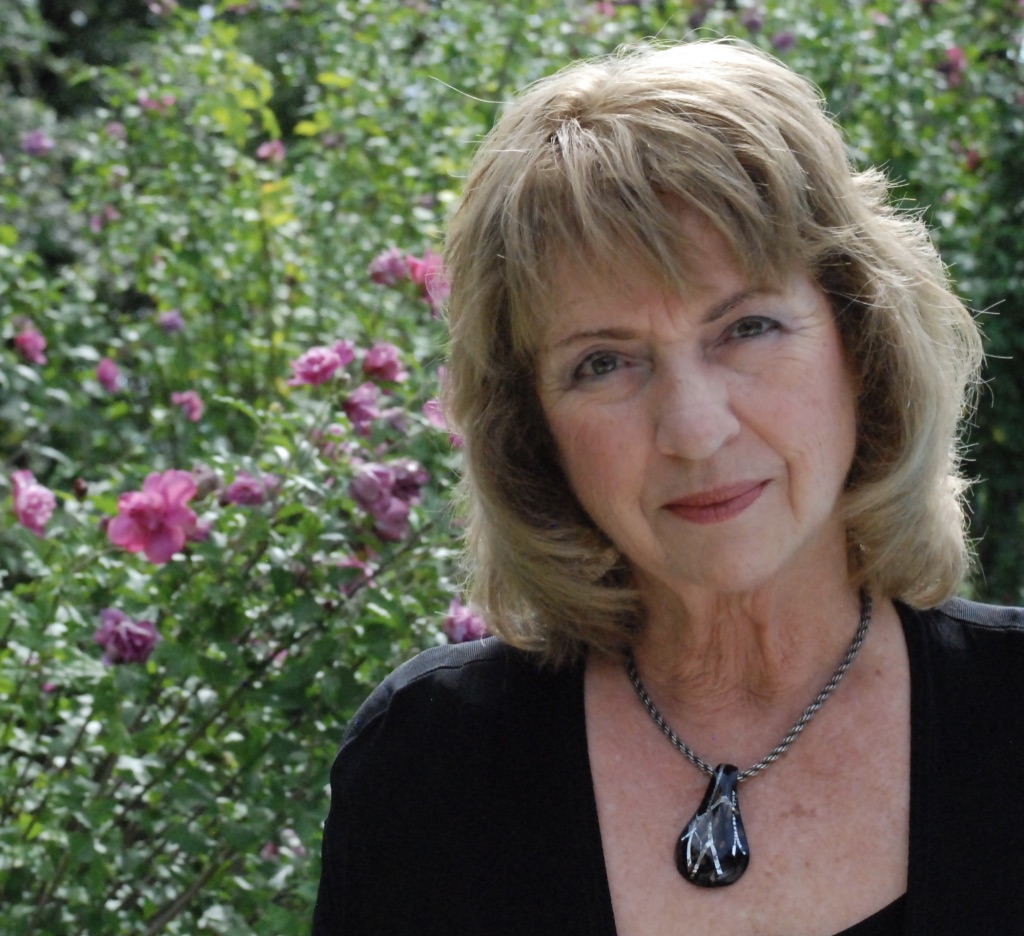
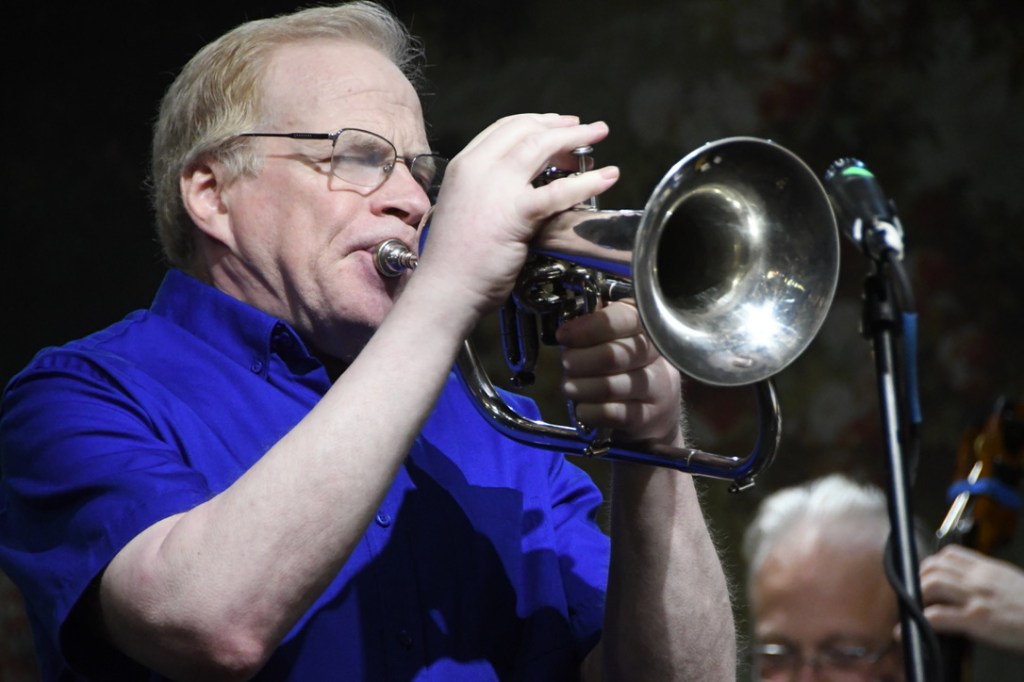
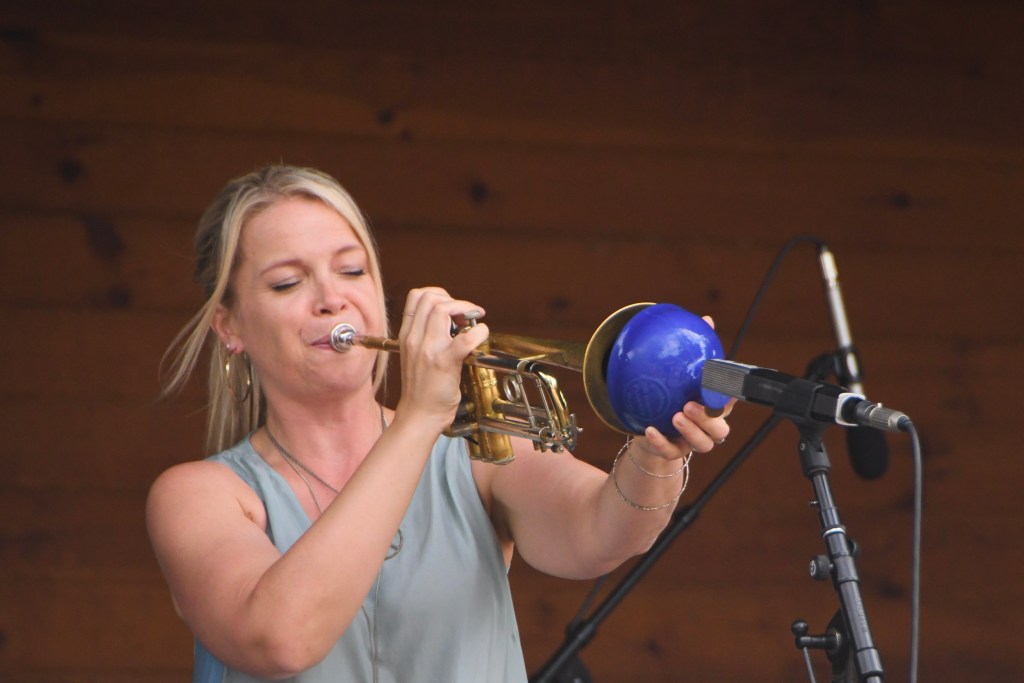
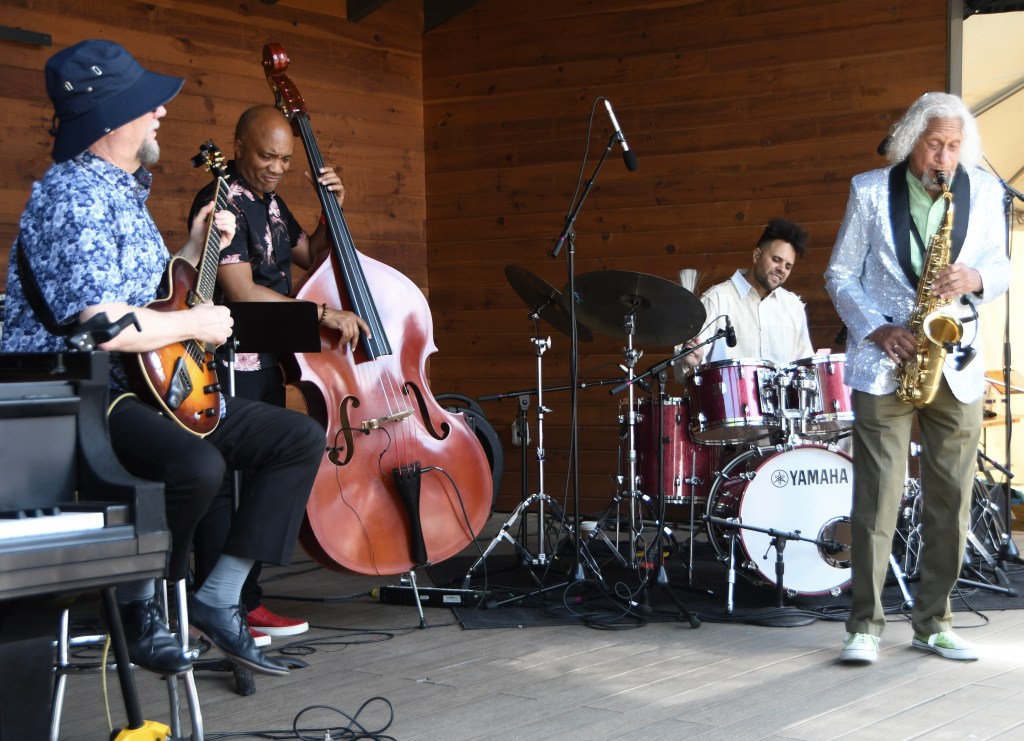
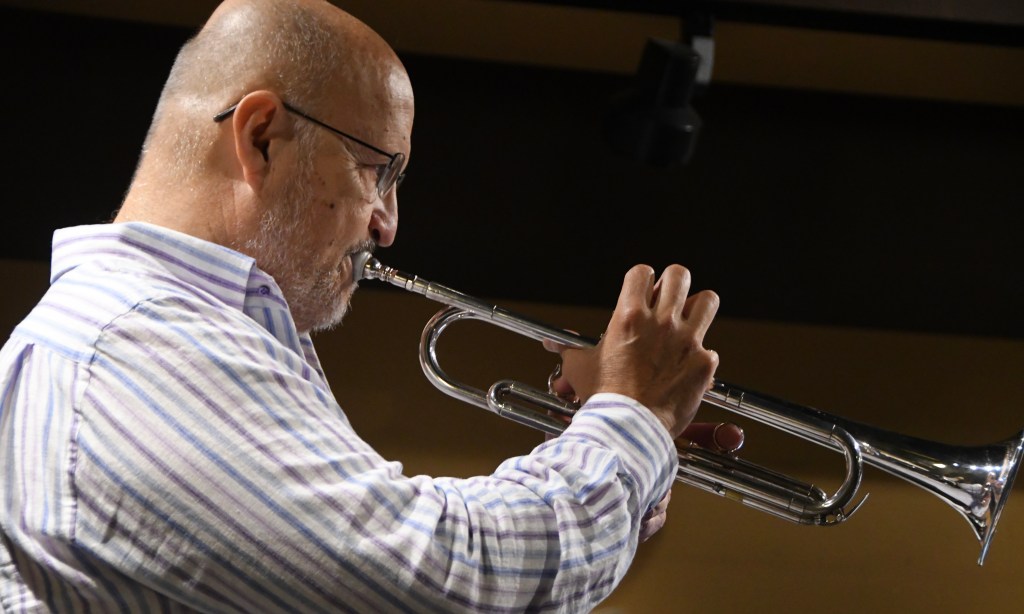
Dylan Canterbury opens the new season at Jazz on Jay Thursday; the busy trumpeter, composer and arranger played his first-ever show as bandleader at Jazz on Jay in 2021. All 13 noontime shows are free, open to everyone.

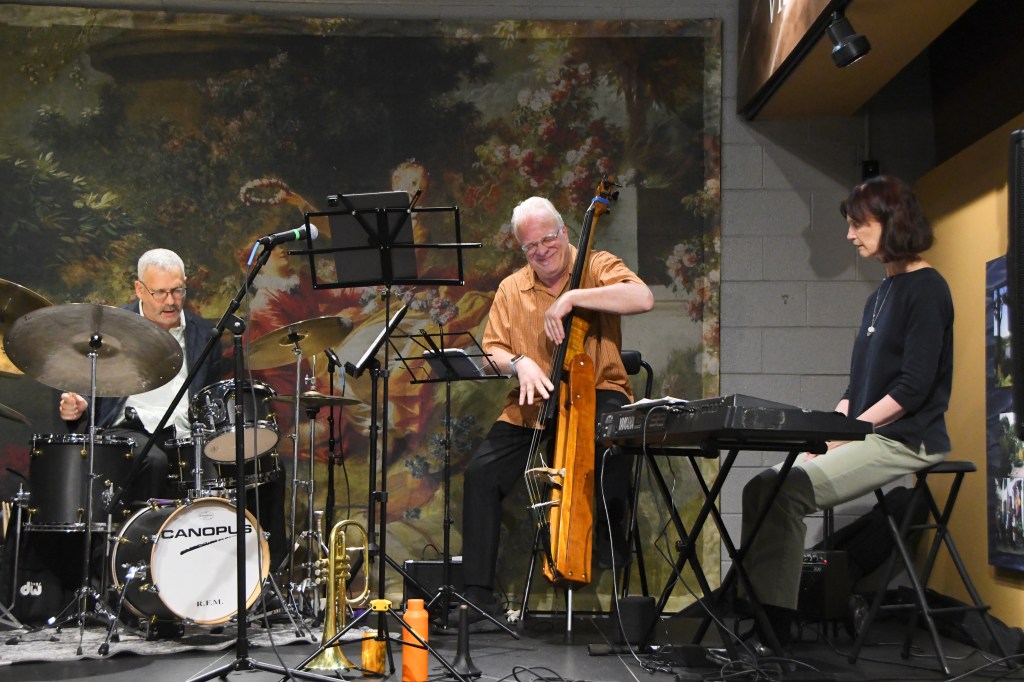
Thursday, Canterbury leads a new quintet whose guitarist Wyatt Ambrose opened last season at Jazz on Jay. While this lineup is new – Ambrose; Tyler Giroux, piano; Dave Shoudy, bass; and Matt Niedbalski, drums – “we’ve all worked with each other in different settings before,” says Canterbury.
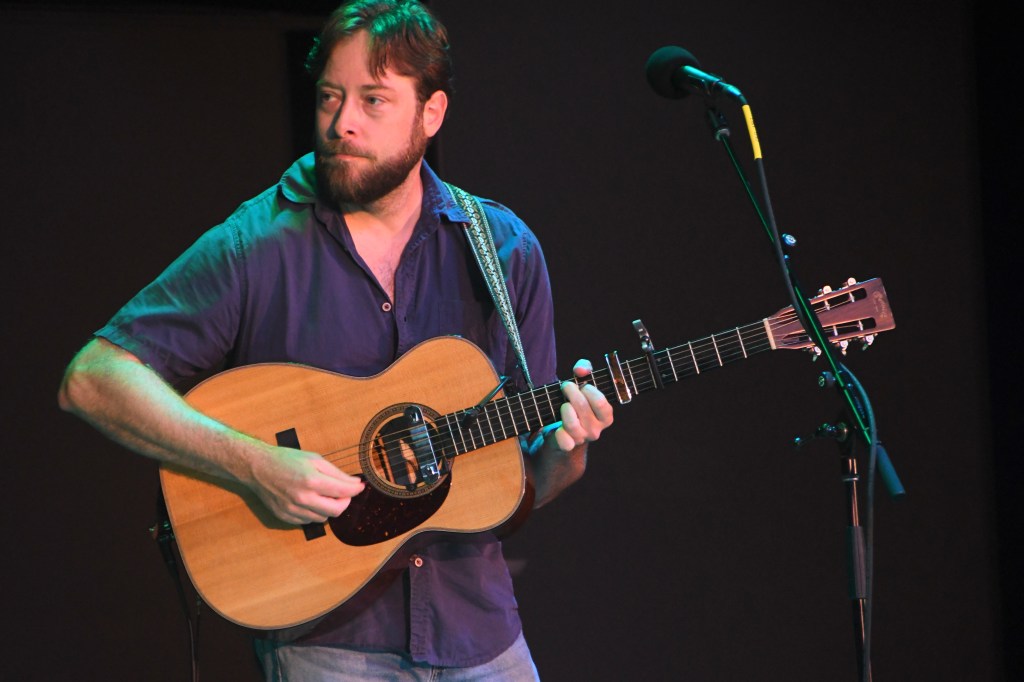
Dylan Canterbury. Photo provided

For Canterbury, it all started with a birthday CD. “Louis Armstrong was and continues to be my primary inspiration,” he says. “My parents got me a CD of his for my 10th birthday, and I still remember the feeling I had when I listened to it for the first time. Even as a kid, I knew I was experiencing something uniquely special, and that I wanted to be a part of that in any way possible,” he recalls.

Making music himself seems a natural for this member of a musical family. Canterbury’s father played trombone in high school and college, one cousin teaches music and another is training as a music therapist. Canterbury’s wife is a classically trained violinist and vocalist, and her father plays cello with the Syracuse Orchestra. 

Locally, Canterbury studied with Eric Latini and Joe Lamb and played his first gig at 15; at SUNY Purchase he trained with Jon Faddis, Jim Rotondi and Ray Vega. 
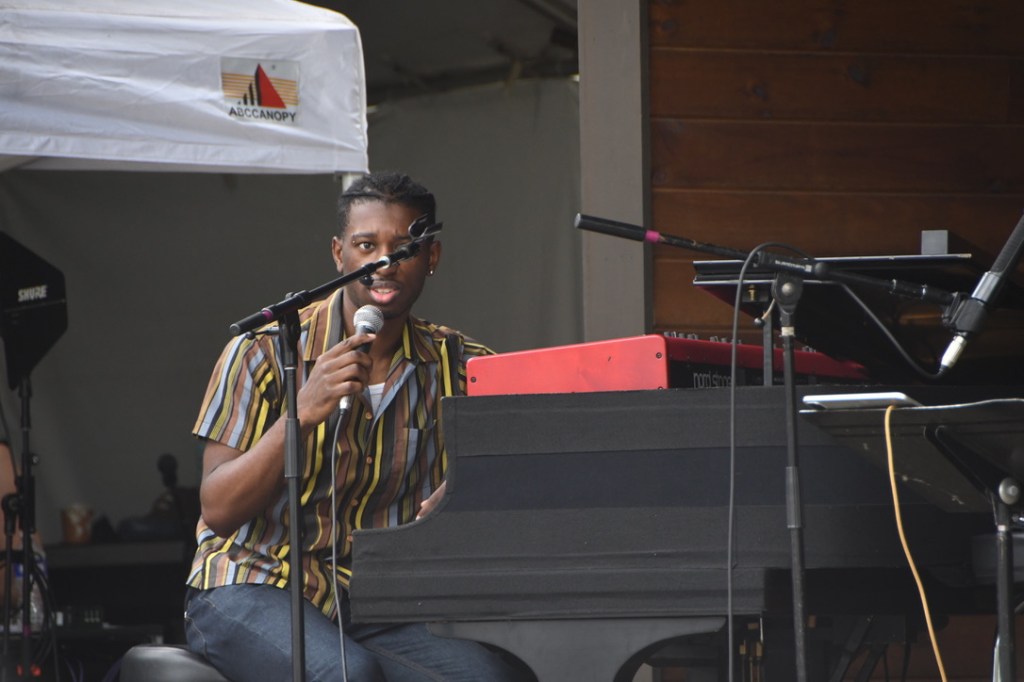
“Most of the tunes (he’ll play Thursday) are originals,” says Canterbury, “largely in the post-bop style, influenced primarily by 1960s Blue Note recordings.” He adds, “For originals, we’ll be playing some of my older compositions such as ‘Spin’ and ‘Quiet Revolution,’ as well as debuting a new tune called ‘El-Ahrairah.’” They’ll also play Steve Swallow’s “Eiderdown,” Dave Grusin’s “Chanson” and Bill Evans’ arrangement of “Wrap Your Troubles in Dreams.”

“When playing standards, I try to keep the song’s original intent in mind while finding some kind of new wrinkle to lean into,” he says. “It’s important to maintain the integrity of a tune while also not just treading the same ground as those who came before us,” he explains, adding. “There’s ample room for improvisation.”

Busy as player and composer, Canterbury leads own quintet, co-leads the BWC (Brucker-Weisse-Canterbury) Jazz Orchestra, and he plays with Keith Pray’s Big Soul Ensemble, Bobby Previte’s Upstate Composers Orchestra, the Empire Jazz Orchestra, the Tim Olsen Big Band and Alex Torres and his Latin Orchestra. His “Going Places” album hit in 2020.

He also teaches at SUNY Schenectady where he directs the jazz ensemble and teaches jazz-focused courses in trumpet, improvisation, and history. “Until its closure last year, I was on faculty at the College of St. Rose,” says Canterbury, “where I taught improvisation and arranging. I also maintain a studio of private students.”

For the nonprofit Jazz Lines Publications that preserves historic jazz literature and scores, he does engraving, the craft of using musical notation to produce cleaned-up versions of classic music scores by referencing original source material. When written sources aren’t available, Canterbury’s well-tuned ear enables him to copy scores from original recordings, a craft called transcribing.

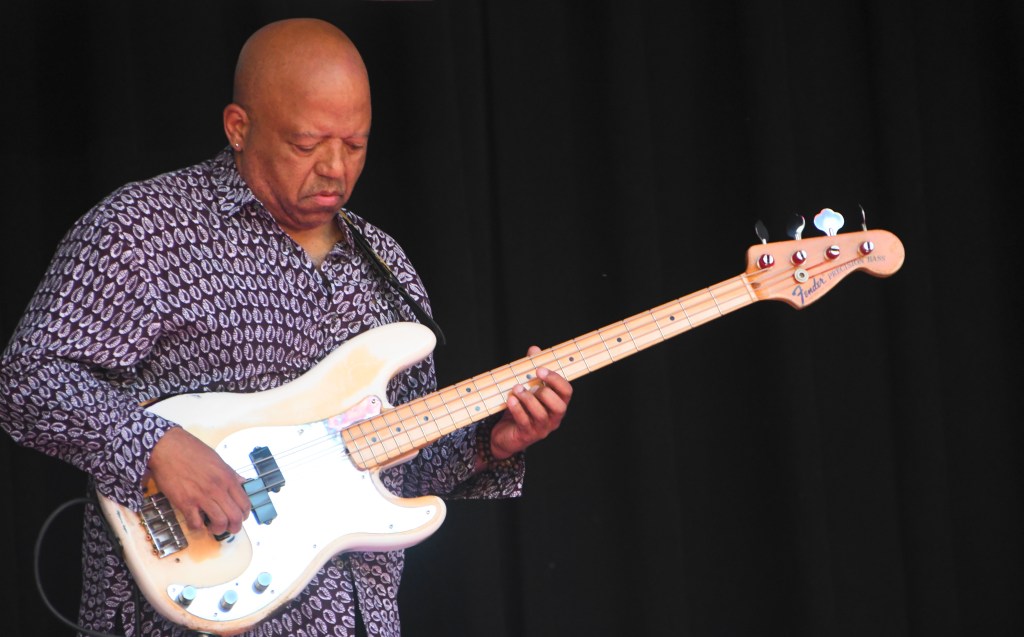
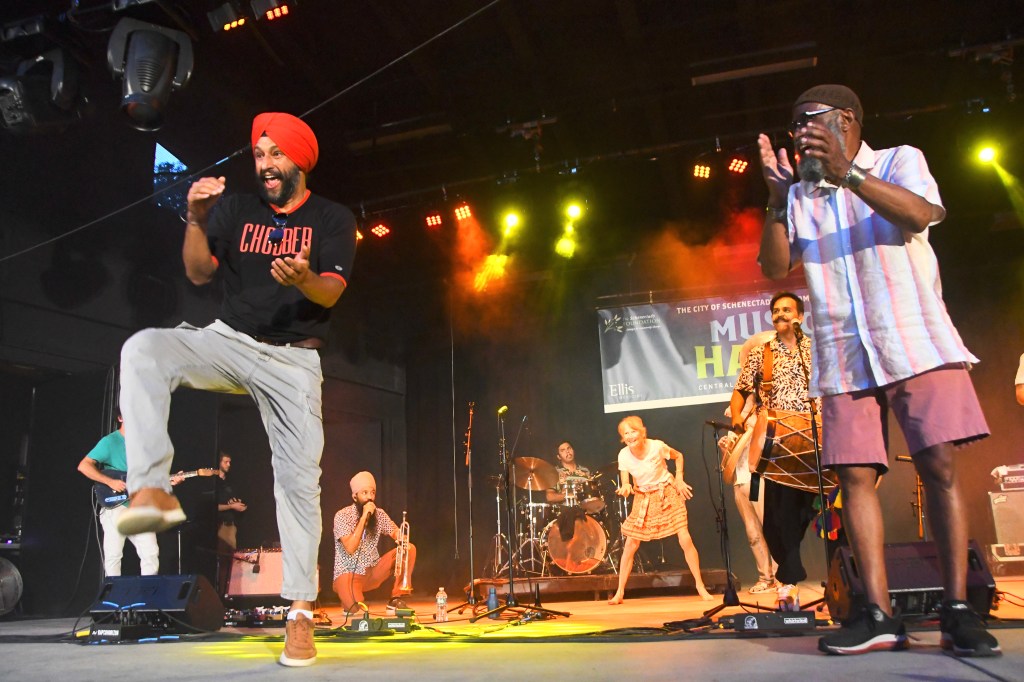
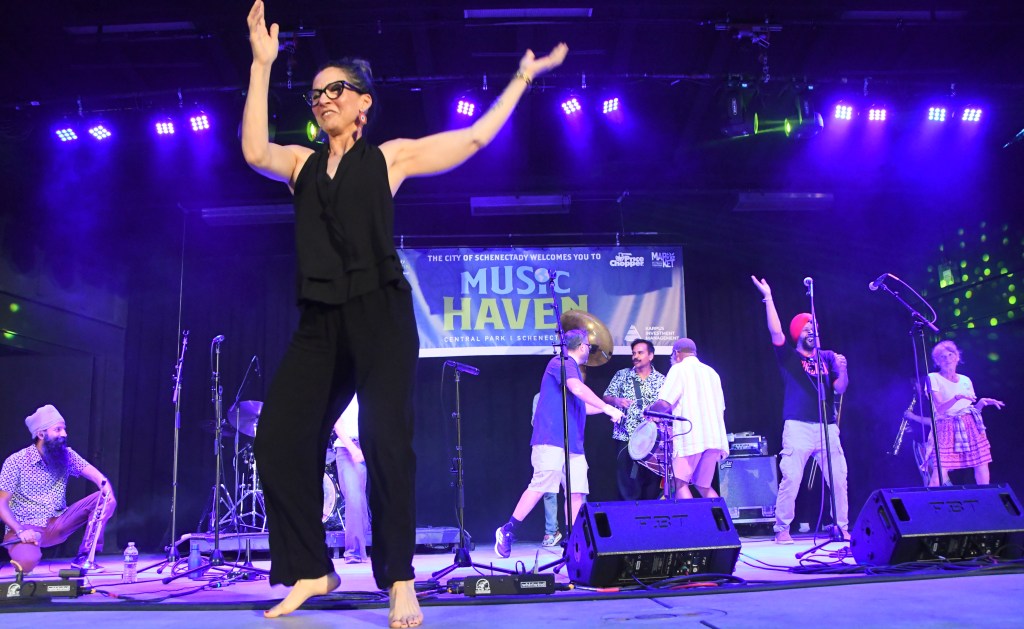
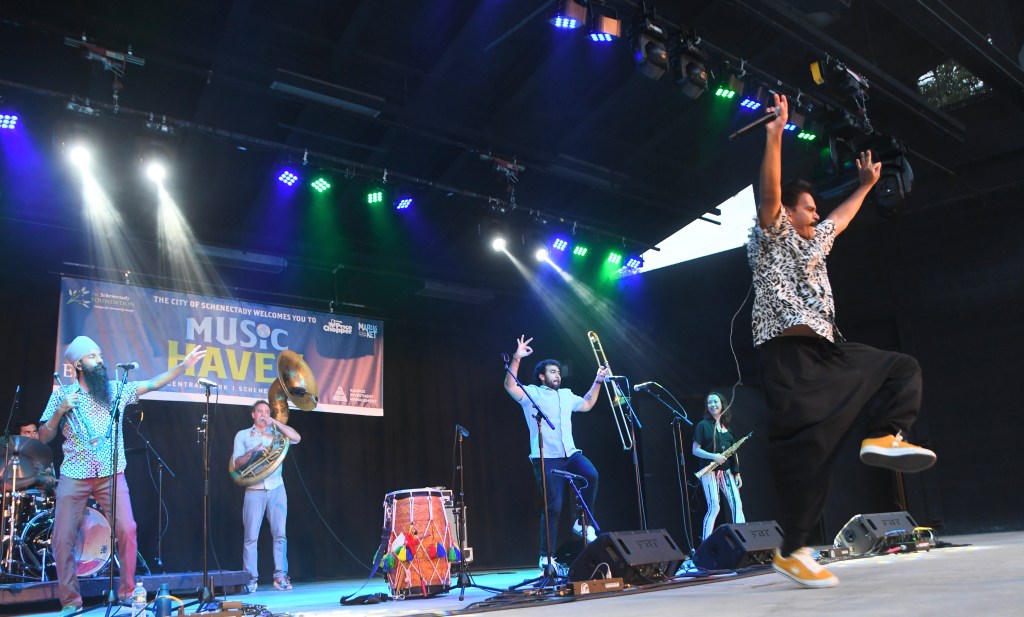
On Friday, July 18th, Canterbury will play Music Haven in Schenectady’s Central Park with the SUNY Schenectady Jazz Faculty Combo; and he plays with Keith Pray’s Big Soul Ensemble on the last Tuesday of every month at the Cock ‘n Bull in Galway. Both ensembles often play his original compositions, as does the BWC Jazz Orchestra whose performances are less frequent these days.

Jazz on Jay free concerts are noon to 1:30 p.m. at Jay Square, the newly park space opposite Schenectady City Hall. The rain site is Robb Alley at Proctors, 432 State St., Schenectady. Seating is provided indoors at Robb Alley, but patrons are invited to bring their own seating and refreshments to Jay Square.

Jazz on Jay is presented by the ElectriCity Arts and Entertainment District and sponsored by the New York State Council on the Arts, a Schenectady County Legislature Arts & Culture Grant, Downtown Schenectady Improvement Corporation, The Schenectady Foundation, Price Chopper/Market 32, MVP Health Care, Schenectady County, Schenectady City Hall, and Proctors Collaborative. This blog is a series media sponsor.

REVIEW: Four Jazz Brothers

The Levin Brothers at Caffe Lena; Tuesday, May 27, 2025

“Some nights we don’t play it that well,” Pete Levin mused after the Levin Brothers romped through Lenny White’s horror-movie bebop “Wolfsbane” at Caffe Lena Tuesday.

The Levin Brorthers – From left, Pete Levin; Jeff Siegel (behind mic stand), Pat LaBarbara, Tony Levin

They played it all well, belying Pete’s modest mock worry, introducing Erik Satie’s elegant “Gymnopedie No. 1,” that the band’s experiments with others’ music meant they’d become “just a cover band.” Right, “just a cover band” that launched from quiet solo piano into Paul Simon’s “Scarborough Fair” earlier. They’d celebrated the ballad’s pure, familiar prettiness, then bopped into a bustling B-section that energetically took the tune apart and reassembled it as LaBarbara’s electronic wind instrument brought it home.

Pat LaBarbara

The quartet – keyboardist Pete Levin, bassist-brother Tony, tenor saxophonist-EWI player Pat LaBarbara and drummer Jeff Siegel – delighted the Caffe full of musicians and mostly-boomer fans, often re-inventing “covers.”

They didn’t start that way. Their original opener “Out of Darkness” wandered between fusion and bossa with Tony plucking a five-stringed electric upright bass in close sync with Siegel under solos from LaBarbara’s EWI and Pete’s piano-sounding synthesizer. A repeating, circular vamp set Siegel loose.

Below, Tony Levin

Pete Levin

Pete’s synthesizer mostly emulated a piano but beefed up to a menacing organ sound in “Wolfsbane” – as Tony left his electric upright for a five-string bass guitar – and resonated with a Fender-Rhodes-like ring in Wayne Shorter’s lovely “Fall.” LaBarbara switched to tenor first in “Dream Steps,” an original bebop based, he said, on “You Fell Out of a Dream.” He said this came from a 40s film starring Lana Turner, whose entrance to nightclubs thereafter detoured jazz bands from whatever they were playing to greet her with “Dream.” Mock-cranky, LaBarbara complained bands don’t do that when he comes in. Such self-deprecation marked many intros, especially Pete’s, but their playing blew away any need for it.

Below, Pat LaBarbara

Three songs in, they were in full flight, but after “Dream Steps,” they flew higher in a swinging, spunky – well, yeah – cover of Steely Dan’s “Aja” that Pete called an experiment. Like “Scarborough Fair,” this flowed in familiar fashion through its wistful main melody before diving off the map, this time via bebop tenor sax, abrupt tempo shifts and an all-in coda with a repeating riff by LaBarbara and the Levins as Siegel drummed wild.

“Brothers Take a Ride” recalled a California tour (before Siegel replaced drummer Joe LaBarbara) with bristling, jagged cadences where Pete seemed to lose his way for a moment, cueing (Pat) LaBarbara’s tenor to the rescue before a second and more successful chorus. Here Tony and LaBarbara echoed riffs in harmony.

Things got pretty in Satie’s “Gymnopedie,” a slow reverie whose sweetly delicate melody charmed the place before – as in “Fair” and “Aja” – experimental forays outside. They did the reverse in “Wolfsbane,” a horror movie mood leavened (Levin’ed?) by LaBarbara’s tenor quote of “Softly As In a Morning Sunrise” but revved again by Tony’s propulsive bass guitar.

Jeff Siegel

In “another pretty one” (like “Gymnopedie”) as Pete promised, the sweetly tuneful original “Fade to Blue” rode a cozy Pete piano vamp that LaBarbara used as launching pad for bold explorations. Then they punched up the energy in “Bringing It Down to the Bass,” alternatively “Bringing It Down to Laid-Back Lee,” echo of an earlier title for this original. They made maximum fun of this cheerfully self-confident freeway funk number.

LaBarbara stayed upbeat, starring in “Good News” which they’d recorded with Brazilian percussionist Emilio Martins. Sounding more straight-ahead than Brazilian, this featured Tony donning finger extensions to percussive effect as Pete used electric piano sounds for a modern mood. 

He emulated a clavinet in “Gimme Some Scratch” from their self-named first album (2014), suave and swinging on short riffs and a stop-and-go cadence.

They left unplayed a planned encore of “Icarus” but nobody seemed to feel short-changed.

Afterward, as fans clustered in the lobby where both Levins met and greeted, LaBarbara and Siegel greeted Don McCormack, patron saint of Saratoga jazz, and his family. At the table next to mine, the two band members then sat flanking Hal Miller, smiling as the Albany percussionist and archivist told old jazz stories.

TO The Record Shelf – “The Great Yellow Light” by Willie Nile

From the first, Willie Nile has welded messages of compelling moral force onto high-impact, stripped-down rock and roll. “The Great Yellow Light,” his 21st album, may be his most powerful, passionate and compassionate collection.

Willie Nile has rocked at the highest international-star levels since 1980 when his debut album hit, backed by Patti Smith’s band. Within weeks, the Buffalo-born but very New York City rocker was opening shows for The Who, by Pete Townshend’s request, drawn by Nile’s irresistible amalgam of musical and moral force. The next May, Nile played UAlbany’s freebie MayFest on campus, singing most of that first album, plus “Radiation,” a blistering attack on deadly corporate nuclear carelessness that may have cost him that first record deal. 

Some of his power comes from sheer sonic muscle: chainsaw guitars over insistent drumbeats. But most of it is simply him: a yearning or declamatory voice exerting the moral force of fiery conviction. He means what he sings, at a bone-deep level.

Since his 1980 area debut, Nile has played everywhere hereabouts, from cozy clubs to SPAC’s wide stage. Opening solo for the Roches at UAlbany’s Page Hall in a band-less period between record deals, he went on without an introduction and slew the place, prompting a fan to holler, “Who ARE you?” By now, especially after many shows at WAMC’s (sadly, soon to close) The Linda, everybody knows.

Willie Nile at The Linda. Michael Hochanadel photo

Now, when those whom Nobel Prize-winning economist/columnist Paul Krugman calls “sadistic zombies” in a befouled White House attack and threaten musicians Bruce Springsteen, Taylor Swift and Beyonce, we need Nile’s new album of truth, of free expression from a brave moral conscience.

Old friends, Nile and Springsteen sing on each other’s shows, and they show more courage than a passive Capitol-full of Congressional cowards, and cowed, over-cautious corporate media.

Play this one loud; it’s tuneful enough to sing along, righteous enough to inspire.

“Wild Wild World” kicks off “The Yellow Light” with a list of troubles Nile hopefully transmutes into a rousing call to action. Nile has said it’s “a call out to our better angels.” He has explained, “Even though the history of America is riddled with pain and injustice and the divisions between us are greater than ever, I refuse to give in. I know we can do better than this.”

Next, in “We Are, We Are,” he offers a consoling assurance that we indeed can do better: “They can’t stop us any more.” Later, “Wake Up America” urges courage in the fight with those Krugman calls “sadistic zombies.”

Even the love songs proclaim strength and hope. In “Electrify Me,” Nile calls for mutual inspiration and energy, not just with a lover, but also across his community. The title track romances a powerful woman “with wonder in her eyes and thunder in her heart.” A few tracks later, the heartfelt slow ballad “Fall on Me” offers an all-purpose helping hand.

Before the calls to action that close the album comes that lovesong respite, plus the pipes-spiced “An Irish Lullabye” and the autobiographical “Tryin’ to Make a Living in the USA” – a fun-rocking, rollicking knock on the music business.

Then Nile lets his indignation rev up again in the call-to-action “Wake Up America,” insisting that we MUST do better. In the stately waltz-time album-closer “Washington’s Day,” Nile inspires with the invitation to be, and work, together.

The credits list impressive guests swirling around Nile’s band of Johnny Pisano, bass; Jon Weber, drums; and Jimi Bones, guitar. Steve Earle (at Universal Preservation Hall this Thursday, June 5) and Paul Brady guest at the mic, Rob Hyman and Eric Bazilian (the Hooters, for whom he opened recently), Larry Kirwan, Fred Parcells and Chris Byrne (Black 47) and Waddy Wachtel (every southern Cali rocker) and David Mansfield (Rolling Thunder Revue) play simple parts. Nile’s longtime producer Stewart Lerman once again achieves a honed, high-energy primal rock sound that relies mostly on guitar power although Nile plays piano some, as on “What Color Is Love.”

All this skill is focused in fine-tuned unity behind a small man with a giant message of alarm balanced with hope in action. The music rocks to exhilarating effect, mostly, but with quieter interludes, notably “Irish,” to catch our breath. Nile’s voice croons quietly or rises in rousing calls to action; compelling and inviting, either way.

PREVIEW – Southern Avenue Friday, May 23 at Lark Hall

Memphis soul from a family band

Southern Avenue plays Lark Hall Friday, two days before “Family” hits – the fourth album of the family band; built on the Staples Singers blueprint of three singing sisters and a guitar guy.

In the Staples, that guy was Pops Staples, father of the singing sisters. In Southern Avenue, it’s Israeli-born singer-guitarist Ori Naftaly who came to Memphis in 2013 for the International Blues Challenge where he saw Tierinii Jackson sing. “I saw my entire future flash in front of me,” Naftaly has said. 

Two years later, they were a band, and married. They completed Southern Avenue by adding Jackson’s sisters; drummer-singer-songwriter Tikyra (T.K.) Jackson and singer-percussionist-violinist-vocalist Ava Jackson. 

They named themselves after the Memphis street that passes the funky-soul Stax Records label, musical home of Booker T. and the MGs, Otis Redding, Sam and Dave, Wilson Pickett and other 60s and 70s stars. Southern Avenue’s passionate power glide soul sound was a natural as first Memphis band to for the revived label, releasing their self-named debut album in 2017. They won the Blues Music Award for Best Emerging Artist the next year, when their follow up “Keep On” (2019) earned a Grammy nomination. Los Lobos saxophonist and keyboard player Steve Berlin produced their next release, “Be The Love You Want” (2021).

Few bands manage to sound both familiar and fresh, but that’s Southern Avenue’s sweet spot; and the secret is soul. You can hear it, top to bottom, because the voice and guitar grab you first. Up top, Tierinii Jackson’s voice has a light, fleet sound, while Naftaly’s guitar chimes in various bluesy ways, a slide glide here, a staccato single-note run there, hefty chords under a vocal chorus. Down below, beats pump and push under the arrangements, unified and powerful.

And the harmonies; does anyone sing together better than siblings? This “Family” album celebrates that closest of connections. Best of all is their authentic, organic feel.

Last summer when they toured with Willie Nelson’s Outlaw Music Festival, Nelson wore a Southern Avenue T-shirt onstage and brought them back out after their earlier set to guest with him on the last three songs of the all-star show.

For fans of my vintage (early boomer), this new music feels like the Stax soul we loved growing up: all funk energy, punch and passion. For us, It’s “Oh, THAT sound!” For younger listeners who may have learned what soul sounds like through Lake Street Dive, Black Pumas, Leon Bridges or the current parade of single-named newcomers, this is stronger stuff, and sweeter.

“Family” hits on Monday as their debut on Chicago blues label Alligator Records, featuring 14 original songs. In addition to the core four – singer Tierinii Jackson, guitarist Ari Naftali, singer-drummer Tikyra Jackson and singer, percussionist and violinist Ava Jackson – they imported studio talent: keyboardist Jeremy Powell and bassists Blake Rhea and Luther Dickinson (North Mississippi All-Stars). 

When they introduce the new songs onstage at Lark Hall on Friday, they’ll be ready after three hometown shows this week.

Southern Avenue plays Friday, May 23 at Lark Hall (351 Hudson Ave. Albany) with special guest Ky McClinton. 8 p.m. $35.93, $24.40 518-599-5804 www.larkhallalbany.com

REVIEW – KINTSUGI SOUL

Bettye LaVette at Caffe Lena, Saturday, May 17, 2025

When traditional Japanese potters repair a broken pot, they pour molten gold into the cracks. 

When Bettye LaVette’s voice cracked onstage at Caffe Lena Saturday, it burnished the lyric with the pure gold soul sound of deep feeling.

Singers either have pretty voices or they don’t; Bettye LaVette knows she doesn’t and said hers was more James Brown than Doris Day. She called her 85-minute song recital “not really a show.” No band, no dance moves. She sat, mostly, and cast an intimate spell, of “coming over to my house.” In song intros she noted “I have so many lies to tell you” – but she and the songs rang true. No band, maybe, but Alan Hill accompanied her beautifully on either the Caffe’s venerable upright piano or an electric keyboard. Seldom soloing, he ranged in well-made, minimalist backgrounds from funky soul to fervent Gospel to broken-heart blues. He calmly rolled along as she changed up the set list.

Alan Hill, left; and Bettye LaVette

Tiny, trim, she leaned on grandson/road manager Randall’s arm to mount and leave the stage. Up there, though, she ruled.

LaVette started with “Things Have Changed” by another non-pretty-voiced singer (and returned to Dylan’s songbook later with “Emotionally Yours.”) She packed room-filling drama, brassy dynamic intensity and Dylan’s own trademark ambiguous regret and resignation into “Changed.” Then, when when her voice cracked and quavered in Angelo Badalamenti’s complex “I Hold No Grudge,” it only heightened its poignancy, without sounding at all contrived or theatrical. 

The same emotional directness marked, or elevated, Sharon Robinson’s “One More Song” which she noted proudly is on “Blackbirds,” her 2020 album of all women-written songs. (“I’ve Got My Own Hell to Raise” [2025] is another. But we digress.) When she rhymed “call it quits” with “that’s it,” she might have been delivering a death sentence.

Slowing down “I Just Dropped In (To See What Condition My Condition Was In)” tugged the Kenny Rogers/First Edition hit from novelty-song superficiality into something mature and meaningful.

In other words, she made very good indeed on her claim to be a song interpreter whom songwriters trust. Everything was a Bettye LaVette song, claimed mainly by slowing the tempo to accentuate dynamics and punch up the drama. LaVette’s acknowledgement that she can’t write lyrics may inspire her reverence for them, and how she sings them with full clarity and punch from the first note.

Praising (the under-rated) Randall Bramlett’s writing, LaVette gave his “The Meantime” a wistful, yearning but complex reading. Half-joking that she recorded (Canadian) “Neil Young’s “Heart of Gold” to get airplay across the border from Detroit, she was all business, and fervor,, tossing the high notes high and muscling up a stop and go coda.

These songs flowed like a sampler, showing off her skills and sound, but she shaped the show, late, into a somber arc of loneliness and loss, aging and awareness of the end approaching. Even a spry “Eleanor Rigby” – her lightest delivery and tempo, Hill’s hottest playing – painted a sad picture. And LaVette does sad very very well.

Elton John’s “Talking Old Soldiers” proved that, although some singers trust the lyrics to deliver a song’s emotion, LaVette instead uses all of her own feeling to carry the words; adding immeasurably to their power. She doesn’t over-sing, though she brought the fire works to many tunes Saturday. She put so much of her hard-won wisdom into others’ writing that she transformed everything.

That wisdom has more than a little bitterness about show business, and this emerged in some introductions. She mused, for example, that “One More Song” marked her fifth career, as defined by a sequence of record deals gone bad. In years of radio silence between albums, she sang for a scanty living in tiny Detroit clubs. She may not have been widely heard in the show-biz mainstream, but she maintained her performing power. 

Only “Before The Money Came (Battle of Bettye LaVette)” actually used LaVette’s own words. Producer Patterson Hood (Drive-By Truckers) eavesdropped on LaVette’s daily phone calls from the studio to her mother and assembled the lyric. (A generation before, LaVette had recorded with Hood’s father David and the Muscle Shoals “Swampers” studio aces.) 

In “Money,” she wailed her frustration with the music business that had marginalized her for decades, achieving a dignified resolution as she stood for the first time and sang her way off-stage, through the crowd and out the door, to a general awed tumult.

She let the applause build and simmer before returning to sing, all alone, on the lip of the stage, Sinead O’Connor’s fervent hymn of resignation “I Do Not Want What I Haven’t Got.”

Some singers have pretty voices, some don’t – but few can summon the deep confiding candor, the range from desperation to outrage and back to peace that Bettye LaVette invited her fans at Caffe Lena to feel with her Saturday, like coming over to her house.

SONGS

Things Have Changed (Dylan)

I Hold No Grudge (Badalamenti)

One More Song (Robinson)

“I Just Dropped In (To See What Condition My Condition Was In)” (Newbury)

In The Meantime (Bramlett)

Heart of Gold (Young)

Emotionally Yours (Dylan)

Streets of Philadelphia (Springsteen)

Eleanor Rigby (Lennon-McCartney)

Talking Old Soldiers (Elton John)

Yesterday Is Here (Tom Waits)

Before the Money Came (Battle of Bettye LaVette) (LaVette and Hood)

I Do Not Want What I Haven’t Got (Sinead O’Connor)

RIGHT-SIZING

Before Saturday, I saw Bettye LaVette sing for 1,000 in Troy Savings Bank Music Hall and 5,000 at Jazz Fest in New Orleans. Caffe Lena holds 120, but it felt just right for LaVette’s music to fill – a boundless, brave talent made intimate and welcoming without downsizing its intensity.

In the coming months, the Music Hall will close for renovations, as will The Egg (two rooms; 400 seats, and 900 seats), and the Spa Little Theater in Saratoga Springs (500). But even before this shuffle, Caffe Lena right-sized shows – even a New Orleans-style brass band last fall – by cramming more musicians than you might think would fit onto its cozy stage and by live-streaming. The coming months will show how artists, presenters and audiences adapt. For now, fans will recall the Caffe was where they saw Bettye LaVette sing, just as she acknowledged the room as where Bob Dylan once sang.

Two Tenors Team Up Tight

REVIEW: Scott Hamilton and Harry Allen in A Place for Jazz Kick-off/Fundraiser, Friday, April 25, 2025

If history arguably repeats, it often rhymes. In the hands and horns of tenor players Scott Hamilton and Harry Allen, it also harmonized Friday in a spring kick off and fundraiser for A Place for Jazz.

The two celebrated the music and memory of predecessor tenor team Zoot Sims and Al Cohn in a two-set show that nearly filled the Carl B. Taylor Auditorium of the SUNY Schenectady County Community College Music School. 

Harry Allen, left, and Scott Hamilton

Hamilton (70) and Allen (58) warmly recalled the 50s and 60s heyday of Sims and Cohn, when bebop eclipsed swing’s last echoes and rock kicked down the door. Meeting in the 1940s “Four Brothers” sax section of Woody Herman’s second Herd, Sims and Cohn played with everybody thereafter, though most often as a duo. Before both (born in 1925) passed in the 1980s, Hamilton played a 1972 orchestra gig behind Elvis Presley, while Cohn played on pop-jazz records by Laura Nyro and Phoebe Snow.

Sims and Cohn developed a staccato swing arrangement of “What the World Needs Now” that Hamilton and Allen expertly played Friday; one of several tunes from Sims & Cohn albums from 1956 to 1962. In fact, Hamilton and Allen started with the well-mannered mellow flow of “The Opener” from the Zims-Cohn book. 

Hamilton and Allen looked back together in slightly different ways. Hamilton let the venerable tunes tell their tales tastefully in straight-ahead simplicity, too lively to feel reverent, exactly, but painting inside the lines; while the playful, extraverted Allen expressed more personality, especially humor. He introduced himself as Dan Ayckroyd, for example. If things felt a bit tentative at first, by the end they were finishing each other’s sentences.

Scott Hamilton/Harry Allen Quintet. From left, Rossano Sportiello, piano; Harry Allen and Scott Hamilton, tenor saxophones; Mike Karn, bass; Aaron Kimmel (obscured by a cymbal), drums

After both tenors had their say with a song, pianist Rossano Sportiello led the rhythm section of bassist Mike Kart and drummer Aaron Kimmel in crisp breaks that showed they could have carried the whole show as a tasteful trio gig, before the horns took over again to take things home.

After “The Opener,” Hamilton noted this was one of few Sims-Cohn tunes they knew, then promised they’d also play “a couple we don’t know;” but only Hamilton played without charts. They gave Eddie “Lockjaw” Davis’s “Hey, Lock” a slower, suave ease, then bopped their way through Billy Byers’s “Doodle Oodle” with confident aplomb, a light-hearted ramble of pure fun in skilled hands. Osie Johnson’s witty “Expense Account,” a relaxed stroll, held that mood with a friendly sax dialog before Hamilton and Allen joined forces powerfully at the recap.

Hamilton left the stage to Allen for a tender “Someone to Watch Over Me” over Kimmel’s brushed drums, Karn’s understated bass and Sportiello’s tasty comments in the seams of the familiar melody before Allen applied a glorious solo cadenza. Hamilton rejoined in the set-closer, Duke Ellington’s “Cotton Tail” – a spirited romp that revealed the Duke’s modernist side.

Rossano Sportiello, left, piano; Mike Karn, bass; Aaron Kimmel, drums

After the break, Sportiello, Karn and Kimmel ran through Fats Waller’s “Honeysuckle Rose” to elegant effect as a trio, Sportiello injecting a period-perfect stride exploration and Kimmel playing the melody beautifully on brushed drums.

Hamilton and Allen came on to reach together into the Sims-Cohn songbook for “Mr. George, a 60s hard-bop number that built energy with the tenors trading fours together and with Kimmel’s drums. These riff swaps lit up the latter portions of several songs, Kimmel’s understated playing forming an elegant foundation for whatever the horns wanted to do up top.

Another bop number followed, using the same conversational riff sharing to fine effect, though Hamilton apologized afterward for missing a cue. Then they revved back up, very together, in Jake Hanna’s “Jake’s Lament,” a jaunty, dance-y swing celebration far less sad than its title.

They then recreated the rhythmic Sims-Cohn arrangement of “What the World Needs Now,” all post-bop abruptness and surprise before a bluesy coda.

Rosanno Sportiello, piano, left; Scott Hamilton, tenor; Mike Karn, bass, Aaron Kimmel, drums

Like Allen’s solo spot in the first set, Hamilton chose a ballad for his in the second,” a tender read on “I’ve Grown Accustomed to Your Face” that took full advantage of his elegant phrasing. 

After rightly praising engineer Troy Pohl for fine sound, they closed with “Blues Up and Down” which Hamilton called the most celebrated tenor battle before noting that Sims and Cohn hadn’t played it “but everybody else does.” 

Their unity in the harmony passages yielded to contrasting individual expressions; Allen fast and fluent, Hamilton meditative and thoughtful. But when they reunited in the final choruses, they both steered close to the melody and each other.

Bill McCann didn’t have to cajole the guys much for an encore of “Lonesome Road,” swinging it, playing the familiar melody in crisp harmony.

Nothing seemed lonesome about the road these guys travel – together, with their trio and the echoes of their heroes. In their somewhat old-fashioned way, they made the evening a welcoming, unhurried and comfortable ride.

Susan Brink, left; and Jerry Gordon

At the break, Susan Brink presented the Jazz Journalist Association’s Jazz Hero Award to longtime A Place for Jazz volunteer Jerry Gordon, currently its secretary and web-master. 

Maestro Bill McCann also announced the A Place for Jazz fall season: Sept. 5: saxophonist David Murray Quartet; Sept. 19: guitarist Peter Bernstein Quartet; Oct. 3: saxophonist Sarah Hanahan Quartet; Oct. 17: saxophonist Leo Russo Sextet; Nov. 7: singer Tyreek McDole.

Season pass memberships supporting the volunteer non-profit A Place for Jazz’s concerts and educational programs including scholarships are available at www.aplaceforjazz.org.

JAZZ APPRECIATION MONTH 2025 – Rolling Out the Riffs

As widely and properly noted, Bill McCann presents plenty of jazz to appreciate in one huge bash this Saturday.

Jazz Appreciation Month also happens in other venues; some free, some with admission.

Michael Benedict Jazz Vibes – Shown playing last year at Karen B. Johnson (main branch) Schenectady County Public Library. Michael Hochanadel photo

The Albany Musicians Association Free Concerts

Apr. 4: Nancy Donnelly Quartet – Albany Institute of History and Art 5:30 p.m.

Apr. 3: The Musicats – Bach Library 6 p.m.

Apr. 10: Peg Delaney Trio – Pruyn House 7 p.m.

Apr. 10: Jeanne O’Connor and Azzaam Hameed – Opalka Gallery 5 p.m.

Apr. 12: Michael Benedict Jazz Vibes – Hudson Library 12 noon

Apr. 12: Most Jazzy Fellas – Arvilla Driver Library 12 noon

Apr. 13: Katalyst – WAMC’s The Linda 3 p.m.

Apr. 13: Art D’Echo Trio with Kaitlyn Fay – Shaker Heritage Society 2 p.m.

Apr. 19: MC2 – Lansingburgh Library 2 p.m.

Apr. 22: Winelight – Colonie Library 6:30 p.m.

Apr. 24: Teresa Broadwell Trio – King Thief Pavilion 5 p.m.

Apr. 26: MC2 – Pine Hills Library 2 p.m.

Apr. 27: Bronte Roman Band – Albany JCC 2 p.m. 

Terry Gordon Quintet – Shown playing last year at Jazz on Jay. Michael Hochanadel photo

Schenectady-Amsterdam Musical Union Free Concerts

Apr. 6: Tim Olsen Quintet –First Reformed Church Schenectady, Jazz Vespers 5 p.m.

Apr. 7: Old Time Dance Band – Rotterdam Senior Center (former Carman School) 6:30 p.m.

Apr. 10: Wyatt Ambrose – Niskayuna Senior Center 11:30 a.m.

Apr. 13: Terry Gordon Quintet – First Reformed Church Schenectady Jazz Vespers 5

Apr. 13: Eileen Mack presents “Jazzy Ladies” – Karen B. Johnson (main branch), Schenectady County Public Library. Beat the Snow series 2 p.m. 

Apr. 20: Peg Delaney Quintet – First Reformed Church Schenectady, Jazz Vespers 5 p.m. 

Apr. 21: Kevin Carey Group – Rotterdam Senior Center (former Carman School) 6:30 p.m.

Apr. 26: Michael Benedict Jazz Vibes – Johnstown Public Library 11 a.m.

Apr. 27: Michael Benedict Jazz Vibes – First Reformed Church Schenectady, Jazz Vespers 5 p.m. 

Caffe Lena (admission charge)

Apr. 6: LOJOBROWN (Logan Richardson, Joe Sanders and Justin Brown) 7 p.m.

Apr. 8: The Chuck Lamb Trio with Wallace Roney Jr. 7 p.m.

Apr. 9: Skidmore Jazz Ensembles Community Concert 7 p.m.

Apr. 11: Richard Baratta Gotham City Latin Jazz Sextet 8 p.m.

Apr. 12: Roomful of Blues 4 and 8 p.m.

Van Dyck Music Club (admission charge)

Apr. 4: Sara Caswell 7:30 p.m.

Apr. 5: Allen & Azzaam 6 p.m.

Apr. 12: Chad McLoughlin Trio with Darren Lyons 6 p.m.

Apr. 16: SUNY Schenectady Jazz Showcase 7:30 p.m.

Apr. 17: Chad McLoughlin Trio 8 p.m.

Apr. 19: Michael Benedict Jazz Vibes Trio 6 p.m.

Something New: Words and a Picture

Matt Norray’s Barn

The red barn seemed to greet me in every going-home commute from Albany from behind the Thruway fence. A house squatted nearby, in the same sun-faded red paint. I liked how a white wooden ladder hung horizontally on the barn’s gable end wall, across a square window frame painted the same white.

I stopped once on the Thruway, trying to read road signs, anything, to tell me where it was, how to find it so I could bring the camera. But I wound up wandering around, half-lost on back roads, until I found the place: I recognized the red.

I toted my heavy tripod, big view camera and bag full of 4 x 5 film holders and light meter around the house into the back yard and set up, using the tripod bubble level to get everything  square and plumb.

I heard the screen door squeak and slam and turned to see an old gent come toward me from the house: slow steps, beat-up cap, well-aged jacket, work pants and boots. He seemed relaxed, curious and not angry, a dog beside him walking as calm as he was. When he got close, I said hello, explained how I admired the barn and wanted to photograph it. He agreed, on one condition: “Don’t give me any prints. I have enough already on my ice box from another photographer or two.”

No problem, I agreed, kind of disappointed that others had discovered and photographed it before me. I got busy, quiet; so he started talking, telling me about a long life he’d enjoyed. He said his name was Matt Norray and I told him mine. He said he’d been an Adirondack mountain guide, leading well-heeled visitors who’d come from away to do business at GE in Schenectady. He’d worked there, too, he said, at what he called “the main plant.” That was before he guided Edison, Henry Ford and other captains of industry around the mountain lakes to fish, play cards, sail and drink.

When I asked him to stand by the barn, to be in a photo, he nodded. He saw where my camera was pointed, walked into my scene and reached up to hold the ladder and stood quietly looking back at me. 

He said he was 92, the only thing around older than the barn.

And he said he’d been married, a long time, but his wife had died, years and years before.

His friends had urged him to re-marry, find another wife to take care of him in old age.

“Fuck that noise,” he told them, startling me with hard words, vehement and strong.

“I got a dog instead,” he explained.

“I got a dog and I called her ‘Sweetheart,’” he told me.

She heard her name, looked over at us, and she wagged her tail, just one time.

This feels new to me: pairing a picture with words in this direct way. It also feels complicated: Should an image be able to – or required to – stand alone without explanation?

Having already explained this one some – before showing it – I might as well go further. I recall admiring the calmly expository flavor and simple, nonjudgemental humanity of profile stories Patrick Kurp contributed to the Gazette, years and years ago.

I offer this in that same spirit and first of an open-ended series.

40 YEARS AT THE MIC; Bill McCann Celebrates 

Looking back, any area jazz Mt. Rushmore needs far more than just four faces. 

Bill McCann at the mic – his natural habitat – at A Place for Jazz. Michael Hochanadel photo

And one would be the bearded, most often smiling visage of Bill McCann who celebrates 40 years at the WCDB mic on Saturday, Apr. 5 in a free two-stage show. The day-long celebration features 16 bands comprising 80 of his closest friends, or more than a full day at SPAC’s Saratoga Jazz Festival presented by GE Vernova, this summer on June 28 and 29.

Who else might appear on that exalted area jazz pantheon? Glad you asked.

The players might start with Nick Brignola, Lee Shaw, Hal Miller, Leo Russo and George Mastrangelo. And those supporting the music from behind the bar, in print and on radio must include Marvin Friedman, Georgia Urban, Tim Coakley and McCann.

The latter two radio stalwarts are still with us though Coakley just hung up his microphone at WAMC after 38 years, a departure promoted by health concerns. 

Tim Coakley, left; and Bill McCann. Photo provided

McCann filled in for Coakley for several weeks before Coakley retired earlier this month; he’d present Coakley’s show on Friday night, then his own Saturday morning marathon.

That’s a lot, even for the energetic McCann.

“It’s hard for me to believe,” he exclaimed this week. “The 40 years feels like it has gone by in a flash.” Looking ahead to the Apr. 5 celebration concert, he predicted “an absolutely epic day of jazz here in the Capital District, the likes of which has never been seen, and likely may never be reproduced.” Looking even further ahead, he mused, “Who knows, we may have to do two days and 30 bands if I make it to 50 years on WCDB!”

The Jazz Journalists Association awarded McCann its “Jazz Hero” Award in 2012 (https://www.jjajazzawards.org/p/jazz-heroes.html), the recently revived Metroland (now “The Metroland”) has honored him several times as Best Jazz D.J., and he’s earned multiple nominations for The Eddies.

McCann is president and member of the board of directors of A Place For Jazz, a 501(c)(3) not-for-profit corporation promoting jazz in the Capital District with concerts and educational programs. (aplaceforjazz.org). He introduces AP4J performers with the same enthusiasm and knowledge as on radio, invoking jazz history with favored phrases. He cites deceased performers, for example, as “now playing in that great 52nd Street in the sky,” the long heralded New York City clubland address. 

He is also a board member of the Swingtime Jazz Society, a membership-based organization promoting concerts by regional jazz artists. (swingtimejazz.org).

McCann at WCDB

Every Saturday morning, McCann totes heaps of selected records into the WCDB studio, introduces and spins them with trademark improvised ease, essentially jamming with the greats and greats-in-the-making.

To honor area jazz artists, to celebrate four decades at the WCDB microphone, and to support Jazz Appreciation Month, McCann has assembled a two-stage showcase dubbed “The UAlbany Jazz Appreciation Month Festival, Celebrating Bill McCann’s 40th Anniversary on WCDB.” This 16-band, two stage show starts at noon on Saturday in the uptown Campus of UAlbany’s Campus Center West building (https://wcdb.org/jazz).

Each group will play for 50 minutes with a 10 minute changeover. 

Location and Parking map: https://wcdb.org/jazz/map.jpg

ORB STAGE

Noon: Bossamba (Maggie MacDougall, vocals; Wayne Hawkins, keyboards; Lou Pappas, bass; Mark Foster, drums)

1 p.m.: GNP Trio (Tyler Giroux, keyboards; Matt Niedbalski, drums; Dylan Perrillo, bass)

2 p.m.: The Arch Stanton Quartet (Roger Noyes, guitar; Terry Gordon, trumpet; Chris Macchia, bass; James Ketterer, drums)

3 p.m.: The Teresa Broadwell Quartet (Teresa Broadwell, vocals/violin; Leo Russo, sax; Michael Novakowski, guitar; Pete Toigo, bass)

4 p.m.: The Justin Henricks Trio (Justin Henricks, guitar; Ian MacDonald, organ; Nick Anderson, drums)

5 p.m.: The Awan Rashad Quartet (Awan Rashad, saxophone; Luke Franco, guitar; Tarik Shah, bass; Matt Niedbalski, drums)

6 p.m.: The Pete Levin Organ Trio (Pete Levin, organ; Steve Raleigh, guitar; Cliff Brucker, drums)

7 p.m.: The Chuck Lamb Trio (Chuck Lamb, keyboards; Rich Syracuse, bass; Jeff “Siege” Siegel, drums)

MULTI-PURPOSE ROOM STAGE

12:45 p.m.: The Steel Pier Jazz Band (Woody Strobeck, trombone; Dave Lambert, clarinet; Steve Lambert, trumpet; Glenn Hankle, banjo; Ernie Belanger, tuba; Jeff McRae, drums)

1:45 p.m.: The Linda Brown Jazz Project (Linda Brown, bass; Jody Shayne, vocals; Larry Ham, keyboards; Laura Andrea Leguia, saxophone; Peter O’Brien, drums)

2:45 p.m.: Michael Benedict Jazz Vibes with the Art D’echo Trio (Michael Benedict, vibraphone; David Gleason, keyboards;  Mike Lawrence, bass; Pete Sweeney, drums; plus Joe Finn, guitar; and Brian Melick, percussion)

3:45 p.m.: The Keith Pray Soul Jazz Revival (Keith Pray, saxophone; Pat Perkinson, bass; Vinnie Martucci, keyboards; Doug Bierend, guitar; Bob Halek, drums)

4:45 p.m.: Colleen Pratt/Peg Delaney Ensemble (Colleen Pratt, vocals; Peg Delaney, keyboards; Bill Delaney, bass; Gene Garone, drums; Jim Corigliano, saxophone; Steve Lambert, trumpet and flugelhorn)

5:45 p.m.: Joe Barna and Sketches of Influence (Joe Barna, drums; Stacy Dillard, saxophone; Greg Glassman, trumpet; Fima Chupahkin, keyboards and Malik McLaurine, bass)

6:45 p.m.: The Brian Patneaude Quintet (Brian Patneaude, saxophone; Rob Lindquist, keyboards; Justin Henricks, guitar; Jarod Grieco, bass; Danny Whelchel, drums)

7:45 p.m. The B.W.C. Jazz Orchestra: (18 piece big band led by Cliff Brucker, Steve Weisse and Dylan Canterbury featuring Jim Corigliano, Paul Evoskevich, Dave Fisk, Kevin Barcomb, Kaitlyn Fay (+ vocals), Wally Johnson, saxophones; Steve Weisse, Chris Pasin, Kathleen Ehlinger, Nikola Tomic, trumpets; Ben O’Shea, Rick Rosoff, Travis Malone, Shaun Bazylewicz, trombones; Jon LeRoy, piano; Dave Shoudy, bass; Cliff Brucker, drums; Dylan Canterbury, trumpet and conductor)

The day-long event is free to the public through the support of sponsors: The UAlbany Alumni Association; The UAlbany Foundation; The University Auxiliary Services at Albany (UAS); The UAlbany Division of Student Affairs and Enrollment; The Albany Musicians Union, Local 14 of the American Federation of Musicians; The Schenectady-Amsterdam Musical Union, Local 85-133 of the American Federation of Musicians; The Music Performance Trust Fund; The Nania Family – In Memory of Sheldon and Carol Pitkin; Canon Kay C. Hotaling; A Place for Jazz; and WCDB.

In addition, commemorative T-shirts will be available free while supplies last. And pairs of tickets to the Saratoga Jazz Festival, presented by GE Vernova, will be given away through support by the Saratoga Performing Arts Center.

McCann hosts “The Saturday Morning Edition of Jazz” Saturdays from 8 a.m. to 12 noon and the program is re-broadcast Sundays from 10 a.m. to 2 p.m. On air at 90.9 FM, online at wcdbfm.com.

WAIT, THERE’S MORE

Bill McCann presents plenty of jazz to appreciate in just one huge bash; but Jazz Appreciation Month also happens in other venues as this menu suggests. (This list is likely to be only partial, produced partly in a post-insomniac fog…)

The Albany Musicians Association Free Jazz Appreciation Month Concerts

Apr. 4: Nancy Donnelly Quartet – Albany Institute of History and Art 5:30 p.m.

Apr. 3: The Musicats – Bach Library 6 p.m.

Apr. 10: Peg Delaney Trio – Pruyn House 7 p.m.

Apr. 10: Jeanne O’Connor and Azzaam Hameed – Opalka Gallery 5 p.m.

Apr. 12: Michael Benedict Jazz Vibes – Hudson Library 12 noon

Apr. 12: Most Jazzy Fellas – Arvilla Driver Library 12 noon

Apr. 13: Katalyst – The Linda 3 p.m.

Apr. 13: Art D’Echo Trio with Kaitlyn Fay – Shaker Heritage Society 2 p.m.

Apr. 19: MC2 – Lansingburgh Library 2 p.m.

Apr. 22: Winelight – Colonie Library 6:30 p.m.

Apr. 24: Teresa Broadwell Trio – King Thief Pavilion 5 p.m.

Apr. 26: MC2 – Pine Hills Library 2 p.m.

Apr. 27: Bronte Roman Band – Albany JCC 2 p.m. 

Caffe Lena (presented with admission charge)

Apr. 6: LOJOBROWN (Logan Richardson, Joe Sanders and Justin Brown) 7 p.m.

Apr. 8: The Chuck Lamb Trio with Wallace Roney Jr. 7 p.m.

Apr. 9: Skidmore Jazz Ensembles Community Concert 7 p.m.

Apr. 11: Richard Baratta Gotham City Latin Jazz Sextet 8 p.m.

Apr. 12: Roomful of Blues 4 and 8 p.m.

Van Dyck Music Club

Sara Caswell last June at the Freihofer’s Saratoga Jazz Festival

Apr. 4: Sara Caswell 6 p.m.

Apr. 5: Allen & Azzaam 6 p.m.

Apr. 12: Chad McLoughlin Trio with Darren Lyons 6 p.m.

Apr. 16: SUNY Schenectady Jazz Showcase 7:30 p.m.

Apr. 17: Chad McLoughlin Trio 8 p.m.

Apr. 19: Michael Benedict Jazz Vibes Trio 6 p.m.

JAZZ VOICES UNITE

Preview: The Capital Region Vocal Jazz Vanguard on Saturday March 8 at the Van Dyck Music Club

ALSO, see MORE JAZZ, below

Three singers – Kaitlyn Fay, Jeanine Ouderkirk and Tyler Thomas – who blend their voices under an ambitious-sounding group name – perform a one-night-only show Saturday at the Van Dyck Music Club (237 State St., Schenectady). “Our voices work very well together,” Fay said by email over the weekend. “I sing soprano; Jeanine, alto and Tyler. tenor/baritone,”she said, then explained how their trio formed.

Kaitlyn Fay. Photo supplied

Fay and Thomas met in the NYSSMA All-State Vocal Jazz Ensemble, directed by Kim Nazarian of the New York Voices. In 2016, they added Ouderkirk: “I loved her sound,” said Fay. They played Speakeasy518 and One Caroline that year, but disbanded when Thomas left to continue his training at University of North Texas. They reunited when Thomas returned here in 2024 to teach at Galway CSD. 

Tyler Thomas. Photo provided

All the Capital Region Vocal Jazz Vanguard singers are also teachers: Fay at Waterford-Halfmoon Jr./Sr. High School and Ouderkirk at St. Gregory’s. Most of their rhythm section Saturday, too: pianist David Gleason teaches at Schenectady CSD while drummer Bob Halek is a retired teacher; bassist Dave Shoudy works at GE Global Research.

Jeanine Ouderkirk. Photo supplied

The singers are otherwise busy, too. Fay plays baritone saxophone with both the Keith Pray Big Soul Ensemble and the Brucker-Weisse-Canterbury Jazz Orchestra; she also guests with the Art D’Echo and Michael Benedict Jazz Vibes and released “Curiosity,” an album of jazz standards in 2013. Both Ouderkirk and Thomas play piano and Ouderkirk sings solo and in duos, while Thomas conducts jazz education workshops across the U.S. 

“Our show at the Van Dyck on March 8th is designed to be a celebration of vocal jazz,” said Fay. They’ll sing together at times, “but the majority of the event will feature each vocalist in solo sets with the rhythm section.” Fay said, “We are all multi-instrumentalists and vocalists, so we just might bring our horns along for this show.”

She said, “For our solo sets, each singer has selected from their repertoire” and will include jazz standards, Great American Songbook favorites, bossa nova, and several originals. “For our group pieces, we bounce ideas off of each other and agree upon arrangements to try out or select.”

SUNY Schenectady County Community students will open Saturday’s Van Dyck Music Club’s show. Cami Sepulveda, Nat Mussman, Vinny Marotta, and Isaac Nokes will play 6:45 to 7:15 p.m. Doors at 6:30. And, Fay said, “We will have a special guest vocalist joining us for one of the full-group numbers. (It’s a surprise!”) Tickets are $15 in advance (online) and $20 at the door. 518-630-5173. http://www.stellapastabar.com

Kaitlyn Fay Upcoming Shows

April 5: 7:45–9:00 p.m (vocals and baritone sax) with the BWC Jazz Orchestra at the “UAlbany Jazz Appreciation Month Festival,” celebrating Bill McCann’s 40th Anniversary on WCDB at the Campus Center West Extension of the UAlbany Uptown Campus

April 13: 2–3 p.m.(vocals) with the Art D’Echo Trio at the Shaker Heritage Society Meeting House, Latham (Jazz Appreciation Month concert, sponsored by MPTF and AFM Local 14)

April 19: 6–9 p.m. (vocals) with Michael Benedict Jazz Vibes at Stella Pasta Bar and Bistro, Schenectady (dining room downstairs from the Van Dyck Music Club)

Jeanine Ouderkirk Upcoming Shows

March 14: 9 p.m. (vocals) with bassist Evan Jagels at the Bourbon Room, Glens Falls

April 28: 5 p.m. (solo) at Duke’s at Rivers Casino, Schenectady

MORE JAZZ

Tarik Shah Headlines New UPH Series

Tarik Shah. Michael Hochanadel photo

Bassist Tarik Shah leads his quartet Sunday at Universal Preservation Hall, launching the new Sunday Jazz at UPH series. Since relocating from New York, the protege of Slam Stewart and veteran of numerous jazz and R&B groups has become both bandleader and sideman here and is now polishing his debut solo album “Solitary Refinement.” The Tarik Shah Quartet is Tarik Shah, bass; Luke Franco, guitar; Awan Rashad, saxophone; Matt Niedbalski, drums. They’ll play a mix of standards and originals. Note the early start time: 4 p.m. $25 advance, $30 day of show. 518-346-6204. www.proctors.org

New Orleans Masters Bring the Heat 

A long-tenured repertory company preserving New Orleans traditional jazz, the Preservation Hall Jazz Band (PHJB) feels anything but antique when they swing vintage street-parade tunes, blues and vintage pop. Sousaphonist Ben Jaffe, son of the revered couple who founded it in 1961, leads the crew whose somewhat elastic lineup often features 92-year-clarinetist Charlie Gabriel, who released his debut solo album “89” at that venerable age. (Sun Ra Solar Arkestra saxophonist Marshall Allen released HIS solo debut album at 100, and guested with NRBQ at The Egg some years back. But we digress.) 

Preservation Hall Jazz Band, touring edition. Photo supplied

On the road, PHJB stars skilled younger keepers of the flame including trombonist Ronell Johnson, trumpeter Clint Maedgen and pianist Kyle Roussel. The Preservation Hall Jazz Band plays The Egg (Empire State Plaza, Albany) Saturday. 8 p.m. $59.50, $49,59, $39.50. 518-473-1845 www.theegg.org

Cliff Lyons Comes Home

Cliff Lyons. Photo from All About Jazz

Saxophonist Cliff Lyons played with every horn band hereabouts before moving to New York to play with national-caliber acts including the Ed Palermo Big Band (who played a fiery 2017 show in Proctors 2017 Party Horns series), numerous Broadway shows and the Average White Band, his current gig.

Tuesday, Lyons guests with the (pianist) Chuck Lamb Trio in the JAZZ at Caffe Lena (47 Phila St., Saratoga Springs) monthly series. 7 p.m., doors 6:30. $37.96, members $33.62, children and students $18.98. 518-583-0022. www.caffelena.org