We must have passed the place a thousand times without stopping: a roadside parking lot with a quiet sign inviting visitors. Then a miniature windmill was added, amplifying the welcome. So when we found the Plotterkill Preserve overflowing on Mothers Day, the Great Flats Nature Trail proved a fine Plan B.
Clouds cloaked the sun by the time we hit the trail. In an hour of slow walking and gawking under gray skies, we met only four other groups of wanderers. All were families; half with dogs, securely leashed. Nobody wore masks, but distancing was easy and everybody did.
The trails mostly offered dry footing; where some went soupy, logs laced our way across ink-black mud. Wooden platforms spanned the swampy parts. Walking there was its own reward, among endless varieties of green. Gray and brown vines reached upward on trunks from boggy flatlands, sometimes eclipsing the trees supporting them. Ponds and streams threaded through rusting dried grasses; some bubbly-alive, some stagnant-still. Wildflowers clumped sociably together.
Enough people roamed the place that wild-life seemed scarce, hiding from us – except for birds. Cardinals, red-winged blackbirds and mallards perched, flew or swam nearby. Some yelled at us, others kept up their everyday conversations; bragging about the Red Sox leading the American League east, complaining about the weather, ridiculing what we wore.
Three strangers said “God bless you” and a woman handed Ellie an umbrella from her car window and drove on.
Ellie and I were standing in the rain directing drivers to a drive through food distribution event Wednesday in Collins Park – a miserably wonderful experience, and vice versa. With our son Zak, we joined a few dozen volunteers at 4 p.m. to prepare for the 6 p.m. distribution, but customers started lining up even before we arrived.
We never actually saw the distribution across the park, but saw everybody drive in, then out.
By 5 p.m., we’d waved more than 100 cars into line as sprinkles muscled up into a downpour for real.
Drivers were grateful, but some seemed shy as if they’d had to suppress their pride to take free food in a public place. As rain poured down and Ellie and I refined our direction raps, the most common emotion coming through their open car windows was sincere thankfulness, but sometimes a desperation we could feel.
To keep traffic from backing up onto the roadway, Ellie stood near the corner and waved cars on to me. I waved them forward and told them to stay on the road, not turn into the parking lots alongside it. As I spoke to the first driver and more cars drove in, Ellie addressed the second while the third, fourth, fifth and sixth waited.
Complicating things, a baseball game, an event at the adjacent Beukendal Lodge and a young girls’ track and field event also brought people to the park, as did the usual attractions of the lake and picnic areas.
When I waved a car to a stop, I’d ask, “Here for the food drive?” – in a way I hoped felt neutral. If “no,” if they came for baseball or track, I’d apologize for stopping them. If “yes,” I’d ask, “Picking up?” If “yes” again, I’d say, “Great! – you’re in exactly the right place.” I assured them, “You’ll be there in a minute; thanks for coming.” If they came to volunteer, I sent them to the parking lots, again with thanks.
Masked, I stood back from the car windows.
As customers drove in, some thanked me and said, “God bless you.”
We saw folks of all ages and conditions, in all sorts of vehicles from battered sedans and pickups to newish, pricey SUVs. Some seemed to be in their last miles, and several drivers seemed to be living in their cars. A mother and daughter, both in good moods, ate ice cream cones from Jumpin’ Jacks near the park entrance. Many were un-masked, some held their hands over their mouths. A guy with Confederate flag headrest covers in his beater pickup rushed to put his mask on before opening his window. He was poignantly grateful; so was the young couple in a pickup with REDNECK CHICK across the windshield. A well-dressed couple in a new Porsche SUV avoided eye contact. Hunger can hit anyone.
Folks driving away with their food bags – our son Zak helped pack and hand them out – waved gratefully. They mouthed “Thank you” or stopped to say it, relieved and happy. An outbound woman stopped to wave Ellie closer and handed an umbrella out her window. Ellie tried to decline this sweet gift: “How would I ever get this back to you?’ The woman waved and left. I could tell Ellie was smiling through her mask.
Set to run from 6 to 8 p.m., the Drive-Thru was all but over by 6:15.
In-bound traffic peaked around 5. Outbound drivers soon started warning us “They’re running out.” Zak texted from the distribution line that the food was all bagged; his work was done. He told the volunteer coordinators about his “two old folks directing traffic” – could we go?
Wet shoes squished as we walked to Ellie’s car, cold and emotional.
We’d seen people in dire straits, trying to hide desperation that was often all too clear and deeply sad as they drove in; and we felt their gratitude as they drove away.
Realizing that this scene of volunteers handing donated food to our neighbors is playing out across America brought a disturbing recognition. Something is deeply, maddeningly wrong.
In what some claim is the greatest country in the world, we had seen desperate people in their hungry hundreds lining up for donated food. The embarrassment some seemed to feel was in the wrong place. It belongs instead to a society or system that rewards selfishness and pushes millions down through the cracks.
For a nation that worships winners, we tend to overlook how each winner requires a sacrifice by dozens or hundreds of “losers,” some struggling, some dead. For each Bezos, multitudes of marginalized workers literally piss into bottles, working without breaks in warehouses. Hunger and homelessness are essential in this system for the greedy to win.
Fortunately, resources – both material and human – are gathering to meet this gnawing need. There IS help, and helpers.
Earlier in the pandemic, we’d stifled our own impulse to join those helpers. Now, all three of us vaccinated, we were glad to volunteer – and felt a little uncomfortable at the gratitude that greeted us.
As we peeled off wet clothes and started to make dinner, we realized we had seen humanity at its worst in the inequality that brought people to us in such desperation. And we had seen humankind at its best in both our fellow volunteers and the gratitude of those we helped.
This made the experience of sharing simply wonderful, delicious and nourishing.
Nobody who loves music hereabouts wanted to believe that bassist and producer Tony Markellis has passed. Sadly, devastatingly true; among the most terrible news of a wretched time. How unfair that he moves on just as the world begins to recover.
Tony was my second favorite musician after my brother Jim. A player of subtle supportive listening on ballads or mighty muscular force in any groove, Tony made every song he played on better, every band he played in both more poetic and more powerful.
A round guy whose email address proclaimed him the meat man, Tony had an easy calm way about him. He’d been everywhere, but still loved to move along. He’d played everything but still loved to lay it down.
When I talked once with Trey Anastasio, who had the exquisite taste to bring Tony into the Trey Anastasio Band, he said it was fine with him “to just watch and listen to Tony, all night.” Trey did so, himself; and I did that whenever I heard him play, starting from an early-70s David Bromberg Band gig in Binghamton. The sound system died, but not the music. As Bromberg led his strings and horn players to the lip of the stage, Tony turned down his amp and laid down the groove so everybody could hear everything.
He loved playing with thoughtful singer-songwriters, especially Michael Jerling, as much as with rocking bands. And he always swung, always.
However, some of my favorite times with Tony were when he didn’t play.
Many a night when I climbed the steep stairs at Caffe Lena, there was Tony at the top, listening, and knowing everything about the music and musicians. I could have written my Gazette reviews just by jotting down what Tony said.
When Davell Crawford, the “Piano Prince of New Orleans,” played the Cock ’N’ Bull in Galway, Tony joined the two of us in the bar after the show. Davell was born into the New Orleans tradition, the grandson of James “Sugarboy” Crawford and godson of Carol Fran, though Roberta Flack took over that job when Fran passed. But for Tony, New Orleans was just one of the many streams he navigated with unerring taste on his bass. And, believe me, Tony had better New Orleans musician stories than Davell.
The many musicians he played with here and everywhere will be telling Tony stories in every green room, every tour-stop bar and every recording studio here for years.
If you’re ever lucky enough to be back there, listen up, and raise a glass to our own thunder sage, our groove giant, our boss of the beat.
When a friend shared “Beads of Sweat” by Laura Nyro with Duane Allman on Youtube, I sat hypnotized by these geniuses who left us too soon.
Late into that night, I listened to Laura Nyro music; thought about her, remembered her and loved her.
Apart from Dylan, the 60s strongest singer-songwriters were Laura Nyro and Joni Mitchell. Twins in eminence and talent, they were different in every other way, (Using past tense here since Mitchell seems retired.)
Mitchell made a silvery sound, a spacious but shy voice plain as prairie rain. Nobody sounded or sang like her; like a lone violin, sighing in the doorway of an empty schoolhouse, far from everything on a moonlit plain. Her writing felt universal, touching every life; carried to the heart with a vivid, vulnerable delivery.
But if Mitchell was emphatically just one, Nyro was multitudes. Mitchell was a mirror, Nyro a movie screen. Mitchell ’s music hid its complexity in homespun folkie charm while Nyro flaunted her sophistication as a precocious genius of soul music, post-bop jazz and Broadway drama.
Nyro’s sound was juicy as red sauce, multi-colored as a shop selling dive bars’ bright neon signs. Her voice echoed among tall buildings, making fire escapes hum. She could whisper in soft desolation, or brass out defiance like a trumpet, her father’s instrument. She populated the streets of her big-city myths with characters in vivid film noirs with people and places animated by the power of stories.
She explains that atmosphere herself on the back cover of “Gonna Take a Miracle,” her 1971 album with LaBelle:
Nights in New York
Running down steps
Into the echoes of the train station
To sing.
The only time I met her, one of a handful of times we were in the same room, I was too star-struck, too awed, to tell her how she and I go way back; how I saw her at Monterey in 1967, sent her a group fan-letter from Japan after a dream that came true in 1969, how we spent two hours on the phone once, decades later.
At Monterey, I couldn’t afford a $6 ticket, so I climbed a tree outside the fairgrounds arena where the first festival of pop music brought her to a stage full of stars.
For her very New York style, that very California context felt a bit wrong; but nobody boo’ed her there.
Now, I had no idea this enormous, epic thing was happening until I heard it through my barracks window miles away. I was a Russian student then at the Defense Language Institute at the Presidio where the feed-back heavy sound of the Paupers boomed across the bay.
I wished later that I’d hurried over, immediately; but I only caught the Saturday evening show.
Saturday afternoon, I hitched to the fairgrounds, stopping first at the community college where a a band called Yashala played for free on a stage on the football field. Folks applauded louder for their announced claim to be from San Francisco than for their music, and they were right. I missed the afternoon show at the festival that opened with Canned Heat and closed with the Electric Flag.
But I was perched in a tall tree when the Saturday evening show started with Moby Grape – the best band I’d ever seen up to that epic night.
Hugh Masekela seemed to play too long, or we weren’t ready for South African jazz; and I don’t recall the Byrds at all. Then came Laura Nyro, with a band, in a short, strong set. After her, San Francisco favorites Jefferson Airplane got hometown raves; then Memphis grooves took over as Booker T. and the MGs warmed up the crowd for Otis Redding, then the reigning soul giant.
Nyro didn’t get the career boost of other Monterey acts because she’s doesn’t appear in D.A. Pennebaker’s “Monterey Pop” movie. Her rambunctious “Wedding Bell Blues” and epic “Poverty Train” are among out-takes in “The Complete Monterey Pop Festival” three DVD set my family gave me for a birthday. They prove how great she was and that she didn’t get boo’ed as stubborn myth maintains.
After Monterey came more training in Texas, a flight to Istanbul and my first overseas duty station. I flew via London, where Cream drummer Ginger Baker drunkenly disembarked, and I saw other European capitols only from the air and their blank airports. Isolated on the Black Sea coast, I relied on albums my friend Alligator’s girlfriend sent him from New York to keep me connected to America, to myself.
Then, stationed in Kamiseya, Japan between Tokyo and Yokohama, Laura Nyro’s music came back to me in a dream; her face on an album cover.
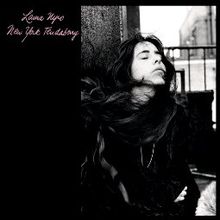
At the Post Exchange on base the next day, I found her new “New York Tendaberry” album; the cover just like in my dream. I listened to nothing else for weeks, months.
Her voice ached with intimate longing in pain or rang proud with love; in musical frames ranging from just her piano to big orchestrations that rolled like parades. Her songs, cinematic and sympathetic, portrayed characters in their deepest hearts, as if listening through a keyhole to secrets that can’t be said but must be sung.
She was deepest and most compelling in darker moods. Any album that starts “You don’t love me when I cry” promises a rough ride, perfect for that time when missing my first lost love surrounded me like air. In “Captain* for Dark Mornings,” she pleads in a long fade, “Captain, say yes,” but the song doesn’t console falsely. She has nearly rebuilt herself in “Tom Cat Goodby,” a blithe retelling of Frankie and Johnny’s deadly tale of betrayal and revenge that reaches for refuge but instead finds desperation.
In the next two songs, her voice itself becomes orchestral. She stacks it high in layered choruses in “Mercy on Broadway,” sometimes with the tile-walled echo of subway singers. Then she strips off the years in “Save the Country,” leaving it bare in childlike, hopeful innocence, a call to renewal, to goodness, to salvation in togetherness.
“Gibsom Street” lets the heart catch its breath and start to climb out of isolation. It’s springtime.
Whenever I listened to the album, this and the next tune, ”Time and Love,” always brought me a sense of relief, words of hope riding hand in hand with a melody of pure uplift.
“The Man Who Sends Me Home” has a wistful serenity that deepens as the arrangement fades to leave behind everything but voice and piano and longing. When the sound rebuilds as drums, bass then a heaven of flutes join in “Sweet Lovin’ Baby,” the sun comes out.
Captain Saint Lucifer” has a brash, swaggering sound, horns and woodwinds and the album’s most emphatic beats, but it curls back to a solitary piano.
“New York Tendaberry” makes love to her town, going big and brassy, then whispering in reverent tenderness.
“In The Country Way” announces her retreat from the city to the next phase of her actual life.
That album so dominated the soundscape in the little cottage where I lived in Minami-Rinkan, Japan that my room-mates joined me in writing a group fan letter, responding almost song by song. Michael “Lew” Ayres hailed the emotional courage of her singing with “It takes a lot of nerve to sing like that.”
Her courage inspired mine, and the lingering heartache of a a breakup lifted like a fog. The sun was out, again.
I got every album she made and saw her play whenever I could. I rejoiced in her Tanglewood show with a full band; but I also lamented when time passed with no new music from her, no new albums to wash over me.
Her first hiatus came at just 24 right after “New York Tendaberry.” In the mid-70s, she kicked back again, to have a family, there in the country (Connecticut).
Then in 1984, Nyro made a come-back.
Famously reclusive even when actively making music, I knew she wouldn’t grant many interviews. But I desperately wanted her voice on my phone. So I called her publicist 22 times in less than a week and was finally, very grudgingly, promised 20 minutes by phone. Her publicist then was Barbara Cobb, gratefully named here because she endured my maniacal persistence.
Then, the day before the interview, Cobb phoned, demanding “copy approval” – to see and approve my story before publication.The interview I’d craved and chased so relentlessly might just go away, but I refused. Then Cobb called back: it was back on.
I’d been promised 20 minutes, but we talked for almost two hours because I had really done my homework and was ready. She told me a lot, but wouldn’t acknowledge that “Captain Saint Lucifer” on “New York Tendaberry” was Miles Davis, as I guessed.
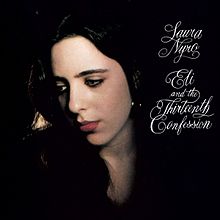
She had a thing for captains: In ”Luckie,” first song on her breakthrough album “Eli and the Thirteenth Confession,” she sings, “You can meet the captain at the dead end zone” while two songs on “New York Tendaberry” sing of “Captain for Dark Mornings” and “Captain Saint Lucifer.” But I digress.
Looking back over my hand-scrawled interview notes, I recalled how lovingly she said New York City radio opened windows into the music that inspired her, especially jazz masters Miles Davis and John Coltrane and soul groups whose harmonies took her into subway stations to sing in their echoes. “It just came pouring out of the radio,” she said. “My favorite times in music were the girl groups, heavy, melodic, gorgeous R&B. And there was the best jazz in the world, ever, earlier than the Beatles, five years before the Beatles.”
Coming back from hiatus happened, she exulted, because “I’m blossoming, the art is blossoming.” She yearned to play live with “New York City musicians who listened to everything” – her beloved girl groups, R&B and jazz. She was looking for a band then, to make a sound with “real simplicity, a strong pulse and a certain finesse.” Her next album would be a live set,
She said her own best songs “demanded to be written,” that writing them felt like “a meeting with this spirit.” She said, “I never thought about it; I just did it. I had a radical energy, with wild and wooly ideas.”
She also presciently noted, “Society doesn’t listen to women; if it did listen, they’d hear about the deeper realities,” the realities her songs carry.
She said, “People conform so much; they stay and live in little boxes that can’t contain life, but outside the boxes is a bright world of light and shadow. I could hear that world in music.” She said, “Women represent that progression the strongest, that’s why feminism appealed to me.” Nyro lamented, “It’s very hard to live with this amount of violence in the world. Women are peace, the female principle.”
She said, “I see music in color images,” but complained “MTV takes too much away from the hearer by giving away too much.” And she linked sight with sound when I asked her about “New York Tendaberry.” She said, “That was a wild exploration in time. I was painting pictures of the city then.”
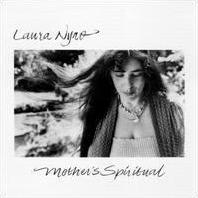
By contrast, the album that brought her back into the public eye, “Mother’s Spiritual,” looked at life in the country and as a mother, a sonic sigh of newfound contentment.
The only interviews she gave then were with the New York Times, the Los Angeles Times, the Boston Globe, Rolling Stone and me at the Gazette.
When I told my musician brother Jim I was going to see Nyro at the Berkshire Performing Arts Center near Tanglewood some years later, he sent me a cassette with his arrangements of her songs. He arranged, produced and played everything himself.
Nyro played solo that night, in a cozy small theater.
When the theater manager surprised me by taking me backstage to meet Laura, I was determined to deliver Jim’s cassette. He and I hoped it would enthrall her into hiring him to produce a fantastic album or five.
Starstruck, I forgot to tell her I’d seen her at Monterey – and nobody booed her – that I’d seen her “New York Tendaberry” album cover in a dream that actually came true, that we’d talked on the phone once for two hours – and wouldn’t she confirm now that “Captain Saint Lucifer” was Miles Davis?
We talked for a few minutes; as she left the dressing room, she pushed against me in the doorway. Warm, almost intimate, it certainly felt closer than I ever expected to be with her. As she passed, I slipped Jim’s cassette into her bag. If she listened to it, she never called him.
Laura Nyro at The Egg. Michael Hochanadel photo
I only ever saw her sing once more, at The Egg on April 13*, 1990; North country troubadour Michael Jerling opened and held his own. Then she sang into the reverent hush her songs always earn.
“It takes a lot of nerve to sing like that” – like Nyro; but her songs were first heard in others’ voices. Her breakthrough album “Eli and the Thirteenth Confession” (1968) and the deeper, darker “New York Tendaberry” (1969) were her twin peaks as both singer and songwriter. When she moved to the country, away from the neon New York streets and echoing train stations that inspired her songs and sound, her writing turned inward, like Joni Mitchell’s. Thereafter, the live recordings that dominated the last years of her career made perfect sense. She could sing songs from any time and place. And she medleyed songs together as if impatient to cram as many as she could into her show, including the soul classics of her subway harmony nights.
Nyro’s cover versions of others’ songs generally worked better than other singers’ covers of hers. She convincingly sang both hits and lesser-known songs by Marvin Gaye and Tammi Terrell, the Shirelles, the Royalettes, Martha and the Vandellas, the Delfonics, the Crystals, the Moments, the Drifters, Dionne Warwick, the Miracles and others.
Of many versions of her songs in other voices, the furthest from her classy, elegant artistry was David Clayton-Thomas’s “And When I Die” with Blood Sweat and Tears – worst over-singing this side of Meat Loaf. Peter, Paul and Mary’s version was much better, one of 31 covers of a tune Nyro wrote at 17. (I always wondered how Nyro and the similarly precocious fellow New Yorker Frankie Lymon would have sounded, singing together in a train station. He co-wrote “Why Do Fools Fall In Love” at 14.) Some 32 artists covered her “Stoned Soul Picnic,” 22 recorded “Eli’s Comin’,” and 18 did “Time and Love.”
Jazz pianist and arranger Billy Childs made an entire album of Nyro songs, “Map to the Treasure: Reimagining Laura Nyro,” in 2014. An all-star tribute, it features singers Lisa Fischer, Dianne Reeves, Rickie Lee Jones, Shawn Colvin, Alison Krauss, Renee Fleming, Esperanza Spalding and Dan Tyminski and ace players Yo-Yo Ma, Wayne Shorter, Jerry Douglas, Jay Bellerose, Brian Blade, Chris Botti, Scott Colley, Chris Potter and more. The players on Nyro’s albums are mostly un-credited, apart from Duane Allman on “Christmas and the Beads of Sweat” (1970), LaBelle on “Gonna Take a Miracle” (1971); and players on her early albums.
Later she mostly performed solo at the keyboard, and Hudson Valley jazz singer Christine Spero has recently played entire live shows of Nyro songs.
Performing Nyro’s songs may be the finest tribute to her memory (and sampling them, as hip-hop artists started doing decades ago), but the Rock and Roll Hall of Fame in 2012 honored her in fine fashion.
Bette Midler inducted Nyro, praising “that haunting imagery, that beautiful music, that beautiful sexy little girl voice – sexy mama voice that had soul in its DNA, her inimitable piano sound…”
Midler said Nyro was “the essence of New York City” – a place of “rapture, dread and desire.” Her music portrayed the New York where every artist wanted to live.
Midler said Nyro’s Carnegie Hall debut was “like a deity had come down from on high to sing the truth.” Midler said Nyro’s truth included support for peace and feminism.
By then, Laura Nyro had been gone for 15 years.
She was just 19 when she played Monterey, 24 when she made “New York Tendaberry,” her best album, and retired from music for the first time. Laura Nyro was just 49 when she left us.
LAURA NYRO ON THE SHELF
Laura Nyro’s vinyl albums occupy two and half inches on my shelves including two copies each of “New York Tendaberry” and “Mother’s Spiritual” albums as Ellie and I combined lives and records. Nyro’s CDs fill four inches of shelf including the two-disc compilation “Stoned Soul Picnic,” also “Spread Your Wings and Fly: Laura Nyro at the Fillmore East May 30, 1971.”
Albany musician and producer Al Quaglieri brought that live set to us in 2004 on Legacy Records, a SONY Columbia reissue label. Quaglieri wrote in the CD booklet of the technical challenges of salvaging this music, concluding, “I’m simply thankful it still exists, and happy to be able to share it with the world.”
Quaglieri said by email that he reissued all her Columbia albums, the later ones only for the Japanese market. “I always approached reissues doing my best to respect any artist’s work, leaving things they left in the can in the vault where they should remain.” He added, “While Laura, as a perfectionist, might have found the handful of unreleased things I used as ‘bonus’ tracks unworthy, they were all solid, emotionally sound, and well-performed.”
He said, “Laura was infamous for insisting her producers completely erase tracks she didn’t like, and she would sit and watch while they did so. In her session logs, I found quite a few references to songs that were tracked, but for which there remains no extant tape.” Quaglieri speculated “…the Fillmore tapes were made just for her own performance evaluation.” He also cited some demos. “She demo’d the entire ‘ELI’ album on the piano, by herself…an amazing insight into her mind and her creative process, but I swear she would come back from the dead and hunt me down if I ever put them out.”
When Legacy sent a copy of the “Spread Your Wings and Fly” album to Nyro’s father, Louis Nigro, Quaglieri sent a note “telling him what an honor it was to be touching Laura’s work.” Nigro thanked Quaglieri in a note “which I totally cherish,” said Quaglieri, a note in which Louis Nigro also wrote, “Laura was a very special person and brought a lot of joy to many people.”
*CRAMMED CALENDAR
Spring of 1990 when Laura Nyro last played here was filled to bursting with shows I got to see and photograph. We won’t see a run of shows like this again:
Richard Thompson at the Iron Horse Feb. 22
David Bromberg at The Egg Feb. 27
Asleep at the Wheel at Tiger’s March 16
DJ Jazzy Jeff and the Fresh Prince, and Techtronic at the Clifton Park Arena March 17
The Grateful Dead at the Knickerbocker Arena March 24
Randy Travis, and Ricky Van Shelton at the Knickerbocker Arena March 30
Motley Crue, and Faster Pussycat at the Knickerbocker Arena Apr. 11
Laura Nyro, and Michael Jerling at The Egg Apr. 13
Melissa Etheridge, and the Havalinas at the Palace May 2
The Kinks at the Palace May 4
Cher at the Knickerbocker Arena May 9
Laurie Anderson at Proctors May 12
Rush at the Knickerbocker Arena AND the Spanic Boys at Pauly’s Hotel June 2; yeah, the same night
Richie Havens at the first-ever Alive at Five June 15
Before (and after) the plague, New Orleans hosts its annual Jazz and Heritage Festival on the last weekend in April and first weekend in May.
Dancing at the Congo Square stage
On 12 stages, music rings out across the Racetrack Fairgrounds in the Gentilly neighborhood from late morning to dinner time.
Obviously, not this year…except, except:
http://www.WWOZ.org presents “Jazz Festing in Place” Thursday, April 22, through Sunday, April 25; then Thursday, April 29, through Sunday, May 2. The city’s wonderful, always funky NPR station streams archival recordings of stellar sets at past Jazz Fests.
The schedule roughly mirrors a real down-there, in-person, all-the-fun-you-can-stand Jazz Fest, but obviously with only one act playing at a time on WWOZ.
The station’s full Jazz Festing in Place schedule is charted here in the “cubes” format of in-person Jazz Fests. But remember: a single day’s musical offerings at a regular Fest would occupy the same sized page and be even more complex.
WWOZ’s “Jazz Festing in Place” features many vanished giants, demonstrating both how durable their music is and how beautifully Jazz Fest preserves their memory.
Thursday (22): Ella Fitzgerald (with Stevie Wonder, 1977), Richie Havens (1991), Henry Butler (2012), Shirley Horn (2004); and we have to list the Meters (1970) since Art “Papa Funk” Neville passed
Friday (23): Pete Fountain (1970), Fats Domino (with the Dave Bartholomew Band, 1999)
Saturday (24): Juanita Brooks (2000), Danny and Blue Lu Barker (2000), Joe Cocker (2009), Frederick Toots Hibbert (of the Maytals, 2005), Allen Toussaint (2015)
Friday (30: Ellis Marsalis (2018), Duke Ellington (1970), Al Hirt (1970), the Allman Brothers Band (2010 – originals Duane Allman and Berry Oakley were long gone before this version of the long-running southern rock juggernaut played Jazz Fest; Gregg Allman and Butch Trucks have passed since), Clarence Gatemouth Brown (2005)
Saturday (1): Wilson Pickett (2001), Snooks Eaglin (2005), Dr. John (2000)
Sunday (2): Ernie K-Doe (2000), Teena Marie (2010), Eubie Blake (1977), the Neville Brothers (2003 who played Jazz Fest almost every year until Art and Charles Neville passed)
Tune in, turn it up and enjoy. And consider supporting WWOZ, just as we support WAMC, WMHT, WEXT, WOOC, WRPI and WDST here.
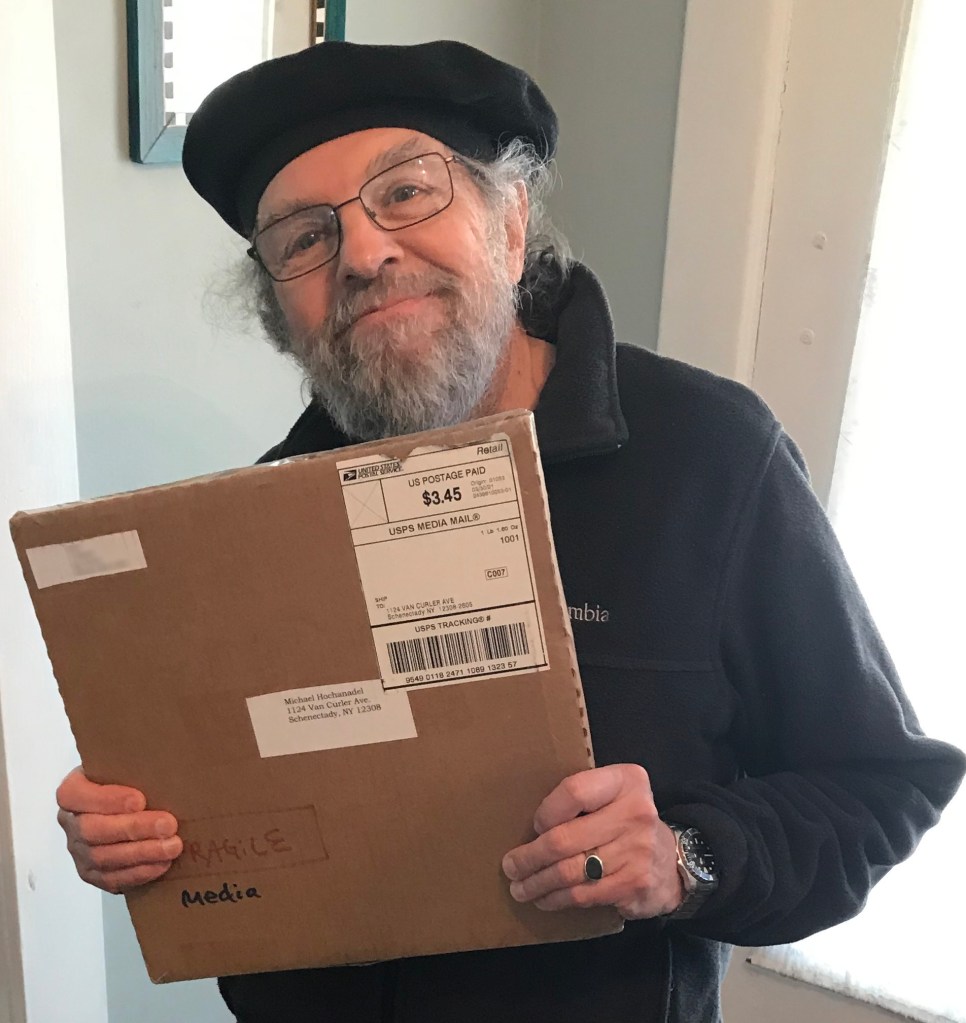
It came in a flat box, as vinyl albums did for decades. One day, YEARS ago, I got 29 albums in the mail on the same day. But the one that landed Saturday was the first new album I’d seen in years.
The return address was Terry Adams’s P.O. box.
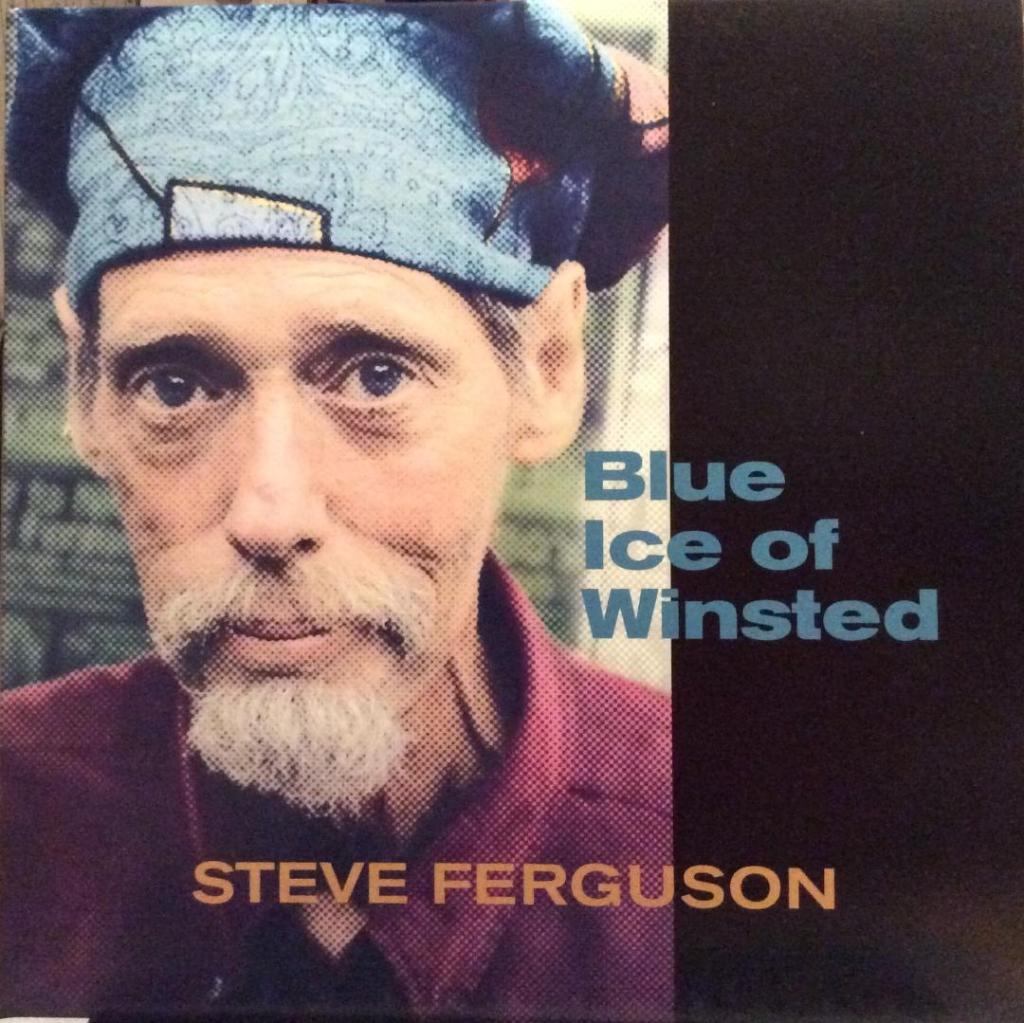
Inside was: “Blue Ice of Winsted,” the last songs former NRBQ guitarist Steve Ferguson recorded before he died of lung cancer in 2009. He played this music on dulcimer, a late-in-life enthusiasm when his waning strength put the guitar out of reach. His former band-mate Terry Adams, NRBQ pianist and now clearly its leader, assembled it with care and devotion.
In 2006, Adams had brought his friend and erstwhile bandmate into the studio for “Louisville Sluggers,” a time-travel through NRBQ personnel and power that they also took on the road.
That tour hit WAMC’s The Linda, the first venue Adams would visit with his Rock and Roll Quartet in May 2009. (He recorded and toured under that name until he felt satisfied the new band deserved the NRBQ name.) On a warm November night in 2007, Adams and Ferguson, bassist Pete Toigo and NRBQ drummer Tom Ardolino played a sold-out show spanning 20-plus songs including early ‘Q classics Ferguson played on, later NRBQ faves and such left-field numbers as “Suki Yaki” (Ardolino sang that one up front, Adams at the drum kit), also the “Dragnet” TV theme and “Flat Foot Flewzy.”
For guitarist Al Anderson, who replaced Ferguson in NRBQ (mid-70s to mid-90s plus reunions) that song was crucial. “I heard him play the intro to ‘Flat Foot Flewzy,’ which was life-changing for me because all the other guitar players at the time were trying to distort and be like Hendrix,” Anderson told Mass.live.com before a 2009 Ferguson tribute show. “But Steve was the real deal, the only guy playing like that — real.”
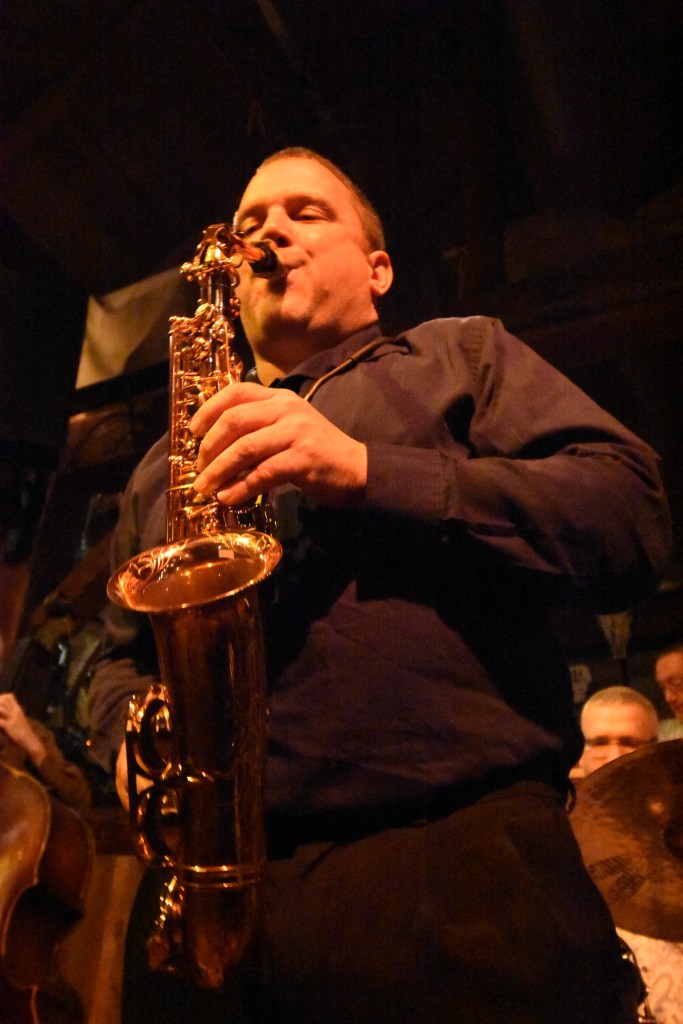
When frequent NRBQ guest saxophonist Jim Hoke complimented Anderson’s playing on a vintage NRBQ song that featured Ferguson on the original, Anderson modestly said, “Fergie could play stuff I can’t touch.”
The sense of reality that Anderson cites, of somebody playing music they really mean, shines through “Blue Ice of Winsted.” As Rick Mattingly wrote in the album notes, “‘Blue Ice of Winsted’ combines Steve’s spiritual journey with his travels in the physical world.”
“This music was his last; he knew that,” said Terry Adams by email.
The opening and title track “Blue Ice of Winsted” describes a landscape in simple, sincere instrumental terms; portraying roadside ice formations Ferguson spotted on the way home with a new dulcimer he bought in Winstead, Connecticut after working with Adams on “Louisville Sluggers.”
“Waitin’ On the Avalon” traces a raffish riverboat journey complete with gamblers, fugitives and other ne’er-do-wells. Apart from a count-off later, It’s the only vocal number, a crackly, plaintive sound, and it testifies to Ferguson’s admiration for colorful miscreants.
In “Journey of the Magi,” his playing achieves a stately grandeur akin to viola da gamba master Jordi Savall’s early-music explorations.
Ferguson next manages a zippier evocation of Savall’s questing internationalism in “Melungeon Son Dance,” a celebration of the multi-culturalism he’s honored throughout his career, from the soul-rock-jazz amalgam of NRBQ through his own Midwest Creole Ensemble. (Check that band’s sparkling, funky album “Mama U-Seapa” Schoolkids’ Records 1995).
Flip the record over and up comes “Angelic Waltz,” the first song Ferguson crafted on dulcimer and a short, graceful mood piece here.
“Gathering of the Eagles” acknowledges a tribute to a tribute: a fundraising tribute at the Eagles Club in Louisville for Ferguson’s medical expenses. We hear his voice, for the last time, count off this quiet tune.
“WanDer of the Orient” is another tribute; Ferguson wrote it to honor his guide on wide wanderings in Japan when he and Adams toured there after “Louisville Sluggers” hit. It sounds like friendship more than anything specifically Japanese.
And the album ends with “Ode to McGuinn,” a contemporary of Ferguson and Adams. The Byrds were one of Ferguson’s favorite bands; but rather than echo how the Byrds echoed John Coltrane, Ferguson goes back to the source for a timeless feel.
As Adams said by email, “I just oversaw the project after the fact, seeing that it was mixed and mastered well, and looked good.” He said, “It was Steve’s gift to the world and I wanted to make sure it was received.”
“NRBQ was a rehearsal band, playing for ourselves only, at home,” Adams explained, noting how Ferguson transformed it. “When Steve came over and joined in, it didn’t take long to realize we would be living rich lives by bringing our approach to people,” said Adams, defining his own life’s work. “Even though Steve left the band in 1974, we remained musical brothers,” said Adams, explaining, “We did an album together called ‘Louisville Sluggers’” (Clang! Records 2007).
“When I became the producer for (Chuck Berry pianist) Johnny Johnson’s album (“Johnny B. Bad” Elektra Nonesuch 1991), he was the first person I called,” said Adams. Johnson’s album also featured Eric Clapton, Keith Richards, Bernie Worrell and members of NRBQ.
“His music still lives in our recordings and concerts,” said Adams of his late friend – a gifted music-maker with a distinctive, cleanly articulated approach, a now-vanished star who made music to cherish.
Some see the blues as a confining category, a system of fences, borders or limitations. To Keith Pray, the fences touch what’s on the other side, and imports freely cross borders.
The Rotterdam resident took his musical training at three schools here and another in the Swiss Alps; he teaches music on two campuses, plus the Japanese martial art Aikodo. He’s a highly hyphenated cat: saxophonist-bandleader-organist-teacher; not always in that order. So the variety of sounds and songs, of motions and moods on his new (sixth) “Universal Blues” album comes as no surprise but instead as an unfolding, like a big map.
In non-plague times, he leads the 17-piece precision-power modernist Big Soul Ensemble monthly at the Van Dyck, plus the UAlbany Jazz Ensemble; also the straight-ahead Keith Pray Quartet and the Ortet. He plays saxophones in all his bands, except organ in the Ortet.
Pandemic isolation changed his recording method on “Universal Blues.” He said, “Due to the pandemic though, with no gigs, it was the most budget friendly way I could make it happen.” He worked with drummer Bobby Previte, bassist Bobby Kendall (Heard) and keyboardist Dave Gleason (Sensemaya, Art D’echo Trio, and Pray’s Big Soul Ensemble), plus guest guitarist Justin Hendricks this way. “I made ‘mockup’ versions of the basic skeleton (form) of each composition then shared that electronically with Bobby Previte,” said Pray. “He then imagined how we would play it live and recorded his tracks. I then mixed the drums a bit and sent it to the other Bobby (Kendall) to lay down bass parts,” Pray explained. “He sent it back, and then I sent it to David Gleason for keys.”
Joking a bit, Pray explained, “Finally (not really) I put the sax parts on and began mixing.” Then came a border-busting change.
“As I mixed it I liked it a lot and almost released it like that (basically an acoustic record) but when I composed the tunes, I had ideas for electronics but never liked the sounds that I had access to.” Expanding his sonic landscape, “I invested in some new sounds and was in pretty good shape, again almost releasing – but still felt there was a dimension missing.”
To push past this border, to jump the fence, “I began exploring sound design and created a whole pallete of new electronic sounds based off some very simple acoustic sounds that were in my music room.” He used such found sounds as Chinese medicine balls, udu drum, “even the air moving from my Leslie speaker (used with the organ) and even myself doing some throat singing!” When he added some synthesizer sounds and effects, “It was ready for final mix and master! What a learning experience!”
Pray said, “I have always enjoyed the role of producer but never had aspirations of being a recording engineer.”
In particular, the siren sounds in “Inyo” reflect a new sonic open-ness. “I thought of all of the sounds as colors,” he explained. “My cousin who did the cover painting started with a much simpler image and over time it morphed with layers of things that were not in the original vision. In my case, it was similar. I originally wanted electronics as part of the sound scape but couldn’t get the ‘colors’ right.”
Then he began to hear-see a new kind of “right.”
“Part of the use of the disparate sounds is similar to visual artists using a slash of red where it doesn’t seem to belong and how with purpose it can become an integral part of the image,” Pray said.” He continued, explaining, “This is also similar to hip-hop and how they use samples that shouldn’t work together but become part of the new sound.” It also echoes how Asian philosophies (and martial arts) reconcile unexpected elements – “the struggle for balance between conflicting things.” He said, “I wanted to give the listener a sonic journey, things that might challenge the listener and things that may unfold over repeated listenings.”
Unfold, you know, like a map to someplace new.
“Inyo” maps a conventional 12-bar blues groove, but trouble soon shows up; picture a raid on a nightclub.
“Mongol Blues” calms things with a serene long-line melody that goes to the gym and gets buffed, but guest guitarist Justin Hendricks manages more than just muscling up the tune. Like adding guitarist Greg Tuohey to Aaron Parks’ trio on “Little Big,” the six string brings in color as well as clout.
“Grounding” follows a similar path, layering linked saxes, orbiting keyboards and bell-like guitar tones over off-center toms-heavy drumming and a bass line whose spaciousness translates as momentum. Then the saxes rule, though everybody gets a taste.
The rhythm section trio intro’s “South Sphere,” an easy amble at first. Right soon comes sax time, over a discreet percussion clatter and a cool bass line linking to synthesized swoops and swirls. The sax returns and it all swings sweet and strong under Pray’s most Coltrane-riffing of the whole album. Kendall’s bass muses thoughtfully before a cozy coda.
“Mourning Eagle” has a martial taiko fierceness in Previte’s aggressive drumming; a sax issues sparse calls, goes both bigger and outside while echoing bursts orbit the rhythm. Like the beginning, the end is all big beats, hypnotic and resonant, before a wild-card whirl.
“Three Layers” opens like a blossom in slow motion, growing in force as instruments join, including the guitar, featured only here and on “Mongol Blues” and “Grounding.” The piece detours, too, alternating moods of energetic agitation with serenity that eases into silence.
Pray played the Cock ‘n’ Bull in Galway on November 7, 2019. Tenor sax great Jerry Weldon guested with Pray’s quartet. Weldon played to the crowd in a flamboyant fun way; Pray played the songs, workmanlike, solid, and without borders.
As in live shows with his big band, sax-powered quintet and Ortet organ trio, Pray steps back for his band-mates to shine. I’ve seen Big Soul Ensemble gigs where he doesn’t solo at all. But he also leads with his horn, a confident and fluent player whose technique follows fast on his ideas in a powerful flow. For all the strength of his compadres, this is clearly Pray’s play, his show, his map.
He said, “I did my first session as a leader when I was 19 at Mountain Lake Public Radio” in Plattsburgh, though the session was never released. “I co-led my first big band around that time too,” Pray said. “I never wanted to be a leader, it just always seemed to happen!”
His training and experience as player and bandleader run deep and wide. “I moved to the Capital Region from Keeseville (in the Adirondacks) to attend Schenectady County Community College (SCCC, now SUNY Schenectady) for music, then went to (Crane School of Music in) Potsdam to finish my music ed degree,” said Pray. “Then I moved back around here and played full time for a few years until I moved to New York City for eight years.” There he earned a masters in jazz performance at Queens College.
Moving back here in 2006, he started teaching in Schenectady public schools, where he remains. He also taught at SCCC and SUNY Oneonta, and now at UAlbany. “In 2014 I went to the European Graduate School in Saas Fee, Switzerland (up in the alps) to start my doctorate in Expressive Arts: Therapy, Conflict Transformation and Peace Building,” said Pray. He finished the course work but not his dissertation. “I would rather leave the writing to writers!”
Pray maintains creative momentum despite the pandemic.
“I get up and do some stretching and meditation, eat, get my 14-year old up for school, then I log into my virtual world where I teach high school band (all online) for the Schenectady school district,” he said. The photos he shoots on several nature walks a day around his home in the Rotterdam hills, then posts to Facebook, show a musical eye. Cooking family dinners, “I have really delved into cooking new things since Covid,” he said. “It helps clear my mind and keeps the creative side moving in new ways.” He practices sax and organ, trains and teaches Aikido and runs the UAlbany Jazz Ensemble. Before the pandemic, he also played regularly with his three groups. So, now he feels, “I’ve never had all this free time!”
The ever-busy hyper-productive Pray explained, “I feel like I’m on vacation!”
The siren sounds threw me in “Inyo,” first track on Pray’s “Universal Blues.”
They took me back to Japan. Yeah, I’ll explain.
Living between Tokyo and Yokohama, I had a fine stereo and collected American rock, folk and jazz records. The first time I put on a Tom Rush album, the song “Driving Wheel” had a strange but compelling trilling treble riff. Interesting I thought; a bird-song-sounding accent that repeated in the same place whenever I played the album.
When I played that same album back here, that distinctive part of the arrangement was missing.
How did that happen? Did the shipping process effect the vinyl? Did moving almost 7,000 miles from Japan to Schenectady somehow change the music?
I played it again, and again: The sound I’d heard in my Minami- Rinkan living room wasn’t there in my fourth floor walkup on the State Street hill.
A bird in my bamboo yard there had “played” that part.
Decades later, the Eighth Step presented Tom Rush in Proctors GE Theater, a black box where 400 seats – all full that night – sloped up from stage level. Impresario Margie Rosenkranz, who has heroically kept the place running through venue moves plus the usual challenges of running a non-profit arts program, came to me at my seat to ask: “Would you carry Tom Rush’s guitars to the stage?” I said, “Sure,” and she led me backstage into Rush’s dressing room where he sat quietly reading. She pointed to his two Martins. I took one in each hand, nodded to the star and headed for the stage. A few fans applauded as I placed the guitars carefully onto stands. Friends clapping ironically, knowing I’m no star, or singer of any kind? Folks kindly welcoming an unannounced intermission act?
I realized, as I took a quick bow, that I’d forgotten to tell Tom Rush how Japanese birds sang along with him, there between Tokyo and Yokohama.
Once a precocious Niskayuna kid, Alex Goldberg built his mostly instrumental album “Loste” in bits and parts, fits and starts – unlike the all-together-now live process of the Chandler Travis Philharmonic on “The Ivan Variations” (TO the Record Shelf #1).
Alex Goldberg, composer, arranger, producer, percussionist, keyboardist, singer, on “Loste”
“‘Loste’ took a long time to make,” said the Brooklyn resident.
“The fastest part was writing, then I spent awhile on the arrangements,” he said. “Recording the parts, and then finagling everything on my computer took the most time,” he explained. “For some of the songs with strings and horns, I had one instrumentalist come in at a time and layer each part multiple times, to slowly build a simulated orchestra. On the one hand, it gave me a lot of control over the editing, but it was also quite laborious.”
Goldberg noted, “A few of the shorter songs on the record (“Introe,” “Transitione,” “This Feeling”) were created after the longer songs were finished, as I started to hear gaps in the album’s arc that I wanted to fill.”
The result is inventive, at times intense – a smart, sweet suite. The seamless eight-song work has melody and heft, smooth grooves and rambunctious outbursts.
It’s ambitious because it’s deeply rooted, in a family of players and listeners. Both grandfathers were professional musicians; so is the uncle who taught him to read drum charts at age seven. The youngest of three sons (his brothers are fraternal twins) of hand-drummer father Steve and guitarist-for-fun mother Laurey, Goldberg grew up in a houseful of sound supplied by records of jazz, psychedelic rock, classical minimalism and singer-songwriters.
Full disclosure, Steve and Laurey are friends I see at many shows, but I only ever met Alex once.
“I saw Steve Reich’s ‘Music For 18 Musicians’ when I was in college and knew I had to try to work toward something,” he said. Deerhoof albums also made him made him want to make music.
He played in all the Niskayuna High School ensembles, studied with Albany percussion master Mark Foster from eight to 18, then with NYC percussionist Frank Cassara (of the Steve Reich and Philip Glass Ensembles) at Vassar College, improvising on vibraphone and starting to write music.
A high school band called Blunt Trauma only played two shows; “and I’m not sure it counts,” he said.
“In New York, I’ve played in dozens of bands, often as ‘just the drummer,’ but have also been more of a full member, writing parts and arranging songs, in a few projects,” he said, listing the now-defunct avant-rock/soul project Throw Vision (which spawned four solo projects) and the currently-on-hiatus rock band Double King. “I also currently play in my good friend Dan Kleederman’s band, Grand Kid,” said Goldberg. “He’s heavily featured on guitar and some bass throughout ‘Loste.’”
So is Schenectady-born jazz trombonist Alex Slomka, a childhood friend who now lives in Westchester and plays in New York City big bands. As kids, Goldberg and Slomka played as the Alex Brothers.
“Additionally, I’ve done a bunch of shows and touring with performance-prog project WSABI Fox,” said Goldberg, “ as well as playing with and recording drums for experimental soul artist L’Rain.”
In 2014, Goldberg released a solo album as Flordingblast, an electronic-digital project whose fusion/minimalism-inspired pieces show the influence of Flying Lotus.
Then Goldberg aggressively swung the pendulum in the other direction.
“This time I wanted to make something with real people, real instruments,” he said; “a very expansive, and lush soundscape ended up coming together…a very involved recording project.”
The credits include Schenectadians Slomka and mixing engineer Dane Orr, plus guitarist-bassist Kleederman, with strings, bassists, a singer, brass and reeds players. Goldberg wrote, arranged and produced, sang and played drums and keyboards. Chris Connors played guitar and helped mix and master the album.
Goldberg’s organic approach still left room for high-tech tinkering.
For the guitar solo in “Introe,” he and Kleederman “composed it, phrase by phrase,” he said, “then further edited it to create its final shape. By the end, the guitar is the most prominent voice on the song.”
He wrote out parts for his players, “but I left certain moments open for soloing,” he explained, “like Jared Yee’s tenor saxophone soloing on ‘Not Sure,’ which was better and more perfect for the song than I could have imagined.”
He set aside Anna Webber’s flute solo from “Typical” but “I ended up taking that solo, slowing it down, and using it…in ‘Transitione,’” he said. “I also grabbed some of the percussion parts from ‘Typical,’ slowed those down as well, and then drummed and added more sounds to the groove, and eventually cobbled that piece together. So yes, definitely a song that was born from collaboration, even if not in real-time!”
For all its studio craft, “Loste” feels smooth to the ear.
“Introe” swells into view gently, then more insistently as instruments join in a wave of welcome, until a final chord signals a stately baroque courtship dance of strings and wordless voice in “I Know You,” taking wing as an ethereal chorus.
“Typical” cruises through urban contemporary streetscapes on the biggest drumbeat heard so far, under filigrees of voices and guitar; the guitar takes the wheel late and steers a bold course.
Snare rimshots and reed swirls curl around massed voices in “This Feeling” – a song of exaltation.
More meditative is “Not Sure,” also more complex, with whistles and voices setting up a brooding transition that resolves onto sailing on sunnier seas, dotted with islands of dissonance.
“Transitione” grooves with flutes over an off-center beat clatter, a cheerful intro for “Stay the Same” that sets up a restless cello ostinato before singers and flutes stroll in and make themselves very much at home in its cozy melody.
“(King)” takes us in stately grace along a regal procession that draws in more and more musical marchers to achieve real majesty before a solo saxophone sings the suite to a close.
Goldberg is donating half of the proceeds from sales of “Loste” via Bandcamp and http://www.alexdgoldberg.com to the Black Trans Health Initiative & other funds.
“These days, I teach some drum students virtually, work on percussion and recording projects for friends, and work on my next album and live set,” said Goldberg.
He said, “Before the plague (my term, in an interview by email) I did all those things, but taught more lessons and worked at a music rehearsal studio, and played in a bunch of bands, in addition to my project.”
OK, now, From the Record Shelf looks back, at music from the past that has endured. TO the Record Shelf looks ahead, at new music.
Frighteningly prolific, wildly witty, relentlessly clever and fiercely fun-loving, Chandler Travis made his album “The Ivan Variations” the old-fashioned way. In a method unavailable in these plague years, he piled all 14 musicians of the Chandler Travis Philharmonic onstage to play together. You remember: live, with happy people listening.
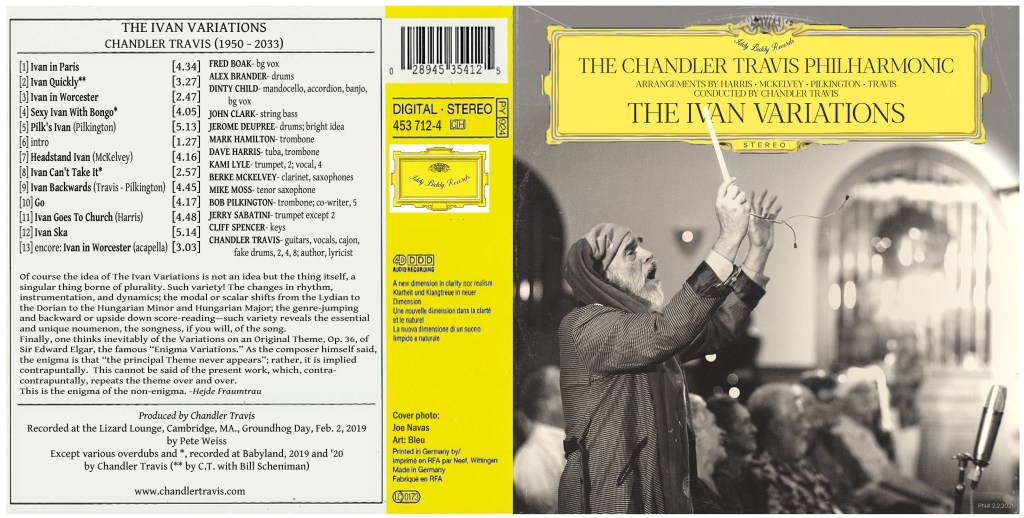
Check the cover art of this live-onstage CD: Over a black and white photo, a mustard yellow rectangle bill-boards words in the venerable Teutonic this-is-serious style of Deutsche Grammaphon Gesellschaft classical recordings.
When some friends of mine were hired as the record buyers for the (now long-vanished) E.J. Korvette’s department store in Northway Mall, they knew rock, jazz and folk pretty well but realized their classical music knowledge was scanty. So they simply ordered EVERY Deutsche Grammaphon release. It worked. But I digress. Oh, the DDG catalog lists 4,939 releases; 14 hit this month alone, including “The New Stravinsky Complete Edition” – 30 CDs. Even Chandler Travis isn’t THAT prolific…
“The Ivan Variations” collects 13 versions of the same song. Cheerfully Spikey (Jones, that is), zippy and Zappa-esque, it sounds like a music store taken over by conservatory kids who ensured a good time by imbibing laughing gas and peyote, a-plenty. Then they donned Mardi Gras masks and marched in Second Line glee past Tin Pan Alley, the Rock and Roll Hall of Fame, some smoky jazz basements, Carnegie Hall and a comedy club.
My favorites: “Headstand Ivan” in which they simply turned their charts upside down, “Ivan Backwards” – you know, other versions turn the melody inside out. “Ivan Can’t Take It” is a brassy rocker; “Ivan Ska” swings like a tropical breeze; and the encore of “Ivan in Worcester” is an a cappella reprise.
That cover photo shows Travis conducting the ensemble, ringmaster of this sound-circus; but it’s just one of several circuses he typically leads in 80 shows a year.
The Harwich, Mass. (Cape Cod) resident (who celebrated his birthday Monday, March 15) recently said by email he’s busy recording “Great dollops of new stuff from the Philharmonic the Three-O, and the Catbirds,” all bands that he leads and for which he writes and arranges nearly everything. This hyper-activity follows a highly productive 2020 when “we put out quite a bit of new stuff…by the Incredible Casuals, myself, Travis & Shook, Paulette Humanbeing, Pete Labonne, and the afore-mentioned Catbirds, Three-O, and CTP.” Travis said most of this new music is available for free on the merchandise page of his website. Like “The Ivan Variations” by the Chandler Travis Philharmonic (there’s also a smaller Philharmonette, but I digress), this music is available directly at www.chandlertravis.com, also at iTunes, Spotify, Amazon and band camp.
Looking forward, he said, “As things are starting to look better about the Covid situation, we’re starting to book some jobs around where we live on Cape Cod for the summer tentatively.” Travis explained, “We anticipate doing more outdoor jobs than usual, but we’ll see what happens when! We also hope to get back to Caffé Lena and the Hangar in Troy and some of our usual faves up in your area as soon as the coast is clear-ish!”
Travis has played almost everywhere hereabouts including opening shows for the late great comic George Carlin with Travis Shook and the Club Wow and headlining in Albany’s Washington Park, the Union College Old Chapel and, as noted, Caffe Lena and the Hangar.
For now, for a fun blast of Travis’s playful ingenuity at big-band scale, there’s “The Ivan Variations.”
In any non-plague winter, my friends Dennis and Dan from Massachusetts would be picking me up here in Schenectady today or maybe next week for our annual Adirondacks music pilgrimage to the deep-in-the-woods home of friend and host Stephen and wife Kevan.
Packing skis, snowshoes, warm winter gear, CDs, food (I’d have stocked up at Perreca’s!) and drink, we’d stop at the Noonmark Diner in Keane Valley for pies. Then we’d scale Stephen and Kevan’s corkscrew uphill driveway to what was once called the Rice Mountain Lodge, unpack our goods and settle in for the weekend.
We’d listen to music, for hours, days; obsessively and intently then discuss and debate; then listen some more.
Stephen and Kevan’s house near Paul Smiths, HQ of the Mountain Music Club
Most afternoons, and sometimes after midnight, we’d hit the trails that web and wander through tall forest; so close to the house that we put on skis or snowshoes inside before exploring in the snow.
In the words of a ski-resort band that Sundazed Records impresario Bob Irwin once led, we’d “laugh at the cold:” 38 below zero one moonlit, mercifully wind-less midnight.
This year, no.
Instead, we’ve been recalling those meet-ups of what I like to call the Mountain Music Club, whose members are emailing more often than usual about music and life and music and the plague and music.
Dan prompted this latest dialog, digging out emails from last fall, earlier in the plague, and encouraging me to blog it here. Stephen dove right into music, recounting a recent Talking Heads/David Byrne epiphany. And he shared with us emailed conversations with LA music-maker John. I use their words here with their permission.
Then I digressed all over the place, in the emails Dan resurrected: Thanks!
First, here’s Stephen talking with his rock-bassist buddy John about his happy surprise at Kevan’s suddenly “getting” the Talking Heads.
Just thought of you in the music business as I Googled info on Tina Weymouth and more details on writing credits for the Talking Heads. Why? After wife Kevan read a review of the Chris Frantz memoir that just came out (“The Mamas and the Dadas,” WSJ) and asked me about the Demme movie, I reminded her that I had blasted my big B & O speakers (Bang & Olefsen – expertly refurbished by mutual friend/stereo maven and music fan John Michael Caldaro) to their limit back in 1984 at our farmhouse at the end of a dirt road in Central NY and that she had declined to join me. (In fairness, I think she was on a museum business trip to NYC.)
(I was a late comer to the Talking Heads, always distrusted punk and, having done some art school, was wary of wannabe hipsters. But this movie reminded me how very wrong I was.)
So, we cranked up the same speakers tonight and streamed the Big Suit into the living room. Amazingly, Kevan turned the volume way past where I had conservatively set it for her ears and loved the full hour and a half. As did I, after too many years.
So, this song writing credit thing that still haunts (Robbie) Robertson and (the late Levon) Helm and The Band’s history—collaboration vs. personal inspiration—drove me to Wikipedia to see how all 92 Talking Heads songs were credited, since in his publication Frantz seems to have a jaundiced view of Byrne’s ability to share credit.
I don’t care that Robertson wrote the lyrics, The Band’s sound is from Helm. It’s collaboration. And I’m glad to see all the Heads get credits for the early stuff and Weymouth added to “Psycho Killer” credits. Sometime you’ll have to explain how thick your skin has to be to survive in this music business…
My take away after watching the concert again is far more favorable to Byrne than I expected. Truly brilliant sense of theater and movement that added that sense of mystery to the art that I think makes some art greater than others. (I suffer from giving too much information in my painting; Byrne made his imponderable lyrics fit in a context of knowing absurdity.) But I thought of you and your bass as I tried to see Weymouth guitar work. That was hard, since all eyes and cameras were on her legs and hair and wonderful smile. Wiki tells me she picked up the bass at RISD (Rhode Island School of Design) but had some teenage guitar before. Whatever, that bass and the percussion of her husband et al was irresistible. Let’s hear it for African polyrhythms!
Then, Stephen’s friend John chimed in by email this way:
So Liz and I are doing an advertising gig at the Village Recorder in West LA in the early 90s. We had already had our music demo approved for whatever commercial it was, maybe ATT or Nike or some car… don’t remember. Now we just had to record in a proper studio with a live band.
So our agency and their clients are sitting respectfully on the couch as my pal musicians roll in. The band are great guys who we are good buddies with, and by the way, have played with Dylan, Phil Collins, Supertramp, Sting. All brilliant.
OK, ready to go but Liz has to do a quick Xerox of the chart we are going to record; we need eight copies. Liz goes to the studio manager’s office to the copy machine and can’t get in ‘cause David Byrne is making a copy of his novel!!
He wouldn’t let her near the machine! I’m burning about $2K an hour in musician and studio fees while we played “Dr. Robert” waiting for Liz and the chart! I don’t think our clients who came from New York or Portland or wherever expected to hear ten minutes of a song from (the Beatles’ album) ”Revolver.” Well, she drummed her fingers loud enough to where we interrupted his genius for about two minutes.
Session went fine once we all had the music in front of us.
Songwriting credits are the source of big arguments and big money. I read Levon’s book and shuddered to think of the royalties he claimed he never received.
Music business is not an elegant business.
OK, my turn, but first, the wisdom of Hunter S. Thompson:
“The music business is a cruel and shallow money trench, a long plastic hallway where thieves and pimps run free, and good men die like dogs. There’s also a negative side.”
Then I digressed all over, in the way the Mountain Music Club indulges me between blasts of the good stuff on Stephen’s stereo.
Being New York City proximal, we got Talking Heads early and often here, from a $750 opening act (!) gig with the Good Rats from Long Island at SUNY Albany’s Page Hall (where Good Rats lead singer Pepe Marcello rolled a shopping cart full of baseball bats onstage to brandish as air-guitar props and where I also saw MANY cool things including Warren Zevon with an all-star band of Hollywood killers, Elvis Costello with the original Attractions, Billy Falcon’s Burning Rose [afterward he said, “If you’re not singing like Van Morrison, you’re not singing right!” – guess how he sang? – several sky-scorching Pat Metheny shows, Allen Ginsberg [the after-party at the Ginger Man featured William Kennedy – we talked about Sinatra], where Willie Nile opened for the Roches, solo and without introduction, killing the place until someone yelled, “Who ARE you?” – I could go on, and I think I have).
Talking Heads went on to theater gigs as headliners, then to SPAC on the Big Suit tour (delayed by a suicide scare – a guy climbed to the top of the Thaddeus Kosciuszko twin bridges [whose curves earned the local nickname: the Dolly Parton bridges] that closed I-87 for an hour). Afterward I talked with Byrne some and found him at first disconcertingly deliberate until I got his odd conversational rhythm: ask a question, wait a while, maybe two or three whiles, as he thinks, then gives you a few paragraphs.
In later years, I saw the post-Talking Heads Frantz-Weymouth funk band Tom Tom Club in several big-bar shows here; then saw Byrne lead his jazzy big-band Ten Car Pileup at SPAC, a smaller but cool band at The Egg the night after Obama was elected – that band co-starred the celestial Jenny Muldaur, daughter of Maria and Geoff – then his (current) Utopia band in the perfect setting of Albany’s 3,000-seat Palace Theater, before the highly touted month-long Broadway run that Spike Lee filmed.
Comparing the credit-cash dynamic of the Talking Heads to that of The Band is interesting but misses the point some.
Sure, Byrne and Robertson are kindred control freaks, arguably stingy with co-credits. (But I loved it when Byrne booted the lyrics of a Heads’ song in the Albany Utopia show, then laughed at himself…) And in a better world, the Levons (he offered me a cigarette once, I declined with thanks; another time I petted his dog, a black lab mix), the Tinas and Chrises would get a fair shake for devising the sounds that clothe melodies and meanings of songs. Another discussion for another time is the power-correction equation in great bands – that become great because one of two lead creative forces has the power and balls to say, “NO, that’s SHIT!” – and make it stick. Cf: Lennon & McCartney, Jagger & Richards, the Davies brothers in the Kinks, etc.
No, even the creative side of the biz is unfair.
But there was more than that imbalance going on with the Heads, and with Byrne, who seeks creative input from both musical (Brian Eno, the cats cited below) and theater professionals (Twyla Tharp, and the co-designers who helped shape the visuals of the Utopia tour.)
While Tina and Chris always had the funk (and so did Jerry Harrison – while it seemed learned, acquired, for Byrne), anti-art-school-hipster bias notwithstanding, the power of the expanded (Afro-) Talking Heads largely came from its adjunct members: keyboardist Bernie Worrell (who co-founded Parliament Funkadelic with George Clinton – there IS no higher funk credential this side of James Brown), percussionist Steve Scales (a grossly under-rated rhythm genius who locked beats with Tina and Chris to micro-precision but just enough drift off the one to push things) and guitarist Adrian Belew (whom Frank Zappa discovered playing in an Ohio motel lounge band “making good Stratocaster noises” and hired him on the spot and who played in David Bowie’s touring band later. Belew told me it took just three days to learn to play Bowie’s songs but three weeks to learn the choreography to interact with projected images [including himself] on a 50′ video stage backdrop over the SPAC stage.) But I digress. Those three packed a beat power that punched up the funk big-time.
Most of all, I think I like reading how Kevan turned shit UP.
But now, at the risk of launching a sexist screed here, I gotta talk some shit.
We always joke about sending Kevan off to some high-testosterone zone when we gather to geek out on tunes, Dennis tries to steer wife Mary Ann gently away from our obsession sessions, and I’m forever having to turn DOWN shit here when my wife-hero Ellie is home. She imagines, for unfathomable reasons known only to her, that dinner conversation should take precedence over kicking out the fucking jams when there also just happens to be food and guests around. Very confusing.
I recall the tributes that mourned John Belushi after he died included a tale of how SNL czar Lorne Michaels or some other straight objected to Belushi blasting an album by the LA punk band Fear (who played SNL at Belushi’s “do-it-or-fire-me” ultimatum) in the SNL offices. Belushi calmly listened to the objection, then turned it UP! The piece was titled “Why John Belushi Went to Heaven.”
Once early in my re-Schenectady time, when I drifted back here after the Navy with no clearer or stronger ambition than somehow earning enough to rent a place to set up my stereo, I was in the deafening listening room of a music-crazone named Milton P. Zapolski. He sold audio gear in an emporium called Stereo Sound where it was OK to smoke a joint in the listening rooms and where Kite, my first writing publisher, started in an upstairs office.
I don’t recall what music Milton had on his muscular MacIntosh, Marantz and Advent rig that day. but I do remember that he told another listener, who asked about my eyes-closed, shoulders-bobbing concentration, that “Yeah, Michael listens like a man.”
Apart from the implications of that anecdotal “data,” lemme just ask, do guys (we) listen differently, more intently and with a greater willingness to submerge ourselves in gusts of sound, than women (they…) do?
While you mull that over, lemme tell you about the time Milton took a lull in a Pink Floyd show as a disappointing early ending and hollered, from the first row of the Carnegie Hall balcony, from right next to me, “PLEASE play some more!” He went on to explain, in a shout that filled that quiet passage, that he was from the country, but not naive, and didn’t appreciate being short-changed.
The Floyd guys laughed, the audience didn’t; but were soon mollified as the band fired up more music from “Meddle,” the (much more interesting) album they made before “Dark Side of the Moon.”
Years before that Pink Floyd show, Milton was studying at the Manhattan School of Music but mostly skipped class to haunt any classical ensemble he could infiltrate. He inveigled his way into so many New York Philharmonic concerts and rehearsals, insistently urging they play more Mahler, that Leonard Bernstein – Milton called him “Big Lenny,” to his face – came to recognize him.
So, one night after a triumphant Big Lenny Carnegie Hall extravaganza, Milton slipped backstage and espied the maestro approaching down a corridor, amid perfect New York-culture company.
Caped, chuffed by applause, ever-so-grand, Big Lenny stopped and hailed Milton. “Ah, the Mahler Club!” Then he made introductions. “On my left are Mr. Adolph Green and Miss Betty Comden, and on my left is Miss Lauren Bacall.” Milton tugged on his chin, frowned in confusion, then spoke, speculating, “Lauren Bacall, now I know that name from somewhere.” She exploded in snubbed-celebrity outrage, turned and stomped off, Green and Comden stifled laughs, but Big Lenny just let go with guffaws.

















 Hoke's Jukebox