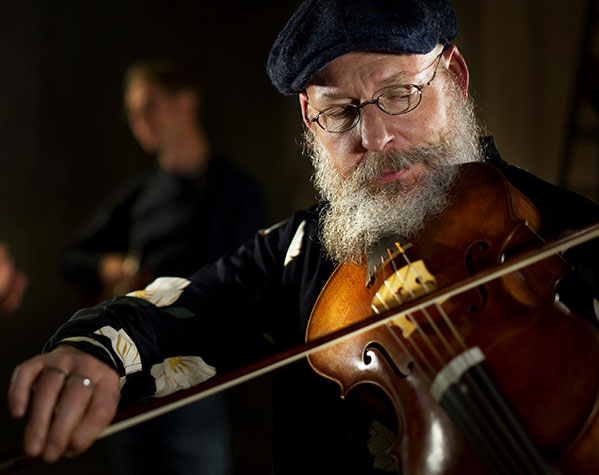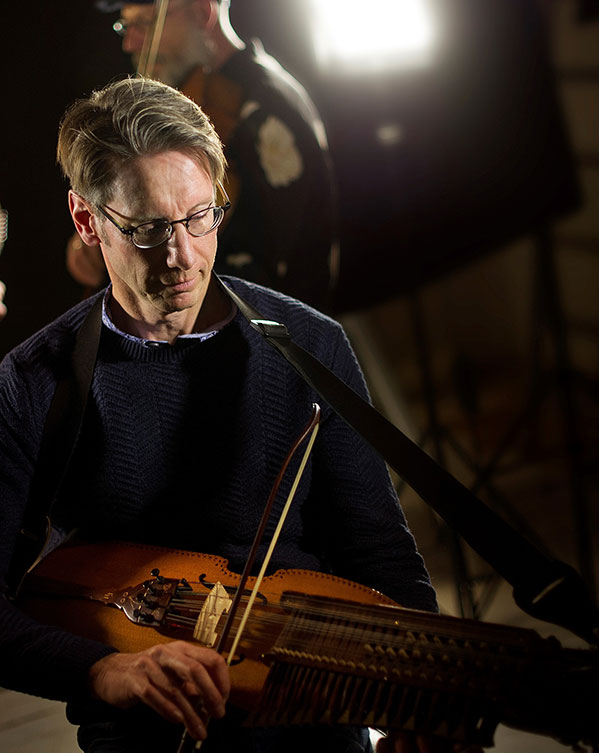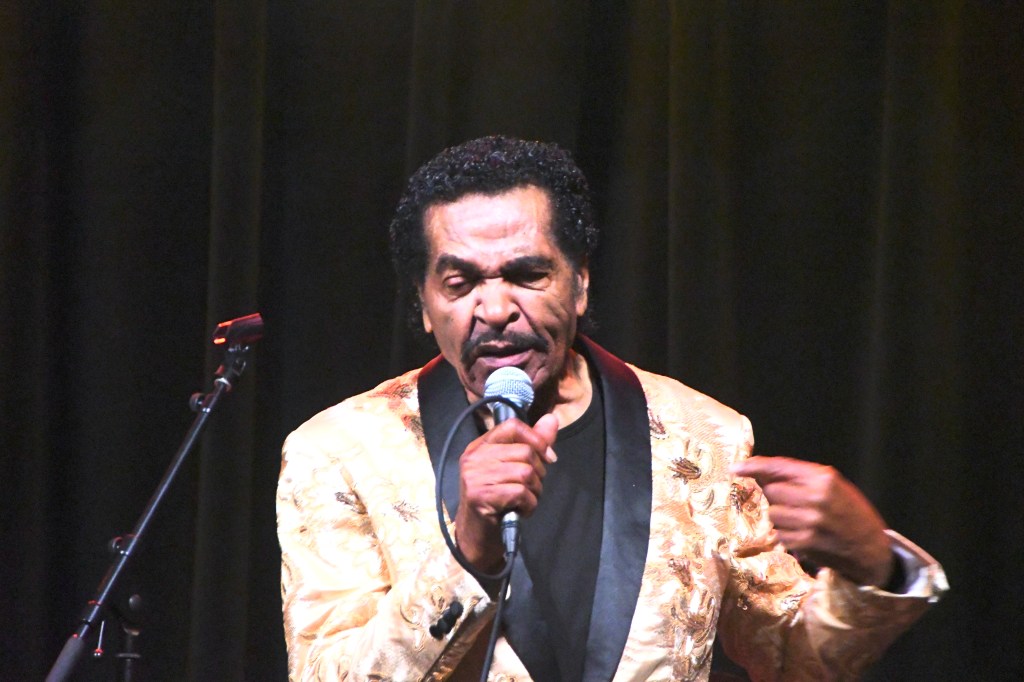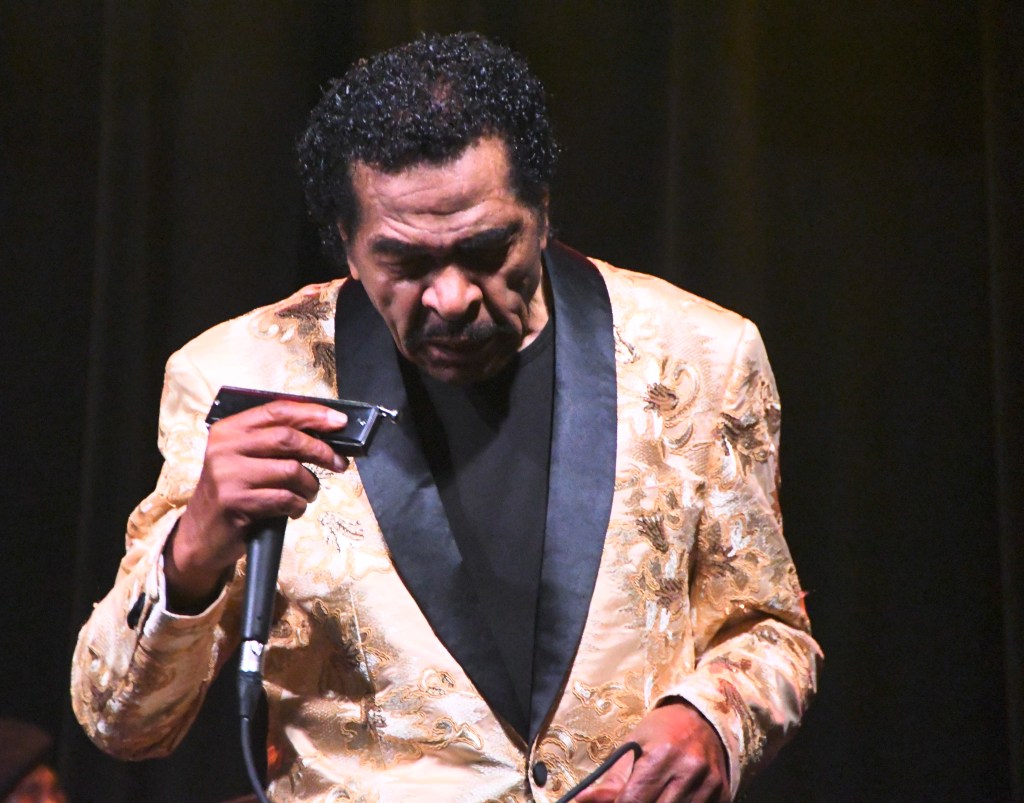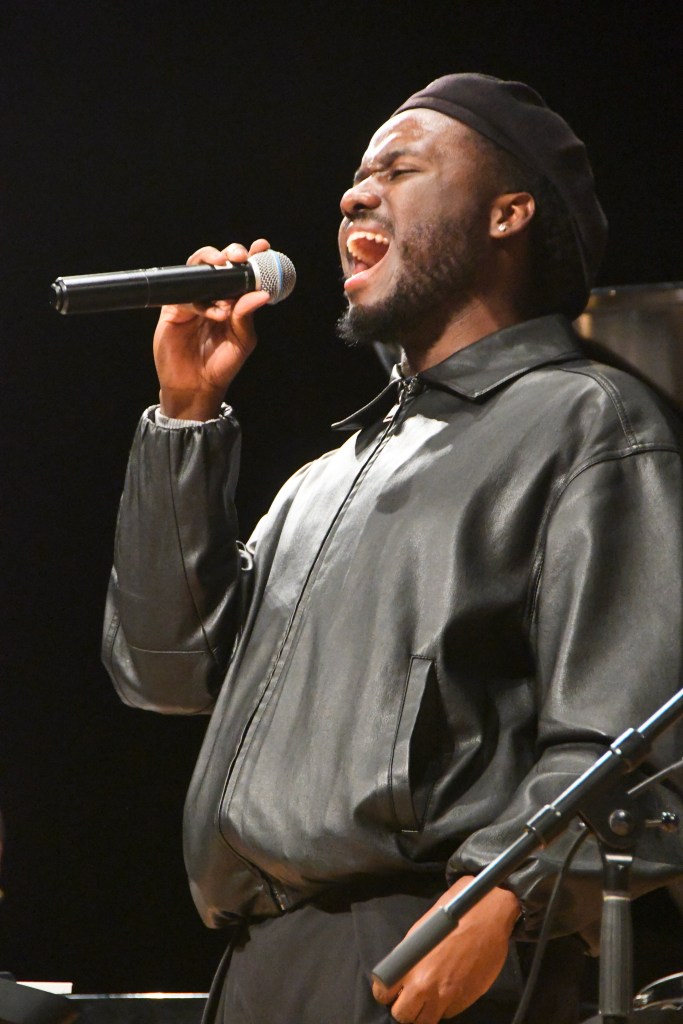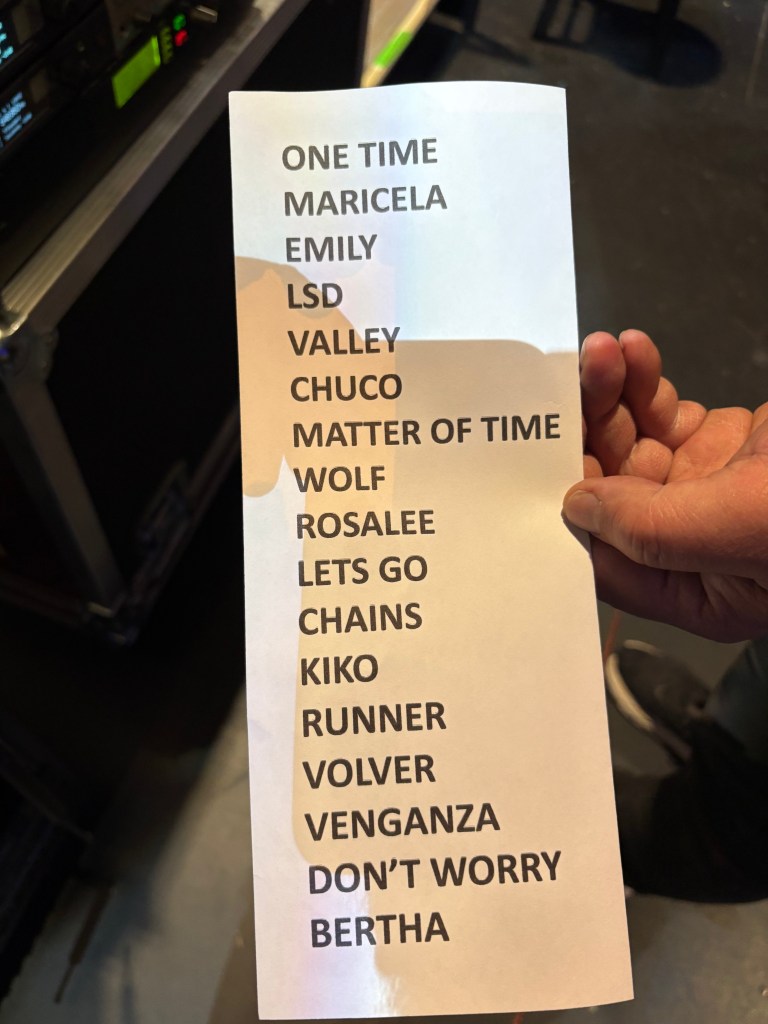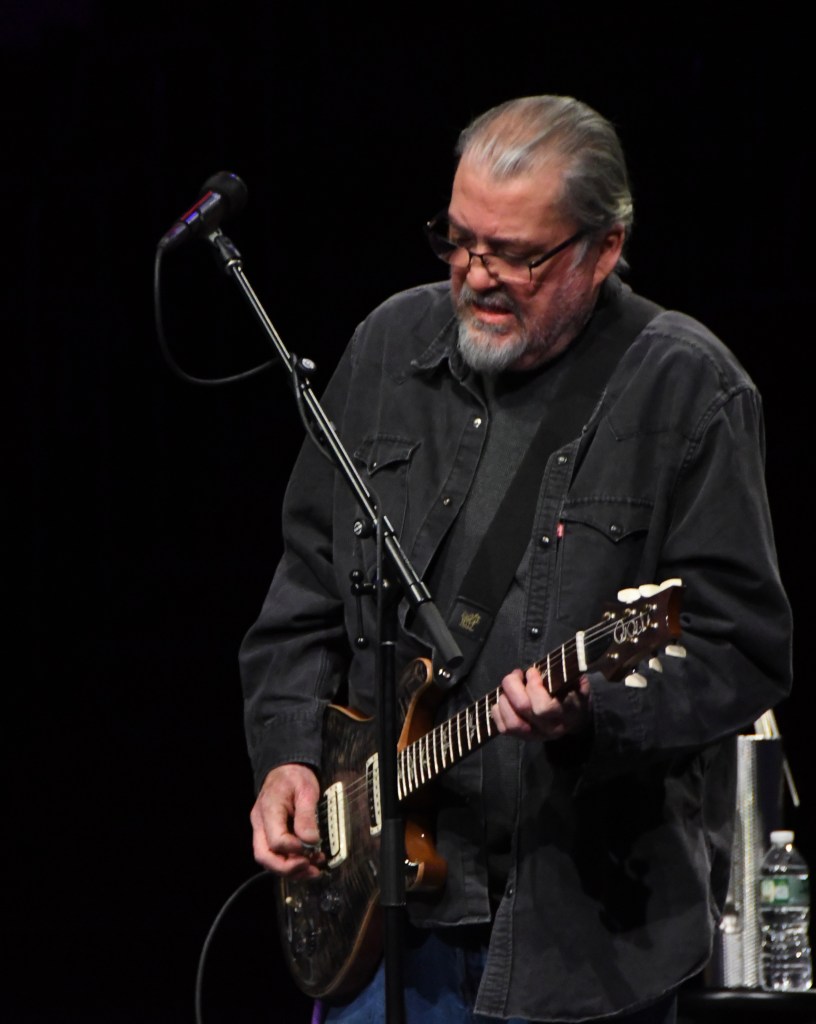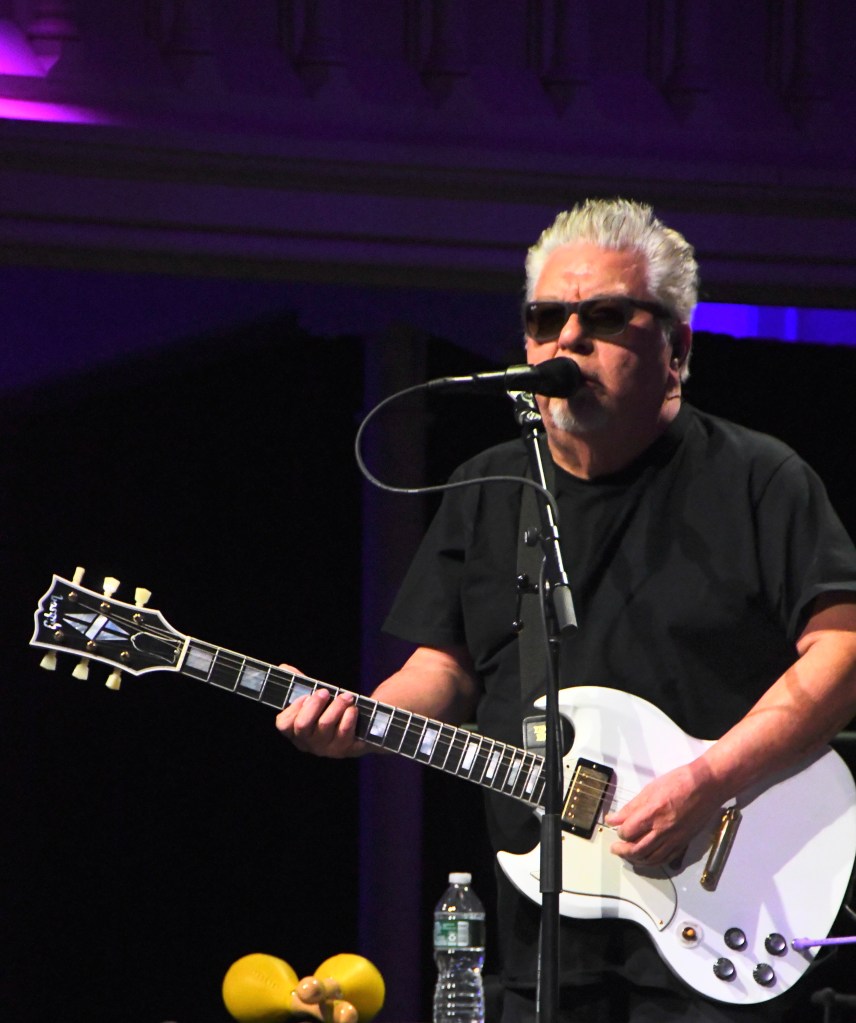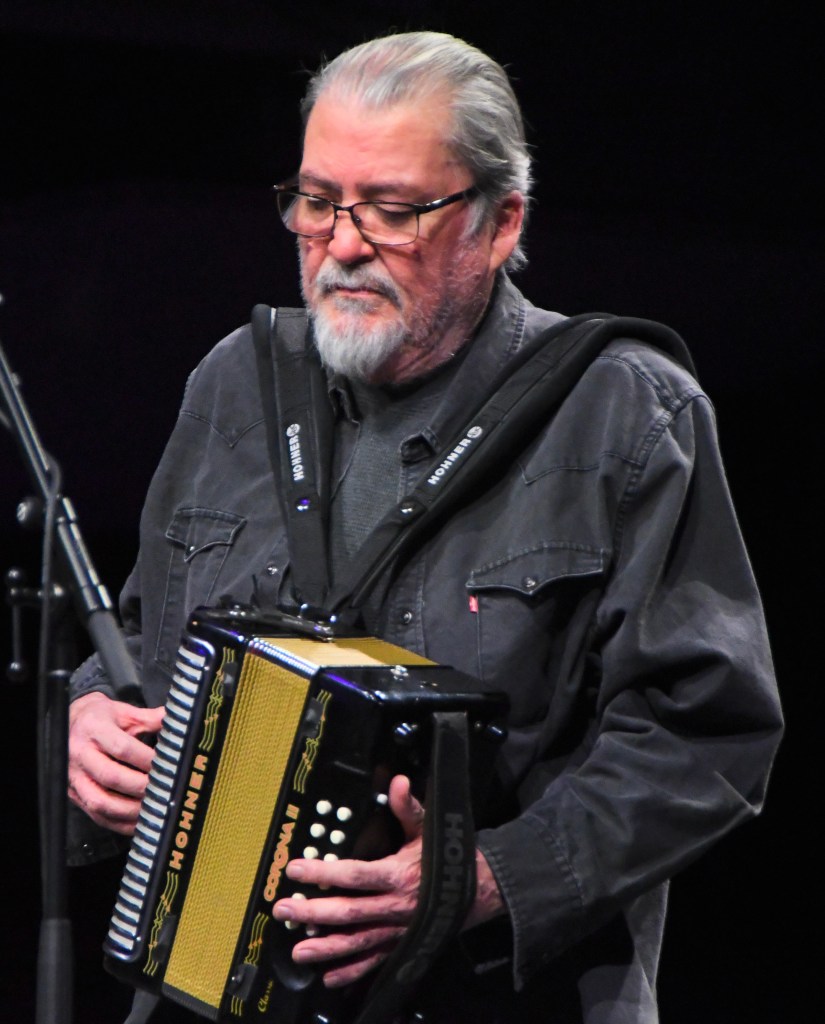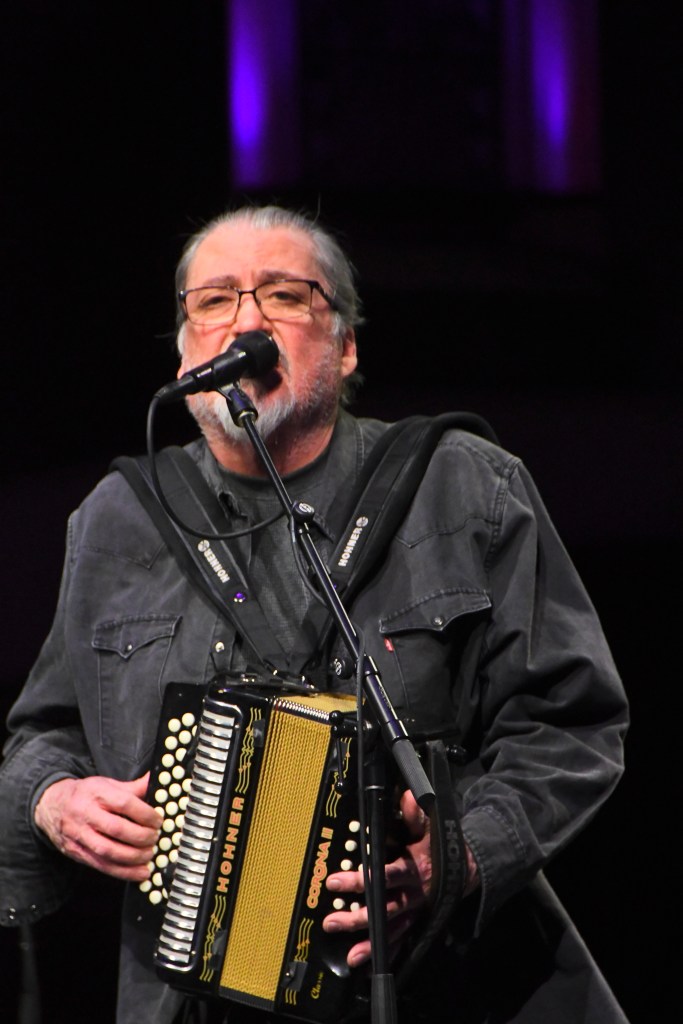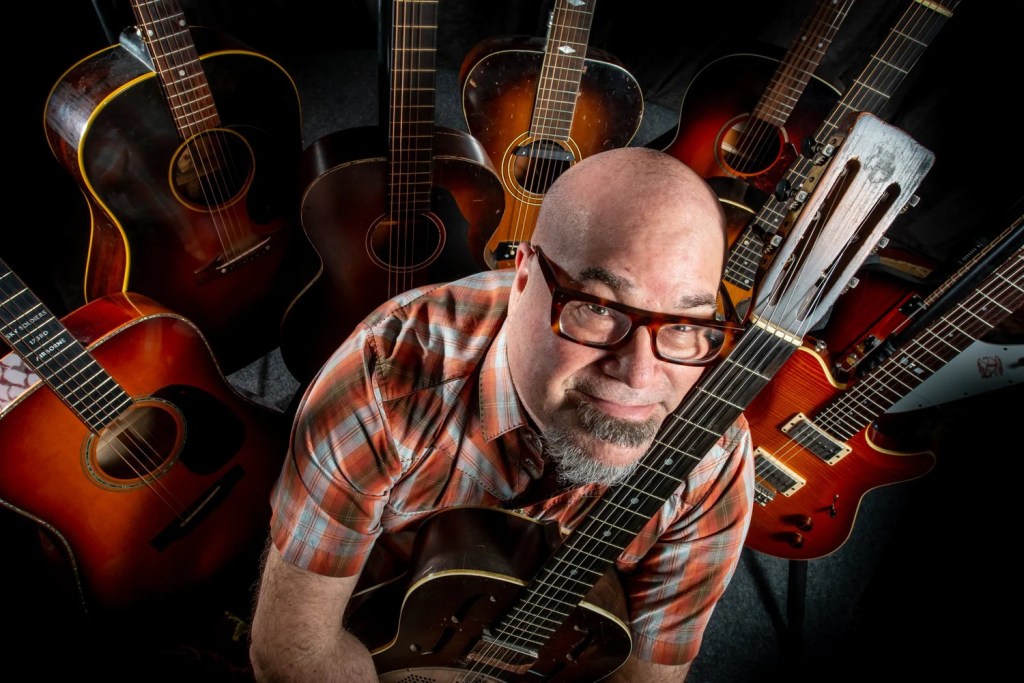
“Most Impressive” John McCutcheon at the Eighth Step

Preview: John McCutcheon at the Eighth Step at Proctors GE Theatre; Friday, Nov. 14, 2025

Playing weddings may pay musicians well; everything else, not so good. Drunks invade the stage to sing along or holler for “Free Bird!” Two musicians I know stopped playing weddings by destroying their tuxedos, but I digress.

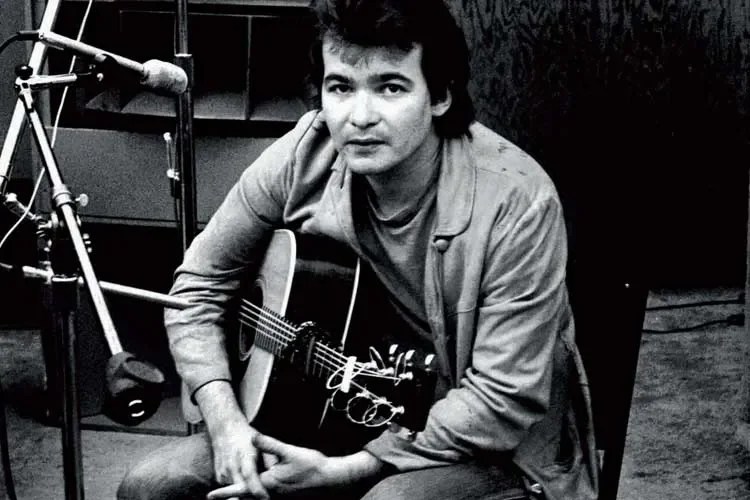
For John McCutcheon – playing the Eighth Step at Proctors GE Theatre Friday – playing a Nashville wedding won a priceless endorsement when the father of the bride praised him. Johnny Cash said of McCutcheon, “This is just the most impressive instrumentalist I’ve ever heard.” – amid a congregation that included Chet Atkins, Ricky Skaggs and other eminent musicians.

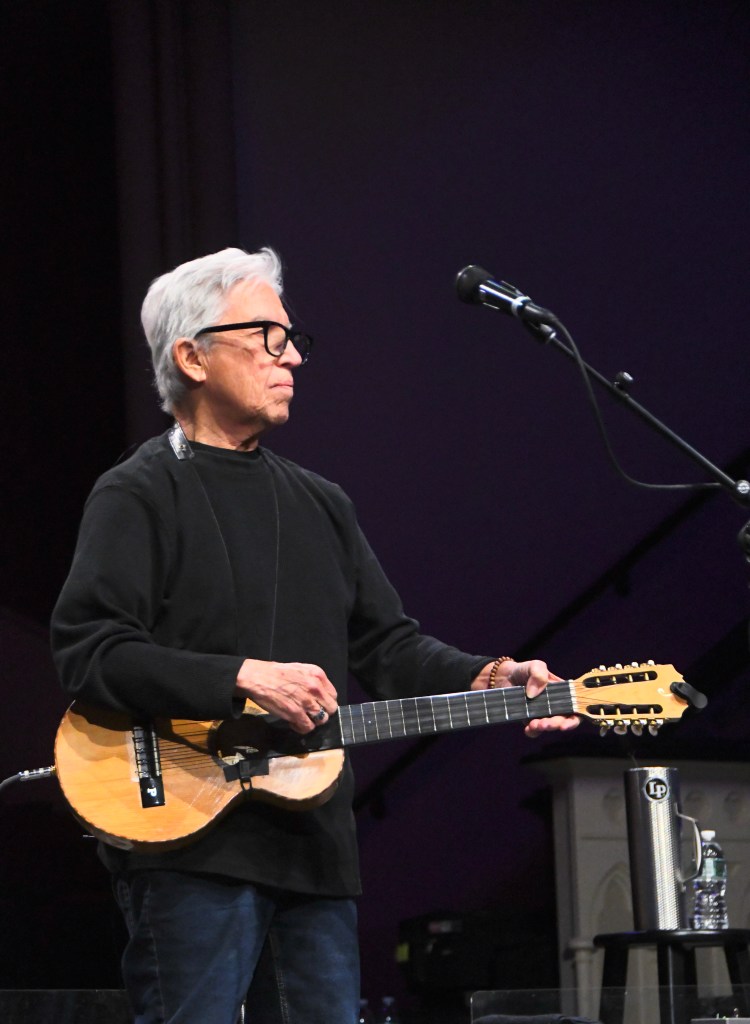
John McCutcheon. Photos provided

While heading to see him Friday at the Eighth Step at Proctors GE Theatre – which I recommend – there’s another McCutcheon distinction to remember. He actually scored a hit song, or at least a folk-level hit: “Christmas in the Trenches.”

Wedding or no wedding, everybody always expects musicians to play the hits. And McCutcheon will likely sing “Christmas in the Trenches” Friday because Its humanist message, the heart-warming tale of a WWI holiday truce between enemies, could hardly be more timely.

But that expectation might unfairly limit the actually unlimited McCutcheon.

He plays hammered dulcimer, banjo, guitar, autoharp, fiddle and more at “most impressive” levels; and he’s made 45 albums of songs while producing 20 albums for other artists. 

Like Pete Seeger, the Carolina Chocolate Drops and many others who traveled the rural south to discover traditional music, the Wisconsin-born McCutcheon roamed for rifts and tunes. “While in his 20s,” Wikipedia reports, “he travelled to Appalachia and learned from some of the legendary greats of traditional folk music, including Roscoe Holcomb and Tommy Hunter.”

McCutcheon also excels at story-telling, both in his songs and in introducing them.

“John McCutcheon plays for us every two years, and it’s always a big occasion,” as Eighth Step Executive Artistic Director Margie Rosenkranz told me. “He’s been nominated for seven Grammys over his career (some are children’s music, some instructional), and is still writing some of the best songs of an exceptional career…We hope for a great audience, which always brings out the best in our performers.”

Show time for John McCutcheon at the Eighth Step at Proctors GE Theatre (432 State St., Schenectady) is 7:30 p.m. Tickets $32 advance, $35 on Friday; $55 front and center; this includes 6:30 p.m. onstage meet and greet with McCutcheon. http://www.eighthstep.org. 518-346-6204.

Tyreek McDole in feisty, funky, fiery farewell to A Place for Jazz season

Review: Tyreek McDole at A Place for Jazz; Friday, Nov. 7, 2025

Singer Tyreek McDole surprised even himself Friday in the season-concluding concert at A Place for Jazz. “That was the best ‘Lush Life’ I ever did!” he exclaimed after a kaleidoscopic tender yet muscular duet rendition of the Billy Strayhorn classic.

The whole two-set show surprised with both wings and roots in right-now feisty young immediacy and respect for the jazz giants McDole reveres as inspirations. Everybody is an elder to 24-year-old McDole, but his music felt as authentic in celebrating generations past as in the jittery modernism of his opening tune.

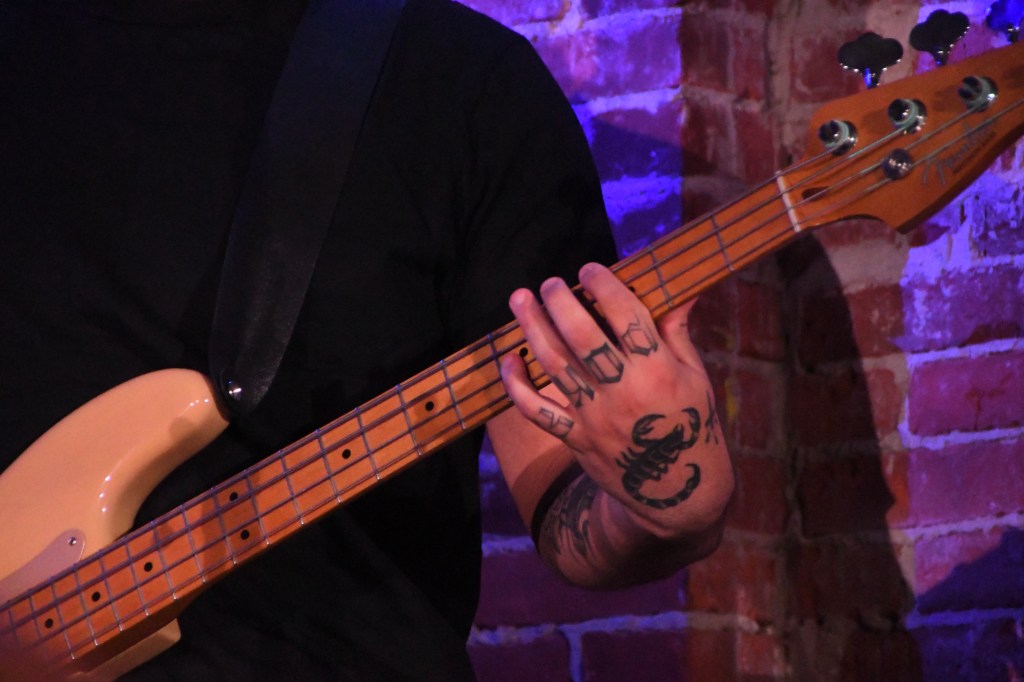
Tyreek McDole, center, with, from left: Joel Wenhardt, piano; Dan Finn, bass; Dylan Band, tenor saxophone (he also played soprano); and Gary Jones III, drums

They filed onstage without a word: McDole to a synthesizer, surrounded by bassist Dan Finn, drummer Gary Jones III, saxophonist Dylan Band and pianist Joel Wenhardt; a surprise all by himself as last-minute replacement for Caelan Cardello.

Impassive, workmanlike, McDole led into a funk vamp, at first airy and eerie, then meaty and thick in seamless waves; two-chord vamps with repeats, shifting tempos, solos pushing in, fading out. 

This oblique suite challenged the audience, which went right with it. Sensing they were fully onboard – big, happy, vocal, welcoming – McDole took the mic for the first time, ten minutes in, and sang “Open Up Your Senses,” title track of his debut album, with firm confidence.

McDole’s voice proved a subtle, strong instrument, ranging from a buttery baritone with Johnny Hartman-like ease to bluesy shouts later and ethereal falsetto glides soaring sky-high. His heart powers that instrument; his music is mission-driven, idealistic.

After introducing the band as the rhythm section softly vamped and marveling that Wenhardt had learned the music in just 48 hours, McDole connected the lyric he’d just sung to the work of making a better world through open communication.

Modern master Nicholas Payton’s “The Backward Step” built from a chant-like vocal in the same pocket as Band’s soprano sax. At times breezy and Latin, like early Return to Forever, vocals subdued and calm, it grew wings as Jones’s drums fired up before a repeating-vocal coda.

Joel Wenhardt, left, and Tyreek McDole in “Lush Life,” above; and afterward, below

“Lush Life” began with nostalgic, lacy piano, like Teddy Wilson in a dream, then burst into exuberant Harlem stride, a very different antique that seemed to rev McDole’s vocal in this strong and subtle duet. McDole introduced “Somalia Rose” as a healing expression, a waltz soft and sweet in the intro, robust and pulsating as wordless voice locked with Band’s soprano sax to thrilling effect. McDole and Band built this together, easing into a recap and light-stepping coda.

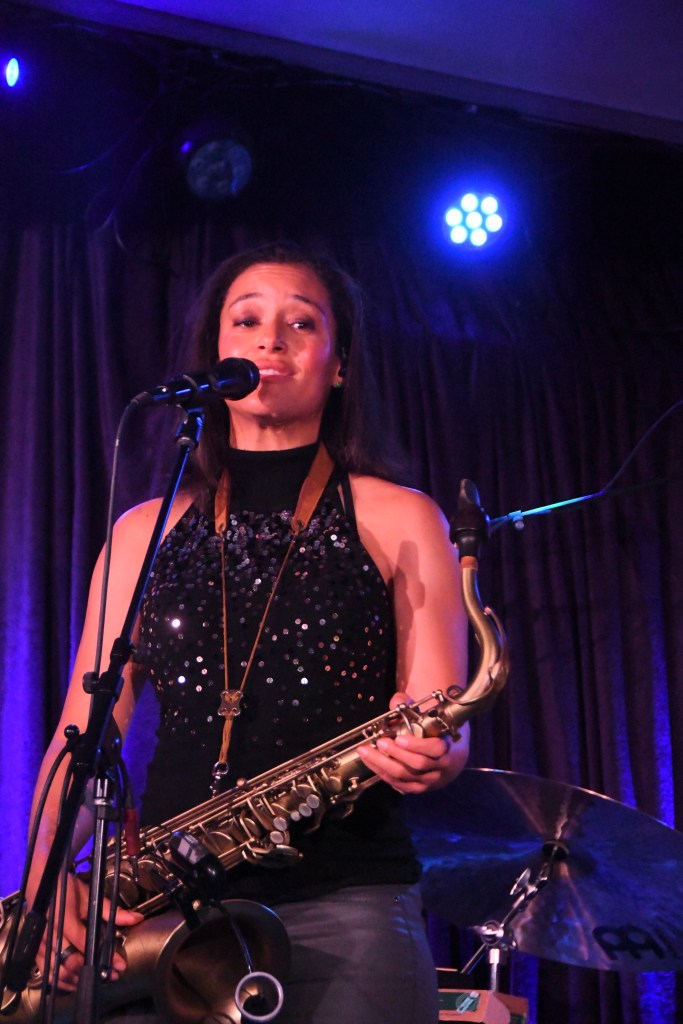
Dylan Band, soprano saxophone

McDole adopted a carnival barker’s nasal bray to announce intermission, leaving us laughing, wanting more.

Like the first set, the second came cloaked in mysterious synthesizer washes, but sweet and restrained. This grew into Herbie Hancock’s beautiful “Butterfly,” a syncopated vamp that Wenhardt’s piano and McDole’s vocal carried in tight communication, soft and lyrical. 

Dan Finn, bass

Another Payton tune followed, “Jazz Is a Four-Letter Word,” though McDole expanded this from a wispy skat intro into a bustling suite, changing the lyric to “Love Is A Four-Letter Word” and glancing at Jones as a cue to rev the beat. This struck Jones like lightning, like permission to push it. Always forceful, he dug deep here. After most songs he reached out to tug back his kick-drum, pushed forward by his forceful right foot; here he had to do this during the solo. McDole led a singalong here, afterward praising the “Schenectady Gospel Choir.” Some of that Gospel feel lit up what came next.

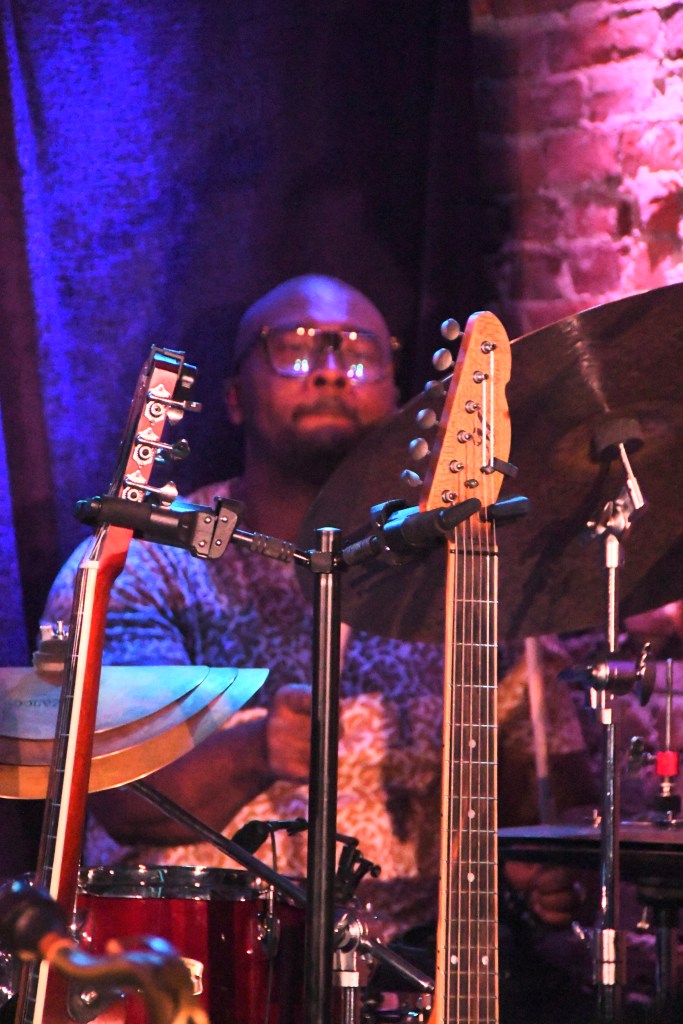
Dan Finn, electric bass, left; and Gary Jones III, drums

Rhetorically asking permission to sing a blues, McDole absolutely detonated “Lonely Avenue.” Earthy yet heavenly, soaringly soulful, this was a knock-out. Band’s tenor sax first strolled alongside McDole’s voice, then they linked like one instrument.

Tyreek McDole, left, and Dylan Brand, tenor saxophone

Down-shifting into Tadd Dameron’s ballad “If You Could See Me Now,” they echoed that same dynamic, but softly, Band’s breathy tenor and McDole’s feathery falsetto croon linking close in the retrained easy-flow middle section before a big finish.

McDole mock-fretted he was having too much fun, then quipped the intro to “The Sun Song” was “SO Hallmark!” before aiming fleet skat runs at the ceiling to reclaim the sweet number and ignite another singalong. Then he linked tight with Band’s tenor and closed by engaging the crowd again in a happy chorus.

They left to big applause and returned, with McDole taking over Jones’s drums to hit a funk groove before confessing “I had NO business doing that!” Jones reclaimed his place after jokingly refusing to rescue McDole at first.

From left, above: Joel Wenhardt, Dan Finn, Tyreek McDole, Dylan Band and Gary Jones III; below, McDole highjacks Jones’s drums

Good choice for the encore: “Everyday I Have the Blues,” all spirit, spunk and soul.

Just as McDole had revved up Jones in “Jazz Is a Four-Letter Word,” Finn’s bass, acoustic or five-string electric, basically led the band throughout. He glance-cued new-kid Wenhardt in the transitions, locked grooves tight with Jones, laid back under vocals and sax in quiet passages and stepped on the gas to push and pull the energy. He seldom soloed, though his break in “The Sun Song” was a gem; but he didn’t have to. He co-starred, all the way.

Before this season’s final show, A Place for Jazz Board President (and WCDB and WAMC jazz DJ) Bill McCann said the longtime non-profit presenter will announce its 2026 season in a spring kick-off and membership drive concert next April 19, a centennial birthday celebration honoring the late great pianist Lee Shaw.

Young Voice Wraps A Place for Jazz Season Friday

Preview: Tyreek McDole at A Place for Jazz; Friday, Nov. 7, 2025

Tyreek McDole closes the season at A Place For Jazz Friday, the only singer in the series and its youngest performer. His band, like all but one other artist this season, features a saxophonist.

Tyreek McDole. Photo provided

Now 25, McDole is even younger than (saxophonist!) Sarah Hanahan, 28. A Haitian-American Florida resident, McDole, like Hanahan, has gained attention in the jazz world through significant awards.

Photo provided

At just 18, McDole won as Outstanding Vocalist at the Jazz at Lincoln Centers 2018 Essentially Ellington Competition. This opened the door to collaborations with fellow emerging stars pianist Joey Alexander (22), plus young veteran trumpeters Theo Croker (40) and Maurice Brown (44); and established stars alto saxophonist Gary Bartz, bassist Rodney Whitaker, drummer Terri Lyne Carrington, trumpeter Nicholas Payton and more.

In 2023, he stepped up among such his-generation jazz vocal talents as Samara Joy, Cyrille Aimee and Lucia Gutierrez Rebolloso as winner of the Sarah Vaughan International Jazz Vocal Competition.

In addition to jazz festivals in Newport, Monterey, Marciac and Nice, he has performed in top clubs including Blue Note New York, Salle Pleyel, Nublu, Dizzy’s Jazz Club, Ronnie Scott’s, Birdland Jazz Club, Jazz at Lincoln Center, and Salle Wilfrid-Pelletier.

Like Hanahan, his debut album won Downbeat magazine respect; “Open Up Your Senses” earned four stars there, plus No. 1 honors in Jazz Week.

Caelan Cardello. Michael Hochanadel photos

McDole sings Friday with pianist Caelan Cardello who played AP4J with Hanahan Oct. 3, saxophonist Dylan Band (not to be confused with Bob Dylan’s band…), bassist Daniel Finn, and drummer Gary Jones III. During her set, Hanahan announced Cardello’s return with McDole, suggesting the singer might not cut the pianist as loose to solo as she does. We’ll see… 

In this AP4J season of saxophones, only guitarist Peter Bernstein’s band lacked a saxophone player while the quartets of David Murray (Sept. 5) and Sarah Hanahan starred saxophonists in the lead role and Leo Russo’s Sextet (Oct. 17) featured two, both leader Leo and his son Lee.  

McDole sings Friday at 7:30 p.m. at A Place for Jazz in the Carl B. Taylor Auditorium, SUNY Schenectady County Community College music department. $25 www.aplaceforjazz.org

Singer-Activist Jackie Alper Remembered

Review: “Ms. Music: Jackie Alper – Her Story” at the Eighth Step at Proctors GE Theatre; Saturday, Nov. 1, 2025

Andy Spence, at left, conducts the ensemble

Spirits of folk heroes hovered over the Eighth Step stage Saturday – Woody Guthrie, Pete Seeger, Leadbelly, Ronnie Gilbert, Nina Simone, Utah Phillips  – all friends of the late, great Jackie Alper. Nine area musicians honored Alper, our own folk-music Forrest Gump, as Eighth Step host-impresario Margie Rosenkranz describes her. A forest of microphones and instruments, the stage looked like a music store; facing them out front sat Andy Spence like the conductor she was Saturday. Spence and Sarah Dillon wrote the the two-part tribute in songs and stories, working since January through books, interviews and song research.

Margie Rosenkranz

It held together wonderfully well; though some singers sounded stronger than others, some players, too. But it all felt strong in the spirit of the much-loved and admired singer, activist and radio voice.

Nearly-packed – as it was during the Step’s 2007 Alper memorial – the place had the easy warmth of a family reunion; some hadn’t seen each other since Alper died. Part hootenanny, part progressive issues rally, part hero tribute, it felt both universal in its message and personal in its delivery as the performers brought themselves, fully. Rosenkranz called it “a gathering of the clan.”

As Spence told me last week, the two-part tribute sketched Alper’s life in her own words that Ruth Pelham collected in a 2000 interview, plus published recollections by Seeger, Gilbert and a dozen other sources, notably Alper’s son George. Previously committed elsewhere, he couldn’t attend.

Ruth Pelham, narrating, above; Greg Giorgio, below

First-set narration sketched Alper’s long life, launched in an impoverished New York City childhood that powered her contributions to both social movements and music. Pelham recited recollections in Alper’s own words; Greg Giorgio framed them in history: the Depression, WWII, the “red-scare.” Alper declined the star-making opportunity to join the Weavers to work in legal defense of progressive activists.

Songs fit and filled out this framework; Pelham delivering “The Greenhorn Cousin,” written by Alper’s father Jacob Leiserowitz, with very old-New York flavor and Kate Blaine’s bluesy “Frankie and Johnny” providing rootsy-period flavor. Union organizing songs dominated, however, Blaine strong in “Union Maid” and Toby Stover challenging anyone on the fence between boss and workers with “Which Side Are You On.” Narration painted all this in very Jackie terms: When a paddy wagon took her away from a demonstration, her mother yelled, “At least I know where you’ll be tonight,” a night when Jackie took up cigarette smoking in jail.

Kate Blain, above; Toby Stover, below, George Wilson, background

At intermission, the performers smiled their way into the dressing room, happy laughter audible in the theatre as fans greeted each other on the stage in a happy schmooze. In the lobby, activists staffed tables full of signs, brochures, stickers and buttons.

Intermission schmooze onstage, above; folksingers Cathy Winter and Ruth Pelham, below

As Spence explained in an interview last week, she built the second set on the principles Alper’s buttons proclaimed. Some wear their hearts on their sleeves, maybe; but Alper proclaimed them in buttons crowded onto her vest. 

Spence cleverly built the narration and music around these messages, as performers periodically popped up in a whack-a-mole relay of principle, reciting a button each, then sitting as another performer intoned another button. This amused, enlightened and punctuated song and story sequences that – like the first-set songs – used blues or pop songs to punctuate activist material.

Stover demonstrated the folk process in “Round & Round Hitler’s Grave,” setting scornful messages by Guthrie, Seeger and Lampell to “Old Joe Clark.” Blues by Sonny Terry & Brownie McGee and Leadbelly, and “Old Jim Crow” – which Alper wrote with jazz-blues giant Nina Simone – were more than entertaining period pieces; the singers clearly meant them from the heart.  

Ruth Pelham, Kate Blain, and Toby Stover

But nothing else in the show packed the punch of “Singing for Our Lives,” written by Holly Near and sung at first in close harmony by Stover, Pelham and Blain. When the men joined in – fiddler/banjoist/12-string guitar player George Wilson, guitarist/dobro player Michael Slik, bassists/guitarists Howard Jack and Charlie Rhynhart, singer/narrator Greg Giorgio and pianist Alan Thomson – this grew wings, a mighty chorus.

George Wilson, above; Michael Slik, below

Howard Jack, above; Charlie Rhynhart, below; Kate Blain, foreground

Charlie Rynhart

Alan Thomson, foreground

The men took their turn in the life-summing-up “Starlight on the Rails” before Pelham summed up Alper’s later life, fighting Lewy Body Dementia while advocating for staff in her nursing home. Pelham sang Malvina Reynolds’s “Magic Penny” as compassion and love in song.

To choose the evening’s single, brightest star, it would be Pelham who sang and spoke in compelling conviction and read the crowd beautifully. When she heaped scorn on “red-scare” bullies McCarthy, Nixon and Roy Cohn – mentor of a certain amoral real-estate swindler – she looked up as boos filled the room. Then she repeated Cohn’s name to more ridicule.

The rousing closer “If I Had a Hammer” united all the voices and as Spence rang on cue the bell that lay at her feet throughout. More laughs, then a standing ovation.

Without leaving and after a short consultation, they encored in a strong repeat of “Solidarity Forever” to the familiar tune of “John Brown’s Body.”

This was a family reunion, a hootenanny, a progressive-issues rally, a hero tribute, “a gathering of the clan” – a clan including leaders and fans of the Eighth Step, Caffe Lena, Old Songs, and WRPI; institutions Jackie Alper supported and that hold her memory close.

The Songs and who Sang ThemFrom Spence’s program

ACT ONE

Come and Go with Me Howard

On the Picket Line Ruth

Frankie and Johnny Kate

 There is Power in the Union Charlie

Brother, can you spare a dime Michael

Talking Union George

Di Grine Kuzine (The Greenhorn Cousin) Ruth

Solidarity Forever Howard

Union Maid Kate

ALMANAC MEDLEY (Jackie was a member of the Almanac Singers, a predecessor of the Weavers, and the Priority Ramblers, likewise.)

Union Train George

Which Side Are You On? Toby

Get thee behind me, Satan  George

 ACT TWO

I Never Will Marry Kate & Toby

I’m a-looking for Home George

Round and Round Hitler’s Grave Toby

Overtime Pay Alan

Walk’n My Blues Away Charlie

How Long Blues George

Reuben James Michael

Wasn’t That a Time? Howard, Toby, Ruth

Good Night Irene  George & Ruth

Old Jim Crow Toby

Waist Deep in the Big Muddy George

Singing for our Lives Toby, Ruth, Kate

Starlight on the Rails Howard, Charlie, Michael

Magic Penny Ruth

If I Had a Hammer Howard et al

Solidarity Forever Everybody

Spence’s Acknowledgements

Special thanks to Margie Rosenkranz, who encouraged me to do this project.

Thanks to all the folks who shared their knowledge of Jackie, especially her son, George Alper and her local friends Mabel & Ruth. Thanks to Ruth Pelham, Kevin Roberts, Michael Eck, Alan Thomson, Don Person, Greg Georgio, Sarah Dillon and Marsha Lazarus and Kathleen O’Conner for their memories.

Andy Spence, foreground, with Greg Giorgio

Credits

Producer & Director: Andy Spence

Writing and Script Editor: Sarah Dillon

Interview with Jackie in 2000 by Ruth Pelham

Program: Dan Roesser

Tabling in the Lobby

Performer photos by Joe Alper, Jackie’s husband

Sarah Craig, standing, of Caffe Lena, tabling in the lobby

Ruth Pelham sings atop a stool, with Alan Thomson, left, and George Wilson

Eighth Step board member Ed Guider urges membership support for Caffe Lena, Old Songs and the Eighth Step

Jackie Alper Tribute in Tunes and Tales

Preview: “Ms. Music: The Jackie Alper Story” at the Eighth Step at Proctor’s GE Theatre, Saturday, Nov. 1, 2025

How to distill a long, musically and politically active, admired and heroic life into a words and music show shorter than a season-long TV mini-series?

Saturday’s Eighth Step premiere of “Ms. Music: The Jackie Alper Story” represents the triumph in a shared struggle by two leaders of the folk community who’d worked for decades with the activist, singer, radio host and guiding spirit. 

Jackie Alper. Photo provided

“I’ve had a terrible time writing about this, terrible,” lamented Eighth Step impresario Margie Rosenkranz, who’s presenting the show Saturday at the Eighth Step at Proctors GE Theatre. “Jackie was the Forrest Gump of the folk world; she was in all the hot places.” 

“In the research of this show, I learned way too much,” agreed Spence, now-retired chief of Old Songs and partner with Sarah Dillon in the year-long writing of what she calls a folk musical. “She was a friend to all of us and she helped all the folk organizations in the area,” said Spence. “She pointed the way, how to think about how music effects peoples’ lives.”

“We talked about Jackie all the time,” said Rosenkranz of co-launching the project with Spence. “Andy and Sarah Dillon picked up the ball when I went to do my (Eighth Step fall and winter) season,” now underway through December.

In the show’s program booklet, Spence cites eight source books including by Weavers Pete Seeger and Ronnie Gilbert, plus others about Seeger and Woody Guthrie, and Scott Alarik’s posthumous Jackie tribute in Sing Out magazine. Spence also acknowledges 11 interview sources including Jackie’s son George and many musicians, notably Ruth Pelham whose interview with Jackie provided the narrative structure for the first act of the two-part show. Those segments are prefaced as “in Jackie’s words.”

Guided by Buttons of Belief

Spence found her path through too much information in the button collection Jackie wore on her vest. Those buttons told “what she believed in,” Spence explained. In the program’s second half, “We tried to put in the things that she wore on her buttons.” As Rosenkranz notes in the concert news release, they include “War is not the Answer,” “Peace Through Music,” “If You’re not outraged You’re Not Paying Attention,” “My Karma Ran Over My Dogma” and “Buttons are Not Enough.”

The program cover shows Greg Artzner’s button collection that paralleled Jackie’s, with messages supporting peace, justice, love and community.

The program lists songs the cast of nine will perform, expressing those values, plus the choruses for each so all can sing along. They’ll sing gospel, blues and folk, including “Old Jim Crow” which Jackie co-wrote with jazz giant Nina Simone.

“This kind of music and singing brings people together,” said Spence. “What I’m hoping is that we have a swelling of pride in this country…and we can survive this,” she said, noting current political and social strife. 

Hard Times, Saved by Song

Jackie lived through similarly troubled times: the Great Depression, WWII, the 1950s red scare/McCarthy-ism and the 1960s folk-scare that was largely a progressives’ reaction.

Fellow folksinger Paul Robeson was a Greenwich Village grammar school classmate and sang at the infamous Peekskill riots years later when KKK thugs attacked a free folk concert, throwing stones at their bus as they fled. Pete Seeger told me that afterward, “I combed the broken glass out of my children’s hair.” Rosenkranz said, “He also picked up one of the stones they were throwing and built his hearth around it” in his hand-built Beacon home. Laughing, she added, “Isn’t that just vintage Pete?”

Between growing up in New York and arriving in Schenectady with husband Joe in 1950, Jackie sang with the Almanac Singers with Woody Guthrie and other folk revival pioneers, and with the equally progressive Priority Ramblers while working with folklorist Alan Lomax in the Office of War Information in Washington during WWII. Returning to New York, she presented concerts by Guthrie, Seeger, Leadbelly and more through People’s Songs. Their fees, Spence found: $15 a concert. “Ms. Music” features songs by all these giants. 

A Weaver, for a Time

Jackie was in the original lineup of breakthrough folk stars the Weavers before returning to DC to organize the legal defense of artists and activists the McCarthy Hearings targeted in the “red scare” days. She nominated her friend and room-mate Ronnie Gilbert, whose contralto voice resembled Jackie’s, to replace her after just one concert; and moved to Schenectady when typesetter husband Joe left his printing career in New York to become a photographer, risking this life change after a deadly diagnosis of kidney disease.

Jackie Alper, Ronnie Gilbert and Pete Seeger at Jackie’s 1994 retirement celebration at the Eighth Step. Photo provided

In 1960, Joe and Jackie met Bob Dylan at the newly opened Caffe Lena; one of many folk and jazz stars he’d photograph for publications and record companies. (See Photo Pass, below.) Meanwhile Jackie began volunteering in area folk venues the Eighth Step and Old Songs as well as Caffe Lena, serving on their boards. She also hosted “Mostly Folk” on WRPI for 23 years; when she retired in 1994, Seeger played her retirement celebration at the Eighth Step.

Rosenkranz said longtime folk artist and booking agent David Tamulevich, who played the Eighth Step recently, agreed that “this region is, if not the most active folk music community in the country, it was then.” When Jackie was on WRPI every week, “Jackie had an enormous amount to do with that,” Rosenkranz added. 

Friends in Song, from left: Ruth Pelham, Jackie Alper, Ronnie Gilbert, Jacke’s daughter Jaye, and (partly obscured) Margie Rosenkranz – all singing at the original Eighth Step on Willett St. in Albany. Photo provided

Active in all directions during that time, Jackie fostered artists both established and just emerging while also working for Schenectady City Schools and managing Joe’s photo archives after his too-early death. Spence said, “The whole second half (from 1950 to her death in 2007) was tough to write…because we knew how many (artists) she liked,” and whose music is in the show.

Rosenkranz supported Jackie in her long decline with Lewy Body Dementia, just as Jackie visited Lena Spencer of Caffe Lena and read to her in the hospital after the fall that ultimately took Lena’s life. And just as Jackie was widely known as “the fifth Weaver,” she joked that Rosenkranz was her fourth child, after son George and daughters Jaye and Jeri, the latter two now deceased.

Packed with Tunes

Songs outlive their makers and good songs stay good; and “Ms. Music: The Jackie Alper Story” is packed with tunes. The first half is framed by Ruth Pelham’s invaluable 2000 interview and the second by the ideals that inspired Jackie’s decades of creativity and activism, non-stop work that earned her 2024 induction into the Thomas Edison (“Eddies”) Hall of Fame.

The cast of “Ms. Music: The Jackie Alper Story” are all veteran area artists; most played in Andy Spence’s previous “folk musicals”(See Folk Musicals, below) – Kate Blain, vocals; Greg Griorgio, vocals and narration; Howard Jack, bass and vocals; Ruth Pelham, guitar, vocals and narration; Charlie Rhynhart, guitar, bass and vocals, Michael Slik, dobro, steel guitar and vocals; Toby Stover, keyboards, percussion and vocals; Allen Thomson, keyboards and vocals; and George Wilson, fiddle, banjo and 12-string guitar and vocals.

Show time 7:30, doors 7. $26 adv., $28 on Saturday, $40 front and center. 518-346-6204 www.8thstep.org

BACKSTAGE PASS

Backstage at a Peter, Paul & Mary concert at Saratoga Performing Arts Center, I mentioned to Mary Travers that Jackie was there, waiting at the loading dock area with other fans hoping to meet the stars. 

Mary jumped up, asked “Where?” and took my hand. We swept along a long hallway from the dressing room to where fans waited. Mary was a majestic, rapid-rolling presence so I felt like the engineer of a freight train, moving fast, as we approached the fan throng. When we got to Jackie, Mary dropped my hand and I basically disappeared as she took up Jackie in a warm hug and they reminisced about being Village neighbors.
PHOTO PASS

My friend George Alper, Jackie’s son, once offered to share some family snaps. I knew George’s late father Joe Alper had been a photographer so I said, “Sure, what have you got?” He handed me contact sheets one at a time, each a single print collecting an entire roll of 35 mm black and white negatives in tight rows. One showed George, about five years old, in his pajamas, building a castle of blocks on the floor…with Bob Dylan. 

When Dylan came to Schenectady and Saratoga Springs for his first gigs outside the Village, he couldn’t afford a hotel after his Caffe Lena debut, so Jackie and Joe put him up at their place along with his girlfriend Suze Rotolo. They’re shown walking in the snow together in the Village on the album cover of “The Freewheeling Bob Dylan.”) The Alpers welcomed Dylan and Rotolo to their home at 1620 Brandywine Ave., half a mile from where I now sit; a building we in my family revere by bowing to it whenever we drive past.

FOLK MUSICALS

Andy Spence pioneered the words and music format that shapes “Ms. Music: The Jackie Alper Story.” Her first such effort, “The Visitors – the history, music and songs of the Adirondacks” (2009) featured story-teller/poet Joe Bruchac, troubadour Dan Berggren and others. Spence followed with “The Civil War: A Musical Journey” (2012), her first with narration. Her “Down with the Rent: The Anti-Rent Rebellion of New York State” (2014) inspired UAlbany professor Nancy Newman’s “Songs and Sounds of the Anti-Rent Movement in Upstate New York,” recently published by SUNY Press. Then came Spence’s “Forward Into Light: The American Women’s Suffrage Movement in New York State in Song & Story” (2017), and its shortened version “New York Women: Singing for Suffrage” (2017), and “The Remarkable, Irresistible Erie: Snapshots & Voices” (2023).

A Classical Connection

Review: Ensemble Connect at Skidmore’s Arthur Zankel Music Center on Friday, October. 24, 2025

Young music students of the Ensemble Connect fellowship program connected a near-capacity audience (admitted free) to four modern chamber-scale short pieces Friday; each of two halves establishing different moods and atmospheres.

Two ensembles took the Zankel stage at first; both in business-like black. A string quartet opened with “Da pace Domine” (Give peace, Lord) Arvo Part’s solemn near-dirge mourning the 2004 Madrid terrorist attack. Its minimalist power packed the same poignant punch as the great rocker Willie Nile’s outraged/sad tribute for the same victims, with his harrowing line “Cellphones ringing in the pockets of the dead.” Part’s slow, low chords rose and grew more complex before subsiding, with little rhythmic development to build quiet, hypnotic effect.

Part’s earlier (1964) “Quintettino”(little quintet) packed woodwinds around French horn in a lighter, more varied three-movement miniature; like “Da pace Domine,” it was only five minutes long. This built in deliberate momentum from a staccato start, almost nervous in its restlessness, into slower, sparser passages with solos springing up from the familiar blended feel.

Then the stage was re-set for Leos Janacek’s nostalgic sextet “Mladi” (Youth); written at 70 in a sentimental evocation of his homeland and family. This began with a hearty bustle, the feel of a city in its kinetic counterpoint. A bass clarinet dialog with the other winds evoked the melancholy of parting from home and family to study music, but a lively march-style Vivace with bright oboe and piccolo restored the piece’s fundamental sentiment. Animated low passages spurred the slower finale before density and tempo increased, rose and fell, quietly resolving.

After intermission, the “Piano Quintet in G Minor” of Dmitry Shostakovich set a more emotive and expressive tone. The three first-part pieces all presented confident precision to be expected from elite Conservatory players; this single composition that comprised the second brought something more personal and propulsive. 

All the players wore black in the first half, while those in the second – who had all played in the first half – wore bright colors. Their body language was more expressive, leaning and shifting in rhythm, raising their bows after bravura phrases.

The piece offered plenty of opportunity for such expression, and for smiles; as a slow Prelude with stratospheric violin passages and plaintive feel flowed into a slightly faster Fugue that flowed low and sparse through exposed piano and cello solos, slowing and growing more solemn as the quintet reassembled. The Scherzo built on blend, syncopation and brief pizzicato energy, the piano pulsating emphatically.
The lovely Lento, lyrical and light, set up a spirited finale alternating quiet, gliding, dance-like passages with assertive piano, then subsiding into serene, sparse, valedictory farewells. Another spry dance of piano and violin brought things home.

A standing ovation, a curtain call; then the players left the stage to chat in the aisles with Skidmore music students.

“Connect” is quite correct; a complicated pedigree as a program of Carnegie Hall, the Juilliard School and Weill Music Institute in partnership with the New York City Department of Education; with support from the family of Beverly Sanders Payne (Skidmore 1959) and her late husband David B. Payne.

A two-year fellowship program, Ensemble Connect unites students of elite music programs including the conservatories Colburn, Eastman,, Juilliard, Curtis, Manhattan, New England, Peabody, Shepherd, Stony Brook, USC and Yale.

Friday’s performance culminated a weeklong residency with numerous community concerts and workshops at Skidmore and elsewhere.

Future events of the Skidmore Music Department and Office of Special Programs include the Skidmore and Bennington Folk Festival Nov. 8, SURROUND: Julie Doiron Nov. 9 and a dozen additional performances through mid-December by both student and professional touring artists.

Folk’s Driving Wheel

Review: Tom Rush and Matt Nakoa at the Eighth Step at Proctors GE Theatre, Saturday, October 18, 2025

A year ago, Tom Paxton (88) played the Eighth Step on his farewell tour; on Saturday, Tom Rush (84) played a low-key, subtle but strong show proving he has miles, and albums, still to go.

Paxton had played with the Don Juans, singer-songwriters Don Henry and Jon Vezner. They were to play Caffe Lena this week, until Vezner’s illness cancelled that show. But we digress.

Rush played Saturday with the generation-younger skilled singer-songwriter, pianist and guitarist Matt Nakoa in a two-set show, each shining in solo spots as well as polished but unfussy duets.

Tom Rush, right; and Matt Nakoa

Recorded bluegrass antiques greeted the mostly boomer crowd filing into Proctors black-box GE Theatre; then Rush followed Margie Rosenkranz’s introduction to the stage and went straight for the funny-bone with the wry, fatalistic, bouncy “Making the Best of a Bad Situation.” 

Matt Nakoa joined in for “Glory Road” – written 54 years ago but un-recorded until Nakoa as producer put it on “Gardens Old, Flowers New,” Rush’s 19th album since 1962. Nakoa shifted to a grand piano and synthesizer for “I Won’t Be Back At All.” This somber farewell moved slower than the preceding mid-tempo numbers and was the first of several to address aging and loss. That theme didn’t dominate, however, as Rush riffed through covers and originals, folk, blues and rock; and Nakoa shifted from guitar to keyboards and back. Rush spoke-sang its sad lyric, then spiced the chorus with a skat-yodel.

Rush introduced songs with stories, noting he’d met Joni Mitchell in 1966 and begged her for tunes to fill out an album two years overdue to set up her “Urge for Going.” Later he enviously marveled that Jackson Browne wrote “These Days” while only 16, adding “I hate him!” Self-deprecating, sly, he noted 7.5 million YouTube plays of “The Remember Song” hadn’t earned him a dime, but sounded genuinely grateful that “No Regrets” had put two of his children through college. This paean to fading memory also set up a tasty joke; after mourning misplaced keys, glasses, planner, his face went all mock-confused as the next verse should have arrived. As if forgetting the words, he just kept strumming until the audience got it.
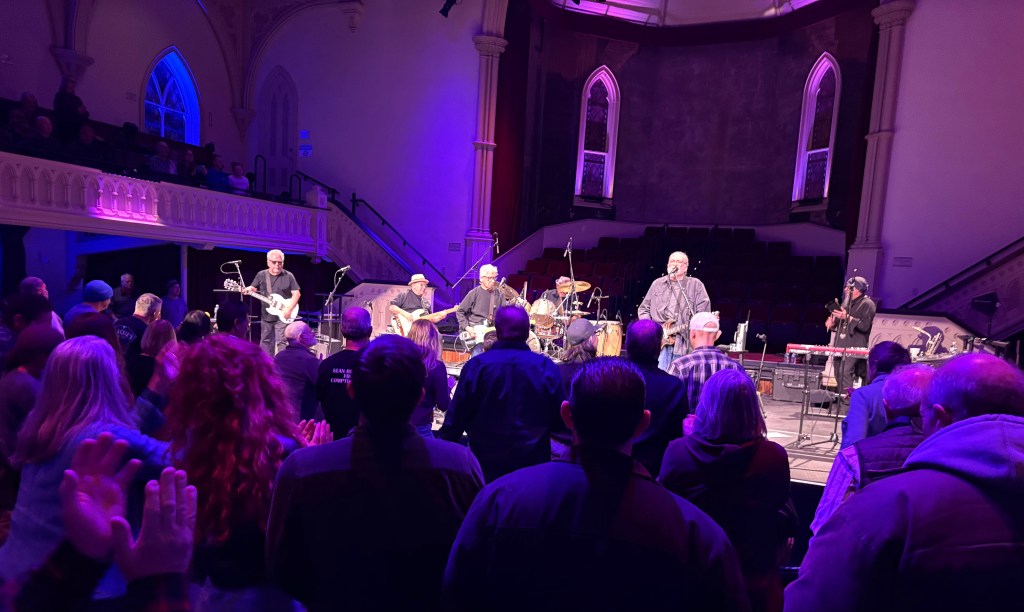
His first set featured two Nakoa solo songs, both well-made and played with an earnestness that contrasted nicely with Rush’s ease. Sandwiched between Rush’s antique blues romp “Drop Down Mama” and “The Remember Song” goof, Nakoa’s “Holding Out Hope” and “Lightning” felt charmingly sincere.

Rush wrapped both sets with story songs, the railroad epic “Panama Limited” in the first and the hometown-warm “Merrimack County” in the second. He played skillful, unflashy bottleneck slide in “Panama,” and noted that, for all the appeal of his older tunes, “I’m writing better stuff, since” – a forward-looking assertion of purpose that would jump-start his second set.

He sang “Ladies Love Outlaw” in bold, assertive strength as he retook the stage, cueing Nakoa’s piano solo, “Let it happen, Cap’n” then asking “You done?” as he resumed singing. “These Days” eased back, into a warm poignance. Then, sounding every bit the Harvard English major he’d been when he started his career in Cambridge coffee-houses, he described the folk process as “musical Darwinism” – old tunes get new parts as succeeding generations sing them. This launched “The Cuckoo,” spiced with Nakoa guitar solos.

Nakoa’s second-set spot featured the cartoon-soundtrack piano piece “Tumbleweed Tango” that playfully went variously Latin until he raised his arms in flamenco-style triumph.

Rush took over for “What’s Wrong With America?” – perfect for No Kings Day with its mock lament that “the poor have too much and the rich don’t have enough.” The populist in Rush combined with the jokester to beautifully scornful effect as the crowd sang or laughed along.

Rush and Nakoa finished strong with the wistful farewell “No Regrets,” third song Rush ever wrote and covered by folk, rock, metal, even hip-hop artists. “Driving Wheel,” by contrast, was all regrets, but cloaked in delicious music, with Nakoa echoing Garth Hudson’s grand style in a soaring organ solo, beefy bass lines punching out from the other end of his synthesizer keyboard.

Rush set up “Merrimack County” with word-gems he collected from neighbors there, decorated with synthesizer drones and piano pointillism.

They didn’t bother leaving entirely before launching a rocking encore of “Bo Diddley,” whom Rush noted was among guests at his 2012 50th anniversary-in-show-business at Boston’s Symphony Hall. Rush and Nakoa rocked it for real, Rush dropping his mellow baritone into its lowest range for booming authority and going mock-pedantic near the end: “WHOM do you love?”

Rush first payed Symphony Hall in 1958; and he told the Boston Globe before his 2012 celebration there, “The artist plus the setting equal the experience, which is what people want.”

The Eighth Step, where he’s played since its days on Albany’s Willett Street church basement home, once again proved a comfortable, cozy setting for Rush’s easy-chair style, diverse repertoire, deceptively simple guitar picking, and Nakoa, an ace accompanist.

Set List

I: 7:34 – 8:35 p.m.

Making the Best of a Bad Situation (Rush solo)

Glory Road (Rush with Nakoa, guitar)

I Won’t Be Back at All (Rush with Nakoa, piano)

The Urge for Going (Rush with Nakoa, piano)

Drop Down Mama  (Rush with Nakoa, piano)

Holding Out Hope (Nakoa solo, guitar)

Lightning (Nakoa solo, piano)

The Remember Song (Rush solo)

Sienna’s Song (Rush solo)

Panama Limited (Rush solo)

Intermission 

II: 9:06 – 9:58 including encore

Ladies Love Outlaws (Rush with Nakoa, piano)

These Days (Rush with Nakoa, piano)

The Cuckoo (Rush with Nakoa, guitar)

Tumbleweed Tango (Nakoa, piano [no vocal])

What’s Wrong with America (Rush solo)

No Regrets (Rush solo)

Driving Wheel (Rush with Nakoa, piano)

Merrimack County (Rush with Nakoa, piano)

Bo Diddley (Rush with Nakoa, piano)

Three in Schenectady, “the place…”

Previews: Brian Patneaude, Leo Russo, Tom Rush

When jazz drummer-pianist Cliff Brucker composed “Schenectady Is The Place,” he might have been predicting this weekend, alive with two jazz saxophone shows – Brian Patneaude Thursday then Leo Russo Friday – followed by a Saturday show by folksinger Tom Rush.

Thursday night, tenor saxophonist Brian Patneaude leads his Quartet at the Van Dyck Jazz Club, upstairs from Stella Pasta Bar (237 Union St.)

Thursday’s show of original Patneaude tunes and jazz classics marks a return for the saxophonist and his longtime drummer Danny Whelchel; they played in the Van Dyck’s 90s house band for weekly jams. Patneaude’s Quartet also celebrated the release of its debut album “Variations” (2003) there.

Brian Patneaude at Jazz on Jay in July 2024. Michael Hochanadel photo

“I have fond memories of hearing many of my biggest musical inspirations there,” says Patneaude, “including Michael Brecker, Pat Metheny, Chick Corea, Chris Potter, Dave Holland, Brian Blade and so many more.” Note Patneaude mentioned Brecker first; his own kinetic, controlled style resembles Brecker’s smoothness and drive. Patneaude also played the Van Dyck with Keith Pray’s Big Soul Ensemble during the big band’s long residency there. (He’ll play with Pray Tuesday, Oct. 28 at the Cock ’N’ Bull in Galway, the big band’s new home, since COVID.)

At the Van Dyck Thursday, Patneaude and Whelchel will play with pianist Rob Lindquist and bassist Jerod Grieco. Patneaude says, “We couldn’t be more excited to return to this legendary stage!” 

Showtime is 7:30 p.m., dinner service at Stella Pasta Bar begins at 4 p.m. Admission is $15, advance; $20 at the door. 518-630-5173 http://www.stellapastabar.com/vdmc.

Patneaude is a fan of Albany-born saxophonist Leo Russo, playing Friday at A Place for Jazz a few blocks from the Van Dyck. Along with saxophonist Nick Brignola, Russo inspired a new generation of area reed players.

Leo Russo. Photo provided

“I’ve always admired him. His playing is top notch,” Patneaude told the Times Union’s R.J. DeLuke before a 2018 show. “He knows every tune you can throw at him and even if he doesn’t know, he can navigate his way through it and play some of the most beautiful, lyrical improvisations you’ll ever hear.”

The Leo Russo Sextet plays Friday at A Place for Jazz in the Carl B. Taylor Auditorium of the SUNY Schenectady County Community College music department, with his saxophonist son Lee Russo, pianist Larry Ham, guitarist Mike Novakowski, bassist Pete Toigo and drummer Bob Halek. All are busy area pros (though Ham lives in the lower Hudson Valley), each playing in multiple bands. Most are also teachers, as Leo Russo was for 27 years in Troy public schools.

A shout-out here to Cliff Brucker who’s played with Russo since 1986 in bands large and small including the Full Circle group which Brucker organized to showcase Russo in the studio, then onstage. 

“When Leo turned 80…in 2016, I came up with the idea of getting him ‘on wax’ to document his playing,” Brucker said. They recorded at the College of St. Rose where Brucker was then teaching. They completed “Full Circle, Vol. 2” on Russo’s 81st birthday. The albums marked a career renaissance for veteran sax-master Russo.

Show time is 7:30 p.m. $25, $10 for students with ID. http://www.aplaceforjazz.org. Cash or check sales at the door, no credit cards.

A few years younger than Leo Russo (88), folksinger Tom Rush (84) returns Saturday to the Eighth Step at Proctors GE Theatre (432 State St.) – a frequent stop in a touring career deep as Dylan’s. 

Rush started performing in Boston-area coffeehouses while studying at Harvard, recorded his first album onstage at the Unicorn there in 1962 and hasn’t stopped for long since. 

Tom Rush. Photo provided

His low-key style has endured as a model of durability through unerring taste in selecting songs that fit his low-pressure voice. He trusts the songs to do the heavy lifting and simply releases them before us, which is why his voice has lasted so well. He’s credited with launching the 1970s singer-songwriter era by discovering songs by stars-to-be Joni Mitchell, James Taylor, Jackson Browne and others. An early peak “The Circle Game” (1968) remains his highest-charting album, introducing three Mitchell tunes, two by Taylor and one each by Browne, Charlie Rich and Billy Hill. “The Circle Game” also introduced two Rush originals other singers have covered since: “No Regrets” and “Rockport Sunday” – the latter lending its name to Rush’s COVID-era online series of homemade kitchen table videos of his songs.

That’s Rush’s gift, so obvious but so effortless-looking that it’s easy to overlook its power: Wherever he plays, from his woody north shore kitchen to Boston’s classy Symphony Hall and everywhere he plays on tour, he makes us feel we’ve just pulled up a chair at his kitchen table. He sits across from us with his six string, his easy voice and headful of top tunes and tall tales.

He’s invited us into that intimate performing style for decades of shows here, including the only concert I ever saw in Troy’s Proctors Theater. This was in 1974, a few years after “The Circle Game.” He brought cool folk-rock openers Orphan and Travis, Shook and the Club Wow, before George Carlin hired them as his longtime opener. Had to be fall: Rush wryly touted his “Ladies Love Outlaws” album as “a perfect holiday gift.”

His Eighth Step shows are year-after-year favorites. Once, during intermission, Eighth Step impresario Margie Rosenkranz brought me into Rush’s dressing room. He barely looked up from the book he was reading – large, hard-cover, Harvard-caliber – as she asked me to tote his two six strings onto the stage. I got a nice round of applause but I’ve wondered ever since what he was reading.

Berklee grad Matt Nakoa plays piano with Rush on Saturday at the Eighth Step. 7:30 p.m. $33 advance, $35 on Saturday; $60 front and center seating with 6:30 onstage meet and greet. 518-346-6204 www.proctors.org www.8thstep.org

PROCTORS PASSPORT SERIES: Good News, Bad News

The Bad News: The first show in Proctors Passport Series has been canceled.

Way Better News: Four concerts remain in the international series presented by Music Haven and the Proctors Collaborative.

The Moroccan desert-blues guitar powerhouse ensemble Tarwa N-Tiniri was to play Thursday, Oct. 16 at Universal Preservation Hall. Tickets had been selling well, based in part on the momentum of a very strong Music Haven series summer of shows from around the globe. But visa problems blocked the band’s entire U.S. tour just two weeks before showtime here.

Bureaucratic barriers increasingly threaten musicians’ international tours. 

Even Neil Young – Canadian born, and a US citizen since 2020 – had expressed worry about being re-admitted to the US from his summer European tour. The San Francisco Chronicle reported Young “has been a vocal critic of Trump for years, describing the reality TV star and business mogul as ‘a disgrace to my country.’ Young also sued Trump in 2020 for the use of ‘Rockin’ in the Free World’ on his presidential campaign trail.”

Music industry journals report artists barred from entry or deported include Yusuf Islam (performing name Cat Stevens, born Steven Demetre Georgiou), his fellow UK artists FKA twigs (born Tahliah Debett Barnett), U.K. Subs, Bob Vylan and Soviet Soviet; the Hungarian-born British classical pianist Sir Andras Schiff and numerous Mexican artists including Los Alegre del Barranco.

Reaching across international borders, the Proctors Passport Series extends the world-music philosophy of Music Haven’s Central Park programming past the summer outdoor-concerts season. Both series bring often unknown but uniformly interesting creative artists from around the globe to entertain, enlighten and delight audiences here. 

And while Music Haven shows in Central Park feature open, free admission, the costs of operating indoor venues require paid admission for Passport Series shows.

Dec. 5: Melisande (Canada) Innovative acoustic Quebecois folk ensemble. Proctors GE Theatre

Feb. 12 – Vasen (Sweden, with an umlaut over the “a”) Folk ensemble with 20 albums since 1990, including a collaboration with American strings masters Mike Marshall and Darol Anger. Universal Preservation Hall

Mar. 13 – Baklava Express (US) Multi-ethnic, but mostly Middle Eastern-inspired folk-based music with diverse styles fused together. Proctors GE Theatre

May 14 – Yeison Landero (Colombia) Accordion-powered cumbria; rhythmic folk with dance energy and roots in South American, European and African styles. Proctors GE Theatre 

Admission is $25, with full-Series discounts. 518-346-6204 http://www.proctors.org.

Young Star Lights Up A Place for Jazz

Review: Sarah Hanahan Quartet at A Place for Jazz; Friday, October. 4, 2025

The high energy and fearless enthusiasm of wild youth can carry musicians only so far.

Twenty-something alto saxophone prodigy Sarah Hanahan brought more to A Place for Jazz Friday: deeply intense love of music, all music; performing power beyond her (28) years and skilled, united, all-in band mates.

Sarah Hanahan Quartet, from left: pianist Caelen Cardello, alto saxophonist Sarah Hanahan, bassist Matt Dwonszyk and drummer Sam “Bang-Bang” Bolduc

Sarah Hanahan, alto saxophone

The evening felt richer than those elements might imply. Interpreting how all this means jazz is in good young hands instantly proved far less significant than the sheer fun the music delivered.

Hanahan, pianist Caelen Cardello, bassist Matt Dwonszyk and drummer Sam “Bang-Bang” Bolduc treated a happy crowd to a high-intensity two-set show, mixing mostly new tunes built on classic-tune strength with classic tunes rejuvenated by fresh energy. While most in the seats seemed a generation older than those onstage, the many SUNY Schenectady Community College music students present seemed just a scant decade younger than the band. Engaged throughout, they supplied supportive shout-outs in a feed-back loop that helped the music build moods and momentum.

Caelan Cardello, piano

Hanahan’s own “Call to Prayer” hit hard and fast, a fanfare blast, like Pharaoh Sanders often played, then stacked solos on the grooves. The best were by Hanahan – restless, explosive riffing reinforced by eager repeats – and McCoy Tyner-like hammered chords and circular patterns from Carmelo’s piano. 

Hanahan quietly sang the next title: Gary Bartz’s “I’ve Known Rivers” over Dwonszyk’s bass intro, then a Horace Silver-like groove lifted off the stage, Hanahan leaning her body to cue chord changes, then laying out as the trio built from restrained phrasing to pure, joyous fire. Episodic structure made a firm but shifting foundation for this sonata-form exploration that ended as it began, with voice and bass; wild peaks subsiding into peace. 

“Rivers” also made plain Hanahan’s debt to 80-something alto giant and composer Bartz, who played agelessly at SPAC’s Saratoga Jazz Festival in late June. Like Bartz, she played with a smooth tone, assertive phrasing, at speed, and used repeats to build tension.

Hanahan introduced her players with affection, repeating their names like a carnival barker. She said she’d met Cardello in Joe Farnsworth’s band and shanghai’ed the hyper active pianist for her own crew before noting he returns to A Place for Jazz with singer Tyreek McDole Nov. 7. She praised Dwonszyk’s rainbow-like bass playing and told how a random sign in a midwestern bar inspired drummer Bolduc’s nickname “Bang-Bang.” 

Explaining her affection for standards, she mellowed deep in the calm lyricism of “Stardust,” a compelling ballad expression. She played with soft-spoken vibrato, hummed through the horn, quoted “You Are My Sunshine” near the end and turned fire-fingered Cardello loose in a gorgeous solo that jacked the tempo, then subsided.

The second sets was all straight-ahead, and big fun.

“Crash Out” flew on pounding piano chords as Hanahan played fast scalar runs on the same racing pulse and several times quoted a riff borrowed from ‘Trane’s “A Love Supreme.” She urged bassist Dwonszyk to play “Higher! HIGHER!” so he plucked the strings below the bridge while also tapping high on the neck; one-man counterpoint. When drummer Bolduc elbowed his tom heads to change the pitch, she called, “Make it SING! – and he did. 

Matt Dwonszyk, bass; above; Sam “Bang-Bang Bolduc, drums, below

When she recalled talking with students about swing and the blues in her afternoon master class, one called out song titles they’d discussed before she introduced David “Fathead” Newman’s “Hard Times,” a swinging blues that shared the propulsion of the classics the student cited. This flowed hard, delicious momentum powering a cozy riff that flexed and flew. Cardello’s percussive chords and zippy glissandos inspired echoes in Hanahan’s own phrasing; again using repeats as if the tune had developed wild centrifugal force and sky-high runs.

“I can’t go much higher than that!” she gasped before asking the most obvious question possible: “Want one more?” then citing her affection for 80s pop to introduce Tears for Fears’ bouncy “Everybody Wants to Rule The World.” This upbeat melodic strut proved perfect for Hanahan’s pulsating power as she ranged from a big deep whomp to re-quoting “A Love Supreme;” also perfect for energetic very Tyner-like piano, surging bass and big-clatter-wherever-it-fits drumming, like prime Tony Williams.

Hanahan’s contagious enthusiasm engaged the audience easily, both speaking and playing. She pumped up the energy in her happy band and an audience that caught her mood from the first and rode it with her all the way.

First recognized by the jazz press as a promising prodigy newcomer, then accomplished artist, who’s clearly arrived, in the five-star praise of last-year’s “Among Giants” debut album, Hanahan came to A Place for Jazz as a shining star who lit up the place and people.

Set List 

Set 1: 7:33 – 8:36

Call to Prayer (Hanahan)

I’ve Known Rivers (Bartz)

Stardust (Carmichael)

Set 2 8:58 – 9:27

Crash Out (Hanahan)

Hard Times (Newman)

Everybody Wants to Rule the World (Roland Orzabal, Ian Stanley and Chris Hughes)

A Place for Jazz continues with saxophonist Leo Russo’s Sextet Oct. 17 and concludes with singer Tyreek McDole – remember: Cardello plays with him – Nov. 7. http://www.aplaceforjazz.org.