

I heard it first. It woke me – a wavering high hiss with a low hum like a culmination or intensifying of the hiss.
Right on time, I thought, looking at the clock as I got up and headed to the bathroom. Hurricane Isaias was forecast to pass over Chincoteague and Assateague islands on Virginia’s eastern shore around 8 a.m. The power quit half an hour later, the hiss and the hum rose in waves of roar.
Between the balcony of our second floor rented apartment and the Assateague lighthouse a mile east, white chop scalloped three bands of water and combed two stretches of marsh; brilliant green in yesterday’s sunlight, they were vanishing under water racing right to left, south to north. A gull walked on the dock below; where we’d waved at crabbers the past two afternoons it was empty of people now. I saw the bird tense its body as gust-hiss rose, tuck its wings tighter and spread its feet to stay upright. Other gulls rode the fast-moving water; some seemed to fight it, but only by flying low on frantic wings could they move through the roar.
A brown rectangle ten or fifteen feet long zipped into view on the nearest race of water, an upside-down skiff, barnacled and bobbing, vanishing faster to the north than its motor could ever have pushed it.
Ellie told me the hum was from the metal legs of the balcony table Zak and I had inverted onto its top the night before when we brought the chairs inside and stacked them behind the sliding glass doors. When I held my camera against the glass to steady it for a shot, the tall panes throbbed with the wind, which clawed the screen loose from its frame.
The far channel nearest the lighthouse sprouted tall clouds of flying wet, like snow drifting in a blizzard. Then clouds rose over the nearest waters over waves scalloped in curves from bank to bank, as if the land were hanging onto the water, slowing it at the edges.
Waves slopped over the dock, three feet off the water at high tide, as dark brown weed-clumps drifted past, torn from the shallows. The chaotic sky lightened here and there, sometimes brightening to clear-day cloud white then switching off.
From across the table, Zak offered to scramble me some eggs. He elaborated, “I can scramble the eggs, but I can’t cook them for you.”
Lunch, and everything else, was improvised, cold; and I had to wait a day for my coffee.
We shared gratitude that Ellie’s niece Maggie had set her wedding for Friday, not that tempestuous hurricane Tuesday.
Then, more gratitude as the winds waned. They tore white, then blue, holes in the gray veil-wall of tumult overhead.
As we watched the sky clear, a hummingbird flew up from below, hovered in mid-air to and swiveled its head from me to Zak and back: was it drawn to the red in the Sundazed Records logo on my T-shirt?
The tide turned, rolling in a fast ebb north to south, left to right. Standing waves formed as remnants of surge fought the tide. A brave surfer could have ridden them, until the wind carried him to Maine. Two guys ventured onto the dock below and crossed to the edge, tugging crab traps out of the water, hand over hand on taut lines. A girl of about eight returned a little later, looked at the small sea turtle we pointed out to her and again tugged the crab trap up to study its residents.
I wondered about the crabs’ experience of all this; crammed into rectangular wire prisons as the water went wild around them. Like us, in the dark rented apartment above.
* * * * * *
The power was off all day; lunch was peanut butter and jelly, dinner a salad heaped with tuna. Downed trees lined the roads to Trish and Stacy’s house a mile and a half away; we found the power was back on there. As the world dried from battered grasses to wild skies where winds still ripped and rolled the clouds, the surfers in our crew impatiently checked the Assateague National Seashore website: Is the beach open? No, came the disappointing answer: downed electrical wires were sparking, arcing on the road. We got busy in Trish and Stacy’s yard, taking saws and long-handled clippers to a downed 30-foot cedar in Trish and Stacy’s yard. We swept pine cones and needles into fragrant heaps we toted to the woods. The cedar had considerately, fortunately fallen along Patty and Craig’s fence and pergola next door, touching neither. When Zak and Alex severed its multiple trunks, the root-ball sprang eagerly back into the ground, looking as if nothing had happened except its tree had vanished.
A shed near our apartment had collapsed in a heap of joists, cracked framing and bent walls, and tree limbs lined the roads and heaped on lawns.
Everybody learned at once when the electric lines downed on the beach road were cleared the next day. The usual parade began, compressed and intensified. Golf carts, SUV’s and motorcycles piloted by browned guys with surfboards in one hand, throttles in the other, jammed the road. Bicycles single-filed alongside, some competently ridden, but many barely in control of riders who hadn’t been on two wheels this century.
Beachgoers mostly distanced themselves, and many wore masks trudging past to where they set up tents, dropped and opened coolers and settled in for the day.
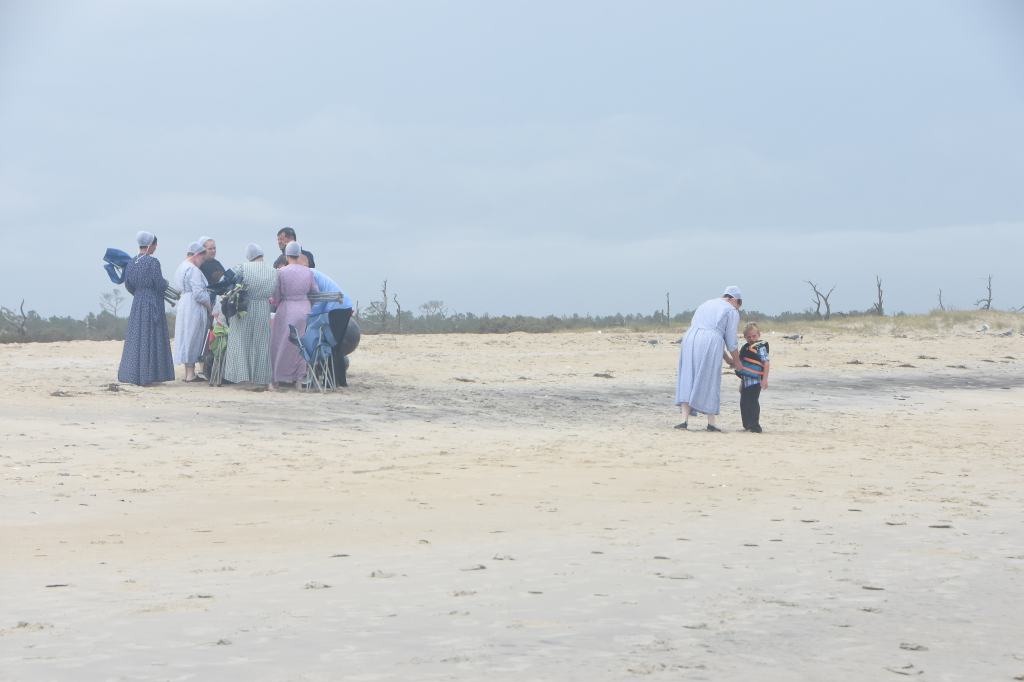
More Mennonites in long dresses and bonnets pilgrimaged in this beach parade than Black people, a reminder that Blacks were exiled from the islands in the 1950s to Horntown (formerly, openly, N*****rtown), a mainland enclave near the Wallops Island NASA base.
Up and down Chincoteague, Isaias had shredded and blown entirely away some trump signs from lawns: a message from aggrieved nature? Was she a Democrat?

Hey! Hurricane!- c’mon back and finish the job!
* * * * * *
We’ve beach-vacationed in Chincoteague since Zak, now 39, was two; thanks to the hospitality of Trish and Bill who’ve opened their homes to us even when they’re away.


We’ve attended weddings of their three children nearby, two on the island itself including Ellie’s niece Maggie earlier this month on the “beverage dock” in Little Oyster Bay behind Trish and Bill’s place.
This celebration for 30 was scaled down from a giant blow-out originally planned for 350: wedding ceremony in the Island cinema, reception in the community center where Maggie’s brother Max’s reception brought us all together two summers ago.
Ellie and Zak and I got tested for the plague before committing to the trip to Maggie’s fandango. We got virus-clean results, we packed the car.
We missed daughter Pisie and son in law Tony who joined us in Chincoteague by ZOOM, busy with full time jobs in Kentucky and preparations to move to Nashville.

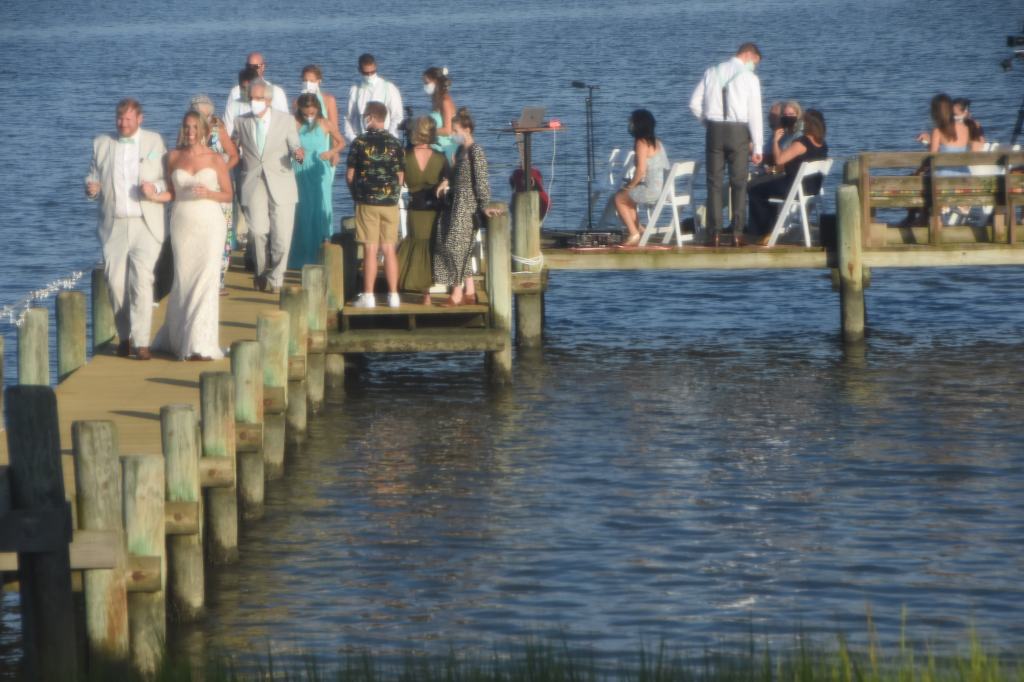
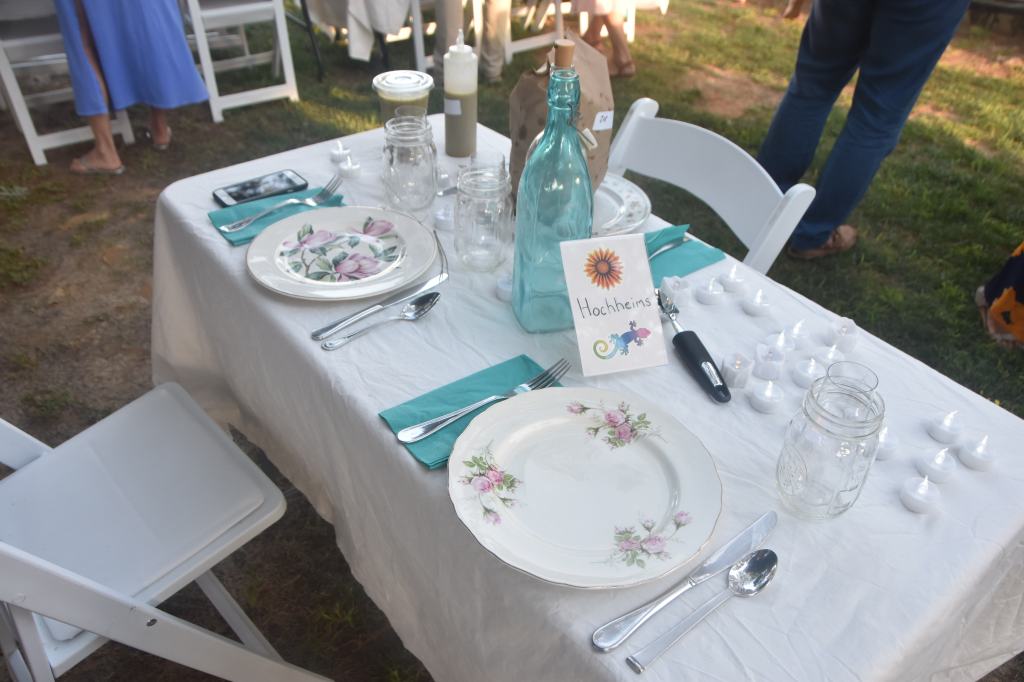

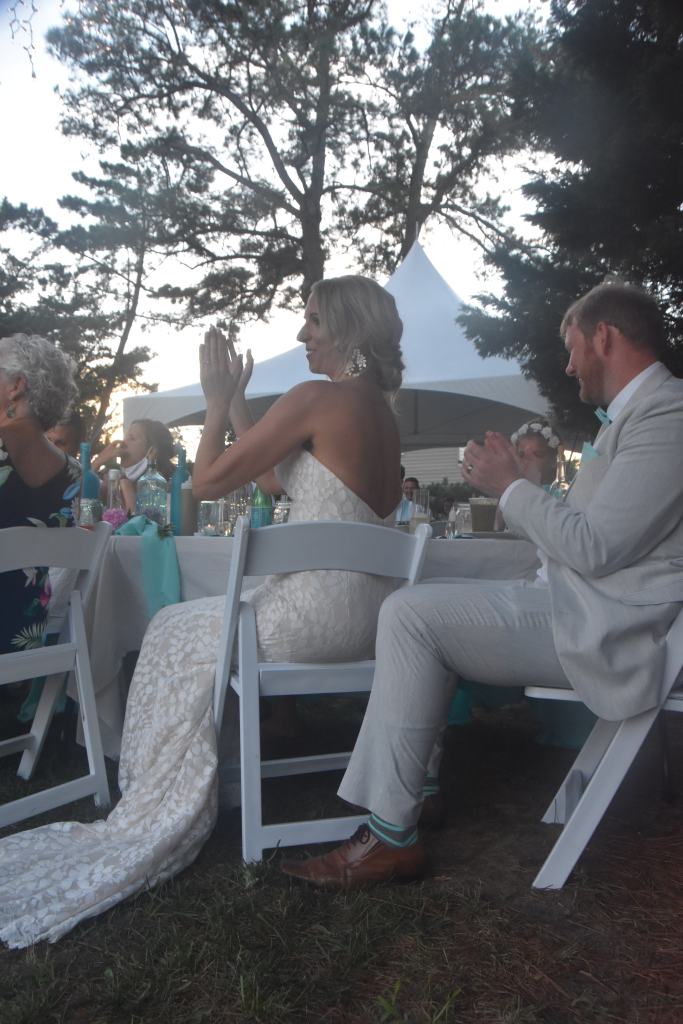

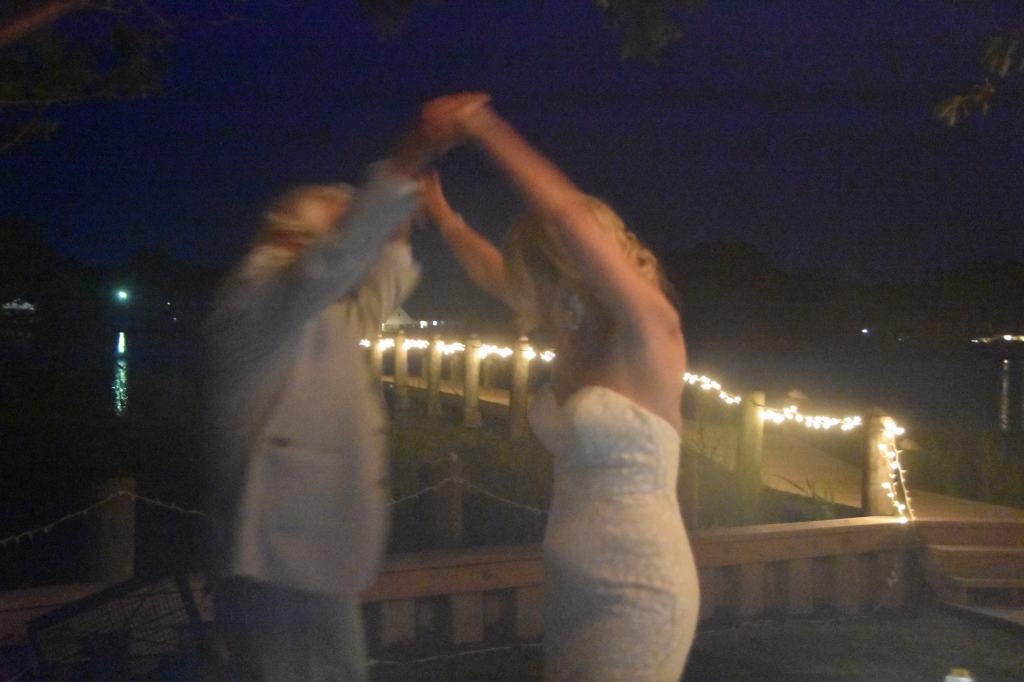
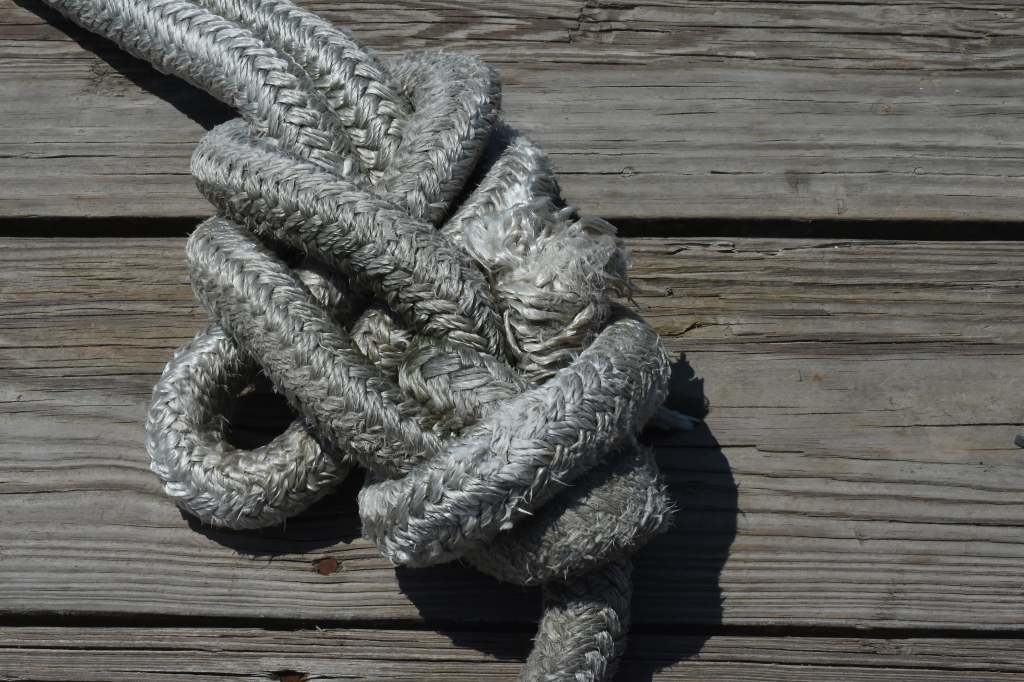
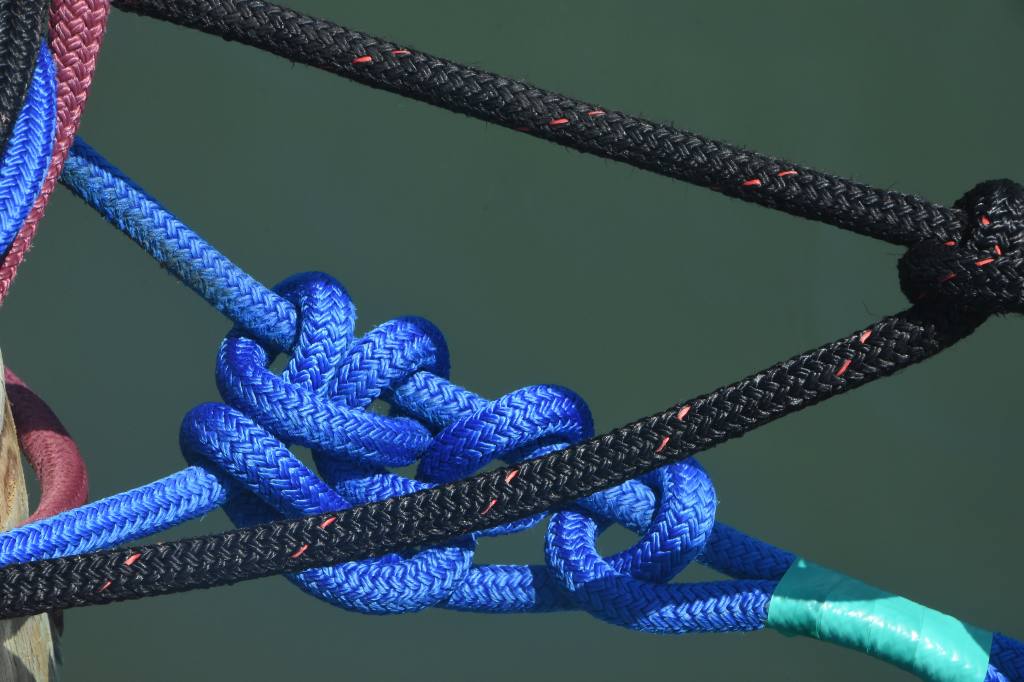
At the wedding, we were masked, we were distant, we were relieved when the weather turned way nicer than the forecast. Food was from Maggie and husband Alex’s favorite Mexican food truck, bountiful as it was delicious; we took leftover guacamole, chips and relish home to Schenectady. There were touching toasts, and rope tricks by the father of the bride. Raised in Tucson and proudly cowboy-hatted, he found in recent genealogical research that his family originally landed nearby from England before moving west.
We’ve seen the island and town change over time: the fishing culture has waned, with growing boutique-izing and condo-conversion of the place – symbolized by the replacing of the town’s quaint drawbridge entry by a multi-lane high-speed causeway. Many of the tiny houses remain, though, that were barged across the channel to Chincoteague when the feds took Assateague Island for wildlife refuge and national seashore in a land grab many locals still curse.
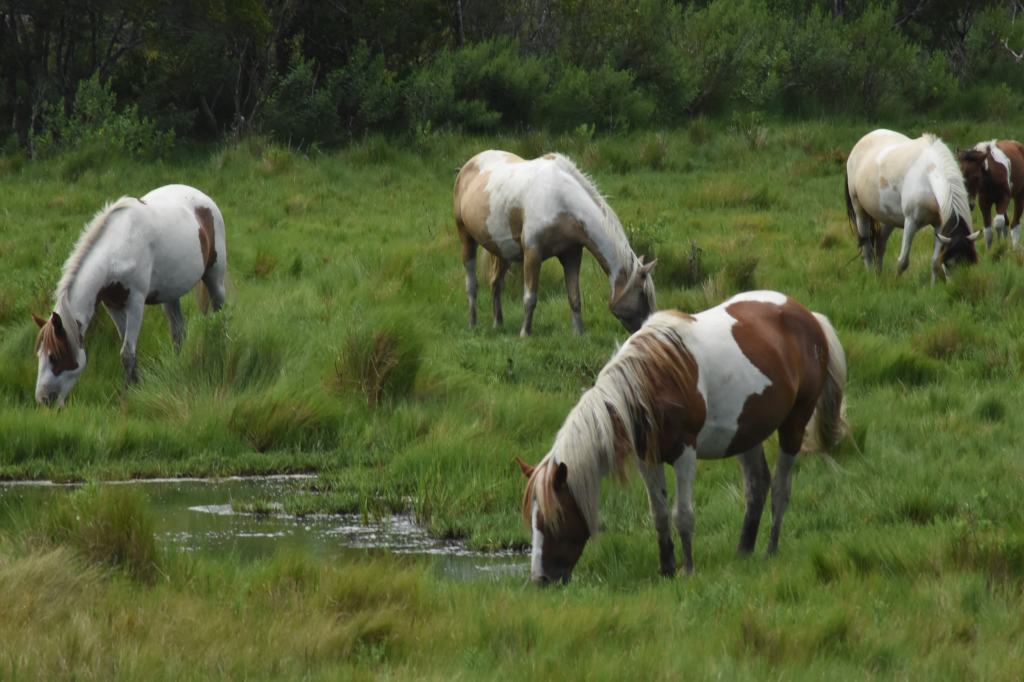
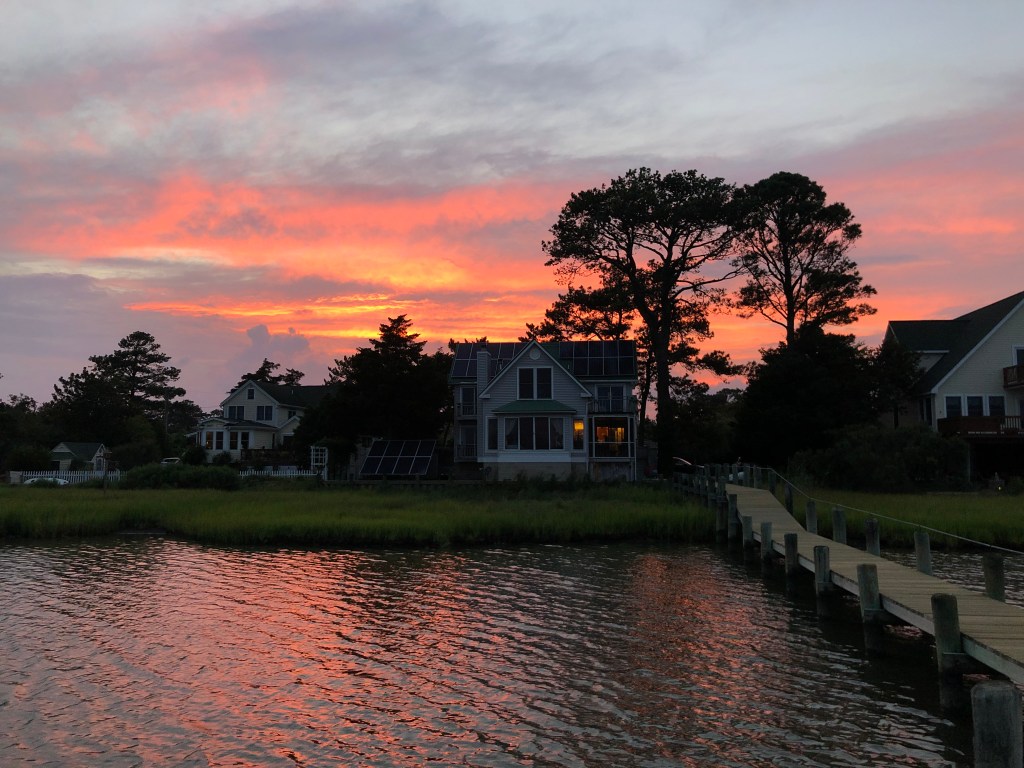
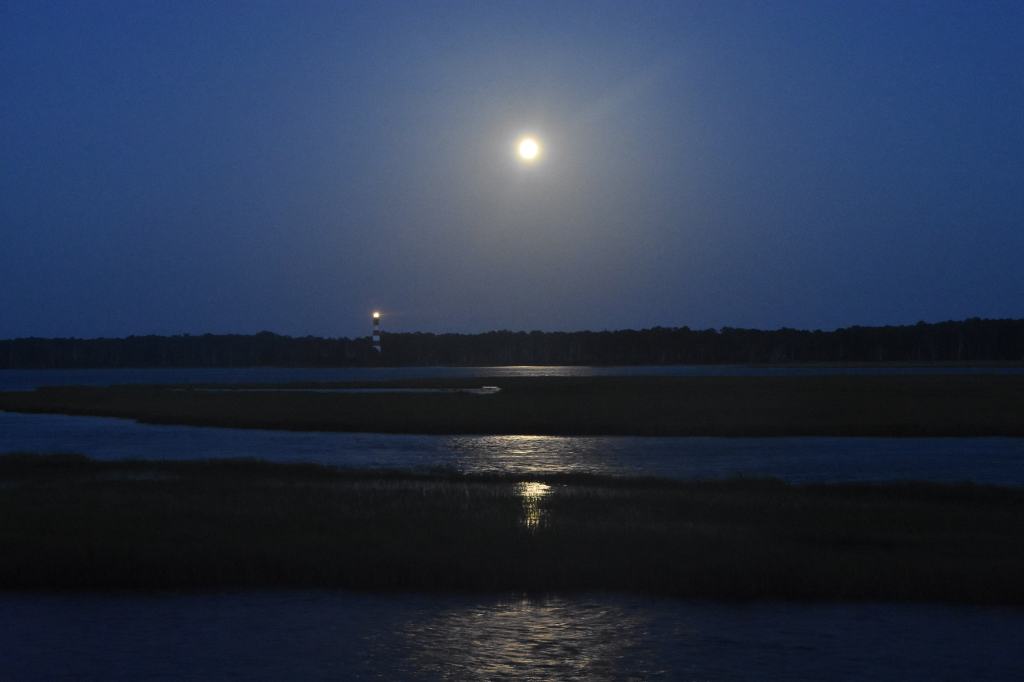
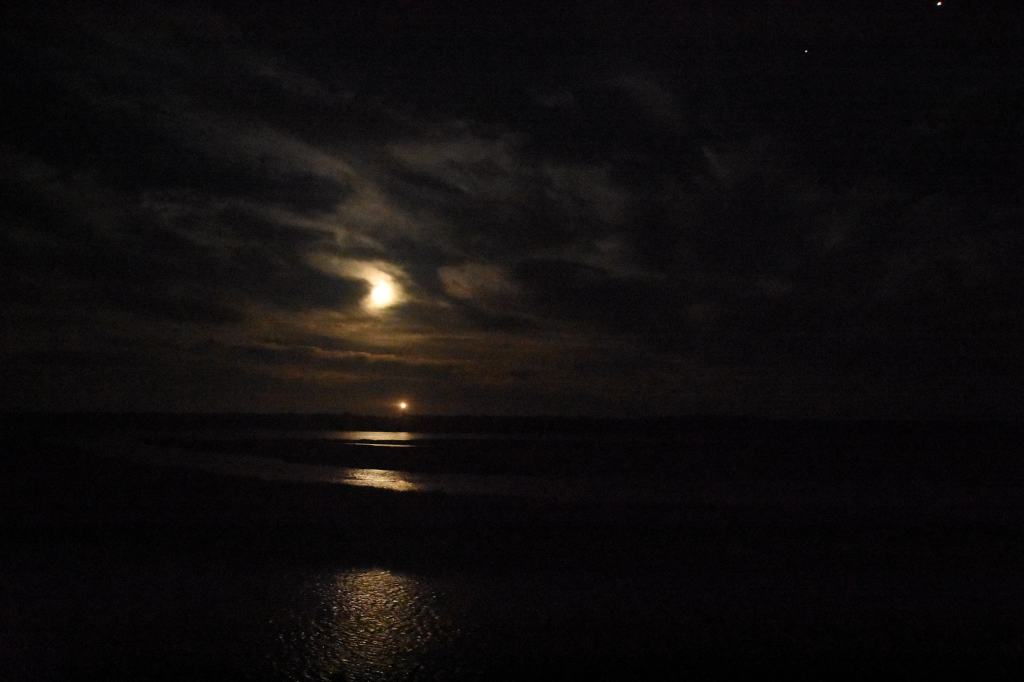
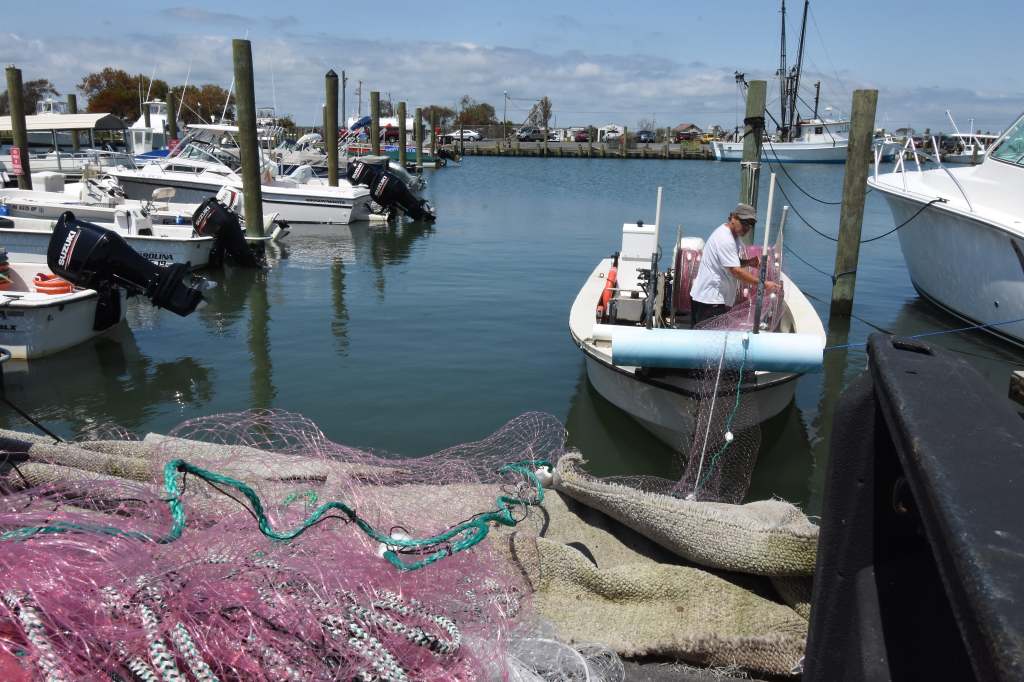
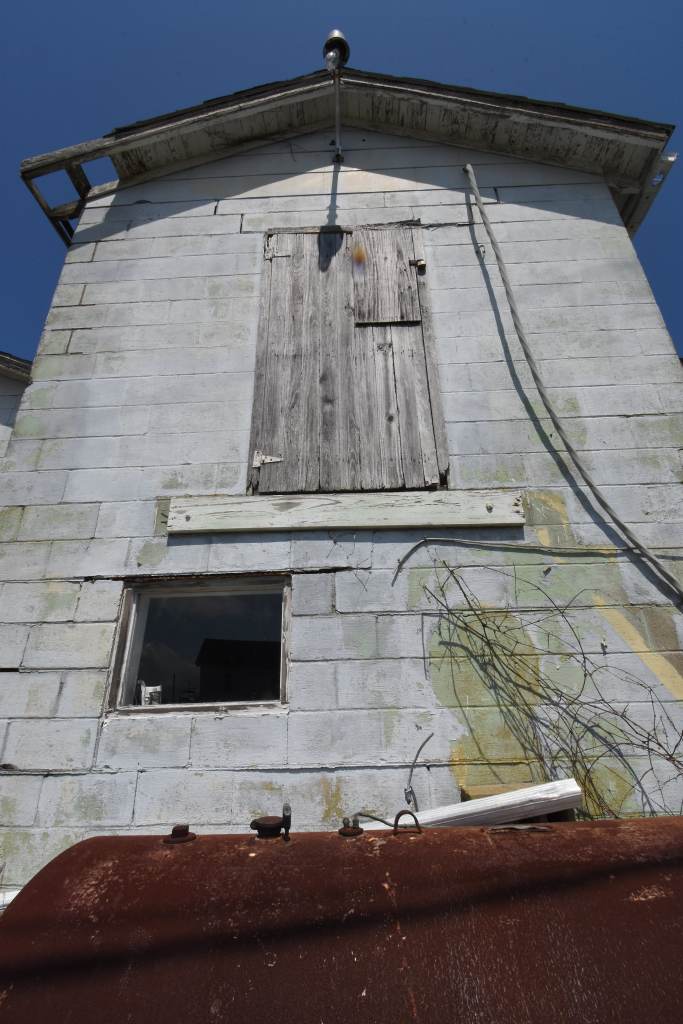
These photos are from a week-long visit when I steered away from shooting views I’ve photographed many times, since the days of film.
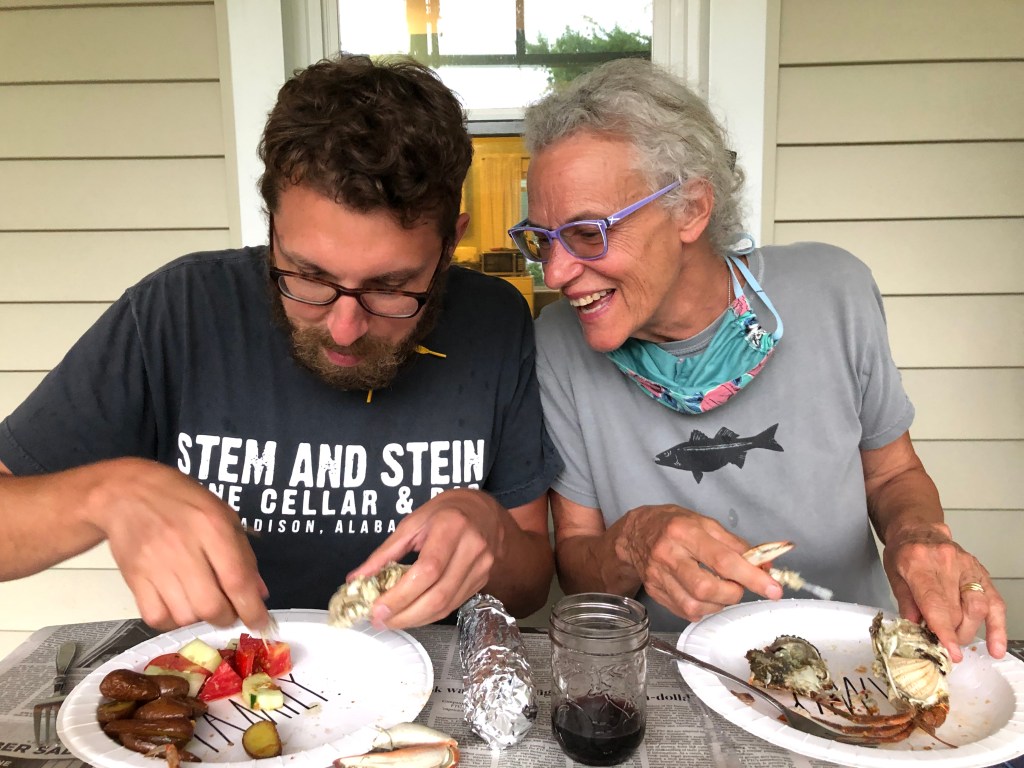
I first heard of Chincoteague in the early 1970s from Schenectady friend Lee Bowden, a film-maker who grew up there but escaped into hippie-pacifism from its strictures and social hangovers. Drafted in ‘Nam time, he won conscientious objector status and did medical research at Walter Reed Army Medical Center in Washington.
On a steamy summer evening that his friends here still recall with awe, Lee shocked them by insisting they all leave, forthwith, for Chincoteague since its famous festival “Pony-Penning” was the next day.
They boarded what Lee delighted in describing as a “softly-sprung highway cruiser” and drove all night. On arrival, his mom made crab-cakes for everybody.
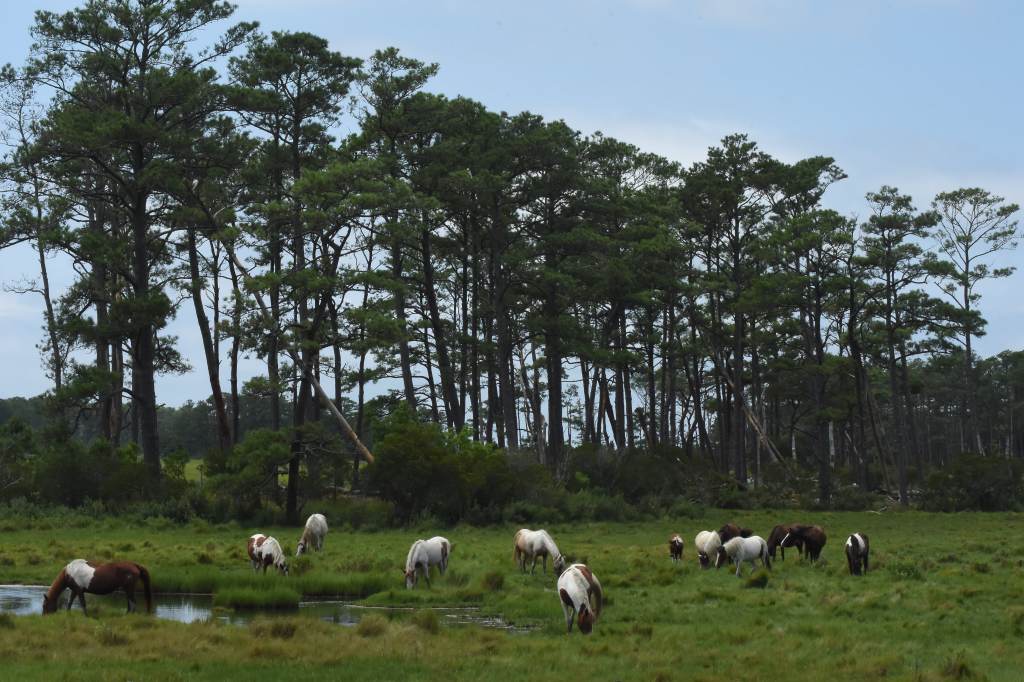
Everything is strange about Pony-Penning. Surf cowboys ride into marshy pastures on Assateague Island, round up its famed herd of wild ponies and herd them (swimming) across the channel to Chincoteague where the volunteer fire department auctions colts off to whomever. Before common sense vetting began, clueless buyers would shove ponies into station wagons and drive hundreds of miles back to wherever, blissfully ignorant of what a wild animal might need in a car or a suburb in New Jersey or Michigan.
A century ago, Chincoteague fisherfolk and merchants found secession inconvenient for business and therefore ignored it, continuing to ship oysters, clams and crabs on ice to Philadelphia and New York. Sidestepping the Civil War, they didn’t lack for strife, though. A “religious” cult, the “Sanctified Band,” took root there, outraging the more mainstream “christians” with polygamy and otherwise objectionable ways. A 1970s Playboy article praising Assateague as a nude beach brought an angry echo of this town-wide shit-fit. Back then, there was blood: gunfire complications. In fact, Lee, that same Chincoteaguer (“‘Teaguer” for short)-turned-Schenectadian lost his grandfather in the town’s religious war, shot dead while sleeping in an upstairs apartment – like Legs Diamond was, in a Dove Street Albany apartment William Kennedy owns as his in-town place.
I once went with Kennedy’s son Brendan, a work colleague on my last PR gig, to “see my parents” in Averill Park, a village above the Hudson’s east bank, after a video shoot. He shot, I directed. We found the elder Kennedy (past 90 and still a pistol of lucidity) in a funk, struggling to write a talk for 20 journalism students at the University at Albany where his MacArthur Fellowship spawned the New York State Writers Institute. Now, THAT’S a writer: somebody who can agonize over any assignment. Brendan and I cheered him up pretty easily, just by asking about the authors whose books filled floor to ceiling shelves in his study. I asked about Peter Matthiessen, an early Writers Institute speaker whom I phone interviewed before his visit and met at his reading. I pulled out Matthiessen’s novel “At Play in the Fields of the Lord” about colliding forces in a South American jungle: tribal, commercial, corrupt government and religious. It has about the best account of the psychedelic experience I’ve ever read, plus other virtues. Bill jumped quickly from the book to the film, a pretty OK adaption that includes a slow dolly shot toward the spectacular sight of Daryl Hanna nude on a riverbank, and a raffish portrayal by Tom Waits of a mercenary pilot. Waits also acted in Kennedy’s own “Ironweed” adaptation which is full of friends of mine. But I digress.


Once Lee was in Chincoteague when we also were. He showed us around and took us to the fishing harbor to meet his cousin Ernie who built his boat, the 40-foot Barbara B, in his backyard. The Barbara B replaces one that sank under him. He swam to a buoy and clung tight in a gale so strong that he – raised on the water and operator of sure sea legs – vomited nonstop for hours until rescued by the Coast Guard. One season, he did so well by selling sharks’ fins to Manhattan restaurants for soup that he bought his wife (the Barbara B) a Jaguar sedan on eBay. Lee is 6’3″ and not thin, but Ernie is 6’8″ and burly and hug-swung Lee around like a stuffed toy.
When I went back to the fishing harbor after the hurricane, I found the Barbara B winched out on shore, growing rust stains and for sale.



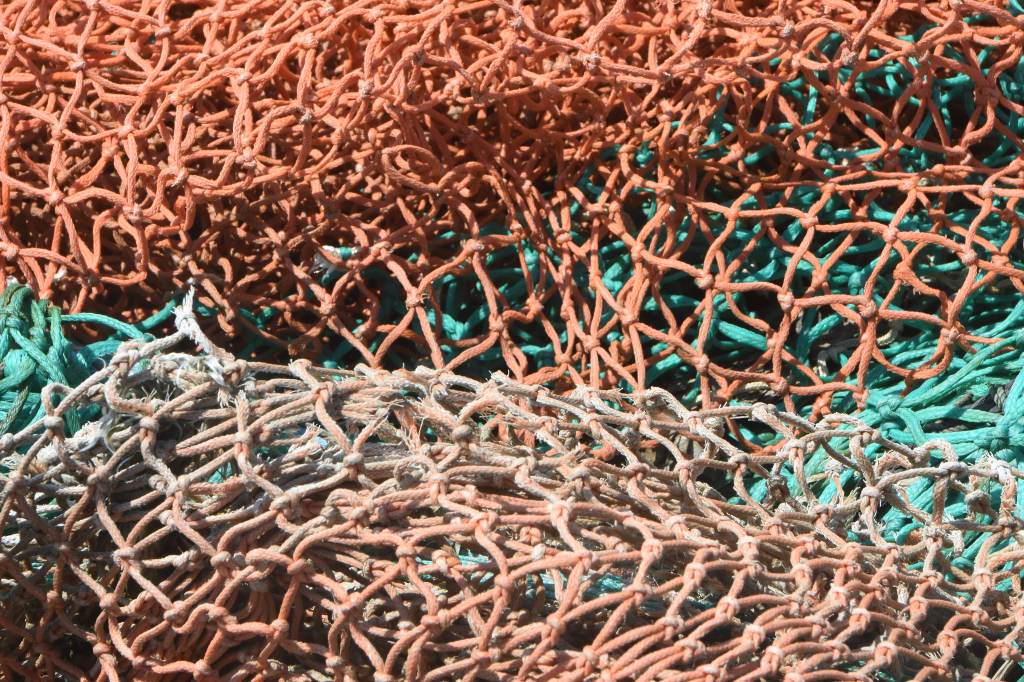
‘Teaguers speak a twangy drawl unlike any accent I’ve heard elsewhere, and a tweaked vocabulary. Folks who arrived after the War for States Rights (which, as noted, they ignored) are “Come-here people,” and the unit of weight for buying produce is pronounced something like “powhng.” Any water-craft is a scow and every lawn and driveway has one parked in it. Pickups outnumber all other wheeled conveyances on the island about five to one.
Chincoteague has one brew-pub but no other bars outside of restaurants, a gaudy plastic water-park, a reggae-themed food-court called Woody’s (I sent a T-shirt promoting the place to my old friend Judge Woody Smith [Ret.] in Albuquerque), two ice-cream shops. We still miss the late lamented Muller’s but still have the T-shirts; ‘Teaguers ruefully nod or hang their heads when they spot us wearing ‘em. There are three churches, a funeral home, two vegetable stands and some shops vending T-shirts and souvenirs (one’s sign read “SOUVINIERS”) to visitors.
Those who visit the sun-blasted grassy edges of the road to the beach on Assateague, bringing big beer coolers but no shade, and fish for crabs with chicken necks on strings are called “chicken-neckers.” Neckers never go to the beach.
Surfers, nudists willing to walk half-way to Maryland to doff their kits, picnickers, kite flyers, sand-diggers and molders, squinting readers, skin-bakers with insufficient sunscreen and parasailers all do.
Hurricane survivors and Mennonites, too.




 Hoke's Jukebox