TO THE RECORD SHELF

“…this is not ok…” by Matt Smith

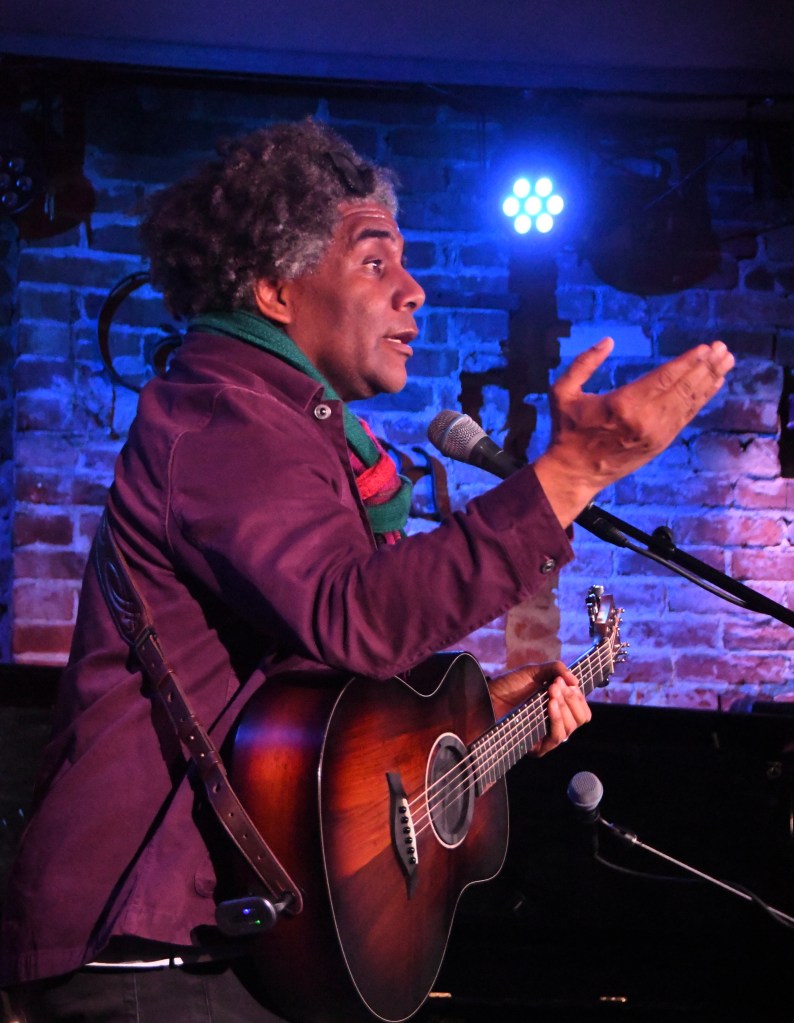
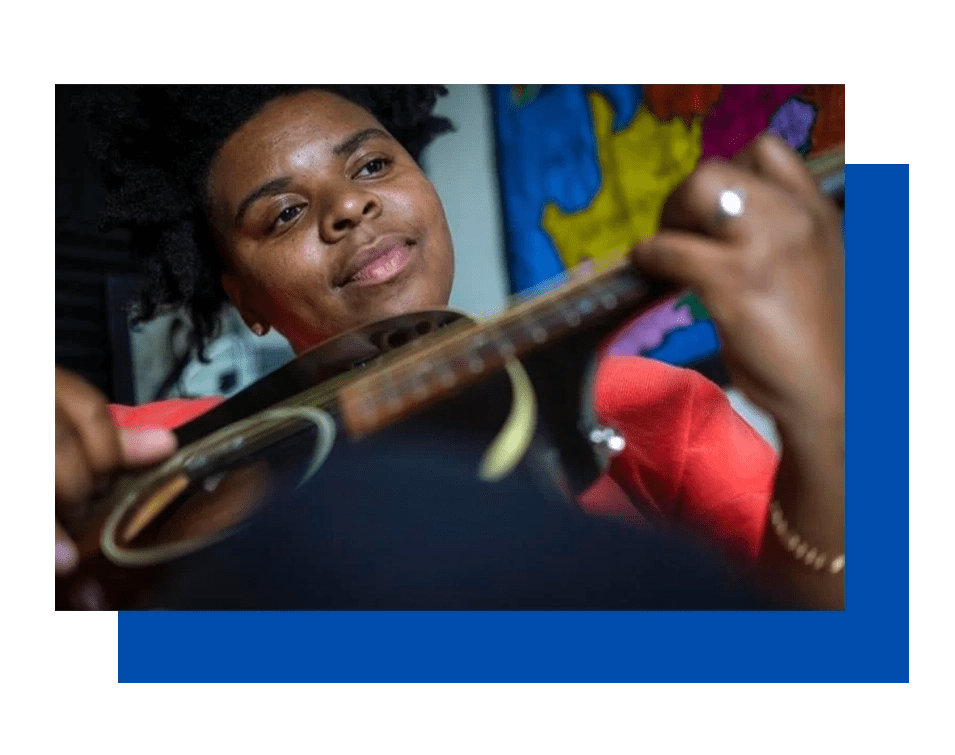
Matt Smith may be the most prolific and consistent of our musical exports, you know: artists from here whose stars also shine elsewhere. 
From regional fan favorite bands including Interstate and E.B. Jeb, Smith went to New York then wound up in Austin. He’s moved back and forth some, with frequent summertime returns here – playing, recording, teaching and producing all the way. Like Jorma Kaukonen, who operates his Ohio Fur Peace Ranch as a teaching center, Smith runs 6 String Ranch in Austin, also the studio and record label of the same name.

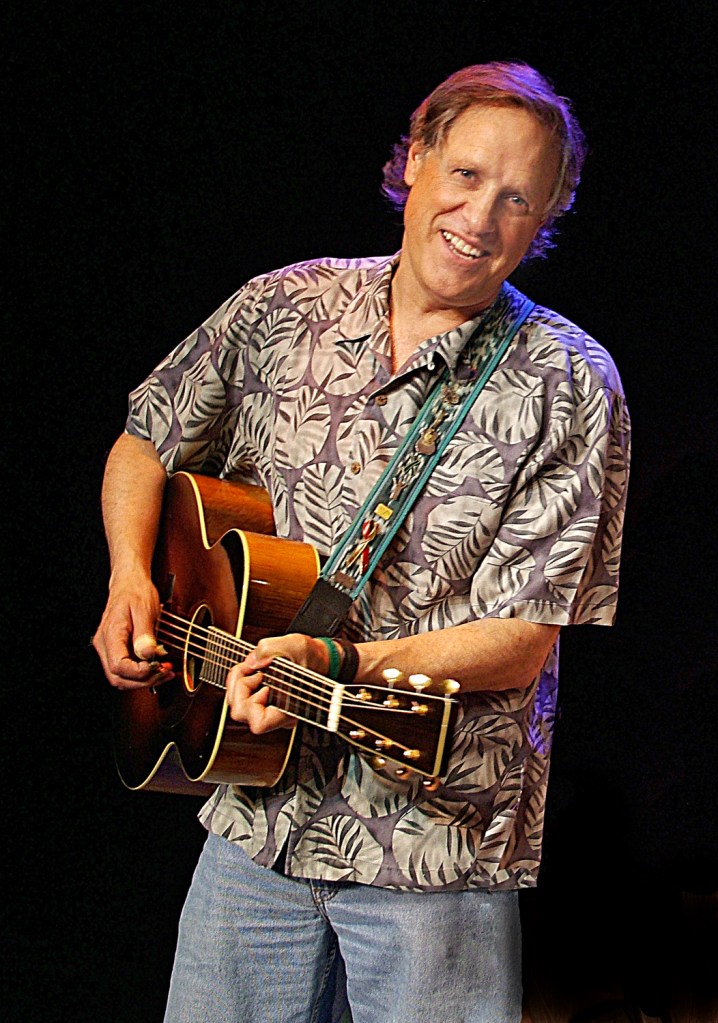
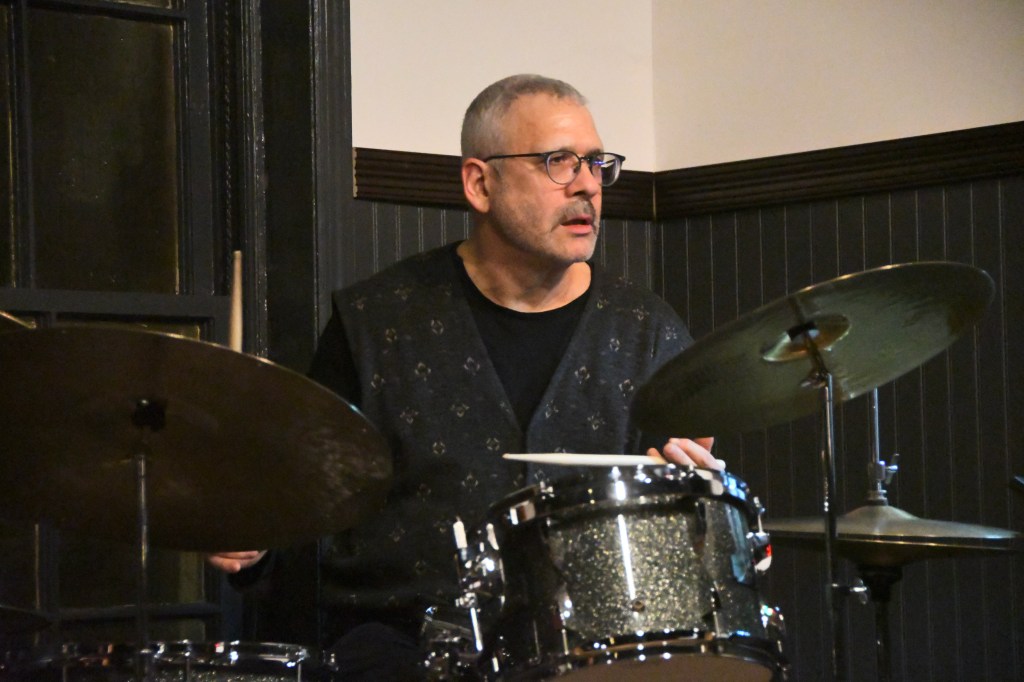
Matt Smith. Photo provided

“…this is not ok…” – 20th album by the guitarist, songwriter, singer and producer – balances urgent timely messaging with solidly timeless expression. A soulful long view of present-day angst, of horror yielding to hope, its authoritative big rock sound would feel contemporary anywhere from a decades-old jukebox to tomorrow’s streaming services where the new album is available..

This comes from deep experience and honed mastery, sharpened with present-day concerns.

“I began this album in June of 2025,” Smith explained recently by email from Austin. “Things were looking grim for people of color, immigrants, and working class Americans,” he said, pointing an angry finger at “a megalomaniacal wanna be dictator in the White House, surrounded by sycophants who enabled his every whim.”

Smith said, “I was angry. very angry, to the point of contempt, for those who voted for this. I had seen this before, being New York born and raised being a centrist democrat and student of history.” Another motivation hit closer to home: the death of both parents.

In response, as he explained, “After much reflection I responded the way I always have. I make music.”

To make this music, “I realized I couldn’t be an agent of division, yet I had to voice my feelings or they would fester inside me.” He said, “I also hoped to inspire other artists to speak up.”

For a guitarist and master of many other stringed things, Smith employs lots of keyboards here. Right out of the box, the Gospel-y opener “World Is a Wheel” has a powerful electric organ undertow that echoes Memphis soul grooves, plus a drawling Dr. John-like vocal. The tune turns the corner from division, bitterness and stupidity to a search for hope in the earth’s momentum and durability.

“Cry for America” remakes Ray Charles’s trademark majestic take on “America the Beautiful,” painting a dire picture of doom yielding to dramatic defiance: “We will not be denied.” Mixed male and female vocals simmer with a seething piano.

“Orphans” gets personal, musing about death and memory’s power to outlast it, over wistful pedal steel (or slide guitar?), acknowledging loss but finding serenity in love’s power to preserve.

Solitary survival – his mother outlived his father by eight years – also relies on prominent piano in “Level Ground,” a slow waltz with a lyric that wraps around the album title.

Irony rings strong in “I’ll Never Fall in Love Again,” an upbeat rock shuffle starring stringed things in a hymn of heartbreak with hope breaking through.

A cinematic look at love frames “A Life In Love,” whose atmospheric sound Smith says stems from his love of moody film-noir jazz. We can imagine Gregory Porter singing his bluesy waltz, but not singing it any better than Smith does over electric piano and generous guitar at a deliberate tempo.

“Outside My Fence” shifts the focus back from the personal to the political, a chunky beat powering big guitar licks in a despairing isolationist/survivalist saga of futility. Appropriately, it hits a hard-stop wall after juggling rugged individualist pugnacity with loneliness.

Smith takes off the gloves in “Bad Man,” big-rock power punching up, as Smith said, “late-70s hard-rock…to match the anger I was feeling about a certain person.” It’s a knockout guitar scramble.

This emotional album needed strength in hope, and in quiet confidence, and Smith tunes those feelings right up in “From the Ashes.” Majestic, built on A-B vocals and sheer Gospel-y power like vintage Staples Singers, this one feels like a north star of moral clarity. It’s not preachy-righteous; it’s personal. Its message, sincere and strong, stirs the hopes of listeners by expressing those of its maker so clearly.

Smith’s online bio notes he plays a music store’s range of instruments: acoustic, electric and baritone guitars; bass;  banjo; mandolin; dobro; sitar, mohan vina; steel guitar; ukulele; saz; cumbus; charango; tiple. But he resists the temptation to go fussy or fancy. This music is about message, mood and mighty feelings.

Like every summer for decades, Smith will come home here to play a handful of live shows. (He leads an Austin band and a hometown band.) And he’ll have a new album with him, of live performances.

Meanwhile, “…this is not ok…” is available on Apple Music and many streaming platforms.

The Art Vandelay* Export–Import Roster

Our musical exports – musicians from here who left to do big things elsewhere – include the Knickerbockers, Nick Brignola, Steve Katz, Hal Ketchum, Eddie Angel, David Malachowski, Cliff Lyons, Gregg August, Sirsy, Super 400, Jocelyn and Chris, Felicia Collins, Sawyer Fredericks and too many more to list here.

Balancing those exports with imports, let’s tip the hat to Lee Shaw, Ed Hamell, Rory Block, Bert Sommer, Reeves Gabrels, and Commander Cody among others. When we look past Area Code 518 at 645 to our south we find veritable armies of musicians who went to, or came from, the Catskills, from The Band to John Sebastian, Jack DeJohnette, Pat Metheny, Sonny Rollins, the Felice Brothers and the Slambovian Circus of Dreams.

  • “Art Vandelay” is the name George Costanza adopted for an aspirational/phony identity as exporter-importer, or vice versa, on Seinfeld. “What does that have to do with music?” – you might well ask. Years ago, I phone interviewed the great Texas blues/country-rocker Delbert McClinton before a show here. The conversation was going nowhere, McClinton was distracted and curt. So I offered to call back another time. McClinton said, “Thanks; “Seinfeld just started,” and hung up. Things went way better when I called back later.

BOB Weir…”all the voices are now gone…”

“Wasn’t Weir great?” exulted Steve Webb.

We were in Buffalo to see the Rolling Stones play Rich Stadium, third date on their 1981 Tattoo You tour; Webb to review it for the Knickerbocker News, Don Wilcock for the Troy Record and me for the Gazette. But we had lucked into tickets for the Grateful Dead the night before; walking to our car afterward, Steve had distilled that exceptional show down to a right-on observation.

The publicist on that Stones tour was the always amiable Ren Grevatt, whom I’d known for years. When I requested review tickets, he said, “I’ve got the Grateful Dead playing the War Memorial Auditorium the night before: wanna go see that, too? It’s a one-off; they’re flying from Toronto to London the next day and got a good offer, so they took it to get a payday on the East Coast before touring Europe.” 

Thanks, Ren; sweet bonus. 

The Dead had rehearsed before heading east and were sharper than sharp, in fine form, totally unified and full of life. Far better than the Stones the next day and thoroughly wonderful, it was one of the top three Dead shows I ever saw.

That night, September 26, 1981, rhythm guitarist and singer Bob Weir was the star.

In an asymmetrical kaleidoscopic way, one or another of them would emerge from the big flow to direct, inspire and propel. 

Anybody could grab the wheel; so it wasn’t always guitar fire from Jerry Garcia, the Dead’s lead soloist, bearded icon and second-best singer. Third best when Pigpen was alive. One night, Phil Lesh’s bass would hit so hard your heartbeat would sync to it. The next, linked drums would make you dance in polyrhythms, like at a reggae show; or a soulful keyboard break would fly you to Memphis when Booker T and the MGs were still kids. That night in Buffalo, it was Weir, pushing the jams as “the best rhythm guitarist on wheels,” as Garcia once described him, singing strong and energizing the whole thing.

Bob Weir onstage at the Knickerbocker Arena; March 26, 1993. My photo

Obituaries have described Weir’s career with the Dead, from 1964 when he joined at 17 to Garcia’s death in 1995; acknowledging his writing of mostly upbeat songs and affection for country classics. They mention his solo album “Ace” (1972), his solo bands from the 1970s to just months ago, and echoes of the Dead including a 1997 Furthur Festival SPAC show when he joined moe. in their opening number “Cryptical Envelopment” and drove everybody crazy. 

Through generous Dead publicists Robbie Taylor, Ren Grevatt and – longest-tenured and best – Dennis McNally, I saw dozens of Dead shows, more than any other band but NRBQ. 

When I phone-interviewed Weir once, he introduced himself kind of formally as Robert Weir and spoke with easy open-ness of how the Dead did what they did. Then I met him briefly on the Ratdog tour-bus after a late 2007 Palace Theatre show the same night when McNally introduced me to Tom Davis (of SNL’s Al Franken and Tom Davis comedy team) over drinks before the show. I sent my Gazette review (see below) from the tour-bus, writing as Weir and the band filed aboard and Weir offered me a beer.

When I heard Saturday that Bob Weir had died, I emailed Dennis McNally:

Dennis, I have no idea what sort of connection you had with Bob Weir, but I have to believe some sense of loss follows the news of his passing. Sorry, man.

MH

Dennis wrote back:

Thank you. I rode the bus with him for four years of RatDog, and altogether we were pretty close, although less so in the last few years. But collectively, all the voices are now gone. And that’s a bit shocking…

As Dennis noted, everyone who sang in the Grateful Dead is now gone and the only original, founding member still with us is drummer Bill Kreutzmann who’d retired by the last (probably) Dead & Co. shows this spring with Weir and drummer Mickey Hart, a longtime but not founding member. 

In similar news, only drummer Jaimoe (Jai Johnny Johansen) survives of the original Allman Brothers Band. 

SOME EXTRAS – LOOKING BACK

THE STONES IN BUFFALO, THEN SYRACUSE

Years later, I wrote this in a letter to a friend:

The Rich Stadium show outside Buffalo was OK at best, thrilling at first for the scale and spectacle, but a let-down. When George Thorogood opened, rain was falling and folks were pissed. But the clouds parted and the sun came out when he played “Move it on Over” – then joy and exultation took over. Journey had a tough time in the middle slot, though, and left early; giving fans the finger. And the Stones were just OK: the songs were fun, but you wished they meant them more. 

A few months later at the Syracuse Carrier Dome, the Stones were barely OK and the opening acts were lame. The thing didn’t reach critical mass. But, Keith did something in that show that impressed me and told me a lot about those guys. The energy was flagging in one song, so Keith went around the stage, standing face to face with every other guy there, in turn, and playing the flaming blue fuck out of his guitar, hitting the strings so damn hard and glaring at them with such “Get your shit together!” fierceness that they all did. That song went from about 30 percent power to about 95. 

DEAD SET-LIST FROM THAT BUFFALO SHOW

SET 1

Shakedown Street >

C.C. Rider

They Love Each Other

Cassidy

Jack-A-Roe

On The Road Again

Ramble On Rose >

Looks Like Rain

Brown Eyed Women >

Let It Grow >

Don’t Ease Me In

SET 2

Playing In The Band >

Bertha >

Estimated Prophet >

Goin’ Down The Road Feeling Bad >

Drums >

Space >

Not Fade Away >

Morning Dew >

Playing In The Band >

One More Saturday Night

ENCORE

Johnny B. Goode

RATDOG CONCERT REVIEW (WRITTEN ON THE TOUR-BUS)

RatDog at the Palace on Sat., Nov. 2, 2007

By MICHAEL HOCHANADEL

ALBANY – There’s a lot of this going around: Veteran rock performers re-framing their music and making their boomer-age fans really happy. On Saturday, the night after Terry Adams introduced a new, younger mutation of NRBQ at WAMC and a few weeks after Grateful Dead bassist Phil Lesh & Friends detonated a tremendous show at the Glens Falls Civic Center, his former bandmate Bob Weir did the same thing at the Palace Theatre with RatDog, not so much paying tribute to the Dead’s legacy as expanding it.

The 90-minute first set generally moved at a deliberate piece, the capacity crowd often giving more energy to the band than the band projected from the stage. A leisurely launching pad vamp-with-solos slowly coalesced into “Terrapin Station” but it only attained significant momentum as it began to change into “All Along the Watchtower.” This wandered a bit, through a reggae episode, and reached its true instrumental majesty after Weir’s last fevered intonation “the wind began to howl” and the band did. A Tom Waits-like R&B skid-row pub crawl supplied the set’s second peak, as the band went somewhere past funk into another time zone, blasted there as much by Kenny Brooks’ tenor sax as by Steve Kimock’s Jerry Garcia-like jewel-beautiful guitar. Fans lifted off with the band, filling the aisles, dancing the furry biplane, the thunder-snake, the my-arms-don’t-respond-to-gravity. In a perfect and powerful feedback loop, the band rode the crowd’s energy, surging into “Eyes of the World” in a 20-minute, ecstatic roll that climaxed the first set.

After the break came an acoustic segment, paced quietly like the start of the first. “Peggy-O” and “Corrina” felt relaxed, restrained, especially when Weir reined in Kimock to toss the solo spot to Brooks. Robin Sylvester’s bass detonated “The Other One” and this venerable, can’t-miss classic had all the Dead-like essentials – swirling organ from Jeff Chimenti; a confident, questing drive flowing under the guitars; and hearty group vocals, plus Brooks darting in and out of the groove.

Weir was in good voice and complete, if loose, control of the band. Fans applauded his familiar tricks of building tension with repetition and eerie falsetto howls. Early on in both sets, he signaled the launch of each new episode. However, once he saw how well it was all working, he then directed traffic in a more relaxed fashion, offering clear but subtle direction via rhythm guitar riffs, sometimes insistent, sometimes soft-spoken but always effective. Playing alongside the famously intrepid Garcia cast Weir’s own playing within a long shadow, and it wasn’t always clear how well he held his own and how essential his propulsive chording was. Alongside Kimock, his playing stood out more strongly, the essential element in the band’s beats, its melodic force, its seamless flow from one tune to the next, its everything.

2025: A Different (Shortened) Year in Live Music

Annual lists bear a bad reputation for the very good reason that they’re hairy blue hell to write. My (very good) years-ago Gazette editor Maggie Hartley renamed our Year Ender summaries as Rear-Enders. Tear-out-your-hair frustrating, they subject us writers to endless second-guessing: “Is this really better than that?” Multiply those doubts by the number of engaged readers, and writers have prickly, explosive dialogs by email, phone and letters.

So, I’ll dodge that for now and go oblique with these 2025 Onstage Hokey Awards.

Hat’s off to Greg Bell, the tireless, tasteful promoter of top shows. I knew I loved the guy when I went up to him after a great but sparsely attended show some years back. He didn’t lament losing money on it; instead, he was so jazzed by the music that he was absolutely beaming, walking-on-air happy. He announced his retirement earlier this year, and punctuated this news perfectly with a handful of shows this weekend; some free, some featuring longtime pals moe. But even after that announcement some months ago, he nonetheless crammed the calendar with high-quality performers in theaters, bars and farm fields. So here’s hoping his retirement works no better than Cher’s.

Joel Moss, RIP

Gone But Impossible to Forget, Part 1: The late, great Joel Moss, our most modest music-tech super-hero. He came to Caffe Lena after award-winning, big-star studio work all across the country and made everybody sound world-class on the Caffe’s top-quality streaming channel. Quiet and self-effacing, you’d never know he won more Grammys than almost anyone who’d played the Caffe – until, that is, the place hosted a classy memorial fandango complete with a Second Line street parade led by New Orleans trombonist Glen David Andrews and a two-stage tribute.

Gone But Impossible to Forget, Part 2: The Eighth Step at Proctors GE Theatre celebrated the enormous respect musicians and fans share for DJ, singer and culture hero Jackie Alper in an all-star showcase of singer-songwriter fare, political-social messaging and community building. Longtime folk heroes Andy Spence (retired from running Old Songs) and Margie Rosenkranz (Eighth Step impresario) concocted the idea; Spence and a fine fine cast made it real.

Andy Spence, left, directs the Eighth Step’s tribute to Jackie Alper

“So Long, It’s Been Good to Know You:” Janis Ian’s film-and-talk farewell at Caffe Lena hailed and summarized the astounding career she launched in her mid-teens. She’s played places much larger than the cozy Caffe, including nearby SPAC; but the folk-and-more mecca was perfect for her good-bye.

Road Trip: Alejandro Escovedo Sept. 13 at the newly reopened Iron Horse in Northampton with a sparse but muscular trio. This was far easier than my first visit there; an hours-long pilgrimage through freezing rain to see Richard Thompson for the first time. Both runs were well worth it. Check out founder and longtime leader Jordi Herold’s “Positively Second Street: My 25 Years at the Iron Horse Music Hall,” a delicious, unconventional memoir.

Edmar Castaneda, shown here at Proctors

Double Header: Columbian jazz harp virtuoso Edmar Castaneda with a sprawling world-beat band at Proctors in a Music Haven presentation Aug. 24; then with Bela Fleck and Antonio Sanchez as BEATrio playing jazz Oct. 2 at Universal Preservation Hall. He also played two other shows here in between.

New-to-Me Discoveries – all jazz performers, at it happens: pianist Julius Rodriguez and harpist Brandee Younger; both at Saratoga Jazz Festival Presented by GE Vernova (Rodriguez June 28; Younger June 29); saxophonist Sarah Hanahan and singer Tyreek McDole, both at A Place for Jazz (Hanahan Oct. 3; McDole Nov. 7)

Julius Rodriguez, above; Brandee Younger, below

Sarah Hanahan, above, and Tyreek McDole, below; Hanahan’s saxophone further below

Also, in a sax-rich jazz season, veteran stars Kenny Garrett (SPAC Jazz June 28); Gary Bartz (SPAC Jazz 29) and David Murray (A Place for Jazz Sept. 5) earned Explosive-Elders Wings.

Kenny Garrett, above; Gary Bartz, below; David Murray even further below

Let Me Ask You a Question: Imagine Larry David (“Curb Your Enthusiasm”) demanding, “Do Jon Batiste and Gary Bartz use the same tailor?” Both wore jackets onstage that sparkled so hot you could see them from Montreal.

OK, OK – The (Shortened) Live List

Knee surgery and recovery tore some pages from my concert calendar: No shows from Feb. 12 (guitarist Yasmin Williams at Caffe Lena) to April 26 (jazz saxophonists Scott Hamilton and Harry Allen at A Place for Jazz) – both pretty good.

I missed both Jazz Fest in New Orleans and a memorial for instrumental-rock guitar pioneer Duane Eddy in Nashville, an all-star celebration with brother Jim Hoke as musical director.

I hit 41 shows in 2025; far fewer than 100 or so in my peak years, but with some high spots.

Shows by grass-roots non-profits drew me more than corporate enterprises. Meanwhile, repairs to mid-size venues The Egg, Troy Savings Bank Music Hall and Spa Little Theatre reshaped the scene. 

Admitting that even we music writers choose to hit shows by performers we know to be good, or by unknown artists, hoping for surprises, I looked for skill, soul and sincerity and found them in these top 10 – listed chronologically here.

David Greenberger, above; and with band, below

David Greenberger and the Huckleberries Jan. 19 at Universal Preservation Hall. Words Greenberger collected by talking with oldsters, the earnest life’s work of research and preservation he began in 1979 as “The Duplex Planet,” fit well with music by a versatile quartet. Unified, unique and organic, his recitations reminded us how we all age, if we’re lucky, and to cherish good times as fate serves them unpredictably. Somehow, it all felt upbeat.

Nathan and the Zydeco Cha-Chas Feb. 7 at Universal Preservation Hall. Conga lines looped together ‘tweens-to-boomers with wide smiles, waving arms, clapping hands and shuffling feet in kinetic joy. Onstage: five Louisiana virtuosos threw it down. Saddened by brother Sid’s death, bandleader Nathan Williams – accordion ace, gruff singer, spark plug – needed a party as much as anybody, so he gave us one.

Bettye LaVette May 17 at Caffe Lena. Japanese potters repair by pouring molten gold into cracks. LaVette’s voice cracked, burnishing lyrics with the pure gold of deep soul. Singers have pretty voices or they don’t; she doesn’t; saying hers is more James Brown than Doris Day. She cast an intimate spell, of “coming over to my house.” Few singers can summon such deep confiding candor and flow from desperation to outrage to peace so gracefully.

Saratoga Jazz Festival-1, June 28. Highlights of the day-long, two-stage showcase were newcomers pianist Julius Rodriguez and trumpeter Keyon Harrold, explosive veteran post-bop saxophonist Kenny Garrett, the funk fireworks of Lettuce, and blues guitarist-singer Gary Clark Jr. For all its stylistic variety, it was maybe most jazzy in music urging social justice. Lettuce plays Jan. 28 at Empire Live.

Bria Skonberg, above; Gary Clark Jr. below

Saratoga Jazz Festival-2, June 29. Like day 1, this hit like a highlight film of favorites and fresh discoveries. Harpist Brandee Younger topped the newcomer category as established stars showed why they are: trumpeter-singer Bria Skonberg, singers Cassandra Wilson and Gregory Porter, saxophonist Gary Bartz, and New Orleans brass-soul-band rocker Trombone Shorty. He should close every festival, everywhere.

Trombone Shorty, above; and with band, below

Red Baraat July 13 at Music Haven. Who can inspire Sikhs in turbans, Muslim girls in hijabs, friends I know to be Rastafarian, Jewish and agnostic – in short, as Boz Scaggs sang: “Every Kinda people” – to dance to “Hava Nagilah” together? Brooklyn’s Red Baraat making music from everywhere, that’s who. Big structures from short riffs like brassy soul bands, or Sun Ra-style anarchic jazz spiced like audio vindaloo invited fans to dance wild onstage.

Terrance Simien Aug. 17 at Music Haven. Per his simple mission statement – “help you feel it right” – the zippy accordionist, soulful singer and wide-grinned energy source blew up the common definition of zydeco from Creole dance music to include soul, rock, pop and folk. His all-aces band, co-starring keyboardist Danny Williams, played with jazz band precision. Few fans left even as rain fell, dancing in the wet.

Jon Batiste with band and Philadelphia Orchestra Aug. 22 at Saratoga Performing Arts Center. Glowing at the chance to play with full orchestra and homecoming glee in the town where he’d met his wife, he dazzled in tunes from a new album, soul classics and sweet sounds of his New Orleans home; complete with Second Line parade through the happy crowd. Nothing else I saw all year matched this for fun, fire and feel.

Alejandro Escovedo, above; and with band, below

Alejandro Escovedo Sept. 13 at the Iron Horse, Northampton, Mass. Leading a new band, just drums and keyboards, he showed how he fell in love with punk rock while sounding unmistakably Texan, writes songs like a heart’s road-map and sings them like life and death. Now 70, his shows have grown more autobiographical, and this sparse, strong format served him very well – reaching back to the 90s and toward the future.

From left: Bela Fleck, Antonio Sanchez and Edmar Castaneda

BEATrio Oct. 2 at Universal Preservation Hall. With banjo (Bela Fleck), drums (Antonio Sanchez) and harp (Edmar Castaneda), the self-proclaimed “world’s most unlikely band” blended bluegrass, folkloric Latin dances and brisk jazz invention into something unprecedented and irresistible. Each member introduced a segment around their own repertoire, but their unified ensemble force dazzled throughout.

OK, so I was jones-ing for Jazz Fest and therefore felt maybe more attuned to zydeco and Mardi Gras parade chants than usual. Also, I was happily loving on music given away free, so I hit a higher percentage of Jazz on Jay freebies than any other program. My favorites of those were guitarist Todd Nelson’s hybrid genre-jumping JazzAmericana and the similarly free-flowing Afro-jazz crew Heard.

Guitarist Todd Nelson’s JazzAmericana, above; Heard, below, leader Elizabeth Woodbury Kasius at the keyboard

Jazz is Coming to Town

Review: “It’s A Jazzy Christmas” Saturday, Dec. 20 at Proctors GE Theatre

More felt familiar than new in “It’s a Jazz Christmas” Saturday in Proctors GE Theater Saturday, and that was a good, warm, familiar thing. The place was packed with families wearing happy smiles, holiday hats and those gaudy sweaters tugged from closets about a week a year.

Dave Gleason, pianist and bandleader

Bill Levering, above; Arielle O’Keefe, below

Bill Levering replaced Mike McCord as host, introducing the evening as an antique radio show, and Arielle O’Keefe sang the leads Hannah Amigo handled last year. The jazz combo behind them was the same as last year; as were many songs in the seamless 80-minute show. “Show” fits better than “concert,” a precisely planned and performed program that framed tunes and talk in a well-sewn cozy quilt.

Mike Lawrence, above; Pete Sweeney, below

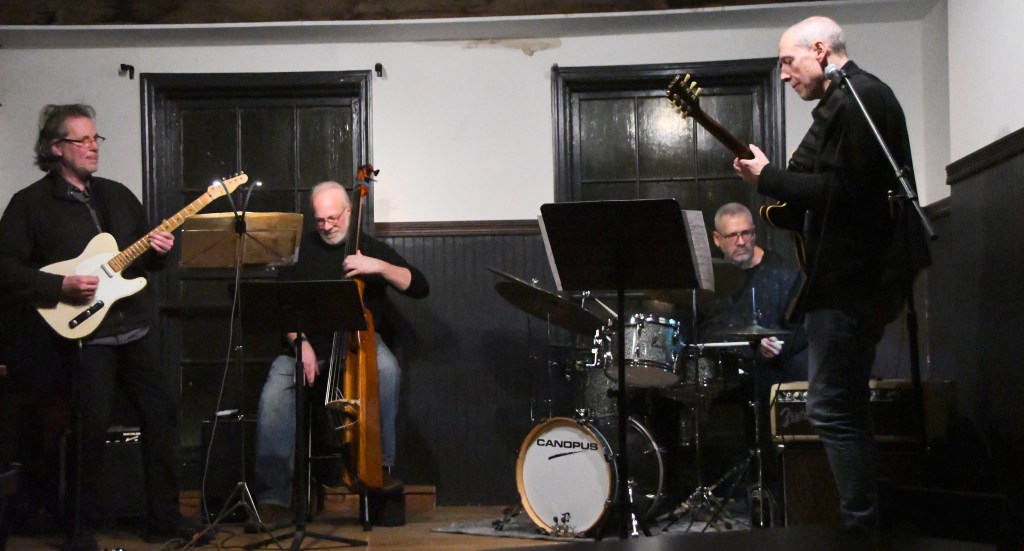
Members of the well-seasoned Art d’Echo Trio – pianist-leader Dave Gleason, bassist Mike Lawrence and drummer Pete Sweeney – opened with Vince Guaraldi instrumentals; melodic, familiar “Charlie Brown Christmas” favorites that felt light-hearted and swung light-footed. “Christmas Is Coming” felt joyful while “Skating” could have been re-named “Sledding” for Gleason’s high-energy, down-the-scale note cascades as the lead ping-ponged among the players.

O’Keefe, who performs her own music as Girl

Blue, took the mic first for “Christmastime Is Here” at a more mellow tempo as the horn section filed onstage: tenor saxophonist and bass clarinet player Brian Patneaude, trumpeter Chris Pasin and trombonist Ben O’Shea.

Jingle Bells” and toy piano, from left: Dave Gleason, Mike Lawrence, Pete Sweeney and Arielle O’Keefe

When O’Keefe teased Gleason to do “Jingle Bells,” he installed a red toy piano across his knees for some playful noodling; then he seriously jazz-fied things in a mambo arrangement with Pasin blowing sky-high before hot solos from Patneaude’s tenor and O’Shea’s trombone. Gleason’s very Latin solo evoked the jokey opening, pushing his arpeggios right off the high end of the keyboard, fingering notes in mid-air before the horns got serious on the coda. Mid-song, he engaged the crowd in clapping the Bo Diddley beat.

Arielle O’Keefe and Brian Patneaude

Chris Pasin, above; Ben O’Shea, below

Levering’s spoken intro set up the Grinch’s somber bah-humbug menace; the show’s only (comically) unpleasant note, though it felt safely cartoon-y. Then Patneaude’s bass clarinet and Lawrence’s bass underlined the mood.

Pasin’s muted trumpet and O’Keefes’ voice carried “Winter Wonderland” into “Let It Snow,” first singalong of the show, and a set-up for the horn highlights Gleason introduced in turn: Patneaude’s tenor eloquent in “Santa Baby” with a bluesy vocal, then all fun bebop in “Sleigh Ride,” Pasin playing a playful horse-neigh at the end. O’Shea sparkled in “Feliz Navichachacha” – Gleason revisiting his Latin approach, mixed with some Chick Corea phrasing before the rhythm section heated the coda.

Pasin owned the spotlight in “We Three Kings,” spectacular in drama and range, Lawrence pushing hard on electric bass.

Thereafter, cozy tunes settled the crowd and lively upbeat numbers kept things moving, with O’Keefe belting strong in “Have Yourself a Merry Little Christmas,” the hearty “Man With the Bag” setting up “Dreidel, Dreidel, Dreidel,” the show’s sole nod to non-Christmas holiday feel.

Levering went sentimental introducing “Hark the Herald” before the whole band reached back to 1950s elemental rock and roll for “Dig That Crazy Santa Claus” with echoes of “The Hucklebuck.” A reprise of Guaraldi piano lyricism in “Linus and Lucy” – then the horns, O’Keefe and Levering paraded offstage.

The whole thing flowed sweet and strong, jazzing up familiar songs imaginatively while respecting listeners’ happy memories of them.

MORE HOLIDAY JAZZ

The Brian Patneaude Quartet (Patneaude, tenor saxophone; Rob Lindquist, piano; Jarod Grieco, bass; Lance Comer, drums) plays Saturday, Dec. 27 at 9 Maple Ave., Saratoga Springs. 9 p.m. 

And Patneaude plays in Keith Pray’s Big Soul Ensemble Tuesday, Dec. 30 at the Cock ’N’ Bull; so do It’s A Jazzy Christmas band-mates Gleason, Pasin and O’Shea. 6:30 p.m.

HAT’S OFF

……to the kindly usher who recognized me as a reviewer and rescued me from a nosebleed seat and brought me down front to an unoccupied wheelchair-accessible spot. There I stayed, reluctant to roam for better camera angles; all photos are from that seat, except the set list that I spotted on my way in.

This one really hurt.

Joe Ely has died at 78. 

He and his band played one of the 10 best rock shows I’ve ever seen, at J.B. Scotts, May 9, 1981, fronting a great band co-starring guitarist Jesse Taylor, pedal steel player Lloyd Maines (whose future Chicks singing daughter Natalie was then seven years old), accordion player Ponty Bone (best rock and roll name you’ll hear this week) and drummer, bassist, keyboard and saxophone players – wait, was that Bobby Keys?

That was the year after Ely toured Europe and the US with the Clash. In March 1988, Ely and a different band, co-starring guitar hot rod David Grissom, rocked Tiger’s in Clifton Park, a show almost as good as the J.B. Scott’s explosion.

Joe Ely at Tiger’s; March 15, 1988

A 1960s-style muscle car of a road-dog, loud-pedal rock and roll star, Ely saw Elvis play on a flatbed truck at a dusty Texas stock show as a kid and was never the same. He formed the Flatlanders with Lubbock pals Jimmie Dale Gilmore and Butch Hancock; ahead of their time in welding rock swing and swagger to cozy folk pathos; what’s now called Americana. They released their debut album on eight-track in 1973; when it didn’t sell, they split into solo careers but also played together on and off for decades, sharing songs and shows, including several at The Egg.

As singer, songwriter and guitarist, Ely thundered across America, and the world, with powerhouse bands. 

Hitting at the dawn of punk and touring with the Clash encouraged Ely to keep things simple and pack a punch. He followed this roadmap to onstage power by incorporating singer-songwriter depth and Texas tradition at a superbly rich time in flat-land music, emulating elders and inspiring contemporaries. Willie Nelson might have headed for Nashville already, but talent found and fired up more talent from Houston (mostly bluesmen, including ZZ Top) to Lubbock (in the wake of Buddy Holly), Dallas (T-Bone Walker, the Vaughan brothers, Freddie King) to El Paso (Bobby Fuller) – and Austin was about to explode. Ely moved there, and helped. Even the cool polka band Brave Combo toured everywhere from Denton, including a Second Wind (Mona Golub) show in Washington Park; and Asleep at the Wheel was a party every night, anywhere.

Ely played everywhere, for decades, with more shows in Texas than elsewhere, but his records hit everywhere, too. Self-appointed dean of rock critics Robert Christgau found fault with Ely’s voice but admired his songs (many co-written with Flatlanders band-mate Butch Hancock) and his band, conferring rare “A” marks to both “Honky Tonk Masquerade” (1978) and “The Best of Joe Ely” (2001).  https://www.robertchristgau.com/get_artist.php?name=Joe+Ely

Other musicians loved him and hired him to open shows, including the Rolling Stones and Bruce Springsteen. “Thank God he didn’t grow up in New Jersey,” said Springsteen – sounding like Paul Simon who once accepted a Grammy by thanking Stevie Wonder for not releasing an album that year.

When I forwarded the news release announcing Ely had died, troubadour and cultural catalyst Michael Eck said, “Oh, no, I knew he hadn’t been doing well. He, more than anyone, was why I moved to Texas.” Eck soon wound up operating cash register next to Alejandro Escovedo’s at Watermelon Records, before Escovedo’s career took off; Eck’s, too.

He and fellow musician and fan Paul Rapp mourned, in emails they generously shared with me, after the death of Mavericks’ singer Raul Malo two weeks ago. Rapp recalled turning in to the first tavern he could find after hearing Roy Orbison had died (1988, not long after playing – great! – at the Palace). Eck said he’d do the same after hearing Malo had died – a perfectly appropriate response that likely also followed hearing Ely had passed. 

First time I saw Malo sing with the Mavericks, they opened for Tim McGraw at the Knick/Pepsi/Times Union/MVP and absolutely stole the show. McGraw never had a chance; the Mavericks wrote, arranged, played and sang better; especially sang. The second time I saw Malo was a friendly meeting with him in the Frist Museum in Nashville with brother Jim, a meeting of sometime band-mates amid exotic sports cars. But I digress. So I’ll do again; here’s Jim’s Facebook’d tribute: 

“What a loss is the passing of Raul Malo. The joy and love of music he embodied spread to all who ever heard him. I played sax in his spin-off band, the Fabulosos, and those nights were golden! He made everybody he played with feel special and gave all he had to every audience, every performance. There won’t be another like him and I feel sad, grateful, sad.”

These all really hurt, including the death of the great Memphis soul guitarist Steve Cropper (Dec. 3) – and the giants we’ve lost earlier his awful-in-many-ways year: Brian Wilson, Sly Stone, Jimmy Cliff, Garth Hudson, Ozzy, D’Angelo, Amadou Bagayhoko, Roberta Flack, Roy Ayers, Connie Francis, Al Foster, Jerry Butler, Lala Schifrin, Lou Christie, Jack DeJohnette, Andy Bey, Flaco Jimenez, …OK, enough – I’m going to stop now, to offer thanks to them and all the other giants who made our world sound and feel better.

More COWBELL! Wait, no…More Jingle Bells

Since before Thanksgiving, seasonal music has filled every mall, store or restaurant. Those songs work best live, however, in our annual parade of Nutcracker ballets, Slambovian rockers, cosmic and comic McKrells, Melodies of Christmas, jazzy improvisation, world music hybrids and church choirs.

O Holy Night

Poster provided

Seasonal music natually happens in churches – including St. Luke’s (1235 State St., Schenectady) Friday at 7 p.m. when our own ambitious oratorio composer and church music leader Maria Riccio Bryce directs “O Holy Night,” featuring the acoustic classical-jazz chamber ensemble Musicians of Ma’awyck. She’s a master of organizing large musical resources – orchestras and choirs – into impressive sound. Admission is free, though donations are welcome, to maintain the church and community center. 

Of Course, It’s A Jazzy Christmas

It’s A Jazzy Christmas will likely be sold out Friday at Universal Preservation Hall in Saratoga Springs by the time you see this. So let’s look at their second show, Saturday at Proctors GE Theatre (432 State St., Schenectady).

Area jazz stars gang up on seasonal faves, interpreting, improvising and refreshing tunes we’ve all heard 20,000 times. New this year is host/MC Bill Levering, who’s long filled that role at Sunday Jazz Vespers at Schenectady’s First Reformed Church.

Dave Gleason, seen here onstage in last year’s It’s A Jazzy Christmas at Proctors GE Theatre, where the all-star holiday celebration returns Saturday

With this addition, the performers are the same jazz veterans as in past years. Dave Gleason plays piano, leads the band and contributes many of the arrangements, with Mike Lawrence, bass; Pete Sweeney, drums; Brian Patneaude, tenor saxophone and bass clarinet; Ben O’Shea, trombone; Chris Pasin, trumpet; and Hannah Amigo, vocals. Gleason, Lawrence and Sweeney also comprise the Art D’echo Trio; and the players mix and match in various other bands.

It’s a Jazzy Christmas, last year at Proctors GE Theatre; from left: Dave Gleason, piano; Hannah Amigo, vocals; Brian Patneaude, tenor saxophone; Mike Lawrence, bass; Chris Pasin, trumpet; Pete Sweeney, drums (obscured behind) Ben O’Shea, trombone

Gleason sees holiday music looking backward and forward. “We used to listen to the Lou Rawls/ Lena Horne Christmas album when I was a kid,” he said Monday. “Lou Rawls has a great version of ‘The Christmas Song,’ and I remember liking Lena Horne’s ‘Winter Wonderland.’” He said, “A one-handed ‘Silent Night’ was one of the first things I learned to play on the piano.” To this day, he plays “Have Yourself a Merry Little Christmas” from the same sheet music he followed in an early holiday recital.

Keeping things fresh “has to do with the unique arrangements that I created for the show like the ‘Jingle Bells Mambo’ or our deep gospel version of ‘O Holy Night,’” said Gleason. “The improvisations change each year as we come back to the material, especially since we’ve been practicing and listening to different things. For example, in the last few months, I’ve been studying and practicing a lot of Chick Corea and that’s inevitably going to work its way into the show a little bit this year when I play.”

The show evolves through Gleason’s arrangements and individual improvisation, but they don’t play originals, yet… “I do have one original Christmas song that I wrote with my daughter called ‘Don’t Tickle The Reindeer,’” Gleason said. “I’m saving it ‘til she can perform it with us.” This year, she’s otherwise engaged; singing with Melodies of Christmas on the same nights as It’s a Jazz Christmas.

“We’ve lost count of the years that we’ve done this,” Gleason said. “It has to be more than 15 now; and every year is a little different and every year is a little bit of the same. That’s the magic blend that keeps it going!”

It’s a Jazz Christmas plays Proctors GE Theatre Saturday. 7:30 p.m. $30 adults, $15 children 17 and under. 518-346-6204 www.proctors.org

Sing Solstice!

The next night, Sunday, the Eighth Step at Proctors presents its holiday show Sing Solstice! in the same Schenectady venue.

Like It’s A Jazzy Christmas, this annual celebration offers fresh elements among familiar attractions.

It features Magpie (Terry Leonino and Greg Artzner) and Kim and Reggie Harris; both couples are musical and life partners. However, Reggie is still recovering from a late-2023 health crisis on tour in Austria. Hospitalized there, then in Albany, he’s recovered from subsequent complications and will join the celebration remotely, by video. So will Minnesota-based folksinger-songwriter Matt Watroba, who organized a funding effort to defray Reggie Harris’s medical expenses.

Magpie. All Sing Sostice! photos provided

Kim Harris, above; Reggie Harris, below

Joe Bruchac, above; Matt Watroba, below

New to the Sing Solstice! roster are both Watroba and Joseph Bruchac. Raised by his Abenaki grandparents in the Adirondack foothills, Bruchac is a widely respected and prolific writer, musician and guardian of traditions. He was one of many area folk performers who participated in Caffe Lena’s poignant celebration of the life of longtime Caffe audio engineer and multi-Grammy winner Joel Moss. The Pokingbrook Morris Dancers, costumed and playing vintage instruments, will open the show, performing the ancient Abbots Bromley Horn Dance from Britain’s Cotswold region. 

Sing Solstice! plays Sunday, Dec. 21 at the Eighth Step at Proctors (GE Theatre). 7 p.m. $28 advance, $30 general, $45 front and center. 518-474-1703 www.8thstep.org or www.proctors.org. This coincides with the Eighth Step’s End-of-Year Giving, at www.8thstep.org/donate.

Eclectic, Indeed

Maria Zemantauski, above; Elizabeth Woodbury Kasius, below. Both are shown on Proctors Main Stage in a Music Haven presentation in August.

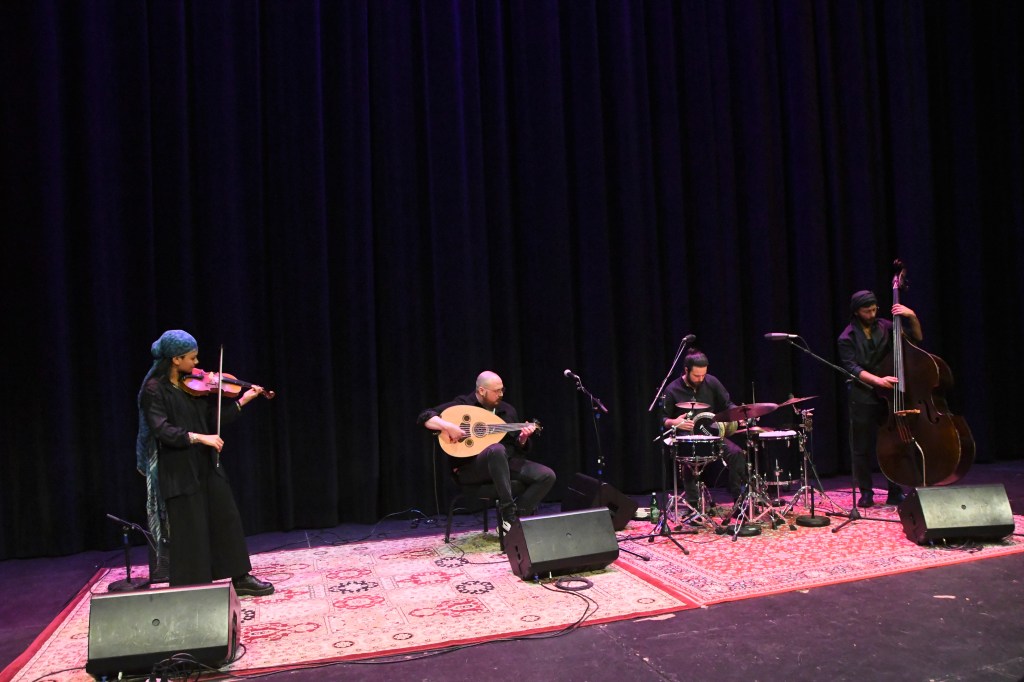
Also Sunday, Caffe Lena presents longtime onstage regulars Elizabeth Woodbury Kasius & Maria Zemantauski & Friends in an Eclectic Evening of Seasonal Celebration. World-music/jazz keyboardist Kasius and flamenco guitarist Zemantauski team up with bassist Jason Emmond, percussionist Zorkie Nelson and violinist Mitsuko Suzuki in a mixed/multi-tradition seasonal celebration. 7 p.m. Sunday. $23.86 members, $27.11 general, $11.93 children and students. 518-583-0022 www.caffelena.org

Tell me I’d hear the Beatles’ “Komm Gib Mir Deine Hand” twice in one day…

and I’d have laughed – but both hit as surprise high points in a recent Nashville visit. 

First, the Beatles’ German version of “I Want to Hold Your Hand” rang out in “Paul McCartney Photographs 1963-64: Eyes of the Storm” at the Frist Museum downtown, a post office turned art-deco gallery palace. That night, brother Jim Hoke’s Floating Zone band performed it in spirited but faulty German live at East Nashville’s 5 Spot. Guest singer Pat Sansone (Wilco, the Autumn Defense) pulled that title from the tip-request jar; he also tugged out a twenty, joked “Don’t mind if I do” and mimed pocketing it before tossing it back into the jar.

Pat Sansone, left, and Jim Hoke

That “Stump the Band on the Beatles” request segment of Jim’s monthly showcase followed originals from Jim’s recent albums “The Floating Zone” (2021), “I Was Born in Ohio” (2023) and “Tune Up The Bongos” (2025) – all available on BandCamp.

Above: Hoke’s Floating Zone Band, from left: fiddler Matt Combs, cellist Austin Hoke, percussionist Kirby Shelstad, Jim Hoke playing pedal steel, drummer Ben Parks, guitarist Chris Cottros and bassist Dave Francis. Below: Austin Hoke, cello, at left; Hoke at the pedal steel

It all began with pedal steel (by Jim) and cello (by son Austin) duets of a spiky, sparse beauty in Milhaud’s “Sumare” and playful jazz lilt in Zappa’s “Ay Bee Sea.” Then the band joined, a player or two at a time, to gang up on Jim’s pop numbers, first the instrumental “Grim Determination,” then the romantic desperation of “If You Change Your Mind” – first number at full, formidable strength, and first vocal tune, with close harmony by Jim’s collage-artist-pianist-singer and cultural catalyst wife Lisa Haddad.

Jim Hoke, left, and Lisa Haddad; bassist Dave Francis at right

Hoke’s later shift from guitar to uke echoed the earlier change of pace. This time, a run of pop songs yielded to meditative string sounds in a sonic detour into uke instrumentals. First came pop-song zip in the impatient “Gotta Go,” then the wistful bio of a neighborhood sling-shot tough in “Vince Horan,” followed by Pat Sansone’s first guest vocal in “Bus Stop.” Bassist Dave Francis’s booming mock-pompous harmony beefed up “El Kabong” and Hoke’s angst in “I’m in the Doldrums” resolved nicely in the uke tunes.

Then things built again in the peppy reclaimed-friendship saga of “Woodstock,” with references to people and places from our childhood; another instrumental, then a build through several vocal numbers to the rambunctious flat-out “Mitzi Gaynor.”

Sansone returned to sing the chorus in “Komm Gib Mir Deine Hand” (“I Want to Hold Your Hand,” in German); and he stuck around through the other Beatles’ requests, likely the only singer onstage who could falsetto the chorus in “Across the Universe.”

Pat Sansone reads Beatles’ lyrics from his phone

With no keyboard onstage, and without a return to the pedal steel that co-starred in the opening run, the strings carried the instrumental harmonies in both originals and Beatles’ requests. Cellist Austin and fiddler Matt Combs linked tight with Hoke’s acoustic guitar under his vocals. Introduced as longtime member of the Grand Ole Opry house band, Combs spun a funny tale about Little Jimmy Dickens. Francis’s bass, Ben Parks’s drums and Kirby Shelstad’s percussion flew just as tight, but unobtrusive, while Chris Cottros decorated many numbers with feisty electric guitar zing.

The requested Beatles’ covers challenged the band, though they quickly identified the keys and worked up arrangements before finding someone who knew all the words. They played things straight and respectfully, then Hoke closed the show by cueing Sansone to fade his lead vocal in “Universe” – the band, too – letting the audience fill the cozy silence by singing it themselves.

The music reached out from the stage in fun, rocking waves, warming me with shared memories of growing up together with the rockers, jazz numbers and classical compositions that inspired Jim to make music and me to love and want to be part of it through words and pictures.

Old friends gathered at the show: Did one of them request “Komm Gib Mir Deine Hand”?

Ralph Mauriello came from Crossville, Tennessee. He and Jim played together from fourth grade into their 20s in bands called the Al Cabos, the Auratones and West Side Highway. Jim reunited the Auratones for my 50th birthday party, a wonderful surprise. 

Tom Aldi flew in from Raleigh; he played with Jim in a pop-up “band” called the Cycle of Sound. Unannounced, uninvited, they clustered on front porches, pressed doorbells and started rocking. Some beneficiaries/victims slammed the door, though one invited them into a back yard pool party and another hired them to play a wedding. 

Michael Davis drove from Atlanta; a drummer, he was among many room-mates in a Hamilton Hill flat where his band Autumn practiced in the attic; my job was to fend off police attention on a lively, happily noisy block with two other bands and a biker gang. 

McCartney Photos at the Frist

Just as almost everybody of a certain age knows many Beatles’ songs, most fans know the sudden worldwide super-stardom of the young quartet, from growing adulation at home to taking America by storm.

McCartney’s photos at the Frist portray that storm from within its eye, as my daughter Pisie and I found earlier in the day of Hoke’s show. McCartney shows his band mates as friends, with easy candid intimacy. They seem relaxed and very much themselves, as no one else ever saw them. McCartney handed his camera to crew members when he went onstage; and even these performance images feel intimate since they were shot from the wings. 

How fun to wander through gallery after gallery with McCartney’s photos on the walls, amid screens showing videos from the Ed Sullivan show, news conferences and hanging out in Florida. These seaside vacation photos are in color; everything else is in newspaper-y black and white. 

Pisie and I mixed among a high school music or art class who looked ready to move to Brooklyn, or at least to East Nashville whose residents hail the place as the Brooklyn of the south.

While the Beatles were surrounded by fans’ adoring attention, McCartney gazed back, outward, at ordinary people, and most tellingly, at oblivious non-fan folks. His curiosity embraced everyone, both through his camera and his songwriting.

Just as no one else could have shot McCartney’s photos, no one else but Jim Hoke could have made his music – songs that grew from and describe places and people from our childhood in Guilderland. Yes – he even found a rhyme for where we grew up.

“Paul McCartney Photographs 1963-64: Eyes of the Storm” leaves the Frist at the end of January and opens in February at the Art Gallery of Ontario in Toronto.

All That’s Cool, But Also…

Jim Hoke played a day-long recording session for Paul McCartney’s “Egypt Station” album at Henson Studios in Hollywood, along with fellow horn players from Nashville and Memphis. And my wife Ellie von Wellsheim told us in a guest blog here about seeing McCartney perform recently in Montreal.

Bonus Photos

Ben Parks, Pat Sansone, Jim Hoke, Dave Francis

Austin Hoke

Matt Combs

Kirby Shelstad

Ben Parks

Chris Cottros

Dave Francis

Above: Figuring out a Beatles’ song arrangement; Below; “Who put THAT in here?”

Previews: I’ll miss these but you don’t have to

Cool shows happen here while I’m in Nashville for a show by brother Jim’s Floating Zone band.

Proctors presents the Joshua Rodman Quartet at Universal Preservation Hall Thursday, Melisande at Proctors Passport Series in the GE Theatre Friday; and a Very Slambovian Christmas Saturday at the Eighth Step at Proctors GE Theatre. Meanwhile, an extended run of “Dr. Seuss’ How the Grinch Stole Christmas” starts Tuesday on Proctors Main Stage.

Joshua Redman. Photo provided

The son of jazz saxophone great Dewey Rodman, Joshua came up in the 1990s Young Lions wave of young jazzers alongside the Marsalis brothers. Now 56, he’s half a generation older than his current band: drummer Nazir Ego, bassist Philip Norris and pianist Paul Cornish. They’re the same 20-somethings he led at Troy Savings Bank Music Hall in February 2024, minus singer wife Gabrielle Cavassa who guests on their new album “Words Fall Short” – as does saxophonist Melissa Aldana who’s played here with her own bands plus Artemis. 

The restless Rodman changes bands often, having played here with his own quartets and trios plus the all-star crews James Farm and Yaya and some guest spots. He made his “Back East” album (2007) with three different rhythm sections and three guest saxophonists; followed two years later with “Compass” featuring a double rhythm section; and earned a Grammy nomination for his guest spot on “The Bad Plus Joshua Redman.” In the early 90s, shortly after winning the Thelonious Monk Institute of Jazz International Competition, he made two albums with his saxophonist father Dewey, now deceased.

Redman brings robust and consistent musical strengths to his 30-plus albums and many tours – most have hit here. He wields an ever-questing fiery imagination, varying tones and attacks attuned to a vast emotional range, phrasing that rocks and swings and a generous band-leading approach as accompanist and soloist.

Redman leads his quartet Thursday at Universal Preservation Hall (25 Washington St., Saratoga Springs). 7:30 p.m. $45.50–$75.50. 518-346-6204 http://www.proctors.org.

Just as Redman returns here in his most-favored quartet configuration, Melisandre opens Proctors Passport Series Friday at its GE Theatre (632 State St., Schenectady) in a stylistic re-wind to a former archivist approach. Like the Lomaxes, Pete Seeger, the Carolina Chocolate Drops and many musical explorers of past traditions, she and her bandmates traveled to track down the sources of the music they updated into their “electrotrad” fusion hybrid style.

After four albums of plugged-in Quebecois dance music they had found in written and recorded archives and in villages along the Richelieu River, Melisande stepped back to acoustic fundamentals on “Rembobine” (“Rewind,” in French).

Melisande, the singer, above; Melisande, the band, below. Photos provided

Melisande, by the way, signifies both the five-piece band and its leader, the single-named singer and jaw-harp and mandolin player; plus wooden flute player, bassist (and her husband) Alexandre de Grosbois-Garand, acoustic guitarist Jean Desrochers, fiddler Gabriel Girouard and percussionist Eric Breton.

Their music cruises on an ethnic and acoustic authenticity that never feels confining or stiff because it also explodes into revved, rocking episodes that invite jumping up and throwing down. 

Music Haven presents The Proctors Passport Series, following its globe-spinning mission of traveling the world one concert at a time. The series also presents the Swedish acoustic duo Vasen (Michael Marin and Olov Johnson) Feb. 12 at Universal Preservation Hall; the New York-based, western-Asian-inspired fusion group Baklava Express March 13 at Proctors GE Theatre, then the young cumbia-style accordionist Yeison Landero from the Colombian Caribbean, in the same venue, May 14.

Proctors Passport Series shows all hit at 7:30 p.m. Admission $30. 518-346-6204 http://www.proctors.org. 

The Eighth Step presents “A Very Slambovian Christmas,” also in Proctors GE Theatre, on Saturday, the night after Melisande.

The holiday show of the always surprising Slambovian Circus of Dreams, this could musically wander almost anywhere. 

This singular band is singer/guitarist Joziah Longo (sometimes billed as Gandalf Murphy); singer, cellist, mandolinist, flautist and accordion player Tink Lloyd; guitarist and mandolin player Sharkey McEwen – all longtime members – plus bassist Bob Torsello, drummer Matthew Aborezk and RJ McCarty playing bass, keyboards and saxophone.

Slambovians. Photo provided

In its deceptively serious attack, the Catskills-based combo plays a gloriously happy hodgepodge of singer-songwriter personality, amped anarchy in a Frank Zappa/Captain Beefheart-style mash-up of rock, jazz and blues; hootenanny hijinks of gleeful momentum and kitchen-sink experimentation. It’s great playful fun, in short; and who knows what they might do to familiar Christmas carols?

Their deep bag of tricks includes fan-favorite events, notably their several Halloween blasts Grand Slambovian Hillbilly Pirate Ball, Grand Slambovian Surrealist Ball, and Rock’n’Roll Seance – and the Very Slambovian Christmas show.

A Very Slambovian Christmas harks the heralds on Saturday. 7:30 p.m. $30 advance, $35 on Saturday; $40 front and center. 518-474-1702 www.eighthstep.org

HERE COMES CHRISTMAS

Holiday concerts seem to start earlier and earlier, like carols starting up in malls before Thanksgiving – but better, because its live.

Thursday, the McKrells start their run of 11 Christmas shows at the Sand Lake Center for the Arts – before they wander all over the place!

Friday brings a touch choice: banjoist Tony Trischka brings his Holiday Show to the Cock ’N’ Bull while Caffe Lena presents A Winter’s Evening with Ryanhood.

It’s A Jazzy Christmas plays Dec. 19 at Universal Preservation Hall and the next night at Proctors GE Theater.

Then the Eighth Step presents Sing Solstice! On Dec. 21 – near the end of the McKrells’ marathon holiday run.

Jimmy Cliff Goes Silent

Reggae pioneer dies at 81

The stars aligned at the Lenox Music Inn that sweet sunny afternoon in August 1976; and Jimmy Cliff’s star shone brightest.

It all felt perfect: the beautiful warm weather, the shared sense of happy anticipation, the usual friendly vibe at my favorite-ever venue.

So, when Jimmy Cliff and his band came onstage, the place was primed for joy. I’ve never felt such jubilation before or since, in hundreds, thousands of live concerts. We all surged to our feet on that sloping grassy hill, and stayed there through every song, every bit of banter. 

That may have been reggae’s high-water mark, the early- to mid-70s when Cliff, Bob Marley and the Wailers and Toots and the Maytals all peaked. That’s not to diminish their later achievements, nor those of other powerful and accomplished reggae artists since then. (Check in with Sir Walford Saturday afternoons on WCDB-FM for guidance.) But those years were a sort of golden age, with Cliff at the forefront of that multiple cultural explosion – after “The Harder They Come” made him a movie star in 1972 as well as a musical giant. Wiki reports, “The film ‘The Harder They Come’ played in midnight screenings at the Orson Welles Cinema in Cambridge for seven years…”

Mourning Cliff’s death today at 81 in Kingston, reggae fan Keith Richards FaceBooked this today: “He wrote some of the most beautiful ballads that ever came out of Jamaica. Unbeatable songs, and the voice of an angel.”

All that, and fiery rebel songs, and musings on his homeland – all in the voice of an angel.

I feel grateful – blessed, really – for the half dozen or so times I saw him sing over the years. 

The last time was at Jazz Fest in New Orleans, May 3, 2013. He played the Congo Square Stage that specializes in soulful, funky fare – and Cliff was every bit as magnificent then as decades before. His voice swung sweetly yearning or strongly emphatic and portrayed every emotional color in between; his timing impeccably rhythmic. 

But most of all, he meant it; his soul came to us in every word.

Ellie Goes to see Paul McCartney

Ellie von Wellsheim is our guest writer here. Married nearly half a century, I’ve found her to be the most capable person I know; founder and executive director of the MoonCatcher Project. http://www.mooncatcher.org. She once fell asleep with her head on my shoulder in the sixth row of a Bruce Springsteen show at Albany’s Palace Theatre. Here’s her take on a Montreal road trip to see Paul McCartney.

I turned down a front row seat to see Paul McCartney. 

“Are you crazy?” was my son Zak’s response. 

When I told my husband Michael (this is his blog you’re reading) about the offer and my turning it down, he said, “Are you crazy?” And when Linda my board president reacted the same way, I thought perhaps I should revisit my decision. 

My college friend Leila (O’Brien Raymond) got two tickets from her son Peter, and when he couldn’t go with her he asked me to please take his seat and go with his Mom. Finally, I said yes. I rearranged meetings and presentations and concentrated on travel plans instead. 

Montreal, here we come.

The concert was the second of a two night run. Peter says second night shows are the best because all the bugs are worked out the first night. So Leila and I made our way to Row A seats 41 and 42, night two, of the Paul McCartney: Got Back Tour.

Ellie von Wellsheim photo

I had laughingly told Michael that I’d write a review for this blog. He’s been writing music reviews for over 50 years and this would be my first. He joked with me about paying attention to when the show started (8:12 p.m., by the way). He said you have to write down all the songs and what tempo each has. He said think terms like largo, adagio or allegro, and I said OK: tortoise, hare and galloping horse. He laughed. ‘Pay attention to the crowd and the vibe of the place, and have fun,’ he said. “Paul has amazing energy. You’ll love it.”

So I folded up a piece of paper and found a pen to carry in my pocket and off we went. 19,000 people were there (in Montreal’s Bell Centre). Every seat was filled and everyone was ready for a good time. It was noisy and the stage was right in front of our front-row faces. I turned around and gasped at the crowd. All these people there to see Paul, there to relive something about our idols the Beatles.

As we waited for the show to start, there was recorded music playing and I watched the man who was making that happen. He knew every word to “Come Together,” “Why Can’t We Do It in the Road,” “Lucy in the Sky (with Diamonds),”  and endless other songs. We all knew those words. Pictures of the Beatles scrolled the screens behind and at each side of the stage.

They started with “Help” and I wrote “#1 HELP tempo: galloping horses!” We were off to a good start. Everyone jumped to their feet and in the end I don’t think my ass touched that chair for more than about seven minutes that whole night.

The place smelled of popcorn and fried food and everyone was singing along and just plain feeling good. The tunes all had video and stills of the Beatles on the screens behind the band. Sooo many pictures of Paul, John, George and Ringo. Pictures of them young and silly and growing more serious as their hair grew longer and they grew up. I knew most of the music and sang my heart out because not even I could hear me with all the screaming and singing and all around good cheer surrounding me. 

Leila Raymond photo

The show ebbed and flowed taking us from gentle to ferocious waves of emotion, truly making us laugh and cry. The photos and videos were visual reminders of the Beatles, and the songs jerked us back to how it all felt. You know how music does that? That touching something about your past that brings feeling rushing into your soul was racing into the souls of 19,000 people that night.

I loved it all but there were highlights.

Paul sang to John; a song that made me cry, it was so filled with love and longing and proclaimed “If you were here today I’d say ‘I love you.’” He sang with John too: The screen showed John singing “Get Back;” and on stage Paul sang with him, ending saying “it’s good to sing with John again.”

And there was a shout out and thank you to George too. With ukulele in hand, Paul told a story of going to George’s house to play a song that George had written and Paul had just learned to play. He quietly started to strum “Something” and soon the whole band joined in and we swayed and were missing this Beatle, too. Leila leaned over and told me she walked down the isle to this. These songs have marked our happy occasions and the sad ones too, like “Blackbird,” a melancholy protest song written during the civil rights movement in the US south.

Ellie von Wellsheim photo

“My Valentine,” a beautiful tortoise tempo-ed love song for Nancy, Paul’s wife, was silently ASL hand signed on screen by Johnny Depp and Natalie Portman’s as Paul sang, out loud, to his sweetheart. Paul told us his wife was there and he hands-formed a heart for her.

We jumped out of our skins and covered our ears when “Live and Let Die” was paired with cannon sounds and leaping flames of hot fire, six feet in front of us and too hot for comfort. But with all the smoke and lights, it was thrilling. I noticed Paul taking out earplugs after the song ended.

Leila Raymond photo

The set ended with “Hey Jude.” The audience went crazy and people held up NaNaNaNa signs as we all sang the chorus together. 

We stood there amazed, wondering if there would be an encore when a man came up to me and asked what I was writing. I explained that my husband was a music reviewer and couldn’t be there, so I was writing down the song titles for him. I was a little nervous as I wondered if I was doing something illegal but he simply smiled and said “I can help you with that” and handed me the set list. I kissed his cheek knowing Michael would love to have that piece of paper. 

I listened to the three encores and thought to myself “You got to experience this; you’re not crazy!”

Leila Raymond photo