
Review: Empire Jazz Orchestra Thursday, March 26, 2026 at SUNY Schenectady County Community College Music School Carl B. Taylor Auditorium
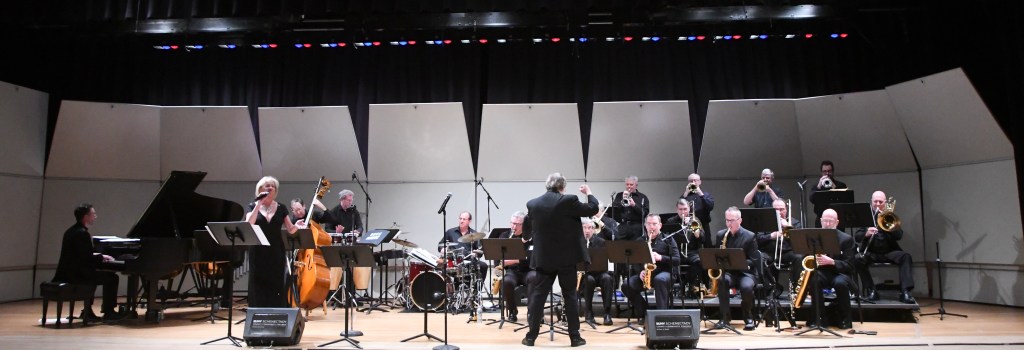
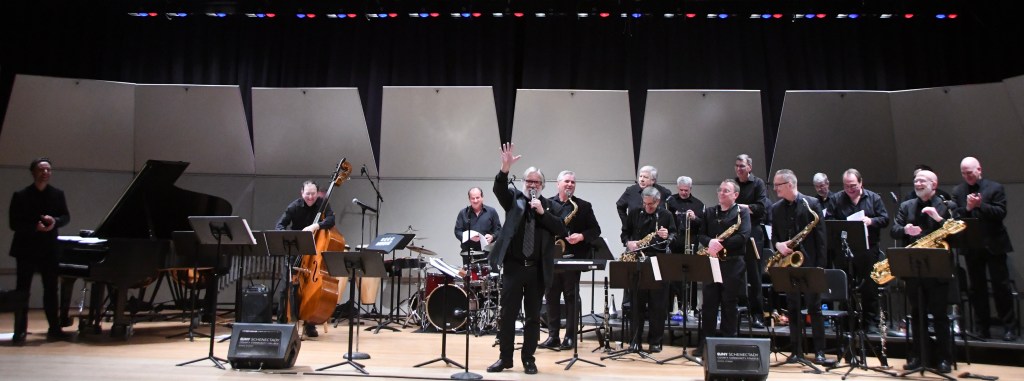
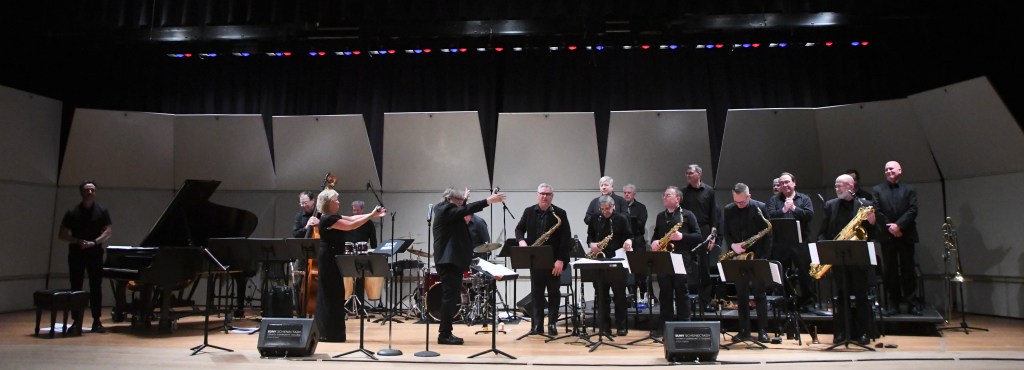
“Not bad, for just one rehearsal,” noted Bill Meckley, including his 18-piece Empire Jazz Orchestra (EJO hereafter) in his claim Thursday. Reviving EJO on a visit from his Kentucky home felt like a labor of love on both sides of the bandstand at the SUNY Schenectady County Community College music school Carl B. Taylor Auditorium. His hand-picked crew of area jazz virtuosos followed him through musical history in two sets heavy on vintage tunes, but sparkling in the spirit of shared expertise, united in the moment.
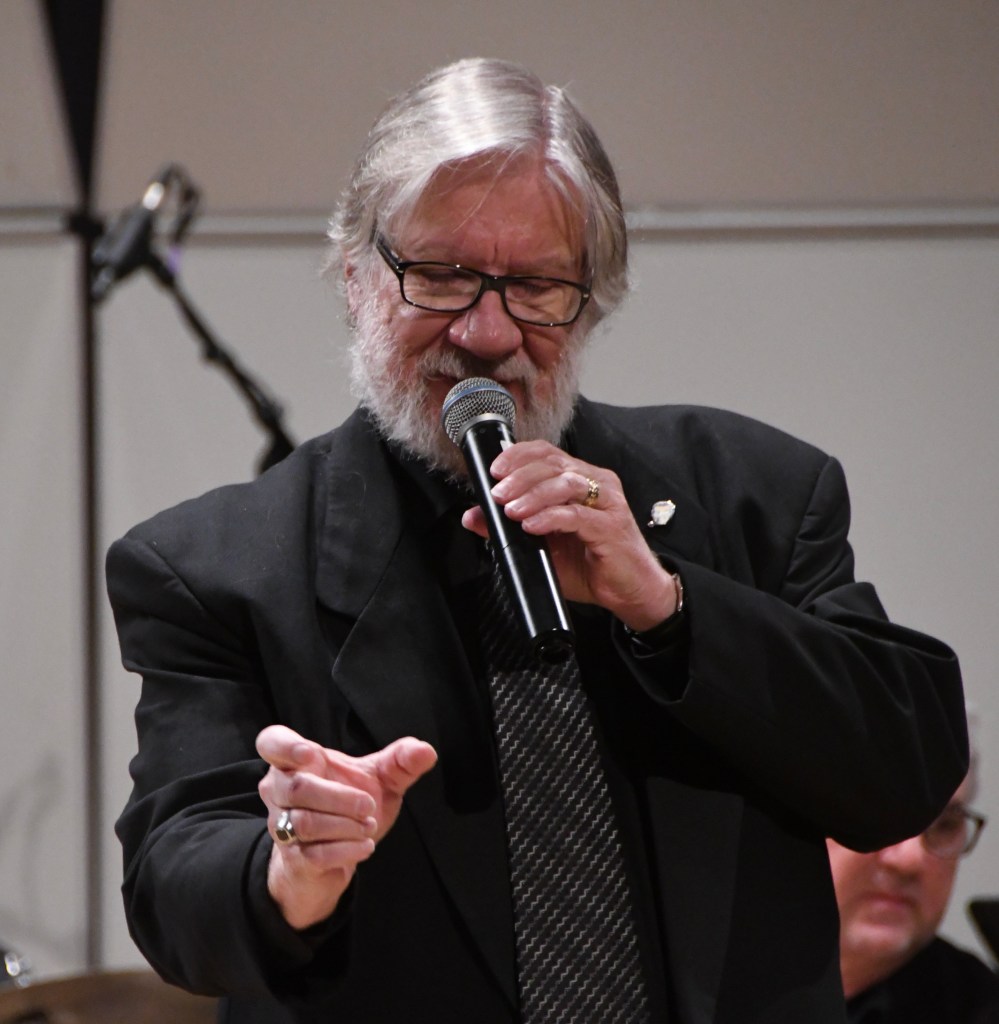
Bill Meckley announces, above; and conducts, below
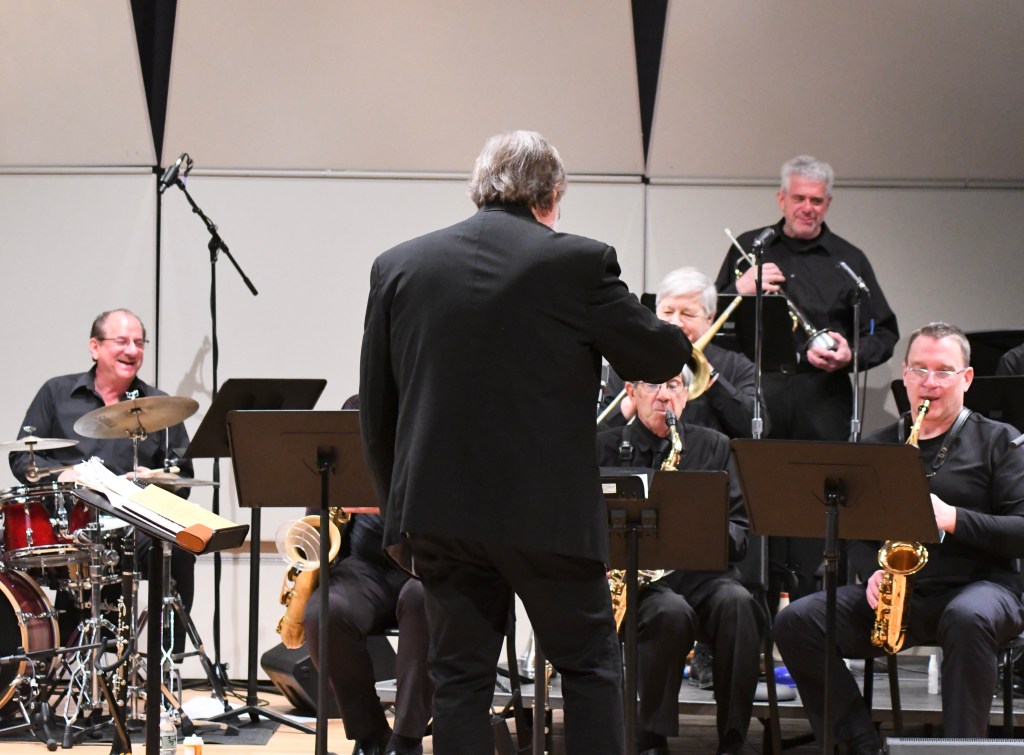
Meckley conducted the stage-filling crew in kinetic glee, crediting both composers and arrangers, giving shout-outs to soloists including former colleagues in the music school, notably reeds player Brett Wery and trumpeters Dylan Canterbury and Vito Speranza.
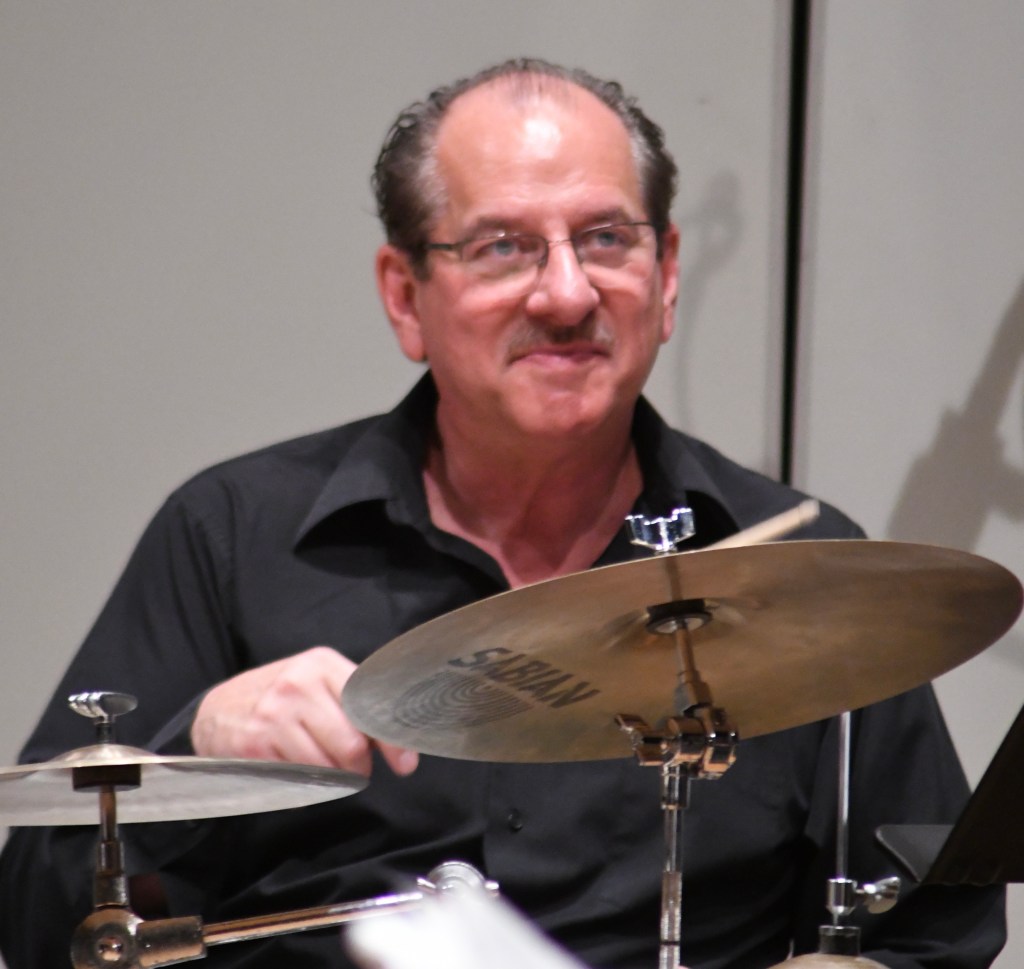
First up, “Max,” Jeff Hamilton’s spirited tribute to Max Roach, arranged by John Clayton, hit as a happy, roaring blues shuffle with standout tenor break from Kevin Barcomb and riff-swapping coda, drummer Bob Halek holding his own with full-band clamor.
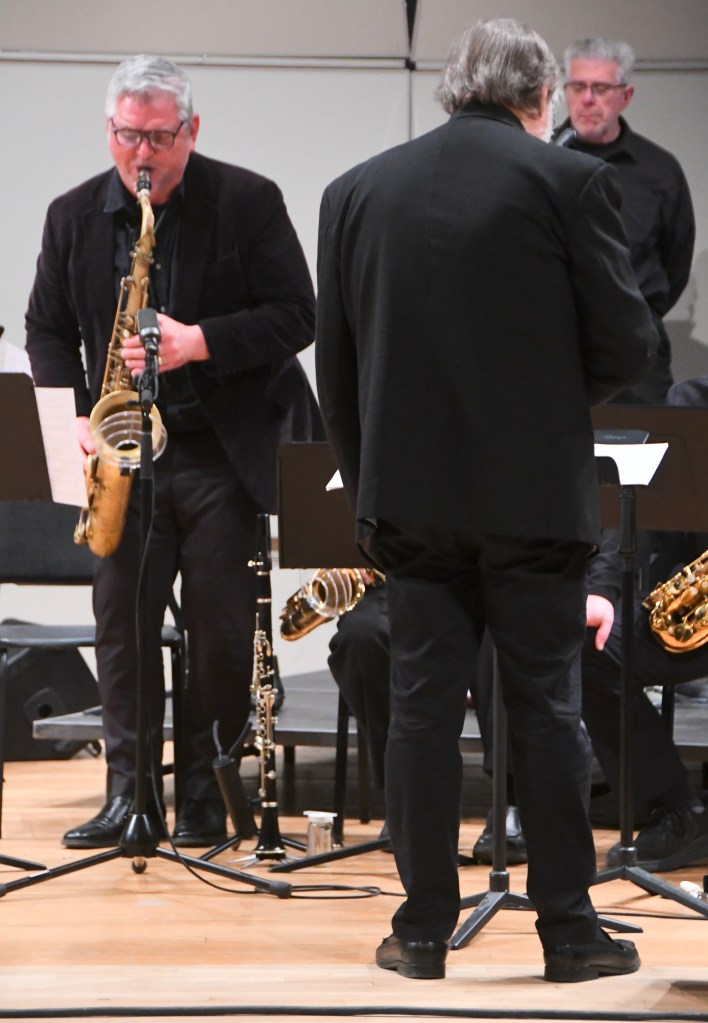
Kevin Barcomb, above; Bob Halek, below
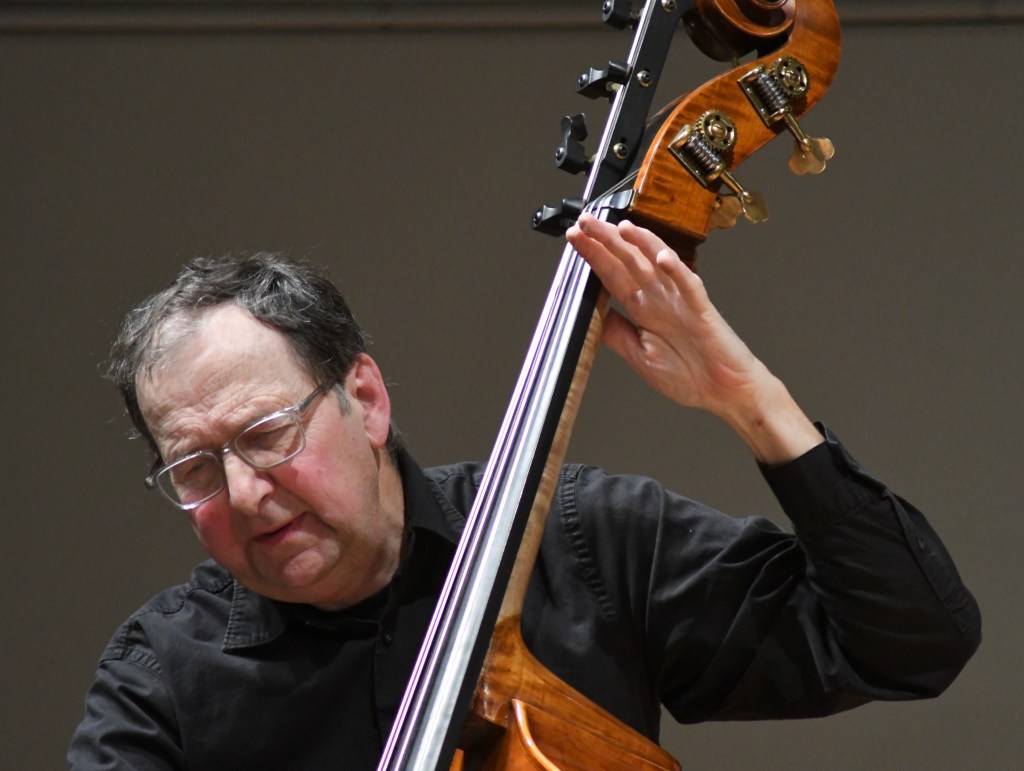
Oliver Nelson’s “Emancipation Blues,” another blues, followed, launching from a slow brass hymn into swinging dialog of saxes and trombones that slid under Dylan Cantertury’s sky-high trumpet break like a firm floor. Canterbury co-starred also in “A Night In Tunisia,” its familiar melody launching from Otto Gardner’s bass; Brian Patneaude’s bustling tenor and Ken Olsen’s agile trombone also took big bites.
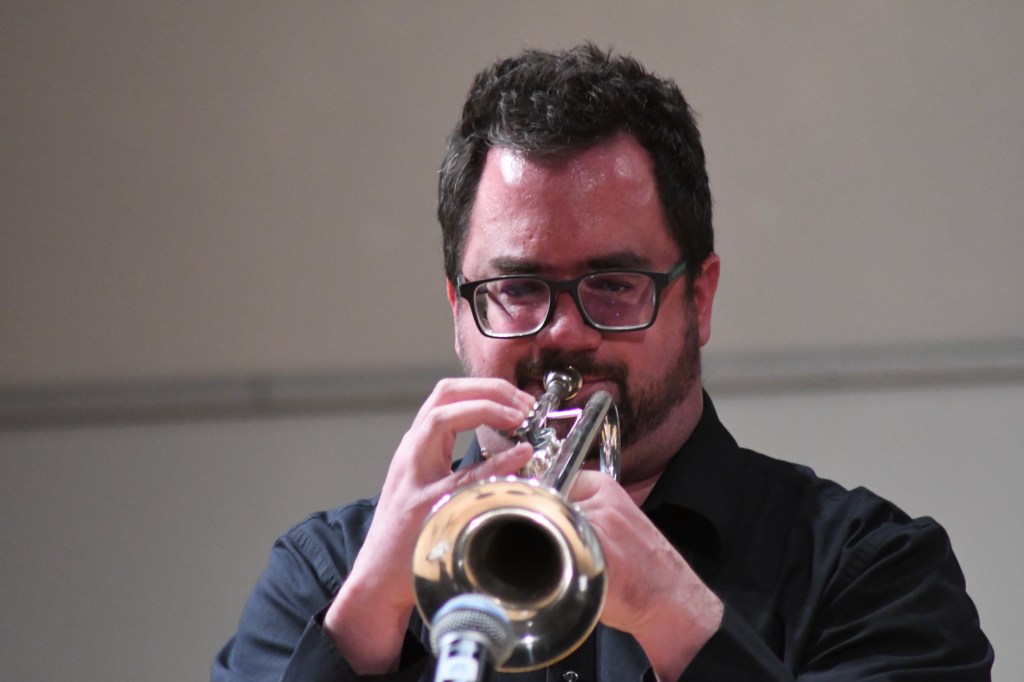
Dylan Canterbury, above; Otto Gardner, below
Meckley then told how Thursday’s reunion show benefits scholarships to the music school he once led, urging the sizable audience to donate via QR code in the printed program and buy CDs on sale in the lobby. He said many music students work nights, explaining how scholarships fill in the financial voids on concert nights when they miss out on paid work.
Colleen Pratt came on to sing “On a Wonderful Day Like Today” (Leslie Bricusse, Anthony Newley), rambunctious and upbeat, with a tasty Barcomb tenor solo.
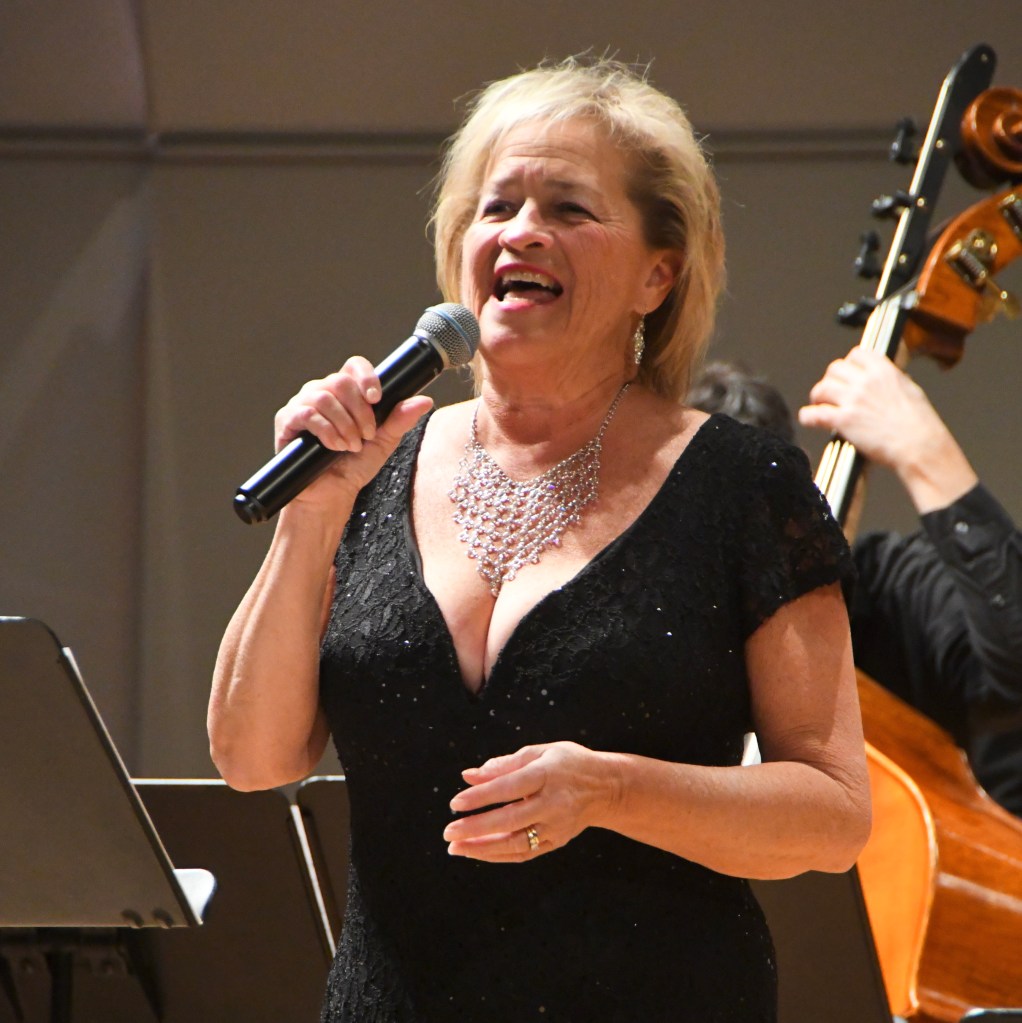
Colleen Pratt
A big brassy blast revved “Makin’ Whoopie,” sly and sweet in band-member Jim Corigliano’s arrangement and Pratt’s torchy vocal. She closed her first-set contribution in the jittery rush of “Johnny One Note,” another Corigliano chart.
The band paved a smooth road for alto saxophonist Keith Pray to cruise in “Geller’s Cellar” (Maynard Ferguson, Ernie Wilkins), a slippery slow shuffle with mellow sax blend, blunt brass blasts and spirited riff swapping before Pray’s dazzling cadenza. (Pray leads his own more modernist Big Soul Ensemble at the Cock ’N’ Bull the last Tuesday of each month, among other ensembles, but is also a flexible sideman.)
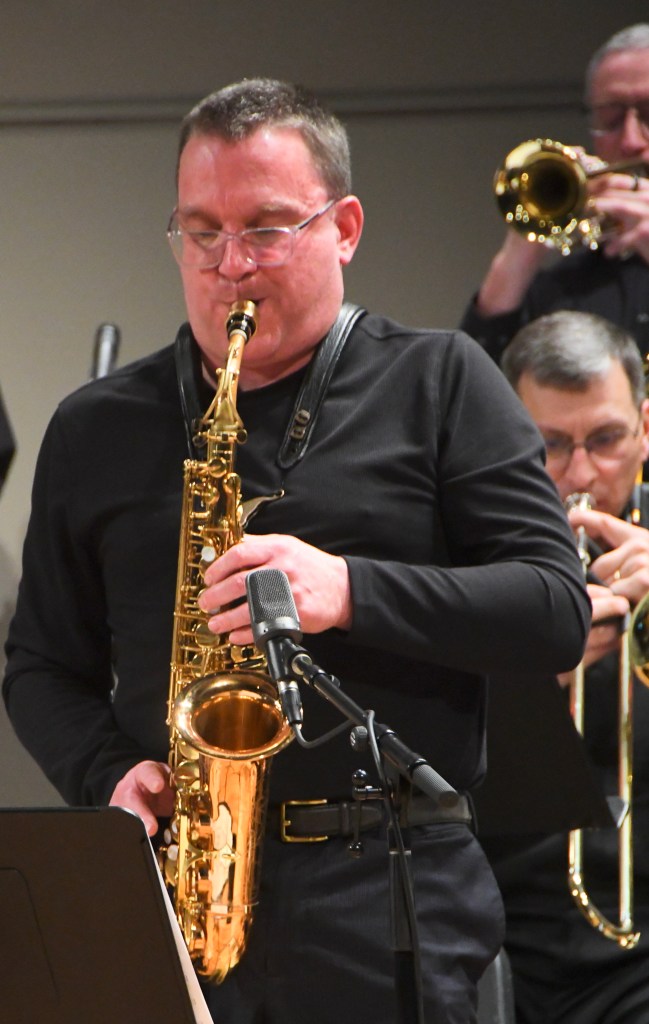
Keith Pray, above; Brett Wery, below
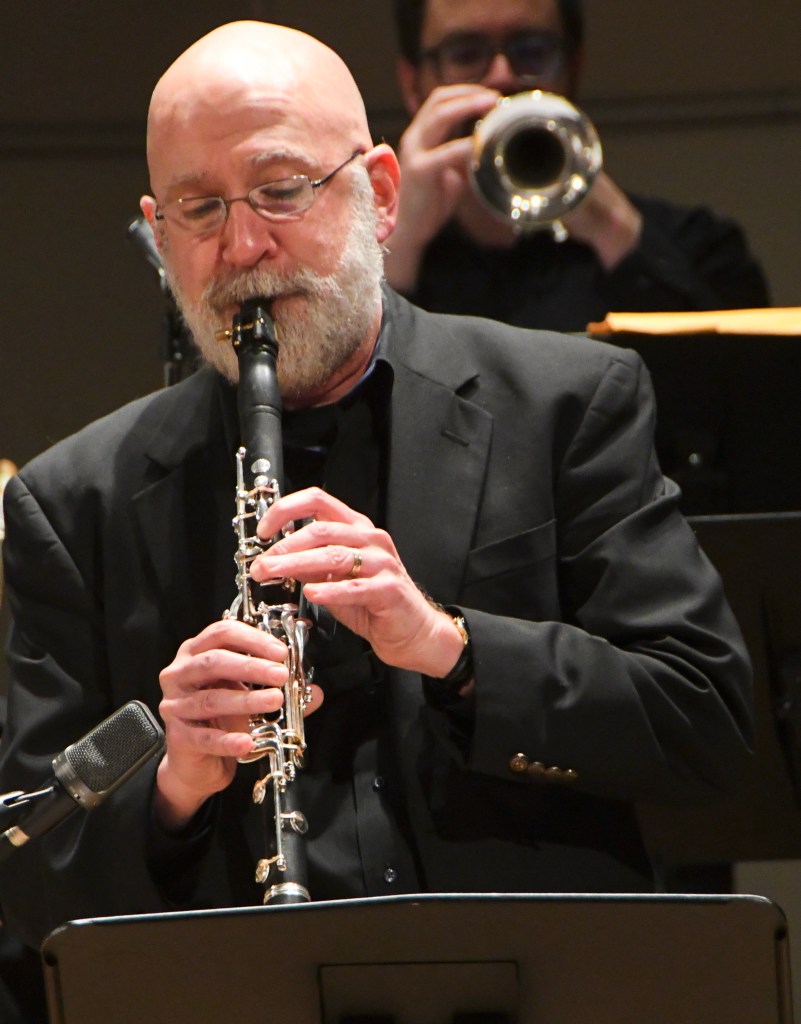
Benny Goodman’s “Let’s Dance,” maybe the most antique-sounding selection all night, also set a mellow massed sax sound, cushioning music school faculty member Brett Wery’s clarinet.
Then they stretched out to close the first set in a medley of arranger Sammy Nestico’s charts on Gershwin’s “Porgy and Bess,” a highlight film of sorts with “Summertime” in both Latin and straight-ahead renditions, trombones as transition to “I Loves You Porgy” – all adding up to a 12-minute flow of familiar melodic charm and fresh re-invention.
A similar roadmap shaped the second set, “Bright Eyes” (Louis Prima, Bill Holman) an upbeat full-band blast kicking open the door for Brian Patneaude’s eloquent/elegant tenor.
They slowed way down for “Goodbye, Porkpie Hat” (Charles Mingus’s tribute to Lester Young), Barcomb’s tenor edging toward Young’s trademark tasty restraint before brass and reeds tag-teamed this tender ballad.
Dylan Canterbury stepped up front to solo in Duke Ellington’s “Concerto for Cootie” (another tribute, to Duke’s longtime trumpeter Cootie Williams). Like Barcomb in “Porkpie,” Canterbury adopted Williams’s plunger mute technique here, shifting to open trumpet to swap riffs with the whole crew.
Pratt returned for “Minnie the Moocher” (Cab Calloway), and here the band’s solo rehearsal showed as she and the ensemble needed a restart to get on the same page. Vito Speranza’s trumpet kept things on track in a strong read of this bouncy novelty.
Like the first-set Gershwin medley, Pratt and band strung together a cheerful run of upbeat classics, singing strong through “Get Happy,” “Keep the Sunny Side Up,” “Bye-Bye Blues,” back to “Get Happy.”
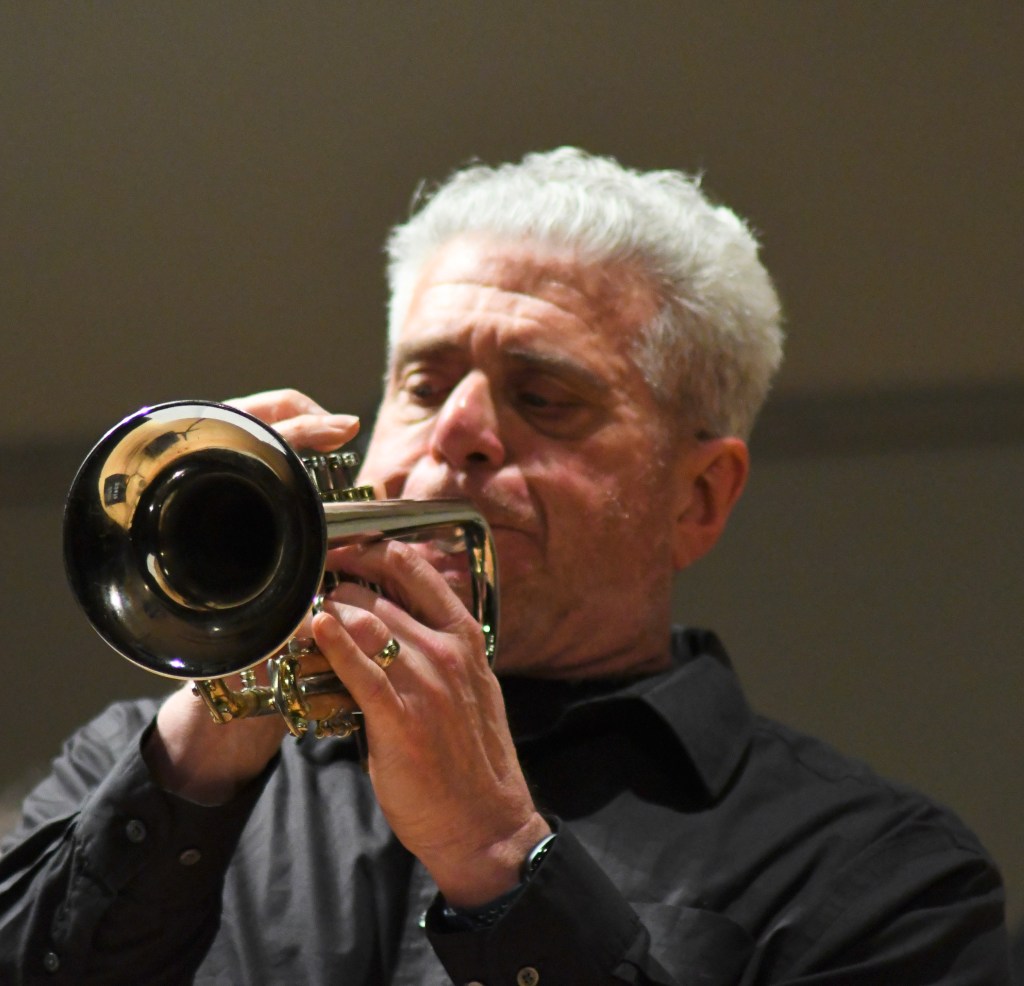
Vito Speranza
Stepping front, trumpeter Speranza owned Ellington’s “Portrait of Louis Armstrong,” sounding like himself even while recalling Armstrong’s distinctive hesitation rhythm and playful rasp at the end.
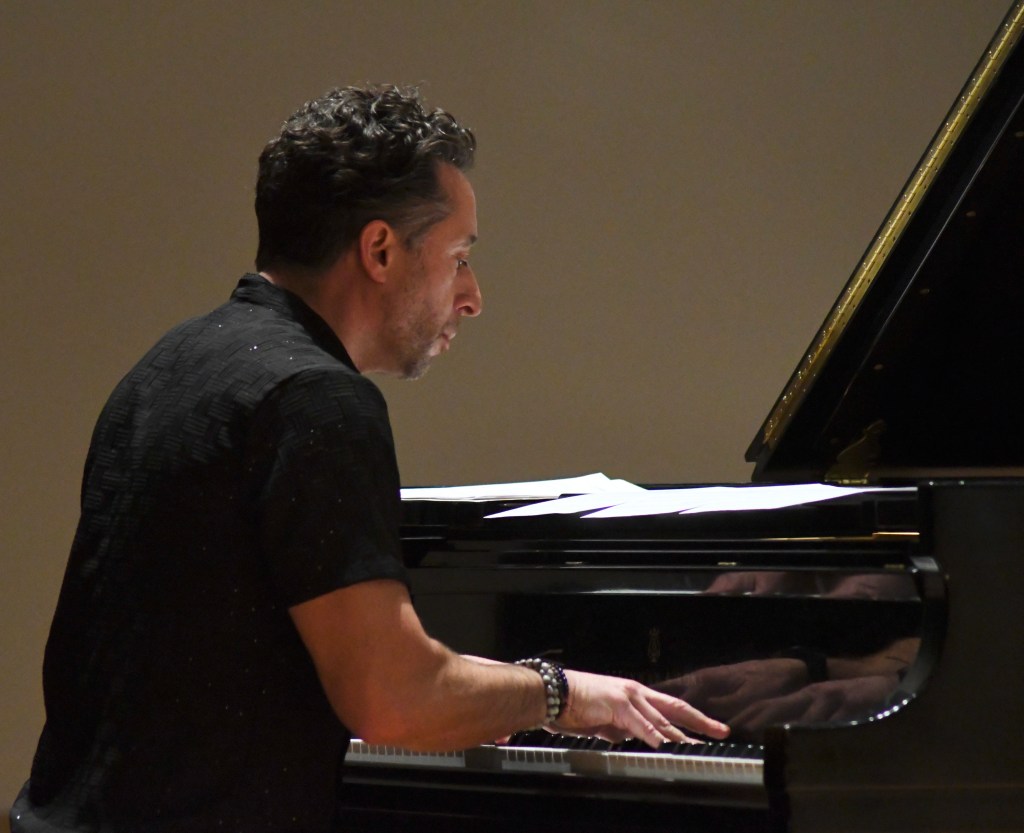
“Nostalgia In Times Square” (Mingus, Ronnie Cuber) swung happy, all syncopated grace and counter-point energy, sparked by hot solos from Jon Bronk’s trumpet, Jim Corigliano’s tenor, Nick Lue’s piano and Bronk again.
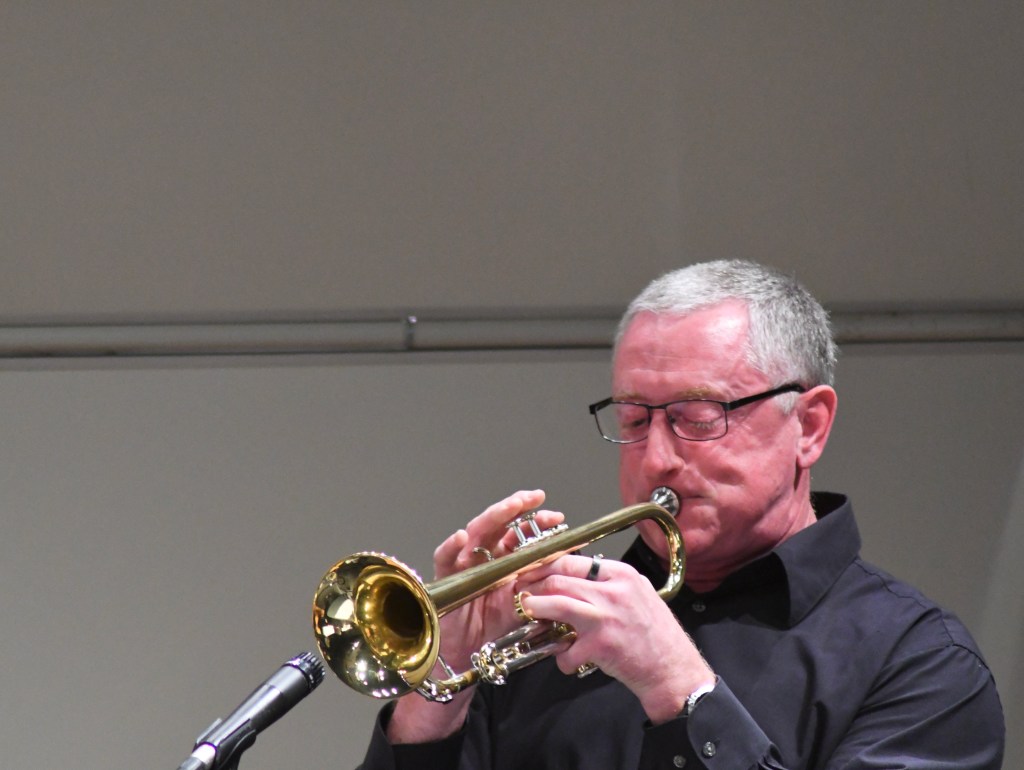
Jon Bronk, above; Nick Lue, below
Meckley delivered end-of-show-style thanks, but then led an encore-style finale, summoning Pratt back onstage for “Come Rain or Come Shine,” a mellow blues with tempo shifts, slowing to an easy glide and whispery vocal.
The reunited Empire Jazz Orchestra, which Meckley had founded at SUNY Schenectady’s music school, played with a unity that belied its long hiatus – since Meckley’s 2015 retirement, with just one prior reunion in 2018.
Everyone seemed fully engaged in the often-complex arrangements; soloists respected their predecessors in the songs while remaining fully themselves. Although ailing guitarist Mike Novakowski was absent, it was a glorious sound, by a big and united ensemble, in support of a worthy enterprise, and it delivered a lot to like.
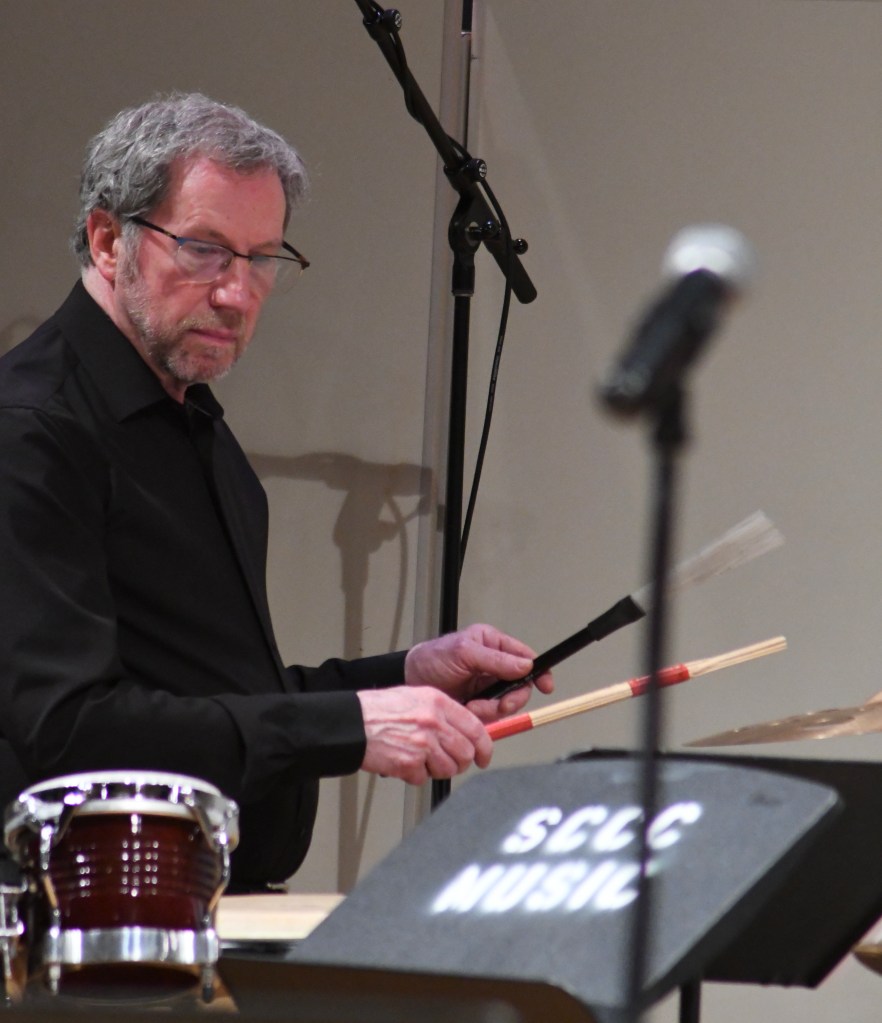
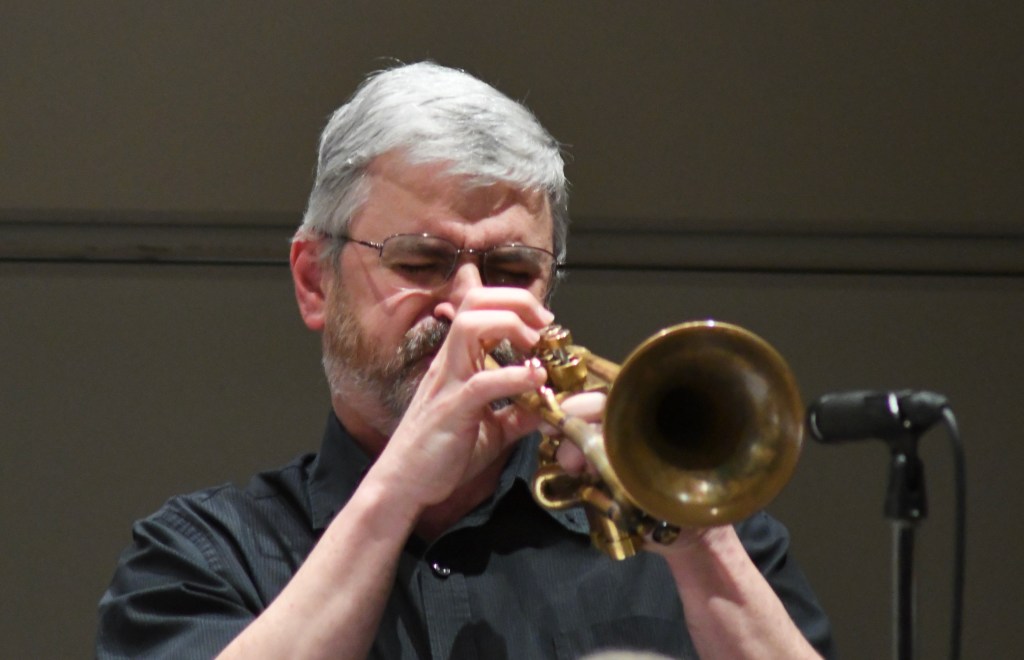
Mark Foster, percussion. above; Terry Gordon, trumpet, below
 Hoke's Jukebox