Jazzy Blues, or Bluesy Jazz?

Preview: The Evidence at Jazz on Jay, Thursday, Aug. 14, 2025

“Without the blues, you have no jazz,” said Tom Morello (Rage Against The Machine).

With the Evidence on Thursday at Jazz on Jay, we’ll hear both.

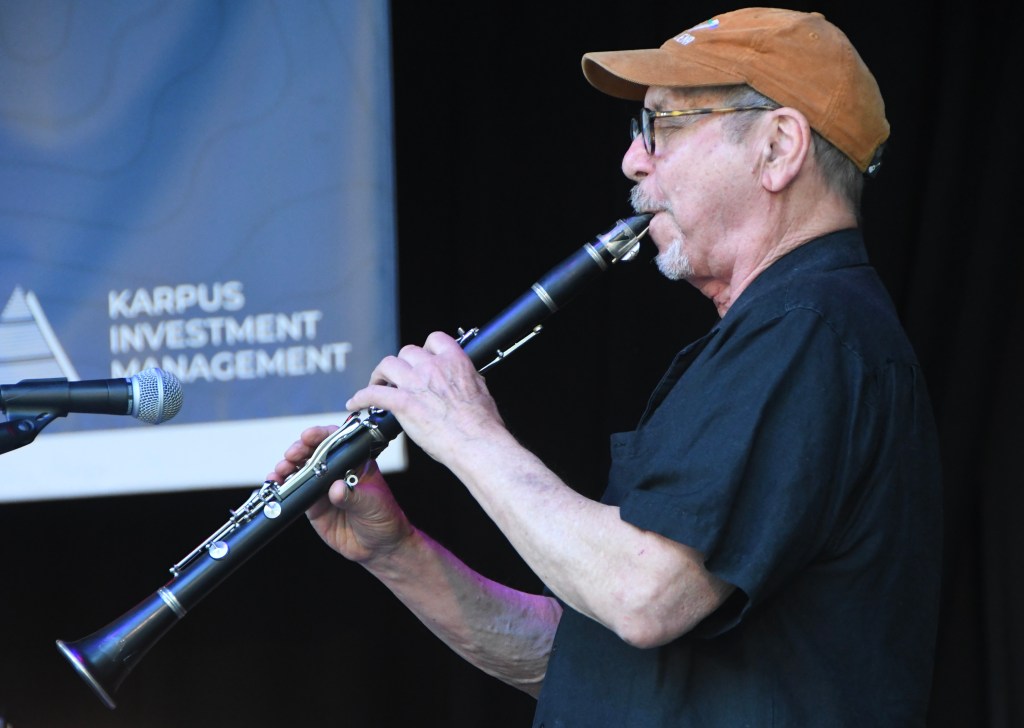
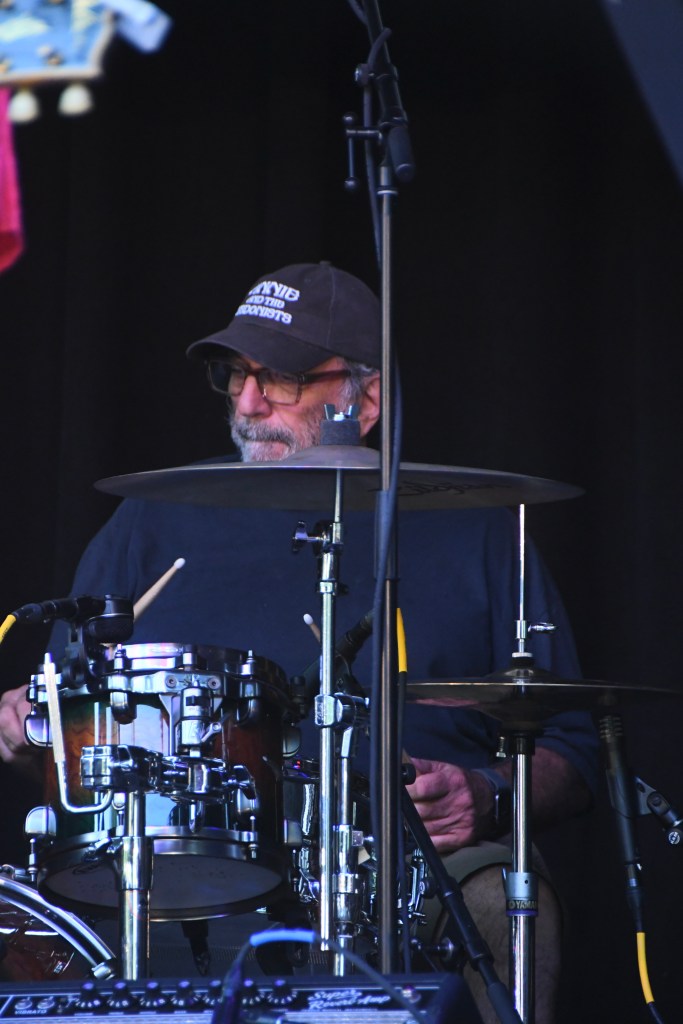
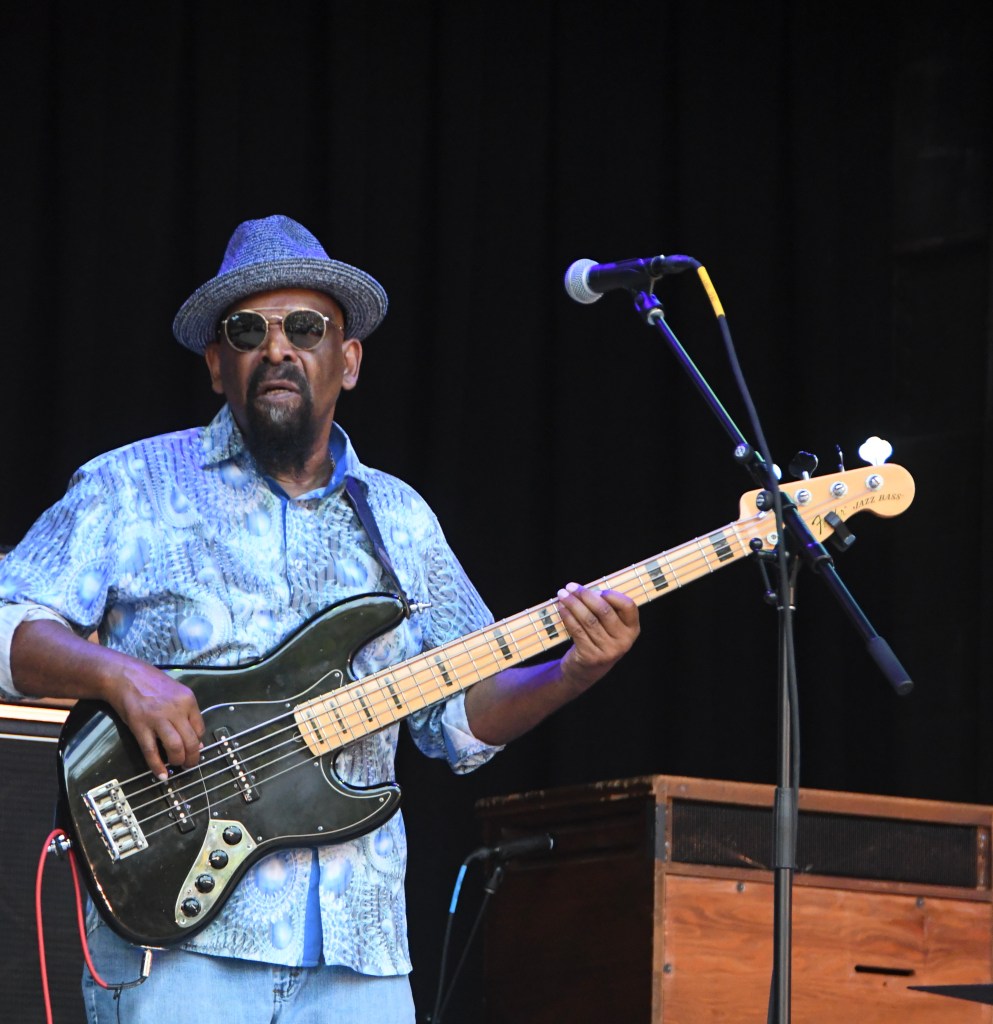
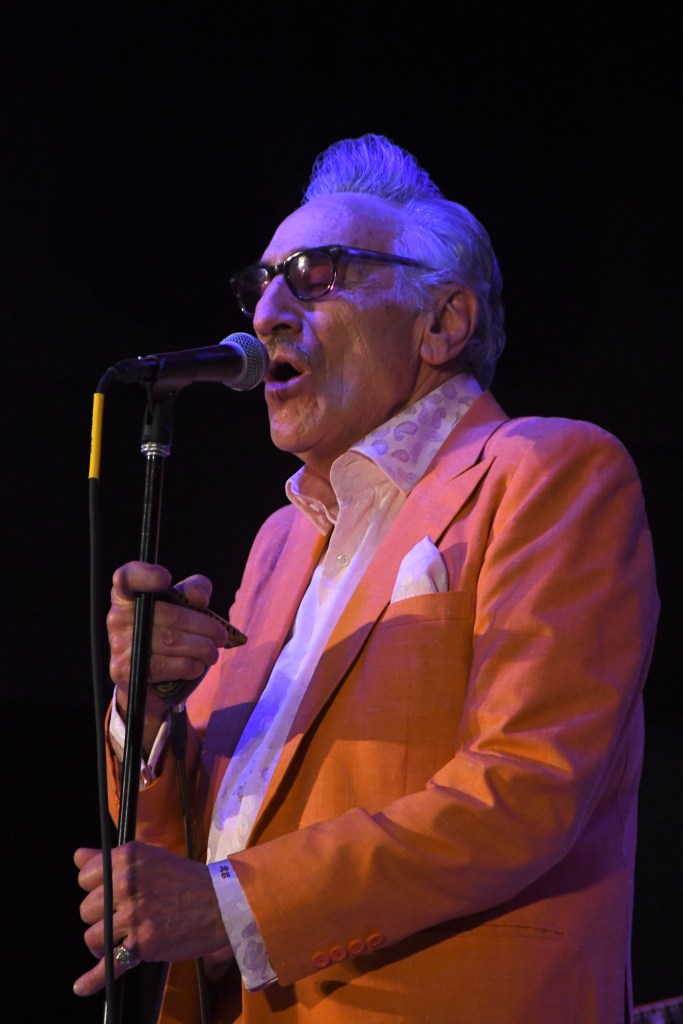
The Evidence is Robert Aronstein, keys and vocals; Mike Derrico, guitar and vocals, and Andy Hearn, drums and vocals. They formed six years ago after playing mostly in blues bands.

The Evidence – Shown here as a duo: Robert Aronstein, left; and Mike Derrico. Photo supplied

Both Aronstein and Hearn played in the Charlie Smith Blues Band; Aronstein also played in the Big Block Blues Band and the Alan Payette Band. Derrico has played several styles, with Americana troubadour Rees Shad, jazz pianist Cole Broderick, the Ushers (Dennis McCafferty’s rock band), Good For The Soul (blues, R&B) and the Out Of Control Rhythm and Blues Band. And Hearn’s resume is stacked with guitarists: bluesmen Tas Cru and Matt Mirabile, plus jazz man Joe Finn.

All have recorded albums, Aronstein on his own “Play This” (now sold out); with the Charlie Smith Blues Band on “Hardly Ever Blue” and “Stepping Down Blues Lane,” which also features Hearn. Derrico has recorded with Cole Broderick, Rees Shad, and the Ushers.

Aronstein cites Dave Brubeck, Chuck Berry, the Beatles and Jerry Lee Lewis as inspirations and credits his pianist mother, high school teacher Jay Singer and the late great area jazz piano goddess Lee Shaw as teachers.

Like many area performing musicians, Aronstein also teaches, at Oneida Middle School. He studied music and recording technology, and voice, at the former College of St. Rose; and also studied at Rensselaer Polytechnic Institute. He has also worked in instrument repair and providing technical support for recordings and live musical events. And he plays flute and flugelhorn, in addition to piano.

When Aronstein engineered the sound for A Place for Jazz in its former home at the Unitarian Universalist Society of Schenectady, he led his middle school jazz combo, playing at intermission. The great Canadian trumpeter-singer Bria Skonberg heard them and was so impressed she invited them onto the main stage to play several songs with her.

Thursday, the Evidence play original Derrico instrumentals, also instrumental interpretations of pop and rock standards, jump blues and swing tunes with vocals, American Songbook classics and blues standards. These include “Katz Bossa” (Derrico), “Take Five” (Brubeck) and classics “Sunny,” “Summertime,” “Choo Choo Ch’Boogie,” “House Of The Rising Sun” (creatively rearranged), “The Nearness Of You,” the Cars’ “Let The Good Times Roll” (with groove and improvisations), and “This Masquerade” (the George Benson hit written by Leon Russell).

“I find tunes that appeal to me vocally or with some instrumental hook I like and then find a groove that may or may not be what people are used to hearing,” says Aronstein. 

“I’m really a blues player, so my jazz and American Songbook standards tend to show that influence pretty heavily.”

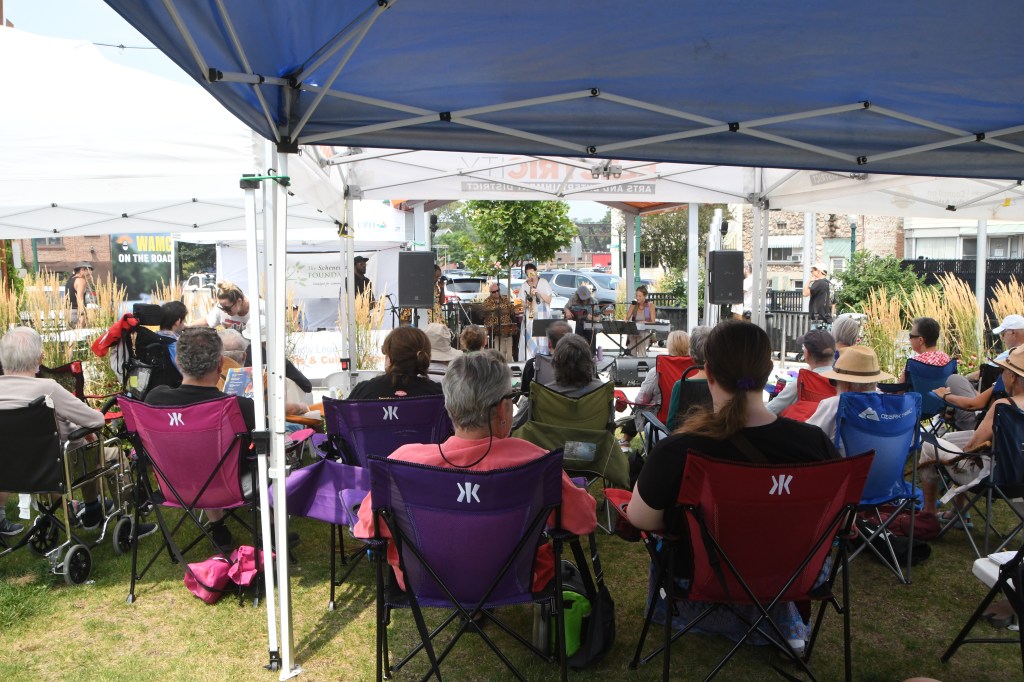
Jazz on Jay free concerts are noon to 1:30 p.m. at Jay Square, the new park space opposite Schenectady City Hall. The rain site is Robb Alley at Proctors, 432 State St. Seating is provided indoors at Robb Alley, but patrons are invited to bring their own seating and refreshments to Jay Square.

Jazz on Jay is presented by the ElectriCity Arts and Entertainment District and sponsored by the New York State Council on the Arts, a Schenectady County Legislature Arts & Culture Grant, Downtown Schenectady Improvement Corporation, The Schenectady Foundation, Price Chopper/Market 32, MVP Health Care, Schenectady County, Schenectady City Hall, and Proctors Collaborative. This blog is a series media sponsor.

Looking down the calendar, Aronstein plays solo at The Wishing Well Thursdays through Saturdays.

The Evidence plays Aug, 19 noon to 1 p.m. at Jim DiNapoli Park in Albany, and Sept.  20 3 p.m. at Schenectady’s PorchFest in the GE Realty plot.

Sin and Redemption, With Banjo, Mandolins and a Saxophone

Review: SteelDrivers, and Reese Fulmer and the Carriage House Band, Sunday, Aug. 10 at Music Haven

As young bluegrass players Billy Strings, Sierra Hull and Molly Tuttle, focus widening attention on this venerable style, the SteelDrivers made their point Sunday at Music Haven without reaching into the Bill Monroe songbook at all; they write their own.

When Vassar Clements dubbed his band Hillbilly Jazz, he described bluegrass in binary-but-combined terms. Sunday at Music Haven, the headlining SteelDrivers worked from the polished, jewel-like side of that comparison; country music on acoustic instruments. Openers Reese Fulmer and the Carriage House Band played looser, more spontaneously. If the name SteelDrivers suggests inexorable locomotive force, Fulmer’s crew felt cozy, organic.

More important than any differences, though, was how both bands made music mostly of menace, mayhem and mortality, threatening retribution down here, hoping for redemption up there. As singer Matt Dame sang in a piercing wail in “I’m On My Way” late in the SteelDrivers’ 80-minute set, their music vibrates “between the bars and the Bible.” Check the set list for titles lamenting/praising various sorts of sin.

They explained where in that space their songs fit, and also did the commercial country thing, tracing tunes back to albums; easily forgivable as they celebrate 20 years onstage and on the charts. Managing to cruise past the departure of former lead singer Chris Stapleton into solo stardom attests to the sturdy materials of their sound. 

SteelDrivers, from left: Richard Bailey, banjo; Brent Truitt, mandolin; Tammy Rogers, fiddle and vocals; Mike Fleming, bass and vocals; Matt Dame, guitar and lead vocals

Mike Fleming’s understated bass firmly supported the treble zip up top: Dame’s strummed Martin acoustic six-string and piercing lighthouse-through-the-fog voice, Tammy Rogers’s fiddle (arguably the jazziest facet of their sound), Brent Truitt’s pedal-to-the-metal mandolin and Richard Bailey’s wry banjo, mostly as understated as Fleming’s bass. Fleming, Rogers and Dame harmonized from stage left.

Tammy Rogers, left; Mike Fleming, and Matt Dame

They opened warning at a spry mid-tempo that no one can outrun the grim reaper, then sped up to complain to an absent lover, then to warn hell awaits, a long way down. Noting most of their songs tell of jail, drinking or killing people, they efficiently got their one happy song out of the way. In the happy yearn of “I Choose You,” Dame pointed into the wings to an unseen love.

Then, back to incarceration, alcohol and grim death; and the dire has seldom seemed so delicious.

Matt Dame

Dame waved off conversation with a neighbor at the bar asserting he’s just here for the booze and cigarettes. Later, he gloried in “Guitars and Whiskey”– guns and knives complete that checklist. If “Midnight Train to Memphis” evokes happy images of travel, banjoist Bailey wryly wrecked that notion, noting the substantial difference between jail and prison. 

Songs paired nicely; the (relatively) happy “At the River” setting up the cautionary “The River Knows,” for example. The latter’s intro ominously noted, “It was justified, and he deserved it.”

Richard Bailey

Bailey’s banjo, subdued, mostly, erupted into snazzy Scruggs rolls in “Heaven Sent,” the Stapleton and Kevin Welch-penned hit. Otherwise, the riff fireworks flowed from Truitt’s mandolin or Rogers’s fiddle. Their expert picking never completely eclipsed such hard-hitting lyrics as the revenge-for-abusive-parenting anger of “Burnin’ The Woodshed Down.” But they did frame harrowing tales in lovely sounds, precise as bluegrass must be. They followed its conventions, Dame stretching the last syllable of most lyric lines, for example, but they sounded original nonetheless.

Brent Truitt

Mike Fleming

Tammy Rogers

Reese Fulmer, guitar, center; and the Carriage House Band, from left: Jimi Woodul, guitar; Dylan Perillo, bass; Chris Bloniarz, octave mandolin; Connor Dunn, tenor saxophone. Reese Fulmer, below

Like many area ensembles, Fulmer’s Carriage House Band boasts an elastic membership but creates a smooth sound anyway. Also like many area ensembles, it features he-plays-with-everybody bassist Dylan Perrillo; always a plus. “Elastic” also describes Connor Dunn’s surprising tenor saxophone. Some brassy evidence of jazz, right there; and it really worked. More traditional: Jimi Woodul’s acoustic guitar and Chris Bloniarz’s octave mandolin; also the acoustic guitar Fulmer strummed at the mic. Playing flowed smooth when they all cooked a groove. In between: skilled solos.

Dylan Perillo

Jimi Woodul

Desire, doom, destiny, dread and death powered most songs, Fulmer going sweet or gravelly as the fates behind the words demanded. In his first two tunes Sunday, Fulmer proclaimed “I Was Born to Die” and “I lay my body down” in “3am;” the former an impressive harmony vocal showcase, the latter a propulsive groove like the cozy acoustic power-glide of “Workingman’s Dead.” And that’s a compliment.

Chris Bloniarz, octave mandolin; Connor Dunn, tenor saxophone, below

Spry sounds often belied somber themes. As Fulmer sang in a dirge-y tune dedicated to friends who’d just lost their father, “If your soul should leave your body, I hope you find comfort in a song.” Such redemption songs moved mostly slowly, to let the words take hold. And they did.

SteelDrivers Set List (courtesy of friend/reader JD)

Outrun

When You Don’t

Long Way Down

I Choose You

Booze & Cigarettes

Midnight Train

Guitars and Whiskey

At The River

The River Knows

Heaven Sent

Woodshed

Banjo Tune (actually, this was Blue Side of the Mountain)

On My Way

Where the Rainbows Never Die (Encore)

Yes, they gave us some redemption at the end, at encore time. Rainbows wasn’t on the set list, but they called an audible to let us down easy.

Bonus Borrowed Historical Notes

Courtesy of Flame Tree Pro publication whose explanation below offers ample evidence that proves Clements rode the right railroad; and I quote:

“When Vassar Clements formed a band called Hillbilly Jazz in 1975, Bill Monroe’s former fiddler pulled the cover off the hidden connection between country music and jazz. The two genres had more in common than most people thought.

“After all, Jimmie Rodgers recorded with Louis Armstrong early in their careers; jazz legend Charlie Christian debuted on Bob Wills’ radio show; Les Paul (then known as Rhubarb Red) was a country guitarist before he became a jazz and pop hero; steel guitarist Wesley ‘Speedy’ West earned his nickname for his blistering jazz-like solos; top Nashville session guitarist Hank Garland moonlighted as a jazzer; Miles Davis titled one of his songs ‘Willie Nelson’; and Nelson made a jazz record with guitarist Jackie King.”

Jon Batiste Returns to SPAC

Preview: A Special Evening with Jon Batiste and the Philadelphia Orchestra Friday, Aug. 22 

American music’s reigning renaissance man, Jon Batiste seems a natural to perform with the Philadelphia Orchestra Friday, Aug. 22. After all, his newest (and 8th) album puts a jazz spin on Beethoven in “Beethoven Blues (Batiste Piano Series Vol. 1).”

The pianist, guitarist, singer, composer and bandleader seems in firm but playful control of a boundless future. He sees no boundaries between past, present and what he’ll do next; or among musical styles – although he arguably personifies one rich tradition in particular.

Jon Batiste. Photo supplied

Batiste comes by his talent both genetically, as scion of a sprawling New Orleans musical family, and through tireless work.

Search “Batiste music” and a dozen relatives pop up including Batiste’s bassist father Michael who toured with Jackie Wilson and Isaac Hayes and united six brothers in the Batiste Brothers Band, and uncles including busy drummer Russell Jr. and composer arranger Harold who worked with Sam Cooke, Sonny and Cher, Dr. John and others.

In high-speed, ambitious catch-up with his intrepid family, Batiste attended the Skidmore Jazz Institute where he met his future wife Suleika Jaouad. He next appeared here in Cassandra Wilson’s band at The Egg, the skinny Juilliard kid at the piano. He led the Dap-Kings at the former Freihofer’s Saratoga Jazz Festival in 2018, courageously and ably filling in for the irreplaceable Sharon Jones (RIP, 2016). When Covid shut down the festival, Batiste performed online in an indefatigable solo representation, full of gutsy hope.

Maybe best known as leader of Stephen Colbert’s Late Show Band from 2015 to 2022, he and Jaouad were the subject of the aptly titled “American Symphony.” They showed us both trouble, her bouts with cancer, and triumph: her recovery and Batiste’s debut performance of his first symphony. Candidly intimate, the documentary won an Oscar nomination. 

Friends since their early teens, they became a couple when Batiste brought his band to play in her hospital room during cancer treatment; a moment she described in her journal as “when the saints came marching in.”

They’ve since done book tours together. After writing for the New York Times, Vogue, Glamour, NPR’s “All Things Considered” and Women’s Health, her memoir “Between Two Kingdoms” recounts her struggle with leukemia. Her second published work, “The Book of Alchemy: A Creative Practice for an Inspired Life,” extolls the sense of creative play that children enjoy but which only fortunate, focused artists carry into later creative life.

Living that life, Batiste has won seven Grammys (22 nominations) for his seven prior albums.

His eighth album will form the first set of his show when he returns to Saratoga Performing Arts Center on Friday, Aug. 22

First, he and his versatile band will perform new songs from his “Big Money” album; then he’ll play with the Philadelphia Orchestra. Who knows what music will flow from that stage?

Show time is 7:30 p.m. Information and tickets at http://www.spac.org. 518-584-9330

Heard Warms Up Jazz on Jay

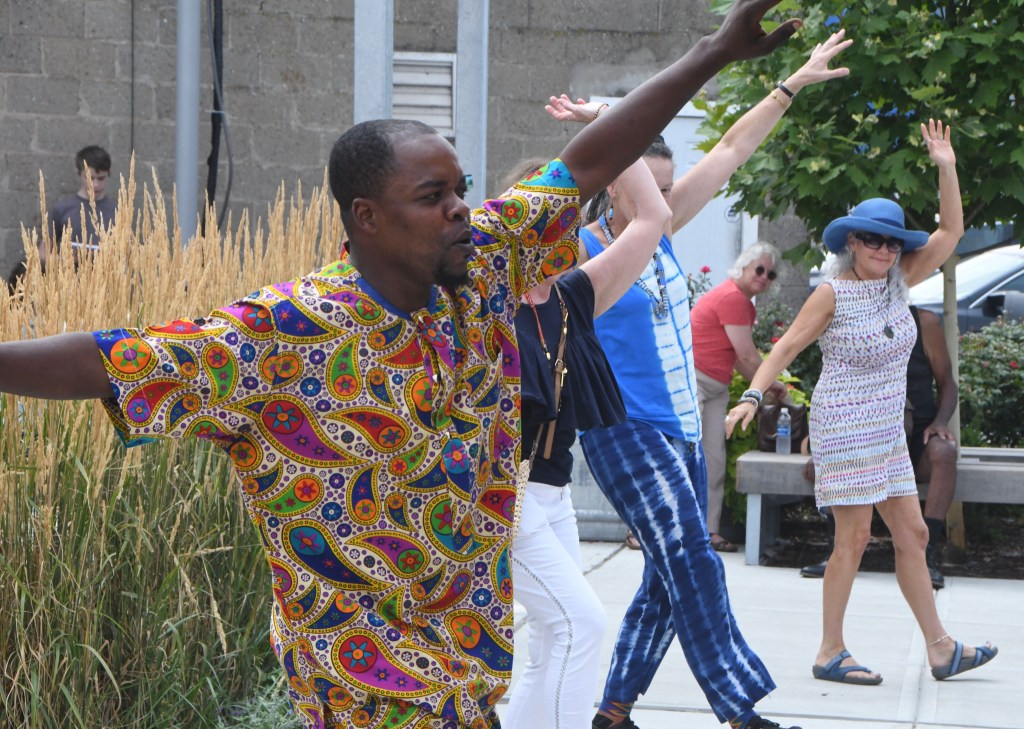
Review: The band Heard’s dance-y globe-spinning world-jazz went straight to the feet of fans who formed an impromptu chorus line at Jazz on Jay Thursday.

Felix Nelson showed the way, physically; but all seven Heard musicians made melodies and beats that organized the energy.

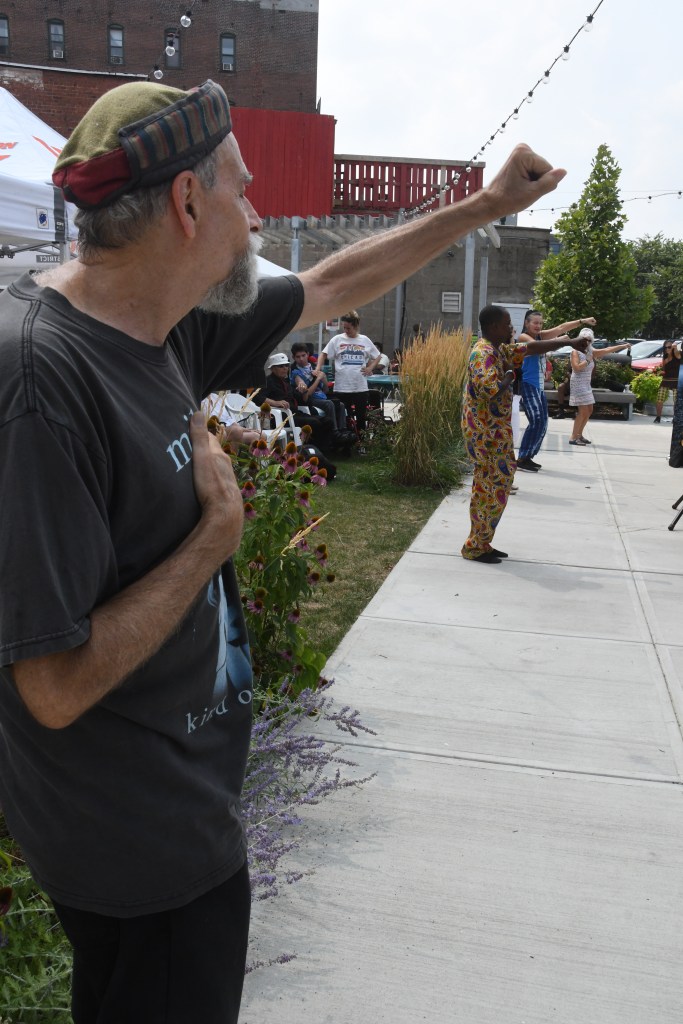
Felix Nelson, left, with fan-dancers

When keyboardist-leader Elizabeth Woodbury Kasius ironically asked “Who thinks this is jazz?” the answer was complicated. It was certainly jazz since everybody improvised. Saxophonist Laura Andrea Leguia and Kasius ran chord changes in small-combo jazz style, most straightforwardly in Frank Foster’s “Simone,” their only standard tune Thursday. But it was also West African, Brazilian, and South African with imported melodies and lyrics that got the same ingenious, energetic explorations as “Simone.” 

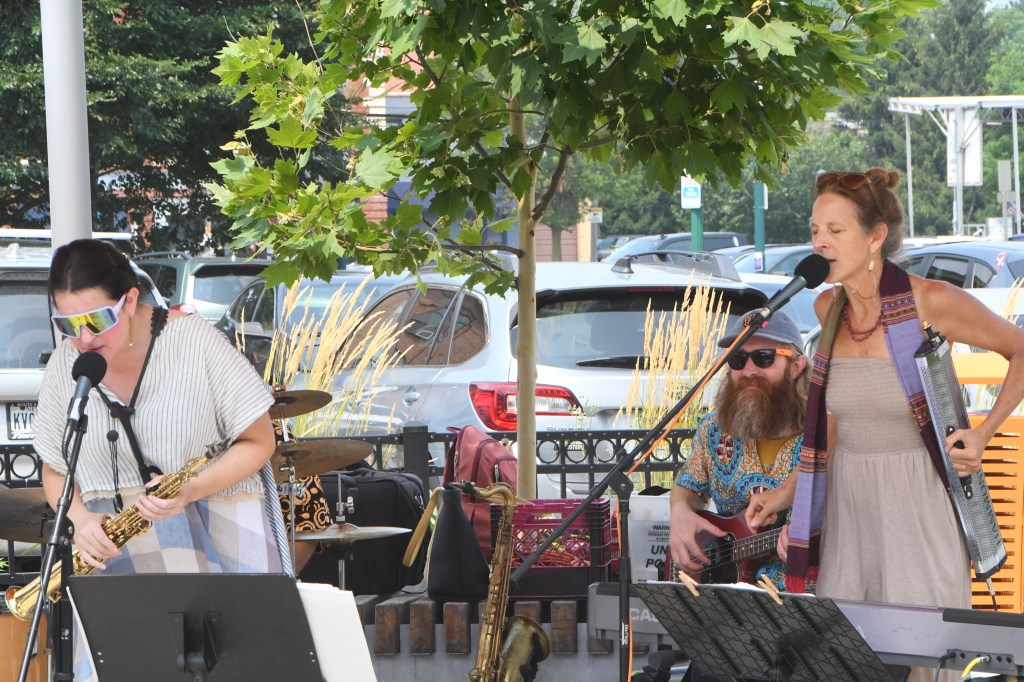
Heard, from left: Elizabeth Woodbury Kasius, keyboard, melodica and vocals; Felix Nelson, dancer, vocals and percussion; Laura Andrea Leguia, saxophones and vocals; Kweku Kwakye, percussion and vocals; Zorkie Nelson, percussion and vocals; Brian Melick, drums; Bobby Kendall, bass

Elizabeth Woodbury Kasius, keyboard foreground, with, from left: Felix Nelson, Kweku Kwakye, Brian Melick (behind Kasius), Laura Andrea Leguia and Bobby Kendall

Kasius later noted that every band is a rhythm section, and Heard proved that time and again, with Brian Melick, drum kit; Zorkie Nelson, mainly congas; Felix Nelson and Kweku Kwakye various shakers, and busy bassist Bobby Kendall.

Bobby Kendall

Kasius also said she’s learned over time to take Kendall’s advice on complex rhythms: Don’t count it out, just play it. This gave the music a happy sense of free expression; you know: jazz.

“Market Song” started as beats, a groove that surged strong from top to bottom – from a busy clatter of shakers and snare drum up high down to low electric bass runs. Over all that rhythm surfed a happy bustle of melody from Leguia’s soprano sax and Kasius’s melodica. Then Kasius shifted to keyboard and added her voice to those of Zorkie and Felix Nelson across the stage alongside guest percussionist-singer Kweku Kwakye, all three Ghanian born.

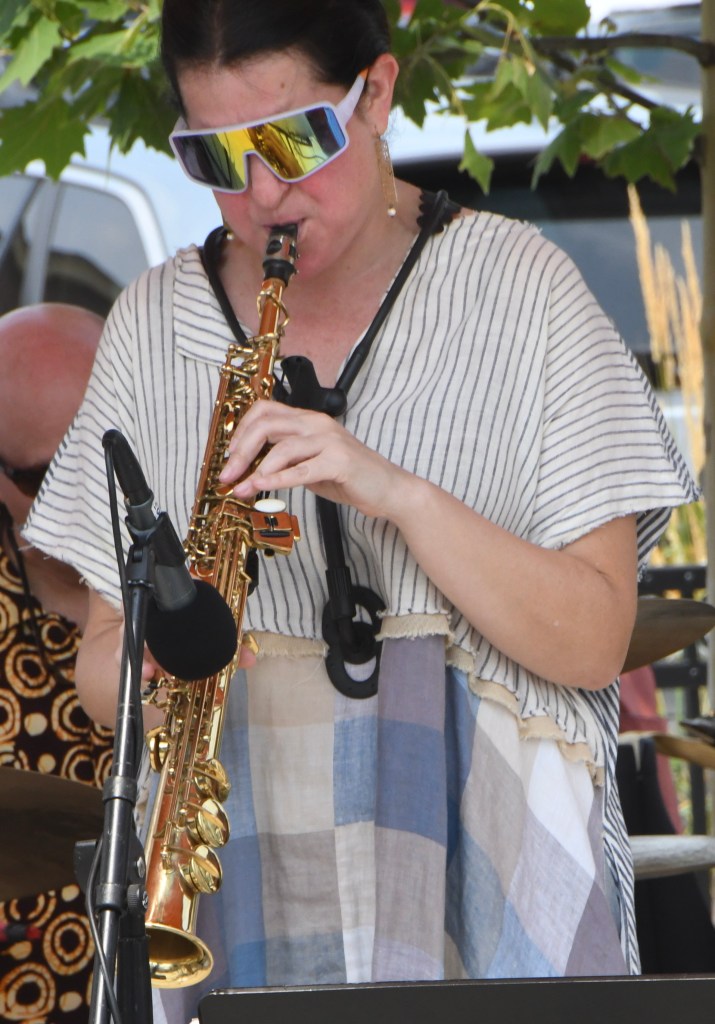
Laura Andrea Leguia

Zorkie Nelson, left; and Felix Nelson

Kasius announced they’d jam “fusion-y” in the slower “Flyway,” but she didn’t announce Felix would jump out front to dance, an energizing surprise. Leguia shifted to tenor saxophone in the Latin-y “O Feche” as Kasius spun the globe to quote California funk-band War’s “Low Rider” in her melodica solo.

“Simone” got a midsummer-mellow ride, a tribute to Kasius’s late saxophonist friend/mentor Claire Daly who played Jazz on Jay some seasons ago. Zorkie Nelson’s talking drum break added west African flavor.

In the upbeat Ghanian “Gota,” Felix jumped out front to dance; and this time had no trouble recruiting fellow dancers in a line. Or COURSE Steve Nover was up there.

Brian Melick

Citing Abdullah Ibrahim’s inspiring show at The Egg last year, Kasius introduced the South African pianist’s “Maraba Blue” with echoes of slow funk and fractured waltz time that all added up to a jaunty reggae-like groove.

Fela Kuti’s similarly propulsive “Opposite People” was all centrifugal force in repeating cycles of solo and groove, Leguia’s tenor just spectacular in this episodic flight.

Swirls of Montreal snow inspired “Cotes des Nieges,” and its easy-flowing groove came decorated in swirls of soprano sax and keyboard. A nice subtle touch: The beat started out subdued, almost subliminal, but then grew in fun force. 

Equally lighthearted but with more assertive riffing, the Brazilian “Coco Na Roda” cast the rhythm as the star; Melick’s drum kit and Zorkie Nelson’s congas going places together. The beat ruled also in “Happy Place,” Kasius adopting a kalimba-like percussive attack rather than the more sustained notes and chords she used elsewhere. Leguia’s soprano sax solo sparkled especially bright here, inventive and flowing fine. Four-part harmonies carried the melody when Leguia wasn’t lighting it up or Kasius’s melodica re-inventing it. Felix Nelson lit it up, too, springing high, legs spread and touching his toes.

His father Zorkie’s tender mother’s tribute “Mama Bukom” closed in audience-participation unanimity, Kasius bringing the crowd into a clapping chorus as Leguia’s tenor sculpted the melody until all the instruments went quiet and only voices and clapping hands made happy sounds. 

Peter Hughes of WAMC

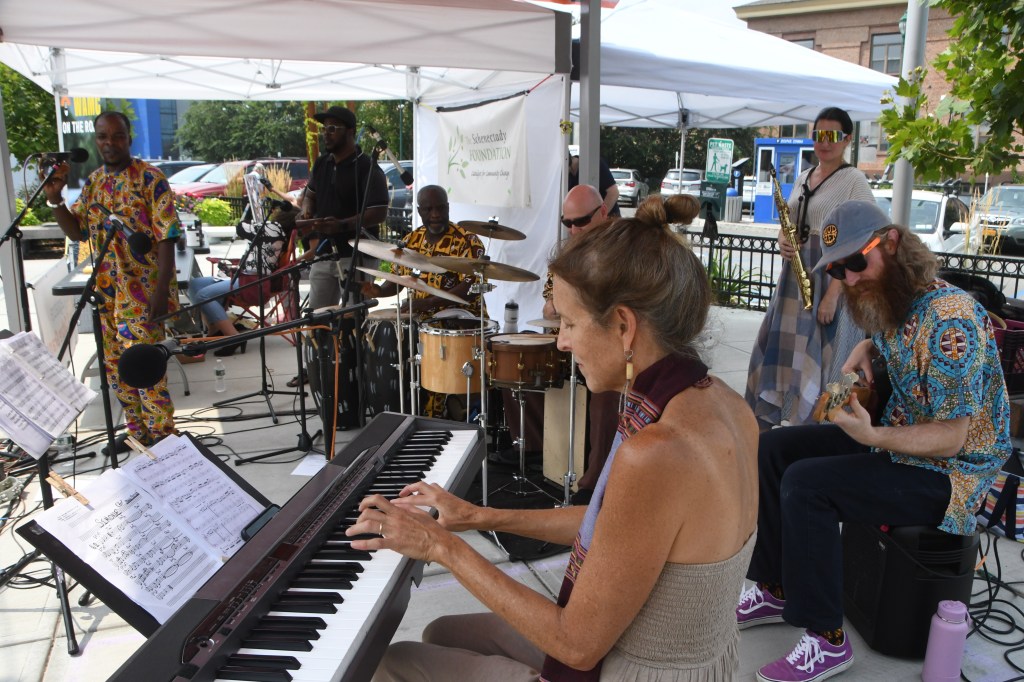
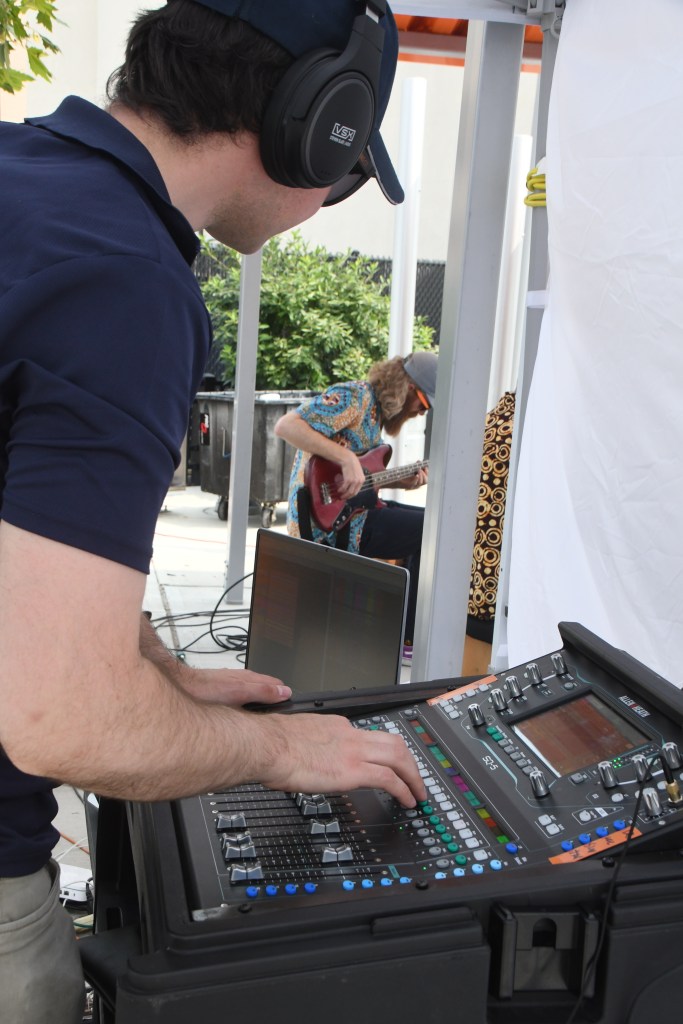
Before Heard started, WAMC’s On the Road producer Peter Hughes told the crowd they (and the band) were being recorded for later broadcast in the PBS station’s new remote presentation program. This seemed a busy engineering job for Nathan Schied with a forest of microphones onstage among a music-store’s worth of percussion instruments.

WAMC Engineer Nathan Schied, forground; and bassist Bobby Kendall

Jazz on Jay continues Thursday, Aug. 14 with the blues-jazz trio the Evidence.

Heard Song List

They changed things up, versus the printed-out lists onstage; a good sign as it meant the band was tuned in to the audience and delivering what worked.

Market Song

Flyway

O Feche

Simone

Gota

Maraba Blue

Opposite People

Cotes des Neiges

Coco Na Roda

Happy Place

Mama Bukom

Kweku Kwakye, left; and Laura Andrea Leguia

Steve Nover, left; and Felix Nelson with fan-dancers

Elizabeth Woodbury Kasius foreground, joins the rhythm section

World Music/Jazz Thursday at Jazz on Jay by Heard, An Uniquely Eclectic Band

Preview: Jazz on Jay Features Heard on Thursday

Thursday, Heard combines sounds, styles and ideas from Africa with jazz elements in a lively rhythmic stew. Three of six members hail from the local scene, three others from far away geographically – meeting in a sort of United Nations of sound.

Keyboardist-founder Elizabeth Woodbury Kasius, bassist Bobby Kendall and drummer Brian Melick are busy locals. Woodwinds player Laura Andrea Leguia played for 20 years with the Gabriel Alégria Afro Peruvian Sextet, drummer Zorkie Nelson played with Ghana’s Pan African Orchestra and now leads the area’s West African dance and percussion ensemble Gballoi; his daughter, dancer Augustina Nelson, is a member.

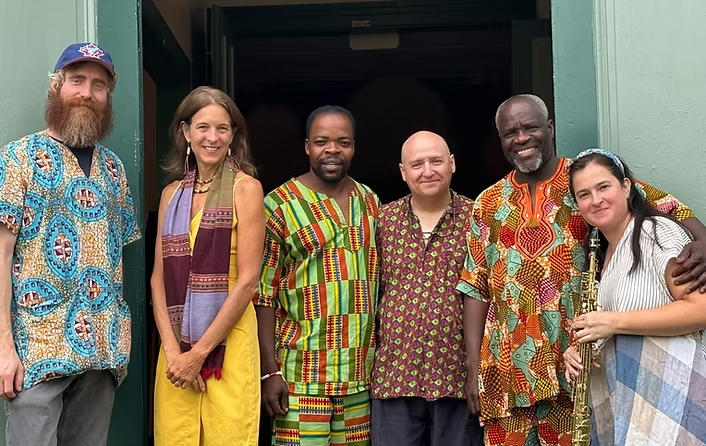
Heard – This photo shows, from left: bassist Bobby Kendall, keyboardist Elizabeth Woodbury Kasius, dancer/percussionist/singer Fosino Nelson, percussionist Brian Melick, drummer Zorkie Nelson and woodwinds player Laura Andrea Leguia. As noted below, Heard features occasional guest musicians. Photo supplied

Kasius’s globe-spinning musical journey began at 16 when a Lake George summer job paid for a new stereo system and the Weather Report CD “Sportin’ Life.” She says, “I wore that CD out and was blown away by the inventiveness of the compositions, improvising, players, band chemistry and grooves.”

After playing rock covers in a high school band, she studied with Brazilian pianist Jovino Santos Neto, trombonist Julian Priester and trumpet player Jim Knapp – at the University of Washington and Cornish College of the Arts, both in Seattle. “More recently, I learned so much from my close friend, baritone saxophone player Claire Daly,” says Kasius. “Very sadly, Claire recently passed. The Jazz on Jay audience may remember her show a few years back, with Michael Benedict and others.”

Returning here from the West Coast, Kasius founded the chamber jazz band Jupiter Circle; now, in addition to Heard, she also plays with another, Red Canna, plus Troy Samba.

Kendall plays with brother Mike Kendall in The Philosophy of Music, an innovative duo, while also collaborating in numerous jazz bands.

Melick may be best known for his work with the McKrells Irish folk-rock ensemble and Maria Zemantauski’s flamenco-jazz band, but also collaborates in all directions.

“Most of the members of this lineup have been together for 15-plus years – Bobby, Brian, Zorkie and I,” says Kasius. “Laura has been playing with us for coming up on three years, and Augustina has been dancing with us for 10 years.”

Heard has released two albums – Karibu (2010) and Flyway (2018) – and played in Ghana last year.

“We will be playing about 75-percent originals at our show,” says Kasius. They’ll also play traditional Ghanaian pieces led by Zorkie Nelson, a Fela Kuti song, and selections by Jovino Santos Neto. 

Kasius says, “In addition to soloing, this band loves to vamp! We love intros and outros, too. Lots of improv happening here.”

The Heard lineup features occasional guest players including saxophonists Matt Steckler and Nate Giroux, guitarist George Muscatello and bassists Lou Smaldone and Rich Syracuse.

One of our busiest area bands, Heard lists future shows at http://www.heardmusic.com.

Jazz on Jay free concerts are noon to 1:30 p.m. at Jay Square, the new park space opposite Schenectady City Hall. The rain site is Robb Alley at Proctors, 432 State St. Seating is provided indoors at Robb Alley, but patrons are invited to bring their own seating and refreshments to Jay Square.

Jazz on Jay is presented by the ElectriCity Arts and Entertainment District and sponsored by the New York State Council on the Arts, a Schenectady County Legislature Arts & Culture Grant, Downtown Schenectady Improvement Corporation, The Schenectady Foundation, Price Chopper/Market 32, MVP Health Care, Schenectady County, Schenectady City Hall, and Proctors Collaborative. This blog is a series media sponsor.

Blues, Blues And More Blues

Review: Music Haven’s Blues BBQ Presented Rick Estrin and the Nightcats, Selwyn Birchwood and Annie & the Hedonists Sunday 

Three expert acts represented three blues eras Sunday at Music Haven. 

Appropriately, the oldest came first in the skilled hands of Annie and the Hedonists presenting antiques from the 1910s onward. Half a generation younger, Selwyn Birchwood played almost all originals in the middle slot. Rick Estrin and the Nightcats closed, playing traditional 1950s and 60s style, both originals and classics by their inspirations.

With Annie Rosen’s human trumpet vocals up front, the Hedonists played mainly tunes by women artists, reaching back to 1917 for a Memphis Minnie chestnut, to 1924 for Clara Smith’s “Prescription for the Blues” and 1942 for Sister Rosetta Tharpe’s “Shout Sister Shout.”

Annie & The Hedonists – From leftL Don Young, bass; Jonny Rosen, guitar; Jerry Marotta, drums; Annie Rosen, vocals; Peter Davis, keyboards and clarinet

They changed up with the fervent gospel “When I Get Home” that grew from organ and harmonized voices into a church-y groove with Peter Davis’s organ solo. In the mellow shuffle “Shout Sister Shout” and “Prescription for the Blues” his clarinet solos hit melodic high points; otherwise, Jonny Rosen’s guitar carried the solo spots, tough and tasty. Mary Gauthier’s compassionate “Mercy Now” (2005) sounded as vintage as some of the vintage tunes sounded contemporary; but there was no doubt about their closer, “Bessie Smith’s “Cakewalking Babies from Home” – antique fire all the way.

Annie Rosen

No surprise that everything flowed in easy, confident grooves; Don Young’s bass linked beautifully with solid drumming of Jerry Marotta. The most famous player onstage Sunday, he’s supported Orleans, Peter Gabriel, Hall & Oates, Indigo Girls and many more and fit well with the Hedonists’ grooves. 

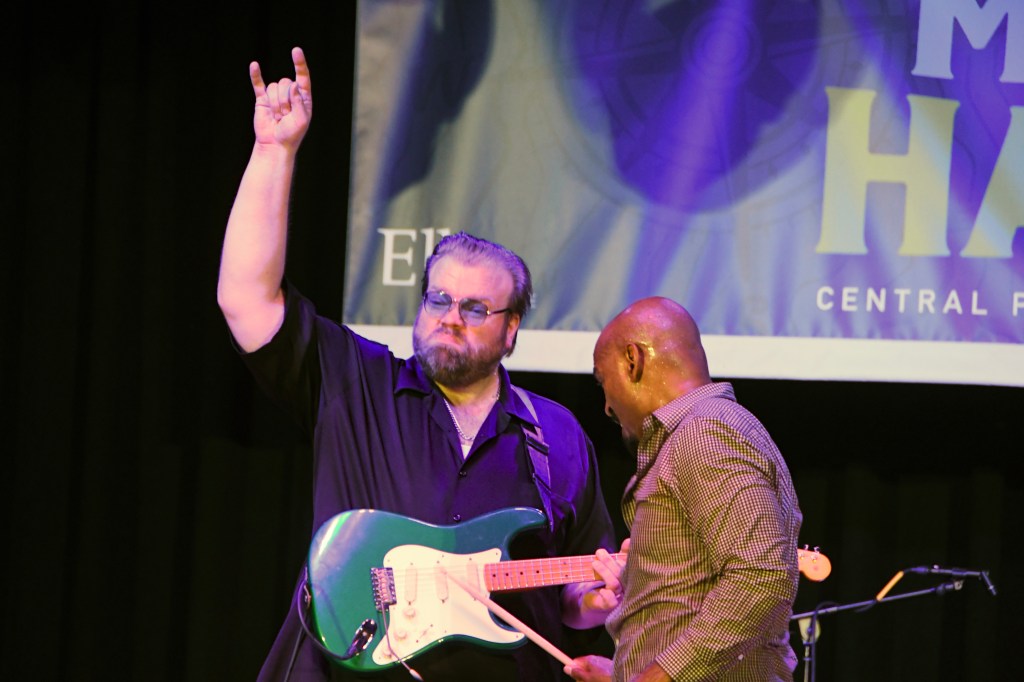
Selwyn Birchwood, third from left, with Regi Oliver, baritone saxophone; Byron Garner, drums; Donald Wright, bass; and Mike Hensley, keyboards

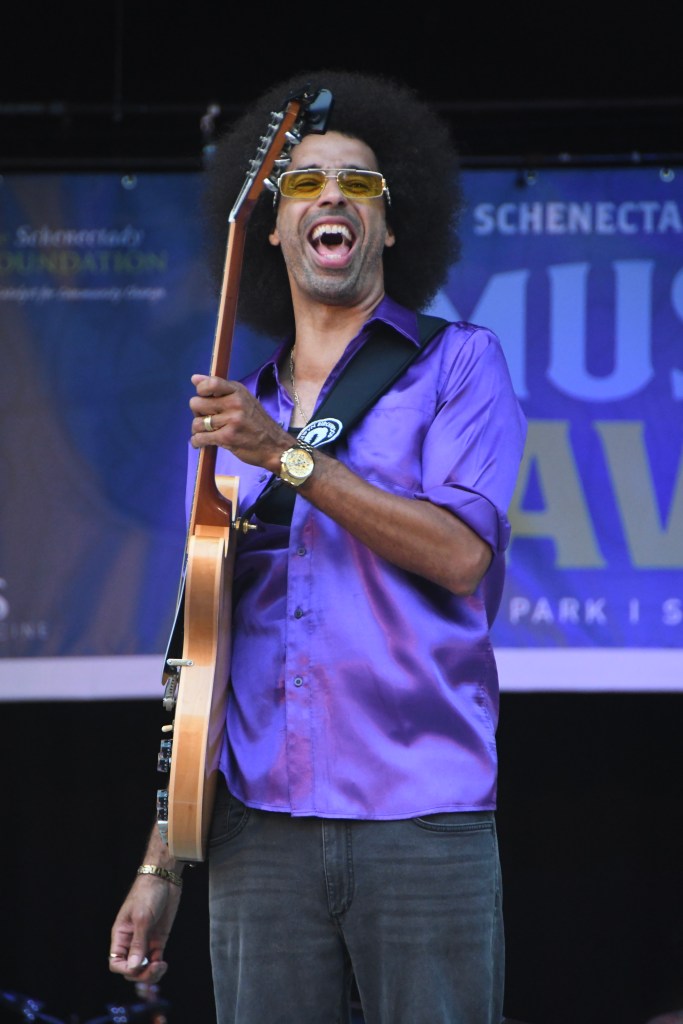
Guitarist-singer-songwriter Birchwood relied on tradition some, but reshaped It to his own purposes. He sounded 60s with slashing chords, biting tones and single-note scrambles, but used vintage sounds to examine his life now. He stands right behind Gary Clark Jr. (electrifying at SPAC’s Saratoga Jazz Festival in June) and Christine “Kingfish” Ingram among younger blues stars.

Selwyn Birchwood

His desperate “Living in a Burning House” led smoothly into the antique invitation “Come On in My Kitchen,” one of few covers Sunday. He roamed the stage, and the audience, soloing as his band cooked: a quick-stepping tight crew of Regi Oliver’s low-down baritone sax, the righteous clatter of Donald Wright’s bass welded tight to Byron Gardner’s drums and Mike Hensley’s keys, mostly organ.

Birchwood works the crowd, IN the crowd

Birchwood stretched “Exorcist” (title track of his current album), offered consolation in “Soulmates Waiting” and tore up “All Hail the Algorithm” – what’s more blues than warning of AI’s dangers?

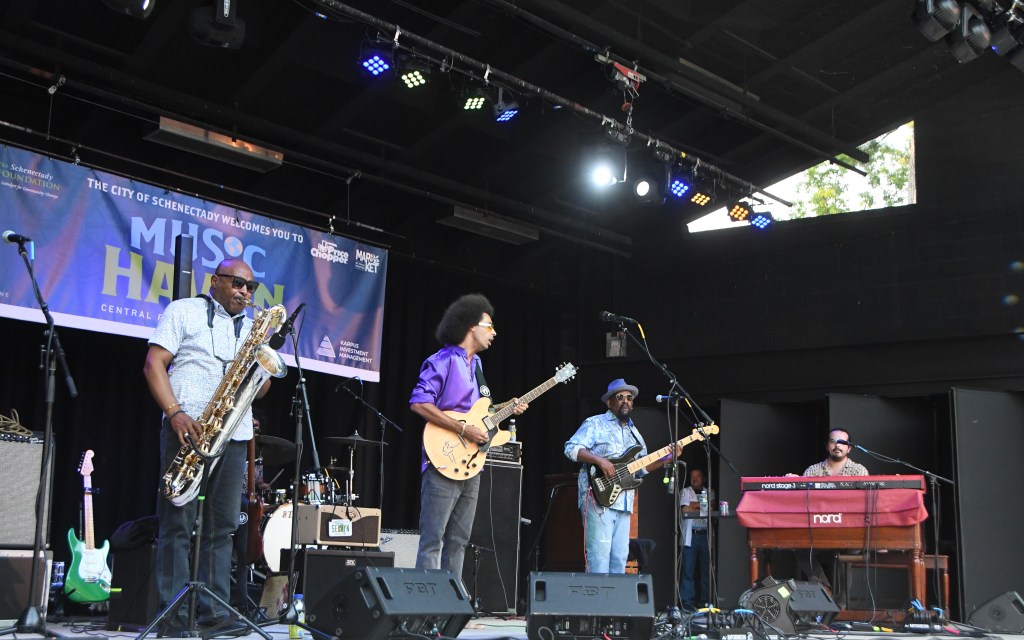
Well, maybe, the ferocious, funny and fun firestorm Rick Estrin and the Nightcats brought to the BBQ’s last, and longest, set. Four guys – singer-harmoni-cat Estrin, drummer and spark plug Derrick Martin, hyper-guitarist Chris “Kid” Andersen and keyboardist Lorenzo Farrell – sounded like five since Farrell played bass with his left hand, melodies and fills with his right.
It was bustling, busy and tight.

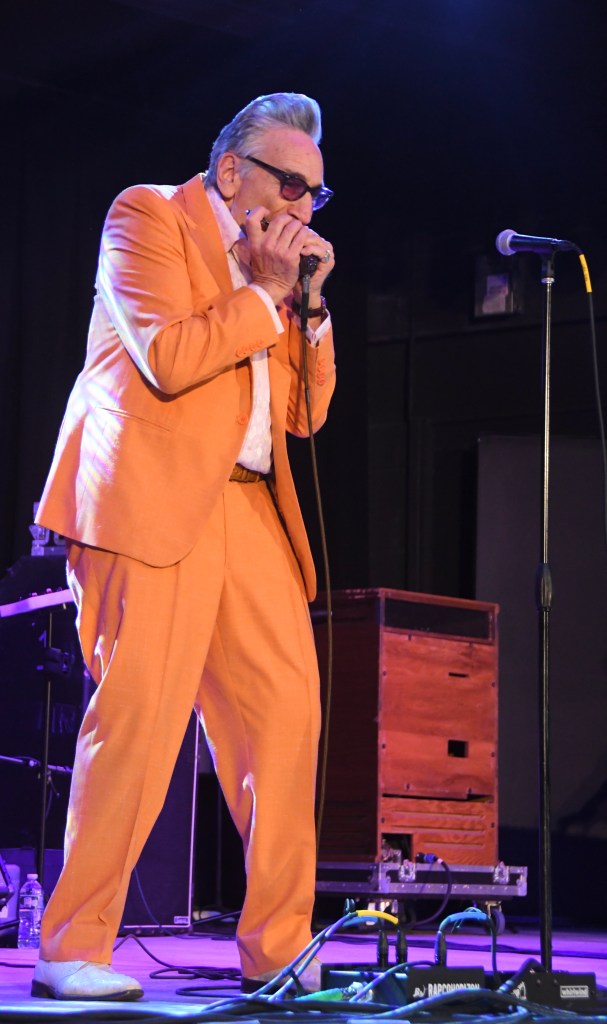
Rick Estrin, center, orange suit, with, from left: Kid Andersen, guitar; Derrick “D-Mar” Martin, drums; and Lorenzo Farrell, keyboards and keyboard bass

If the early stretch belonged to Estin, playing Little Walter/Chicago-style harmonica and growling lyrics of rage or resignation at love’s losses, the middle was all Martin. Maybe the most athletic drummer around, he blasted a beat of mighty muscle, more tempestuous than merely time-keeping. His sticks flew high, and so did he, springing off his stool in what looked like sheer glee. But I’m getting ahead of myself, because the guy was so electric, so entertaining.

Rick Estrin

So was Estrin, who took over the Nightcats when co-founder Little Charlie Baty retired. 

Early on, Estrin sardonically urged a lover to take her high expectations for the relationship to “Somewhere Else,” setting a funny/fatalistic wises-ass mood most songs followed. He also promised, in a similar funky shuffle, “I’ll Never Do That No More;” a big wink in his voice belied his intent. Estrin also dug into the past to honor his main harmonica inspiration, Chicago blues giant Little Walter Horton in a fiery cascade of upbeat riffs.

Afterward, Estrin cautioned “You can’t learn this on YouTube,” punctuating with hip slams his injunction that learning the blues means understanding a feeling, and that “you gotta be old as hell.” Estrin is 75, and his next lyric began “When my life is ended and they have placed me in the ground.” However, his powerful vocal and shining solos by Andersen, Farrell and Estrin’s harmonica showed big signs of life.

Kid Andersen, left, and Derrick “D-Mar” Martin

Nonetheless, Estrin then left the stage to the three other Nightcats who burned it up, mainly in the happy fury that is Derrick “D-Mar” Martin. Touring with Little Richard for 17 years taught him that over the top may not be high enough. So he entertained at a breakneck intensity that would have been exhausting to watch if he hadn’t clearly been having so much fun himself.

He ran around the place, drumming on chair backs, fans’ water bottles, the microphone when he returned to the stage, then on Andersen’s guitar, playing “Voodoo Chile” by drumming on the strings.

These 20 minutes of adrenalized mayhem might have rendered Estrin’s return anti-climactic, but he took over with customary romantic fatalism in “Callin’ All Fools,” happily stretching its shuffle energy by noting “We’re just groovin’ now,” on the last night of their tour and didn’t want to stop.

A rambling encore of kaleidoscopic Andersen blues-rock guitar and Estrin’s good natured grumble about Slash (a non-bluesman, per Estrin ) knocked his (ironically titled) “The Hits Keep Coming” off the top of the blues charts felt arguably like a stretch too far, though.

Jonny Rosen

Don Young

Peter Davis

Jerry Marotta

Regi Oliver

Byron Garner

Donald Wright

Mike Hensley