

Review: Saratoga Jazz Festival – Day 2
Trombone Shorty knows how to bring a fine, fun finale.
Closing Sunday’s second day of the Saratoga Jazz Festival with explosions of funky riffs, his infectious dance joy made the seats in the Saratoga Performing Arts Center superfluous.

Trombone Shorty and Orleans Avenue
Hours before the New Orleans trombonist, trumpeter, leader and party catalyst celebrated his New Orleans hometown – where he owns closing-set honors at Jazz Fest – the Saratoga fest’s sunny Sunday began with the cerebral, traditional Skidmore Jazz Institute Faculty Combo. Trumpeter-singer Bria Skonberg’s spirited Louis Armstrong/New Orleans-inspired highlight set bridged the gap between listening calmly to the Combo’s or unanimous crazy with Trombone Shorty.

“So this is what daylight looks like,” joked Todd Coolman of the Skidmore Jazz Institute Faculty Combo, addressing front rows students in Institute T-shirts, wryly implying that a jazzer’s life is a night life.
Leading off on the Charles R. Wood Jazz Discovery Stage (hereafter “the Wood”), the eight-piece Combo (the festival’s only local act) members each honored a personal mentor or inspiration.

From left: Bill Cunliff, Dave Stryker, Todd Coolman (obscured – we’ll give him his own photo below). Dennis Mackrel, Dave Greene, Steve Davis, Clay Jenkins
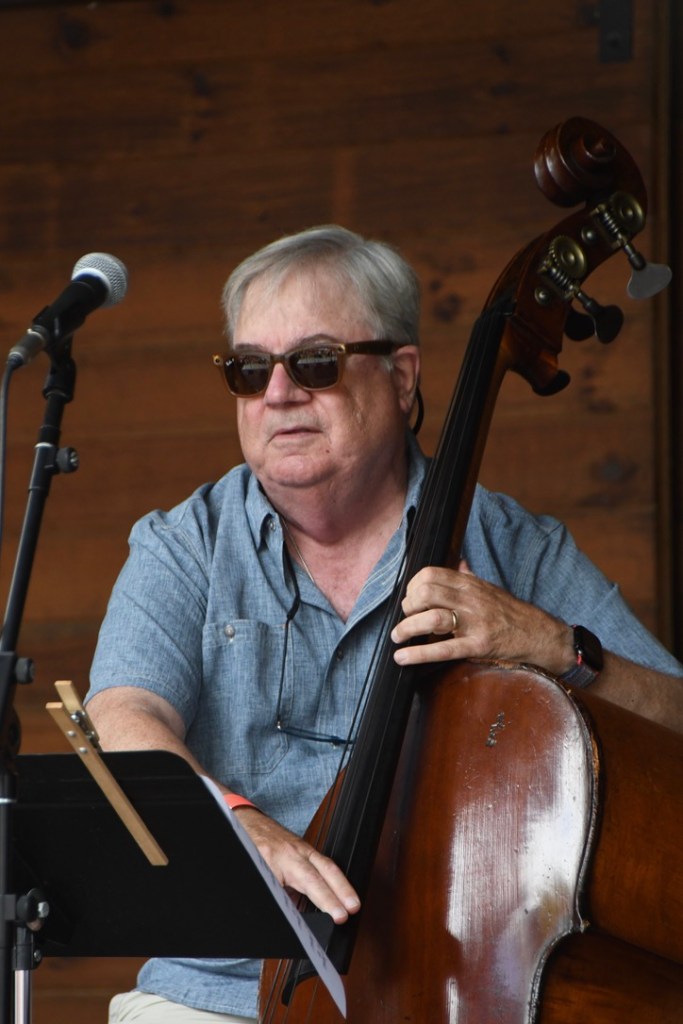
Bassist-leader-wit Coolman noted the challenge of living up to his name and introduced “Whims of Chambers” (bassist Paul) in a bustling big-band arrangement. All soloed, warming up; later songs swung shorter. Guitarist Dave Stryker chose George Benson’s “My Latin Brother” and led a breezy bossa reading. Trombonist Steve Davis honored Curtis Fuller with a robust “Mister L,” and pianist Bill Cunliffe led Tommy Flanigan’s “Eclipso.” Trumpeter Clay Jenkins chose Thad Jones’s spry “Lets;” somebody should use that to brand a perfume. But I digress.
Next came sort of battle of (string) bands: guitarist Al Di Meola’s acoustic quartet on the Amphitheater Stage (hereafter the Main) and harpist Brandee Younger on the Wood.

Al Di Meola, with sheet music
Di Meola introduced his International bandmates before feigning fear of ICE and anglicizing their names. His brilliantly-played, intricate music didn’t engage as well as that quip, though. It was perfect, but felt remote, cold on a warm day.
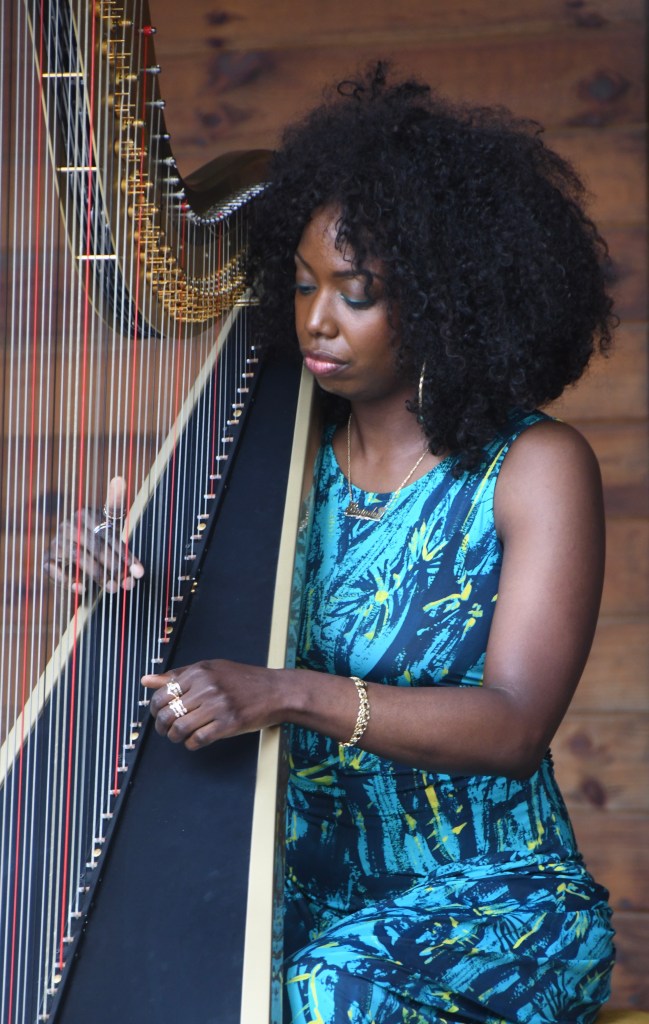

Brandee Younger was warmth itself on the Wood, avoiding the harp’s almost-too-easy glissandos for more imaginative phrasing, except in fellow harpist Alice Coltrane’s exotic “Turiya and Ramakrishna.” She played Stevie Wonder’s romantic “If It’s Magic” straight-up, for example, then deconstructed and re-built it. She said her “Gadabout Season” depicts joy, then swept us away with sounds that felt like hope.

DJ Logic (with mic, center right at rear) and Friends; Gregoire Maret in front of him and to his right
Turntablist DJ Logic chose well the band he called his Friends; a stage-filling crew whose jazz, R&B and pop skills layered beats and themes in hip-hop structures. First among equals, harmonica wizard Gregoire Maret (he’s played this festival with straight-ahead jazz stars) contributed the most fiery and inventive playing to busy, bustling upbeat/get-down hybrid sounds.
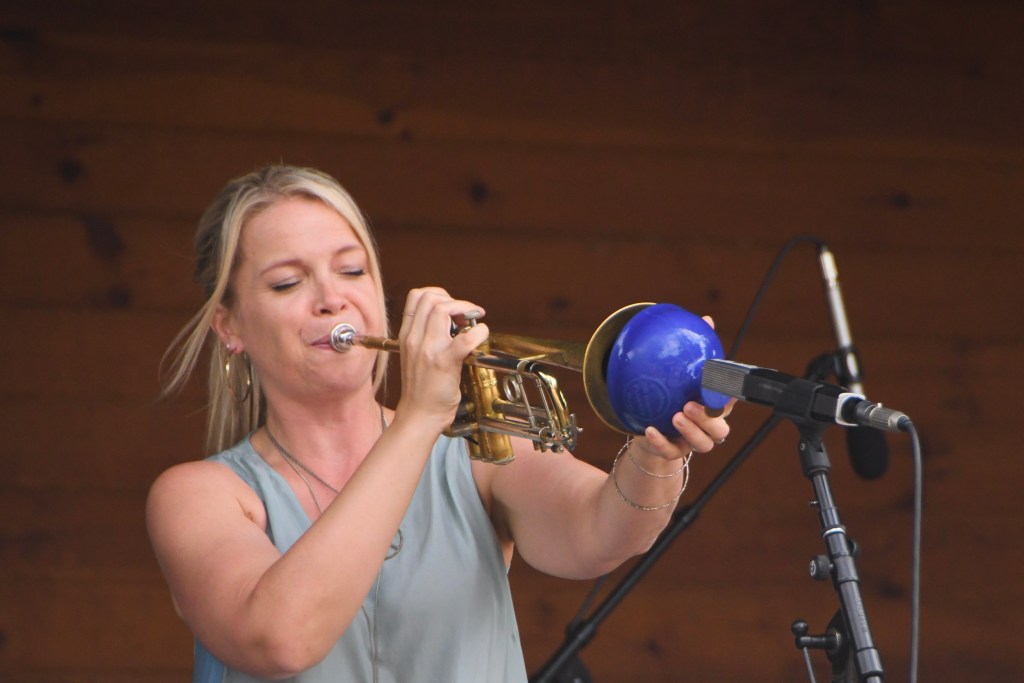
“Wish me luck,” asked Bria Skonberg after introducing “Cornet Chop Suey,” a Louis Armstrong song she said trumpeters had been trying to play (and failing, she implied) for a century. She nailed it, of course, and everything else she played or sang in the single strongest, most entertaining set all day, until Trombone Shorty.
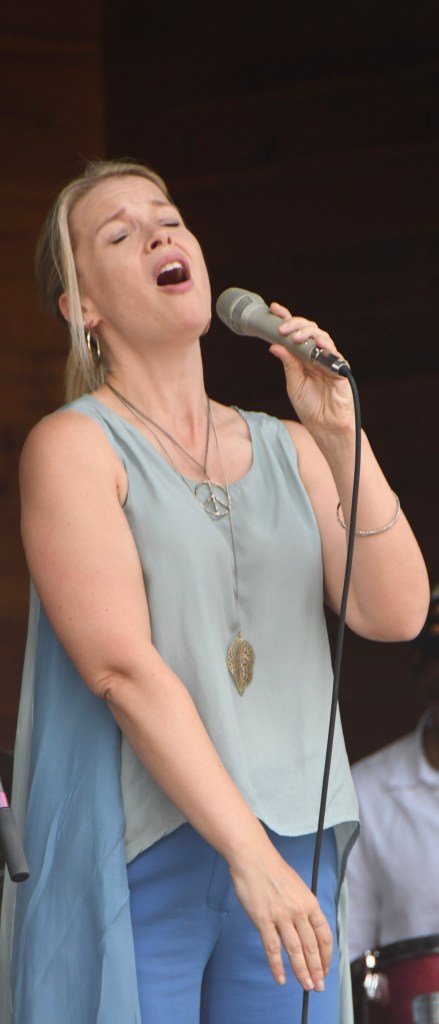
New Orleans sound and spirit shaped her show, as it did her recent album made there. “Do You Know What it Means” echoed Louis Armstrong’s playful-melancholy trumpet, her vocal evoked Billy Holiday. Her plunger-mute solo lit up Sidney Bechet’s “Petite Fleur” and she put a swampy spin on Artie Shaw’s “Comes Love,” harmonizing her trumpet with Birsa Chatterjee’s tenor. Modern material – her own “Elbow Bump” early, John Lennon’s “Beautiful Boy” (she’s a newish mom) and the COVID-inspired “In The House” – had heft and force like the antiques. Listening close and sharing riffs, her band was aces all the way: Chatterjee, drummer Darrian Douglas, bassist Mark Lewandowski and pianist Mathis Picard.
Bria Skonberg, above; with band, below

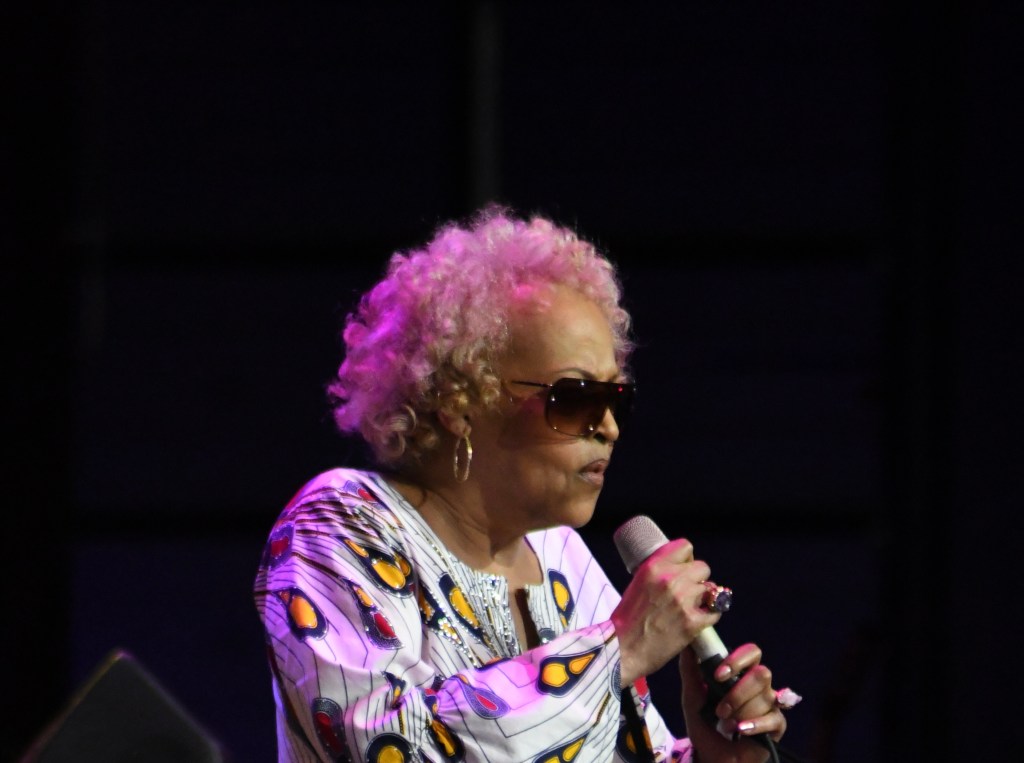
Cassandra Wilson
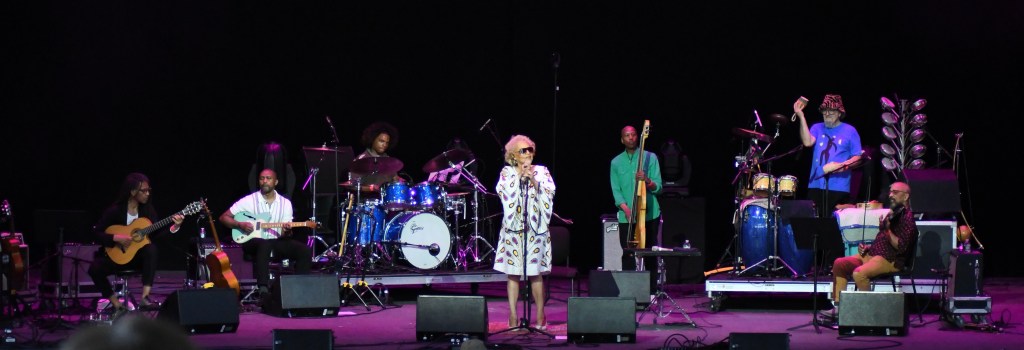
Cassandra Wilson celebrated her 30-year-old “New Moon Daughter” album, harmonica ace Gregoire Maret guesting with her guitar-dominated band. While “The Last Train to Clarksville” and “A Little Warm Death” cruised mid-tempo, Wilson’s superbly rich voice sounded most persuasive on downbeat tunes “Love Is Blindness,” “I’m So Lonesome I Could Cry,” with a tasty Charlie Burnham violin break, and “Death Letter.”
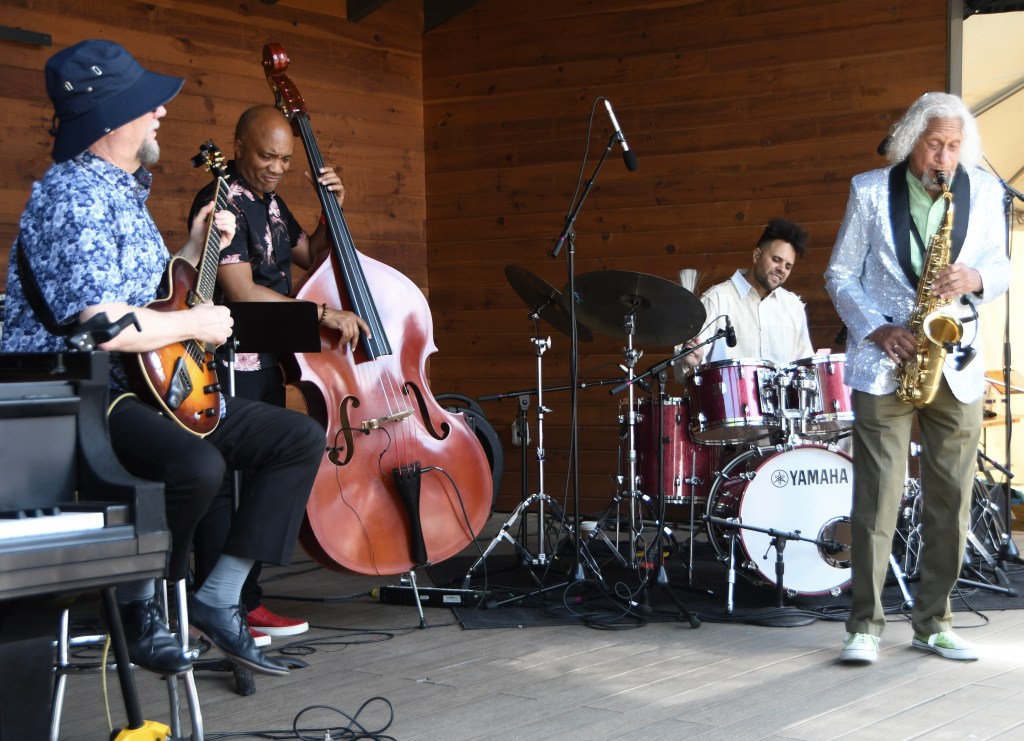
Gary Bartz, right – with, from left, Paul Bollenback, guitar; Reuben Rogers, bass; and Kassa Overall, drums
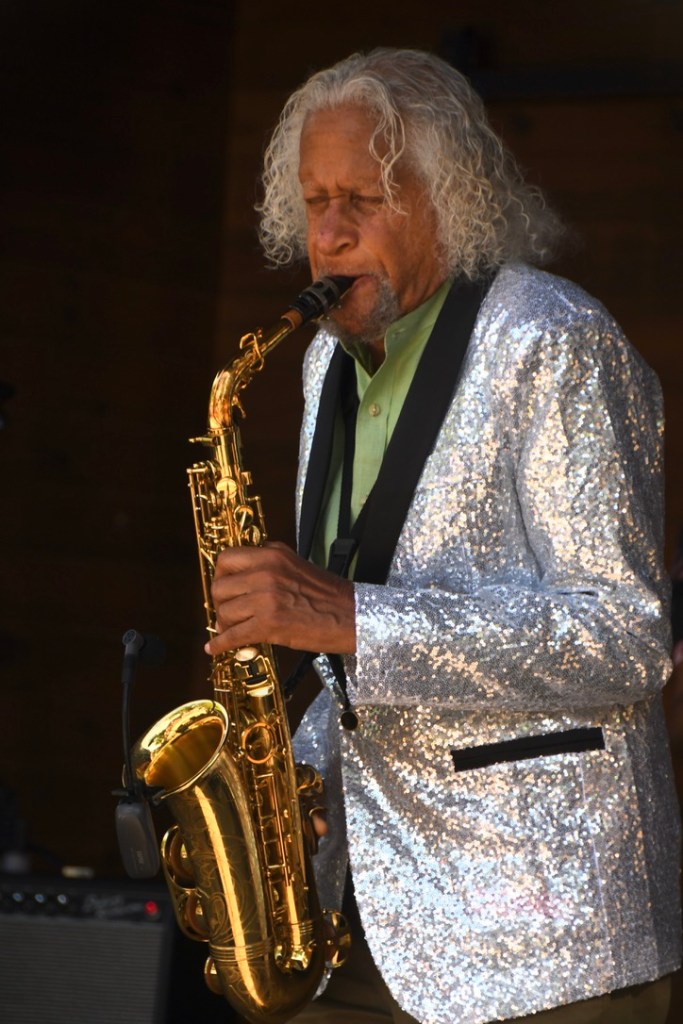
I was glad to reach the Wood in time to hear veteran saxophonist Gary Bartz swing “My One and Only Love” to heart-touching effect, then flow through linked alto-sax showcases. Rapid runs gave drama, tender passages expressed the love he put into words. Singing “The Song of Loving Kindness” in an enveloping, warm coda, he stretched the mood in sax choruses.

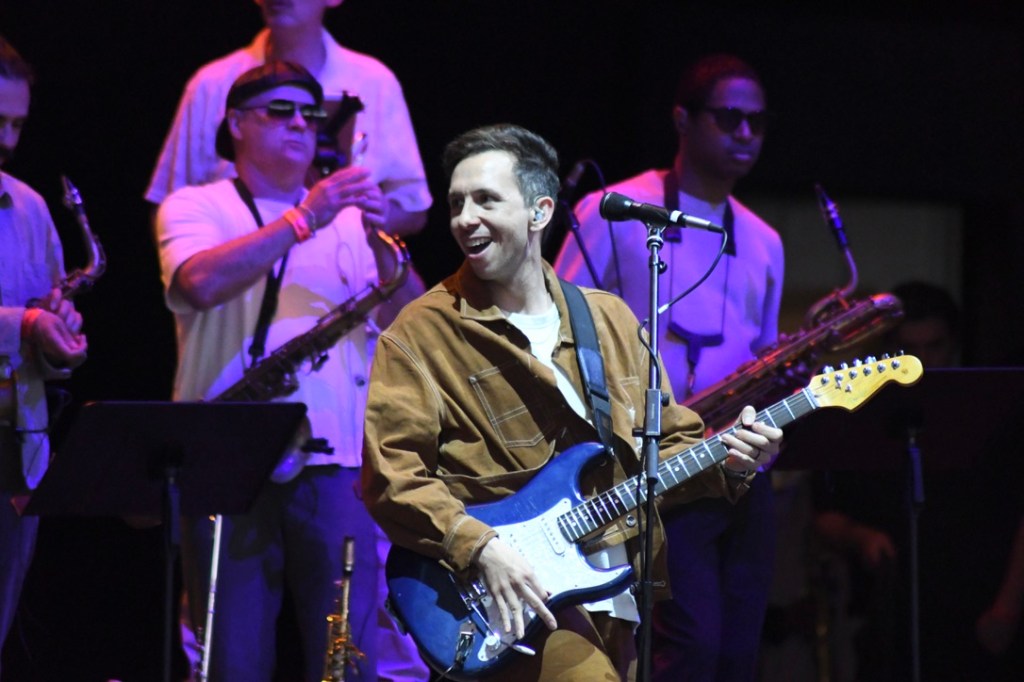
Cory Wong
As with Lettuce on Saturday, Cory Wong played Sunday’s funk slot for fun, force and fire. The guitarist-leader seldom soloed, and didn’t have to; his big band blasted repeating short riffs that built high energy grooves with a sax break here, a keyboard thing over there, relentless drums and bass under everything. As with Lettuce, songs flowed Into songs.
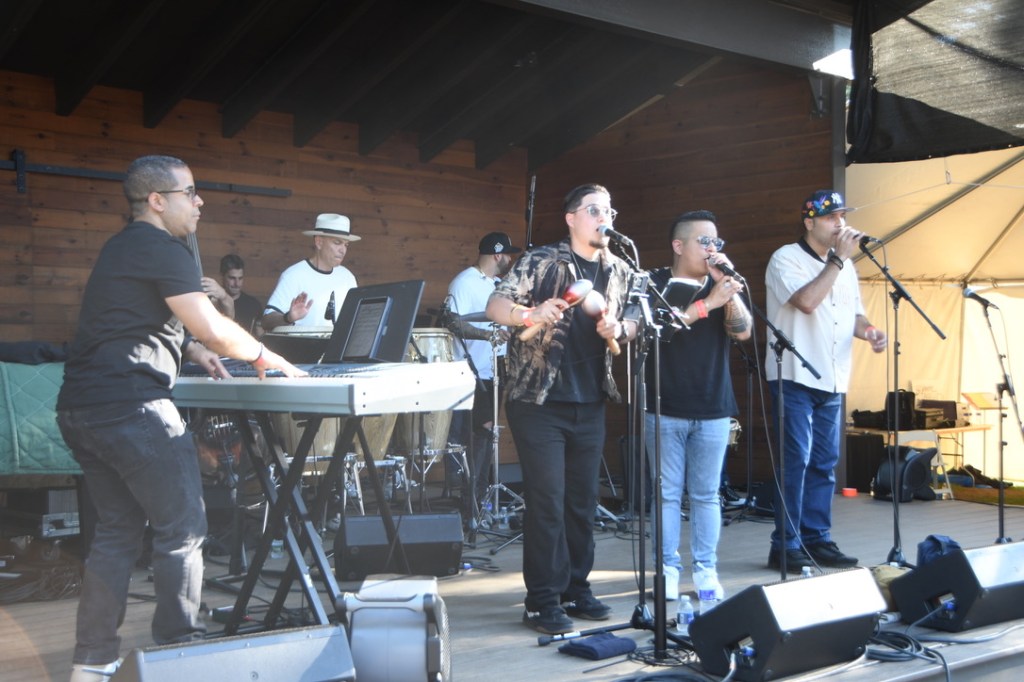
La Excelencia
The Wood Stage closed with a big band, like it began. But the 11-piece Latin La Excelencia got everybody dancing, unlike the cerebral Skidmore Jazz Institute Faculty Jazz Combo. Horns blasted from behind and percussionists between them and the singers up front ganged up on the beat – all bouncing hard to emphatic conducting by pianist Willie Rodriguez. The New York-based band sang for social justice, as the String Sisters and Gregory Porter did Saturday, wrapping messages in irresistible salsa and meringue beats. The grassy area before the stage filled from their first song, the air dusty and full of smiles.
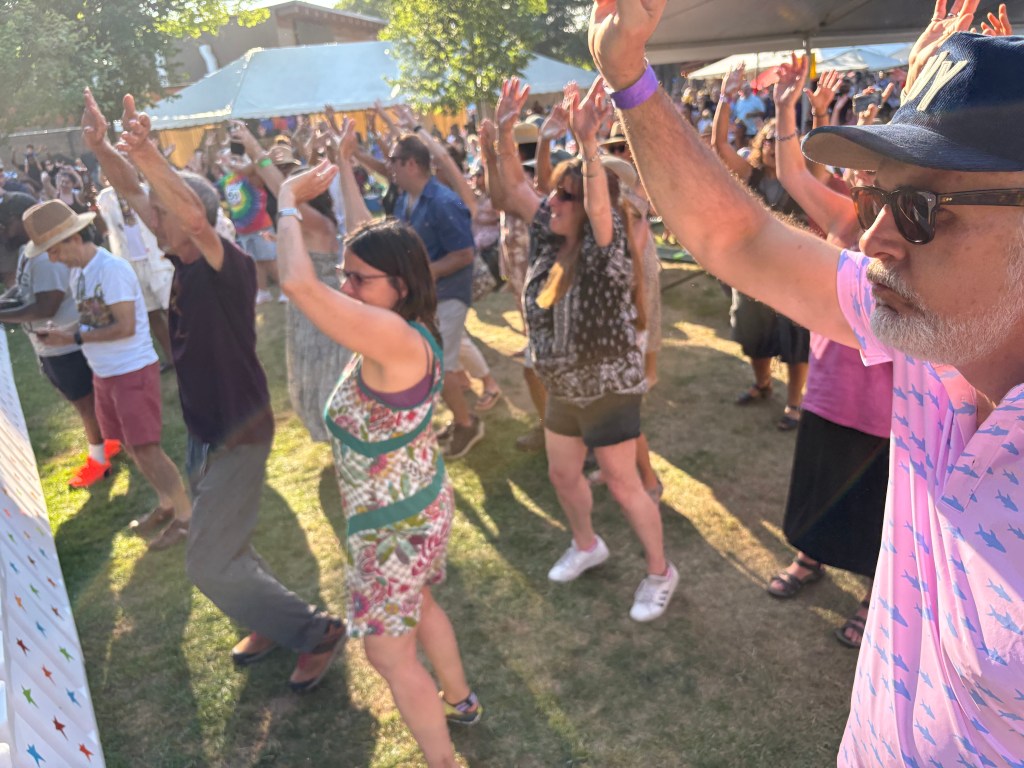
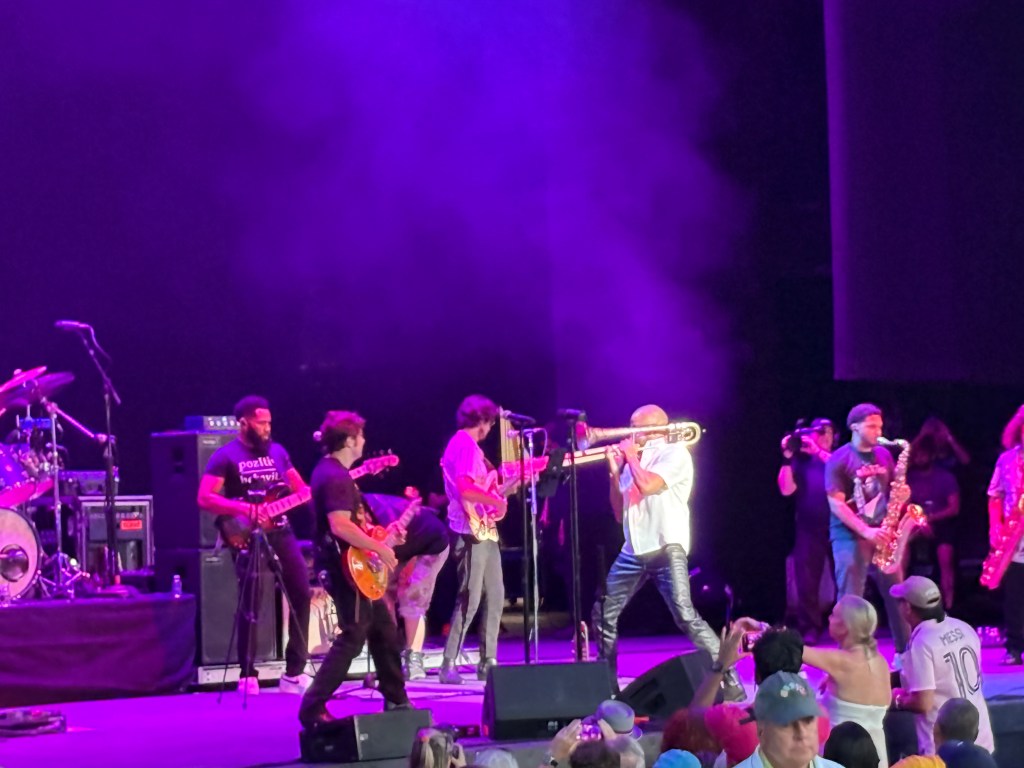
“We meet again!” saluted Trombone Shorty, slide-horn in one hand high over his head, trumpet in the other. He instantly owned the place, closing the festival in sweaty, exuberant, virtuoso triumph. Like Wong’s band, they built big energy from small, short, staccato riffs. Nobody played very long – except for a late, blistering Pete Murano guitar solo and Shorty’s dazzling “how’s-he-doing-that?” rotary breathing trumpet display that held a note, unbroken, for several minutes. (He inhales through his nose while blowing through the horn.)
Nearing 40, he played with Bo Diddley at Jazz Fest at four, led his first band two years later, played Lincoln Center at 13 and became a national star touring in Lenny Kravitz’s band – and seemed at the peak of his powers Sunday.

His songs rang with fun, good-time anthems of superb, spirited skill. They worked also because Shorty himself had such a fine time; giving permission to jump around. He’s shuffled his band some since playing The Egg in 2023, but it remains a model of unity and uplift.
Of his own songs, “I Want My Heart Back” and “Lifted” were best. But he did the rotary breathing thing in Allen Toussaint’s “Here Come the Girls,” collapsing to his knees against Joey Peebles’ drum riser afterward; and led a three-horn parade off the stage and though the yelling, arm-waving, dancing crowd, jamming on “When the Saints Go Marching In.”

Like Gregory Porter who danced some Motown steps in his soul medley Saturday, Shorty put his feet where his music was, dancing James Brown steps in his encore medley of George Clinton’s P-Funk demand “We Want the Funk” and Brown’s boast “Sex Machine.”
He should come back to close next year: June 27 and 28. This one had maybe the best-ever weather and lots of music to match.





 Hoke's Jukebox