
The Levin Brothers at Caffe Lena; Tuesday, May 27, 2025
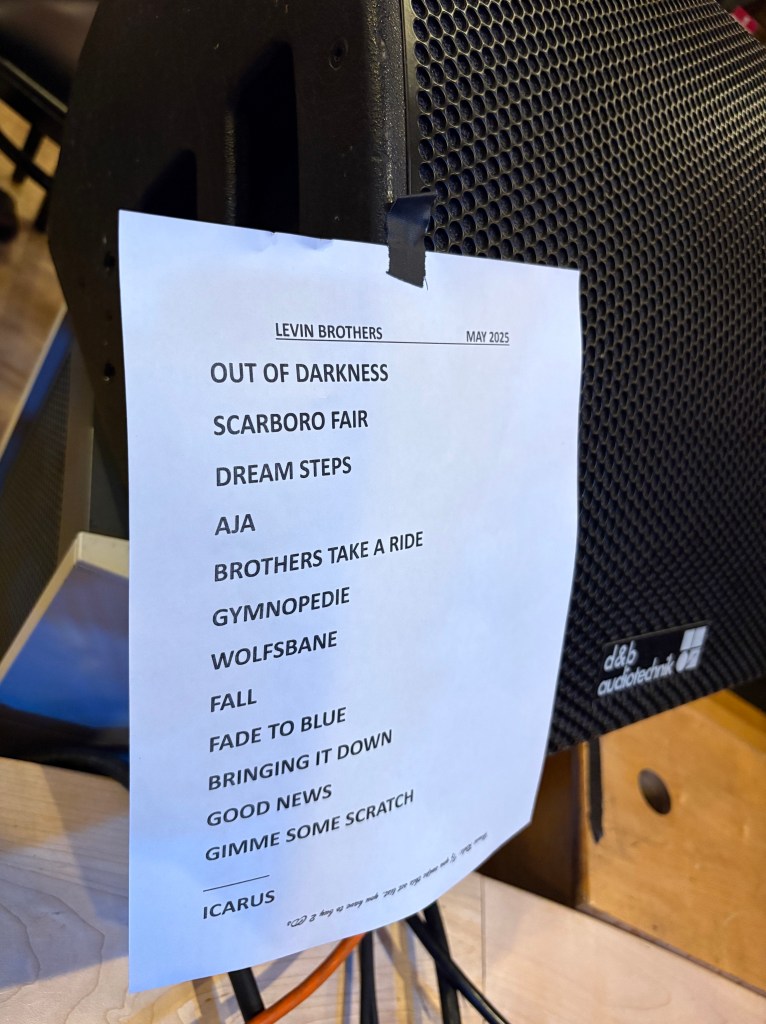
“Some nights we don’t play it that well,” Pete Levin mused after the Levin Brothers romped through Lenny White’s horror-movie bebop “Wolfsbane” at Caffe Lena Tuesday.
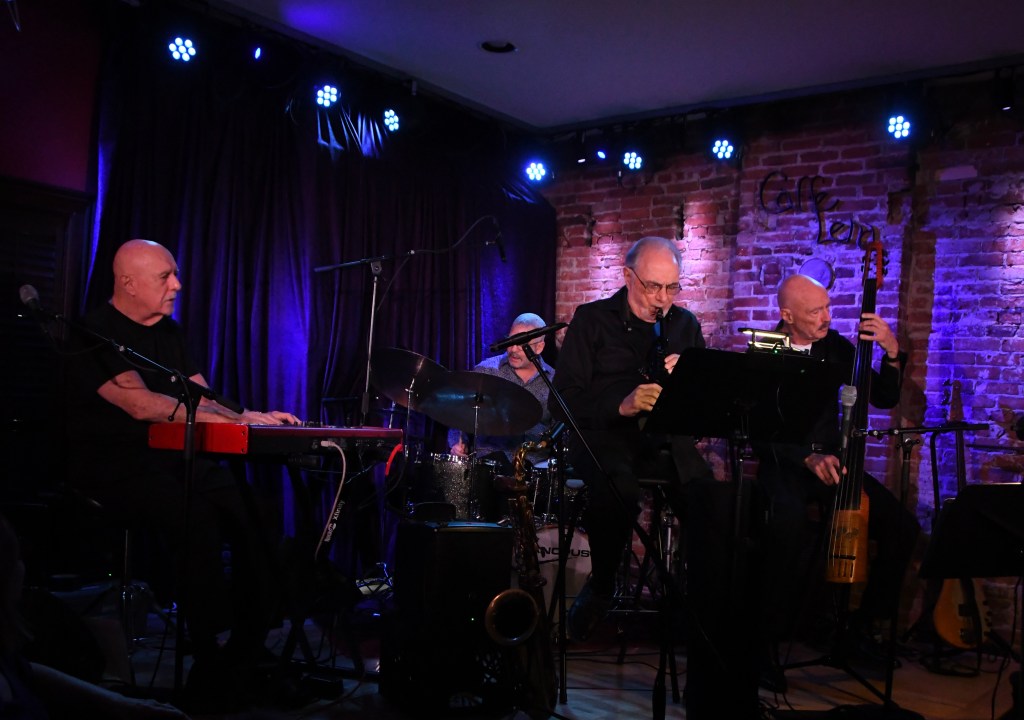
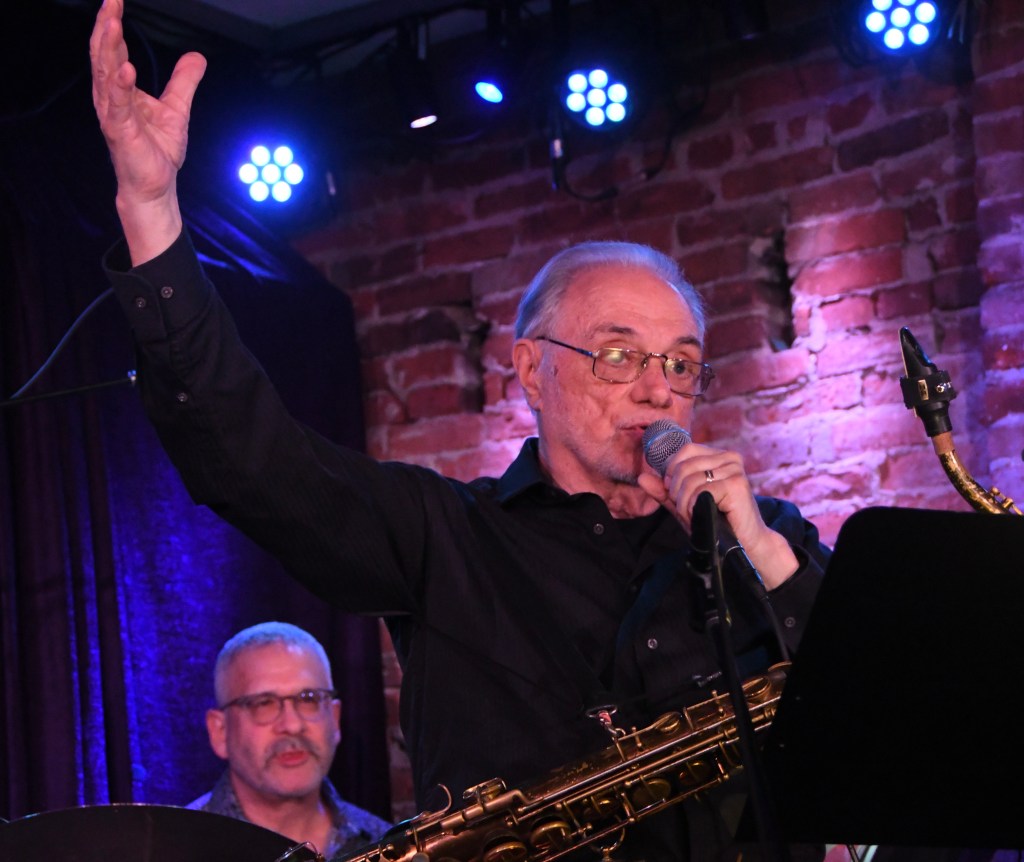
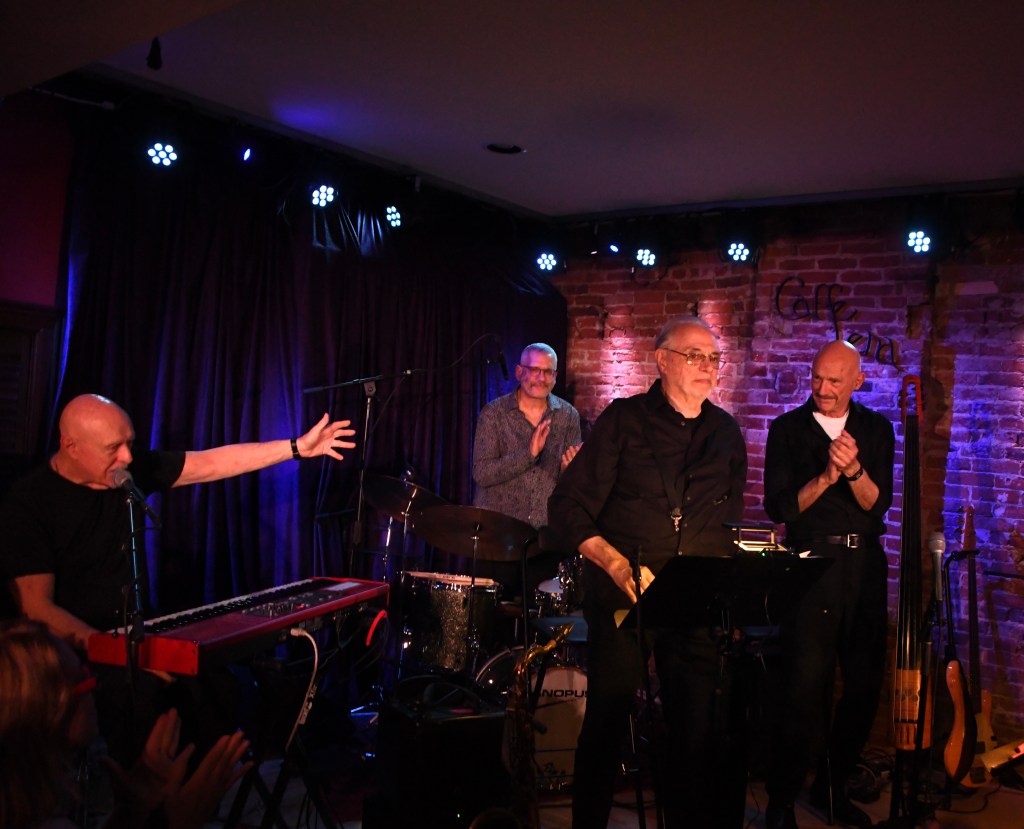
The Levin Brorthers – From left, Pete Levin; Jeff Siegel (behind mic stand), Pat LaBarbara, Tony Levin
They played it all well, belying Pete’s modest mock worry, introducing Erik Satie’s elegant “Gymnopedie No. 1,” that the band’s experiments with others’ music meant they’d become “just a cover band.” Right, “just a cover band” that launched from quiet solo piano into Paul Simon’s “Scarborough Fair” earlier. They’d celebrated the ballad’s pure, familiar prettiness, then bopped into a bustling B-section that energetically took the tune apart and reassembled it as LaBarbara’s electronic wind instrument brought it home.

Pat LaBarbara
The quartet – keyboardist Pete Levin, bassist-brother Tony, tenor saxophonist-EWI player Pat LaBarbara and drummer Jeff Siegel – delighted the Caffe full of musicians and mostly-boomer fans, often re-inventing “covers.”
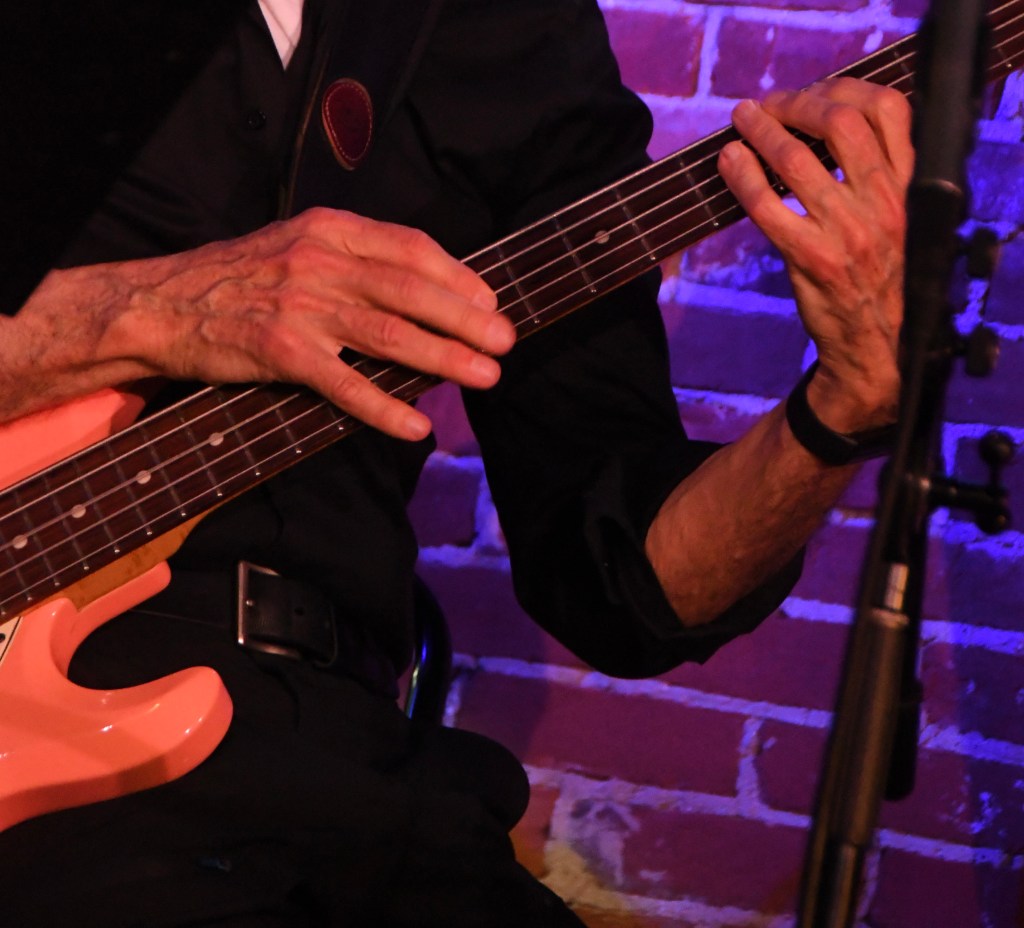
They didn’t start that way. Their original opener “Out of Darkness” wandered between fusion and bossa with Tony plucking a five-stringed electric upright bass in close sync with Siegel under solos from LaBarbara’s EWI and Pete’s piano-sounding synthesizer. A repeating, circular vamp set Siegel loose.
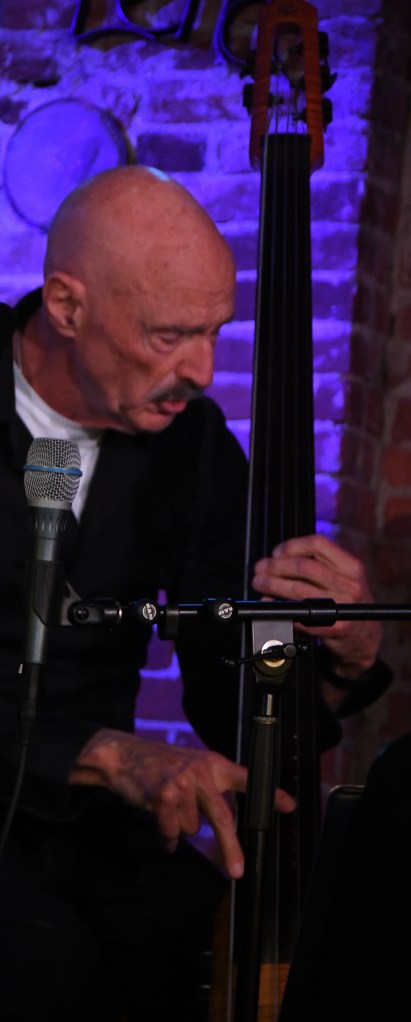
Below, Tony Levin
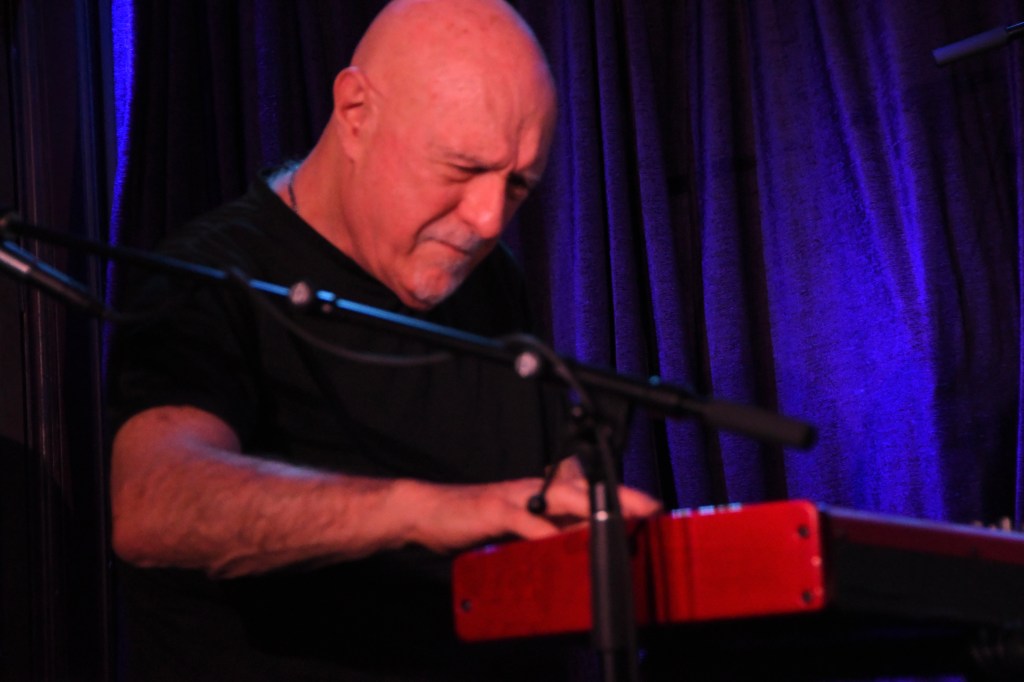
Pete Levin
Pete’s synthesizer mostly emulated a piano but beefed up to a menacing organ sound in “Wolfsbane” – as Tony left his electric upright for a five-string bass guitar – and resonated with a Fender-Rhodes-like ring in Wayne Shorter’s lovely “Fall.” LaBarbara switched to tenor first in “Dream Steps,” an original bebop based, he said, on “You Fell Out of a Dream.” He said this came from a 40s film starring Lana Turner, whose entrance to nightclubs thereafter detoured jazz bands from whatever they were playing to greet her with “Dream.” Mock-cranky, LaBarbara complained bands don’t do that when he comes in. Such self-deprecation marked many intros, especially Pete’s, but their playing blew away any need for it.
Below, Pat LaBarbara
Three songs in, they were in full flight, but after “Dream Steps,” they flew higher in a swinging, spunky – well, yeah – cover of Steely Dan’s “Aja” that Pete called an experiment. Like “Scarborough Fair,” this flowed in familiar fashion through its wistful main melody before diving off the map, this time via bebop tenor sax, abrupt tempo shifts and an all-in coda with a repeating riff by LaBarbara and the Levins as Siegel drummed wild.
“Brothers Take a Ride” recalled a California tour (before Siegel replaced drummer Joe LaBarbara) with bristling, jagged cadences where Pete seemed to lose his way for a moment, cueing (Pat) LaBarbara’s tenor to the rescue before a second and more successful chorus. Here Tony and LaBarbara echoed riffs in harmony.
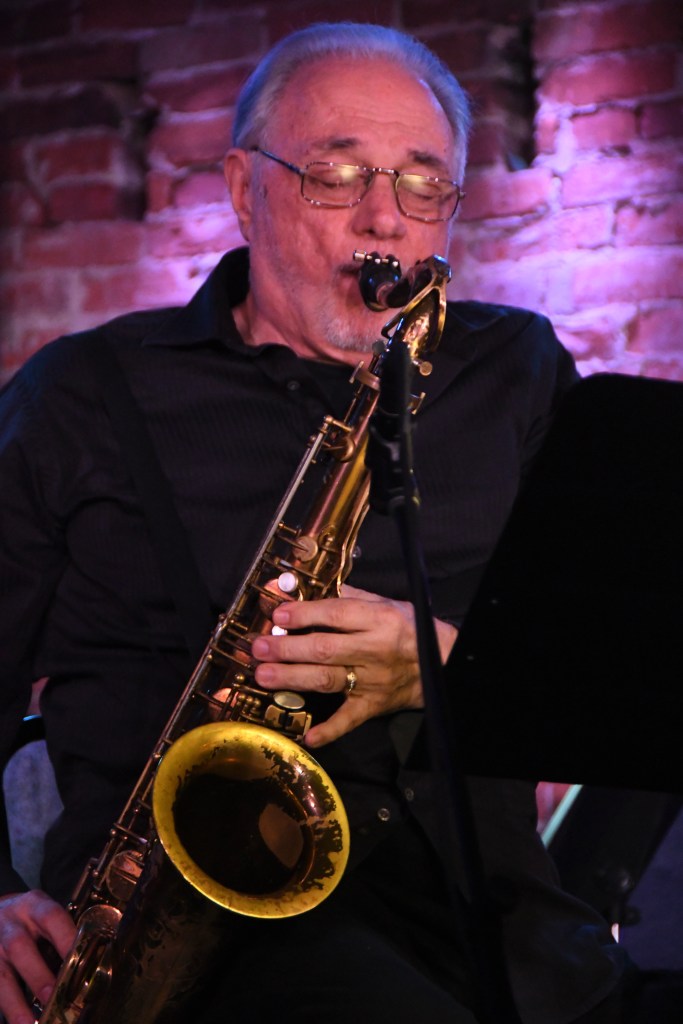
Things got pretty in Satie’s “Gymnopedie,” a slow reverie whose sweetly delicate melody charmed the place before – as in “Fair” and “Aja” – experimental forays outside. They did the reverse in “Wolfsbane,” a horror movie mood leavened (Levin’ed?) by LaBarbara’s tenor quote of “Softly As In a Morning Sunrise” but revved again by Tony’s propulsive bass guitar.
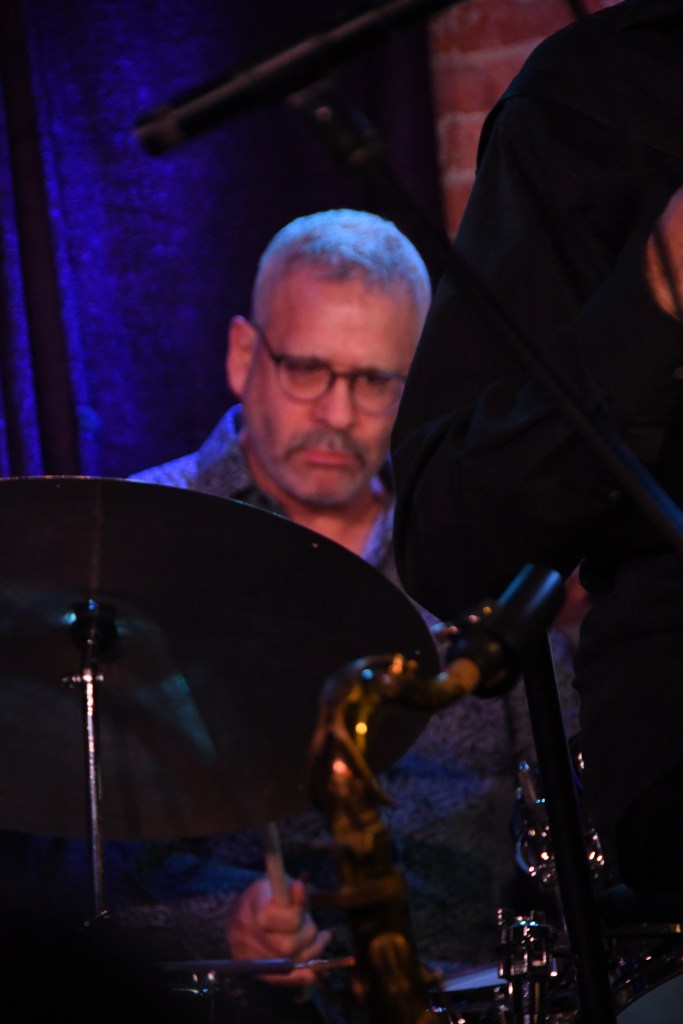
Jeff Siegel
In “another pretty one” (like “Gymnopedie”) as Pete promised, the sweetly tuneful original “Fade to Blue” rode a cozy Pete piano vamp that LaBarbara used as launching pad for bold explorations. Then they punched up the energy in “Bringing It Down to the Bass,” alternatively “Bringing It Down to Laid-Back Lee,” echo of an earlier title for this original. They made maximum fun of this cheerfully self-confident freeway funk number.

LaBarbara stayed upbeat, starring in “Good News” which they’d recorded with Brazilian percussionist Emilio Martins. Sounding more straight-ahead than Brazilian, this featured Tony donning finger extensions to percussive effect as Pete used electric piano sounds for a modern mood.
He emulated a clavinet in “Gimme Some Scratch” from their self-named first album (2014), suave and swinging on short riffs and a stop-and-go cadence.
They left unplayed a planned encore of “Icarus” but nobody seemed to feel short-changed.
Afterward, as fans clustered in the lobby where both Levins met and greeted, LaBarbara and Siegel greeted Don McCormack, patron saint of Saratoga jazz, and his family. At the table next to mine, the two band members then sat flanking Hal Miller, smiling as the Albany percussionist and archivist told old jazz stories.


 Hoke's Jukebox