Review: Solo Guitarist Yasmin Williams at Caffe Lena, Wednesday, Feb. 12, 2025
Guitarist Yasmin Williams tossed off that humble, inclusive invitation casually at Caffe Lena Wednesday; then the innovative virtuoso played rare, wondrous sounds.
She traced her novel development from virtual to real guitarist in two sets of pristine playing; at once introspective and expansive, feelings expressed in beautiful sounds.
When she beat the online virtual Guitar Player 2 game at 12, her parents got her a real guitar. She found her victorious technique of tapping downward on the game controller across her knees also worked on a real instrument.
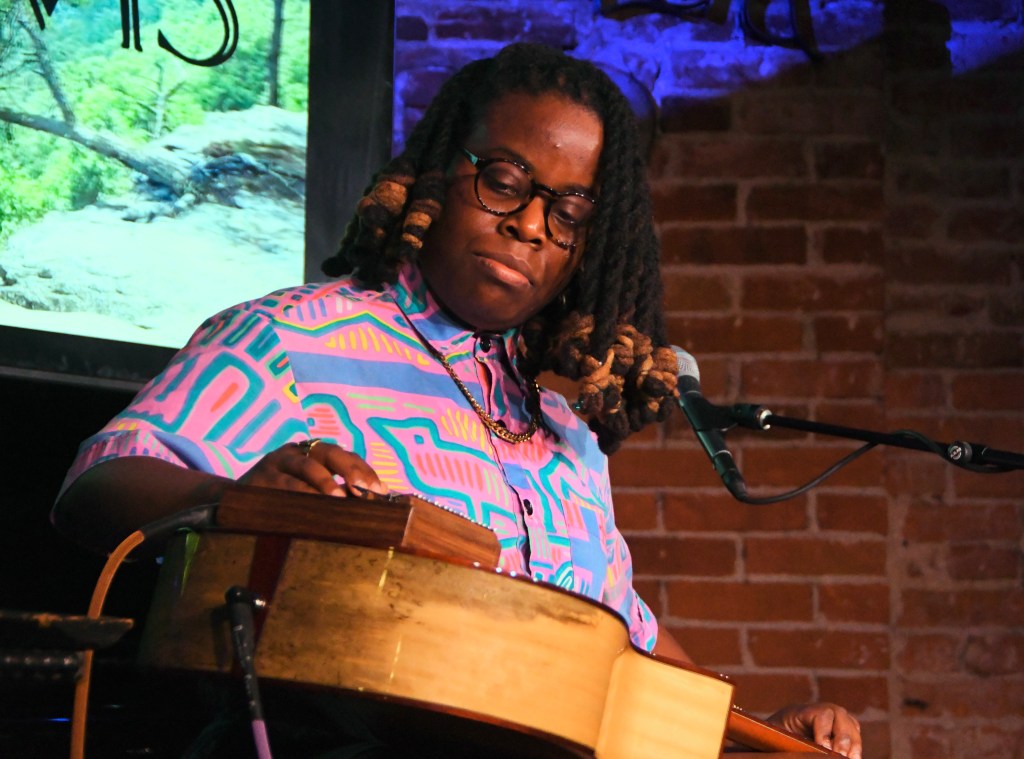
Dobro players hold their resonator guitars across their laps, as Williams does, but typically play with a slide; Williams used only her fingers Wednesday, but slid them at times to slur and glide notes.
She may have known how to play before deciding what to express. Then theory and composition training at NYU shaped technique into a questing, innovative vision: more Stanley Jordan (who played the Caffe recently), Michael Hedges and Adrian Legg, say, than John Fahey or Leo Kottke.
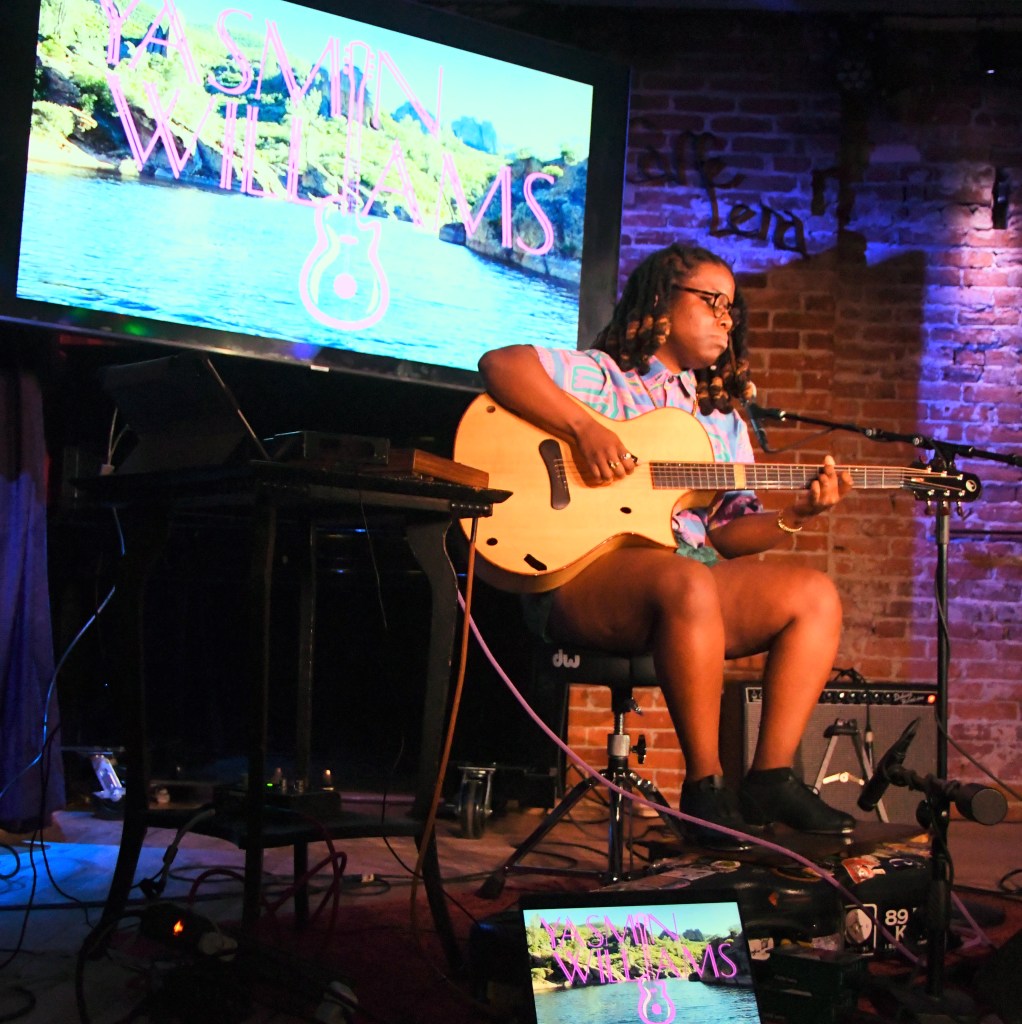
A screen above and behind Williams showed a narrow green river valley; later it held moving waters; and the natural world shaped the pastoral grace of her opener “Cliffwalk” from her new (third) album “Acadia.” At first, she held her Skytop acoustic in a conventional posture and picked cleanly, thumb pick hitting downward and fingers plucking upward. Lowering the guitar across her knees, she tapped the strings with both hands, right hand below the left that ranged over the neck, a kapo at the fourth or second frets. Meanwhile, she tapped the beat with metal tap shoes on a wide wooden board across her guitar case.
Those techniques served her well in “Juvenescence” with its jewel-like melody; in fact, at times, she had to explain emotional content counter to the sheer prettiness of steel-on-wood tones and graceful melodies.
“On A Friday Night” sounded stately and graceful, for example, as Williams lay the guitar flat across her lap – “lap-tapping,” she called this – and tapped the strings with a dulcimer hammer or smacked the body in a two-beat with her right hand as her left tapped the strings higher on the neck.
Afterward, she recalled how loneliness on arriving in the big city made her miserable. Later, she noted how becoming the first NYU freshman to win a campus talent contest brought friends and visibility, She followed “Friday” with “High Five” that celebrated those friends with spry, happy melodies.
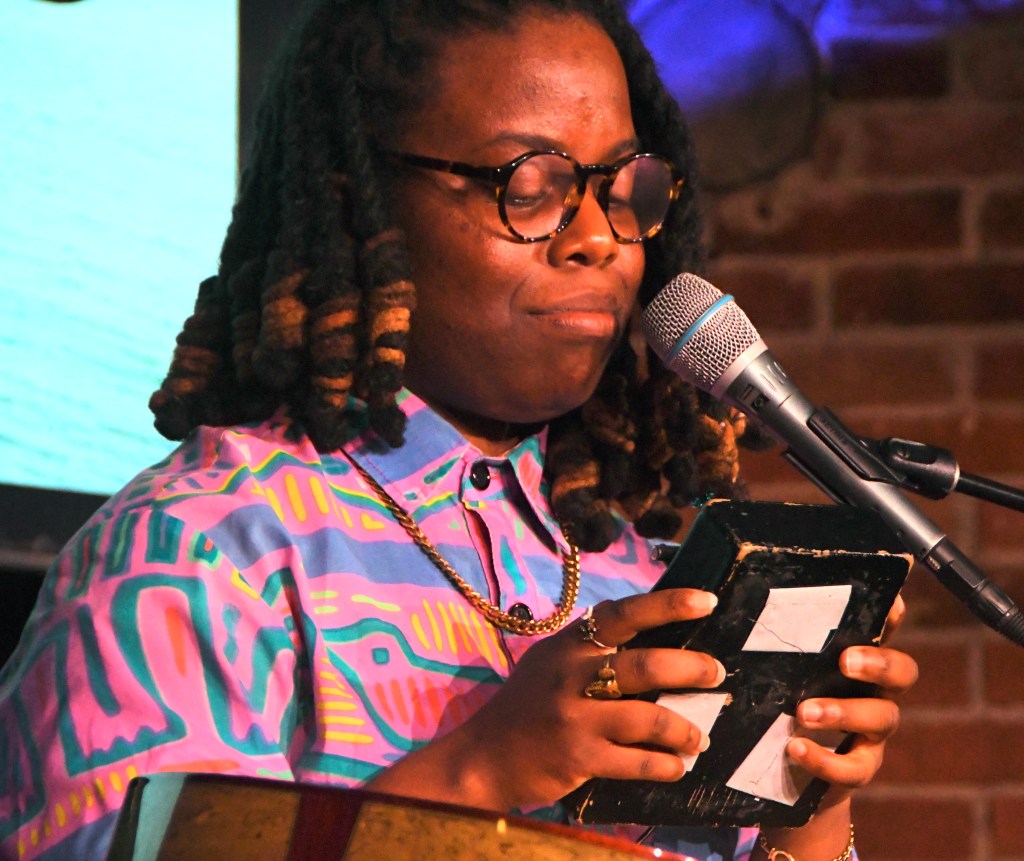
“Through the Woods” again referenced the natural world, and introduced the kalimba, which she took up after watching an Earth Wind and Fire video. This busy, percussion-powered number featured hammer taps, left foot tapping the off-beat.
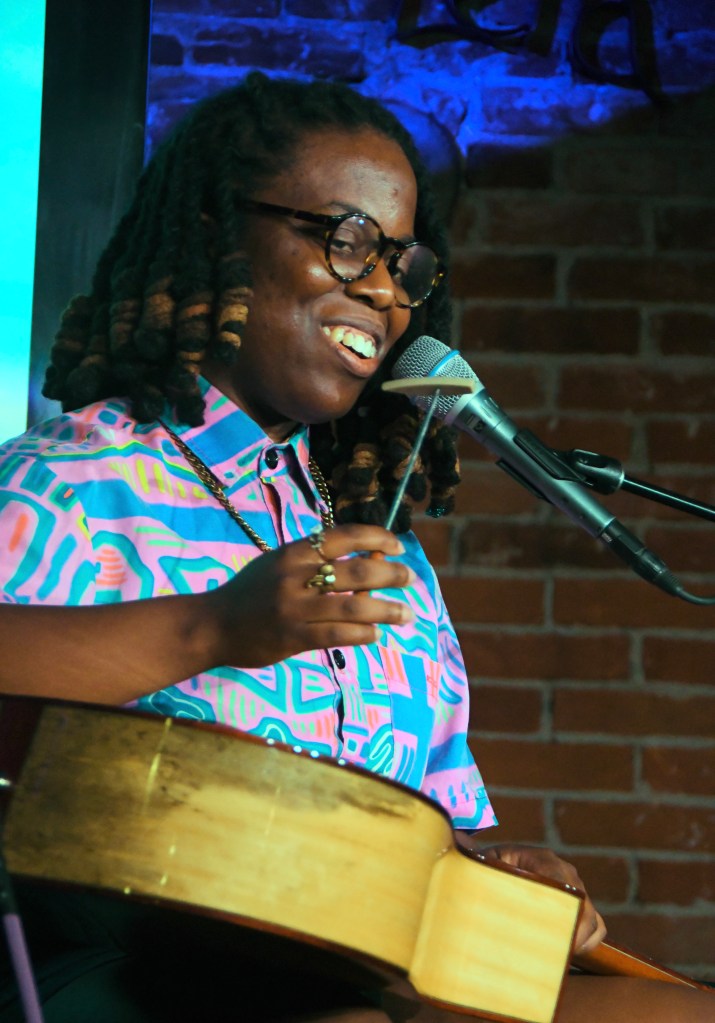
Playing kalimba – “You could call this a thumb piano…but you shouldn’t.”
Her first-set-closing mini-suite “Hummingbird” packed ironic content like “Friday.” She explained it portrayed time spent unhappily in Pittsburgh but started with a pretty finger-picked melody before hard-strummed explosions. Lowering the guitar from standard hold to across her knees, she launched an episodic deconstruction of the melody, a reprise charting the way back to it, then a speedy coda.
More irony in “Sisters,” a celebration of a mountainous Oregon stretch whose lack of turn-outs annoyed her while the view inspired the tune. Here she finger-picked circular riffs, then activated a recorded backing track, adding instruments like a sleek vehicle picking up hitchhiking harmonica, bass and strings. The melody mutated through insistent, minor key grumbles into a glorious chord-strum crescendo whose beautiful repeats formed the coda and brought a smile to Williams, awe in the near-capacity crowd.
“Virga” also relied on recorded backing tracks, the linked voices of Darlingside framing pretty guitar lines. The title refers to an ambiguous meteorological anomaly: rain falling through air so dry the drops evaporate before hitting the ground. The music felt mysterious, too; voices fading after her guitar went quiet.
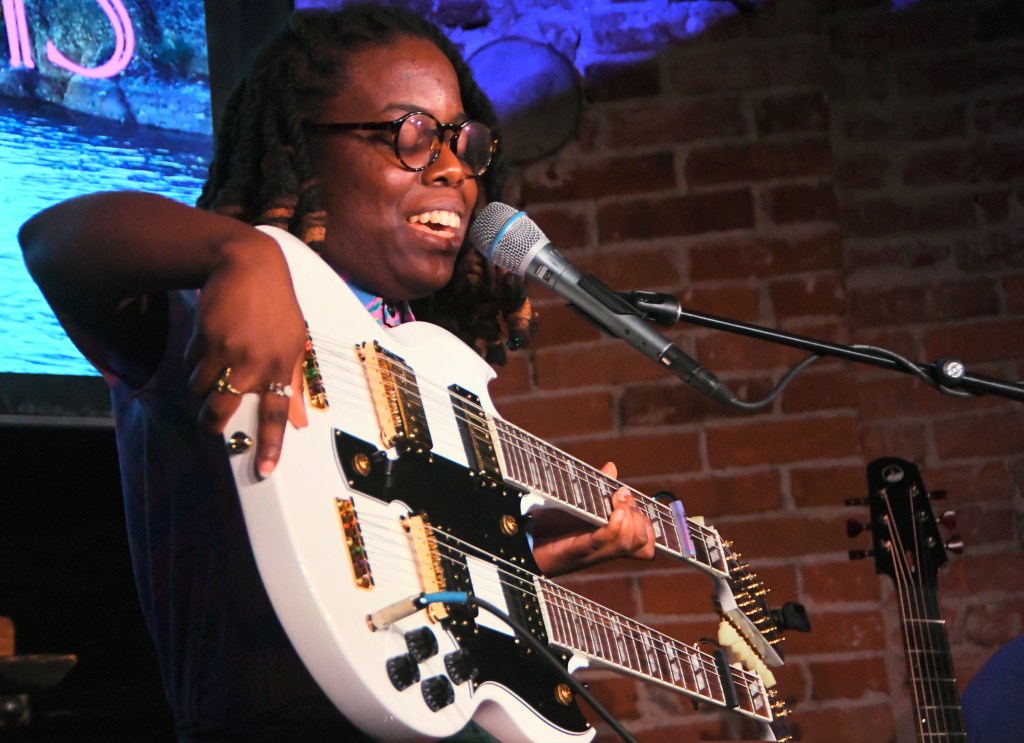
For “Nectar,” she switched to a gleaming electric twin-neck she said she’d simply requested from Gibson and the company obliged. Masters Jimmy Page (Led Zeppelin) and John McLaughlin (Mahavishnu Orchestra, Shakti) play this combined six- and 12-string instrument one neck at a time; Williams played both at once, leads on the 12-string neck with her left hand, right hand tapping bass lines on the six-string neck.
“Song for Alex” featured her familiar single-neck six-string acoustic, finger-picking a tender melody that grew wings as she turned to spry lap-tapping and ringing harmonics to close.
She added kalimba again for “Skippin’ (Song for Bri)” – tapping with fingers and feet – then closed with “Restless Heart,” right hand tapping the body of the guitar, left hand tapping the strings.
Although all instrumental, without vocals, the show wasn’t just for guitar nerds since Williams entertained with a humble affect and a wide warm smile like the great violinist Regina Carter, a virtuoso stylist half a generation older.
Showing Her Skytop Guitar – Twin sound-holes on the side
SET LIST
1 – 7:38-8:15 p.m.
Cliffwalk
Juvenescence
On a Friday Night
High Five
Through the Woods
Hummingbird
2 – 8:30–9:30 p.m.
Sisters
Virga
Nectar
Song for Alex
Skippin’ (Song for Bri)
Restless Heart
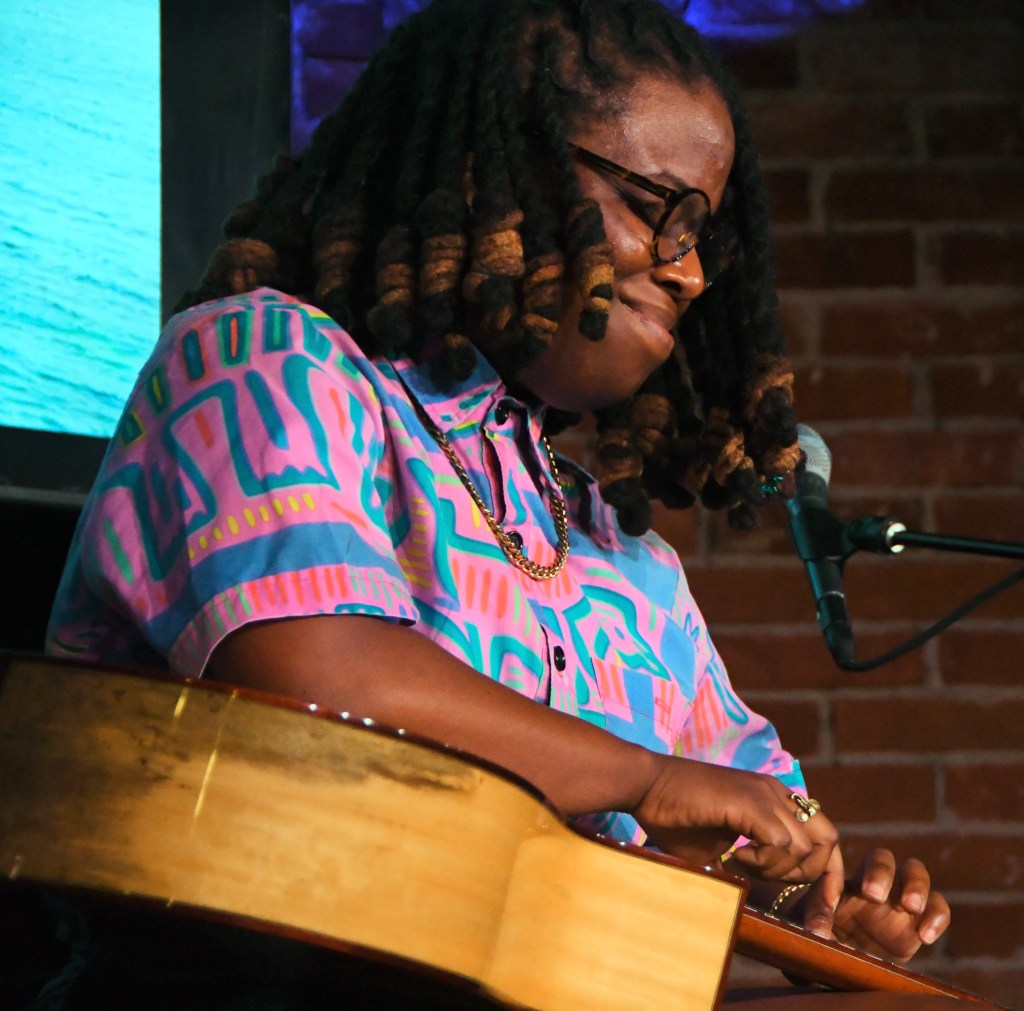
Playing kalimba right-handed, tapping on guitar strings with her left
Review – The Soggy Po’ Boys at Caffe Lena; Saturday, Feb. 8
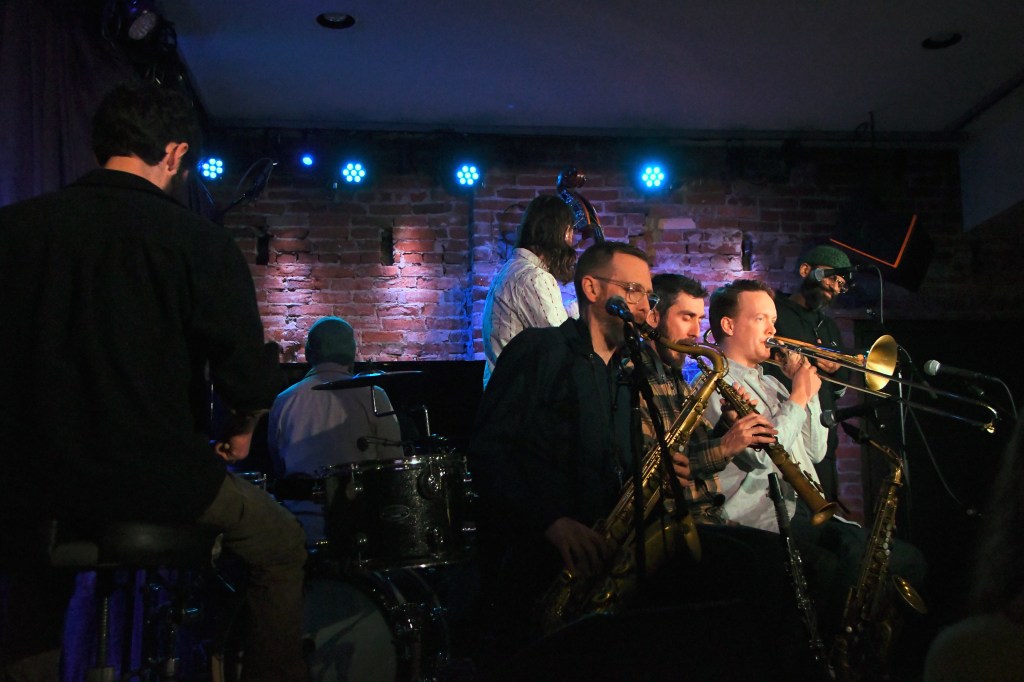
Elbow to elbow on the cozy Caffe Lena stage, the Soggy Po’ Boys played just that tight Saturday in a wide-ranging soulful survey of New Orleans music.
The stage-full of young New Englanders, all bearded but trombonist Josh Gagnon, played more than the traditional sounds. They also got the soul, the spirit and the swing of street-parade chants, classic blues, rocking rumbas, even calypso, noting New Orleans is the northernmost Caribbean city.
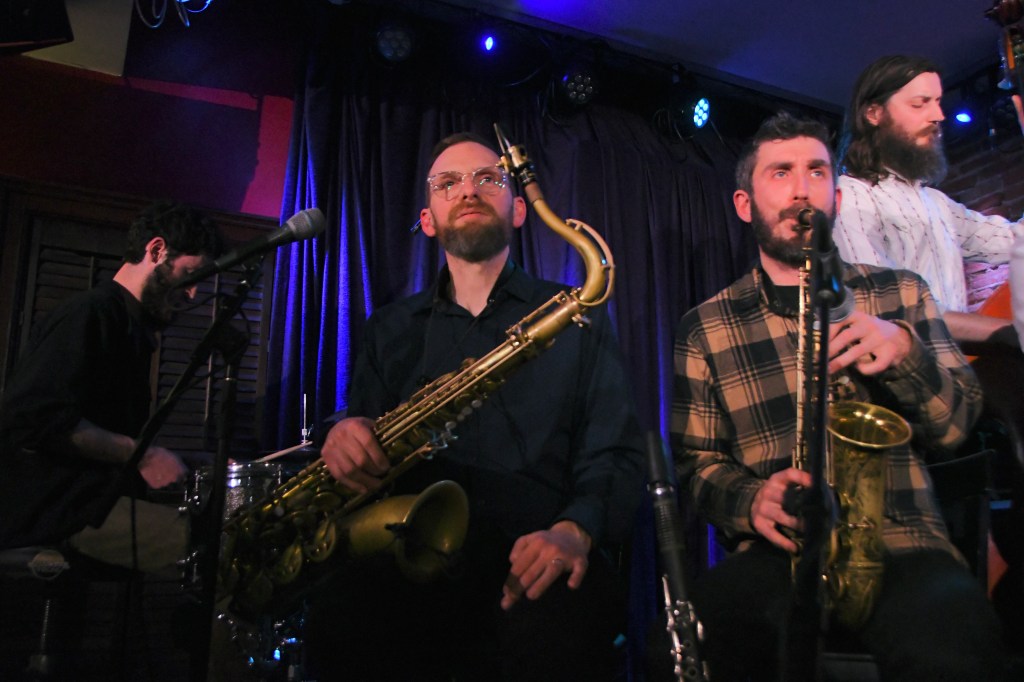
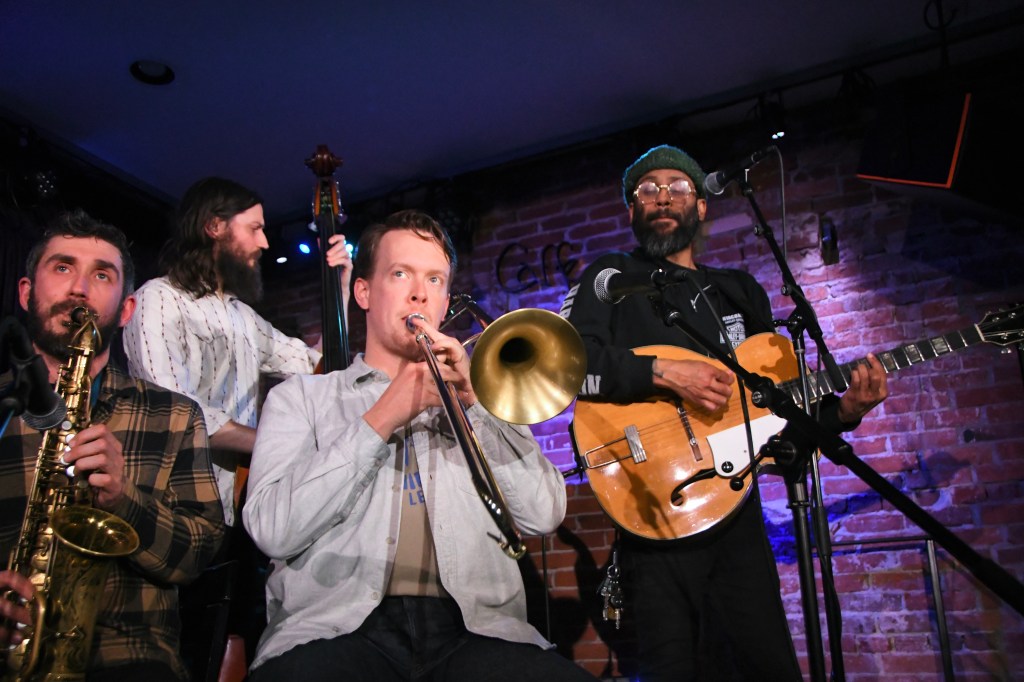
The Soggy Po’ Boys, from left: Brian Waterhouse, drums; Mike Effenberger, piano (both with back to the camera); Scott Kiefner, bass; Nick Mainella, tenor saxophone; Eric Klaxon, clarinet, alto and soprano saxophones; Josh Gagnon, trombone; Stu Dias, vocals and guitar
They also scored extra points by playing the Earl King/Professor Longhair funk romp “Big Chief”* – but NOT the too-obvious/almost obligatory “When the Saints Go Marching In.”
As it happened, WAMC played an “American Roots” episode on my drive up, spotlighting New Orleans clarinetists including Evan Christopher (he’s also played Caffe Lena, plus SPAC’s Jazz Festival and the Cock ’N’ Bull), Sidney Bechet, Michael White, Doreen Ketchens and others. This tuned up my ears for fine work Saturday by Eric Klaxon, who also played alto and soprano saxophones, jammed between Gagnon and tenor saxophonist Nick Mainella.
In a return visit after their well-received 2023 Caffe Lena at SPAC set, they boldly opened with an original, the ominous “Waiting On the Bomb to Drop.” Like most tunes Saturday, they riffed a massed-horns intro to set up a dynamic Stu Dias vocal; then horn solos, a wrap-up vocal and killer all-aboard coda.
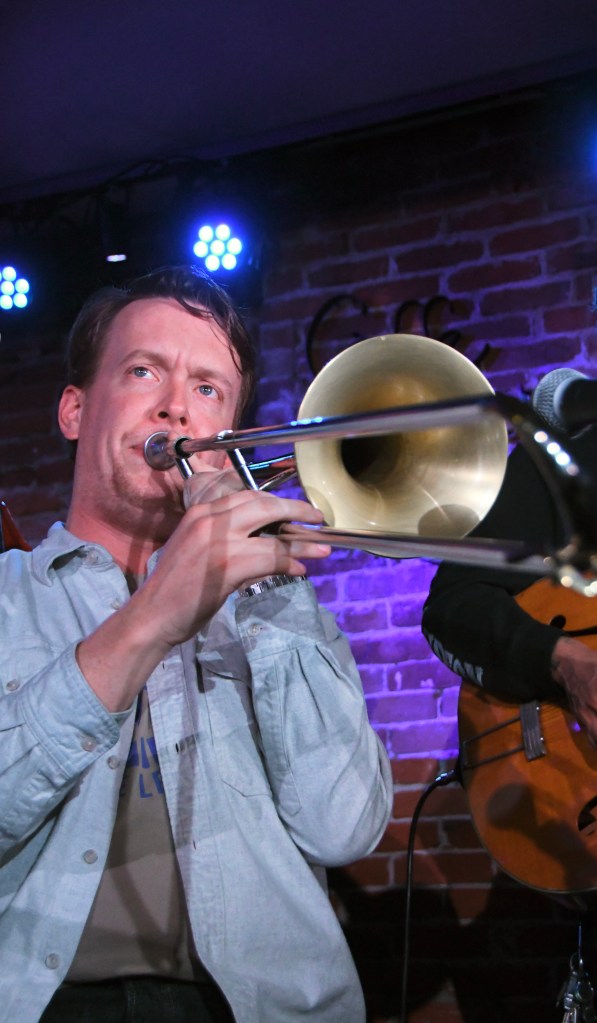
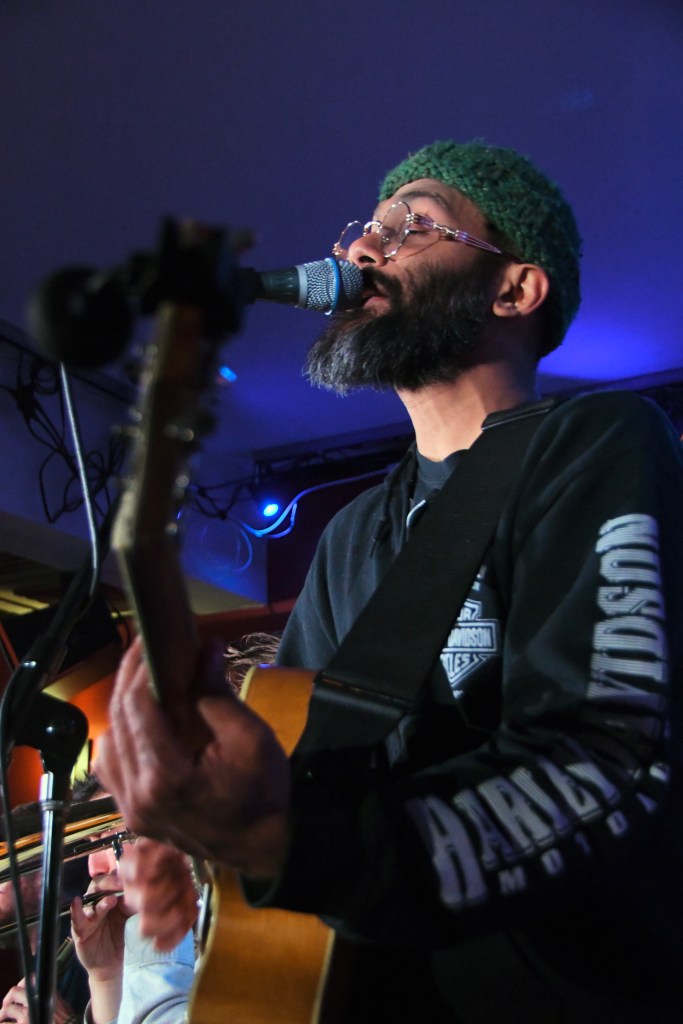
When I visited a close-up seat briefly, I needed two shots to include everybody. Top, from left: Brian Waterhouse, Nick Mainella, Eric Klaxon and Scott Kiefner. Bottom, from left: Eric Klaxon, Scott Kiefner, Josh Gagnon and Stu Dias. (Mike Effenberger is behind Kiefner.)
“By and By,” a standard New Orleans shuffle, followed “Bomb,” then they went tropical with “Gin and Coconut Water,” all the horns getting a piece of this happy calypso. Next, Klaxon owned “Joshua Fought the Battle of Jericho,” earning claps and whoops for his agile alto solo.
Jumping from gospel antique to the vintage-sounding “Weary Blues” felt natural; in fact, song sequences worked well all the way through. For something spunky to set up “Big Chief,” the upbeat “Weary Blues” was just right. The coda on “Chief” had loose, unanimous horn anarchy. Then Professor Longhair’s playful “Tootie Ma Is a Big Fine Thing”** mixed sentiment and sensuality perfectly.
While pianist Mike Effenberger and bassist Scott Kiefner were hard to see behind the horns, they floated to the top sonically in the bluesy groove “A Dirty Job,” Effenberger playing a muscular intro and Kiefner making the most of his first solo all night.
After “Serpent Miagre,” a Caribbean polka with a strong Gagnon trombone break, Dias sang at his mournful best in “It’s Raining,” an Allen Toussaint tune Irma Thomas still sings to stunning effect. Effenberger’s piano shone here, too, in a trio interlude with Kiefner and ever-steady drummer Brian Waterhouse.
The Mighty Sparrow’s calypso classic “Dorothy” launched the second set; wry, twisted-love tunes dominating the late run. In the kiss-off “Baby Would I Lie to You?” Mainella’s tenor set up Dias’s vocal beautifully.
Below: Nick Mainella
Josh Gagnon
Eric Klaxon
They played the calypso “Miss Tourist” as a fan’s request, then it was back to the blues with Bessie Smith’s cautionary “Moan, You Moaners,” Gagnon’s trombone bringing gospel fervor.
Two all-in rumbas – “Touloulou” and “Carmona AD” – bookended “Battle Hymn of the Republic,” a surprising choice in a straight, non-ironic read. Sidney Bechet’s “Shag” showcased Klaxon’s persuasive soprano sax, then a stop-and-go coda brought all the horns into dramatic dialog.
Stu Dias
They shrewdly chose the defiant shouter “It Ain’t My Fault” as sole singalong all night, then cruised “down In New Orleans” – key lyric of “Bourbon Street Parade” – as quick-hit encore.
Unique among concert merch tables, they offered chocolate made by friends back in New Hampshire; each bar earned the buyer an album download.
My preview noted 37 minutes drive time from home to Caffe Lena; snow slowed things, homeward bound, to more than twice that. And worth it.
* Dr. John played guitar on the original 7” single (Watch Records 1965) along with 15 other New Orleans studio stars. Covers include Dr. John’s 1972 version and others by the Neville Brothers, Jon Cleary, the subdudes, the Wild Magnolias, the Meters and the Dirty Dozen Brass Band.
** The Preservation Hall Jazz Band (at The Egg March 8) plays a terrific version on “This Is It,” produced by My Morning Jacket’s Jim James, a big fan.
This came by email from the Soggy Po’ Boys’ office
Set 1 Waitin on the Bomb to Drop By and By Gin and Coconut Water Joshua Fit the Battle of Jericho Weary Blues Big Chief Tootie Ma A Dirty Job Serpent Miagre It’s Raining
Set 2
Dorothy Rascal The chief Would I Lie to You? Miss tourist Moan You Moaners Touloulou Battle Hymn of the Republic (I believe we added a tune here.. Carmona AD, I think) Shag It Ain’t My Fault
Review: Nathan and the Zydeco Cha-Chas at Universal Preservation Hall; Friday, Feb. 7, 2025
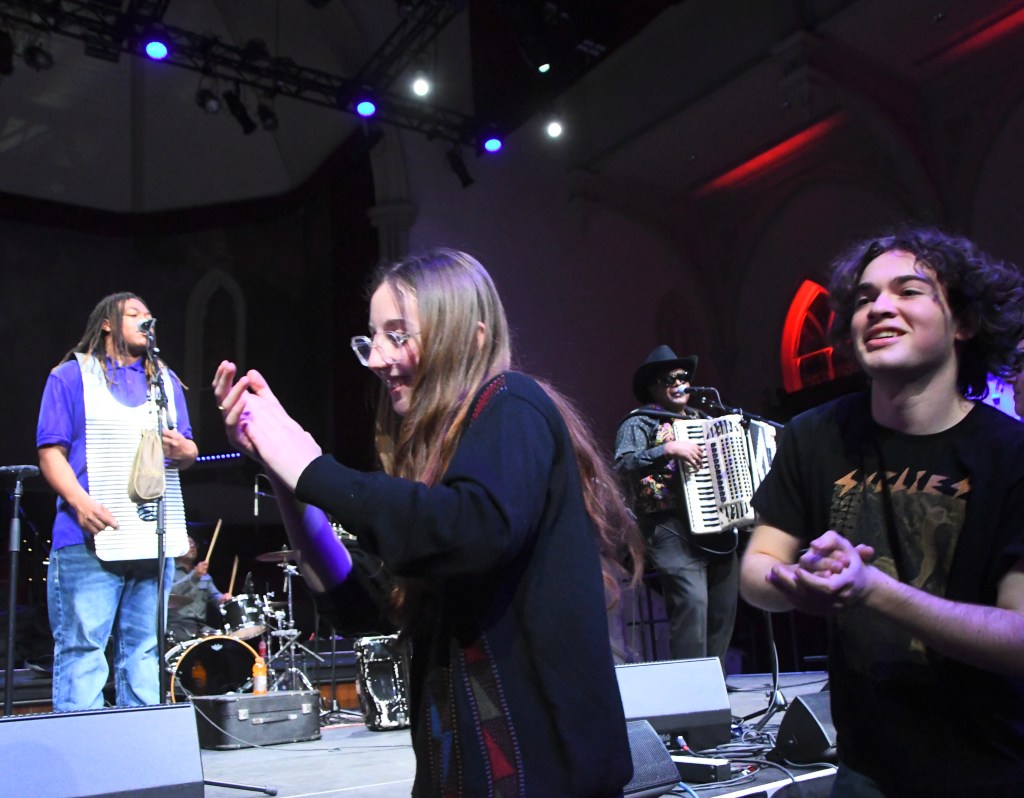
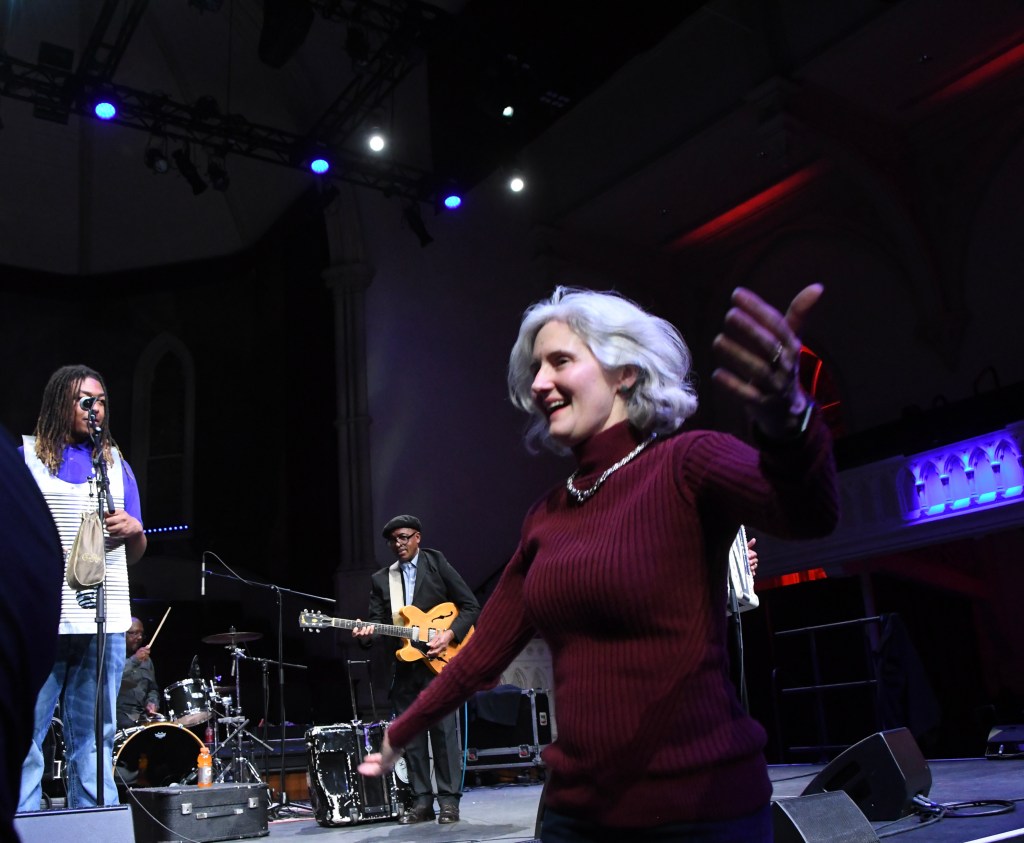
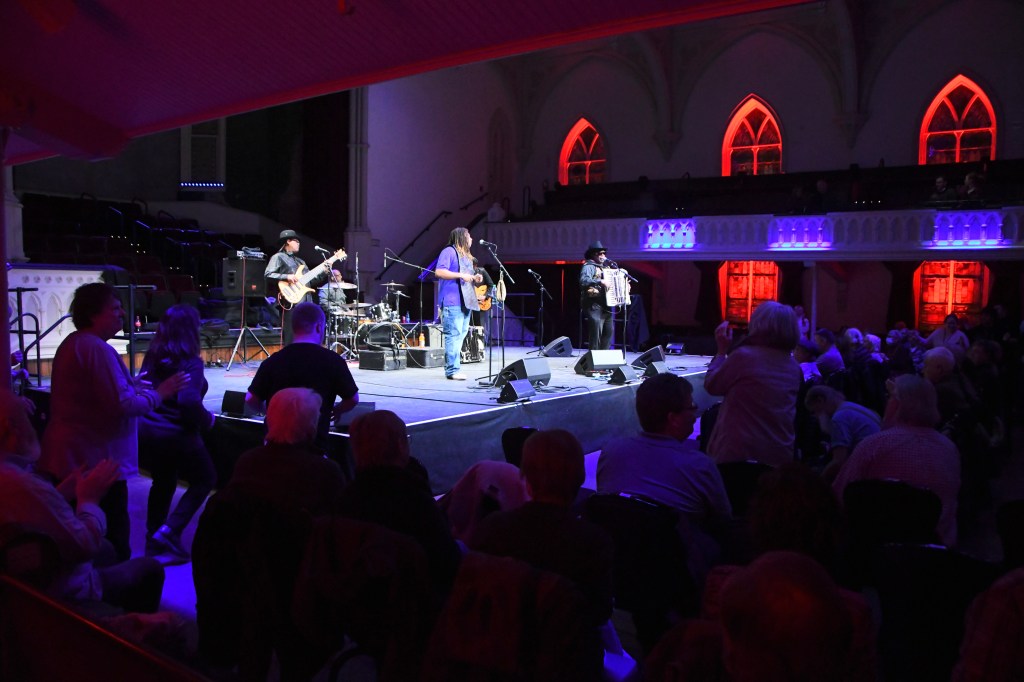
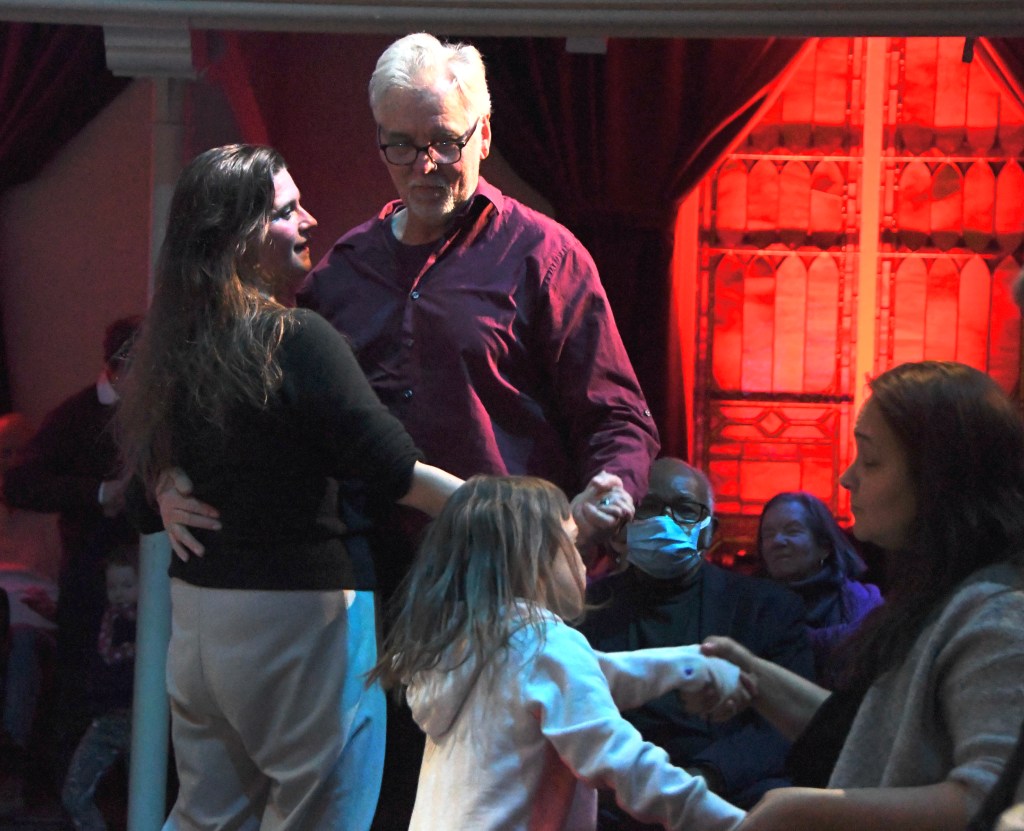
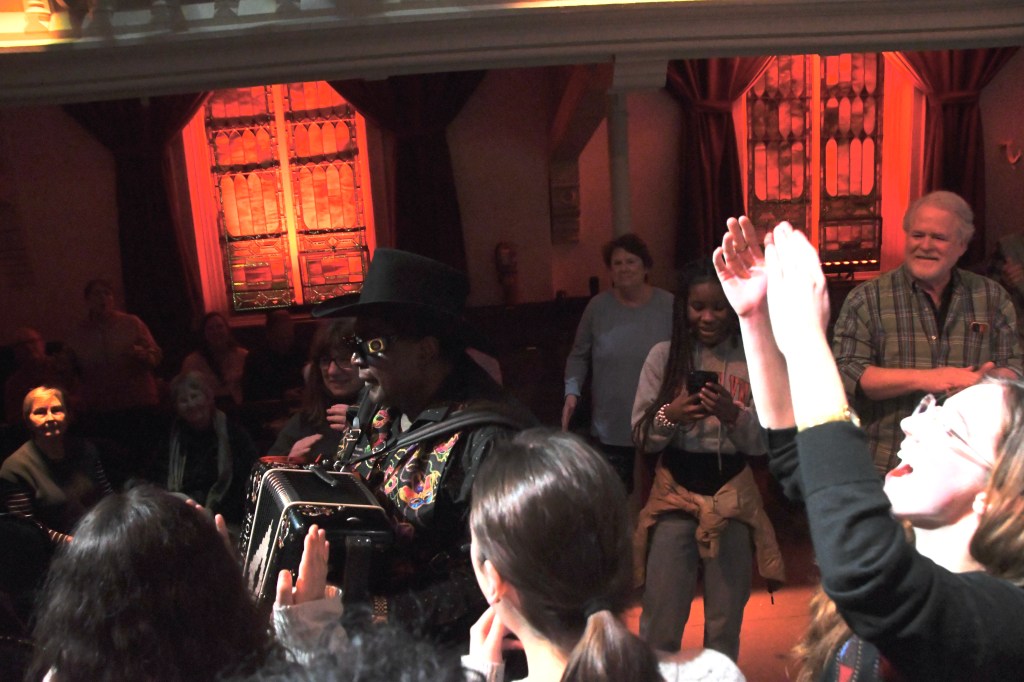
Three conga lines blurred into one as fans formed an unbroken loop through Universal Preservation Hall Friday night in the joyful geometry of zydeco on the loose.
In the kinetic near-capacity tweens to boomers crowd: unanimous smiles, waving arms, clapping hands and shuffling feet. Onstage: the five virtuosos of Nathan and the Zydeco Cha-Chas, throwing it down.
Obstacles stacked up against such unanimous fun.
Bandleader Nathan Williams’s brother Sid (El Sid-O, in song titles and the sign on his Lafayette club) passed last week; and of course there was the forbidding chilly weather. So accordion ace, gruff-voiced singer and spark plug bandleader Nathan needed a party as much as anybody. The weather never had a chance as big warm filled the place, though some dancers never took off their coats.
The band set fire to zippy two-steps, waltzes fast or slow, and a chill-out cha-cha or two – one called “Zydeco Cha Cha,” of course. Nathan sang in English or French and traced his musical roots back to where “crawfish got soul and alligators get the blues.” After most tunes, he playfully asked, “Was that all right to you?” – and reaped the affirmation it deserved.
“Zydeco Boogaloo” hit early (and repeated later), but a tune based closely on “Bring It On Home to Me” showed the band’s flexible strength. When Nathan’s brother Dennis Paul Williams broke a guitar string, Nathan revved his accordion riffs to fill in the blanks while (Nathan’s nephew) Jason George welded his rub-board scratches even closer to Keith Sonnier’s snare-drum hits and Nathan’s cousin Alan Williams’s bass lines hit harder, too.
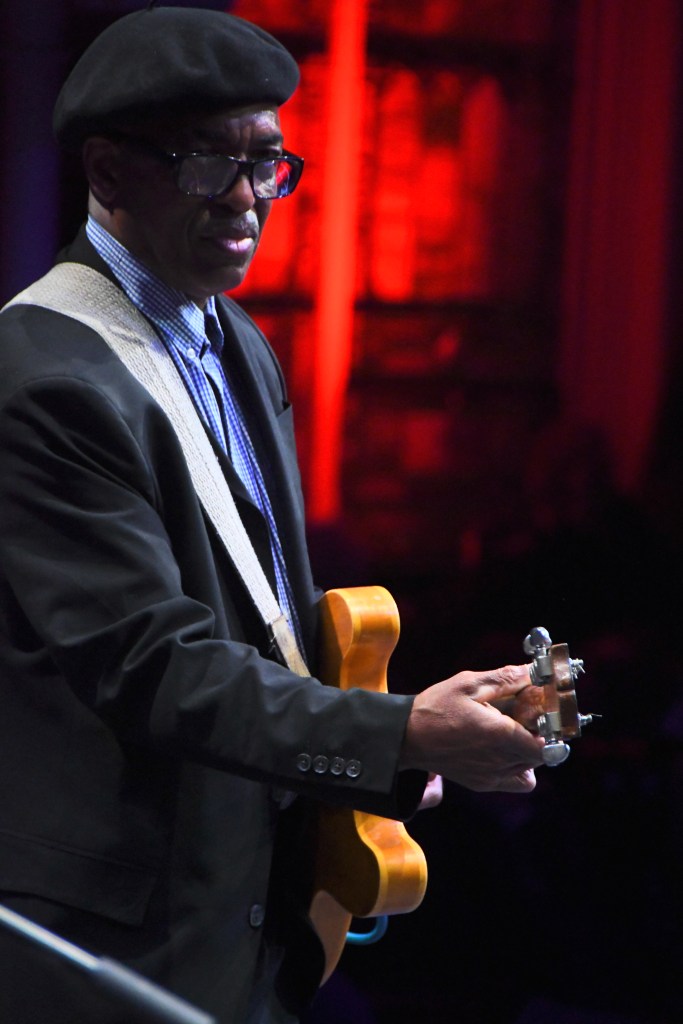
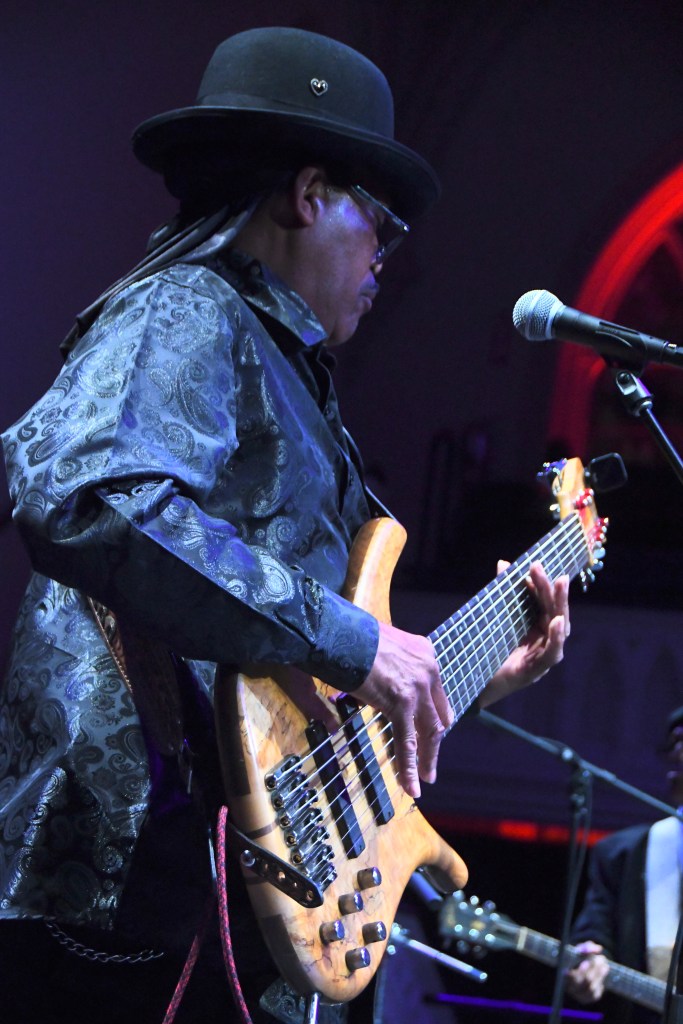
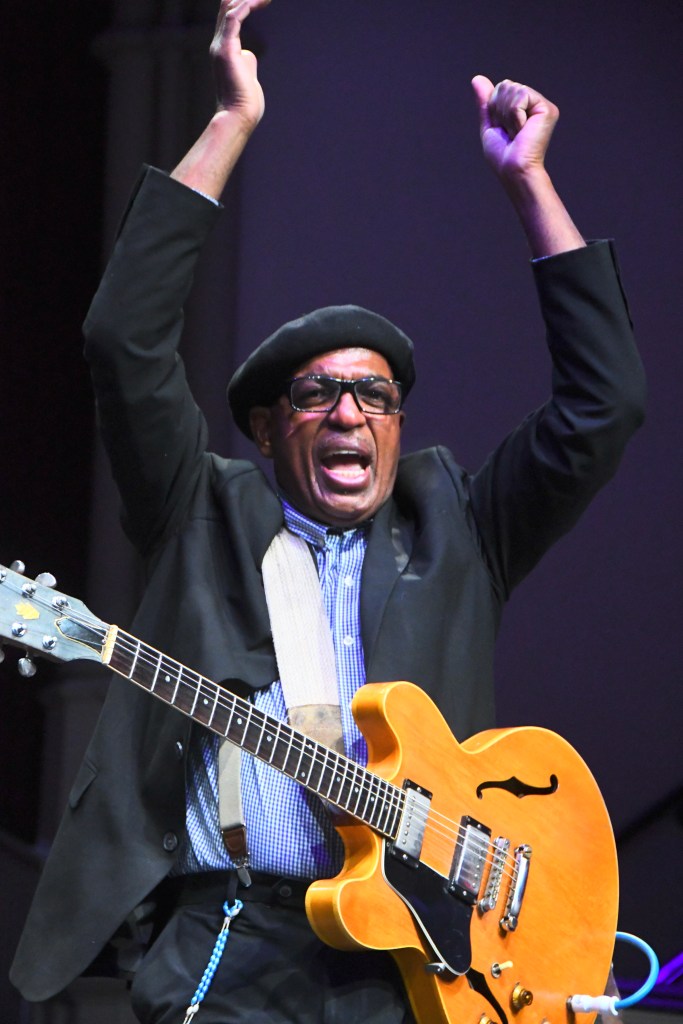
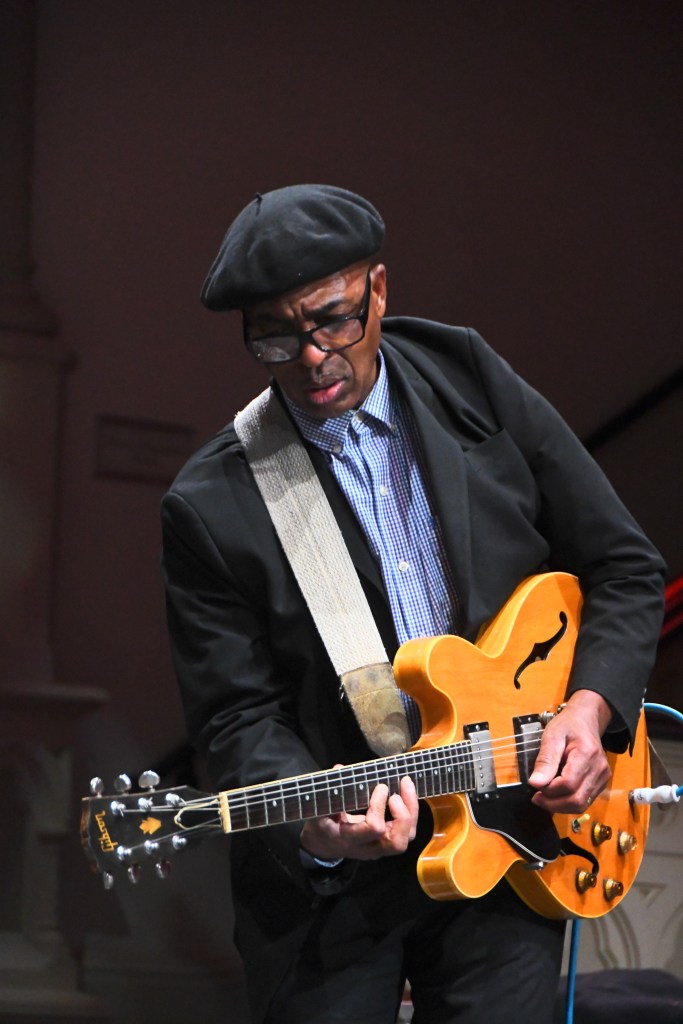
Dennis Paul Williams, and fat Gibson
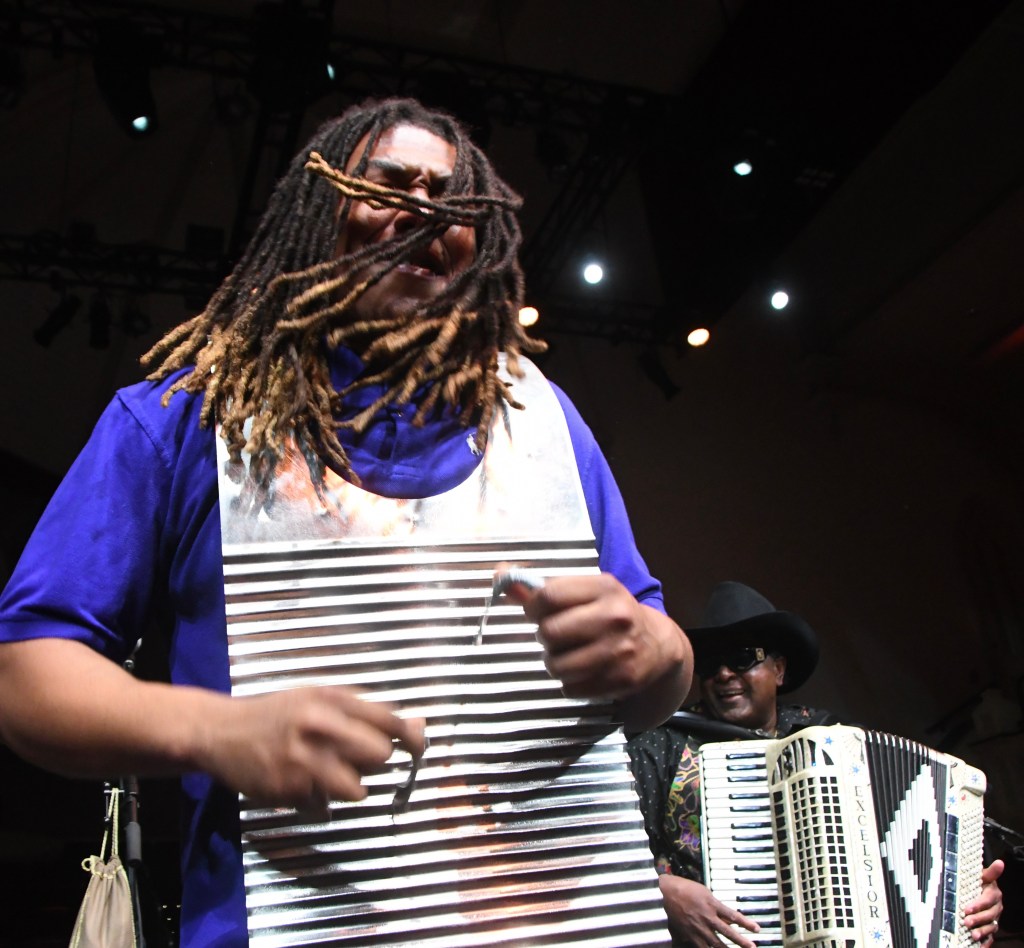
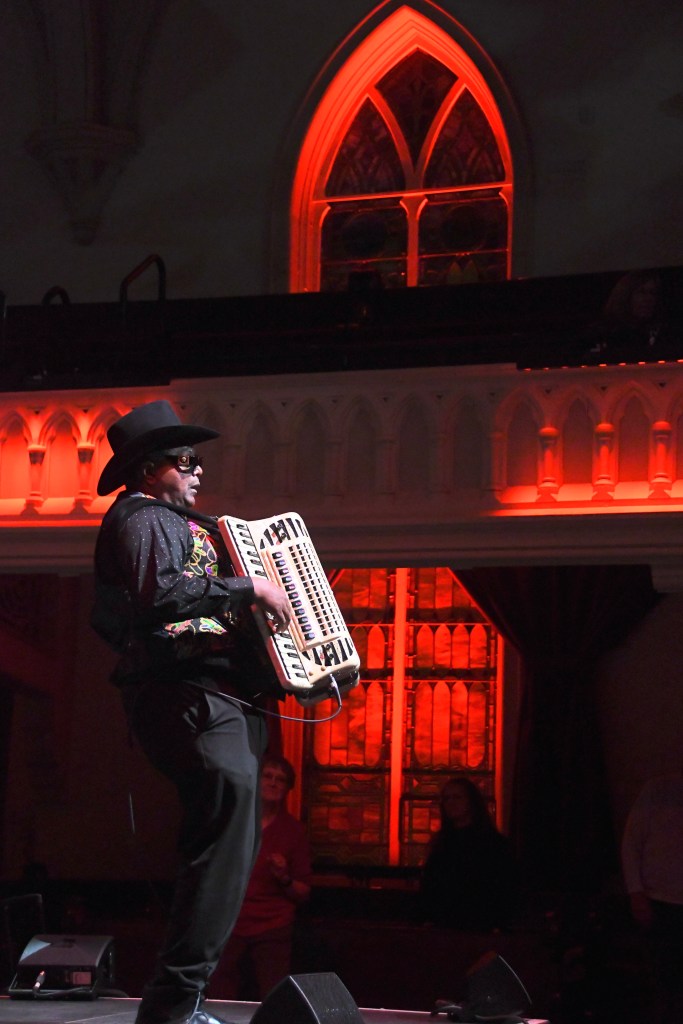
Gaston George, left; and Nathan Williams
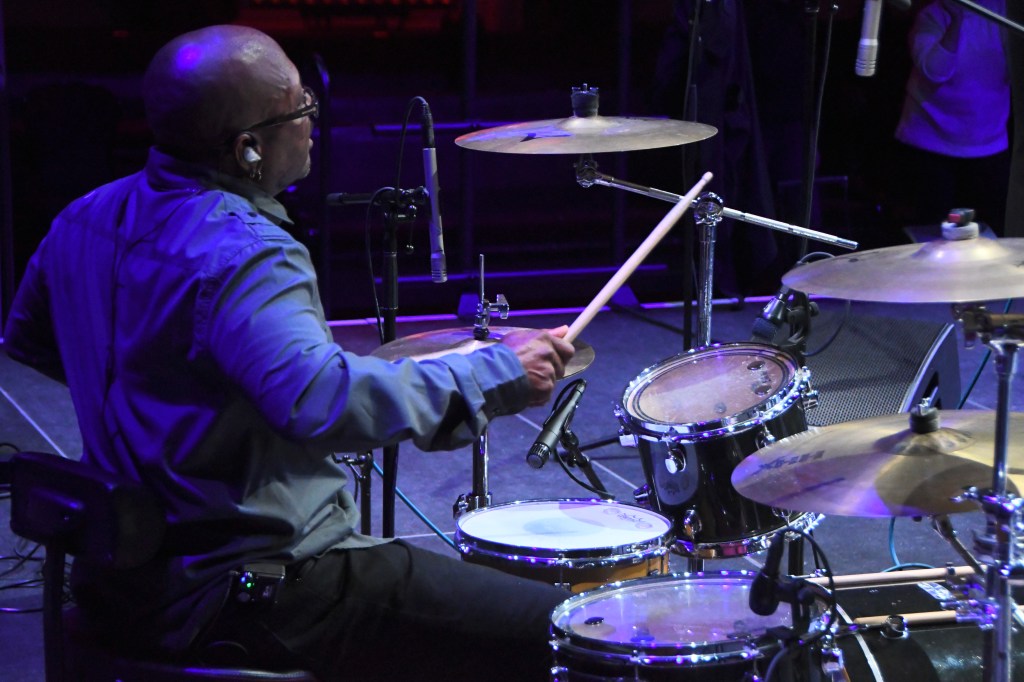
They mostly played at full strength, but some sparser, more subdued interludes showed they could have played the whole show as duets, especially Dennis Paul Williams’s relentless Snooks Eaglin-style rhythm-guitar chords. He didn’t have to solo much to deliver soulful strength. George scratched the steel furrows of his shoulder-mounted rub-board with spoon handles bent away from the bowls. Sonnier’s snare-and-kickdrum beats stayed simple since so much was happening above, notably Alan Williams’s hyperactive repeating bass runs that pumped and pushed with centrifugal force.
Keith Sonnier
Alan Williams, and seven-string bass
The songs didn’t have to say much, so Nathan’s vocals felt like another instrument; they changed up the tempos and beats more than the formidably dense arrangements. The shuffle “Follow Me Chicken” jumped into a subterranean groove whose title I didn’t catch, then the two-step “Your Mama Don’t Know” eased into the waltz “Too Much Wine.”
Nathan paid tribute to his mentor Buckwheat Zydeco in another waltz, Buckwheat’s “Take Me To the Mountaintop,” a soulful, seductive bluesy guitar solo stirring things up and going call and response with Nathan’s voice.
The energy of “I’m Looking Forward to It” organized the dancers into conga lines; then, impressively, they built the energy back up that had been dissipated some by a problematic shift from piano accordion to diatonic “button” accordion.
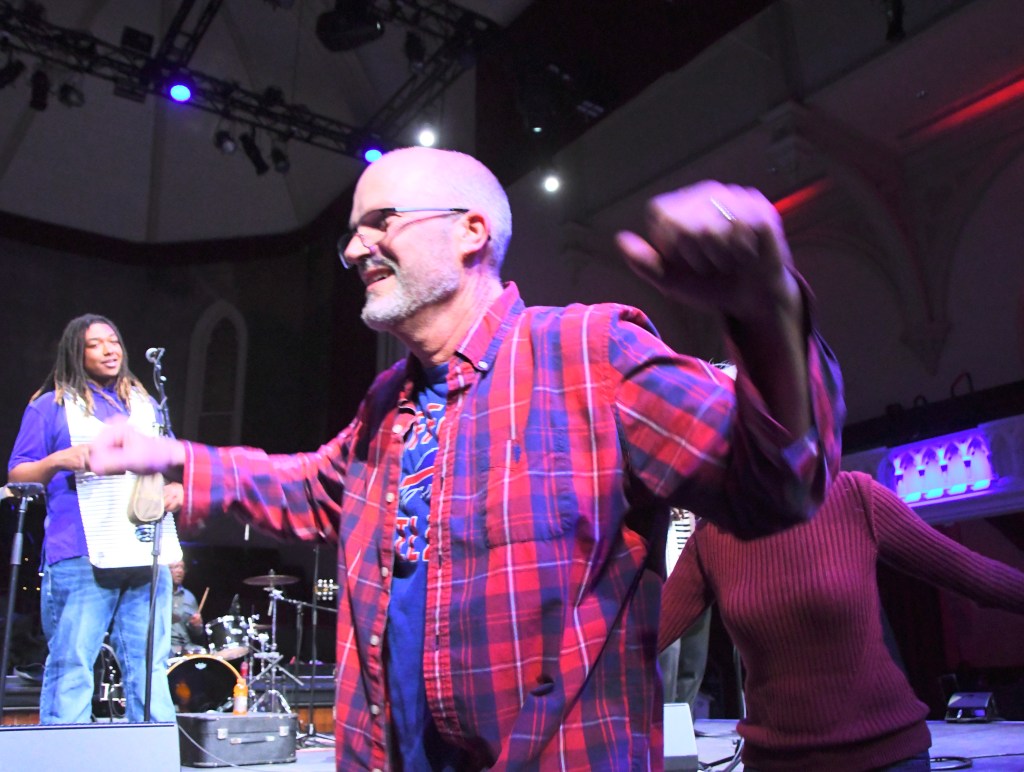
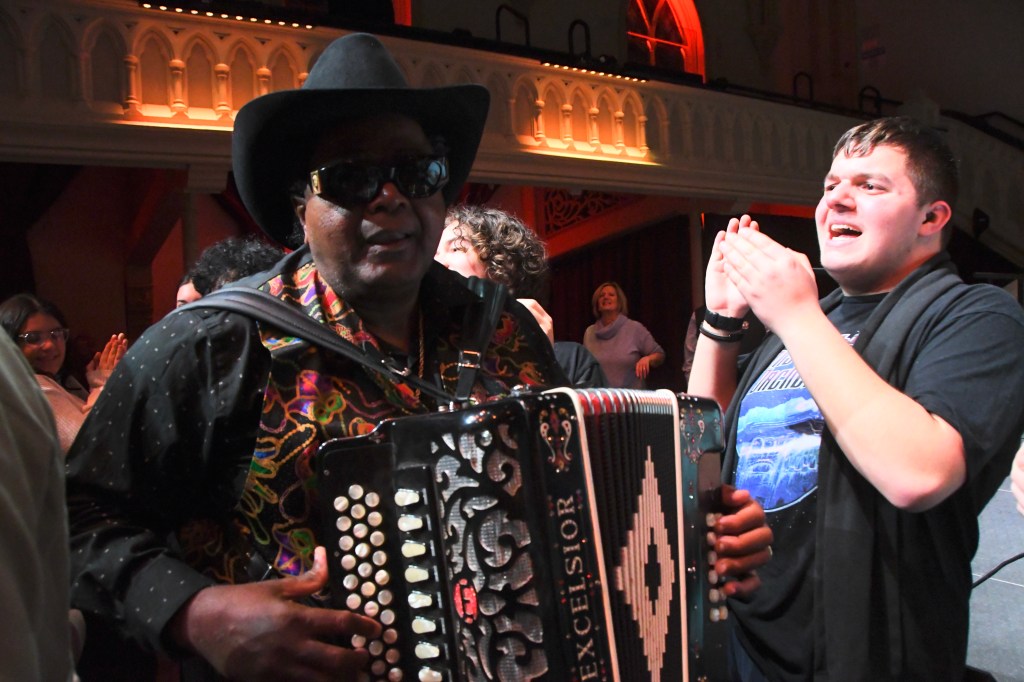
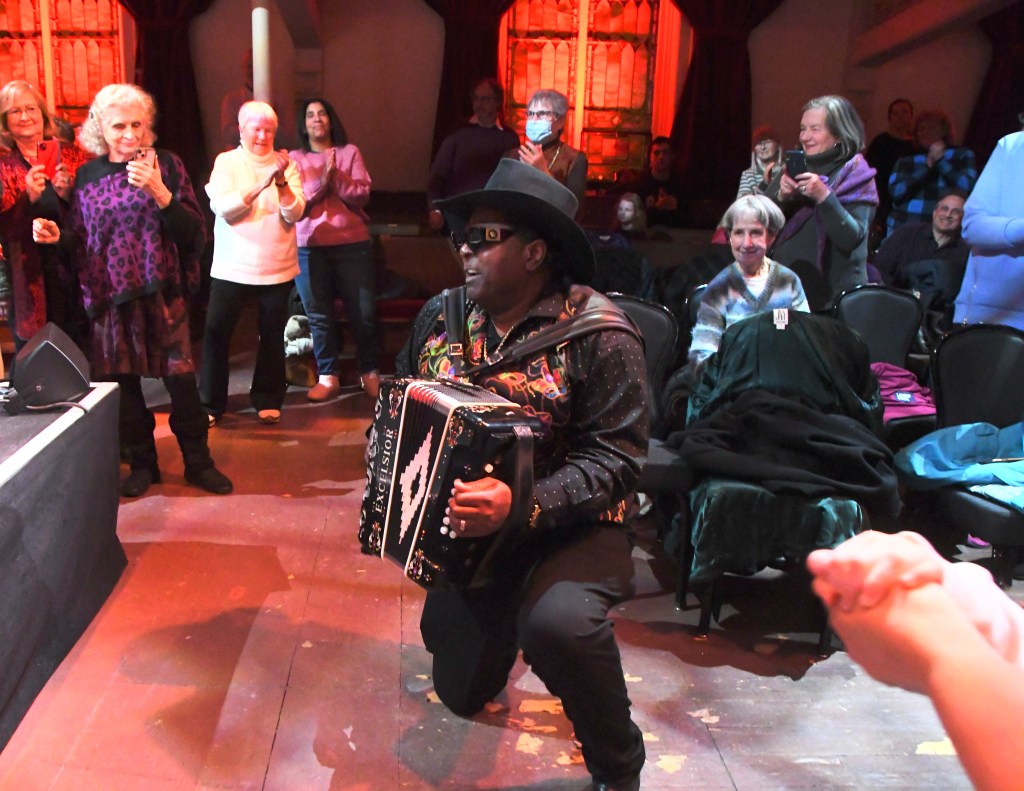
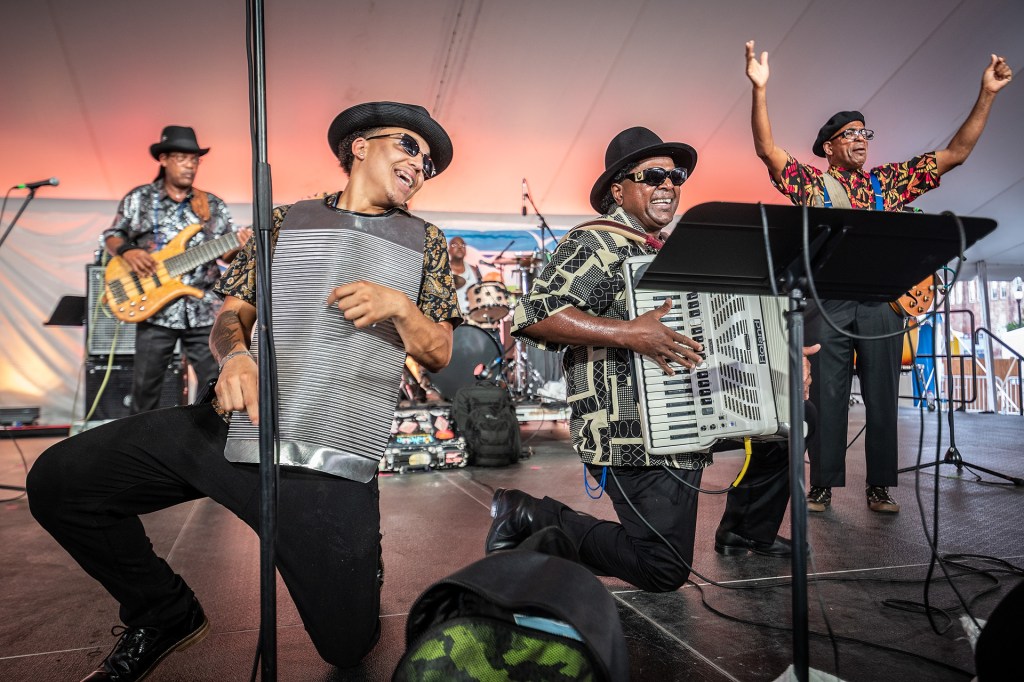
No problem: “Sid-O’s Zydeco Boogaloo” – or was it the other “Zydeco Boogaloo”? – re-energized band and fans as Nathan went wireless and wandered the house, playing, grinning, sitting down among his fans, dropping to one knee to acknowledge dancers by the stage.
Everybody, everybody, was in the show.
Set List – fuhgeddaboudit!
Nathan made up the show song by song, sometimes announcing tunes to band and fans, sometimes not. It was 92 minutes of fine, fierce, focused force.
New Orleans is 21 hours drive time from my house, five hours by air via Albany Airport.
Music erases travel: Nathan and the Zydeco Cha Chas play Friday at Universal Preservation Hall 39 minutes from my house, and the Soggy Po’ Boys play Saturday at Caffe Lena, 37 minutes away.
The Zydeco Cha Chas are mostly family; and Williams named the band after a tune by 1960s zydeco pioneer Clifton Chenier, an early inspiration. Williams first recorded for his brother Sid’s label at 21 and played weekly at El Sido’s Zydeco & Blues Club in their hometown of Lafayette, ground zero of zydeco and Cajun music. Williams bought his first accordion from mentor Buckwheat Zydeco, who also recommended his young protege to Rounder Records.
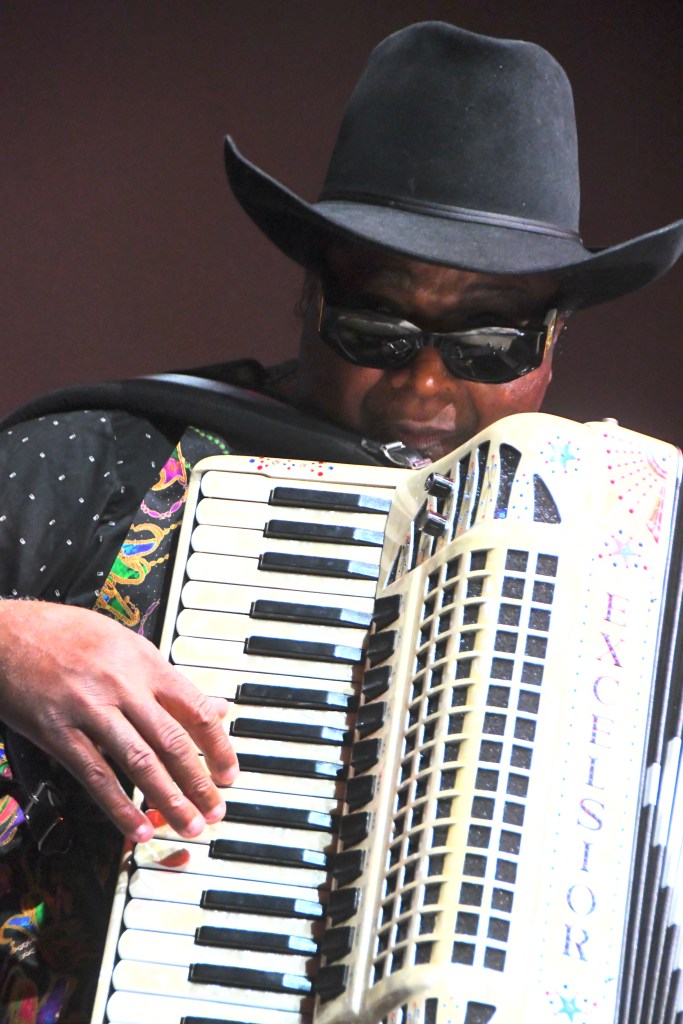
Nathan Williams Squeezes Big Fun from his Accordion, with the Zydeco Cha Chas. Photo Provided.
Since Williams and his Zydeco Cha Chas first played the New Orleans Jazz and Heritage Festival in 1988, they became regulars at New Orleans’ Rock ’N’ Bowl in 1988, recorded their live album “I’m A Zydeco Hog” there in 1997 and helped celebrate the venue’s 30th anniversary in 2018. They’ve also played Lincoln Center, the Kennedy Center, the Grand Ole Opry, top European venues and Jazz Fest after Jazz Fest.
On record, they earned a 2023 Grammy nomination for “Lucky Man” after collaborating with Cajun superstar Michael Doucet on “Creole Crossroads” (1995).
Zydeco – zippy, blues-deep but happy dance music – works best onstage. Its two-steps and waltzes aim beats at the feet, vocals and solos for the roof. The Zydeco Cha Chas feature accordionist-singer Nathan’s guitarist-brother Dennis Paul and bassist-cousin Alan Williams, plus rub-board player Jaston George and drummer Keith Sonnier. Pedigree is no guarantee of quality; but this band’s proof is in their swing.
Show time for Nathan and the Zydeco Cha Chas Friday, Feb. 7 at Universal Preservation Hall (25 Washington St., Saratoga Springs – 39 minutes from my place) is 7:30 p.m. 518-346-6204 www.proctors.org. Like Michael Doucet back in the fall, this is a Proctors Passport Series presentation
Geography is no barrier to love and mastery of music from elsewhere.
The Soggy Po’ Boys formed in Dover, New Hampshire for a Mardi Gras party in 2012. You can get a po’ boy* at NaNola and other places, and a muffuletta at Perreca’s – and good music travels just as well.
The Soggy Po’ Boys. Photo Provided.
Zydeco pumps down-home flavors, Creole country music; the Soggy Po’ Boys play more urban traditional jazz and street parade chants.
A brass-band, Soggy Po’ Boys echo Second Line struts, vintage jazz and late-night funk ala the Meters. New Orleans is the northernmost Caribbean city, and these guys play a distinctive island bounce.
The Soggy Po’ Boys pack more brass-band boogie than Nathan and the smaller Zydeco Cha Chas, with reeds (Eric Klaxon), trombone (Josh Gagnon) and tenor sax (Nick Mainella) plus Stu Dias, vocals and guitar; Mike Effenberger; piano; Brian Waterhouse, drums; and Scott Kiefner, bass. Their seventh album “Leave the Light On” hit in October.
Show time for Soggy Po’ Boys Saturday, Feb. 8 at Caffe Lena (47 Phila St., Saratoga Springs – 37 minutes from my place) is 8 p.m., doors at 7:30. Tickets $27.12, members $23.86, students and children $13.56. 518-583-0022. http://www.caffelena.org. It’s part of the Peak Jazz Series, supported by Joseph & Luann Conlon in memory of Corrine Simonds.
They return hereabouts on March 2, playing the cozy Parlor Room in Northampton.
CUISINE AND HAPPINESS NOTES
* A po’ boy is an iconic New Orleans sandwich on crusty French bread with shrimp or meat and cheese; topped with mayo, lettuce, pickles and tomato, it’s “full dressed.”
Sympathetic food purveyors reputedly developed it to support an early 20th century labor action, to feed “those po’ boys out on strike.”
Once at Jazz Fest in New Orleans, I ordered a sausage and shrimp po’ boy at a food stand I hit at every Jazz Fest I can get to. “I see the sausage, but where’s the shrimp?” I asked, confused. “Yeah, that’s IN the sausage.” And OMG.
Another warm spring Jazz Fest day, I was walking from one stage to another. There are 12, but I don’t remember now and didn’t care then who I was going to see next; it was enough that I was among unanimously happy multitudes. A cold Pilsener Urquell in one hand and a Cajun duck po’boy in the other, I realized this is one of the happiest moments of my life.
That’s why I’m going back this spring, my first return since Covid, and to Louisiana in Saratoga Springs Friday and Saturday, Feb. 7 and 8.
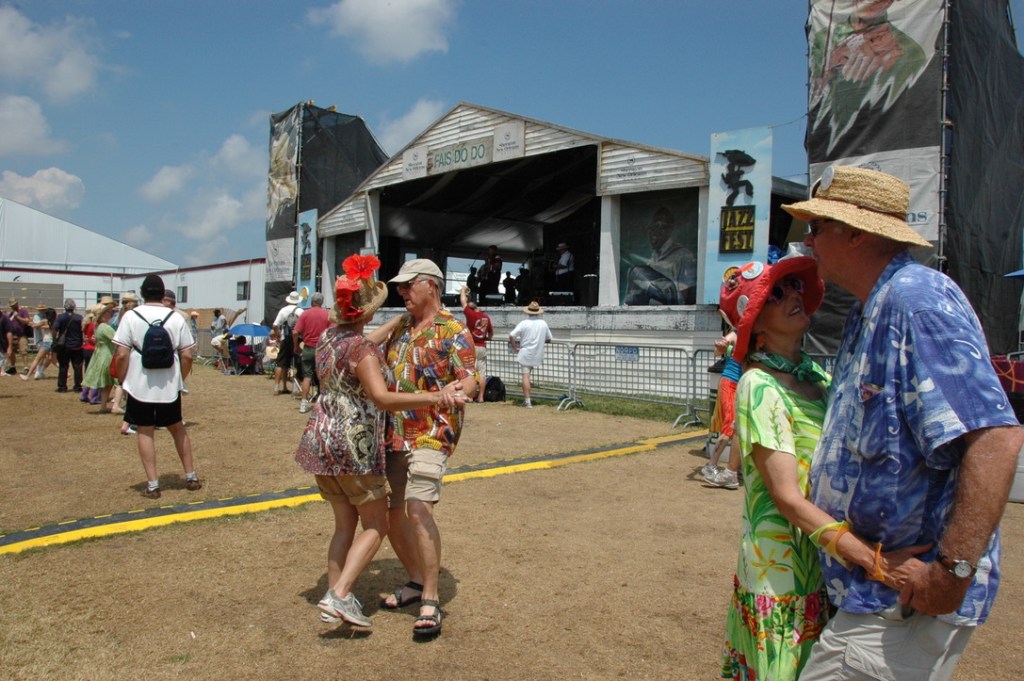
Dancing at the Fais-do-do Stage. Michael Hochanadel Photo













 Hoke's Jukebox