

REVIEW: David Greenberger and the Huckleberries Perform “Universal Preservation” Sunday, Jan. 19, 2025 at Universal Preservation Hall
Spoken word artist and archivist of the old (among many creative activities) David Greenberger and his Huckleberries preserved and celebrated universal human truths Sunday at Universal Preservation Hall in a compelling talk-with-music presentation of the same name.

David Greenberger, center, and the Huckleberries, from left: Chris Carey, Sam Zucchini, Greenberger, James Gascoyne, and Peter Davis. Photos mine
Proctors impresario Philip Morris commissioned the project, recorded in 2019 before Covid stopped everything, including a planned performance celebrating the reopening of the Universal Preservation Hall, a Saratoga church repurposed as venue. Revived half a decade later and re-sharpened in recent rehearsals for the stage, “Universal Preservation” combined elements that each could have stood alone. The words Greenberger collected in conversations with area oldsters – a work of preservation and appreciation he began in 1979 as “The Duplex Planet” – fit well with new music by a capable quartet.
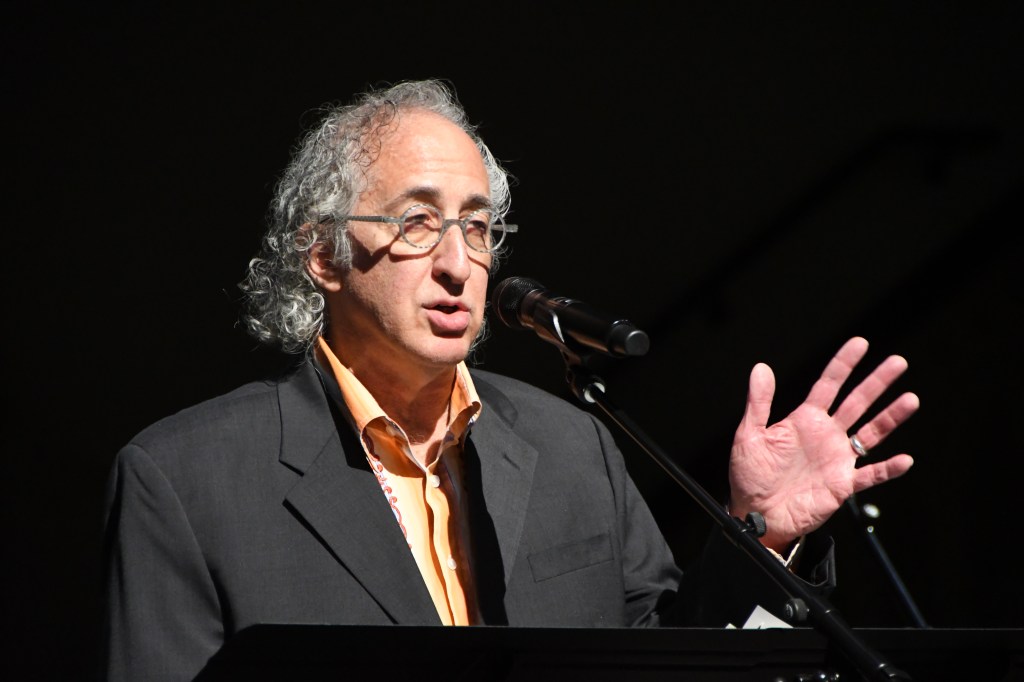
Combined on Sunday, it felt unified and organic. Sometimes Greenberger words fell right on the beat from the quartet behind him, and short solos fit his pauses at the mic. But it all mainly worked as a matching of moods, and those evolved in the 75-minute performance.
First came pure fun; a mellow soft-jazz groove as Greenberger recited words of Frank Nelson recalling his father’s alacrity at handicapping horses. “Dad and the Horses” opened both the two-CD recording and Sunday’s show; the light-hearted piece took on a poignant weight as Greenberger noted afterwards that Nelson had died since their conversation in a Saratoga care home. So had several others since Greenberger collected their words and he recorded them with the Huckleberries before Covid.
Many of the mostly short words-and-music constructions carried this message, that we all age, if we’re lucky, that good times are to be cherished and that fate serves them up to us unpredictably.
An immigrant story followed “Dad and the Horses,” at a slower tempo for a more serious feel. Then a gentle bossa beat underlined a recitation of a long career in caring from a retired nurse who lamented how workaholism limited his cultural opportunities. Then, back to fun in “A Great Story About a Bike,” an ironic tale Greenberber warned would be louder and was, a lively sax-flavored rocker with a stop-and-go cadence and a cozy coda that stopped in mid air.
Here we have to give the whole band some.
As noted, they could have played the whole show without words and still richly entertained the rapt audience. Drummer Sam Zucchini played the pulse, closely grafting his beats to bass (electric) from musical director Chris Carey, who also played keyboard and mandolin, or James Gascoyne (acoustic), who also played guitar and gourd banjo. Stage left stood Peter Davis who played keyboard, banjo, alto sax, low-whistle and alto dobro.

Sam Zucchini
As versatile as they were skilled, they echoed Frank Zappa’s jagged bass-heavy rock-jazz in “A Great Story About a Bike,” Paul McCartney-like piano punch in “The Future Is Great,” a blues stroll in “Lobster Bagpipes,” reflectively quiet banjo under “Fishing Poles,” while “Albany Girl” cruised on a bluegrass acoustic feel. Two rollicking keyboards ganged up on “Zucchini, Heat, Pipes and Bass” and maybe most direct influence by a single example, “Outdoor Person” packed the dignified simplicity of The Band.

Chris Carey, playing a Fender bass as well-loved and -used as Pete Donnelly’s (The Figgs)
If jazz was the dominant flavor, with rock and folk as spices, it also felt sophisticated as an episodic concerto or oratorio; Deep Truths over Discreet Charm, maybe.
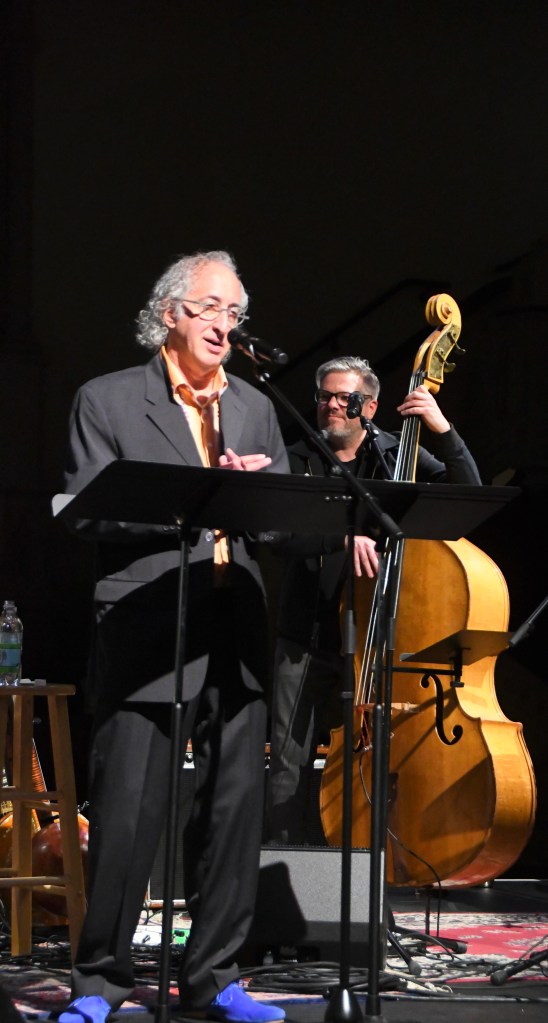
David Greenberger, left, and James Gascoyne

Peter Davis
Between songs, Greenberger shared information, straight and off-kilter. Naming the sources of his monologs in conversations with Saratoga oldsters, some now deceased, he also lightened up with fanciful facets of a restless creative mind. He said he’d named the band behind him partly after a line in “Moon River” but mostly after Huckleberry Hound, noting he’d joined the cartoon character’s fan club as a kid. He rummaged among band names he’s obsessively devised for decades, collecting in notebooks such gems as “Being Yelled At” and “Little Pieces of Paper.” And he applied alphabetical numerology to band members names in intros as clever as those of Darlingside, another conspicuously clever crew that’s played Universal Preservation Hall.
The show had arc, development; mixing the humorous with the profound early on, though the line between them blurred often. Aging itself increasingly became the theme, mostly in satisfied musings over well-lived lives but also mourning loss at times: the lamented ends of long marriages, cherished homes or fulfilling work.
Ultimately, though, Greenberger managed to sequence and build his monologs to serene and sweet effect, with well-matched music framing, underlining and spicing his words.

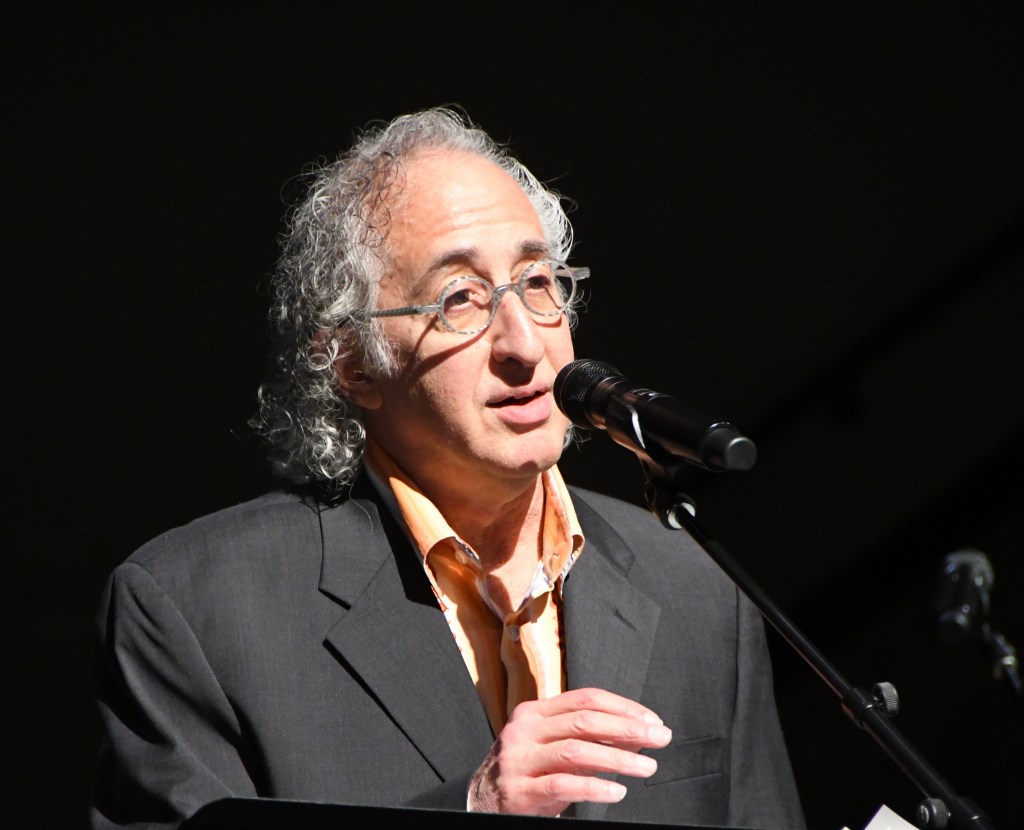


David Greenberger’s blue suede shoes – an affectionate echo of Nippertown founder Greg Haymes’ love for publishing performers’ footwear
 Hoke's Jukebox