
REVIEW: Bill Frisell Trio at The Egg Swyer Theatre, Saturday, Nov. 16, 2024
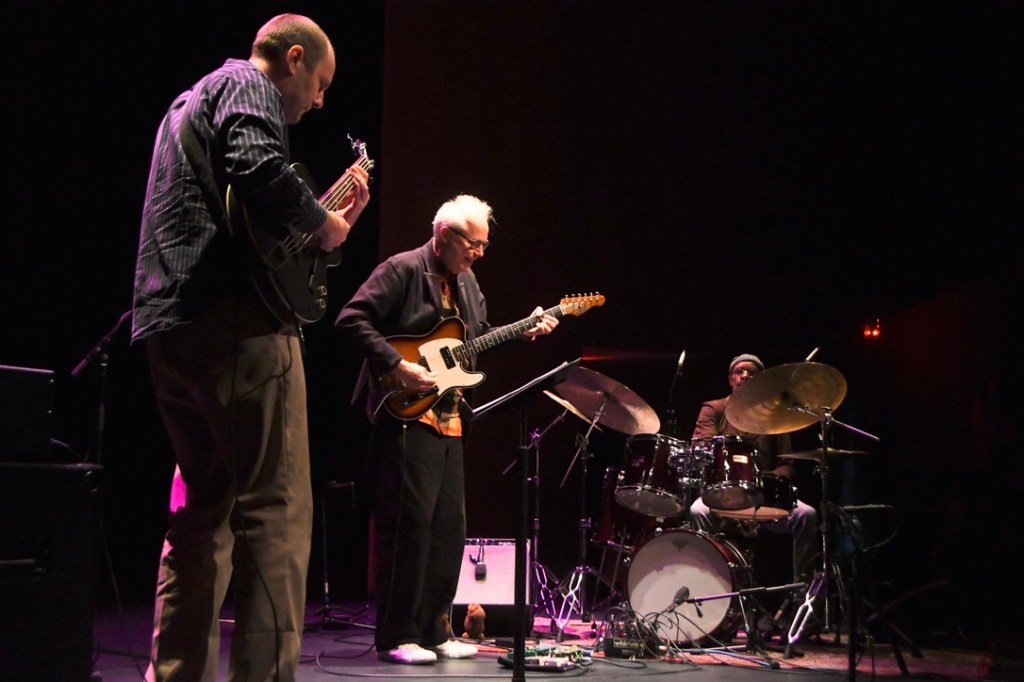
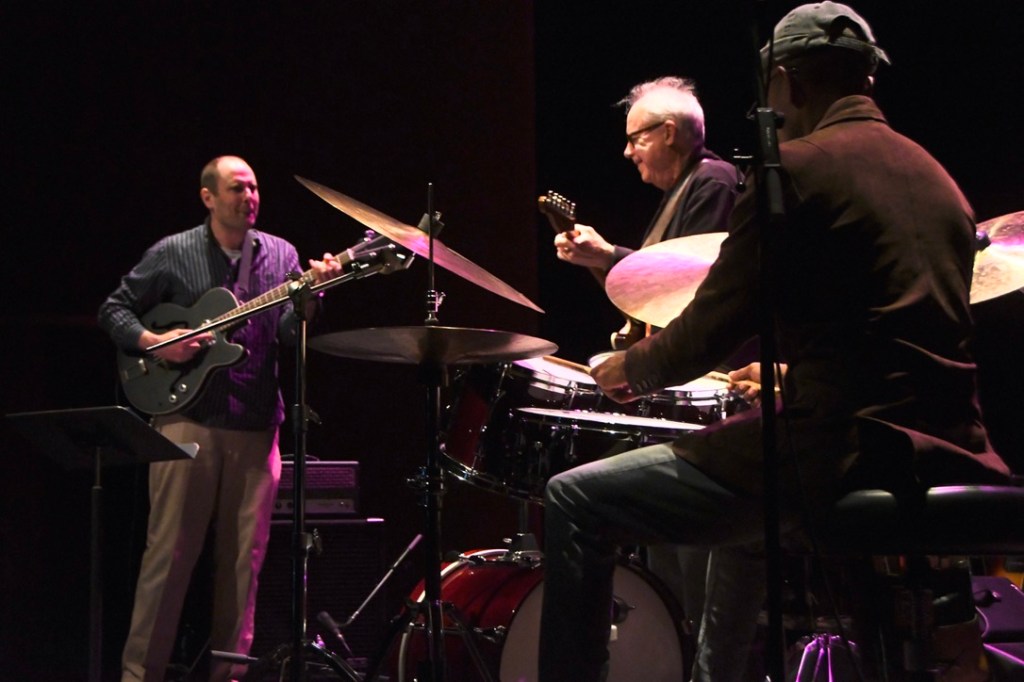
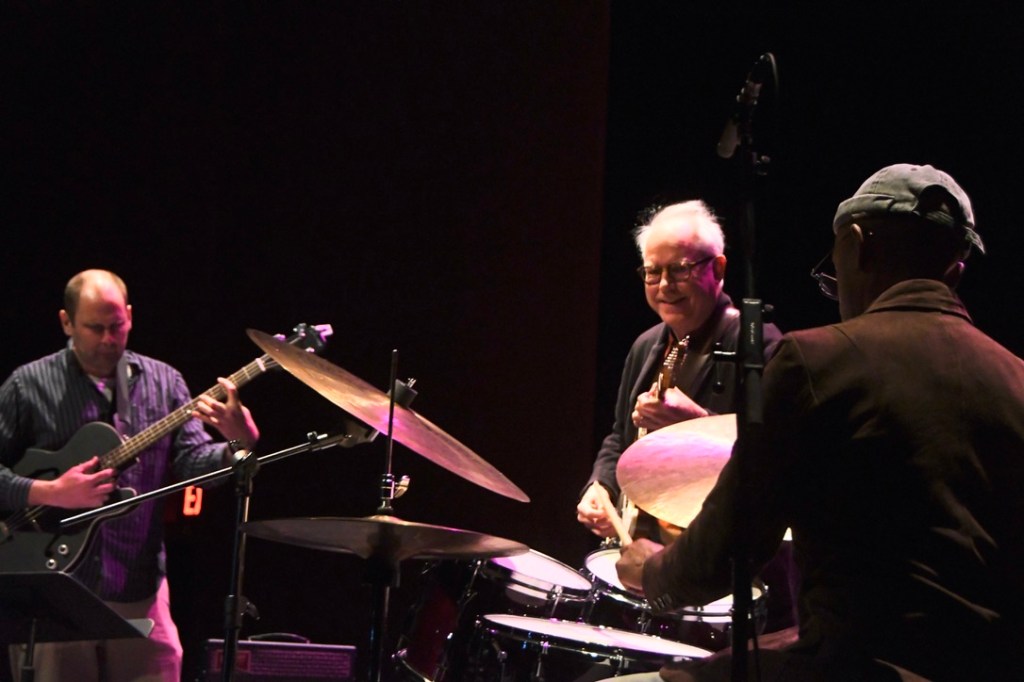
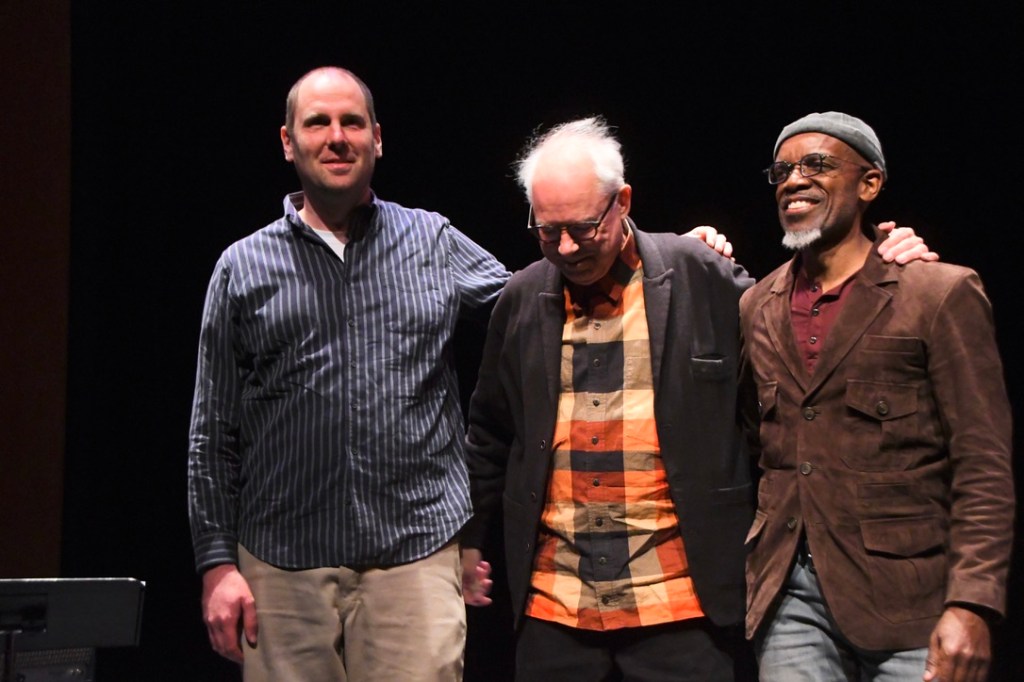
Bill Frisell Trio – From left: Luke Bergman, bass; Frisell, guitar; Rudy Royston, drums
“Dude, that was the longest song I’ve ever heard,” an awed fan told guitarist Bill Frisell after a recent solo show. Saturday’s seamless trio reverie at The Egg’s Swyer Theatre clocked 95 minutes. Apart from a pause between the set-closing “What the World Needs Now (Is Love Sweet Love)“ and the encore “You Only Live Twice,” they never stopped.
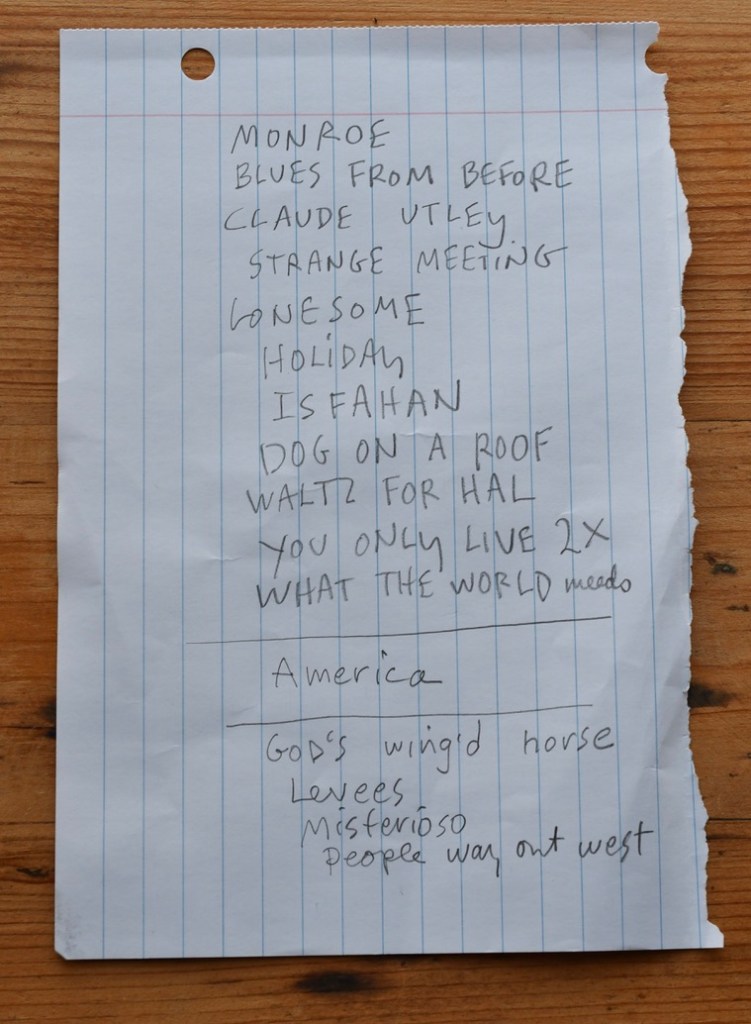
The setlist that sound engineer Kevin gave me listed 11 songs, but things flowed in an unbroken sweep of improvisation. (Note they swapped “What the World Needs” with “You Only Live 2x.”) What could maybe have been identified as separate songs felt like one piece; chapters in a novel, maybe, or a conversation among friends.
Frisell’s friends – that’s how he introduced them – were drummer Rudy Royston and bassist Luke Bergman, the latter in for regular Thomas Morgan. Kevin said this substitution warranted a set-list; Frisell usually doesn’t map his shows but instead expects bandmates to figure it out on the fly, as he told the TU’s astute R.J. DeLuke: “When we play, we’re just doing it all together.”

Hats off to Bergman for getting up to speed fast, joining the intuitive closeness Frisell and Royston have built. This was the sound of three minds thinking, moving six hands (and Royston’s feet) through a dance. Taking a bow afterward, Frisell noted he and Bergman wore identical shoes, wryly complaining about Royston’s different footwear.
Saturday’s sweeping suite evolved in linked episodes; first as a sound, then a song, then a groove. Frisell gradually mutated one melody into another via a new guitar phrase, beat or tone amid the ongoing one, like painting graffiti on a moving train. He never had to cue anybody, but Bergman recognized something new and shuffled his charts to stay current. Frisell smiled when Royston or Bergman responded in a way he liked, or tossed him something new to incorporate, turn inside out or upside down or simply hand back.
Their kinetic fluency was breathtaking to watch; their variety, spell-binding.

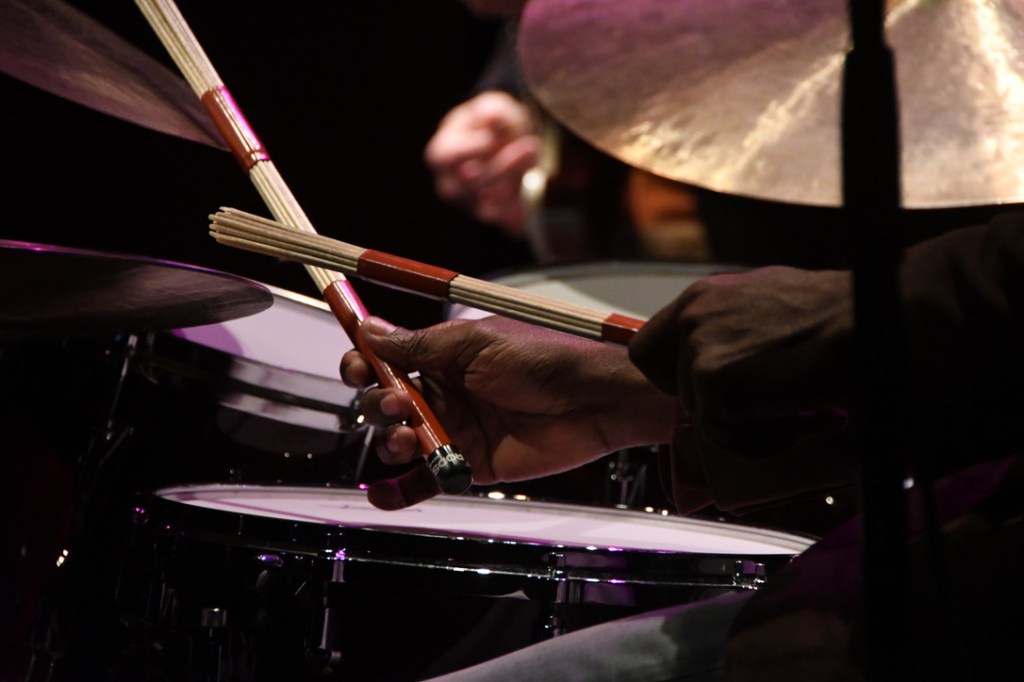
Royston often played the melody on his drums, hitting exactly on a Frisell guitar note; but he never neglected the push, the meter. His kick-drum alone would have given the trio all the rhythm it needed.
Most often, they made meditative mood music, but they rock-and-rolled, flew to the Caribbean, Iberia, west Africa, the Mississippi Delta and strolled into city blues bars or jazz clubs. They made a precise minuet, a dreamy ballad, a back-alley brawl, a classy cotillion, a rock and roll explosion spawned by shared restlessness. And there were quotes all over the place, complicating any Name That Tune try. “What Is This Thing Called Love” popped up in an airy groove, then “Autumn In New York” turned things bluesy.
Solid as Gibraltar or wispy as a mist, transitions felt elastic; you knew something fresh was coming, but the new flavor often came in subtly.
After this all original roller coaster, style shuffle with world-music spin-the-globe accents, Frisell moved into the familiar. This followed early mentor Sonny Rollins’s improvising with “music from his childhood…what he was hearing on the street…saw in a movie or whatever was going on around him,” as Frisell told R.J. DeLuke.
“What The World Needs Now (Is Love, Sweet Love)” formed organically, like everything else, from clouds of sound the three wove in the long jam. In fact, it grew from noisy eddies of a brusque looped-guitar scream-fest. Offering straight readings of its yearning melody, they then pumped fresh jazz freedom into the 60s hit.

Returning to encore, they stayed with the familiar, gradually forming the James Bond theme “You Only Live Twice” out of the silence, then running the changes.
Fans looked at each other: “I KNOW this, but what IS it?”
Another Frisell song, or part of Frisell’s long song.
For the longest song you might ever hear, Frisell leads his trio (Royston and regular Thomas Morgan) tonight at the Levon Helm Studios in Woodstock; then he plays Bombyx in Northampton in February with an expanded band. To Royston and Morgan he adds strings: violist Eyvind Kang, cellist Hank Roberts and violinist Jenny Scheinman, recently heard at Caffe Lena with folksinger Robbie Fulks.
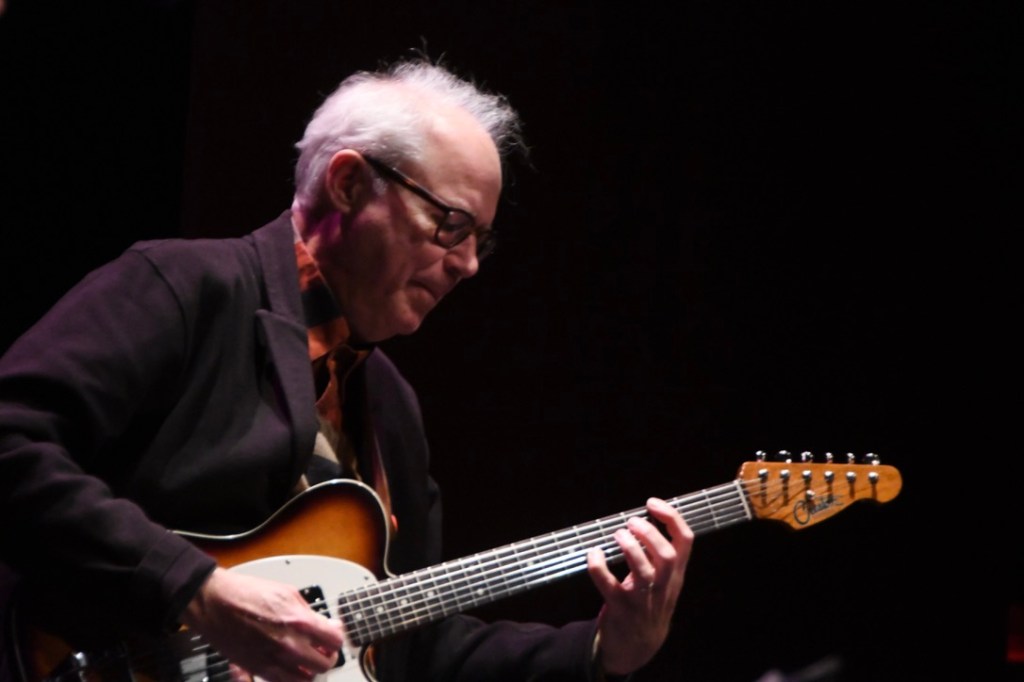
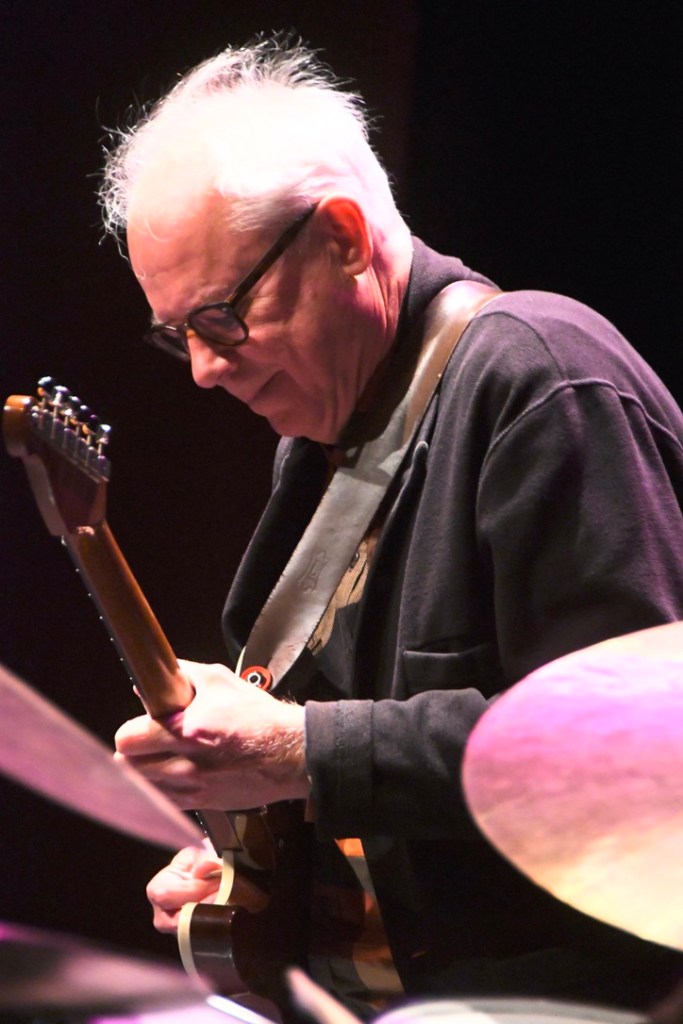
NERD NOTES: A floor-level mic faced Royston’s kick drum, with two mics on stands behind him, one over each shoulder, facing forward. This delivered a full, clean sound from his snare, floor tom, two rack toms, hi-hat and three cymbals. Frisell flat-picked a Creston Sunburst Custom, using foot pedals sparingly for looping, sustain, fuzz-tone and other effects. He’d loop an electronic ostinato and solo on top. Bergman’s hollow-body Harmony bass guitar recalled the similar Gibsons Jack Casady (Jefferson Airplane, Hot Tuna) has played for decades; picking with his thumb, like Casady does. But Bergman’s sparse, beautifully-placed notes resembled the late great Phil Lesh (Grateful Dead).
A kind reader corrected my originally erroneous naming of Frisell’s guitar. This reference is correct.
 Hoke's Jukebox