

Breabach at Proctors GE Theatre, Passport Series Presented by Music Haven, Friday, October. 11, 2024
“It’s like we were listening to the past,” mused Calum MacCrimmon of Breabach Friday in Proctors GE Theater, introducing a graceful, stately march by the late John MacKenzie. More often, however, the Scottish quintet explored a future in re-imagined, energized ancient tunes that flew fast and far, like jazz. Sad laments of displacement were few, compared to Irish music, while spry, spirited dance numbers gave an upbeat and mostly instrumental ride, navigated by young masters.

This first of six Proctors Passport shows presented by the international-minded Music Haven organization set a high bar in the way Music Haven shows in Central Park often do. Sheer virtuosity pierced past barriers of unfamiliarity or strangeness, in either styles or performers.
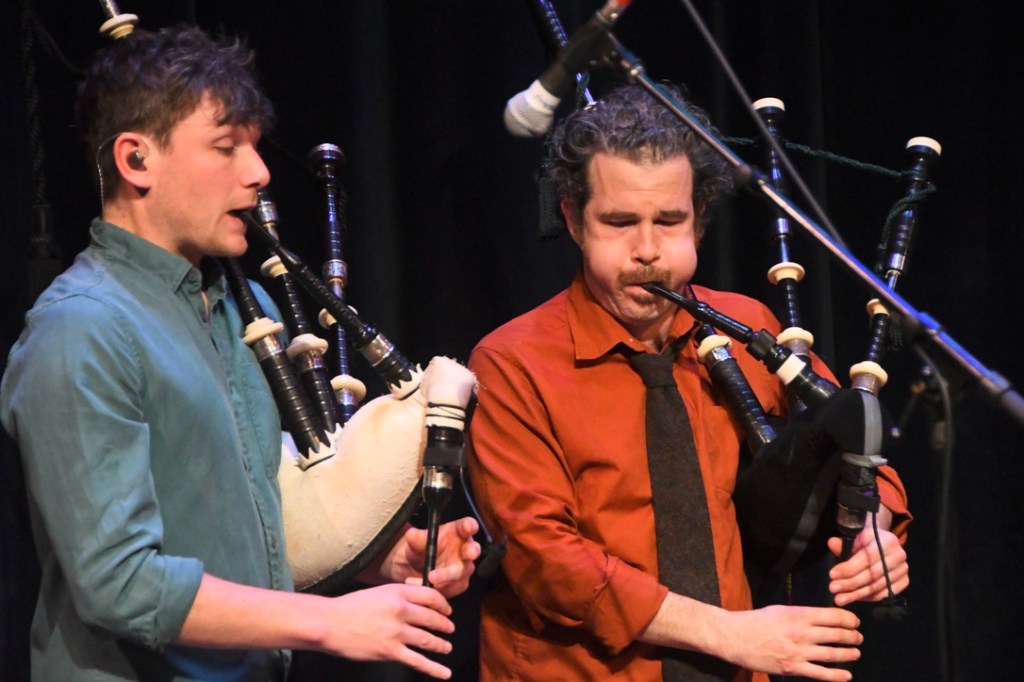
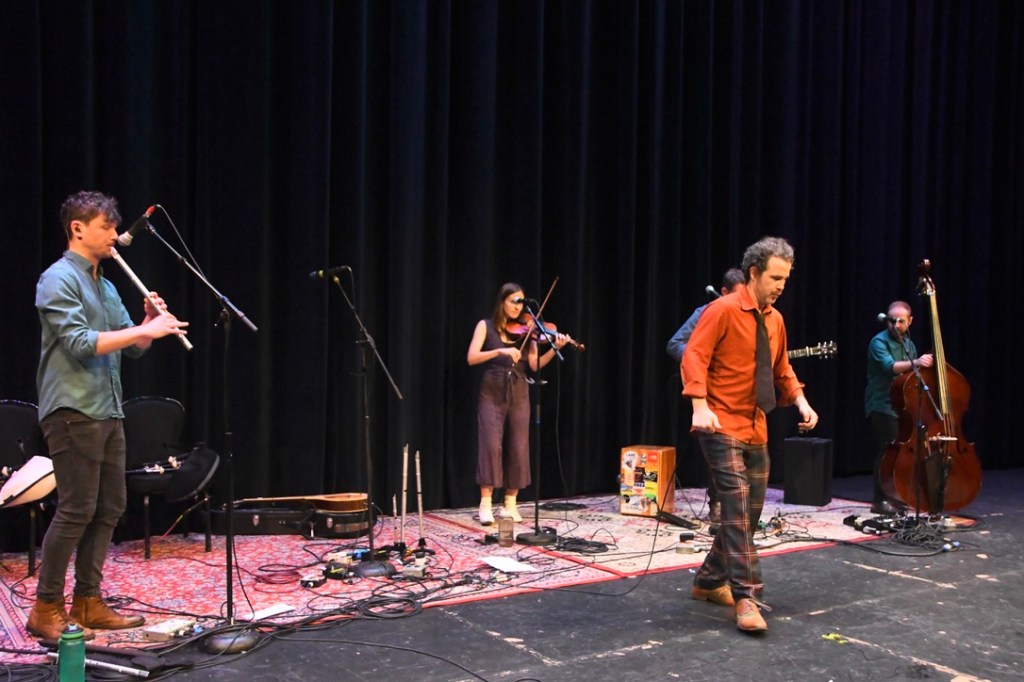
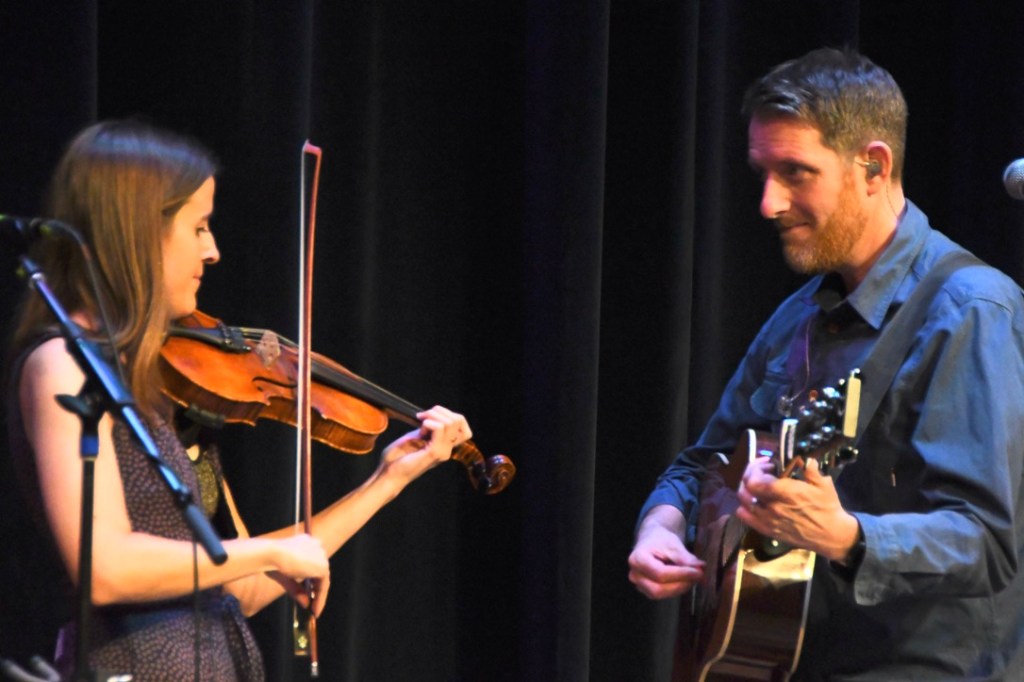
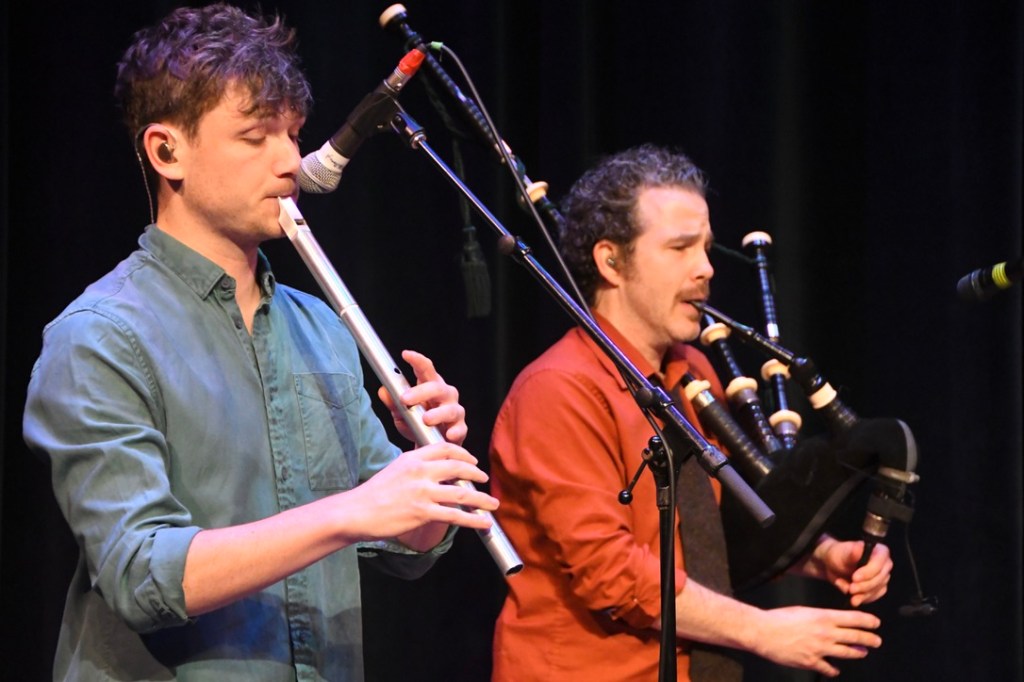
No one announced Breabach Friday; they walked on, grabbed instruments and let fly. Stage right stood bagpipers and whistle players Conal McDonough and MacCrimmon (who also played bouzouki and sported plaid slacks), with fiddler Jenna Moynihan center stage (in for Meghan Henderson, on maternity leave), then guitarist Ewan Robertson and bassist James Lindsay. They all sang; and Robertson foot-pedaled rhythms from the cajon where he sat, while MacCrimmon stepped forward to step-dance several times.
He also put the audience to work late in their 80-minute set, explaining how bagpipers learn new tunes by singing them and enlisting the audience to do this: “You’re the choir,” he said, teaching/assigning a complex pattern.
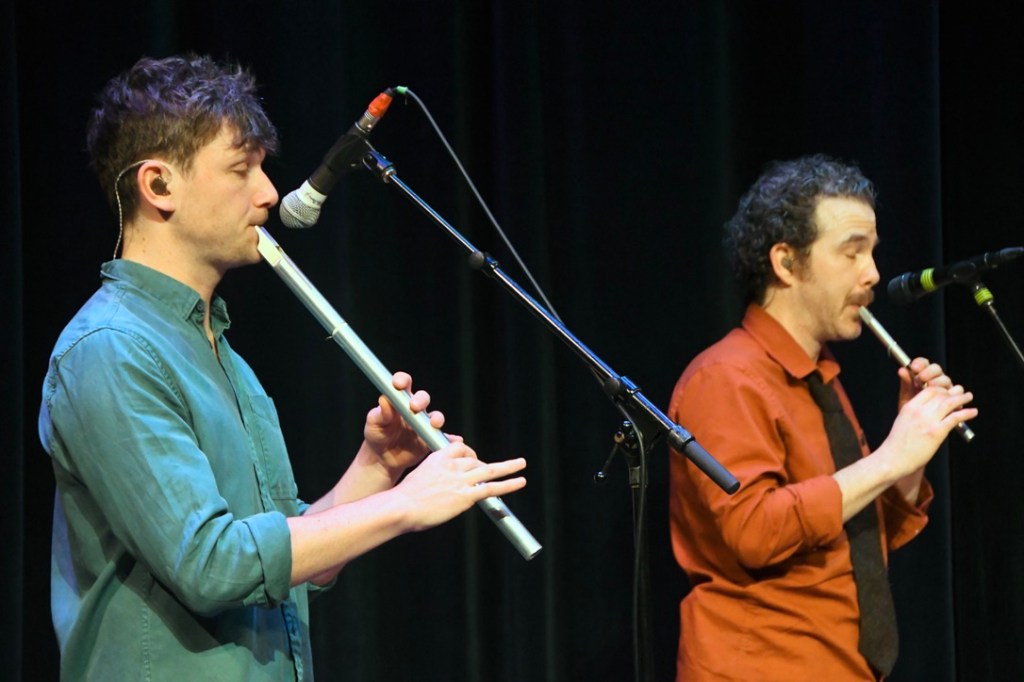
To start, they medleyed “Farsund” about a Norwegian village (reminding us how close are the British Isles to Scandinavia) into “Brog to the Future” from their new (seventh) “Fas” album. Segues moved smooth as their playing. The stately mood of their twin whistles jumped strong into jaunty bagpipe riffing in “Birds of Passage.” Moynihan proved a more than capable substitute for Henderson, singing “Across the Western Ocean” as MacCrimmon switched to bouzouki and sang harmony to plaintive, touching effect, mixing hope and melancholy.
Songs again blended as “John MacKenzie’s Last March,” a wonderfully apt emotional match for “Across,” just before, and a stellar bagpipe number; erupted into the higher-energy French Canadian “Pieds Heureux” (Happy Feet). (They’re on their way to play Cape Breton’s Celtic Colors festival.) Then they returned home musically to Glasgow, Lindsay explaining an earlier name for the city was “Dear Green Place” to set up their slow, sweet “Dear Green.” Nice syncopated bagpipe riffing here.
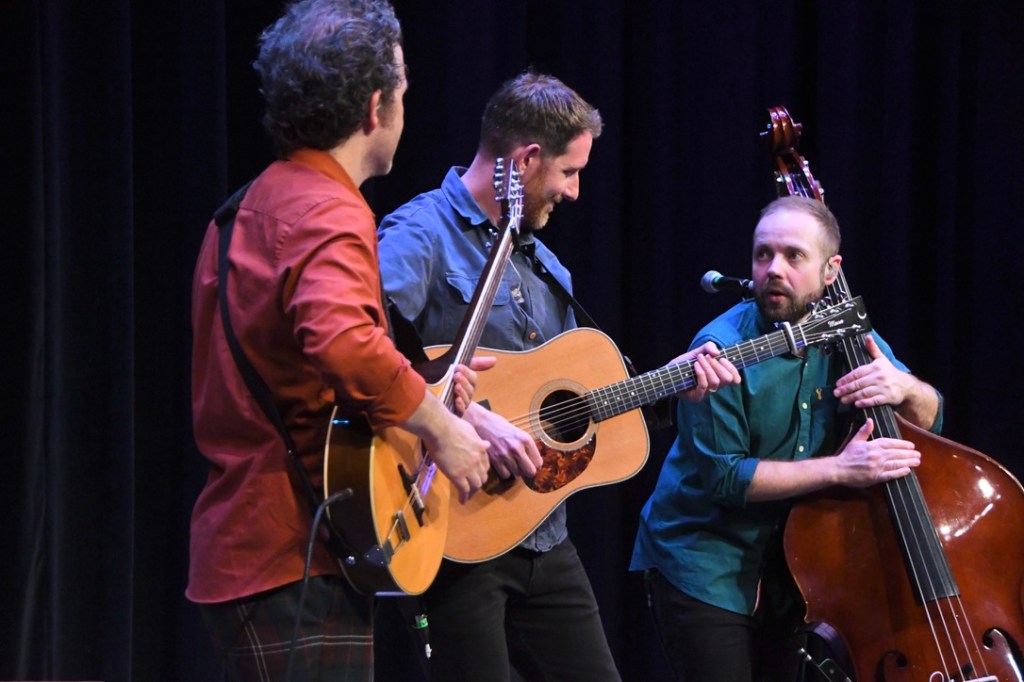
MacCrimmon’s bouzouki blended beautifully with Moynihan’s fiddle and vocal in the early verses of “Changing World,” then his voice did the same with hers in the harmonized coda. This one medleyed, too – Robertson, MacCrimmon and Lindsay stepping to the front, standing close and swapping percussive riffs in “Striking Clock” with its stop-and-go coda.

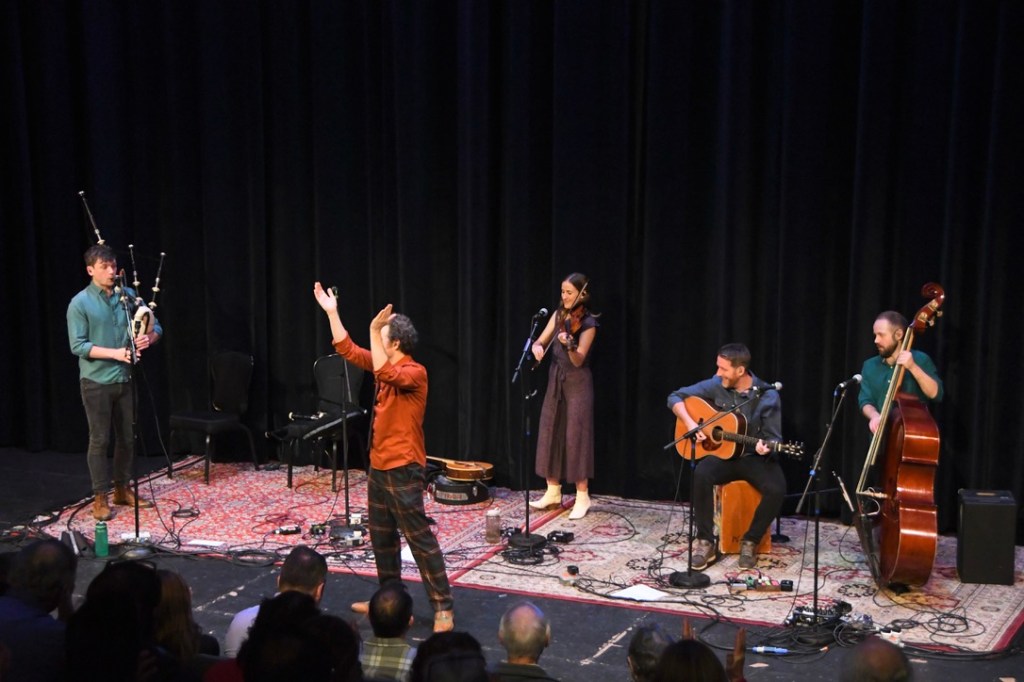
Then: our turn. In “Gig Face,” we were invited/gently challenged to sing a complex passage in Gaelic, in the style of bagpipers’ learning process. Lindsay owned this one, though: His solo here roared and romped, then Moynihan played just as strong. Even te singalong worked.
The late medley launched with John Morris Rankin’s peaceful, elegiac “The Last March” shifted uptempo in “Ramparts,” gathering energy into a rambunctious dance whose title – “We Were Poor, but We Were Miserable” – felt maybe more wryly fatalistic (Irish?) than anything earlier.
Announced as their last tune, “Knees Up” – obviously a dance number – bounced on a complex stutter beat before a departure-less encore of “Good Drying” got fans up and clapping.

Hats off to substitute fiddler-singer Jenna Moynihan for filling this double role ably, and to soundman Raymond Yates whose engineering gave clarity and punch to the music, with such subtle touches as adding reverb to MacCrimmon’s bouzouki playing for an organ-like sustain when he accompanied Moynihan.

More than mere accuracy, the right notes in the right place, they played a feeling. Energetic dance numbers engaged the crowd at a more cheerful, physical level than quieter, thoughtful tunes. To their credit, Breabach didn’t over-indulge this. Their melancholy, slower numbers underlined how the Celtic music that reaches here is often about immigration, about hope of a new life in a new land ambivalently packing sadness in its trans-Atlantic luggage. Then again, they packed the bones of bluegrass.


 Hoke's Jukebox