Grateful Dead Bassist Phil Lesh RIP; 1940-2024

Half a minute into “New Potatoe Caboose,” I got it.

Listening to the first side of “Anthem of the Sun” after Phil Lesh died, I got it.

There on the Grateful Dead’s second and trippiest album, the jam on “The Faster We Go the Rounder We Get” had faded into delicate guitar filigree. 

Then a nine-note Lesh bass guitar line opened the door into what came next. The chiming treble stuff before felt serene and relaxed. But this, this was it – a gentle string of notes so peaceful and consoling that I felt I understood, once again and completely, what the Grateful Dead were and did. As Lesh developed the song from underneath, they followed his map.

In the Grateful Dead’s mission, to get people and places high by shaping feeling states in sound, Lesh was uniquely central. As the bridge between beat and melody, he played around with time, so the band swung; and he brought a classically-trained harmonic sophistication to jams. He came to the Grateful Dead, to the electric bass guitar, via violin and trumpet, through orchestras and jazz big bands, so his musical mind was a big tool box. Lesh nudged the voices, guitars and keyboard in new directions, whether they were all in full flight or dank doldrums in need of a fresh idea. He had the key.

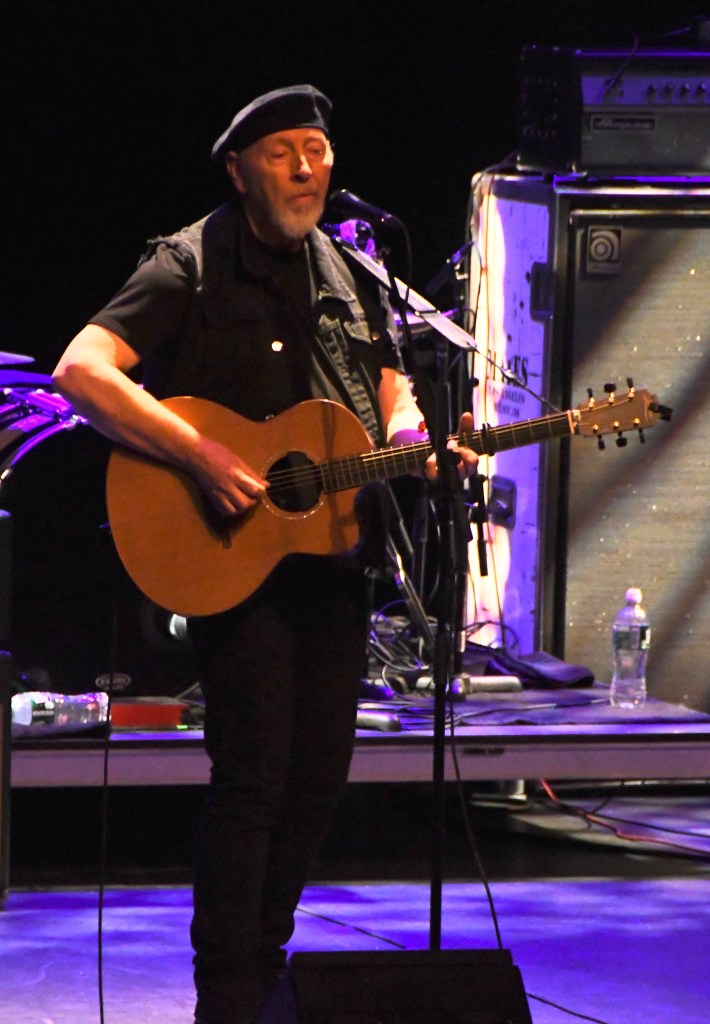
Phil Lesh onstage at the Knickerbocker Arena; March 26, 1993

Lesh played with a pick, phasing with clean, percussive articulation. He seldom played very fast; his grooves were restrained, sparse – but also propulsive, powerful when he pushed things. You can hear the urgency, the glee, in every note.

Put on “New Potatoe Caboose” and you can hear all of that, and might find yourself hanging out, as I did, in Phil’s section of the bus, listening to the song especially to hear what he did with it.

“Anthem of the Sun” and “Aoxomoxoa” (1969, the year after “Anthem” and same year as “Live Dead”) may feature Lesh’s spaciest, out-there playing, ethereal and abstract. But his best-known composition “Box of Rain” (from “American Beauty” 1970) reaches just as deep in the opposite direction, mourning his father’s passing in earthy, emotionally accessible simplicity.

After Jerry Garcia died in 1995, Phil was part (or not…) of successor bands that formed and faded. After 30 years of mostly knowing who the Grateful Dead were (except for keyboard players and some guests), things got murky amid rumors of power struggles.

Some of those bands were cool despite all that, and I mostly liked them because each, under whatever name and however briefly, managed that joyous Grateful Dead powerglide. 

I saw the Grateful Dead nearly as much as I’ve seen NRBQ; including shows at SPAC, in Albany and Troy.

Thank you, ticket-generous longtime Dead publicist Dennis McNally!

Diving into nostalgia, let me recall some extra-fine Dead shows. When I caught them with the New Riders at the Agora in Columbus in November 1970, I was blundering lost around America after leaving the Navy and years spent overseas. They brought me back home, in the same city where I was born.
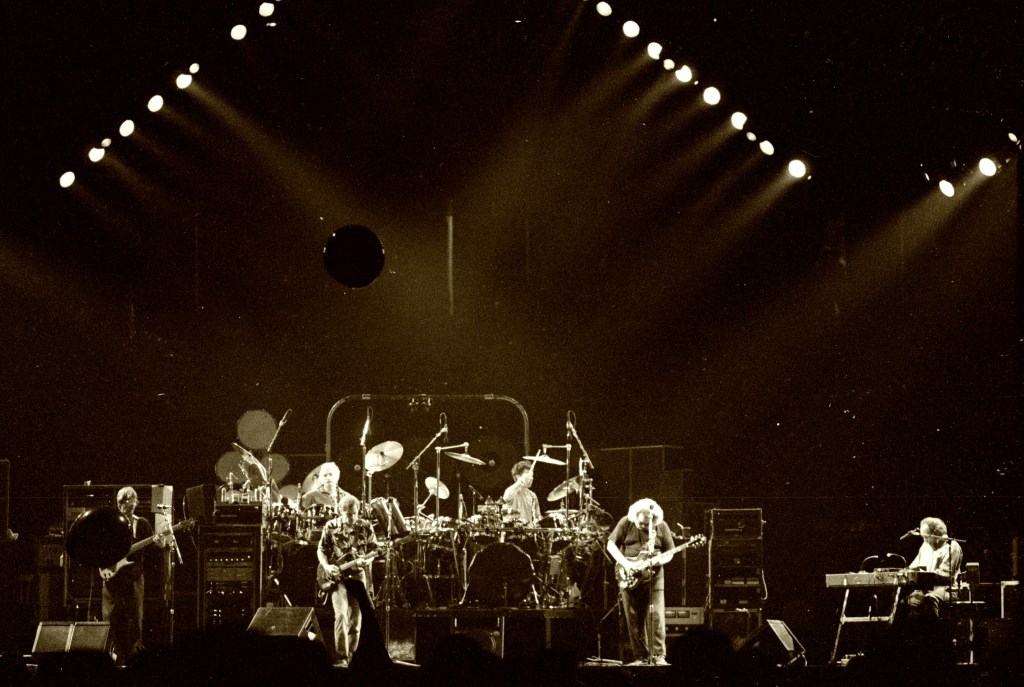
The Grateful Dead at Knickerbocker Arena, March 24, 1990. From left: Phil Lesh, Bill Kreutzmann, Bob Weir, Mickey Hart, Jerry Garcia, and Vince Welnick

They brought their “Wall of Sound” monster PA to Hartford’s Dillon Stadium in July 1974 and played three full sets. They bonus’ed us with Phil’s break-time set with Ned Lagin in “Seastones” – a surging space-rock torrent of electronic noise. In this deep-exploration interlude – and the whole five-hour marathon – Phil’s bass shook the ground.

Another bonus: When the Rolling Stones played the former Rich Stadium in Buffalo, third date on their 1981 tour, their publicist Ren Grevatt graciously provided press tickets, then offered, “Want to see the Grateful Dead the night before? They’re at War Memorial Auditorium.” Yes, yes, please. My fellow Capital Region writers and I – Don Wilcock, Troy Record; and Steve Webb, Knickerbocker News – got to see the most musically coherent and powerful Dead show of the 50 or so I’ve caught over the decades. They’d actually been rehearsing, before touring Europe, and were razor-sharp; WAY better than the Stones.

 But I  never saw them play Phil’s heavenly segue from “The Faster We Go the Rounder We Get” into “New Potatoe Caboose.” I never saw Phil play onstage the warmly comforting peace of those nine perfect notes.

Now I’m glad I can hear them on the album any time. And I need them now in these fear-filled, ugly times. Miles Davis’s “Kind of Blue” is my healing music for solace in the dentist’s chair or cardiac fixes. But those nine notes really do it for me, too.

On my walk yesterday, I spotted a pickup down the block with a big blue and red banner flying from its bed. I groaned a bit, fearing a particular flavor of ugly campaign graphic. But I felt relieved when a breeze lifted and unfurled it so I could read: “Presidents are temporary but Wu-Tang is permanent.”

So are those nine notes.

So is Phil Lesh.

Last Notes of the Season

PREVIEW – Bria Skonberg Quintet Friday at A Place for Jazz 

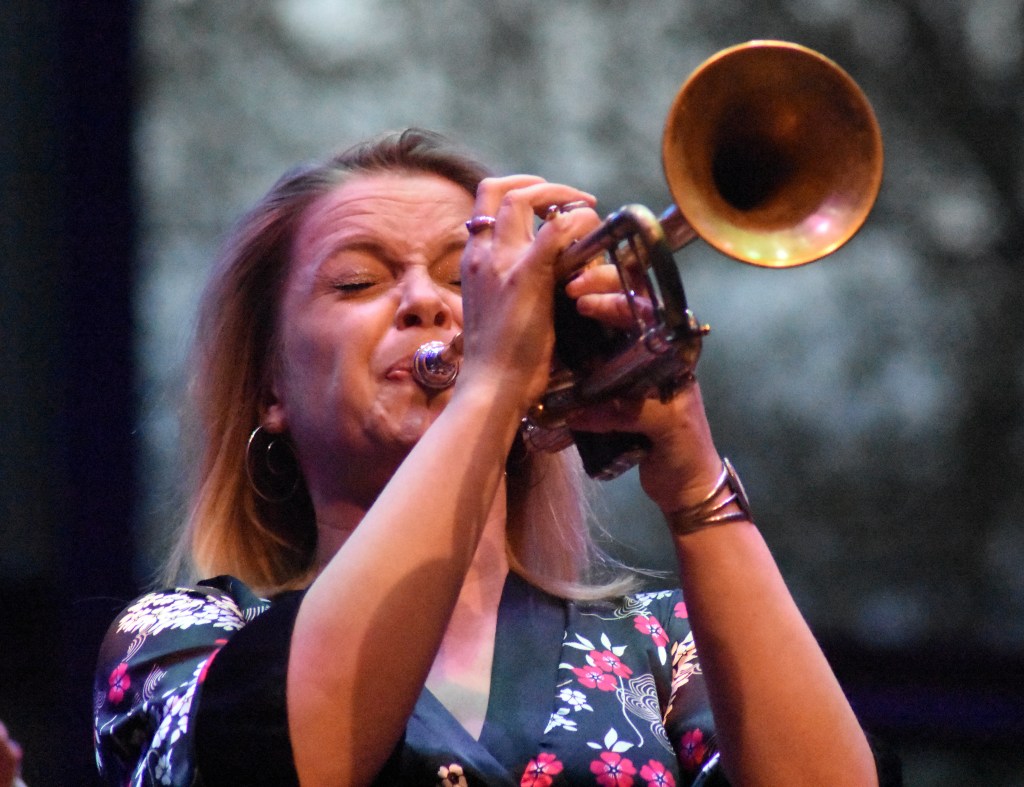
You can hear Bria Skonberg’s love for Louis Armstrong about two notes into her first solo; her mastery of the great maestro’s sound and style rings that clear.

The Canadian-born trumpeter and singer brings her Quintet to A Place for Jazz Friday, final show of the season. In this latest in a decade-deep string of area shows, Skonberg will likely express more clearly than ever her love for Armstrong’s fill-the-horn-and-heart gusto, his micro-precise hesitation phrasing that’s the very essence of swing. 

Bria Skonberg at Skidmore’s Zankel Music Center. Michael Hochanadel photos

Skonberg’s post-COVID new album “What It Means” features top New Orleans players including drummer Herlin Riley, banjoist Don Vappie and sousaphone player Ben Jaffe. Jaffe leads the Preservation Hall Jazz Band, which his parents founded in 1961. The band plays March 8 at The Egg. “I’ve seen the band many times, and have been lucky enough to sit in,” Skonberg says on her website, noting this powerful credential of acceptance by New Orleans masters.

Just as Skonberg explores more modern trumpet approaches that have evolved since Armstrong mapped the future for jazz soloists, she reaches past New Orleans antique tunes onstage and on record. “What It Means” presents both vintage numbers and John Lennon’s “Beautiful Boy” – she’s a parent now, herself – and Van Morrison’s “Days Like This.”

Skonberg’s previous area shows include A Place for Jazz in 2014, at that time presented in the Unitarian Universalist Society “Whisperdome;” Skidmore’s Zankel Music Center and the Troy Savings Bank Music Hall. Her previous A Place for Jazz show brought a thrilling, generous moment: Charmed by the middle school students playing offstage in the Society’s dining room during intermission, she invited them to join her band on the main stage.

Her new album expresses both her warm kinetic reverence for Satchmo-soul swing and swagger and her joy at emerging from COVID’s isolation. That’s what “What It Means” means. Her title is the core of that essential Crescent City anthem “Do You Know What It Means to Miss New Orleans” and she’s dedicated to taking us there. The album features her regular touring pianist Chris Pattishall plus bassist Mark Lewandowski, drummer Darrell Smith and reeds player Julian Lee.

The Bria Skonberg Quintet plays A Place for Jazz Friday, Nov. 1. 7:30 p.m. in the Carl B. Taylor Auditorium of the SUNY Schenectady Community College School of Music. $25 at the door. http://www.aplaceforjazz.org.

FINE (AND FUNKY!) START

CHRISTIAN MCBRIDE AND URSA MAJOR AT SPA LITTLE THEATER, THURSDAY, OCTOBER 24

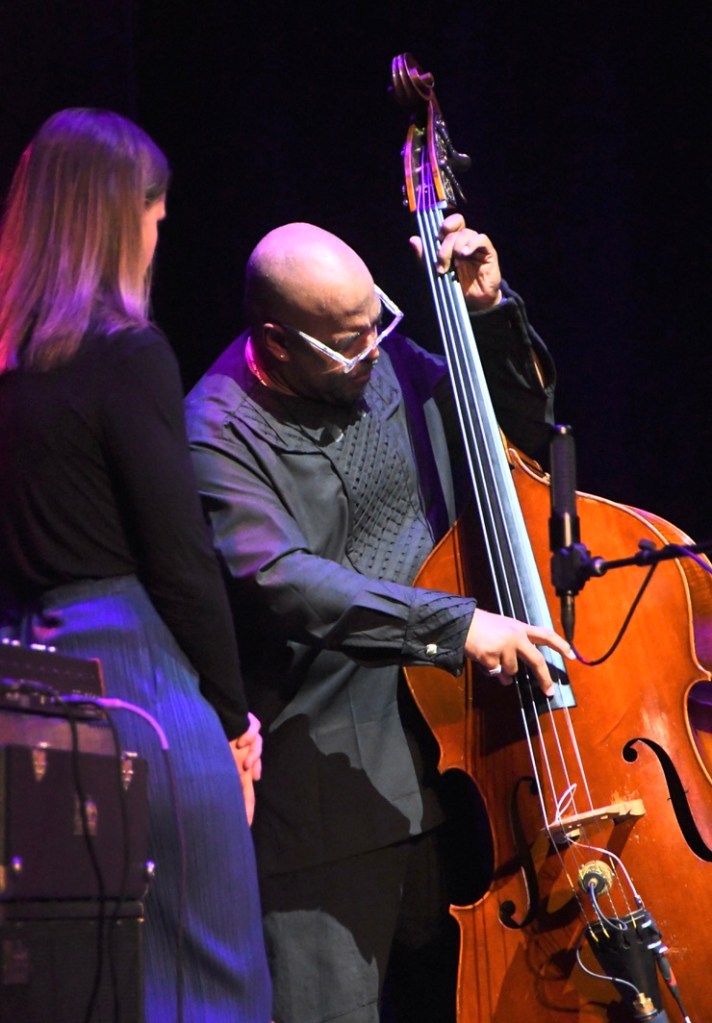
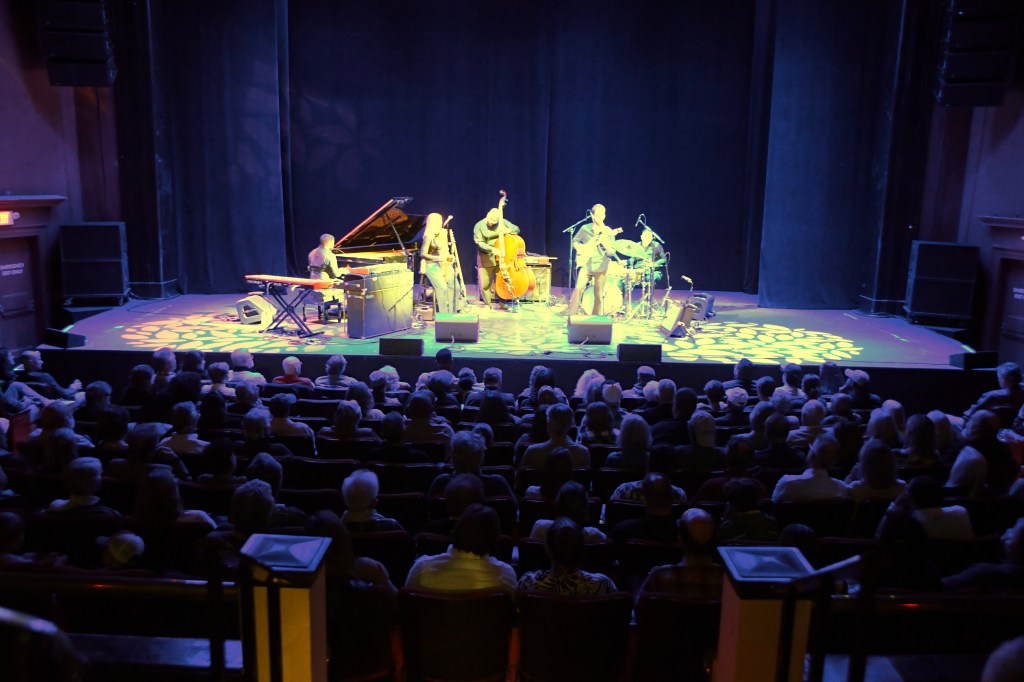
Christian McBride set his bass behind his new Ursa Major band at the Spa Little Theater Thursday, but his massive sound, skill and spirit filled it in the first show of SPAC’s new McCormack Jazz Series.

Christian McBride, center, and Ursa Major, from left: Michael King, piano and keyboards; Nicole Glover, tenor saxophone; Ely Perlman, guitar; and Savannah Harris, drums

He introduced his young new (since 2022) bandmates as stars; that’s how they played. 

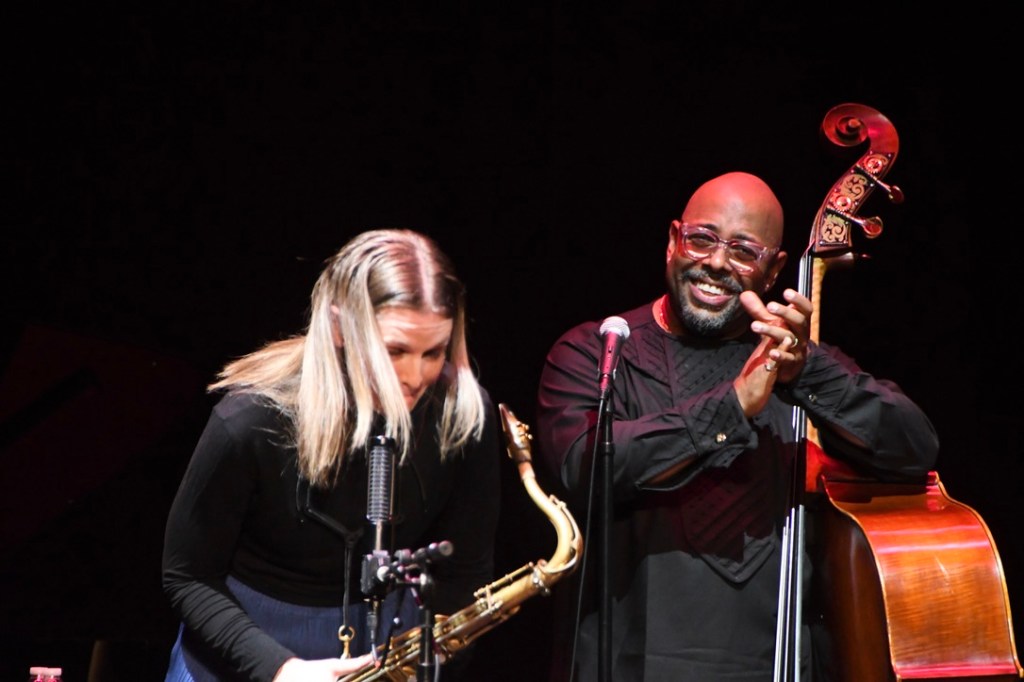
McBride introduces saxophonist Nicole Glover

McBride recalled first playing Saratoga at 18 on SPAC’s former “Gazebo Stage” with saxophonist Jesse Davis; and he’s returned often as bandleader and sideman. Thursday was very much his show as amiable host, hot soloist and indispensable bold beat master.

The modernist abstract “Theme for Malcolm” started a bit tentatively but gathered strength in solos from guitarist Ely Perlman, saxophonist Nicole Glover and keyboardist Michael King, with McBride and drummer Savannah Harris hot from the start. McBride later touted his musical bond with Harris as the “heart-beat, the motor” of the band, and their power carried everything.

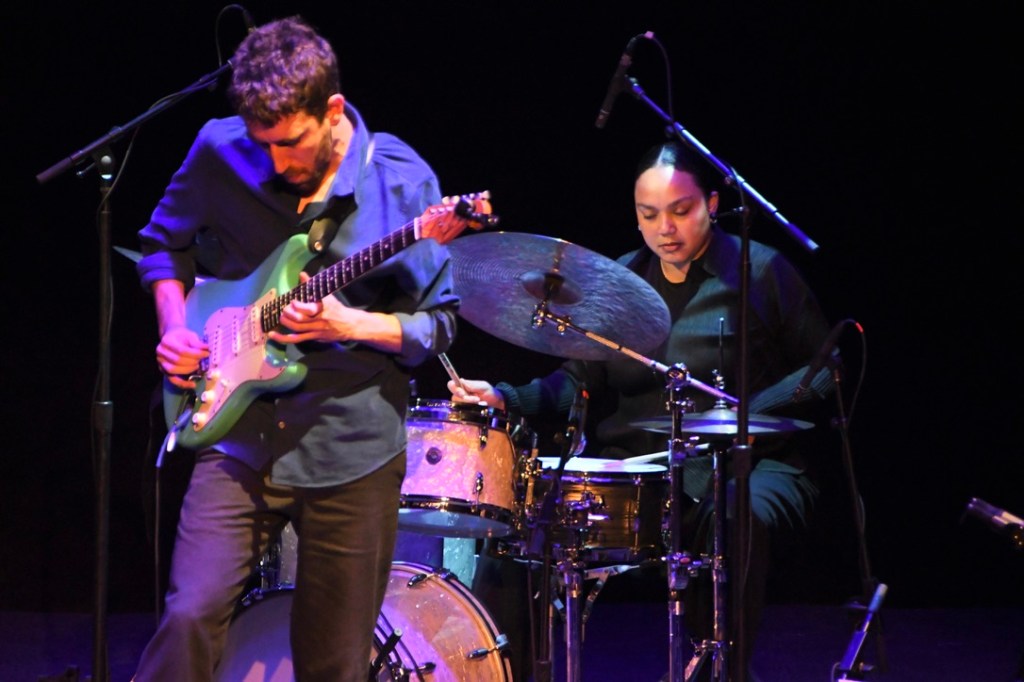
Ely Perlman and Savannah Harris

Michael King

King’s “S’Mo, street for “some more,” cruised on a accessible, straight-ahead, mellow- groove energy. The audience applauded solos even before they ended while Glover and Perlman played crisp harmony lines (different notes, same place). McBride slowed the tempo in a cozy trio section before the frontline joined to bring it home, breezy and blithe.

Noting he’d left his shoes at the hotel but assuring feet and socks were clean, McBride intro’ed Perlman’s “Elevation.” This notably pristine impressionistic number grew from soft, echoey guitar by its composer into a gently pulsating ride. Perlman played with reverb like bouncing off the moon, King damped his piano strings and Harris worked cymbals before tossing the spotlight to McBride with a snare riff. McBride led the band back toward the head via a pause for Harris to take her first real break of the night. 

Nicole Glover and Christian McBride

Just as Perlman started “Elevation” alone, McBride mapped out Chick Corea’s spritely “La Fiesta” with bass fireworks for five dazzling minutes before Harris and King romped and stomped in; then the front line hit in tight harmony riffing. Wild, free solos flew far, all cheerful zip that settled into a recap with another Harris explosion.

Next up, Harris’s tune “More Is,” its title and mellow glide like cousins to King’s earlier “S’Mo.” Harriet set a march-beat pushed hard by McBride’s shift from double-bass (acoustic) to five-string electric, twin motor of a big wave. King started on synthesizer but shifted to a mellower Rhodes sound as Glover and Perlman harmonized beautifully before Perlman hit a solo hot-spot. 

Savannah Harris

McBride stayed with the electric bass and King with the Rhodes in McBride’s driving closer “Brouhaha.” This was wide-grin, go-for it funk. Perlman unleashed his inner Cory Wong in blistering chord chops with John Mayer-worthy grimaces. Everybody dug deep in the roiling beat, a smash finish. Like everything before, this felt deliciously unanimous. Glover swapped her customary fluent scales for crisp, staccato licks, clipped and propulsive.

Nicole Glover

McBride, Harris and King settled into an overdrive trio section before nod-cueing the front line to jump on a repeating, road-running downhill riff – as fast and fun as the Wootens in full funk at the Troy Savings Bank Music Hall two weeks ago. 

Arguably today’s top bassists, McBride and Victor Wooten show what mighty music happens when big talents push great bands from the bottom. After Chick Corea’s “La Fiesta,” McBride had proclaimed “We still feel Chick’s spirit” in his song; we felt McBride’s Thursday.

When McBride peered out into the sold-out house to thank series inspiration Don McCormack, the Saratoga jazz super-fan stayed seated in the dark, modestly letting the music do the talking.

The six-song show spanned 95 minutes without an encore versus the 75 stated in the program; everything stretched generously.

McBride called this series the “off-season,” like Proctors Passport series, which curator Mona Golub calls “between the summers.” Both these and A Place for Jazz welcome off-season fans into inviting spaces: the Spa Little Theater, the Proctors GE Theater/Universal Preservation Hall and the Carl B. Taylor Auditorium at SUNY Schenectady’s Music School, respectively.

The McCormack Jazz Series at the Spa Little Theater:

November 22: Dorado Schmitt and Sons: Django Festival All-Stars, and Hot Club of Saratoga

April 5, 2025: Alfredo Rodriguez Trio

May 1, 2025: Veronica Swift

And A Place for Jazz wraps its season Friday, Nov. 1 with trumpeter-singer Bria Skonberg’s Quintet.

New SPAC Fall Jazz Series Opens with Top Bassist Christian McBride and Ursa Major

“My career is no longer for the benefit of just me,” says “he’s-everywhere” jazz bassist Christian McBride on his website.

McBride brings his new band of younger players – Ursa Major – to open the McCormack Jazz Series Thursday at the Spa Little Theater on the SPAC grounds. 

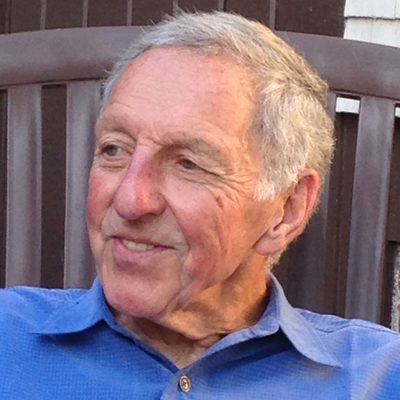
Don McCormick supports jazz everywhere, especially around Saratoga. As founder of the Skidmore Jazz Institute (in 1987), a training and mentorship program with world-class teachers, McCormack is very much on the same page as McBride in nurturing next-gen talents.

Christian McBride. Photo provided

As performer, composer and leader, McBride earns his “he’s everywhere” thing by leading five bands, plus Ursa Major: Inside Straight, The Christian McBride Big Band, The Christian McBride Trio, Christian McBride’s New Jawn, and A Christian McBride Situation.

He’s played everywhere including often at Freihofer’s Saratoga Jazz Festival. In 2007, McBride, Jack DeJohnette and Bruce Hornsby hit Northampton’s Calvin Theater on their Camp Meeting tour; a few months later he played the Troy Savings Bank Music Hall with Pat Metheny and Antonio Sanchez. 

McBride’s bands are an opportunity one for fresh talent. Inside Straight co-stars pianist Christian Sands, vibraphonist Warren Wolf and drummer Ulysses Owens Jr. McBride’s trio features Sands and drummer Jerome Jennings. A Christian McBride Situation adds turntablists DJ Logic and Jahi Sundance to conventional players pianist Patrice Rushen, saxophonist Ron Blake and singer Alyson Williams while the New Jawn is McBride with trumpeter Josh Evans, saxophonist Marcus Strickland and drummer Nasheet Watts.

One of the busiest leaders, educators, catalysts in jazz, McBride keeps exploring in new directions. 

His new “But Who’s Gonna Play the Melody?” album with Edgar Meyer may be as basic as jazz gets – two double bass virtuosos swinging and rocking. Ursa Major is aggressive young virtuosos.

Now 62, McBride stands half a musical generation older than this new crew.

Pianist Michael King started on the drums in his Chicago church at four. A graduate of Lincoln Park High School, Oberlin Conservatory, the Thelonious Monk Institute and the Ravinia Jazz Scholars Program, King has played with Bobby Watson (as did a young Christian McBride), Kevin Eubanks, Dave Liebeman, Gary Bartz, Billy Hart, Joel Frahm, Rufus Reid, Antonio Hart and others.

Drummer Savannah Harris grew up in Oakland with musician parents and chose the drums at two. She plays experimental and straight-ahead styles, recording and touring with Geri Allen, Jason Moran, Ambrose Akinmusire, Terrence Blanchard, Linda May Han Oh, Billy Childs, Immanuel Wilkins, Joel Ross, and Aaron Parks. In 2019, Savannah received the Harlem Stage Emerging Artist Award and earned her master’s in jazz performance from the Manhattan School of Music.

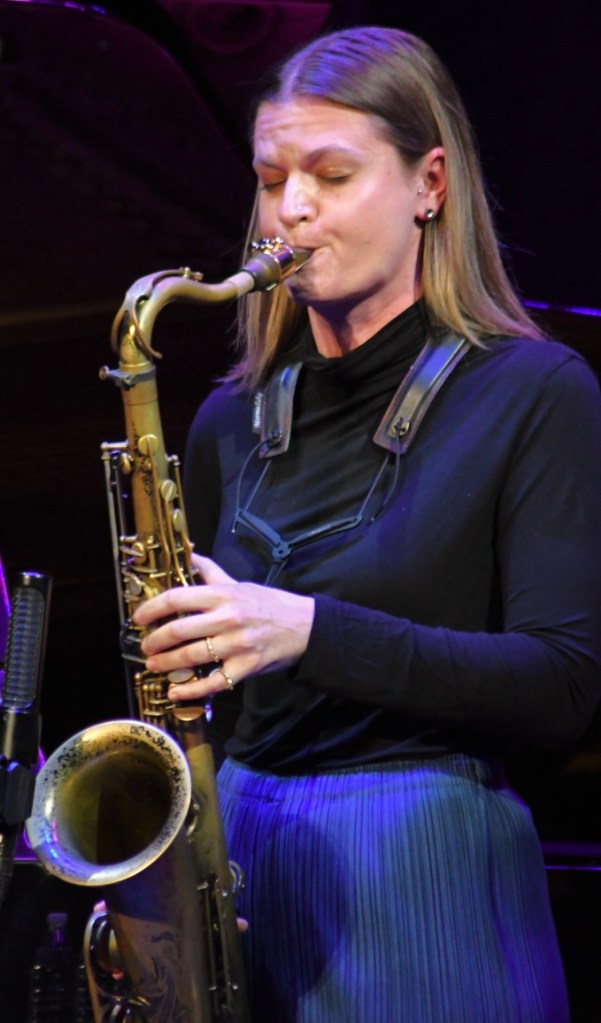
Saxophonist, bandleader, composer and educator Nicole Glover plays with Artemis, including the supergroup’s two albums and A Place for Jazz October 4. She has also released solo albums, including the award-winning “Strange Lands” with pianist George Cables. Growing up in Portland, Oregon, she studied with the American Music Program and William Patterson University with Harold Mabern, Mulgrew Miller. She performs with the Jazz at Lincoln Center Orchestra, and the Philadelphia Orchestra in Mary Lou Williams’s “Zodiac Suite.” She teaches at Princeton University, the Manhattan School of Music and the San Francisco Conservatory of Music.

Guitarist Ely Perlman is still a Berklee College of Music student; he studied earlier at the Thelma Yellin High School of the Arts and the Center for Jazz Studies at the Israel Conservatory of Music, Tel Aviv. A busy bandleader, he fronts a jazz quartet and a the indie-rock band SWIMS.

These Ursa Major players have a VERY imposing example to follow. 

Philadelphia-born Christian McBride graduated from the Philadelphia High School for Creative and Performing Arts (CAPA) whose alumni also includes Ahmir “Questlove” Thompson of The Roots, Joey DeFrancesco, and Kurt Rosenwinkel. At first, McBride emulated hometown smooth-swinging soul and R&B artists before switching from electric to acoustic bass and exploring jazz at Juilliard with important mentors all the way including Bobby Watson, Ray Brown and Chick Corea. 

Winner of nine Grammys, McBride is Artistic Director of the Newport Jazz Festival, the New Jersey Performing Arts Center (NJPAC), the TD James Moody Jazz Festival, and Harlem’s National Jazz Museum. 

He is also Artistic Director of Jazz House KiDS and the Jazz Aspen Snowmass Summer Sessions and hosts NPR’s “Jazz Night in America” and “The Lowdown: Conversations With Christian” on SiriusXM. 

In a remarkable coup, McBride was nominated in 2020 to two Grammys in the same category — Best Jazz Instrumental Album — for RoundAgain with Joshua Redman, Brad Mehldau and Brian Blade; and Trilogy 2, a live double-album with Blade and Corea.

The versatile McBride’s oratory masterwork “The Movement Revisited: A Musical Portrait of Four Icons” honors civil rights leaders Rev. Dr. Martin Luther King, Jr., Malcolm X, Rosa Parks, and Muhammad Ali.

He is Artistic Director at the University of Richmond and leads jazz programs at Richmond, Jazz Aspen, and the Brubeck Institute.

As Creative Chair for Jazz at the LA Philharmonic, he curated 12 concerts a season at the Hollywood Bowl and Walt Disney Concert Hall. In his first summer as creative chair, McBride proudly presented his musical hero, James Brown.

These world-class credentials make an impressive list, but McBride reaches far past the paperwork in how he plays. He cruises and grooves, with the confident drive of Philly soul in its uncanny balance of muscular push and inviting, calm grace. His highly evolved harmonic mastery combines with alert listening so his bands are always cooperative, interactive and organic.

Saratoga Performing Arts Center honored Don McCormack, Dean of Special Programs at Skidmore College and founder (in 1987) of the Skidmore Summer Jazz Institute in a special observance at the 47th Freihofer’s Saratoga Jazz Festival in June.

Don McCormack. Photo provided

SPAC continues celebrating McCormack’s support of jazz, including the training of young artists, in the McCormack Jazz Series, presented in the Spa Little Theater. 

The McCormack Jazz Series at the Spa Little Theater continues November 22 with Dorado Schmitt and Sons: Django Festival All-Stars (acoustic stringed things, swinging as fast as possible) with the very compatible local opener Hot Club of Saratoga. Cuban pianist Alfredo Rodriguez leads his Trio April 5, 2025, and the series concludes May 1, 2025 with singer Veronica Swift – no relation to that other singing Swift.

Christian McBride and Ursa Major launch the McCormack Jazz Series Thursday, October 24. 7 p.m. The Spa Little Theater is east of the Hall of Springs and Gideon Putnam, at 19 Roosevelt Dr., Saratoga Springs. Tickets for Christian McBride and Ursa Major are $81.50 – $51.50; students $31.50. http://www.spac.org.

TUNEFUL FAREWELL

REVIEW – Tom Paxton and the Don Juans at The Eighth Step, Saturday, Oct. 19, 2024

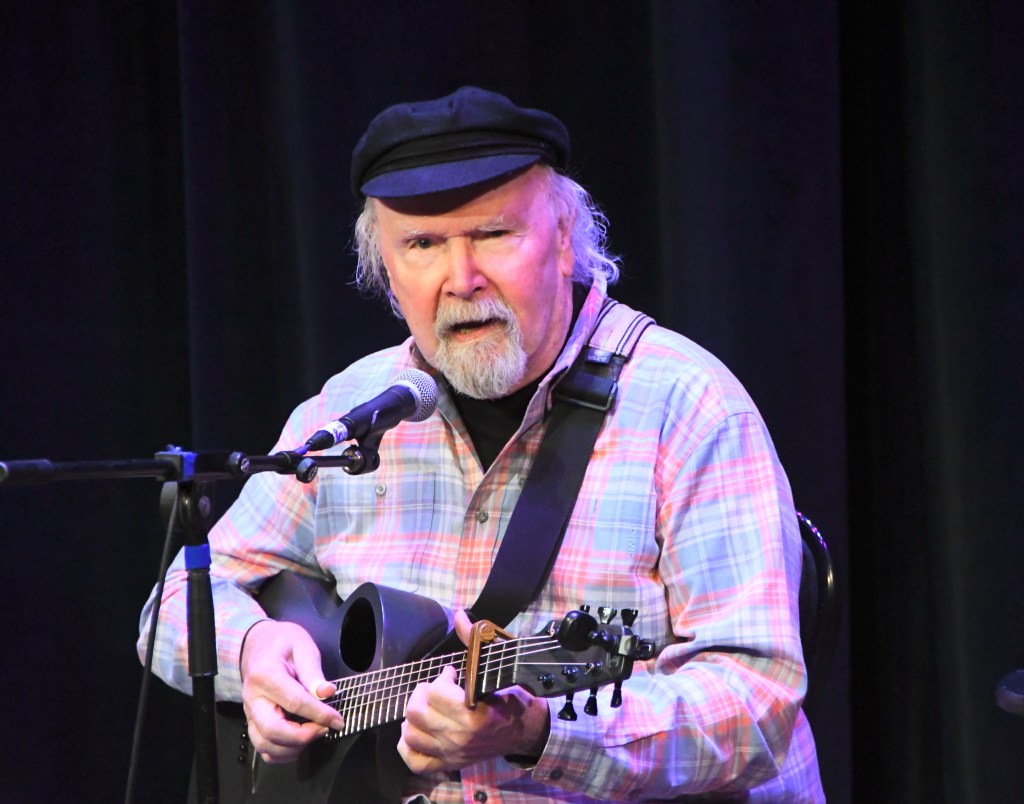
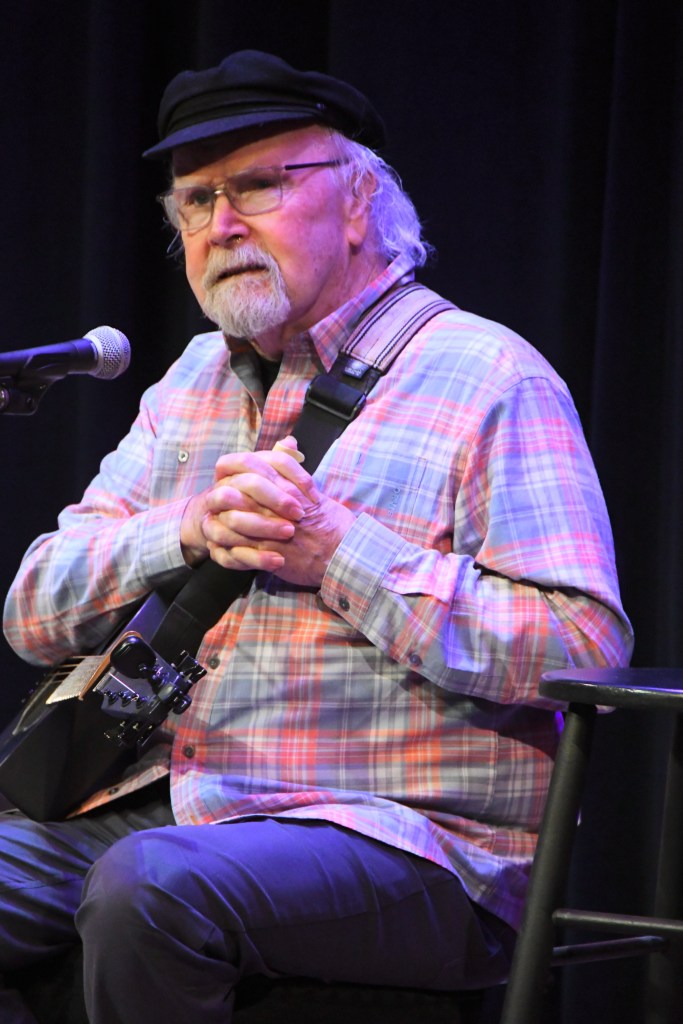
We won’t see his like again: troubadour Tom Paxton sang farewell Friday at Caffe Lena and Saturday at the Eighth Step.

He and Bob Dylan may be the last 1960s folk giants still standing, but Paxton announced he’s retiring next spring.

Things only turned sad as Paxton noted this Eighth Step show would be “the last;” on average, he’d played the place every two years since 1988. Before that valedictory moment and a departure-less encore, Paxton recalled the tunes that made him an enduring musical and moral voice and hailed mentors and inspirations who inspired him to become one himself.

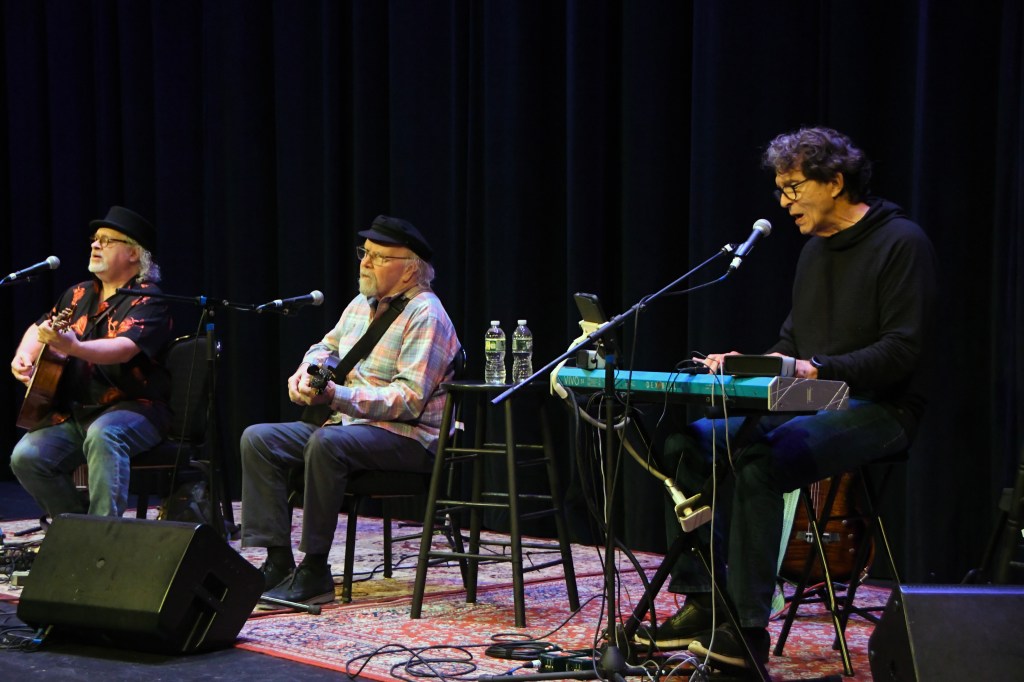
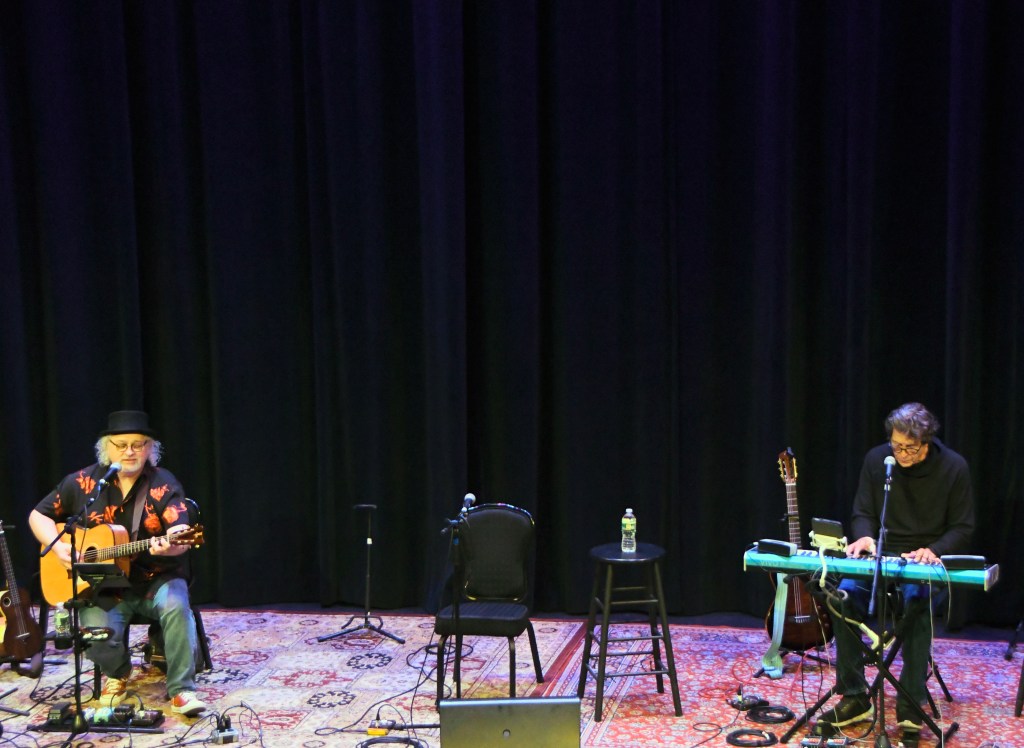
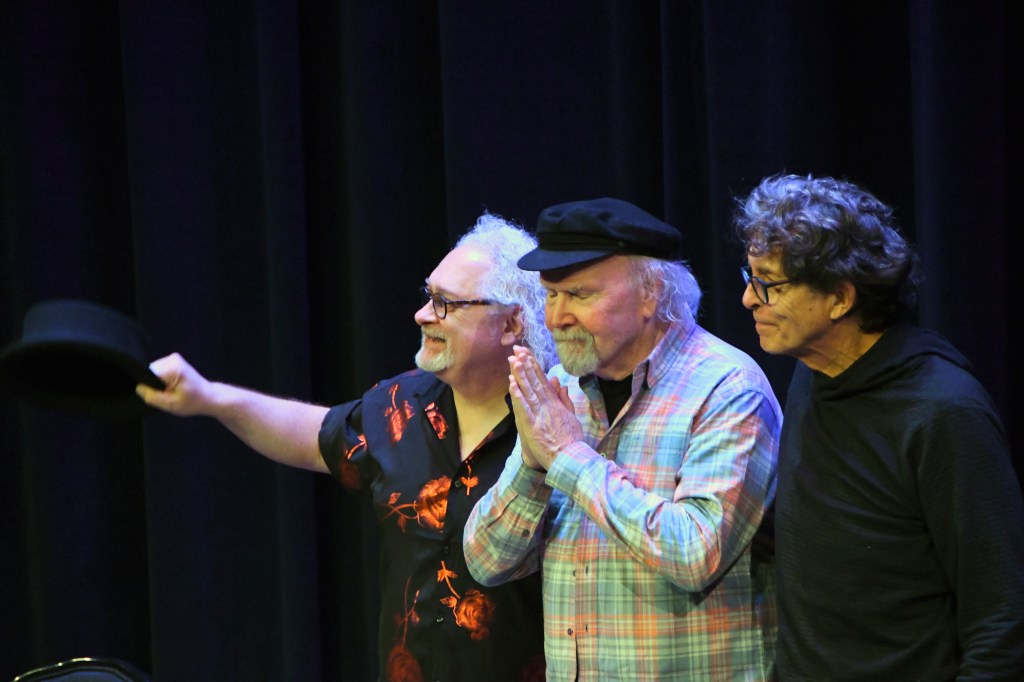
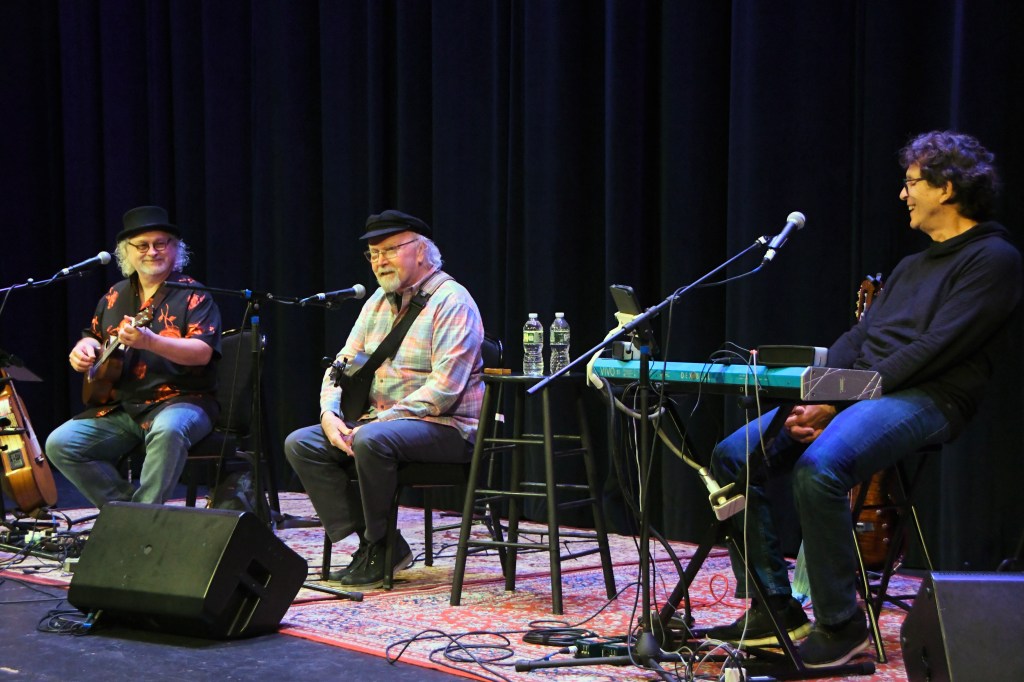
Tom Paxton, center, with Don Juans: Don Henry, left, and John Vezner

Recruiting younger singer-songwriters Don Juans arguably extended Paxton’s spotlight time. The duo – Don Henry and Jon Vezner – opened for Paxton and accompanied him Saturday.

When I asked Henry about their not playing “Schenectady,” afterward at the merch table, Henry replied that they concentrated on “Tom’s tunes” as much as possible; wondrously durable tunes.

The Don Juans: Don Henry, left, and Jon Vezner

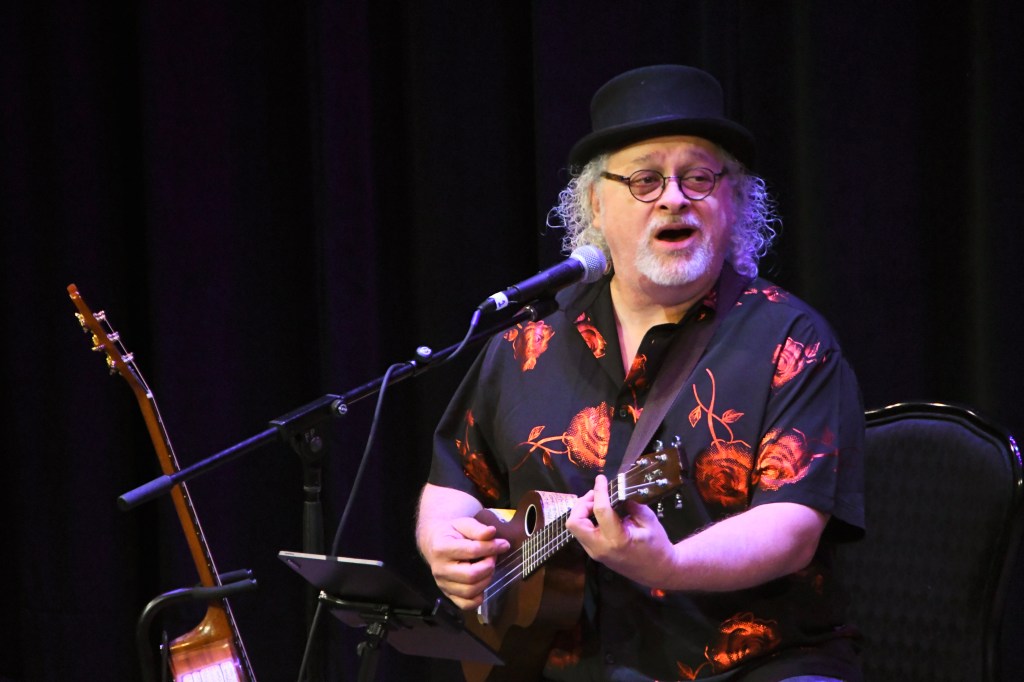
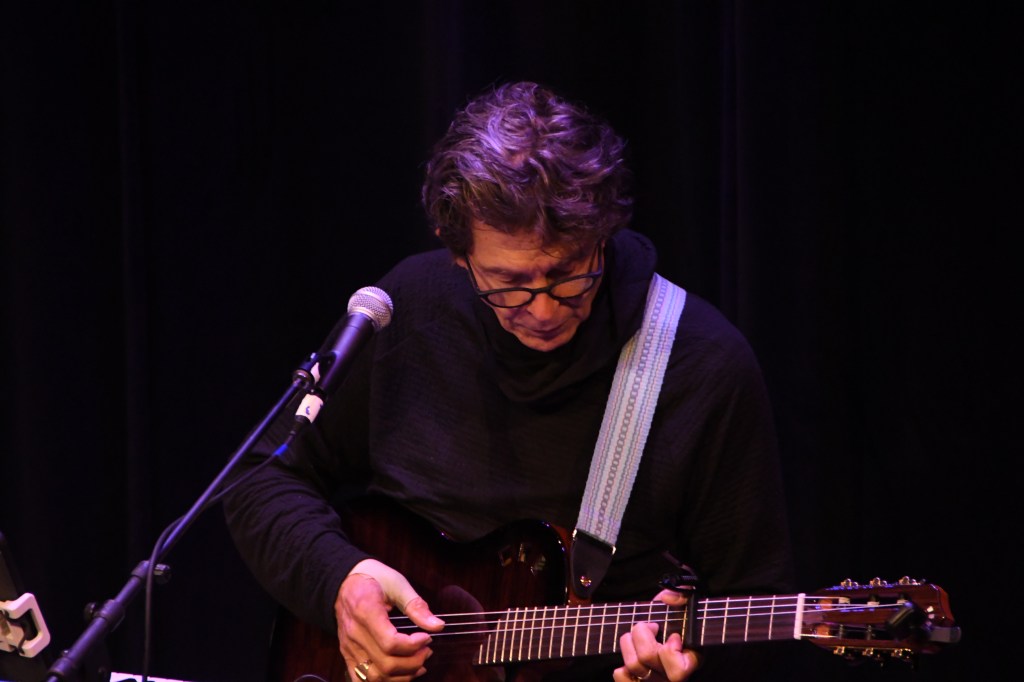
First however, the Don Juans poked fun at their opening-act anonymity, singing “You might not know who we are.” They introduced their new album “We Used to Write Horses” with its title track ballad and celebrated their multi-award-winning tender enduring-love song “Where’ve You Been.” A writing team for 35 years, they’ve become a smooth, versatile performing duo. Vezner sat at a keyboard but also played guitar while Henry played guitar and ukulele, but a uke with special effects. Adding reverb brought interesting presence, as did Verner’s accordion and flutes effects at his keyboard.

Paxton came on after those three songs, toting a carbon fiber six-string, an easy, low-pressure voice and a deep bag of well-loved songs.

He promised he’d avoid political songs, to skeptical laughter, and started “I Can’t Help But Wonder Where I’m Bound” in his still-sturdy baritone before Henry and Vezner added harmonies. He then belied his apolitical aim quickly, affirming the separation of church and state to introduce “If The Poor Don’t Matter” and evoking Earth Day spirit in “Whose Garden Was This” – all three at typically relaxed tempos that let the words go deep.

“Old Friends” felt both nostalgic and angrily anti-war, decrying Vietnam’s damage to a returning vet. Similar ambivalence powered “I Don’t Love You; I Never Did (And I Guess I Always Will),” sounding both vintage in its folkie irony and over-candid. (He wrote it with the Don Juans via Zoom during peak COVID.)

They closed the first set with the vintage, straightforward “Bottle of Wine,” Paxton promising to expound on this in the second set.

The three emerged together after the break and, sure enough, Paxton traced “Bottle of Wine” back to his hero, Mississippi John Hurt whom he’d first heard at the ’63 Newport Folk Festival, then saw often at the Gaslight in Greenwich Village. He interjected Hurt songs “Creole Belle” and “Candy Man” in tribute.

They jumped from deep past toward more recent past in fresh co-written tunes. The wistful slow waltz “Eleanor’s Song” featured fine harmonies and synthesized flutes. Introducing “Dreams and Things,” a duo number In a similar mood, Henry noted he and Vezner had co-written it overnight; they sang it beautifully together. Here, Henry added airy reverb to his ukulele for a serene effect. Paxton then rejoined in the reassuring “Everything Will Be OK,” explaining he’d written it in post-show insomnia and inviting a soft singalong.

They closed with Paxton classics, mostly. He reclaimed the playful well-loved singalong “Marvelous Toy” from Peter, Paul and Mary’s hit, lamented environmental damage in “After the Storm” (a newer co-write with the Don Juans); then uncorked the sweet early 60s love-song “The Last Thing On My Mind” and “Ramblin’ Boy.” He dedicated this to Woody Guthrie (whom Paxton never met) and Pete Seeger whose Weavers sang it at Carnegie Hall for a live recording.

Here followed Paxton’s poignant farewell moment, a departure-less encore, as the three stood to SRO applause. 

The elegiac “That Was Rosie” was a near echo to the poignancy of “Where’ve You Been?” and the slow, tight harmony of “Dream On, Sweet Dreamer” offered a compelling farewell.

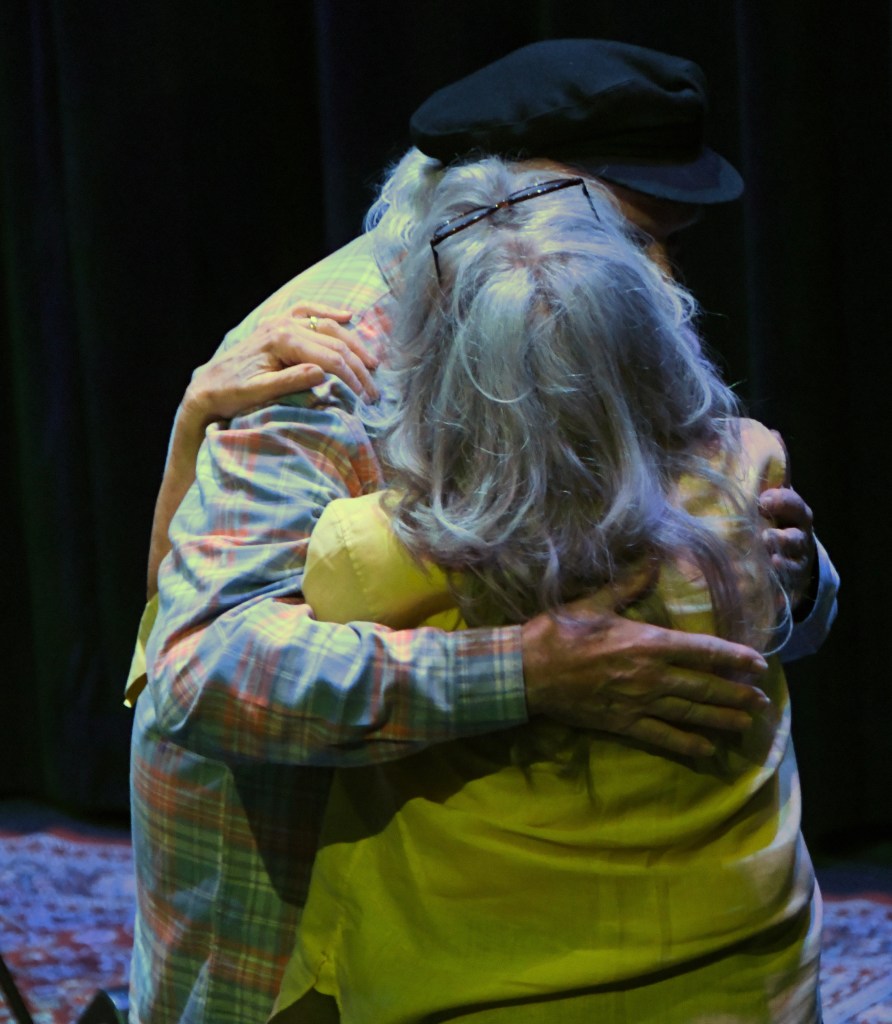
Afterward, Eighth Step Executive Artistic Director Margie Rosenkranz confessed her sadness at this last Tom Paxton show here. He’d embraced her on leaving the stage. She cheerfully noted, however, that the retiring-from-touring troubadour was still writing songs with co-writers including the Don Juans. Saturday’s farewell show proved how fertile that particular partnership has become.

Now folk fans can expect songs from Paxton, just not sung by him here again.

Making the Pieces Fit

REVIEW – Bill O’Connell Quartet featuring Craig Handy, Friday, October 18, 2024 at A Place for Jazz

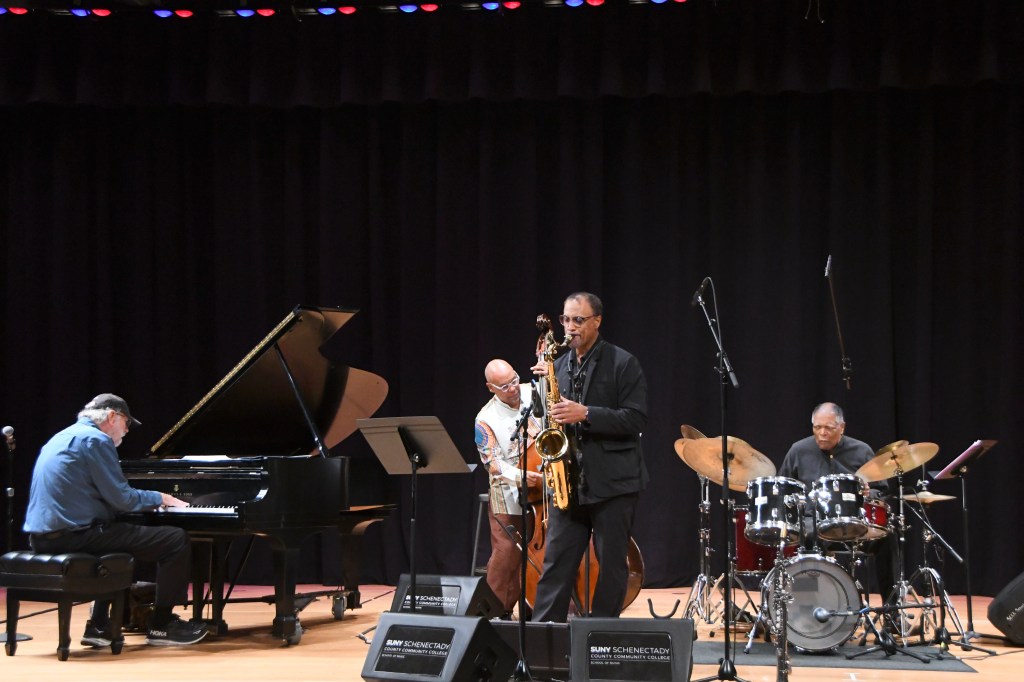
Pianist and leader Bill O’Connell announced “the political part of our program” Friday at A Place for Jazz; without taking sides or naming names, he then expressed, decried and resolved political strife with “Enough Is Enough.” This was about process, but also emotion, and so was the show overall – a thrilling synthesis of ideas by a group of free-range autonomous talents.

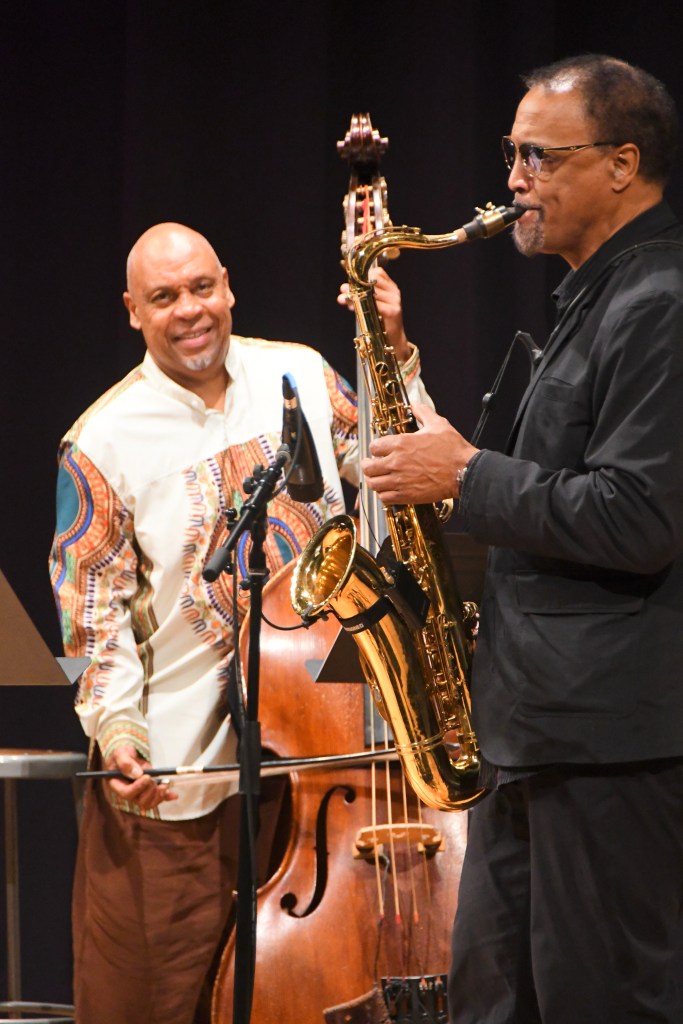
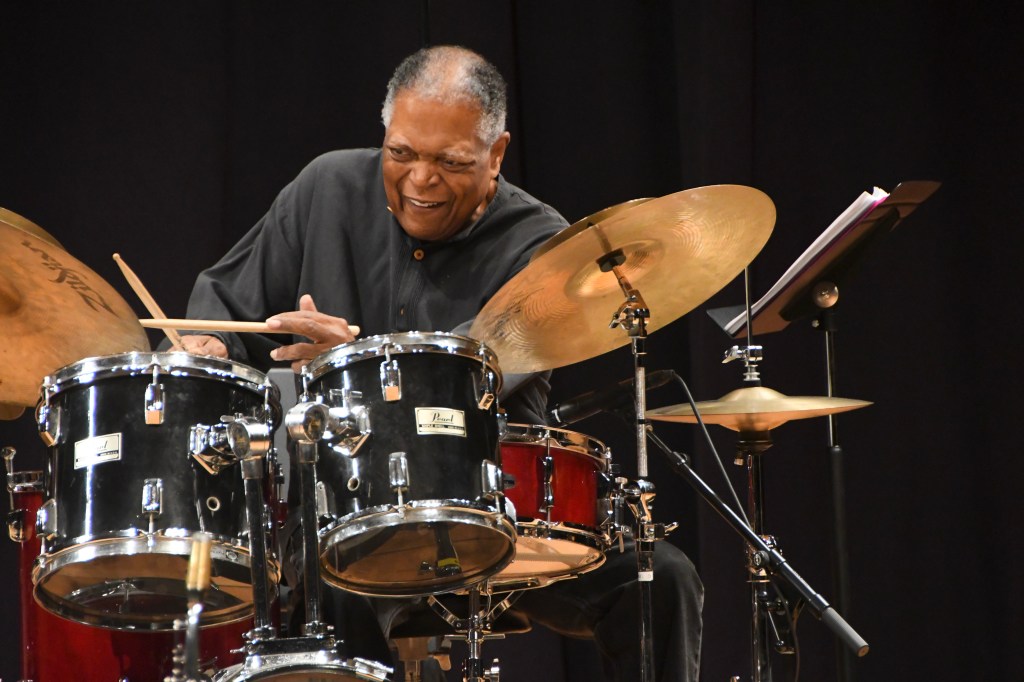
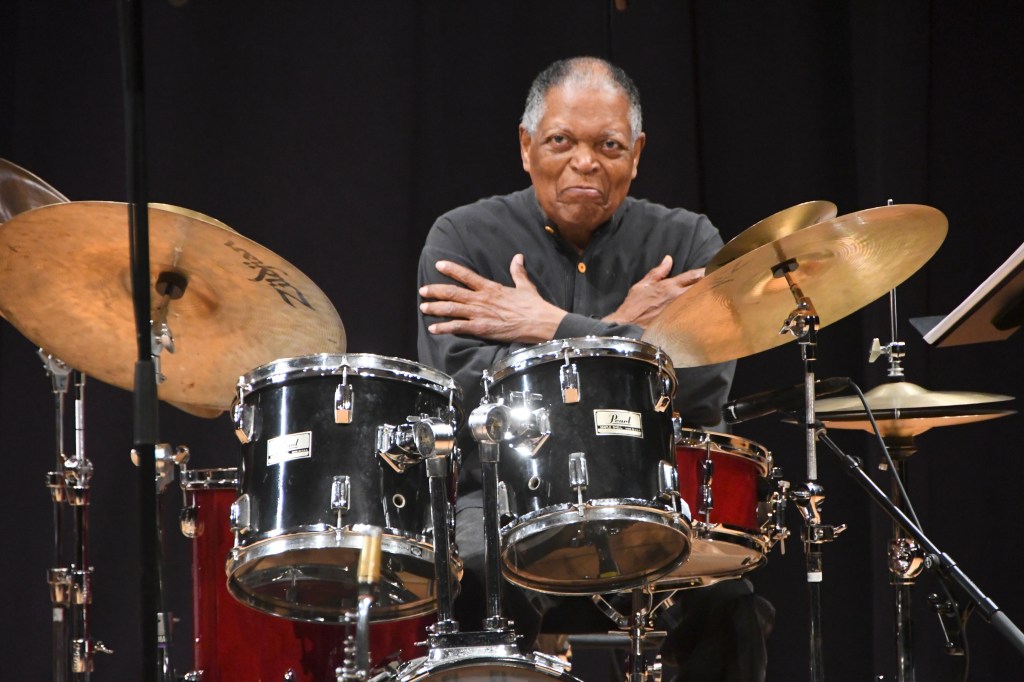
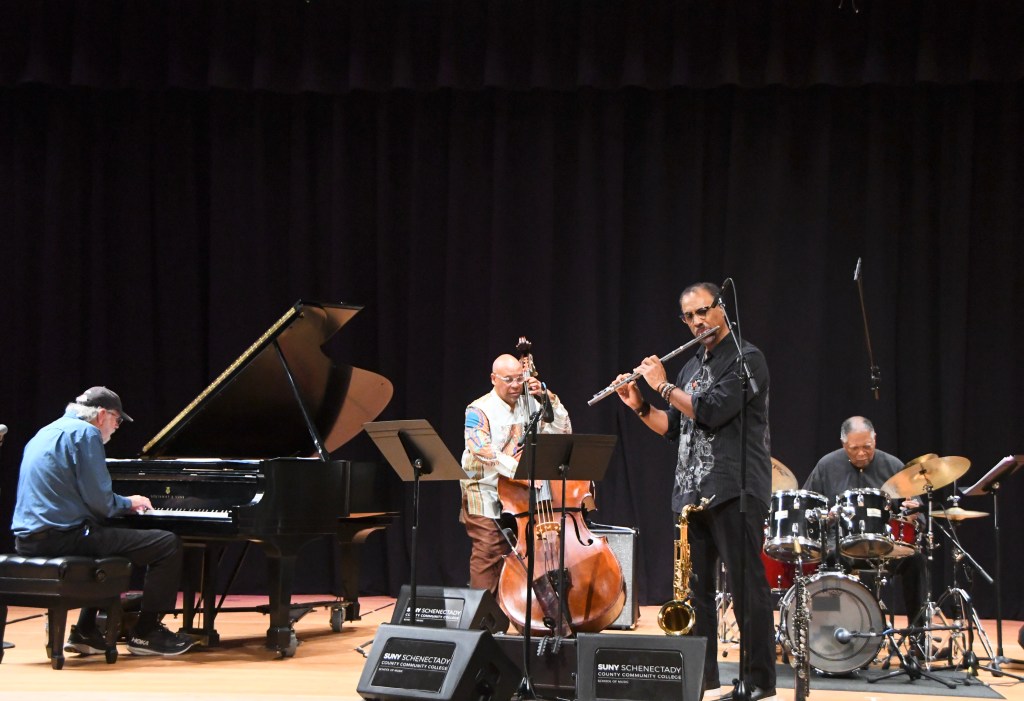
From left: Bill O’Connell, piano; Santi Debriano, bass; Craig Handy, saxophones and flute; and Billy Hart, drums

Let’s look at “Enough Is Enough,” second song in the second set, before starting from the top. 

O’Connell pushed “Enough” as a menacing march, argumentative, ominous; emphatic chords synced to Billy Hart’s toms. Craig Handy’s tenor saxophone at first felt pleading – for civility? –then rasped in frustrated, plaintive cries. When O’Connell reclaimed the lead, he, too, played at first with restraint, then gained a bustling bluesy force, etching a low ostinato that brought a smile to Santi Debriano as he took it up with his bass. Debriano both blended with O’Connell’s piano and set up a pulse that carried through the 12-minute tune. If the pulse marked the pace of time, a war and peace history played out in Handy’s second solo that went far outside into wild, intense conflict before a serene resolution, like Pharaoh Sanders at his most spiritual, like peace returning to a troubled land.

The way these four musicians fused disparate elements into purposeful power in “Enough” confirmed super-fan Mabel Leon’s observation at intermission that “They all have different styles” – but they all made things fit. The balance moved around, especially when Hart, 83, asserted his hard-bop aggressive style. He played splashy cymbals when setting the beat alongside the telepathic, always on the money Debriano, but spoke mainly through toms and kick drum when soloing – several times hitting the “Salt Peanuts” bebop lick. He hit hard; a single mic hung high over his kit. Mostly busy, always tasty, O’Connell often played with happy, elegant Oscar Peterson swagger, but eased into Bill Evans-like reverie in the tender “Moms’ Song,” their only ballad all night.

Bill O’Connell, piano and leader

In the first set, O’Connell played all original, deeply personal tunes, celebrating his current home at a Long Island beach in “Seaglass,” recalling the vibrant street energy of his former NYC residence in “85th Street,” visiting the islands in “Cayman,” welcoming three new grand-daughters (all born within two weeks!) with “Moms’ Song” and honoring his mother’s memory in “Sparks.”

He opened both sets solo, his piano shimmering all alone in “Seaglass” then everybody sparkling in turn. Hart exploded an aggressive eruption before things settled some as Handy ran fast scales that O’Connell appropriated in his main solo, pulsing with Debriano’s discreet bass nudges and capped with rapid Hart cymbal rolls, everybody sounding spirited and playful, swapping short riffs at the end.

“85th Street” jostled and honked with energy so urban you could almost smell the inside of a Yellow cab, the stale spice of a hot-dog stand. As in “Seaglass,” Hart hit a hot flurry early on. Handy delivered a restrained-then-wilder solo, then O’Connell briefly quoted “Softly As In A Morning Sunrise” in his. After Hart’s tasty toms break, the drummer ended his solo by glance-cuing O’Connell to lead the coda.

“Cayman” felt too busy for reggae or calypso at first as Handy switched to soprano sax, his tone even sweeter than on tenor. But as he pumped abrupt short riffs, the sun came out on the tune and it went all Caribbean travelog, mainly in O’Connell’s salsa runs, recalling his long tenures in Latin bands..

The pianist also set the tender tone of “Moms’ Song,” a mellow valentine that Handy’s switch to flute fit perfectly. Debriano’s arco bass and Hart’s gentle mallet and brushes beats also imparted a loving vibe.

Billy Hart; Craig Handy, above

“Sparks” was all-in drive and dazzle, especially O’Connell after a short but effective tenor break. O’Connell played the whole piano in this one; but then Handy played a riff everybody jumped aboard for smooth sailing, Hart quoting “Salt Peanuts” as DeBriano quietly went double-time in the coda. O’Connell’s intro was mystical; the band’s playing tangible and earthy.

O’Connell came onstage alone for the second set, speculating the band would soon join him. This felt impromptu, but was good schtick even if they’d rehearsed it. His intro to “Three Little Words,” the only standard all night, had a jaunty Errol Garner swing, busy at a confident mid-tempo. When he gazed into the wings, ten charming minutes in, his bandmates got the message and strolled on for ten more. 

We’ve already talked about “Enough Is Enough;” then came “Tip Toes,” dedicated, O’Connell said, to Fred Flintstone’s bowling style. This made sense with the abrupt cartoony cadences up front and soon proved among their most interactive tunes with O’Connell playing in harmony with Handy’s tenor, then Handy returning the favor with a cadence O’Connell adopted.

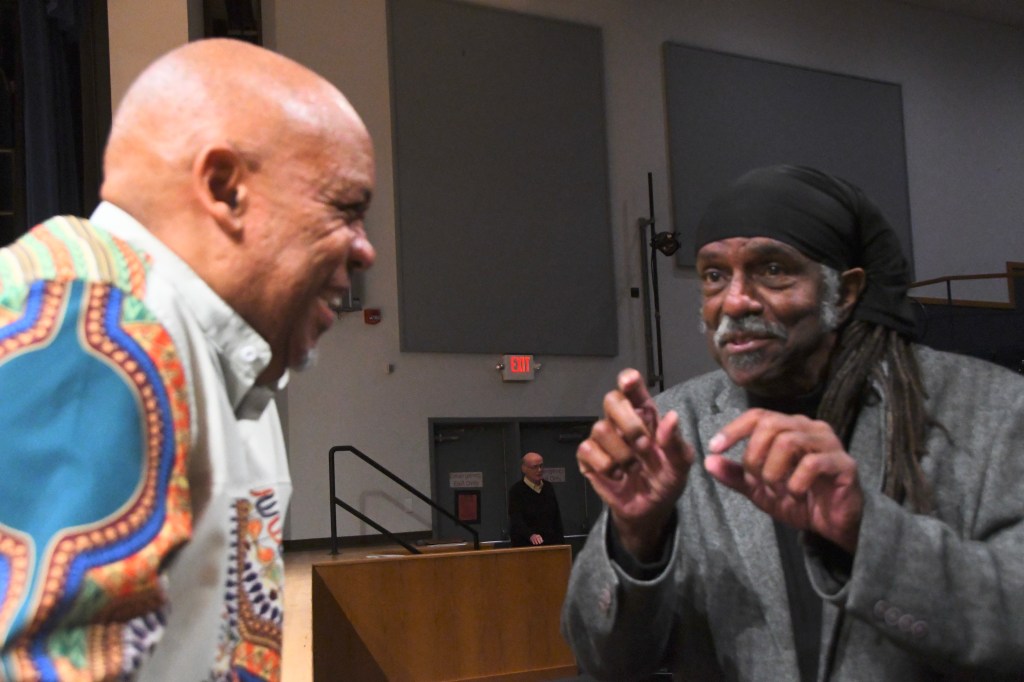
Debriano, left, and Hamwright

This weekend is Homecoming at Union College, and Union grad Debriano greeted fellow alum photographer Rudy Lu and former band mate Ricardo Hamwright at intermission with happy hugs. 

Brellochs, left; and McCann

Before the show, SUNY Schenectady County Community College School of Music Dean Christopher Brellochs and A Place for Jazz President and WCDB jazz DJ Bill McCann announced saxophonists Dylan Doeg and Tyler Munson as twin winners of the A Place for Jazz scholarship, the first time two players had shared the award.

A Place for Jazz wraps up its season Friday, Nov. 1 with trumpeter-singer Bria Skonberg and her Quartet.

PREVIEW – TOM PAXTON’S FAREWELLS

PREVIEW: Troubadour’s Last Call at Caffe Lena Friday and the Eighth Step Saturday

A Greenwich Village folk original, Tom Paxton has played Caffe Lena since 1960 and the Eighth Step since 1988.

He says adios to both this weekend, Friday at Caffe Lena and Saturday at the Eighth Step.

Paxton is entitled to pack his guitar into its case. He turns 88 in less than two weeks and will retire after this tour.

By now, the Caffe Lena show is likely sold out, although its first-class streaming capability can carry anybody into the Caffe via “your digital device of choice,” as Harry Shearer says of his weekly “Le Show” program, carried here on WAMC. Tune in for Paxton and the Don Juans at http://www.caffelena.tv. Show time is 8 p.m.

The Eighth Step presents Paxton and his compadres-in-song the Don Juans Saturday in what’s likely to be his final show here.

Tom Paxton

Paxton has performed every two years since 1988 at The Step as it’s moved from its original Willett Street home on Albany’s Washington Park to its short tenure in the Cohoes Music Hall, and now in the Eighth Step in Proctors.

The younger Don Juans team of Don Henry (64) and Jon Vezner (73) has sustained and supported their elder troubadour band mate to highly entertaining effect since 2017. Henry was only two when Paxton released his first album, “I’m The Man Who Built the Bridges” in 1962, Vezner was 11.

Don Juans: Don Henry, left, and Jon Vezner

Henry and Vezner penned the huge very touching hit “Where’ve You Been?” for Vezner’s wife Kathy Mattea in 1989 – the first-ever song honored with a Grammy, Academy of Country Music, Country Music Association and Nashville Songwriters Association International awards. 

Henry and Vezner have made tunes together ever since but became the Don Juans performing duo more recently.

Far less recently, Greenwich Village 60s folk king Dave Van Ronk hailed Paxton for singing original songs alongside the traditional fare that dominated folk until Bob Dylan hit own. “Bridges” was the first of 66 Paxton albums; other singers started recording his songs as soon as he released them, including Van Ronk, Dylan and older folk stars Pete Seeger, the Carter Family and the Weavers; but also rockers Clear Light and the Pogues; song stylists including Willie Nelson and Norah Jones – even Princess Christina of the Netherlands. A Paxton tune once turned up in a Monty Python episode.

Henry and Vezner also earned their share of cover versions by other singers including Ray Charles, Janis Ian, John Mellencamp and Miranda Lambert. Their styles fit well; on his own, Henry turns his wit playful and loose while Vezner builds his lyrics on sincerity and insight. 

Paxton adroitly works both sides of that street, and that gives their live shows together a compelling balance. Several of Paxton’s more recent albums are live sets with the Don Juans.

Those two may roll on without him, but this trio show promises to be special, a fond farewell to a first-generation folk-scare star who’s given fans decades of both well-made and emotional songs and sincerely effective live performances.

After a May 2017 Step visit (where I shot these photos), I reported, “Paxton’s songs have held up well but, a somewhat mannered singer whose finger-picking still seems effortless, he’s wisely teamed up with fellow singer-songwriters Don Henry and Jon Vezner who sing in a more natural style and color his songs with supportive playing. On Friday, they sang their own strong stuff when Paxton rested.

“They were totally unified hootenanny-style in Paxton classics ‘Bottle of Wine’ that wrapped the first set, ‘The Last Thing On My Mind’ and ‘Ramblin’ Boy‘ near the end of the second. ‘Eleanor’s Song,’ an evocative co-write, proved these three guys are onto something. The strongest solo spot was Henry’s. He has the whole rig: writing, singing, playing and patter. On Friday when he sang ‘Schenectady,’ all you could hear was his guitar and voice and his fans’ hushed breathing.”

Show time: 7:30 p.m. doors 7. Tickets: $32.50 advance, $37.50 day of show, $55 priority seating plus pre-show meet and greet onstage at 6:30 p.m. 518-346-6204 www.8thstep.org

JAZZ FANS’ NIGHTMARE: Two Cool Shows, Just One Friday Night

Don’t we fans just hate it when two fine jazz crews play here the same night?

Both the Bill O’Connell Quartet at A Place for Jazz and Old Friends Beckoned/New Sounds Reckoned at WAMC’s The Linda feature Capital Region jazz heroes Friday. Both mix experienced stars with younger players, and both presenting organizations are non-profits. 

Union College-trained bassist Santi Debriano plays at A Place for Jazz in the rhythm section of the Bill O’Connell Quartet featuring Craig Handy, alongside ageless drummer Bill Hart (84 next month), while Schenectady-raised saxophonist Matt Steckler leads the Old Friends Beckoned project which features prolific, versatile bassist Lonnie Plaxico (64 as of last month).

After noting those similarities, I flipped a coin to chose which show to explain first, or to attend on Friday.

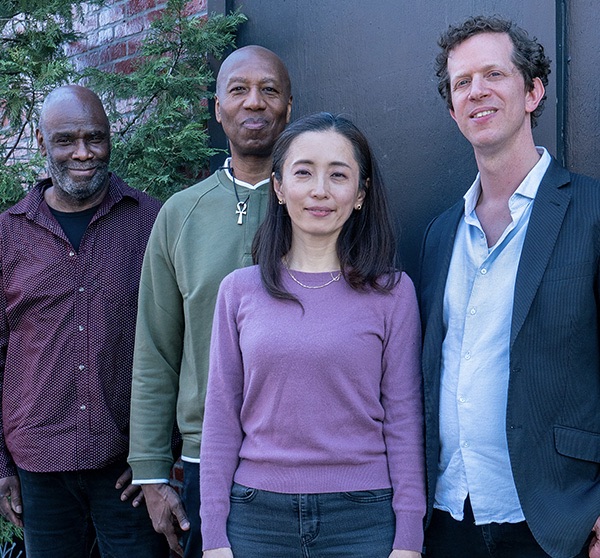
Old Friends Beckoned are Steckler, keyboardist Yayoi Ikawa, bassist Plaxico and drummer Tony Lewis; it’s also the title of the album they just made together and are introducing Friday. 

From left: Larry Lewis, drums; Lonnie Plaxico, bass; Yayoi Ikawa, piano; and Matt Steckler (aka Matty Stecks), reeds. Photo provided.

Schenectady High School grad Steckler got busy back here after training at Trinity, the New England Conservatory and NYU; then a teaching stint in Manitoba. After previously leading Dead Cat Bounce, Persiflage and Musical Tramps, he assembled these NYC players to improvise together. The band played Caffe Lena before Lewis joined; more recently Steckler played Jazz on Jay and at his three-band birthday party in Bennington.

Tokyo-born pianist/composer Ikawa has released two albums of original material and played festivals here, in Europe, Japan and the Latin Caribbean.

Plaxico has played here most often with Cassandra Wilson, but his past gigs include experimental and straight ahead jazz masters Sonny Stitt, Dizzy Gillespie, Alice Coltrane and Abbey Lincoln, in addition to making five albums as bandleader.

Diverse assignments also shaped Lewis, from jazz giant Dizzy Gillespie to rock stars Little Richard, Sam Moore (Sam & Dave) and Sting to bluesman B.B. King and genre-jumping originals Me’Shell N’degeocello and pop diva Cyndi Lauper.

In a late addition, Steckler brings in trumpeter Chris Pasin and singer Wanda L. Houston for Friday’s performance 

Old Friends Beckoned aka Steckler/Ikawa/Plaxico/Lewis (plus two) play WAMC’s The Linda Performing Arts Studio (339 Central Ave,, Albany) Friday, Oct. 18 at 8 p.m. $20 General Admission. 518-465-5322. http://www.thelinda.org.

Meanwhile, 16 miles away (26 minutes, at the speed limit) and starting 30 minutes earlier, A Place for Jazz presents the Bill O’Connell Quartet featuring Craig Handy.

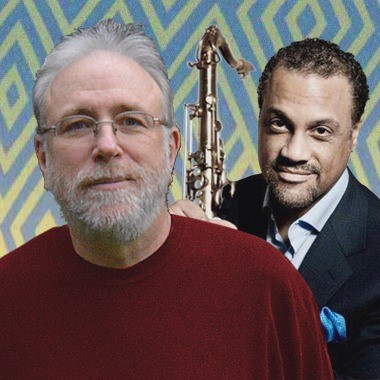
Bill O’Connell, left; Craig Handy, right. Photo provided

Oberlin-trained hyper-versatile pianist-leader O’Connell has won awards and nominations as a jazz writer, composer-arranger, and performer inspired by Keith Jarrett, Bill Evans, Chick Corea and Herbie Hancock; as well as valued sideman with straight-ahead stars including Sonny Rollins and Chet Baker, and Latin jazz giants Mongo Santamaria, Dave Valentin and Gato Barbieri.

Craig Handy played trombone, piano and guitar before Dexter Gordon’s playing inspired him to settle on saxophone, training at North Texas State University among David Murray, Joshua Rodman and other stars and earning the Charlie Parker Scholarship. Moving to New York, he accompanied singers Betty Carter and Dee Dee Bridgewater, played with the Mingus Big Band and smaller groups led by Art Blakey, Roy Haynes and Abdullah Ibrahim (at The Egg November 17!). He also portrayed Coleman Hawkins in Robert Altman’s film “Kansas City.”

Trained at Union College, the New England Conservatory and Wesleyan University, bassist Santi Debriano is perfectly cast on Friday: He has accompanied many saxophonists including Sam Rivers, Pharoah Sanders, Sonny Fortune, David Murray, Lee Konitz and more.

NEA jazz master drummer Billy Hart may be the most celebrated name in Friday’s two jazz shows after playing with Wes Montgomery, Jimmy Smith, Herbie Hancock, Otis Redding, Sam and Dave, McCoy Tyner and Shirley Horn.

The Bill O’Connell Quartet featuring Craig Handy plays Friday at 7:30 p.m. at A Place for Jazz in the Carl B. Taylor Auditorium of the SUNY Schenectady County Community College Music School. $25, students $10. http://www.aplaceforjazz.org.

THAT Good

“It wasn’t THAT good!” Richard Thompson said in (mock?) humility at The Egg Saturday. “Or, was it?” His impossible guitar break had just ignited the usual noisy crowd rapture. And, it WAS that good.

Richard Thompson, center, and band, from left: Zak Hobbs, guitars and mandolin; Michael Jerome, drums; Thompson, guitars and lead vocals; Taras Prodaniuk, bass and; Zara Phillips, occasional guitar. All five sang.

Thompson’s first full-band tour in five years touched down here after Covid-time solo or duo shows with singer wife Zara Phillips, including a good Northampton performance in March. Those stripped-down shows were typically eloquent and skilled, but Thompson with band is a higher level of brilliant. Saturday, Phillips, bassist Taras Prodaniuk, drummer Michael Jerome and Thompson’s grandson-guitarist Zak Hobbs punched up Thompson’s tunes, both classic and new from his recent “Ship to Shore” album. 
With nearly cultish awed affection, fans feel Thompson tunes range from great to essential, and a show should include one or more of of the latter. Leaving Saturday’s show, longtime usher Erin Marie and I shared our lists, grateful that “Beeswing” got a heartfelt, funereal solo reading and naming “Vincent Black Lightning 1952,” “Ghosts in the Wind” and “Misunderstood” as faves.

“Beeswing,” on every fan’s fave list, brought fan rapture nine songs in. Thompson earned it, as usual, singing solo, sadder and wiser at 75 than when he wrote it at 45 and playing bell-like acoustic guitar.

Before that, Thompson and band muscled or mused their way through songs familiar or obscure, old and new. Prodaniuk and Jerome were all understated strength and simplicity, with electric fireworks from Thompson’s guitar (a pink Fender Strat early and late, black Gibson SG between) and Hobbs (white Fender Tele) going all exultant, anguished, doom-struck, desolate or delighted as Phillips strummed quietly and sang close harmony.

The new “Turnstile Casanova” hit hard to start with Thompson’s first overwhelming OMFG solo; then the cautionary “Take Care the Road You Choose” with a quieter blaze. Thompson urged his older fans, “Don’t die.” maybe noting the mostly gray hair and beards and canes in the three-quarter filled room.

After a good Hobbs guitar break in “Hard On Me,” Thompson played a better one, but he shared solo time throughout with Prodaniuk and Jerome, as well as his grandson.

Praising his late bandmate Sandy Denny, he fervently sang her “John the Gun” before slow-waltzing through the bitter “Withered and Died” from “I Want to See the Bright Lights Tonight,” best of his albums with first wife Linda. He then pumped “The Turning of the Tide” of similar vintage with stunning distorted guitar.

Understated acoustic guitar beautifully suited the wistfully nostalgic “Al Bowlly’s In Heaven,” evoking a kinder, pre-Thatcher Britain. Then, after a similarly evocative new “The Day That I Give In” came “Beeswing,” Thompson alone onstage with lost-love tenderness, haunting hypnotic delicacy of voice and guitar perfectly matched in yearning.

This whole stretch was strong as the band rejoined in the mid-tempo but heart-pumping new “What’s Left to Lose,” the vintage anti-war blitz “Guns Are the Tongues” and the new sarcastic waltz ballad “Singapore Sadie,” then “The Old Pack Mule” (also new) that somehow mixed humor and gruesomeness.

Wild guitars and a strong singalong marked “Tear Stained Letter” to close the 85-minute main set with explosive energy, fans’ singing growing into sustained yelling for more.

From left, Michael Jerome, Zak Hobbs, Richard Thompson, Zara Phillips and Taras Prodaniuk

Thompson returned alone with the understated “Dimming of the Day,” another Sandy Denny classic; but the encore surprised with the Idris Davies/Pete Seeger-penned Byrds’ folk-rock classic “Bells of Rhymney,” mighty and anthemic.

Solos by bass, drums and both guitars gave “Jealous Words” ferocious drive.

Saskatchewan is reputedly “so flat you can watch your dog run away for three days.” Openers Kaci and Clayton adapted their home province’s geography into a flat onstage affect to humorous effect. Kaci asked in a wan, decidedly un-festive voice if the crowd liked to party and pronounced herself winded after a low-key number. 

This all would have worn thin without their strong (when they pushed them) voices, interesting tunes and Thompson-like guitar chiming. Their Xanax-folk style would likely be devastating in a smaller room but wound up working surprisingly well at The Egg. They sang of parties far in the past, of recriminations, and of heading for the nursing home before teasing about bringing out Thompson to join them in their closer, “Matty Groves.” He didn’t, but the venerable song worked anyway.

NOTES:

All photos were from my seat, Row M; closer shots weren’t allowed.

The set list, procured and generously shared by super-fan friend JD, specifies “Angels to Rest” and “Man in Need” in the encore. But barring some temporary derangement on my part, it was instead “Dimming of the Day,” “Bells of Rhymney” and “Jealous Words” and ran a 12 crowd-pleasing minutes.

Scottish Folk Swing

Breabach at Proctors GE Theatre, Passport Series Presented by Music Haven, Friday, October. 11, 2024

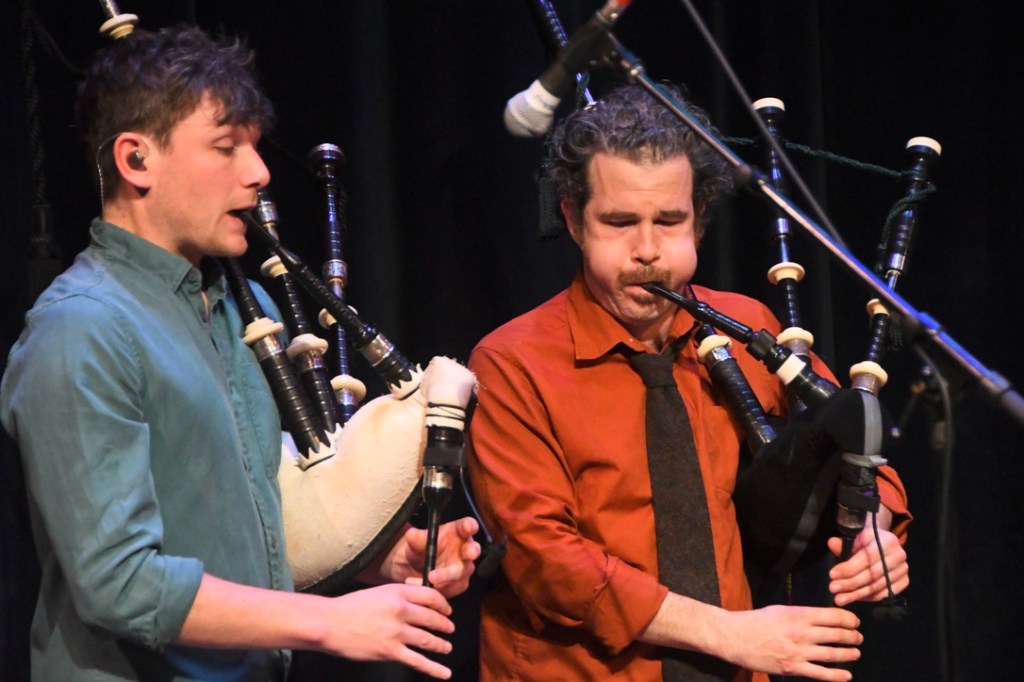
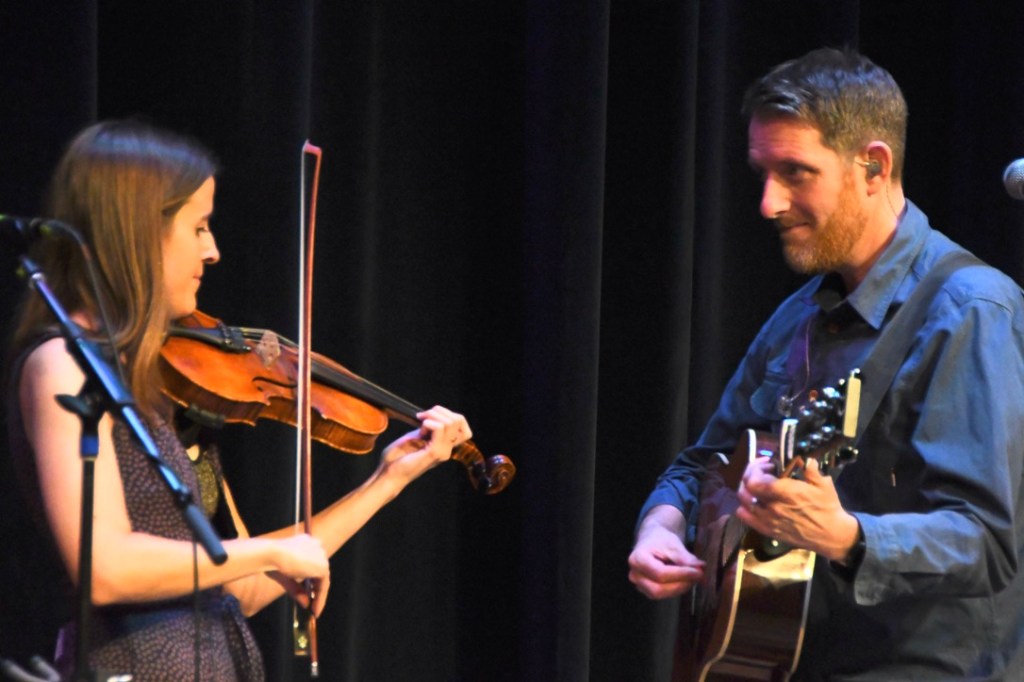
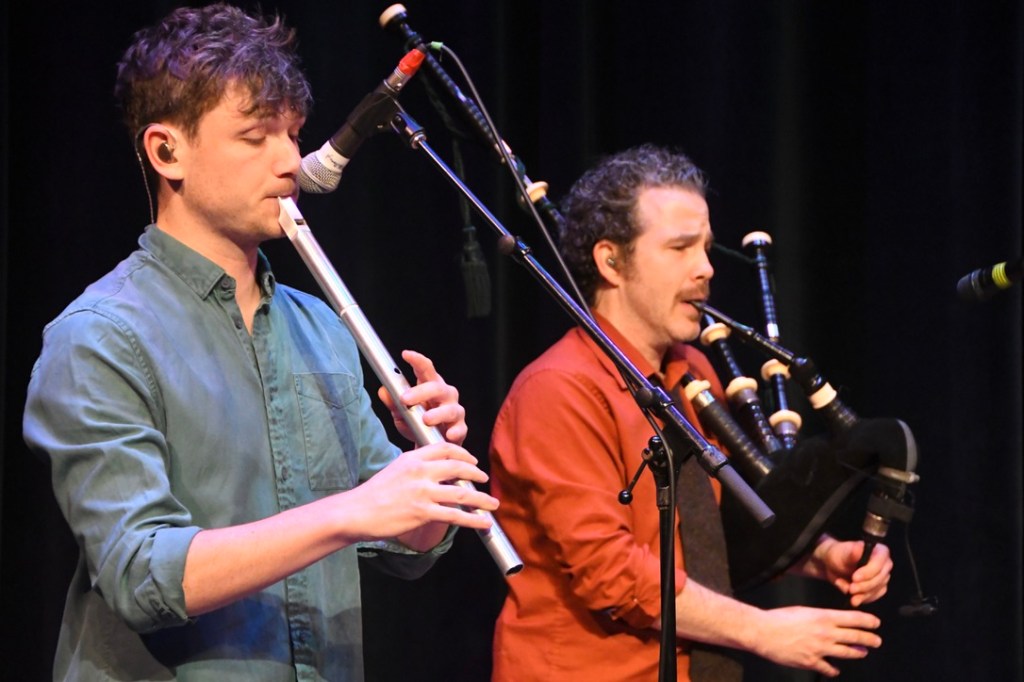
“It’s like we were listening to the past,” mused Calum MacCrimmon of Breabach Friday in Proctors GE Theater, introducing a graceful, stately march by the late John MacKenzie. More often, however, the Scottish quintet explored a future in re-imagined, energized ancient tunes that flew fast and far, like jazz. Sad laments of displacement were few, compared to Irish music, while spry, spirited dance numbers gave an upbeat and mostly instrumental ride, navigated by young masters.

This first of six Proctors Passport shows presented by the international-minded Music Haven organization set a high bar in the way Music Haven shows in Central Park often do. Sheer virtuosity pierced past barriers of unfamiliarity or strangeness, in either styles or performers. 

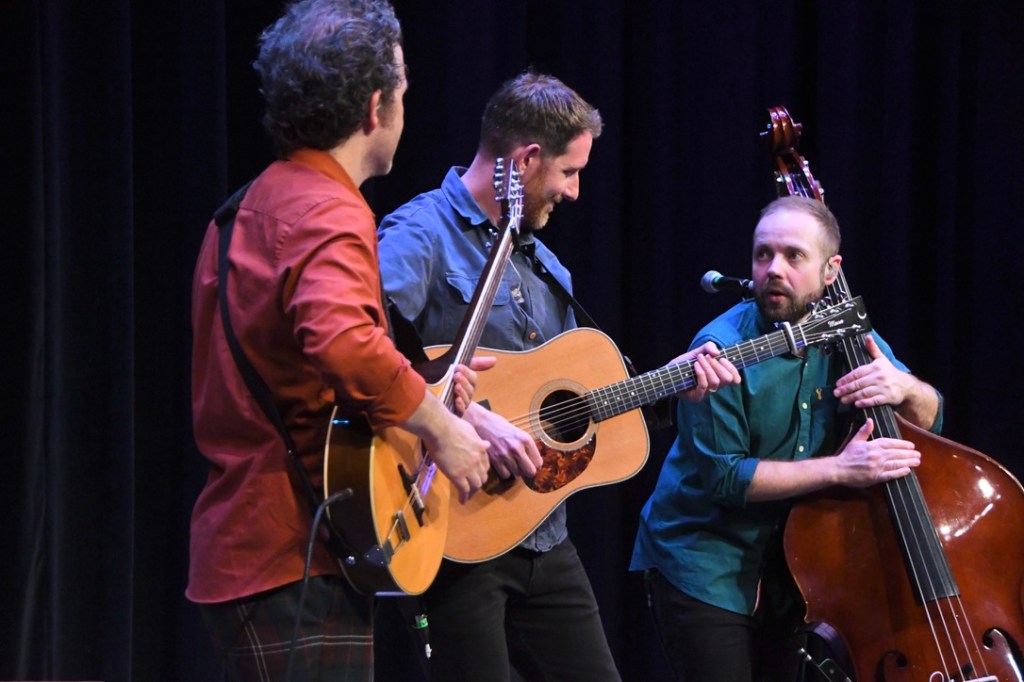
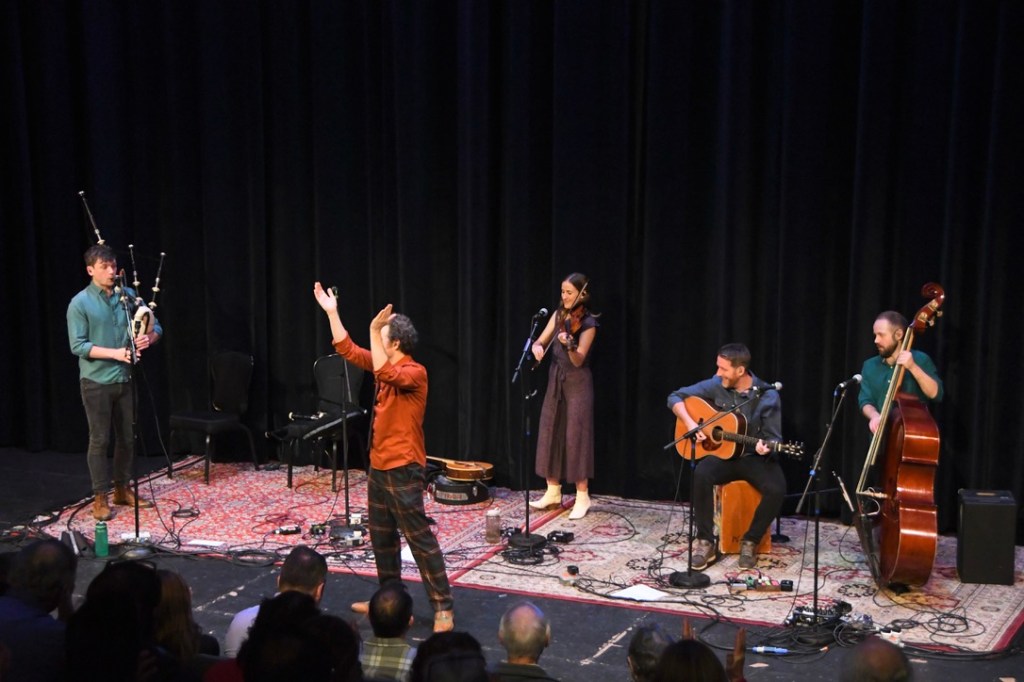
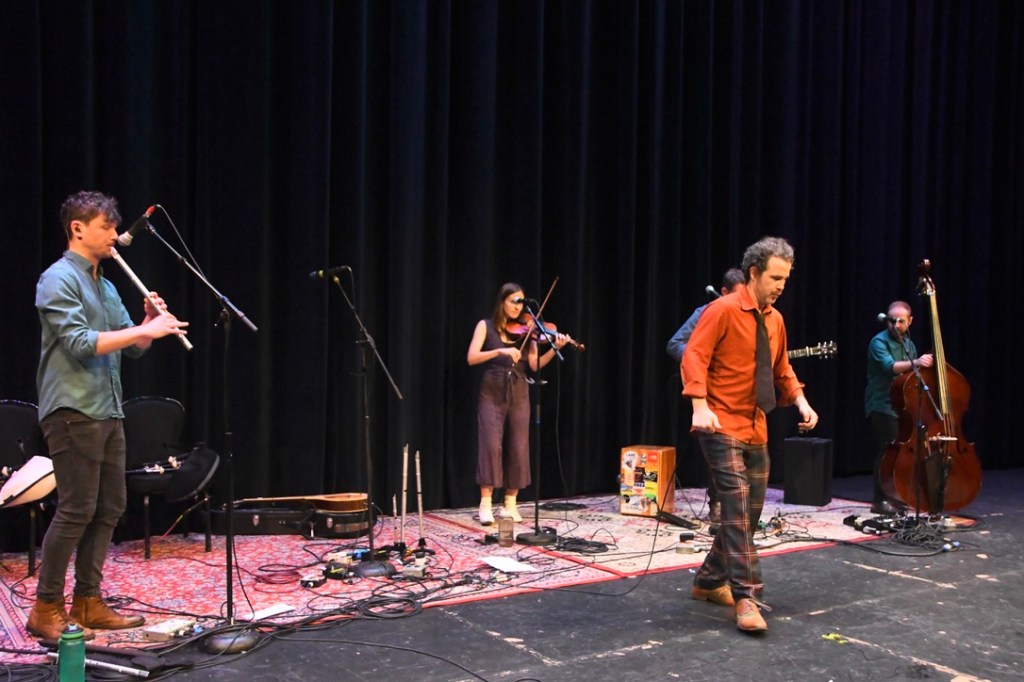
No one announced Breabach Friday; they walked on, grabbed instruments and let fly. Stage right stood bagpipers and whistle players Conal McDonough and MacCrimmon (who also played bouzouki and sported plaid slacks), with fiddler Jenna Moynihan center stage (in for Meghan Henderson, on maternity leave), then guitarist Ewan Robertson and bassist James Lindsay. They all sang; and Robertson foot-pedaled rhythms from the cajon where he sat, while MacCrimmon stepped forward to step-dance several times. 

He also put the audience to work late in their 80-minute set, explaining how bagpipers learn new tunes by singing them and enlisting the audience to do this: “You’re the choir,” he said, teaching/assigning a complex pattern.

To start, they medleyed “Farsund” about a Norwegian village (reminding us how close are the British Isles to Scandinavia) into “Brog to the Future” from their new (seventh) “Fas” album. Segues moved smooth as their playing. The stately mood of their twin whistles jumped strong into jaunty bagpipe riffing in “Birds of Passage.” Moynihan proved a more than capable substitute for Henderson, singing “Across the Western Ocean” as MacCrimmon switched to bouzouki and sang harmony to plaintive, touching effect, mixing hope and melancholy.

Songs again blended as “John MacKenzie’s Last March,” a wonderfully apt emotional match for “Across,” just before, and a stellar bagpipe number; erupted into the higher-energy French Canadian “Pieds Heureux” (Happy Feet). (They’re on their way to play Cape Breton’s Celtic Colors festival.)  Then they returned home musically to Glasgow, Lindsay explaining an earlier name for the city was “Dear Green Place” to set up their slow, sweet “Dear Green.” Nice syncopated bagpipe riffing here.

MacCrimmon’s bouzouki blended beautifully with Moynihan’s fiddle and vocal in the early verses of “Changing World,” then his voice did the same with hers in the harmonized coda. This one medleyed, too – Robertson, MacCrimmon and Lindsay stepping to the front, standing close and swapping percussive riffs in “Striking Clock” with its stop-and-go coda.

Then: our turn. In “Gig Face,” we were invited/gently challenged to sing a complex passage in Gaelic, in the style of bagpipers’ learning process. Lindsay owned this one, though: His solo here roared and romped, then Moynihan played just as strong. Even te singalong worked.

The late medley launched with John Morris Rankin’s peaceful, elegiac “The Last March” shifted uptempo in “Ramparts,” gathering energy into a rambunctious dance whose title – “We Were Poor, but We Were Miserable” – felt maybe more wryly fatalistic (Irish?) than anything earlier.

Announced as their last tune, “Knees Up” – obviously a dance number – bounced on a complex stutter beat before a departure-less encore of “Good Drying” got fans up and clapping.

Hats off to substitute fiddler-singer Jenna Moynihan for filling this double role ably, and to soundman Raymond Yates whose engineering gave clarity and punch to the music, with such subtle touches as adding reverb to MacCrimmon’s bouzouki playing for an organ-like sustain when he accompanied Moynihan. 

More than mere accuracy, the right notes in the right place, they played a feeling. Energetic dance numbers engaged the crowd at a more cheerful, physical level than quieter, thoughtful tunes. To their credit, Breabach didn’t over-indulge this. Their melancholy, slower numbers underlined how the Celtic music that reaches here is often about immigration, about hope of a new life in a new land ambivalently packing sadness in its trans-Atlantic luggage. Then again, they packed the bones of bluegrass.