
Four sad songs in on Sunday at Caffe Lena, Mary Gauthier rightly noted “We got the melancholy going,” but later posited music as its antidote and saving grace in a well-paced headline set. On taking the stage for the evening half of a double-header, she had nodded to opener Robbie Fulks, exclaiming, “How do you follow THAT?”

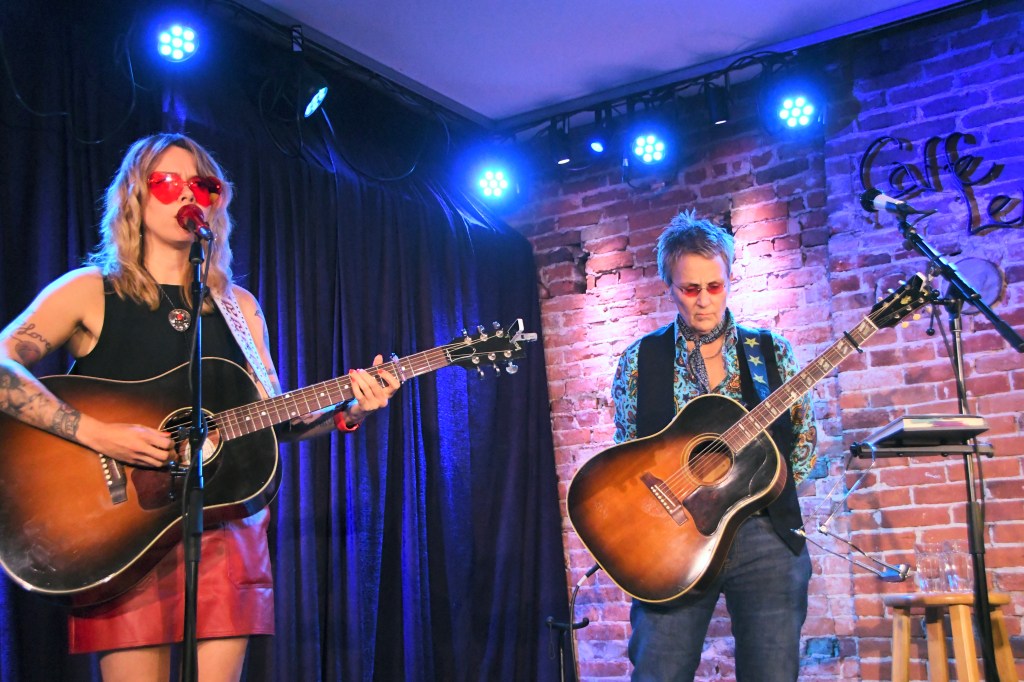
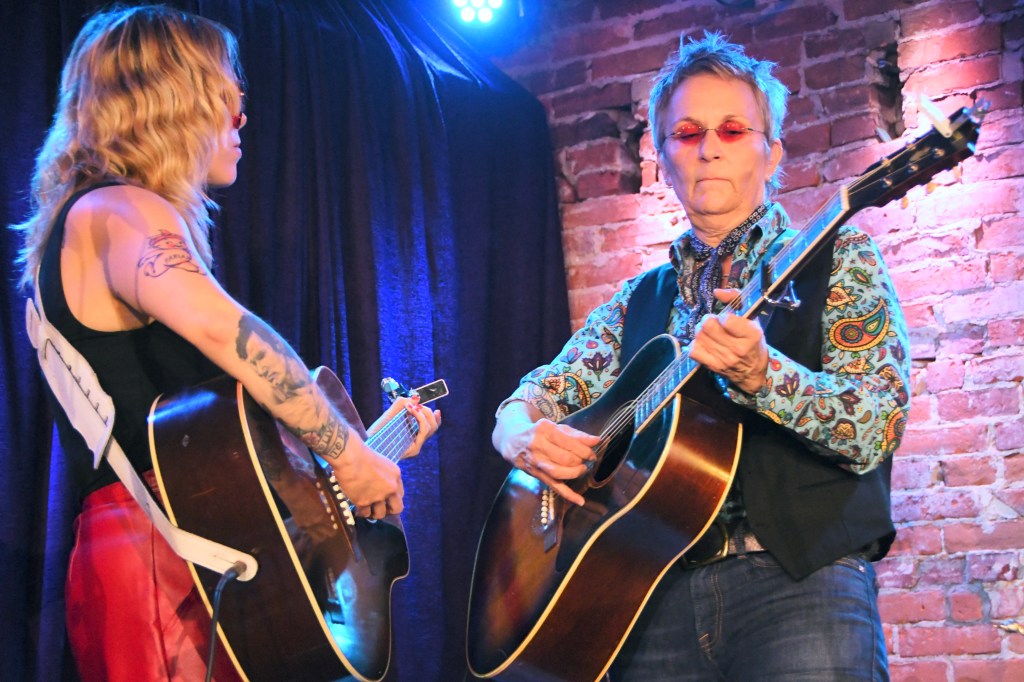
Mary Gauthier, right; and Jaimee Harris

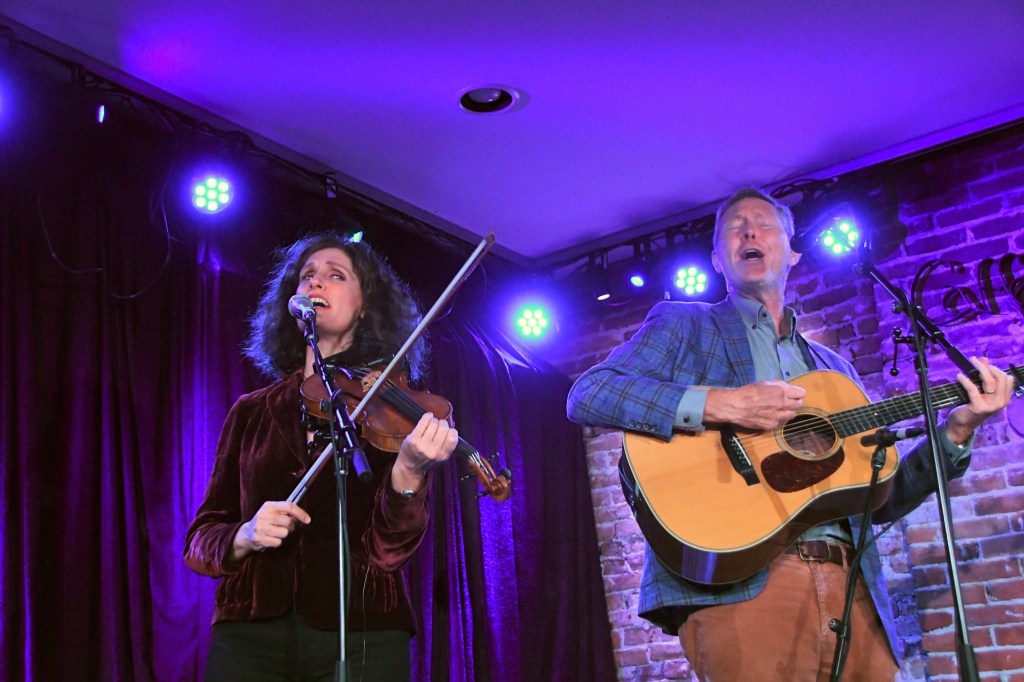
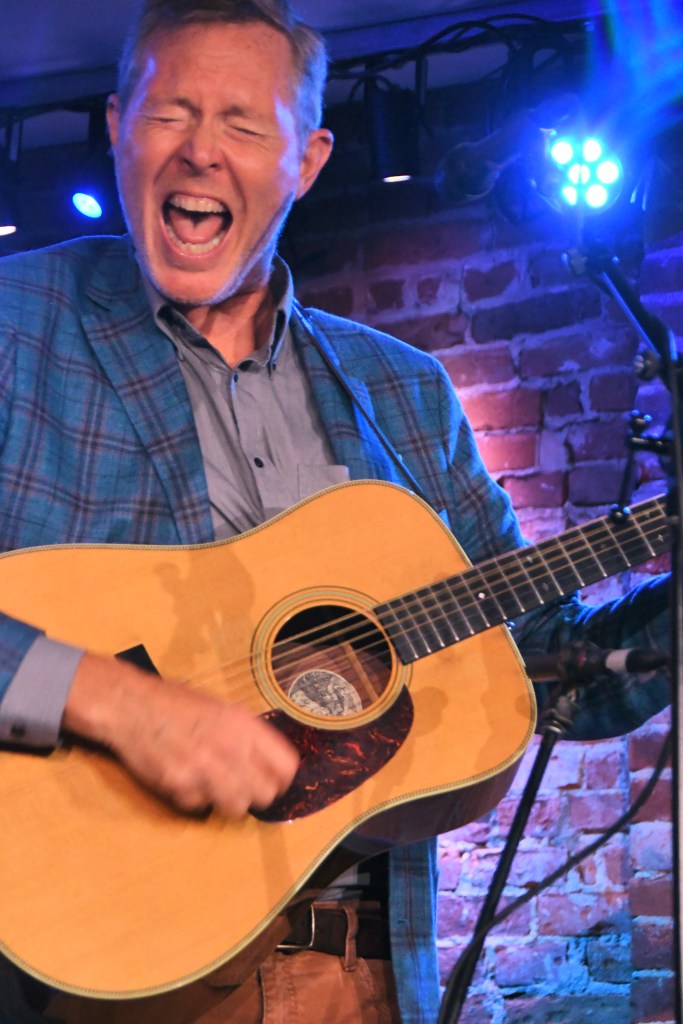
Robbie Fulks, right; and Jenny Scheinman
So we’ll start there, and bounce around – as Fulks did in his 50-minute opener in the sixth show (in five days) with Gauthier.
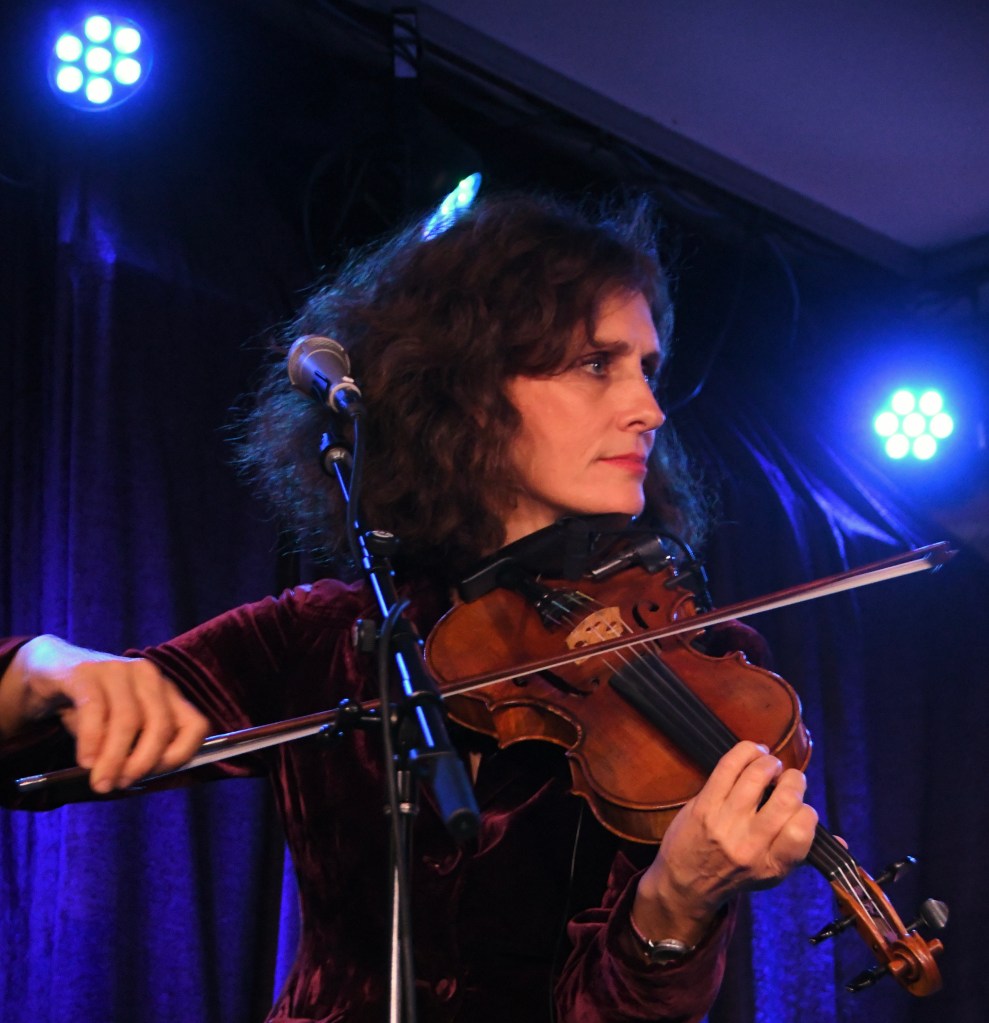
Both Gauthier and Fulks brought accompanists – Jaimee Harris played guitar and sang alongside Gauthier with a mentor/protege feel while Jenny Scheinman played violin and sang with Fulks more as equals.
Both sounded southern and wrote and sang of southern places; New Orleanian Gauthier singing much like fellow Gulf Coaster Lucinda Williams, with every bit as much hard-won character, and Virginia-raised Fulks echoing up-hollow and Tidewater vibes. Gauthier wrote from the Carson McCullers Spanish-moss gothic wing and Fulks stirred up that same melancholy flavor in a zesty cocktail with goofball observations. She: earnest/moody; he: more mixed, pained or pointed, edgy/witty.
Fulks and Scheinman started sincerely in the self-questioning emotional travelog “Long I Ride” and stayed sentimental with “Molly and the Old Man” about family music-making. Famed for sardonic writing, Fulks flat-picks a mean Martin six-string; not flashy but plenty fast and always clever-logical. Comfortable everywhere from jazzy sophistication to bluegrass rips, Scheinman filled in the blanks, perfectly taking each lyric’s emotional temperature and fitting beautifully in sense and sound.
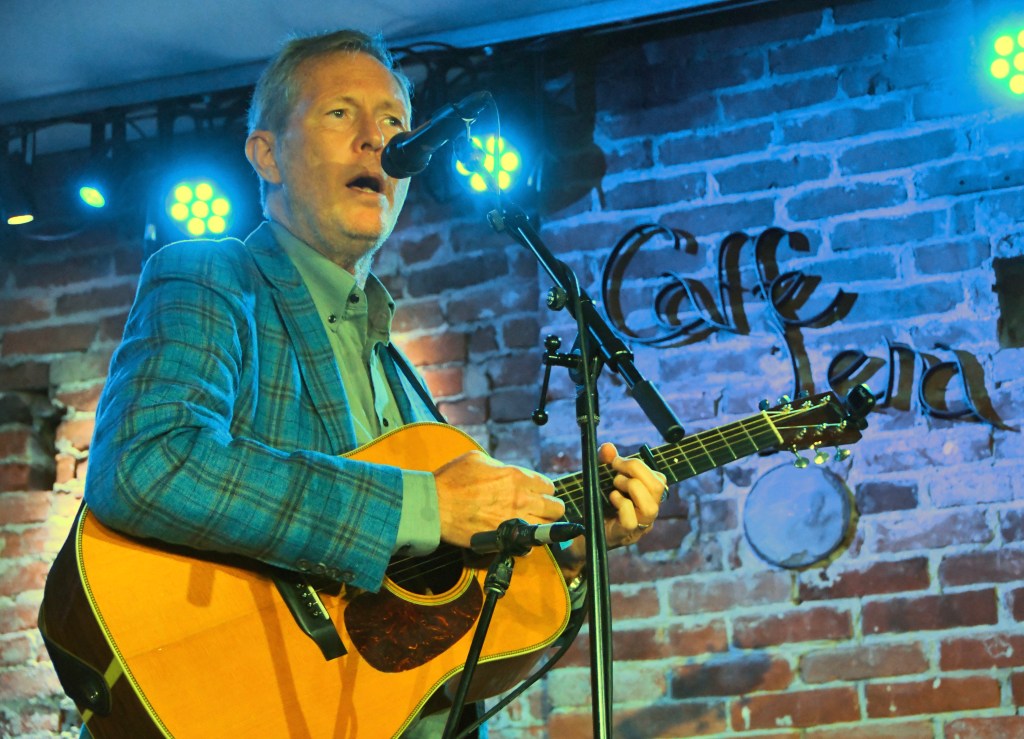
Determining that none in the near sold-out crowd had also seen the first show, Fulks quipped that he could therefore phone it in, “saying the same shit between songs.” Of course he didn’t, but this suggests that soon things might go wry. No, not awry, but humorous, and pointed.
“Cigarette State” lampooned local loyalty (though he did self-censor a dick joke from its lyric) and “Seventies Jesus” – you can guess what this anti-hymn proclaimed – proved Fulks’s aim is true and his lance is sharp.
They sandwiched those Zappa-meets-Prine skewerings of cracker cliches around Scheinman’s sweet-but-complex lovesong “The Littlest Prisoner,” just as “That’s Where I’m Coming From” followed “Seventies Jesus,” showing affectionate snapshots of a south Fulks previously portrayed as very mixed. “Busy Not Crying” romped and stomped like Buddy Holly primal rock in a set-closing romp, all straight-ahead teen-dream energy.
How to “follow that,” indeed – but Gauthier and Harris shrewdly started soft and slow with “The Meadow,” a wistful lost-love meditation. Its somber-fatalistic tone deepened in “Between the Daylight and the Dark.” They went even further into loss-and-leaving in “Dark Enough to See the Stars;” and – almost unbelievably, given the poignance that went before – deeper still in “Cigarette Machine.”
Gauthier turned to Harris to lighten the mood with the hopeful “Love is Gonna Come Again” as a solo – a ray of sunlight compared to the darker material on Harris’s albums mourning addiction, suicide and the death of mentor Jimmy LaFave.
Gauthier then went elegiac in the tender tribute “The Last of the Hobo Kings” before riding the rails again in “Some Times” – history as seen, blurring past, from the dining car of the Orange Blossom Special.
“’Til I See You Again” had the same loving prayerful flavor as John Martyn’s similarly generous “May You Never,” and Gauthier offered this in tribute to hero John Prine – “the Mark Twain of songwriting,” she said.

She then opened her book “Saved by a Song” to describe her life-saving songwriting mentorship of troubled veterans, work she said proves music is more than entertainment; that it’s magic, alchemy.
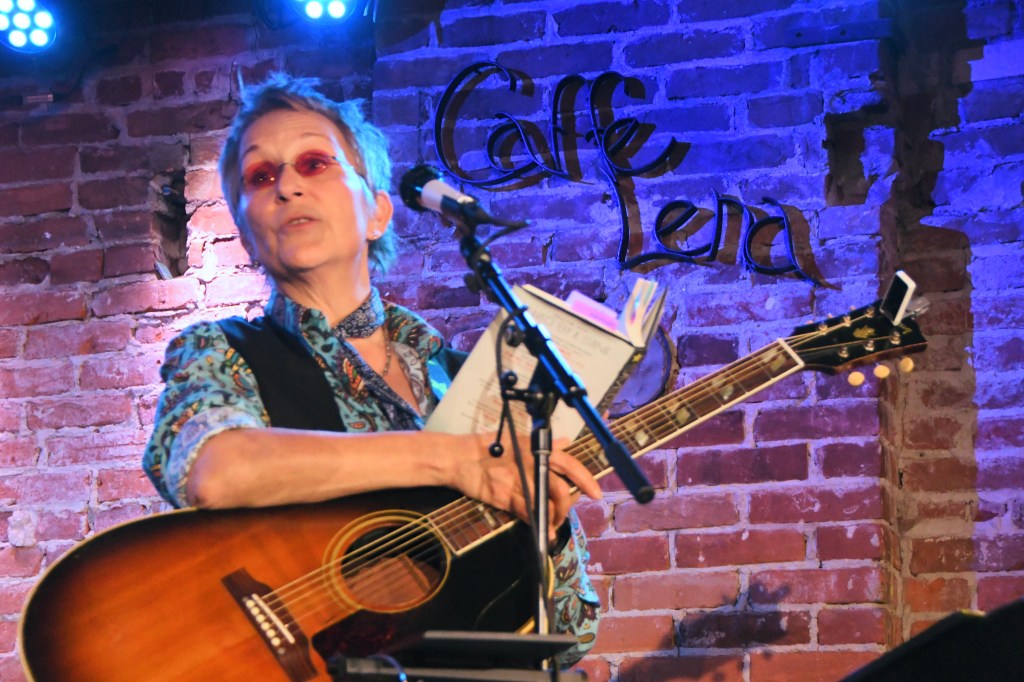
She then extolled the Caffe as church and orphaned churches bereft of their congregations as community centers. And she introduced her timeless paean to forgiveness “Mercy Now” as “the last of this service.” And it felt holy.
Like Prine’s, Gauthier’s best songs are simplicity itself, musically; sung in conversational style with sparse guitars, Gauthier mostly strumming, Harris picking. Harris also sang high-harmonies in the style of another Harris, Emmylou – whom she’ll accompany tomorrow in a Nashville retrospective honoring Gauthier as part of the Americana festival.
Also coming up: Scheinman told me backstage she has a new album in the works with jazz drummer Alison Miller, with whom Scheinman played at Freihofer’s Saratoga Jazz Festival several summers ago.
 Hoke's Jukebox