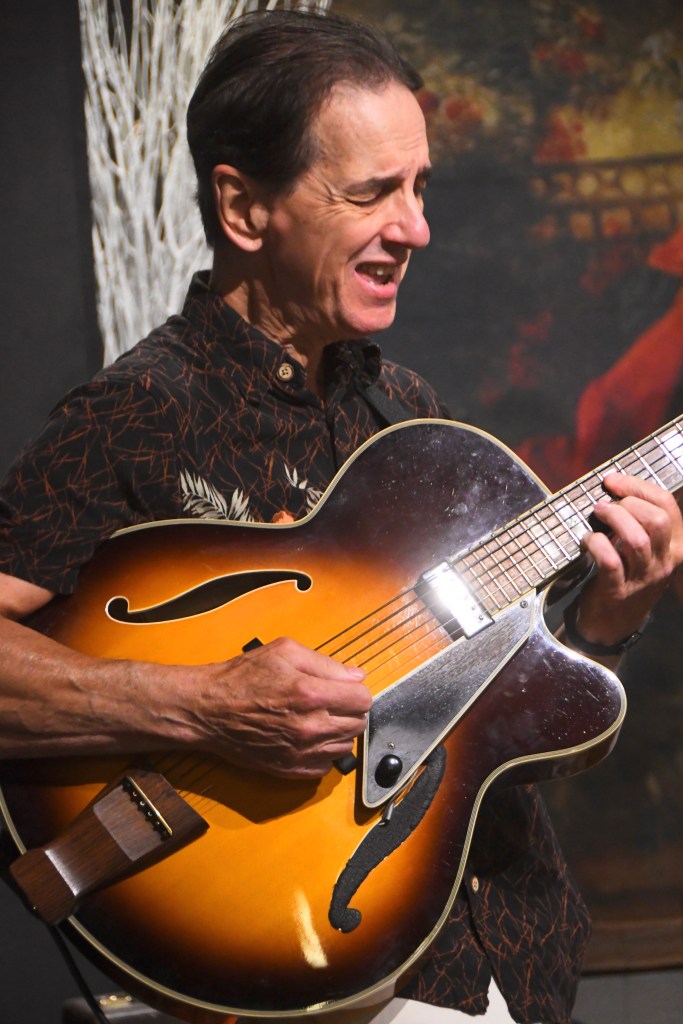
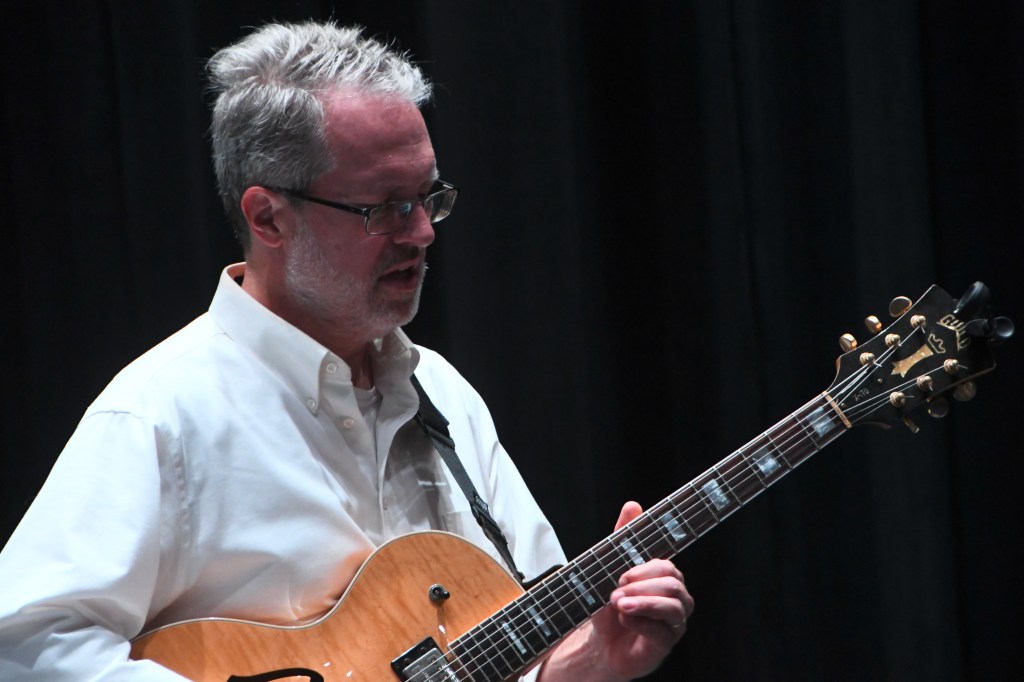
For guitarist Joe Finn, music has always been a family affair. His father, brother and son are all musicians.
He plays Jazz on Jay with Jon LeRoy, organ; and Pete Sweeney, drums – his trio of ten years.
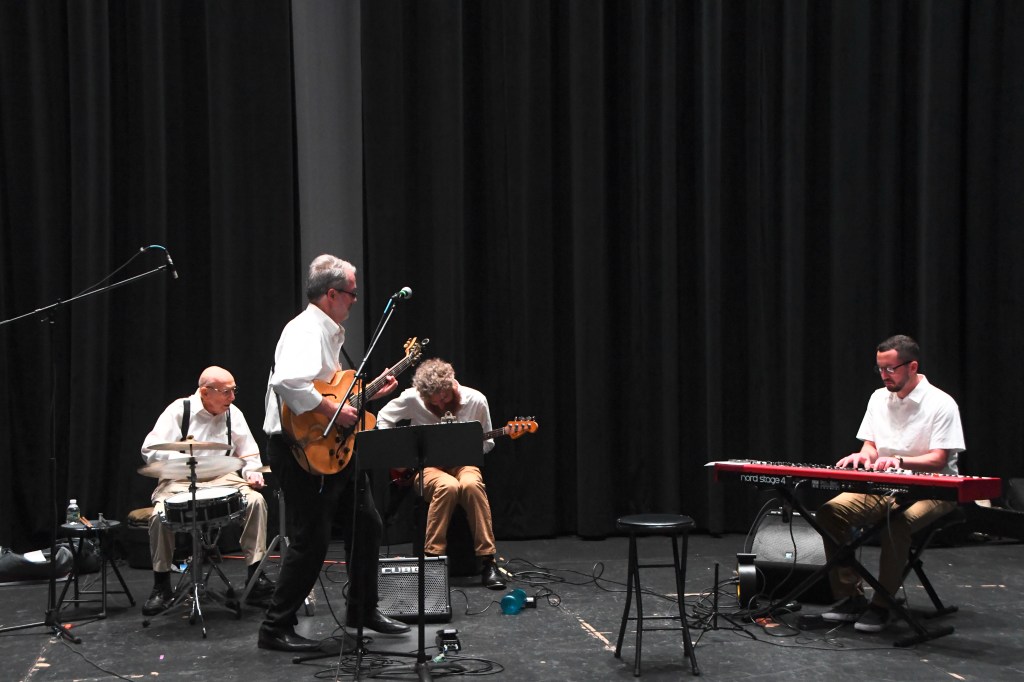
Finn and Sweeney played Jazz on Jay Aug. 1 as members of Terry Gordon’s Quintet at the series rain site, Proctors Robb Alley.
Looking back, Finn says, “My earliest inspiration was my father who played the piano and gave me lessons as a young child.” His father Leo and brother John play piano; his son Tom plays alto sax. “My big inspirations as a guitarist are Wes Montgomery, Joe Pass, Pat Martino and George Benson,” says Finn. He graduated from Chatham High School where he played in the jazz band, then earned a BA in music from Plattsburgh State University. “As a jazz player, I am fundamentally self-taught,” says Finn, who later studied with Pat Martino and Gene Bertoncini.
They’ll play jazz standards and blues at Jazz on Jay including “Think of One,” “Jingles,” “The Visit,” and “Mercy, Mercy, Mercy” – but no originals. “The trio is improvising almost all the time,” says Finn, explaining they emphasize interpretation, expression, artistry and innovation. Their “Generational Dynamics” album (2019; Tom Finn played as a guest) earned extensive national airplay.
These days, the trio plays regularly at 9 Maple Avenue in Saratoga Springs and Finn plays with LeRoy often at Scotia’s Turf Tavern. He also free-lances with Gordon, Sweeney, Michael Benedict, Kaitlyn Fay, Pete Toigo, Wayne Hawkins and others.
“I have been leading bands since the 1980s and have released seven albums as a band leader,” says Finn.
“I continue to draw inspiration from my fellow musicians,” Finn says. “Almost everything I hear is an inspiration on some level.”
Jazz on Jay free concerts are noon to 1:30 p.m. at Jay Square, the new park space opposite Schenectady City Hall. The rain site is Robb Alley at Proctors, 432 State St., Schenectady. Seating is provided indoors at Robb Alley, but patrons are invited to bring their own seating and refreshments to Jay Square.
Jazz on Jay is presented by the ElectriCity Arts and Entertainment District and sponsored by the New York State Council on the Arts, a Schenectady County Legislature Arts & Culture Grant, Downtown Schenectady Improvement Corporation, The Schenectady Foundation, Price Chopper/Market 32, MVP Health Care, Schenectady County, Schenectady City Hall, and Proctors Collaborative.
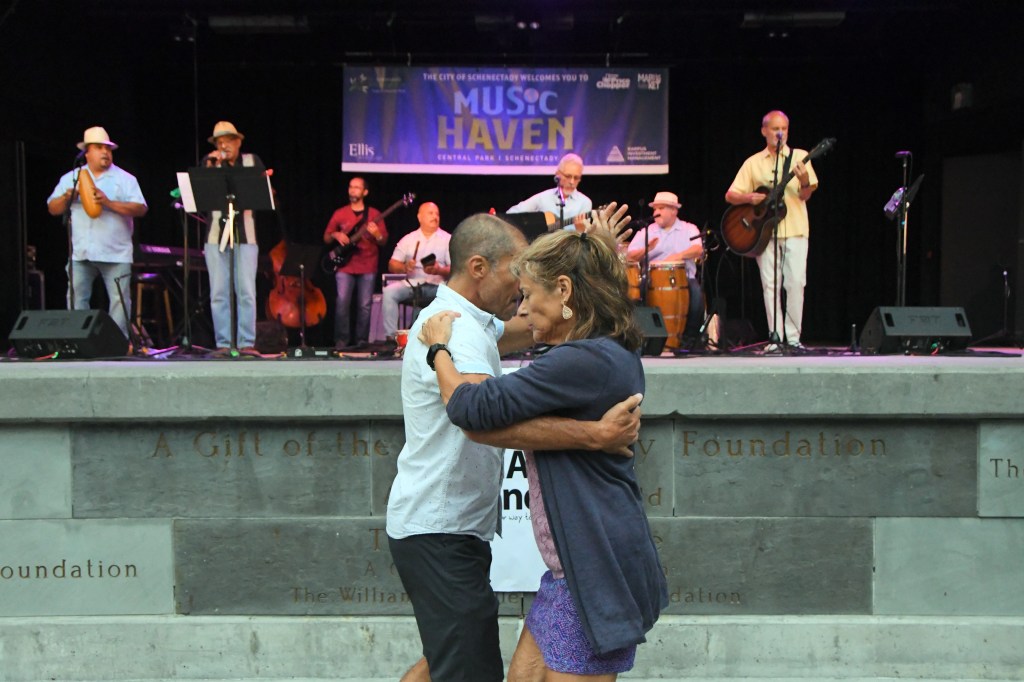
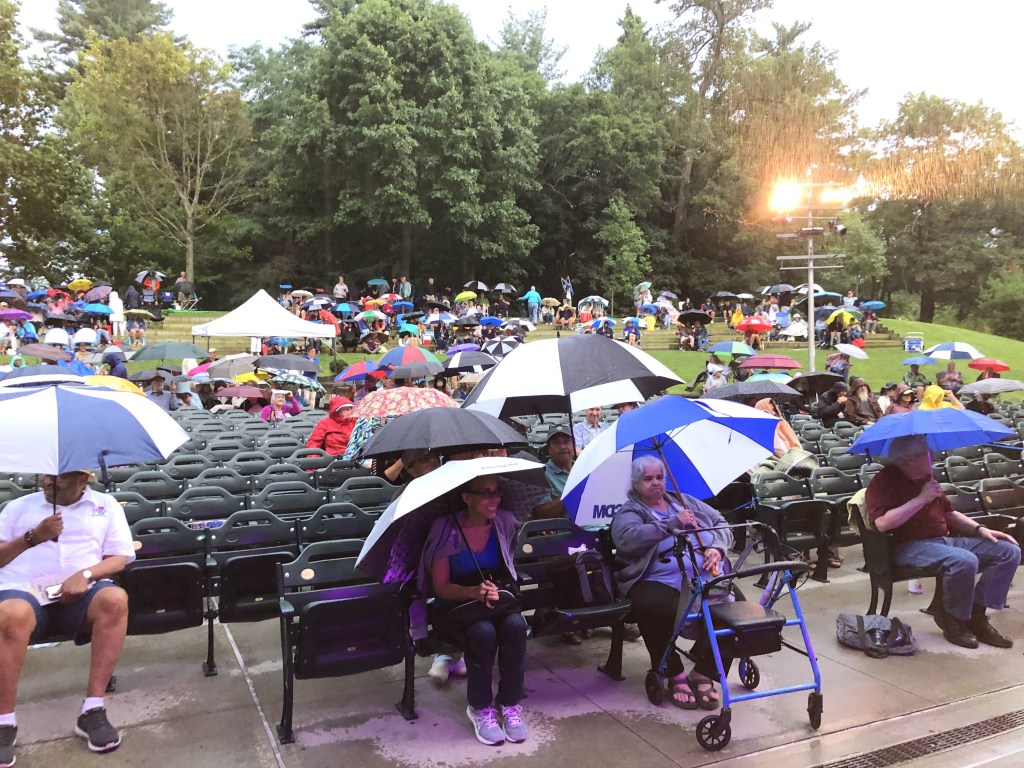
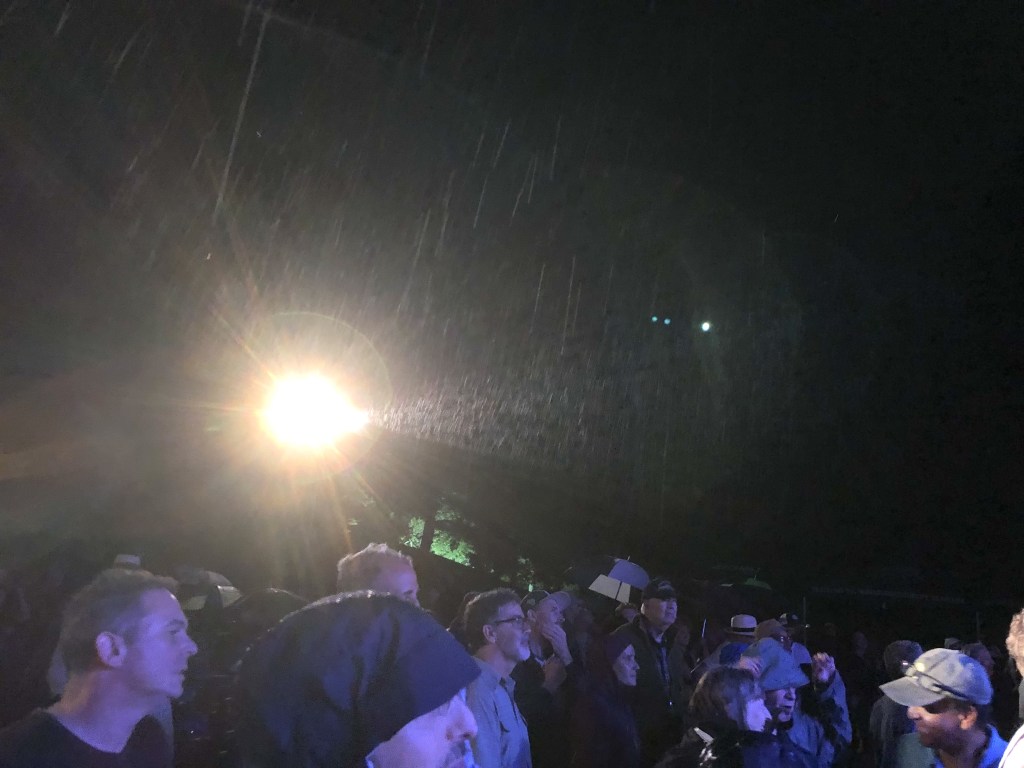
“Cuban” denotes a savory sandwich; meaty, spicy, cheesy, bread on both sides. Sunday at Music Haven, a sunny afternoon and crescent-moon evening sandwiched Cuban music spiced by spirited dancing, and unpredicted rain.
Some left, but more stayed, soaked but happy, some clustering under trees, umbrellas and service tents, as singer-guitarist Eliades Ochoa, graduate of Ry Cooder’s Buena Vista Social Club, celebrated island music of party/dance intent and jazzy effect.
The place was packed with Spanish-speaking Caribbean music fans; many greeted Ochoa’s songs by applauding or singing along. Every tune earned a happy welcome and not just “Chan Chan,” maybe most recognizable of all Buena Vista Social Club tunes, which popped up mid-set. Although he spoke gratefully of how the BVSC album, film and tours revived his career, Ochoa freely surveyed his music beyond it. He spoke only Spanish, introducing tunes and bantering with the crowd, which he christened “a big family.” His show felt like that, connection built on rumbas, merengues, a bolero or two.
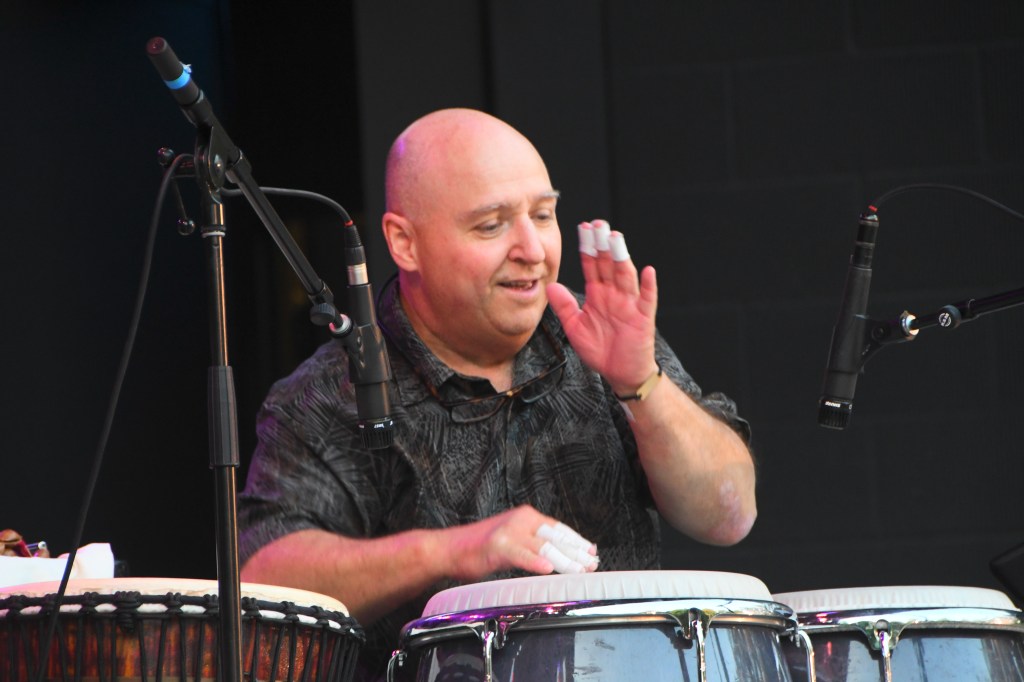
Mary Farquharson wrote in Songlines that Ochoa’s “style is a very personal version of the original trova, as it was played by the founders of this style, like Sindo Garay or Miguel Matamoros in the 1920s.” There was nothing antique about it on Sunday. Ochoa played eight-string guitar with fast fingers evidently forged of steel, by turns emphatic and powerful or soothingly sweet. Around and behind him swirled agile beats by keyboard, double bass, trumpet and alto sax – both played lots of percussion, too – and a master of congas and bongos; upstage and relentless he seemed to lead the band.
Early on, the bolero “Creo En La Naturalize” and the relaxed rumba “Arazo De Luz” slowed the pace, before “Aniata Tun Tun” revved things up again, vocal chant and trumpet echoing each other in beat and melody and Ochoa smiling as he sang. He handed the lead over to his young keyboardist; but his own guitar and trumpet soloed most often and usually introduced the tunes. While the melodies and beats varied, the performing dynamic had a compelling consistency: Launch-pad intro, verses and choruses of vocal leads and group chants, some solos, then coda. The show had pace and punch as Ochoa seemed to grow more relaxed from song to song.
Ochoa’s voice, most recognizable sonic signature of the Buena Vista Social Club, was rich in character, and he seemed to be improvising at times, as on guitar. The sound balanced very well, especially with the diversity of sources: the bass through a small amp, the keyboard via direct input, the guitar on a wireless rig and horns, vocals and percussion on microphones.
The crowd was fully in it, dancing a lot and clapping a loud three-beat in “El Cuarto De Tula” at the of the set, when trumpet and saxophone guys converged, riffing hard behind Ochoa. Fans chanted for an encore that Music Haven chief Mona Golub encouraged and Ochoa and band happily supplied. She proudly noted Sunday’s concert was one of only two Ochoa and band played in the U.S. on the international tour celebrating his new “Guajiro” album.
Bolero Blues opened, an ad hoc crew of local Latin musicians who also sandwiched things: Caribbean-ized mutations of “The Way You Look Tonight” around “Blue Moon,” for example, with rumbas, merengues and salsa surrounding that Sinatra-ish interlude.
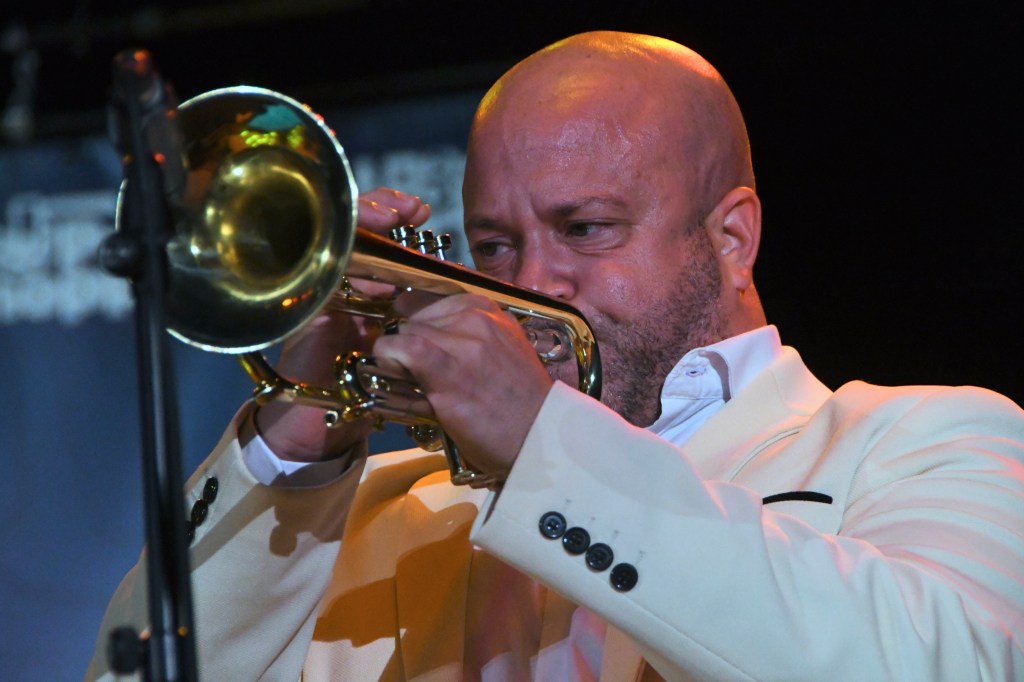
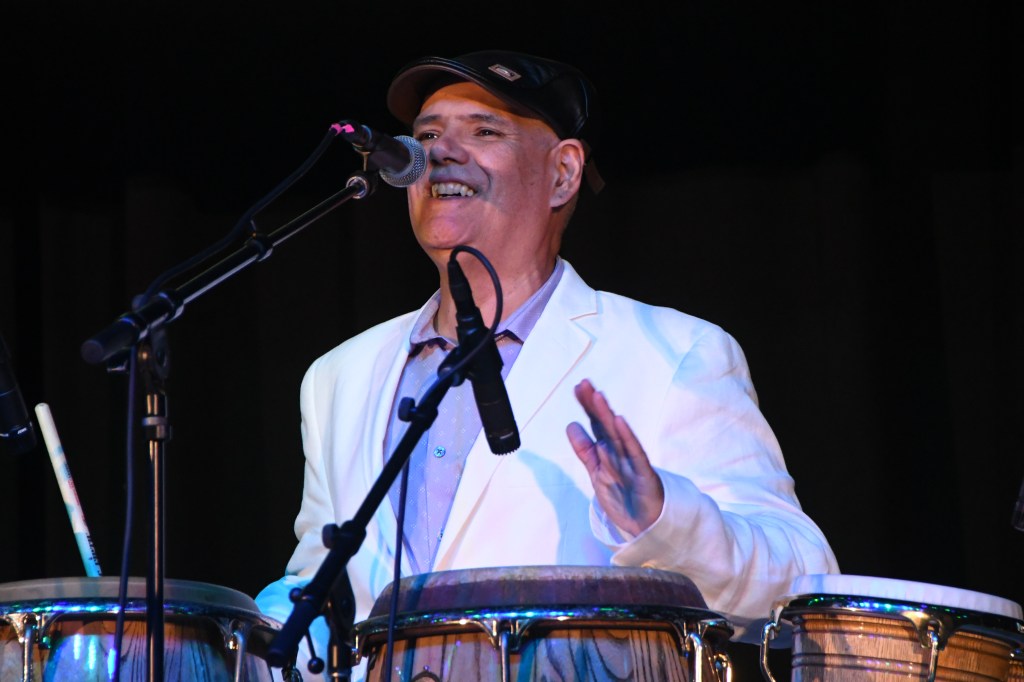
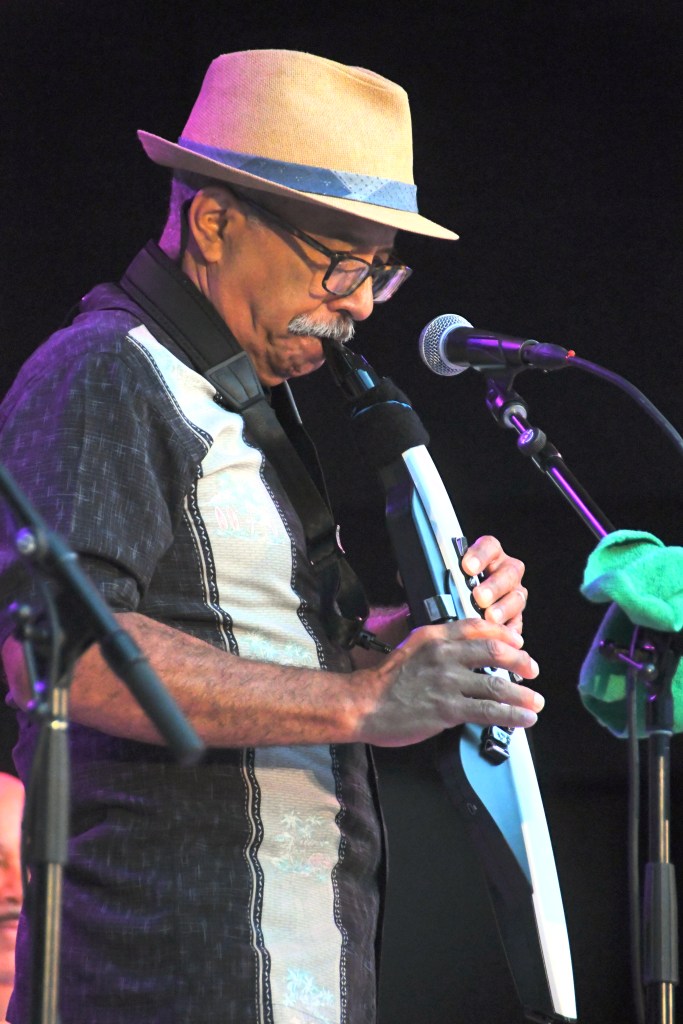
Singer-trumpeter (actually a plastic synthesizer construct, like an EWI for brass effects) led an ensemble so unified in its Latin-party mission that bandleader Alex Torres, whose Latin Orchestra seems to play every night this summer, took his place in the groove rather than up front. Torres played bongos and cow-bell in a swirl of acoustic guitars, electric bass and percussion.
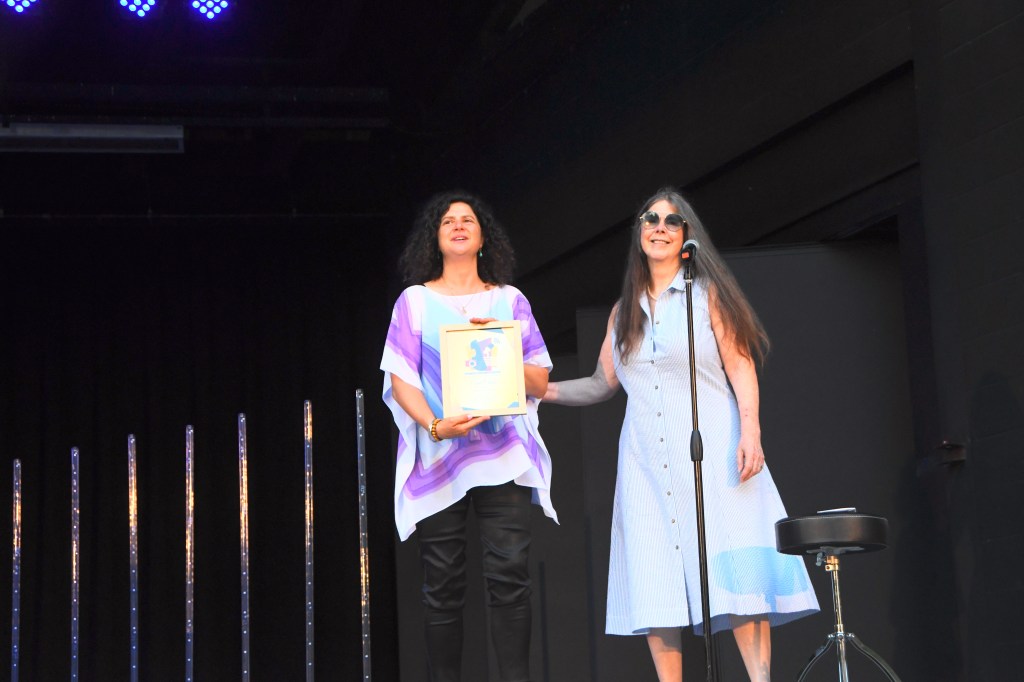
The evening began with Music Haven’s Summer Social – full disclosure: I was a paying customer – in the Tom Isabella picnic pavilion. After dinner, the pavilion’s name-patron took his customary volunteer spot, selling raffle tickets. In both the pavilion and on the main stage, Schenectady City Engineer Christopher Wallin was honored as 2024 Music Haven Maven for his leadership in upgrading the Music Haven venue and other Central Park facilities. Full disclosure #2 – Music Haven impresario Mona Golub conferred that same honor on me in 2017.
Music continues at Music Haven Friday with its annual blues barbecue featuring Blood Brothers, Misty Blues and Piedmont Blues; then Banda Magda Sunday.
Final full disclosure: Meat & Company in Niskayuna makes a good Cuban.
Before the show
Early in the show
Music Haven Maven Christopher Wallin and Mona Golub
Mona Golub with translator, announcing Eliades Ochoa
The only things that went wrong Thursday were a worst-possible-time rain storm; a last minute venue change from Jay Square outdoors into Robb Alley at Proctors; a siren-noisy, flashing-lights fire drill and a lot of rambunctious crowd noise.
But, no problem: hard bop uplift by Terry Gordon’s Quintet simply overcame.
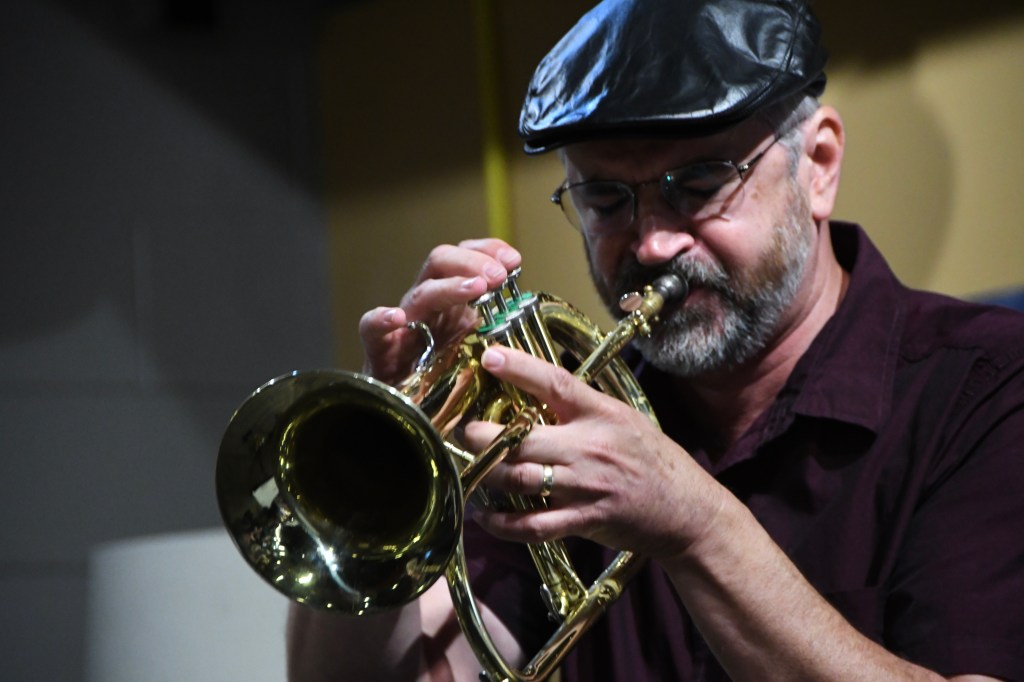
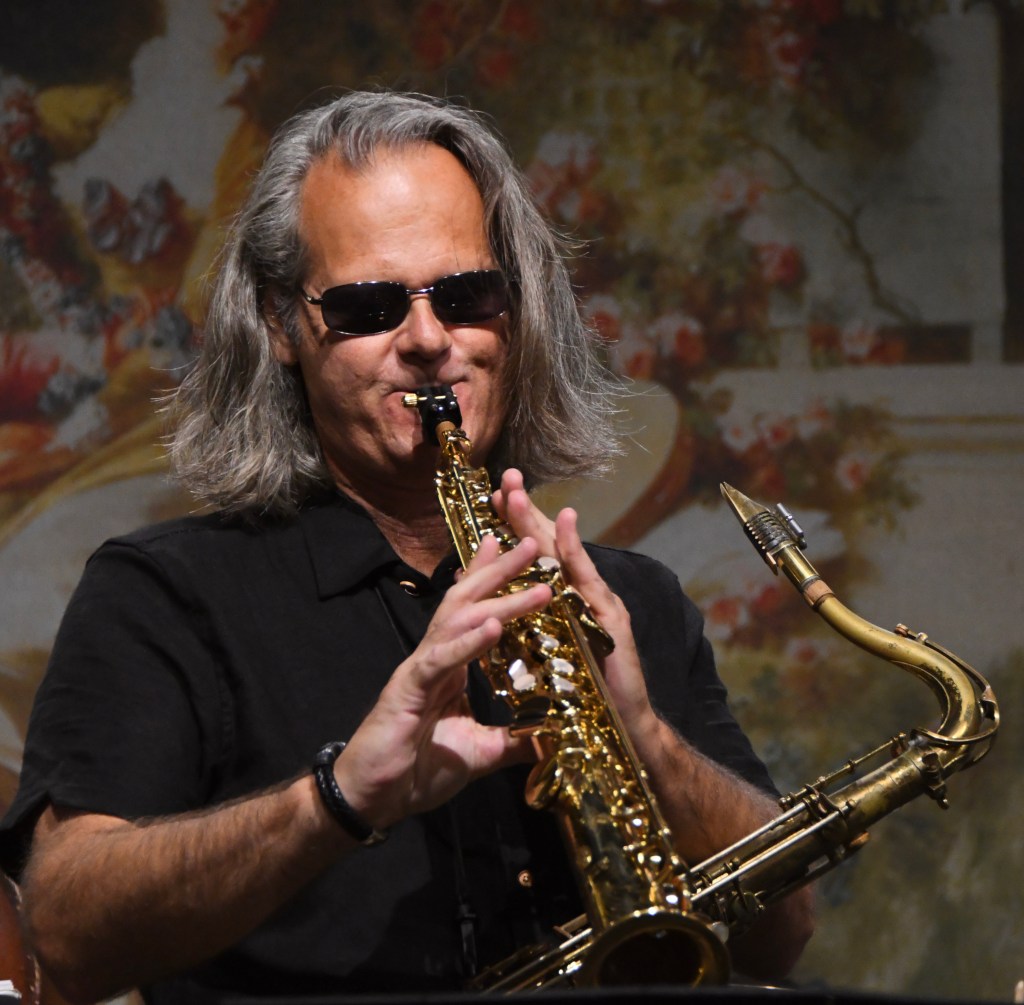
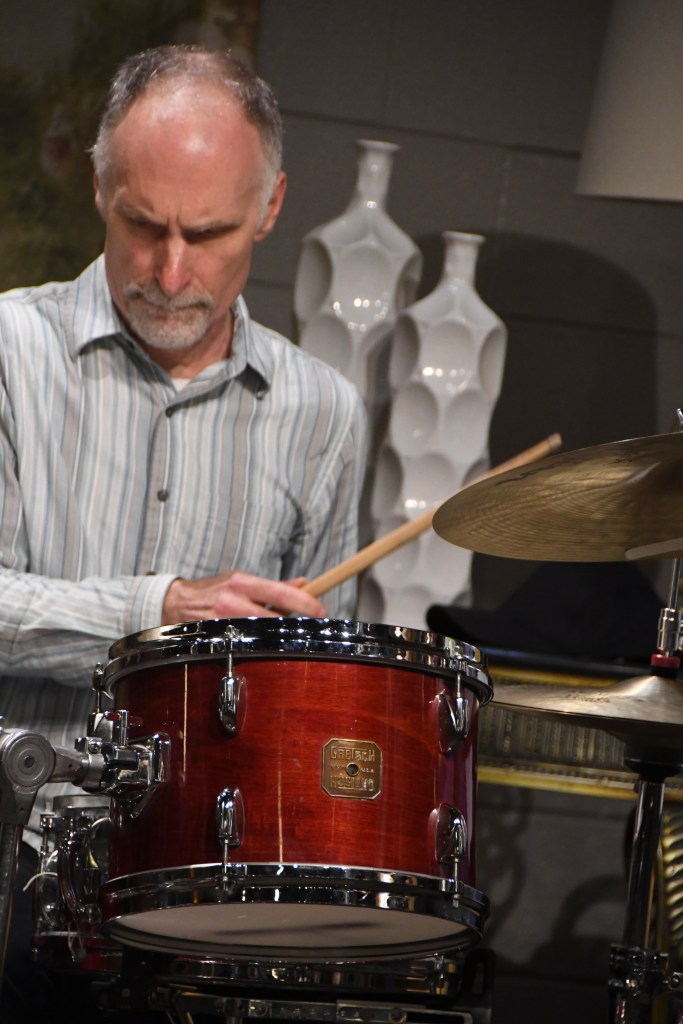
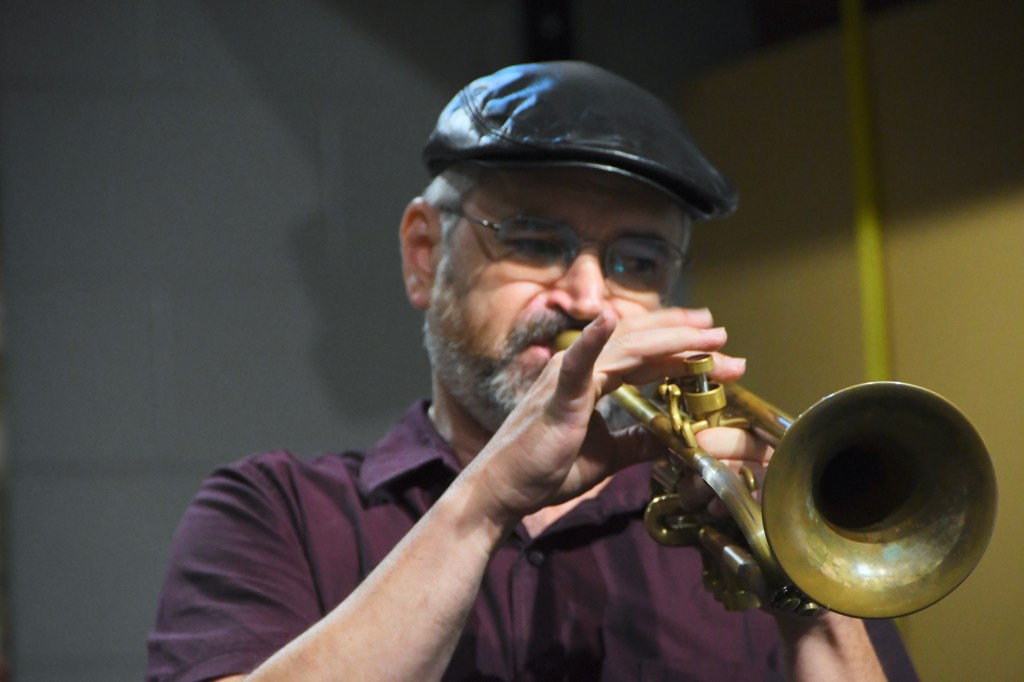
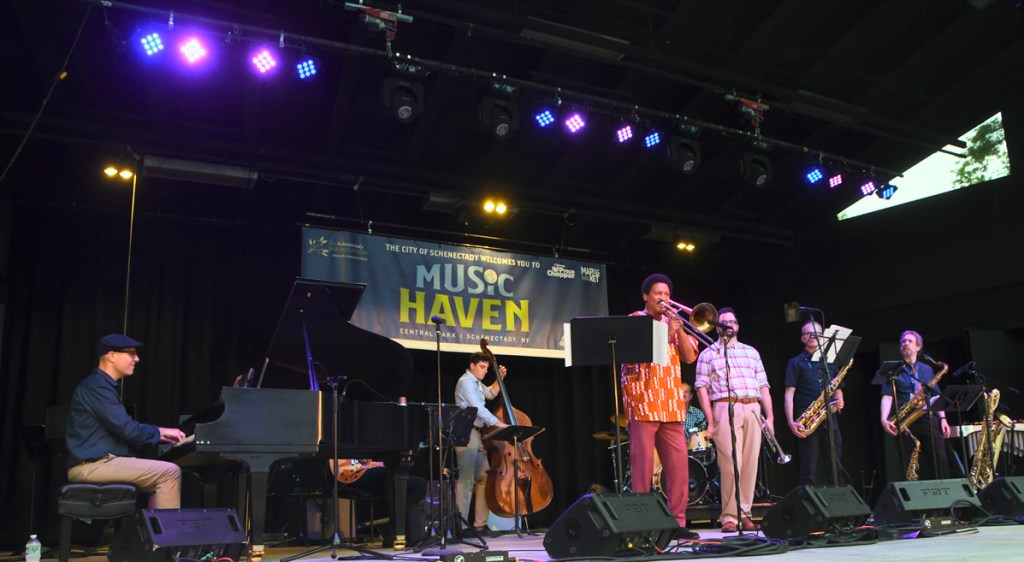
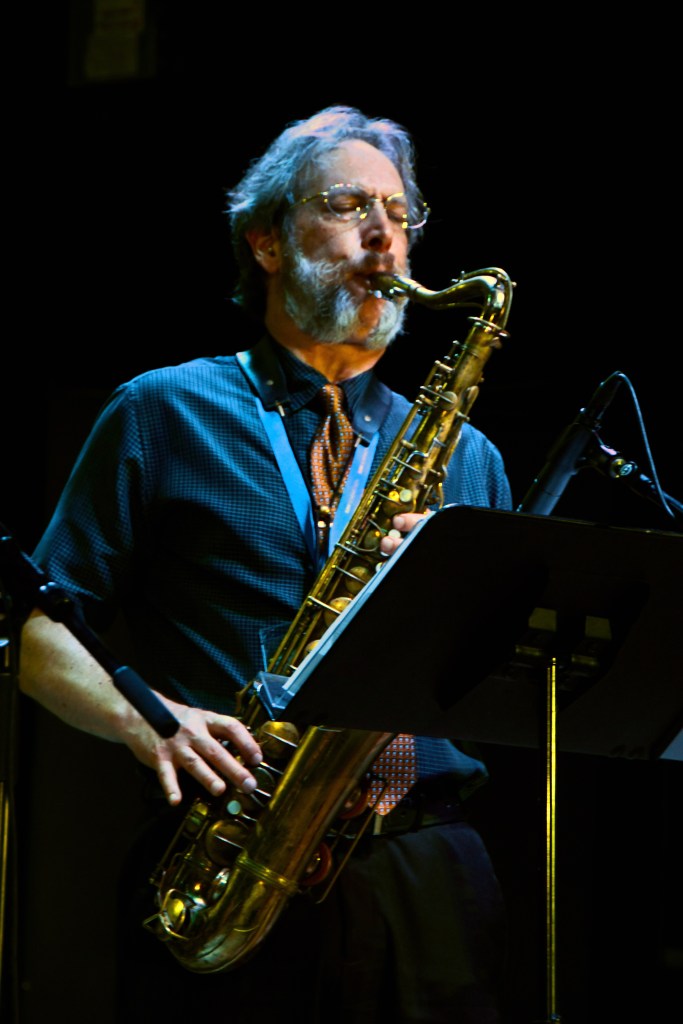
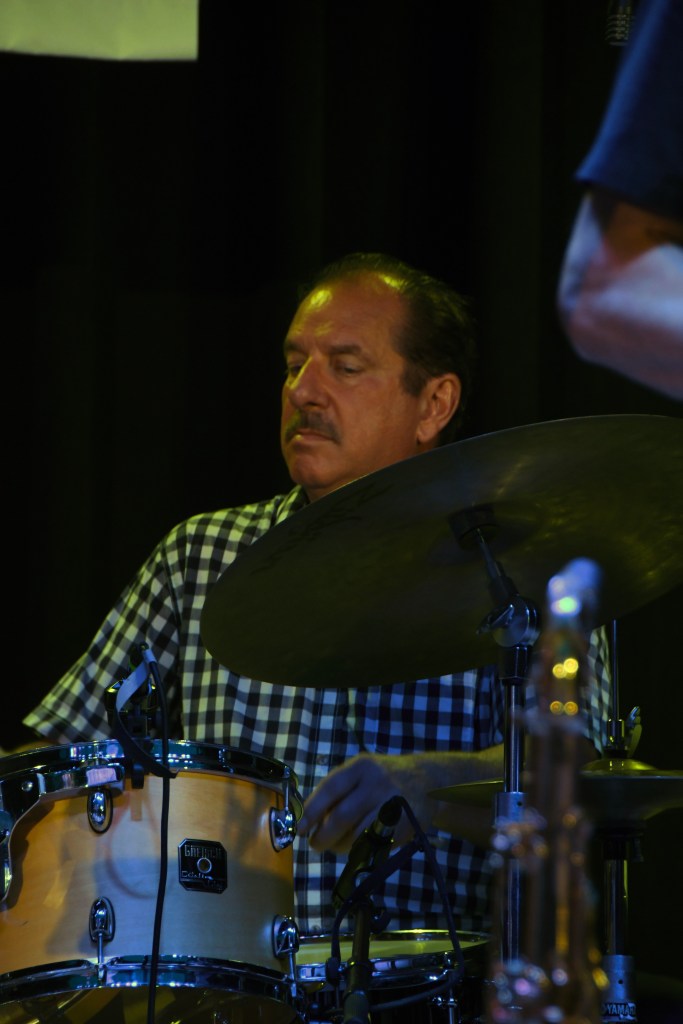
Band and crew set up efficiently; with amps only for Joe Finn’s guitar and Lou Smaldone’s double bass. Drummer Pete Sweeney, saxophonist Eric Walentowicz and leader-trumpeter/flugelhorn player Gordon played on the natch, without PA. Again, no problem – their balance was superb from when Gordon gave the downbeat at 12:25 and the guys charged into “Configuration.”
Playing all originals can be a nervy move, especially after delays and as a theater-school class flowed into Apostrophe on a noisy break. The bluesy bop of “Configuration” got over anyway, an assemblage of abrupt hard-edged riffs that resolved into an upbeat ending.
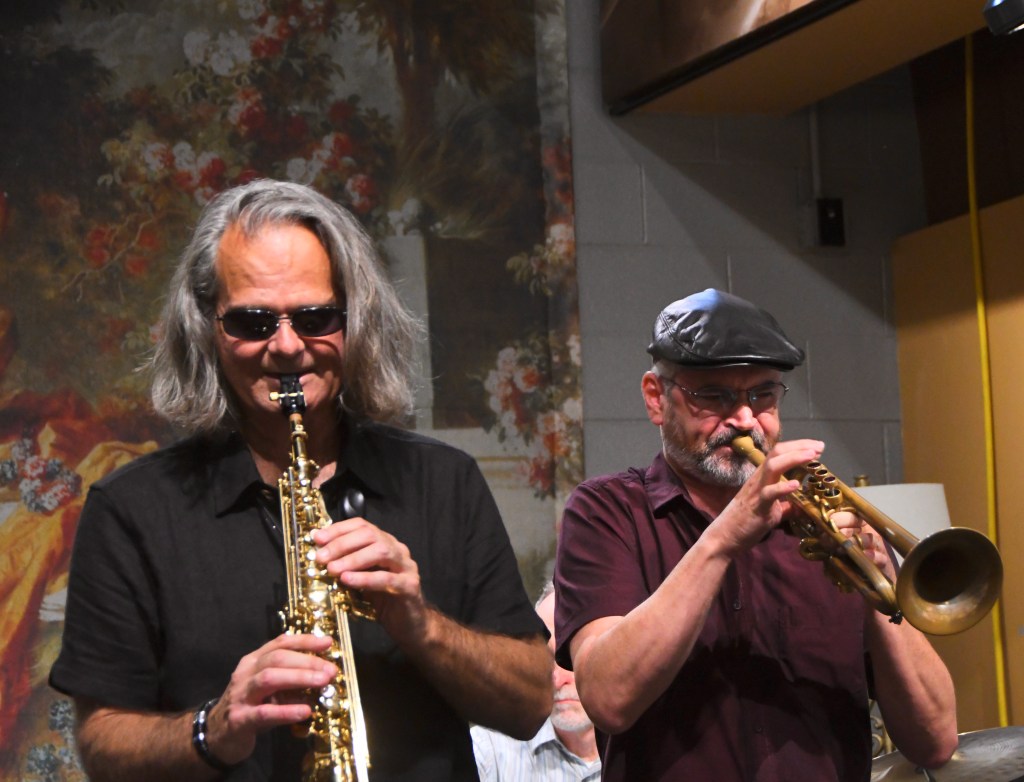
The slower “Looking In” earned its introspective title in a thoughtfully brooding start. Gordon played flugelhorn (like a trumpet that needs to go on a diet, with a lower range), as Walentowicz blended in his tenor sax at first but switched to soprano for his solo, a compelling meditation that set up tasty breaks by Finn and Gordon as they built a sunnier mood than at the start.
“Homeward Bound,” on the other hand, started happy and stayed there, Walentowicz’s soprano echoing Gordon’s trumpet near the open, then later flying free and high.
Gordon’s trumpet opened alone in “Quarantine” (a Covid tune, as he explained), before Walentowicz’s tenor commented and went further outside; further, that is, until Gordon went raspy in his own solo before playing clean and clear again.
From those fireworks, they eased into the alert mellow calm of “Until Then,” tender flugelhorn and tenor sax effective in this ballad change of pace.
Changing the mood and dynamic yet again, they surged back into hard-bop heat for “Amagalgatorium,” powered, and that’s the right word, by rhythm fire. Smaldone and Sweeney were rocks at all times, and here they paved a fast funk highway for everybody to follow, Finn joining the fun by emphatically thumbing chords. For contrast, the rhythm section laid out for tasty two-horn interludes in the middle and at the end. Fine interplay here, too; trumpet with guitar, alto sax with bass, then Sweeney took a strong solo and it all came home.
The blues-swing of “Noname” (like salami or edamame) led off with bold trumpet echoed by tenor riffs, a brief conversation that opened into succeeding heads-up excursions.
Slower and softer flowed “Flowers That Beckon,” so soft that when photographer Rudy Lu sneezed in his front-row seat, Sweeney looked up from his drums to say “Bless you.” Quiet laughs all around. Playing mainly on toms, with mallets, Sweeney popped a more assertive groove as Gordon conducted a correction to the blend, then his flugelhorn pumped the melody hard as he revved everybody to follow.
Of course, “Knot So Fast” was an ironic title, another full-flight, speedy hard-bop blitz, a burst of smart adrenaline that melted away to let Sweeney’s drums carry the groove before horns and guitar took over.
There’s a good reason these guys – whom Gordon recruited to play his originals in this quintet – are in such demand. Skilled individually, they know how to cook together and cruise at any tempo, to blend and burst out into space.
Finn returns to Jazz on Jay on Thursday, Aug. 15 with his trio. Singer Maggie MacDougall’s Bossamba follows on Aug. 22; then Joe Barna wraps the series on Aug. 29.
Trumpeter, flugelhorn player and composer Terry Gordon could call his quintet the In-Demand-Crew as its members are among the area’s busiest jazz masters. It’s a purpose-built band on a mission – playing the ninth concert of the 12-show free-concert season.
“Formed around 1993 as an outlet for original compositions, it has maintained that focus ever since,” says Gordon. A prolific composer, Gordon plays trumpet and flugelhorn with Eric Walentowicz, saxophones; Joe Finn, guitar; Lou Smaldone, bass; and Pete Sweeney, drums. They’ve played together for years: Smaldone off and on since the mid-90s, Walentowicz since 2000, Finn since 2003 and Sweeney since 2012.
Gordon also plays with the Arch Stanton Quartet, Alex Torres, Brass-O-Mania and in a duo with guitarist Roger Noyes; Walentowicz with the New York Players and Brass-O-Mania; Finn as leader and sideman – he plays Jazz on Jay with his trio on Aug. 15 – Smaldone with Keith Pray’s Big Soul Ensemble (where Gordon was an early member), and Sweeney with Michael Benedict’s Jazz Vibes (at Jazz on Jay June 20) and the Art D’Echo Trio.
Son of a church organist mom, Gordon studied with Dr. Harold McNeil at Houghton College and Dr. Michael Galloway at Mansfield University. His main influences are Woody Shaw, Chuck Mangione, Miles Davis, and Freddie Hubbard.
Gordon has played professionally since he earned $40 at an 1984 New Year’s Eve country club gig.
These days, with his Quintet, “We play pretty much all originals,” he says – chosen from his albums “Wakeup Call” (1997), “Contemplations” (2002), “Homeward Bound” (2006), “Tomorrow Calling” (2013), and “Tangents” (2023). He explains there’s “much room for improvising.”
Gordon will be busy the rest of the summer with the Quintet, the Arch Stanton Quartet, the Gordon & Noyes Duo, and Alex Torres. Check his schedule at https://terrygordonjazz.com/upcoming-live-music/.
Jazz on Jay free concerts are noon to 1:30 p.m. at Jay Square, the new park space opposite Schenectady City Hall. The rain site is Robb Alley at Proctors, 432 State St., Schenectady. Seating is provided indoors at Robb Alley, but patrons are invited to bring their own seating and refreshments to Jay Square.
Jazz on Jay is presented by the ElectriCity Arts and Entertainment District and sponsored by the New York State Council on the Arts, a Schenectady County Legislature Arts & Culture Grant, Downtown Schenectady Improvement Corporation, The Schenectady Foundation, Price Chopper/Market 32, MVP Health Care, Schenectady County, Schenectady City Hall, and Proctors Collaborative.
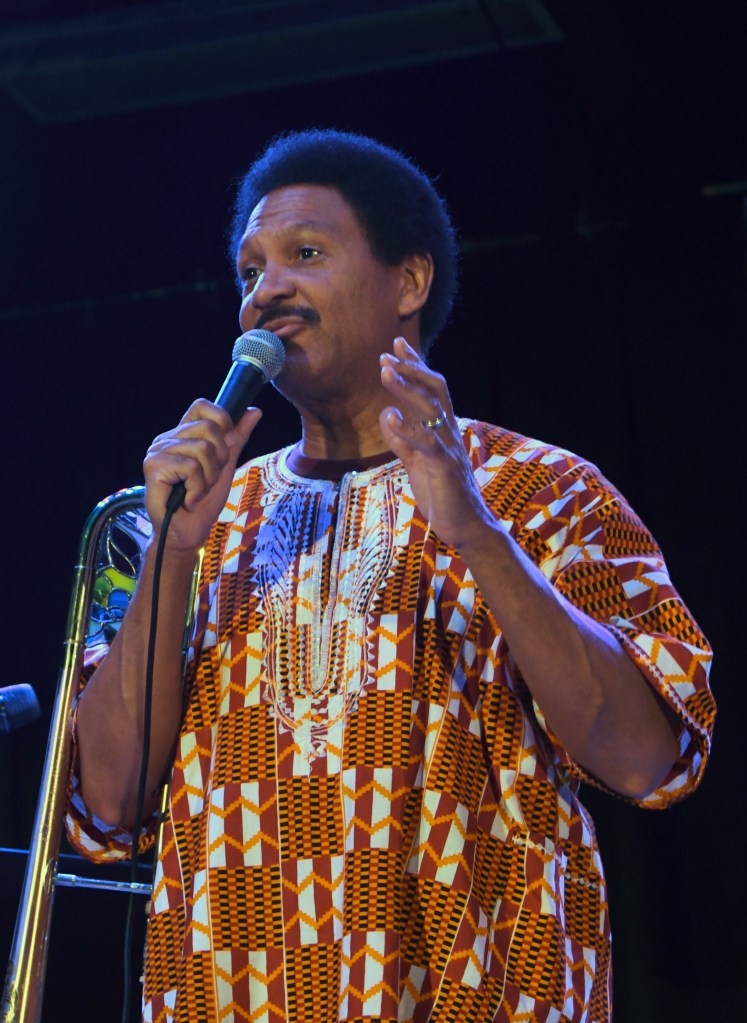
SUNY Schenectady Jazz Faculty Combo with Guest Delfeayo Marsalis at Music Haven, Monday, Aug. 5
When Delfeayo Marsalis came to town, the music and menu changed.
Guesting with the SUNY Schenectady Jazz Faculty Combo Monday at Music Haven, the trombonist brought New Orleans tunes while the school’s food truck served gumbo, muffulettas and beignets.
Scion of jazz royalty back home – son of pianist-teacher Ellis, brother of trumpeter Wynton, saxophonist Branford and drummer-vibes player Jason – Delfeayo fit well with the locals Monday.
Delfeayo Marsalis
Christopher Brellochs
Inspired as if working with an eminent visiting professor, the SUNY Schenectady music teachers played at their best. Dean-saxophonist-host Christopher Brellochs hoped the show would “prove we know what we’re doing.” It did, in top music-making by everybody including four young grads.
Marsalis brought expert trombone work, top tunes, amusing, song introductions and a supportive attitude.
Mia Scirocco
Each of the two sets (the first ran 55 minutes; the second, 45) began with strong, uptempo vocals from Mia Scirocco. Marsalis came on after her upbeat “You’d Be So Nice to Come Home To” and framed his original “Jazz Party” in a family tale: His grandfather built a music club in his New Orleans motel. Coincidentally called Music Haven, it lasted just one night. Nobody came, so he closed it.
At Schenectady’s Music Haven, pre-show rain may have reduced the audience early, then clearing skies brought in normal numbers.
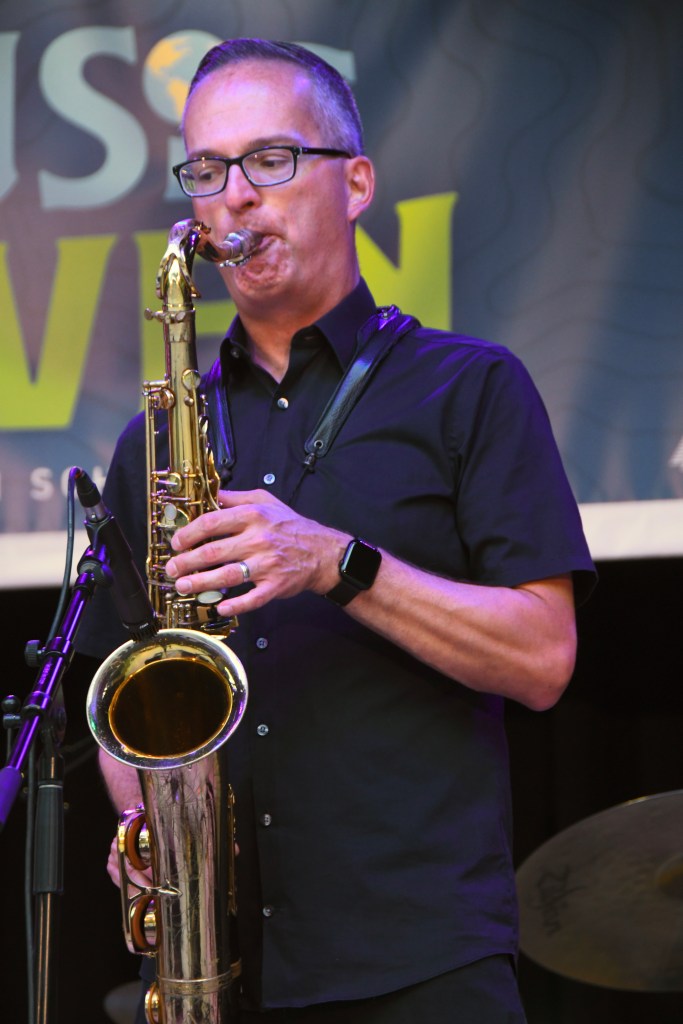
Brian Patneaude
Marsalis soloed impressively in every tune; our guys had their shots, too; saxophonist Brian Patneaude* and guitarist Kevin Grudecky (almost invisible behind a big music stand and the curve of David Gleason’s grand piano) in the rambunctious “Jazz Party.”
They slowed the pace in “If I Have You,” then came “Softly As In a Morning Sunrise,” a deja vu moment for Gleason and anyone who saw him play the same song on the same stage Sunday with the Art D’Echo Trio. As on Sunday, this flowed faster than most play it, with lively cross-talk.
David Gleason
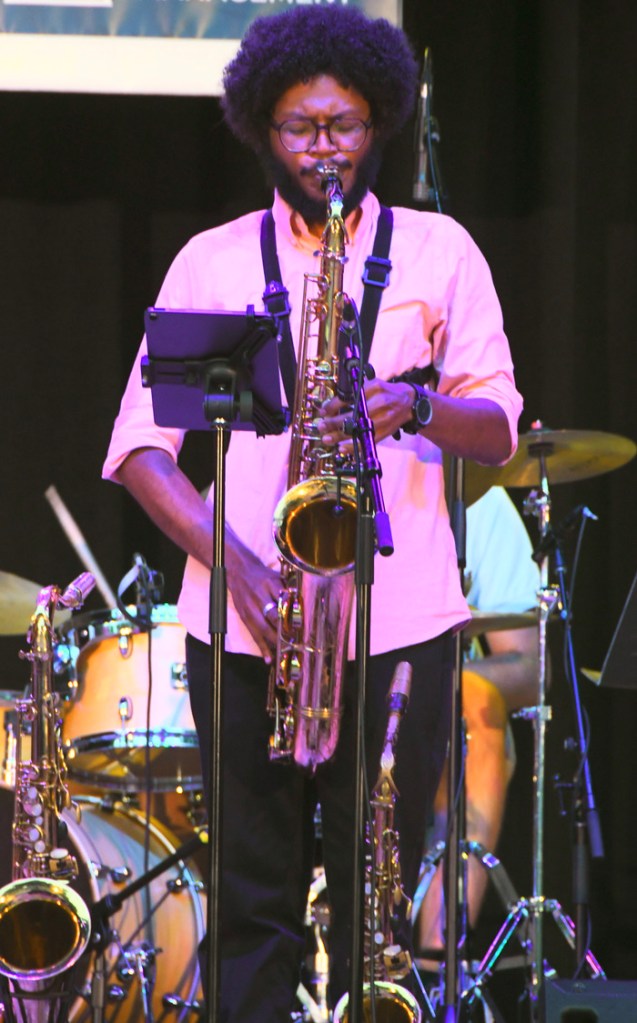
Next, Brellochs summoned four music school grads: tenor saxophonist Awan Rashad, vibraphonist Niko Nieman, bassist Nelly Cordi and drummer Rocco Gigante. Each soloed in the hard bop “Cedar’s Blues.” Rashad and Patneaude (Rashad’s teacher) both played Jazz on Jay earlier this summer, as did Jarod Greico (one of two bassists, alternating with Eric Johnson) who played in Patneaude’s quintet.
Awan Rashad
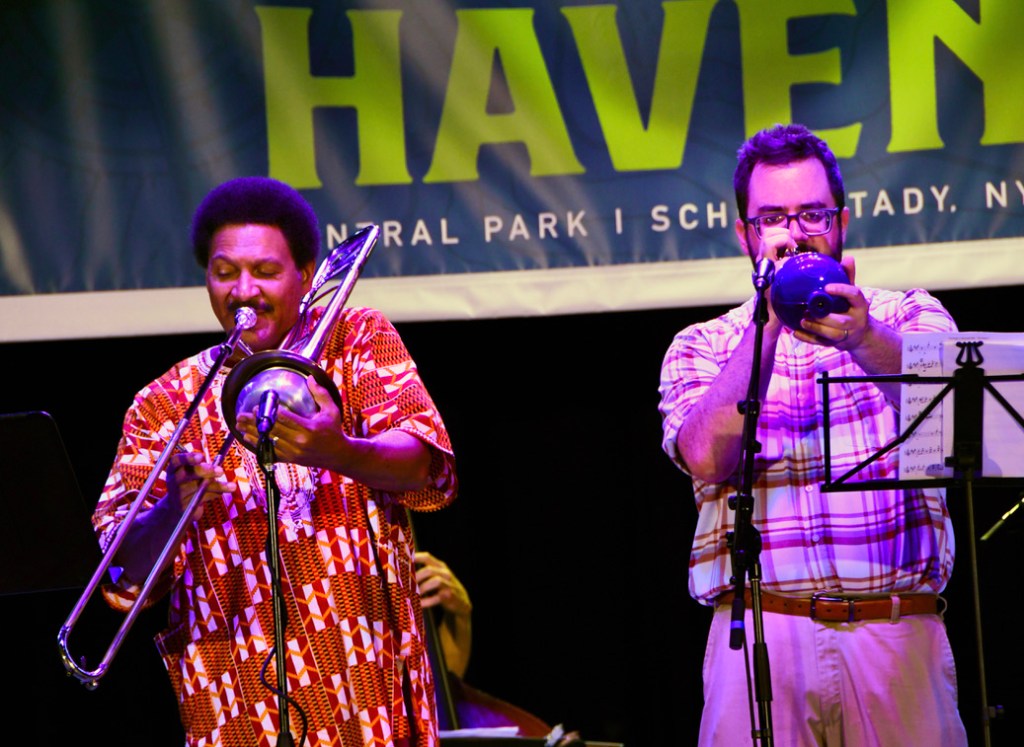
Marsalis cued the set closing “When the Saints Go Marching In” with wry mentions of New Orleans decadence and Saints football; then played a happy aggressive solo in the almost unavoidable New Orleans classic. Patneaude and trumpeter Dylan Canterbury followed; and Canterbury conducted much of the second set.
Dylan Canterbury
Marsalis followed Scirocco’s second-set-opening “Orange Colored Sky” with an adventurous excursion through his respectful/lively “Raving On the Mingus House Party.” Citing the brilliant/cantankerous Charles Mingus, he echoed his composing style, stacking melodies in colliding combinations. Grudecky’s guitar cut through this note-crowded number beautifully.
Marsalis often acknowledged hot or sweet riffs by his one-night band mates. On his “pit stop in Schenectady,” as Brellochs noted, Marsalis detoured into Music Haven en route to New York with his big band. Knowing he was in good company here, he fist-bumped Canterbury in “Mingus” and pointed to players who’d uncorked extra-cool solos, with Patneaude in “I Found a New Baby,” for example.
This worked both ways: Patneaude smiled wide when Marsalis’s solo peaked in “Mingus,” then repeatedly tapped his heart at the trombonist’s tender melodic grace in “Do You Know What It Means to Miss New Orleans.”
In Gleason’s quiet “Four Moral Freedoms,” Canterbury and Marsalis both played with mutes as everyone went softly expressive.
Delfeayo Marsalis and Dylan Canterbury
Marsalis introduced his “Valley of Prayers” citing an initially unsuccessful visit to his bank, a frustrating episode redeemed by meeting there the minuscule (and ironically named: he’s 5’2”) Jerome “Big Duck” Smith – a revered Civil Rights hero. In this hearty funk march, drummer Bob Halek released his inner Shannon Powell and the thing swung like mad. Its middle section had the freshness of something invented on the spot, Marsalis repeating a two-note figure behind Patneaude and Canterbury.
The SUNY Schenectady Jazz Faculty Combo: Christopher Brellochs, tenor and baritone saxophone; Brian Patneaude, tenor and alto saxophone (he played alto when Brellochs played tenor); Dylan Canterbury, trumpet; Kevin Grudecky, guitar; David Gleason, piano; Bob Halek, drums; Eric Johnson or Jarod Greico, bass. Guest artist: Delfeayo Marsalis, trombone.
Bet these guys could hold their own in a battle of the bands with the Skidmore Jazz Institute Faculty All-Stars, who played the last Freihofer’s Saratoga Jazz Festival in late June. (The Festival continues – don’t worry – Freihofer’s has ended its decades-long sponsorship.)
Rain dotted my windshield, driving home; nice timing, like when it stopped before show time.
More Marsalis music: Saxophonist Branford’s quartet plays Troy Savings Bank Music Hall Jan. 16 – and Jason played the Saratoga Jazz Festival in June.
Set List
You’d Be So Nice to Come Home To (vocal, Mia Scirocco)
Anat Cohen’s Quartetinho and Art D’Echo Trio + One at Music Haven, Sunday, Aug. 4
Who knew Antonin Dvorak had the blues?
The great jazz clarinetist Anat Cohen, that’s who.
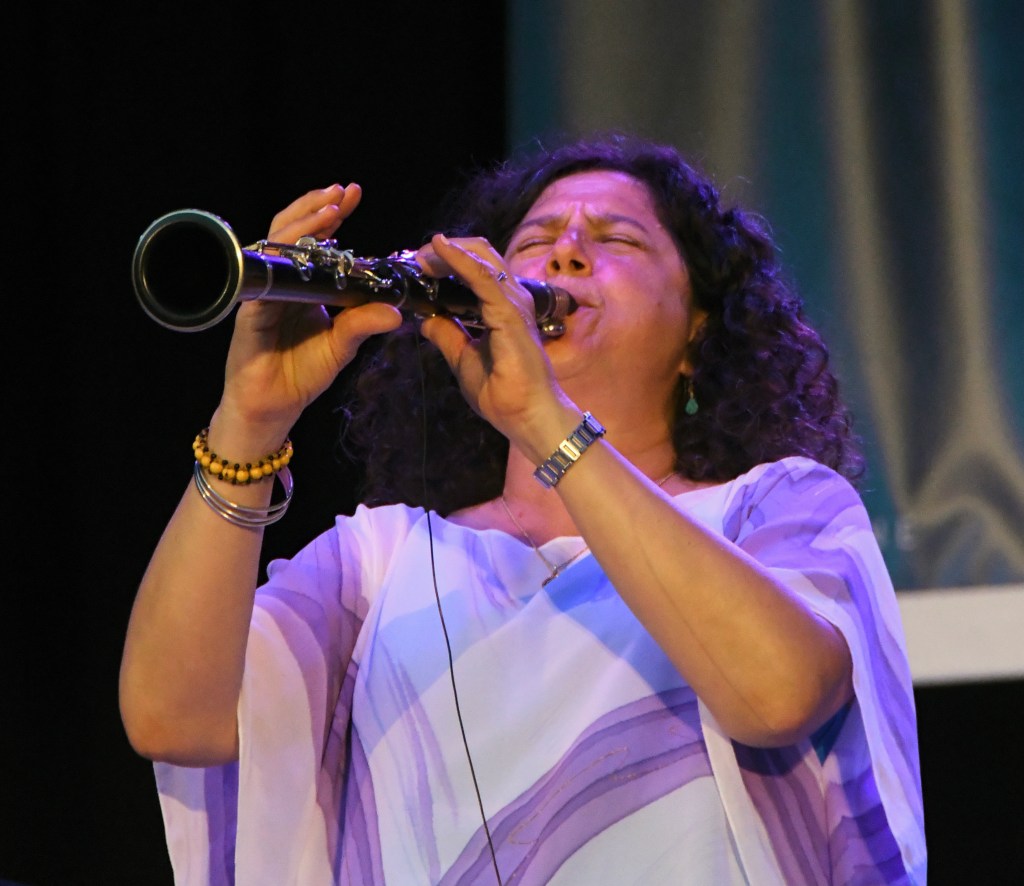
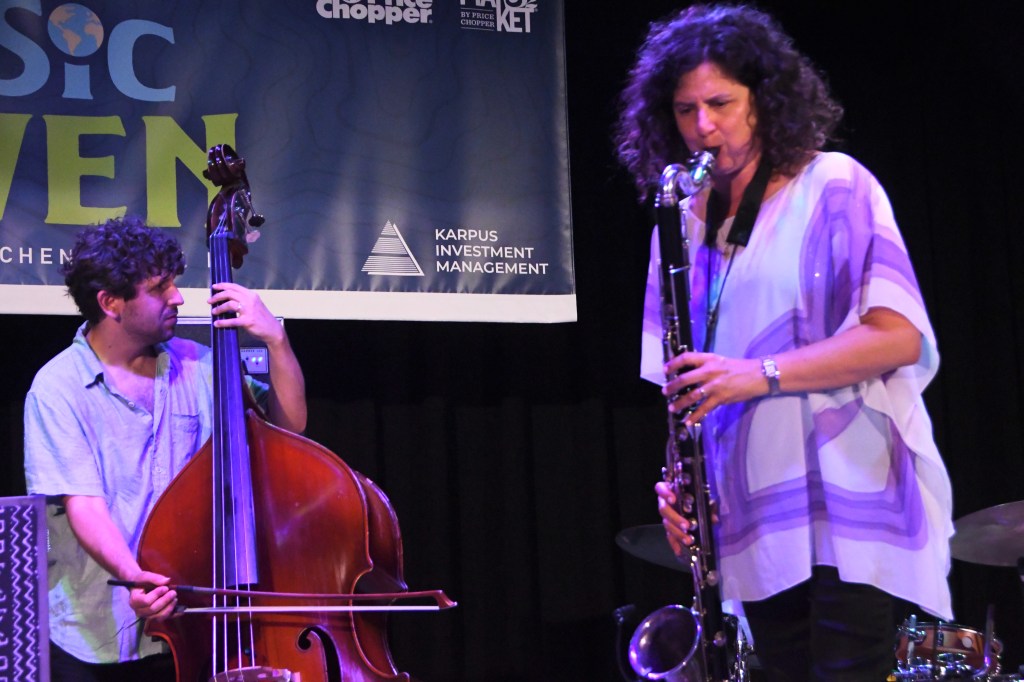
She turned “Going Home” (based on a slow movement of Dvorak’s Symphony No. 9*) into a bass clarinet blues Sunday at Music Haven, echoing both the classical composer and jazz giant Eric Dolphy.
Cohen and her skin-tight Brazil-inspired Quartetinho (“little quartet” in Portuguese) made a glorious jazz explosion that proved less can be more. The Quartetinho distilled the power of her Tentet big-band (a hit at the 2018 Saratoga Jazz Festival) into a little big band of extraordinary power, nuance and lyricism. Earlier in a quite wonderful evening, the Art D’Echo Trio went the other way in a fine opener, adding a player; but I digress.
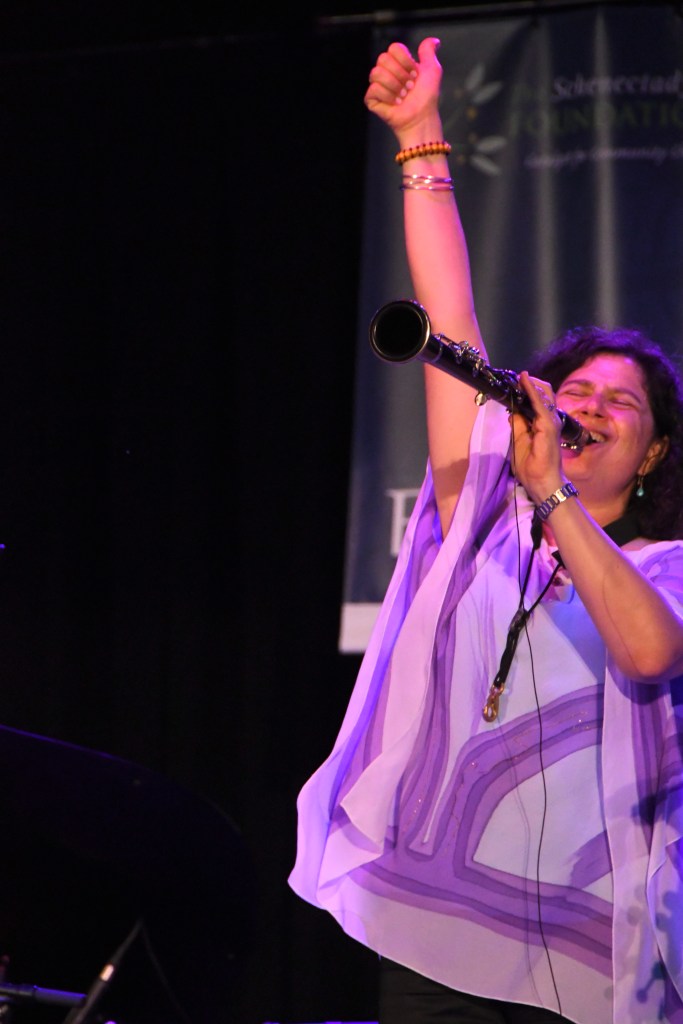
Staffed with members of her Tentet, the Quartetinho proved hugely satisfying largely because it allowed more space for Cohen to flex precise technique, unfettered soulfulness and a playful physicality that put the audience in her pocket right away. Fresh from a triumphant Saturday set at the Newport Jazz Festival, they went full incandescent on Sunday.
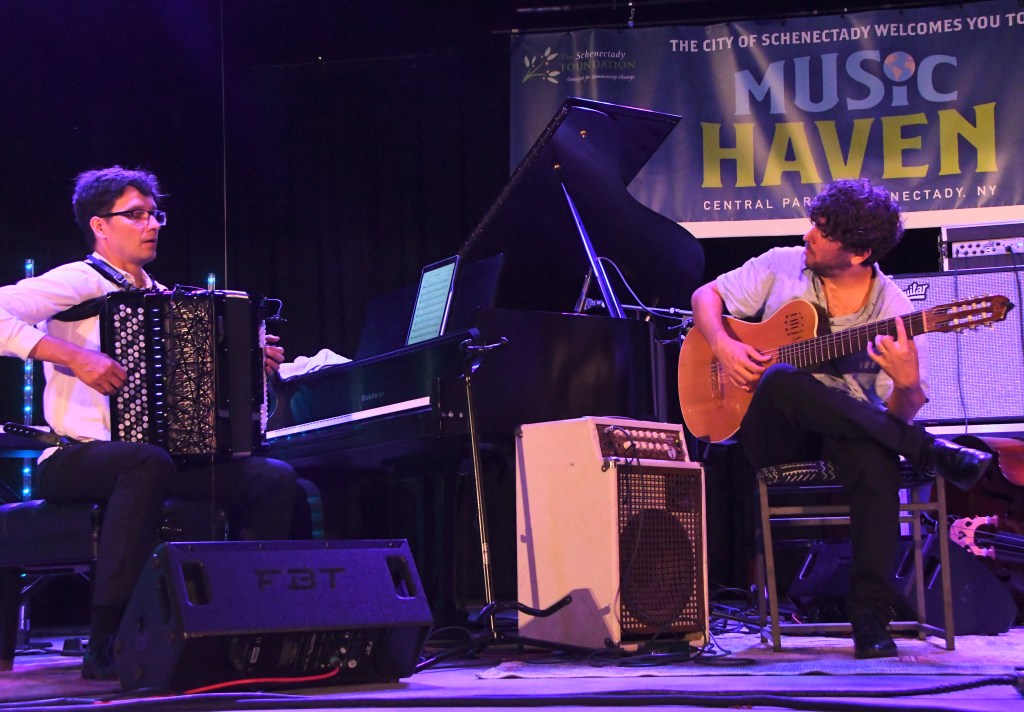
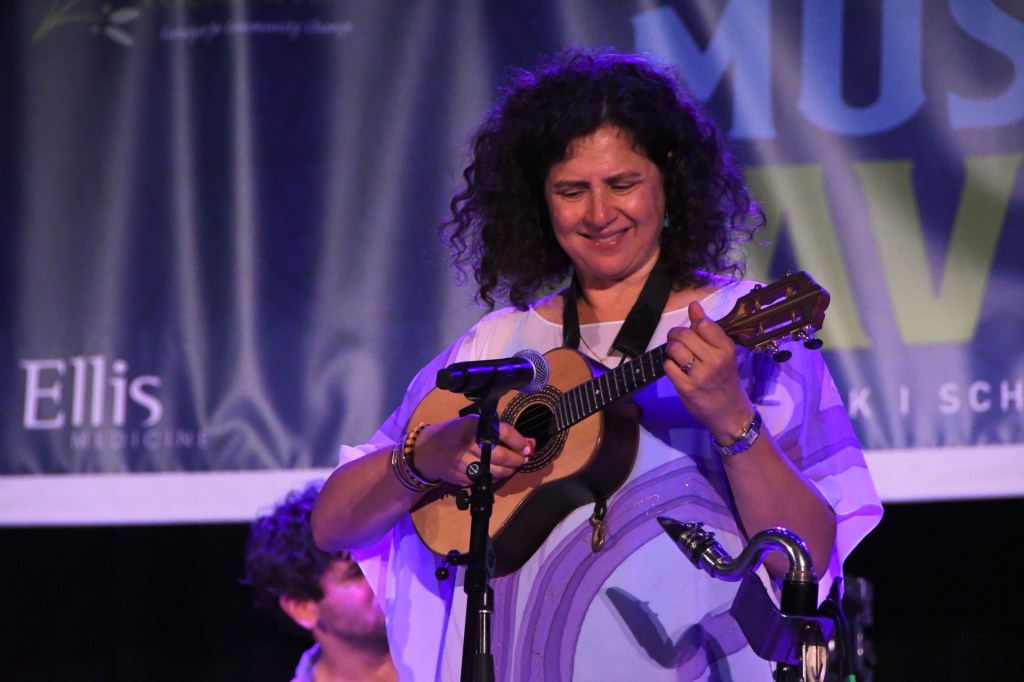
After an episodic, jittery intro, “The Night Owl” found its straight-ahead groove, Cohen’s clarinet soaring high and strong over a tight weave of James Shipp’s vibraphone, Tal Mashiach’s double bass and Vitor Gonçalves’s piano. Later, everybody shifted around: Cohen to bass clarinet and (briefly) ukulele; Shipp to drums, then tambourine; Mashiach to acoustic guitar; Gonçalves to accordion – that, in particular was a trade-up.
In “Trinkle Tinkle,” a walking bass line set a bebop mood with Cohen bending notes, riding the abrupt cadences behind her and challenging Shipp in mid-vibraphone solo, hand on hip and smiling as if to ask, “THAT all you got?” Everybody had more, as things turned out. Later she noted that such Thelonious Monk tunes can be colored every which way – and she and the boys tried out many – but always sound like Monk.
Shipp introduced his “Coco Rococo” in mock-professorial words that its cheerful Brazil beat soon belied, an especially exuberant Cohen solo sparkling here, ranging from Rio to Rampart Street.
The new “Paco” had a flamenco feel via Mashiach’s guitar that blended tight with Gonçalves’s piano – one of many instances when the quartet sub-divided beautifully into duets. Also new was the slow, sweet ballad “Vivi & Zaco” – eloquent and elegant – written by Mashiach for his relatives, some of whom were present Sunday. Shipp, who had played cajon in “Paco,” switched to tambourine in “Valsa Do Sul,” intricate and crisp. Cohen took only the briefest of pauses to smile wide here before restoring her embrochure and going for it.
When a fan requested “Stardust,” she graciously declined, asserting the next selection shared many of the same notes by way of compensation. “Going Home” did that and more, Shipp’s vibes easing into the familiar melody, accordion and bass joining closely. That set up maybe the most breathtaking moment all night as Cohen’s bass clarinet formed a deep, thick chord with Gonçalves’s accordion. Then, Cohen mutated the theme into a graceful blues before coming back to the main melody.
Before closing with the upbeat “Boa Tarde Povo” (“good night, people”), she spoke of the heaven we experience when going inside music together. That, clearly, is the strength of hers: She goes inside, finds and celebrates the feel, and she takes you right in there.
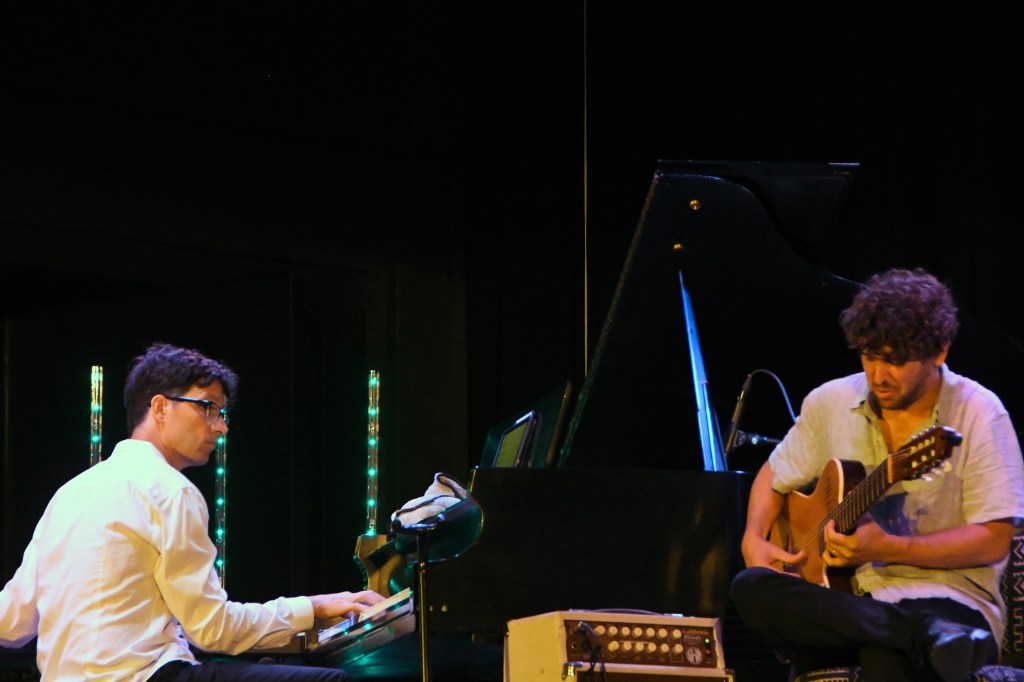
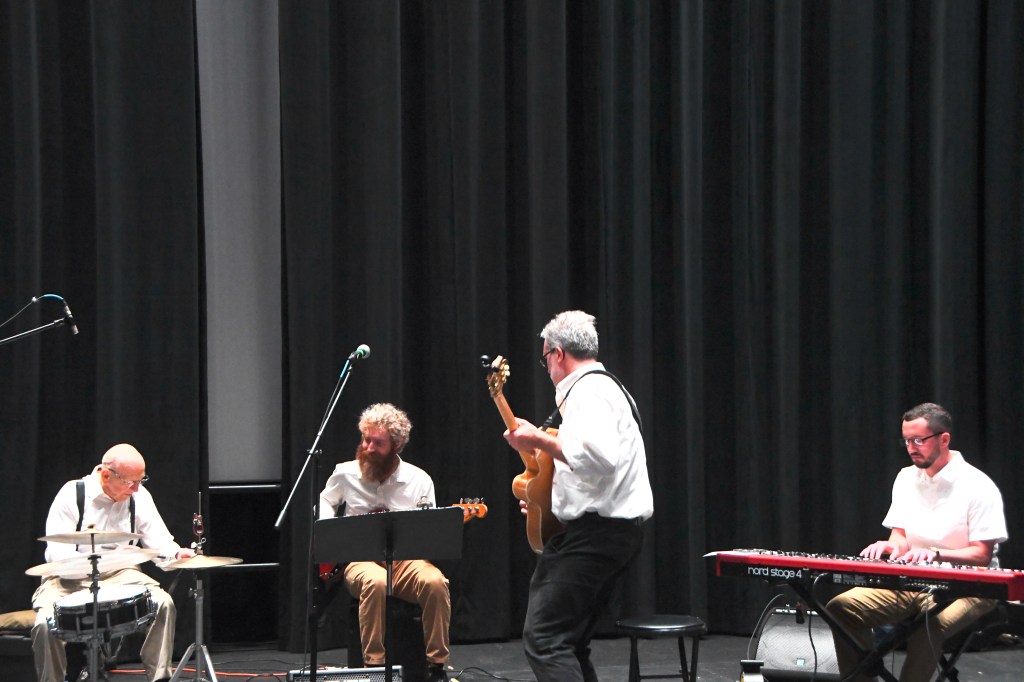
Local heroes the Art D’Echo Trio ably set the table for Cohen’s riff-feast; adding everyone’s favorite percussionist Brian Melick to the line-up of half a dozen years: David Gleason, piano; Mike Lawrence, bass; and Pete Sweeney, drums.
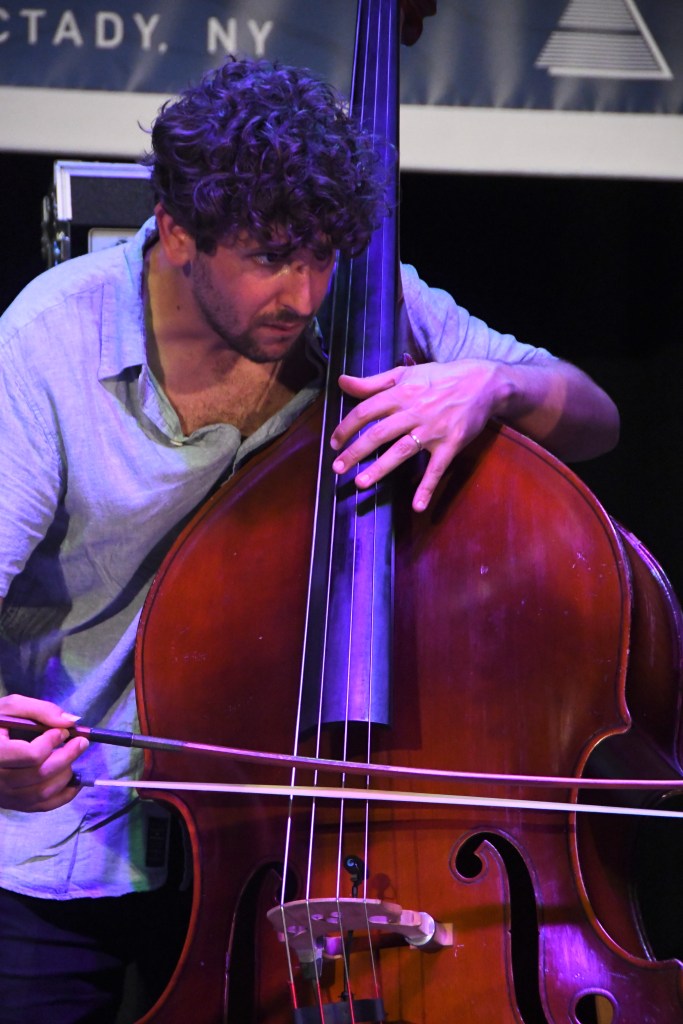
Both Sweeney and Melick play plenty of notes, hot and busy at times; but things fit nicely. Melick swirled and surged all over, mostly on congas, to introduce “Sofrito” with its stop-and-go tempo changes and a tremendous piano solo. He bookended “Softly As In a Morning Sunrise” with zippy triangle. In most songs, both Gleason, then Lawrence, took the solos, Lawrence playing both double bass and electric. But Sweeney got some spotlight time in the peppy Caribbean beat shuffle “Matanzas 1958” before Melick joined in for what sounded, briefly, like the Grateful Dead’s complex “The Eleven.”
The trio honored the Latin theme of the evening, but sounded fresh and original, too – very much themselves.
* Looking forward to seeing the Philadelphia Orchestra play Dvorak’s Symphony No. 8 and his Humoresque in G-Flat major, plus, Bartok’s Concerto for Orchestra at SPAC on Aug. 15 – my birthday, also Mona Golub’s, and Jimmy Webb’s.
Anat Cohen Quartetinho Set-list
The Night Owl
Trinkle Tinkle (Thelonious Monk)
Coco Rococo (Shipp)
Frevo (Antonio Carlos Jobim; from the “Quartetinho” album)
Paco (from “Bloom,” due next month)
Vivi & Zaco (Mashiach; also from “Bloom”)
Valsa Do Sul (Cohen; from “Quartetinho”)
Going Home (based on a Dvorak melody; from “Quartetinho”)
Boa Tarde Povo (Cohen; also from “Quartetinho”)
Art D’Echo Trio Set-list
Sofrito (Mongo Santamaria)
Softly As In a Morning Sunrise (Sill, Hammerstein. Romberg)
James (Pat Metheny)
Matanzas 1958 (original, based on “Afro-Blue”)
Armando’s Rhumba (Chick Corea)
Before Cohen’s set, Stockade resident Susan Brink, right, awarded her the Jazz Journalist Association’s 18th consecutive Clarinetist of the Year honor
Dancers rushing down the aisles to the front, everybody clapping accurately on the one, the biggest chorus I’ve heard, or joined.
Now, that doesn’t often happen at orchestra concerts.
Benin-born, Paris-based singer Angelique Kidjo inspired all that on Friday at Saratoga Performing Arts Center, and could likely do that anywhere, any time – orchestra or no orchestra. However, her “African Symphony” co-starred the Philadelphia Orchestra in a song cycle of Afro-pop numbers, new and old, by her and other songwriters, all more than ably orchestrated by Derrick Hodge.
Miguel Harth-Bedoya enthusiastically and fluidly conducted as the orchestra began each half of the program with Marquez’s Danzon No. 2 (first half) and Barroso’s “Brasil” (second half) as overtures. The first could well be re-titled Danzons, plural, as it flowed numerous dance rhythms together in an episodic survey, from sedate samba to muscular swing, serene waltz to energetic riff waves. The second both echoed a song from the first half and foreshadowed a final delightful, departure-less encore.
After Danzon, No. 2 acoustic guitarist Dominic James of Kidjo’s touring band and percussionist Jacqueline Acevedo (who’d never played with Kidjo previously) joined the orchestra, followed by Kidjo in pink turban and floor-length vivid print dress. She instantly took over the place.
The song cycles that followed – eight tunes in the first half including a three-song medley billed as one; then nine in the second – shared the episodic structure of Danzon, butHodge’s orchestrations united them as cohesively as the power and passion of Kidjo’s voice. Each unfolded as a separate musical unit, and applause rewarded these love songs, protest songs, lamentations and exultations, sung in a handful of languages. Hodge’s orchestral language framed their emotional content, taking advantage of their thematic variety to play with the orchestra: lush Brahms-like strings here, bold Strauss-ian horns there, serenely unhurried Debussy-ish development under the next tune. In other words: basically late-Romantic, though it often felt more modern than that because the songs did. A bassist himself, Hodge gave the four double-bassists stage left plenty to do.
The players seemed intent on their scores, perhaps suggesting scant rehearsal; but they played with typical Philadelphians’ precision, and with the spirit as well as the sound of the songs.
Femi Kuti’s “Lady” led the way, a feminist message in a man’s words, as Kidjo told me in a recent interview from Paris. It quickly answered the questions any pairing of pop with orchestra might prompt: Does it fit? Does it balance? Is the meaning clear? Yes, yes, and yes.
The orchestra surged in majestic grace through “Lady,” and Kidjo’s voice matched it, emotion riding sonic power. “Nongqongqo” (dedicated to departed heroes, Kidjo told me) moved more slowly and quietly; not sad, but strong, poignant.
In Hugh Masekela’s “Soweto Blues,” solo guitar spiced with percussion gave way to low strings without losing its bluesy feel, primal and precise at once, and sung in English.
Most songs weren’t, so more generous introductions and song explanations would have helped clarify Kidjo’s message, like her spoken statements on justice and freedom framed Manu Dibango’s familiar “Soul Makossa.” In the same composer’s “Angola,” Kidjo linked her voice closely to the orchestra; at other times, she stretched or compressed the rhythm, creating tension she always resolved in succeeding verses.
In “Carnaval de Sao Vicente,” Latin rhythms and sonorities sang as Kidjo liberated her mic from the stand and danced free while singing strong. A magnetic performer, she commanded eyes as well as ears throughout.
Noting her support for younger Afro-pop artists, she medleyed tunes by Burna Boy, Rema and herself to close the first set; an effective strategy for flowing declamatory into insistent into bold, happy.
The second set structurally echoed the first: overture, then song cycle – but added an explosively joyful element of unanimous jubilation that reminded me of a glorious 1980s Jimmy Cliff reggae blast at the late, lamented Lenox Music Inn.
First, however, Kidjo and orchestra built a well-paced, elegantly-shaped suite: the subdued “Folon,” strings in warm support of its reticent mood; Masekela’s upbeat “Bring Him Home” that launched from a funk march to a big finish via trumpets in Afro-pop staccato; the intimate guitar-and-voice-only “Malaika;” the dance-glowing “Jerusalema” in ecstatic waves; here, Harth-Bedoya’s baton locked in with an emphatic snare drum. The mood built even stronger in “Agolo” – when everything broke way loose.
Dancers, mostly women, surged down the aisle to the front in happy dozens, most emulating Kidjo’s moves. The song carried everyone along, and Kidjo shrewdly built the wave under us. After extolling how music feeds our shared humanity (a favorite phrase of Mona Golub introducing international acts at Music Haven), Kidjo challenged “Are you ready to sing with me?” Her anthemic “Afrika” lifted the place higher as everyone stood, danced and sang. Some dancers stayed with the mood in Miriam Makeba’s “Pata Pata” with the orchestra positively rocking.
Few sat down as Kidjo and the orchestra uncorked a departure-less encore. Before any player could leave the stage, Harth-Bedoya signaled the question “One more?” with a raised finger, like at a rock show.
Another Latin romp wrapped things up beautifully; “Carnaval de Sao Paolo;” an obliging trumpeter furnished the title as we met walking to the parking lot.
No, all that surely doesn’t happen very often at orchestra concerts. As the late, great Greg Haymes would have said, it was marvelous.
The Songs:
Danzon No. 2
“Lady”
“Nongqongqo”
“Soweto Blues”
“Soul Makossa”
“Angola”
“7 Seconds”
“Carnaval de Sao Vicente”
“Anybody”/“Calm Down”/”Shekere” medley
“Brasil”
“Folon”
“Bring Him Home”
“Malaika”
“Jerusalema”
“Agolo”
“Afrika”
“Pata Pata”
“Arewa”(?)
Carnaval de Sao Paolo”
Angelique Kidjo’s African Symphony was the third of 12 Philadelphia Orchestra performances through Aug. 17.
On Wednesday, Aug. 7, SPAC presents “An Evening With John Legend: A Night of Songs and Stories with The Philadelphia Orchestra.” 7:15 p.m. Limited tickets available in the amphitheater and on the lawn. 518-584-9330 http://www.spac.org
You know how wine (and maybe other things) are said to improve with age. Betcha nobody reading this has tasted a 92-year-old vintage, but drummer Joe Sorrentino celebrated that milestone a few weeks ago. At Jazz on Jay Thursday, he provided a steady pulse to the quartet that bears his name and features players far younger.
Actually, they played Jazz NEAR Jay: Heat drove this week’s edition of the free concert series indoors. And, since the rain site in Robb Alley was in use, the show moved into Proctors adjacent GE Theatre. Aggressive air-conditioning maybe contributed to a restless, high-traffic crowd, busily moving in and out. Jazz fans who stayed enjoyed a mellow-swinging small group confidently and ably tackling vintage tunes – some possibly as old as Sorrentino. Seated behind a tiny kit – hi-hat, snare and a single stand with two cymbals – he impressed with tasteful ease. “That steady meter, that’s right there,” said drummer/player of many other things Ricardo Hamright.
They relaxed into their 90-minute set, Bobby Kendall’s walking bass-line setting up “C-Jam Blues,” guitarist/front-man Crick Diefendorf tapping his head to cue the re-cap after his own tasteful solo after those by keyboardist Tyler Giroux and Kendall. Back trouble kept Kendall’s acoustic bass at home and he played a Fender electric as venerable as Diefendorf’s hollow-body Guild jazz box.
Diefendorf sang in “Sway,” first of several Latin numbers, as Sorrentino played aggressively with sticks on the snare frame. (He mostly played with brushes.) The quartet thereafter alternated between instrumentals and vocals. “Blueberry Hill” (yeah, the Fats Domino stroll) got a slow blues treatment and a nuanced Diefendorf vocal. Sorrentino introduced “Nightingale” with a march beat by himself and later chimed his hi-hat with the metal ring on his brush handle as Diefendorf ganged up on the beat, first in fine filigree notes, then brash chord strums.
Things sped up further in “Route 66,” a swinging vocal number played faster than usual and with riff-swapping at the end, everybody taking turns with Sorrentino.
Another Latin tune followed, “El Cumbanchero” swung with lots of energy, Sorrentino precise and sharp in its many tempo shifts and Giroux soloing strong.
He launched “All of Me” in an exposed solo and the tune proved the most interactive of the set. Sorrentino caught the energy of the applause and smiled wide, then Diefendorf rode the crowd’s claps into a spirited riff eruption. He stayed hot in “Besame Mucho,” although Kendall’s bass solo matched Diefedorf’s guitar explorations. Diefendorf then claimed praise for skipping the cha-cha-cha ending that many players (he included himself) append to Latin numbers
He cited, but didn’t explain, life changes that he said added emotion to “There’ll Be Some Changes Made” and aimed a good-natured gibe at A Place for Jazz leader emeritus Tim Coakley, a longtime bandmate in the late Skip Parsons’s Riverboat Jazz Band. Coakley shot back that he, for once, wasn’t the oldest drummer in the room. Kendall caught the mood, wryly inserting “Sweet Georgia Brown” into his solo, then joining in a riff-swap with everybody taking a bite of the melody.
The venerable Juan Tizol/Duke Ellington classic “Caravan” (four years younger than Sorrentino) got a fresh Latin treatment that fit and swung. Diefendorf cued a zippy riff swap with his most electric break of the show. They slowed for “Moonlight in Vermont;” Diefendorf intro’ed and sang it, but Giroux took the hottest solo in this sweet ballad. Then they revved up again for “Brazil,” Sorrentino soloing the intro himself before Kendall slid a soft bass-line underneath and everybody climbed onboard.
Tunes and tempos felt mostly mellow, familiar; but nobody coasted. Everybody played accompaniment under all the solos, except in song intros, and nobody enjoyed the songs and the swing more than Sorrentino.
Comfy sofas and easy chairs welcomed fans at the front and kids and others danced at times. Afterward, the cats packed up to move on to their evening gigs.
Jazz on Jay continues next Thursday, Aug. 6, with trumpeter Terry Gordon’s Quintet.








































 Hoke's Jukebox