
Anat Cohen’s Quartetinho and Art D’Echo Trio + One at Music Haven, Sunday, Aug. 4
Who knew Antonin Dvorak had the blues?
The great jazz clarinetist Anat Cohen, that’s who.

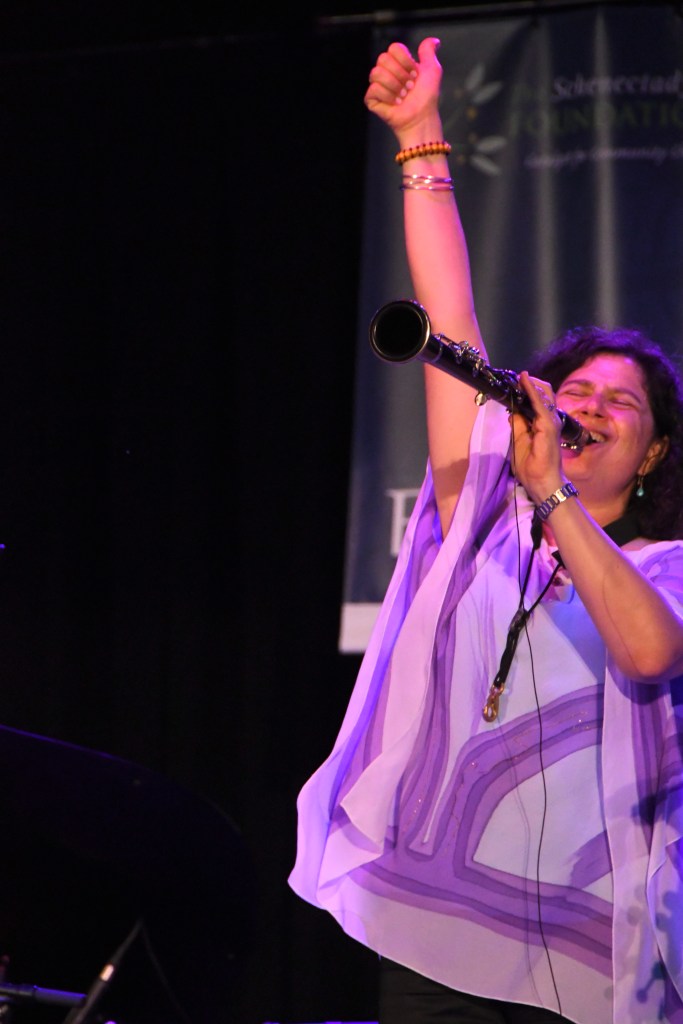
She turned “Going Home” (based on a slow movement of Dvorak’s Symphony No. 9*) into a bass clarinet blues Sunday at Music Haven, echoing both the classical composer and jazz giant Eric Dolphy.

Cohen and her skin-tight Brazil-inspired Quartetinho (“little quartet” in Portuguese) made a glorious jazz explosion that proved less can be more. The Quartetinho distilled the power of her Tentet big-band (a hit at the 2018 Saratoga Jazz Festival) into a little big band of extraordinary power, nuance and lyricism. Earlier in a quite wonderful evening, the Art D’Echo Trio went the other way in a fine opener, adding a player; but I digress.
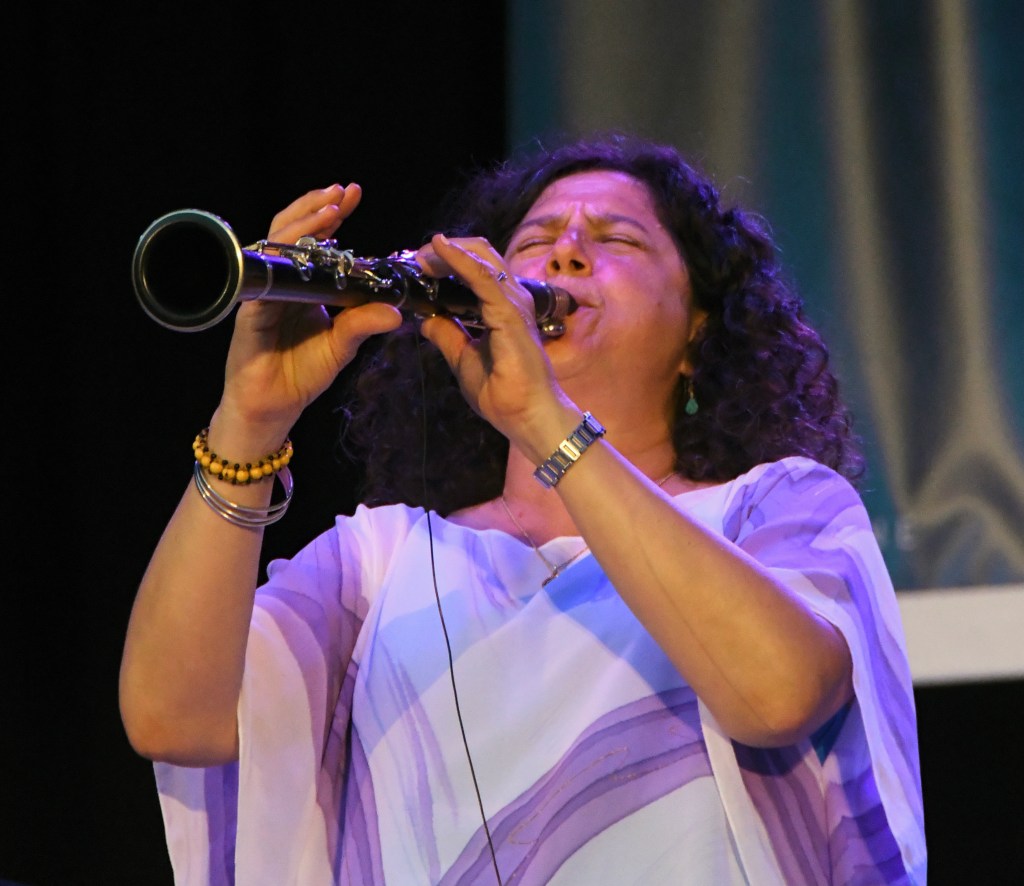
Staffed with members of her Tentet, the Quartetinho proved hugely satisfying largely because it allowed more space for Cohen to flex precise technique, unfettered soulfulness and a playful physicality that put the audience in her pocket right away. Fresh from a triumphant Saturday set at the Newport Jazz Festival, they went full incandescent on Sunday.


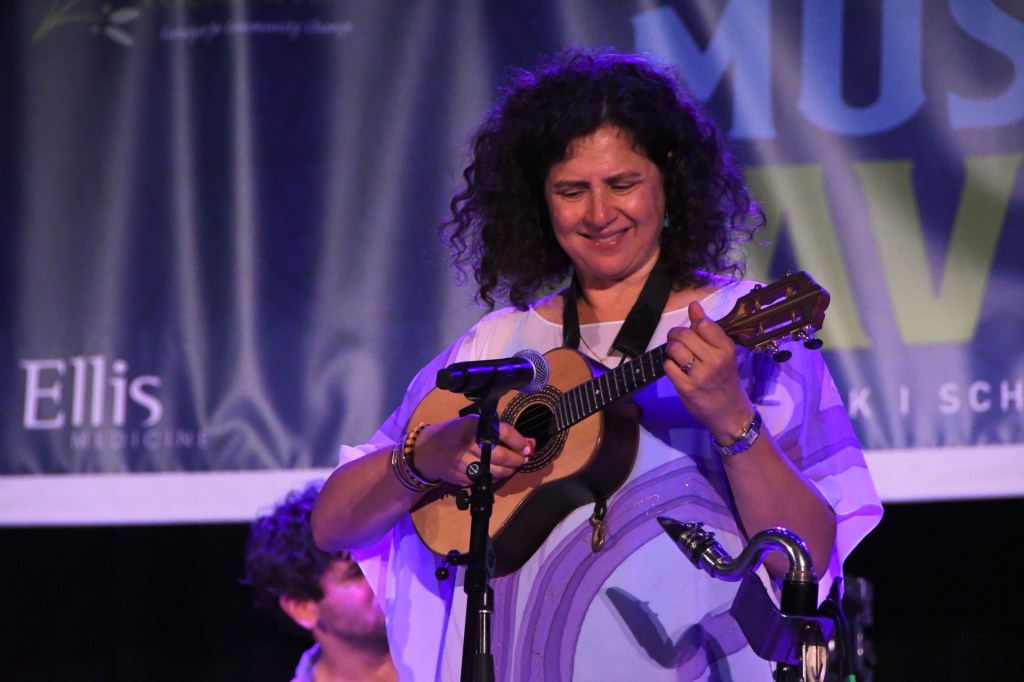
After an episodic, jittery intro, “The Night Owl” found its straight-ahead groove, Cohen’s clarinet soaring high and strong over a tight weave of James Shipp’s vibraphone, Tal Mashiach’s double bass and Vitor Gonçalves’s piano. Later, everybody shifted around: Cohen to bass clarinet and (briefly) ukulele; Shipp to drums, then tambourine; Mashiach to acoustic guitar; Gonçalves to accordion – that, in particular was a trade-up.
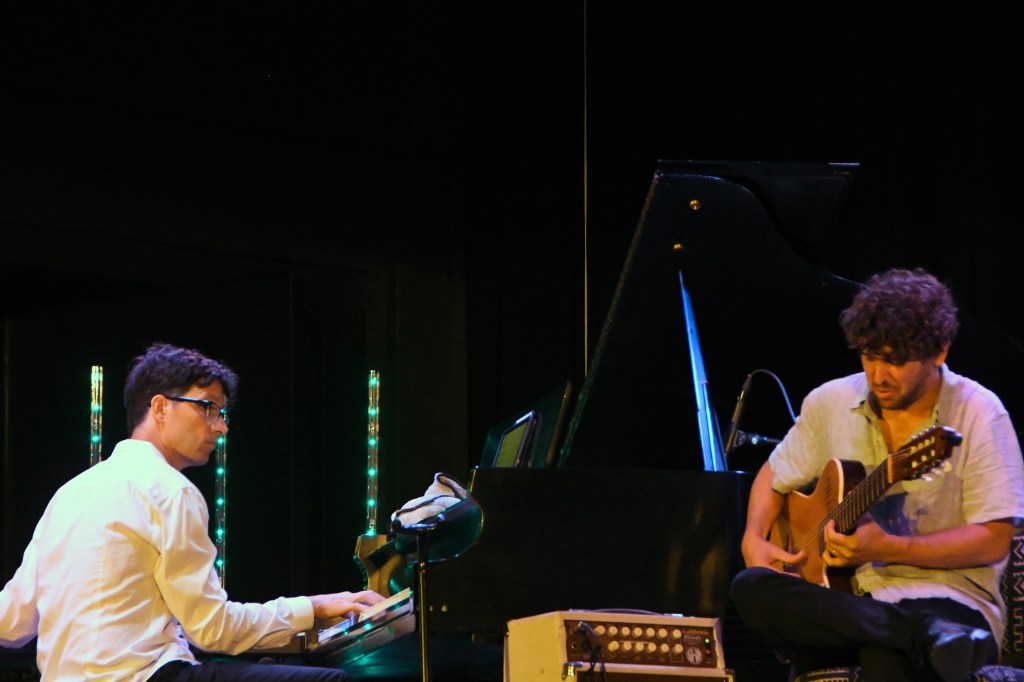

In “Trinkle Tinkle,” a walking bass line set a bebop mood with Cohen bending notes, riding the abrupt cadences behind her and challenging Shipp in mid-vibraphone solo, hand on hip and smiling as if to ask, “THAT all you got?” Everybody had more, as things turned out. Later she noted that such Thelonious Monk tunes can be colored every which way – and she and the boys tried out many – but always sound like Monk.
Shipp introduced his “Coco Rococo” in mock-professorial words that its cheerful Brazil beat soon belied, an especially exuberant Cohen solo sparkling here, ranging from Rio to Rampart Street.

The new “Paco” had a flamenco feel via Mashiach’s guitar that blended tight with Gonçalves’s piano – one of many instances when the quartet sub-divided beautifully into duets. Also new was the slow, sweet ballad “Vivi & Zaco” – eloquent and elegant – written by Mashiach for his relatives, some of whom were present Sunday. Shipp, who had played cajon in “Paco,” switched to tambourine in “Valsa Do Sul,” intricate and crisp. Cohen took only the briefest of pauses to smile wide here before restoring her embrochure and going for it.

When a fan requested “Stardust,” she graciously declined, asserting the next selection shared many of the same notes by way of compensation. “Going Home” did that and more, Shipp’s vibes easing into the familiar melody, accordion and bass joining closely. That set up maybe the most breathtaking moment all night as Cohen’s bass clarinet formed a deep, thick chord with Gonçalves’s accordion. Then, Cohen mutated the theme into a graceful blues before coming back to the main melody.
Before closing with the upbeat “Boa Tarde Povo” (“good night, people”), she spoke of the heaven we experience when going inside music together. That, clearly, is the strength of hers: She goes inside, finds and celebrates the feel, and she takes you right in there.

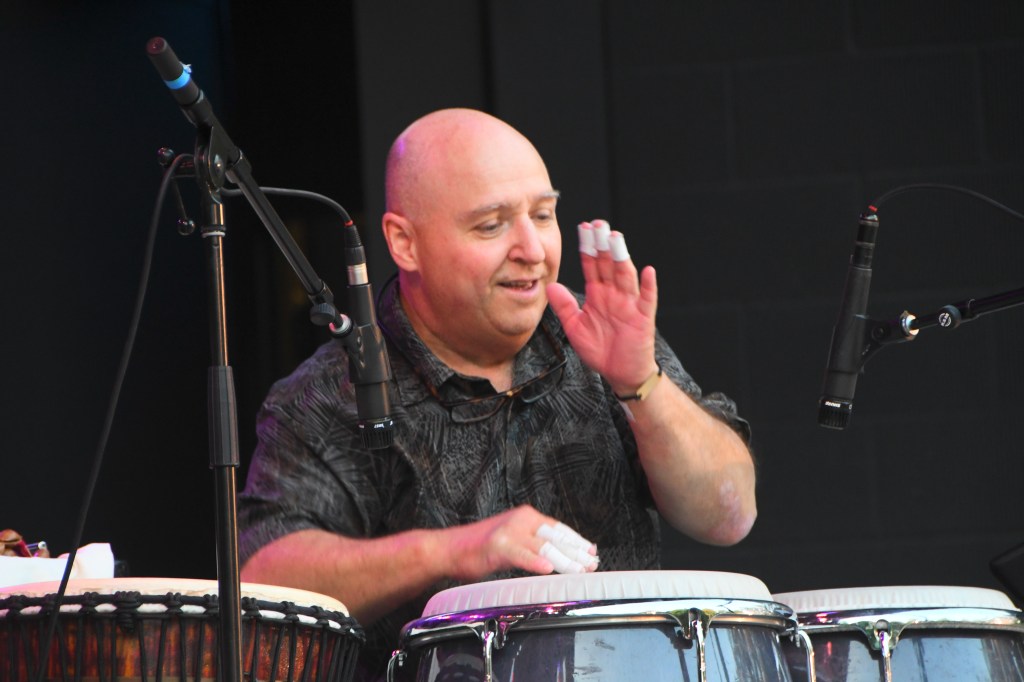
Local heroes the Art D’Echo Trio ably set the table for Cohen’s riff-feast; adding everyone’s favorite percussionist Brian Melick to the line-up of half a dozen years: David Gleason, piano; Mike Lawrence, bass; and Pete Sweeney, drums.


Both Sweeney and Melick play plenty of notes, hot and busy at times; but things fit nicely. Melick swirled and surged all over, mostly on congas, to introduce “Sofrito” with its stop-and-go tempo changes and a tremendous piano solo. He bookended “Softly As In a Morning Sunrise” with zippy triangle. In most songs, both Gleason, then Lawrence, took the solos, Lawrence playing both double bass and electric. But Sweeney got some spotlight time in the peppy Caribbean beat shuffle “Matanzas 1958” before Melick joined in for what sounded, briefly, like the Grateful Dead’s complex “The Eleven.”

The trio honored the Latin theme of the evening, but sounded fresh and original, too – very much themselves.
* Looking forward to seeing the Philadelphia Orchestra play Dvorak’s Symphony No. 8 and his Humoresque in G-Flat major, plus, Bartok’s Concerto for Orchestra at SPAC on Aug. 15 – my birthday, also Mona Golub’s, and Jimmy Webb’s.
Anat Cohen Quartetinho Set-list
The Night Owl
Trinkle Tinkle (Thelonious Monk)
Coco Rococo (Shipp)
Frevo (Antonio Carlos Jobim; from the “Quartetinho” album)
Paco (from “Bloom,” due next month)
Vivi & Zaco (Mashiach; also from “Bloom”)
Valsa Do Sul (Cohen; from “Quartetinho”)
Going Home (based on a Dvorak melody; from “Quartetinho”)
Boa Tarde Povo (Cohen; also from “Quartetinho”)
Art D’Echo Trio Set-list
Sofrito (Mongo Santamaria)
Softly As In a Morning Sunrise (Sill, Hammerstein. Romberg)
James (Pat Metheny)
Matanzas 1958 (original, based on “Afro-Blue”)
Armando’s Rhumba (Chick Corea)
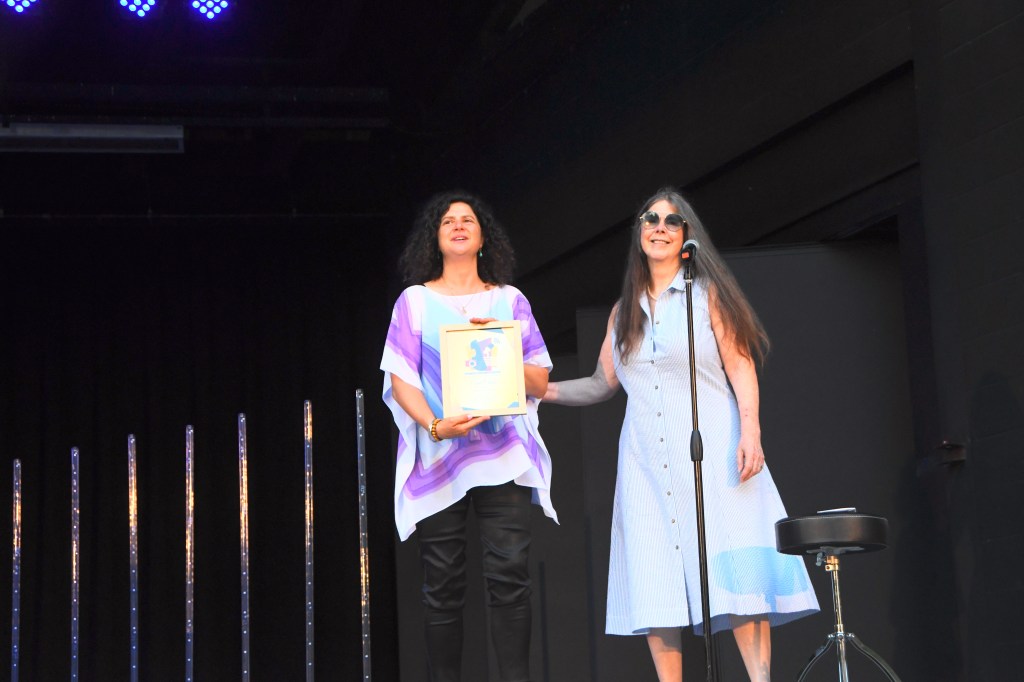
Before Cohen’s set, Stockade resident Susan Brink, right, awarded her the Jazz Journalist Association’s 18th consecutive Clarinetist of the Year honor
More Photos:


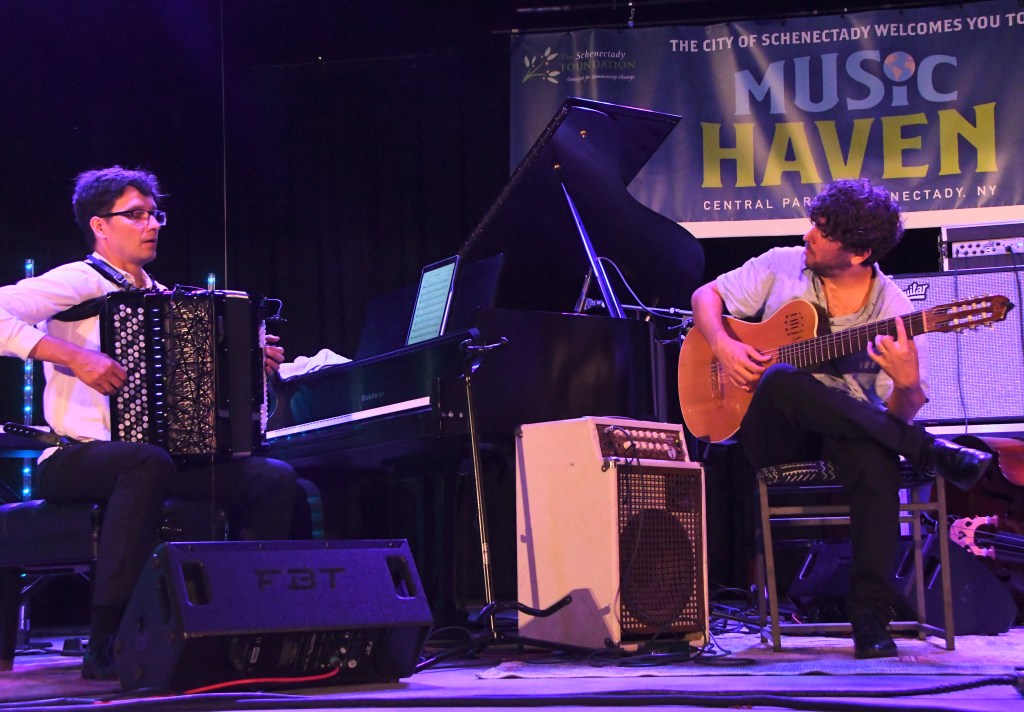


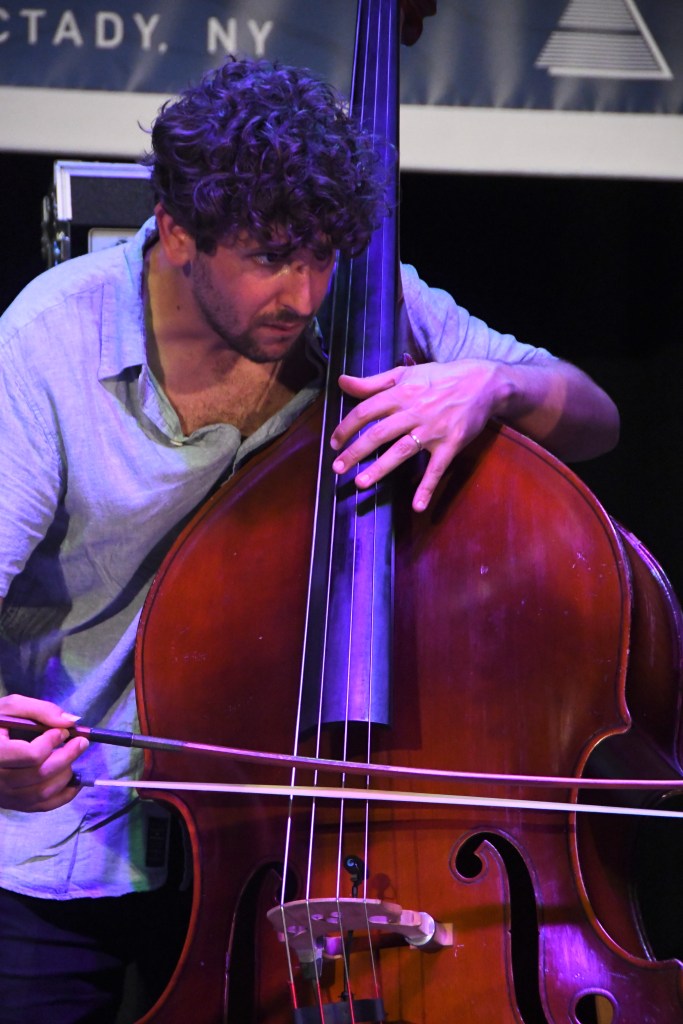
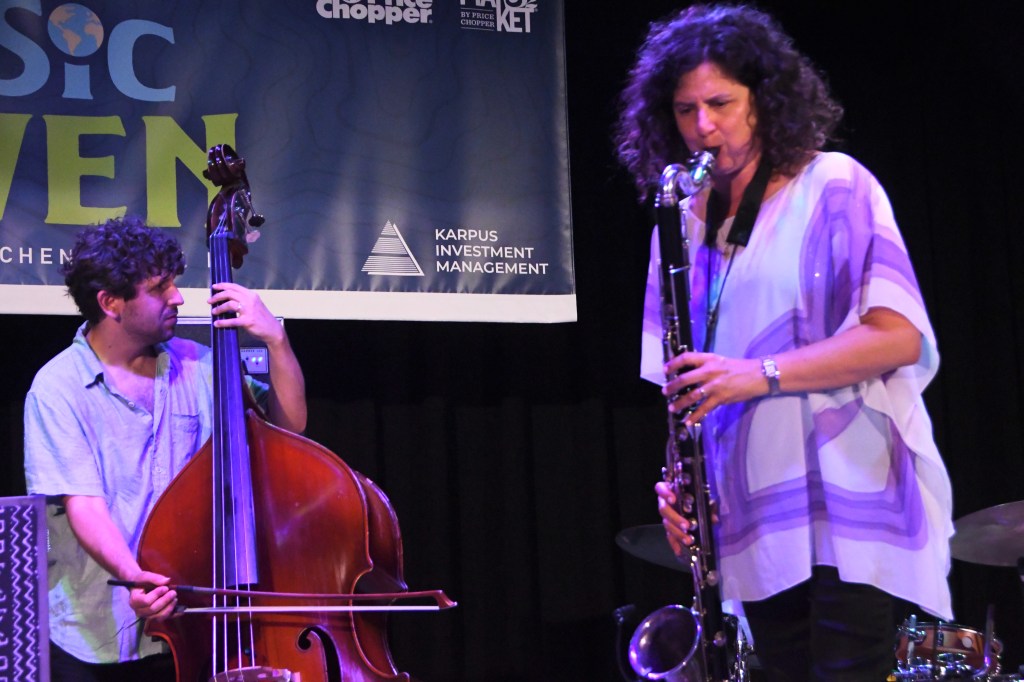


Of course, Sir Walford was there!
 Hoke's Jukebox