REVIEW – Joe Barna’s Sketches of Influence Closes the Curtain at Jazz on Jay

Quartet Draws Big End-of-Season Crowd 

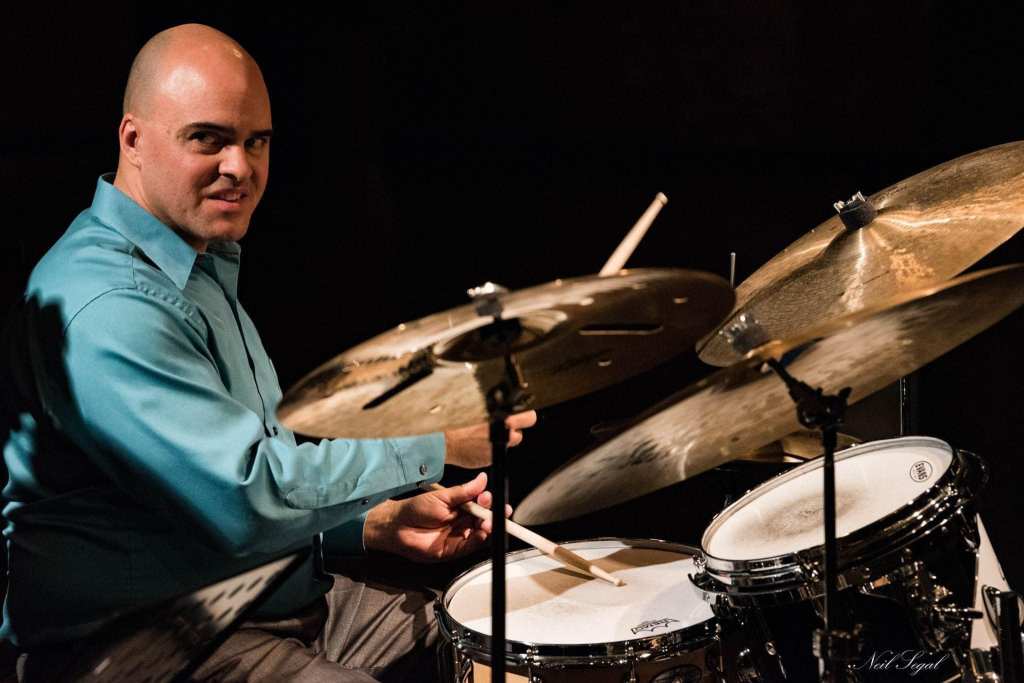
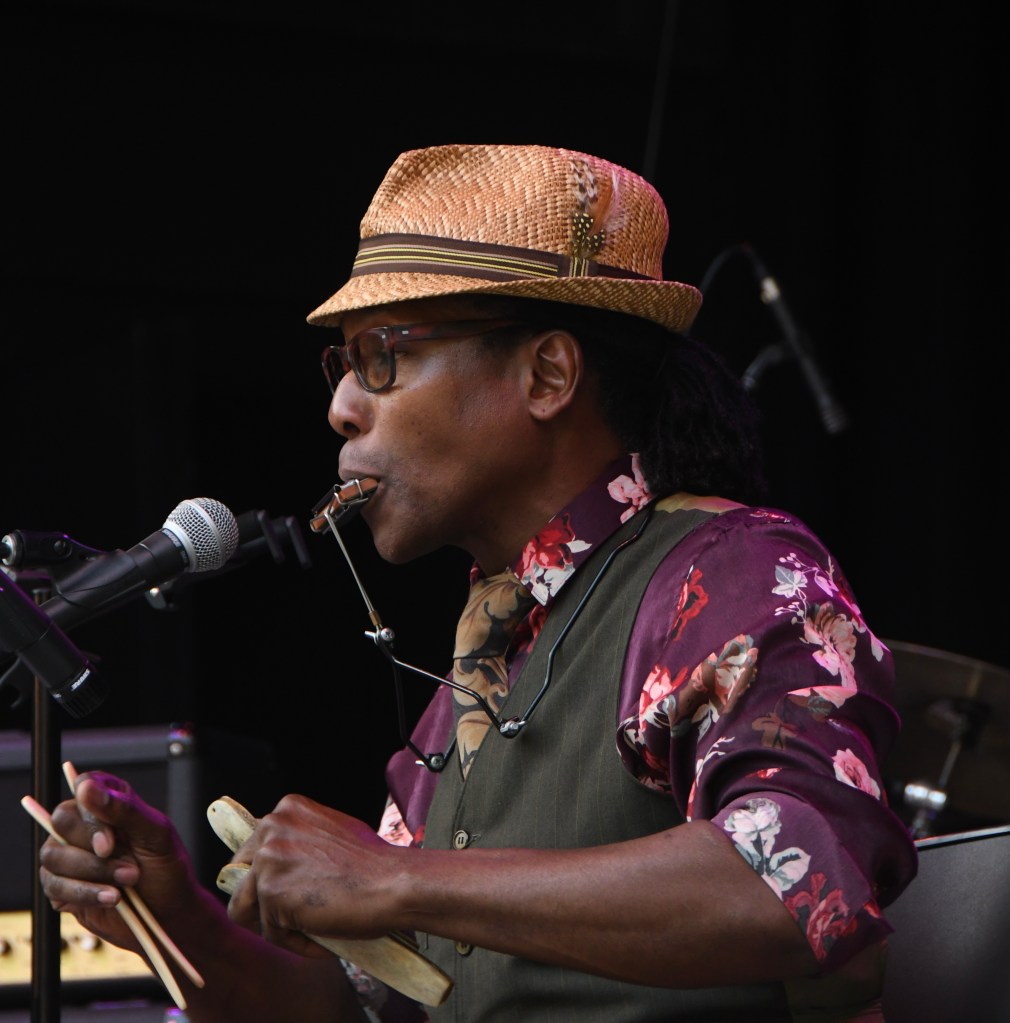
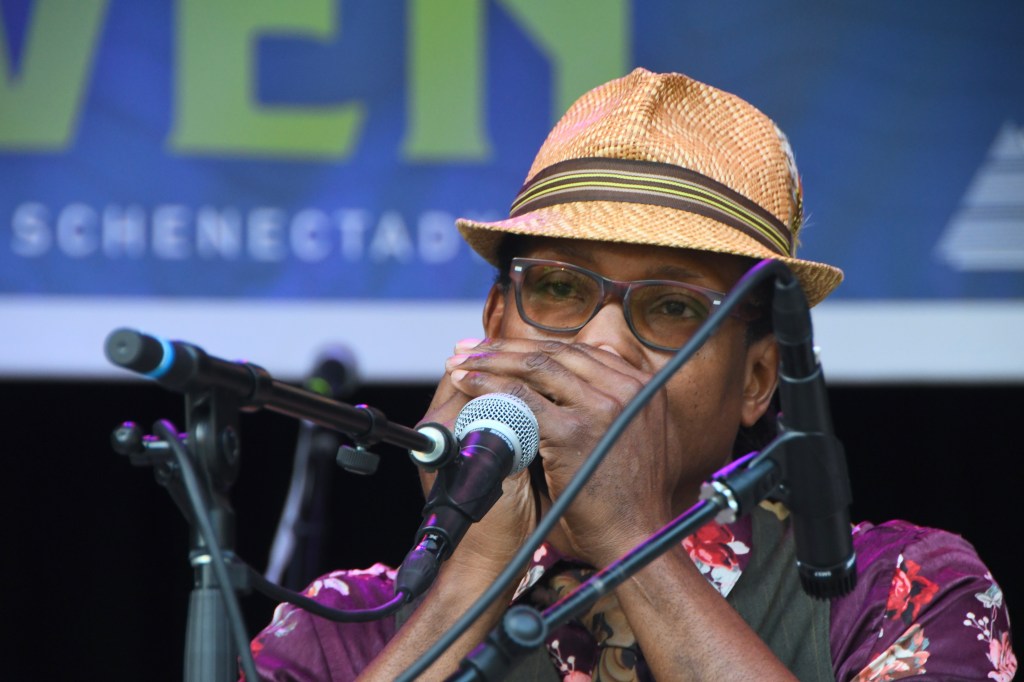
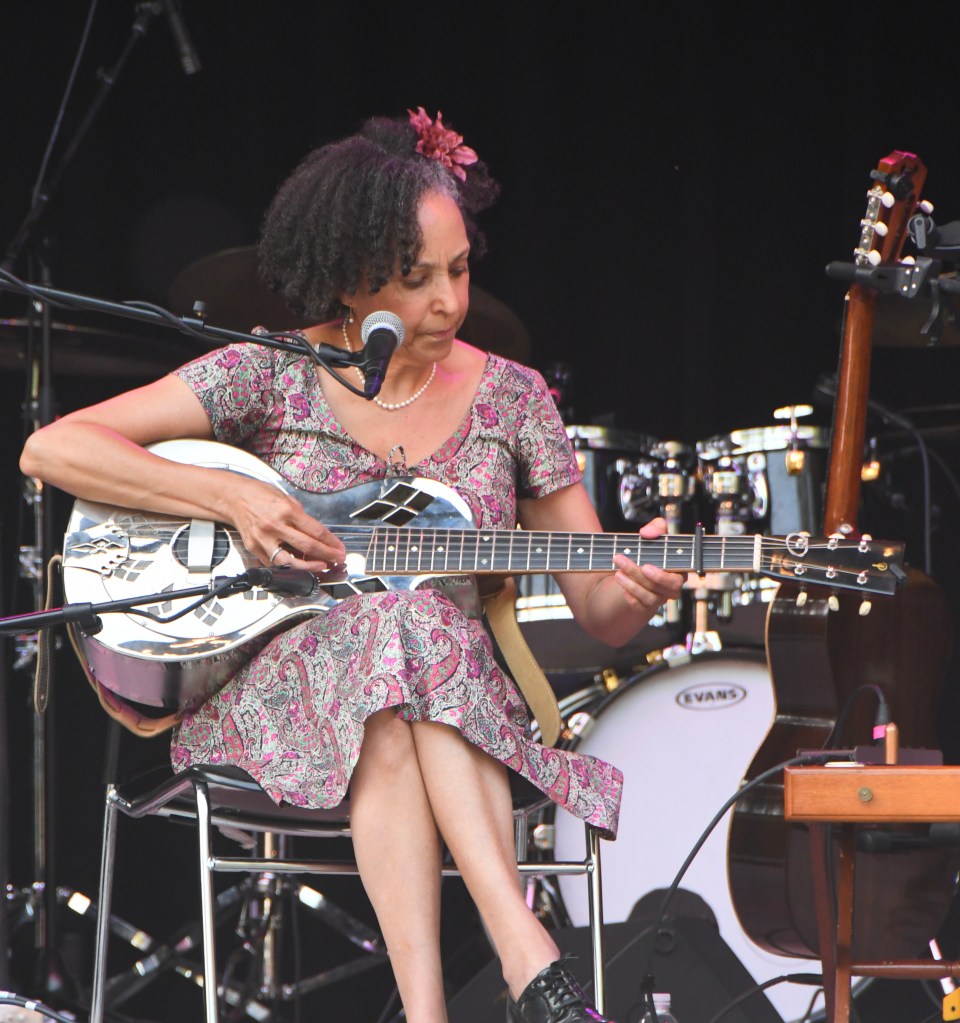
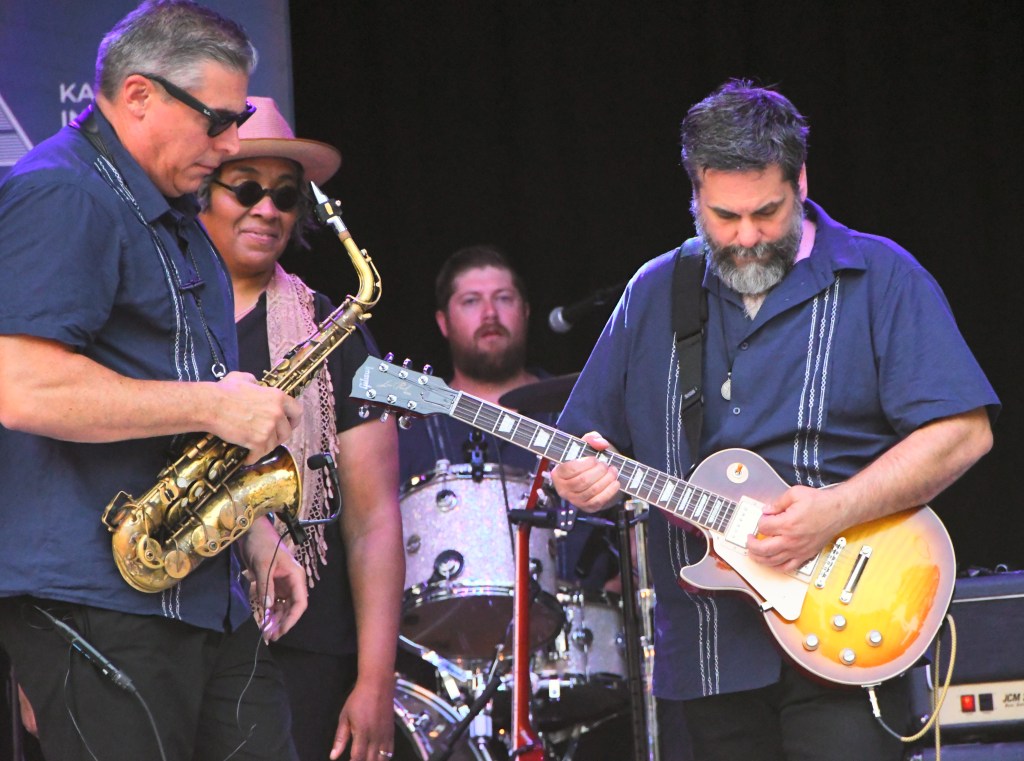
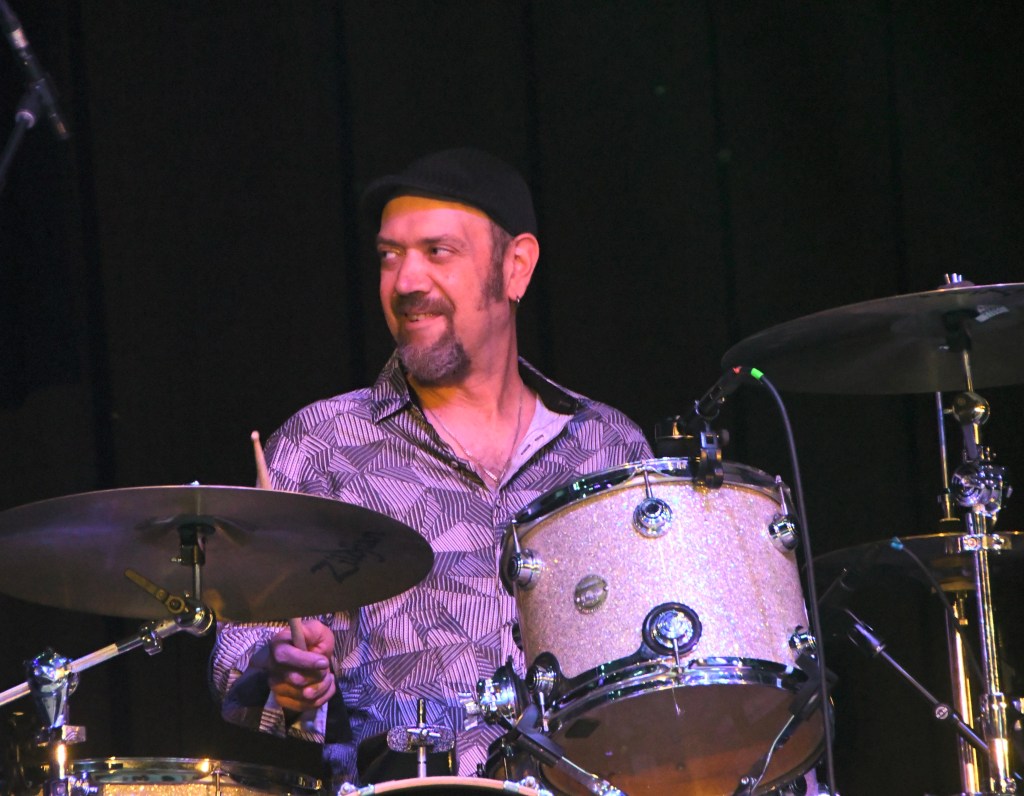
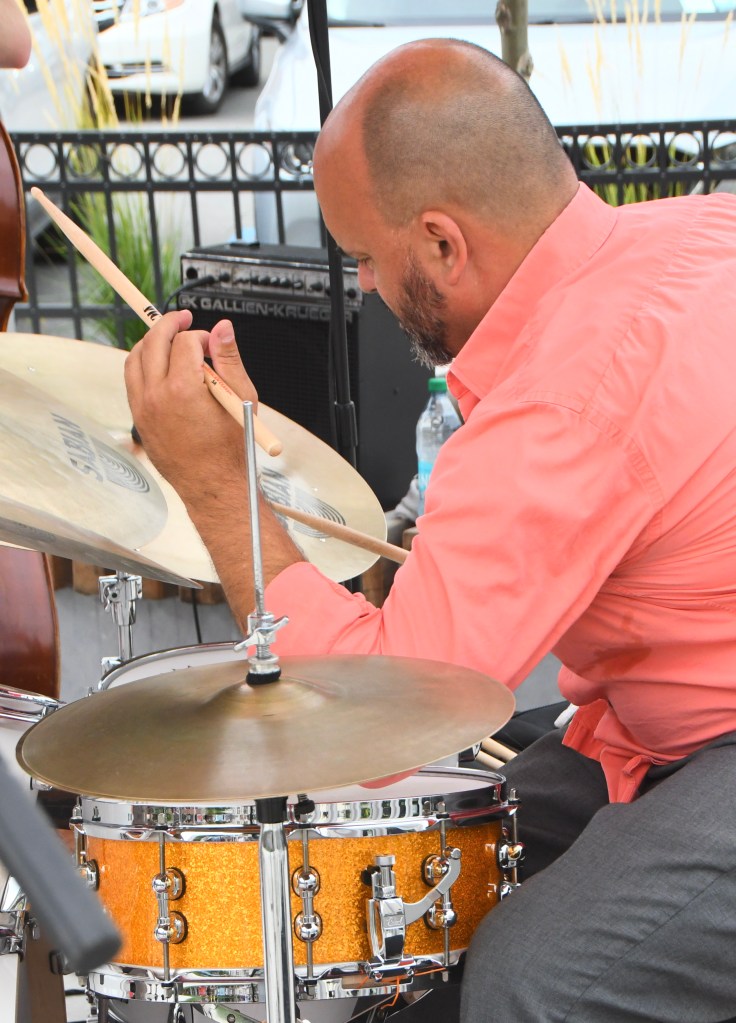
Drummer Joe Barna showcased his playing, composing and band-leading chops Thursday at Jazz on Jay, presenting the free season’s 12th and final show before a sizable crowd. Many of the well-crafted originals in Barna’s 100-minute set flowed with straight-ahead momentum, but ballads, bebop, Afro-Cuban and Latin tunes provided spice.
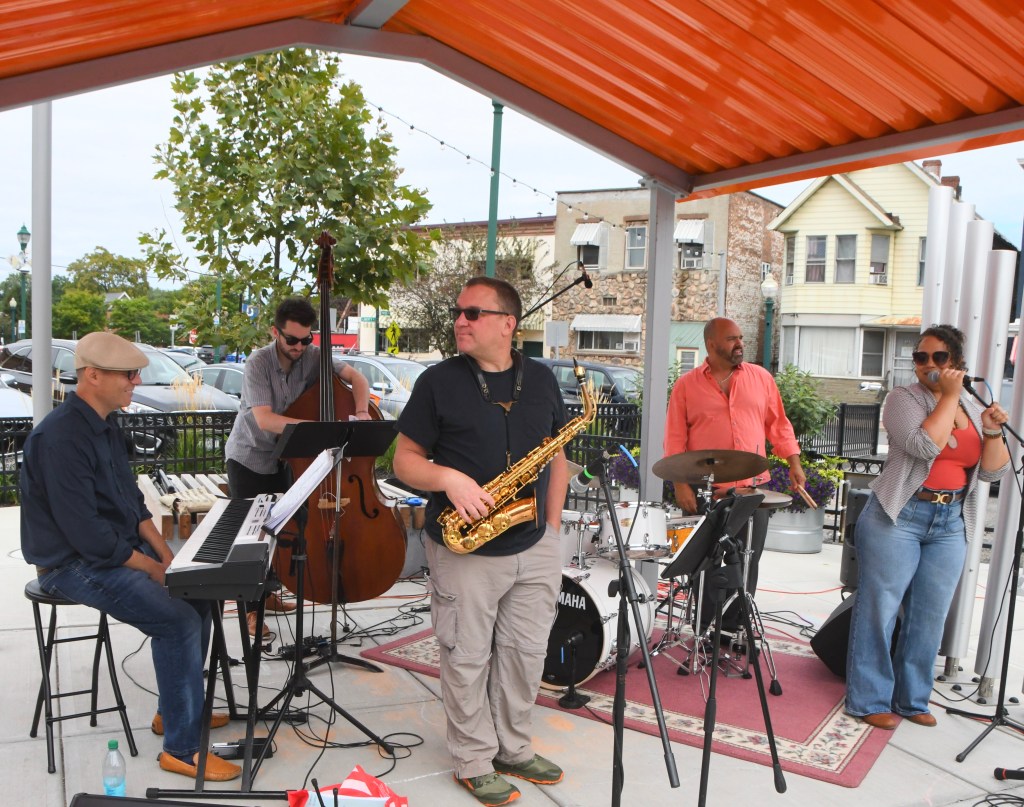
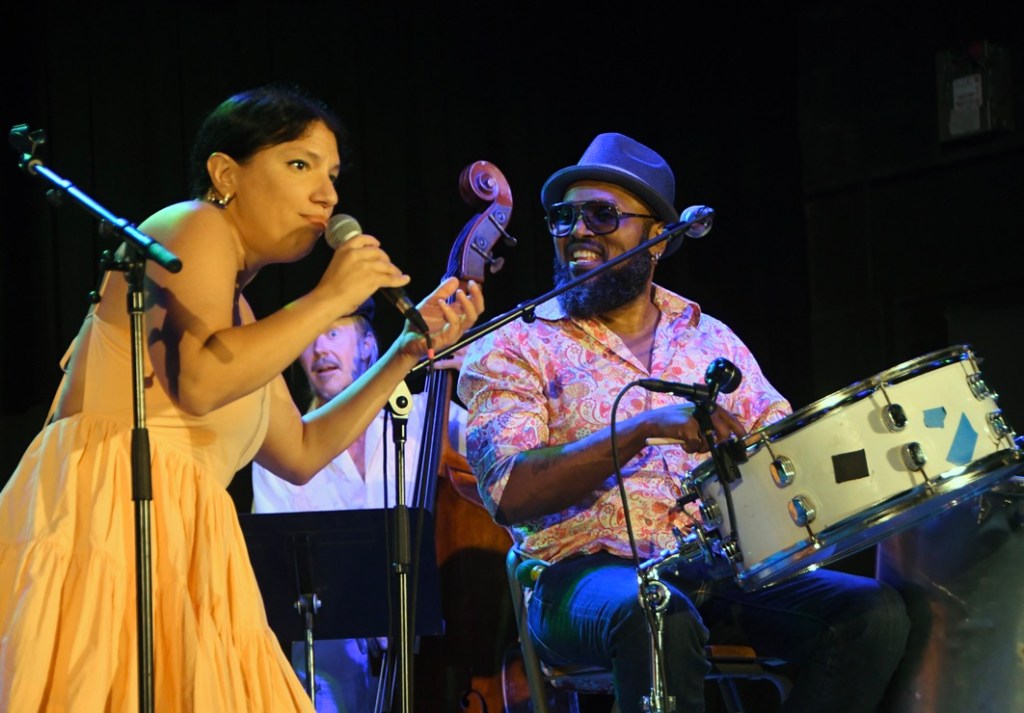
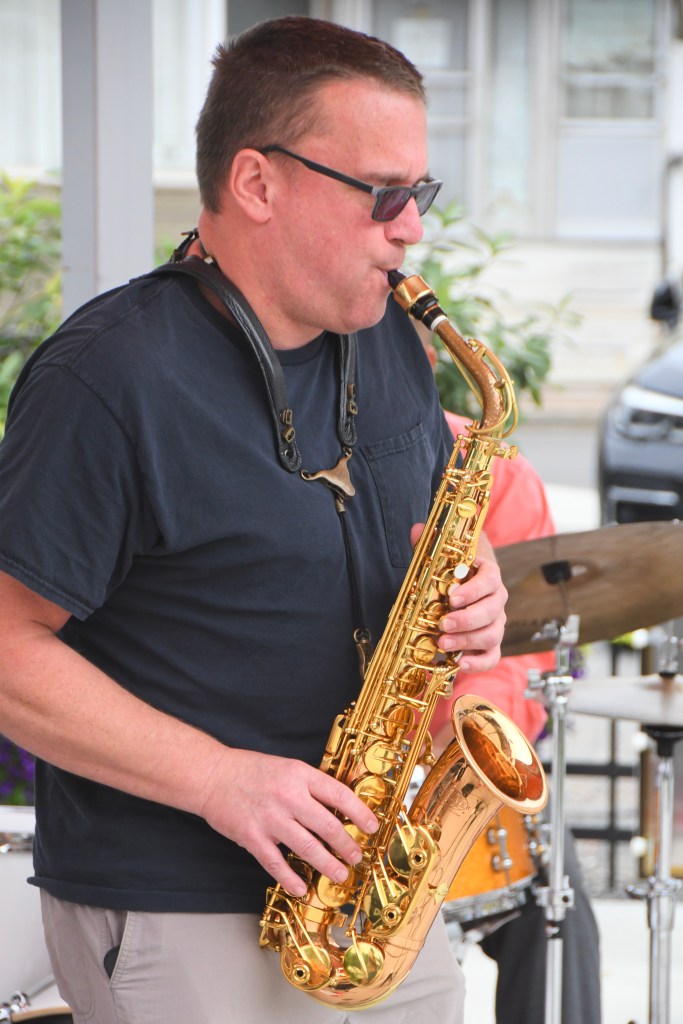
Lanaea Brice, right, introduces Joe Barna’s Sketches of Influence, from left; David Gleason, keyboard; Jason Emmond, bass; Keith Pray, alto saxophone; Joe Barna, drums and composer.

They started with a rumba, for example; “Hittin’ the Mark,” a tribute to guitarist Mark Kleinhaut. Nearly every tune honored some special person or place in Barna’s life. He titled the straight-ahead “The Heights” for the Brooklyn neighborhood where Barna met the mother of his daughter Savina. 

Joe Barna

Its also the title of his latest (and seventh) album, dedicated to Savina. The final remaining copies sold out at the show; the rest sold on a recent tour following its release in June. Fan-friend Mabel Leon bought the last; Barna didn’t know this when he dedicated “Ivory Romance,” written as a tribute to Lee Shaw, to Leon.

Jason Emmond

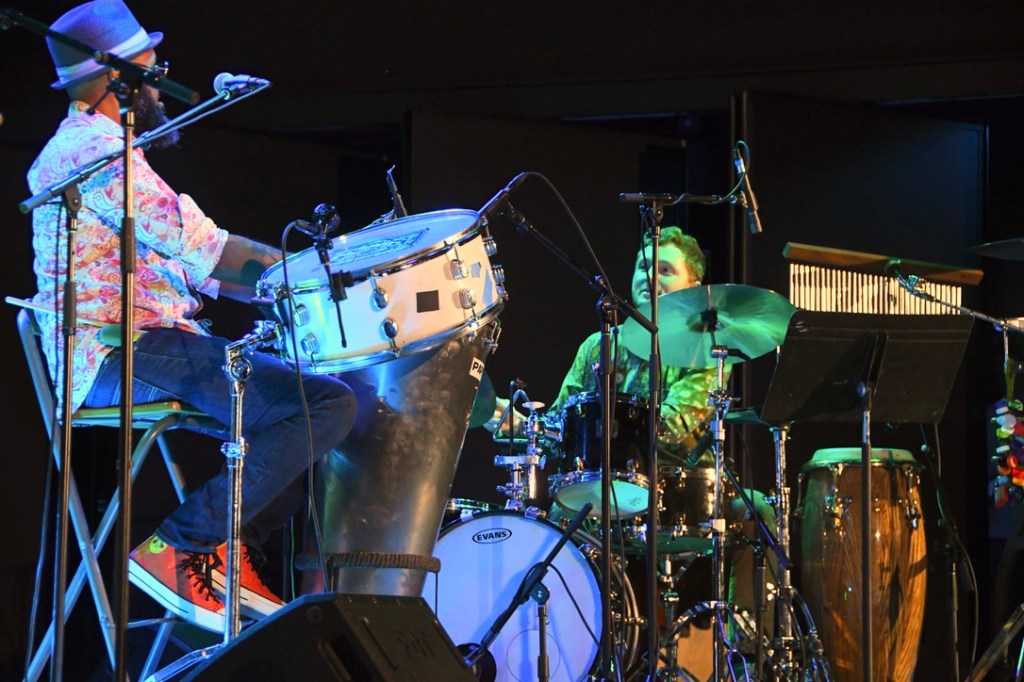
In “The Heights,” Barna’s hi-hat became an energetic blur, pushing his quartet’s high-altitude riffs with relentless glee. Later in the show, the voluble Barna recounted his humbling recognition of the superb drummers surrounding him on his arrival in New York. Dissuaded from retreat by friends and his mother, Barna found his inspiration in the powerful Jeff “Tain” Watts (who played the Falcon last weekend, my fellow-photographer/writer/fan Rudy Lu reported). Barna said he tries to play “Tain”-style: recklessly, but controlled. His playing packed irresistible momentum, and he was dazzlingly precise.

Jason Emmond, bass; Keith Pray, alto saxophone

So was everybody: Alto saxophonist Keith Pray usually sketched the melody up front and directly as Barna, bassist Jason Emmond and keyboardist David Gleason set the beat. Pray or Gleason most often took the first solos; Gleason digging especially deep on anything Latin-y and Pray ruling in both the bop and ballad numbers. 

And the beat was tight, always. Emmond played mostly simple, accompanying lines; his tasteful economy working well with Barna’s aggressive style while Gleason was always ready with interjected accents and comments.
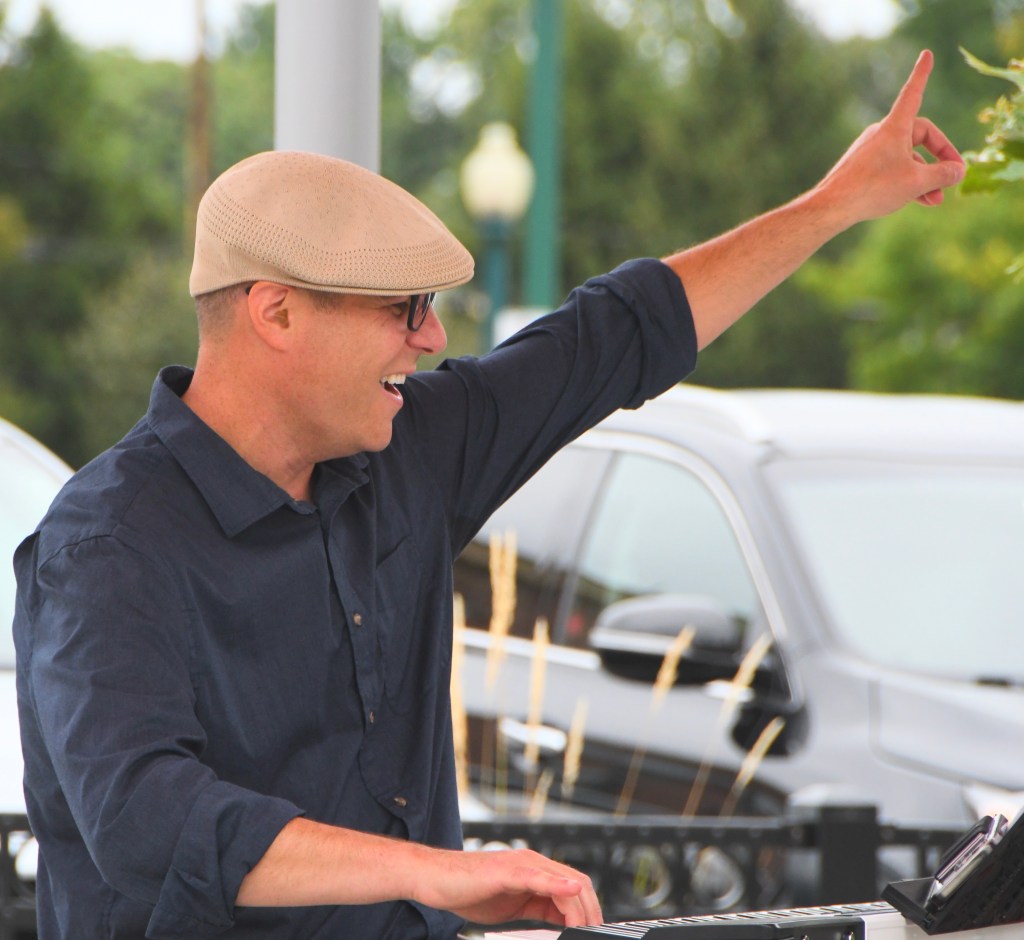
David Gleason

At the mic after “The Heights,” Barna warned, “I talk a lot;” a fan replied that’s part of his charm and Barna joked in surprised reply, “Now I have CHARM!?”

The music certainly did, showing as much warmth as invention and working well even if Barna had skipped the song dedications that made everything personal. Dedicated to Wes Montgomery, the playful “Wes Is More” surged up front, subsided in Gleason’s hands, but when he re-built it big, he wound up riffing precisely in time with Barna’s beats.

Barna announced they’d never played “The Moment” before, but in this smooth-flowing Afro-Cuban tribute to friend Gary Garabedian, Emmond’s bass break beautifully tossed the melody to Gleason. Always sharp on anything Latin, Gleason explored it intrepidly; then Pray played in parallel form, starting soft and slow and steadily building energy. 

“Ivory Romance” honored Lee Shaw whom Barna credited with suggesting an E-flat 7th chord. The guys went meditative in this thoughtful ballad, Gleason playing so lyrical-lovely that Barna paused the proceedings to urge applause.

The next number, dubbed “Du” or “14,” Barna was ambiguous on this, packed a syncopated bebop punch, and Pray wryly quoted “Without a Song” in his happy solo. 

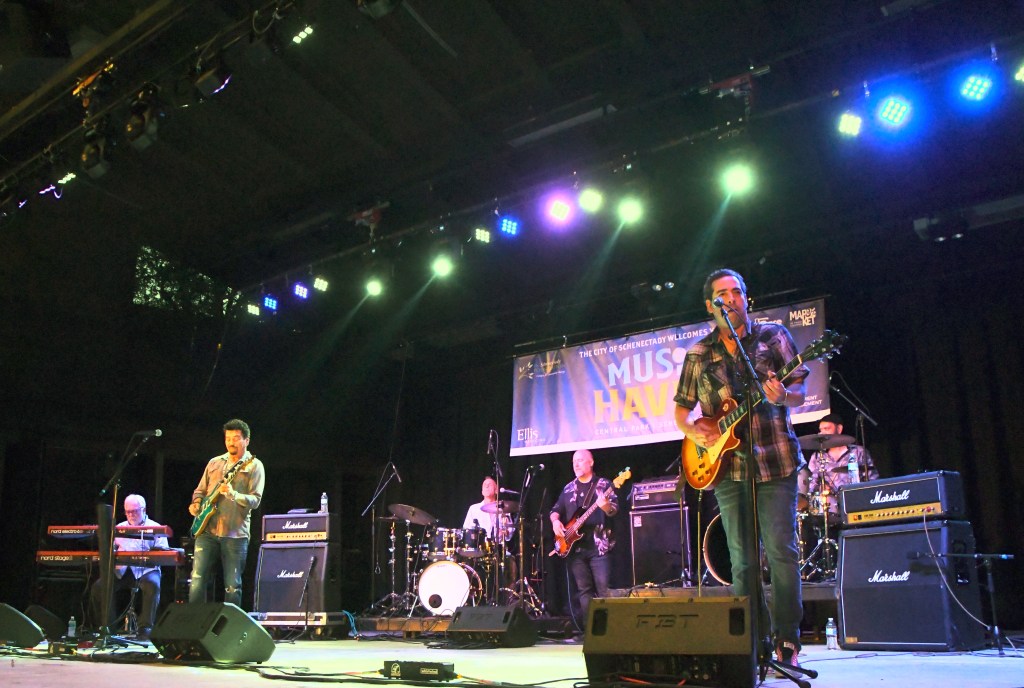
Re-Drawn Sketches of Influence – From left, guest keyboardist Ian MacDonald, bassist Jason Emmond, alto saxophonist Keith Pray, drummer Joe Barna

Barna often emphasized community in his intros and calls for applause, and his bands draw other musicians to watch. He called pianist Ian MacDonald from the crowd to the bandstand for “Scott Free,” a melodic cousin to “Love for Sale.” Blithely nonchalant, MacDonald made some hot stuff look easy.

When Gleason reclaimed the keyboard, he did the same in “Scent of the City,” an upbeat bop number, turning the tune inside out, then push-repeating a riff as Emmond and Barna cut loose outside.

In maybe his most touching dedication, Barna introduced “Thinking of Reggie” by recounting that wheelchair-bound, oxygen-dependent fan’s three-hour, two-bus-ride journey from Schenectady to a Barna gig in Troy. This light-hearted waltz had both tenderness and engaging energy, Pray especially eloquent, sweet and strong.

Barna spoke of changes ahead in his career and approach; here’s hoping his next chapters bring confident, virtuoso, brash energy similar to what he played Thursday.

JAZZ HORIZONS

The final Jazz on Jay 2024 show Thursday by Barna and his Sketches of Influence quartet precedes the first A Place for Jazz show by just eight days. The Tim Olsen Big Band opens the AP4J season Friday, Sept. 6. A full preview posts early next week. Jazz at the Lake hits Lake George the following weekend, Sept. 13-15 – wrapping around Albany’s Riverfront Jazz Festival Sat., Sept. 14. That same night, WAMC’s The Linda presents Cliff Brucker & Full Circle featuring saxophonist Leo Russo, whose son Lee will also be aboard.

Barna’s Fall Into Jazz Festival in Troy’s Alias Coffee presents three bands Sept. 22, including Barna’s other band, of NYC stars. And the re-opened Van Dyck Music Club (upstairs from Stella Pasta Bar) presents JAZZ IS BACK! Capital Region All-Star Night at the Van Dyck, Sat., Oct. 5.
Joe Barna’s Sketches of Influence Wraps up Jazz on Jay Season Thursday

“Gloves off man,” promises Joe Barna. “I guarantee it will be the most aggressive jazz that Jazz on Jay ever had.”

The Troy drummer, composer, bandleader and scene-catalyzing impresario backs up his bold claim with ambition and achievement.

He wraps up the Jazz on Jay 2024 season with his Sketches of Influence band after being named Jazz Artist of the Year at the 2023 Eddies Awards and 2022 Jazz Artist of the Year at Xperience magazine’s Listen Up Awards.

Joe Barna. Photo provided

Formed in 2009, Barna’s Sketches of Influence features Keith Pray, alto saxophone; David Gleason, piano and Jason Emmond, bass this Thursday, a lineup that hasn’t previously played together. All are in-demand performers: Pray will soon release a new album by his Big Soul Ensemble.

Studying classical percussion taught Barna precision, but jazz offered freedom. He began his music training at SUNY Schenectady, then earned his BFA in Jazz Studies with a focus on drumset performance and composition in 1999 from SUNY Purchase. There he studied with Jon Faddis, Hal Galper, Adam Nussbaum, John Riley, Todd Coolman and Ralph Lalama. Barna was busy performing long before completing his training; his first gig was with Melting Picassos at Mother Earth’s Caffe in 1994. 

He’s also performed with Lalama, Gary Smulyan, Lee Shaw, Jerry Weldon, Stacy Dillard and other stars, and guested on 10 albums as a sideman. Credited with energizing Troy’s jazz scene by organizing and promoting shows, he has literally toured the world, performing in Europe, Asia and across the Pacific. Sketches of Influence recently toured as far as Nashville. Here, he has opened for the pianist Joey Alexander, and released six albums as a leader. His latest is “The Heights,” dedicated to his young daughter.

These days, he promotes monthly shows at Alias Coffee in Troy, including the venue’s Fall Into Jazz Festival Sept. 22 featuring Sketches of Influence, the Justin Hendricks Trio and the Jeanine Ouderkirk Quartet.

Jazz on Jay free concerts are noon to 1:30 p.m. at Jay Square, the new park space opposite Schenectady City Hall. The rain site is Robb Alley at Proctors, 432 State St., Schenectady. Seating is provided indoors at Robb Alley, but patrons are invited to bring their own seating and refreshments to Jay Square.

Jazz on Jay is presented by the ElectriCity Arts and Entertainment District and sponsored by the New York State Council on the Arts, a Schenectady County Legislature Arts & Culture Grant, Downtown Schenectady Improvement Corporation, The Schenectady Foundation, Price Chopper/Market 32, MVP Health Care, Schenectady County, Schenectady City Hall, and Proctors Collaborative.

PREVIEW…and Look Back

LITTLE FEAT OPENS SATURDAY FOR TEDESCHI TRUCKS BAND AT SPAC

“We’ve had more acts than a Shakespeare play!” laughed Payne when I proposed a rock and roll resiliency award should be named for Little Feat – one of America’s greatest and longest-lasting bands.

Payne sees Little Feat in the rear-view mirror and through the windshield with equal clarity.

Little Feat, 2024 – From left: Bill Payne, keyboards; Kenny Gradney, bass; Fred Tackett, guitar; Sam Clayton, percussion and blues vocals; Scott Sharrard, guitar; Tony Leone, drums. All but Gradney and Tackett also sing. Fletcher Moore photo

Early in a phone conversation last week from his Montana home, Payne discussed the new “Sam’s Place” Little Feat blues album and the also-new “Strike Up the Band” that hits next year. Meanwhile, a 50th anniversary reissue of “Feats Don’t Fail Me Now” (1974) refreshes familiar tracks and buried treasures.

Saturday, Aug. 31, Little Feat opens for the Tedeschi Trucks Band at Saratoga Performing Arts Center. Only TTB, the best rock big-band on the road, could risk such strong openers as Greensky Bluegrass and Margo Price Friday, and Little Feat Saturday. Past TTB tours have featured Los Lobos, Hot Tuna, Ziggy Marley, St. Paul & The Broken Bones, Marcus King, Drive-By Truckers, Shovels and Rope and other killers.

“We’ve got an exceptional band right now,” Payne confidently said, noting how newcomers drummer Tony Leone and guitarist Scott Sharrard have renewed Little Feat; as has longtime percussionist turned bluesy singer Sam Clayton. Constantly evolving since 1969, it’s one of America’s most versatile and powerful bands.

Little Feat, 1988; at Albany’s Palace Theatre – From left: Bill Payne, keyboards and vocals; Fred Tackett, guitar; Sam Clayton, percussion and vocals; Craig Fuller, vocals and guitar; Richie Hayward, drums; Paul Barrere, guitar and vocals; Kenny Gradney, bass. (Tackett played on that same stage with Bob Dylan on his 1980 “Saved” tour.) Michael Hochanadel photo

As Payne is writing in his memoir “Carnival Ghosts,” Little Feat split and reformed twice even before co-founder Lowell George died in 1979. That break seemed final, but they reunited in 1987 with new singer Craig Fuller, brought in Shawn Murphy when Fuller left and new drummers after Richie Hayward died (Leone is the latest), then guitarist Sharrard after Paul Barrere died.

“You can’t replace Lowell George, Richie Hayward and Paul Barrere,” Sharrard told me last year. “These are three of the most brilliant musicians in American music history…What you do is honor them.”

Little Feat’s new “Sam’s Place” album starring Clayton as lead vocalist honors the band’s bluesy history. It’s resiliency personified, with an Albany connection.

“It was hidden in front of everybody,” Payne said of Clayton’s voice, “but nobody knew it.” Payne felt, “I had a pretty good line on what the blues is” after playing with B.B. King, Willie Dixon, John Lee Hooker, Buddy Guy, Otis Rush, Taj Mahal and others. He said Clayton belongs in that company. “He has a great delivery, and his ability to emote and capture people is the thing.”

Payne’s long-simmering idea of a Clayton-centered blues album became reality when he and Brian Penix from Vector Management listened to a Little Feat show recorded at The Egg. When Penix said, “Sam really sounds good,” Payne replied, “I think we ought to do a blues album with him.” 

Little Feat’s groove sizzles and steams on “Sam’s Place.” In addition to Clayton’s raspy, soulful secret-weapon voice, adding Leone and Sharrard also juiced the band’s sound. Payne suggested in their first post-COVID rehearsal that the newcomers learn current versions of Little Feat songs. Instead, they went back to the originals – “re-introducing me to our music,” said Payne.

Bill Payne at Albany’s Palace Theater, October 1988. Michael Hochanadel photo

He explained, “Musicians can tell you that Little Feat’s music sounds like it’s easy, until you try to play it!” When Blue Note Records chief, bassist and producer Don Was led a band playing Feat’s “Waiting for Columbus” live album, he told Payne it was harder than he thought. Payne felt humbled when Phish also played it, when the ambitious jam-band played full albums by Led Zeppelin, the Beatles and other giants. “To be included in that company was mind-blowing for me.”

Paul Barrere also told me late in his life, “It’s nice having all these jam bands, like Gov’t Mule, Phish and Widespread Panic play a song or two of ours here and there because it kind of revamped our careers. Their fans became our fans.”

“It’s endless.”

Barrere had then explained Little Feat’s supple, strong groove. “We have a way of creating space that allows everybody to have a voice.”

Jam bands’ seek to emulate that groove in playing Little Feat songs, honoring how the band helped pioneer rock improvisation onstage.

Little Feat still stretches out on vintage tunes including “Spanish Moon,” as many jam bands now do. Payne said Little Feat “can really take that one on a journey.”

He said, “We just open it up to whatever we deem necessary or we think this would be fun to stretch out on. So the music is elastic…It’s endless. We can throw it anywhere we want.”

Checking the rear view again, Payne reflected, “Whatever we were, we didn’t expect to be a household name,” He said, “But we very much hoped that we would be in the front of peoples’ minds when it came to musicianship and songs, so that people that were musicians would gravitate to us.”

Payne said, “I always thought people who would gravitate to our music would be adventurous, quizzical. We have a great audience and they’re very eclectic in their taste.” He added, “I hope you can tell in my voice that I enjoy what I do. The band certainly does, and that translates to an audience.”

“I very selfishly want to be in a band with the breadth of music we play.”

That loyal audience, Payne said, has “given us longevity, career-wise,” and freedom to just be Little Feat in all its variety.

In writing his memoir, Payne realized, “I very selfishly want to be in a band with the breadth of music we play…which has been very hard to describe over the years, as a gumbo.” To their original outsider country-rock, they added New Orleans beats and jazzy boogie with free improvisation. Playing it produces joyful camaraderie onstage and with the audience.

Placing Little Feat’s legacy in time and tradition, Payne said, “We all grew up in…kind of a golden age.” Here and now, listeners value Little Feat for preserving and extending elements of earlier musical eras. “A lot of people think of Little Feat (doing that), for example, and Susan Tedeschi and Derek Trucks,” said Payne.” They’re keeping it very much alive, among the people who are performing today.” TTB has recreated the entire “Mad Dogs and Englishmen” album on tour, and played everything from raw 1950s blues to polished Motown 60s soul.

In addition to the newly recorded blues tunes Sam Clayton sings onstage from behind his congas, Little Feat is already performing some of the 13 fresh originals on “Strike Up The Band,” due next year. For onstage vocals, “The baton gets thrown around to me, to Scott Sharrard who sings a bunch of songs of Lowell’s; and Tony Leone, who I didn’t even know was a singer, has taken on some of the Paul Barrere songs. And he sounds terrific.”

Looking back at tradition and Little Feat’s place in it, Payne recalled playing Jerry Lee Lewis’s piano in a Memphis studio. Like (The Band’s) Richard Manuel’s piano years before, Jerry Lee’s piano seemed to play itself. Payne said, “I was looking for heel prints…where he would smash it with his foot. I felt I had to do that too.” 

Payne said, like the bluesmen he worked with and revered in the 70s, “I was a big fan of Jerry Lee Lewis, a big fan of Little Richard and all the stuff that was going on in those early rock and roll albums.”

When I noted these were big shoes to fill, Payne cracked, “Yeah, big shoes to fill, for a guy with Little Feat!”

Little Feat opens for the Tedeschi Trucks Band at Saratoga Performing Arts Center on Saturday, Aug. 31 – second night of a two-night stand. Greensky Bluegrass and Margo Price open Friday’s show. 7:30 p.m. Tickets, amphitheater indoors $215.50, pit; $48.50 balcony; lawn outdoors $48.50. 518-584-9330 www.spac.org.

NEW/OLD Little Feat: “Feats Don’t Fail Me Now” Re-Issued on Two Vinyl Discs or Three CDs

In both formats, Disc 1 offers a remastered great-sounding version of the original eight-song album, with a medley of “Cold Cold Cold” with “Tripe Face Boogie” playing as a single track, as on the original.

Disc 2 in both formats collects un-released out-takes and alternate versions of familiar tunes. These offer insights into process – takes that stop mid-song, comments and slurred vocals in preliminary or practice takes.

The third CD disc, not available in the two-disc vinyl edition, is all live, seven songs recorded in a 1975 Paris concert. 

REVIEW – Paul Winter and Chuck Lamb in “This Glorious Earth” at Caffe Lena, Friday, Aug. 23

Whales and wolves and birds and more birds; soprano sax, keyboards and cyber-sounds – pioneering New Age sonic impressionist Paul Winter brought a veritable zoo to Caffe Lena Friday and Saturday. (This review is of the sold-out Friday performance.)

Paul Winter, left, soprano saxophone; Chuck Lamb, right, keyboards and computer playback

Performed with longtime Caffe jazz master and keyboardist Chuck Lamb, Winter’s “This Glorious Earth” blended natural sounds collected in decades of tape-recorded travels with fresh musings made live onstage Friday into an episodic, two-part oratorio. Its most compelling moments came when Winter and Lamb simply played together, without recorded accompaniment. 

Espousing a connection with nature, the music felt spiritual, meditative.

A small mic clamped on his tunic carried the sound of Winter’s soprano sax via wireless transmitter to the house sound system where engineers Joe Deuel (house) and Joel Moss (broadcast, streaming) mixed it with Lamb’s acoustic piano, synthesizer, or computer-played recordings.

If this all sounds technically ambitious, it was; but also seamless in its intent and virtuosity. Both Winter and Lamb played well within their skill-sets, so everything had a non-swaggering, engaging confidence. Lamb cut loose more often than Winter, flowing free within the cozy spell cast by most of the music.

Humpback whales, wood thrushes, canyon wrens, wolves, and elk furnished wild sounds that Winter and Lamb used as guideposts for their live playing. Recorded animal calls sometimes inspired orchestral-scale recorded arrangements, as in the grandeur of “River Run” with djembe drum, or “Eagle Mountain” that combined European instrumentation, mostly low woodwinds, with brash massed Navajo (Dine´) chants. A recorded French horn echoed an elk’s call Winter’s crew had recorded in Yellowstone. At other times, the duo adopted a simpler approach with only sparse recorded accompaniment that afforded the live instruments more space. Many songs grew from melodies and rhythms the animals made.

Paul Winter, left; Chuck Lamb, right, at the computer

The balance of wild with man-made shifted throughout. In “North Fork Wolves in the Midnight Rain” – a typically euphonious title – Winter’s saxophone first engaged wolf calls in an equal dialog, then the wolves took over in a powerful, stirring chorus.

Winter cited visits to Connecticut forests, Montana prairies, the Rocky Mountains and, most often, the Grand Canyon and Colorado River as inspirations, both on tape and in his melodic imagination. Another current also flowed through the sold-out show: Brazilian bossas by Carlos Lyra whose “Coisa Mais Linda” (Most Beautiful Thing), for example, offered earthy rhythmic variety among long strands of meditative wanderings. This style returned later in “Wolf Eyes” where acoustic guitar and bossa rhythm flowed into a low-strings orchestral mood.

Winter finds sonic richness in the land as much as in its animals, basing “Canyon Chaconne” on a cliff formation whose long reverberation time approximates that in the Cathedral of St. John the Divine where Winter has been artist in residence for decades. This swelled in orchestral grandeur that well suited Winter’s Bach-like phrasing.

Winter used Leonard Nimoy’s authoritative voice in “The Voyage Home,” incorporating whale songs in reverent grandeur.

Winter played all night with eyes shut tight and he several times asked that both house and stage lights go dark. This aided in the achieving the abstract reveries that powered the music, as in the late highlight “Wolf Eyes” where he asked the crowd to howl together. 

When, as Winter noted, the computer playback program “took a vacation,” he and Lamb skipped what would have been their last piece and jumped right to their planned encore: the familiar “Icarus” by Winter’s influential band the Paul Winter Consort that played at the crossroads of classical and jazz styles. The nearest thing to a hit Winter ever made, this brought the sold out crowd to its feet.

Bossamba at Music Haven Thursday

Singer Maggie MacDougall, at Jazz on Jay, Thursday, Aug. 22

Maggie MacDougall loves bossa nova; Portuguese for “new trend.” Her Bossamba band is also new: Jazz on Jay marks her first-ever show with its current line-up: Wayne Hawkins, piano; Lou Pappas, bass; and Mark Foster, drums – only the fifth-ever Bossamba gig, including a previous Jazz on Jay performance.

Trained on piano by her church-organist/choir director mother, MacDougall enjoyed “harmonizing on old corny songs” at her family’s rustic camp, but says, “It took me decades to warm up to the idea of fronting a band!” 

She sang her first public gig at nearly 70 with her Magpies (pianist Peg Delaney and bassist Linda E. Brown) at a Catskill restaurant where she’d sung in trumpeter Chris Pasin’s jams.

A jazz fan since her teens, and inspired by Ella Fitzgerald, Betty Carter and Jon Hendricks, she says hearing bebop alto sax giant Charlie Parker changed her life. “I found myself singing along with those great bebop tunes as if I had always known them,” she says. “My best jazz education has come from intense listening, to recordings, mainly of horn players.” She learned jazz standards from area saxophone star Nick Brignola at his steady gig within walking distance of her apartment; and also from multi-instrumentalist husband Kenny Wenzel.

Now, MacDougall sings Brazilian music with Bossamba, her crew at Jazz on Jay. She sings in Portuguese and English: bossa nova classics “Mas Que Nada,” “Meditation,” “Samba de Orfeu,” “A Felicidade,” “Manha de Carnival,” “Triste,” and “So Danco Samba;” plus lesser-known songs including “Ligia.” She also sings standards with Languages of Jazz.

“Bossamba features improvised solos by all instrumentalists, and I’ll skat a bit here and there,”

she says. “I’m happy to perform…doing music I love with outstanding band-mates like Wayne, Lou, and Mark.” And she considers Wayne Hawkins her mentor in Brazilian music.

Jazz on Jay wraps up its 2024 season of free shows on Thursday, Aug. 29 with drummer Joe Barna’s Quartet.

Jazz on Jay free concerts are noon to 1:30 p.m. at Jay Square, the new park space opposite Schenectady City Hall. The rain site is Robb Alley at Proctors, 432 State St., Schenectady. Seating is provided indoors at Robb Alley, but patrons are invited to bring their own seating and refreshments to Jay Square.

Jazz on Jay is presented by the ElectriCity Arts and Entertainment District and sponsored by the New York State Council on the Arts, a Schenectady County Legislature Arts & Culture Grant, Downtown Schenectady Improvement Corporation, The Schenectady Foundation, Price Chopper/Market 32, MVP Health Care, Schenectady County, Schenectady City Hall, and Proctors Collaborative.

More on Felipe Hostins Trio

The bandleader, accordionist and singer kindly sent additional info after my original review of their Music Haven show Sunday (opening for Banda Magda) posted on Monday. He also sent links to YouTube versions of the songs now in release.

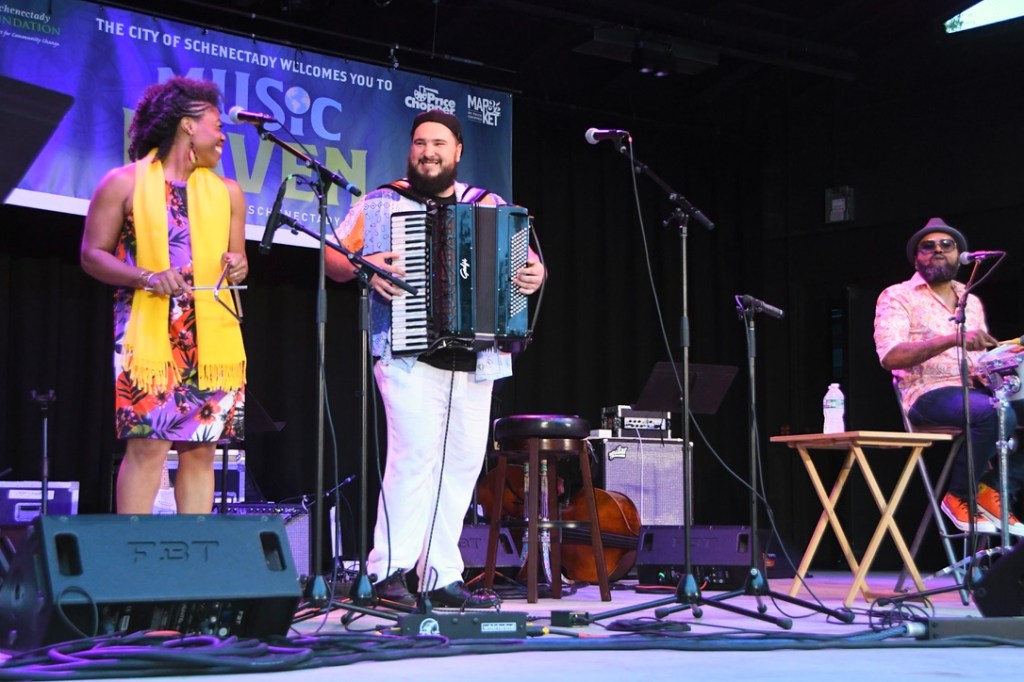
I (Felipe Hostins – center) had a pleasure to share the stage with Davi Vieira (zabumba/timbau and vocals – right) and Chrystal E. Williams (triangle and vocals – left).

The set list:

“Forró na Penha” by Sivuca 

“É Pra Sorrir” by Felipe Hostins (Original song; unreleased)

“Eu só quero um Xodó” by Dominguinhos 

“Severina Chique-Chique” by Genival Lacerda

“Sanfona Sentida” by Dominguinhos

The version we played at the event was arranged by Forrópera. A project created by myself and Chrystal combining Brazilian folk music with classical.

“Lamento Sertanejo”  by Gilberto Gil

“Forró de dois amigos” by Forró in the Dark (Davi Vieira is the lead singer and percussionist of Forró in the Dark)

SONG AND DANCE:

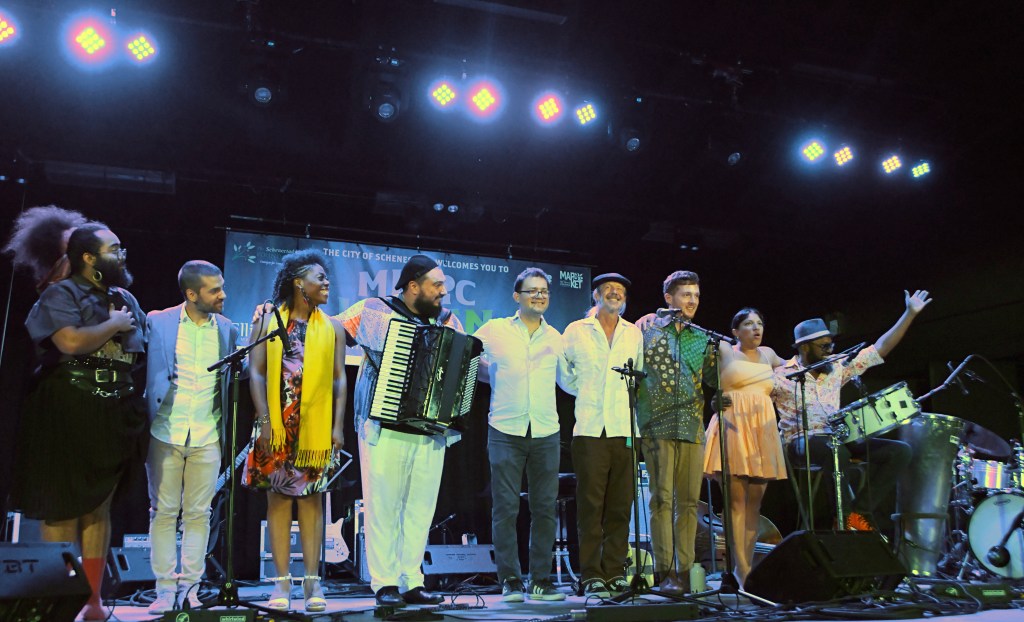
Banda Magda and Felipe Hostins Trio at Music Haven Sunday. Aug. 18

Both bands combined in the finale at Music Haven Sunday; also the finale of the global music offerings presented in the Central Park free concert series. (Three alfresco film events remain.)

Before joining forces in a nine-piece world-music juggernaut, the Felipe Hostins Trio made every dance rhythm into a song, then Banda Magda made every song into a dance.

Banda Magda with Felipe Hostins Trio in a final bow together

More than the sum of its parts, accordionist Hostins’ trio with zabumba (bass drum) player Davi Vieira and triangle player and singer(!) Chrystal E. Williams usually had five things going on at once. He played two rhythms on accordion, Vieira played different beats on his drum with a mallet up top and a thin stick below while Williams’s metal triangle completed a complex rhythmic celebration. They base their music in Brazilian forro, dominant beat of the four that Music Haven chief Mona Golub memorized to list accurately in her introduction.

Felipe Hostins Trio – From left, triangle player/singer Chrystal E. Williams, Hostins, Davi Vieira, zabumba

The lively rhythm that powered “Under My Umbrella” sounded much like reggae in its cheerful syncopation but everything exemplified the title of their first propulsive tune “As espacial,” Portuguese for “Made to Smile.”

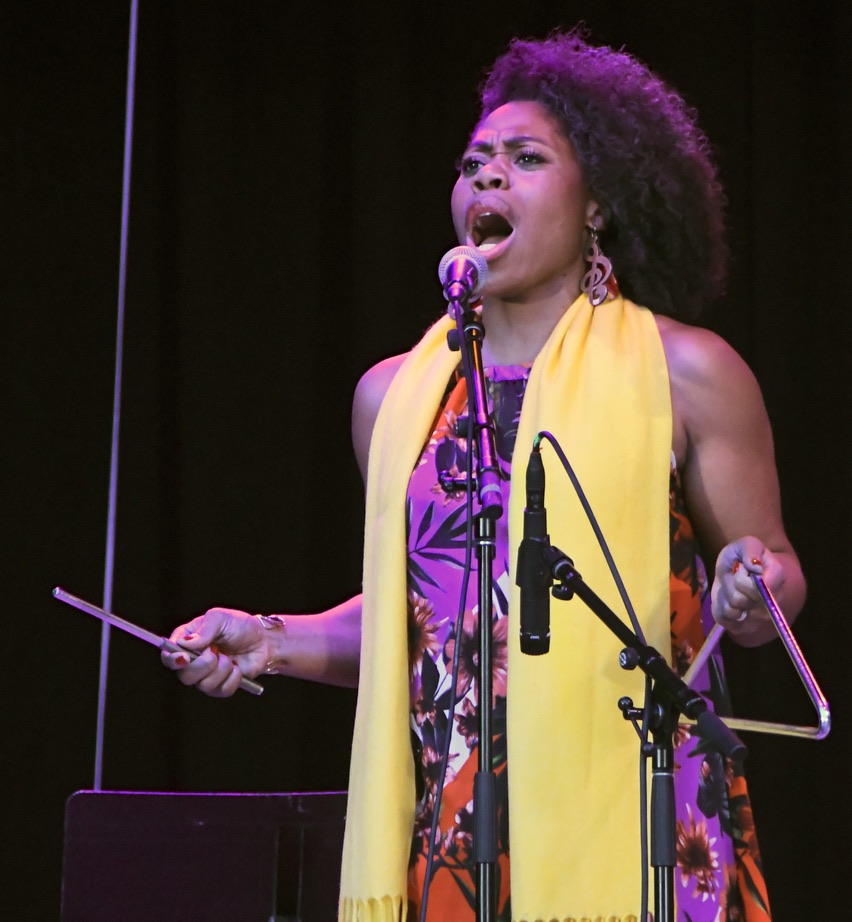
Smiles turned to awe, however, when Williams first sang in an opera-grandeur soprano. She opened her mouth and ours all fell open. Hostins and Viera sang well, too; but she was magnificent.

After retired restaurateur/still active event host LeGrande Serras opened his announcement of Schenectady’s Greek Festival (Sept. 6-8 downtown) in Greek, the delighted Banda Magda leader Magda Giannikou gave him the first of the night’s many onstage hugs.

Banda Magda may be the most international ensemble all season, Magda singing in seven languages the songs comprising her ambitious spring project for which she hand-picked this version of her band. She characterized this repertoire as old, new and future. Consistently inventive melodies in kaleidoscopic arrangements over dance-y beats made it all feel seamless, despite its wide variety. Magda connected with the audience like large magnets tugging stage and seats together; and not just when she taught her fans to sing startlingly complex vocal lines. 

She is a full-body singer, a non-stop (barefoot) dancer and adept instrumentalist with accordion, guitar and vibraphone chops. (A fan’s compliment for her accordion playing afterward at the merch table – every CD sold – prompted her to admit with excess modesty, “I’m a fake accordion player; but Felipe is the real deal!”)

Darian Donoval Thomas, violin

Bob Lanzetti, guitar

Ignacio Hernandez, guitar

She started quietly enough, airy extended high-chord bowing by violinist Darian Donovan Thomas (in red socks, pleated kilt and giant ‘fro) with delicate riffs by longtime guitarists Bob Lanzetti and Ignacio Hernandez. Mark Vanderpool’s bowed bass and Murph Aucamp’s vibes built a quiet, meditative mood under these stringed things and Magda’s ethereal voice. A brief pause, then the guitars surged into solo swapping, Magda strapped on her accordion and the band jelled in power and purpose. Later, Aucamp mostly played drums, except in a vibes duet with Magda; he played a duet drum break with Vieira.

Mark Vanderpool, bass

Magda cited nature in her song intros, but this didn’t make the music any less magical or abstract. She sang of the sea in “Umi,” in Japanese which she said she’d learned to converse with friends while studying music in Boston; then of forests whose bird theme prompted Thomas to bow birdsongs as the crowd sang them.

Magda played guitar in “Tam Tam” before inviting Hostins back onstage for a Brazilian/Italian hybrid true to both traditions. Another Italian tune, about light in darkness, prompted a vibes duet, Thomas pedaling eerie effects from his violin. 

Magda and Murph Aucamp, vibes

Magda in the crowd

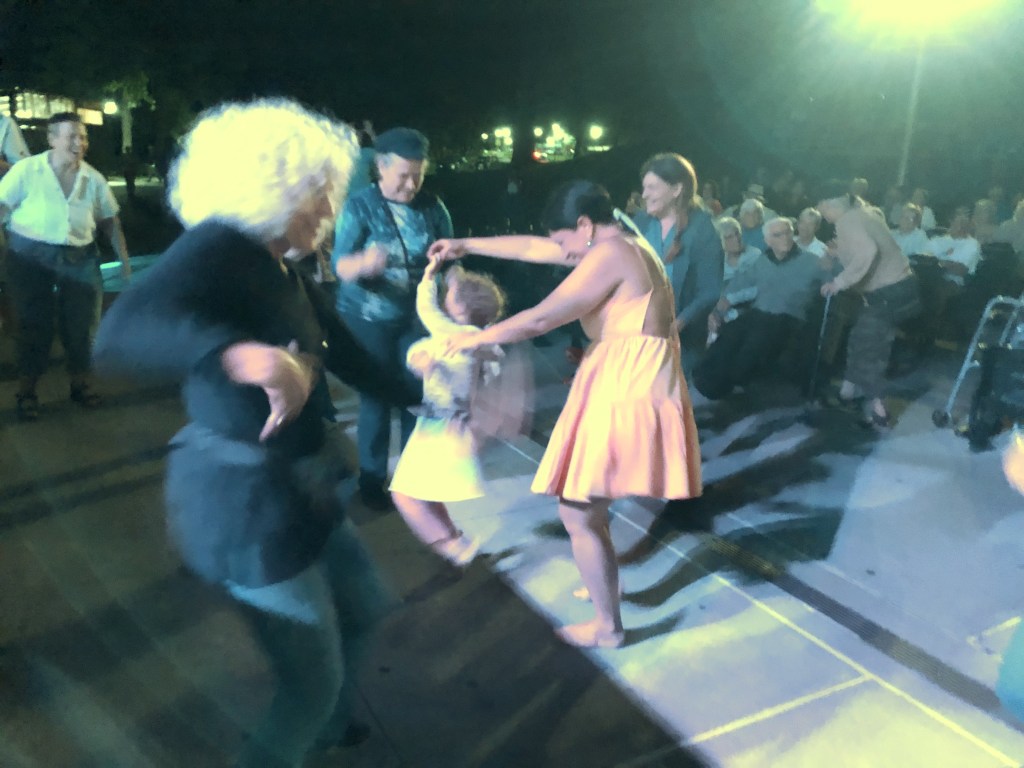
Dancers clustered up front including some children and a woman carrying a small dog; Magda twice left the stage to join them and moved all over, singing or playing or not. Playfully, aggressively international, Magda and band bridged oceans and traditions in sounds that always felt fresh, understood and respected and never superficially borrowed. 

Magda invited Hostins and his trio onstage for a two-part celebration of Luiz Gonzaga’s 1940s-vintage “Savia,” first a reverently straight reading then a pause and a shift into what a fan helpfully suggested would be crazy. They exploded it in a jazzy exploration and everybody onstage got a piece of it.

Repeats are rare in Music Haven presentations, and its predecessor, Second Wind Productions. Some have passed on – folk giant Odetta, for example; others, including Los Lobos, have grown too popular/expensive.

Before the show, Golub recalled only Plena Libre, Mokoomba and Maura O’Connell as repeat performers before Banda Magda earned a rare return here after a 2019 smash in Music Haven’s Passport Series at Proctors GE Theater. 

Awed afterwards, Golub said Banda Magda had made all that world-music magic after only two rehearsals here, at SUNY Schenectady. Sunday was the band’s first show.

Magda hugs Mona

Chrystal E. Williams, triangle

BLUES BARBECUE – A Smoking Shade of Loud

Blues BBQ at Music Haven, Friday, August 16 at Music Haven

Guitar solos are fine and fun, fireworks flowing over the frets. But behind the flash, the best bands stack rocking rhythm guitars between the hot leads and big beats , the chord chops that spur the solos and bridge muscle to melody.

Blood Brothers, from left: Lewis Stephens, keyboards; Mike Zito, guitar and vocals; Matt Johnson, drums; Doug Byrkit, bass; Albert Castiglia, guitar and vocals; Ephraim Lowell, drums

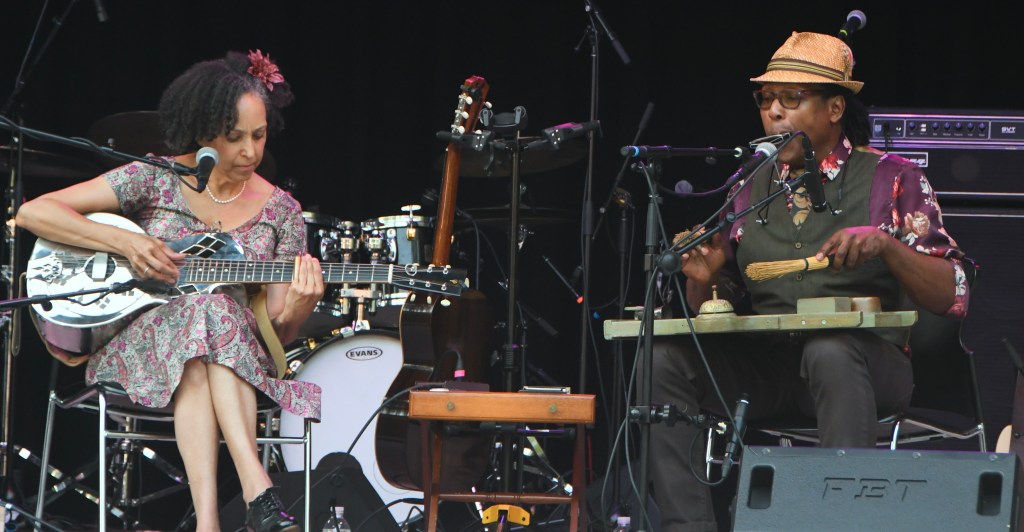
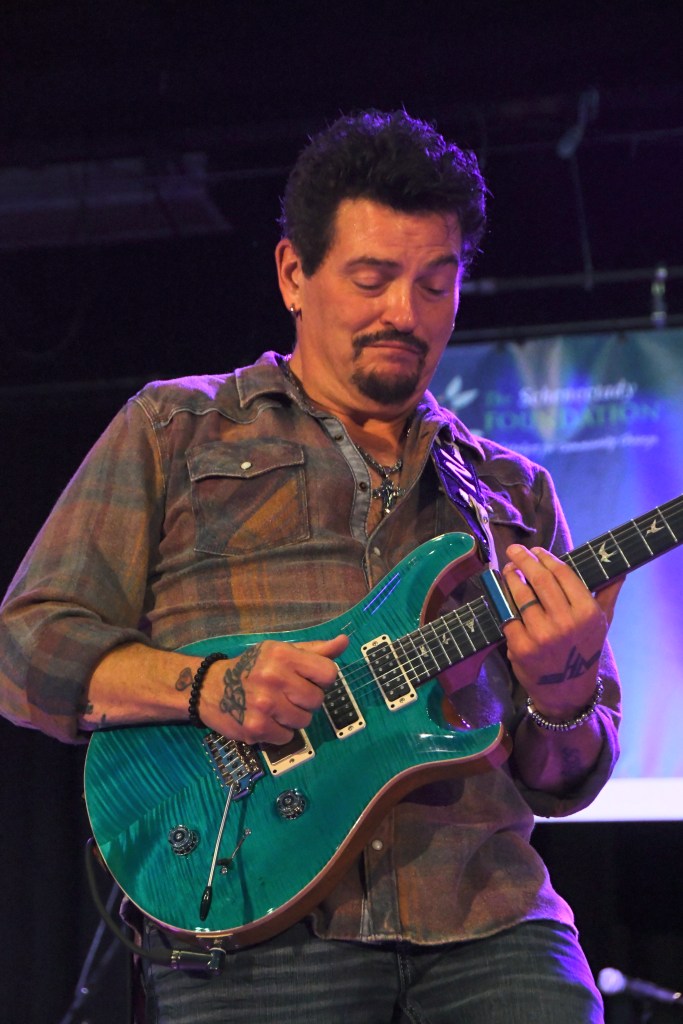
So it was Friday at Music Haven’s Blues BBQ, with three bands building their music on the unassuming but relentless drive of rhythm guitars. First: the primal acoustic duo Piedmont Bluz, then the Berkshire blues-rock blast of Misty Blues, then last – and world-class best – Blood Brothers starring (lead AND rhythm) guitarists Mike Zito and Albert Castiglia.

Valerie Turner, Benedict Turner

Guitarist (lead and rhythm) Valerie Turner and harmonica and percussion player/husband Benedict represented both the lilting Piedmont style and harder-edged Delta approach, instructing more than entertaining at first. They started at five p.m. as food service also began, wafting smoky aroma waves drawing the hungry into lines at the food truck and concession stand.

Valerie instructively demonstrated “alternate-bass” Piedmont finger-picking; thumbing down on the top two (lower-pitched) strings in syncopation, upward-plucking the melody. Benedict’s rhythmic bones-playing also also juiced this low-key style, especially in their opening run of “Buck Dance Three Ways” and “One Black Rat.” Robert Johnson’s “Dust My Broom” marked their turning point, geographically and stylistically, from east coast Piedmont to the Delta. But shifting from (wood) acoustic guitar to (metal) slide dobro as Benedict switched to brush-drumming on washboard really underlined this shift.

An even more profound musical mutation followed, from the close-mic’ed guitar-and-percussion intimacy of Piedmont Bluz to the plugged-in power of Misty Blues, the powerhouse sextet behind singer Gina Coleman; a powerhouse up front.

Misty Blues; from left: Ben Kohn, keyboards; Diego Mongue, guitar (later, bass and drums); Bill Patriquin, bass (later, trumpet); Aaron, Dean, alto saxophone; Rob Tatten, drums; Gina Coleman, vocals (and later, guitar); Seth Fleischmann, guitar

Behind her rocked a riff-blasting band, guitarists Seth Fleishchmann and Diego Mongue; her son, the latter, emerging as the band’s secret weapon. Fleischmann got most of the solos, except when Aaron Dean breathed fierce fire through his alto sax. So Mongue’s rhythm guitar, that’s what I’m talking about. He Zappa’ed a few solos himself, but mostly he did what good rhythm guitarists do; push, pull and pump the beat. He also took over the bass when Bill Patriquin switched to trumpet, and drums later in the set, alongside Rob Tatten. Ben Kohn’s keyboards also fit mostly in the middle.

Gina Coleman

Diego Mongue

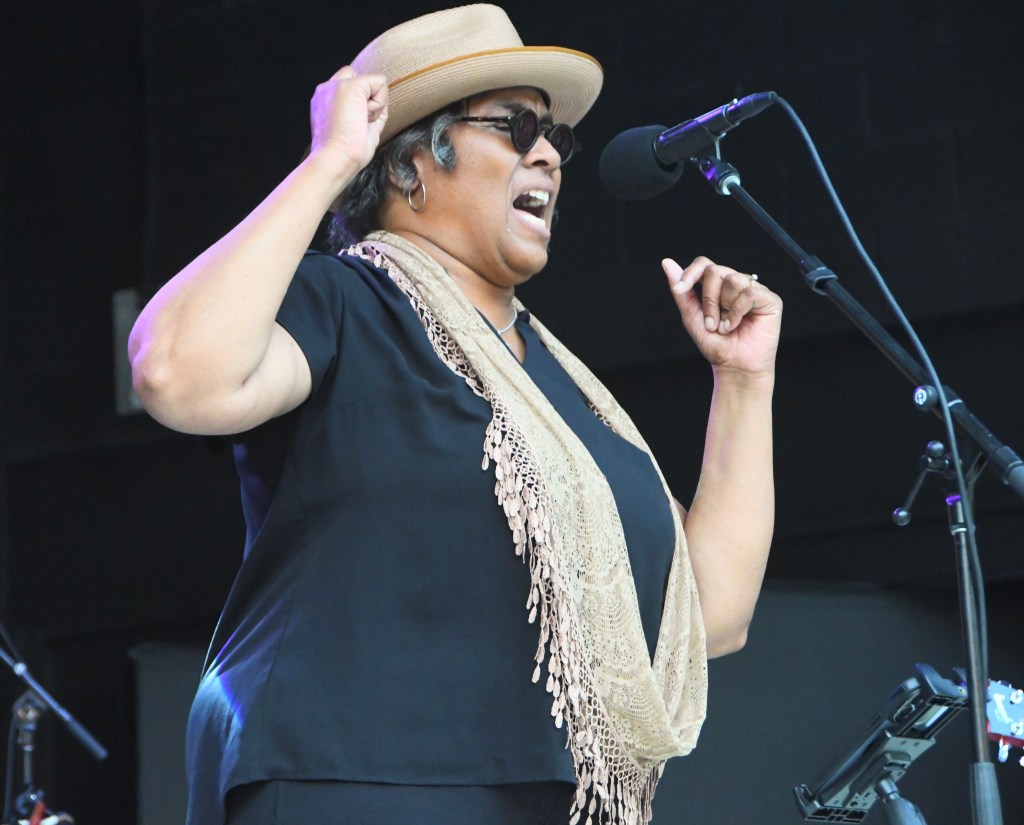
Coleman dynamo’ed the whole thing, singing from iron throat and deep soul, most persuasively in the rollicking up-and-down “Roller Coaster Man,” her personal testaments “When My Number Is Called” and “That’s My Cross,” the sizzling “The Upper Hand” and a heartfelt Odessa tribute. She briefly played a cigar-box guitar – not that Mongue and Fleischmann needed the help – but otherwise almost melted the mic.

Mike Zito, Albert Castiglia

Two mics and two guitars awaited Blood Brothers Mike Zito and Albert Castiglia for their headline set; also two drum kits of Matt Johnson and Ephraim Lowell; Lewis Stephens sat at the two-Korg rig Ben Kohn played with Misty Blues and Doug Byrkit plugged in his bass. Prophetically, this was the configuration of the original Allman Brothers Band.

Mike Zito

They mostly mirrored their chart-topping “Blood Brothers” studio album (2023) and its “Live In Canada” echo (released later last year), plus selections from their individual albums eating up the blues charts. And they burned, burned, burned from note one.

Albert Castiglia

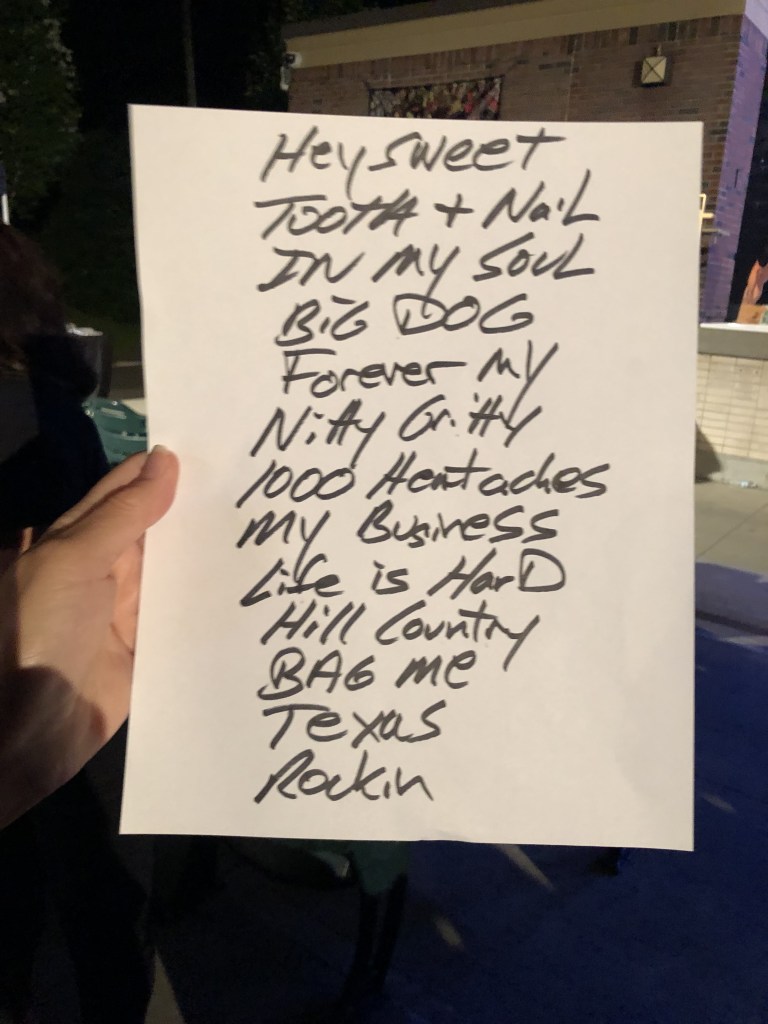
Their mid-tempo opener “Hey Sweet Mama” grooved in a confident overdrive cruise, Allman Brothers-y swing that set the stage for a full menu of electric shuffles that followed. Up front, Zito and Castiglia seamlessly swapped roles, solo and support, though they sometimes teamed up in harmony – different notes in the same place – to form that patented Allmans chord blend that uncannily echoed saxophones as the overtones soared.

The effect felt thrilling, happily relentless, masters exalted together in their work-that-felt-like-play. Individually-crafted tunes got the same gleeful unanimous uplift as the duo-album highlights: Zito giving a big-ballad waltz feel of devotion and anguish to his “Forever My Love” mourning departed wife Laura. Castiglia riffed on “Layla” and “uncle” Frank Sinatra to launch “Nitty Gritty,” spiced by a tasty organ solo after both Zito and Castiglia took hot runs at it. Castiglia dedicated “Nitty Gritty” to Schenectady drag-racer Cha-Cha Muldowney. Later he noted how Joe Bonamassa dubbed him the “Sensitive Guido” before launching the similarly poignant “A Thousand Headaches.” The duo could be called Two Paisans Punch Up the Blues;  But I digress.

Not everything was fun and games: Zito’s “Forever My Love” and “Life Is Hard” (another solo album selection) told tales of trouble, and Castiglia’s read on “Bag Me, Tag Me, Take Me Away” put a big-guitars spin on fatalistic words. 

These star-turns were more the exception than the rule, anyway. This band is about unity, writ large and loud; and they played a master class in riffs welded tight into a blues-rock new-math of one-plus-one equals about nine, and seven guys grow one pair of wings to soar high. Even without a cooking rhythm section, Zito and Castiglia could have rocked the place since their tight lead-and-rhythm guitars riffing packed such a punch. Poignance or pain, too.

After “Hard,” things got easier with the stretched-out shuffle “Gone To Texas” taking everybody on a very Allmans road-trip, complete with Duane-and-Dickie style harmony-guitar scale fragments. At times it echoed “In Memory of Elizabeth Reed” and “Heat Wave” (Martha & the Vandellas).

Then, after proving themselves the best Allman Brothers Band on the road, they went crazy as Crazy Horse.

Like everything else they played, the Neil Young/Frank Sampedro “Rockin’ In the Free World” hit in a joyous roar, a powerfully cohesive explosion that – flowing out in loud waves – pulled people in, happy. Afterward, Castiglia gratefully praised the crowd as crazy, delightedly adding “You’ve got soul!” Right, and he and Zito found, celebrated and amplified it Friday.

Blood Brothers set list, thanks to a friendly fan

Benedict Turner plays the bones

Benedict Turner, harmonica

Valerie Turner, dobro

From left: Aaron Dean, Gina Coleman, Rob Tatten, Seth Fleischmann

Aaron Dean and Gina Coleman

Gina Coleman, cigar-box guitar

Seth Fleischmann

Blood Brothers

Matt Johnson

Ephraim Lowell

Doug Byrkit

Lewis Stephens, keyboards; a former member of the late, great Freddy King’s band

PHILADELPHIA ORCHESTRA, Thursday, Aug. 15 at Saratoga Performing Arts Center: A Review

When Bela Bartok began composing his Concerto for Orchestra on Aug. 15, 1943, he had just been diagnosed with the leukemia that would silence him two years later, just weeks after the end of the war in Europe that drove him to sanctuary in America. 

On Thursday, August 15 – 81 years later – guest conductor Dalia Stasevska led the Philadelphia Orchestra in Bartok’s masterpiece, plus Antonin Dvorak’s optimistic Symphony No. 8 and his brief Humoresque. 

As Stasevka explained from the podium, Boston Symphony Orchestra conductor Serge Koussevitsky visited Bartok in the hospital to commission the Concerto for $1000.

Also on Aug. 15, in 1969, the Woodstock festival began. There, John Sebastian earned the same dollar figure as Bartok; but $1000 in 1943 dollars is $18,160 – the fee Jimi Hendrix earned.

Enough with the prices; how about the value? In pre-performance remarks, Stasevska portrayed Bartok as an immigrant, displaced by strife that echoes in our own time. She said his Concerto for Orchestra expresses a yearning to belong, to define a displaced self in a new land.

In a performance that opened in deep yearning, the music transformed through four subsequent movements as joy rewards the exile. Stasevska and the Philadelphians offered poignancy, thoughtfulness and release, large emotions portrayed through nuance, detailed and dynamic.

“Concerto” typically means a dialog of ensemble with soloist; but Bartok treated whole sections as soloists in turn, so the effect is richly prismatic. 

Low strings began the piece in musings, questing and tentative, until the winds carried the strings higher with increasingly assertive brass statements that evoked unease, even menace before the woodwinds brought peace. By the finale, the brass would feel triumphant, so this first movement foreshadowed everything. 

Bartok called the second movement “Game of the Couples,” winds and muted trumpets harmonizing over varied intervals, punctuated by a solitary drum. Low strings served as connective tissue, but a restless feel grew in pizzicato strings.

The slow third movement began with flute swirls over almost subliminal bass bowing, its deliberate tempo feeding a plaintive mood. Here, and also in the opening, Stasevska achieved an ethereal yearning, built on immaculately accurate articulation in the strings.

The fourth and fifth movements demonstrated dynamics and balance to exciting effect; raspy trombones at a gallop giving way to serene strings in the fourth and an earned but calm triumph in the finale. Sections seethed or soothed in impressive emotional clarity. If the first movement prophesied joy in freedom, the finale harvested it.

When Stasevka returned to the stage in a standing ovation, she first acknowledged the orchestra sections whose work particularly sparkled, saluting the timpanist first; then saluted their blend by drawing all players to their feet.

After intermission, an ice-cream cone of sorts; the brief and well-named Humoresque that Bartok composed for piano and that cinema orchestrator Max Waxman dressed in full orchestra colors. Guest concert master Juliette Kang stood before the first violins as soloist, intoning the familiar light melody that repeated throughout this five-minute treat. The orchestra partnered, sometimes elaborating on the theme as Kang voiced it as a simple repeat, then switching roles.

This miniature served as primer to Dvorak’s orchestral vocabulary that his Symphony No. 8 richly explored in full instrumental variety of lyricism and power; an apt emotional parallel to journey the Bartok had traced. But if the Bartok flowed with serious intent, the Dvorak portrayed a lighter mood thanks to echoes of folksongs whose simplicity grew through inventive orchestrations into grander things.

Always a fertile melodist, Dvorak began his 8th with energetic strings decorated in winds and brass that built to forceful waves, then resolved into Beethoven-style repeats. Here, as in the Bartok, Stasevska’s attention to nuance and detail brought rich results, especially as strings and winds echoed closely.

The adagio was all lyrical charm in pillowy clouds of strings, more staccato interludes with winds in abrupt cadences, then strings swelling – the violas shone here – into dialog with cheerful winds and their own serene ending.

Cheerfulness played out in waltz time in the third movement, all grace and a lovely sweep that felt playful at times, in glowing flutes and strings.

Conductor Rafael Kubelick once pointed out that “in Bohemia (Dvorak’s homeland), the trumpets never call to battle, they always call to the dance!” So it was with the finale Thursday, a trumpet call summoning low strings into the first of succeeding waves with growing vigor. Even in this often assertive movement, Dvorak retained discreet charm, in a gorgeous flute expression before similar quiet musings gave way to brassy and percussive boldness. 

Before beginning, Stasevska announced Thursday was her second performance with the Philadelphians this season; she has earned more.

Program:

BARTOK: Concerto for Orchestra

INTERMISSION

DVORAK/orch. WAXMAN: Humoresque in G-flat major, Op. 101, No. 7

DVORAK Symphony No. 8 in G major, Op. 88

A Personal Note:

Also on Aug. 15, three years after Bartok began work on his Concerto for Orchestra, I took my first breaths. So I dressed for the occasion; celebrating my birthday in the seventh row center in light-gray suit and tie, Panama and shiny shoes, with notebook.

Happy Birthday (to Terry, then me)

Best shout-out I ever got was some years ago tomorrow when NRBQ co-founder and pianist Terry Adams received a birthday cake onstage in a motel ballroom in Amsterdam. He thanked everybody for that and for singing “Happy Birthday,” then gently corrected, “Today is Mike Hochanadel’s birthday.”

In fact, today is Terry’s, the day before mine. (Friday is Joey Spampinato’s birthday, the co-founder and longtime NRBQ bassist.)

So it’s my perfect opportunity to note that every NRBQ show feels like your birthday– and I’ve seen and loved them more times than any other band, including the Grateful Dead.

In other words, I have no idea where and when I shot this photo of Terry playing. But I know it was a fine time.