

Sunday at Freihofer’s Saratoga Jazz Festival
Good, you’re back – thanks

Ah, sun!
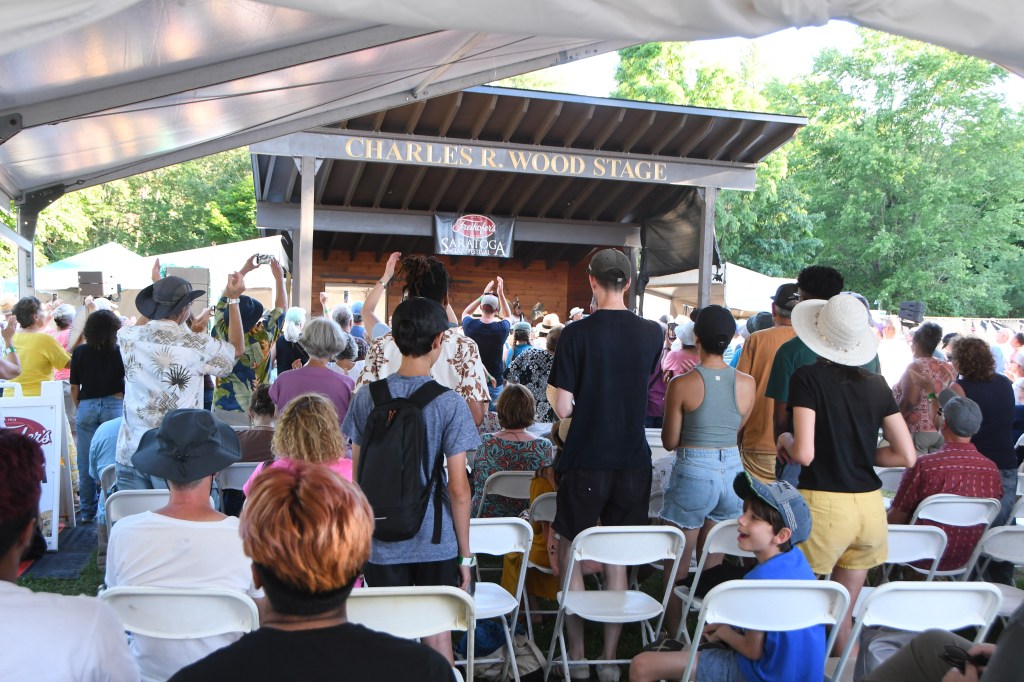
Black-shirted Skidmore Jazz Institute kids filed into the Wood tent (remember: the Charles R. Wood “Jazz Discovery” Stage at Saratoga Performing Art Center) to see their profs throw down. And, teach: leader, bassist and extra-wry host Todd Coolman of the Institute Faculty All-Stars introduced songs/lessons, linking tunes to giants the big-band memorialized to fun/educational effect.

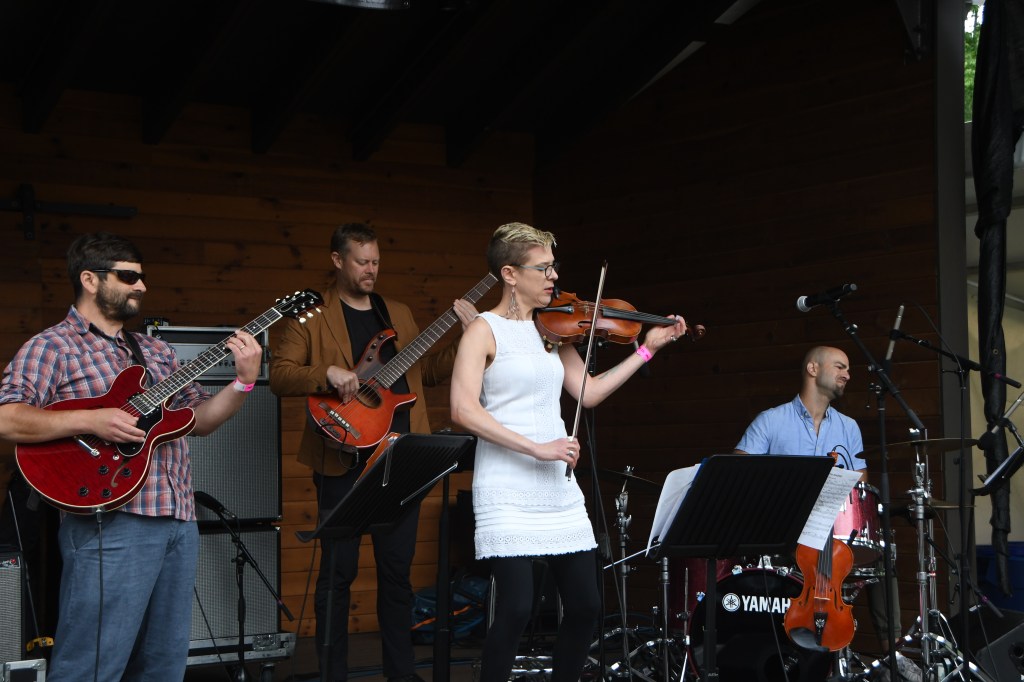
The cumbersomely titled but cool “Skidmore Jazz Institute Faculty All-Stars”
After Bud Powell’s playful “Gertrude’s Bounce,” Coolman confessed the crowd’s respectful silence “is creeping us out,” and everybody loosened up. In trombonist J.J. Johnson’s “Shortcake” and “Lament” later, trombonist Steve Davis appropriately took top solo spots.
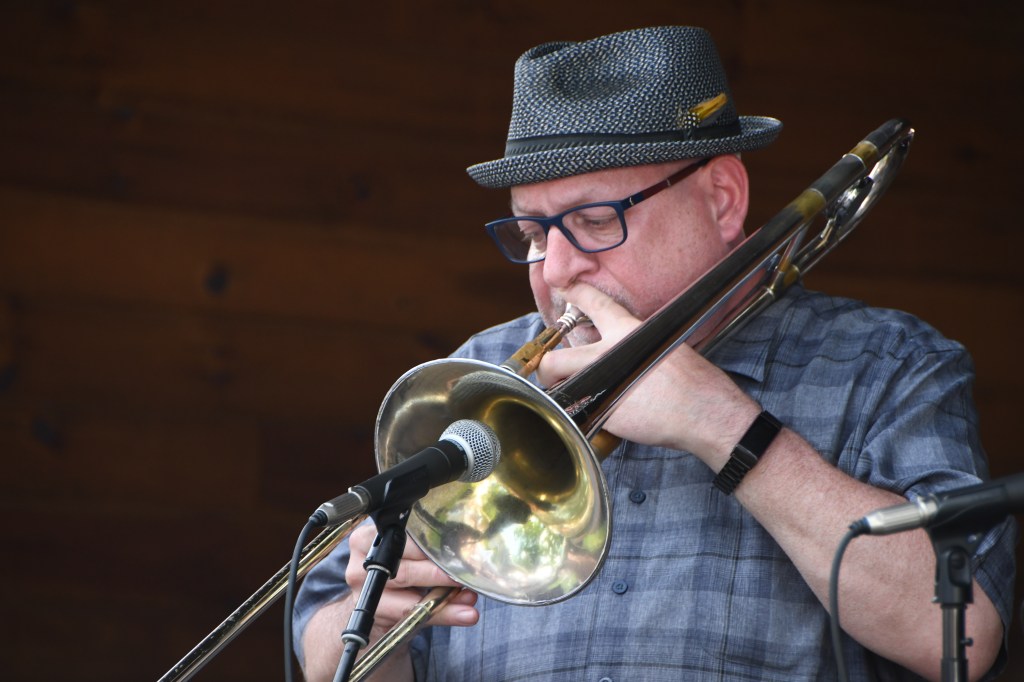
Steve Davis

Dave Stryker and Todd Coolman; obscured, sorry
Guitarist Dave Stryker starred in Clifford Brown’s bop classic “Joy Spring,” and the backstage presence of Powell’s son motivated the band. As Coolman said: “It better be good.” It was: “A Night In Tunisia” (a Dizzy tune Powell claimed to thrilling effect in 1951) brought brassy blasts, swaggering solos all around and a droll quote of “Hernando’s Hideaway.”

Terrence Blanchard, trumpet, center-right; with the Turtle Island String Quartet and E-Collective
Trumpeter and composer of everything Terrence Blanchard celebrated the 20th anniversary of his “Flow” album on the Main, adding the Turtle Island String Quartet to his E-Collective – Taylor Eigsti, piano; Charles Altura, guitar; DJ Ginyard, bass; and Oscar Eaton, drums – an effective combination. Blanchard often stepped back between agile, soulful trumpet runs, letting the ensemble shine. This was heady stuff, inspired by Csikszentmihalyi’s book “Flow: The Psychology of Optimal Experience.” It hit the body as effectively as the mind since the strings so effectively followed even the funkiest and fleetest passages Blanchard wrote for the ground-breaking album.
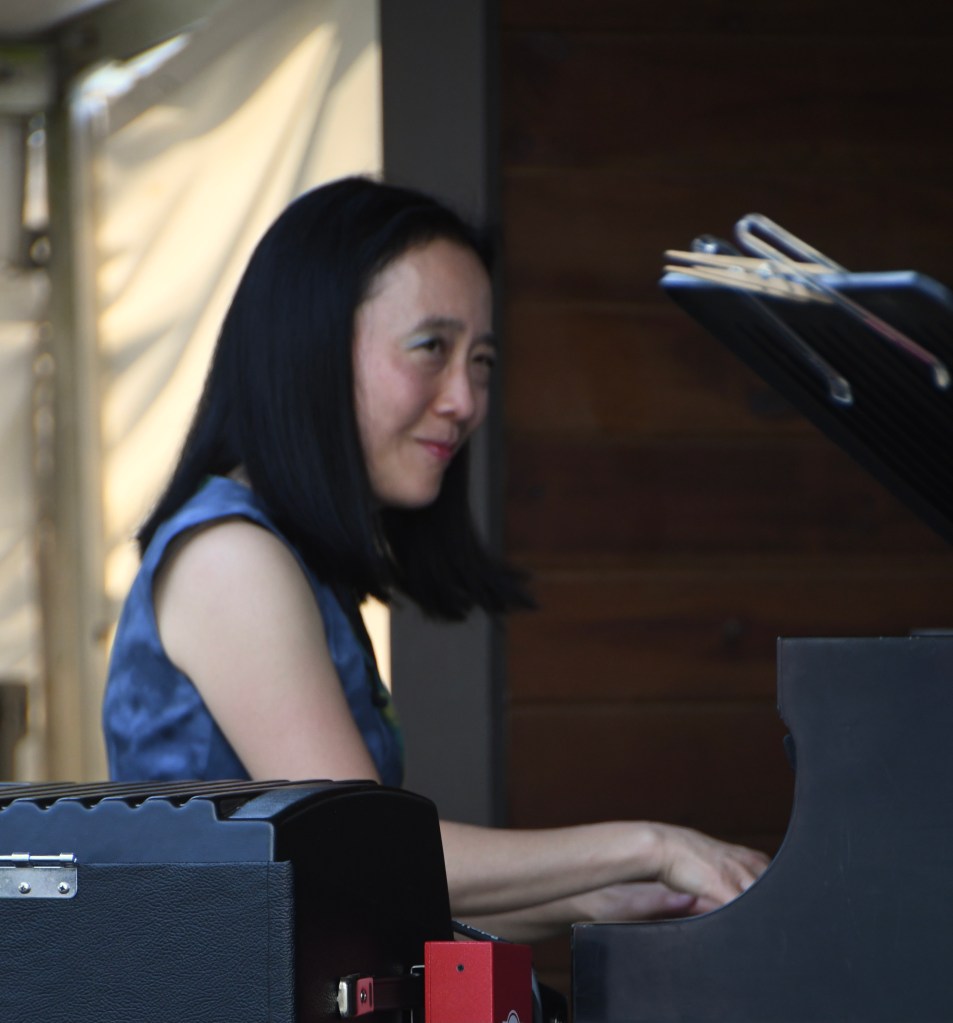
Helen Sung
Also addressing psychological themes though a unifying thematic framework was pianist Helen Sung’s Jazz Plasticity project; next on the Wood. Her sparsely arranged quartet reached to inspire brain and body in a quieter, even more reclusive presentation than Blanchard’s.

See the sign
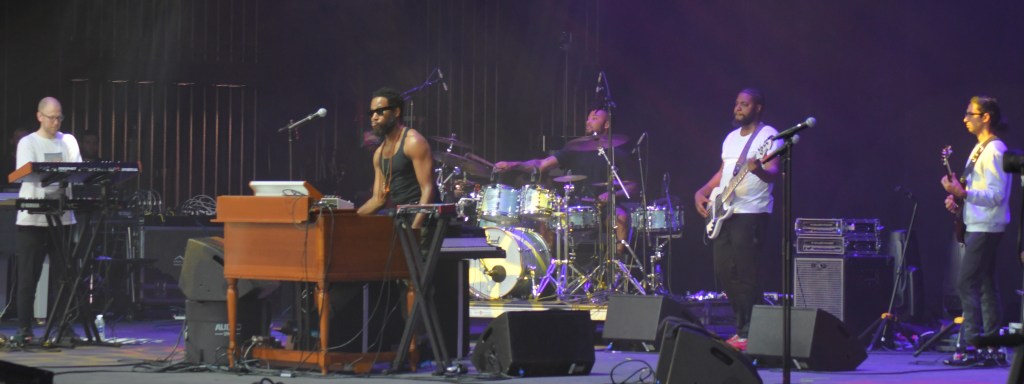
Cory Henry playing organ, second from left
Mighty mood swing: Next on the Main, Cory Henry built burly grooves around his own keyboards and voice, just as he packed phat funk on both sides of Stevie Wonder’s “Isn’t She Lovely” early in his hour-long run. Drums, guitar, bass, keyboards and two singers added color and punch to high-impact riff-songs. Lively, lush stuff, though I missed the promised visit of Pedrito Martinez as I buzzed back to the Wood.

Miguel Zenon
There, Miguel Zenon played the hottest saxophone of the festival, leading his quartet in Spanish-titled tunes ambitiously describing Caribbean lands and people with breathtaking facility and melodic force. His set hit like a unified suite, though “Navegando” and “Bambula” offered distinct flavors after brief stops that felt like mere pauses in the flow. An arpeggio parade on unaccompanied alto rocked and rolled, riff after fiery riff.

Laufey comes onstage, fans lose it
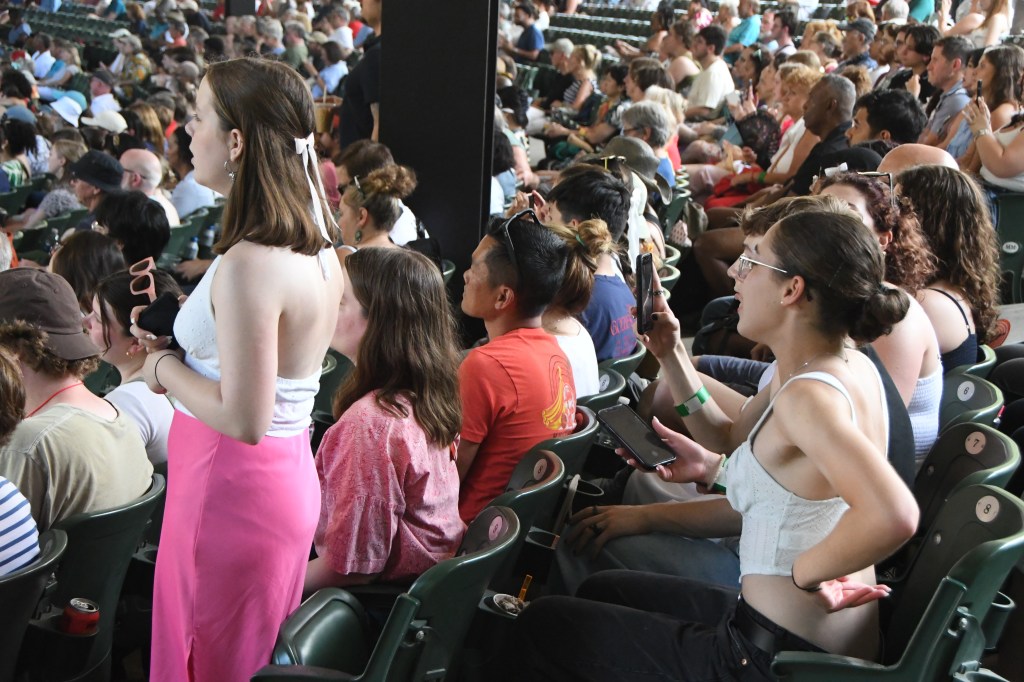
Laufey fans inside
Icelandic singer Laufey (loy-vey) drew Beatles-like ecstasy to the Main, singing “While You Were Sleeping” solo. Fans, mostly teens and 20s, screamed in their seats or jumped up when a lyric went straight to the heart, and they packed half a dozen deep outside the Amphitheater. Laufey then summoned her lush band, including the second string quartet of the day, for depth and drive to waltz-time love songs. She sang simply, with little gesture or drama and no vibrato, letting the songs do the work. And they did.

Laufey fans outside
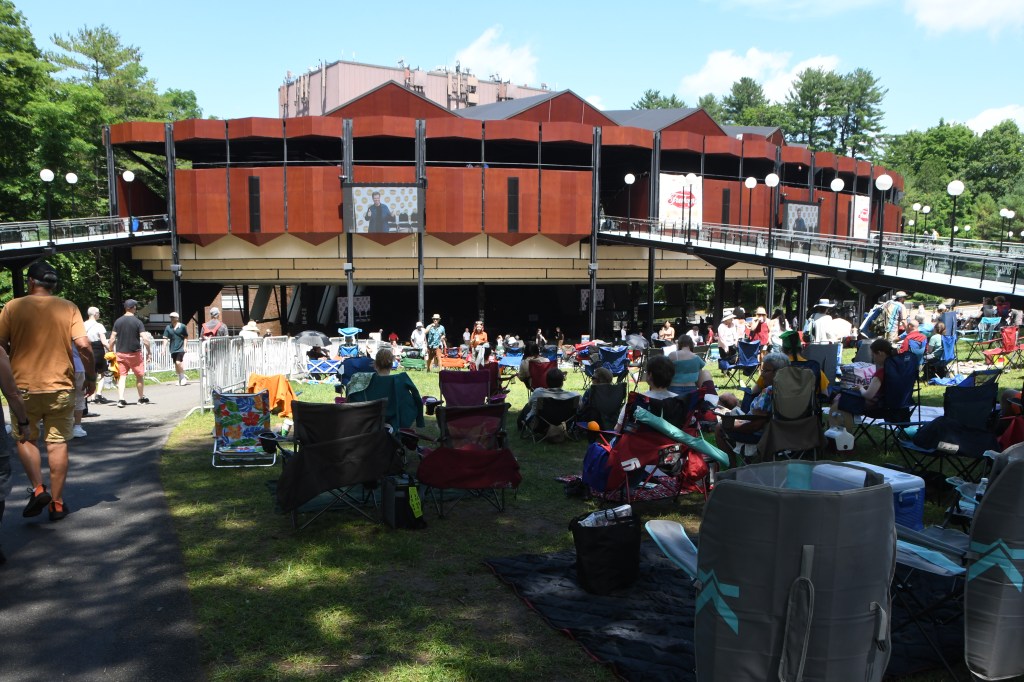
Afterward, some of the younger fans headed for the exits, but the Main somehow stayed full for Stanley Clarke N*4Ever, then Norah Jones, as parents picnicking on the lawn came in to replace them.

Alicia Olatuja
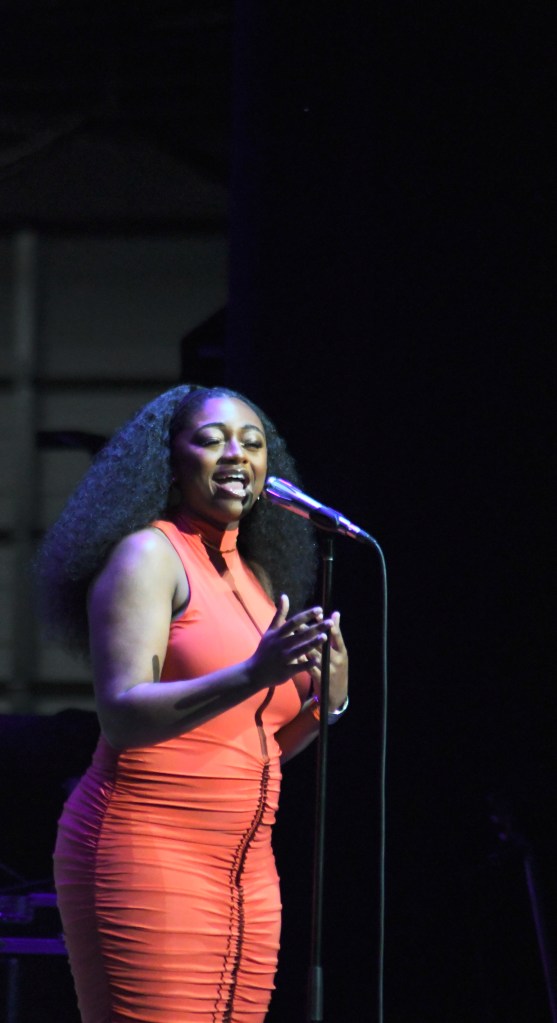
On the Wood, Afro-pop couple-band Olatuja (singer Alicia and bassist Michael) layered lyrics of struggle and resilience over bass-heavy grooves. “Stay Gold” and “Kadara” (Yoruba for “destiny”) served up hope over a surging beat, as “Bright Side” did later, while “Sumo Mi” cast a romantic spell.
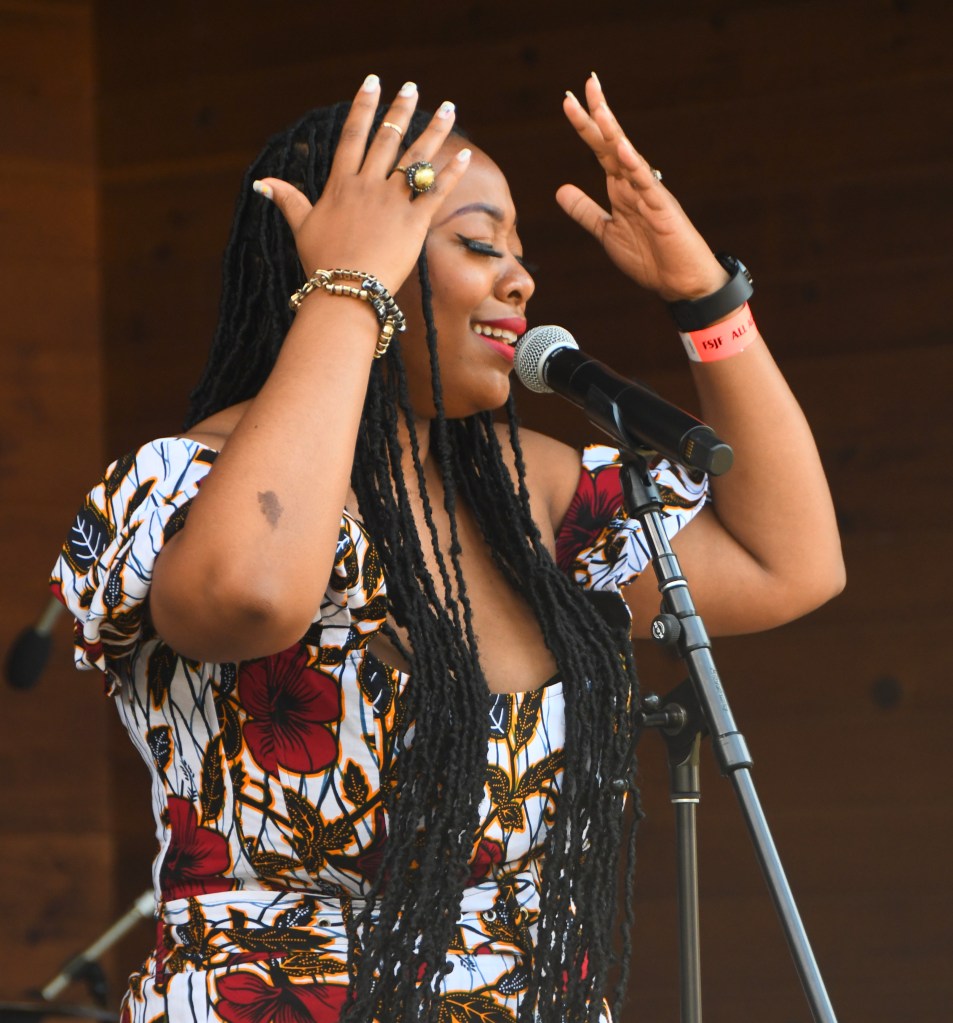
Few danced however, despite Michael’s urging; that came later, in a big way, when Pedrito Martinez took over the Wood.

Meanwhile, bassist Stanley Clarke fronted N*4Ever on the Main, a re-tooled amalgam of Return to Forever (his band with the late Chick Corea) and the Mahavishnu Orchestra (the other top 70s jazz-rock juggernaut). Clarke surrounded himself with second generation fusion players, most notably violinist Evan Garr and drummer Jeremiah Collier. They set up a thunderstorm of happy, mutually supporting riffs. When I caught Clarke alertly echoing Colin Cook’s guitar riffs, I realized Clarke did this with everybody. They stretched tunes – Eddie Henderson’s “Galaxy,” George Duke’s “Brazilian Love Affair,” Chick Corea’s “No Mystery” – into fiery long groove-and-solo suites, Clarke leading on electric or acoustic bass with flying fingers.

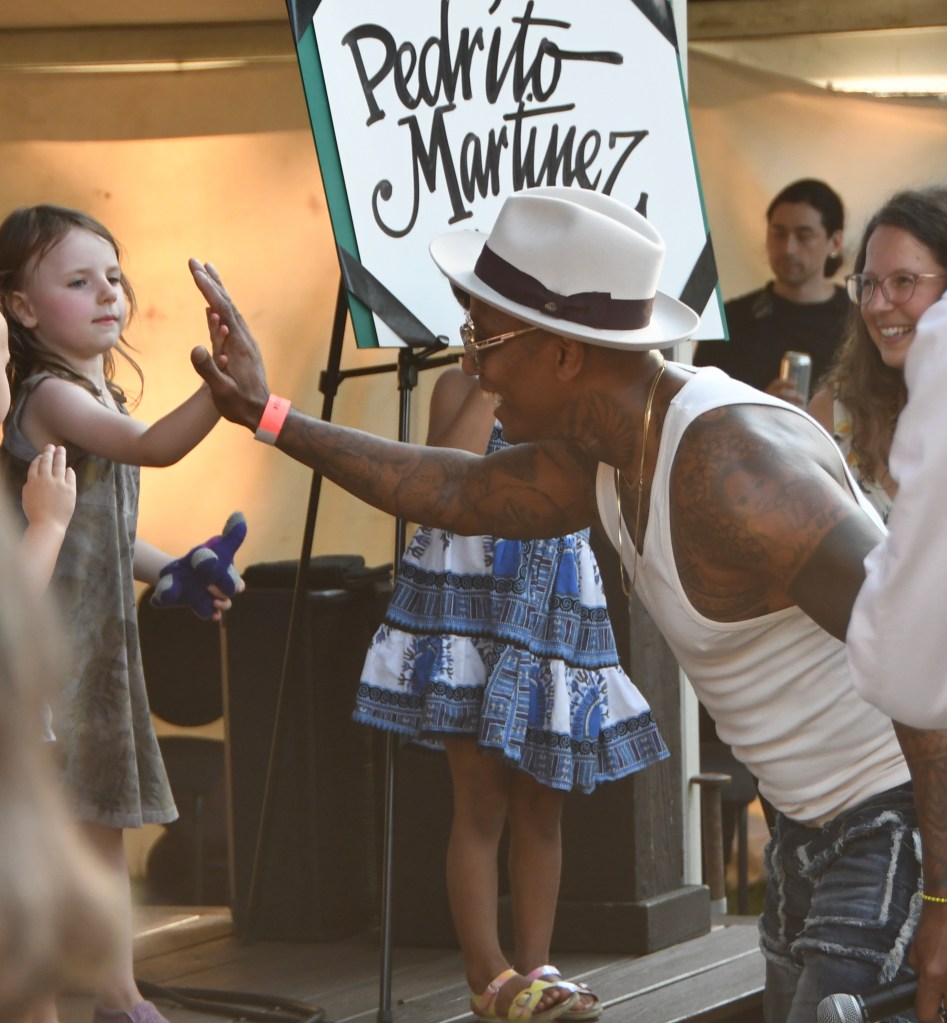
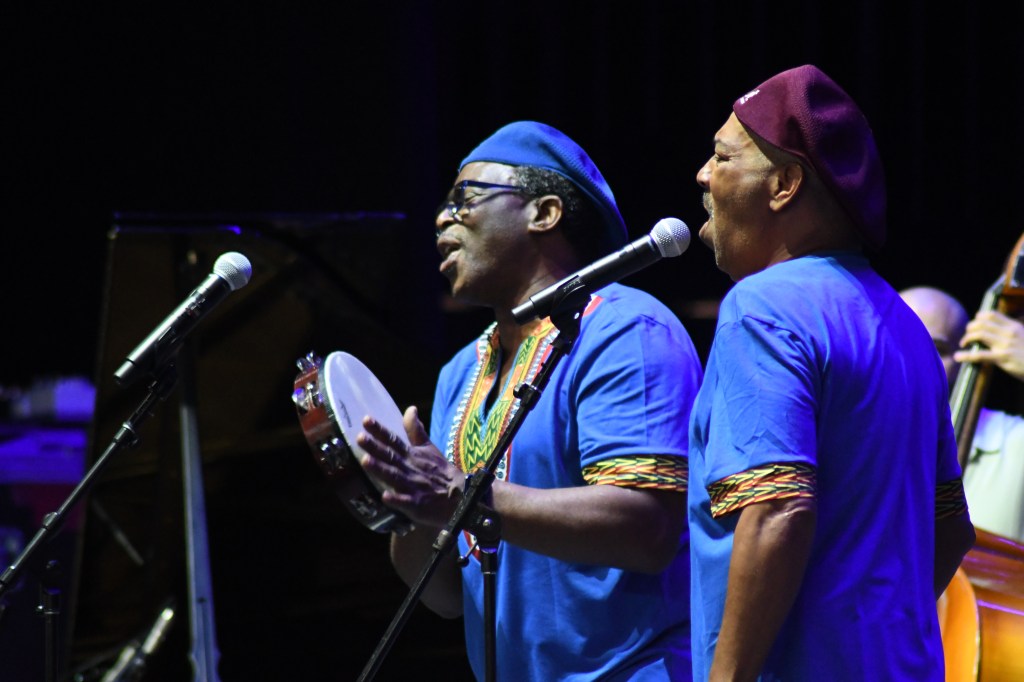
Everything was flying on the Wood where Pedrito Martinez did what second-stage closers often do: Get everybody jumping up to shake that thing. The elements seemed simple: Martinez at four congas and cymbal plus new keyboardist Isaac Delgado Jr.; Manny Marquez, timbales and kick drum; Sebastian Natal, bass; and Xito Lovell, trombone. The results: irresistible.
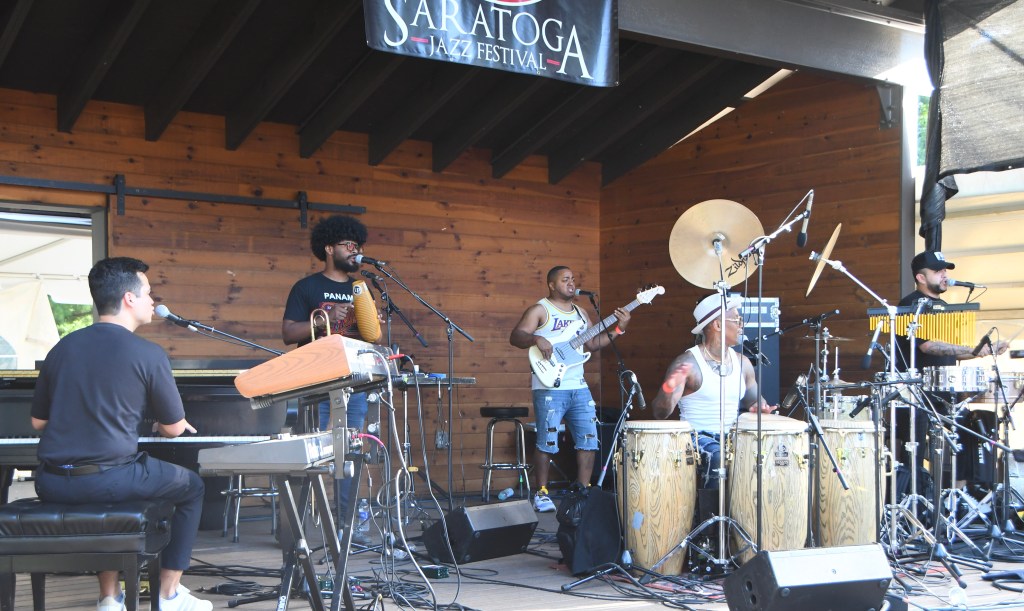
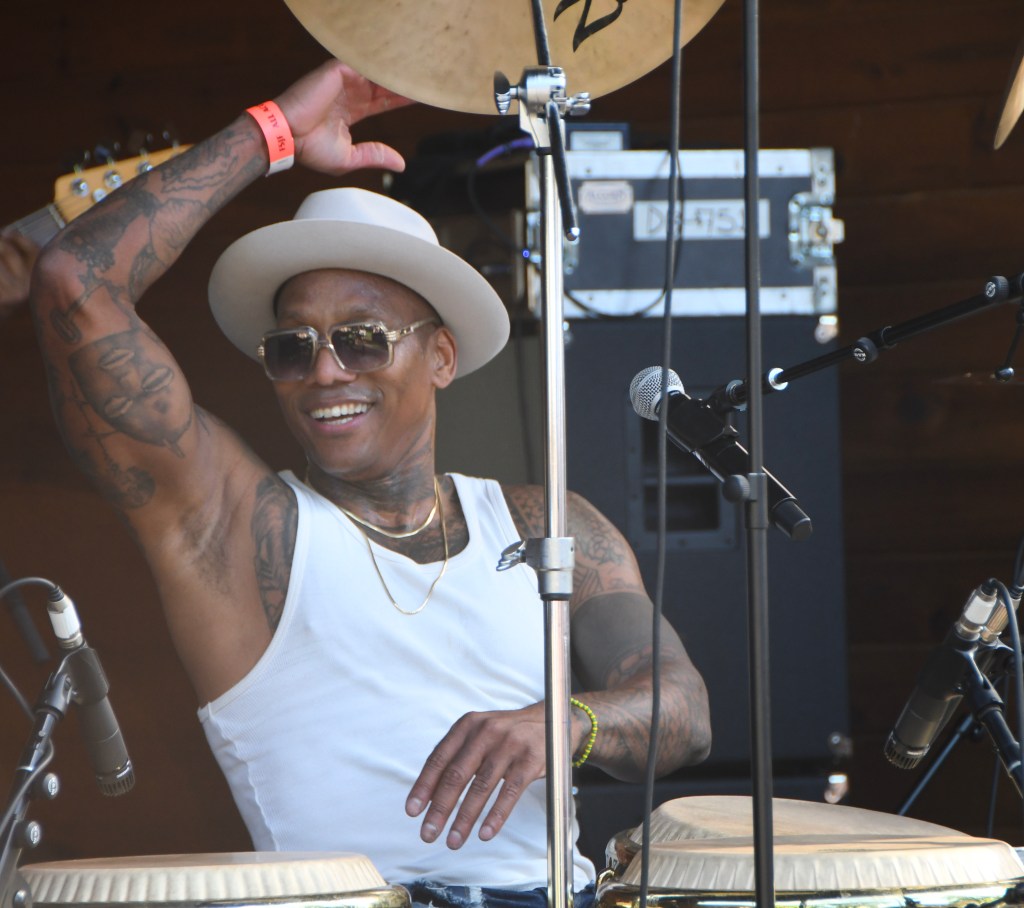
Pedrito Martinez. Above, with his band
Everybody moved all over the place, surrounding Martinez onstage, with only Delgado’s caffeinated-Chopin-and-Bach solo piano interlude to catch our breath. Joy in faces, feet and everywhere between.


Decidedly lower-key on the Main, singer-pianist Norah Jones closed the festival with familiar hits, a surprising two-guitar country interlude and a cameo by Laufey that delighted fans of both singers.
Jones lamented/asked “What Am I to You,” starting her set at a white grand piano, bassist Josh Lattanzi and drummer Brian Blade in tasty, quiet support. Blade got the biggest crowd reaction when Jones introduced him, a legit jazz player Joni Mitchell once took on tour as her only accompanist.
Soon singer-guitarist Sasha Dobson and keyboardist-singer Emily King joined, but the mood stayed subdued until “Running” reached soft-rock momentum. Jones sang eight songs from “Visions,” released earlier this year; a move as brave – or confident in her fans – as Lake Street Dive on Saturday. Just as brave/confident: coming out from the grand or Rhodes piano to play guitar alongside Dobson in a country-rock run of the new “Queen of the Sea,” “Staring At the Wall” and “All A Dream.” They won’t scare the ghosts of (Allman Brothers) Duane and Dickey but the two-guitar team worked just fine.
Back at the piano for “Come Away With Me,” Jones would have returned to her earlier mellow flow – but instead she invited Laufey back onstage to duet on “Come Away With Me.” Big audience happiness reigned, making the familiar “Stay With Me,” “Happy Pills” and “You Didn’t Call,” plus the new “On My Way” almost anticlimactic. Almost.
2024 Schedule As Announced Officially (my notes in parentheses, like this)
SATURDAY, JUNE 29
Amphitheater
12 – 1:15 p.m. – The New Orleans Groove Masters featuring Herlin Riley, Jason Marsalis & Shannon Powell
1:45 – 3 p.m. – Joey Alexander Trio with special guest Theo Croker (Pedrito Martinez guested here, unannounced)
3:30 – 4:45 p.m. – The Yussef Dayes Experience
5:15 – 6:30 p.m. – Samara Joy
7 – 8:15 p.m. – Cimafunk with special guest Pedrito Martinez
8:55 – 10:25 p.m. – Lake Street Dive
Charles R. Wood “Jazz Discovery” Stage
11 – 12 p.m. – Sara Caswell Quartet
12:20 – 1:20 p.m. – Harold Lopez-Nussa: Timba a la Americana
1:40 – 2:40 p.m. – Tia Fuller
3 – 4 p.m. – Steven Bernstein’s Millennial Territory Orchestra
4:20 – 5:20 p.m. – Theo Croker
5:40 – 6:50 p.m. – Coco Montoya
SUNDAY, JUNE 30
Amphitheater
12:30 – 1:30 p.m. – Terrence Blanchard Sextet (As noted, Blanchard grafted the Turtle Island String Quartet onto his E-Collective band.)
2 – 3 p.m. – Cory Henry (Pedrito Martinez guested here, unannounced)
3:30 – 4:45 p.m. – Laufey
5:15 – 6:30 p.m. – Stanley Clarke N*4Ever
7:00 – 8:30 p.m. – Norah Jones – no photography/video (This announcement worked only for press photographers who tucked away our gears as fans’ phones recorded everything)
Charles R. Wood “Jazz Discovery” Stage
11:30 – 12:30 p.m. – Skidmore Jazz Institute Faculty All-Stars
12:55 – 1:55 p.m. – Helen Sung: Jazz Plasticity
2:20 – 3:25 p.m. – Miguel Zenon Quartet
4 – 5:05 p.m. – Olatuja
5:35 – 6:45 p.m. – Pedrito Martinez Group
WEATHER
Rain most of Saturday. Clouds dumped big wet stuff; or, at least, Irish-style mist. As lawns grew muddy, some fans doffed wet shoes to go barefoot. Nobody went full-Woodstock; things never got that wet.
Summer sun for real Sunday; too real for some who didn’t hydrate enough. Clouds raced past, fast as the Belmont Stakes, then glowed in Mayfield Parrish pastels as the show ended and the wind rose, about the time SPAC shows used to start.
STEP COUNT
Including pit stops and runs for consumables, only 6,123 Saturday when the rain discouraged some ‘twixt-stage migrating, 8,631 Sunday.
AWARDS
Best Vocal: Samara Joy, in a quality field with Alicia Olatuja, Norah Jones and Rachael Price
Best Saxophone: Miguel Zenon
Best Trumpet: Terrence Blanchard
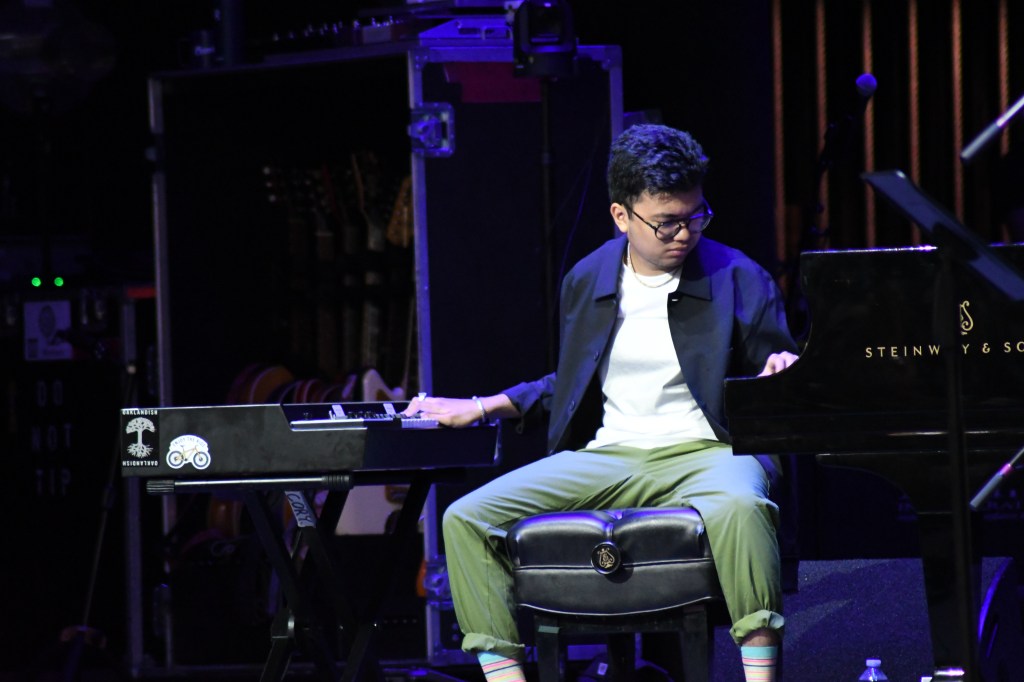
Best Piano: Joey Alexander; runner-up: Harold Nussa-Lopez
Best Guitar: Dave Stryker (Skidmore Jazz Institute Faculty All-Stars)
Best Bass: Stanley Clarke
Best Drums: Oscar Eaton (Terrence Blanchard’s E-Collective) Norah Jones’s straightforward tunes didn’t ask enough of Brian Blade to show his stuff, but he was perfect as usual.
Best Country Music: Norah Jones
Best Audience Ecstasy: Laufey
Best hair: Trumpeter Theo Croker
Who Brought the Funk Award: Cimafunk, Cory Henry, Yussef Dayes, in about this order of get-down
Best Big Band: Steven Bernstein’s Millennial Territory Orchestra; the Skidmore Jazz Institute Faculty All-Stars played well, too.
Most Impressive Artistic Growth Since She Last Killed Us: Samara Joy
The Do You Know What It Means To Miss New Orleans Award: The New Orleans Groove Masters
Best Prince Cover: Yussef Dayes
SUGGESTION BOX/FUTURE FILE
Shaking up start times on the two stages some years ago was a good start; now go all the way, and alternate: Artist A finishes on one stage, then Artist B hits a few minutes later on the other. Would mass-migrations be worse than the current dilemma of having to miss parts of some sets to get a taste of everybody’s music? Maybe, but let’s try it.
Since the current staggered-start system spreads out the usage of restrooms and lines for drinks and food; breaks might have to be part of the schedule.
As noted in our post on Saturday’s show, Freihofers has left the building after 27 years as name sponsor, replaced by GE Vernova. Wiki says it’s “formerly GE Power and GE Renewable Energy…an energy equipment manufacturing and services company headquartered in Cambridge, Mass. GE Vernova was formed from the merger and subsequent spin-off of General Electric’s energy businesses in 2024: GE Power, GE Renewable Energy, and GE Digital.”

Danny Melnick, impresario of Absolutely Live Productions, successor to the late, great George Wein as producer of the Saratoga Jazz Festival and co-founder of The Local, a new Hudson Valley venue. Melnick introduces many of the festival acts and announced the new festival sponsorship arrangement on Sunday at SPAC.
So, next year, the festival will be “the Saratoga Jazz Festival, presented by GE Vernova” – in the style of “the New Orleans Jazz and Heritage Festival presented by Shell” – and is set for June 28-29.
More Sunday photos
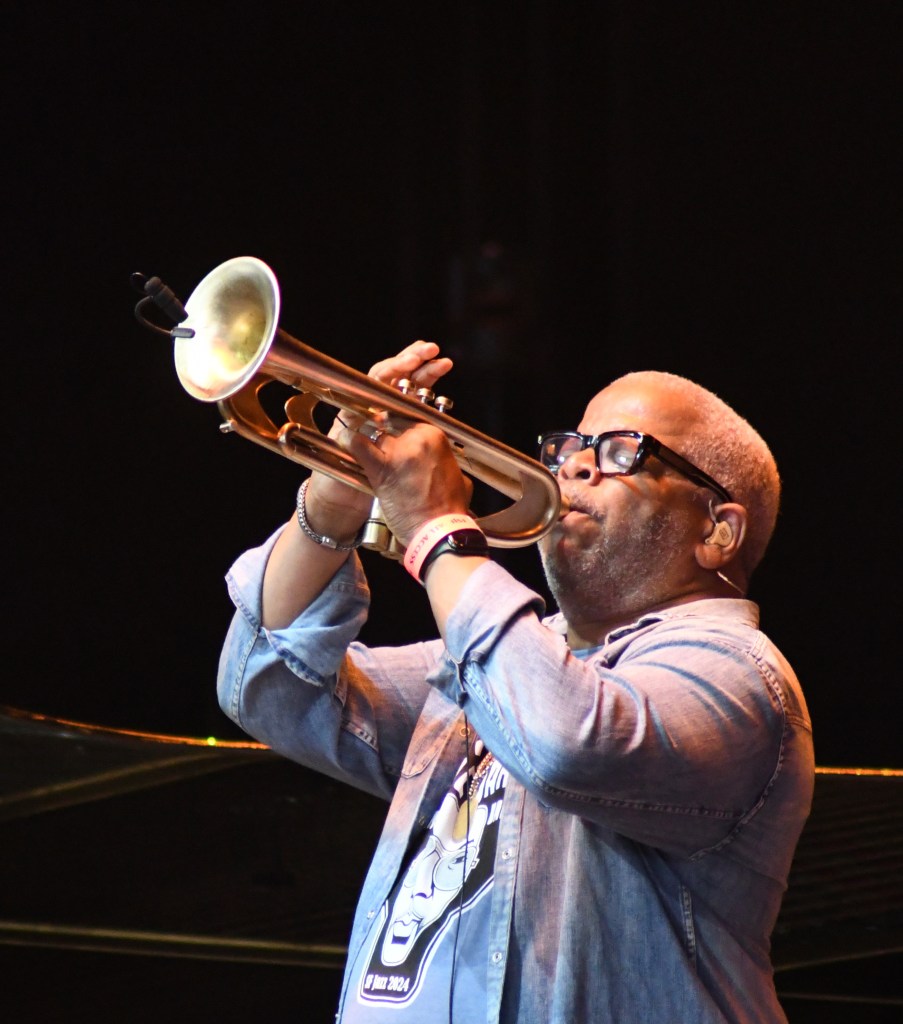
Terrence Blanchard

Cory Henry

Miguel Zenon Quartet
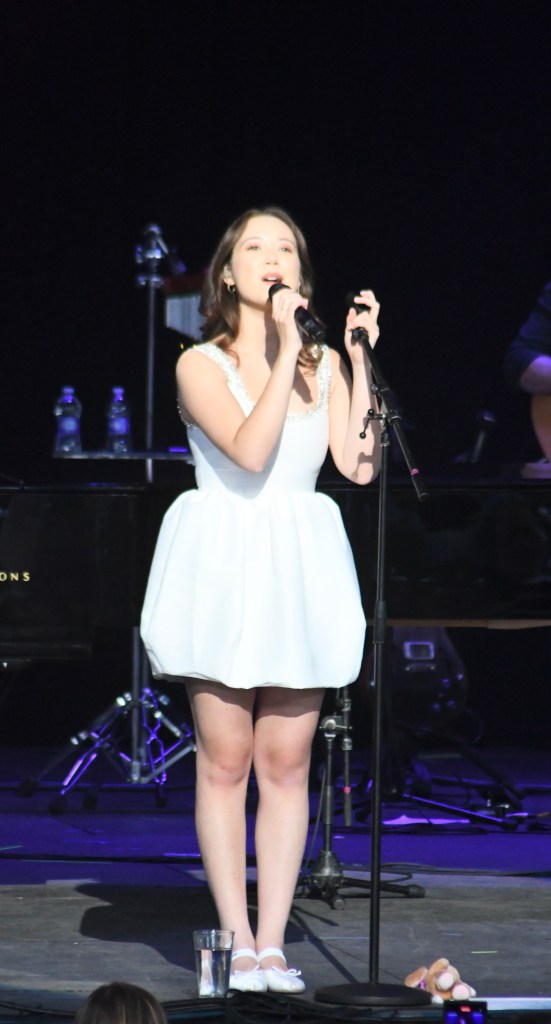

Laufey, twice
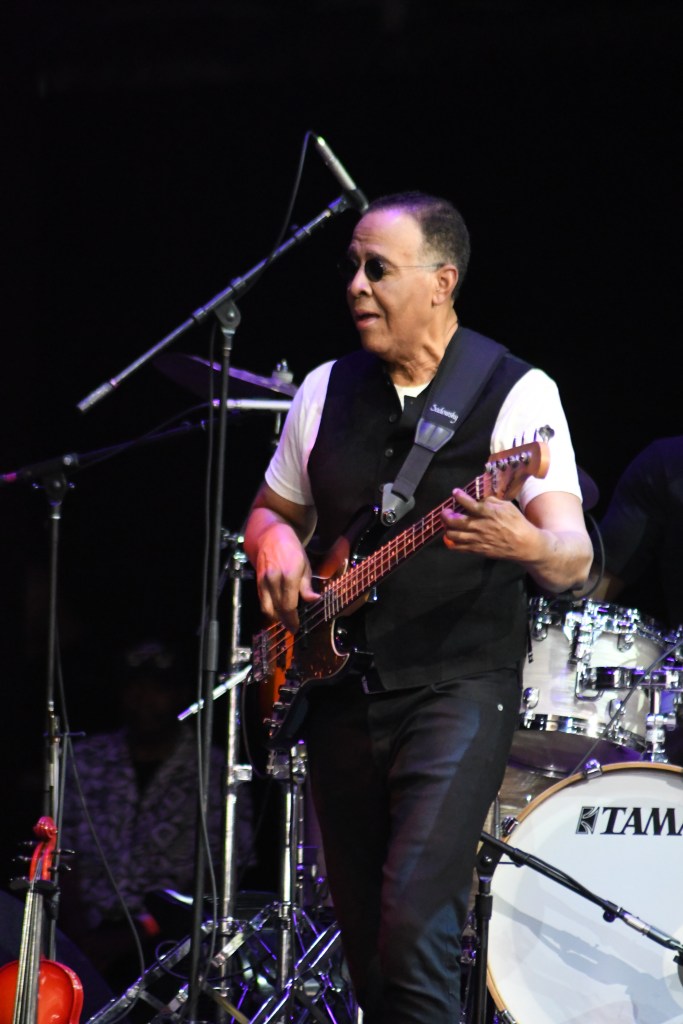
Stanley Clarke

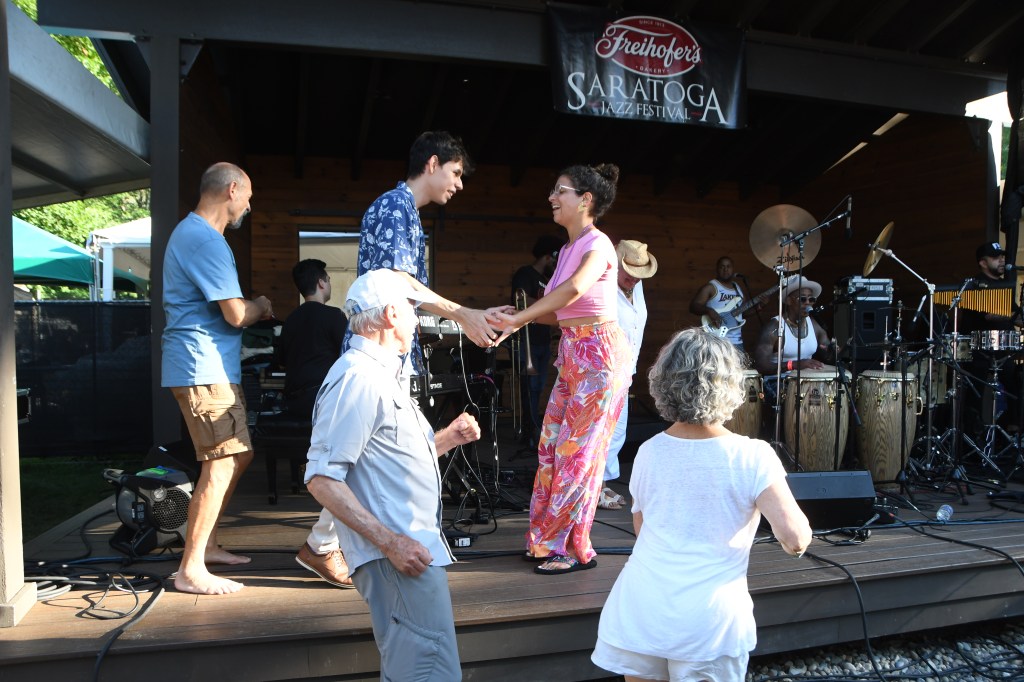












 Hoke's Jukebox