
A Great Orchestra Supports a Tremendous Voice in a Symphony of Songs
In the current trend of non-classical artists singing with orchestras, Angelique Kidjo leads the way.
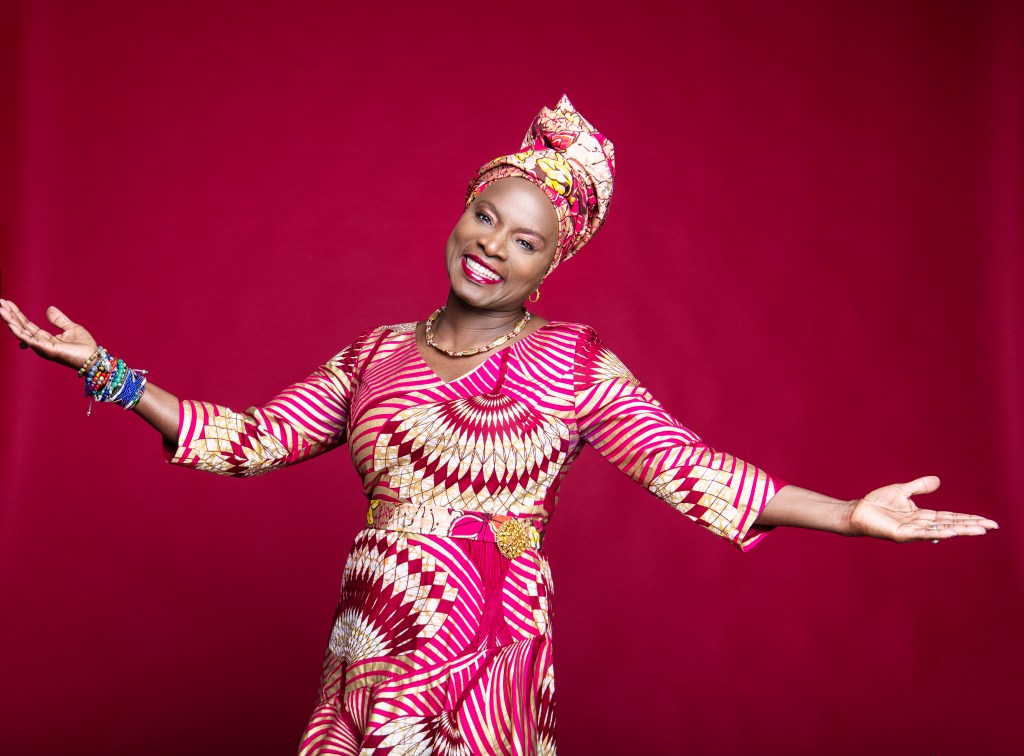
Angelique Kidjo. Photo provided
Last season, R&B singer Ledisi sang with the Philadelphia Orchestra just weeks after playing SPAC’s Jazz Festival. This season, pop giant Beck sang with the Boston Pops at Tanglewood on Tuesday, July 23 and pop-neo-soul artist John Legend sings with the Philadelphia Orchestra at SPAC August 7.
Five-time Grammy-winning. Benin-born singer Angelique Kidjo’s August 2 SPAC concert with the Philadelphia Orchestra focuses a fierce artistic intent powering unprecedented achievement across oceans and musical styles.
This is not her first symphony – and it stands as a significant milestone in a career four decades deep and marked by ambitious, bridge-building projects.
Phoning from Paris last week, she said of her new African Symphony, “I wanted to celebrate my 40 years in music, celebrate the African artists from my childhood and the 60s to today.”
She chose songs for their moral and social messages, working with Derrick Hodge to orchestrate them. “I was absolutely flabbergasted by his work,” said Kidjo. “It’s so beautiful, it’s amazing the composition that he does.” Hailing his cooperative approach, she said, “It’s very rare to find people who are so flexible and so available, in music circles.”
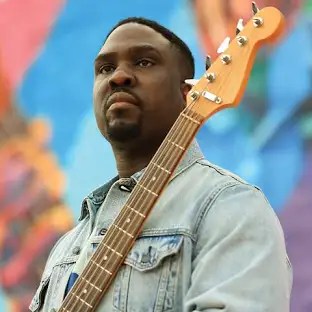
Derrick Hodge. Photo provided
When questions arose, “”Pretty much everything I said, he took into account how to do this.” Said Kidjo gratefully, “Whatever you want to do, he’s willing to write it in that direction.”
On Friday, August 2, after the Philadelphians play an overture, Kidjo will sing “Lady” by Afro-pop force-of-nature Fela Kuti, first of the songs orchestrator Hodge wove into symphonic form.
“Lady,” as Kidjo explained, supports women’s empowerment and equality – in a man’s words, she carefully specified. “It’s followed by a song (Miriam Makeba’s “Nongqongqo”) paying tribute to the ones who have died before; for causes, for freedom,” said Kidjo, “women, men, who have died through conflict, through war, for us to be free today.”
“…always be your own agency, the best of yourself, and what you don’t want anybody to do to you, don’t do to anyone.”
Kidjo learned self-determination and tolerance from her parents, and by standing up to her seven brothers.
“The thing that I learned from parents was always be your own agency, the best of yourself, and what you don’t want anybody to do to you, don’t do to anyone.” She resisted her bossy brothers’ attempts at dominance by threatening to scare off their girlfriends.
Her parents supported her musical aspirations – her desire to BE James Brown and to emulate Aretha Franklin – but were also uncompromising critics, video-taping and assessing her performances. Kidjo’s mother told her, “The only people who tell you the truth are the people that love you.” In the face of this tough love, Kidjo proved tough, too.
“When I grow up I want to be James Brown.”
A self-proclaimed tomboy and “pain in the butt,” Kidjo proclaimed, “Anything my brothers do, I’m gonna do. They’re going to climb a tree? I’m in. They go to the motorcycle, I’m doing it. They’re playing soccer? I’m playing it. And my mom asked, ‘Are you a boy or a girl?’ I don’t care: When I grow up I want to be James Brown.”
Kidjo learned English to emulate Brown, and Aretha Franklin, whose “Amazing Grace” album gave Kidjo “the idea, the possibility, that a woman could be on the cover of an album.” She said, “I want more women on the covers of albums, especially Black women.”
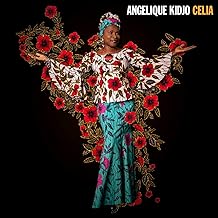
Soon, Kidjo was on the covers: 17 albums since 1992, including a tribute to Puerto Rican soul-salsa diva Celia Cruz and a song-by-song remake of Talking Heads’ “Remain in Light.”
“If I’m not inspired, I won’t do it; but if I’m inspired, I will do it.”
Kidjo’s acclaimed early albums took her to New York where she sang at Carnegie Hall in shows with Philip Glass, Lou Reed, Patti Smith and other cross-cultural giants. When David Byrne came backstage to meet her, “We had a great conversation and I’m looking at him and I’m like ‘This guy, he knows too much about the music of West Africa; he’s not really American, is he?’”
She loved Talking Heads’ “Remain in Light” album despite dismissive friends’ claims that it wasn’t African enough. “It’s African for me,” Kidjo defended. Overruling her team’s doubts, she resolved, “Guys, I don’t care what you say; I’m going to do this album track by track…Don’t worry: If I’m not inspired, I won’t do it; but if I’m inspired, I will do it.”
She did, inspired by a complicated muse that combined homegrown wisdom with Heads’ songs.

“For me, ‘Born Under Punches’ (a song on “Remain in Light”) meant we are born under the punches of corruption,” she said. “If corruption did not exist at the level that it is, we would have money for everybody to have a decent life…not that many homeless people and not that many who can’t go and have decent health care.” If money lost to corruption were invested in people, dictatorships would not exist,” Kidjo maintained. “We might not all be happy, but we would have less tension, less conflict, less war.”
Talking Heads’ song “Burning Down the House” had a similar moral resonance. “Fire is mesmerizing,” said Kidjo. “Starting a fire is easy, but when you start burning everything down and if you don’t know how to stop, it will burn you, too – and kill you.”
When I commented, “Every song seems to have a meaning that comes from far inside you,” Kidjo replied “Yep” with simple, quiet emotion.
I asked, “Talking Heads reached out to Africa, you reached back…This new symphony is also about reach, isn’t it?”
She agreed once again, and it became clear that her music builds bridges to reach across continents, from feeling to feeling and moral message to moral message – regardless of the form it takes.
“I know nothing about you, but your voice is something else.”
“My adventure with an orchestra started way back, almost 10 years now,” said Kidjo. It began, like her Talking Heads project, with a fortuitous meeting. A neighbor in New York told Kidjo, ”There’s somebody from the classical world who wants to speak with you.” That “somebody” was Timothy Walker, artistic director of the London Philharmonic. He told Kidjo, “I know nothing about you, but your voice is something else.” When Walker suggested she play with an orchestra, she wanted to know what he’d been smoking before their meeting. “He said you should be singing (British composer Henry) Purcell, ‘Dido’s Lament’!”
“I realized I had to be a part of the orchestra.”
When Walker re-introduced her to Philip Glass, he told Kidjo the prolific New York minimalist “was thinking what we need to do is write a symphony.” Glass worked with a poem Kidjo wrote in Yoruba, translated into English and French and wrote out phonetically “for him to get the rhythm and the tone of the language.”
“Angelique, together we have built a bridge that no one has walked on before.”
Kidjo recalled, “A year after, he wrote the first symphony for me.” Glass’s “Ife Songs” premiered in 2014, Kidjo singing with the Orchestre Philharmonique Du Luxembourg. (KIdjo later sang on Glass’s Symphony No. 12, using music by David Bowie and Brian Eno.) Glass told Kidjo, “Angelique, together we have built a bridge that no one has walked on before.”
Now, Kidjo is ready to walk another bridge.
“That’s how I started in the classical world,” she said. “Once I started working with the Luxembourg Philharmonic…I realized I had to be a part of the orchestra.”
“My voice is like an instrument, and in order for me to be part of that, I need to hear the orchestra with my body and with my ears and be absolutely part of the whole thing.“
Angelique Kidjo sings her African Symphony with the Philadelphia Orchestra Friday, August 2. 7:30 p.m. Saratoga Performing Arts Center, 108 Avenue of the Pines, Saratoga Springs. $117.75-$48.75 amphitheater, $38.75 lawn. 518-584-9330 www.spac.org
THE AFRICAN SYMPHONY
Based on African songs, vintage and contemporary, and orchestrated by Derrick Hodge, Angelique Kidjo’s African Symphony comprises these movements:
Márquez’ Danzón No.2 (Orchestra only)
Lady (Fela Kuti)
Nongqongqo (Miriam Makeba)
Soweto Blues (Hugh Masekela)
Soul Makossa (Manu Dibango)
Angola (Jah Bouks)
7 Seconds (Youssou N’Dour and Neneh Cherry with Cameron McVey and Jonathan Sharp)
Carnaval De San Vincente (Cesaria Evora)
Medley (Anybody/Calm Down/Shekere)
(Credits for above medley: Burna Boy/Rema/Angelique Kidjo)
INTERMISSION
“Brazil” by Ary Barroso (Orchestra only)
Folon (Salif Keita)
Bring Him Back Home (Hugh Masekela)
Malaika (guitar and vocal only; written by Adam Salim in 1945, first recorded by Fadhili William)
Jerusalema (Master KG, the original features singer Nomcebo)
Agolo (Angelique Kidjo)
Afirika (Angelique Kidjo)
Pata Pata (Miriam Makeba)
Kidjo said she chose these songs as “the meaningful ones, the ones that have issues of our times, that have been there before… and that are still there.“
She said, “Songs are simple yet complex, like human beings are. Because they’re the mirror of our emotions. Since we are complex, the music has to be simple and complex at the same time.”
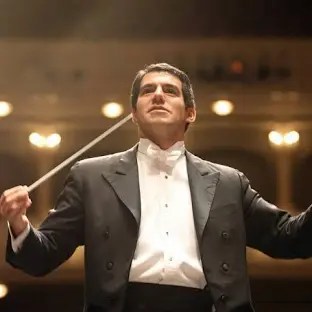
CONDUCTOR MIGUEL HARTH-BEDOYA
Peruvian-born Miguel Harth-Bedoya earned his Bachelor of Music from the Curtis Institute of Music and his Master of Music from the Juilliard School. He recently concluded a seven-year tenure with the Norwegian Radio Orchestra and 20 years with the Fort Worth Symphony Orchestra.
On more than 25 recordings over 30 years of conducting, Harth-Bedoya has released albums on Deutsche Grammaphon, Decca, Naxos and other classical record labels. He now teaches and conducts at Baylor University.
KIDJO
A five-time Grammy Award winner, Kidjo performed at the 2023 Saratoga Jazz Festival and has also played the Troy Savings Bank Music Hall.
Time Magazine has called her “Africa’s premier diva” and named her one of the 100 most influential people in the world for 2021. The BBC listed her among the continent’s 50 most iconic figures, and in 2011 The Guardian honored her as one of their Top 100 Most Inspiring Women in the World. Forbes Magazine has ranked Angelique as the first woman in their list of the Most Powerful Celebrities in Africa. Numerous awards honor her advocacy work: the 2015 Crystal Award of the World Economic Forum in Davos, Switzerland; the 2016 Amnesty International Ambassador of Conscience Award, the 2018 German Sustainability Award, the 2023 Vilcek Prize in Music, and the 2023 Polar Music Prize.
In 2014, Kidjo published her memoir “Spirit Rising, My Life, My Music” (Harper Collins) with co-writer Rachel Wenrick. It features a preface by Desmond Tutu and forward by Alicia Keys.
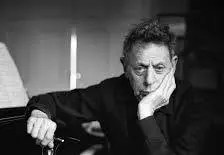
THAT GUY
Kidjo speaks very fast English, accented with both Yoruba and French. At one point, I missed a few words over the phone and asked her to repeat; “Philip Somebody,” I guessed. She replied, “Philip Glass” – who composed her first symphony.
When she repeated his name, I said, “Oh, THAT guy!” She said, “I don’t think anybody has ever called him ‘THAT guy,’” and laughed the greatest laugh – sounding like Odetta.
 Hoke's Jukebox