WENT TO THE DENTIST: WHAT’S SO MUSICAL ABOUT THAT?

If Chris Whitley could brave a big arena full of Tom Petty fans all by himself, I figured I could brave a filling or three. 

Chris Whitley opening solo for Tom Petty and the Heartbreakers. Knickerbocker Arena. Michael Hochanadel photo

You know the drill – yeah, right; too lame even for a bad pun – tilted way back, face in bright light, mouth full of tools. 

Last week, there I was, tilted, face lit, tools in mouth – but with Grado headphones filling ears and spirit with Whitley’s “Living With The Law” (1991). And I noticed his slide guitar solo in “Poison Girl” was in the same key as the drill. (You know the drill.) 

This took me right back to snowy nighttime Montreal streets with my brother Jim in a gang of musicians, seeking late dinner during sessions for a Chris Rawlings album. Fresh out of the Navy, I felt as lost in the wide world as a ship whose compass has failed, but felt welcomed by those players. A taxi hooted nearby and fiddler Gilles Losier, famed for his pitch, called out “F-sharp!” Others stopped walking to argue the taxi’s tone.

What would they have said of the Chris Whitley/drill chord in my dentist’s office?

And, more broadly, what is music for, and can it be for anything but itself? 

Paraphrasing the great band War, Maybe with more humor than truth: “Music, what is it good for? Absolutely everything” – but mainly just itself.

I was using Whitley’s music to help get through some dental work, just as I’d brought Miles Davis’s “Kind of Blue” into the Ellis Hospital cardiac “cath-lab” for angioplasty and son Zak told me he once used the same album to help fight the flu. 

Nonetheless, something about that made me uncomfortable, like using “sofa-sized” to measure art-work on a wall.

Listening for listening’s sake somehow feels more right than using music as background, as dinner party hosts do, or restaurants. And you’re correct if you feel restaurants now crank up the music to turn tables faster. Studies show they do. 

Some other offenses against music: 

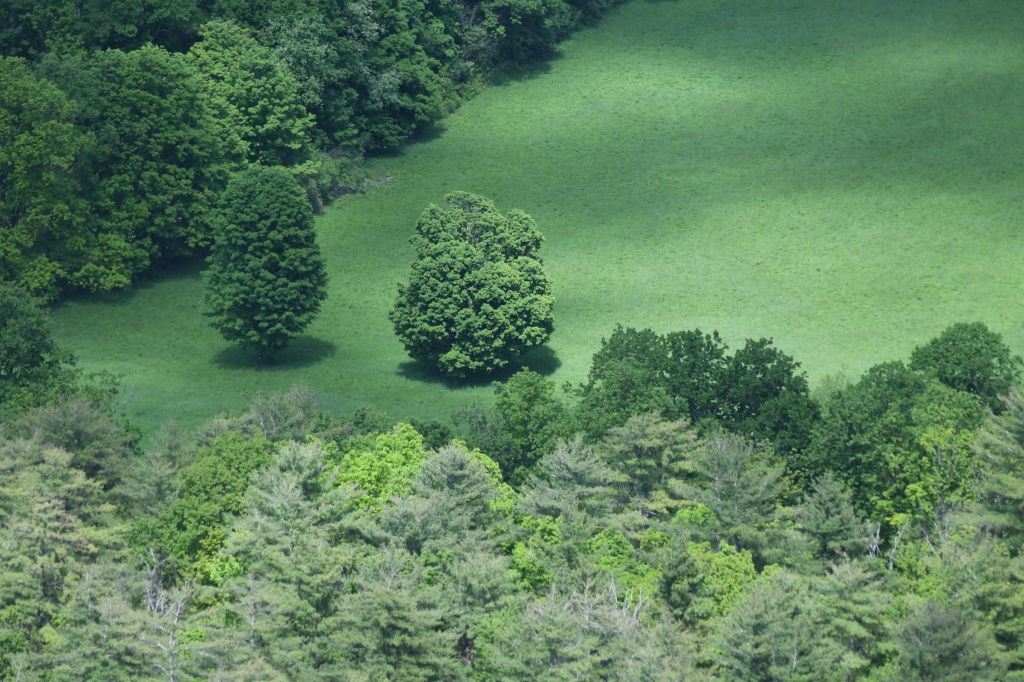
Walking in Thacher Park with son Zak on Sunday, we met many parties on the trail including a woman toting Bluetooth speaker cranked way too loud. 

Whenever a commercial comes on that uses a song I love by an artist I admire – Bob Dylan, say, or Nick Drake’s “Pink Moon” – I always mute the TV.

No chance I’ll ever have to do that with a Chris Whitley song, or that any of his songs will fail to lift me and teach me and make me feel.

But I Digress, Pt. 1 – Whitley opened for Tom Petty and the Heartbreakers at the Knickerbocker Arena in Albany on Sept. 21, 1991. Nobody knew who he was except those few of us who already recognized his talent from “Living With The Law.” 

Digress, Pt. 2 – My now-retired dentist Jeff Wilson loved music and we talked about it all the time; i.e., he talked while working on me and I answered after rinsing. Early on, I used music-as-anesthetic/distraction; and he always wanted to know whose tunes I’d brought. I quickly felt more comfortable, we talked, and when we’d meet up at shows, I was always glad to see him.

Digress, Pt. 3 – Whitley went deeper into demon-land in his songs than almost any other songwriter. A restless, tormented talent and striving, soulful spirit, he made blues of a very original and intensely spooky flavor. 

He released more than a dozen albums from 1991 to 2003 but never earned mass success.

When I met him (backstage at Bearsville Theater, outside Woodstock), I noticed his guitar had words and drawings childishly scrawled on it in ballpoint. I asked him about this and he said Trixie did it. I like it that he didn’t try to stop her or remove her markings.
Trixie later played in Black Dub, the trance-funk band that Lanois built with jazz drummer Brian Blade and bassist Daryl Johnson.

Lanois produced such great albums as U2’s “Joshua Tree,” Bob Dylan’s “Oh, Mercy” and the Neville Brothers’ “Yellow Moon” – and Chris Whitley’s debut album “Living With The Law,” in his New Orleans studio.

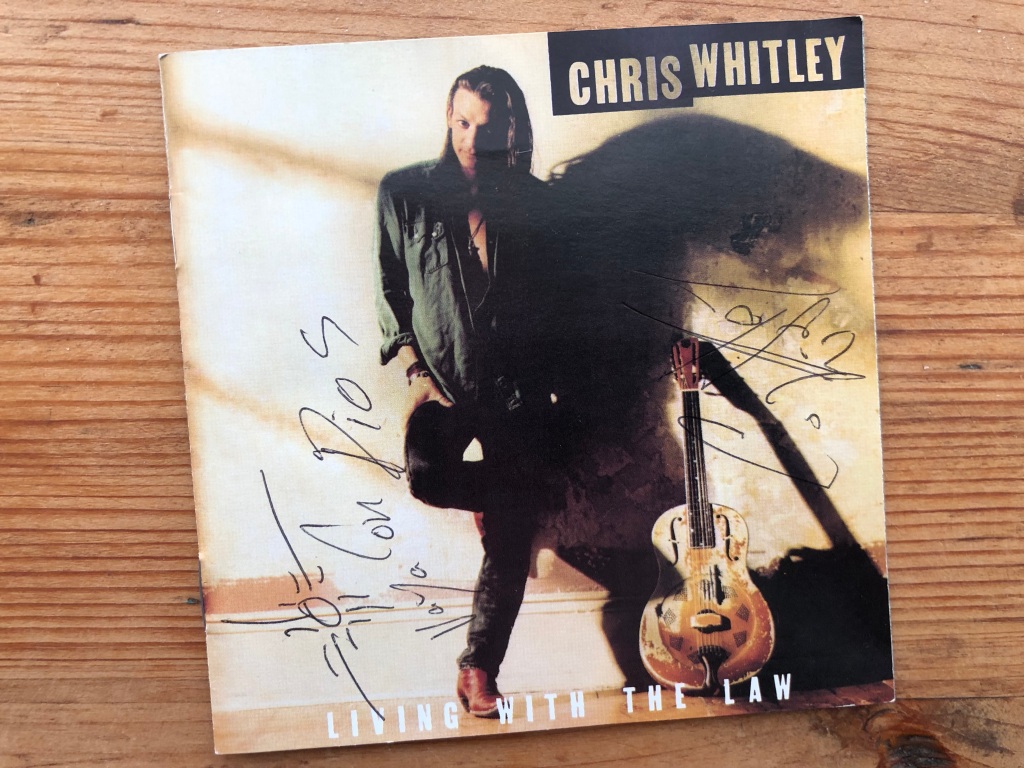
When Whitley signed this copy of “Living With The Law” for me, he wrote “Vaya Con Dios.” 

Right back at you, man. Whitley died November 20, 2005 at 45. 

Roger Rees summarized his time on earth eloquently here: 

https://www.loudersound.com/features/fallen-angel-the-life-and-death-of-chris-whitley

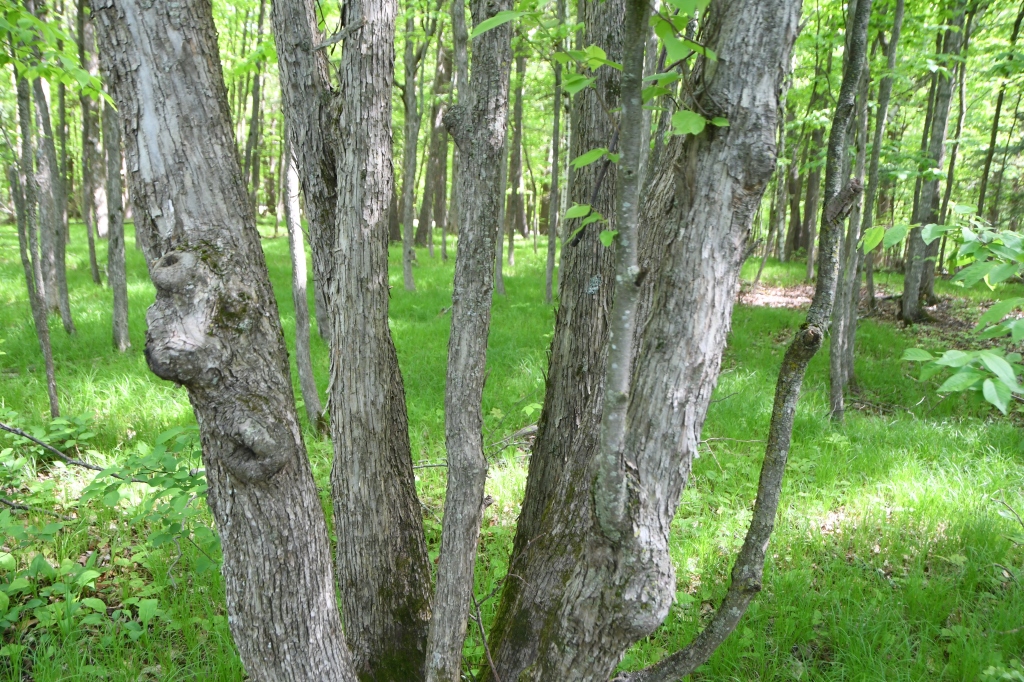
Some bonus photos: Thacher Park, Chris Whitley, Zak

ROLLIN’ EASY WITH ROWAN

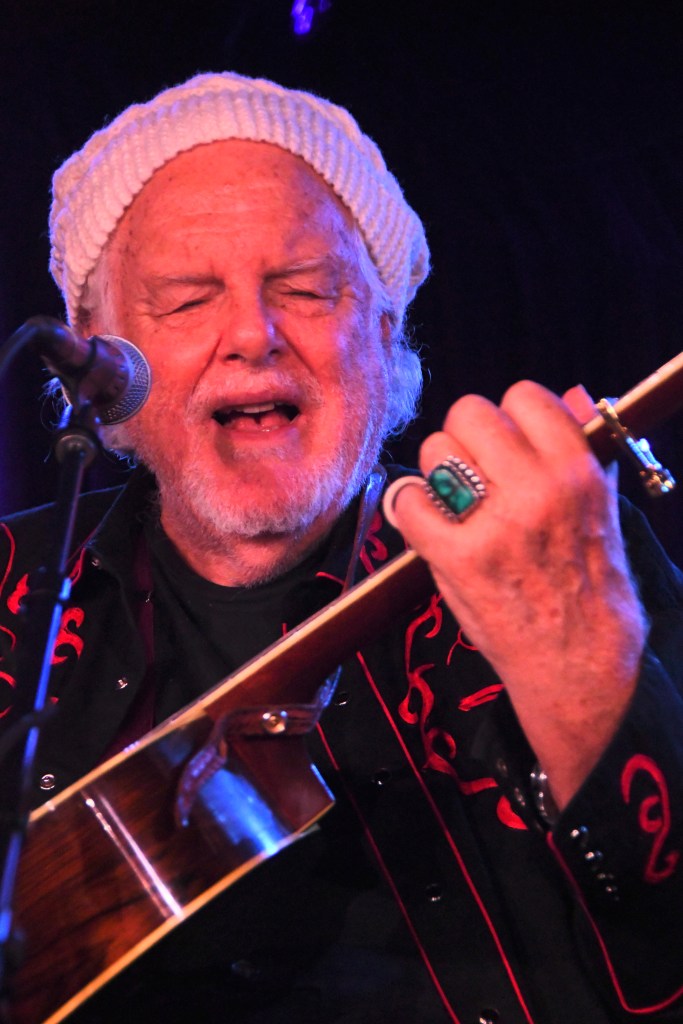
A genial tour guide, Peter Rowan steered a Caffe Lena-full of fans Sunday through his New England childhood – “singing to the stars, listening to the ocean” as he nostalgically recalled – then in dusty-road rambles through the west. Rowan mapped those wanderings decades ago, in distinguished company.

When Rowan, Jerry Garcia, David Grisman, Vassar Clements and John Kahn formed Old & In the Way, everybody was in their 30s and 40s. 

Now 81, Rowan remains among the last living links to bluegrass pioneer Bill Monroe, like his somewhat spryer contemporary Buddy Guy (87) with Chicago blues inventor Muddy Waters. “Still standing” begs the question how well can they still sing and play?

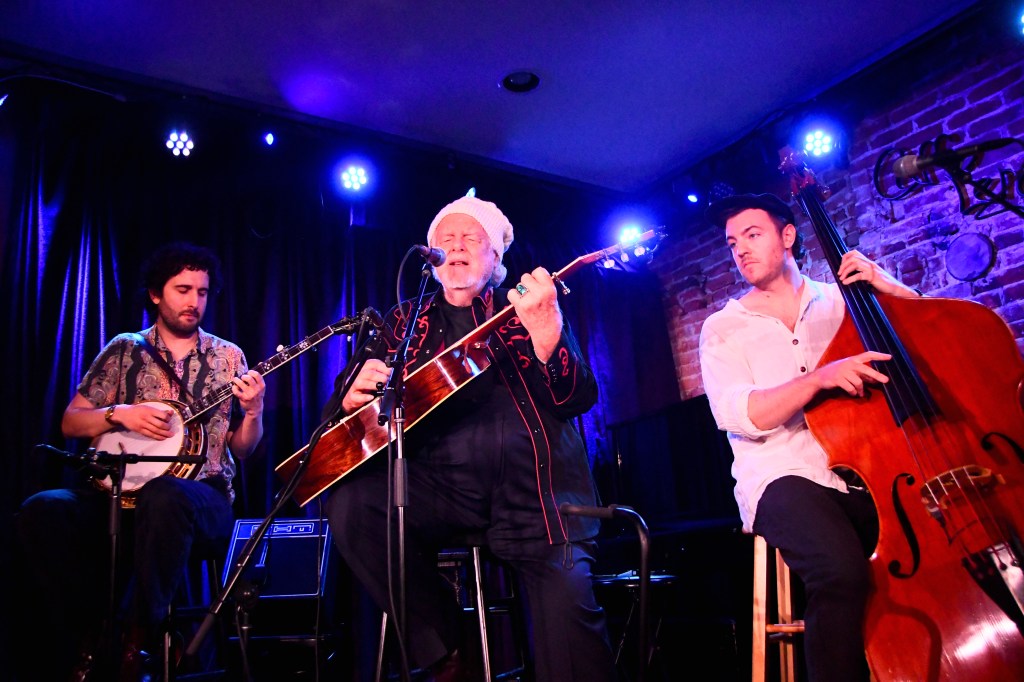
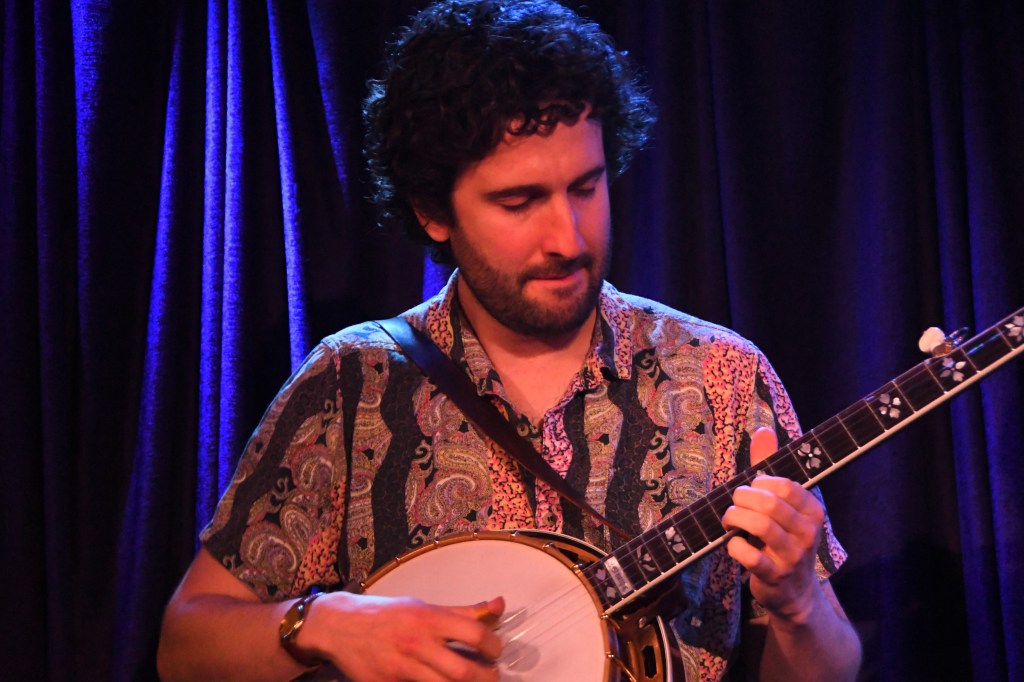
Rowan’s cozy, familiar tunes have worn well, and so has his easy-chair voice and finger-picking guitar style, despite a bandage on his fretting hand insult finger. He seldom stretched far on Sunday, though he hit a falsetto yodel at times, mainly in the more relaxed second of two sets. Banjoist (first set) and guitarist (second set) Max Wareham and bassist Chris Sartori, both tasteful and tidy, flanked him, coloring inside the lines.

Some in the packed house seemed to sport as many miles on the clock as Rowan himself, calling out for favorite songs, whooping in delight when Rowan responded. Singer-songwriter Carolyn Shapiro at the next table seemed among the youngest fans there. A quick T-shirt scan: Grateful Dead, Rowan himself, Sirsy, Doc Watson, every acoustic music festival around and some bright Alohas. Soundman Joe Deuel told me Rowan first played the Caffe when Lena herself ran the show.

Max Wareham, left, Peter Rowan, and Chris Sartori

Rowan started at the top: “Panama Red” from “Old & In the Way” and a huge hit for the Dead-adjacent New Riders of the Purple Sage. It wrapped around the even more venerable “Freight Train.” Then the music hit the road with a similar one-two of “The Hobo Song” and “Lonesome LA Cowboy.” Some sang along; Rowan didn’t need to invite anybody, and he flexed his falsetto a bit in a Doc Watson tribute, then made easy octave leaps in the next tune before wrapping with “Cold Rain and Snow” from the Dead’s 1967 debut. 

Max Warham, banjo

Second-set songs stretched longer, from four or five minutes in the first set, sometimes past 10 in the second. They sang and played harder. If the first set was warm-up, it worked. 

Max Wareham, guitar

Wareham switched from banjo to electric guitar and Rowan played slide to start in a bouncy, bluesy “Motherless Children.” They pressed even harder in the gospel-y “Walking in Jerusalem,” a strong highlight, before the thoughtful “I Am a Pilgrim and a Stranger.” In “Tumbleweed,” Rowan and Wareham played a tight duo break and Sartori hit his best bass solo of the night. 

Chris Sartori

Chris Sartori, right, bows his bass

Later, they revisited this theme of Native American respect/lamentation in “Land of the Navajo.” Rowan spoke a wistful verse here, then Sartori’s arco bass underlined the beat and Rowan played his voice from gruff rumble to high yodel and desolate cry in his most expressive vocal of the show.

“Fetch Wood Carry Water” sailed on easy-reggae funk, and the grooves of the second set packed more muscle than earlier, even the slow waltz “Mississippi Moon” that closed in massed fingersnaps Rowan led.

The show felt comfortably loose, Rowan organizing it, if that’s the word, song by song and nodding to cue the solos, or calmly navigating them himself with deliberate, sparse fingerpicking.

The Songs

Panama Red

Freight Train

Panama Red (reprise)

The Hobo song

Lonesome LA Cowboy

It’s a Doc Watson Morning, Guitar Picking Kind of Day

Unknown (Was busier with camera than notebook here, sure I’d remember. Wrong.)

Cold Rain and Snow

Motherless Children

Walking in Jerusalem (Just Like John)

I Am a Pilgrim and a Stranger

River of Stone

Tumbleweed

Mississippi Moon

Fetch Wood Carry Water

Land of the Navajo

Moonlight Midnight

Peter Rowan at Caffe Lena Sunday; Deep Bluegrass Mastery

Check the hat; I’ll wait.

Peter Rowan’s Tom Mix-scale topper fits well; Rowan’s talent and accomplishments range so wide, stack so high. The veteran singer and picker, now 81, totes decades-deep experience onto the stage at Caffe Lena on Mother’s Day, Sunday, May 12. 

He’ll lead a sub-set of his bluegrass band. That fits, too. Rowan began in bluegrass and has wound up there after numerous detours. A Zelig of string-band players, he’s played with more bands than Neil Young.

Rowan started in bluegrass at the very top. 

So how would a 22-year-old Massachusetts Yankee join pioneer Bill Monroe’s Bluegrass Boys?

“I had immersed myself in his music,” Rowan told me recently, “listening to live taped shows and studying his lead singers like Jimmy Martin, Ed Mayfield, Carter Stanley, Mack Wiseman, and Del (McCoury), who proceeded me as a Bluegrass Boy.” Rowan said, “I learned all the vocal duets,” and he often wrote and sang alongside the key inventor of Appalachian up-hollow. home-made music.

As Rowan noted in his website bio, “One thing I started to like about the Monroe style was that there was a lot more blues in it than other styles of bluegrass.” Rowan said, “It was darker.  It had more of an edge to it.  And yet it still had the ballad tradition in it, and I loved that.”

Bill Monroe, left, and Peter Rowan

Bluegrass proved perfect for Rowan with its compelling blend of power and poignance: punch and precision in the instruments and elemental emotion in the voices. 

Rowan also learned about band leading with and from Monroe. 

Rowan told me Monroe was “the Boss Man.” He said that, in the Bluegrass Boys, Monroe exerted “very little correction.” He added, “But you felt it if you went too far.”

As bluegrass mutated from the traditionalist 60s into the experimental 70s, the old guard might have felt the younger players were going too far.

Not Rowan.

“There is no music police,” he asserted. “You have to really believe in the process; overcome doubt and fear.” Asked how he does this, Rowan answered, “A deep breath and let it flow.”Rowan rode a formidable flow after leaving Monroe, first forming the aggressively eclectic Earth Opera (1967-69) with David Grisman. Arguably the first Americana group with its mix of acoustic instruments and high-flying improvisation. Rowan said it was the most loose and organic of his many bands.

Earth Opera – Peter Rowan, top left; David Grisman, bottom left

When Seatrain (1969-1973) formed from the broken shards of the Blues Project, Rowan veered fast in the opposite direction; he said it was the most structured and organized of his bands. This got messy: released as a Blues Project album, “Planned Obsolescence” (1968) was actually an Earth Opera effort, although Rowan didn’t play on it.

Muleskinner (1973) with fellow Bluegrass Boy Richard Greene marked a traditional turn, and Rowan continued in this direction with Old & In the Way (1973) with Grisman (mandolin), Grateful Dead guitarist Jerry Garcia (banjo), Rowan (guitar), John Kahn (bass) and first John Hartford, then Vassar Clements (fiddle). Rowan said this bluegrass supergroup was the fastest of his bands to learn new songs, and this confident fluent efficiency helped make the band’s self-titled album (1975) one of the top-selling bluegrass releases of all time.

Old & In the Way – From left, Jerry Garcia, David Grisman, Peter Rowan, Vassar Clements. Not shown: John Kahn

Minus Garcia and Kahn, Old & In the Way reunited on “Old & In the Gray” (2002), then Rowan and Grisman (last two surviving members) played Old & In the Way songs with the String Cheese Incident at Gathering of the Vibes in 2015.

Peter Rowan, left, and David Grisman

Meanwhile, all along these musical transformations, Rowan played with brothers Lorin and Chris as the Rowans, releasing seven albums from 1972 to 1982.

Rowan also performed and recorded with bands that bear his name. He said working in bands led by Monroe, accordionist Flaco Jimenez and guitarist Tony Rice inspired him to form his own groups, which he does with gusto. He currently leads Peter Rowan Bluegrass Band, Peter Rowan’s Big Twang Theory, Peter Rowan and Crucial Reggae, Peter Rowan’s Walls of Time and Peter Rowan’s Free Mexican Airforce. Rowan explained, “Walls of Time is my main group, who are also my bluegrass band. Walls of Time is a more vast complex sound. Bluegrass for me is always straight ahead. I love to sing!”

Of working with multiple bands, Rowan observed, “It’s good to have players all over the country. It keeps things interesting with fresh ideas.”

He said his current group (double-dubbed Peter Rowan’s Bluegrass Band and Walls of Time) learn new material quickly and provide great fun in the studio and onstage. 

His latest release, “Calling You From My Mountain” adds top-level guests including his brother Lorin Rowan, Tony Trischka, Jerry Douglas, Sam Bush and Ricky Skaggs. 

Americana Highways hailed the album this way: “Despite the genre’s antique oeuvre, it’s loaded with modern charm. The bluegrass is fresh sounding, energetic and fueled with a tradition that obviously survives to shine yet again. No blowing dust off this artist.” The album reaches back in its track, which Rowan composed and originally sang with Bill Monroe. This resonant, full-circle, decades-deep move encapsulates his career – from bluegrass, to bluegrass, with lively stops along the way.

On this tour, Rowan may bring accompanists to Caffe Lena. “I’ll Have Max Wareham on guitar and banjo from my bluegrass band and Chris (Sartori) from Twisted Pines on acoustic bass!”

Rowan said he’ll miss his old musician friend Frank Wakefield, who played Caffe Lena often and died in Saratoga Springs on April 26 at 89. 

Frank Wakefield, left, two other guys, and Peter Rowan

On previous Saratoga visits, “I loved spending time with Frank Wakefield, the late great mandolin genius,” mourned Rowan, who didn’t stay sad for long. Amiable and friendly, he even answered my every-interview question which I warned him would be dumb. 

“What do you drive?” I wanted to know, noting many musicians drive Ford F-150 pickups, though jazz pianist Keith Jarrett impatiently brushed the question aside before laughing to reply, “A herd of goats! Tell everybody I’m driving a herd of goats!” 

Rowan took this in, then said, “When I’m not driving myself up a tree, I like riding a horse. They are all characters who teach me a lot!”

Peter Rowan plays Sunday, May 12 at Caffe Lena (47 Phila St., Saratoga Springs). 7 p.m. $62.91, members $59.66, students and children $31.46. 518-583-0022 http://www.caffelena.org. Streaming at caffelena.tv.

About the Photos: I found these photos on Rowan’s website and Facebook posts and on Wikipedia, including the Earth Opera Elektra Records publicity shot. I contribute regularly to Wikipedia; if you use it, so should you.